
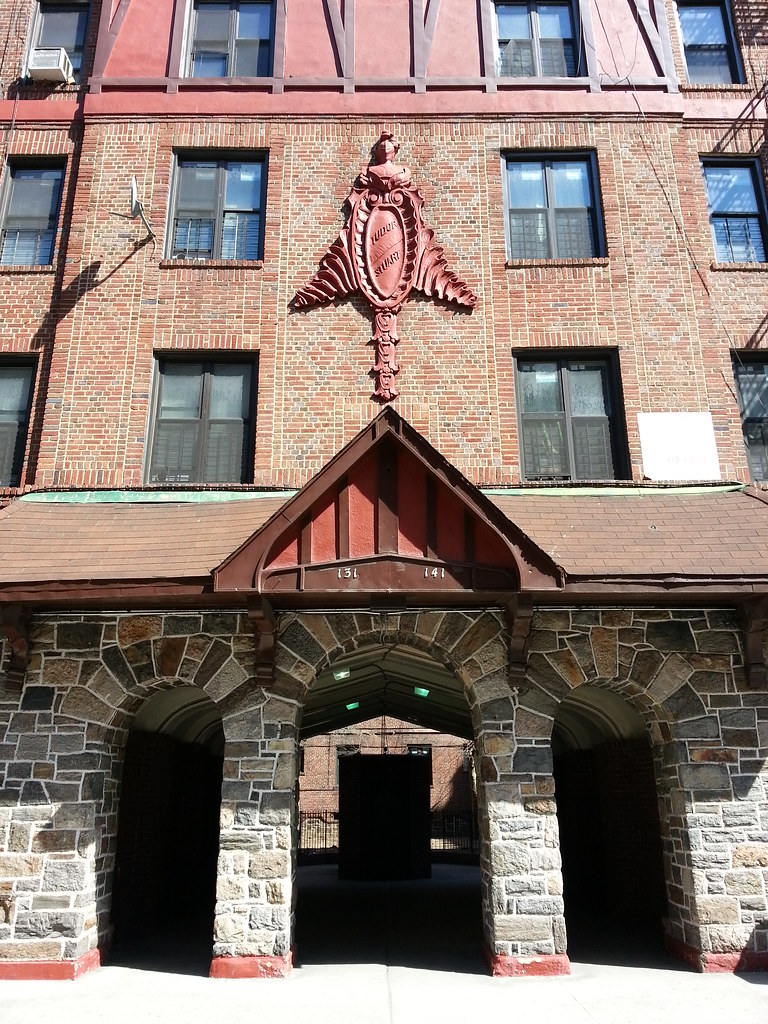
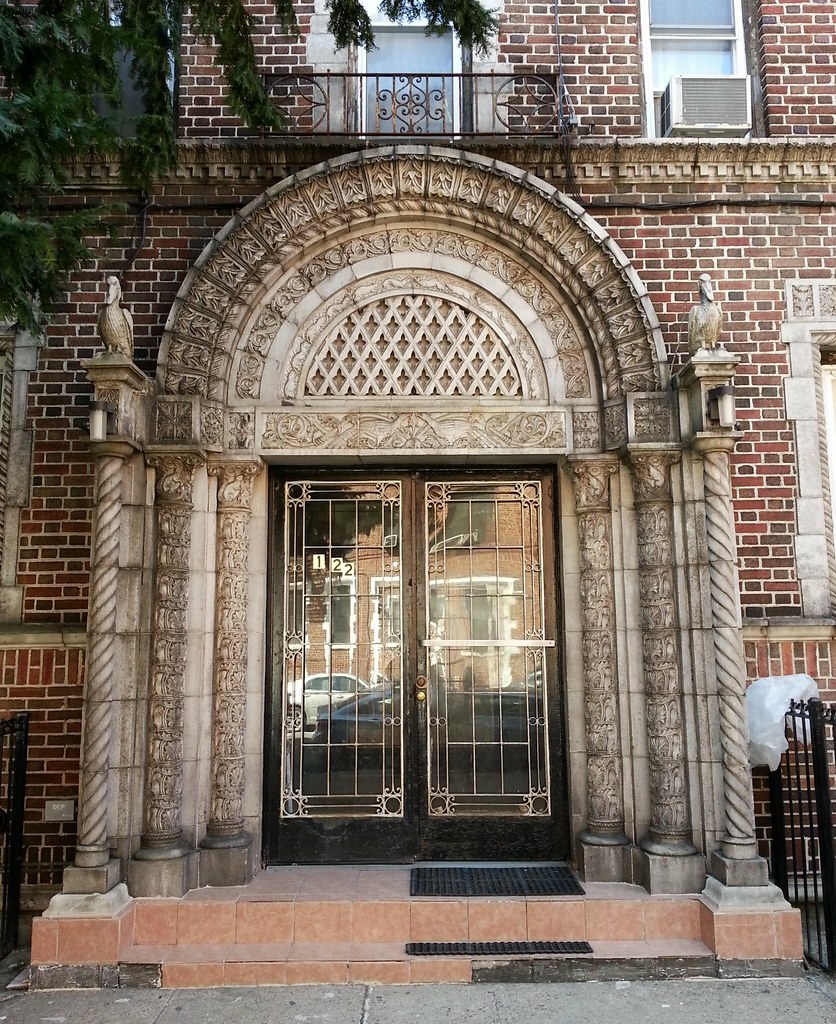
A closer look reveals a number of other birds, as well as some rat- or weasel-like creatures, interwoven into the ornate patterns surrounding the doorway.
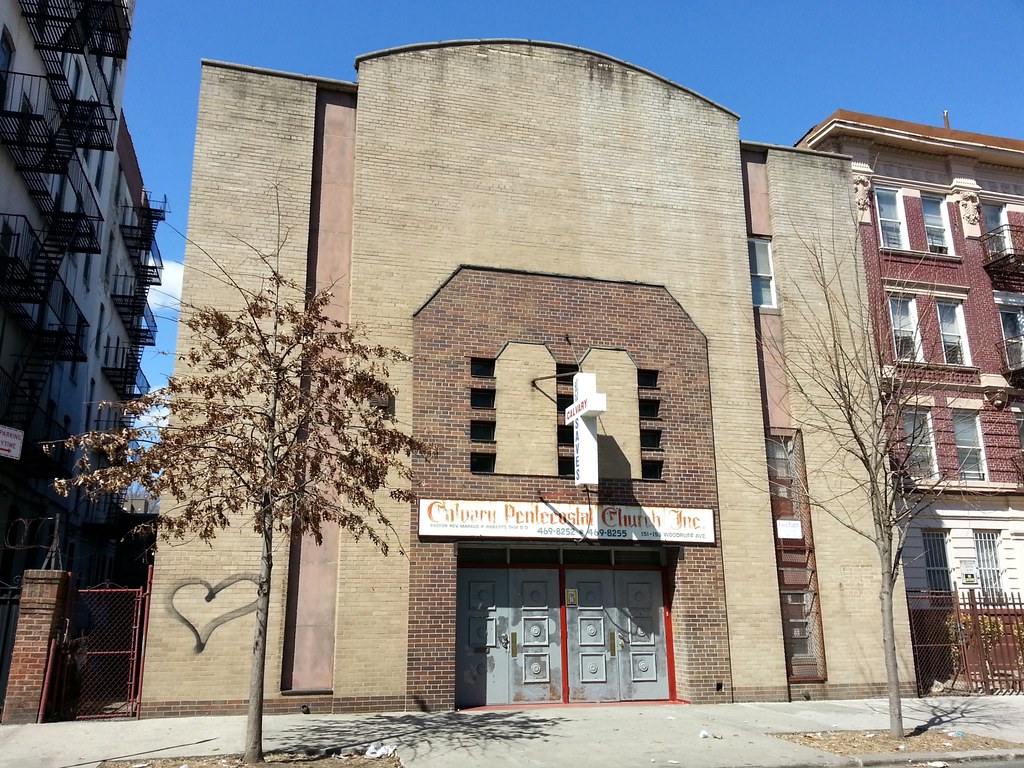
This churchagogue was once home to the Woodruff Avenue Temple. A subtle vestige of the building's past can still be found above the doorway, where the "JESUS SAVES" cross is attached to two shapes that resemble the tablets of the Ten Commandments, but the Jewish origin of the structure was much more apparent just a few years ago, as you can see.
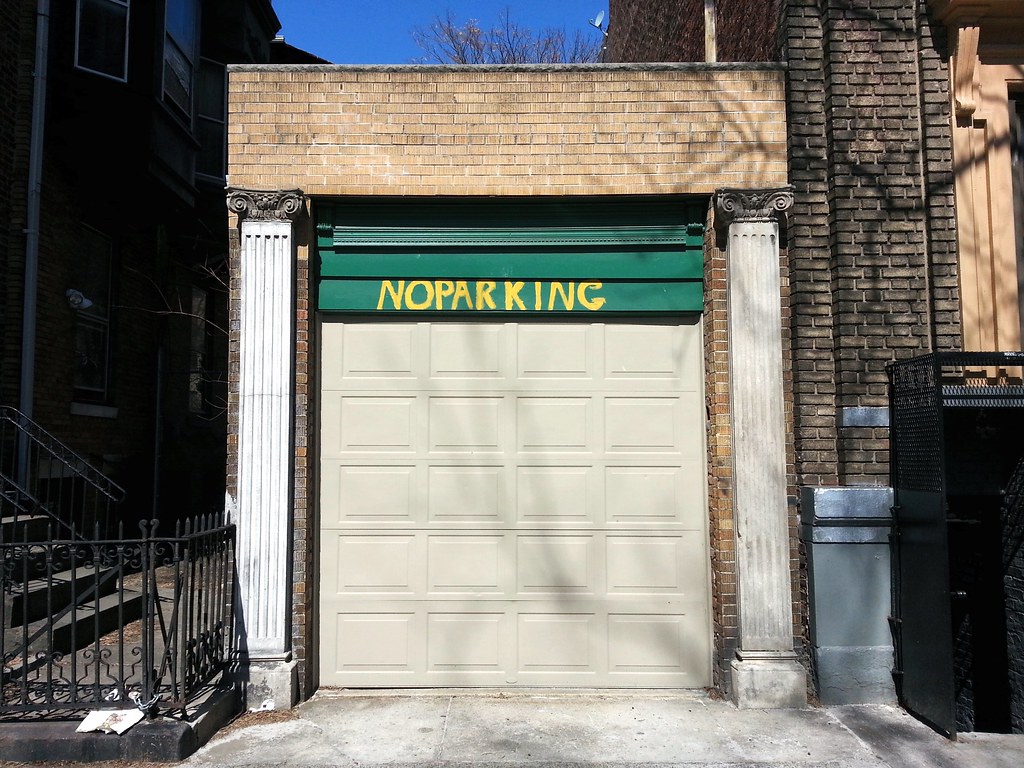
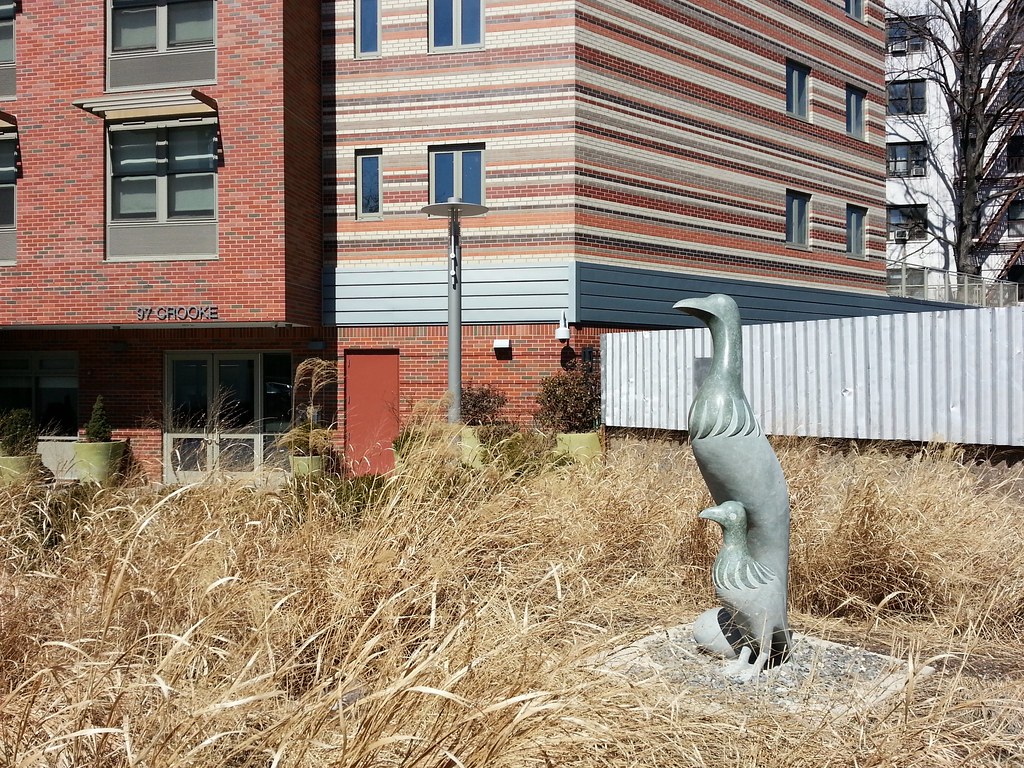
This 53-unit building for low-income and formerly homeless individuals was erected on a long-vacant, oddly shaped lot abutting the tracks of the Q train (aerial view). The interior décor includes Shona stone sculptures, so it seems like a decent bet that the carved birdies pictured here also hail from Zimbabwe.
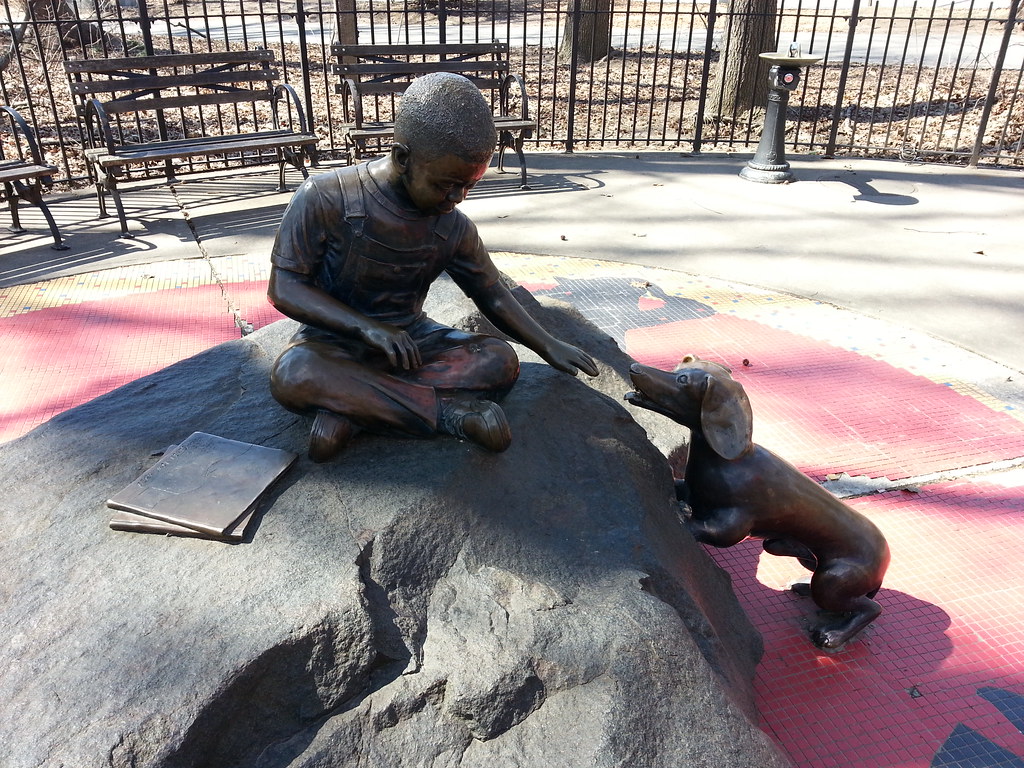
This sculpture at Prospect Park's Imagination Playground was inspired by Ezra Jack Keats's book Peter's Chair. From the NY Times:
When the playground opened in 1997, the sculpture of Peter was a deep blue. "The ears soon lost their patina," Mr. Zimmerman said, "because kids would sit on the rock and whisper to Peter."
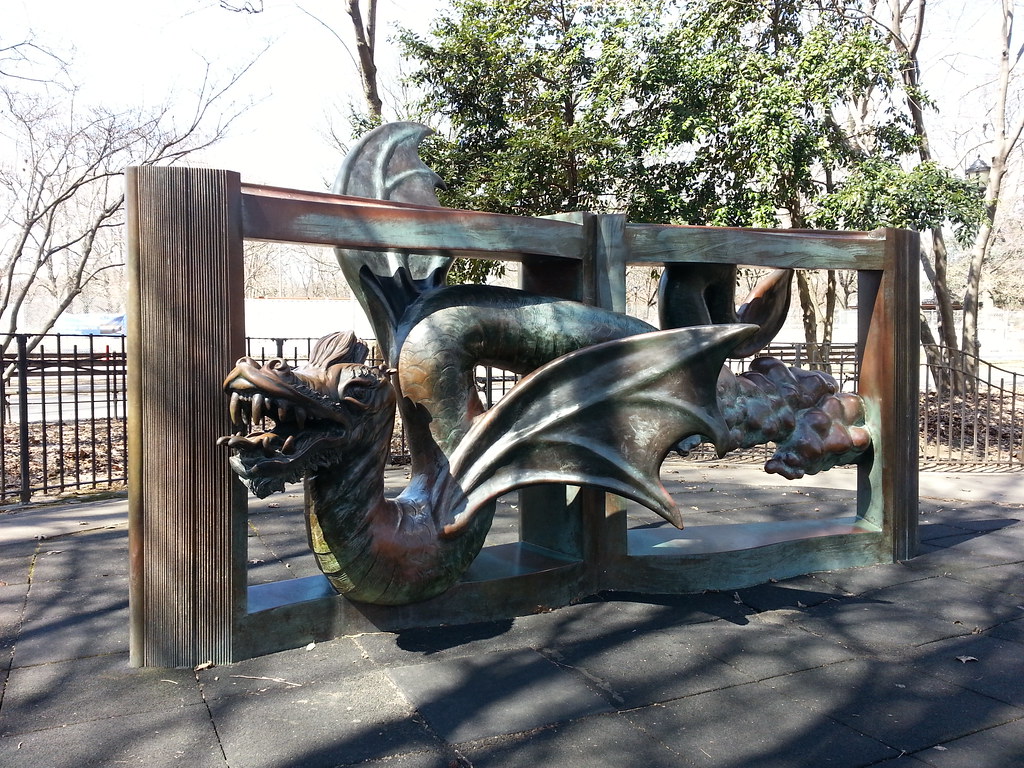
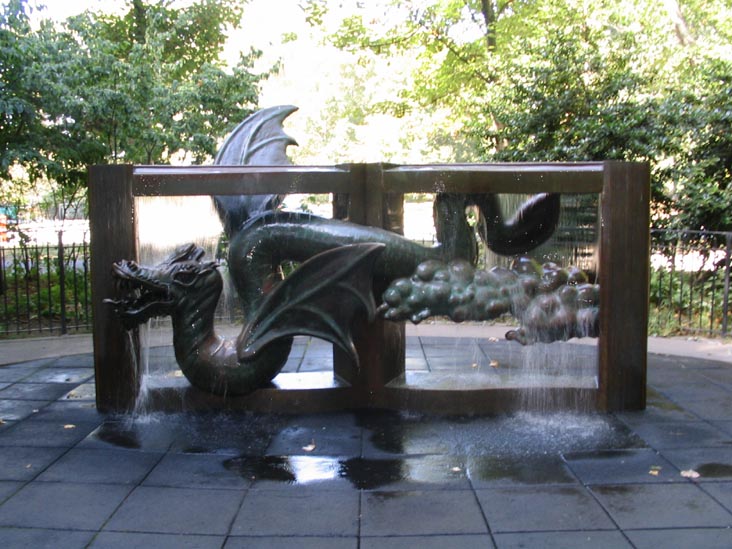
In the warmer months, sheets of water flow from this sculpture at Prospect Park's Imagination Playground.
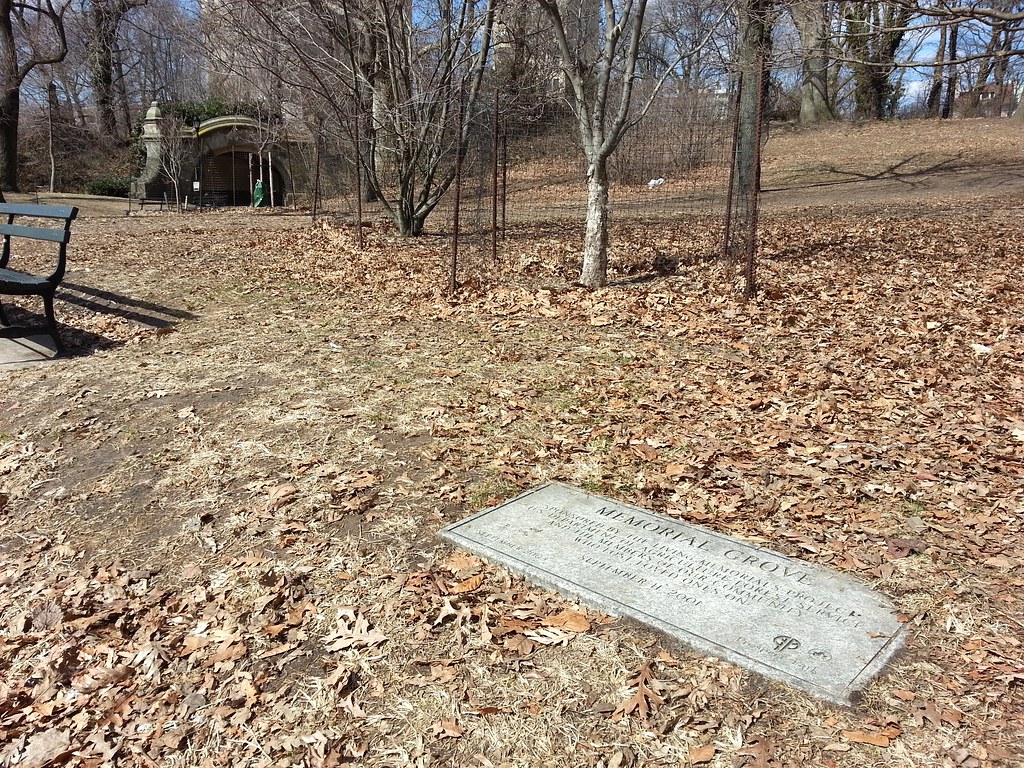
I assumed that this memorial grove in Prospect Park would consist of trees planted around the time of the grove's dedication in 2003, so the scarcity of young trees in the area (you're looking at just about all of them) made me wonder if some others had died and been removed over the past decade. This page leads me to believe that the grove's creation mostly involved the restoration of an existing treed area of the park, however, which makes more sense given the surroundings. You can take a look around the grove here.
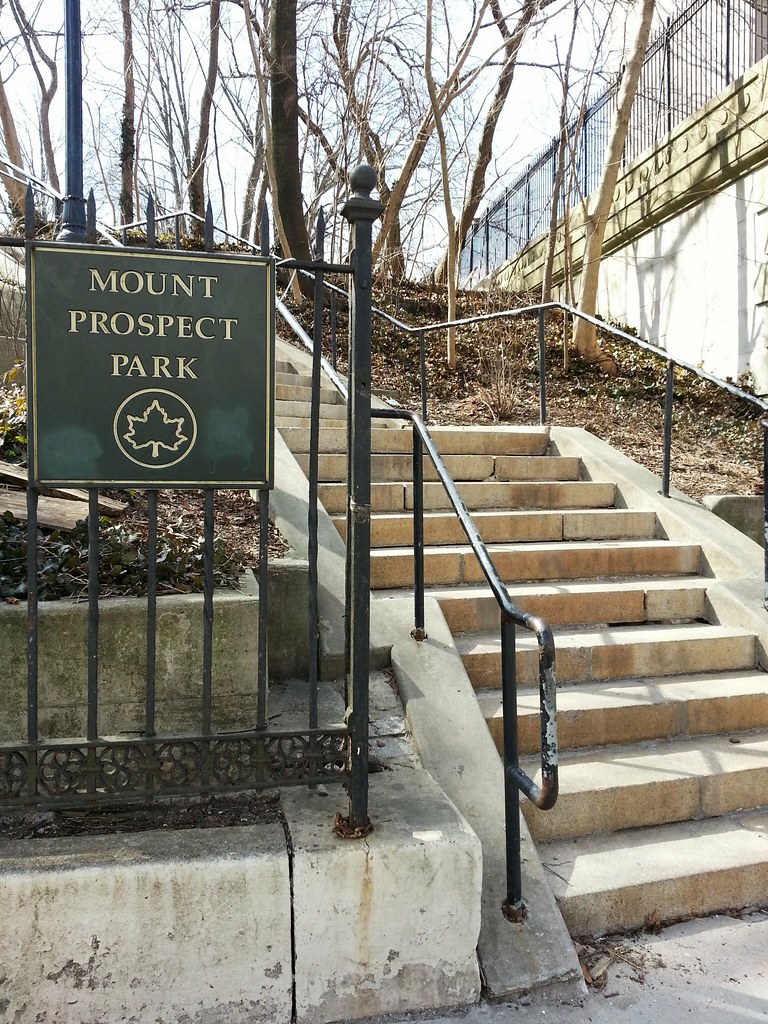
Home to the second-highest peak in Brooklyn, this park occupies the former site of the Mount Prospect (or Prospect Hill) reservoir. Here's an early 20th-century postcard view of the reservoir and its water tower.




I'm walking every street in New York City.
This is the counterpoint to my walk across the US. Instead of seeing a million places for just a minute each, I'm going to spend a million minutes exploring just one place. By the time I finish walking every block of every street in all five boroughs, I'll have traveled more than 8,000 miles on foot — all within a single city. Details!
Email me at matt@imjustwalkin.com
Subscribe to my email list
Maps: Progress | Photos

Your donations allow me to keep walking full-time. If you think what I'm doing is valuable and you'd like to offer some support, I would be very grateful. On the other hand, if you think I'm a worthless bum, feel free to email me and tell me to get a job, bozo. Both are excellent options!
