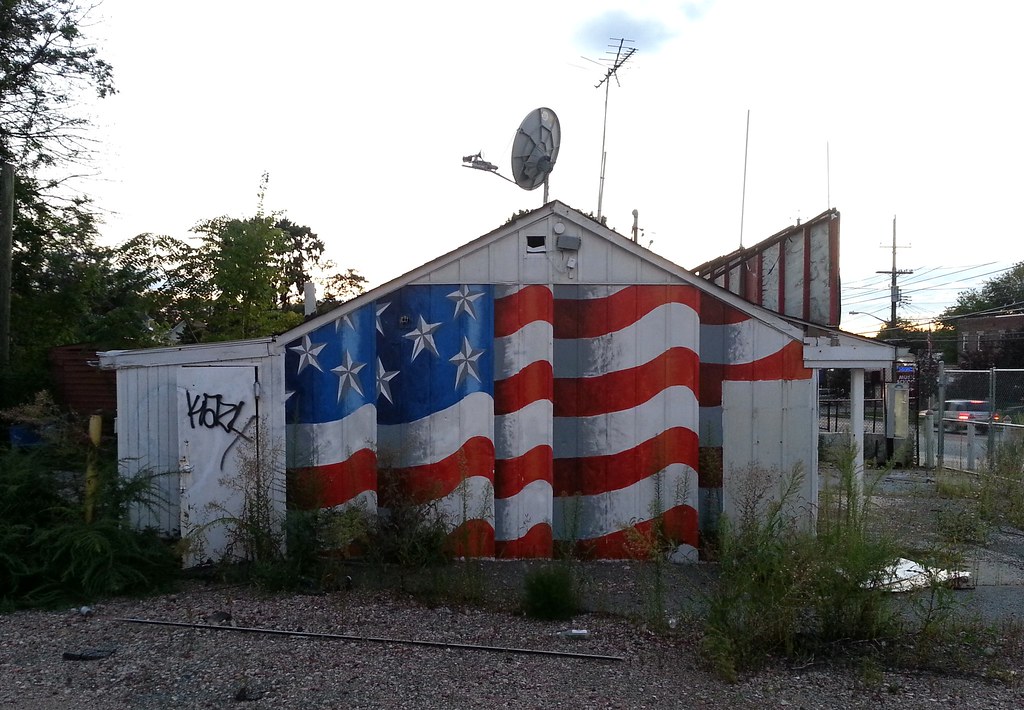
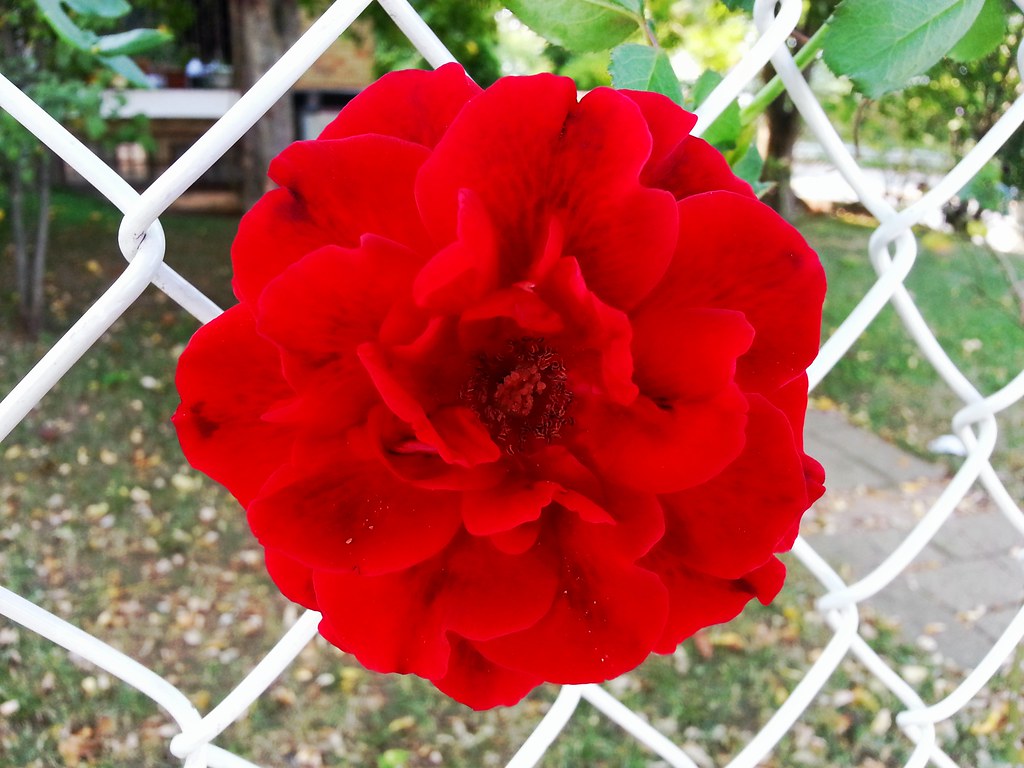
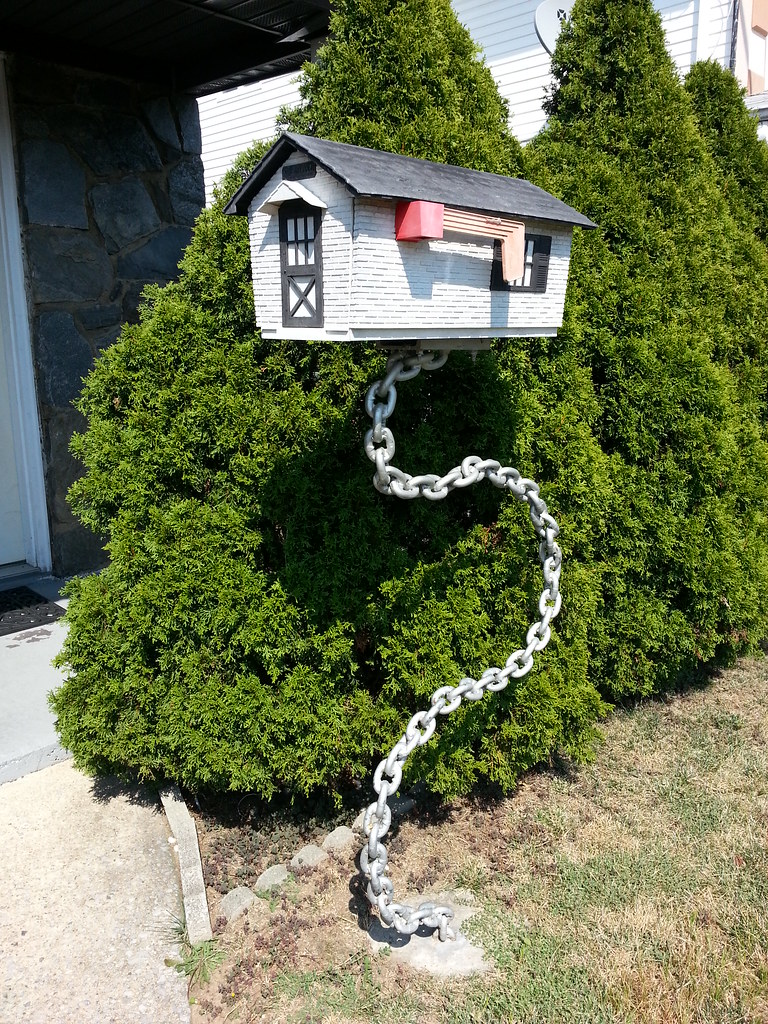
Even this little shack gets one.
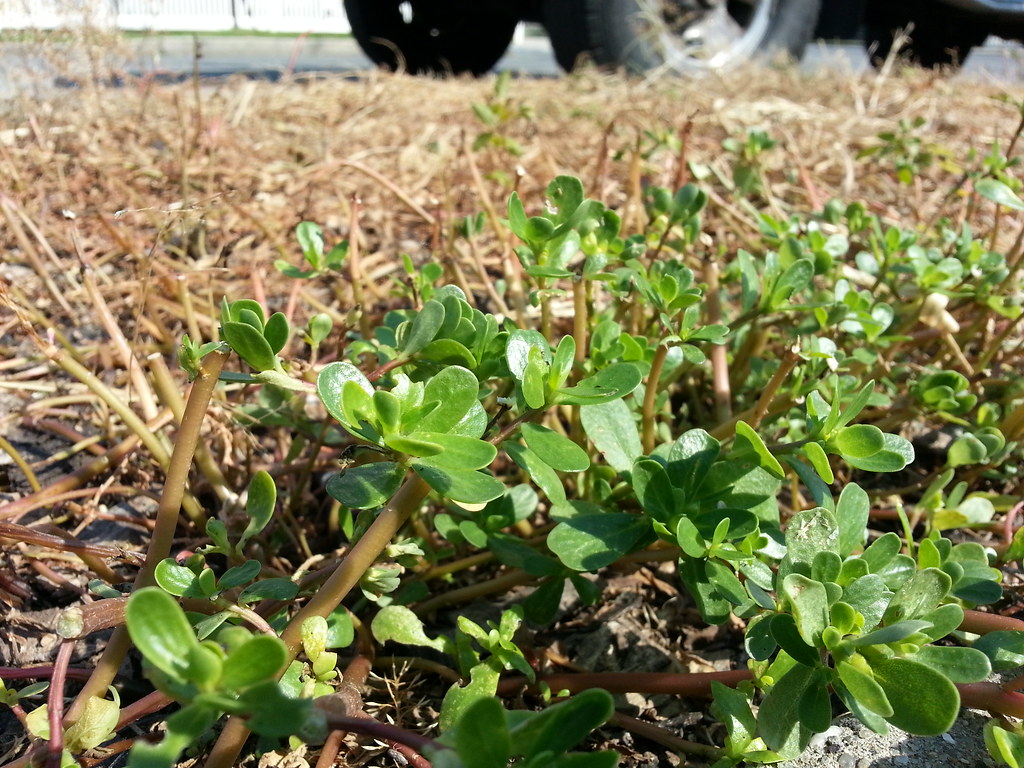
Purslane is both a "noxious weed" that enjoys taking over Staten Island traffic medians and a "superfood" that can be found on the menu at high-end restaurants.
Also, I would be remiss if I didn't mention that the Malawian name for this fleshy, succulent plant translates to "the buttocks of the wife of a chief".


of this.
The octagonal sign on the tree reads: "This Home Protected by The BLOOD of JESUS / Perimeter Monitored 24 Hours / Revelation 12:11"
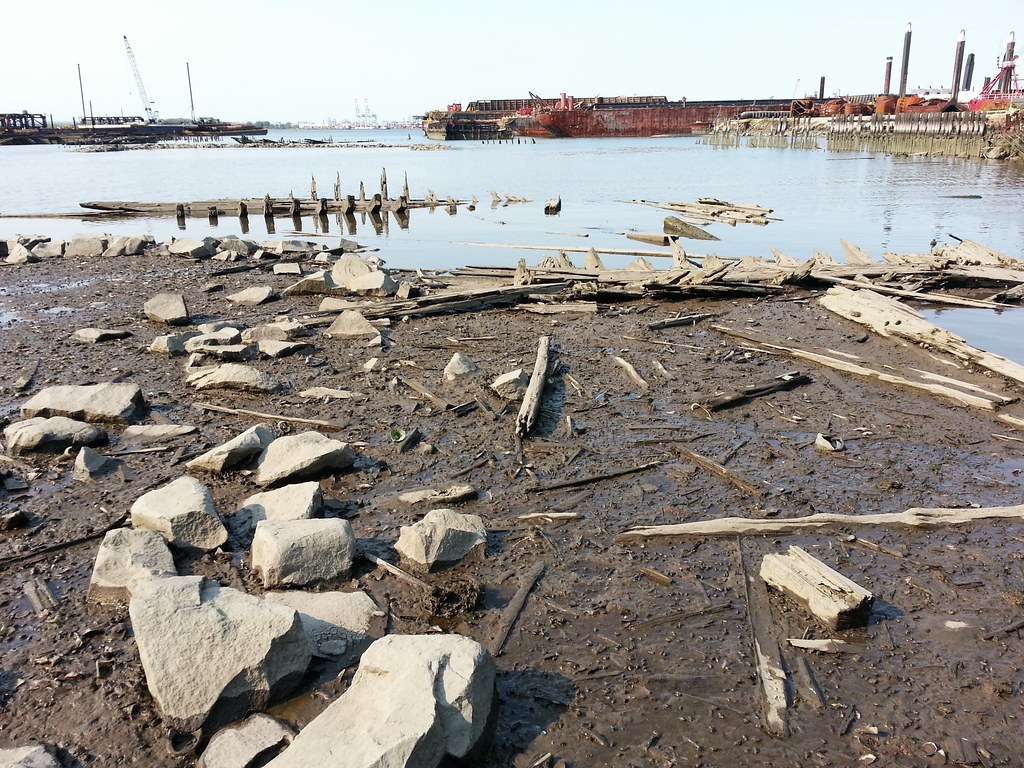
Located at the southern end of Newark Bay, this undeveloped park (I didn't even realize I was standing in a park until I looked at my map) is one of the very few points of public access to Staten Island's industrial North Shore waterfront (take a look). The massive twin cranes way off in the distance belong to the Port Newark-Elizabeth Marine Terminal, the metropolitan area's main container ship facility.


Almost entirely hidden behind the foliage (but visible if you zoom in near the center of the photo) is a remnant of the Staten Island Railway's North Shore branch, which once carried people and freight all the way across the island's North Shore (duh). Passenger service on this route ended in 1953 and freight operations terminated in 1989, although the eastern and western ends of the line have seen some use in the years since. The MTA is currently considering reviving the railroad's right-of-way for use as a bus rapid transit line.
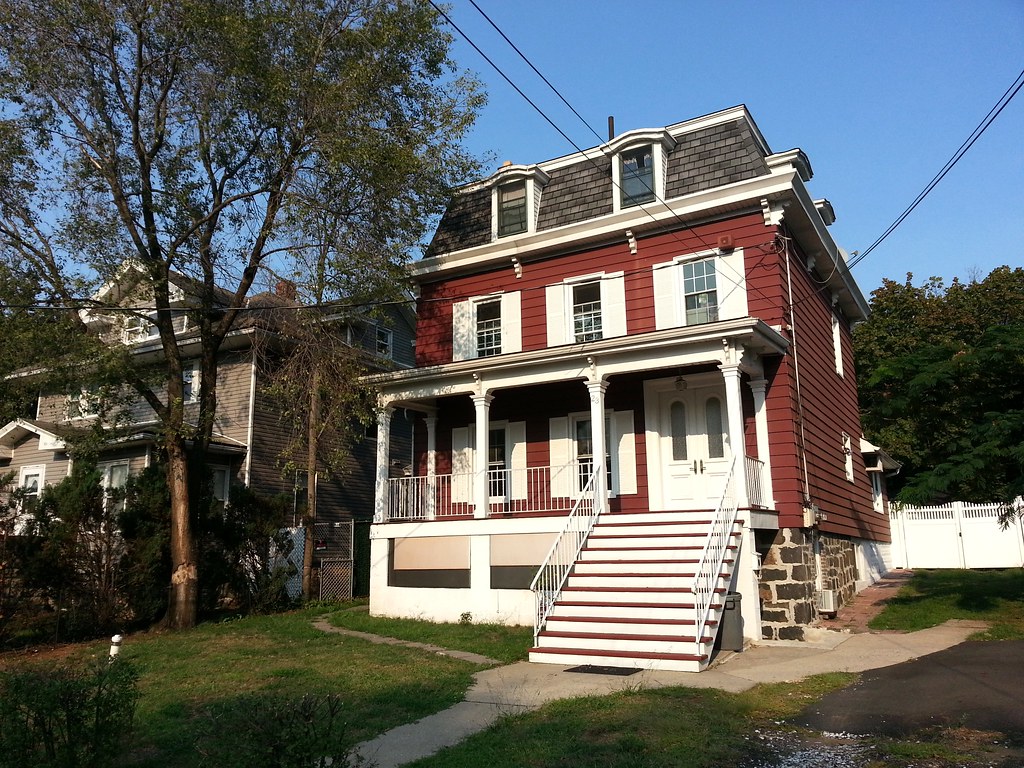
There are quite a few dignified old dwellings still standing in this waterfront neighborhood.
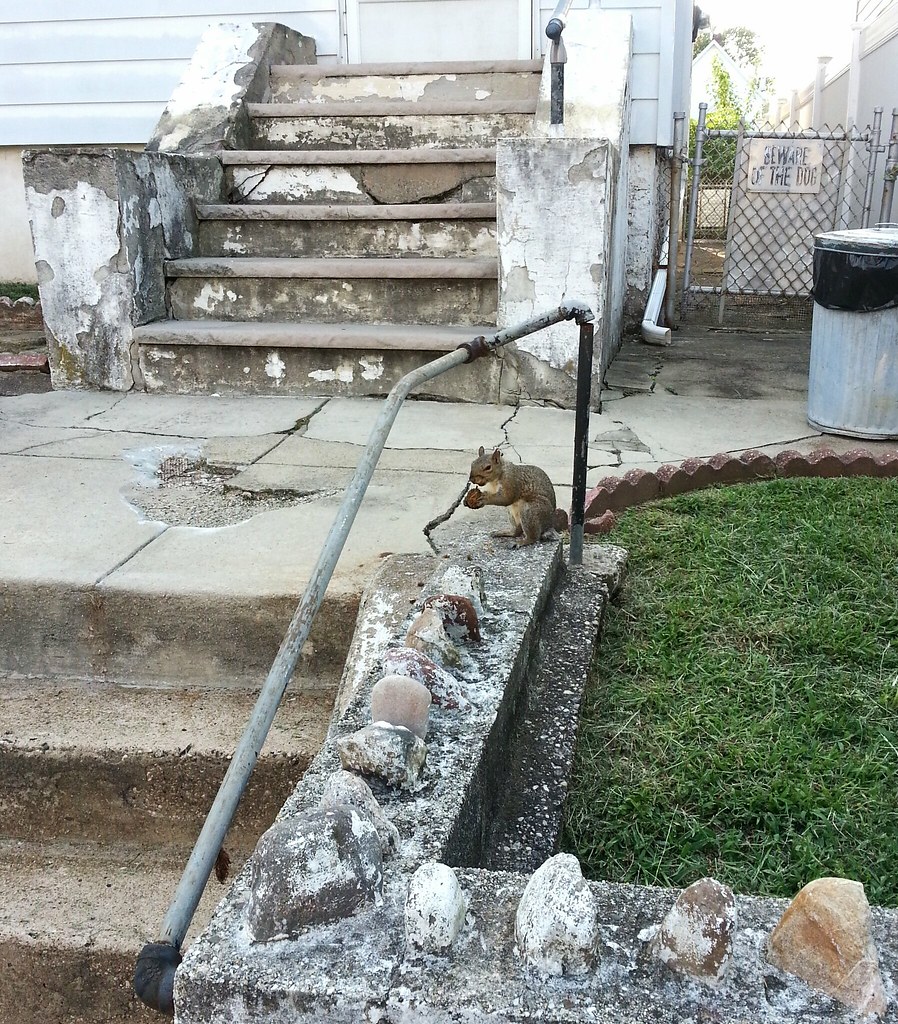
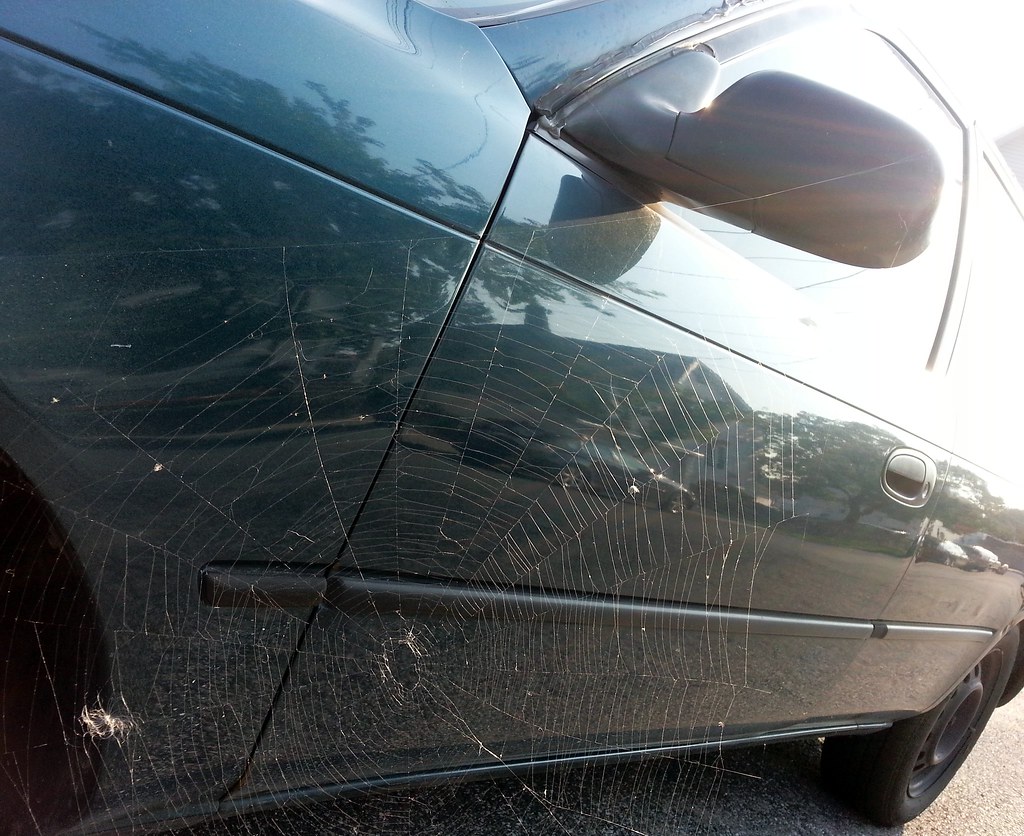
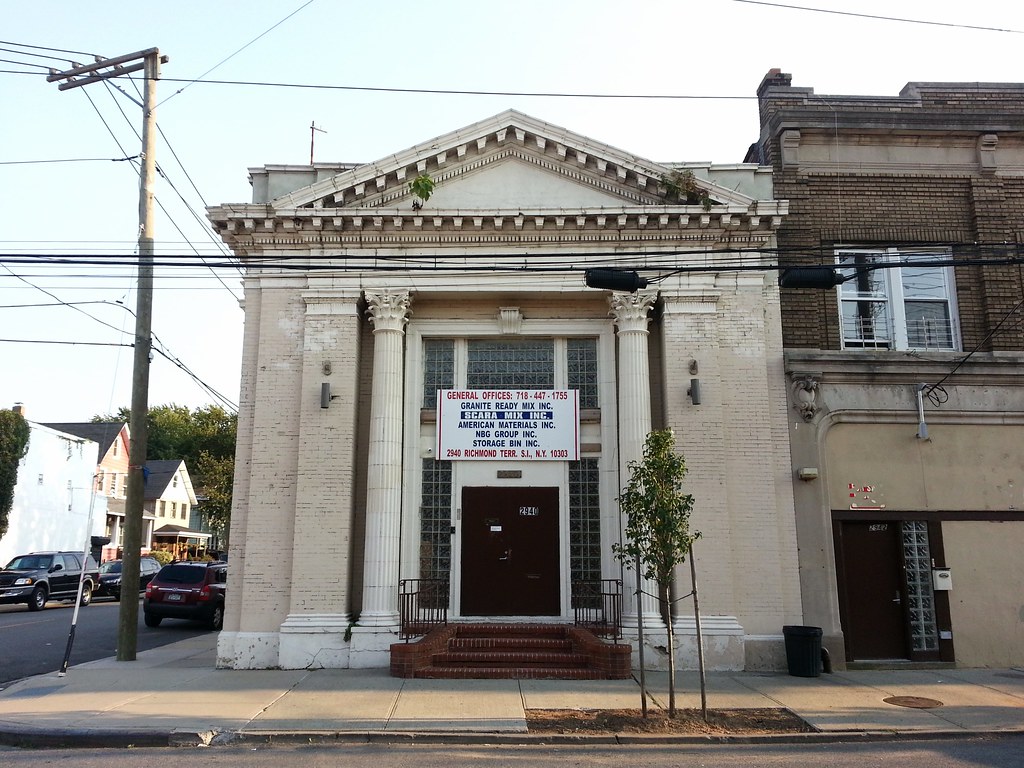
I'd say this building once housed something other than concrete and gravel companies.
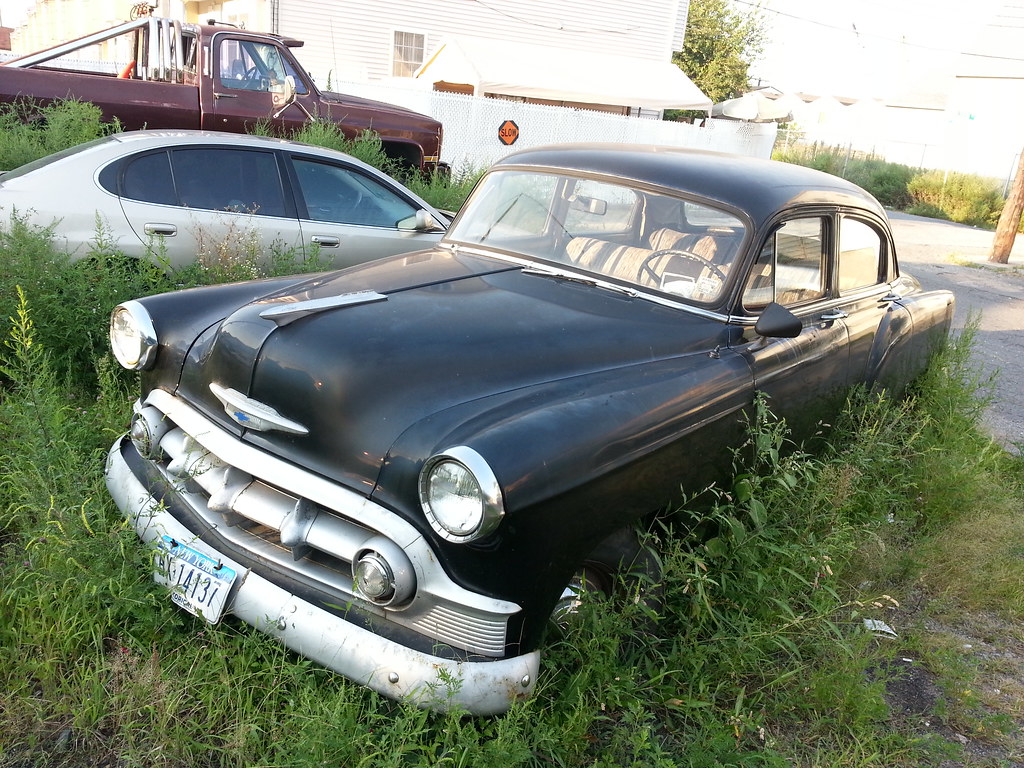
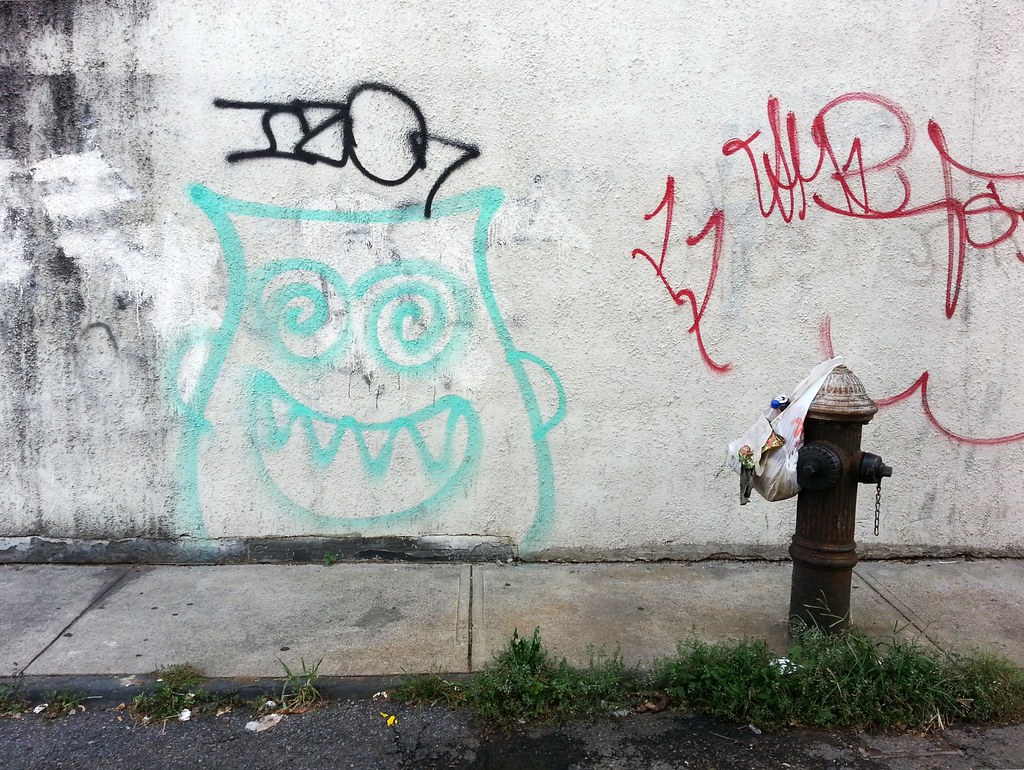
Making the trip out to western Staten Island! (We've crossed paths with him before in Brooklyn.)

of the aforementioned North Shore branch of the Staten Island Railway. As we've seen, the line is mostly in ruins east of this point, but, emerging from the woods just beneath the overpass where I'm standing, it runs as a freight line from here west to the Arthur Kill Bridge (the longest vertical lift bridge in the world), where it crosses into New Jersey.
There's another branch that runs south from this line to Fresh Kills — which, no longer an active landfill (it was once the world's largest), is now home to the Staten Island Transfer Station — allowing all the island's garbage to be hauled down to South Carolina by rail, part of a larger city effort to dramatically reduce the role that trucks play in the waste disposal system.
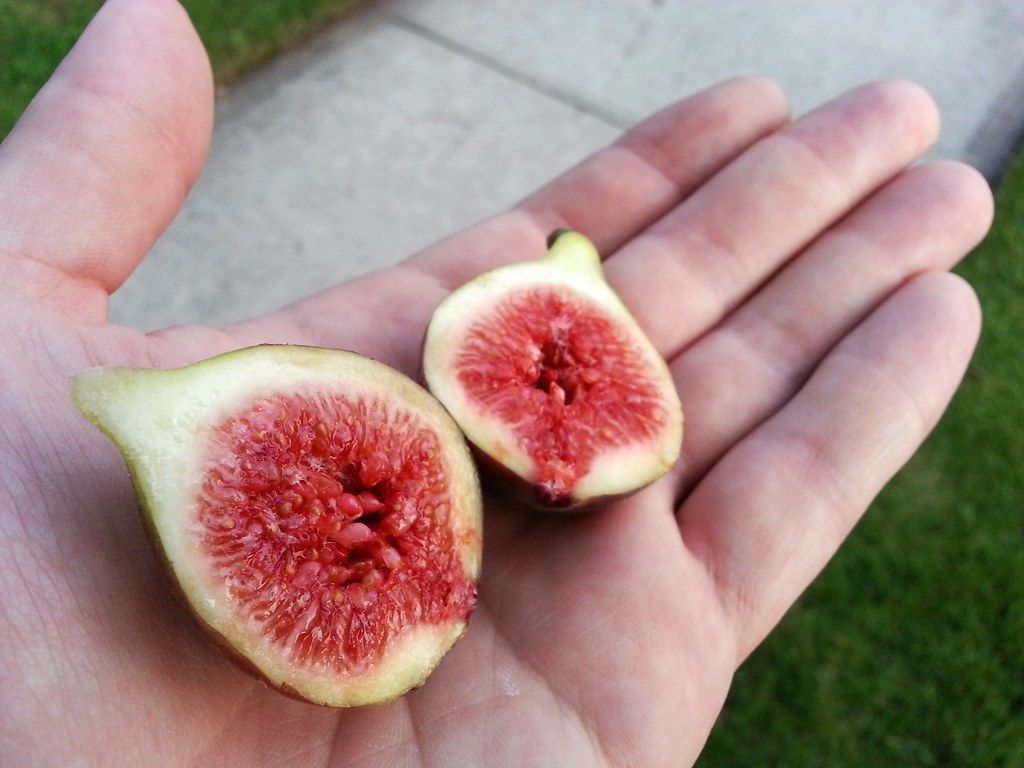
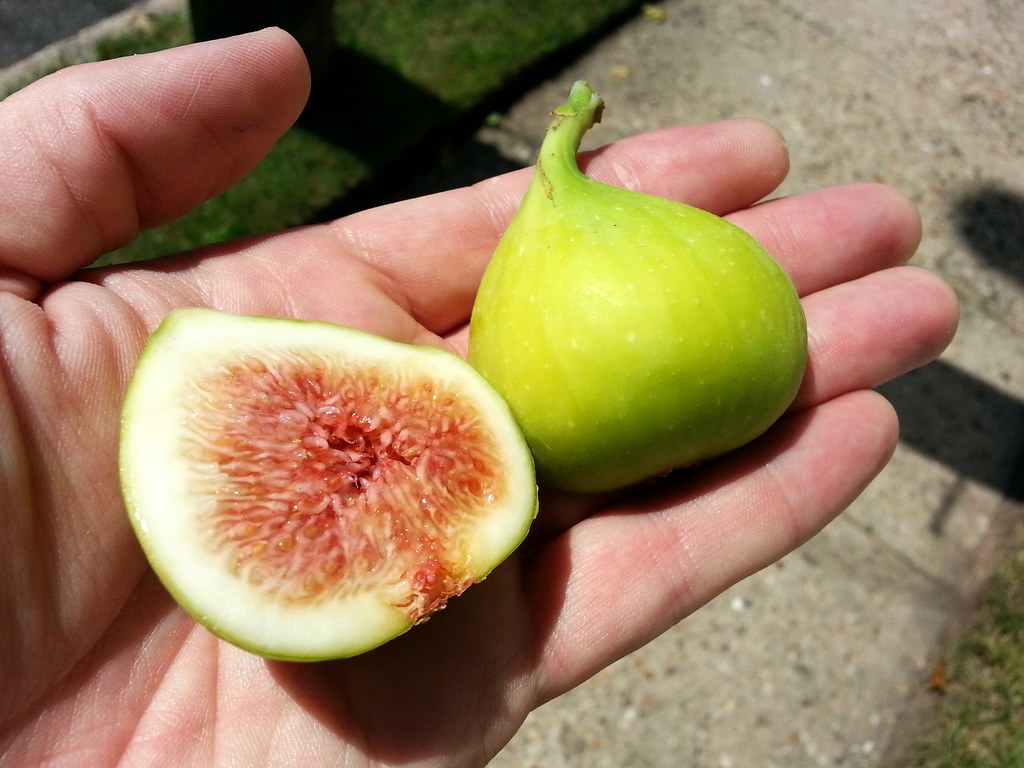
Something I never knew before I started this walk: there are approximately 500 gazillion fig trees in New York City. In some parts of the outer boroughs, I'll see a dozen or more each day. This particular fig is of the Brown Turkey variety, but you can find other types growing in the city as well.
While we think of figs as individual fruits, they're actually inside-out inflorescences — each of those fleshy little strands is actually a tiny flower! But how on earth do these flowers get pollinated? As we learned earlier, figs have an amazing relationship with a very small, specialized kind of wasp:
A female wasp of this type is able to crawl inside a fig through a tiny opening opposite the stem. Once inside, she lays her eggs, and in the process transfers pollen from the fig in which she was born. The larvae feed on the individual flowers in which they are growing until they reach maturity, at which point the males and females mate. The males then chew tunnels leading out of the fig and subsequently die, and the females (bearing pollen from the fig's flowers) escape through these tunnels and seek out new figs in which they can lay eggs of their own.Things get a bit more complicated — and interesting — with gynodioecious species (whose ranks include the figs typically grown in the US); you can learn more about them here if you are so inclined.
I should also note that the fig cultivars generally found in NYC, like the Brown Turkey, are parthenocarpic, which means they produce sterile fruit that does not require pollination — or wasps — to develop. (California's Calimyrna figs, on the other hand, must be pollinated for the fruit to mature. This has resulted in a strange-looking annual ritual in which paper bags are stapled to thousands of acres of fig trees.)
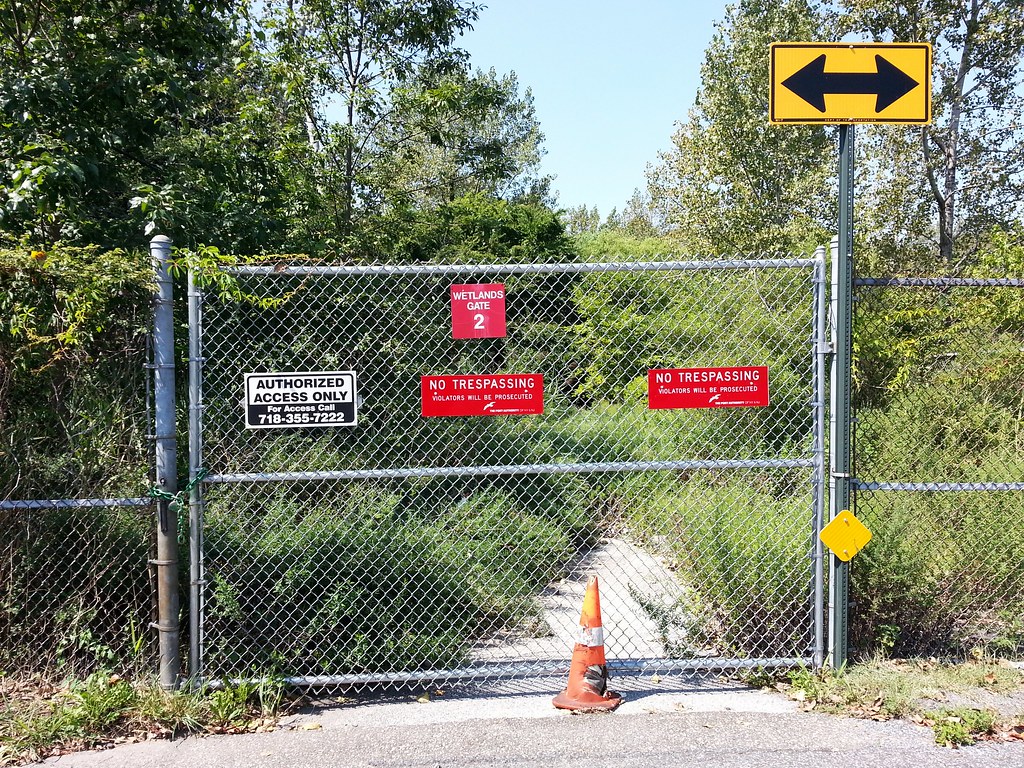
Here we have another enigmatic parcel of land belonging to the Port Authority. Regarding the previous one — that mysterious hill over by the Rikers Island Bridge — I received an email from a current PA employee saying that the hill is known internally as Ingram's Mountain, and that it was supposedly created from the rock excavated during the construction of the Lincoln Tunnel's third tube.

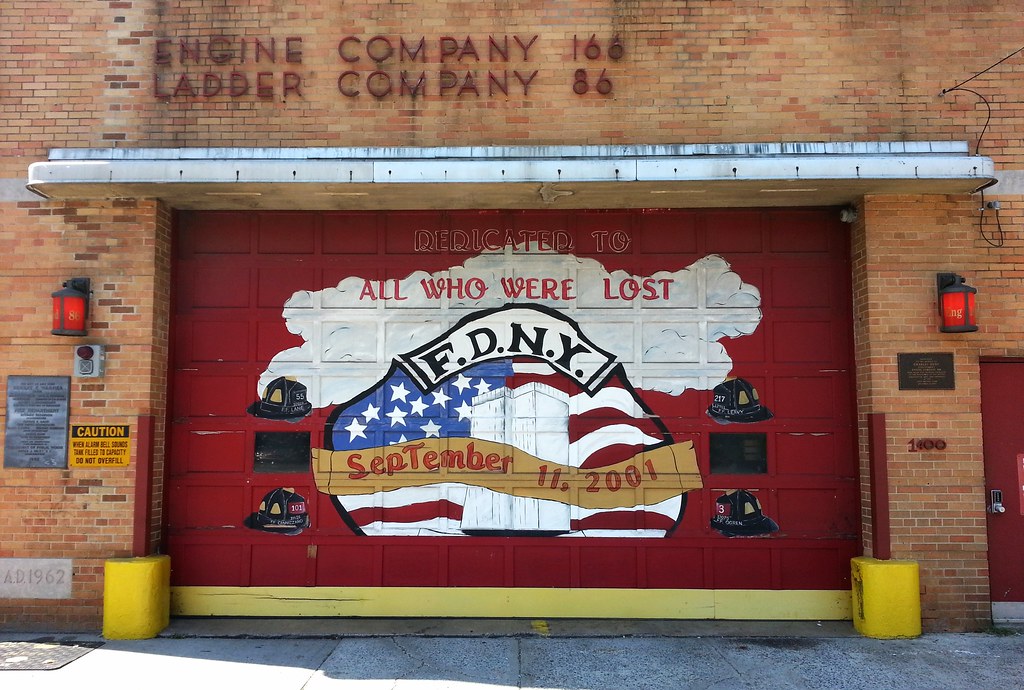
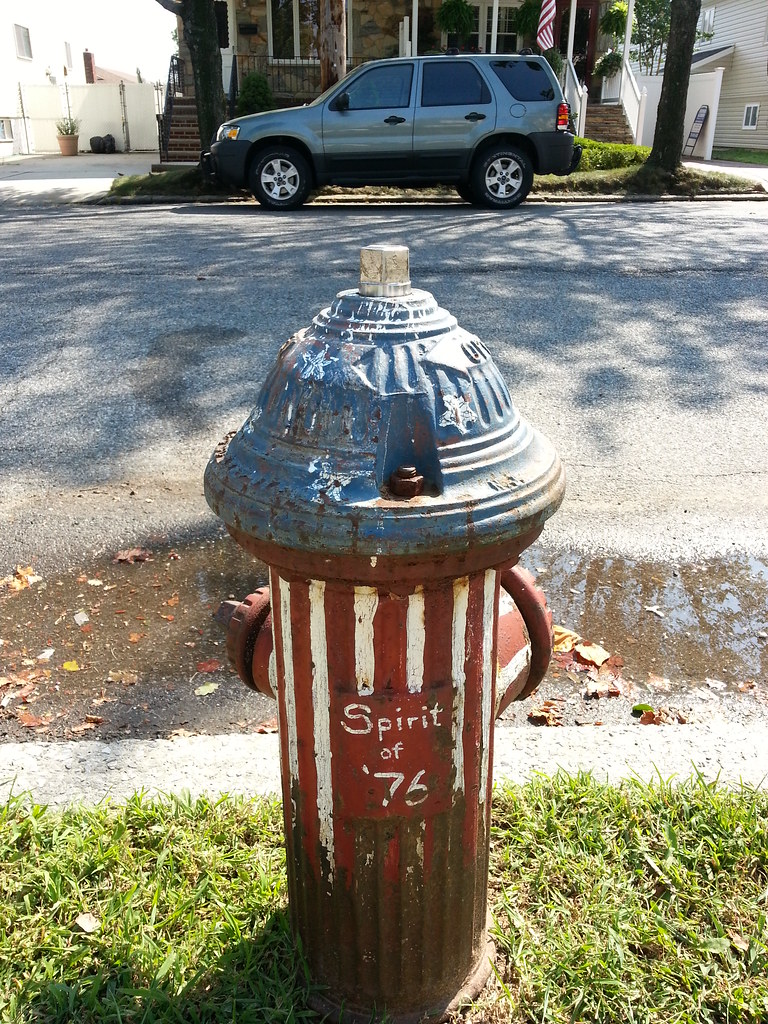
This looks too fresh to be its original paint job. It must have gotten a new coat sometime in the years since.
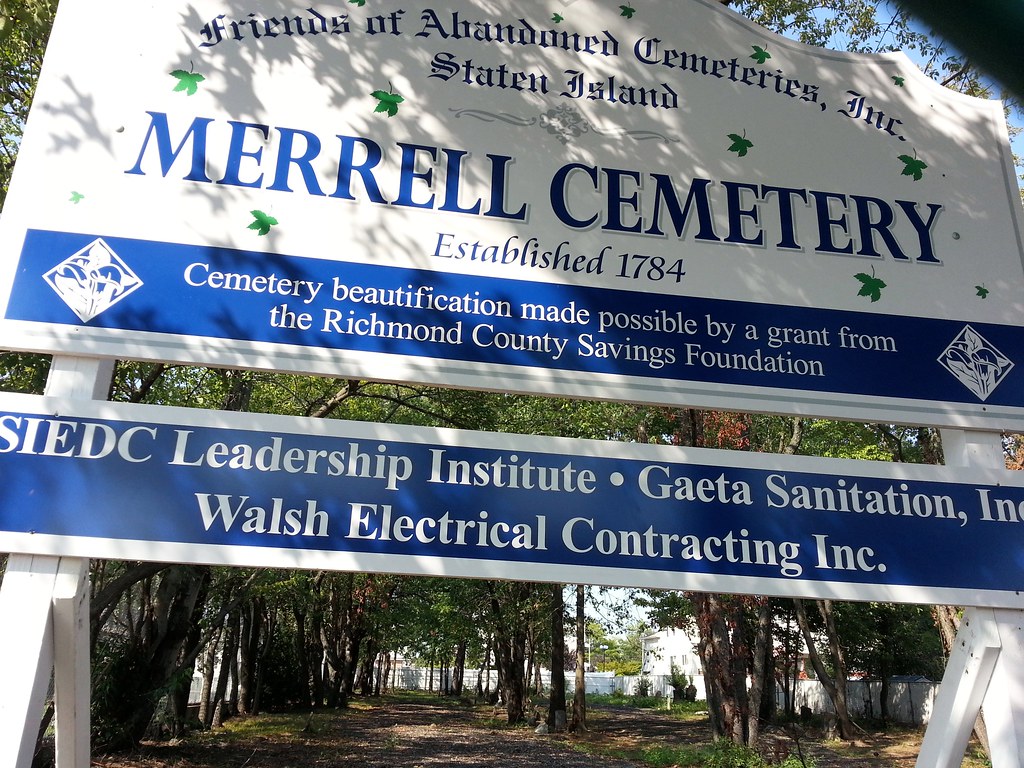
This little cemetery just underwent a pretty thorough cleaning a few months ago. (There are headstones back there, but they're tough to see without zooming in.)
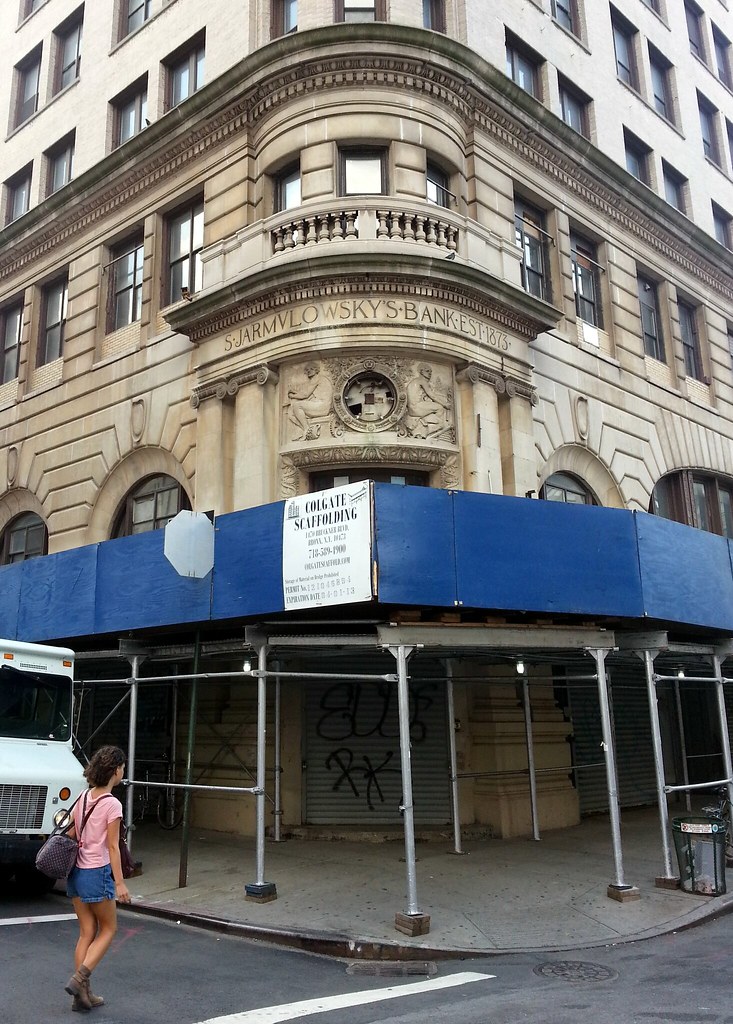
This bank, founded by an ordained rabbi, apparently decided to decorate its new building (the tallest on the Lower East Side when it was finished in 1912) with a common symbol of financial stability and security: two guys sitting on toilets. The bank failed two years after this building opened.
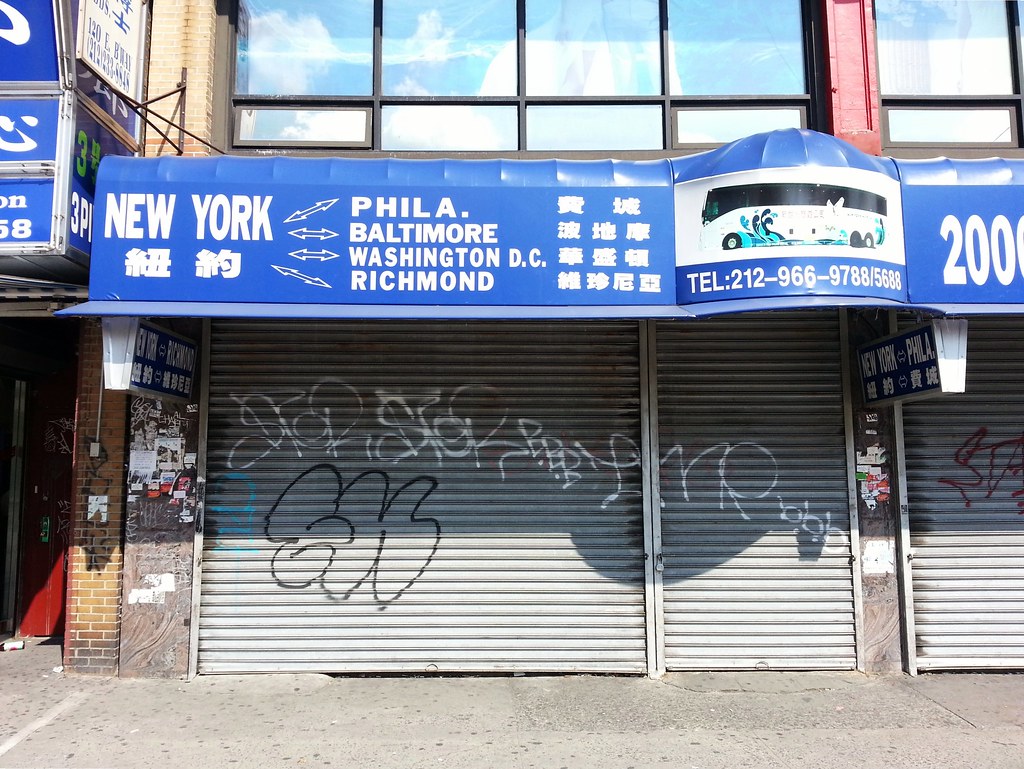
This is one of the 26 Chinatown bus companies shuttered in the massive government crackdown a few months ago. But what has become of all those buses?
You can hear a subway train rumbling by overhead about 30 seconds in.
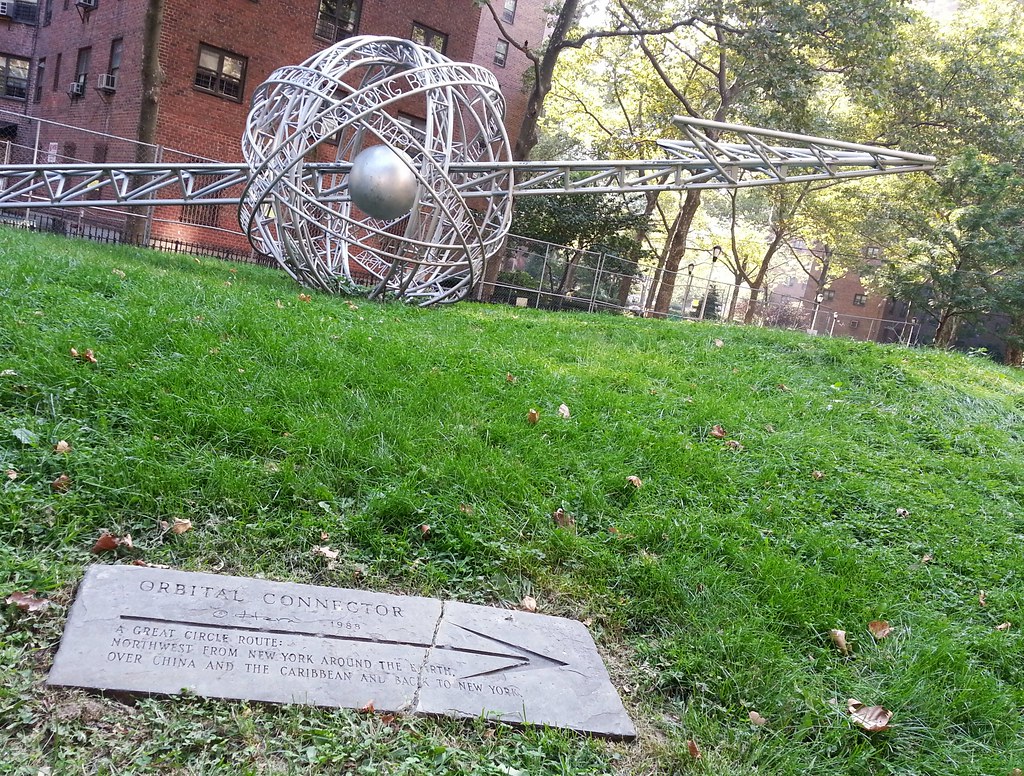
This sculpture indicates the route of a great circle connecting New York, China, and the Caribbean, three places of origin well represented here at the multi-ethnic Governor Alfred E. Smith Houses.
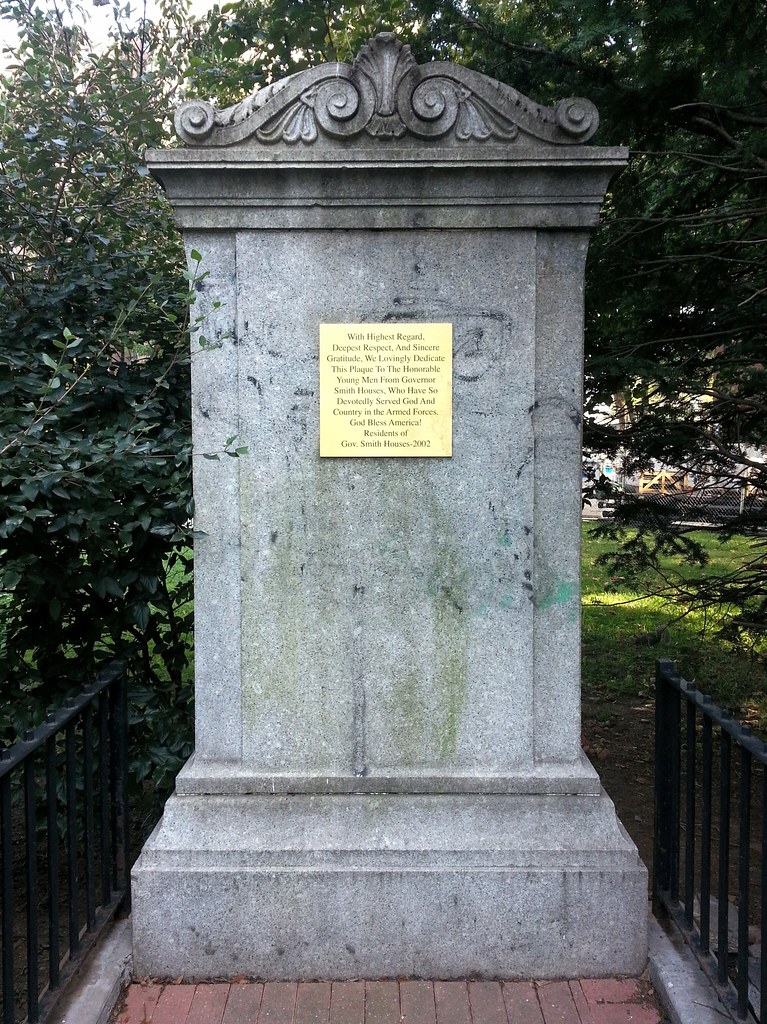
mounted on a (presumably) reappropriated base
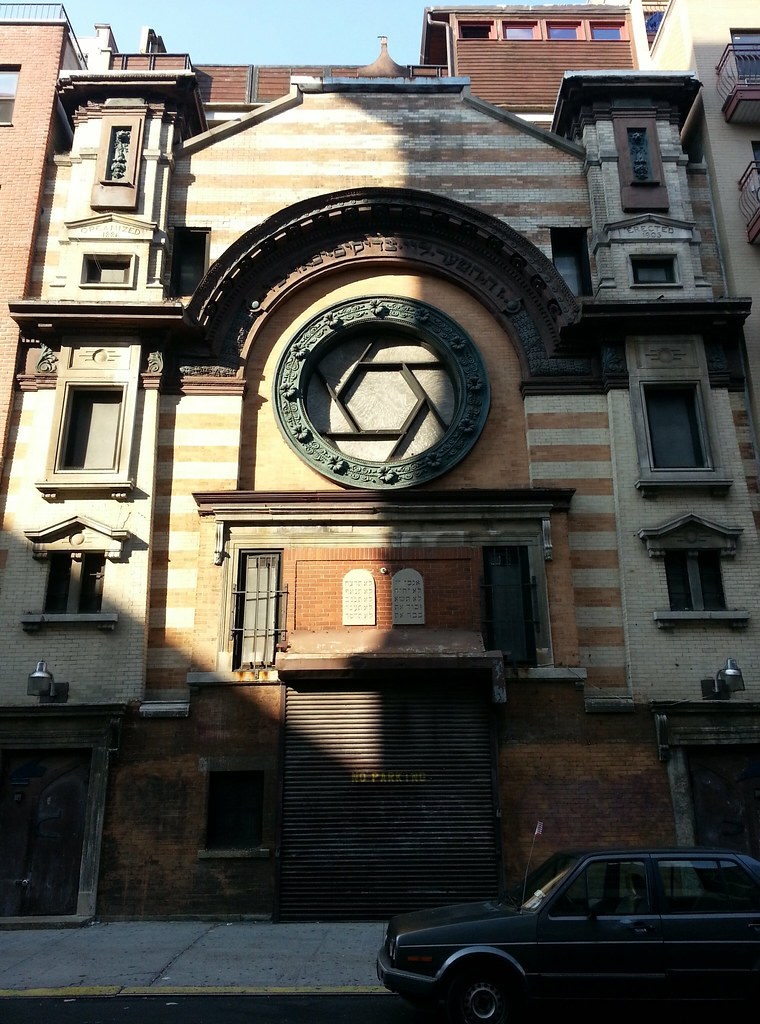
This former synagogue, built in 1903, has served as studio and residential space for artists since 1973.


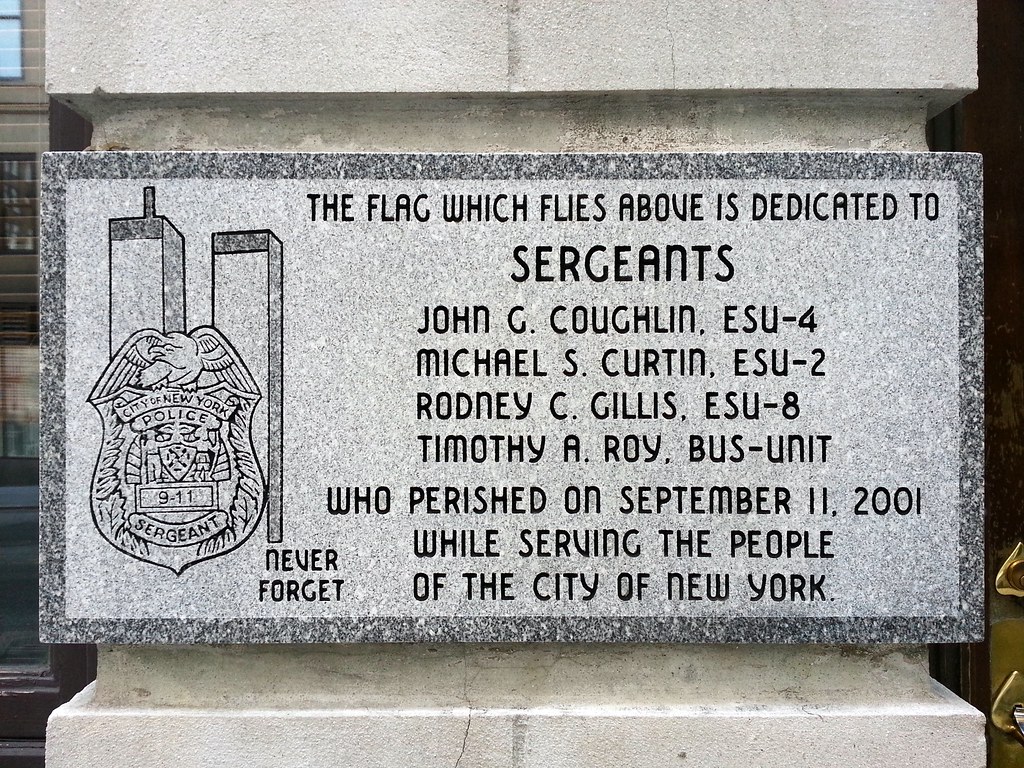
Intended "to impress both the officer and the prisoner with the majesty of the law", this building was, according to the NY Times, "a magnificent anomaly: an ornate Beaux-Arts palace of 1909 in the middle of Little Italy, its grandeur contrasted utterly with the little buildings and crooked streets around it. To come upon the building has always been something like finding the Invalides in the middle of the Marais: its formal sumptuousness didn't fit with what was around it, but somehow that made it all the more mysterious and wonderful."
After the police left in 1973, the building began to fall into disrepair. In the '80s, however, it underwent a multi-million-dollar renovation and conversion into luxury condos. Thus restored to its former glory, it continues to amaze and perplex passersby who happen upon it for the first time.


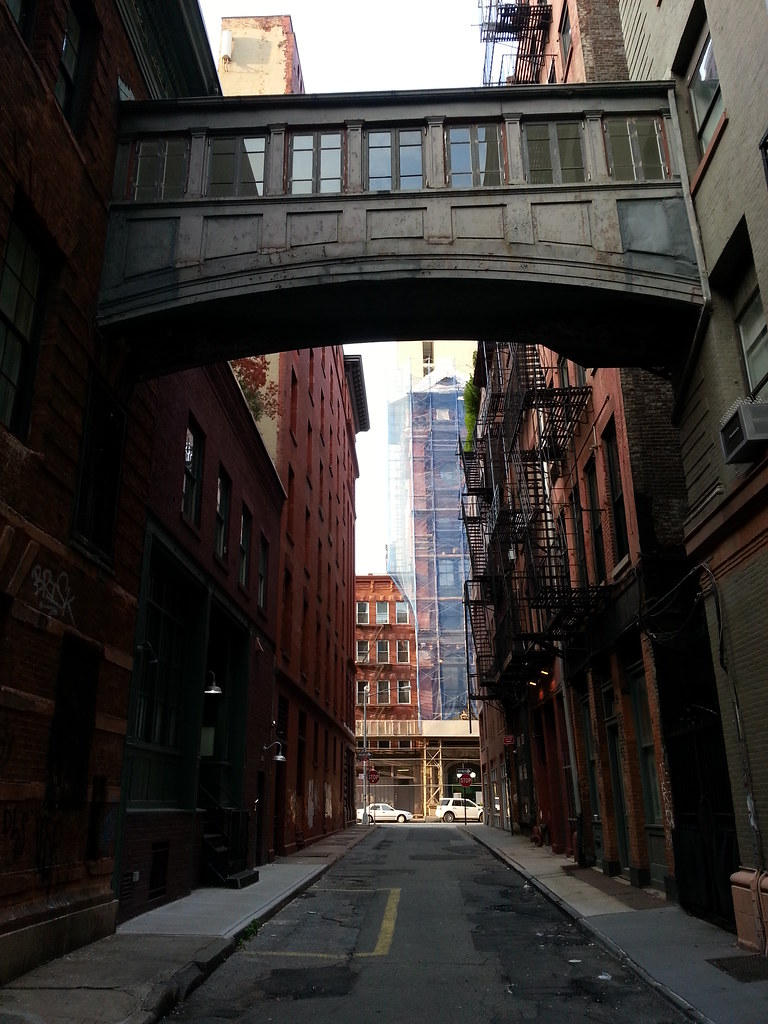
over the two-block-long alley known as Staple Street
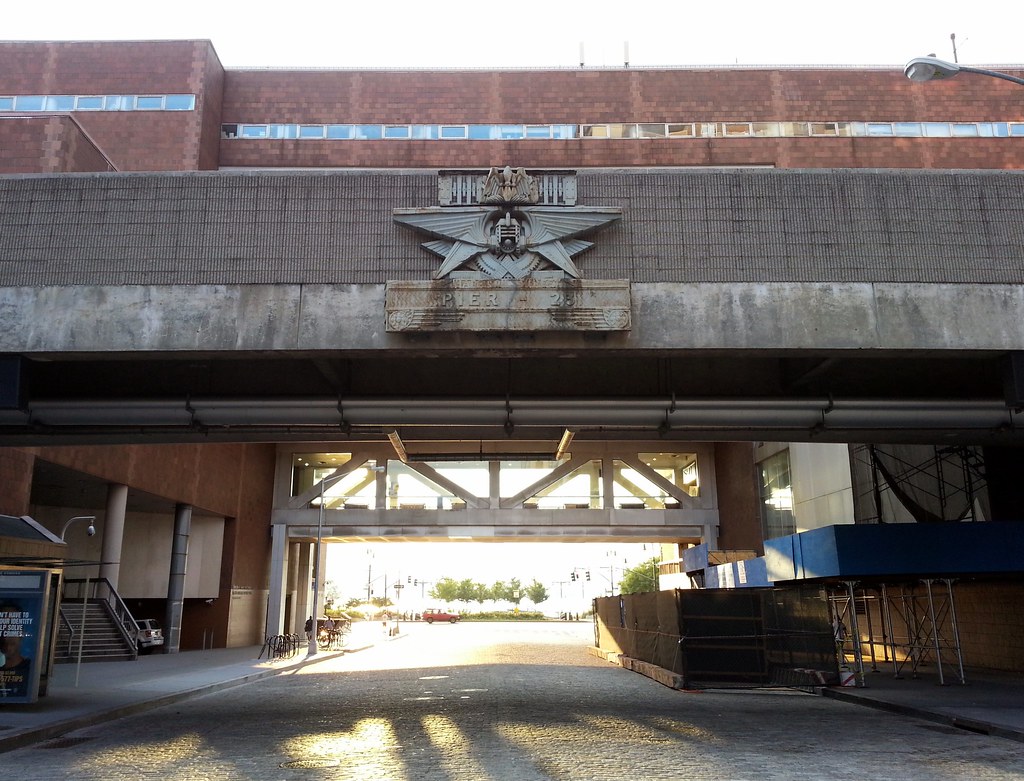
Part of Independence Plaza, this bridge bears a remnant (the Pier 23 sign) of the old elevated Miller Highway, which once ran alongside the nearby Hudson River (almost visible beyond the trees at the end of the block).