


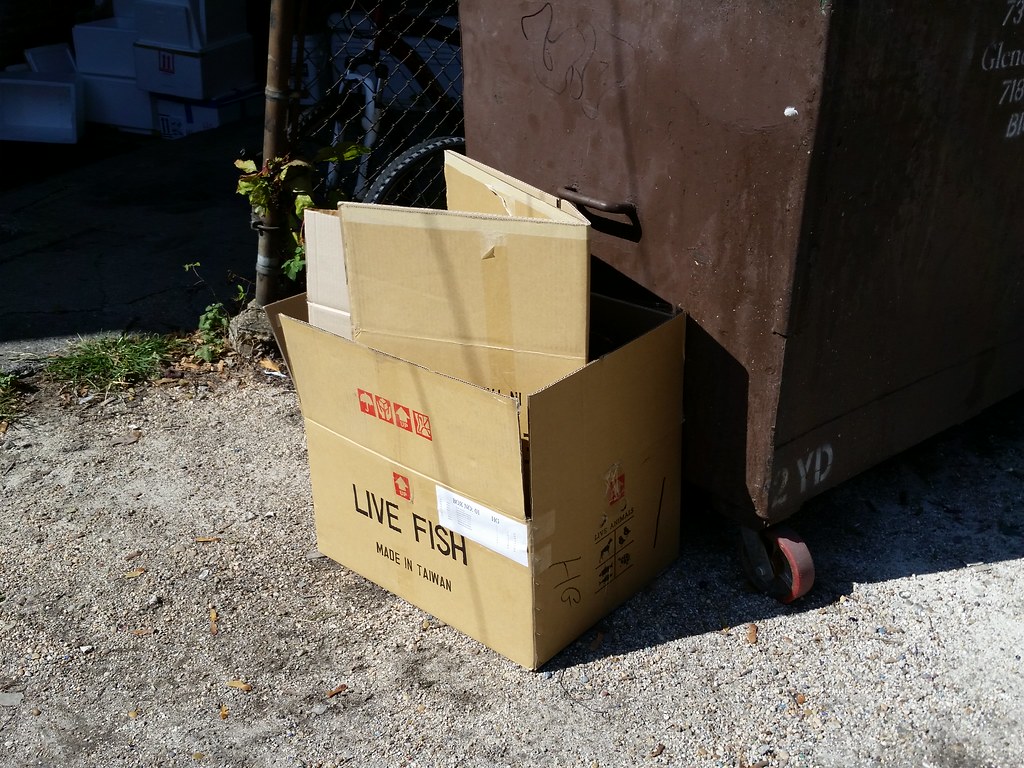
The list of (former) contents:
12 Heros severum
3 Labidochromis caeruleus
3 Pseudotropheus estherae
7 Cichlasoma citrinellum
6 Placidochromis electra
6 Pseudotropheus crabro
6 Metriaclima greshakei
8 Melanochromis johanni
How do they fit that many fish in one box? Kind of like this, I guess.
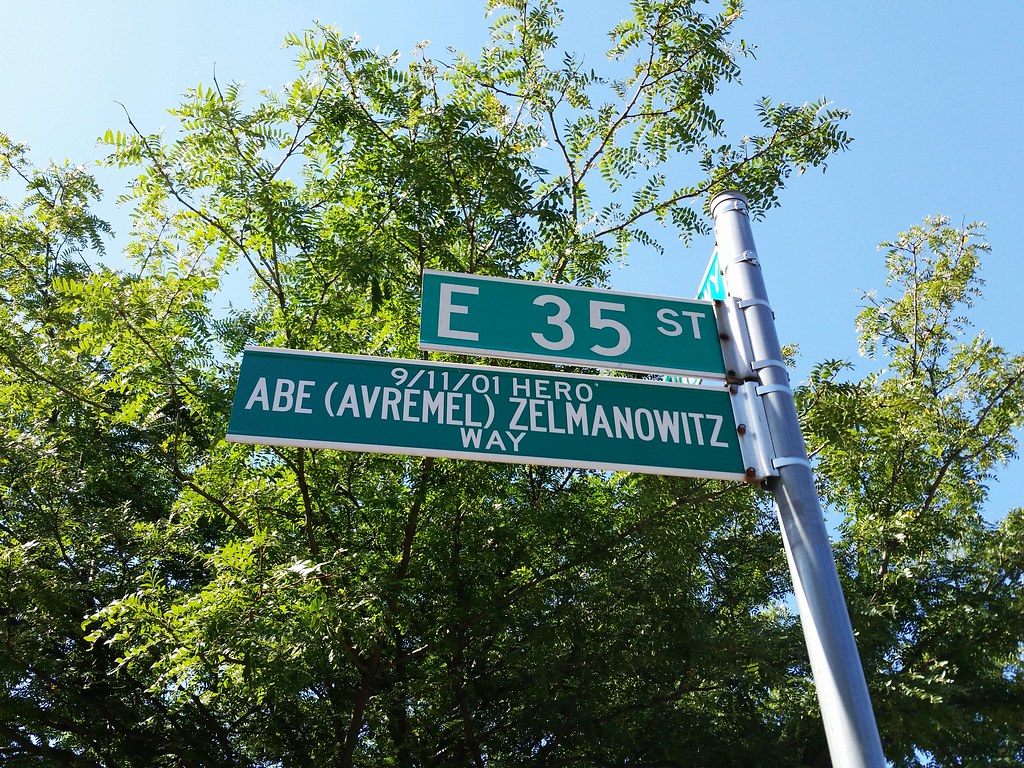
Abe Zelmanowitz worked on the 27th floor of the World Trade Center's north tower. After the first plane hit his building on 9/11, he could have fled to safety with the others on his floor, but he refused to abandon Ed Beyea, his quadriplegic co-worker, who was unable to use the stairs. The two of them were discovered by firefighters searching their floor shortly before the south tower collapsed. Realizing it wouldn't be long before the north tower followed suit, FDNY Captain Billy Burke instructed the other firefighters on the floor to leave the building. They did, rescuing two others on the way down, and they all survived by the slimmest of margins. Captain Burke decided to remain with Abe and Ed, perhaps with a long-shot plan of rescuing them, and all three were killed shortly thereafter when the north tower fell.
Here's a nice story about Abe's sister going to Afghanistan to meet a man whose brother and sister-in-law were killed by an errant American bomb a couple of months after 9/11.
(In case you're wondering, I don't count individual streets renamed for 9/11 victims as memorials in my running tally; I consider them all to be part of one citywide memorial.)

Perhaps this family in Midwood/Flatlands got the idea from a Crown Heights rabbi. From the NY Times, a decade ago:
Rabbi Berl Haskelevich, 58, is no environmentalist. A cabala scholar, he can barely keep his recyclables straight. But this time of the year, he reuses several hundred plastic Coca-Cola crates to make a sleek red hut on the front porch of his brick house in Brooklyn.(Note the eruv string attached to the post at the corner of the sukkah.)
Fitting the cases neatly together like Lego pieces to form solid plastic walls, he builds his sukkah, the makeshift structure that many Jews use to celebrate Sukkot, the weeklong holiday of the harvest . . .
"What can I say? I drink a lot of Coke," said Rabbi Haskelevich, standing on the front porch of his house on Montgomery Street in Crown Heights, where many of the stately brick homes have sukkot (the plural of sukkah) on front porches and balconies. The rabbi had accumulated many Coke cases, and the youngest of his nine children first suggested using them as sukkah building blocks.
"It's my third year using them," he explained. "They don't get rotten like wood. It's sturdy, and it looks beautiful. I get a lot of compliments."
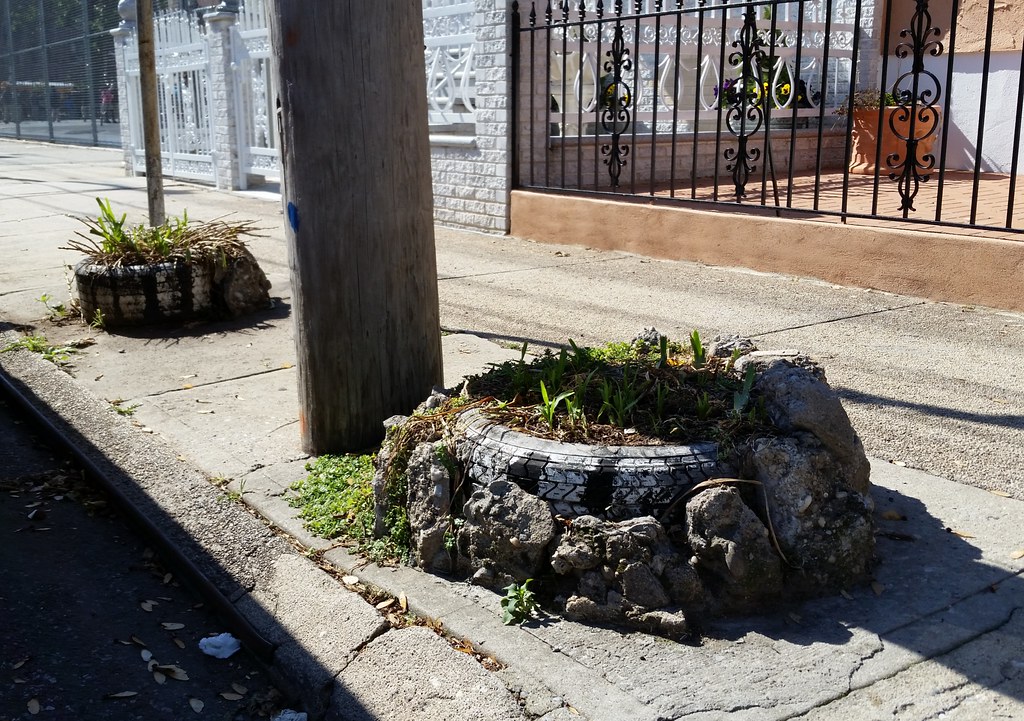
I had always held up the inside-out tire planter as the pinnacle of gardening elegance, but that was before I laid eyes on this exquisite beauty. (There was also an inside-out one just out of frame to the right.) (Also, remember this guy?)
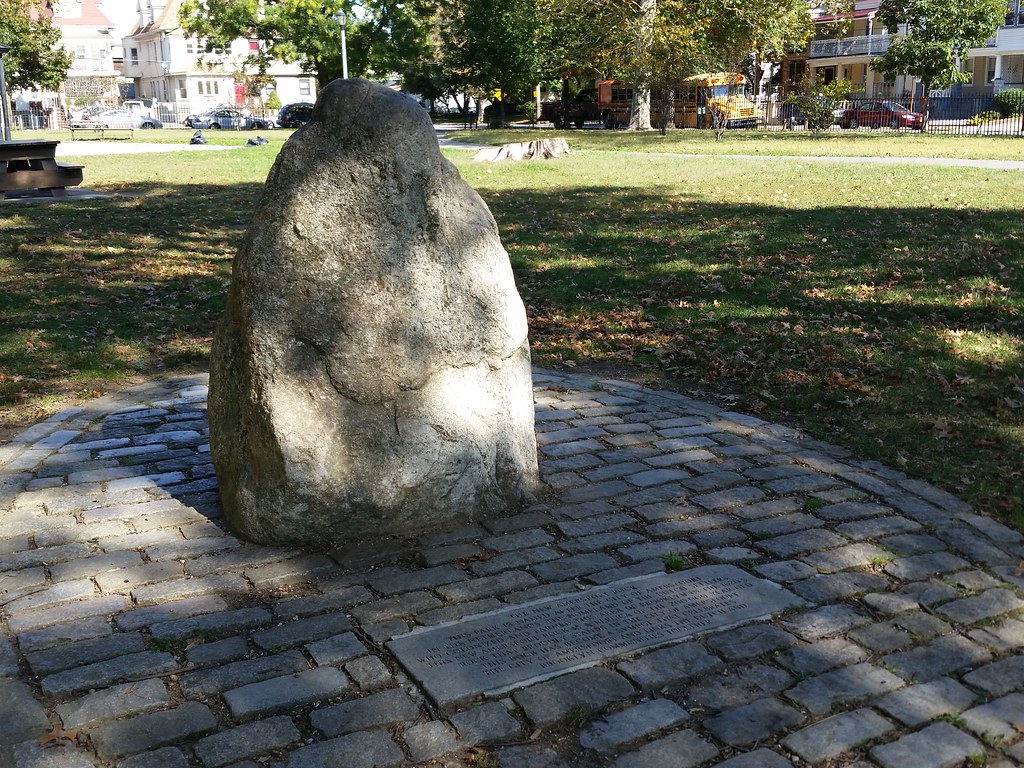
According to the inscribed tablet at the base of this rock in Amersfort Park:
This park is named after the city of Amersfoort in the Netherlands, the homeland of the Dutch settlers who colonized and farmed this area of Brooklyn in the 1620's. This New Amersfort Rock is a replica of the 200,000 year old rock that proudly stands in the city of Amersfoort. This rock has become a symbol that celebrates the city of Amersfoort and links the Dutch and Brooklyn communities together.The legend behind the original rock in Amersfoort (two o's, as opposed to one in the Brooklynized name), known as the Amersfoortse Kei, varies a little from telling to telling, but it goes something like this:
Hundreds of years ago, there was a boulder that sat along the road outside of town. (It was carried there by a glacier some 150,000-200,000 years ago; I assume that's what the "200,000 year old" claim on the tablet refers to.) in 1661, Everard Meyster, a local aristocrat, made a bet with some friends that he could convince the people of Amersfoort to drag the 8-ton boulder into town in exchange for some beer and pretzels. He was apparently successful; 400 residents showed up and hauled the massive rock all the way to the town square to put it on display.
People from other towns started making fun of the Amersfoorters for having spent so much effort doing something so pointless. They referred to them derisively as "keien trekkers", which translates roughly to "boulder pullers". Embarrassed by this, the Amersfoorters decided to bury the boulder around 1672, hoping people would forget the whole story.
The boulder was uncovered in 1903, and the people of Amersfoort, sufficiently temporally removed from the shame of their forebears, decided to display it proudly once again. To this day, it stands on a pedestal in the central part of the city. Check it out in Street View!
I'm not sure how closely the Brooklyn "replica" resembles the original. Comparing photos, they seem to be roughly the same shape and color, but that might be the extent of their similarities (although it's hard to say without seeing them both in person). I don't know if someone actually tried to make the Brooklyn boulder look like the original, or if they just found a big rock and thought, "Hey, this looks kinda like that one back in Amersfoort."
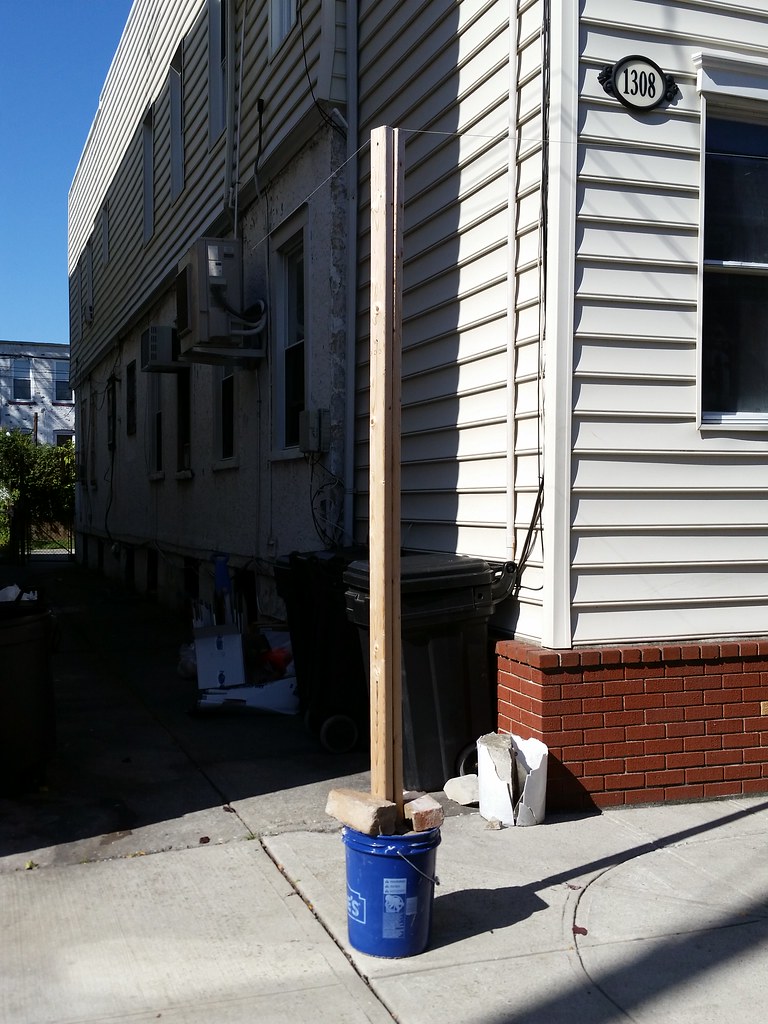
An eruv is a ritual enclosure in which observant Jews are allowed to carry/transport things (like prayer books or baby strollers) in public on the Sabbath, which would otherwise be forbidden. Walls, fences, and the like can be part of an eruv, but it's common practice to use strands of fishing line, like the ones attached to the top of this wooden post, to extend the boundaries of an eruv beyond physical barriers. Some eruvs, like the Manhattan Eruv, are enormous, encompassing multiple neighborhoods. Others, like the one above, just include one or two buildings.
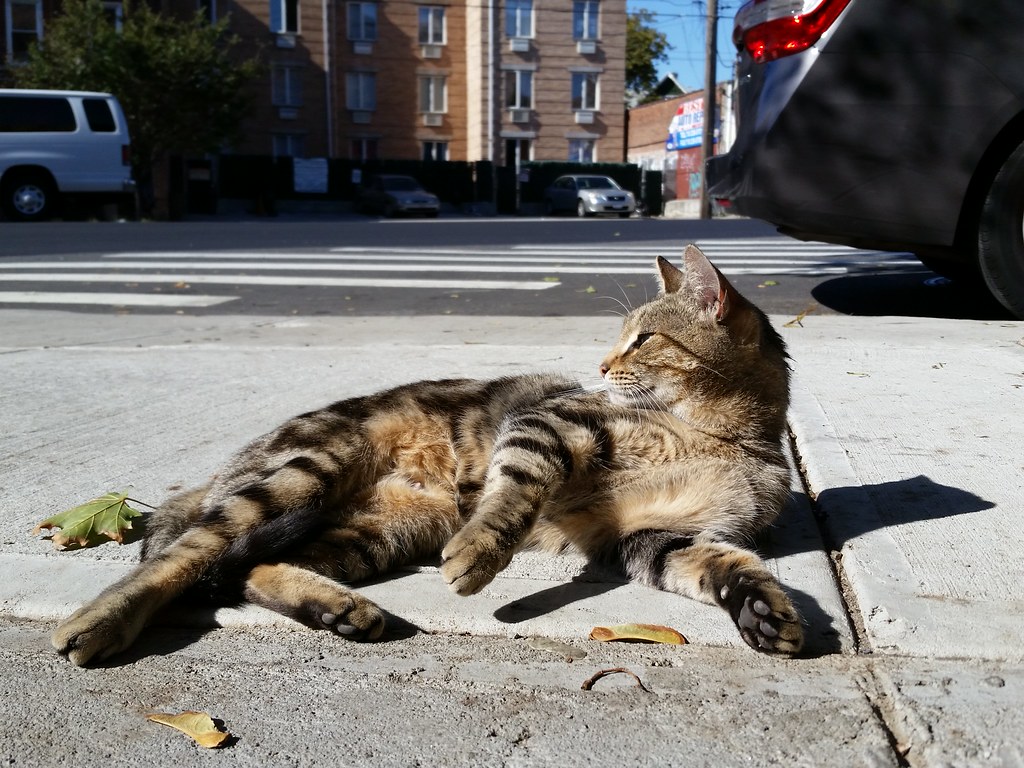
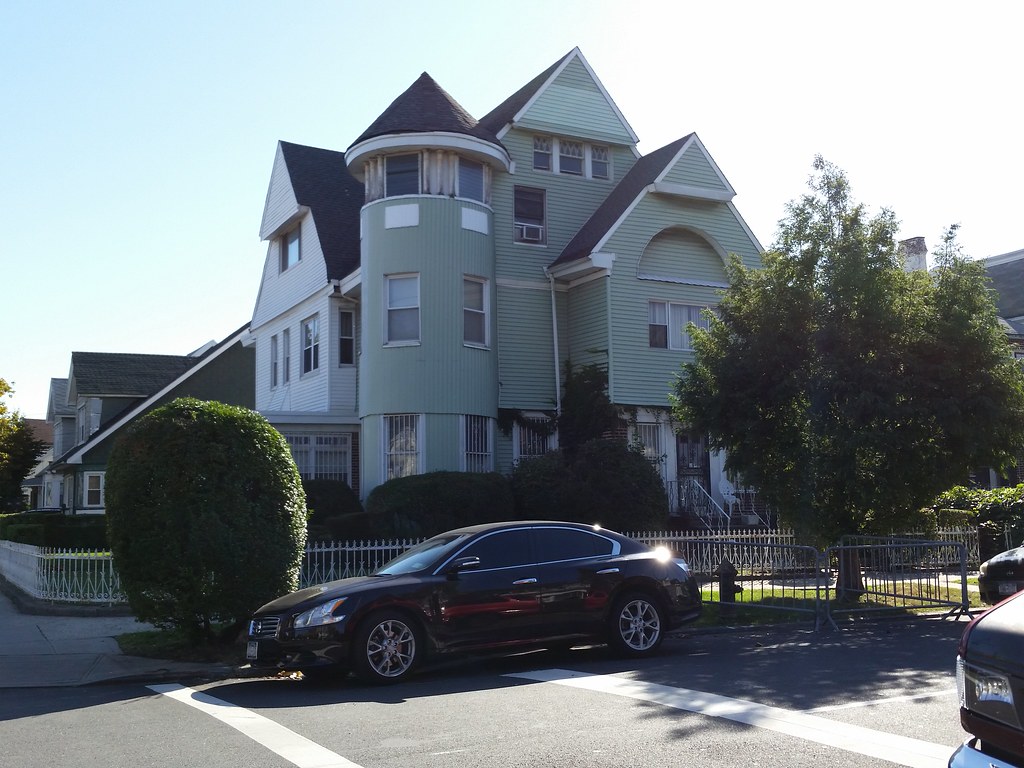

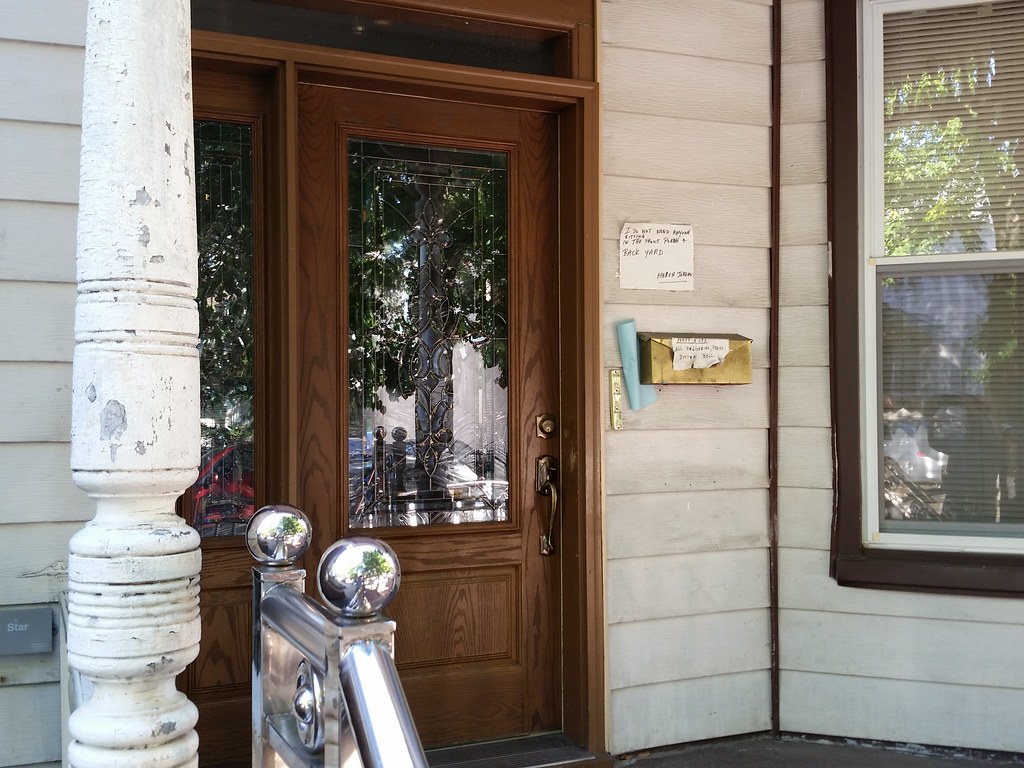
The sign posted beside the door informs passersby that "I DO NOT NEED ANYONE SITTING IN THE FRONT PORCH + BACK YARD".
I'm walking every street in New York City.
This is the counterpoint to my walk across the US. Instead of seeing a million places for just a minute each, I'm going to spend a million minutes exploring just one place. By the time I finish walking every block of every street in all five boroughs, I'll have traveled more than 8,000 miles on foot — all within a single city. Details!
Email me at matt@imjustwalkin.com
Subscribe to my email list
Maps: Progress | Photos

~9,954 miles walked
Your donations allow me to keep walking full-time. If you think what I'm doing is valuable and you'd like to offer some support, I would be very grateful. On the other hand, if you think I'm a worthless bum, feel free to email me and tell me to get a job, bozo. Both are excellent options!
