

Because who wants a barber with a plan?

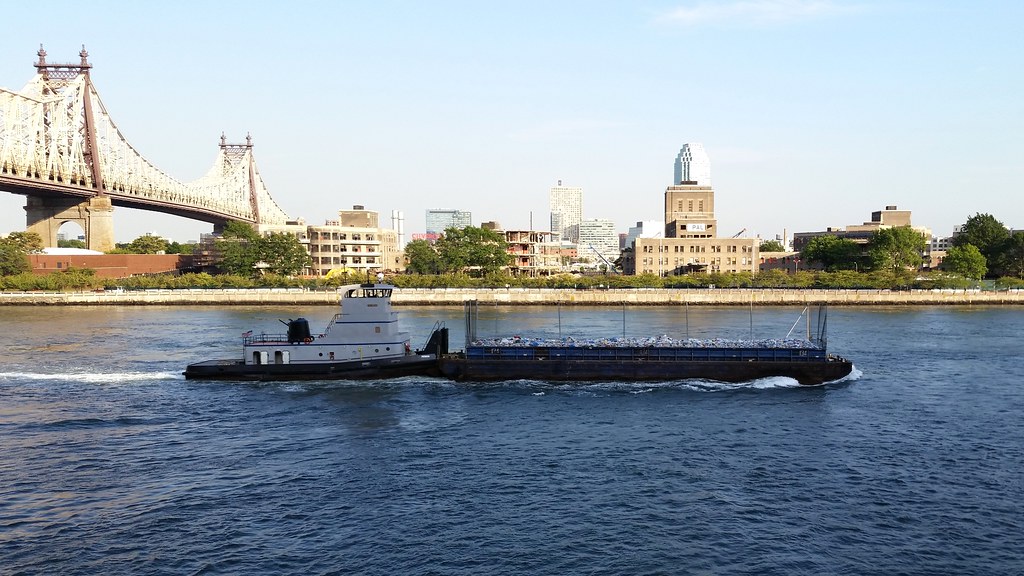
I can't actually tell if it's carrying garbage or recyclables.
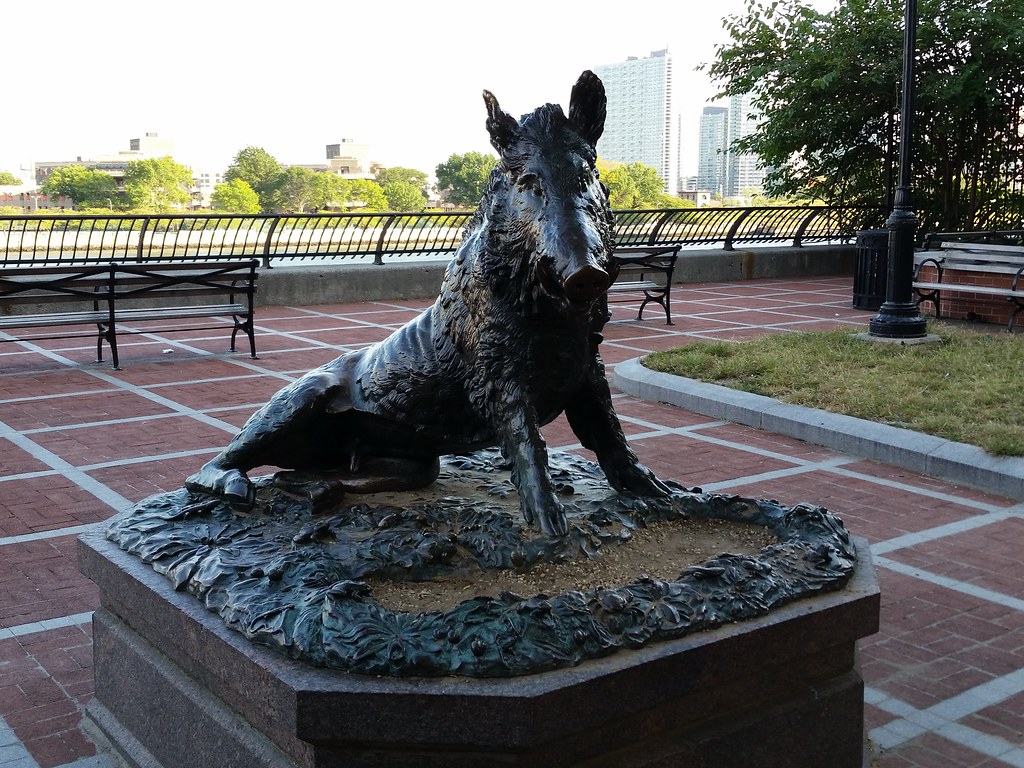
Copy of a copy of a copy? This boar, complete with a slew of surrounding critters (including a snake about to devour a frog), is a replica of the famous 17th-century Porcellino in Florence, Italy. The Porcellino was itself modeled on an earlier marble sculpture that is quite possibly a reproduction of a Hellenistic original.
This sculpture was a gift from Hugh Trumbull Adams, a neighborhood philanthropist who also donated the Peter Pan statue that now stands in Carl Schurz Park, as well as an armillary sphere located a few blocks south of here.

The neo-Georgian town house at center has been the official residence of the U.N. secretary general since 1972. (There's a police security booth located just out of frame to the right.) The building owes its current appearance to Anne Morgan, the youngest child of J.P. Morgan, who bought two neighboring houses here in 1921 and had them rebuilt into the structure you see above. Ms. Morgan was part of "an exodus of society from Fifth Avenue and elsewhere to [Sutton Place]", which transformed this little two-block stretch into "one of the fanciest addresses in New York".
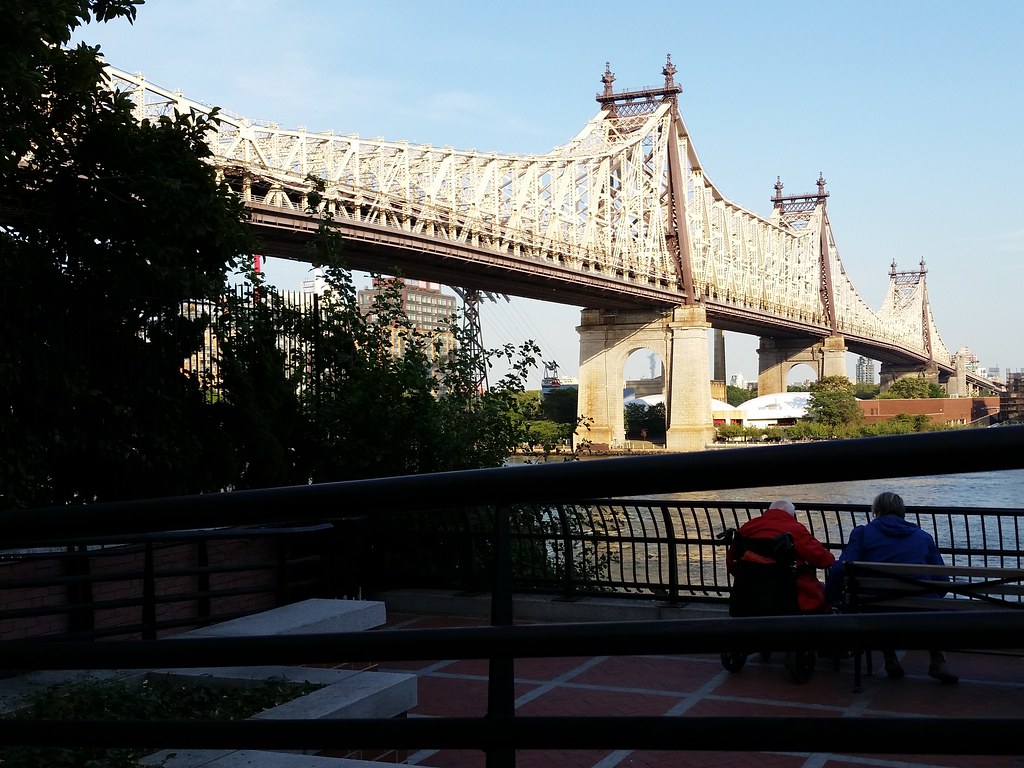

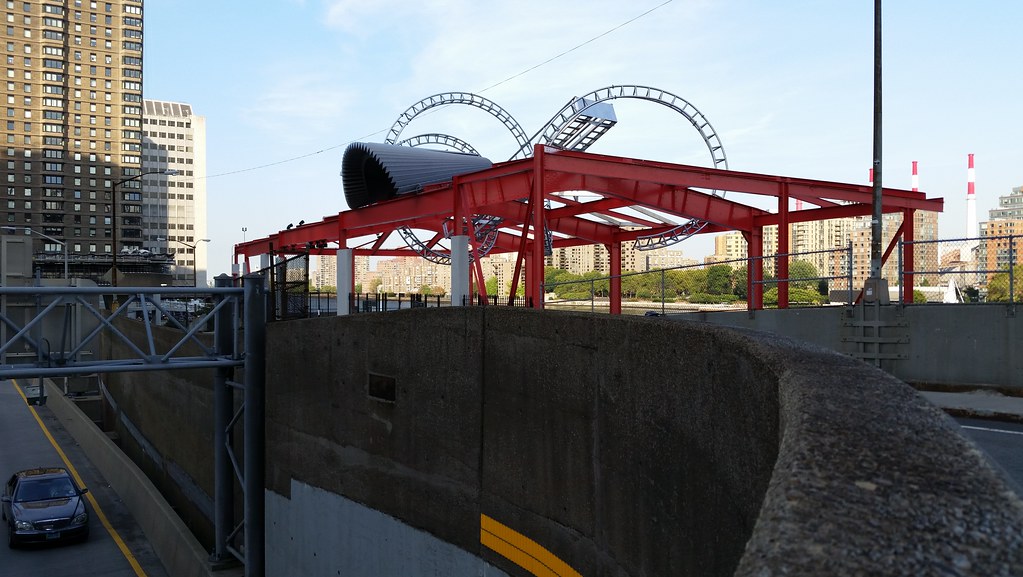
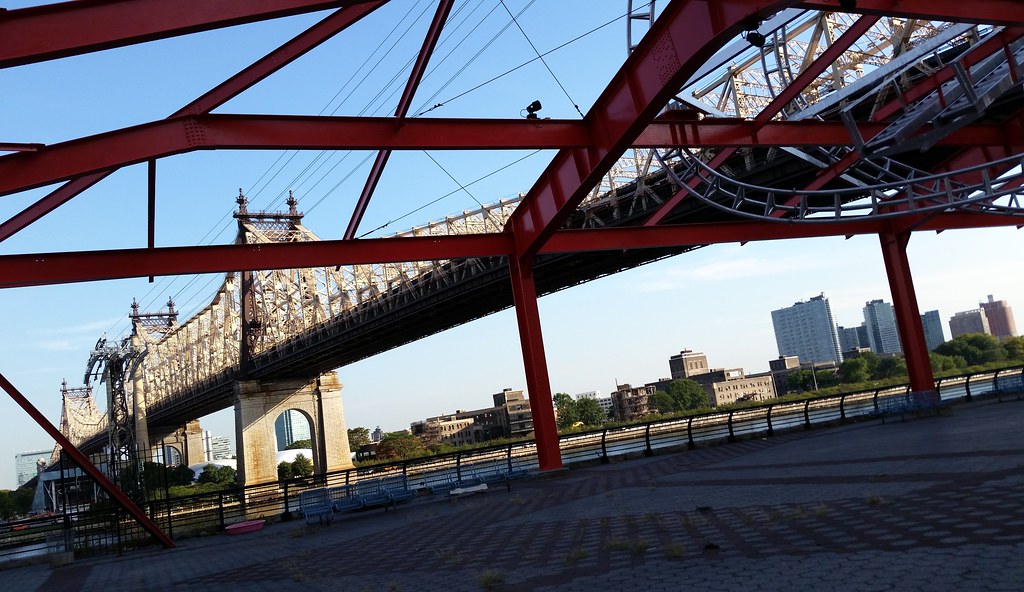
as seen from East River Roundabout, the helical aluminum sculpture mounted on top of the red steel beams. (Those beams once supported the roof of the former garbage transfer station that still stands beneath my feet.) The sculpture, dedicated in 1995, recently became part of the new Andrew Haswell Green Park, the only substantial public monument (not counting a bench in Central Park) to a man who was "arguably the most important leader in Gotham's long history, more important than Peter Stuyvesant, Alexander Hamilton, Frederick Law Olmsted, Robert Moses and Fiorello La Guardia."

This massive stone retaining wall beside the FDR Drive was built in the early part of the 20th century by the Rockefellers, whose namesake university stands above it. You can take a closer look at the wall's "fabulously craggy stonework" in Street View.

When this generating station began operating in 1902 (here are some great photos of its construction), it powered all four of Manhattan's newly electrified elevated rail lines. It's now owned by Con Edison and is used to produce steam for the world's largest steam system.
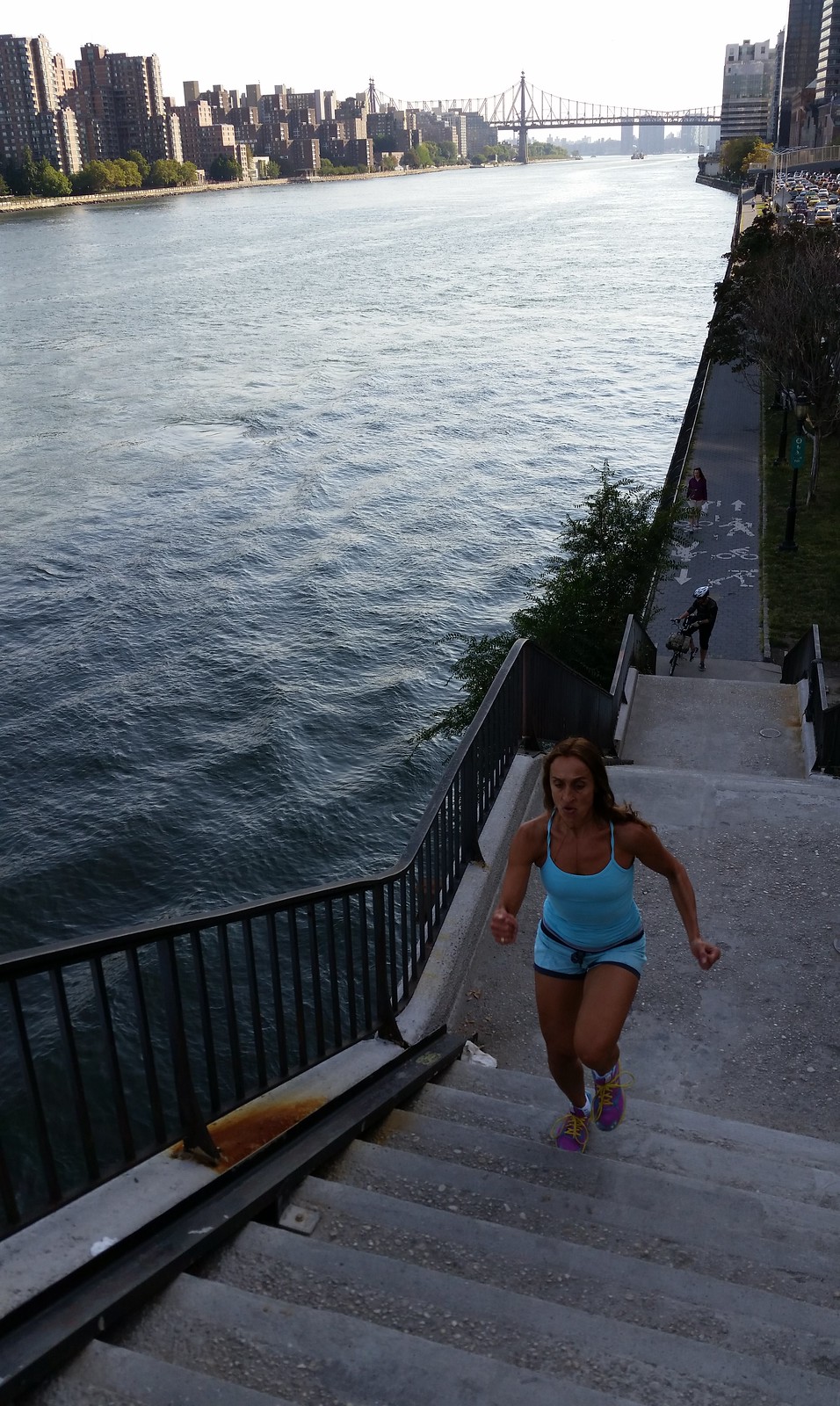

From a 1941 NY Times article:
Dr. Finley was New York's most peripatetic philosopher. Indeed, he had covered half the world afoot, watching the human scene with kindly eyes. . . . But it was over this peaceful and marvelous Island of Manhattan that he liked most of all to wander, counting that day lost when he had not checked off at least 10 miles. Once each year he walked entirely around the island, covering part of that promenade that now bears his name. Today, because it does bear his name and because it perpetuates his walking image wrought in iron by an artist who knew him in his forward-tilted stride, it will help others see with his understanding eyes the shimmering waters that girdle us, the towered silhouette of the city and all the friendly passers-by who give life and meaning to the Manhattan panorama.
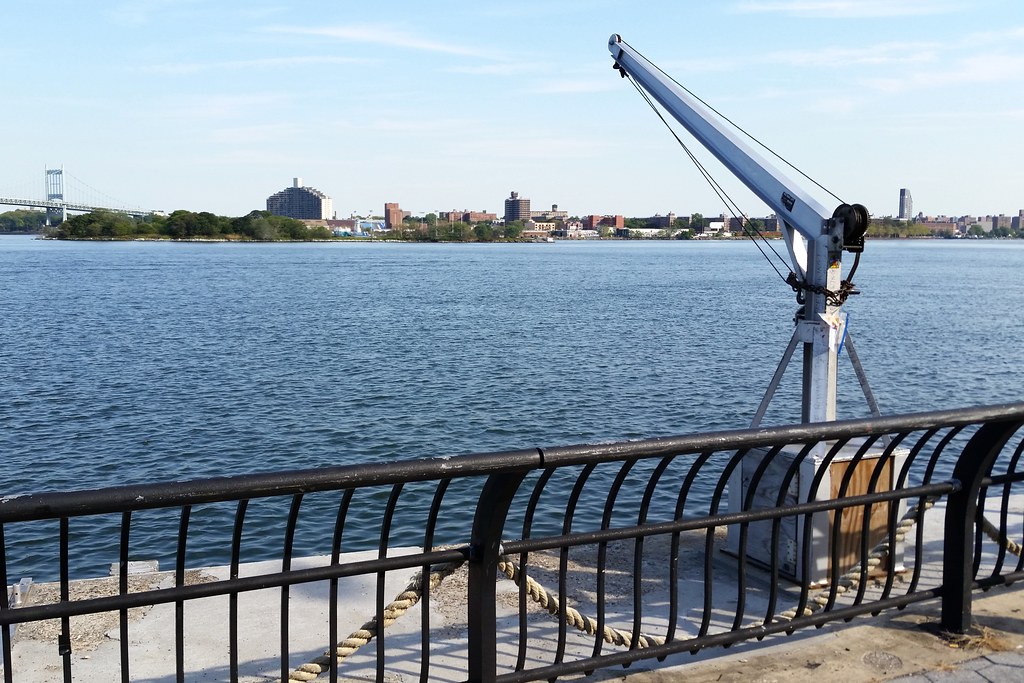
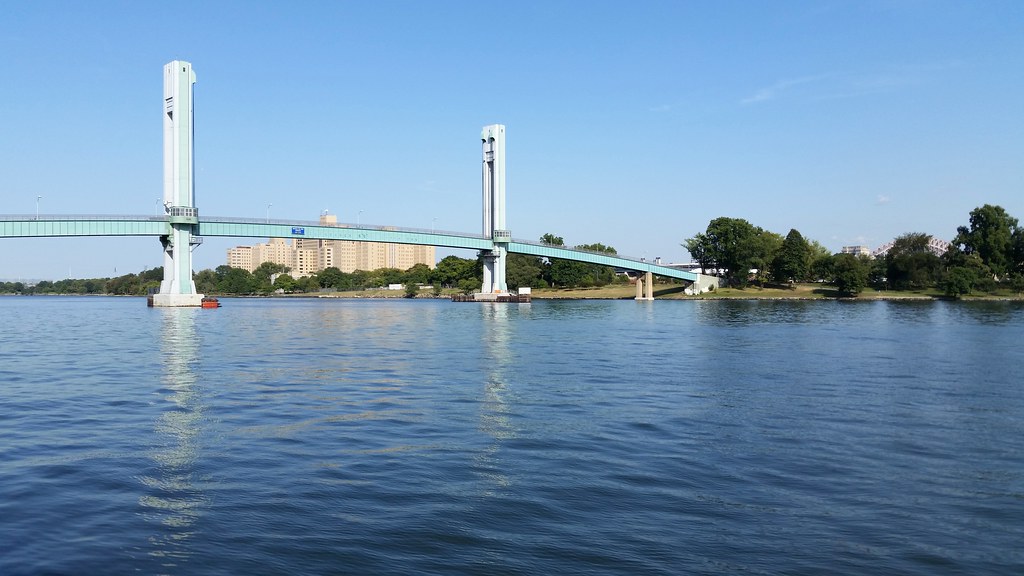
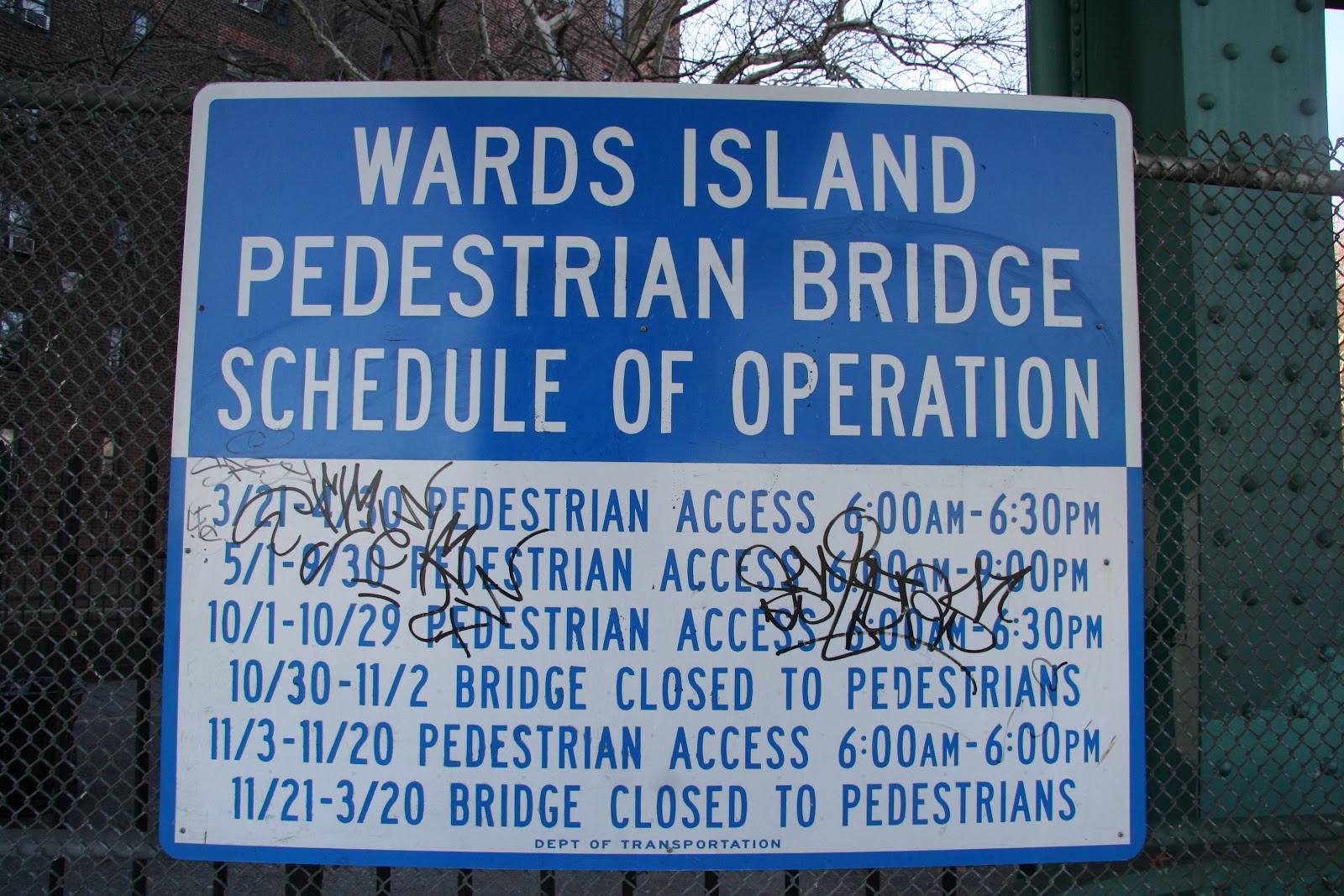
Opened in 1951, this pedestrian bridge connects East Harlem with Randall's and Wards Islands. For many years, the bridge was closed (i.e., the center span was raised, as it would be if a large boat were passing beneath) at night and during the colder months of the year because of various security concerns: residents of a Wards Island homeless shelter near the bridge crossing into East Harlem to buy drugs and cause trouble, young men from East Harlem attacking the homeless, and patients escaping from the Manhattan Psychiatric Center (visible behind the center span of the bridge) and fleeing across the bridge. The bridge was also closed for a few days around Halloween each year, presumably in response to this incident. After undergoing a major rehabilitation, the bridge reopened in 2012 and is now open to foot traffic at all times.
I'm walking every street in New York City.
This is the counterpoint to my walk across the US. Instead of seeing a million places for just a minute each, I'm going to spend a million minutes exploring just one place. By the time I finish walking every block of every street in all five boroughs, I'll have traveled more than 8,000 miles on foot — all within a single city. Details!
Email me at matt@imjustwalkin.com
Subscribe to my email list
Maps: Progress | Photos

~9,954 miles walked
Your donations allow me to keep walking full-time. If you think what I'm doing is valuable and you'd like to offer some support, I would be very grateful. On the other hand, if you think I'm a worthless bum, feel free to email me and tell me to get a job, bozo. Both are excellent options!
