
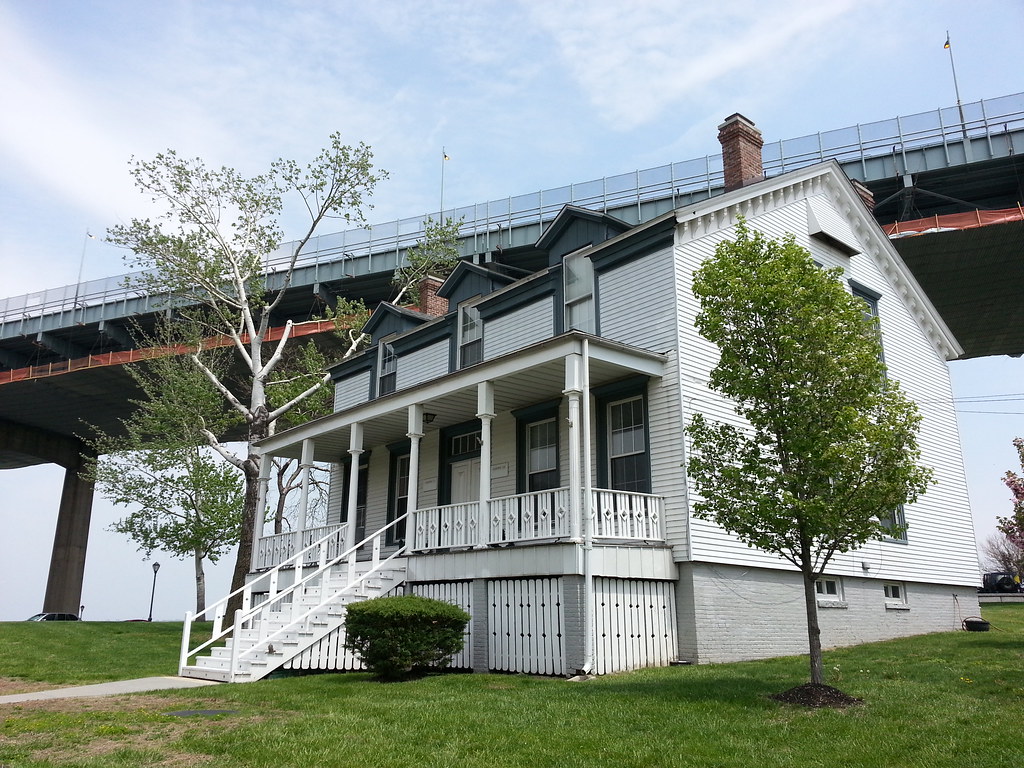
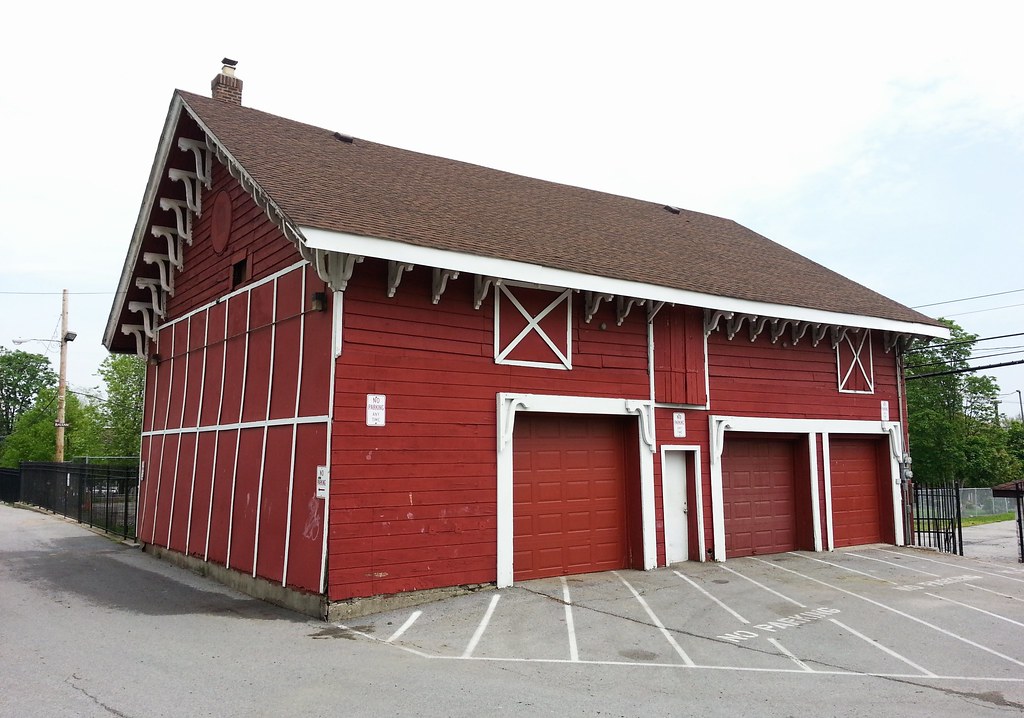
This is one of four handsome houses standing in a row on the grounds of old Fort Schuyler, where perhaps they were once officers' quarters. The fort and the surrounding property now serve as the campus of SUNY Maritime College, and the houses are currently used as faculty residences. There was originally a fifth house standing to the left of this one (compare a 1924 aerial photo to a 1996 photo), but it was knocked down to make way for the Throgs Neck Bridge.
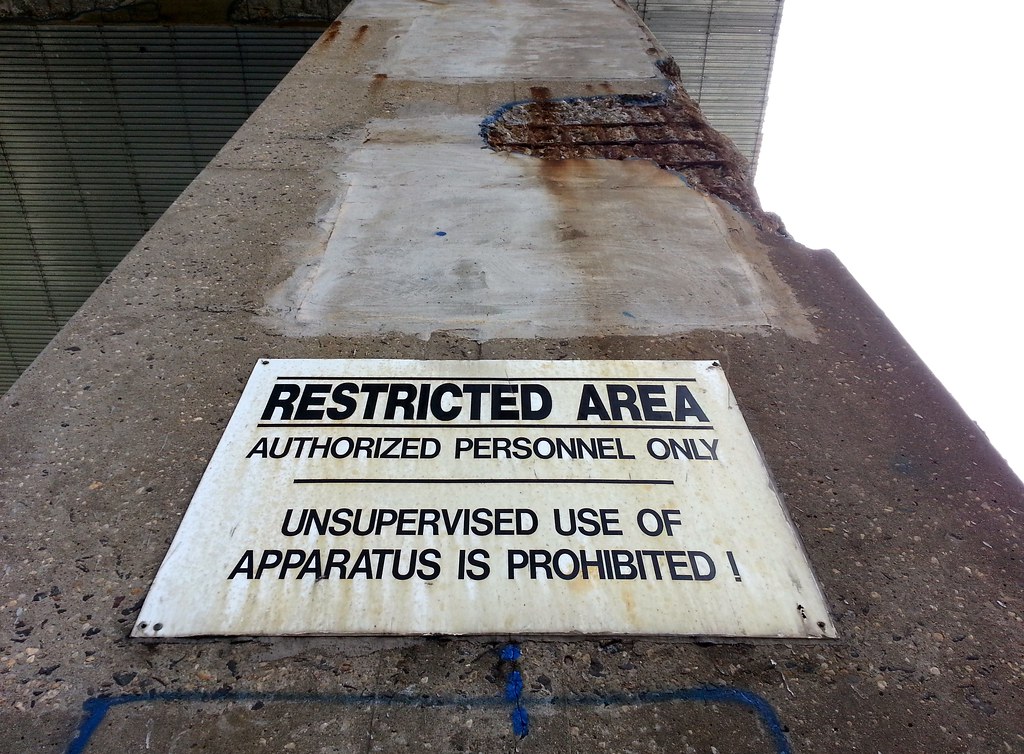
where people are trying to use apparatus without supervision?


The long, curving approach on the Bronx side of the Throgs Neck Bridge

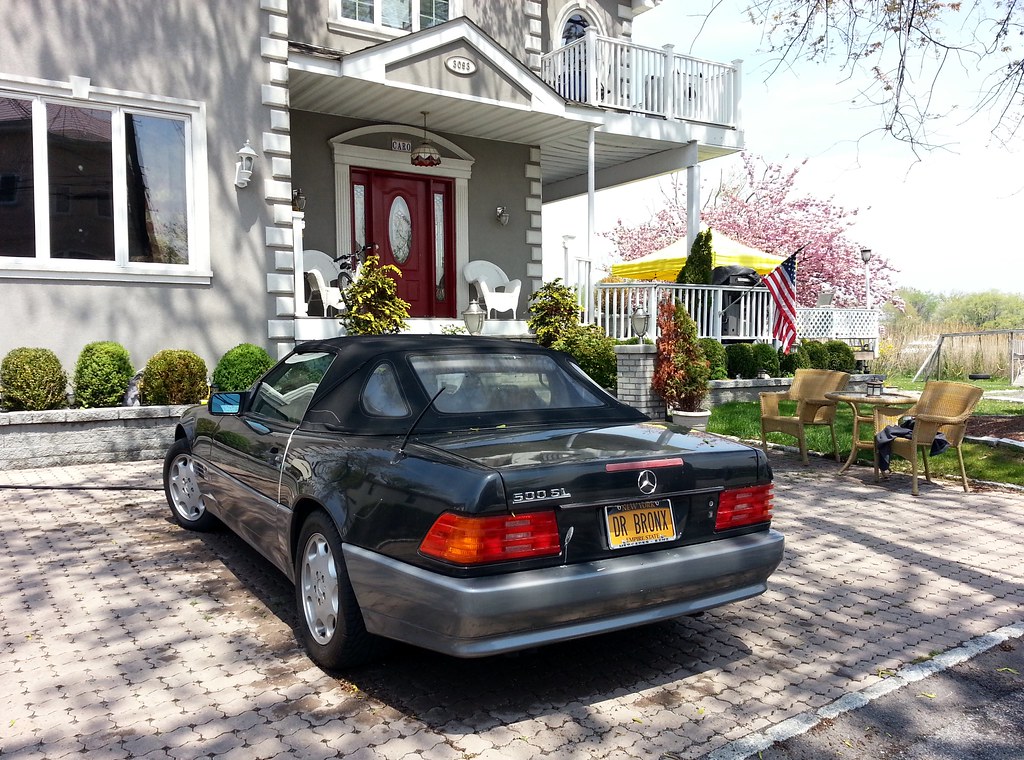

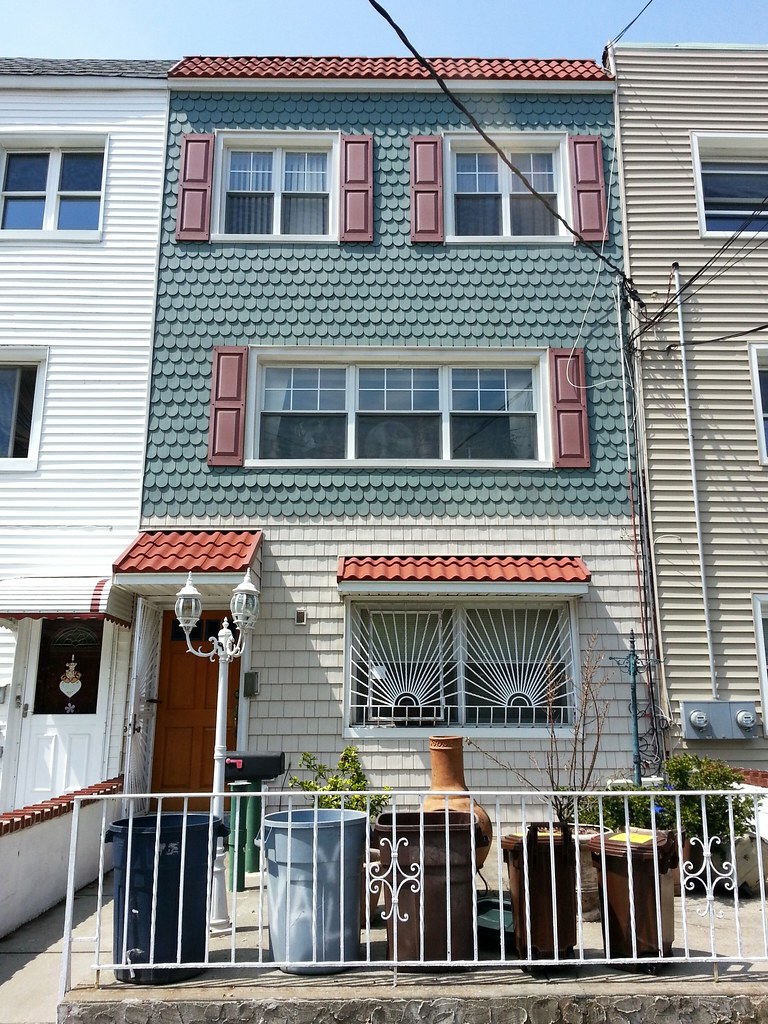
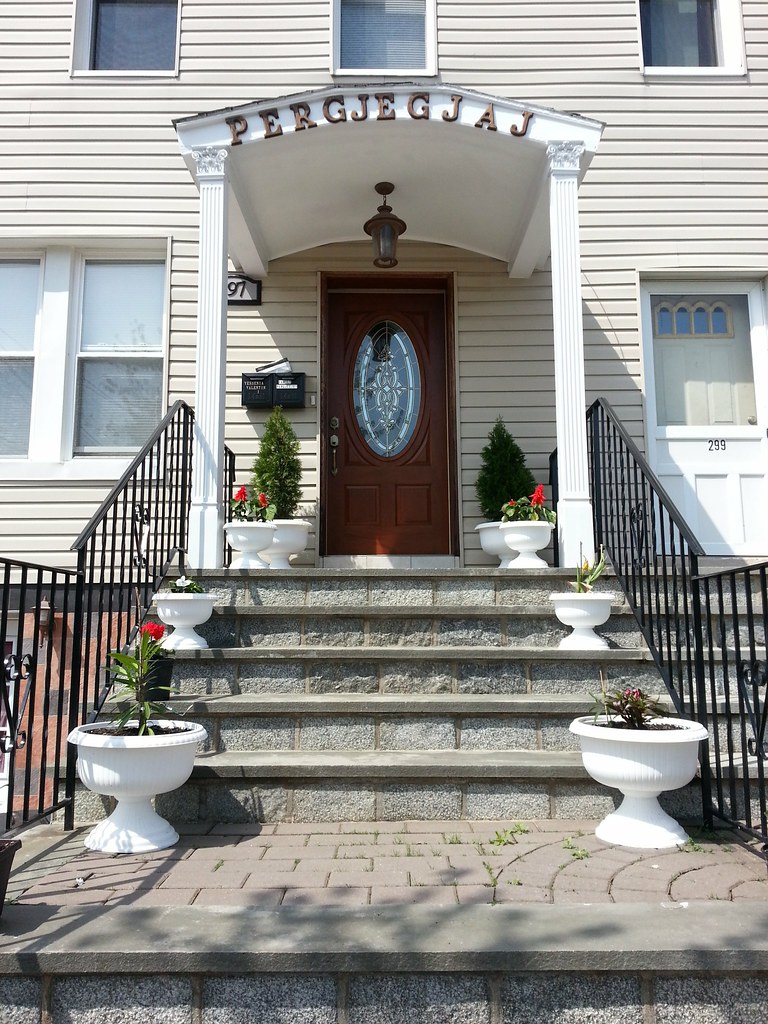
Speaking of such names, the Bronx is home to tens of thousands of Albanian-Americans. While searching for information on this subject, I came across two interesting articles: 1) a 2001 piece about the dozens of Italian restaurants in the NYC metro area that are actually run by Albanians, and 2) a 1999 story about local Albanians preparing to enlist as volunteers in the Kosovo Liberation Army:
Scores of them, from youths barely out of high school to grizzled men old enough to be their grandfathers, jammed [Frank's Sport Shop on East Tremont Avenue] to buy fatigues, pistol belts, compasses, boots and night-vision binoculars. Duty dictated that they fight for a place some of them had never visited or a country others left decades ago.

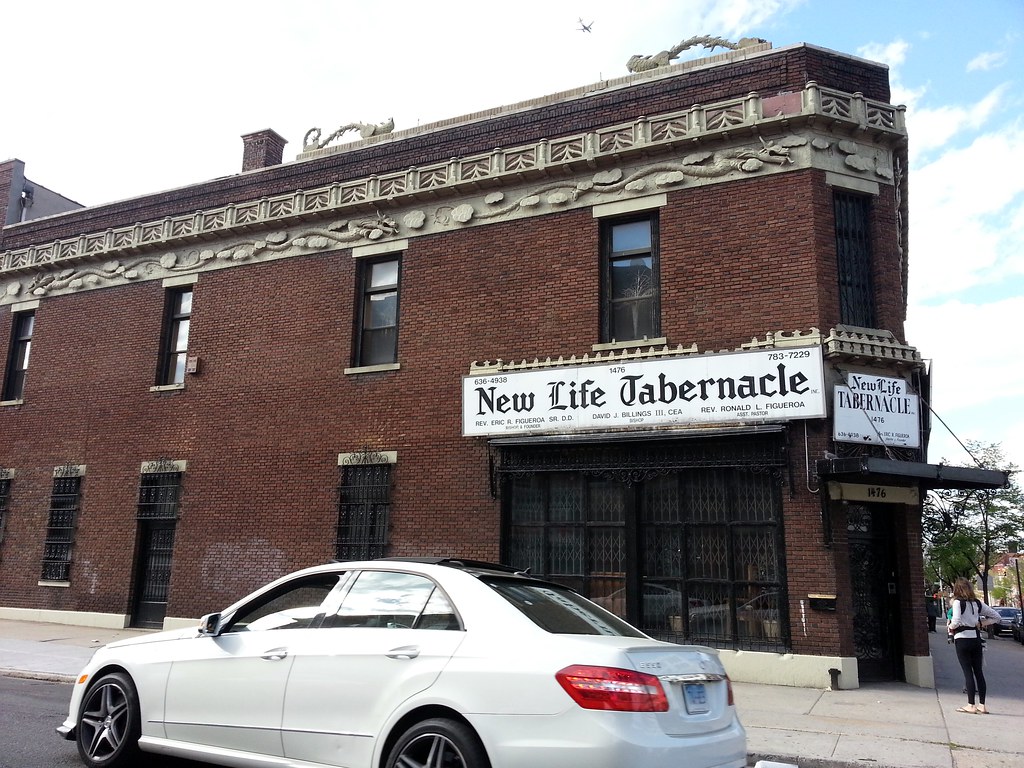
Like the Studebaker Building that stands across the street, this two-story brick structure was once an automobile showroom. (It looks more showroom-like from the other side.) It later — some sources say 1929 or 1930, but ads from 1932 still list an auto dealer at this address — became the home of Loehmann's, the legendary discount designer women's clothing store started by Frieda Loehmann after her flutist husband's paralyzed lip left the family in need of a stable income.
At first glance, the building is nothing to write home about, but then you start to notice a few things, like the dragons flying through the clouds on the frieze. Mrs. Loehmann had a fondness for such over-the-top ornamentation; in fact, the place looked even more outlandish in its heyday — take a peek at what's hidden beneath those church signs. And the interior was a sight to behold as well:
Hundreds of racks of clothes failed to dim the theatrical splendor inside. The decor was compounded of marble floors from Italian palazzos, antique Italian wall paneling, huge Italian marble statues and junk that Mrs. Loehmann couldn't resist from Seventh Avenue showrooms that closed. Her chairs were all covered in old fur coats. She had a leopard sofa with nutria.Not to mention the "chandeliers, dripping prisms, enormous paintings, Venetian columns festooned in gold, lions in iron and lions in marble, huge lanterns and torchieres with figures holding clusters of lights aloft". All of these furnishings were auctioned off in 1962 after Mrs. Loehmann died, but many of them were acquired by a clothier named Martin Kogut who restored much of the decor when he opened his own store in the building. Here are three grainy photos of the interior of his store in 1966, along with other pictures of the building in different eras. As you can see in a couple of those shots, the church that currently occupies the place decided to retain some of the decor.
One might suspect that Mrs. Loehmann intended the lavish furnishings to imbue the shopping experience with an air of refinement, but the actual scene at her store was apparently rather primal, with women aggressively competing to find the best bargains and stripping down in the open to try on the merchandise — there were famously no dressing rooms at Loehmann's. (The Loehmann's stores that recently went out of business were an offshoot of Mrs. Loehmann's standalone establishment, but they also offered communal changing areas.) Here's how a reporter for the Brooklyn Daily Eagle described his trip to Loehmann's with his wife in 1954:
Loehmann's, on Bedford Ave. — with its stained glass peacocks and carved dragons — looks from the outside like the pleasure dome of Kubla Khan. Inside, it has much the same atmosphere as a capsizing ferryboat. . . .
[Women] invade the place daily in ravening hordes to peel non-chalantly before a gallery of gaping husbands and do battle for the prizes hidden away among the dress racks. . . .
In a small arena walled by dress racks, a battalion of frenzied females was stripping off its outer garments and mounting an assault wave on Mrs. Loehmann's wares. Some of the women were practically stripping one another.
A few of the lady shoppers, to the special satisfaction of the spectators' gallery, were wearing two-piece affairs and I even caught a couple of glimpses of black lace.
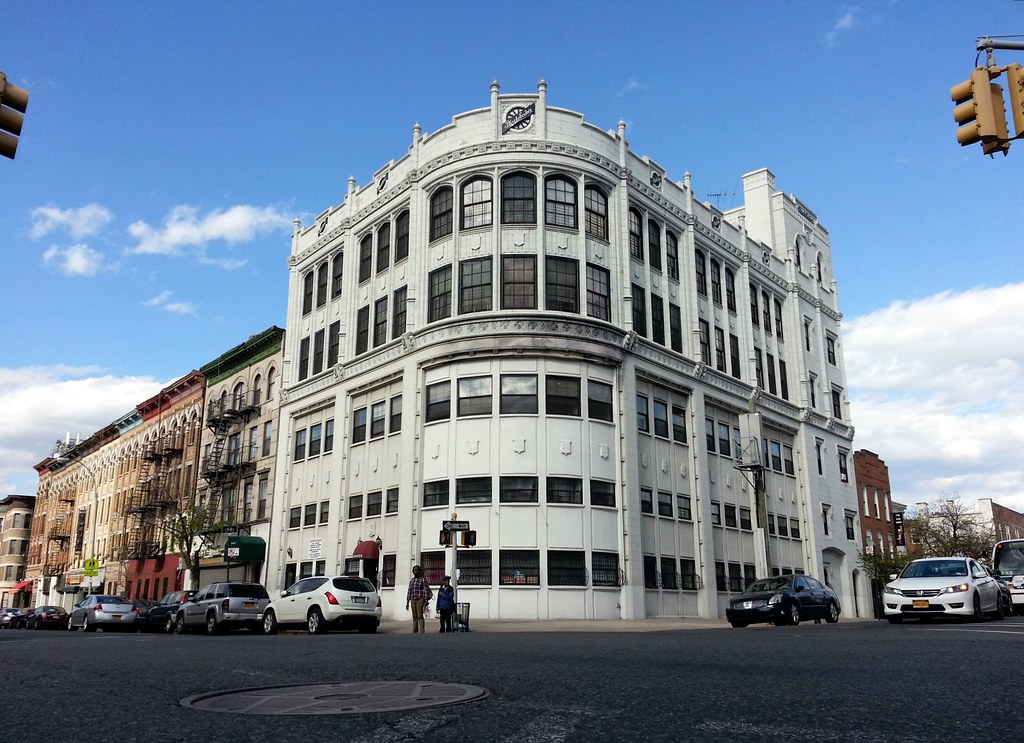
Erected in 1920, this former Studebaker showroom (circa-1942 photo) dates back to the days when this stretch of Bedford Avenue was known as Automobile Row. The building has since been converted into low-income apartments, but some traces of its original occupant still remain, most notably the terra-cotta wheel logos (close-up) at the top of the facade. Perhaps you recall seeing those same logos on an old Studebaker finishing facility up in Manhattanville a couple of months ago.
I'm walking every street in New York City.
This is the counterpoint to my walk across the US. Instead of seeing a million places for just a minute each, I'm going to spend a million minutes exploring just one place. By the time I finish walking every block of every street in all five boroughs, I'll have traveled more than 8,000 miles on foot — all within a single city. Details!
Email me at matt@imjustwalkin.com
Subscribe to my email list
Maps: Progress | Photos

~9,954 miles walked
Your donations allow me to keep walking full-time. If you think what I'm doing is valuable and you'd like to offer some support, I would be very grateful. On the other hand, if you think I'm a worthless bum, feel free to email me and tell me to get a job, bozo. Both are excellent options!
