

From the pages of The New Yorker:
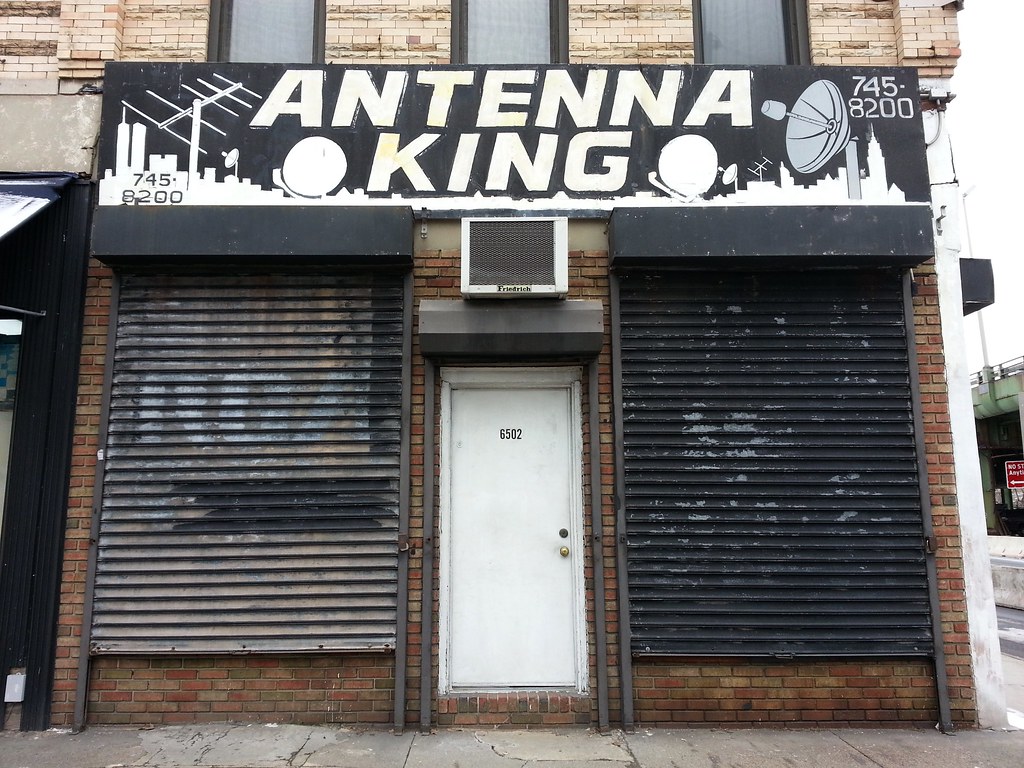
. . . the Antenna King showed up with his wife, Rosanne Langan, the Antenna Queen. He is tall and gregarious, with a shock of silver hair and the stiff knees that come from climbing up to thousands of New York City roofs. As he began to hold forth, the Queen nodded silently, with an air that suggested that she had heard the King’s broadcasts on many occasions and understands that the signal is still strong. "The story of the Antenna King is an interesting story of how a man started a business and good fortune came along," the Antenna King said. . . .
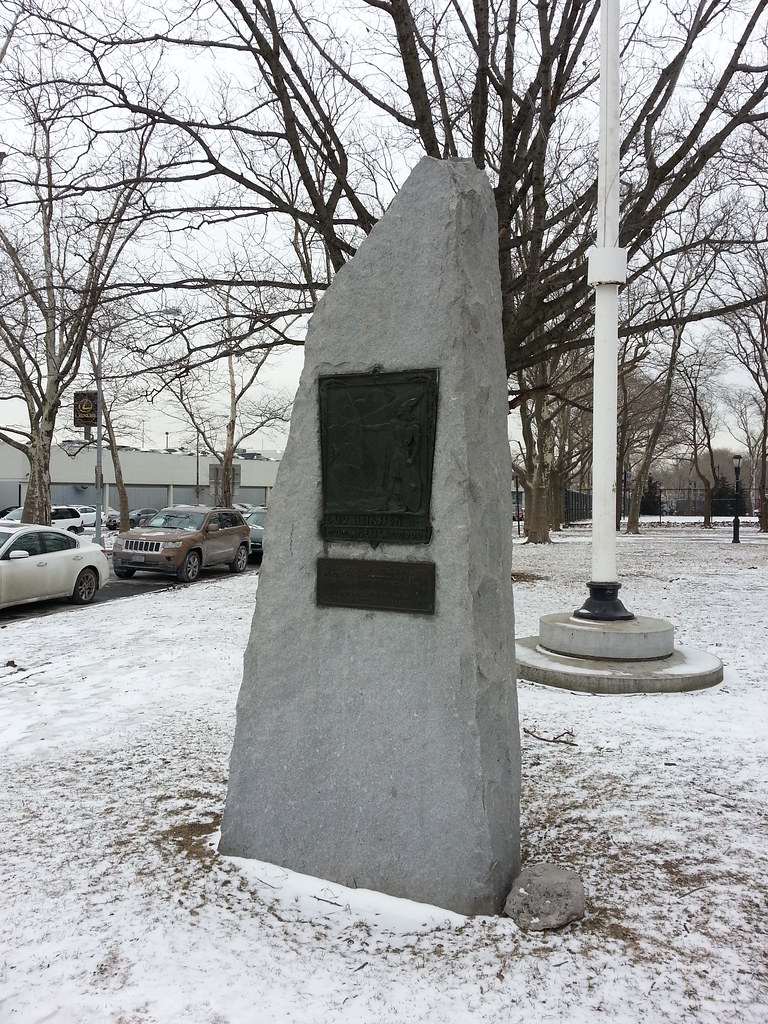
Leif Ericson Park is named in honor of the large Scandinavian population that once existed here in Bay Ridge. Within the park stands this "replica of a rune stone found in Tune, Norway", featuring a plaque that depicts a heroic-looking character at sea and reads "Leiv Eiriksson — Discovered America Year 1000". This monument was dedicated by Crown Prince Olav (later King Olav V) of Norway during a visit to the US in 1939.
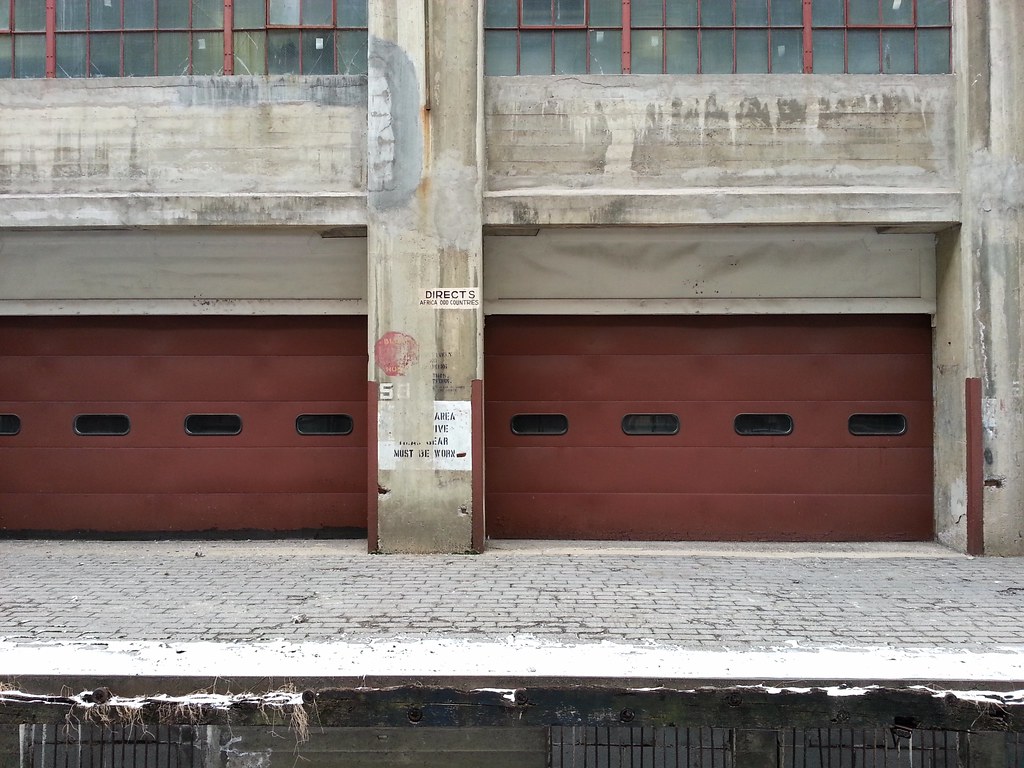
So reads some text painted on the column across the way (closer look). According a historical exhibit in the lobby here at Building B, these are Army Post Office destinations. Other destination names I spotted on columns in the atrium: the Balkans, Greece, Portugal, the Azores, and India.
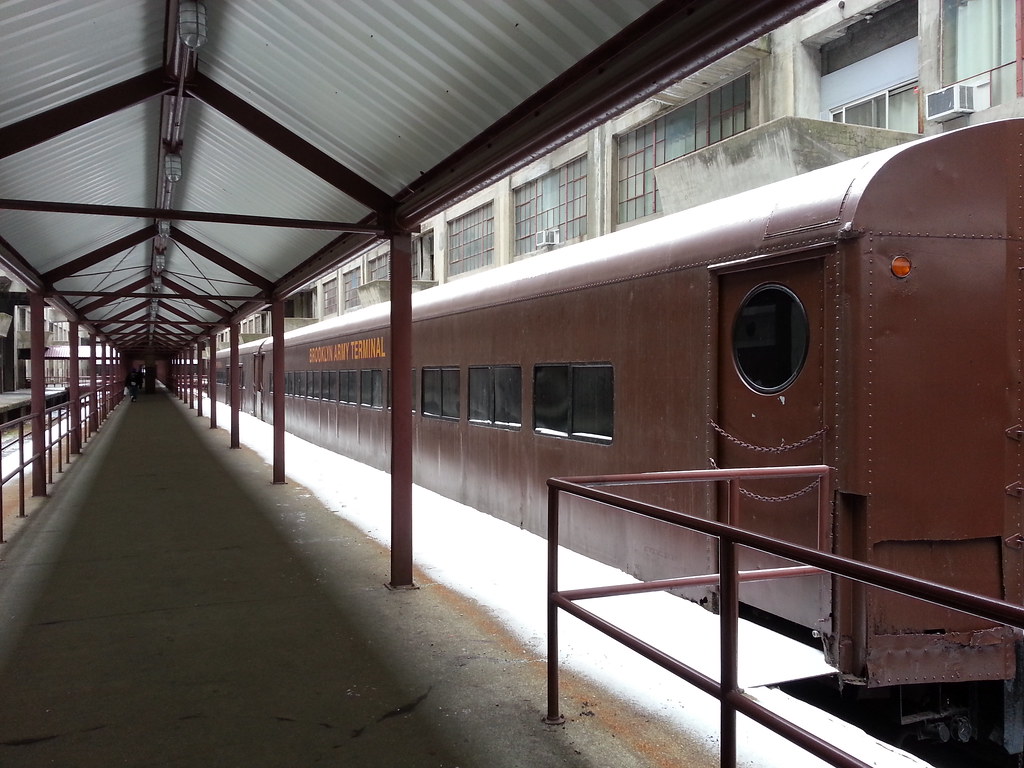
They appear to have been sitting here in Building B since at least 1999, boasting a sporty silver-with-blue-stripes paint job for much of that time. According to the Daily News, one of the cars "was going to be turned into a restaurant that never actually opened." That's an interesting hook — a restaurant so exclusive, it's never open.
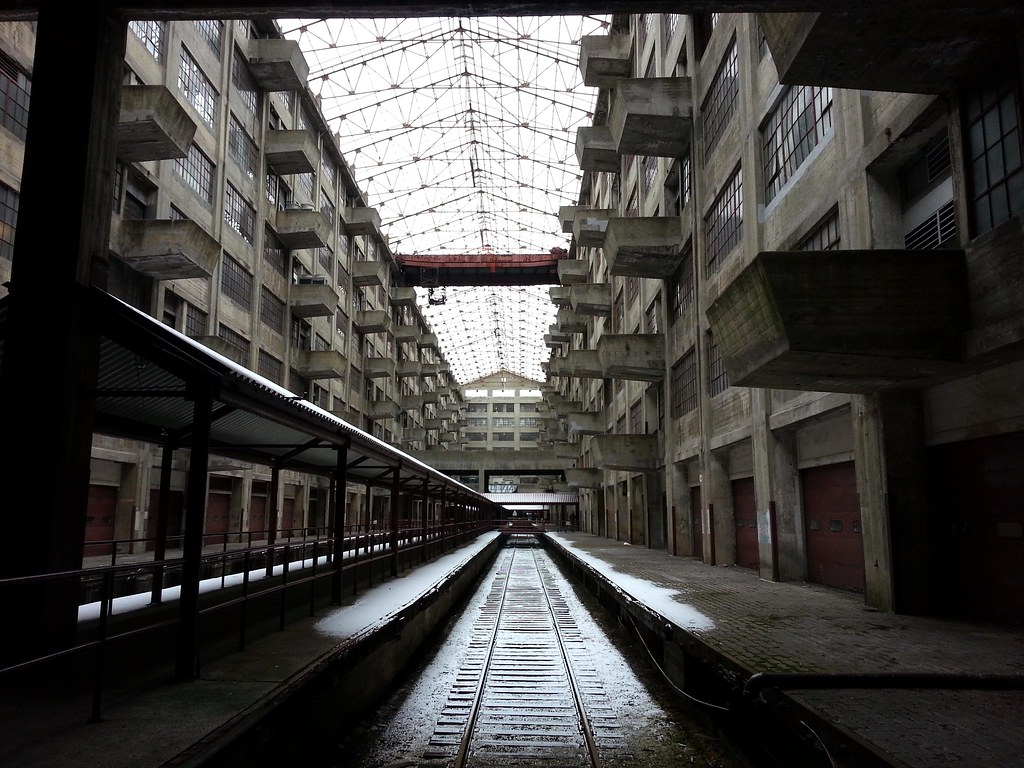
The Brooklyn Army Terminal, designed by Cass Gilbert, the architect of the Woolworth Building, was completed in 1919. The larger of its two main buildings features this stunning, formerly skylight-enclosed atrium. (Here's a beautiful shot of the atrium taken in 1949 by Andreas Feininger.) The reddish bridge-looking thing spanning the opening between the two sides of the building is part of an old traveling overhead crane that was used to load and unload the trains that once pulled in here; the staggered balcony arrangement provided the crane unobstructed vertical access to each floor. (Compare to the Hasidic Sukkot balconies we've seen previously.)
Currently redeveloped for commercial and light industrial use, the Brooklyn Army Terminal (formerly known as the Brooklyn Army Base) was supposedly the country's largest military supply base during World War II. I've read several claims that it was the point of departure for some 80% of American troops and supplies during the war, but I don't think that's true. The highest estimate of the number of WWII soldiers shipped out from here that I've seen is 3.2 million, and, as best I can tell, some 7.3 million soldiers in total were deployed overseas during the war. (The corresponding numbers for supplies are 37 million measurement tons and 127 million measurement tons.) So 80% seems like a highly exaggerated figure, but it's still pretty amazing to think that almost half of the US soldiers sent overseas during the war may have passed through this facility.
But let's do away with the uncertainties. There is one undisputed, and quite well documented, fact that I can share with you on the subject of troop deployments from the Brooklyn Army Base: On a late September day in 1958, a Private Elvis Aron (or was it Aaron? OK, that part's kind of disputed) Presley arrived here by train en route to an Army installation in Friedberg, Germany, where he would serve for the next 17 months before returning to civilian life.

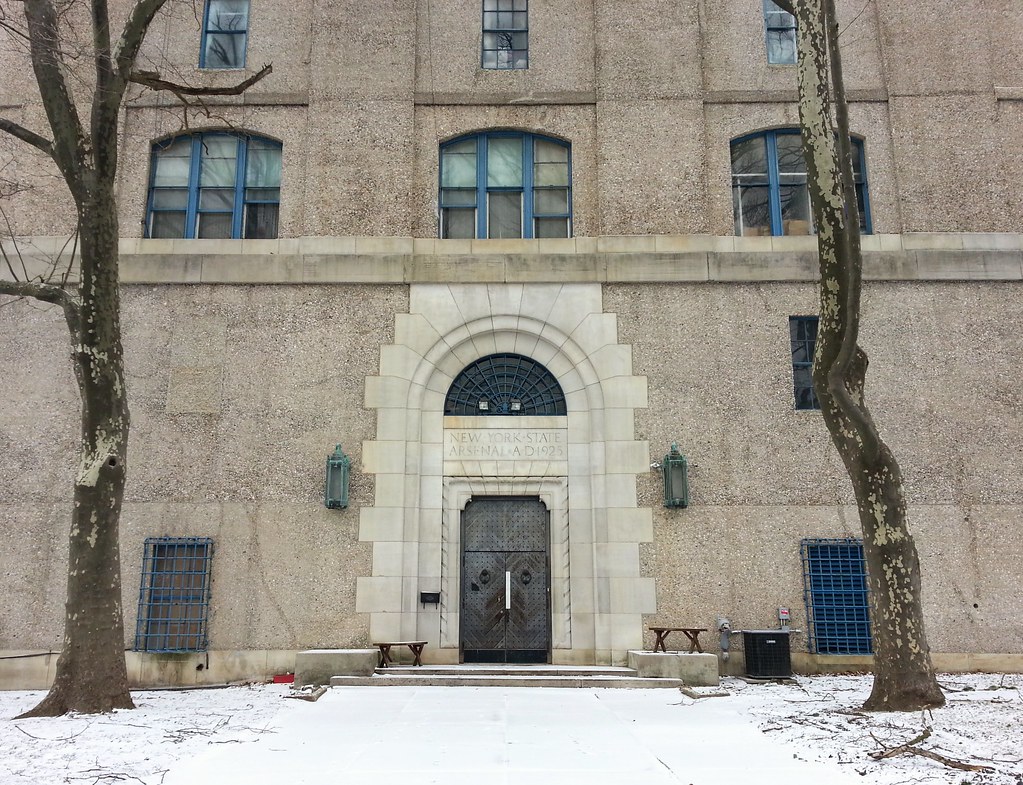
An entrance to the erstwhile arsenal seen in the previous photo

A former National Guard arsenal. Here's a shot of this impregnable citadel nearing completion in 1926.

This massive structure contains two churches, one stacked atop the other. The lower church opened in 1909; the upper one wasn't completed until 1928.
I'm walking every street in New York City.
This is the counterpoint to my walk across the US. Instead of seeing a million places for just a minute each, I'm going to spend a million minutes exploring just one place. By the time I finish walking every block of every street in all five boroughs, I'll have traveled more than 8,000 miles on foot — all within a single city. Details!
Email me at matt@imjustwalkin.com
Subscribe to my email list
Maps: Progress | Photos

~9,954 miles walked
Your donations allow me to keep walking full-time. If you think what I'm doing is valuable and you'd like to offer some support, I would be very grateful. On the other hand, if you think I'm a worthless bum, feel free to email me and tell me to get a job, bozo. Both are excellent options!
