
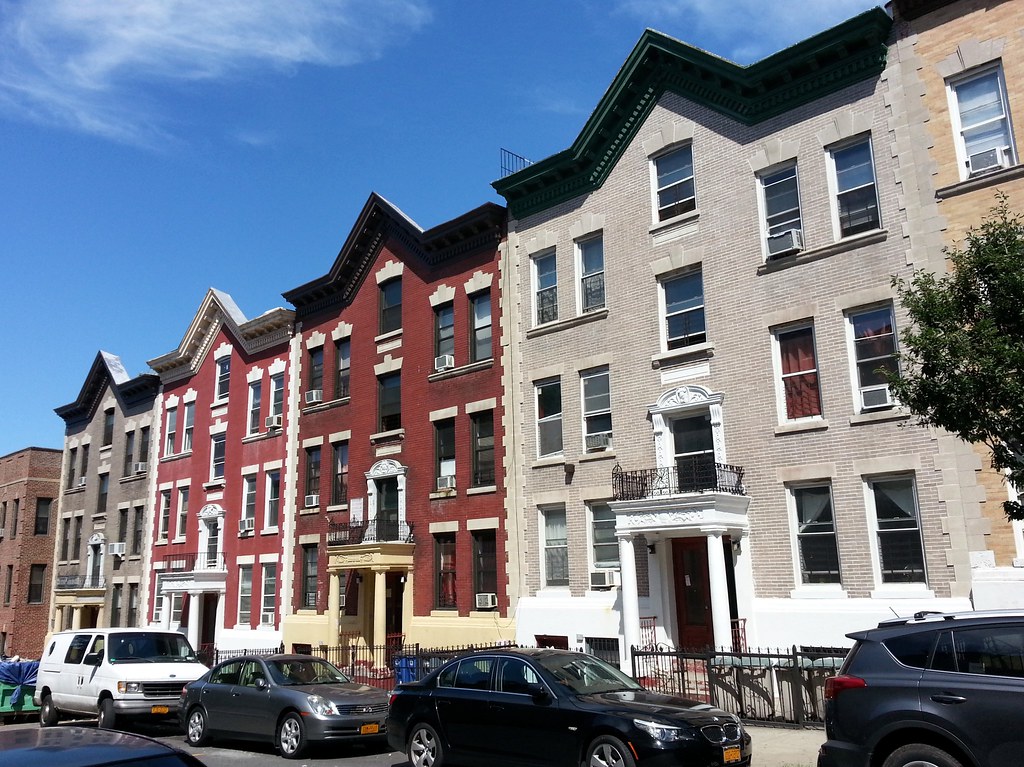
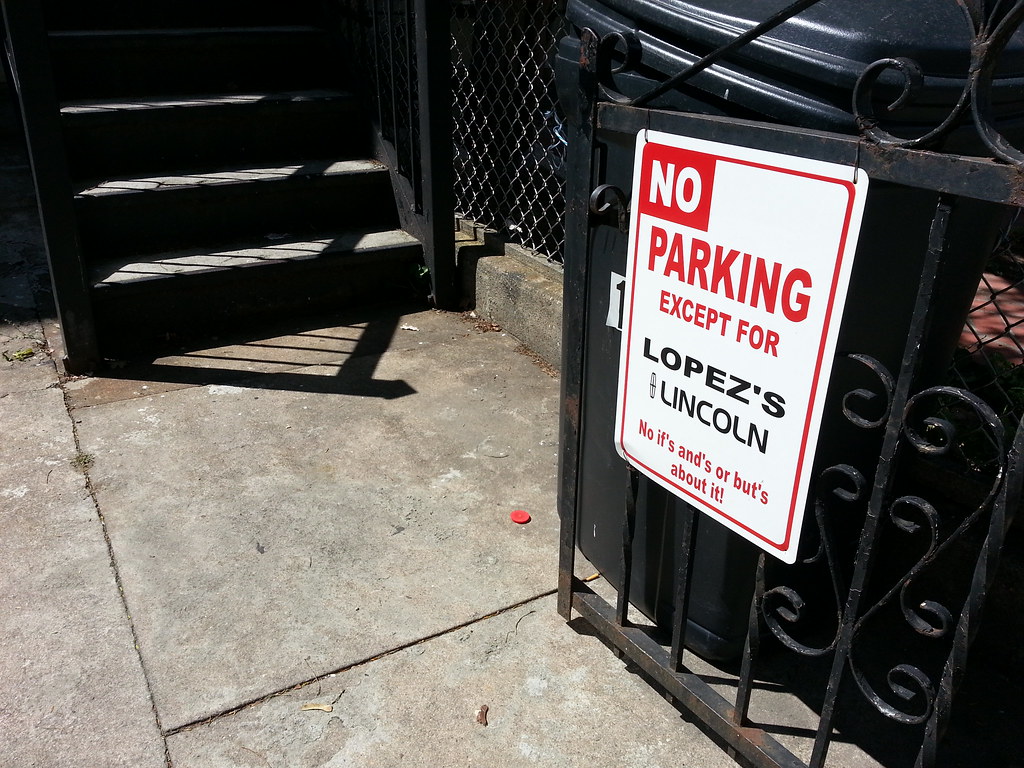
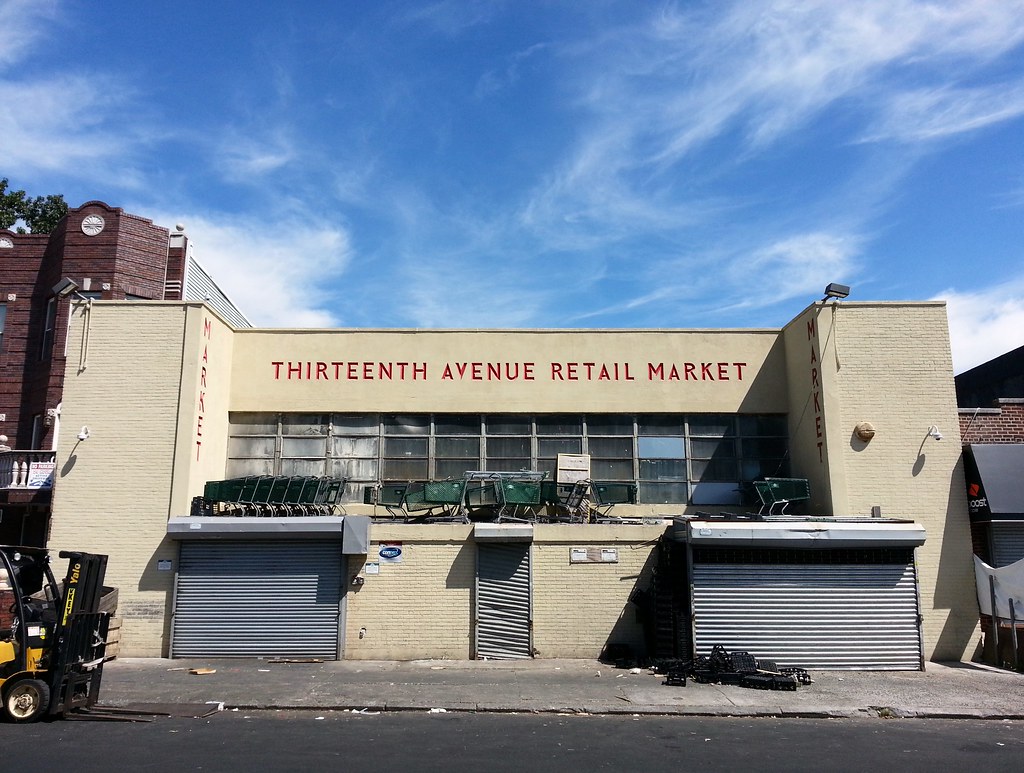
Originally full of stalls for different vendors, this was one of nine public markets opened by the city in the late 1930s and early 1940s in an effort to rid the streets of pushcarts and peddlers, those "intolerable vestiges of immigrant life". It's not apparent from this side entrance, but the building is now home to a kosher supermarket. And you'll never guess who played at the supermarket's grand opening last year: our old friend, the Billboard King of the BQE, Lipa Schmeltzer! (Keeping the tradition of excellence alive in 2013, Uncle Moishy put on a concert for the store's first anniversary back in February.)


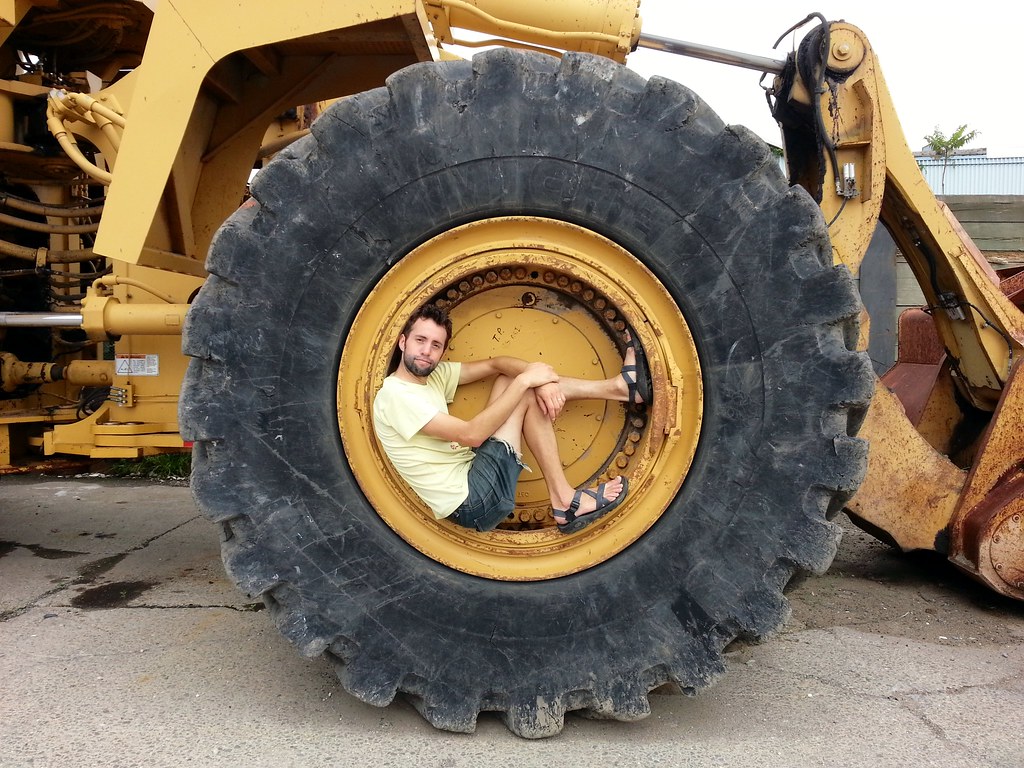

The landscape in the last photo was quite picturesque, but there are still plenty of reminders here at Fresh Kills that this was an active landfill little more than a decade ago. Just past the fenced-in area on the left is a dock where garbage scows were unloaded.

Once the world's largest landfill; soon(ish — maybe 25 years from now) to be a 2,200-acre park, the second-largest in the city. And there might be goats, too!
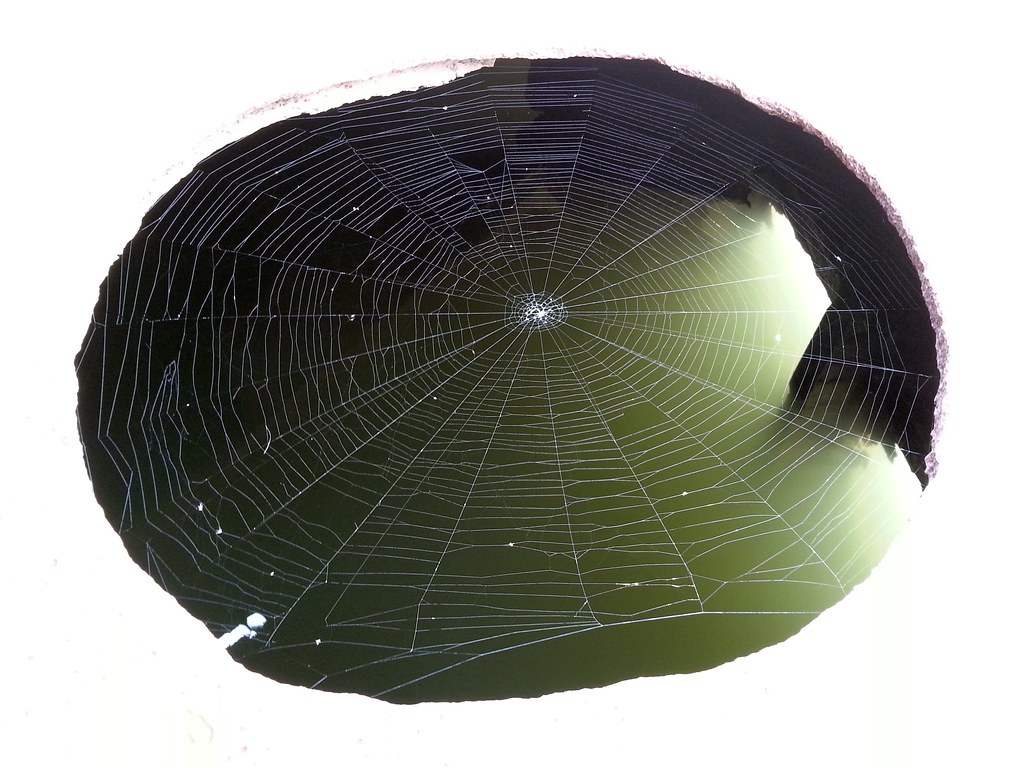
This web had been woven in an almost perfectly circular hole in the deck of one of the ships. (The deck just looks white in the photo because of the high contrast between it and the dark water underneath.)


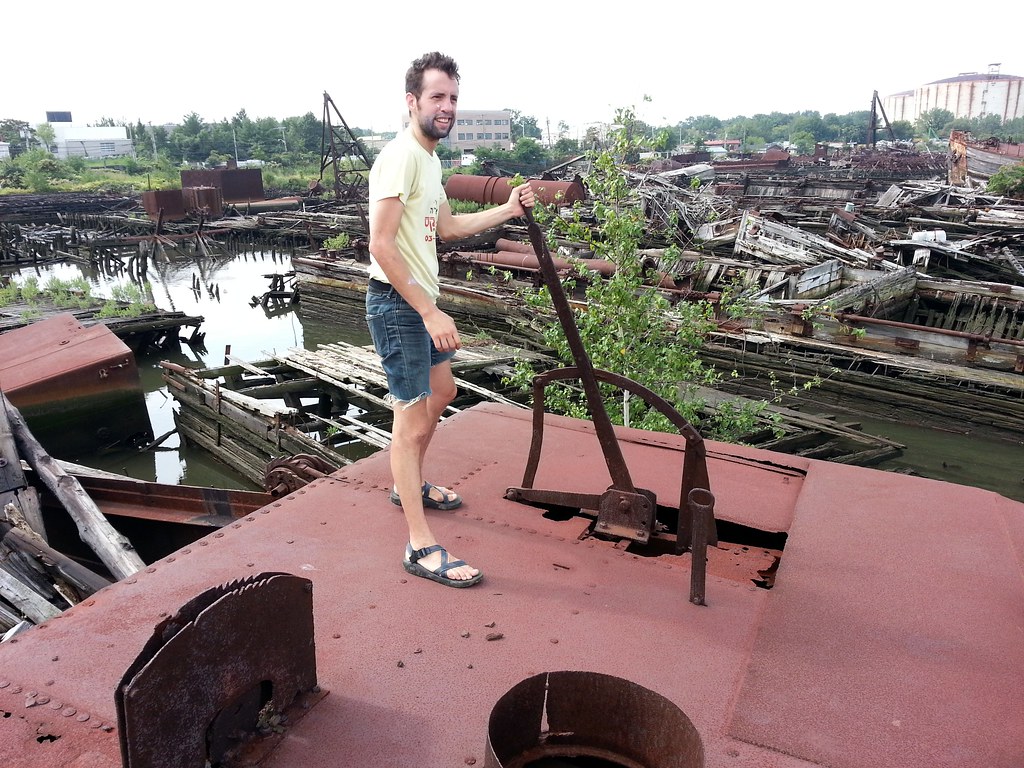

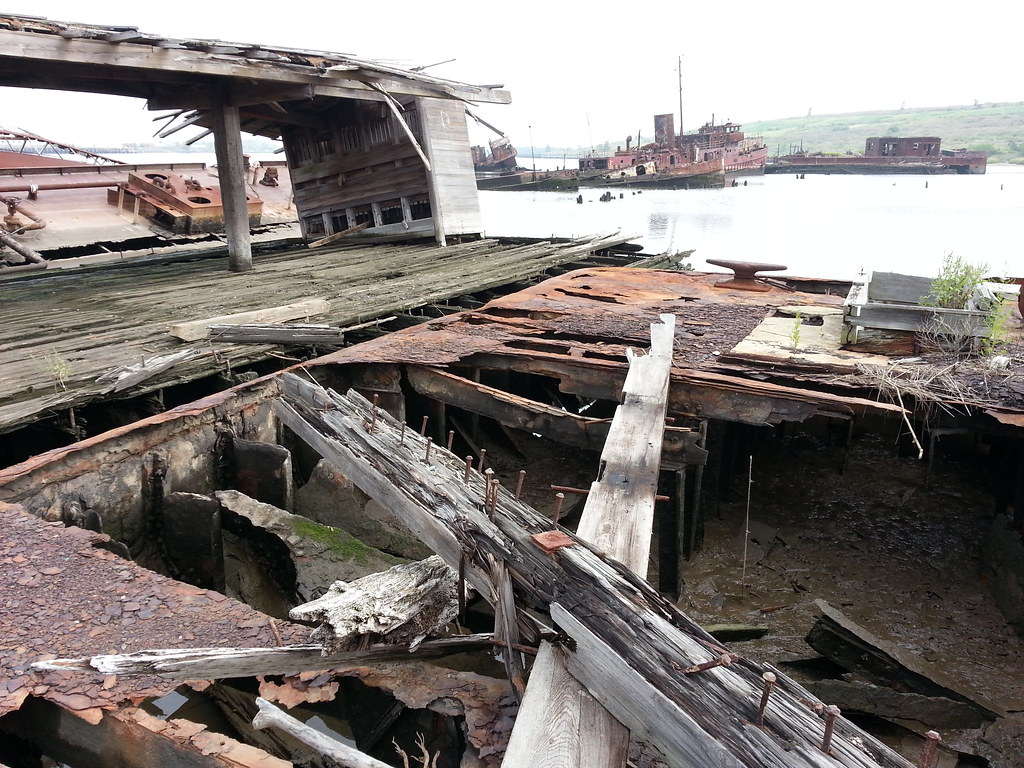
Here's what the NY Times had to say about this marine salvage yard, more popularly known as the "ship graveyard" or "boat graveyard", back in 1990:
For decades the Witte Marine Equipment Company, the lone remaining commercial marine-salvage yard in the city, has given mothballed, scuttled, abandoned and wrecked ships of all sizes a final port. Through the years it has become, an "accidental marine museum," as a nautical magazine described it, with one of the world's largest collections of historic ships.There were once some 400 vessels to be found here, resting in the muck along a bend of the Arthur Kill. While there are far fewer today — old man Witte's successors have dismantled many of the boats since his passing in 1980 — the ship graveyard, now owned by the Donjon Marine Company, still makes for quite an impressive sight. This aerial view will help you get a sense of things, and, if you're interested, you can find many more photos of the place here.
To historians like Norman Brouwer, curator of the South Street Seaport Museum, it "is a tableau of the history of shipping in New York."
I'm walking every street in New York City.
This is the counterpoint to my walk across the US. Instead of seeing a million places for just a minute each, I'm going to spend a million minutes exploring just one place. By the time I finish walking every block of every street in all five boroughs, I'll have traveled more than 8,000 miles on foot — all within a single city. Details!
Email me at matt@imjustwalkin.com
Subscribe to my email list
Maps: Progress | Photos

~9,954 miles walked
Your donations allow me to keep walking full-time. If you think what I'm doing is valuable and you'd like to offer some support, I would be very grateful. On the other hand, if you think I'm a worthless bum, feel free to email me and tell me to get a job, bozo. Both are excellent options!
