
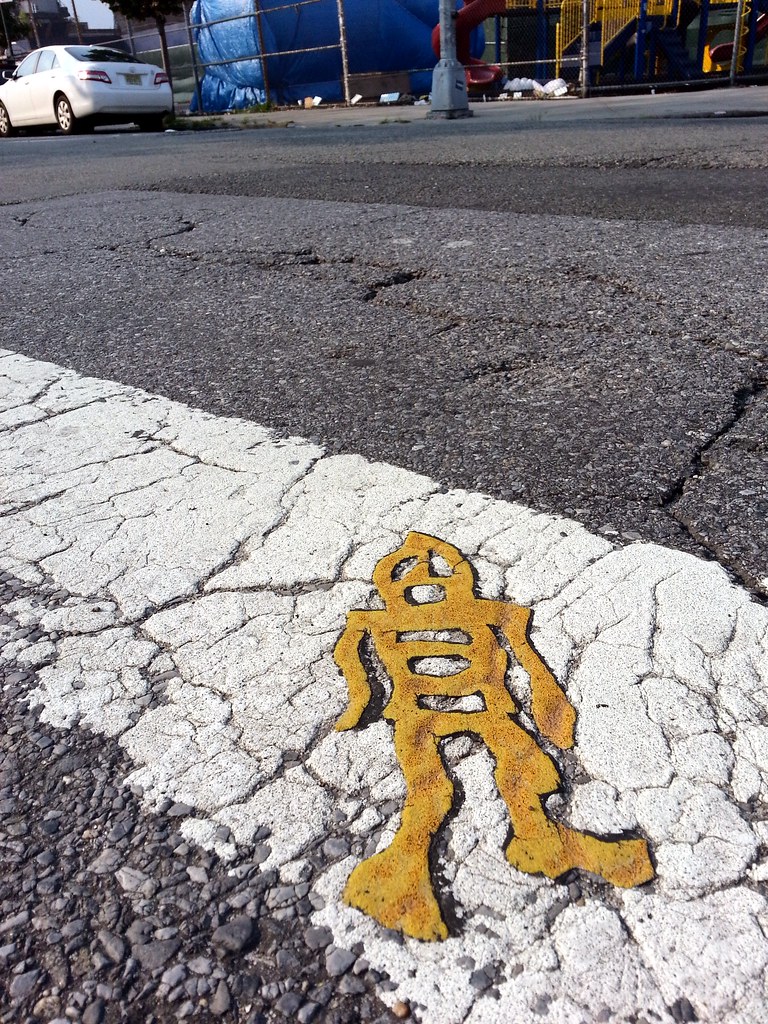
He can be seen trying to get to the other side in cities all across America.
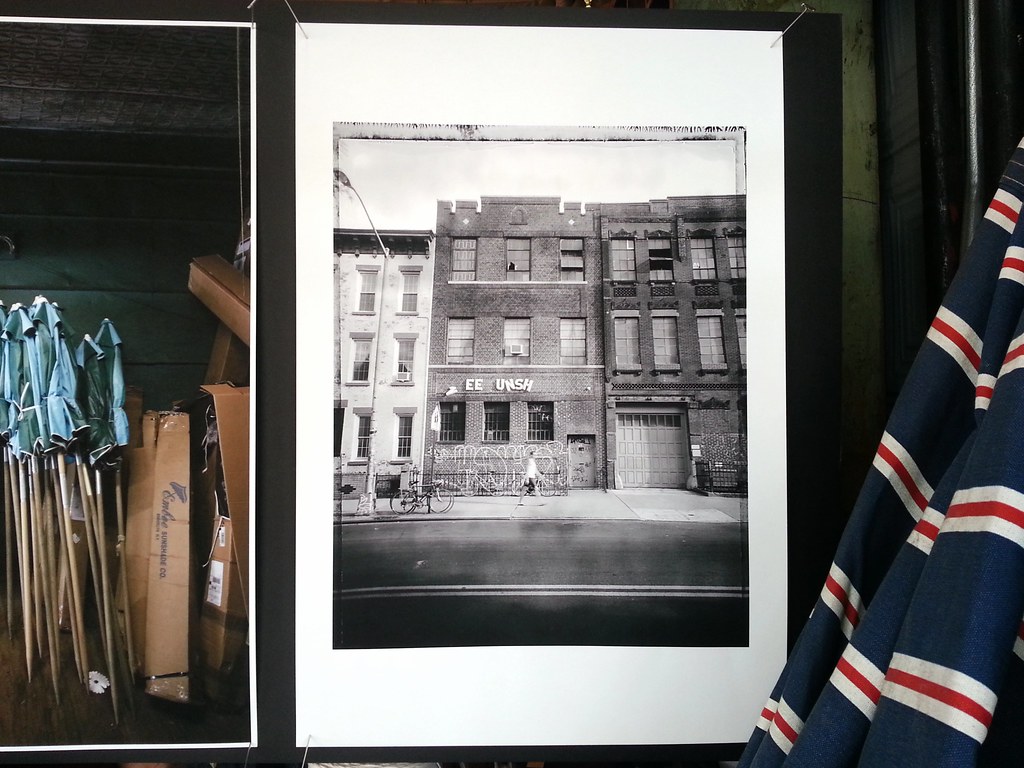
This photo of the mysterious M EE UNSH is on display at the City Reliquary.
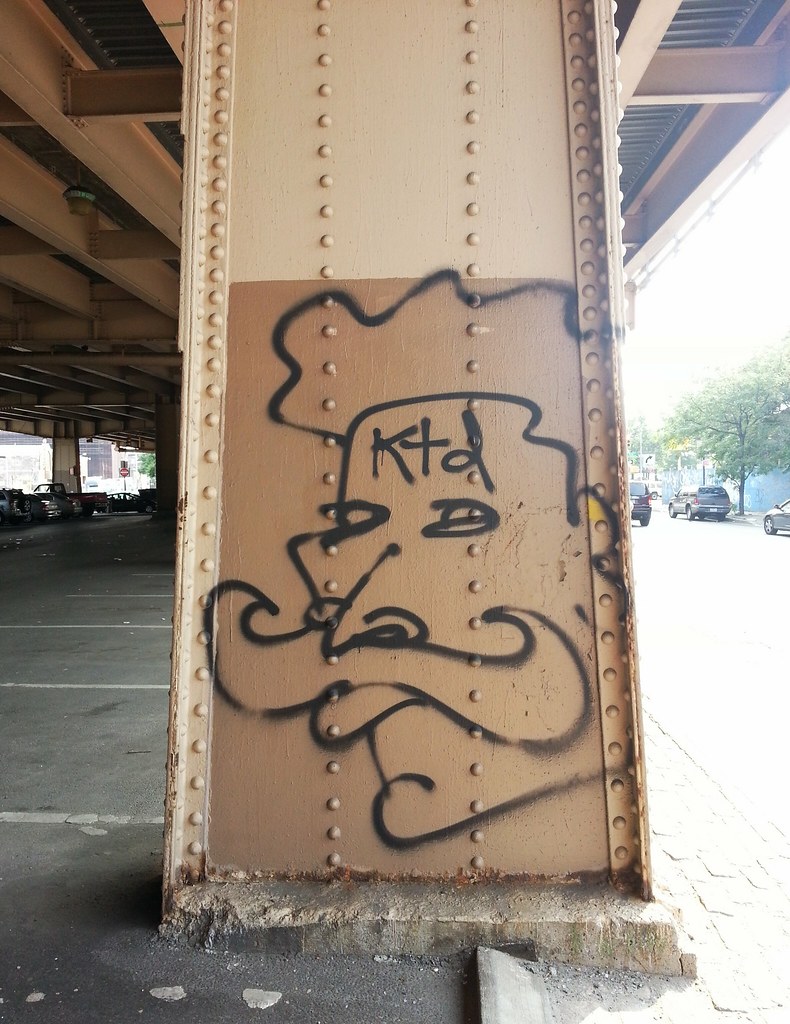
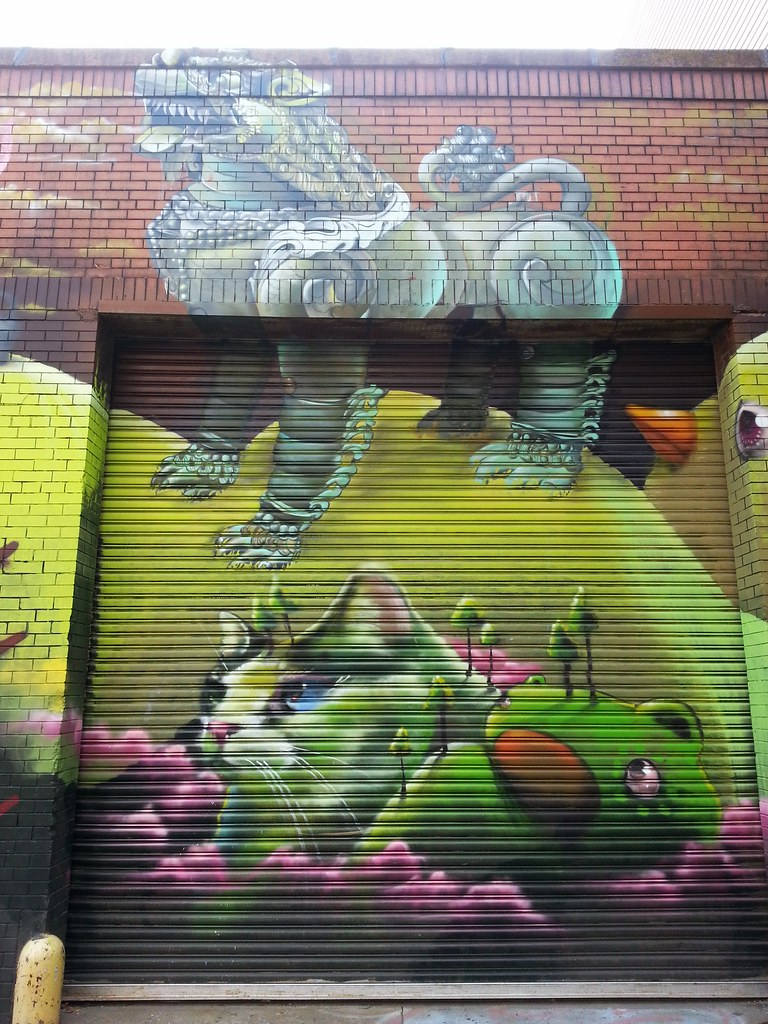
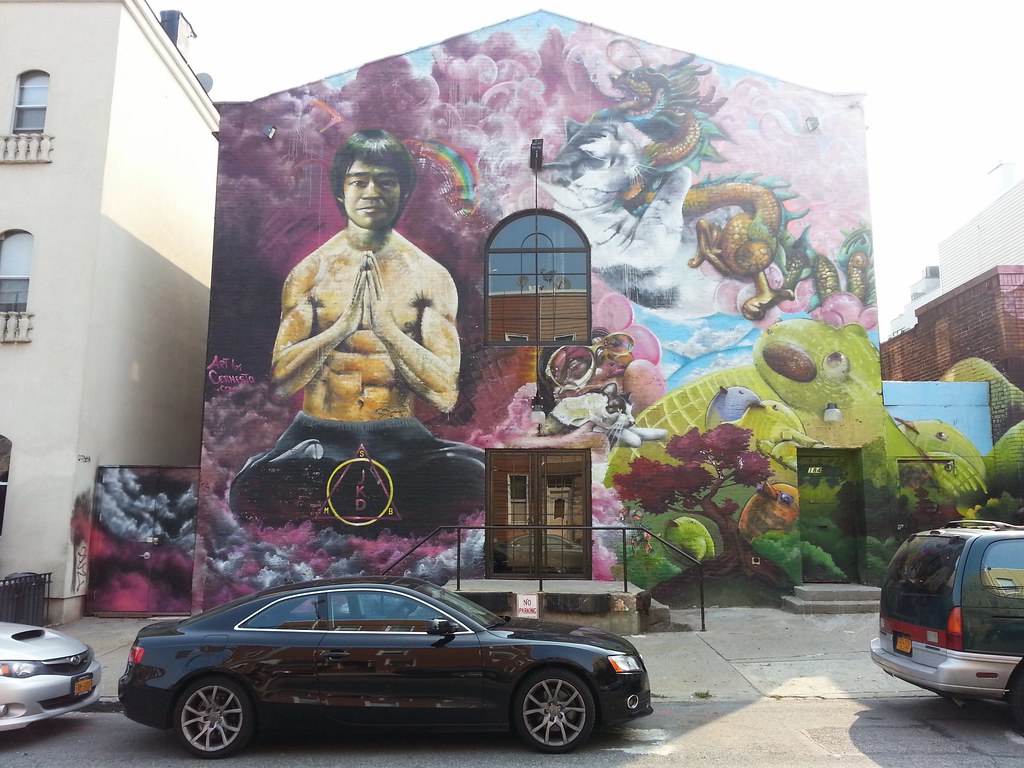
In case you can't tell, that's a cat wrestling with a dragon in the upper right corner.
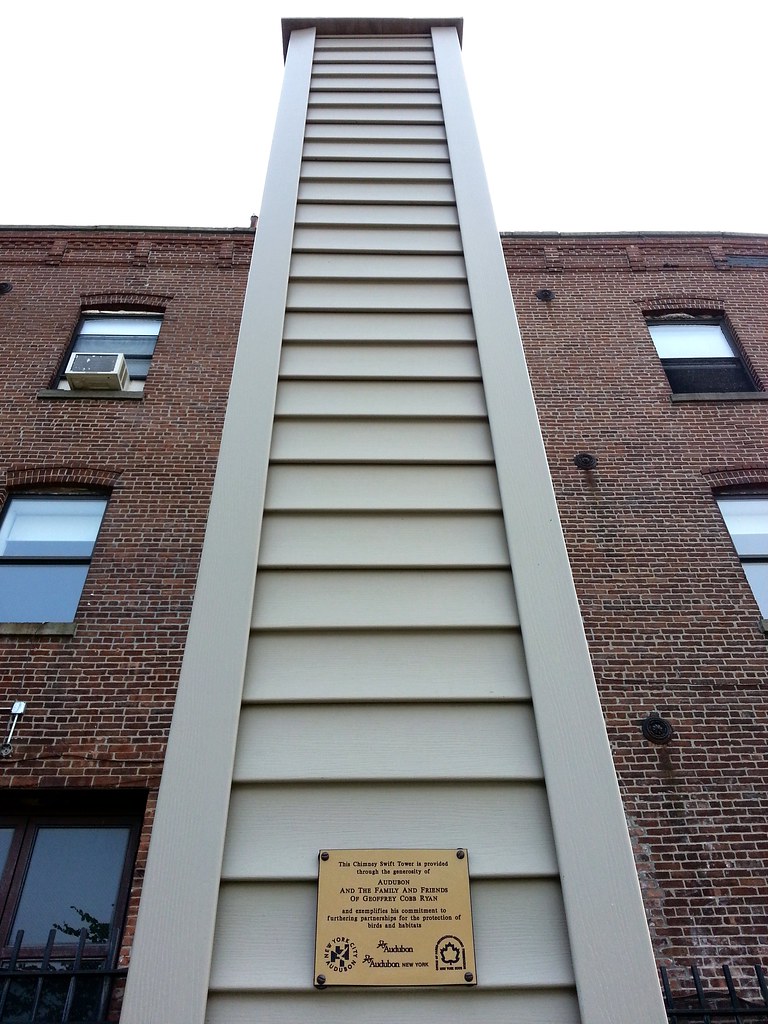
by Barbara Lubliner and Sung Jin Oh
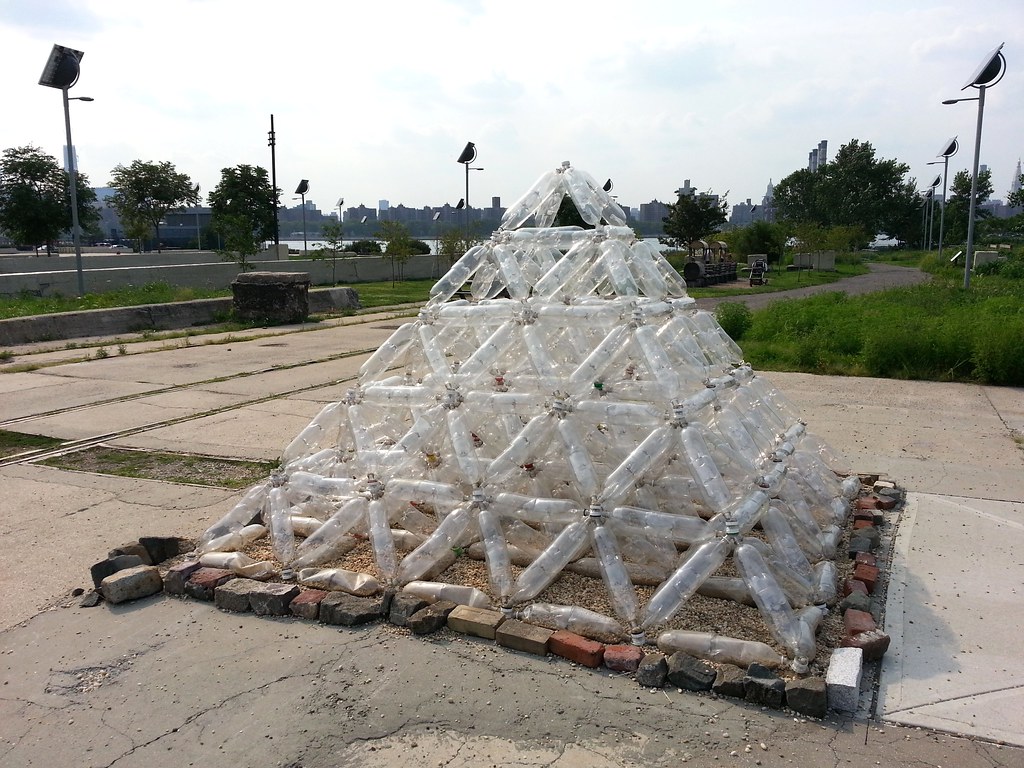
This is made from empty two-liter bottles; you can get a closer look here.
by Miggy Buck
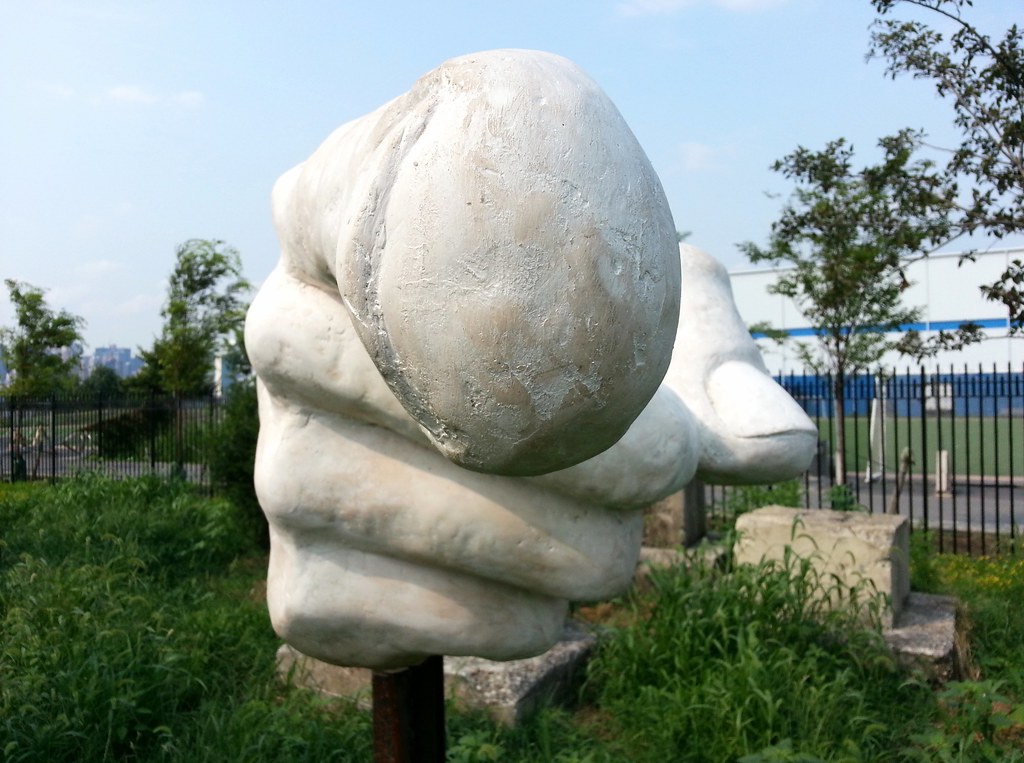
One of several sculptures installed around East River State Park
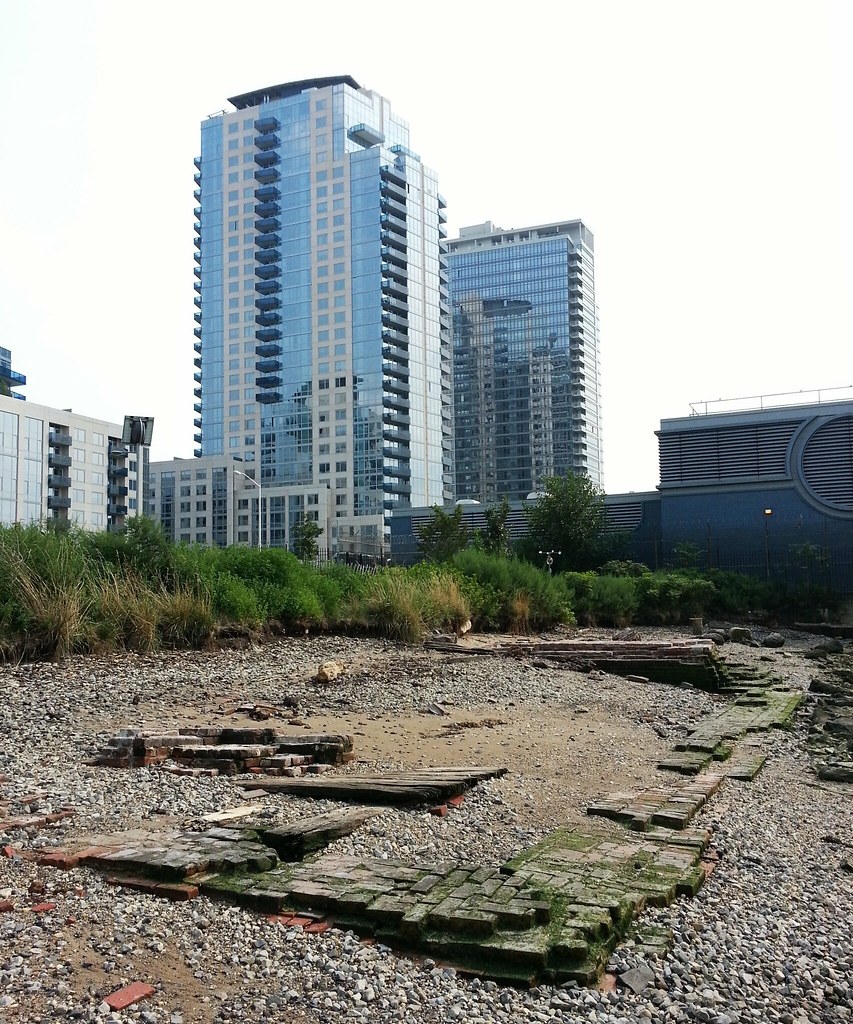
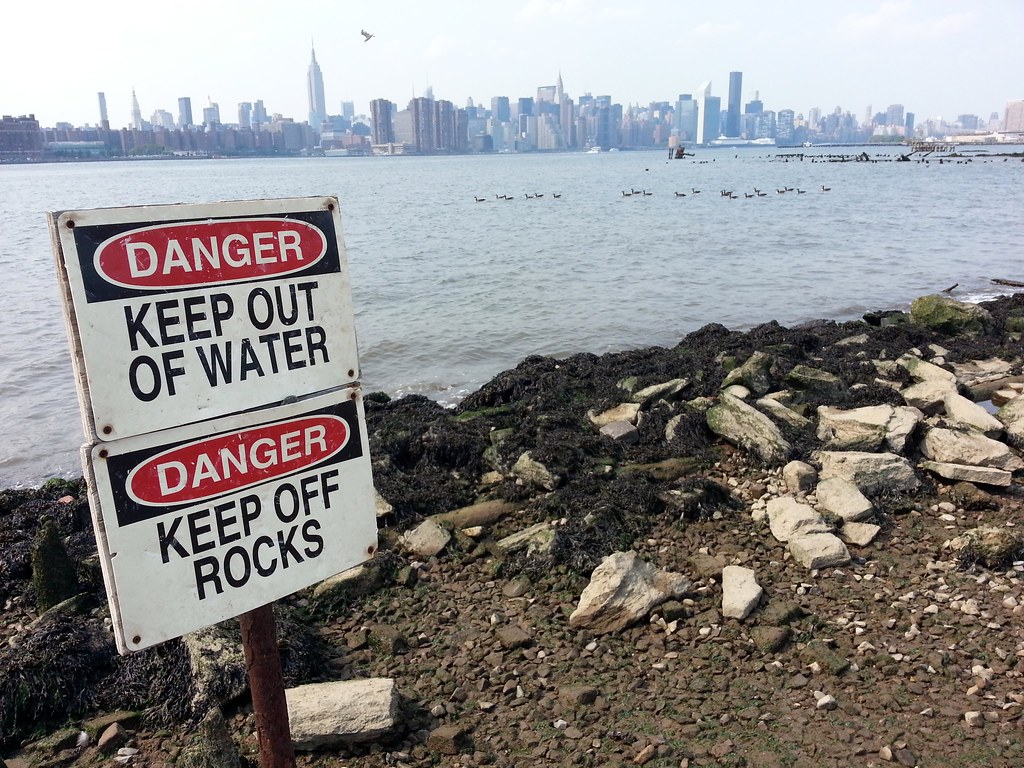
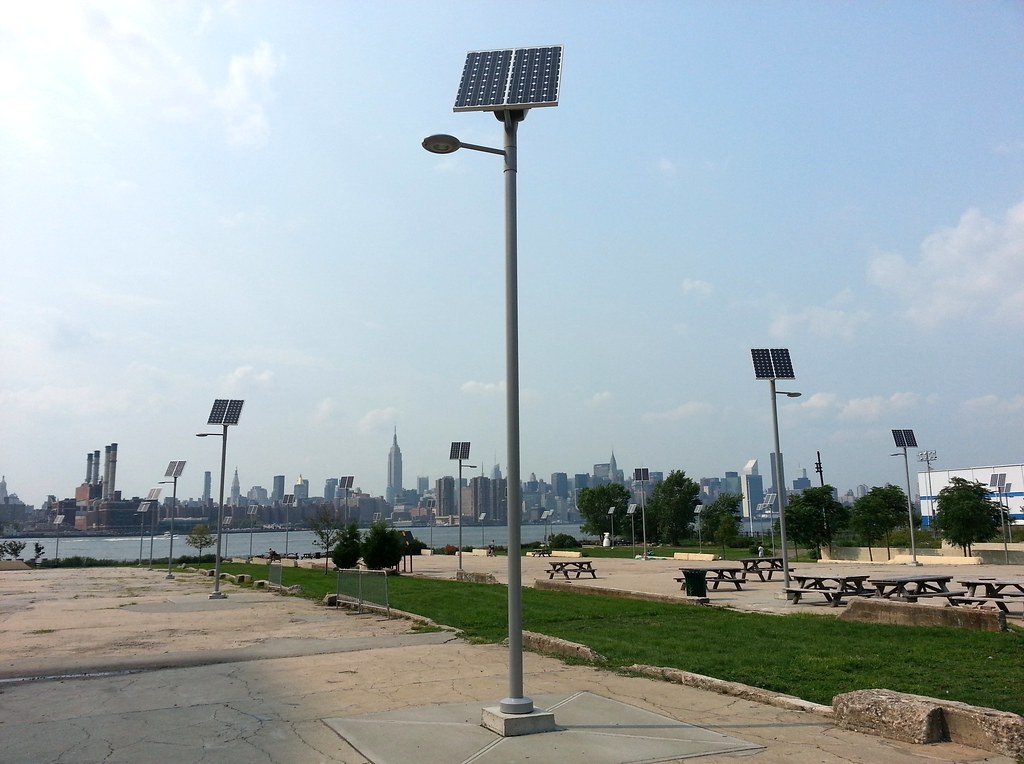
This land was once part of Palmer's Dock, a freight terminal that began operation in the 1870s to serve the nearby Havemeyer & Elder sugar refinery (now known as the defunct Domino Sugar refinery), which at its peak was the largest such facility in the world, processing the majority of the sugar consumed in the US.
Over the years, the terminal grew in size and scope, and became a major importation and distribution point for many different Brooklyn industries. In 1906, it was reincorporated as the Brooklyn Eastern District Terminal, and continued to thrive for several decades before a lengthy decline in rail traffic finally forced it out of business in 1983. The terminal buildings that once stood here were then demolished, and the land sat vacant until the state purchased this portion of the property and developed it into a park, which opened in 2007.
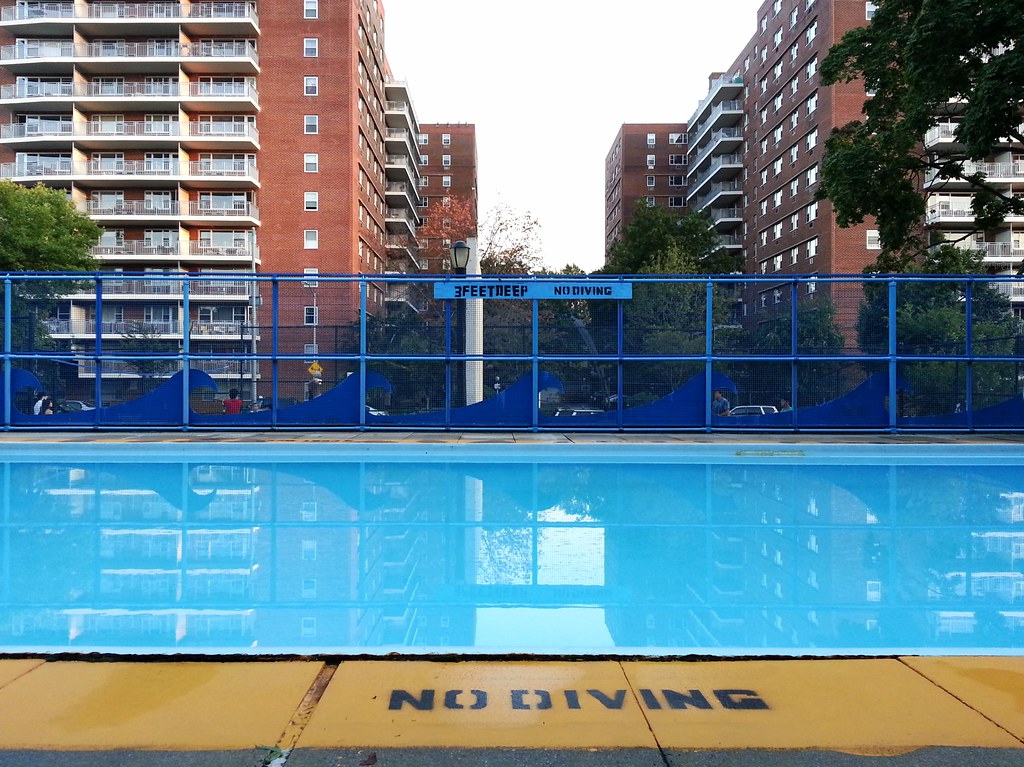
In the late 1960s and early '70s, the city began deploying these smallish above-ground pools to neighborhoods without convenient access to the massive, Olympic-size WPA pools built in 1936 (like the one we saw in Astoria Park). By 1972, there were 74 mini-pools spread out around town, but their numbers dwindled once the city opened a new batch of in-ground pools in the early '70s; today there are only 19 mini-pools still in service. (You can read a wonderful, photo-filled history of public swimming in NYC here.)
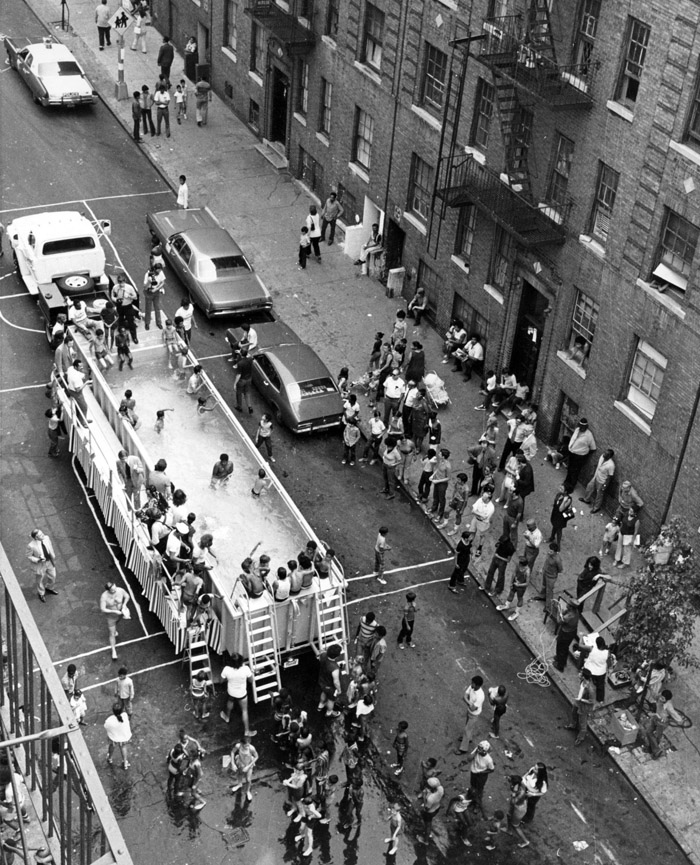
The city also used to operate Swim Mobiles, which were trailer-size pools hauled around by trucks from one neighborhood to another. Here's a hilarious account of one out for a test run in the summer of 1987.
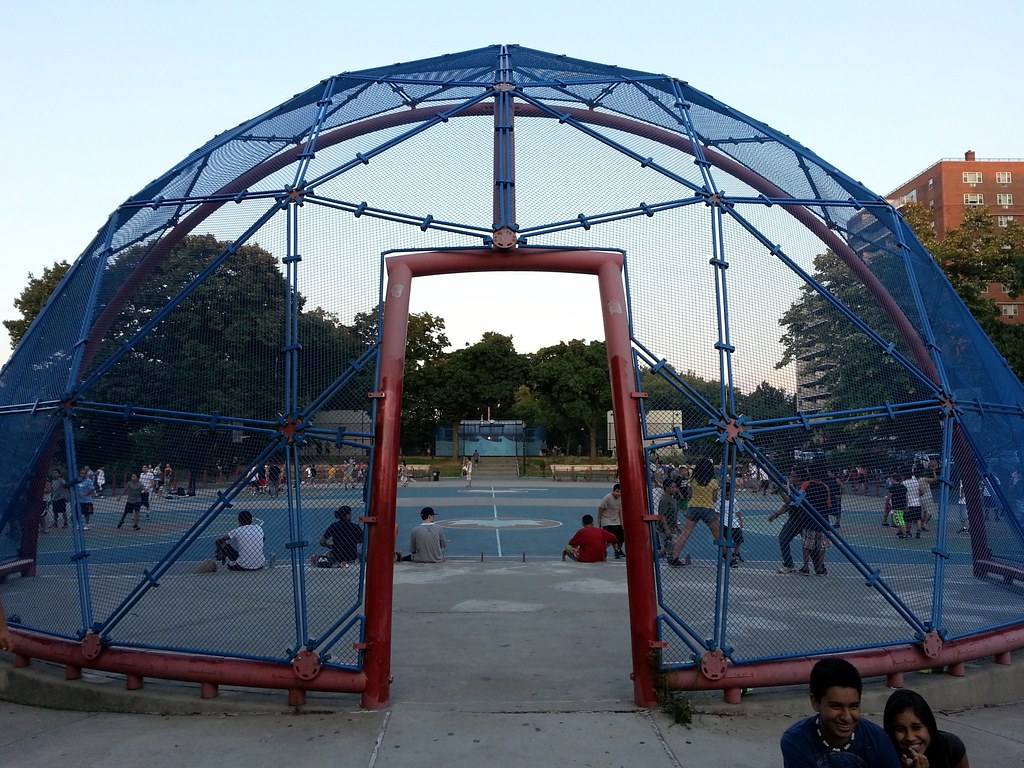
The park in which this playground resides is named for Louis Windmuller, "the noblest walker of them all", who had "no sympathy whatsoever for the healthy individual who prefers riding on horseback, in automobile or buggy, or on rapid transit trains, to peripatetics." He established "the most exclusive, distinguished, and enthusiastic walking club in America" and his thoughts on perambulation included the following: "A good rule to make your tramp a really enjoyable pastime is to be careful and not walk too fast."
I'm walking every street in New York City.
This is the counterpoint to my walk across the US. Instead of seeing a million places for just a minute each, I'm going to spend a million minutes exploring just one place. By the time I finish walking every block of every street in all five boroughs, I'll have traveled more than 8,000 miles on foot — all within a single city. Details!
Email me at matt@imjustwalkin.com
Subscribe to my email list
Maps: Progress | Photos

~9,954 miles walked
Your donations allow me to keep walking full-time. If you think what I'm doing is valuable and you'd like to offer some support, I would be very grateful. On the other hand, if you think I'm a worthless bum, feel free to email me and tell me to get a job, bozo. Both are excellent options!
