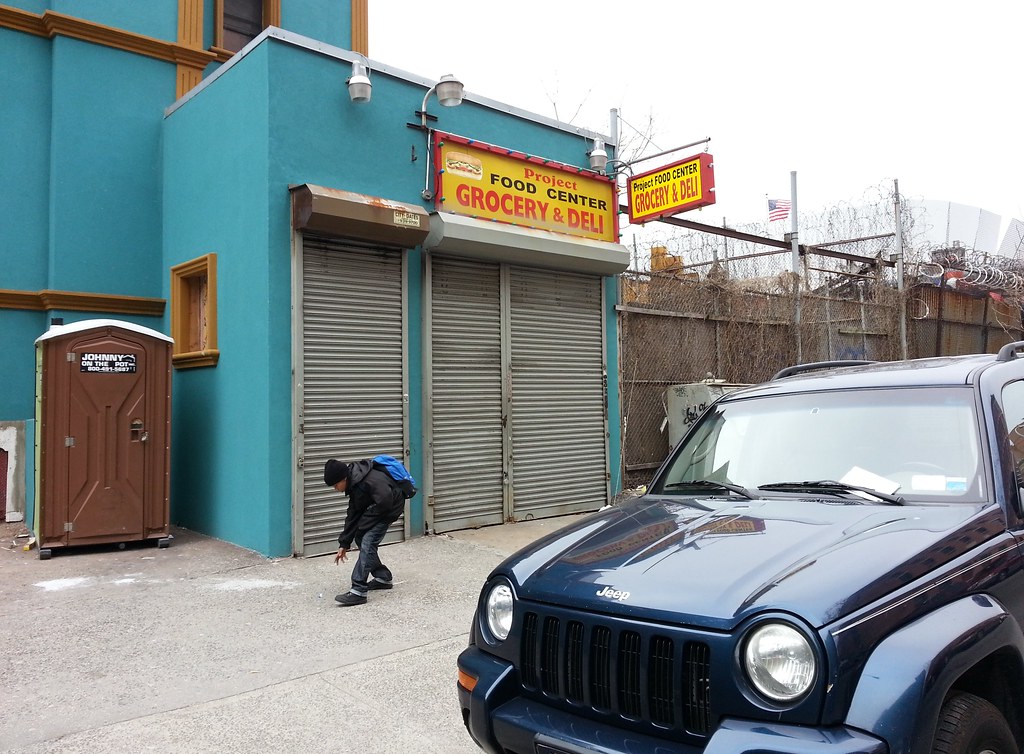
Across the street from the projects
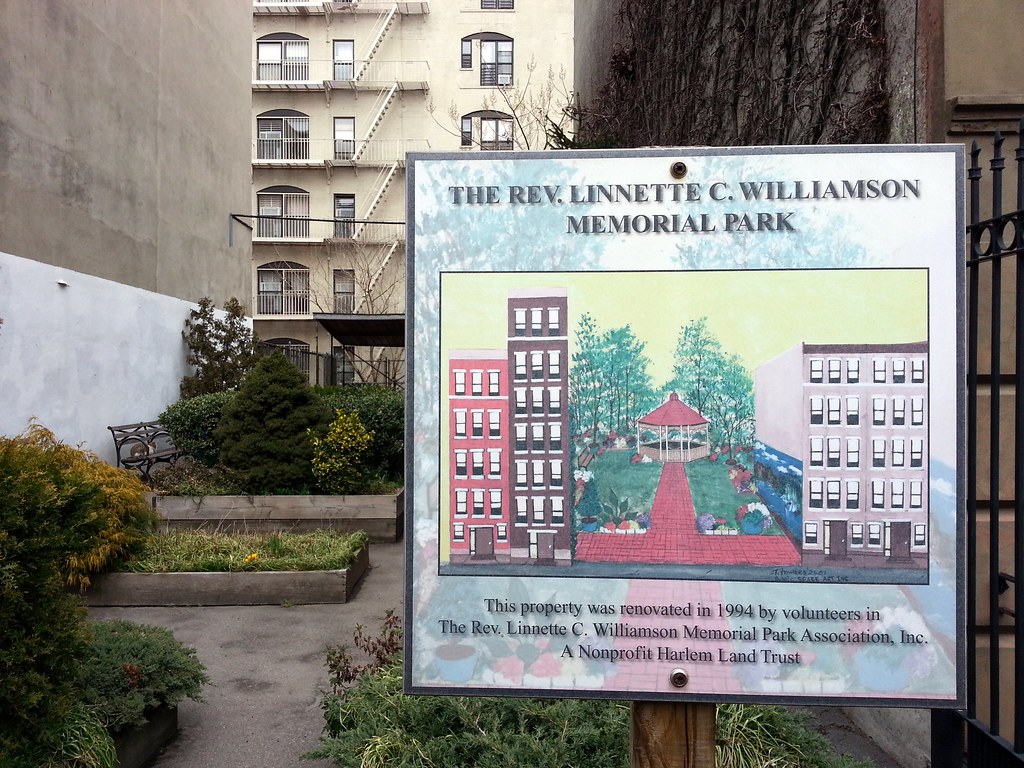
According to the Parks Department, this was the first vest-pocket park in the US when it opened on a formerly vacant lot in May of 1965.


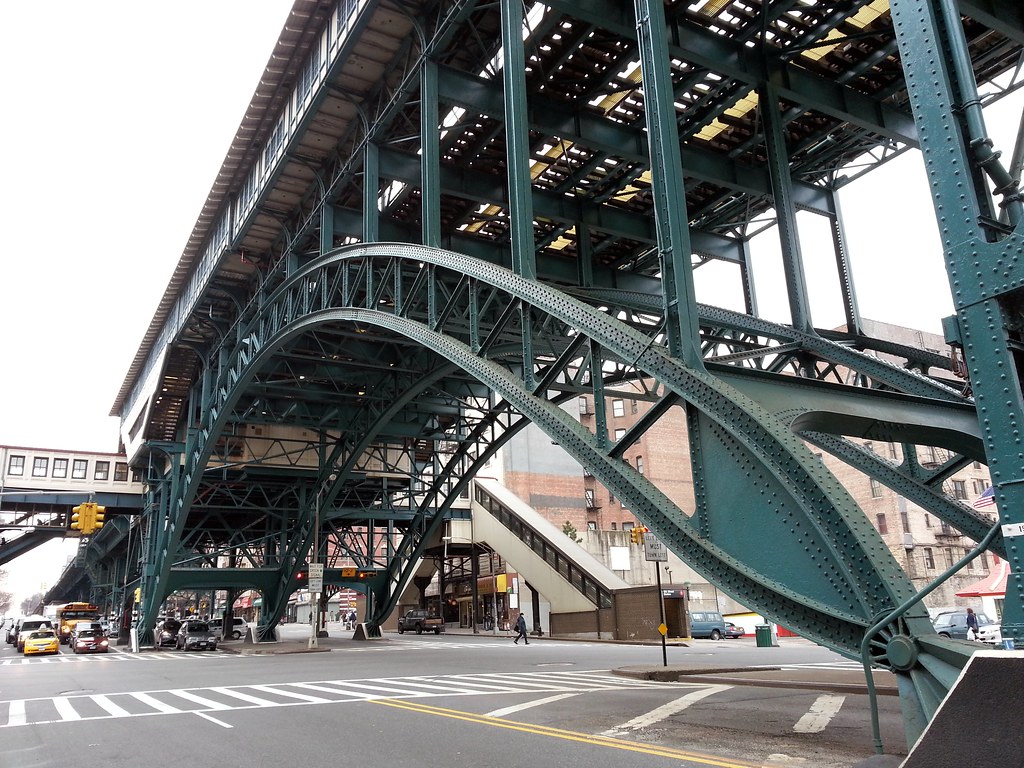
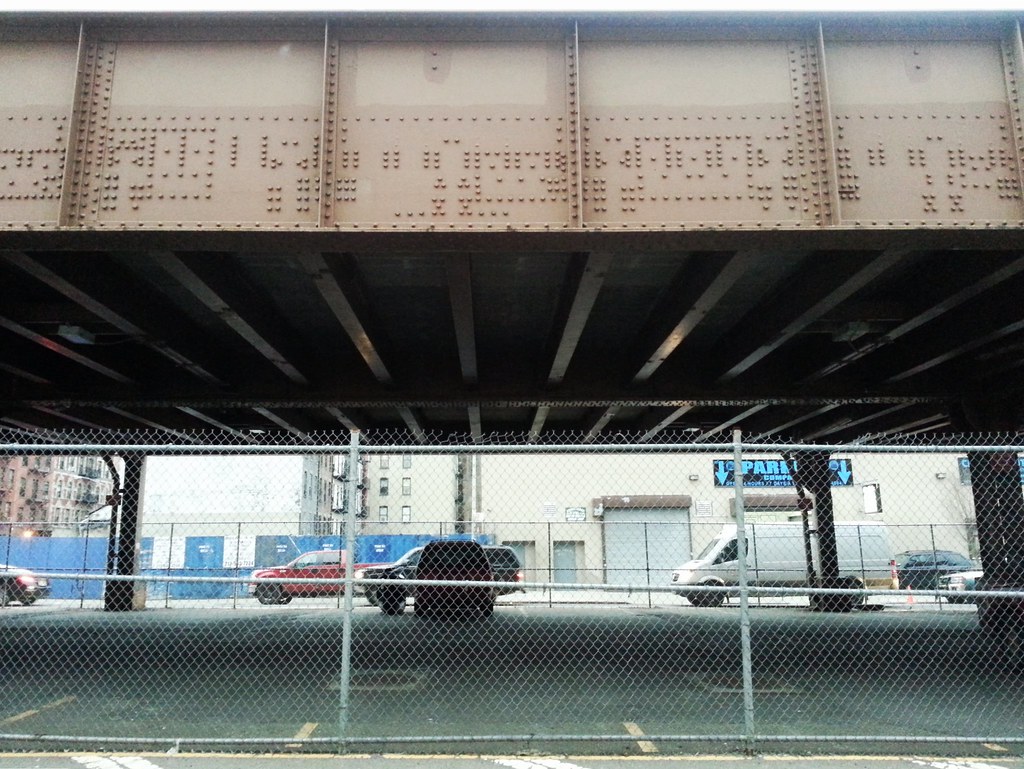
For a brief stretch between 122nd and 135th Streets in Harlem, the 1 train pops above ground. Or, rather, the ground pops below the 1 train. There is a substantial valley here (clearly seen on this old subway profile — look just to the right of center at the top), created by long-ago movements of the earth along the geologic fault that runs beneath 125th Street.

Around a century ago, about 178,000 Jews lived in Harlem, making it the world's third-largest Jewish community after the Lower East Side and Warsaw. These days, however, there is only one "mainstream" synagogue left in the neighborhood. Fittingly, the street on which it stands, Old Broadway, is itself a remnant, a curvy piece of the colonial-era Bloomingdale Road that was left over when the road was straightened out to become today's Broadway.
The synagogue is still chugging along, but it's not exactly flourishing: "Rats are not the only thing that the unassuming Old Broadway Synagogue does not have. It has no paid permanent staff. It has no rabbi. And it has no summer services, not altogether bad, since it has no air-conditioning."
UPDATE: Air conditioning and summer services were apparently added several years ago. See comments.


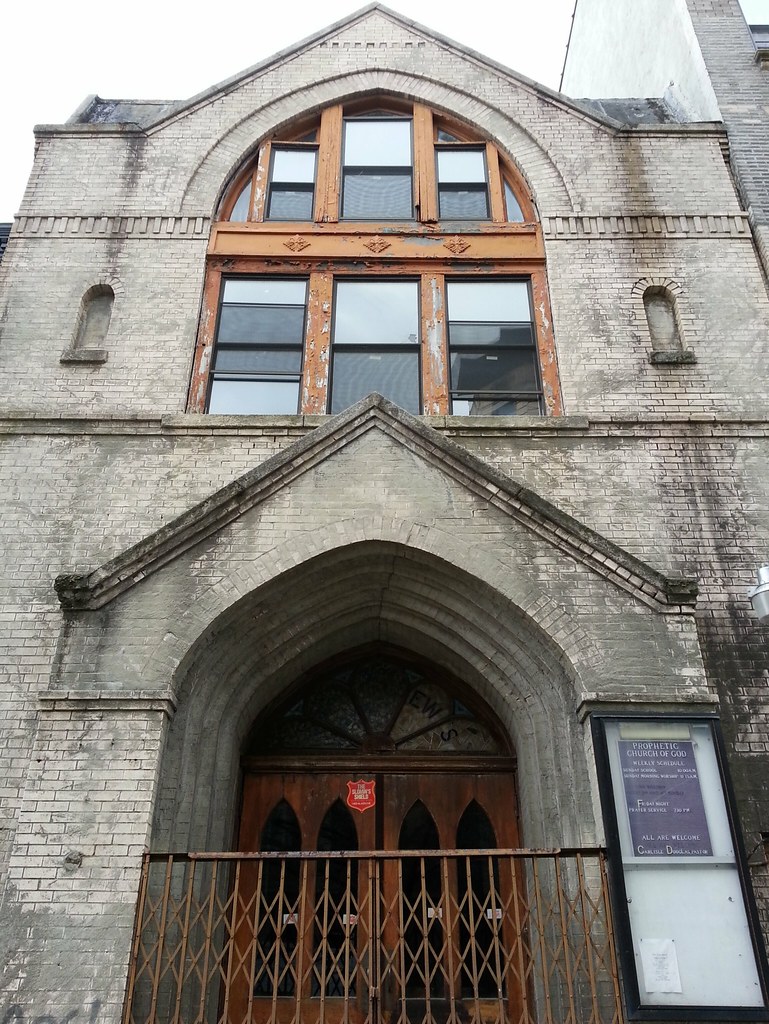
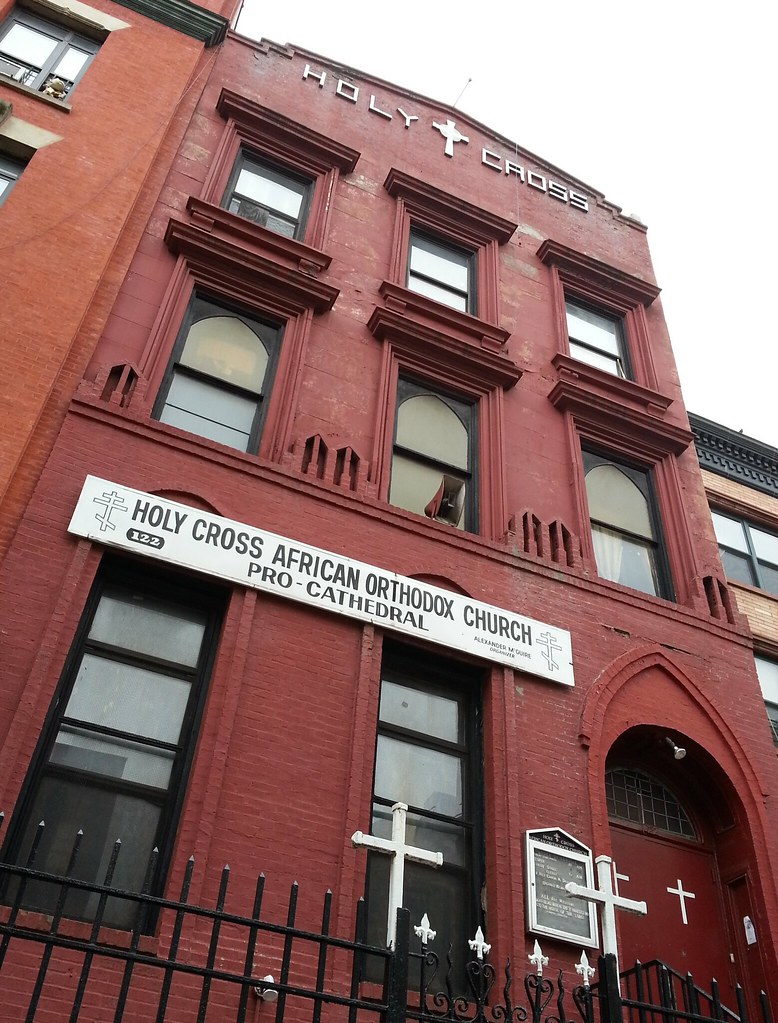
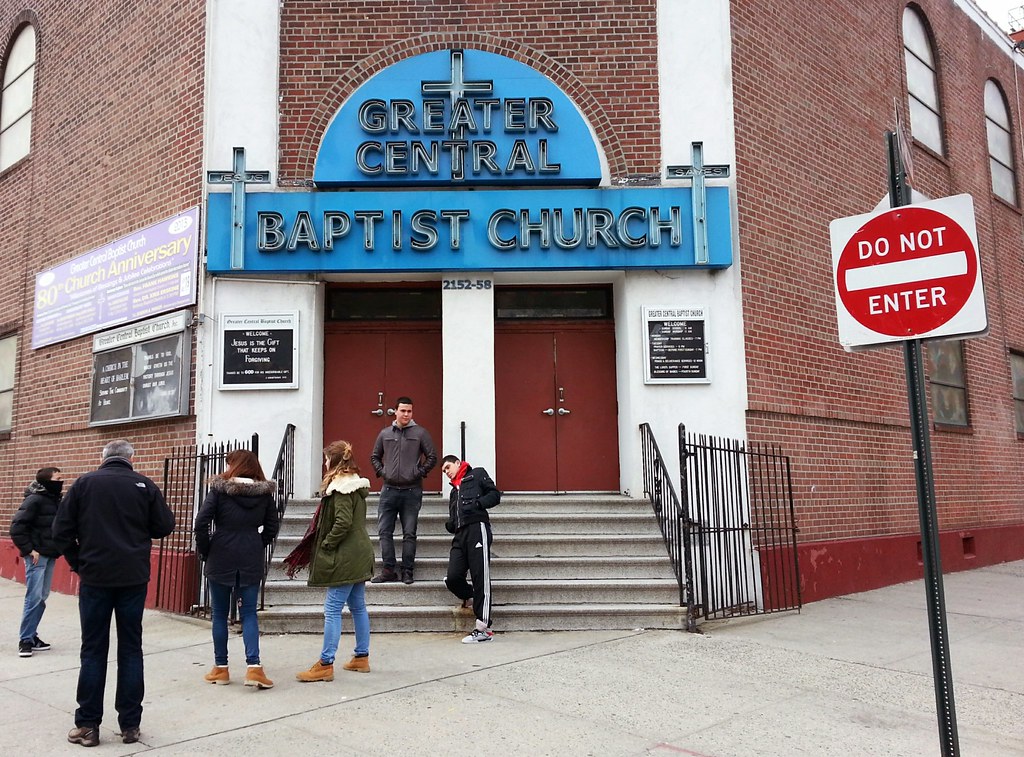
Three out of seven midblock lots on the south side of 129th Street between Lenox and 7th Avenues are occupied by the churches you see in this picture and the following two. There's also another Baptist church located across the street on the north side.


"In a quiet section of Harlem, the inquisitive visitor finds an extraordinary sight: a vast church in polychromed brick, seemingly transplanted from Venice, Siena or Lombardy. It is the Catholic parish of All Saints, one of the last masterpieces of James Renwick, Jr.", the architect of St. Patrick's Cathedral, Grace Church, and the Smithsonian Castle.

Here we see the Park Avenue Bridge, with the Oak Point Link in the foreground and the Four Sisters way off in the distance.

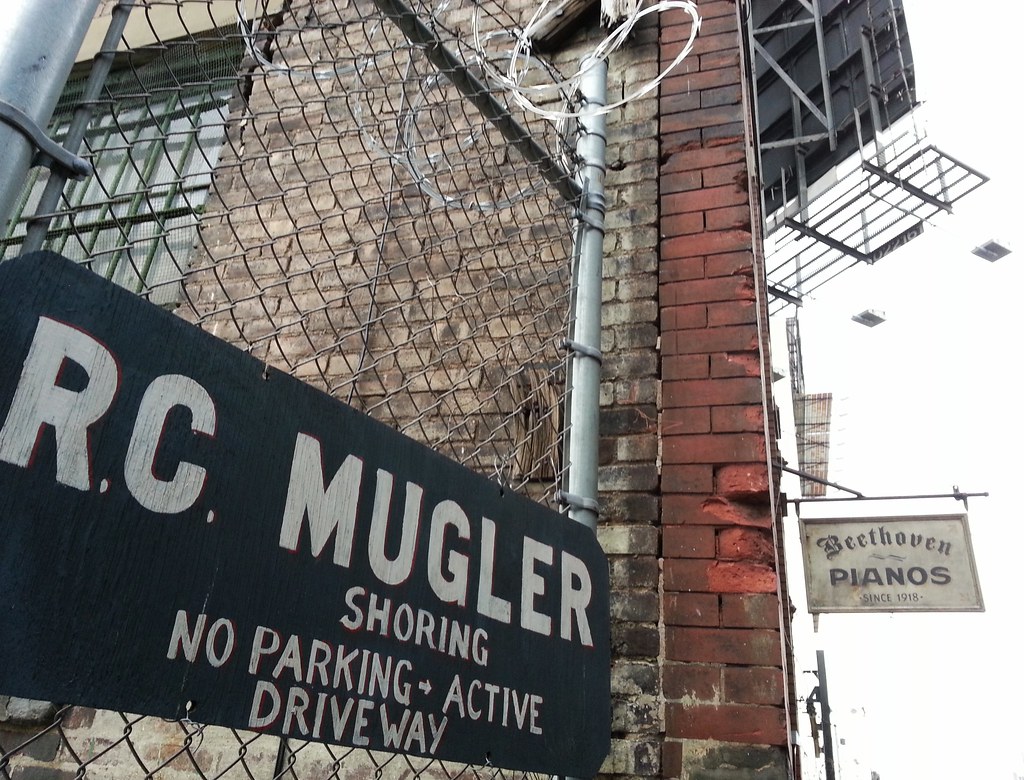
and Beethoven Pianos (their "rebuilding and storage facility")

"Featuring robust brick facades and a high corner clock tower, the former Estey Piano Company Factory is a distinguished monument to an industry that was once one of the Bronx’s most important."


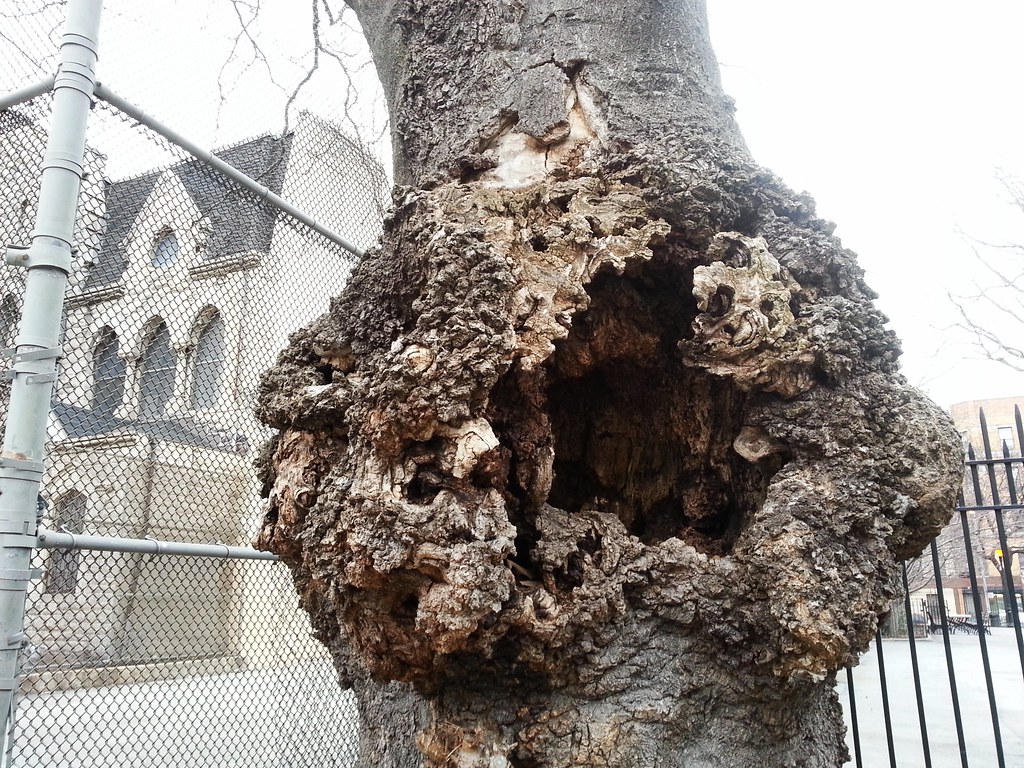

I've seen hundreds of these handwritten signs posted on the trees and utility poles of the Bronx, but, until today, I hadn't found one in any other borough.


Founded in 1904, NAMA is "a blue-collar bedrock of jazz history in Harlem."


This sculpture is the first non-arboreal version of Harlem's Tree of Hope.


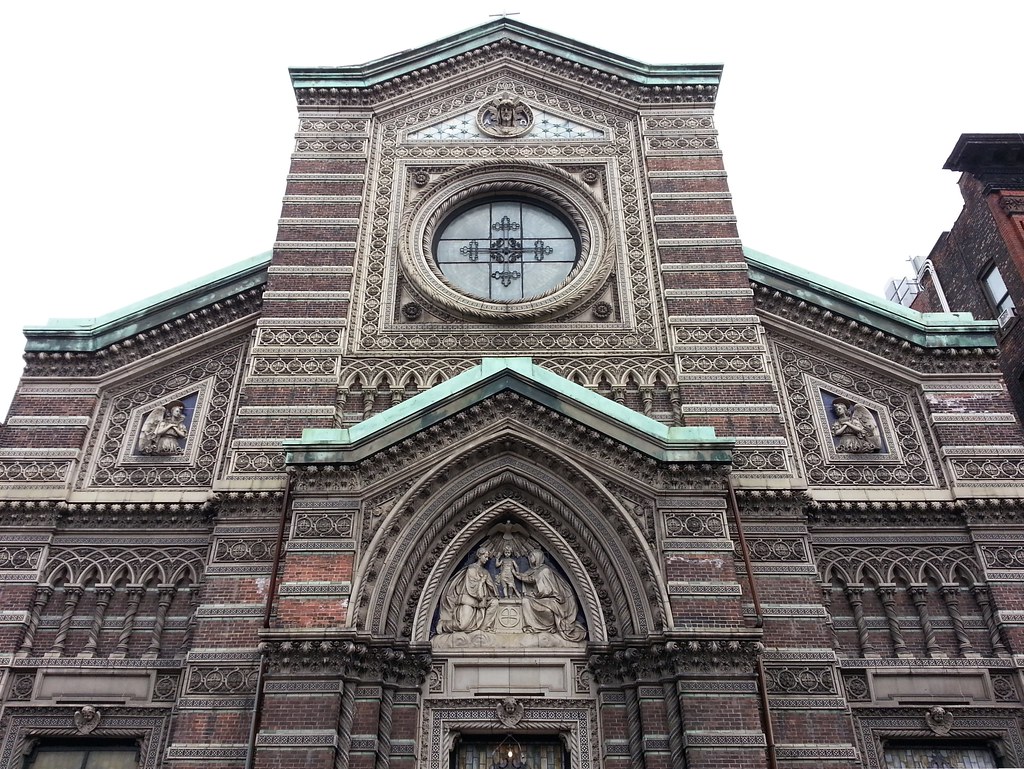
"The richly ornamented, polychrome St. Aloysius Roman Catholic Church was built in 1902-04 to the design of William W. Renwick [nephew of James Renwick Jr.] based on Italian Gothic prototypes, an unusual source of stylistic inspiration for buildings in New York City."
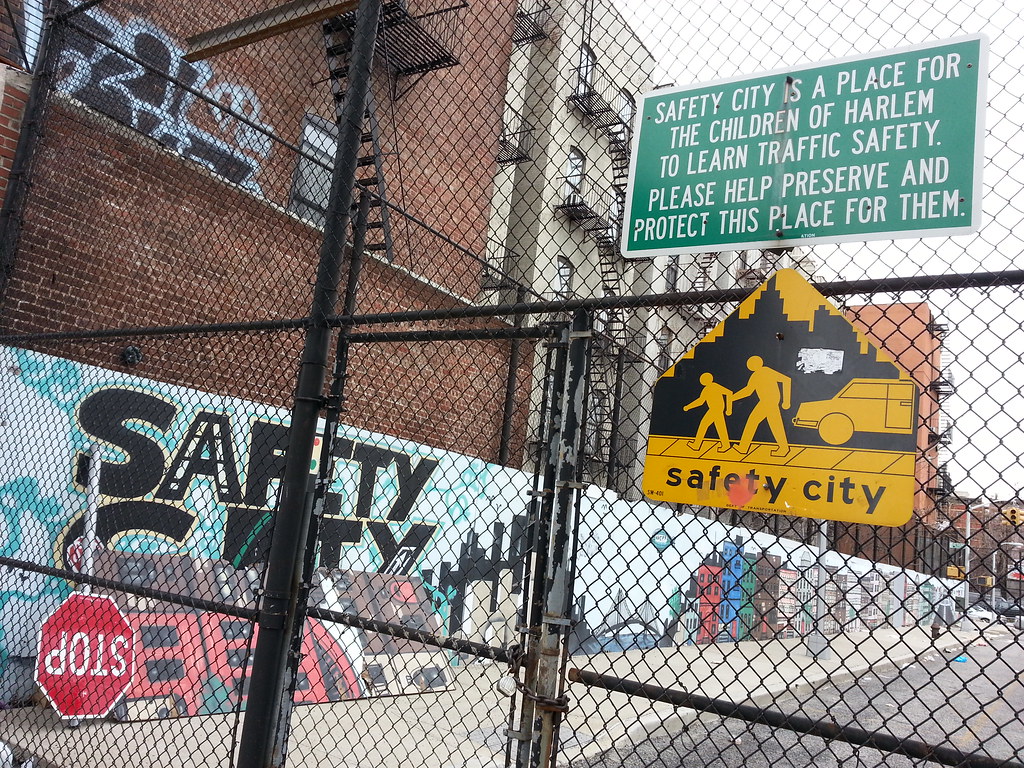
The original! (We passed by one of its offspring several months ago in the Bronx.)
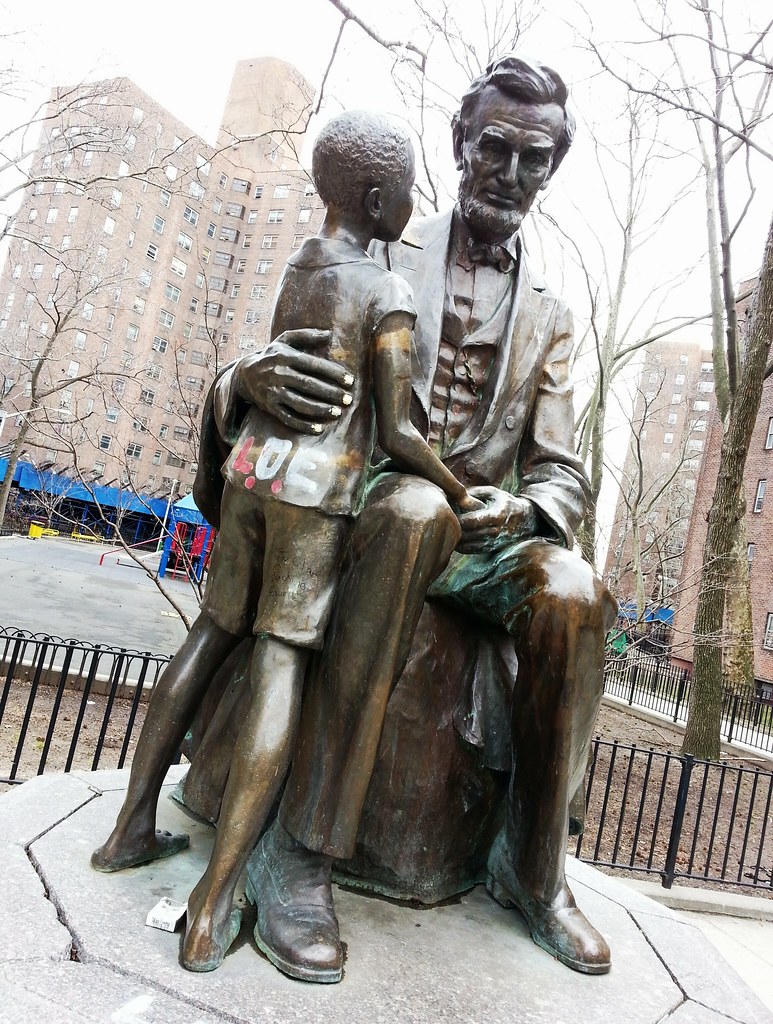
Also known as Lincoln and Child, this sculpture sits in the middle of Harlem's Lincoln Houses. It was dedicated in 1949, and a newspaper account of its unveiling reflects the optimism that once surrounded the creation of large public housing projects:
Tribute was paid to the clearing of slums in Harlem and to the freeing of slaves as the statue, "Lincoln and Boy," was unveiled and dedicated in the center of the Abraham Lincoln Housing project here.
"Lincoln would have been proud to have his statue placed in the middle of a recreation area which embodies so many of his principles rather than in marble halls among the great," Thomas Farrell, chairman of the authority, declared.
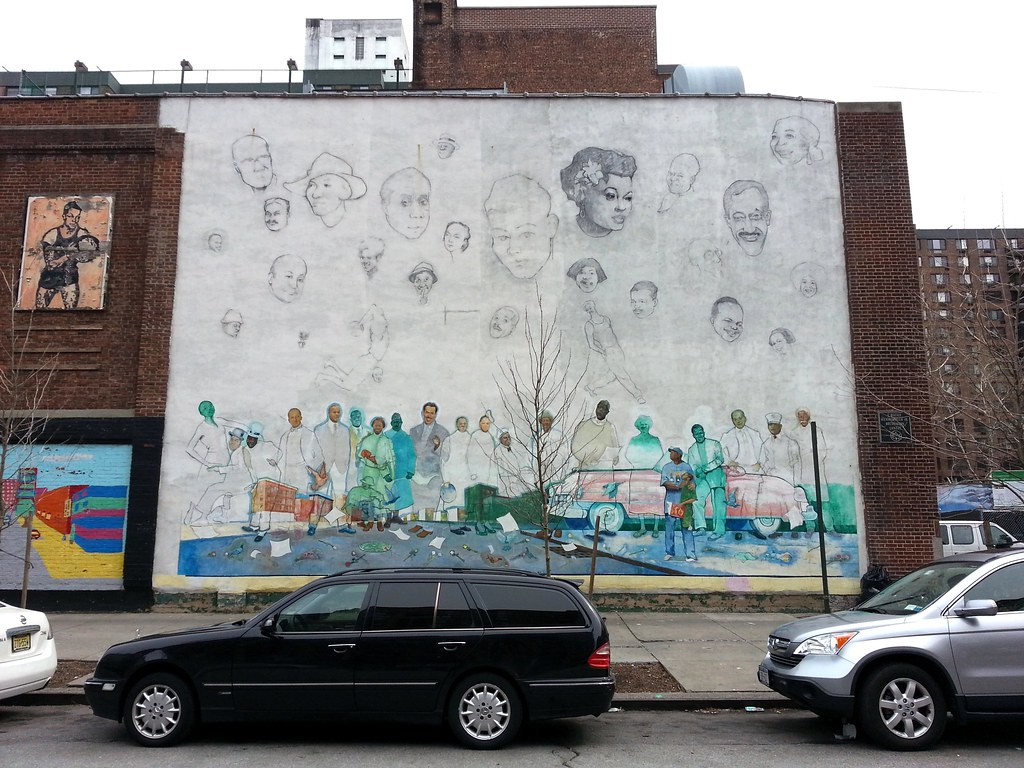
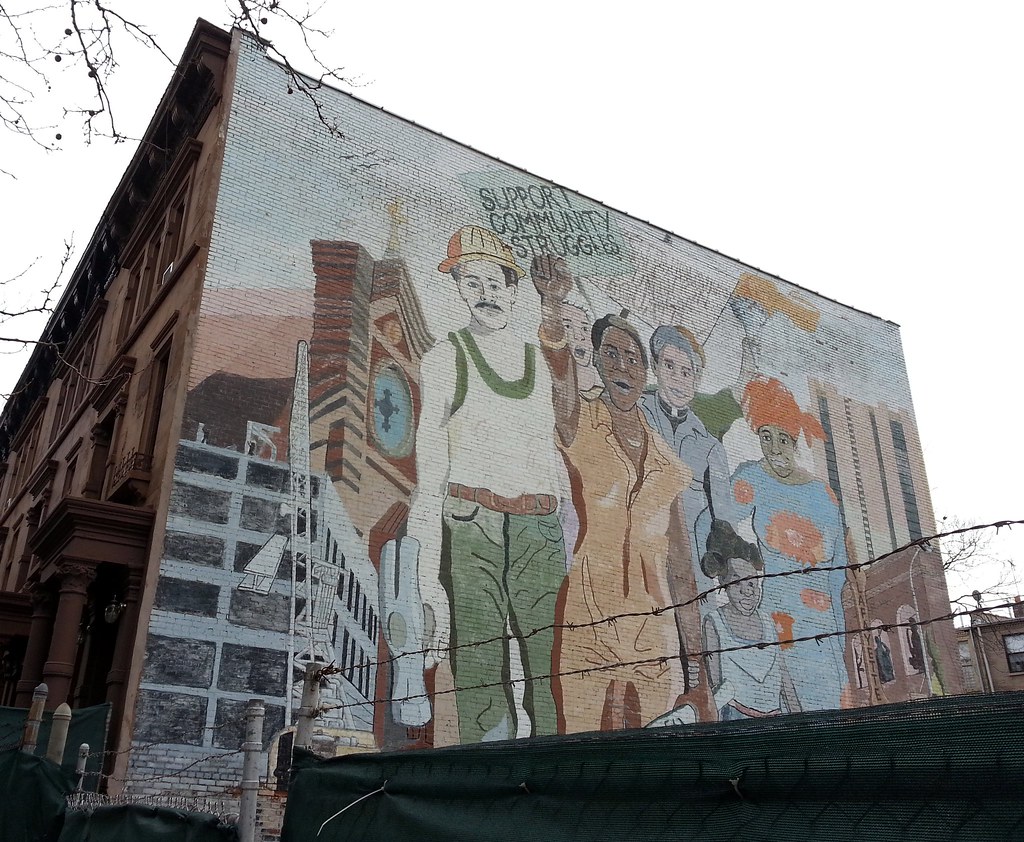
might be a good name for this (unfinished?) mural. Here's a closer look.
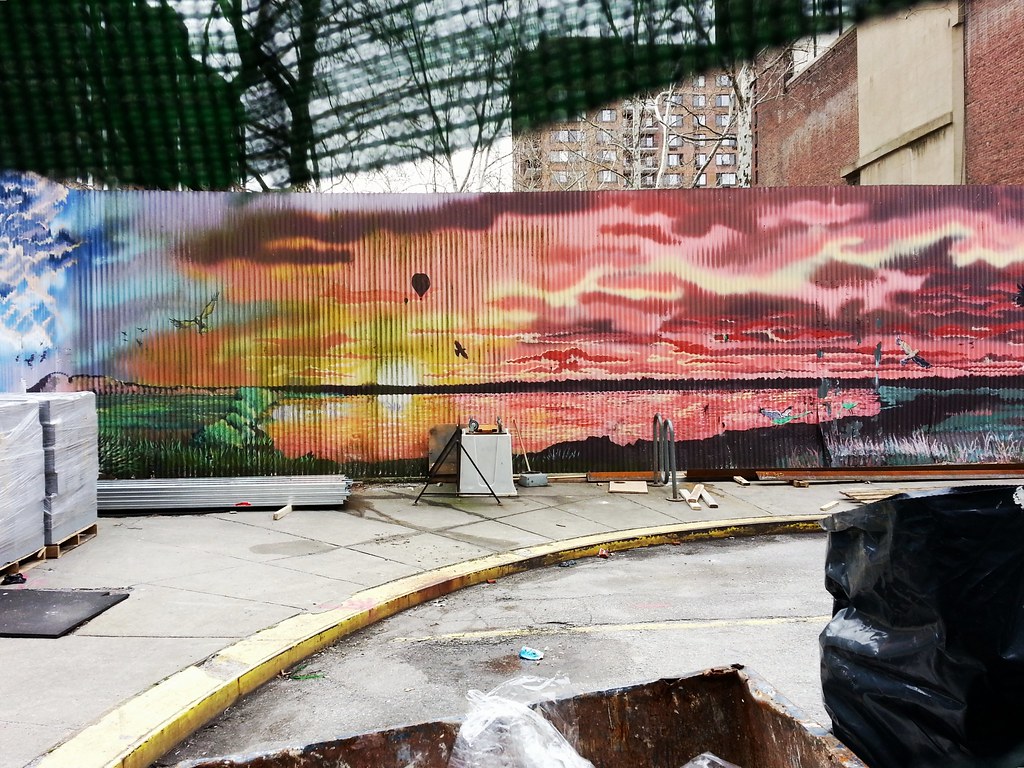
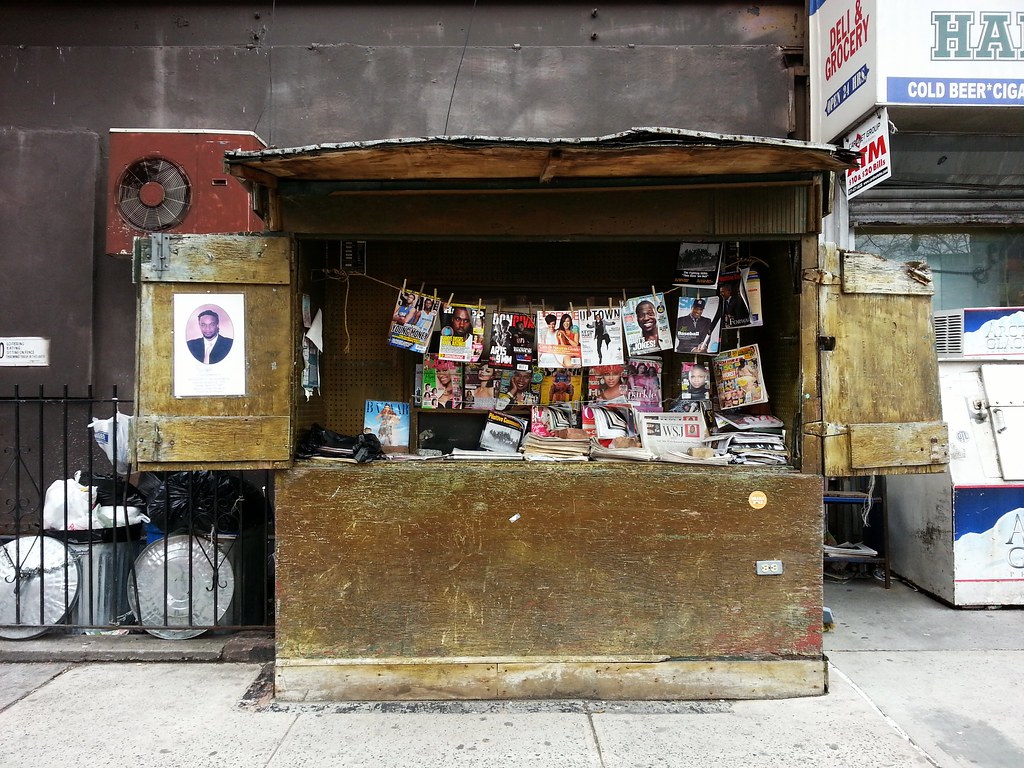

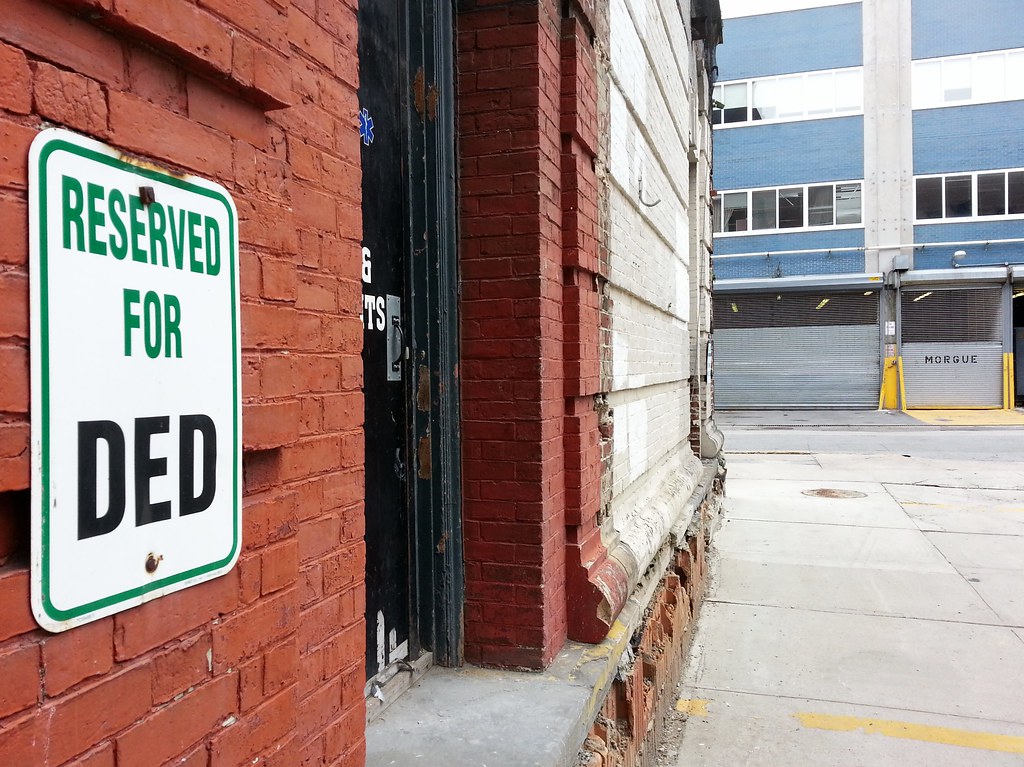
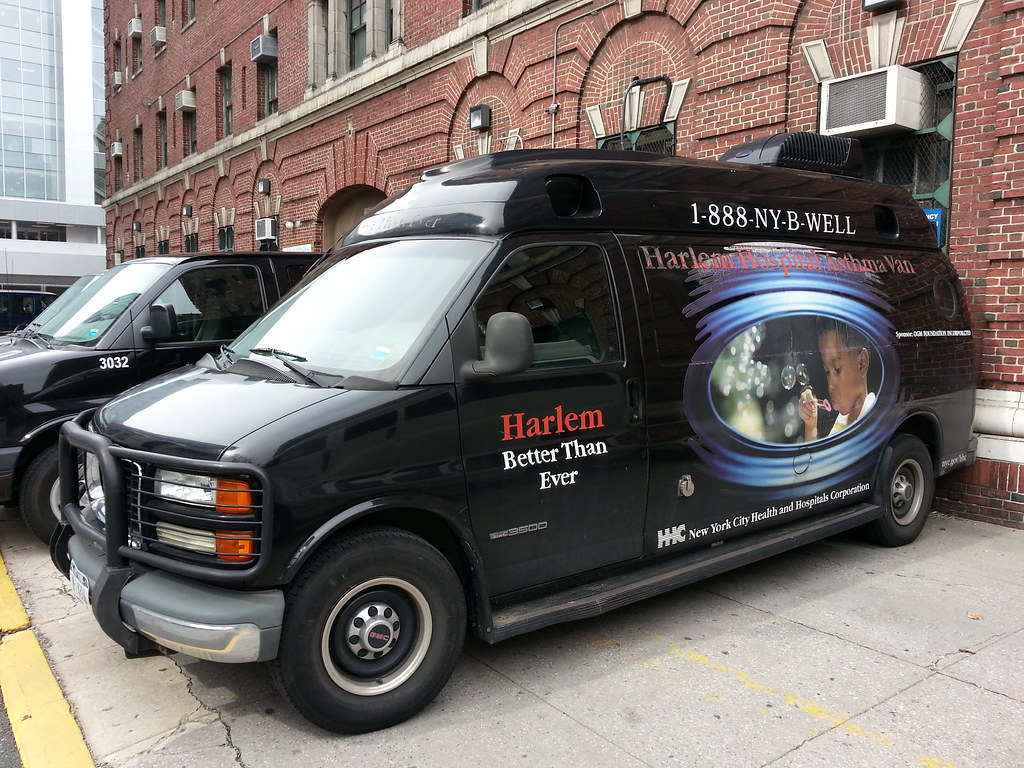
Education and outreach on the streets of one of the nation's most asthmatic neighborhoods