

East Elmhurst, Queens



Adding to the allure of these delightful critters is their faithful companion — the old, gross gumball (or junky plastic toy) machine. (You may be able to make out another set of dispensaries farther down the block, and another animal ride stationed at the corner.)
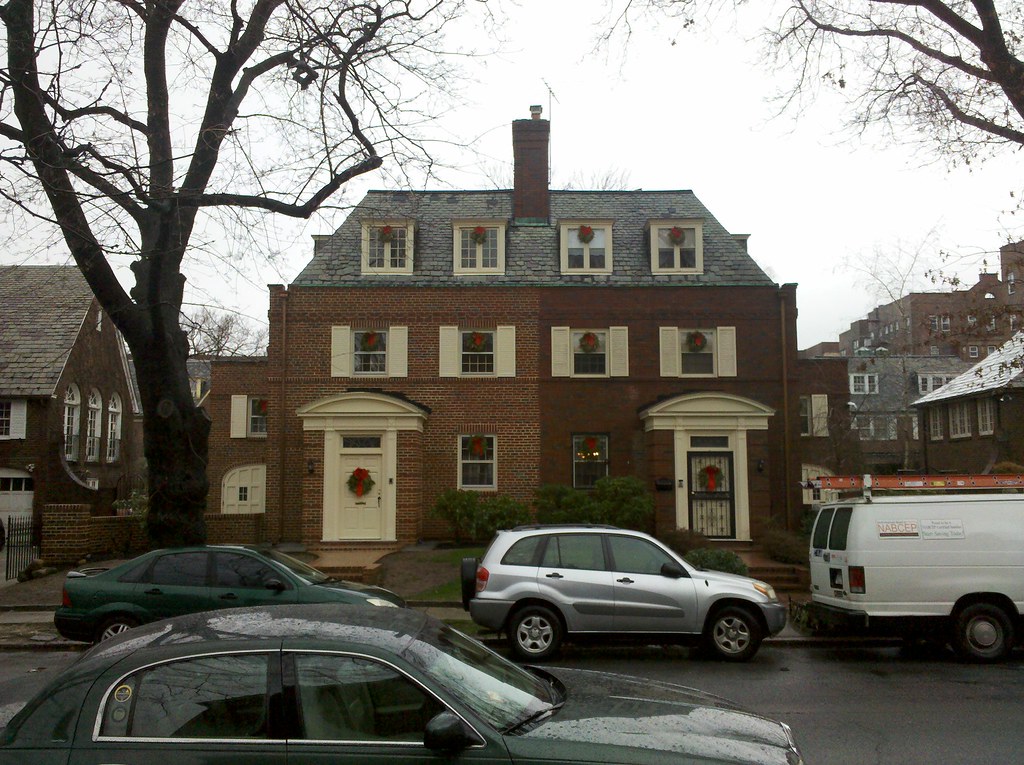
Today I passed several blocks of these houses, built in the 1920s as part of a "restricted" community for wealthy white Protestants. In a beautiful ironic twist, they now lie in one of the most diverse neighborhoods on earth.

The line on the bottom reads: "If your property is listed with a broker, please disregard this flyer".

Even the beloved giraffe is not safe from his clutches.

is the name of a place in Queens. Surprisingly, this is not that place.

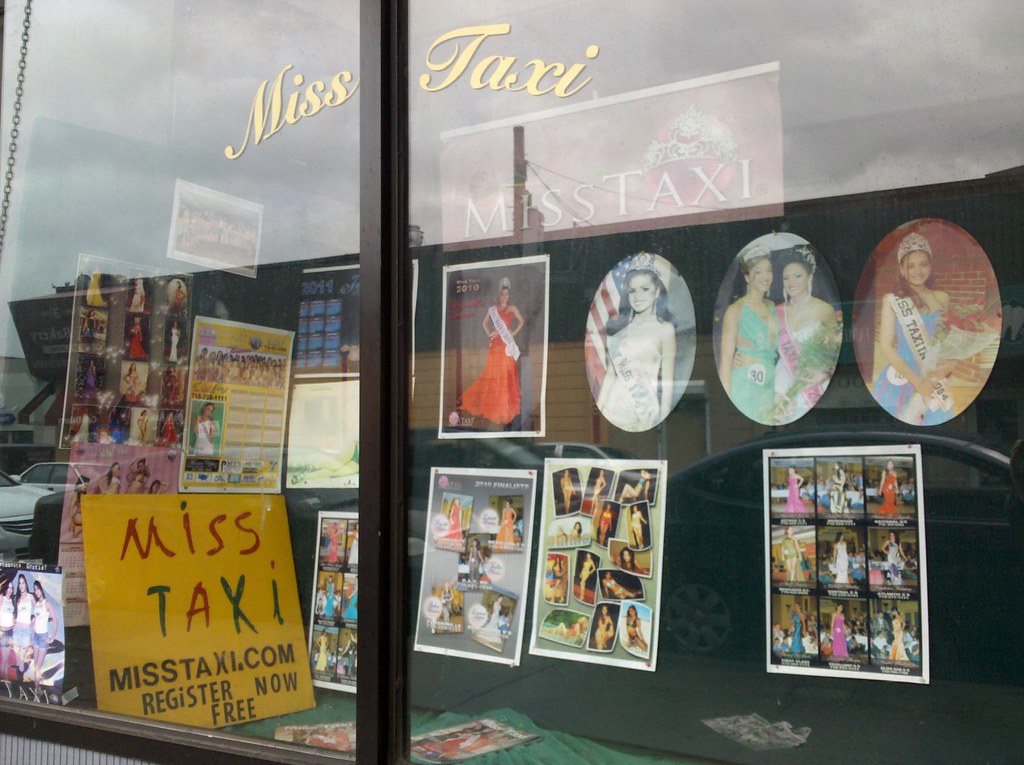
Their mission? To "provide entertainment, fun and amusement to the Taxi driver".

Hi-Tek Lubrication Center, where the motto is: "Lube It or Loose It"

It was a quiet day at the landing lights — the wind conditions took this approach out of play.


On March 25, 1990 — the 79th anniversary of the Triangle Shirtwaist Company fire — 87 people were killed in an arson fire at the illegal Happy Land Social Club in the Bronx.

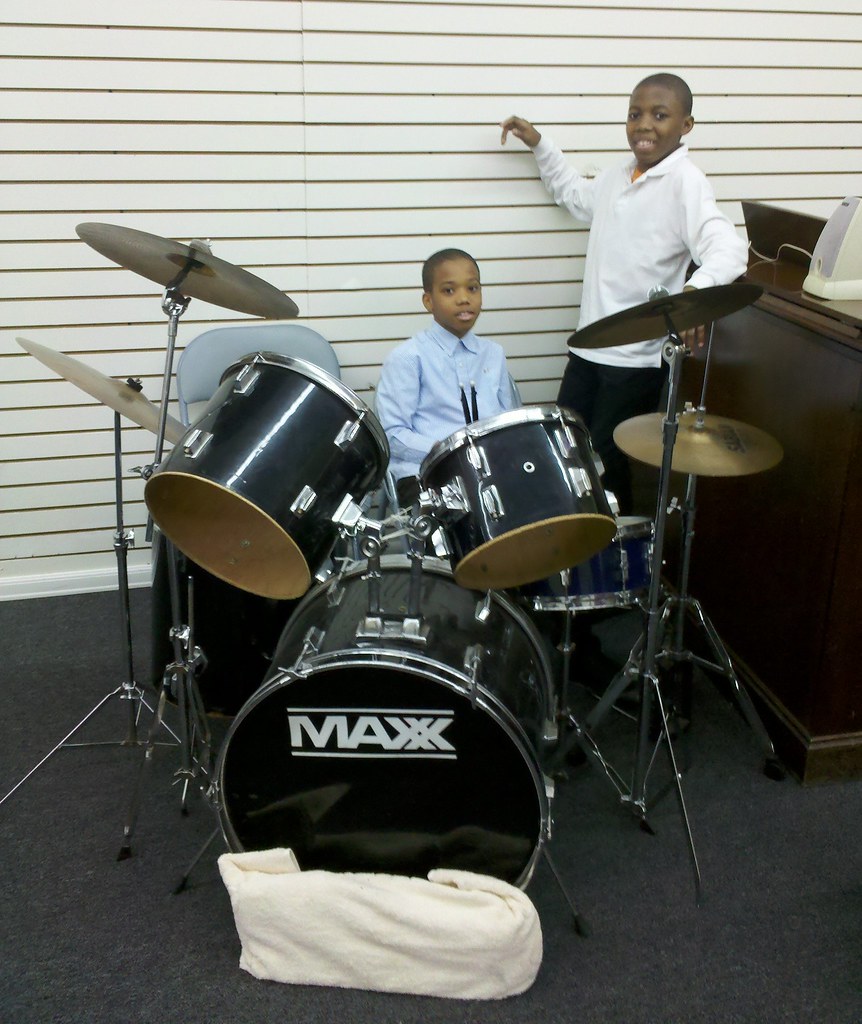
Walking through the South Bronx on a Sunday morning, you're bound to hear the sounds of worship emanating from the sanctuaries of numerous storefront churches. I like that these private experiences have a way of leaking into public, giving you just a little hint of what's going on inside as you continue on your way. Today, however, I was stopped in my tracks by the gospel music issuing forth from a small Baptist church. A couple of people were chanting, but it was mainly the keyboardist and drummer that drew me in. Their playing was really expressive and powerful, and I just stood outside and listened.
Maybe a minute later, a woman and her young son came around the corner, heading into the church. "Why don't you come inside?" she asked. I was hesitant to intrude, but her face and voice were so kind and warm that I couldn't say no. So I sat through the rest of the service with her and her son, taking in the music, the preaching, the dancing — one woman even started speaking in tongues in the middle of the sermon. I was very obviously out of place there, but the pastor and many of the congregants went out of their way to make me feel welcome.
And that amazing drummer I mentioned earlier? Turns out it was the thirteen-year-old gentleman you see standing in the photo above.

They're not quite as cosmopolitan as their Fordham Road counterparts.

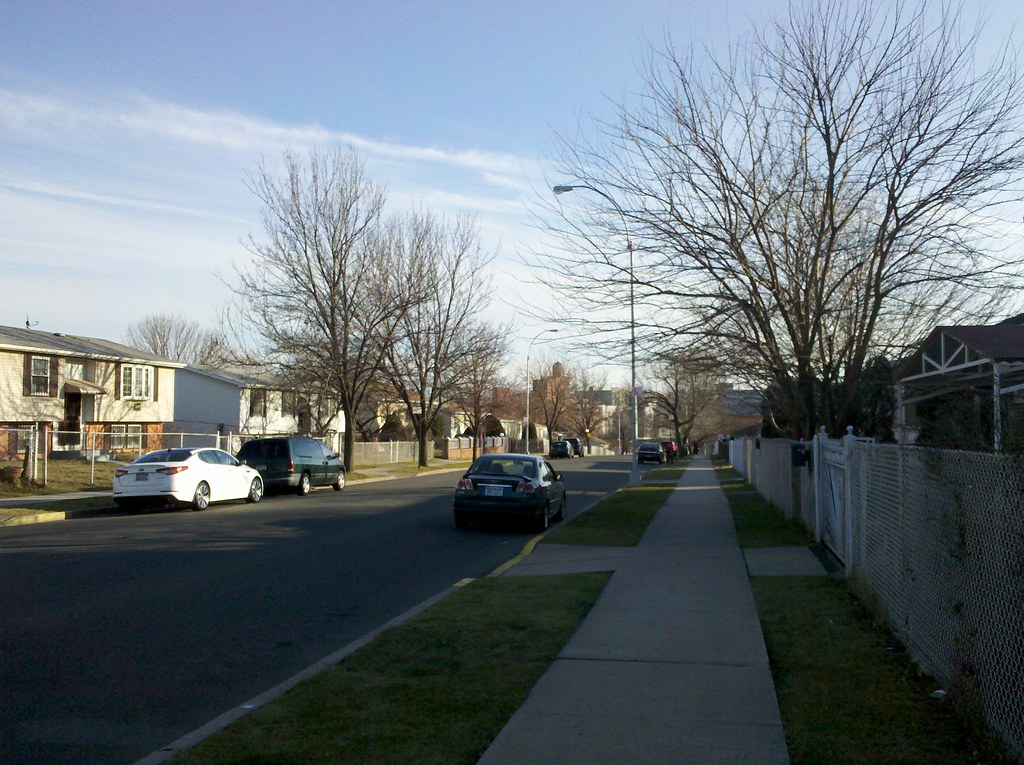


This half-dirt, single-block street is a remnant of an old colonial-era road. According to this mini-memoir about Old Kingsbridge Road, the parking spots here were once a prized commodity because there was no alternate-side parking. (It didn't occur to me to look for parking signs while I was out there, but I'm guessing this is now a private street with restricted parking.)

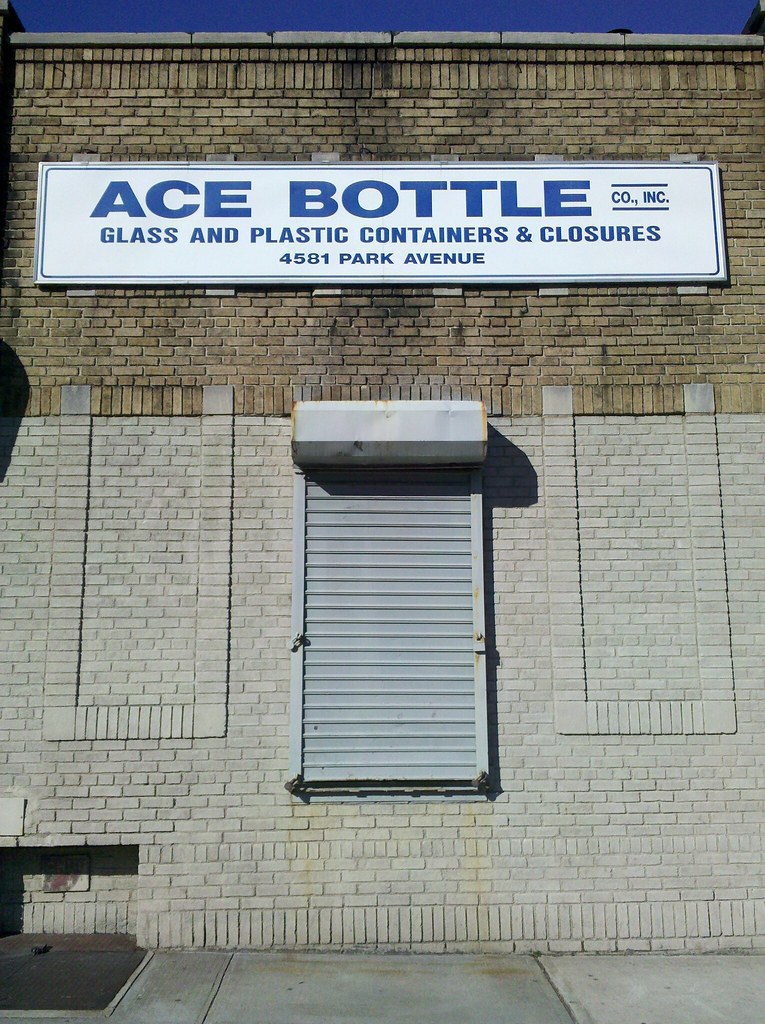


The very colorful home of four different high schools
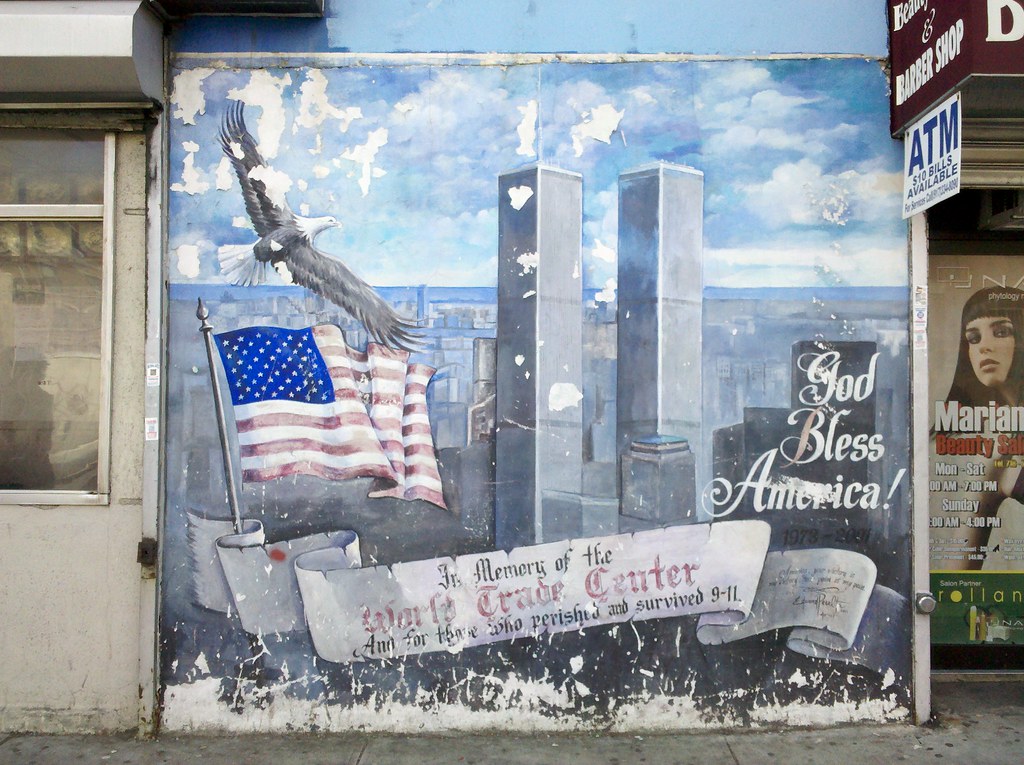
I missed this one on two previous passes through the adjacent intersection, only to notice it today from a block away.
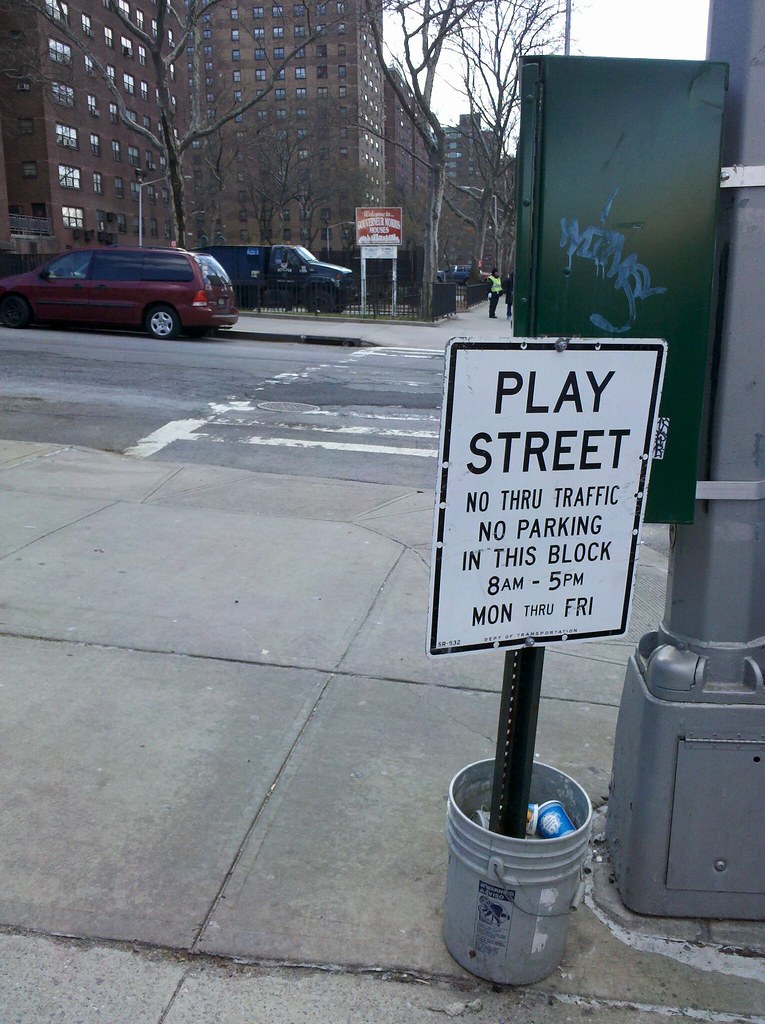
Play streets — blocks of local city streets that are closed off to vehicular traffic during certain hours to give kids a safe place to play — date back to at least 1915. You can see old photos of play streets here and here.
Play streets currently seem to come in two distinct varieties. Summer, or community, play streets operate during the, well, summer, mostly "in neighborhoods where money and open space are scarce. Play streets often serve children who cannot afford day camp, much less sleep-away adventures." School play streets, on the other hand, operate during the school year and provide extra recreational space for "schools with limited or no access to a gymnasium, multi-purpose space, or outdoor recreation facilities."
Here's a short video of a summer play street in action. The kid at 0:36 just can't restrain himself.
The sign above is located outside an elementary school (PS 55), but it looks to me, based on its hours, like it's for a summer play street. (If that is indeed the case, I have no idea what it's doing on the sidewalk here in January.)
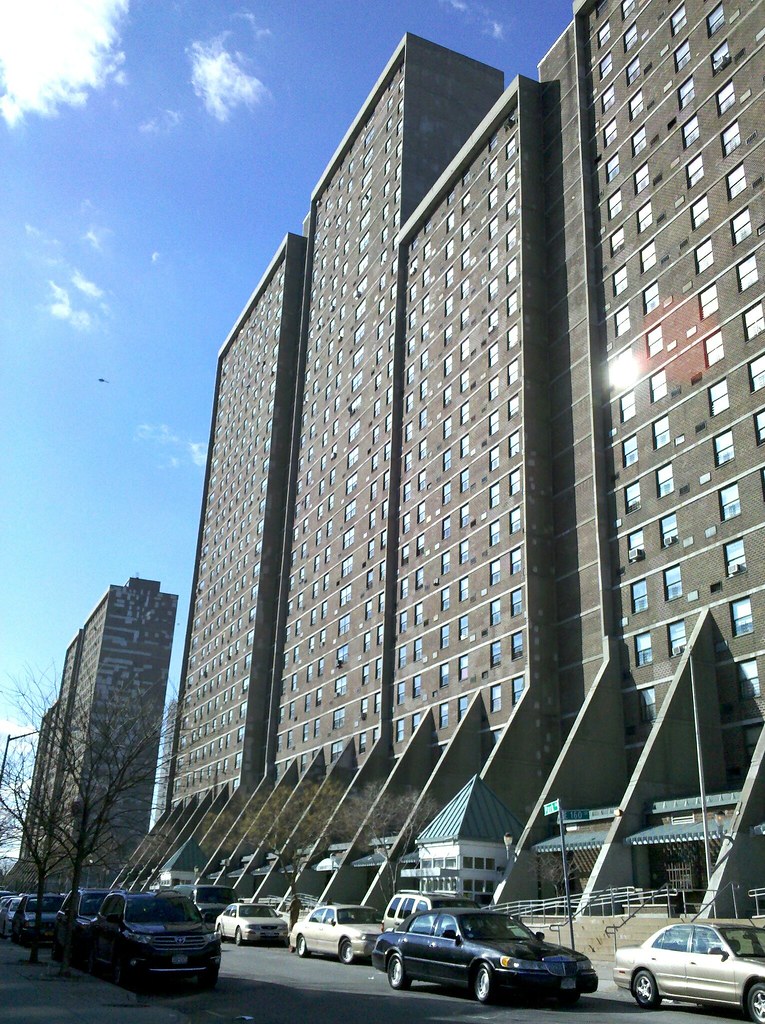
Reminiscent of some other apartment buildings we've seen, this strangely named public-housing complex is built atop Metro-North Railroad tracks.

To the south you can see the Park Avenue Bridge, a lift bridge that carries the Metro-North Railroad, including the line beneath Morrisania Air Rights, over the Harlem River between Manhattan and the Bronx. The Madison Avenue Bridge, on the other hand, is a swing bridge. When open, its turning span aligns with the wooden structure visible here, which provides both protection from oncoming vessels and easy access to the underside of the bridge for maintenance.


Built in the 1890s, it had begun to attract a gay clientele by the 1930s. It survived the height of the AIDS epidemic in the 80s, when the city shuttered many other gay meeting places, but was closed in 2003 after failing a building inspection.

There was a big uproar a couple of years ago when residents of new luxury apartment buildings bordering Marcus Garvey Park began lodging complaints against the drum circle, which has been a community fixture since 1969.
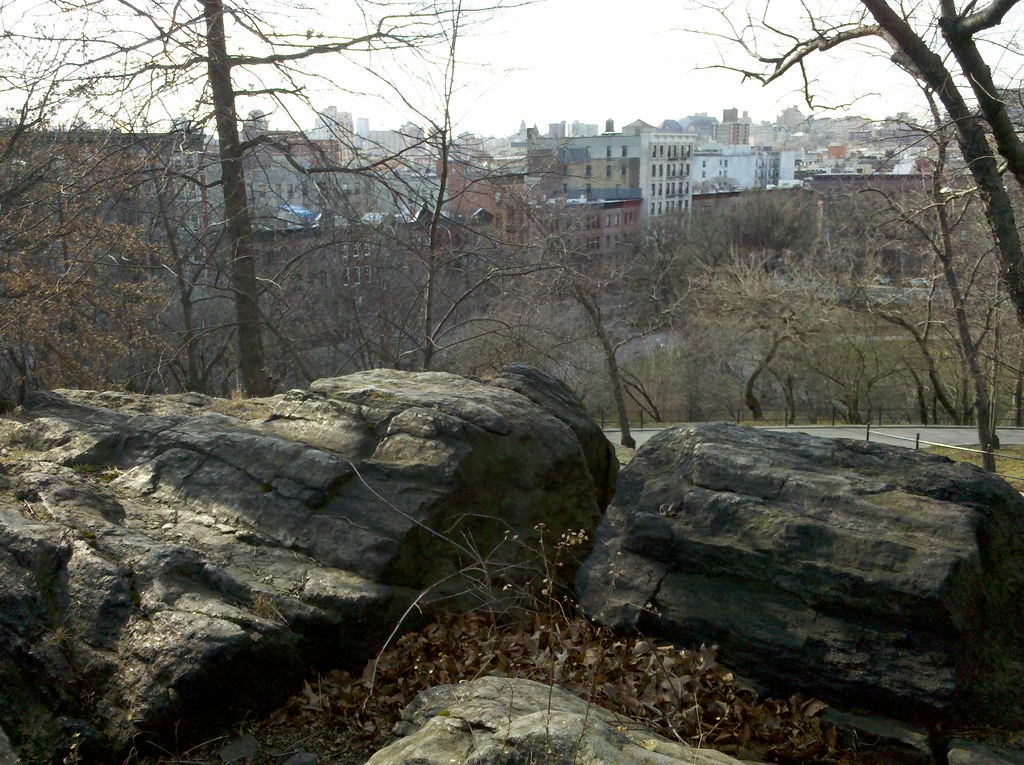
That's 120th Street at the southern edge of Marcus Garvey Park, formerly known as Mount Morris Park.


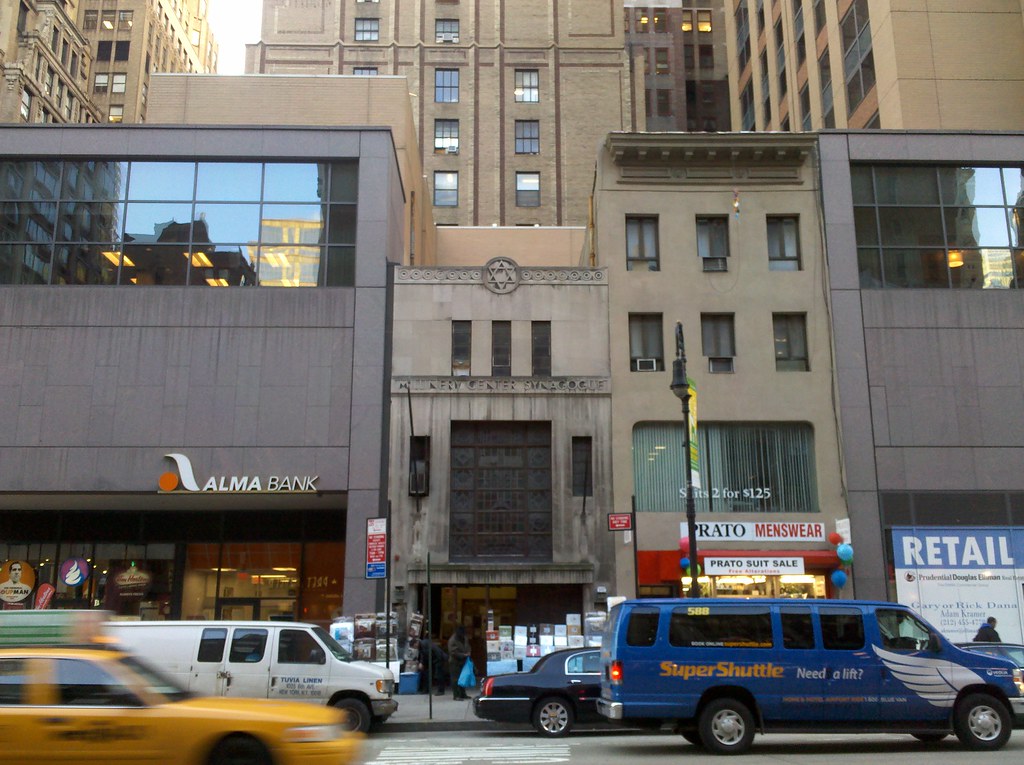
See all those colored squares out front? They're selling sheets and towels!

This is the office of Marshal Biegel. He has the best phone number of the bunch, but is still out-earned by his colleague Martin Bienstock.
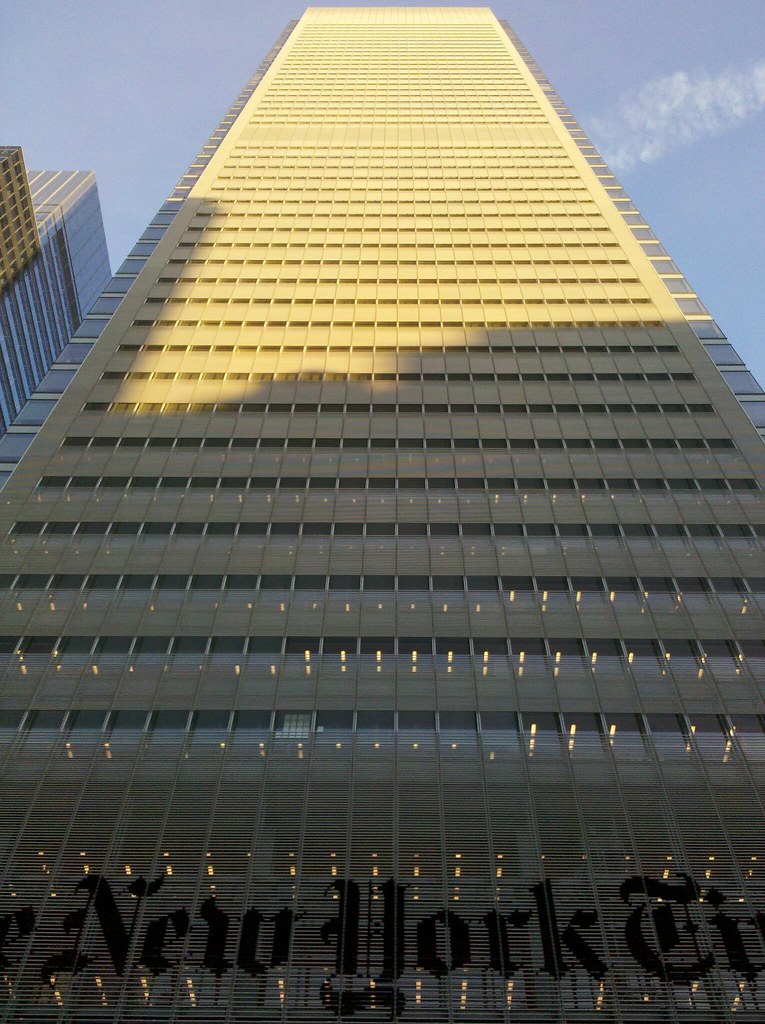


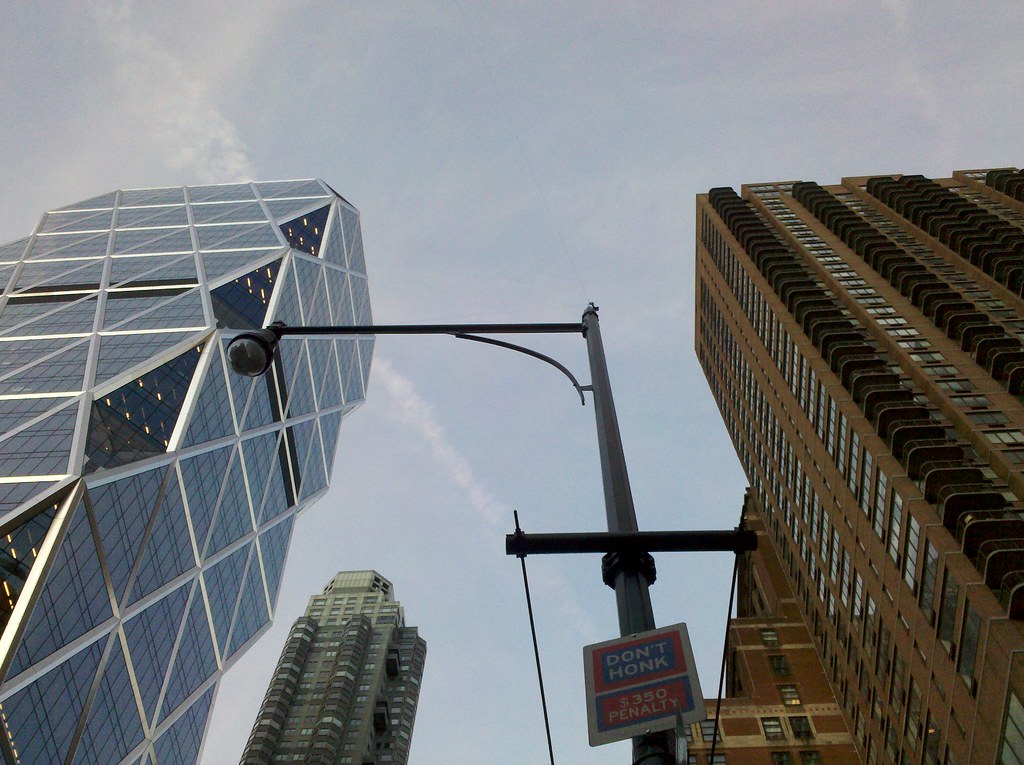
If you look closely at the very top of the lamppost, you might be able to make out two taut pieces of fishing line, one running toward the top and one toward the left side of the photo. They are part of the Manhattan Eruv, an eruv being a ritual enclosure in which observant Jews are allowed to carry things in public on Shabbat (the Sabbath), which would otherwise be forbidden. Eruvs are inspected regularly, and a break was found in the Manhattan Eruv a few months ago on a Friday afternoon, hours before the start of Shabbat, in an area near the United Nations where access was restricted because the UN General Assembly was meeting.
I took this photo at the intersection of 8th Avenue and 56th Street, looking north. All the maps I can find online show the eruv running straight along 56th Street here, but you can see in the photo that it turns south onto 8th Avenue. Perhaps it was recently altered to include a larger area?

