
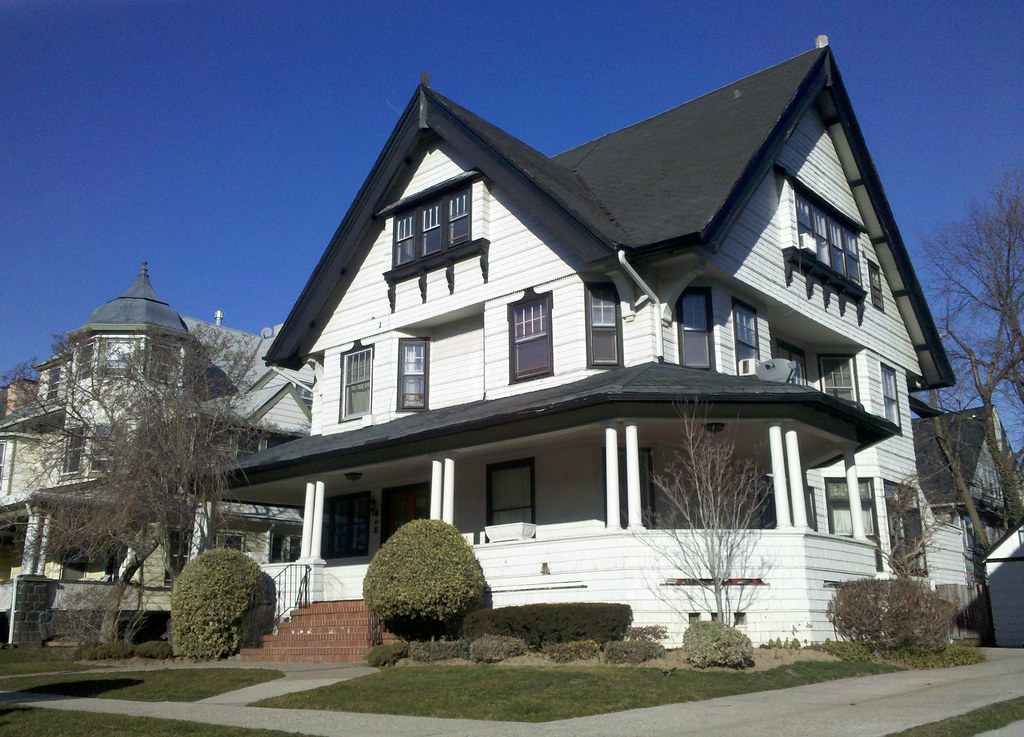
More gigantic houses!


This must be the Brooklyn equivalent of MOMO's expansive tag of Manhattan.
Either that, or the guys working on the house down the block had a leaky can of paint.

This is one of two Cambodian Buddhist temples in NYC, the other being Wat Jotanaram in the Bronx. I was surprised to find this temple sitting at the end of a block of large Victorian houses; in fact, the temple itself resides in one of those houses. Take a look!
The two gentlemen on the right were standing outside when I passed by. We struck up a halting conversation built on their modest English and my nonexistent Khmer. They invited me inside to see the sanctuary and meet the temple's monk (the gentleman on the left, in case you couldn't tell). Before I knew it, the conversation had turned toward my singlehood; the idea of fixing me up with a Cambodian girl was proposed and roundly lauded by my new friends.
However, before I had a chance to unwittingly and irrevocably signal my matrimonial intentions with an absentminded gesture, like in some bad movie, the clock struck four: it was time to pray. For the next forty-five minutes, the five of us (there was one older woman, as well) sat on the floor in the same asymmetrical pose that the fellow on the right is holding in this picture (occasionally switching legs), with hands raised, palm-to-palm, at chest level. My companions sang what was essentially one continuous chant, which sounded something like this. Even for a total outsider, it was quite entrancing at times.
Before I left, they invited me to attend their three-day-long Khmer New Year's celebration in April. As it happens, I will be out of town for those very same three days. But hey, there's always next year — and I'll still be walking then, after all!
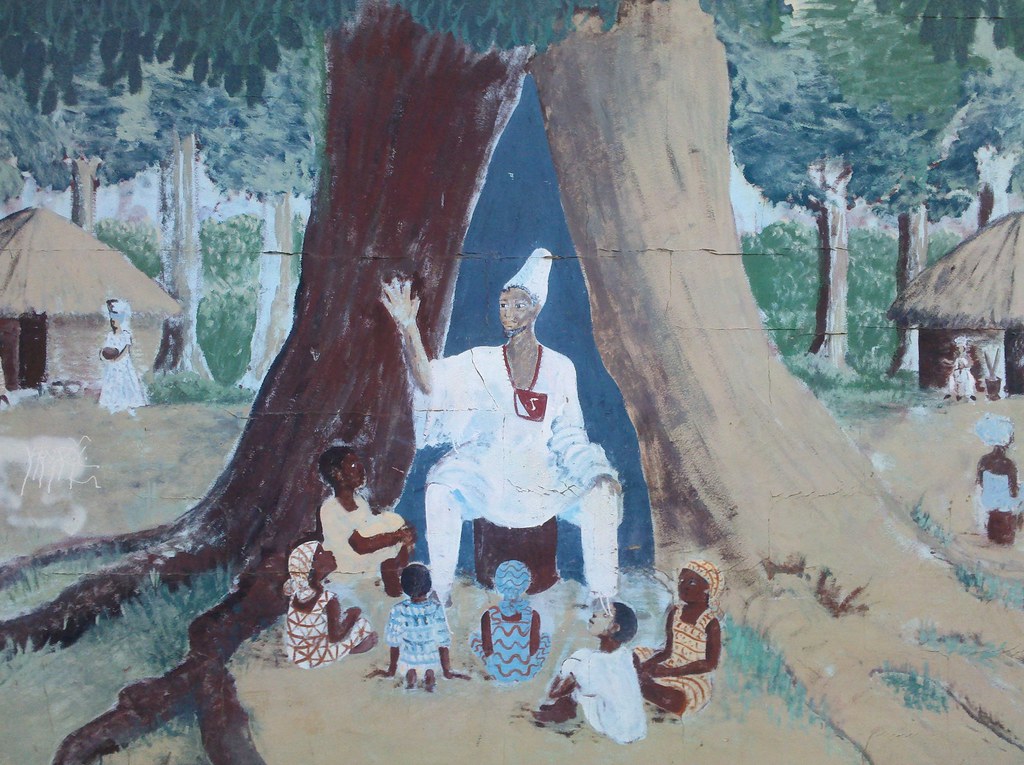
was that this is a metaphor for racial harmony. But, upon closer inspection, I think the sun's just shining on one side of an enormous, hollowed-out tree.

From a distance, I thought this was some kind of protest against the Screen Actors Guild. It is in fact part of State Senator Eric Adams's campaign against droopy drawers.
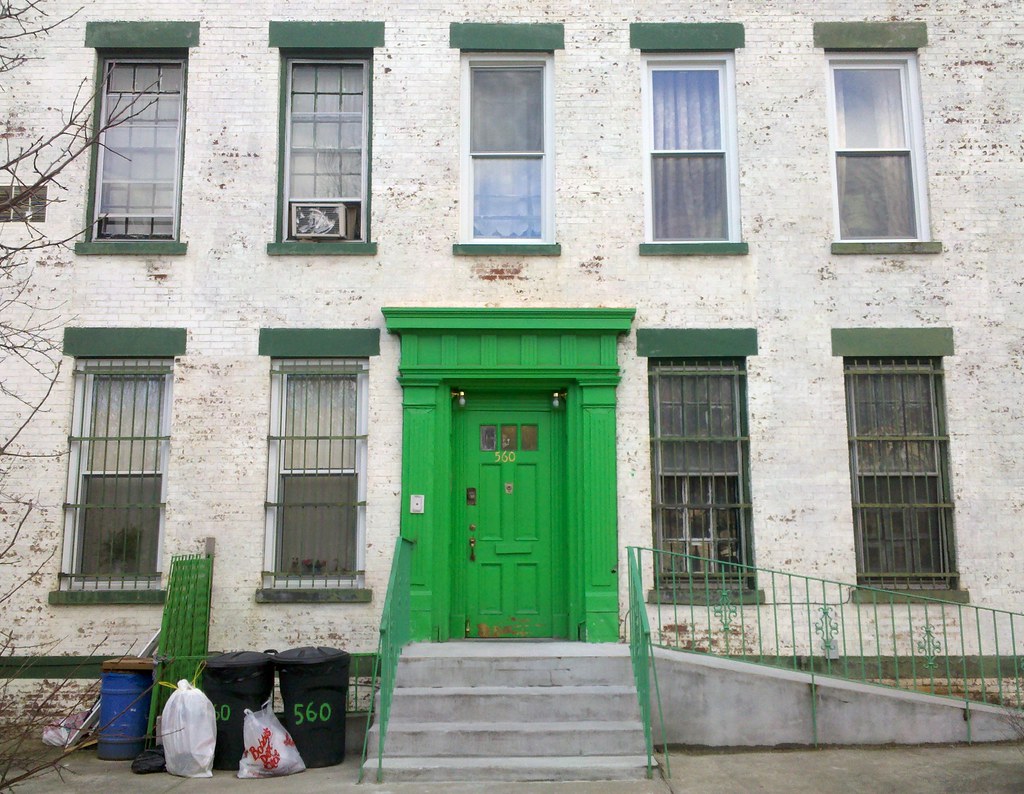
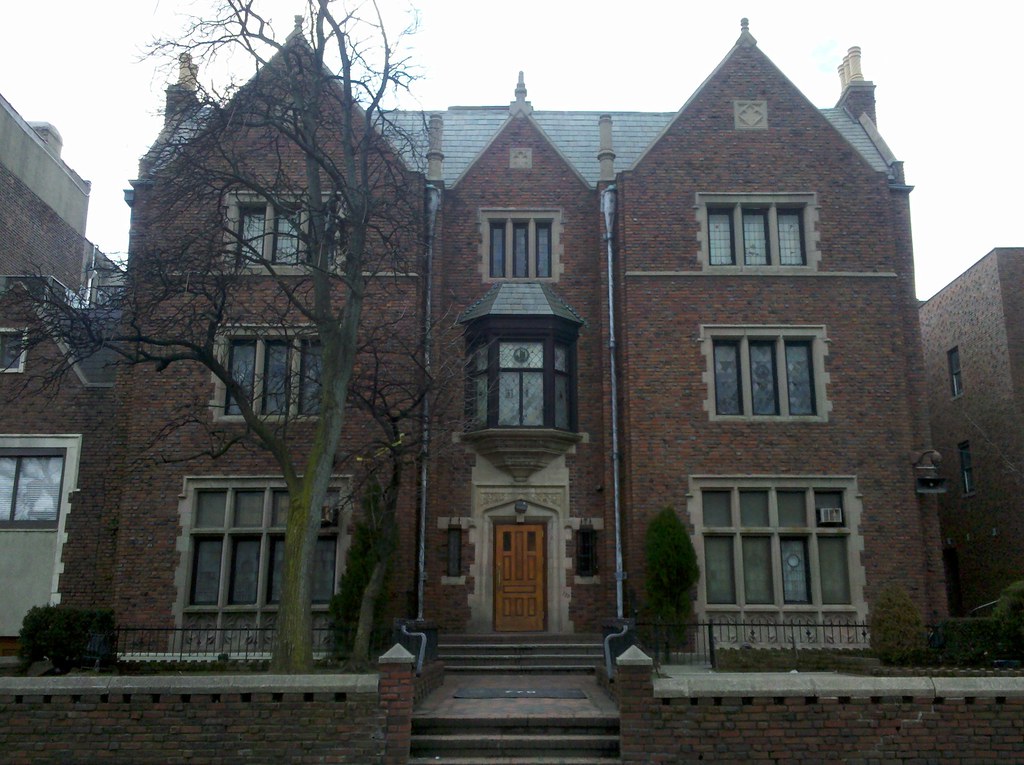
Located at 770 Eastern Parkway, this building is the headquarters of the Chabad-Lubavitch movement. It is of such significance to the organization that Lubavitchers around the world — from Italy to Australia to Israel — have built replicas of it.
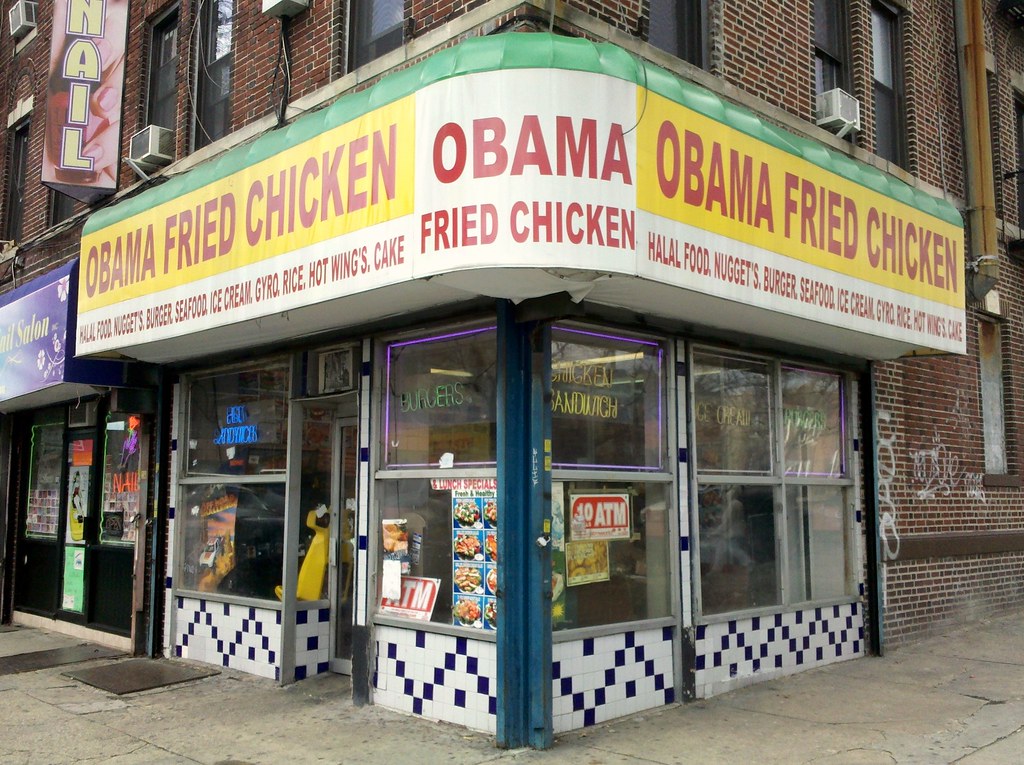
Continuing the proud tradition of presidential chicken, this establishment seems to have weathered the early criticism of its name change and was even featured in a Clipse music video (though its name was erased from the sign when the video aired on TV).
UPDATE: The only version of the video still available online is the one with the restaurant's name erased.
UPDATE: Obama Fried Chicken is a goner.
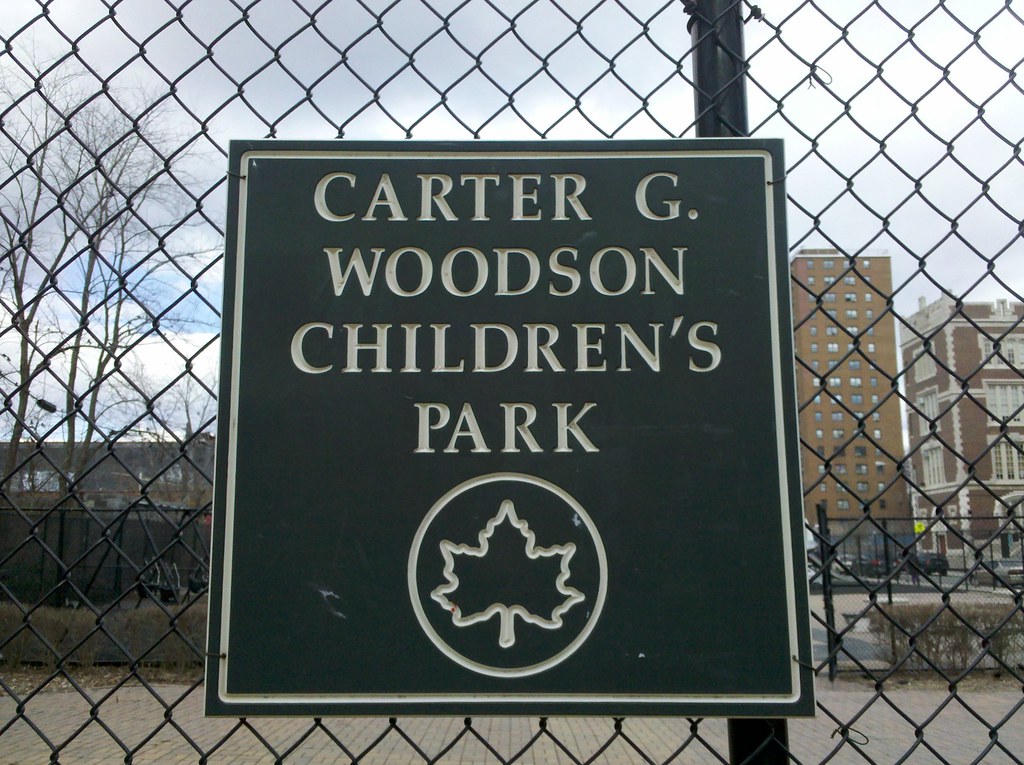

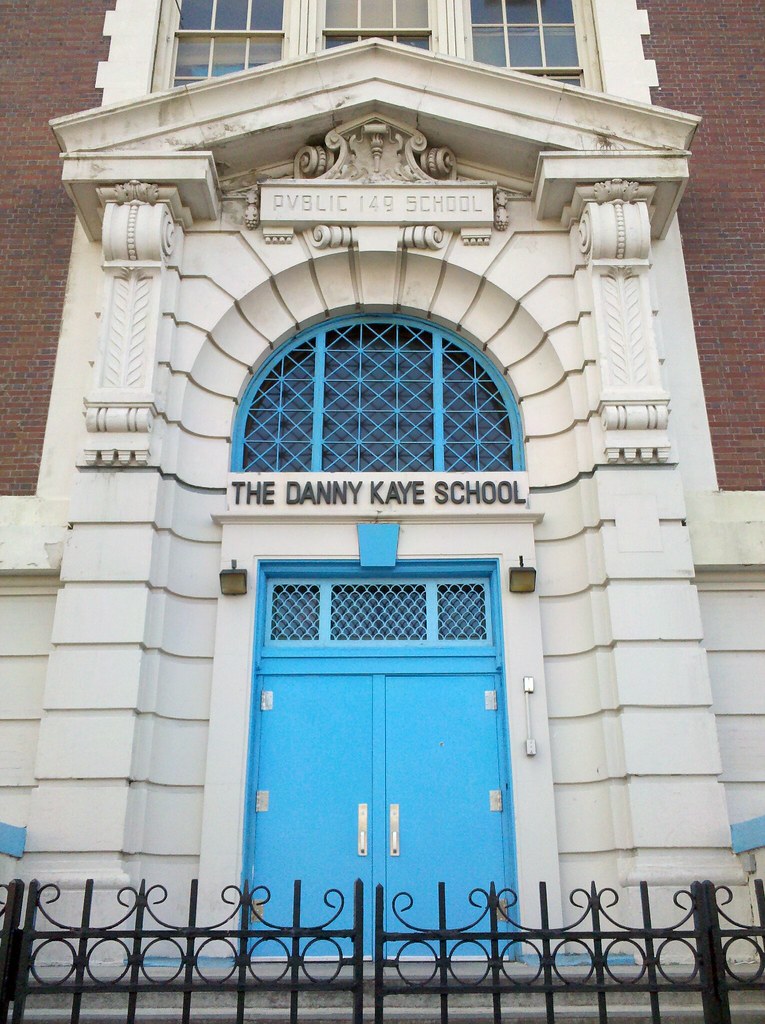

Honored by a 2010 legislative resolution in the State Senate, he has apparently been able to hold onto his church despite a parishioner fraudulently selling it to a developer.


but the seal at the top of the building, with its three sheaves of wheat that look like mushrooms, reminded me of something I'd seen before. I was a little confused by its presence here in New York, but then I reached the end of the block and found myself standing at Pennsylvania Avenue.


Built on the right-of-way of a former aqueduct (hence the name), this road has an exceedingly wide median. Here in Queens, just across the border from Brooklyn, there appears to be a park of some sort taking shape.
UPDATE: It's not a park; it's a bioretention facility with "the capacity to divert at least 200,000 gallons of stormwater that would otherwise flow into the combined sewer system–roughly 90% of the stormwater that accumulates within the drainage area during a moderate storm."
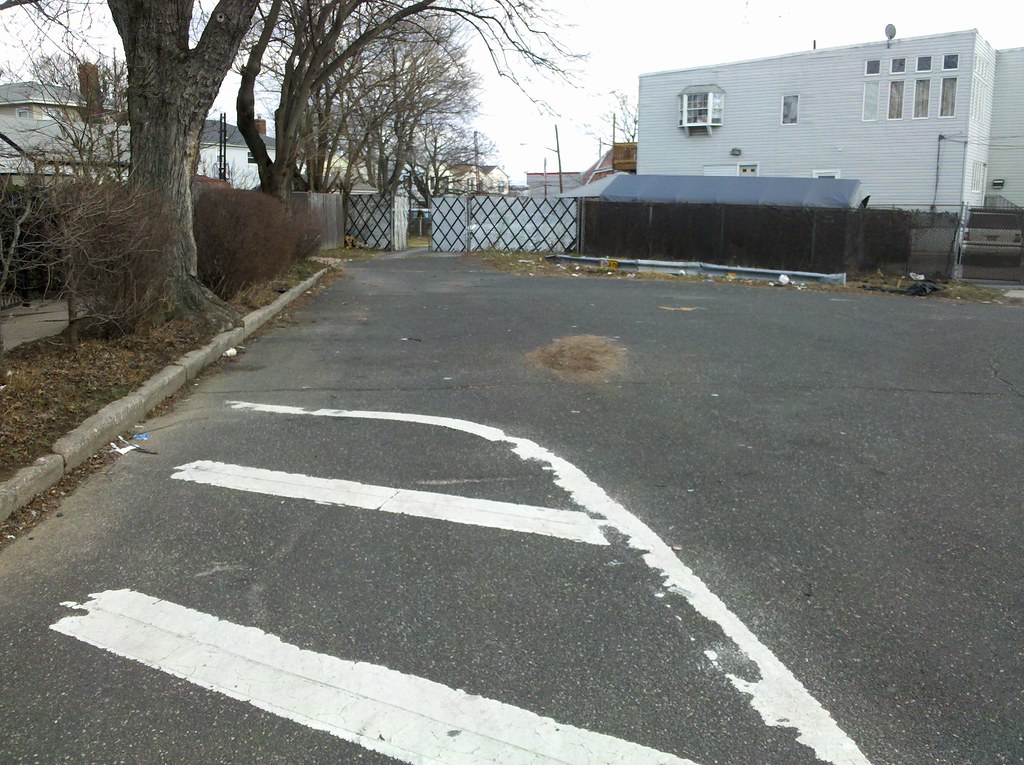
Linden Boulevard, which is interrupted several times in its journey across Brooklyn and Queens, comprises a handful of discontinuous roadway segments that vary from this mighty thoroughfare to the isolated little stub of pavement you see above.


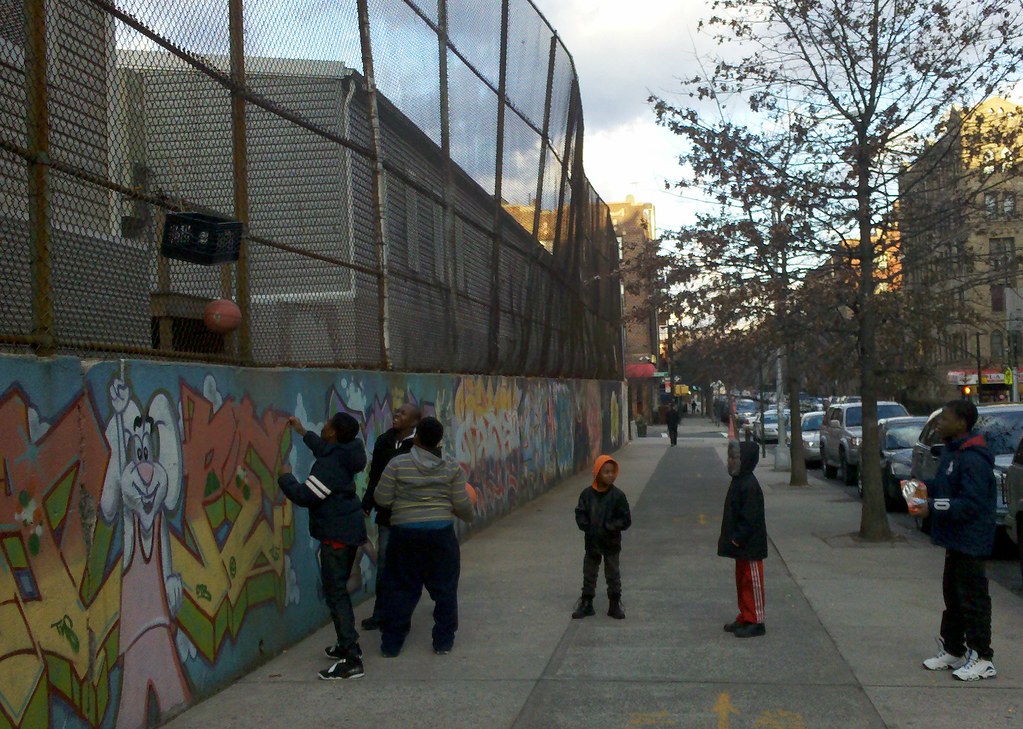
The bottom of the crate has been removed, so it's actually a pretty decent stand-in for a hoop.
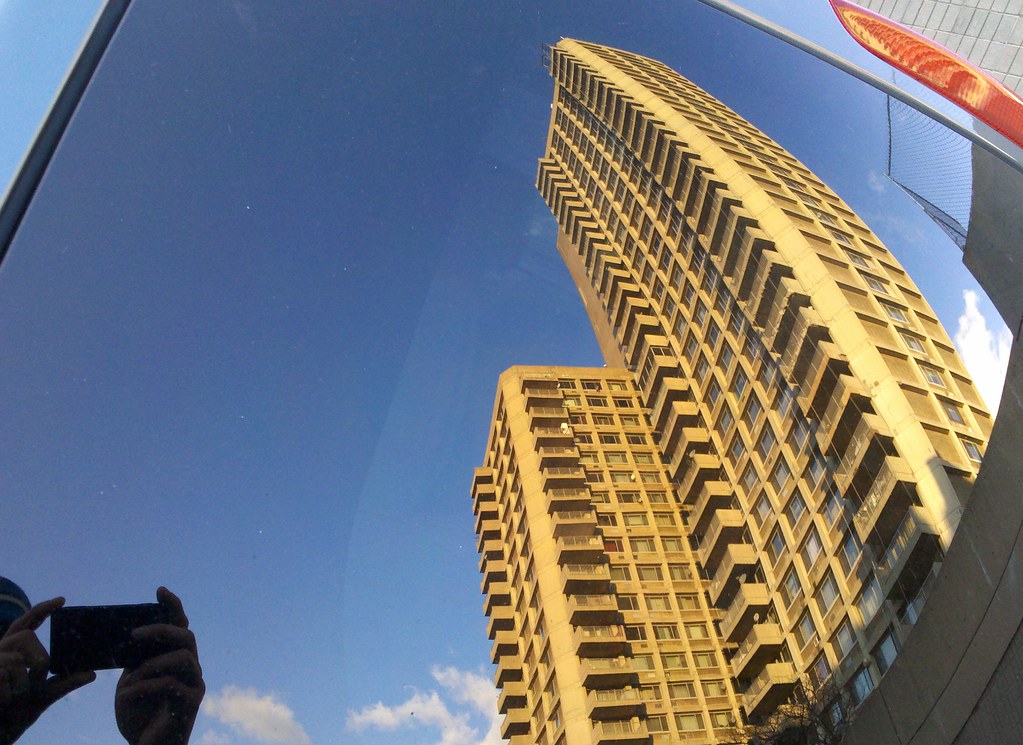

This building was once a factory for the Knox Hat Company, one of the most well-known hatters of the early 20th century. Edward Knox, after recovering from serious injuries sustained during his service in the Civil War (for which he was awarded a Congressional Medal of Honor), returned to New York and took the reins of the family business. Over the years he expanded their operations from retail into manufacturing, and, in 1890, built this factory here in Brooklyn. It sat dormant for decades, suffering from decay and vandalism, before being renovated and turned into subsidized housing in the 1980s.

The life's work of Arthur and Cynthia Wood, Broken Angel was cited for numerous building code violations after a fire in 2006, and the Woods were forced to dismantle an incredible, multi-story rooftop structure they had built. For a look at many of the building's unique features, check out this photo gallery posted by the Woods' son, Chris. The NY Times also has a terrific shot of the whole complex.
Cynthia died in 2010 after a battle with liver cancer, and Arthur lives here alone now. Brandon Stanton spent some time with him last summer, and wrote about the experience for his Humans of New York project.


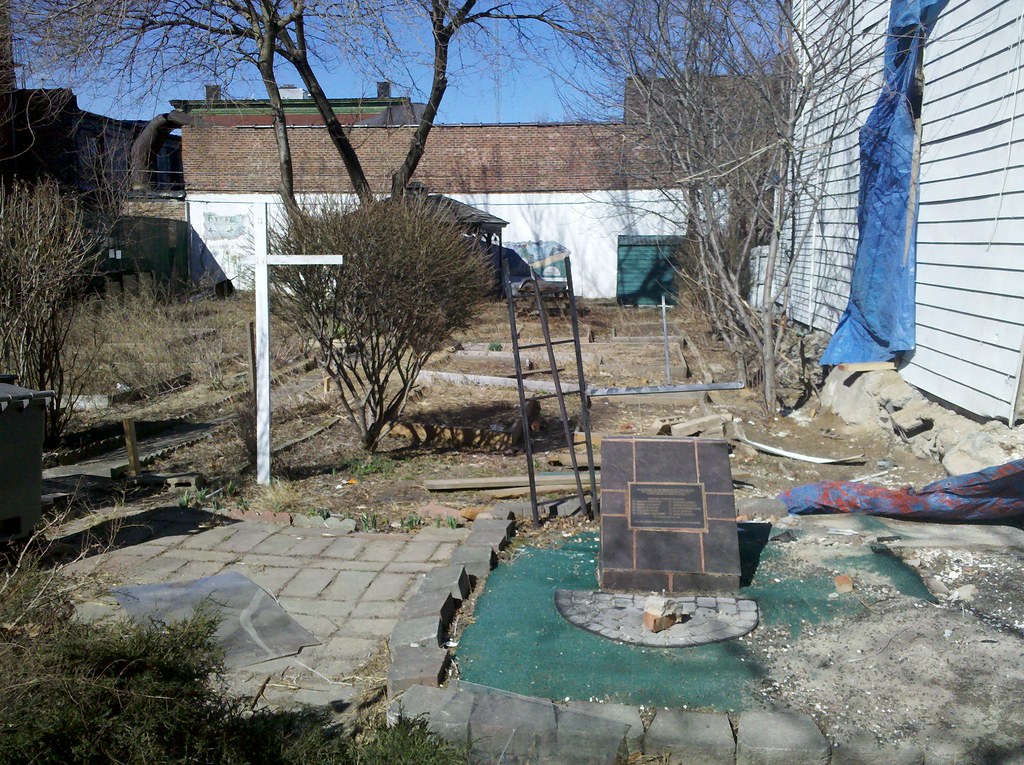
It's inside a locked community garden, so I couldn't get a closer shot, but it's dedicated to the black firemen who lost their lives on September 11th.

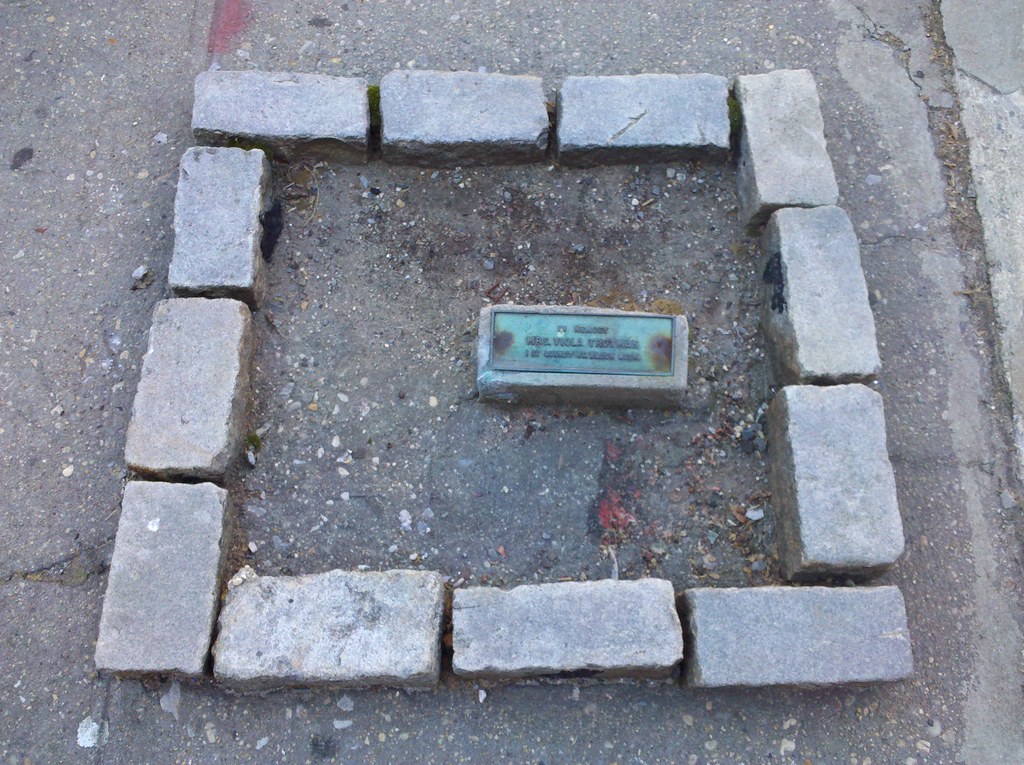
Dedicated by the Quincy Street Block Association. It may seem like a sad little memorial, but at least the block association is out there with her.

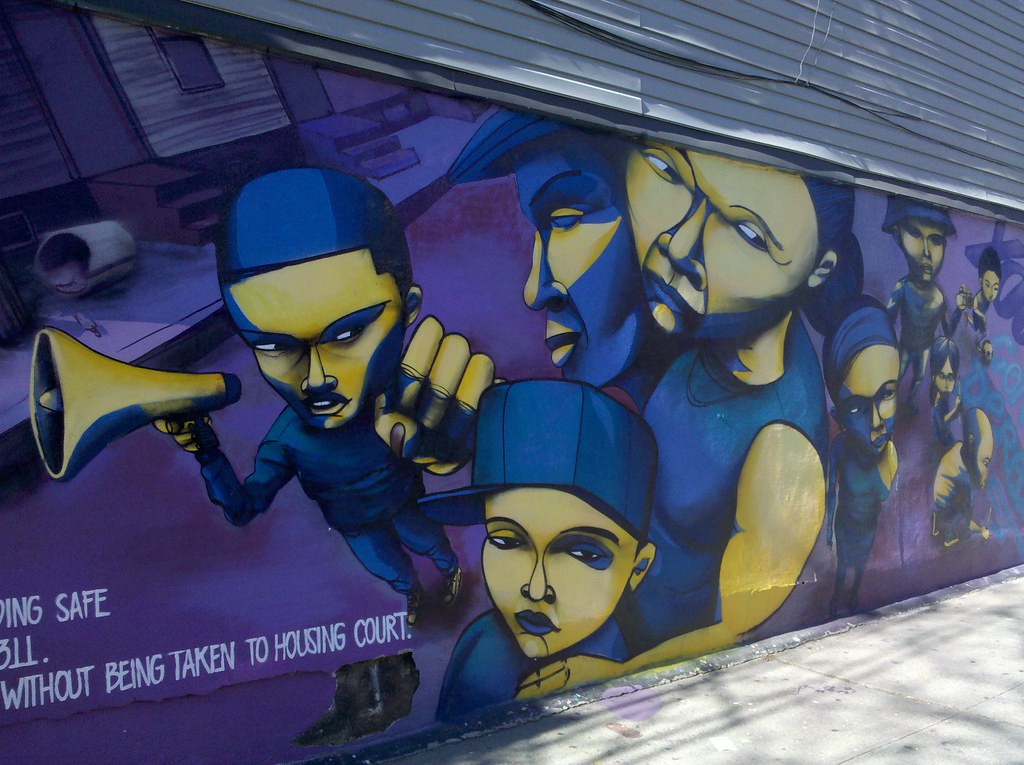
This mural reminds citizens, in English and Spanish, of their legal rights in interactions with landlords and building owners, teachers and school administrators, and police officers.
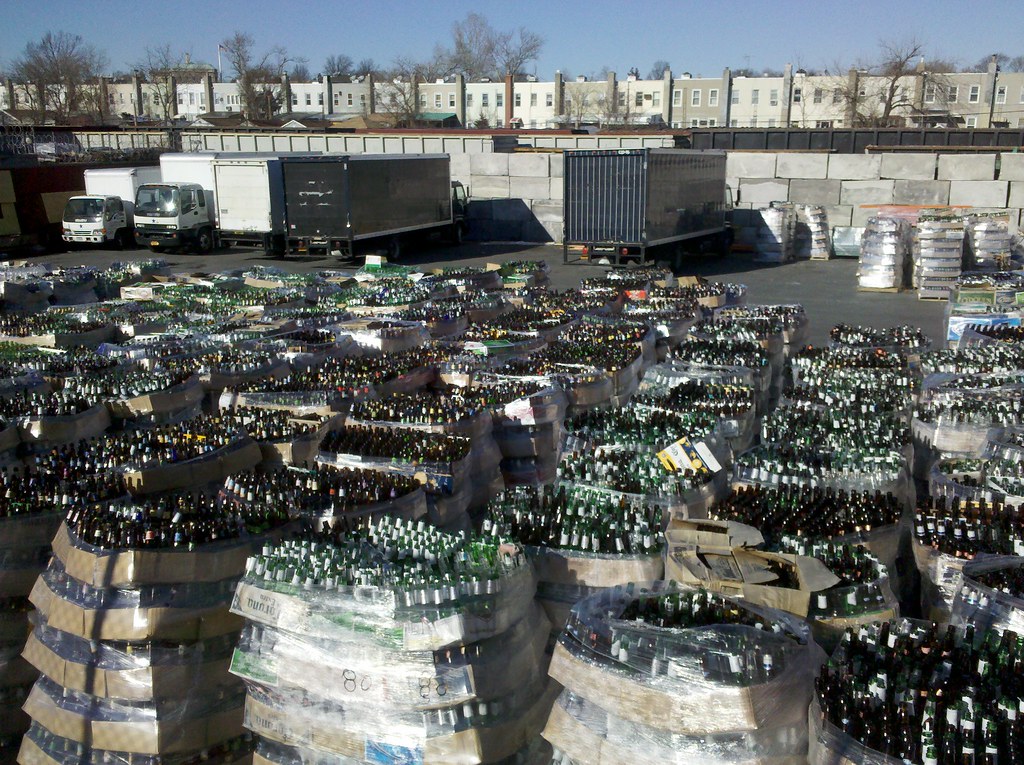
By my rough estimation, there are approximately 300,000 beer bottles sitting here. Redemption centers get 8.5 cents from the state for each bottle they return (5-cent deposit reimbursement plus 3.5-cent handling fee), which means this mass of glass is worth about $25,500!


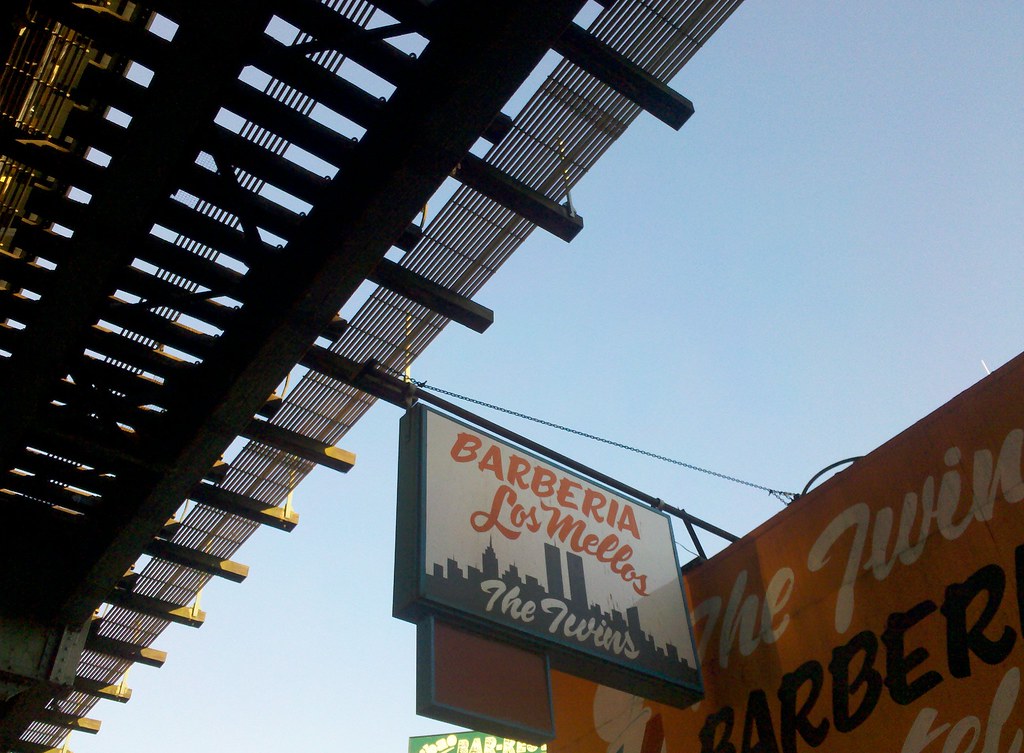
This line was abandoned in 1949, but there are still a couple of surviving sections of track. The elevated structure above is the Myrtle Avenue Line (M train), a remnant of the old Myrtle Avenue El.


CORRECTION: It's a subway vent! More info here.

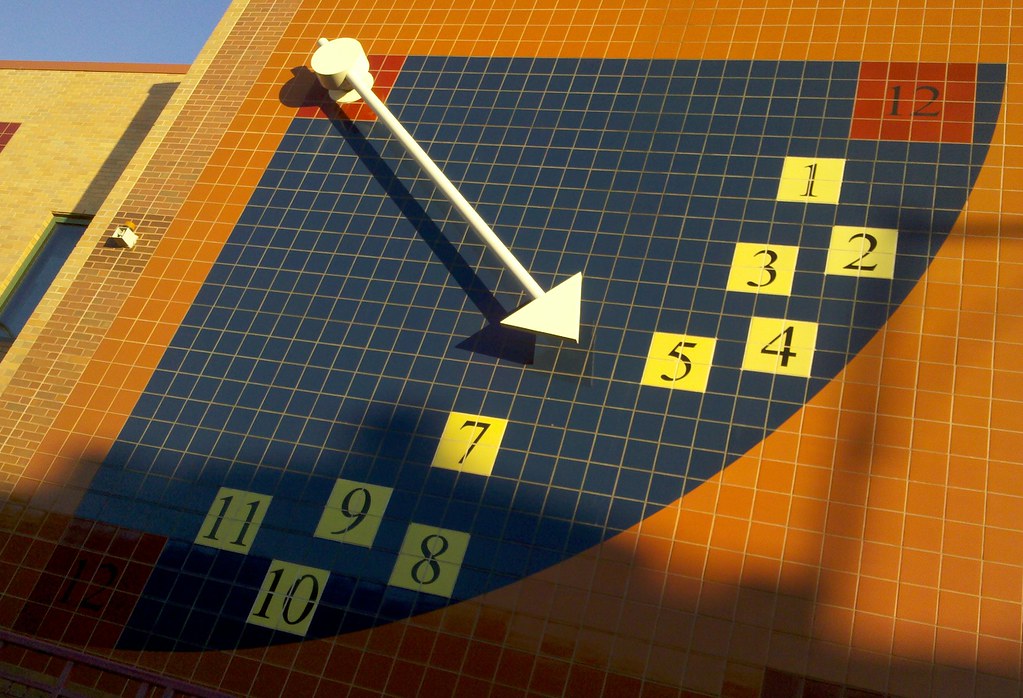
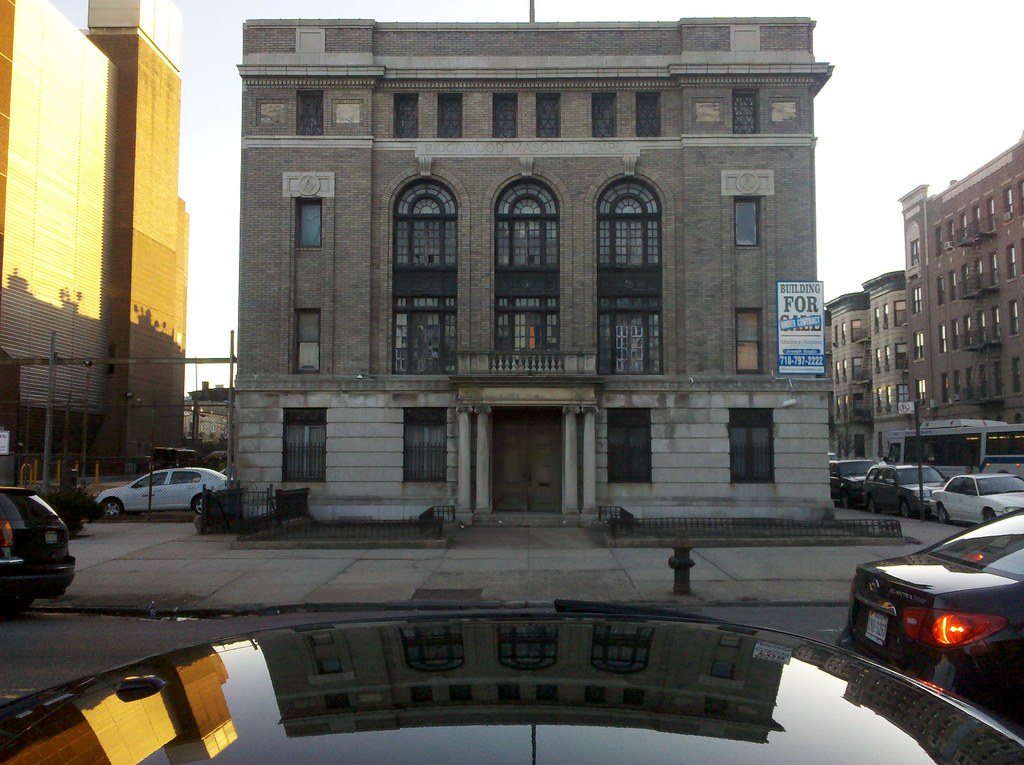

Opened in 1911 and closed in 1969, it currently houses a school. I'll revisit this building on a future walk.

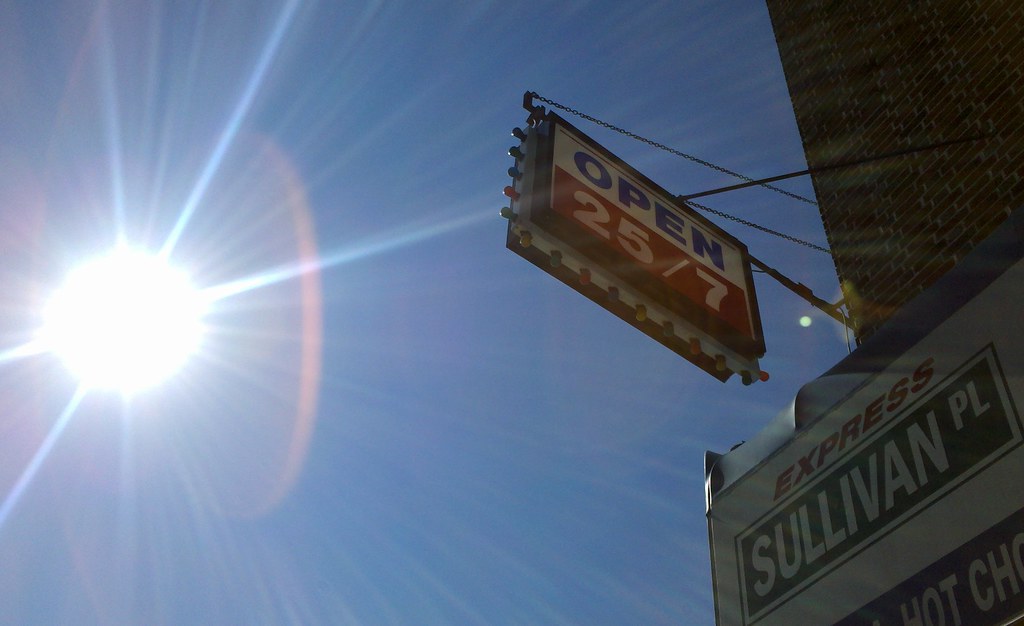
When those late-night 25-o'clock hankerings hit, you know where to go.
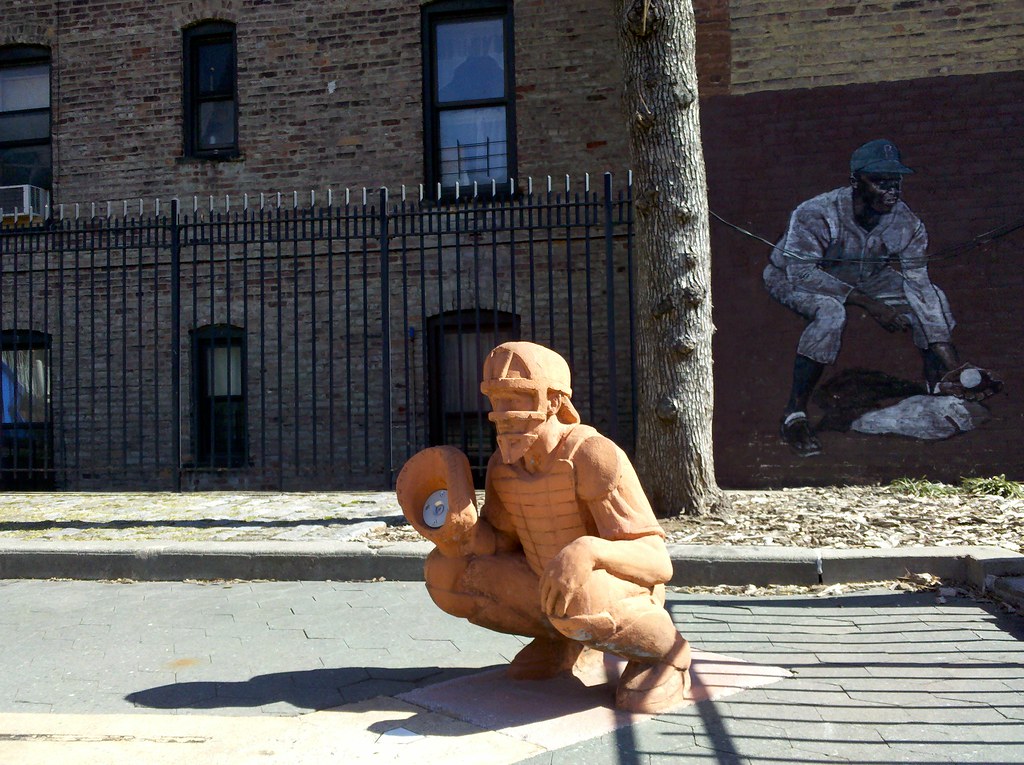
That's a Roy Campanella spray shower, with Jackie Robinson guarding second base behind him.

