
Henry Steinway founded Steinway & Sons in 1853, his first workshop a small loft on Varick Street in Manhattan. Steinway pianos quickly gained a reputation for exceptional craftsmanship and "wondrous beauty"; here is a breathless account of the 1855 exhibition at which the theretofore unknown Steinway piano unanimously won the favor of the judges, who were mesmerized by "the singular merits of the strange instrument". This cartoon depicts the craze for Steinways that developed after their widely renowned showing at the 1867 Exposition Universelle in Paris, which established the company as the world's premier piano-maker.
After Henry Steinway's death in 1871, his son William moved the company's operations across the East River to this location in what is now Astoria, Queens, where he built an entire town to house the factory's workers. Steinway Village, as it was called, counted among its amenities a post office, church, library, kindergarten, fire department, and trolley line.
The piano-making process has remained largely unchanged here in the intervening 140 years. You can read all about it in this extraordinary nine-part series following the construction of one concert grand piano over a period of many months at the factory.




Here we are again at the surprisingly delightful Bowery Bay Water Pollution Control Plant, whose workers have been known to dominate the city's annual Sludge Olympics.

I have long been perplexed by this artificial-looking hill north of 19th Avenue in eastern Astoria, just west of the Rikers Island Bridge. It's the fairly large (15 acres or so) treed area visible here, and you can see its topography, quite striking in this otherwise flat area, here.
It's owned by the Port Authority, according to numerous "No Trespassing" signs posted on the fence that surrounds it. Much of LaGuardia Airport, operated by the Port Authority and sitting just across Bowery Bay, was constructed on landfill from Rikers Island; maybe this was an intermediate site where dirt was stored after being transported from Rikers. Or perhaps this was once a landfill itself — this map makes it look like that may be the case.
The possibilities are many, but possibilities don't pay the bills. Or something like that. For the time being, the true origin of this little mountain remains shrouded in a mist of maybes.
UPDATE: The this-was-a-landfill hypothesis has taken the lead! (See comments below.)
UPDATE: I received an email from a current Port Authority employee saying that this hill is known internally as Ingram's Mountain, and that it was supposedly created from the rock excavated during the construction of the Lincoln Tunnel's third tube.

This ancient family burial ground, tucked away on 20th Road in Astoria, was founded in 1703 (or 1656, according to some). Its current caretaker, James Sheehan, is no relation to the Lawrences, but found himself in charge of things almost 50 years ago after the death of his father-in-law, who had inherited the cemetery from a Lawrence. It's not open to the public, but a couple of years ago a group of friends and I were lucky enough to pass by when James was inside, and he was happy to show us around.

Right after I took this photo, a man wearing a Con Ed helmet hopped down from his truck and walked over to me. A few years ago, he said, he came to work out here early one morning and found, right on this spot, a dead man slumped on the sidewalk. He doesn't know anything about what happened to him, but he said someone has been maintaining this memorial in his honor ever since. Here's what it looked like last fall.


There have been many jellyfish sightings around the city since we first encountered them on the side of a truck.



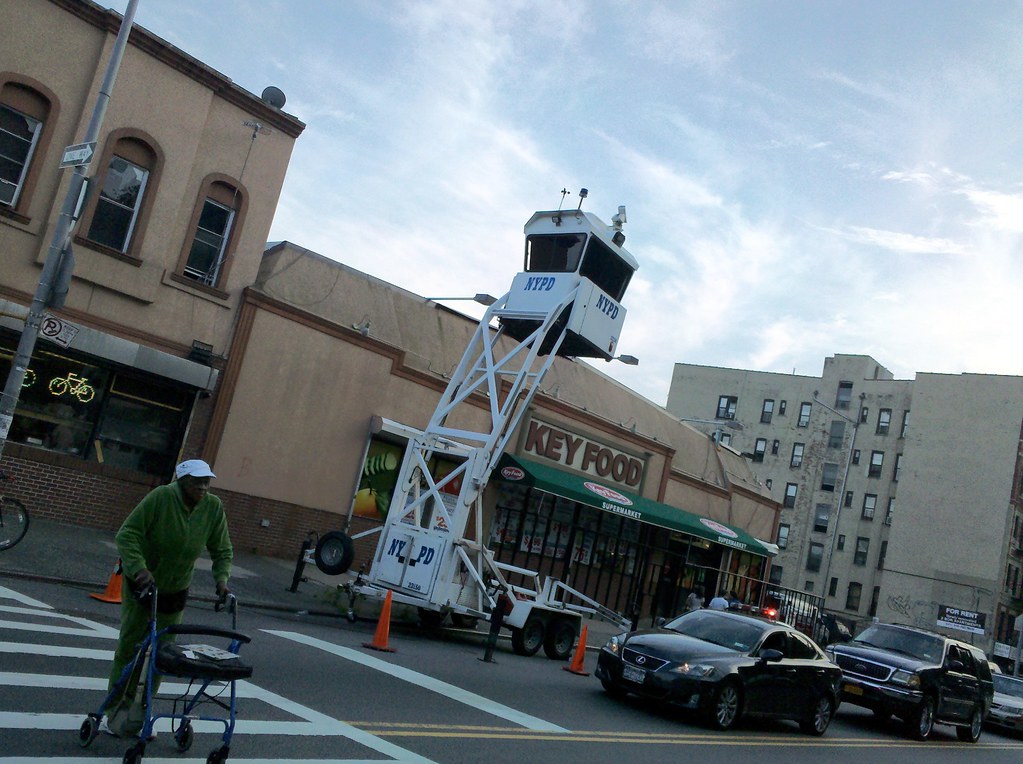
We haven't seen one of these suckers since February. The NYPD must have been spying on me in much subtler ways during the intervening months.

His dad wanted him to follow in his footsteps, but Junior's true love was cars, not hair.


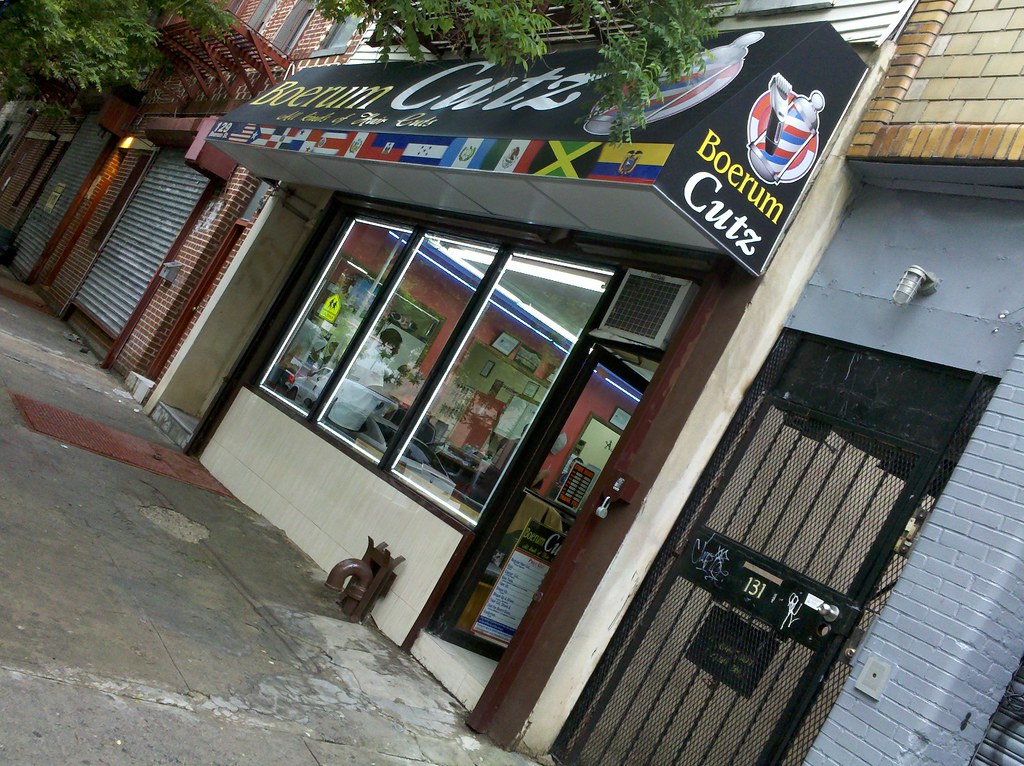
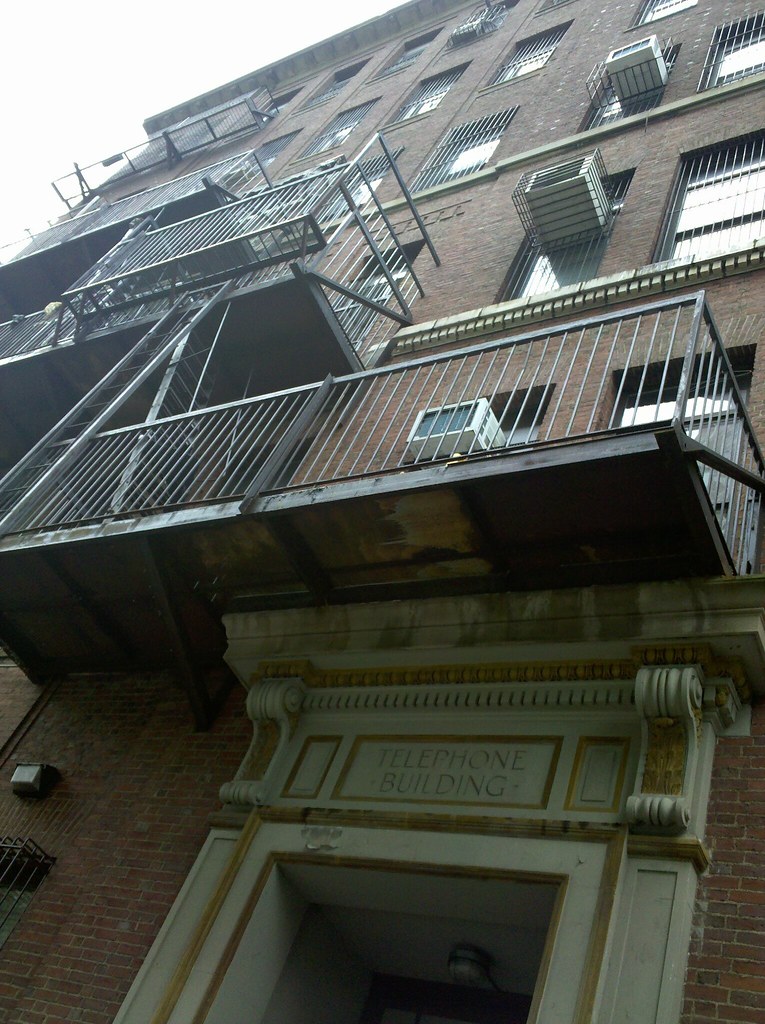
You can find those words inscribed above quite a few doorways around the city. I believe the buildings thus labeled were constructed back in the golden days of the Bell System as central offices, housing switching equipment, operators, and the like. Many still seem to be functioning as telecommunication centers, but some have been adapted for other uses over the years. As you can probably tell, this particular Telephone Building — whose 1914 expansion you can read about in this contemporaneous account, under the "New Stagg Central Office" subheading — has been converted into apartments, complete with Sukkot balconies.

Currently a watch and jewelry store, this was once the main branch of the Lincoln Savings Bank. Check out this wonderful recounting (just a little more than halfway down the page) of what it was like to work there around 1970.
Lincoln was originally founded as the German Savings Bank of Brooklyn in 1866, but changed its name to something more patriotic-sounding (page 54) in response to the growing anti-German sentiment in America around the time of World War I.
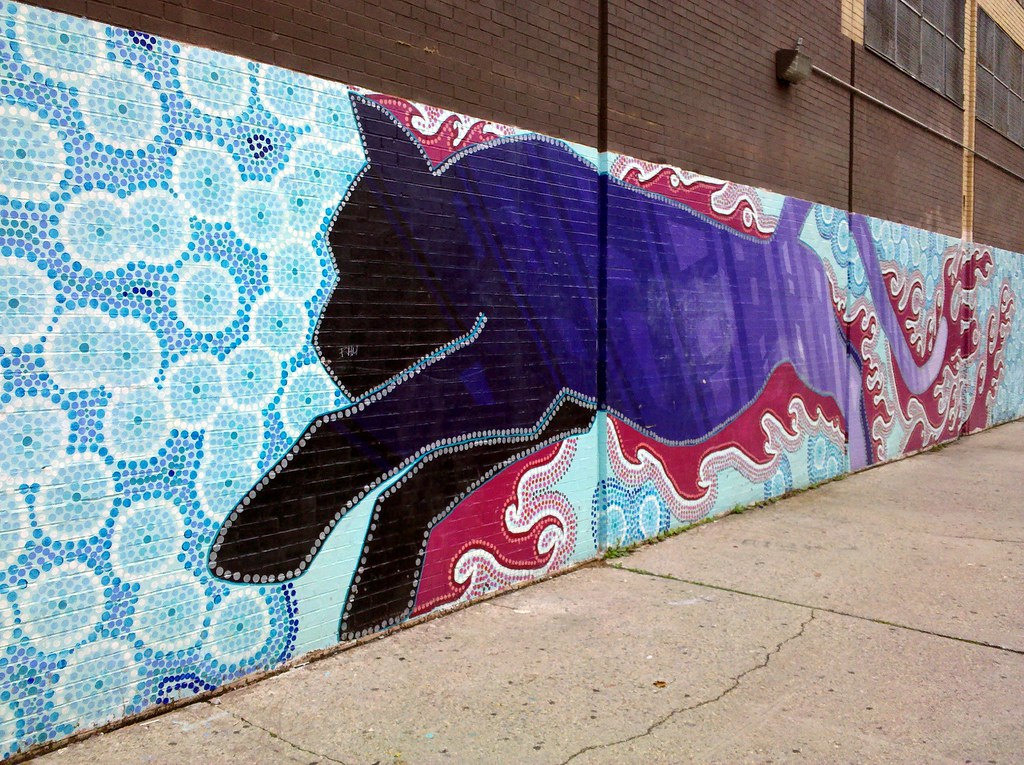
This mural was painted by students under the direction of a couple of artists from BRIC.


The base of this column is cemented into the bucket! Here's a close-up.
when you lay concrete in the fall. Here's a closer look.


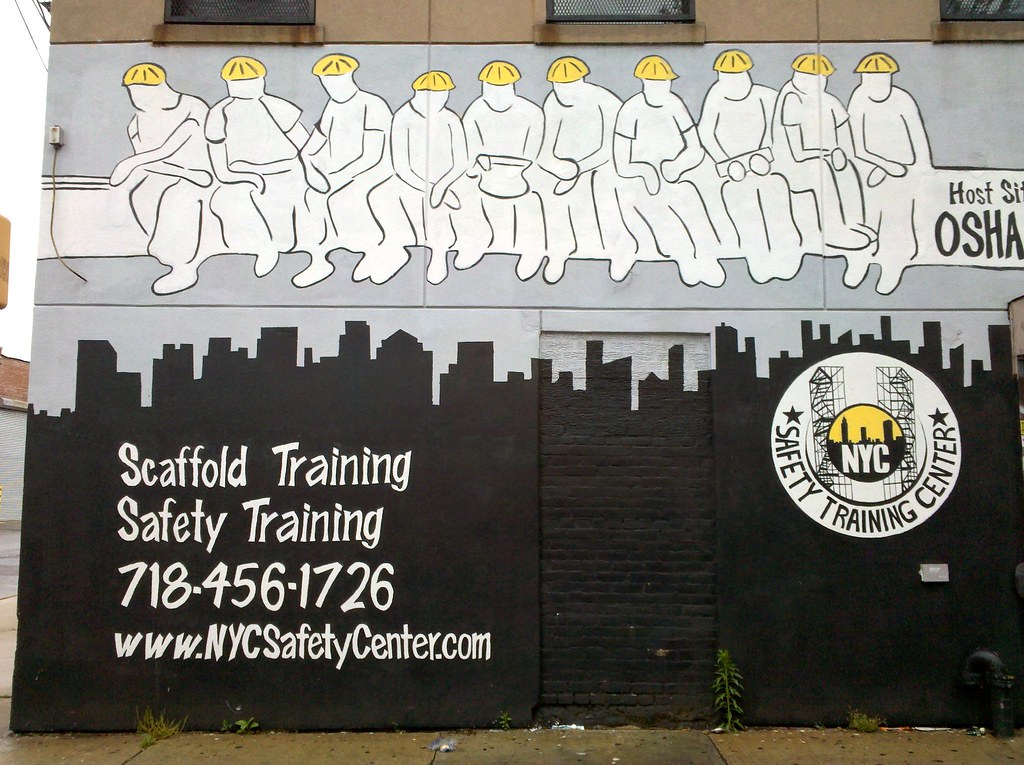
At least these guys are safer to walk beneath than the three-dimensional variety.

They do say that. But they forgot about giant psychotic bananas wearing Rasta caps.


Please give it up for Noah and Josh, 2012's Nicest Guys in the World! In a hard-fought — but exceedingly courteous — contest, they just managed to eke out a victory over last year's champions, Ahmed and Raghib of Ghazali Auto Body in Kuwait City.

He seems to have lost his front nameplate since we last saw him. Or perhaps he sold it to raise funds for those sweet new fog lights.

