

Commemorating area residents who served in World War I, this statue stands in Doughboy Park, the "mustering ground" where local soldiers used to gather before being shipped overseas during the war.
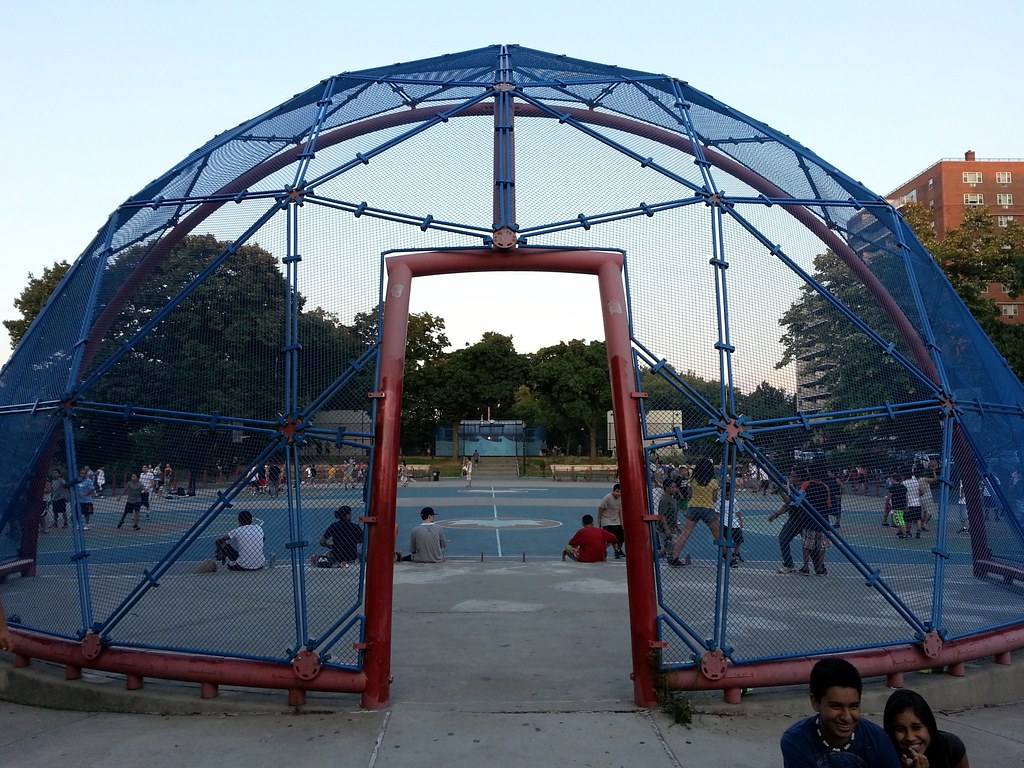
The park in which this playground resides is named for Louis Windmuller, "the noblest walker of them all", who had "no sympathy whatsoever for the healthy individual who prefers riding on horseback, in automobile or buggy, or on rapid transit trains, to peripatetics." He established "the most exclusive, distinguished, and enthusiastic walking club in America" and his thoughts on perambulation included the following: "A good rule to make your tramp a really enjoyable pastime is to be careful and not walk too fast."
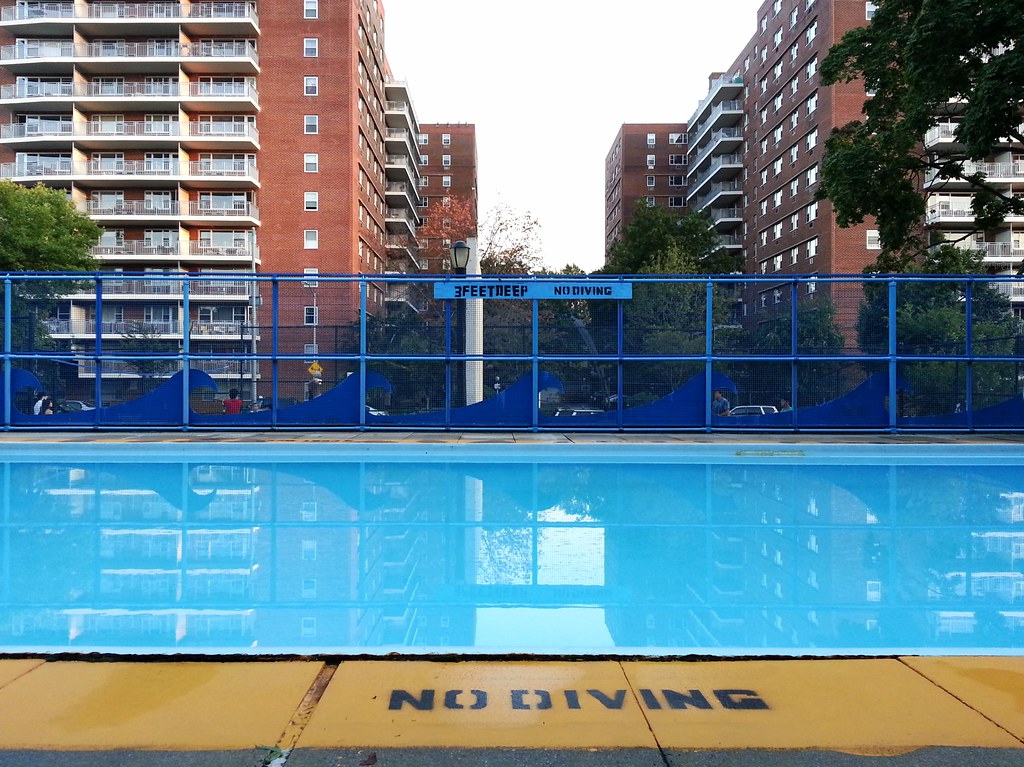
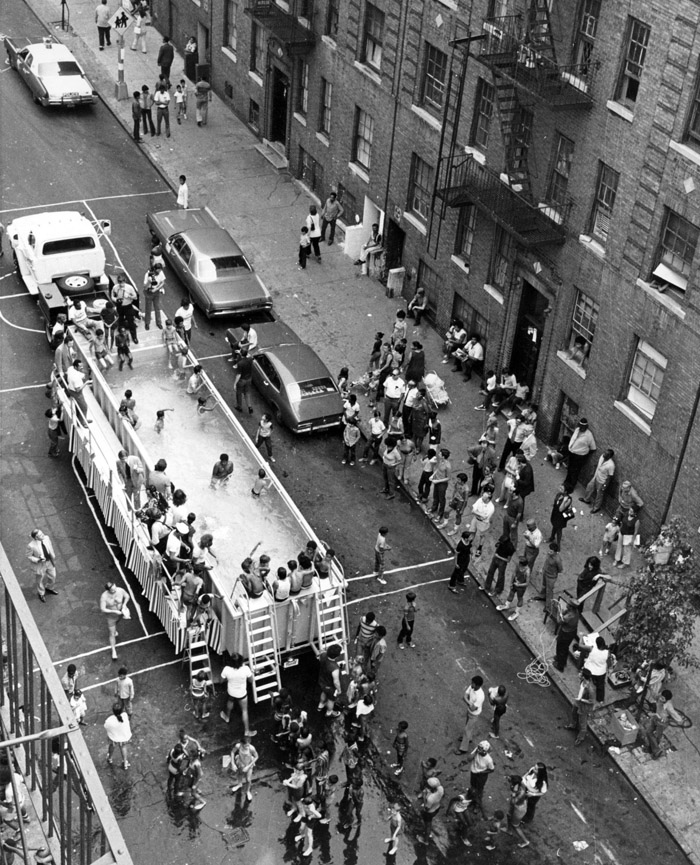
In the late 1960s and early '70s, the city began deploying these smallish above-ground pools to neighborhoods without convenient access to the massive, Olympic-size WPA pools built in 1936 (like the one we saw in Astoria Park). By 1972, there were 74 mini-pools spread out around town, but their numbers dwindled once the city opened a new batch of in-ground pools in the early '70s; today there are only 19 mini-pools still in service. (You can read a wonderful, photo-filled history of public swimming in NYC here.)
The city also used to operate Swim Mobiles, which were trailer-size pools hauled around by trucks from one neighborhood to another. Here's a hilarious account of one out for a test run in the summer of 1987.
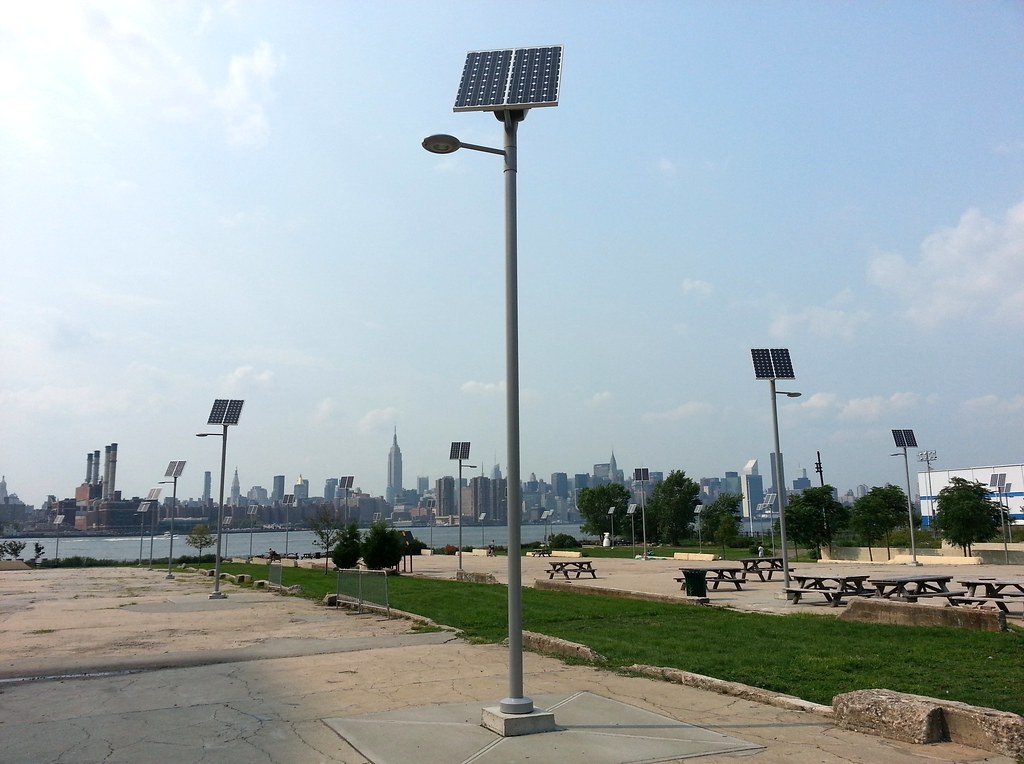
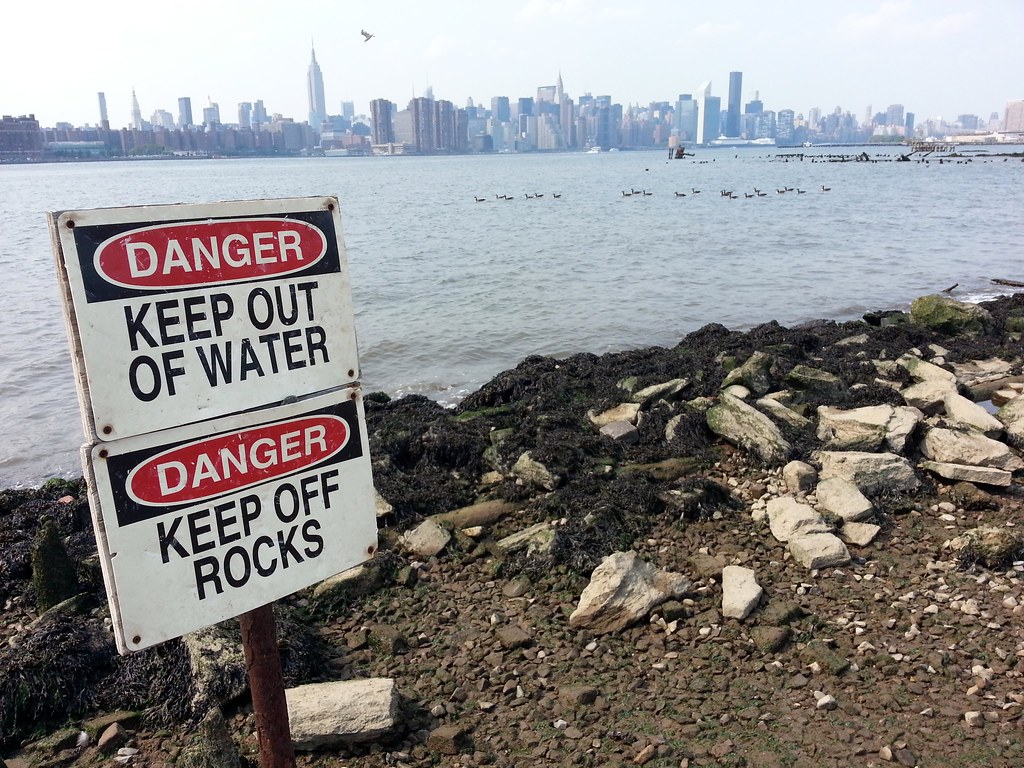
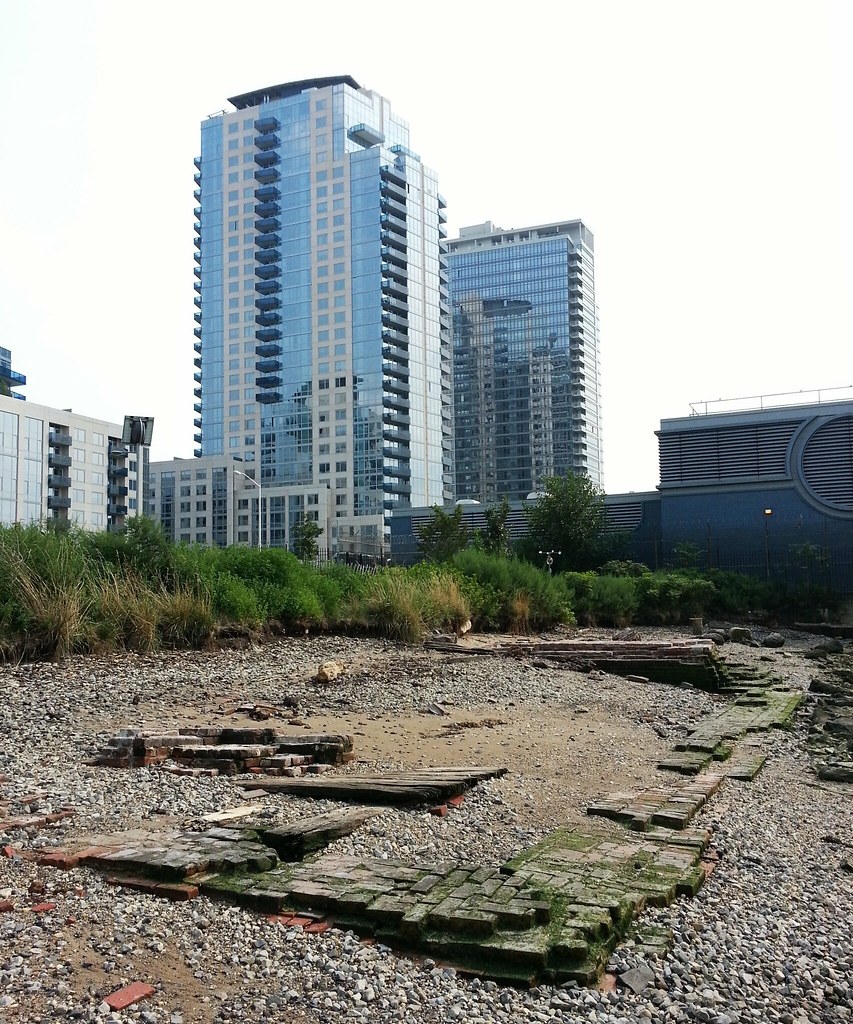
This land was once part of Palmer's Dock, a freight terminal that began operation in the 1870s to serve the nearby Havemeyer & Elder sugar refinery (now known as the defunct Domino Sugar refinery), which at its peak was the largest such facility in the world, processing the majority of the sugar consumed in the US.
Over the years, the terminal grew in size and scope, and became a major importation and distribution point for many different Brooklyn industries. In 1906, it was reincorporated as the Brooklyn Eastern District Terminal, and continued to thrive for several decades before a lengthy decline in rail traffic finally forced it out of business in 1983. The terminal buildings that once stood here were then demolished, and the land sat vacant until the state purchased this portion of the property and developed it into a park, which opened in 2007.
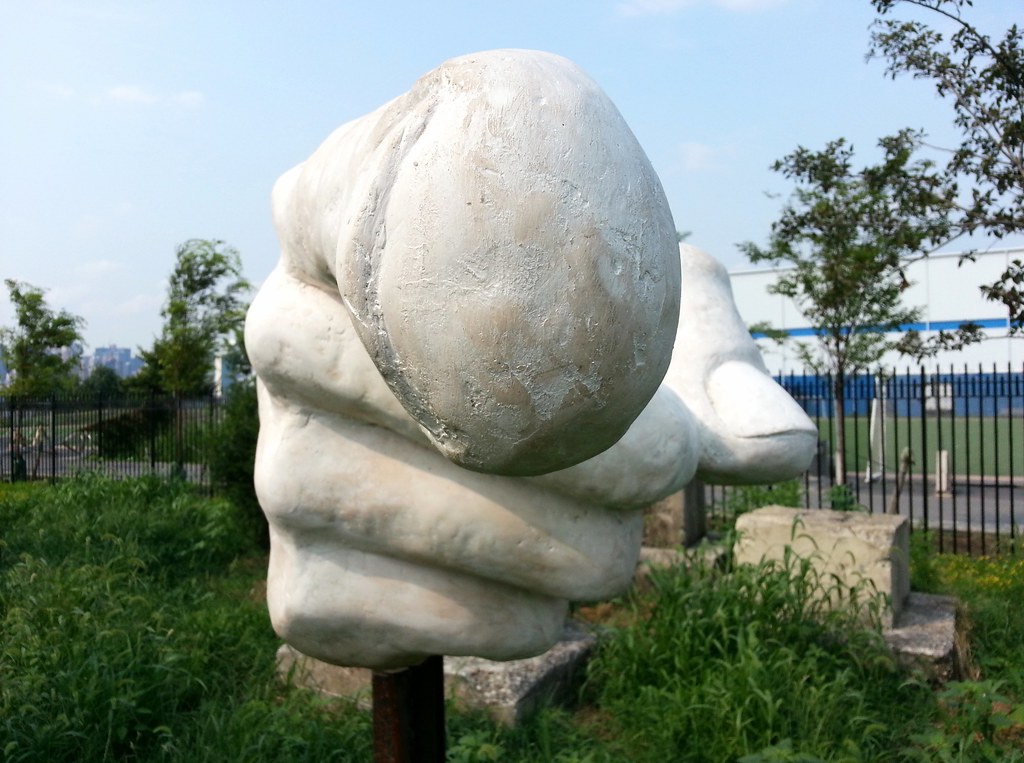
by Miggy Buck
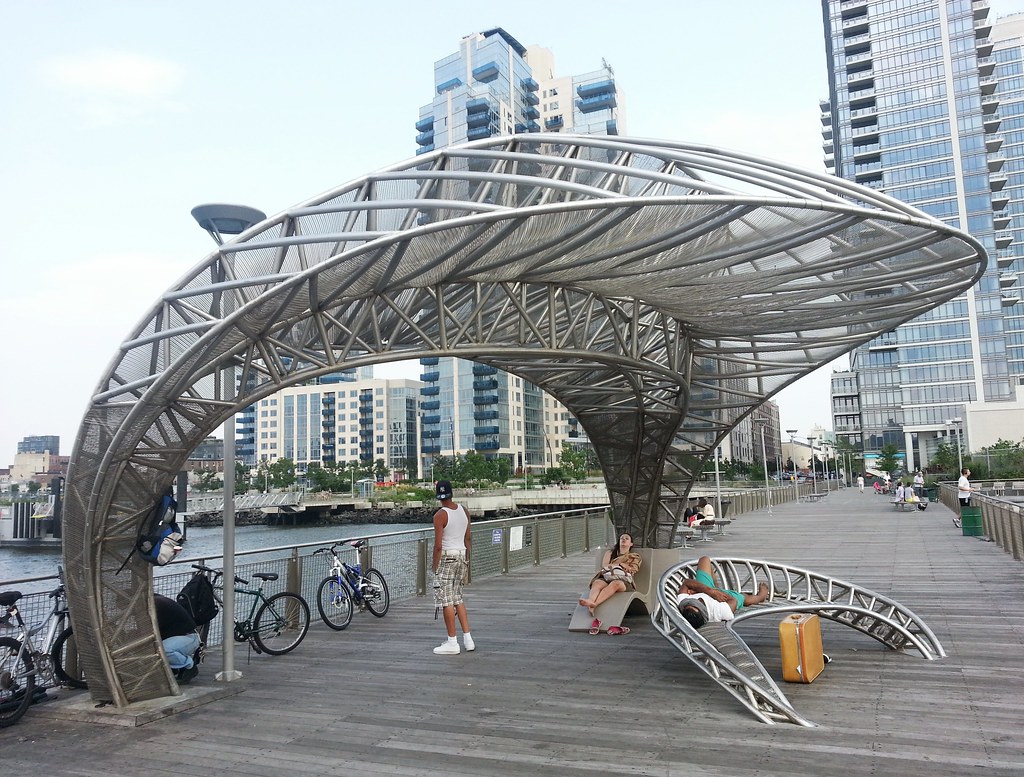
One of several sculptures installed around East River State Park
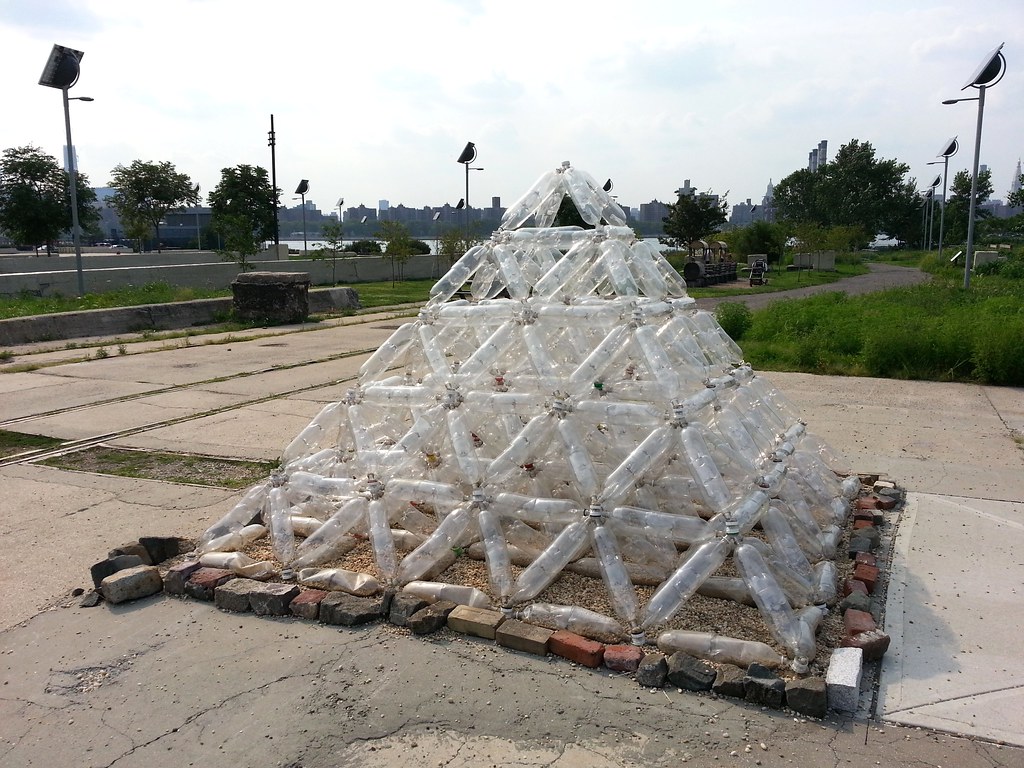
by Barbara Lubliner and Sung Jin Oh
This is made from empty two-liter bottles; you can get a closer look here.
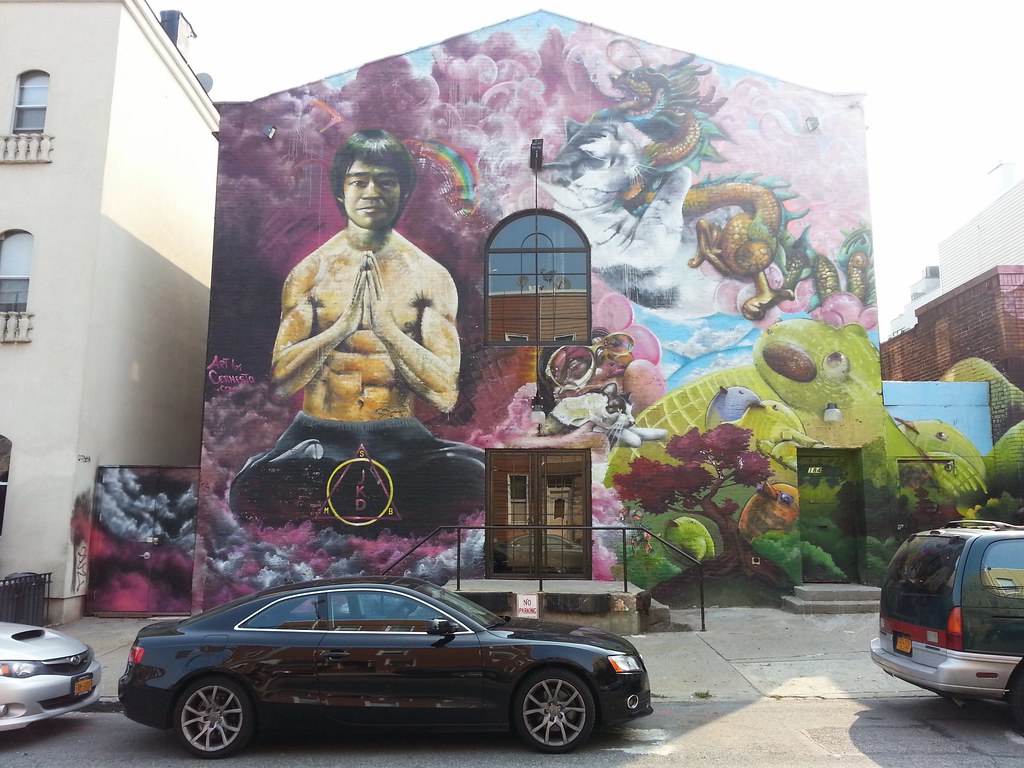
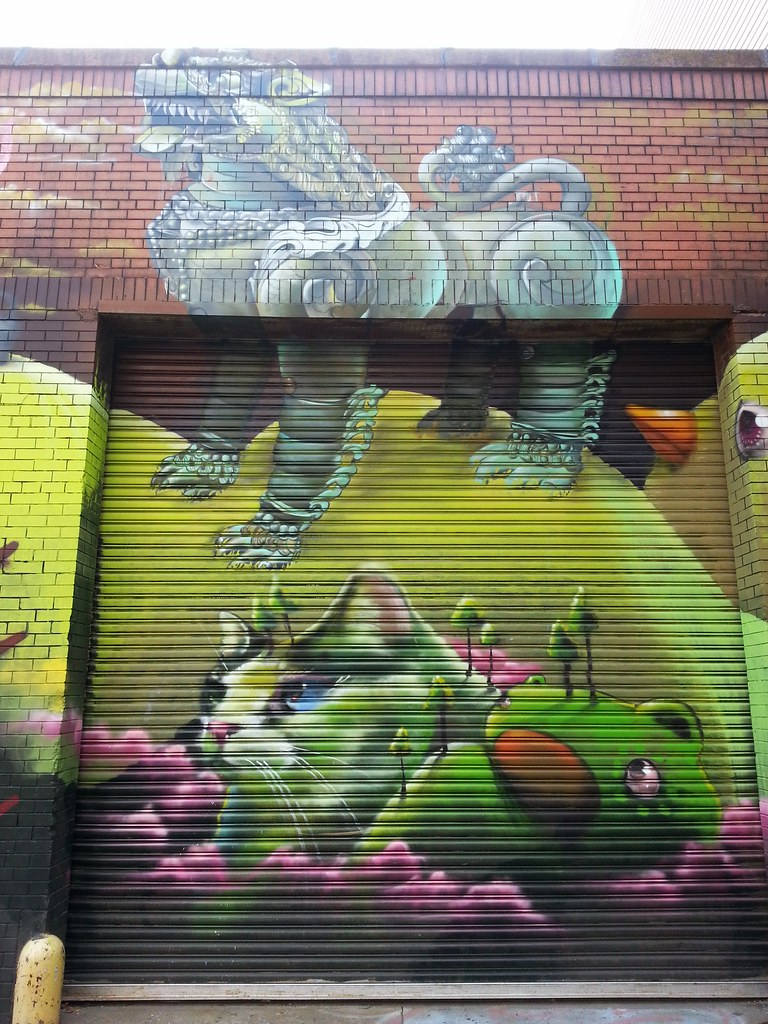
In case you can't tell, that's a cat wrestling with a dragon in the upper right corner.
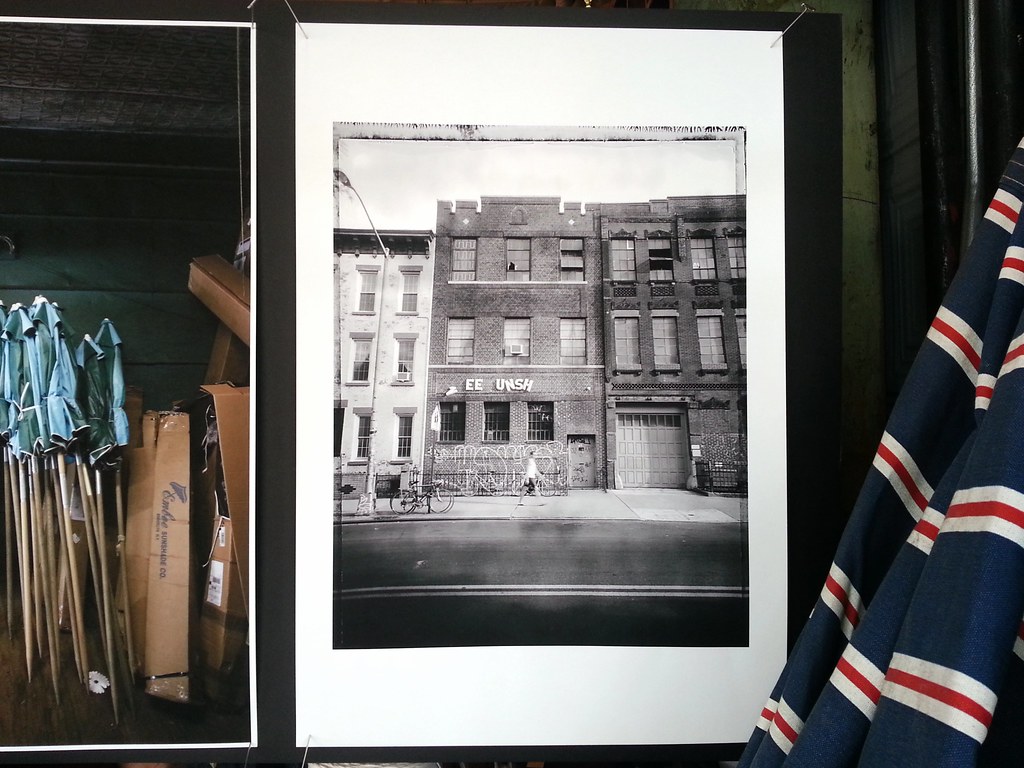
This photo of the mysterious M EE UNSH is on display at the City Reliquary.
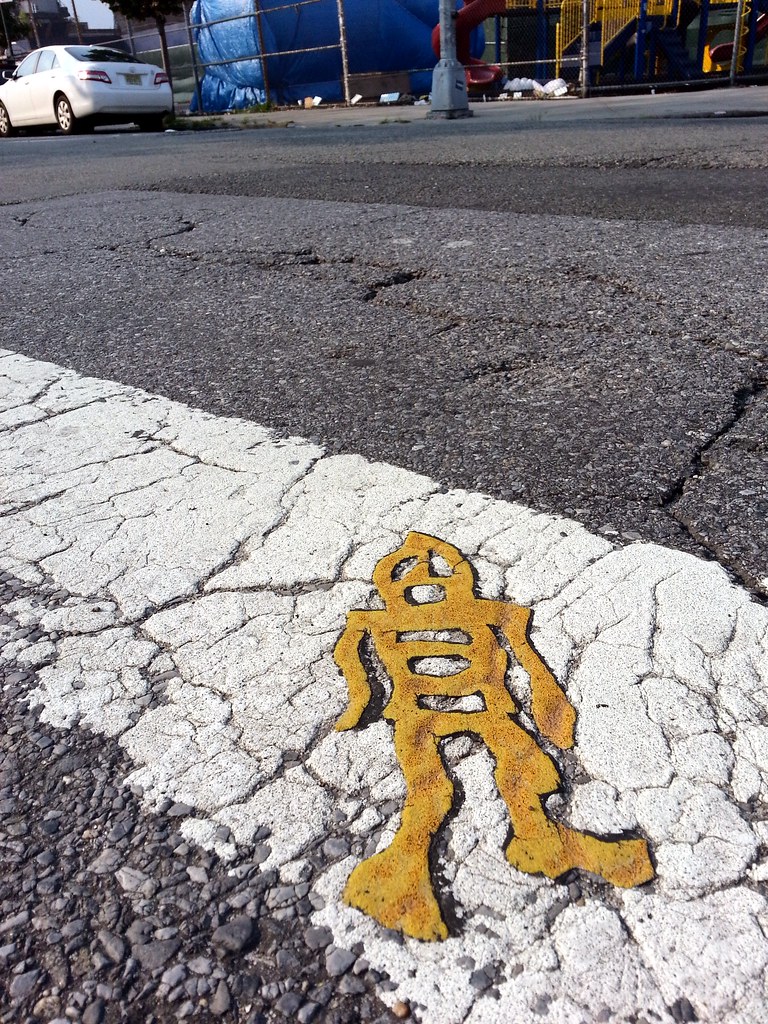
He can be seen trying to get to the other side in cities all across America.
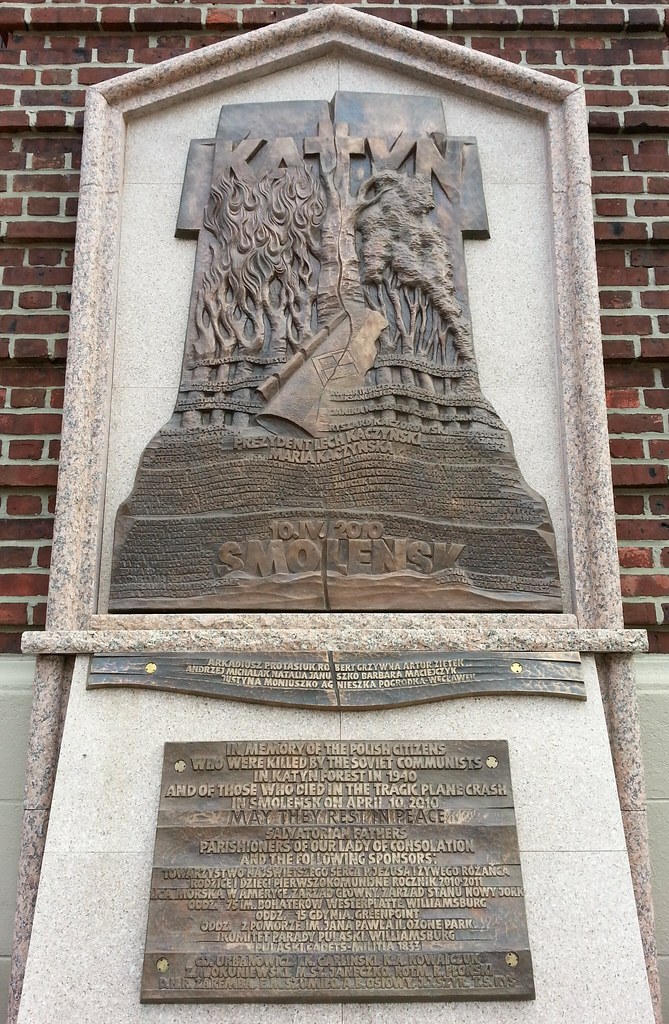
This memorial at Our Lady of Consolation honors the 22,000 Polish citizens massacred in the Katyn Forest and elsewhere by the Soviet secret police in 1940, as well as the 96 (including Poland's president and many other government, military, and religious leaders) who died in a plane crash in 2010 while on their way to a 70th anniversary commemoration of the massacre.
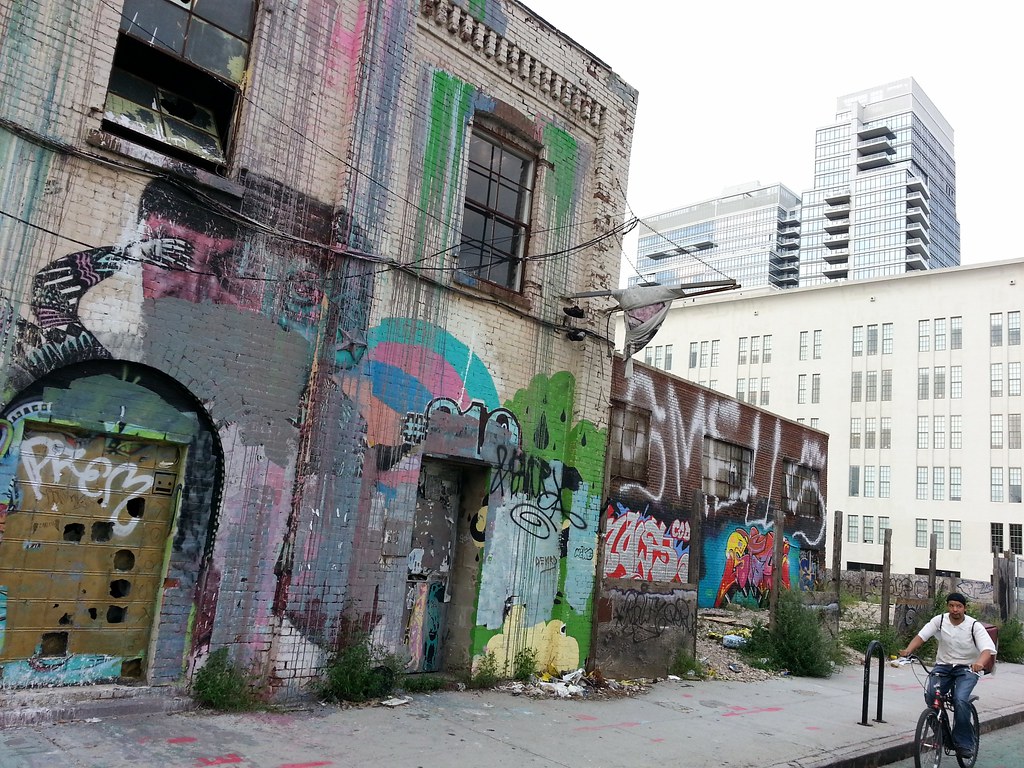
Moving from front to back, we have the former Secret Project Robot building, the old Cass Gilbert grocery warehouse that's been converted to luxury lofts, and the gleaming, glassy condos we saw back in Part I.
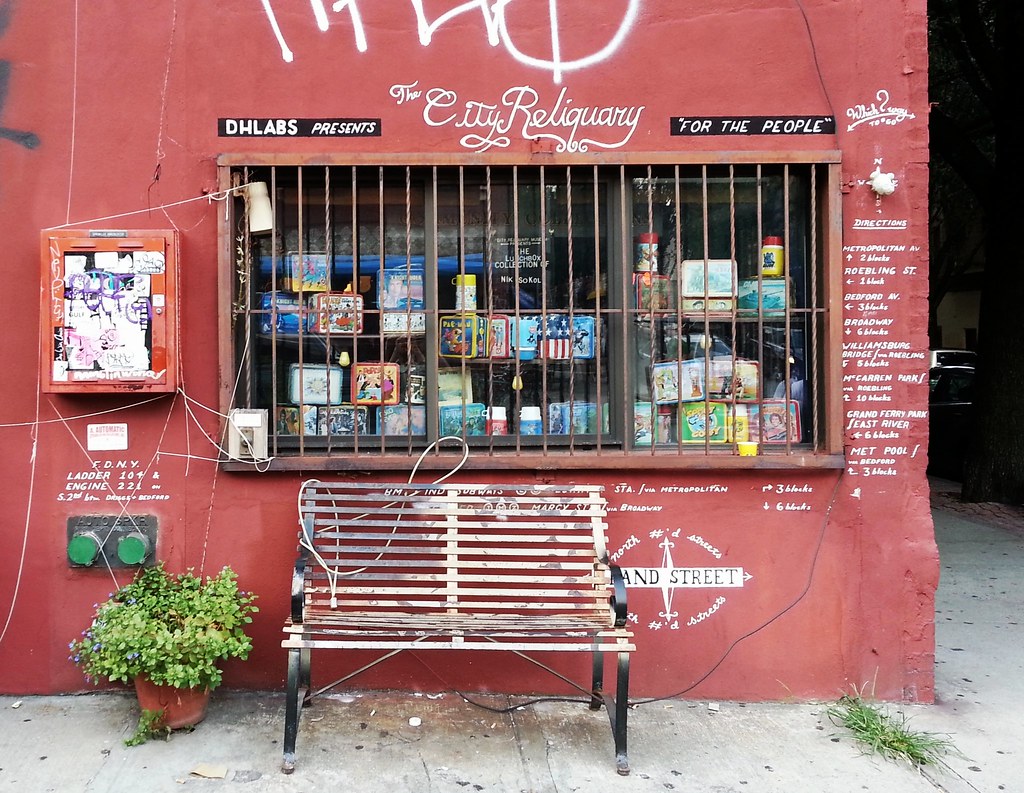
Before it opened its storefront museum a couple of blocks away, the City Reliquary used to consist solely of this display case, which is actually just the apartment window of the Reliquary's founder. Currently on exhibit here is a collection of vintage lunch boxes owned by the museum's resident geologist.
Nope, it's just the Shabbat alarm that blares from somewhere within Hasidic South Williamsburg twice every Friday evening. It's pretty obnoxiously loud, but apparently "any organ, bell, chimes or other similar instrument" located on or within a house of worship is exempt from the city's noise code.
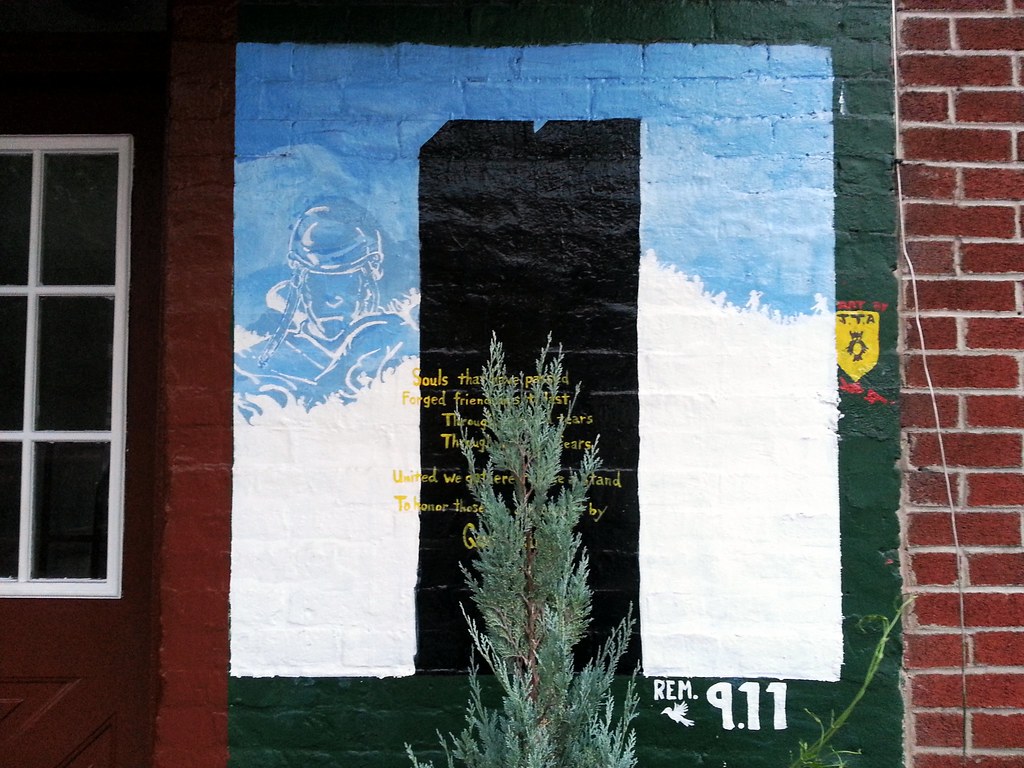
It reads:
Souls that have passed
Forged friendships to last
Through pain and tears
Through loss and fears
United we gathere [sic] to take a stand
To honor those who are graced by
God's hand.
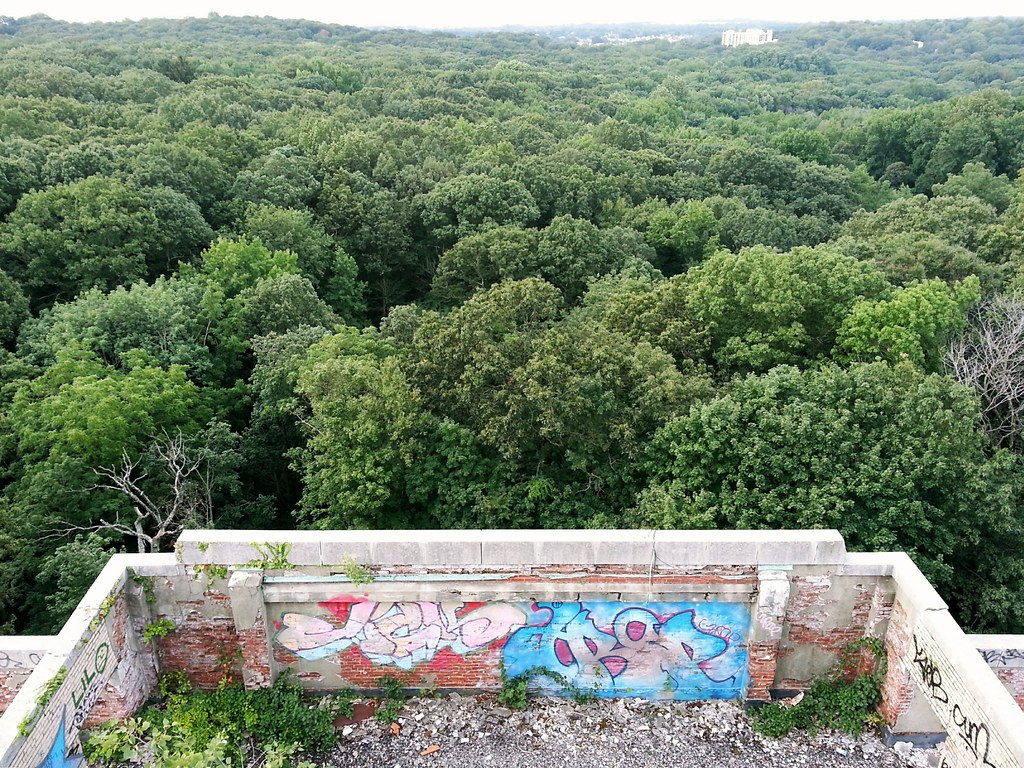
Just off one of Staten Island's amazing Greenbelt trails.
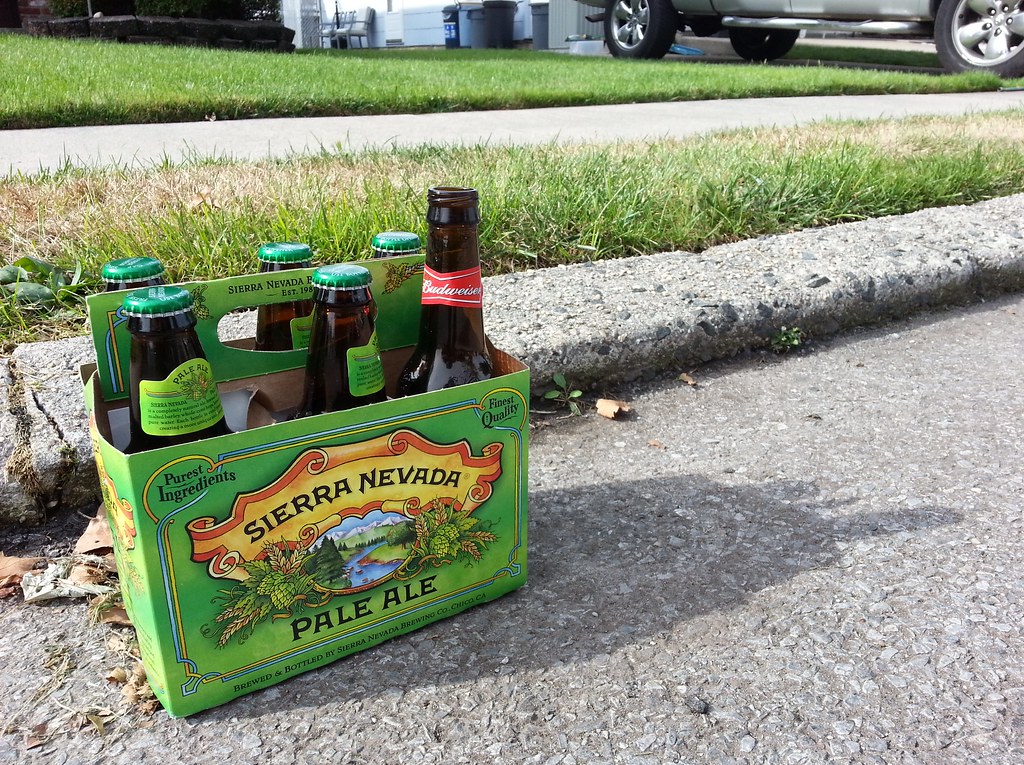

This happens sometimes in Staten Island. You can get a better sense of things from this aerial photo.


Its fruit looks like a cross between an Easter egg, a grape, and a potato, and it's coming to get you!