
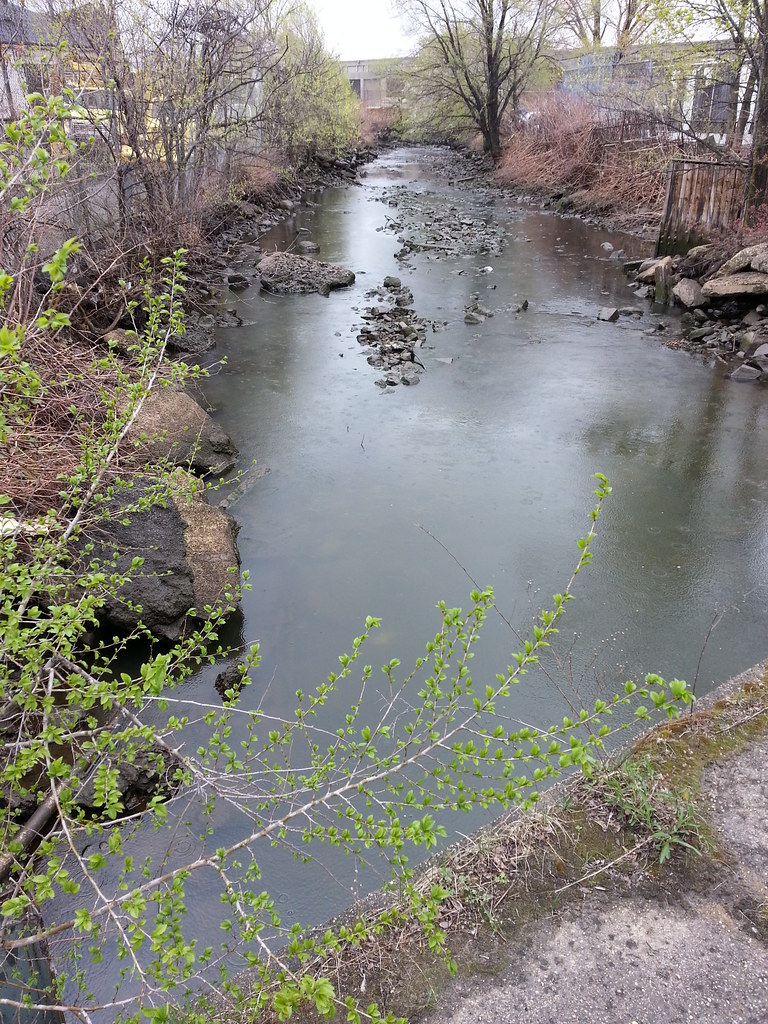
Relatively speaking, at least.
This is Palmer's Run, a.k.a. Bodine Creek (map).
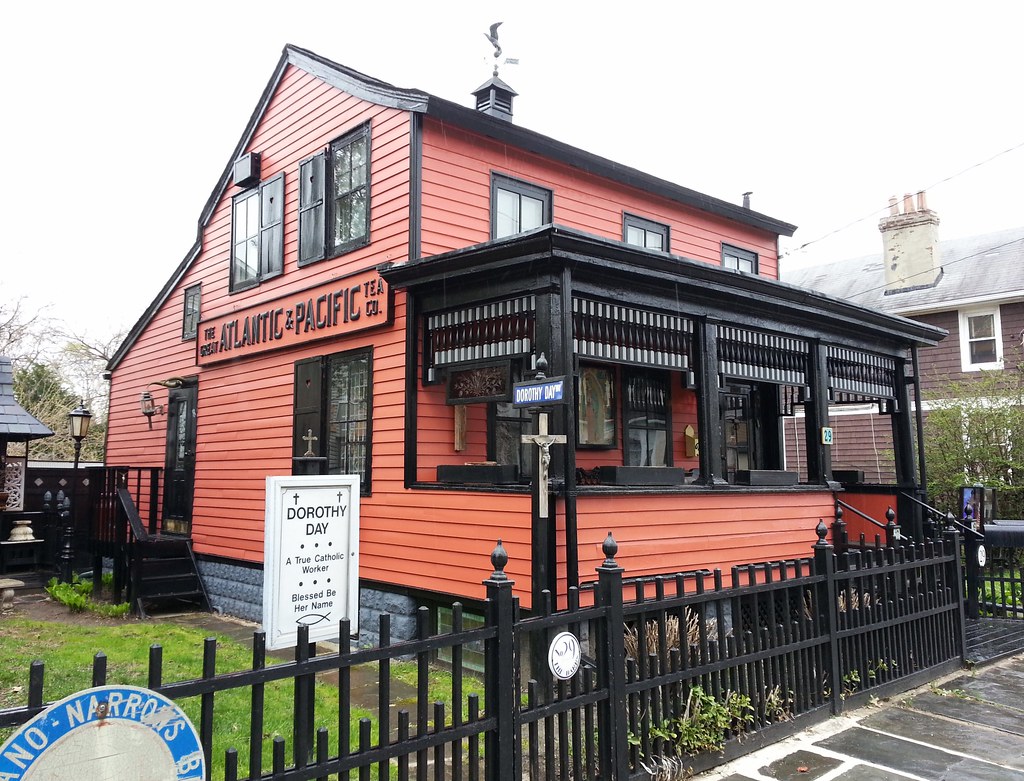
"One of the few surviving saltbox houses on Staten Island’s North Shore, this modest two-story Greek Revival frame cottage [built around 1848] with later Craftsman details is a significant reminder of Staten Island’s vernacular architectural traditions."
For almost 30 years, this house has been owned by John Foxell, an "artist, writer and self-confessed eccentric" who has painstakingly renovated the formerly dilapidated building and has added two small structures, a "prayer house" and a "spirit house", to the property. Mr. Foxell has also spent a great deal of time decorating the place to suit his particular tastes:
Many items might strike a more squeamish man as simply grisly — for example, the pair of glass-fronted coffins containing skeletons; a necklace made of human bones; a box containing children's teeth. Hollow-eyed skulls peer out from shadowy corners.You can see some interior photos here and here.
Yet these memento mori do not offend.
"They remind us that we're just a stack of bones, that we're just passing through," Mr. Foxell said. "I'm not put off by them. They're good company."
He is prepared for emergencies as well as the hereafter. Off the kitchen, home to a 1934 ball-top General Electric refrigerator and a 1951 stove, is a pantry stocked with items like canned creamed possum. "Survival food," Mr. Foxell said.

Thanks to this drinking fountain, we're still talking about Eugene G. Putnam, former principal of PS 20, more than a century after his death.
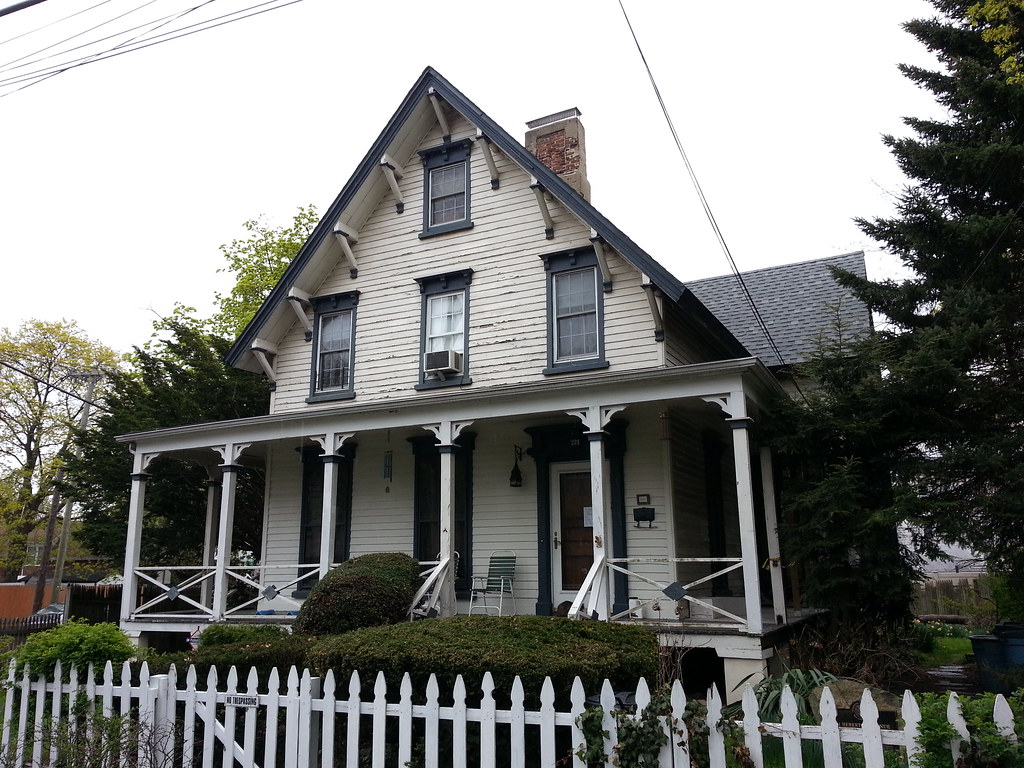
"This residence, constructed by carpenter-builder James G. Burger around 1859-61, is a rare surviving example in New York City of a picturesque villa in the Rustic style."

Staten Island's oldest park has elevated levels of arsenic and lead — so don't eat the soil.
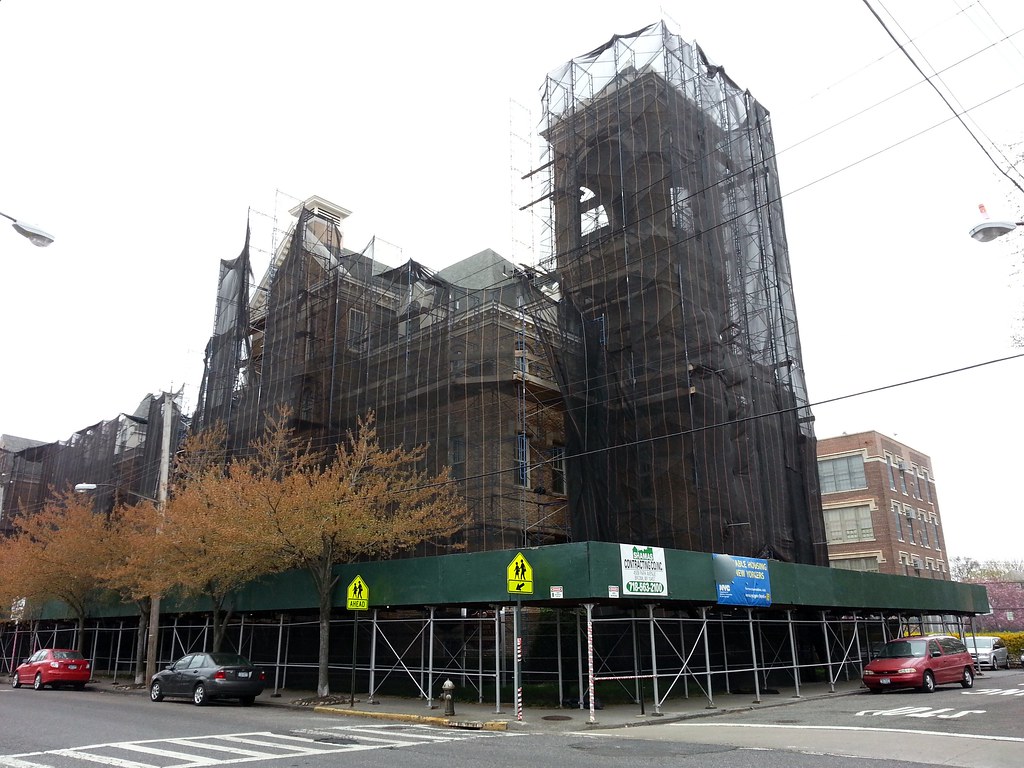
Beneath the veil lies the former Public School 20 Annex, now the Parkside Senior Apartments. This side of the building was an 1897-98 addition to the original 1891 structure, which began its life as Northfield Township's District School 6. (The school was renamed when Staten Island became part of NYC in 1898.) Take a look around in Street View to see the place without all the scaffolding.
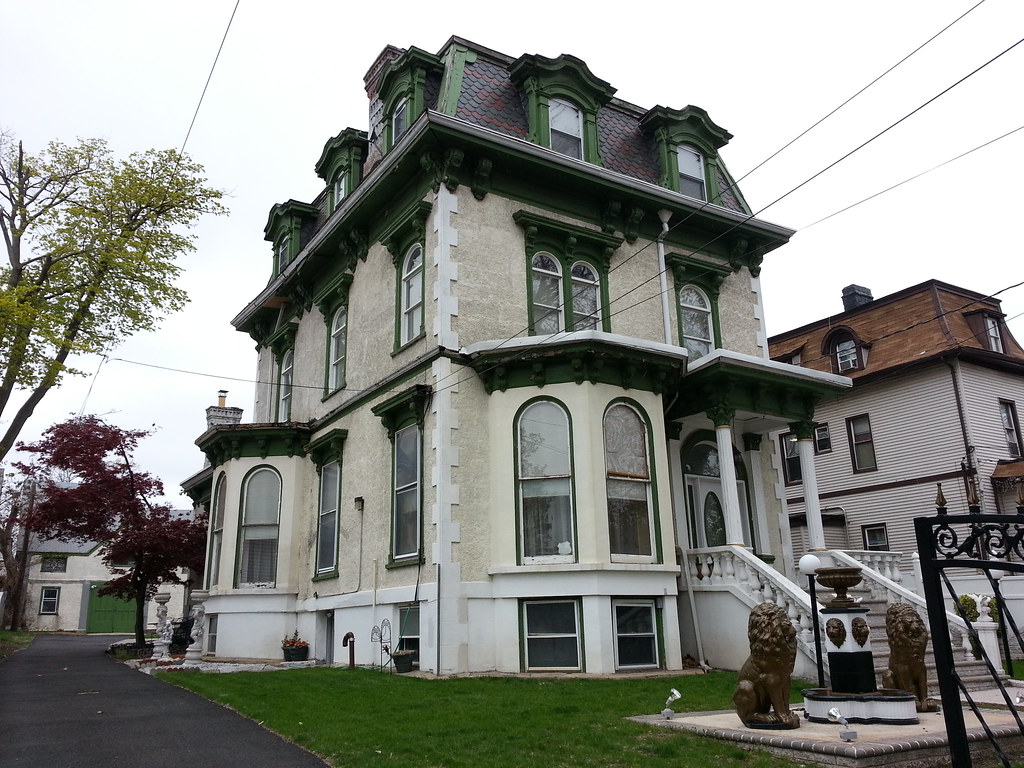

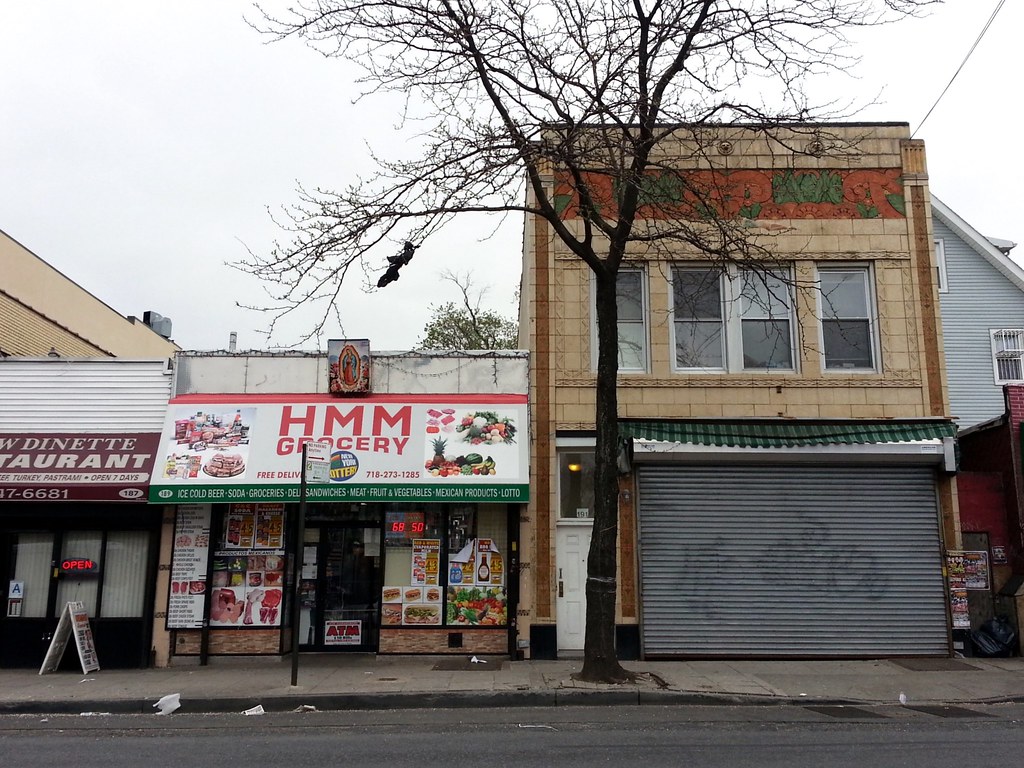
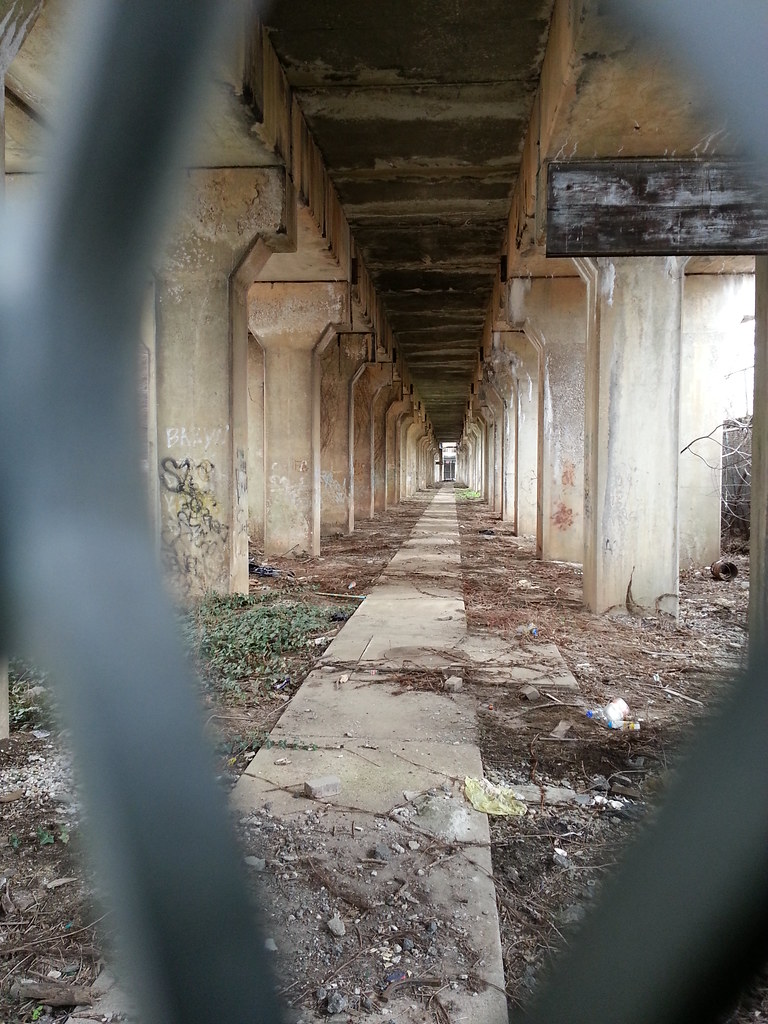
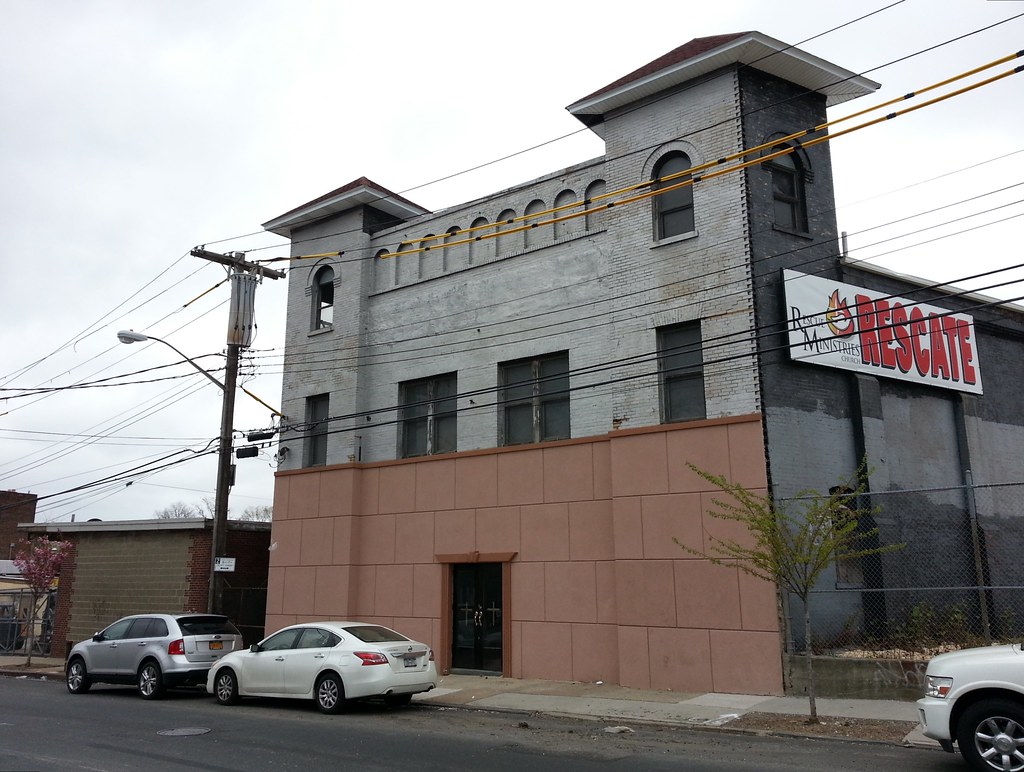
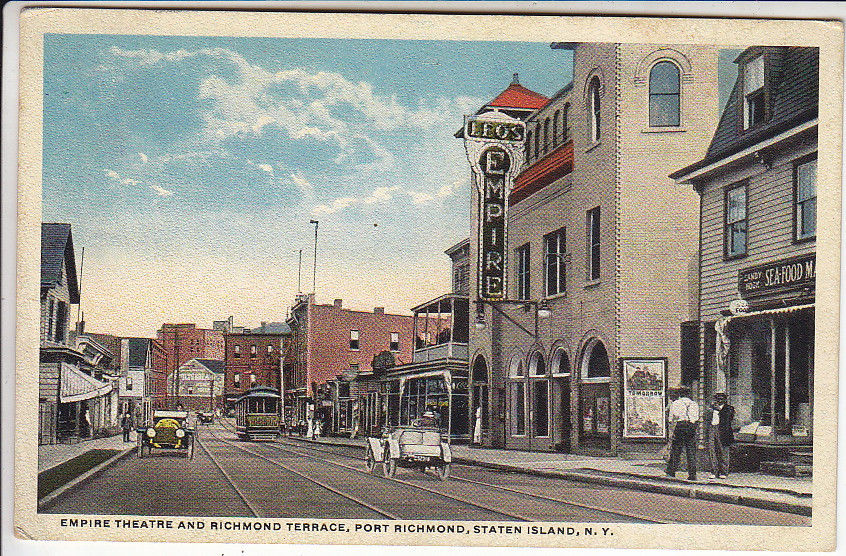
From movie palace to porno theater to lumber storehouse to church
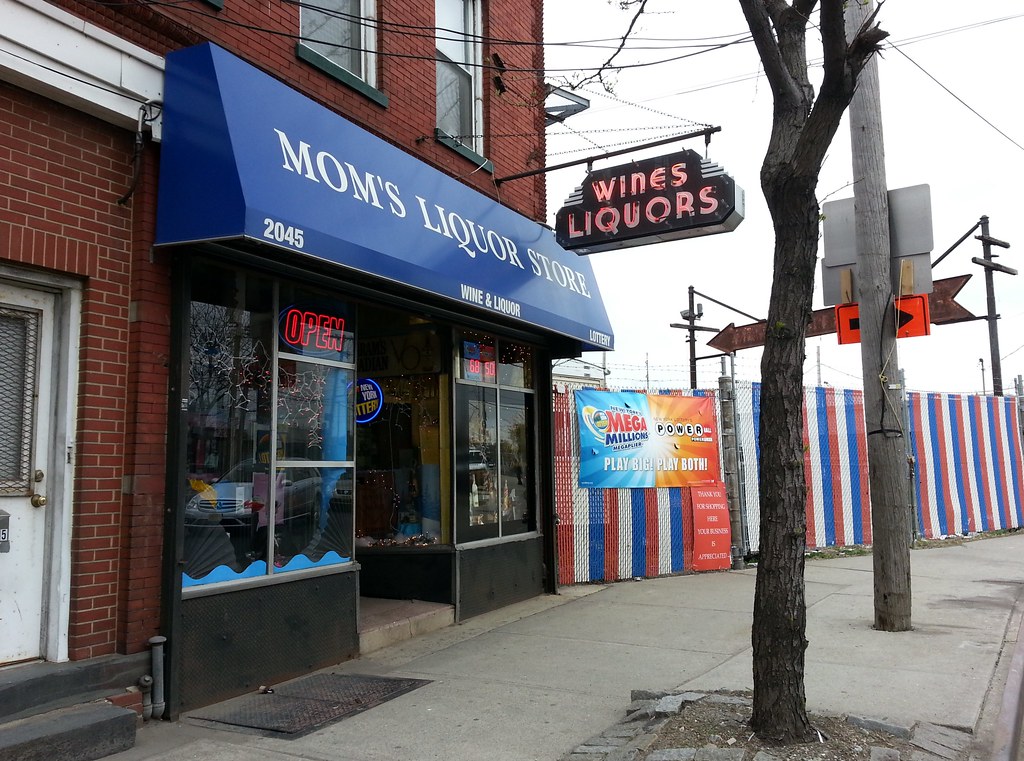
Sounds so wholesome!
The big rusty arrow in the background is a relic of the long-defunct ferry service that preceded the Bayonne Bridge in connecting Staten Island to Bayonne, New Jersey.
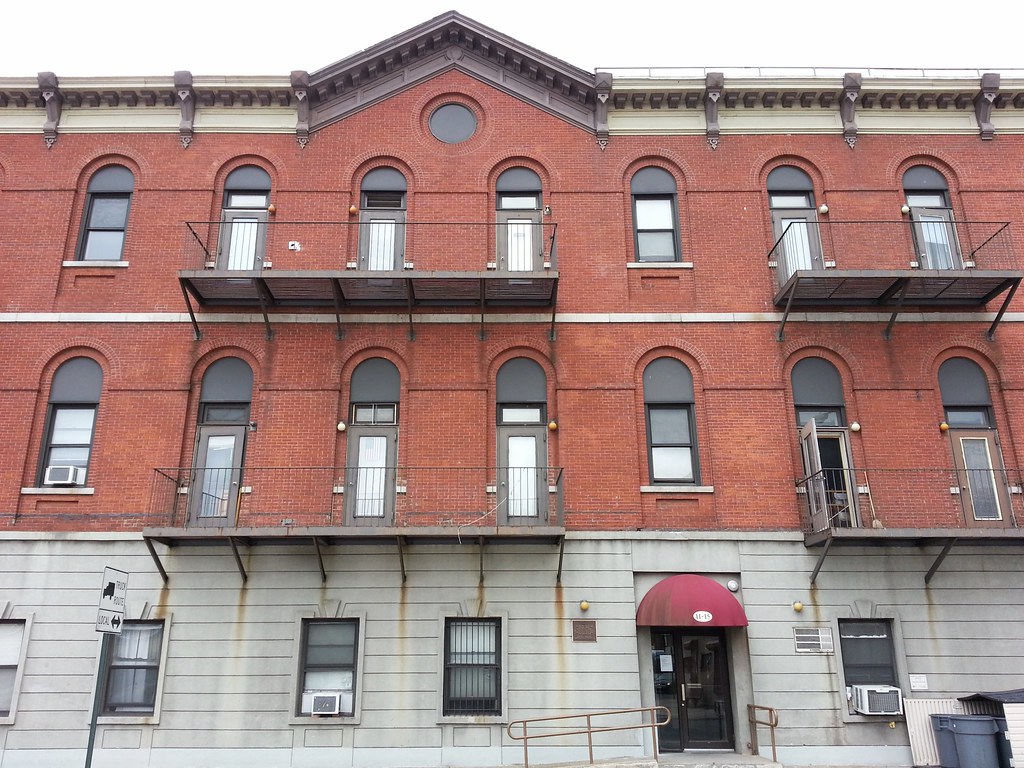
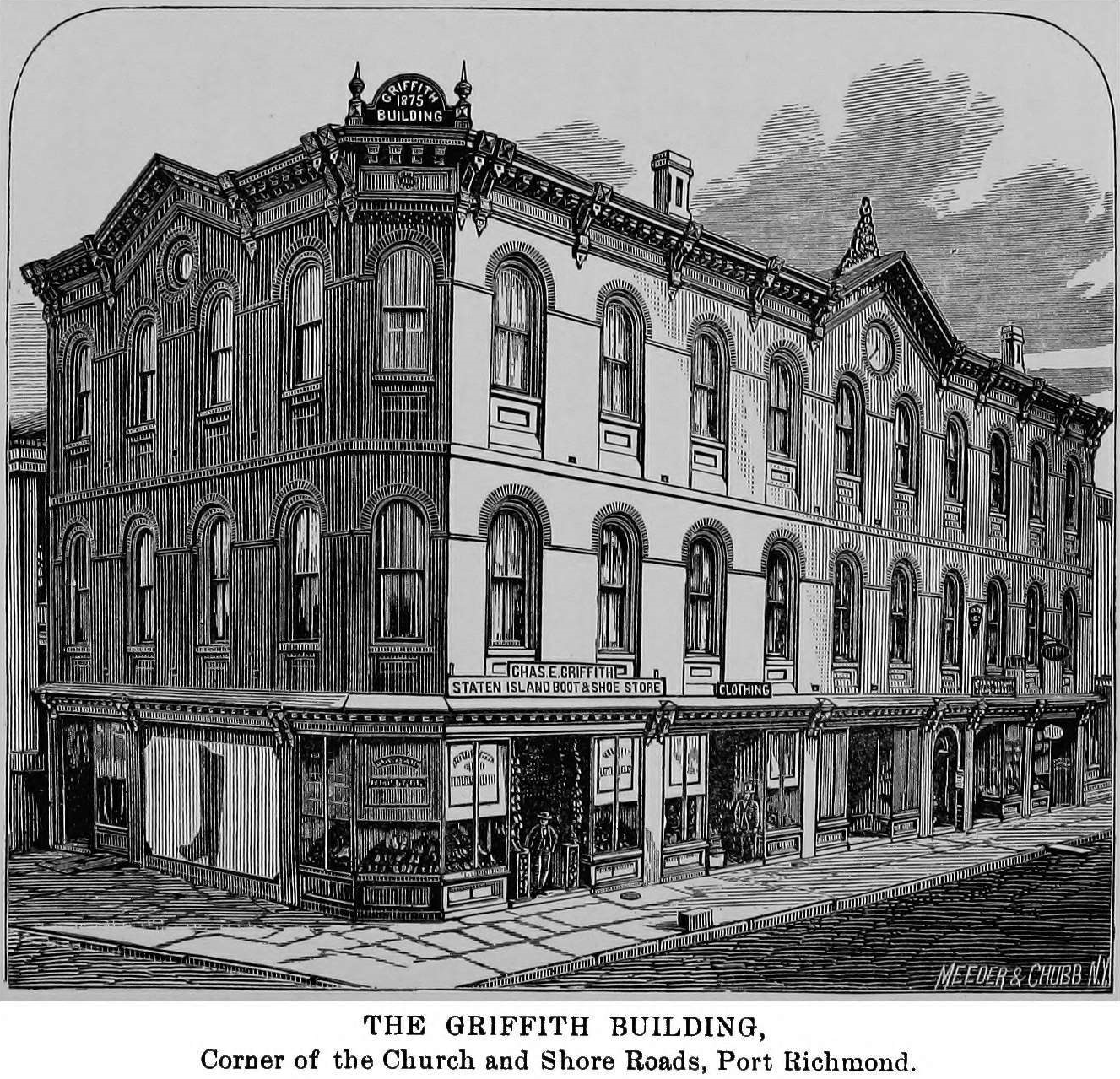
This 1875 structure was erected by Charles E. Griffith, who opened a boot and shoe store on the ground floor. Having seen several different uses over the years — here's a photo of an old pool hall, complete with spittoons, that was once located on the second floor — the building currently serves as a senior housing facility.
The plaque to the left of the door, visible above, reads:
ON THIS SITE STOOD THEThat's not quite correct, however. The St. James Hotel actually stood next door, just to the east on Richmond Terrace. It was originally a private mansion, supposedly considered "the finest house on Staten Island", and it was built on the former site of a small British Revolutionary War fort, which itself had replaced a house, belonging to an "obnoxious" loyalist, that was destroyed by the Americans. As far as I can tell, the place was known as the Port Richmond Hotel, or Winant's Inn, at the time that the elderly former vice president and killer of Alexander Hamilton (Dick Cheney wasn't the first veep to shoot a man while in office) was living out his last months there.
ST. JAMES HOTEL
BUILT SHORTLY AFTER
THE AMERICAN REVOLUTION.
AARON BURR DIED HERE
SEPTEMBER 14, 1836
ORIGINALLY MARKED BY
STATEN ISLAND CHAPTER NSDAR
FEBRUARY 1932 REPLACED SEPTEMBER 1976
Here's a watercolor painting of the inn as it would have looked during its time as the Continental Hotel (it went by a number of different names over the years) in the mid-1800s. And here's a view of Richmond Terrace, probably from the early 20th century; you can see the inn, then named Danner's, standing just past the Griffith Building, which at that point was the Schlitz Hotel.
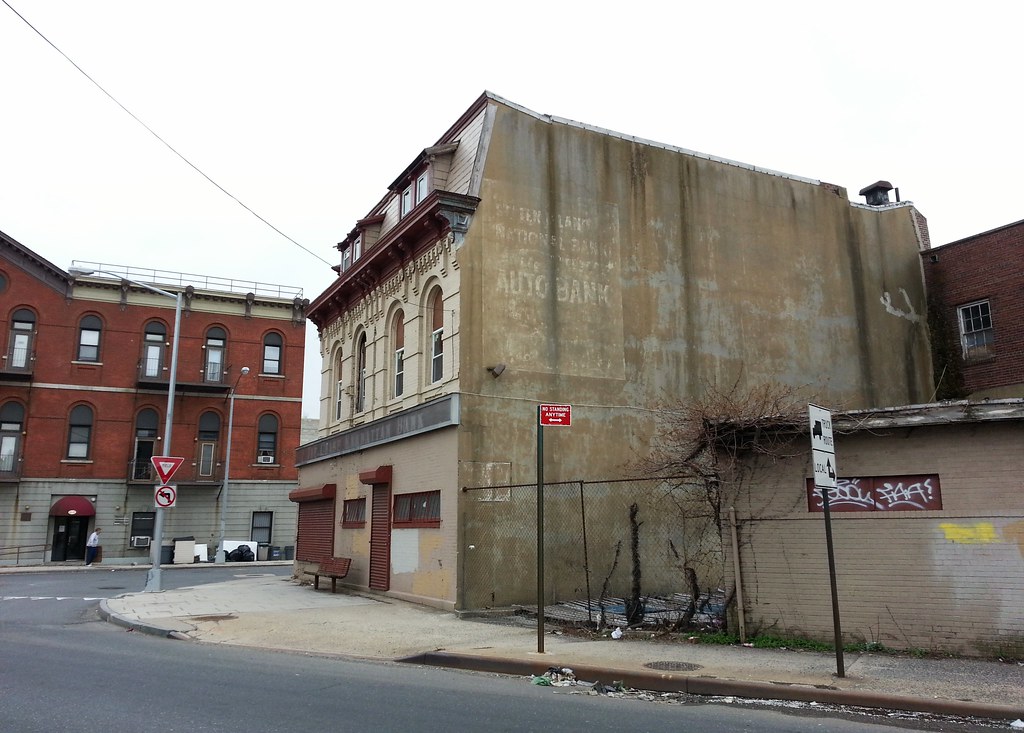
This view of the old Port Richmond National Bank reveals some of the institution's later history. The fading sign painted on the wall boasts that auto banking — I assume that means drive-through banking — is available at Staten Island National Bank, which is what Port Richmond National was renamed in 1926. (As recently as last year, "Staten Island National Bank & Trust Company" was still visible on the frieze of the building addition seen in the previous photo.) Meanwhile, the ghost letters on the horizontal band running across the building between the first and second floors read "Chase Manhattan Bank"; Staten Island National merged with Chase in 1957.

All Saints Church of Christ in God, originally Port Richmond National Bank. You can still see the night depository slot (closer look) in the bottom left corner of the left-most first-floor window! It was around 1909 that the bank built this addition to its 1870s building next door (which, like the former State Bank of Richmond County we saw earlier today, still has an ancient burglar alarm mounted on its facade).
I'm walking every street in New York City.
This is the counterpoint to my walk across the US. Instead of seeing a million places for just a minute each, I'm going to spend a million minutes exploring just one place. By the time I finish walking every block of every street in all five boroughs, I'll have traveled more than 8,000 miles on foot — all within a single city. Details!
Email me at matt@imjustwalkin.com
Subscribe to my email list
Maps: Progress | Photos

~9,954 miles walked
Your donations allow me to keep walking full-time. If you think what I'm doing is valuable and you'd like to offer some support, I would be very grateful. On the other hand, if you think I'm a worthless bum, feel free to email me and tell me to get a job, bozo. Both are excellent options!
