


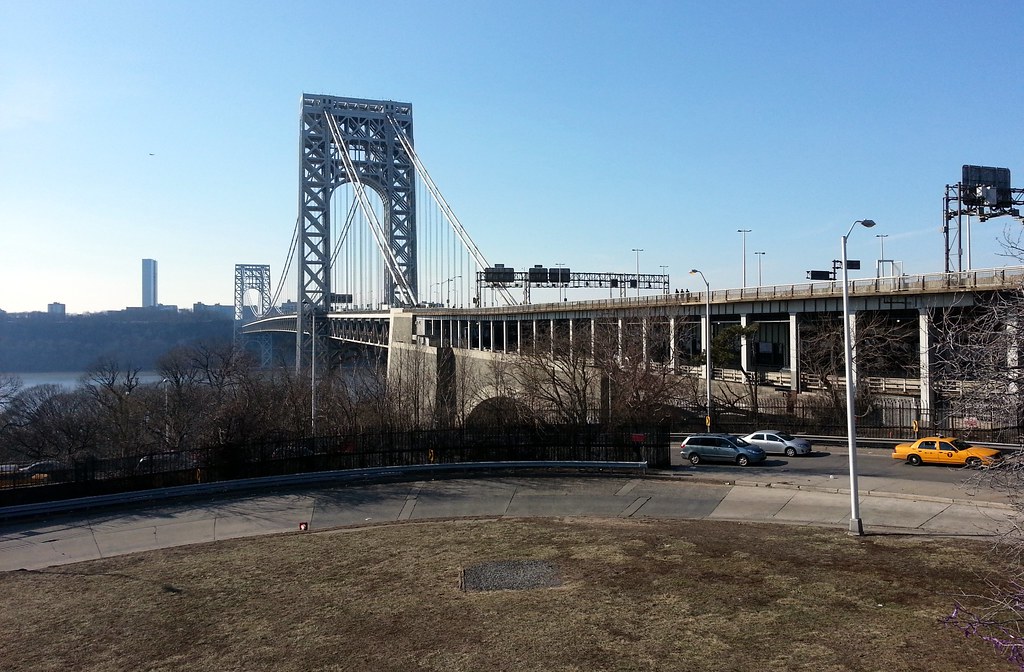
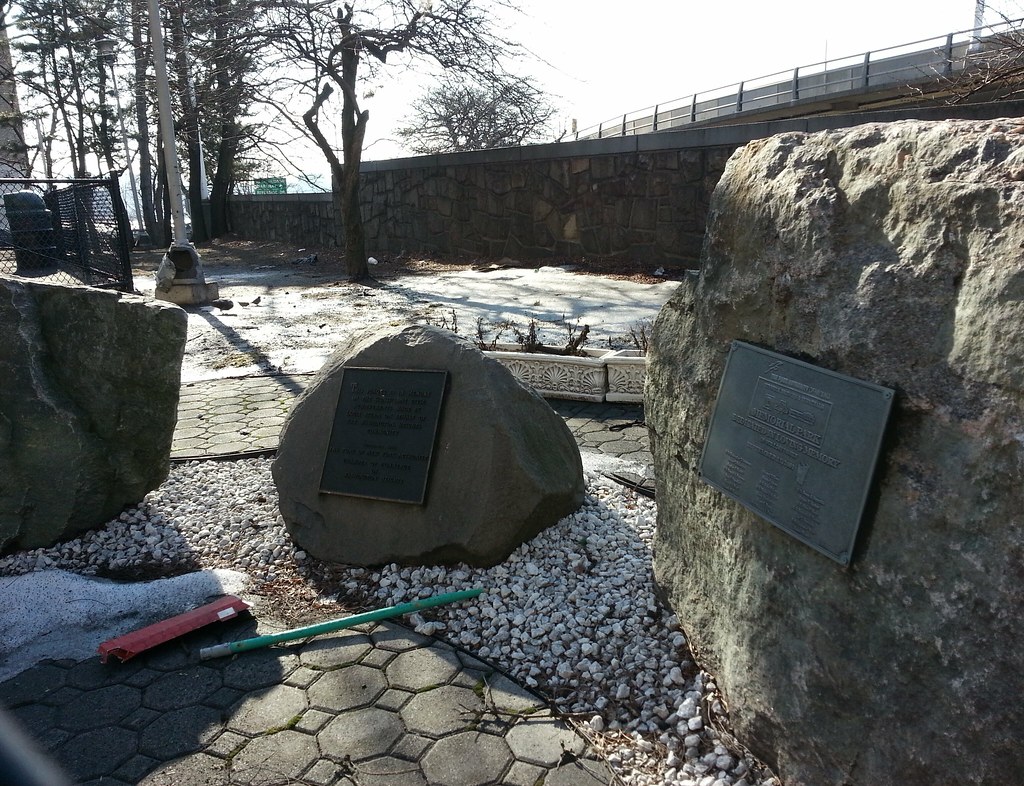
The plaque on the right reads:
THE PORT AUTHORITY OF NY & NJ
TUNNELS, BRIDGES & TERMINALS
MEMORIAL PARK
DEDICATED IN LOVING MEMORY
OF OUR LOST FAMILY
SEPTEMBER 11, 2001
and goes on to list (what I assume are) the names of the department members who were killed in the attacks.
The other two boulders bear tablets unrelated to 9/11. The one in the middle memorializes the "significant civic achievements" of Louie Stern, while the one on the left commemorates the lives lost when American Airlines Flight 587 crashed into the Rockaways two months after 9/11.


Better known as the Little Red Lighthouse, this is the only lighthouse on the island of Manhattan* (not counting the Titanic Memorial Light). It was originally erected in Sandy Hook, New Jersey, where it stood from 1880 to 1917, and it was moved here in 1921, several years before construction began on the neighboring George Washington Bridge. The Coast Guard decommissioned the lighthouse in 1947 or 1948, but the city decided to relight it in 2002.
The lighthouse was immortalized in the pages of the 1942 children's book The Little Red Lighthouse and the Great Gray Bridge, in which the diminutive beacon comes to feel insignificant and unneeded as the massive bridge is built and lit up above it. But on one dangerously foggy night, the bridge calls out:
"Little brother, where is your light?"* There are, however, two other lighthouses in the borough of Manhattan: the Roosevelt Island Lighthouse and the Statue of Liberty, which in its early years was officially operated as a lighthouse — the first one in the US to use electric lights, in fact.
"Am I brother of yours, bridge?" wondered the lighthouse. "Your light was so bright that I thought mine was needed no more."
"I call to the airplanes," cried the bridge. "I flash to the ships of the air. But you are still master of the river. Quick, let your light shine again. Each to his own place, little brother."

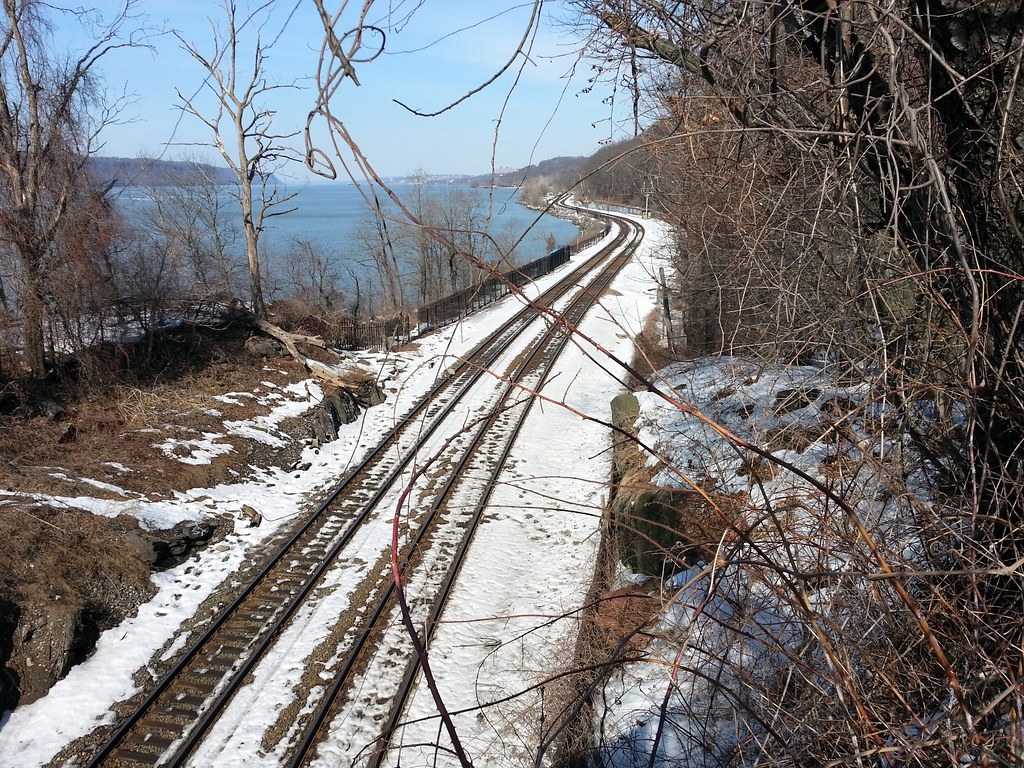
The George Washington Bridge, the West Side Line, and, off to the left, the Hudson River
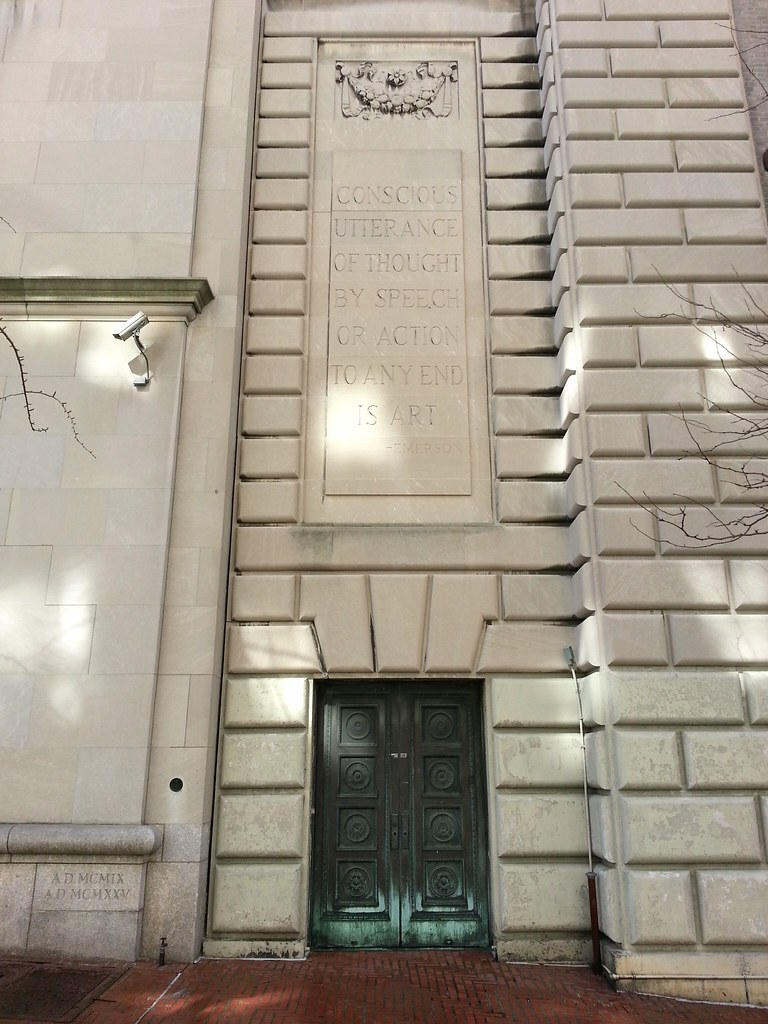
A street-level doorway on the 156th Street side of the American Academy of Arts and Letters
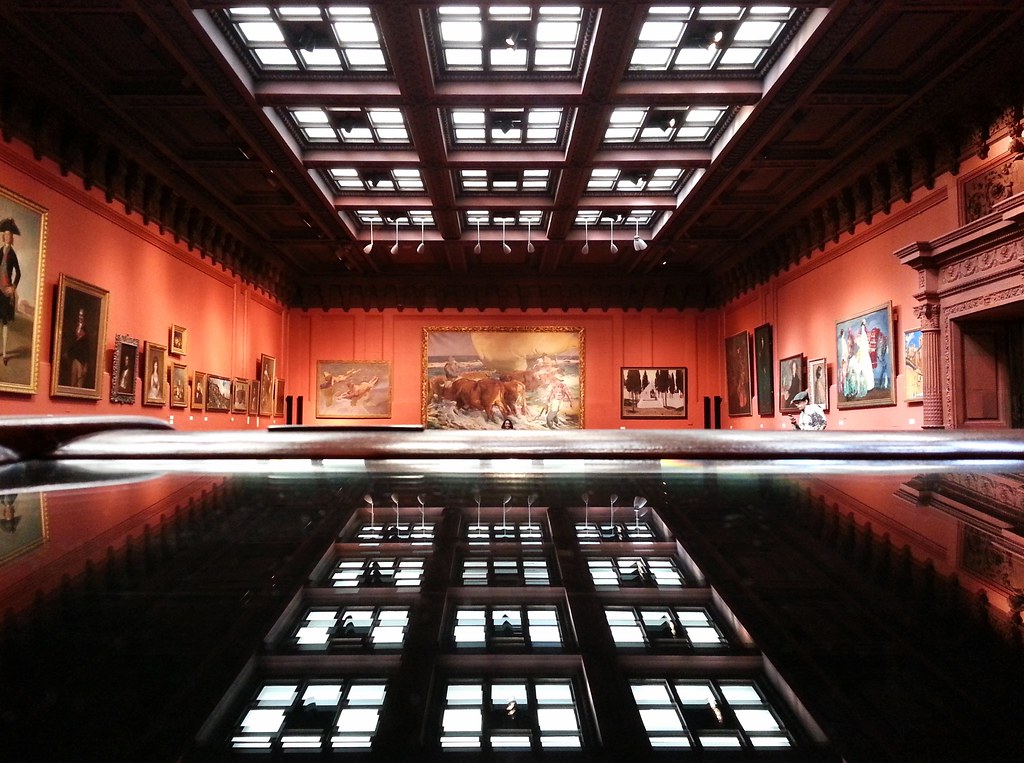

The only thing I can tell you about this perplexing addition to the courtyard of Audubon Terrace is that, unlike the sculptures seen in the previous two photos, it is almost certainly not the work of Anna Hyatt Huntington.

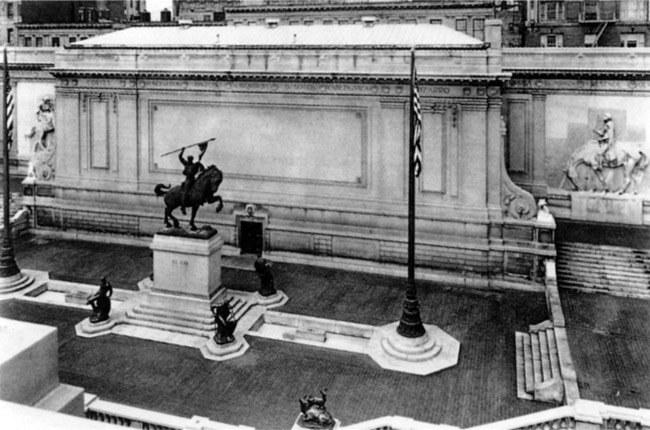
This heroic statue of the Spanish warrior, sculpted by Anna Hyatt Huntington, stands just to the left of Don Quixote in the courtyard of Audubon Terrace. Here's a wider shot of the magnificent scene.
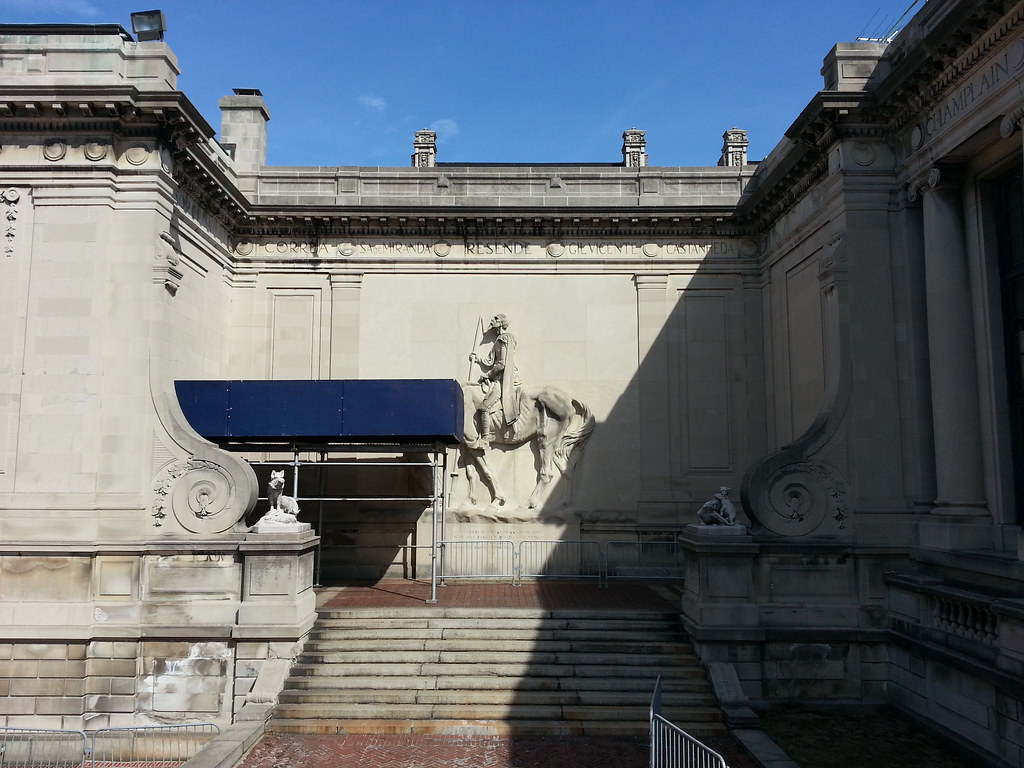
Don Quixote and his majestic steed Rocinante adorn this niche in the courtyard of Audubon Terrace, a "stupendous neo-Classical complex" of museum buildings (aerial photo here) located off Broadway at the southern edge of Washington Heights. Conceived by Archer M. Huntington, the son of Arabella Huntington (who would become "the richest woman in the world") and stepson of railroad magnate Collis P. Huntington, it was built over the first three decades of the 20th century on part of the former estate of John James Audubon (who is buried nearby in Trinity Church Cemetery). The sculpture above, along with several others in the courtyard, was created by Anna Hyatt Huntington, Archer Huntington's wife.
Formerly home to several cultural institutions, Audubon Terrace has seen its ranks dwindle over the years with the departures of the American Geographical Society (which once housed "the largest private geographical collection in the western hemisphere"), the Museum of the American Indian, and the American Numismatic Society. The Hispanic Society of America and the American Academy of Arts and Letters have held strong, however, each annexing one of the vacated buildings, and Boricua College is now an established presence on the campus as well, having moved in decades ago. (The Church of Our Lady of Esperanza is also located on Audubon Terrace, but it feels like a separate entity, facing out onto the street rather than the common courtyard.)
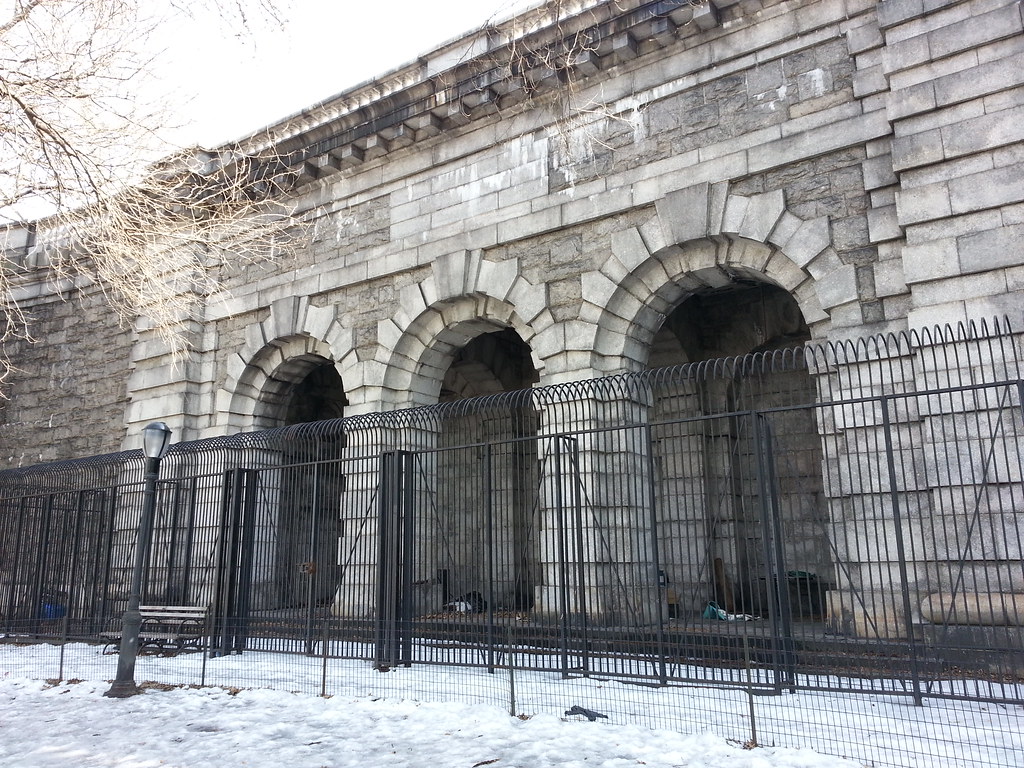
Built into the retaining wall that supports Riverside Drive, this beautiful stone arcade in Riverside Park is now off limits to the public.
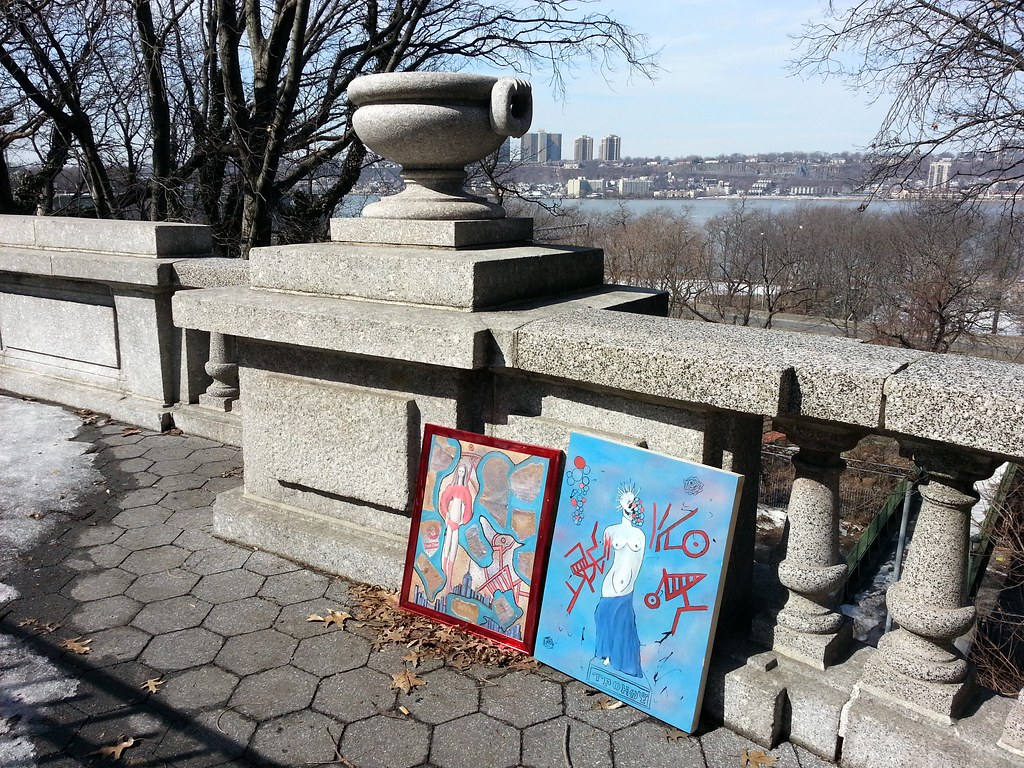
I'm walking every street in New York City.
This is the counterpoint to my walk across the US. Instead of seeing a million places for just a minute each, I'm going to spend a million minutes exploring just one place. By the time I finish walking every block of every street in all five boroughs, I'll have traveled more than 8,000 miles on foot — all within a single city. Details!
Email me at matt@imjustwalkin.com
Subscribe to my email list
Maps: Progress | Photos

~9,954 miles walked
Your donations allow me to keep walking full-time. If you think what I'm doing is valuable and you'd like to offer some support, I would be very grateful. On the other hand, if you think I'm a worthless bum, feel free to email me and tell me to get a job, bozo. Both are excellent options!
