
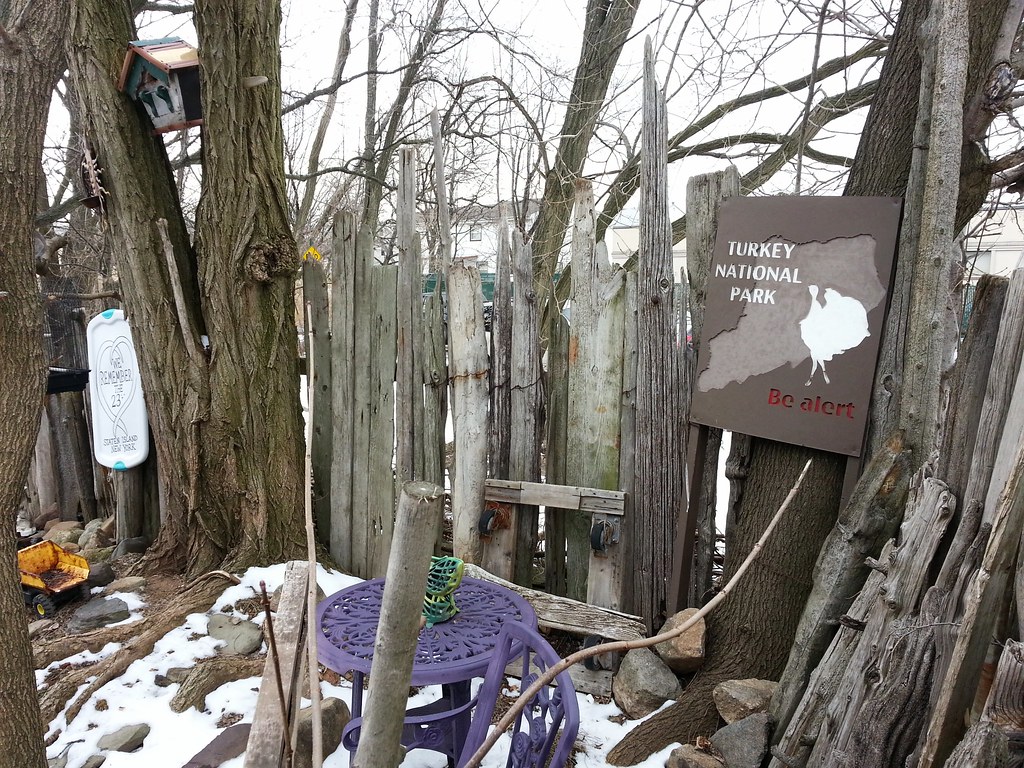
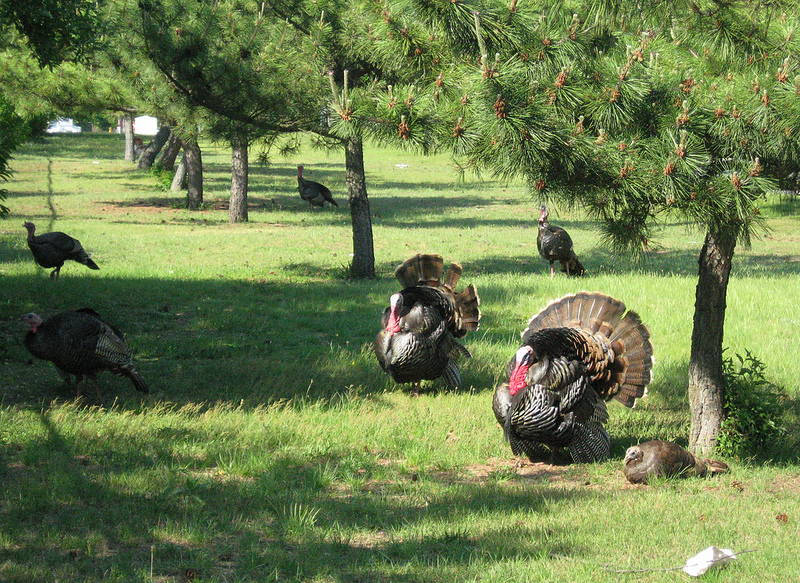
A mock national park celebrating Staten Island's turkeys. It even has a website!
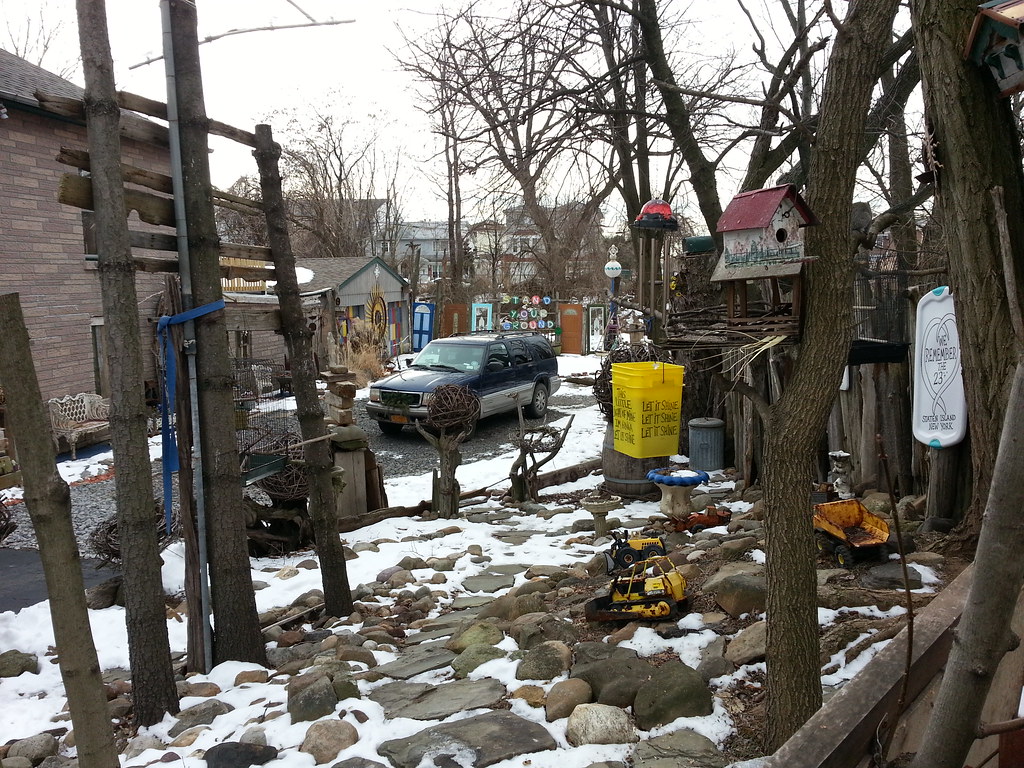
A container-top tribute to the Staten Islanders killed by Hurricane Sandy. I'd guess the "+" refers to a man who wasn't killed directly by the storm, but by falling in a dark, wet hallway after the power went out at his apartment building.
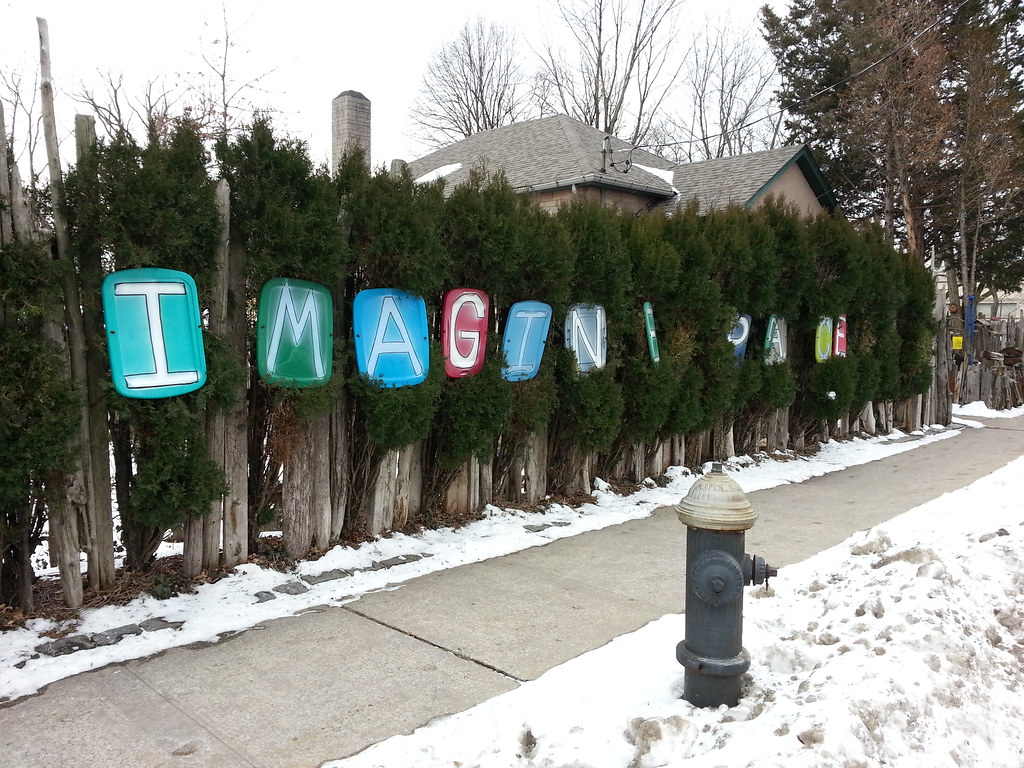
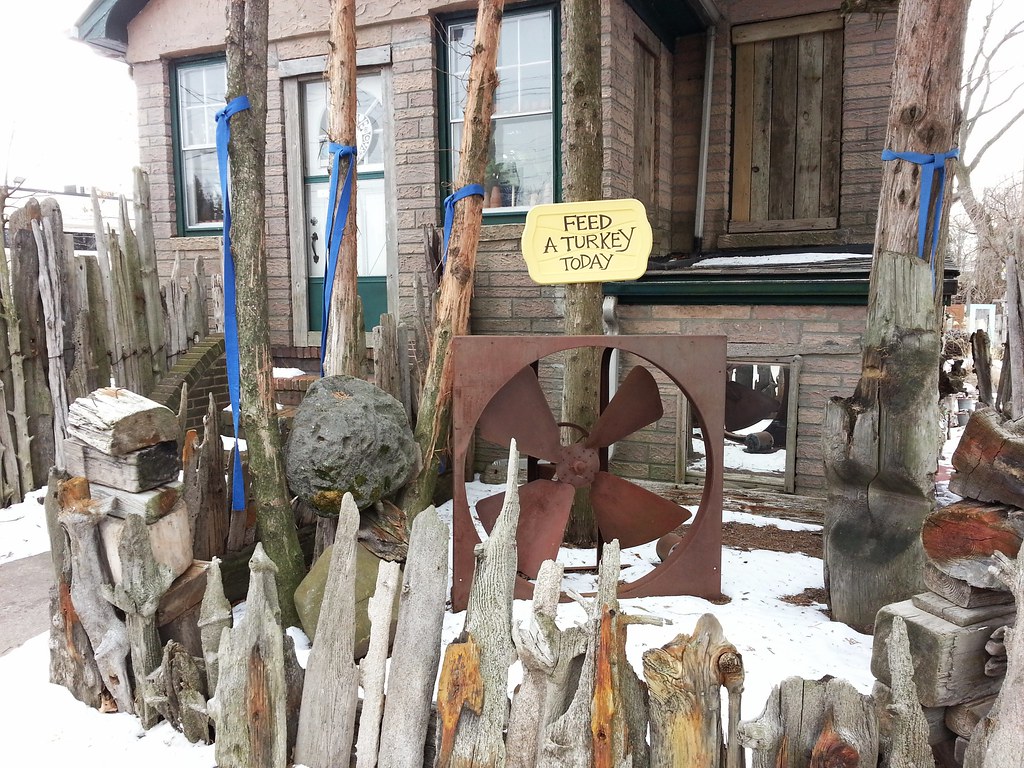
(It's worth zooming in to take a closer look around this place.)
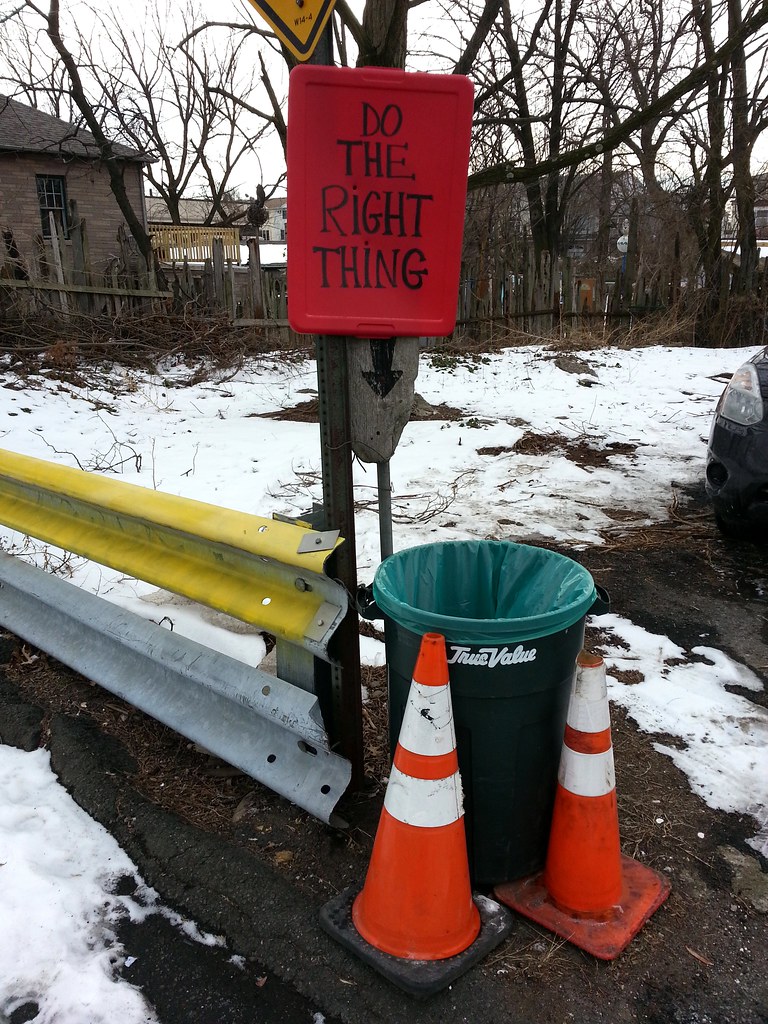
One of several plastic container-top messages on display at this house (as you'll see in the next few photos)
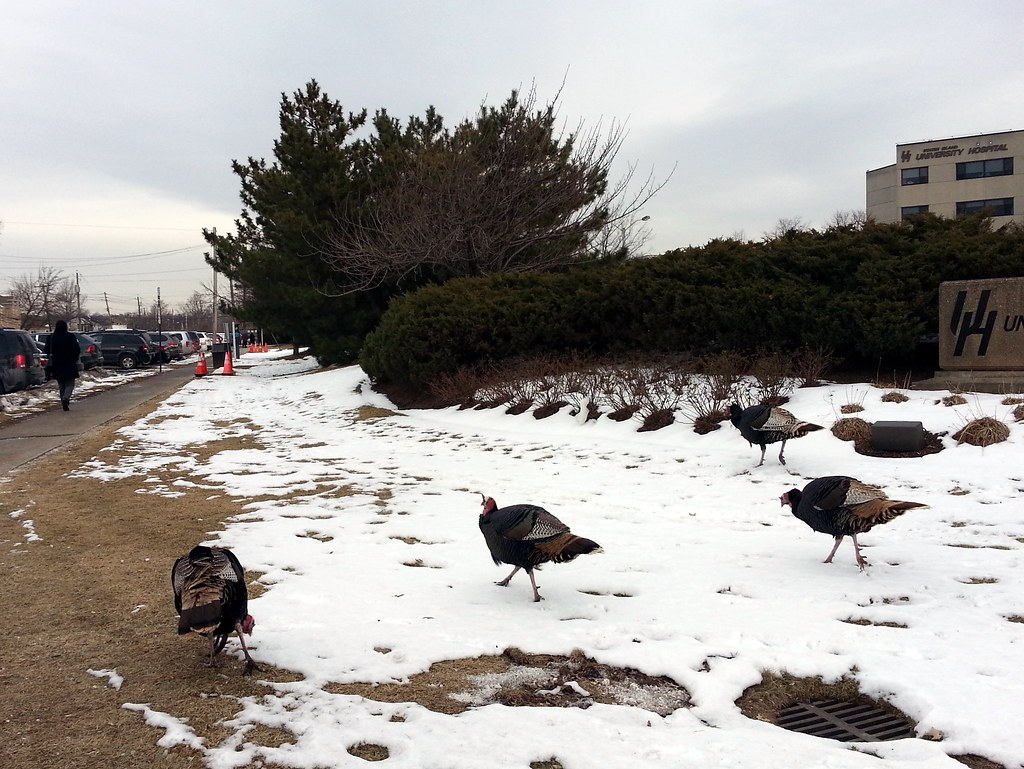
State officials say it all began when someone released nine turkeys on the grounds of the South Beach Psychiatric Center in 2000. Now there are dozens of the birds living at the psychiatric center and in nearby areas. While some locals love them, others think they're nothing but a bunch of pooping, garden-eating traffic hazards. Last year, the USDA began removing turkeys from the psychiatric center's property, sending a number of them off to slaughter and relocating 28 others upstate, but there are still plenty left wandering around.
I first learned about these turkeys when I encountered some a few years ago in late spring. I got a good shot of two males strutting their stuff for the ladies.
(We also ran into a couple of turkeys last year at Woodlawn Cemetery in the Bronx.)

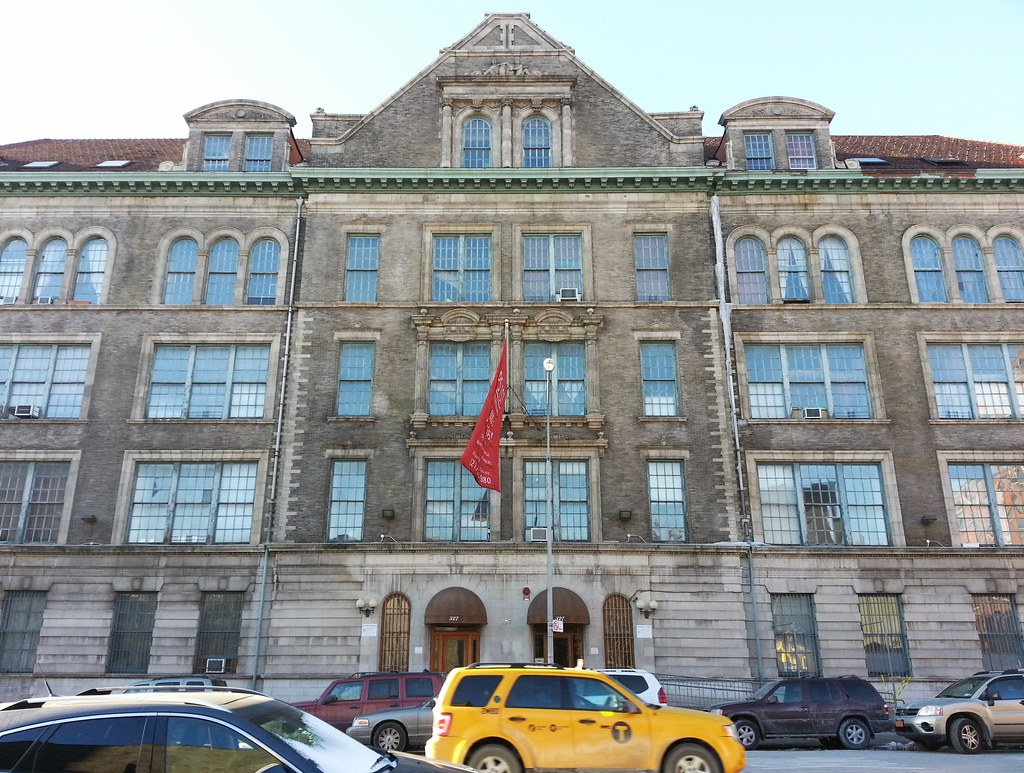
This Charles B.J. Snyder-designed former elementary school has been converted into a 73-unit apartment building "with soaring arched windows and ceiling heights of 15 feet".
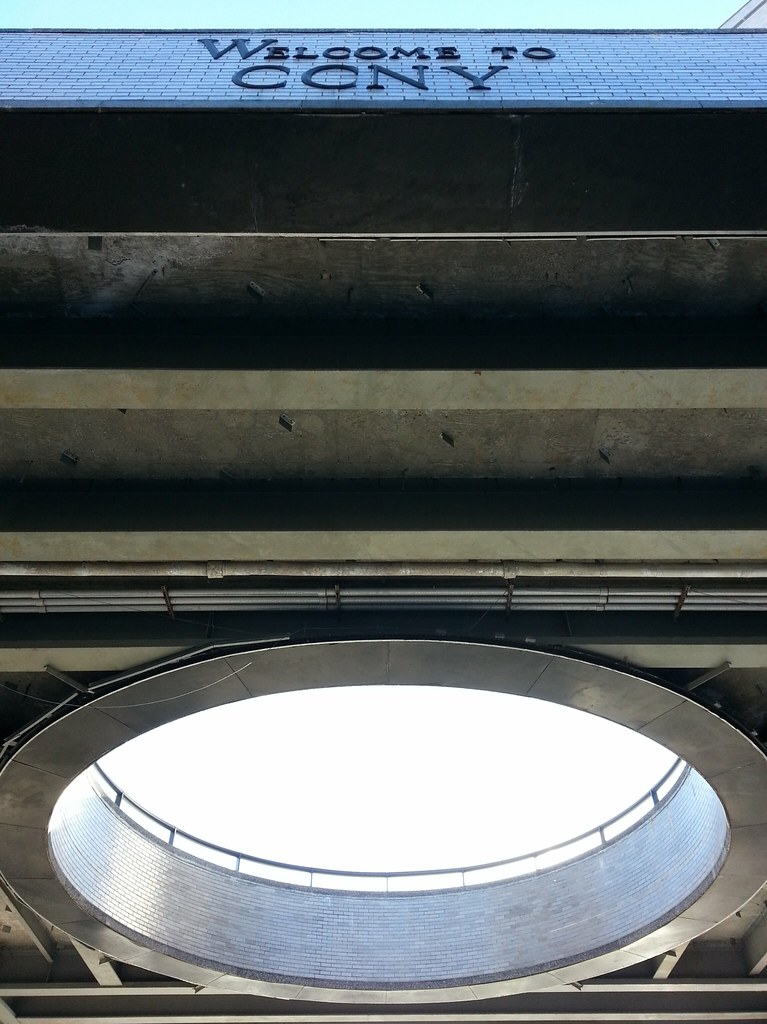
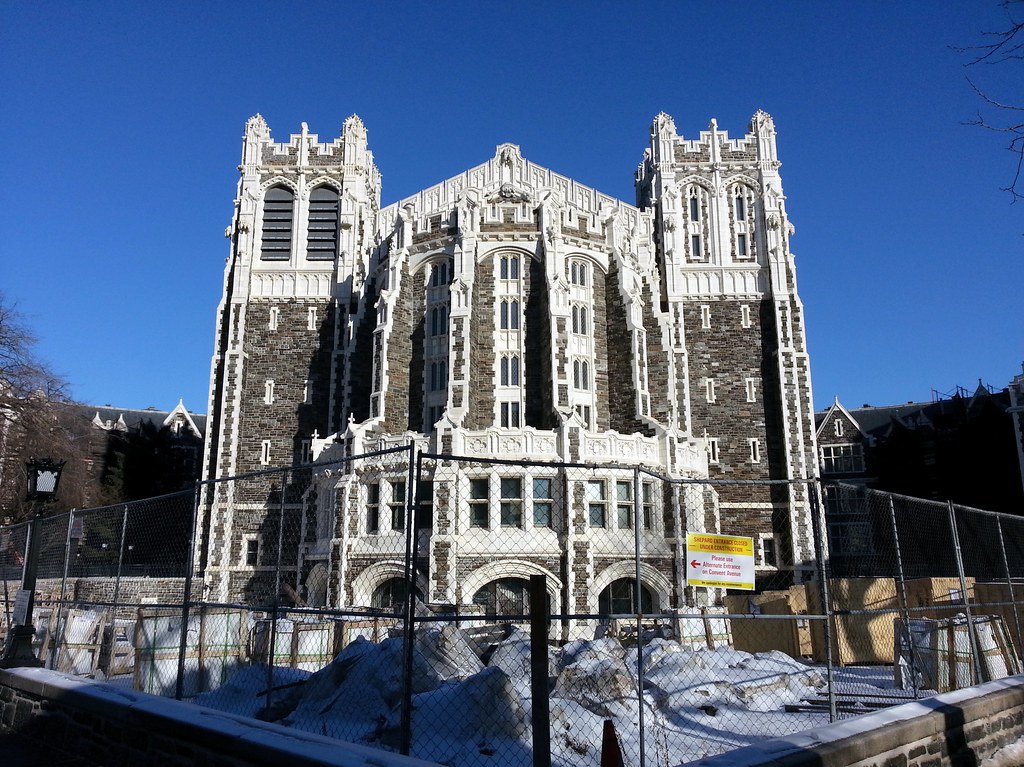
By the late 20th century, this gorgeous building at City College had become "the largest example of terra-cotta failure in New York City and perhaps the country"; for years, "pieces of terra cotta the size of grapefruits had been falling off the building with regularity". A massive restoration effort that began in 1986 and has cost around $150 million is finally, I believe, just about complete.
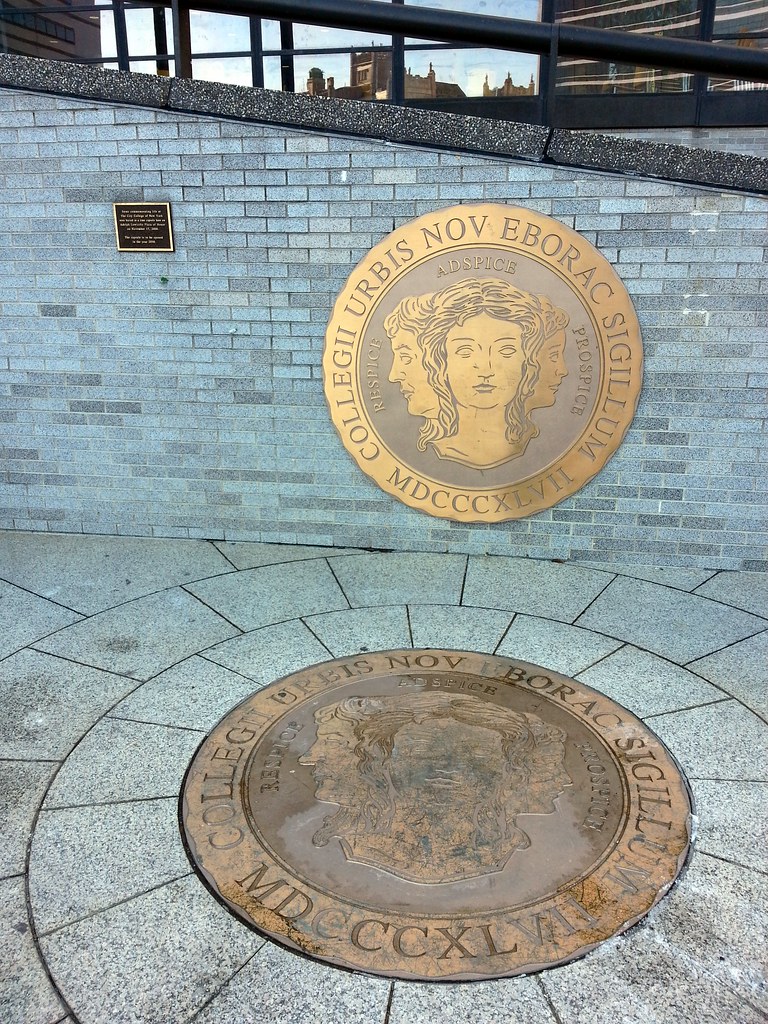
at City College. A plaque on the wall reads:
Dedicated in memory of Adolph Lewisohn, 1849-1938, who provided funds in 1913 for the construction of Lewisohn Stadium, which occupied this site from 1914 to 1973. The stadium, designed by Arnold W. Brunner, served as an athletic field for City College and also became New York City's most renowned and beloved outdoor musical center. Each summer, for nearly 50 years, the stadium attracted thousands of visitors to listen to "music under the stars" performed by the greatest artists of the day.You can check out old photos of the stadium, watch a scene from Serpico (starring Al Pacino) filmed in the stadium, and take a look at several concert programs from the '20s and '30s.
According to another plaque, the one visible above:
Items commemorating life at The City College of New York were buried in a time capsule here on Adolph Lewisohn Plaza of Honor on November 17, 2000.
The capsule is to be opened in the year 2050.
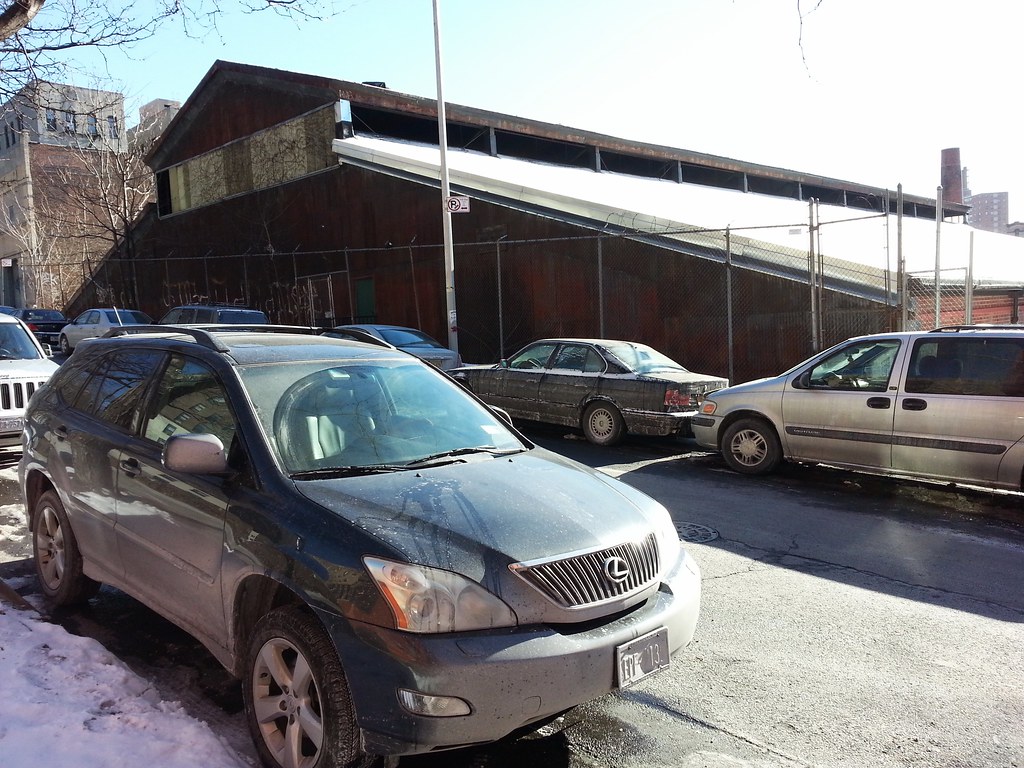
According to the 2010 AIA Guide to New York City, this "grimy shed sheathed in corrugated iron occupying some two-thirds of an acre . . . shelters all manner of bulky sets for the Metropolitan Opera House at Lincoln Center. It was built around 1895 as a storage shed for Amsterdam Avenue streetcars."
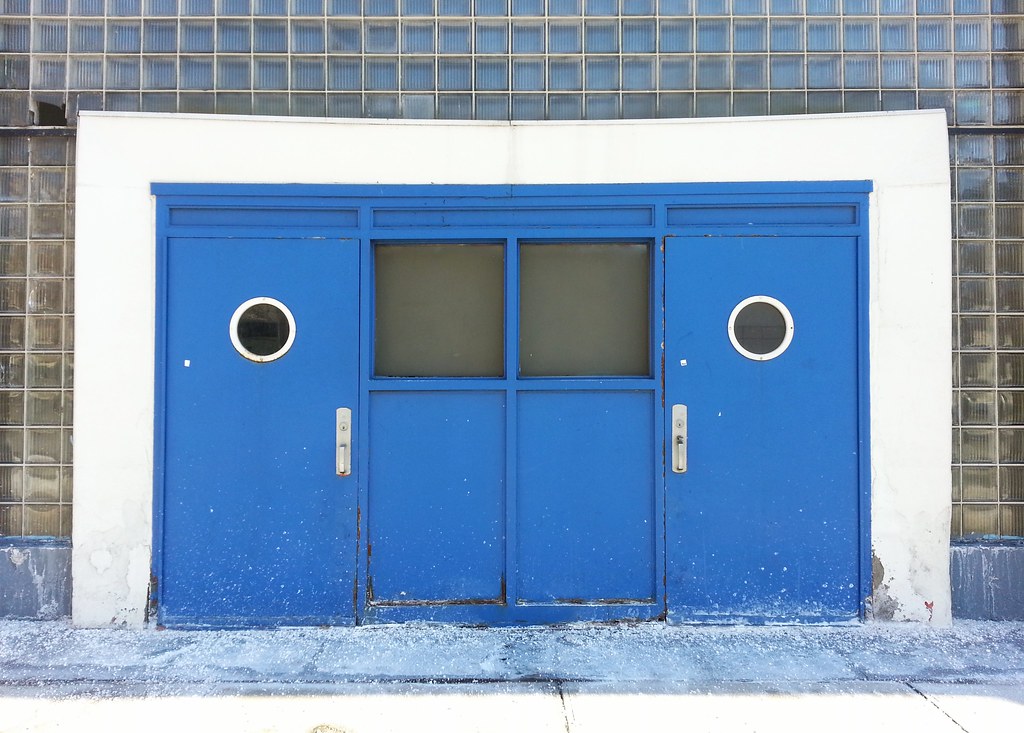
A portholed portal!
This building is the Amsterdam Depot. Formerly an active MTA bus depot, it's now used to store much of the agency's collection of historic buses (a.k.a. the "museum fleet").
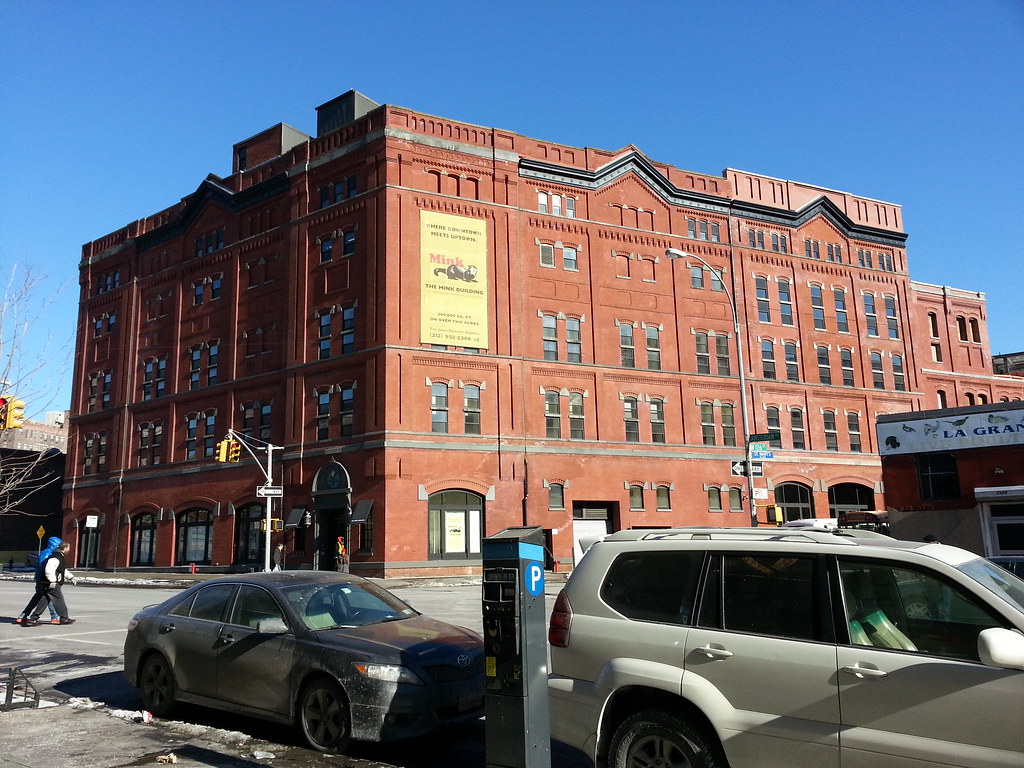
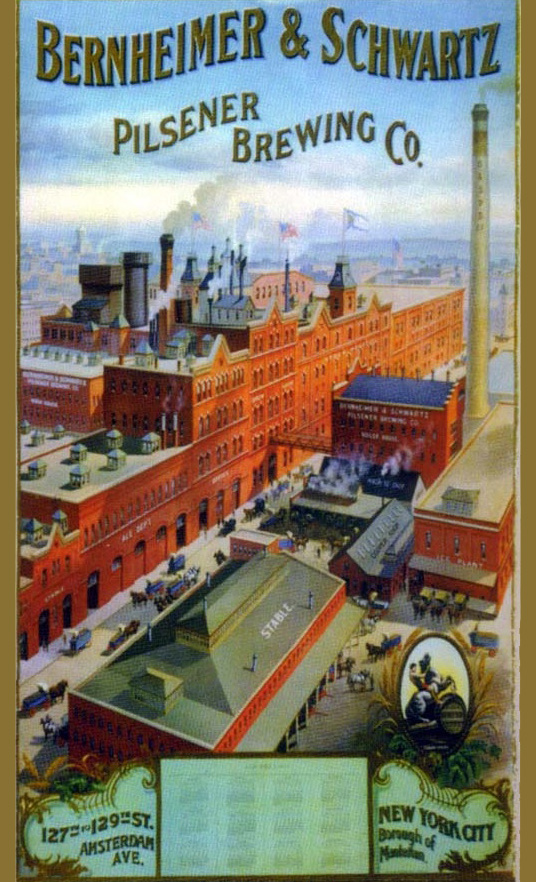
This building, named for its former use as a summertime storage facility for fur coats, was originally the Bernheimer & Schwartz brewery, completed around 1905. A quick search of the NY Times archives reveals that the brewing company suffered a string of tragic and sometimes bizarre deaths among its executives and their families over a four-year period starting in 1909.
First, the wife of a vice president committed suicide by "inhaling illuminating gas" after becoming extremely anxious over an ailing grandchild. The next year, in 1910, the president, Anton Schwartz, shot himself six weeks after his son died of an illness at the age of 24. In 1911, Simon Bernheimer, head of the company, was attending a Shriners' band rehearsal. He had long dreamed of playing the bass drum in this highly regarded band, and he was finally given a chance when the band's regular bass drummer didn't show up. A short while later, he dropped dead mid-song. And in 1913, after testifying in a lawsuit against the company, Simon's brother Max, then serving as president, suddenly fell to the floor dead in the courtroom.
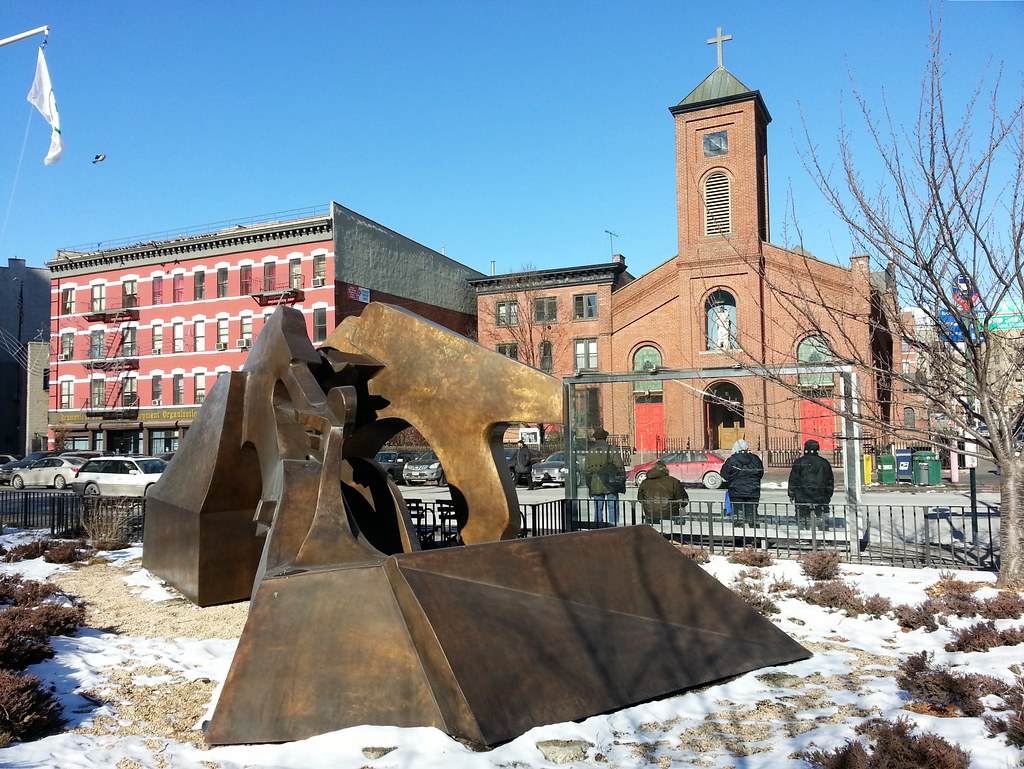
Installed in 1976 and conserved in 2008, this Richard Hunt sculpture is meant to "mimic the angle of the roofline" and the arches of the Church of St. Joseph of the Holy Family (at right), Manhattan's oldest existing church north of 44th Street.
I'm walking every street in New York City.
This is the counterpoint to my walk across the US. Instead of seeing a million places for just a minute each, I'm going to spend a million minutes exploring just one place. By the time I finish walking every block of every street in all five boroughs, I'll have traveled more than 8,000 miles on foot — all within a single city. Details!
Email me at matt@imjustwalkin.com
Subscribe to my email list
Maps: Progress | Photos

~9,954 miles walked
Your donations allow me to keep walking full-time. If you think what I'm doing is valuable and you'd like to offer some support, I would be very grateful. On the other hand, if you think I'm a worthless bum, feel free to email me and tell me to get a job, bozo. Both are excellent options!
