
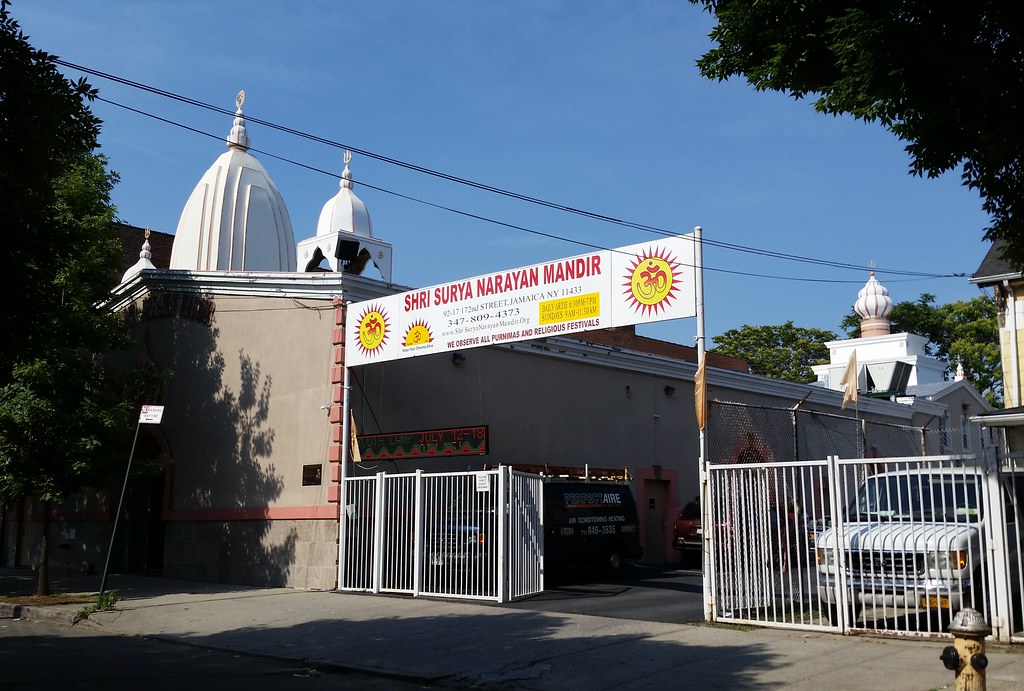
Shri Surya Narayan Mandir, another Guyanese Hindu Temple, stands just down the block from Prem Bhakti Mandir.
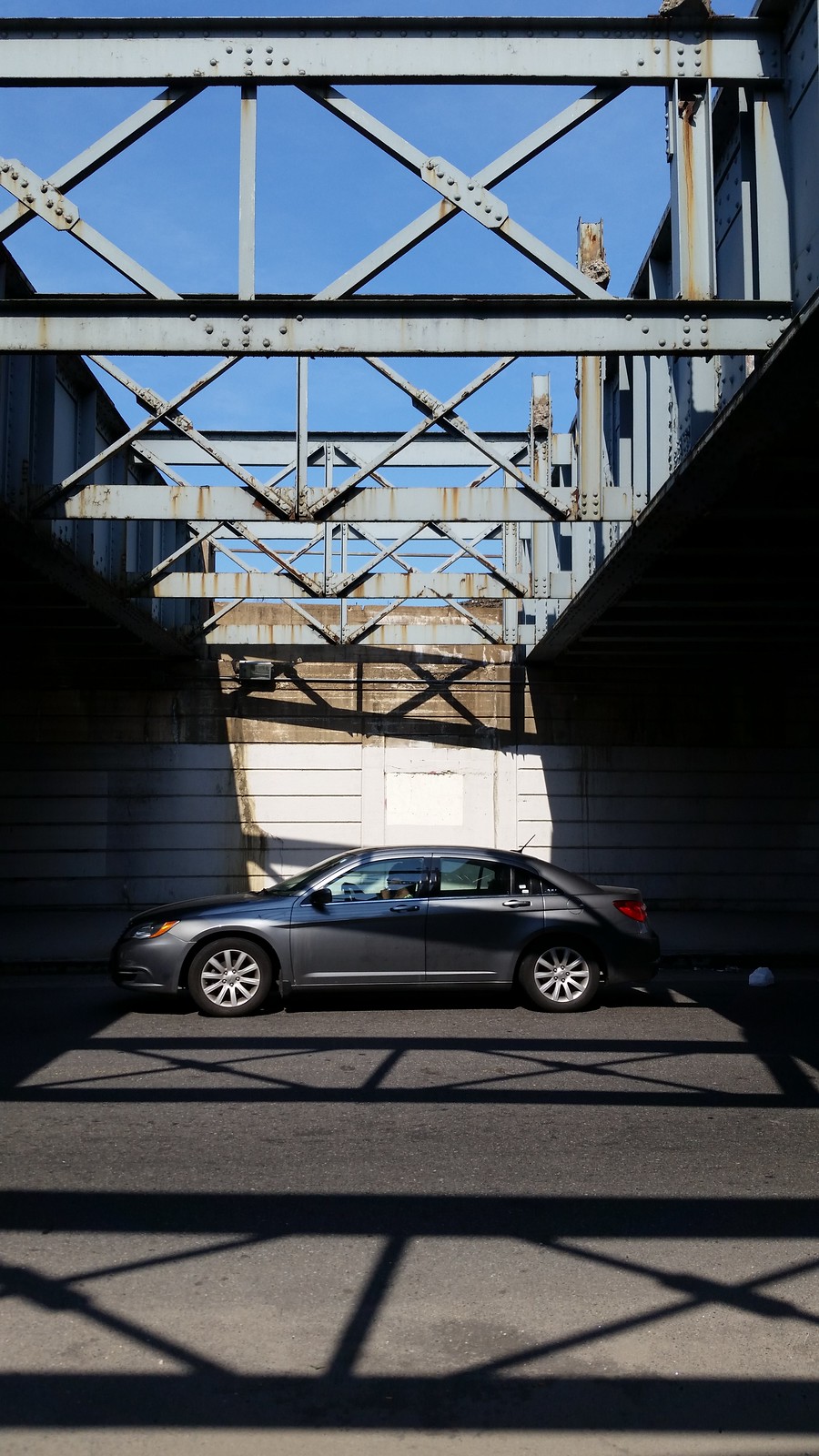
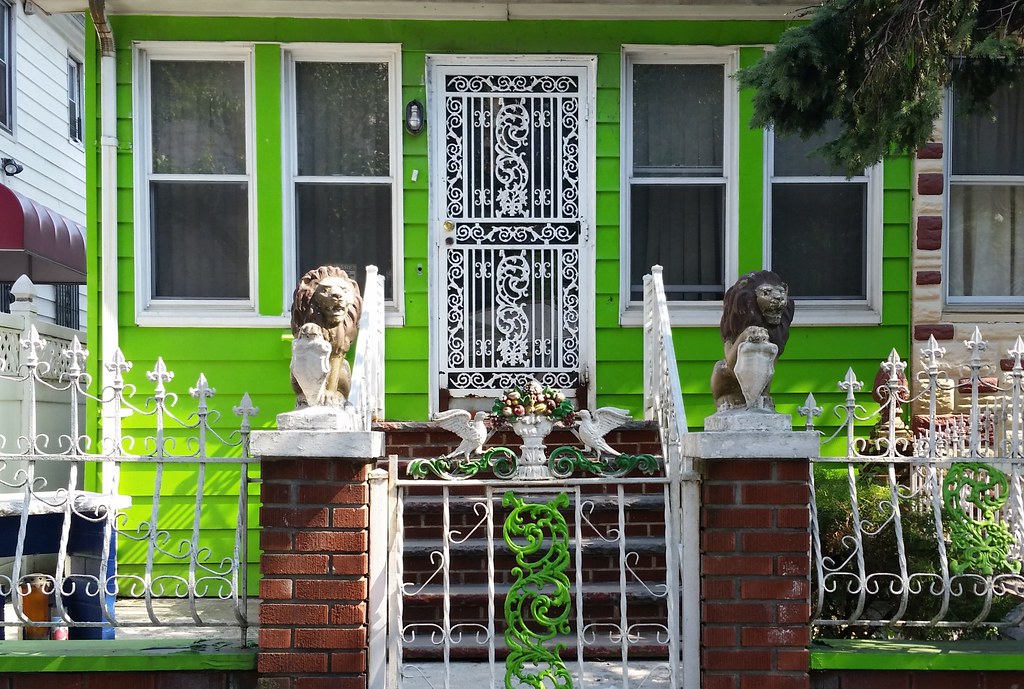
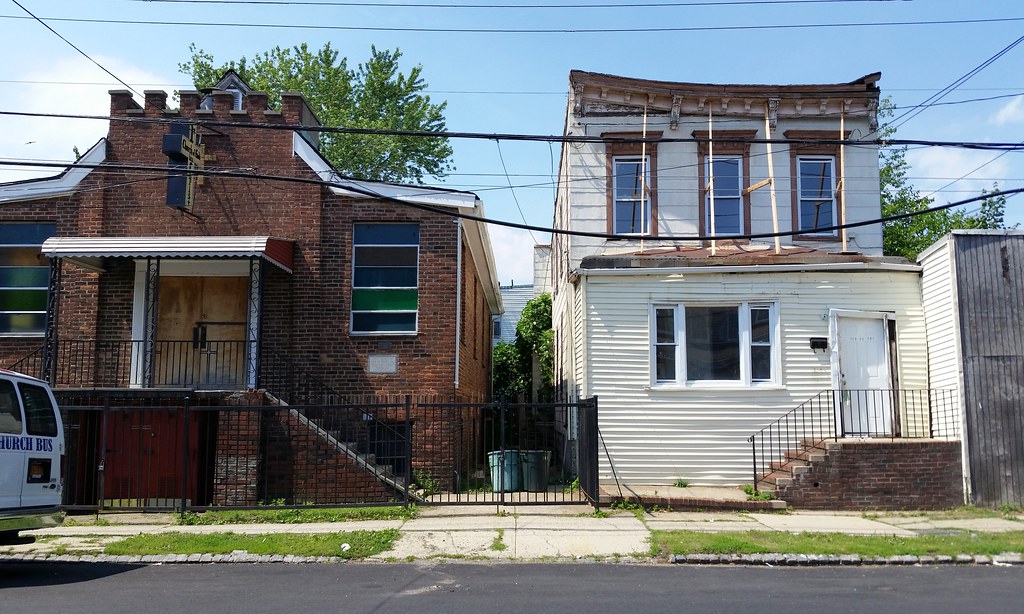
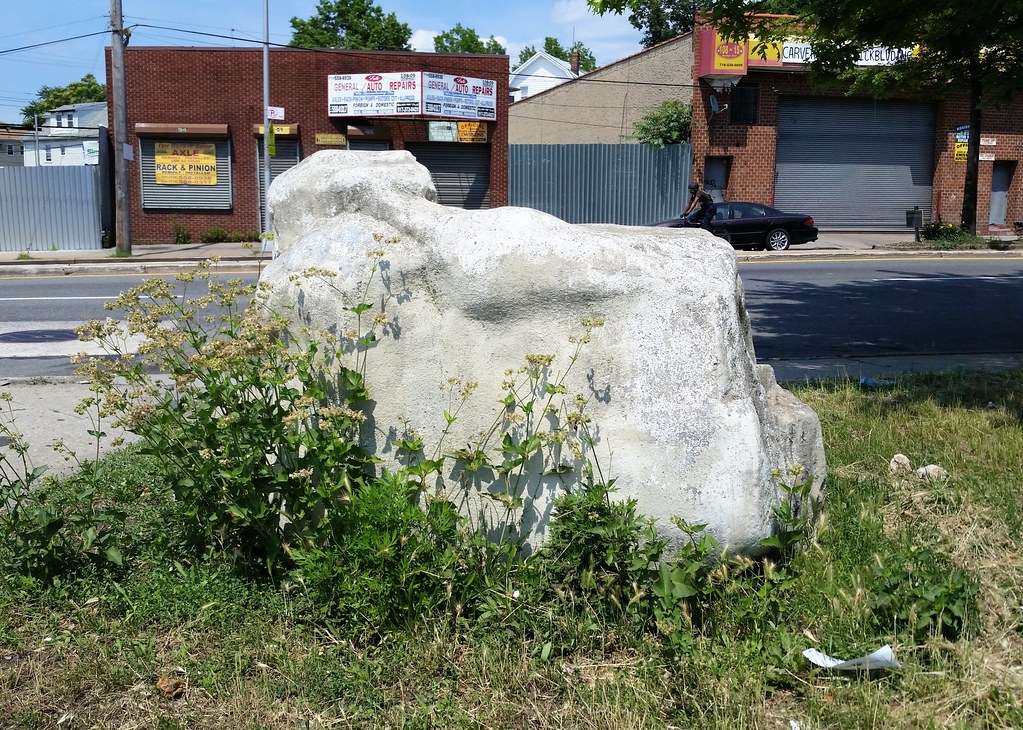
This boulder can be found at Proctor-Hopson Circle, a tiny piece of parkland in Jamaica named for John Proctor and Arthur Hopson, the first two area soldiers to die fighting for the 369th Infantry — the famed African-American regiment known as the Harlem Hellfighters — in World War I. A bronze tablet was mounted on the boulder prior to the park's dedication in 1932, but it has been removed (stolen?) in the years since.
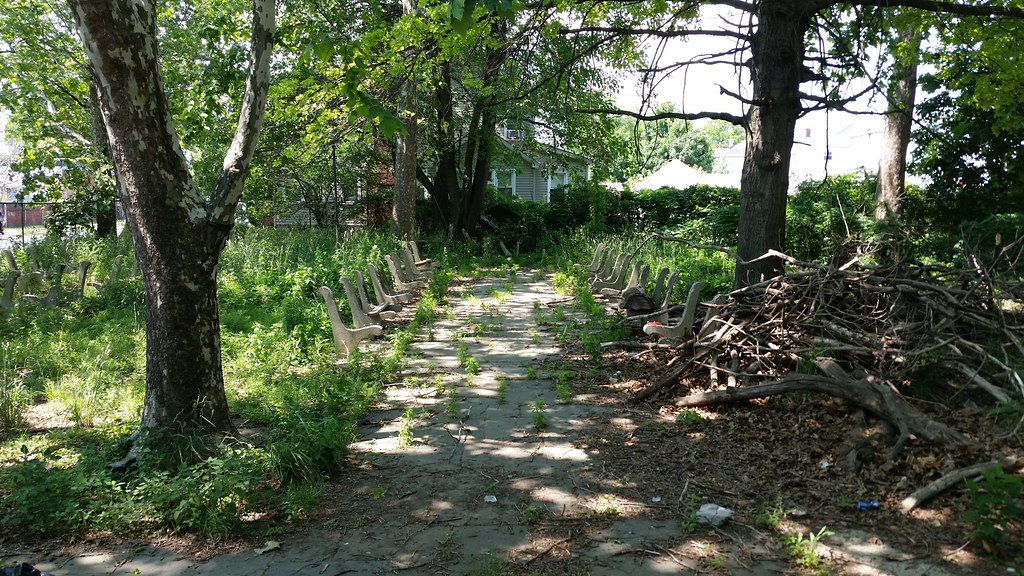
Studded with the bones of old benches, this vacant parcel of land was once a private park for an apartment complex across the street. The unusual shapes of this lot and its two neighbors to the east — the northern boundary line of the three properties runs diagonally across the street grid — can be traced back to the swath of farmland that once existed here and the dirt road that ran along its northern edge, as seen below.
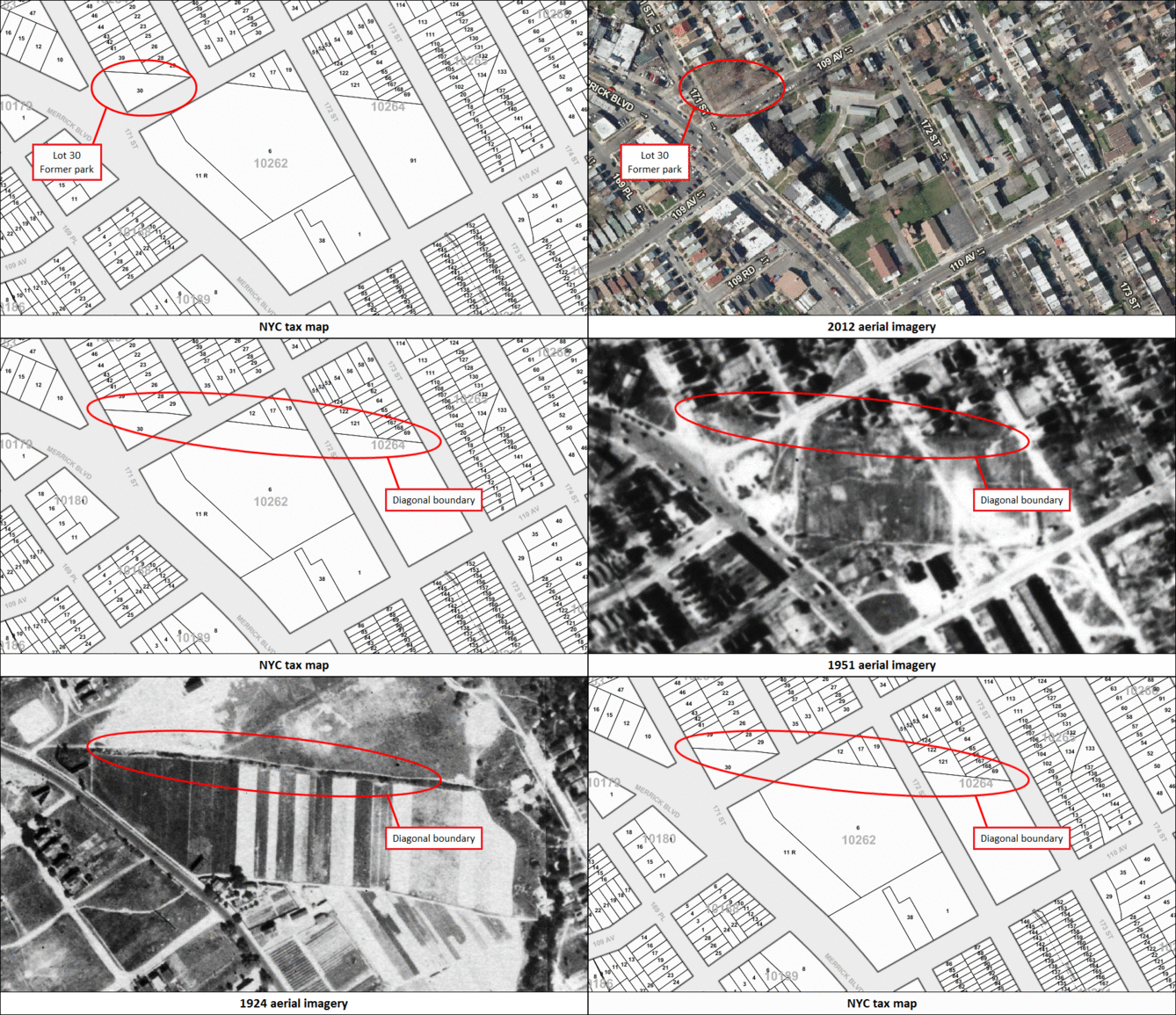
Links for further inspection: tax map, 2012 aerial, 1951 aerial, 1924 aerial.
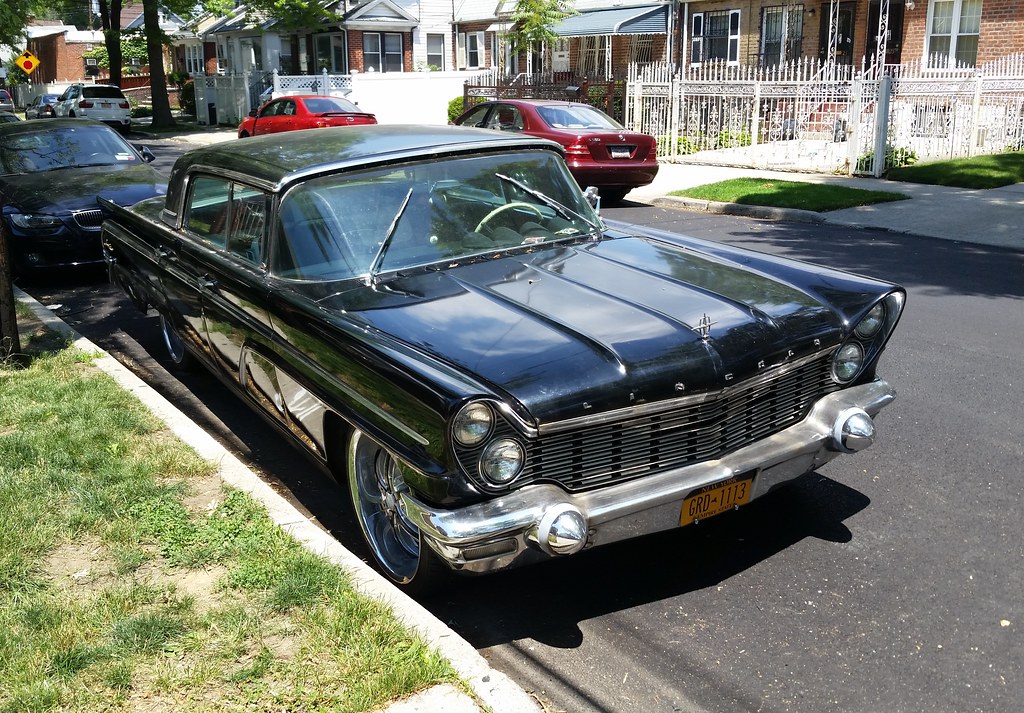
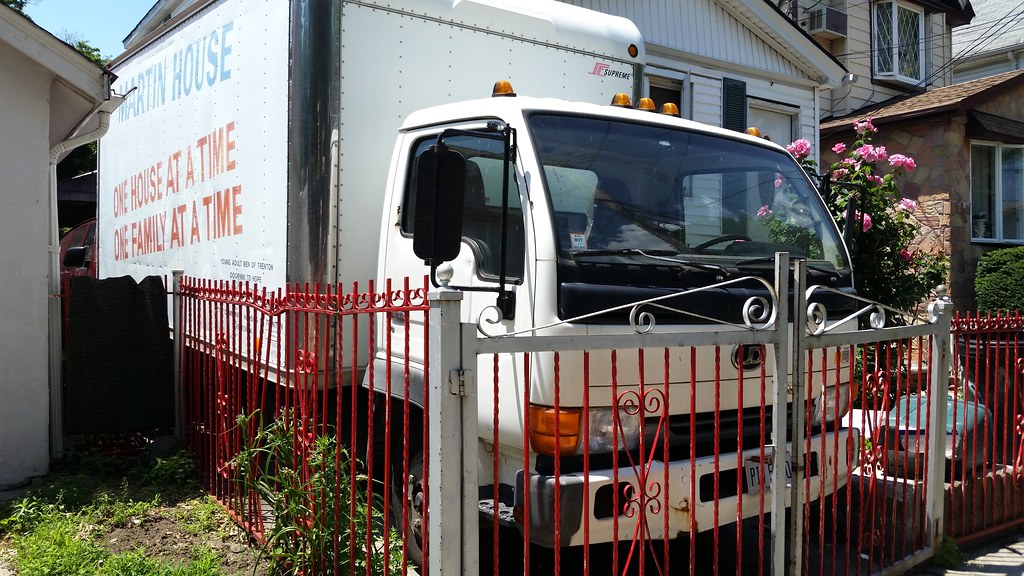
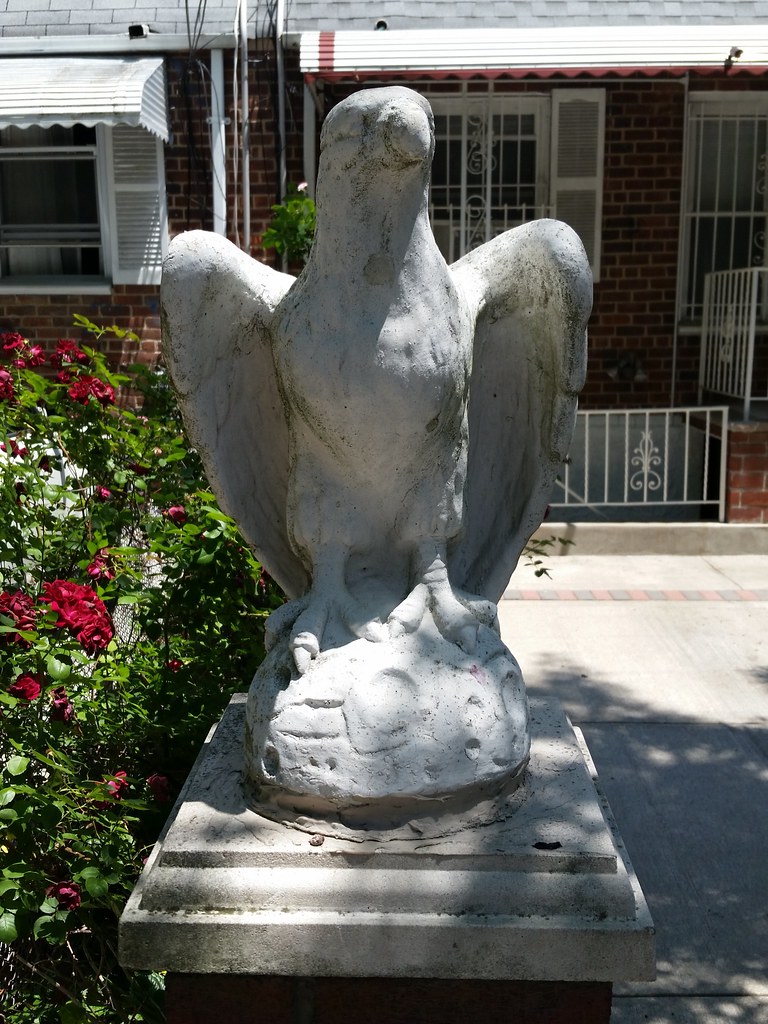
Adding some Apollonian flair to a classic gatepost guardian
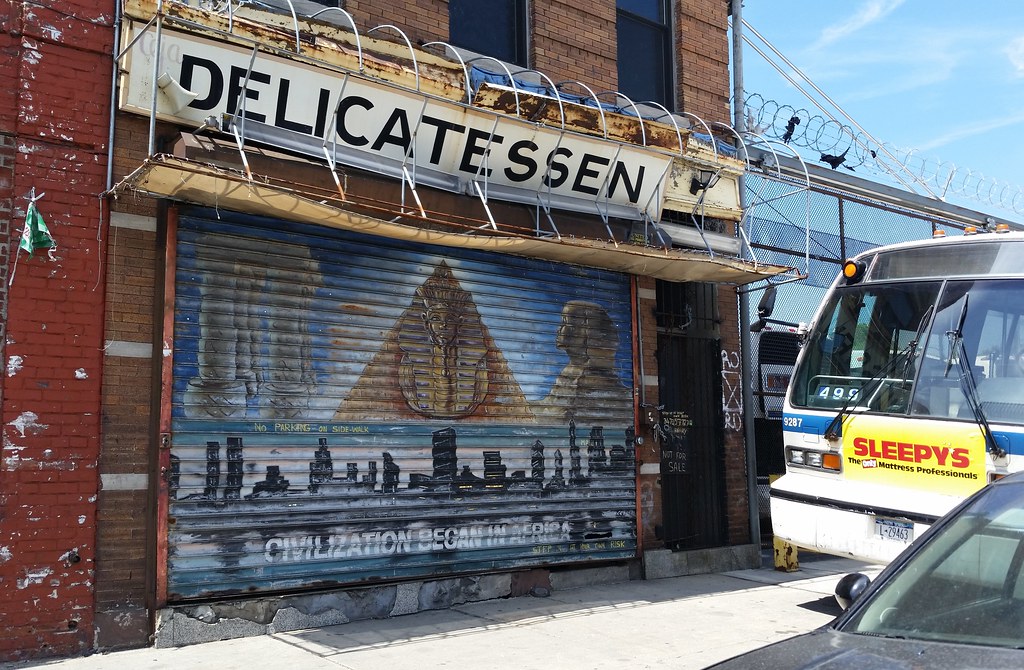
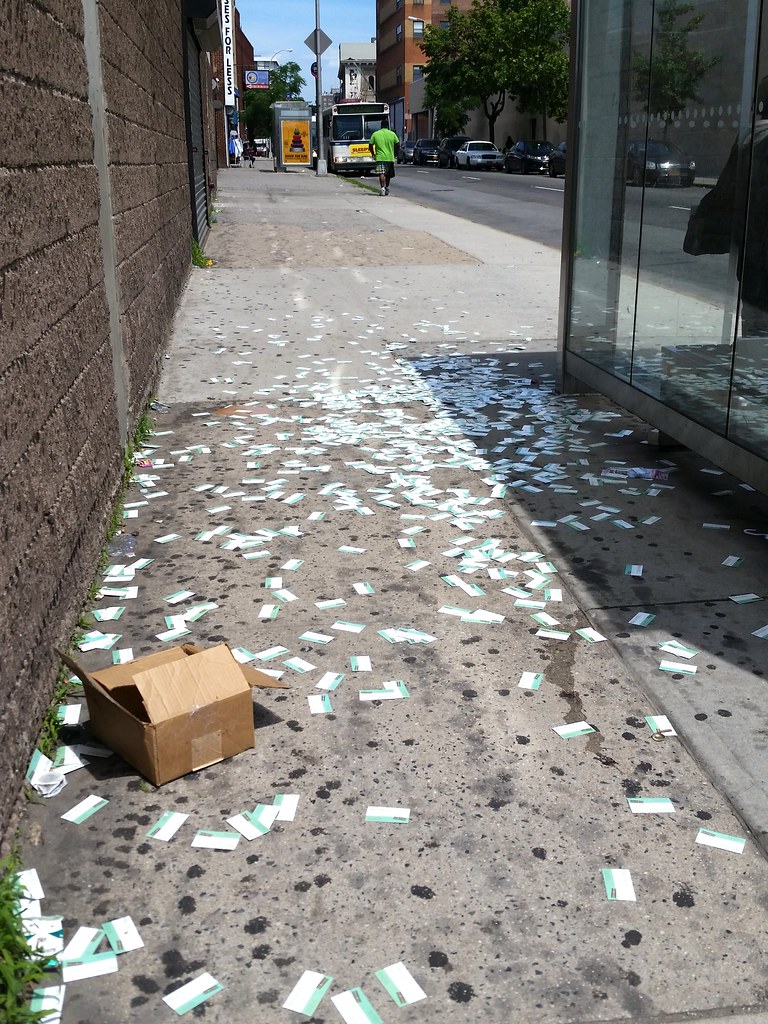
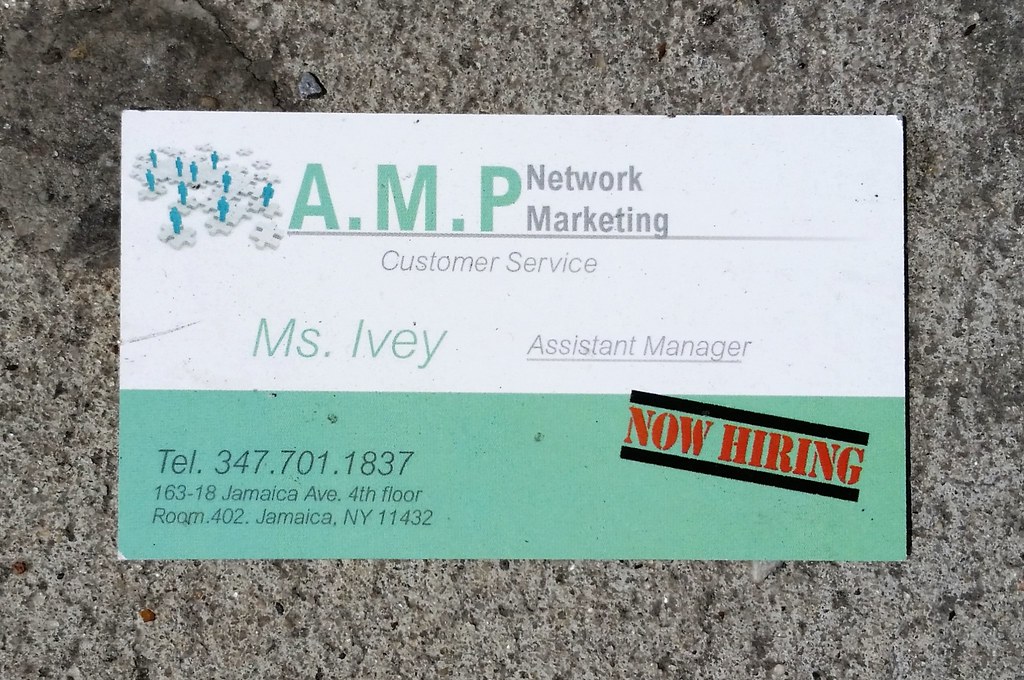
What kind of business card is this, anyway? No first name? No email or website?
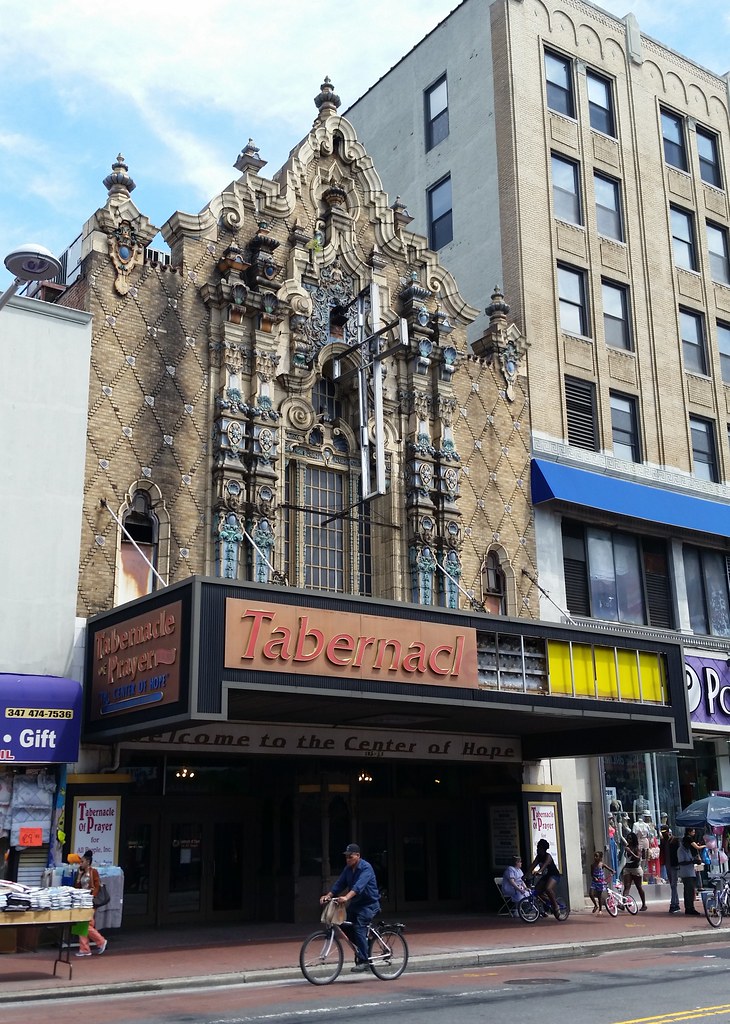
Standing here on Jamaica Avenue in Jamaica, Queens, is the former Valencia Theater, the first of the five spectacular "Wonder Theaters" opened by Loew's in the New York City area in 1929-30. (We've previously seen the other three Wonder Theaters in NYC: the Paradise in the Bronx, the Kings in Brooklyn, and the 175th Street in Manhattan. The fifth theater, the Jersey, is located in Jersey City.)
According to David Dunlap of the NY Times:
A "Spanish patio garden in gay regalia for a moonlit festival," as early publicity releases described it, the Valencia was an atmospheric theater, designed by John Eberson, in which 3,500 moviegoers at a time found themselves seated under a blue night sky filled with twinkling stars and drifting clouds. [The clouds were projected onto the ceiling.]When the Valencia closed in 1977, Loew's donated the building to the Tabernacle of Prayer for All People, a Pentecostal church, which has done an outstanding job of maintaining the place over the years, as evidenced by these breathtaking photos of the interior. The Tabernacle has made a few notable alterations, however, turning the figures of nude goddesses atop the proscenium arch into robed angels, installing a massive chandelier in the auditorium, changing some of the paint colors, and displaying a collection of discarded crutches from people said to have been miraculously healed at the church.
Rising to the sky was a Spanish village, or rather a Spanish village as envisioned by an Austrian-born architect working in the Baroque Churrigueresque style from an office in Chicago to satisfy Hollywood tastes. Around the auditorium a half-dozen diminutive structures -- a gazebo here, a loggia there -- were arrayed in cascading tiers as if set on a hillside.
That was the payoff, but the experience of the Valencia began in the gleaming lobby, where moviegoers lined up between a long colonnade and a row of scalloped balconies. From there it was into the two-story grand foyer, with a vaulted ceiling and a fish pond with tinkling fountain.
/cdn0.vox-cdn.com/uploads/chorus_asset/file/4756123/_MG_3321.0.jpg)
(In case you're wondering, I took the video above during what appeared to be a bible study being held in the auditorium before the Sunday morning service.)
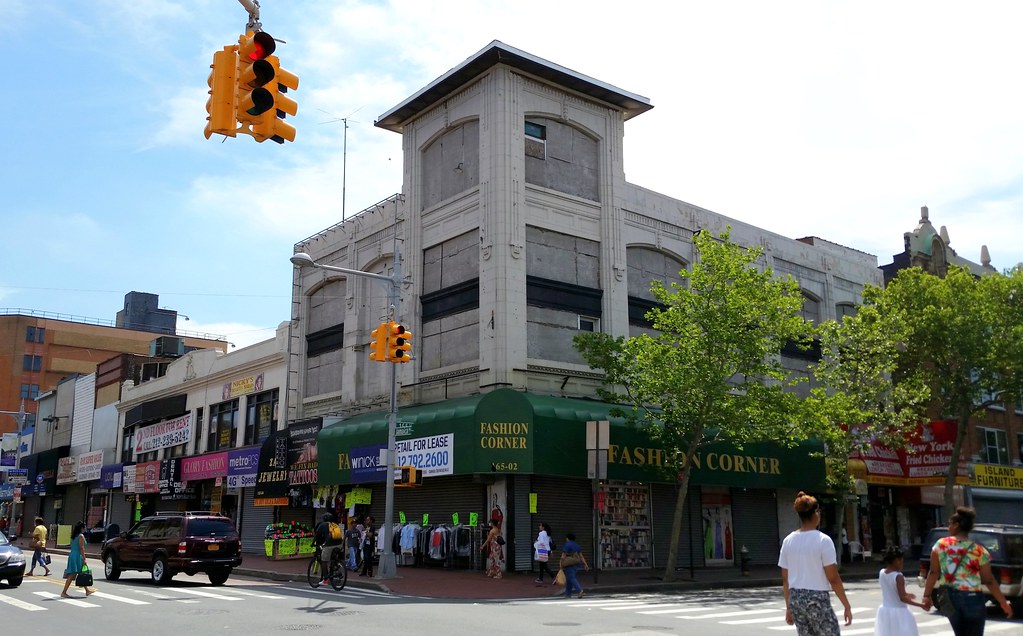
The building on the corner is a former control tower that stood beside the 168th Street terminal station on the now-demolished eastern portion of the elevated Jamaica Line. In addition to its ground-level storefronts, the building also contained an entrance to the station.
I'm walking every street in New York City.
This is the counterpoint to my walk across the US. Instead of seeing a million places for just a minute each, I'm going to spend a million minutes exploring just one place. By the time I finish walking every block of every street in all five boroughs, I'll have traveled more than 8,000 miles on foot — all within a single city. Details!
Email me at matt@imjustwalkin.com
Subscribe to my email list
Maps: Progress | Photos

~9,954 miles walked
Your donations allow me to keep walking full-time. If you think what I'm doing is valuable and you'd like to offer some support, I would be very grateful. On the other hand, if you think I'm a worthless bum, feel free to email me and tell me to get a job, bozo. Both are excellent options!
