
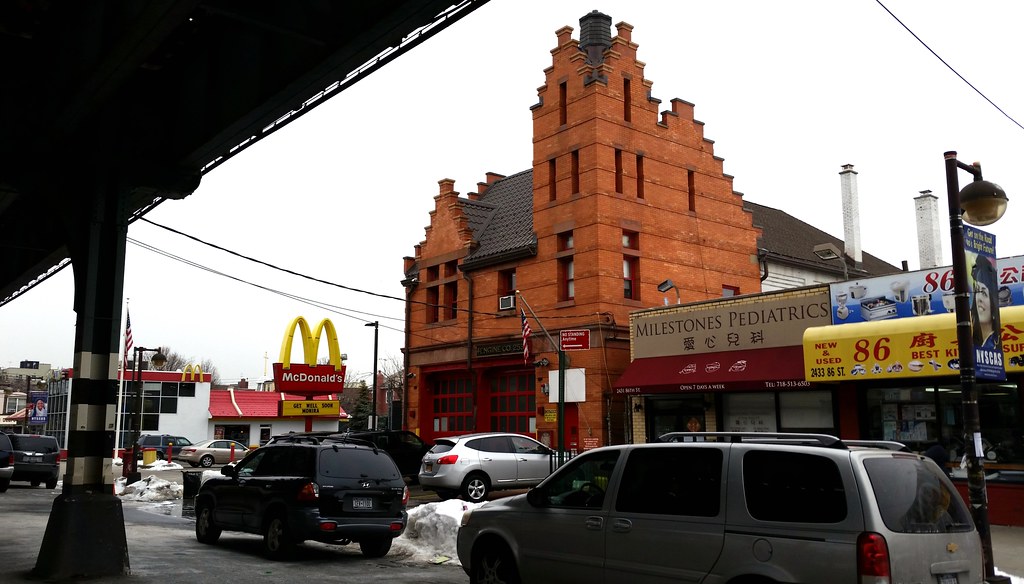
This Dutch Renaissance Revival firehouse was built in 1895-96 for the then-independent city of Brooklyn.
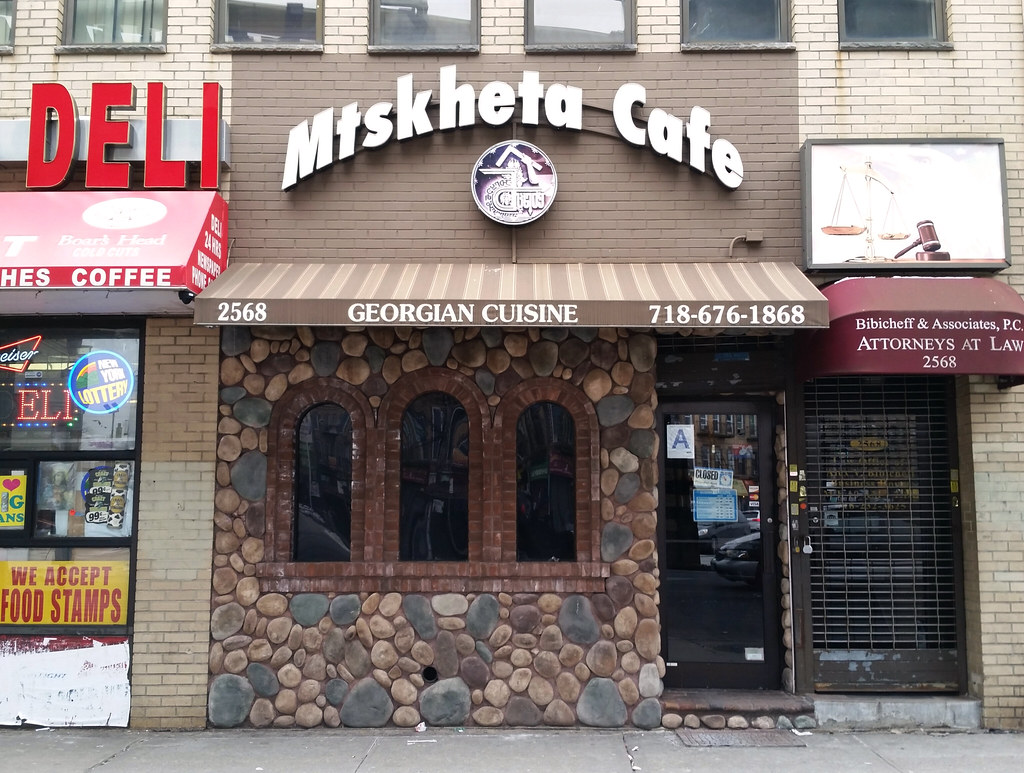
In addition to containing an excellent run of consonants in its name, Mtskheta is an ancient Georgian city whose historic Christian monuments are a UNESCO World Heritage site.
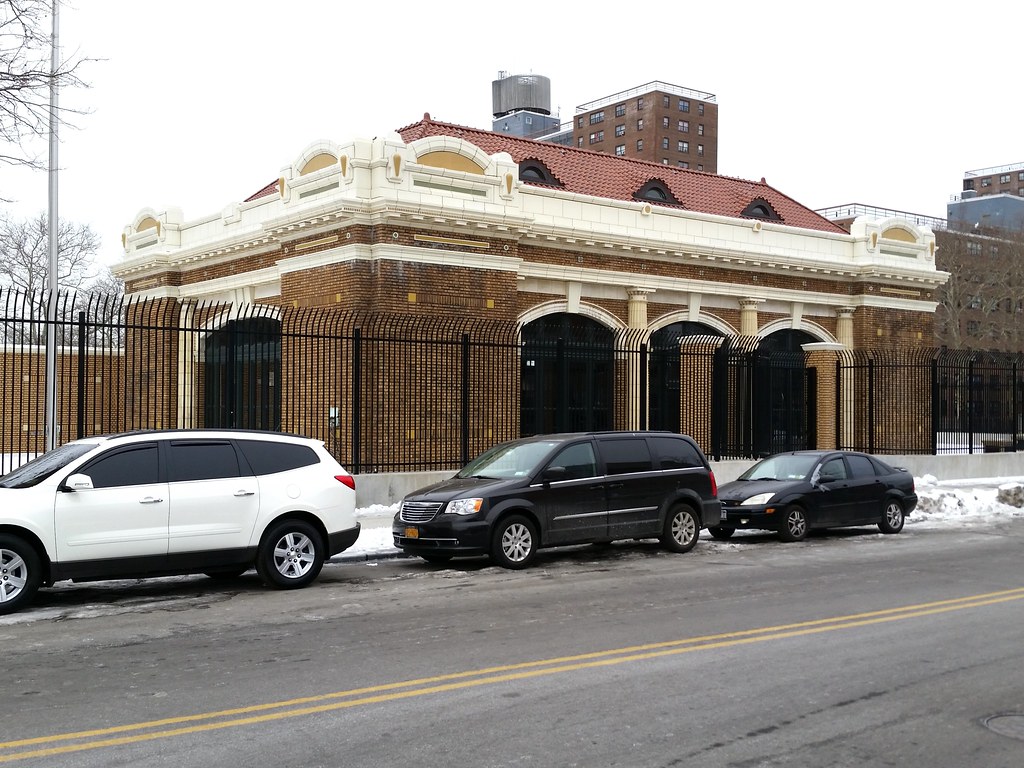
From the NY Times:
The jewel-like brick structure stands unmarked in a jumbled corner of Brooklyn, amid housing projects and plain rowhouses and elevated train tracks and the headquarters of the Aardvark Amusements carnival ride company.Read more here.
Soaring ornamented columns frame arched windows 15 feet high. Eye-pleasing rhythms in the Beaux-Arts style abound. A golden eagle gleams atop a flagpole.
For all the building’s splendor, though, many in the neighborhood have no idea what goes on inside.
“I would think a library, or hopefully some kind of center for youth?” guessed A. J. Malone, 24, who was walking by on a recent afternoon.
Taylor Jones, 23, admired the facade.
“I’m thinking it’s some kind of sort of mausoleum” for the Metropolitan Transportation Authority, he ventured. “It looks very secluded in there.”
It is a sewage pumping station.
Not just any sewage pumping station. It is the Avenue V pumping station in Gravesend, near Coney Island, the largest in New York City, a nearly 100-year-old testament to the majesty of public works that conveys the daily waste of 300,000 residents to a treatment plant in Bay Ridge.
(We've actually encountered a few good-looking sewer buildings now. You can see the others here.)

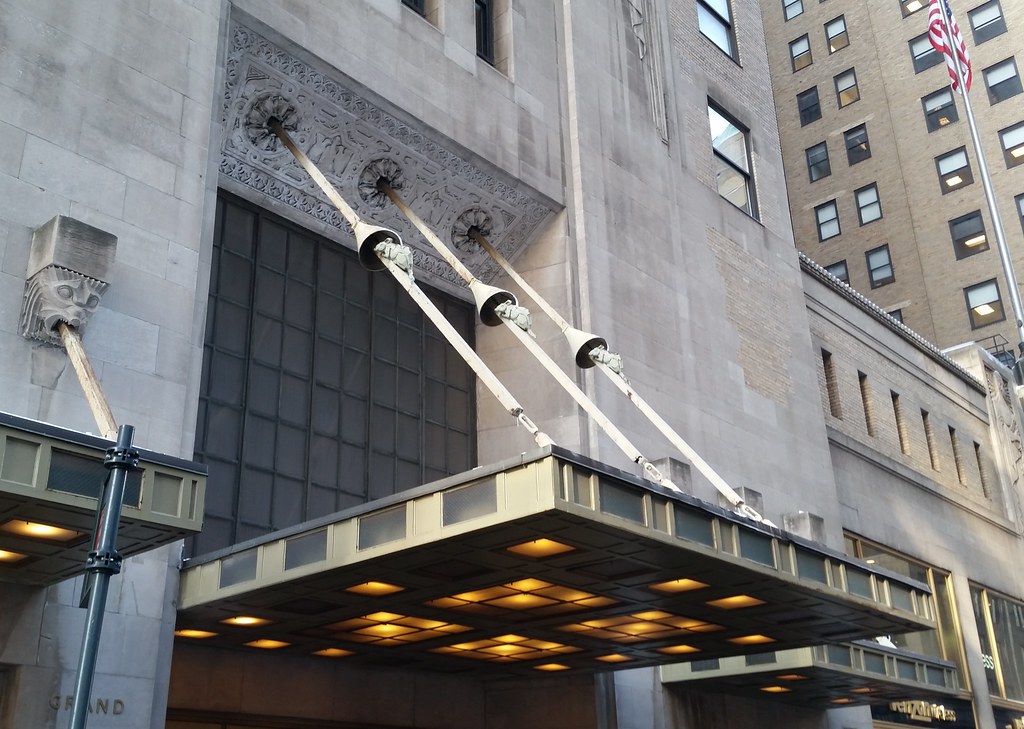
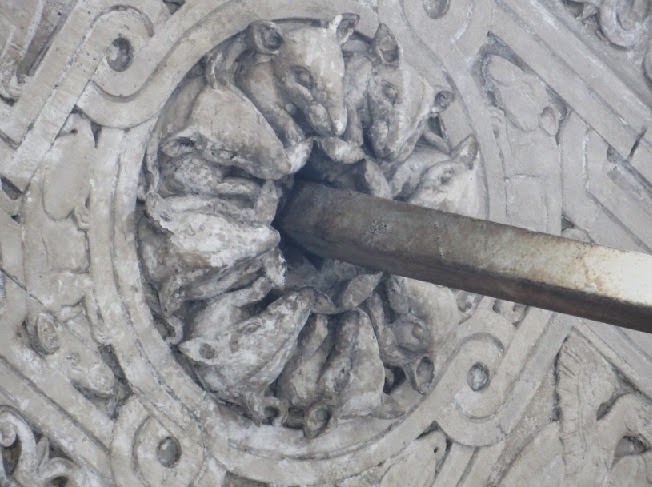
If you look up above the Lexington Avenue entrance to the Graybar Passage (the pedestrian connection to Grand Central Terminal that cuts through the Graybar Building), you'll find a surprising sculptural sight on the cables supporting the canopy: rats! The unwanted little varmints are trying to sneak into the building by climbing up the cables, but they're unable to get around a set of conical baffles similar to the devices used to prevent rats from scurrying up hawsers (mooring lines) onto docked ships. But lest you think the humans have outsmarted the crafty rodents, take a closer look and you'll see many more rats already aboard the Graybar, clustered around the hawseholes where the canopy cables are attached to the building.

The Chrysler Building towers over a Lexington Avenue obscured by the steam from a Con Ed street "chimney".
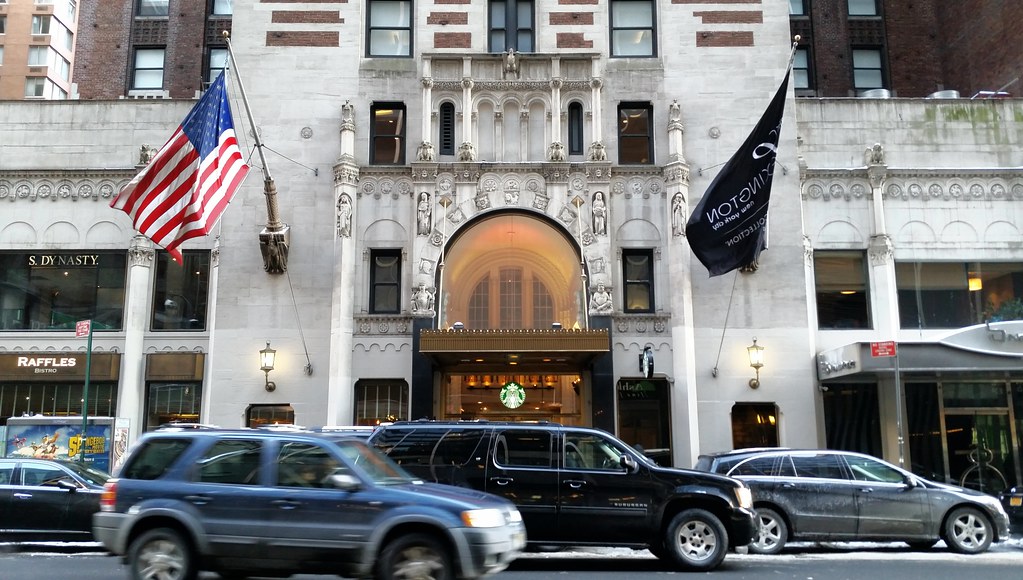
If you've got $1500 or so to blow, you can spend a night here at the former Hotel Lexington (closer look) in the Centerfield Suite, where Marilyn Monroe and Joe DiMaggio lived for some time during their brief marriage.
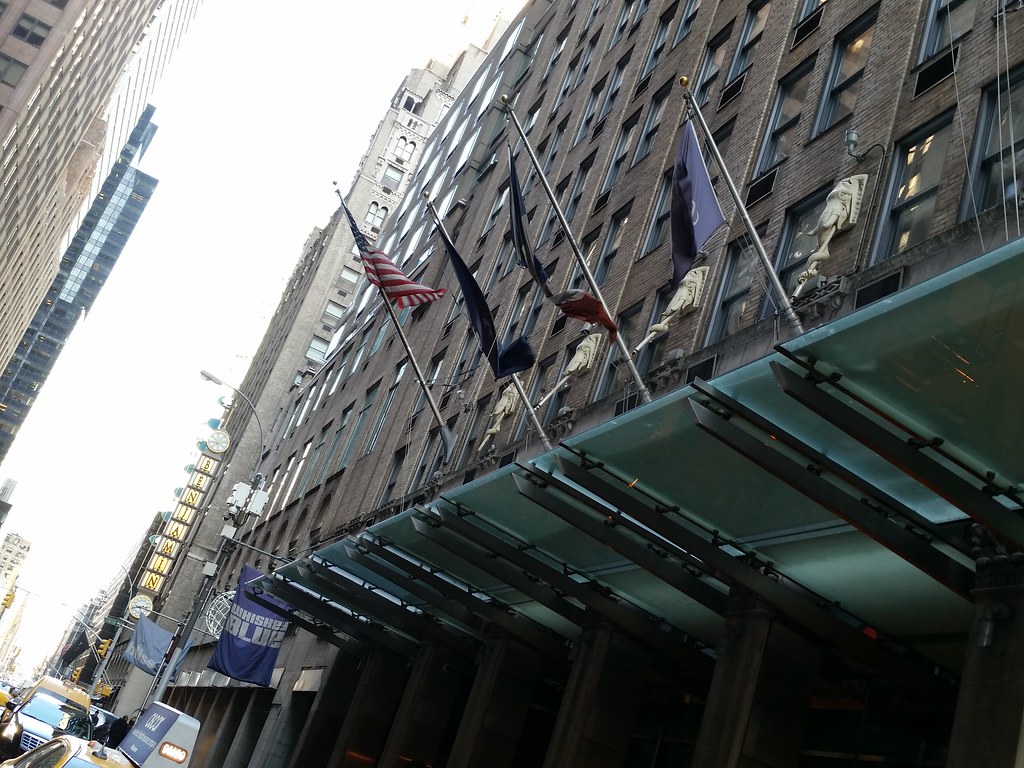
Zoom in to see the mighty beasts "curl[ing] their trunks around the struts of the marquee, seemingly preventing it from falling on arriving guests." Actually, the elephants' trunks are no longer connected to the marquee, but you can see that they once were. Three of the elephants are currently holding up flagpoles, while the fourth has cast off all of its worldly burdens and is just lazing about.
Now a W Hotel, this Emery Roth-designed structure was originally the Montclair Hotel. The elephents aren't the building's only playful detail. Atop some of the lower-floor windows, hunched-over little men appear to be bearing the immense weight of the edifice on their seemingly undersized backs.
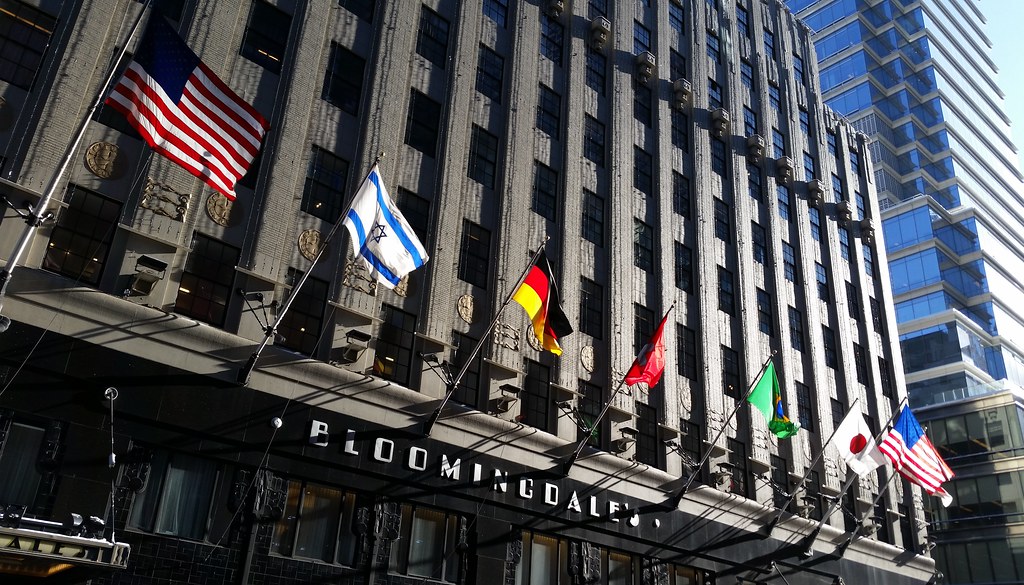
at Bloomingdale's. How do they decide which flags to fly? Here's an explanation from 1995.

I had to head into Midtown to run a couple of errands today. I took this shot on the way to the subway in Astoria.


I'm walking every street in New York City.
This is the counterpoint to my walk across the US. Instead of seeing a million places for just a minute each, I'm going to spend a million minutes exploring just one place. By the time I finish walking every block of every street in all five boroughs, I'll have traveled more than 8,000 miles on foot — all within a single city. Details!
Email me at matt@imjustwalkin.com
Subscribe to my email list
Maps: Progress | Photos

~9,954 miles walked
Your donations allow me to keep walking full-time. If you think what I'm doing is valuable and you'd like to offer some support, I would be very grateful. On the other hand, if you think I'm a worthless bum, feel free to email me and tell me to get a job, bozo. Both are excellent options!
