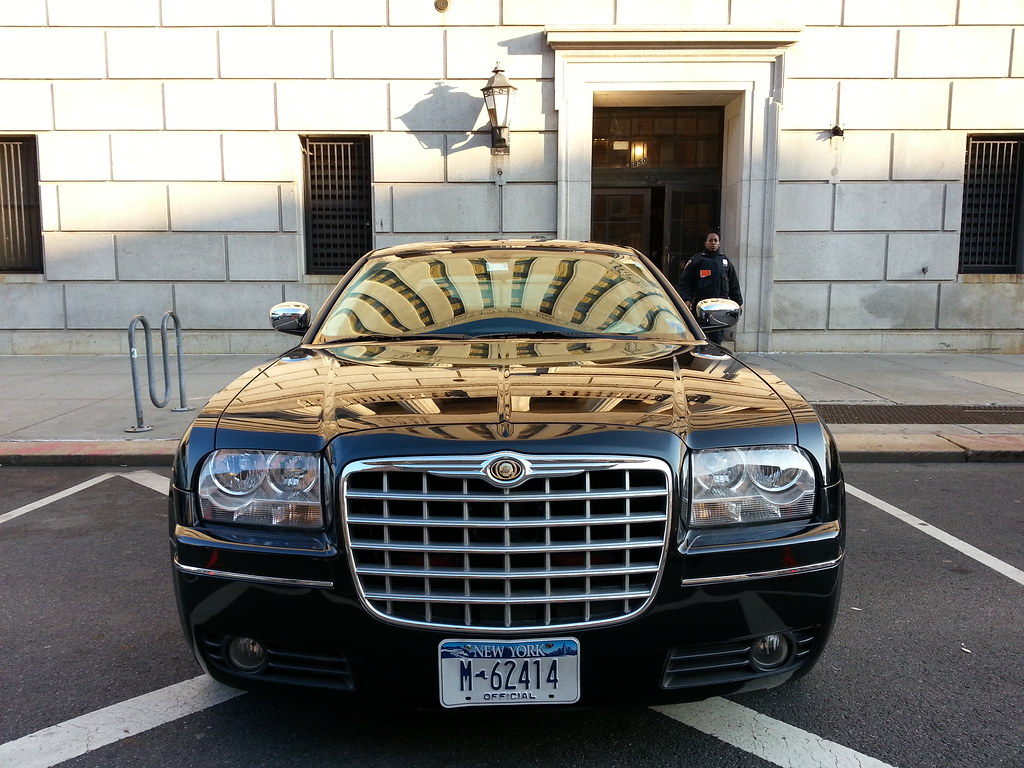
Bathed in the light of the late-afternoon sun, the Bronx County Courthouse was beautifully rendered on the hood and windshield of this vehicle conveniently parked in a no-parking zone located right at the midpoint of the building's western facade.
As I began to take this photo, a police officer (the one pictured) emerged from the courthouse to ask me what I was doing. I explained to her that the reflection of the building looked "really cool". Drawing a line in the sand, she decided to exert her authority by telling me that I would not be allowed to take pictures of this car, because "it has an 'Official' license plate."
I told her that I'm well within my rights to photograph cars and buildings from the vantage point of a public street. Seeking a compromise that would shut me up without having to show "weakness" by admitting she was wrong, she told me that I could take as many pictures as I wanted of the building, the other cars parked nearby, and the building's reflection on those other cars, but that I couldn't take any photos of this one vehicle, not even a close-up shot of the hood with no identifying information visible.
Arguing with her was about as fruitful as trying to have a reasoned discussion with a grumpy four-year-old. I eventually realized that I had made my point as best I could, and so I stepped a few feet to the right, where another dark-colored car was parked...
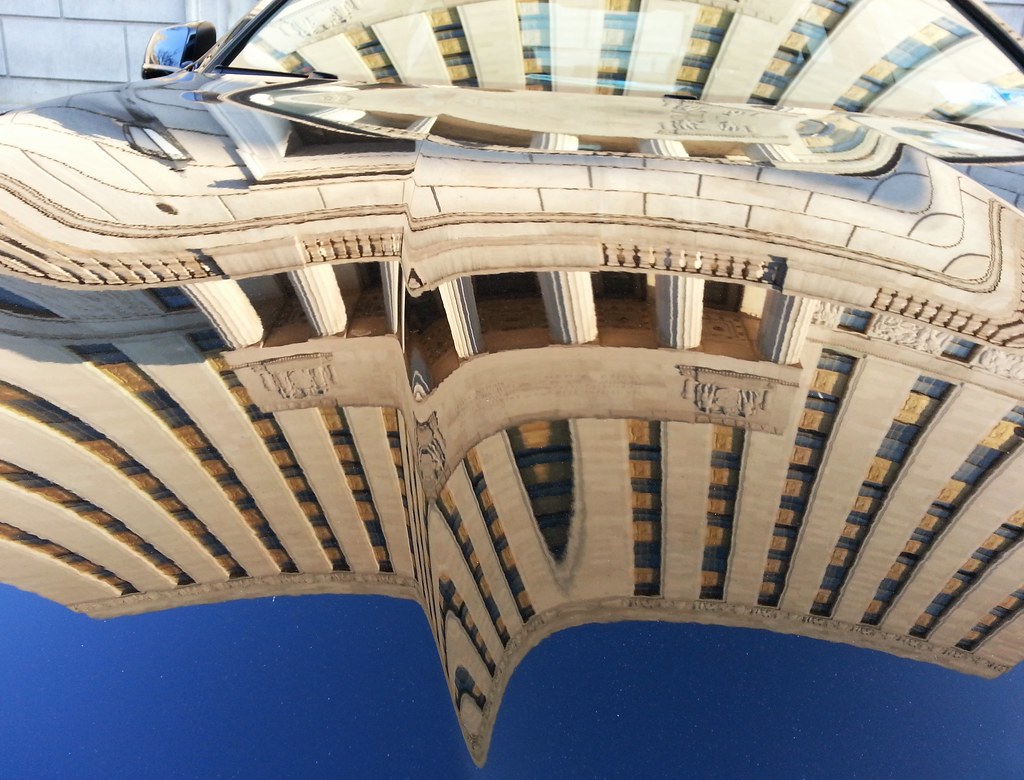
You may be interested to note that this vehicle also had an "Official" license plate, but no one seemed concerned about that in the least.
(The NY Times's photography blog recently published a good interview with the general counsel for the National Press Photographers Association on the subject of police officers suppressing people's First Amendment-based photography rights. You can read it here.)
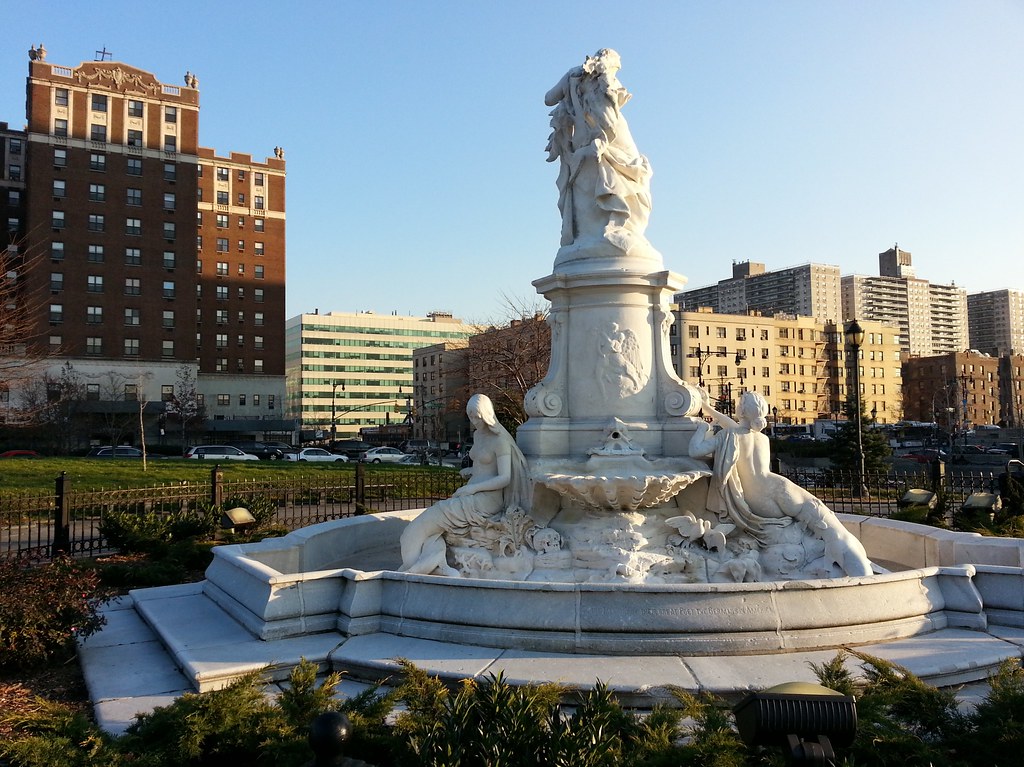
Depicting Lorelei, enchantress of the Rhine, and her riverine companions, this fountain honors the German writer Heinrich Heine and his poem "Die Lorelei". Located just across the street from the Bronx County Courthouse, it stands at the southern end of Joyce Kilmer Park, itself named for a poet — the guy who wrote that silly paean to trees.
The years have been rough on this fountain, but it has proven itself a true survivor. Commissioned in 1888, it began its life unloved and unwanted, rejected by Heine's hometown of Düsseldorf, for whom it was originally intended; the idea of memorializing Heine was politically unpopular at the time because of his criticism of German nationalism and his Jewish origins. A committee of German-Americans eventually acquired the fountain and, after a failed attempt to have it installed in Central Park, finally found a home for it here in the Bronx in 1899. It's suffered severe vandalism in the intervening decades — coats of spray paint, decapitations and dismemberments — but it has emerged in good health and good spirits. After a thorough restoration in 1999, it was feted with a centennial rededication ceremony at which the keynote address was delivered by, of all people, a deputy mayor of Düsseldorf.
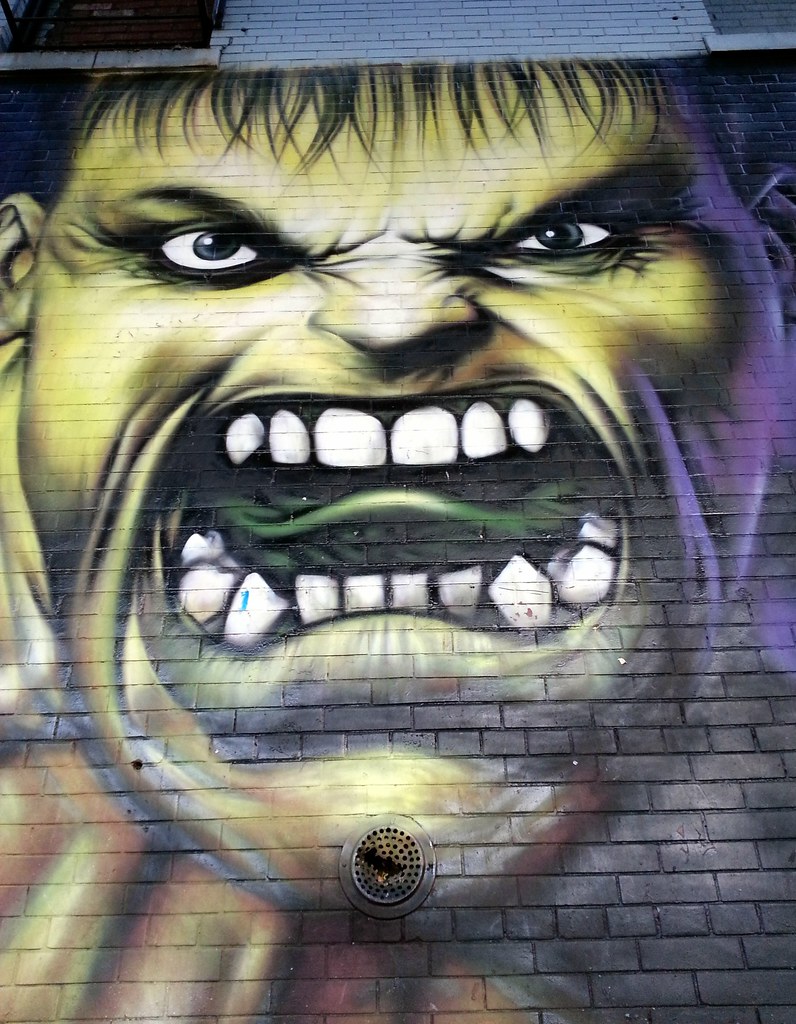
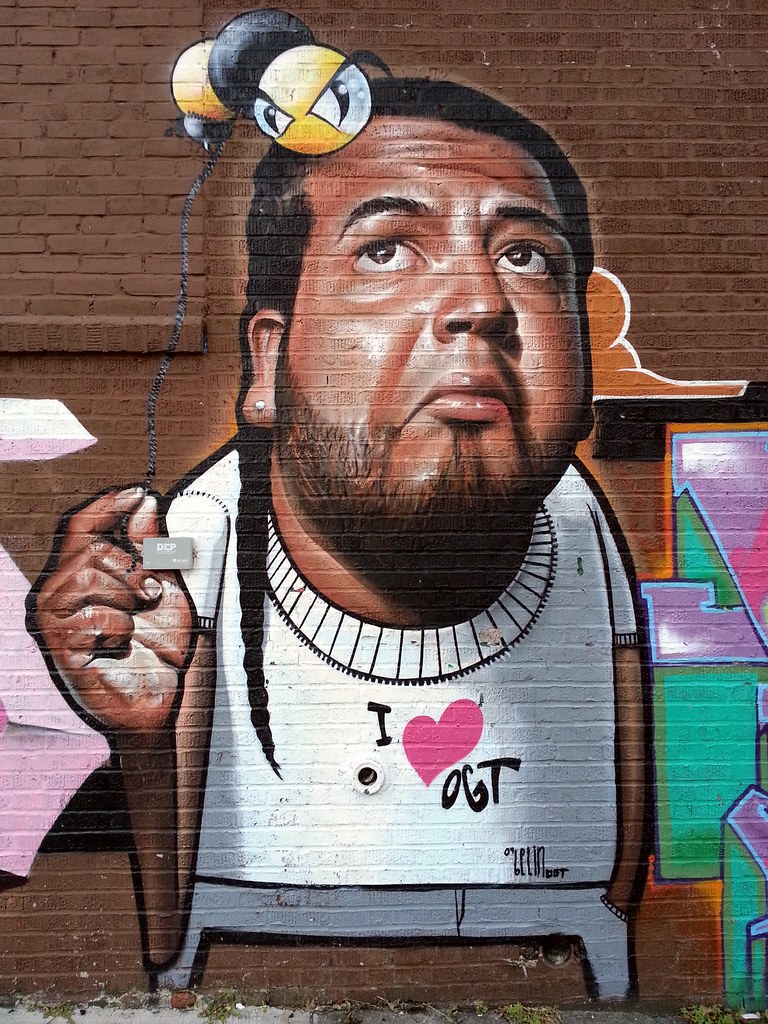
The Bronx's omnipresent Royal Kingbee seems to have a kite-like relationship with a fan of the OGT Crew. This probably means something.


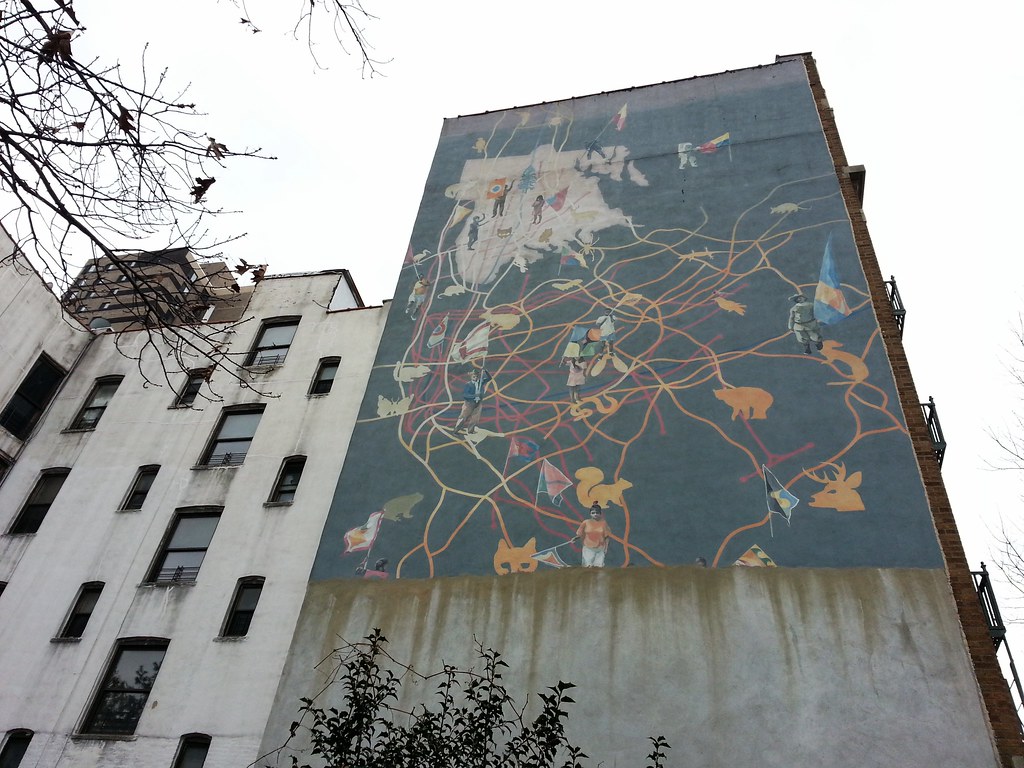
Located at the corner of 181st Street and Mapes Avenue, this map depicts the city's subways (the red lines) and highways (the orange-white lines). That's the Bronx painted in the upper left. I have no idea what the animals, flags, or people mean, but I like them!
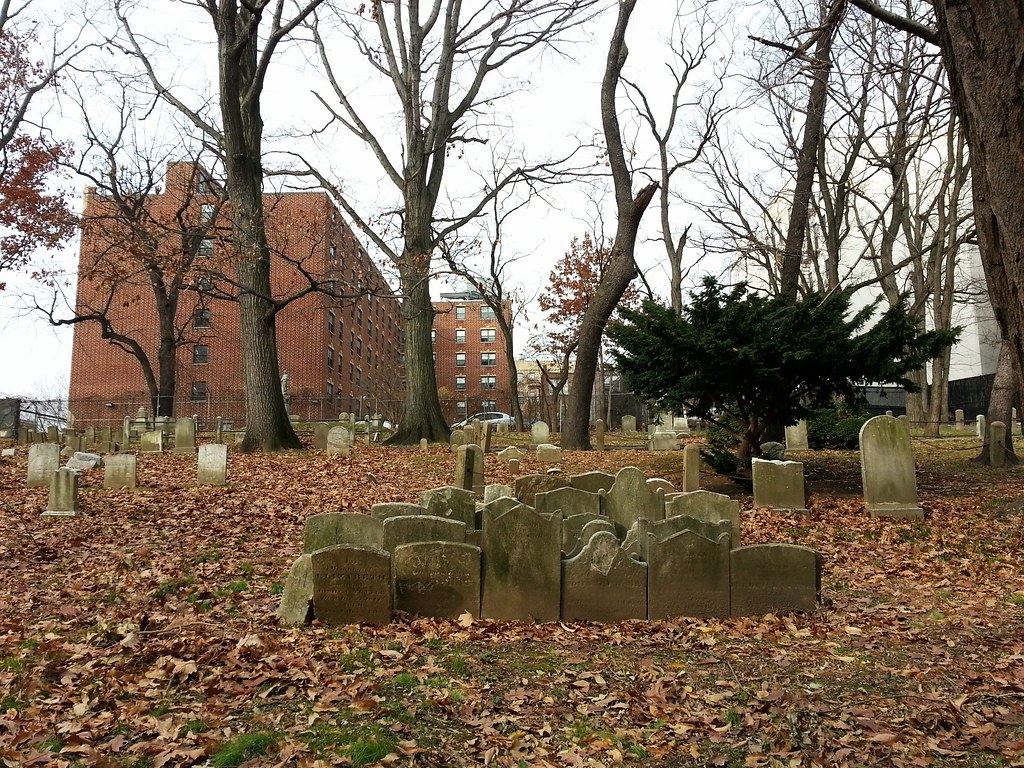
A surprising sight nestled among neighboring apartment complexes, this public veterans' cemetery contains the remains of a few dozen men who served in four US wars: the War of 1812, the Spanish-American War, World War I, and, predominantly, the Civil War.
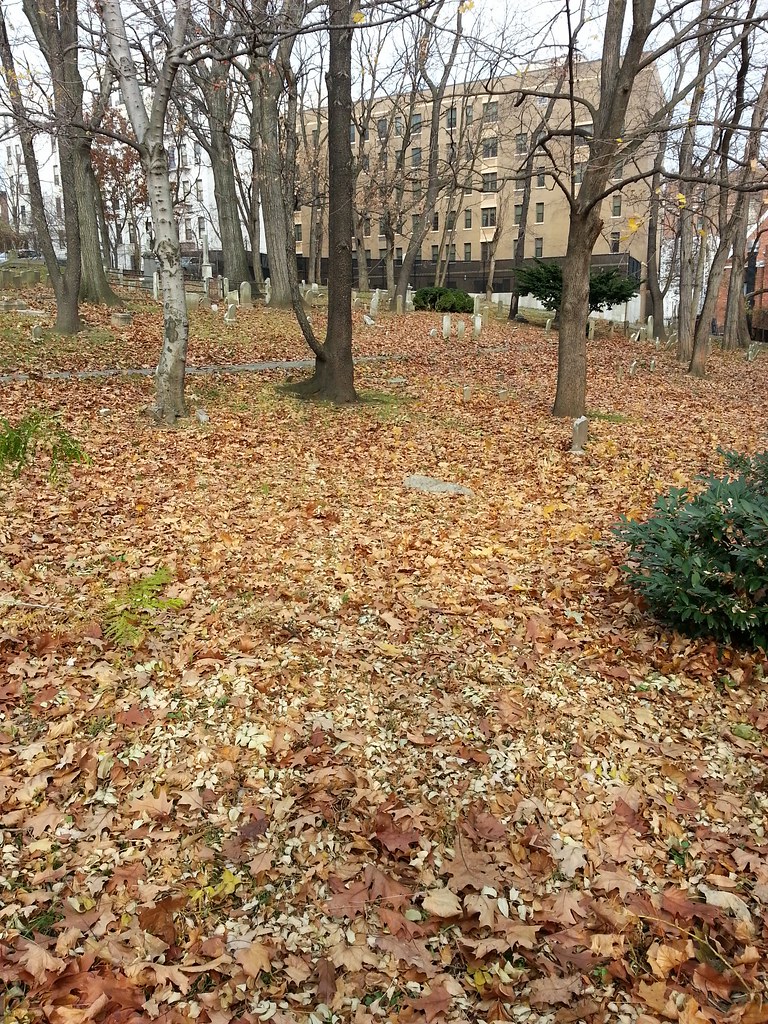
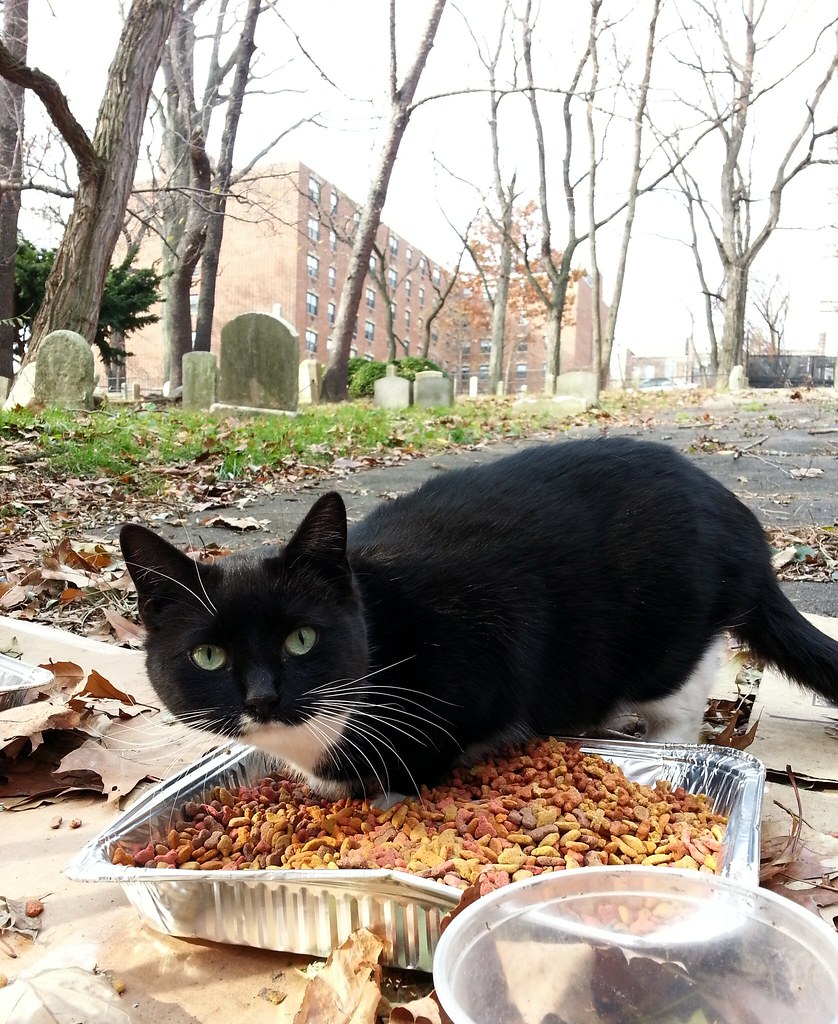
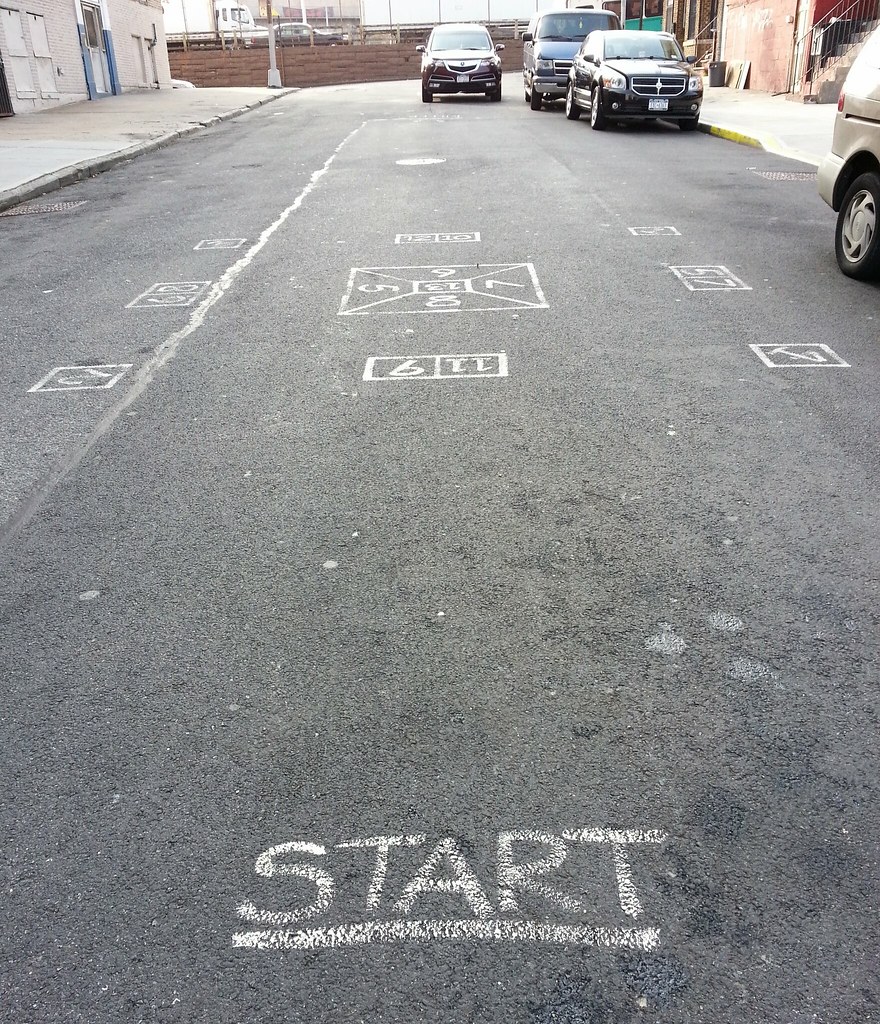
This old street game is still hanging in there, apparently. My grandmother used to claim that when she was growing up in Brooklyn, she was the best skelly player on the block, and all the neighborhood boys would get pissed off every time she beat them.
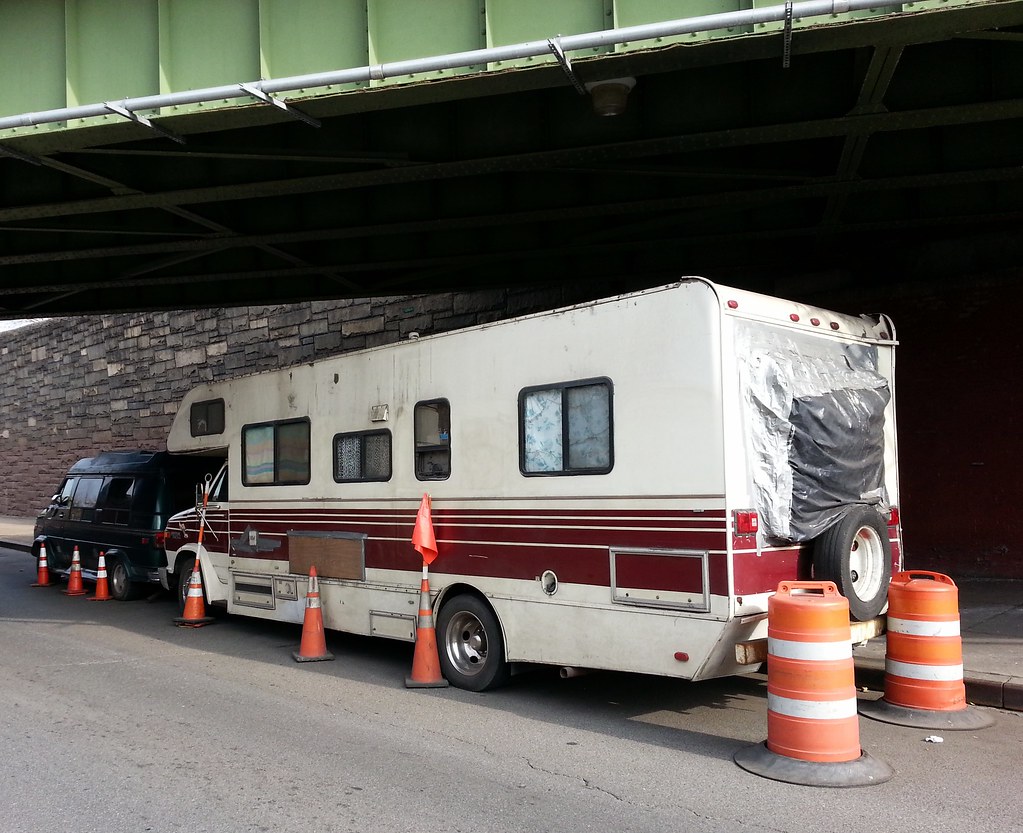
The traffic cone enclosure, the gentlemen visibly snoozing in the van, and the "No Trespassing" signs posted on the curb-facing side of these vehicles all made me wonder just how long this little encampment has been in place. A look at Street View reveals a very similar photo from a year and a half ago — have they been parked here this whole time? Twice-a-week street cleaning be damned?
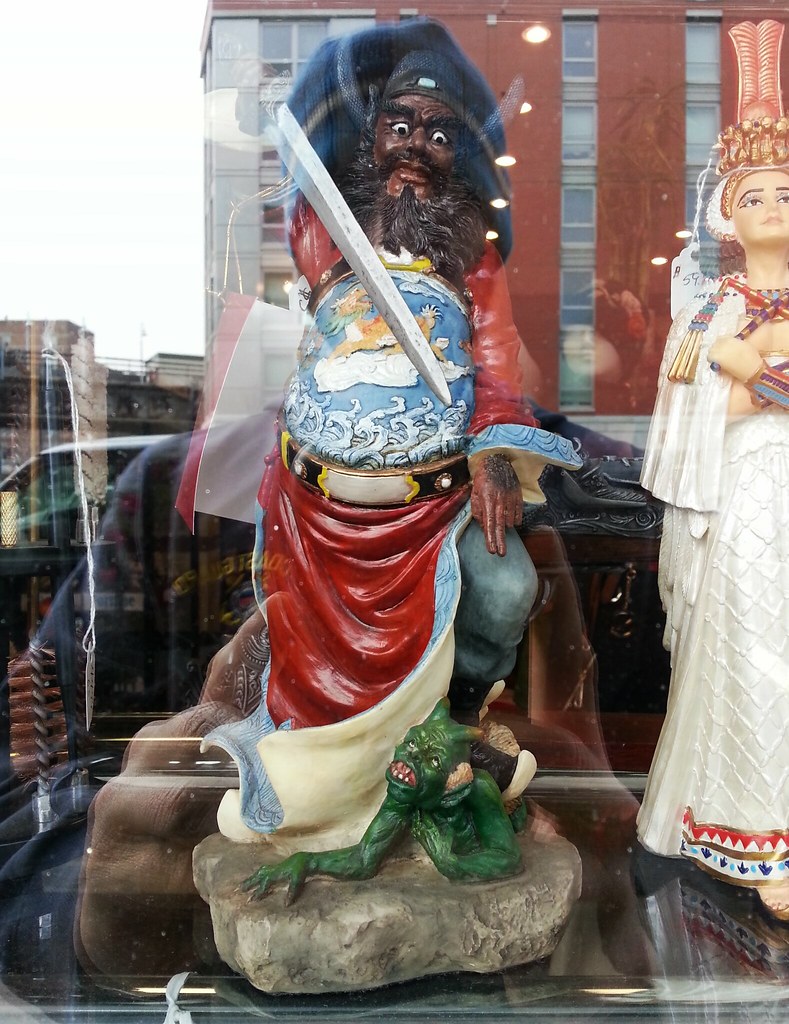
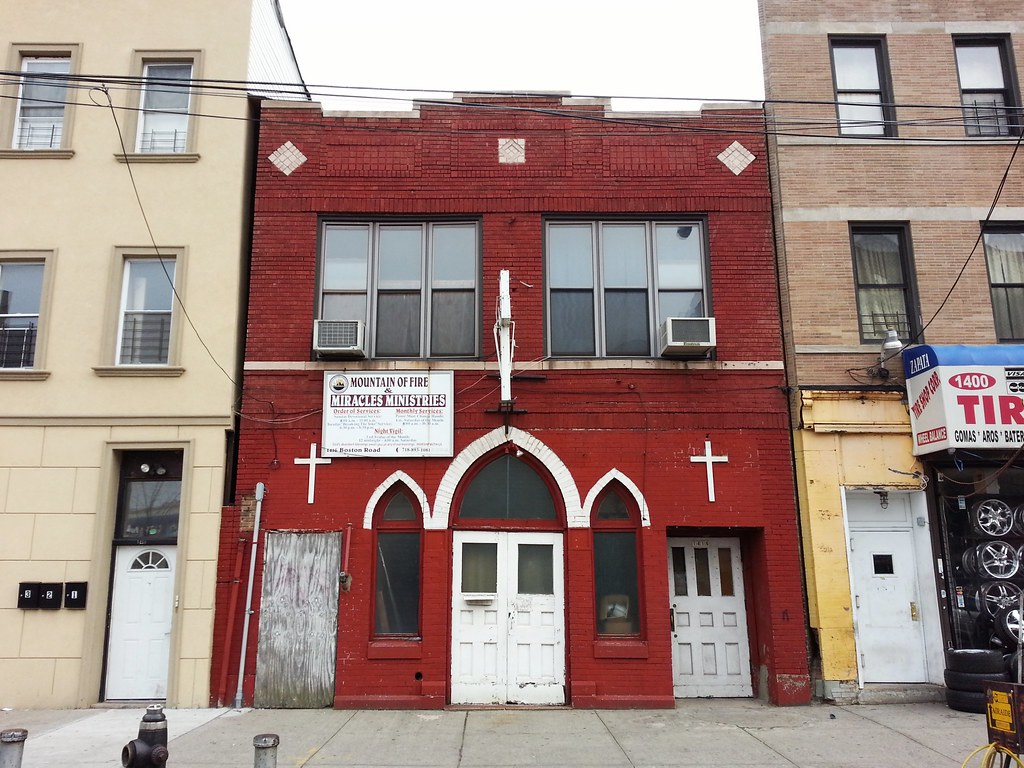
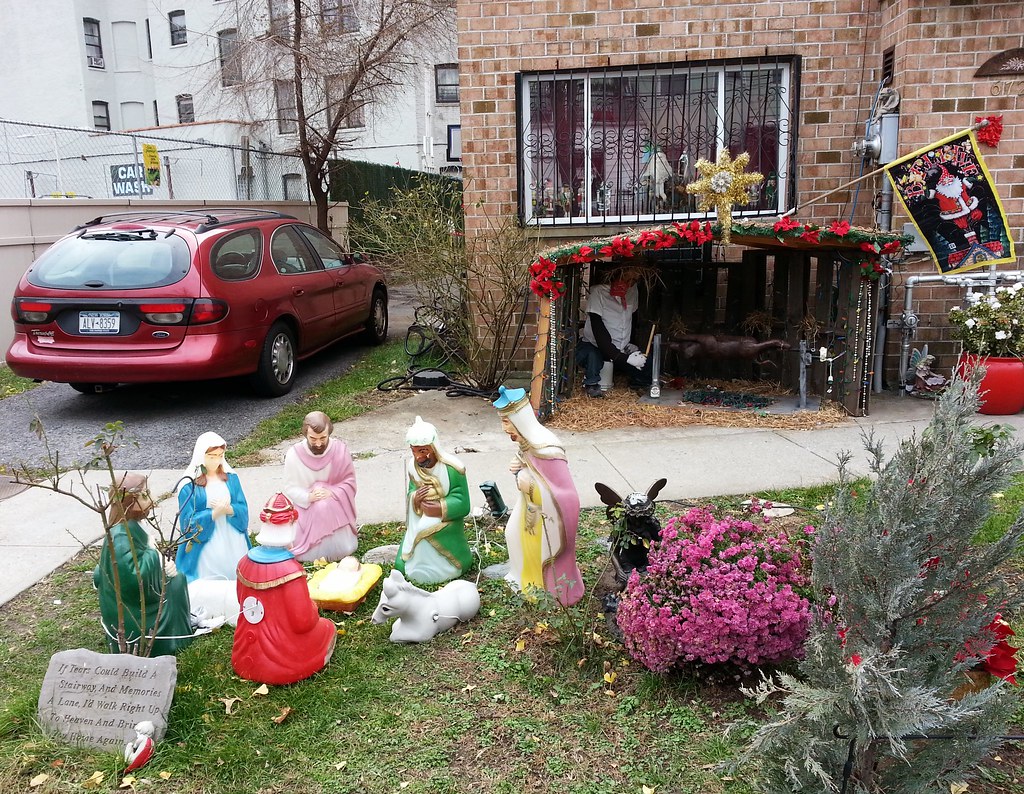
Jesus got booted from the barn to make room for the lechón asado!
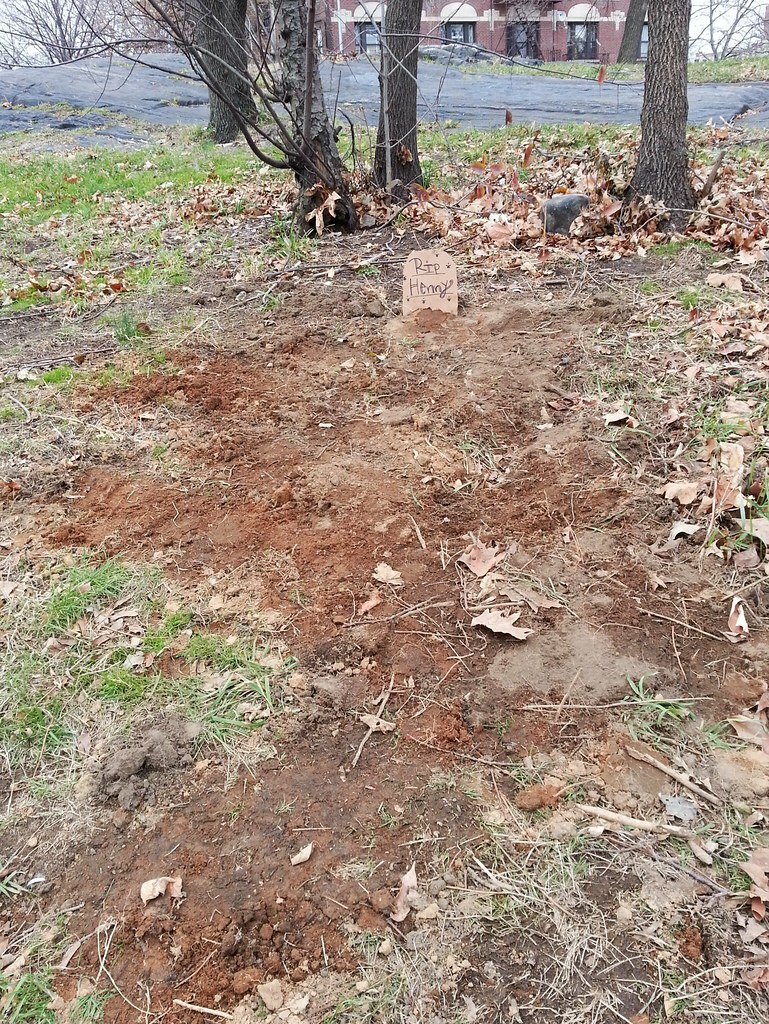
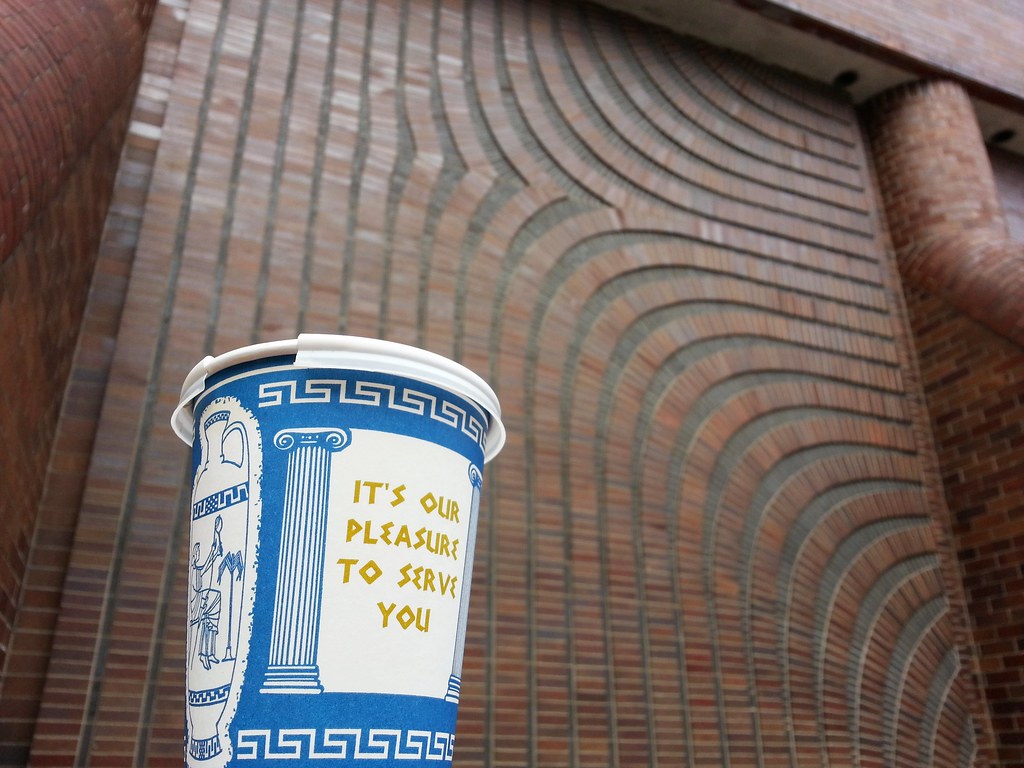
Left outside the Department of Sanitation's District No. 6 broom depot
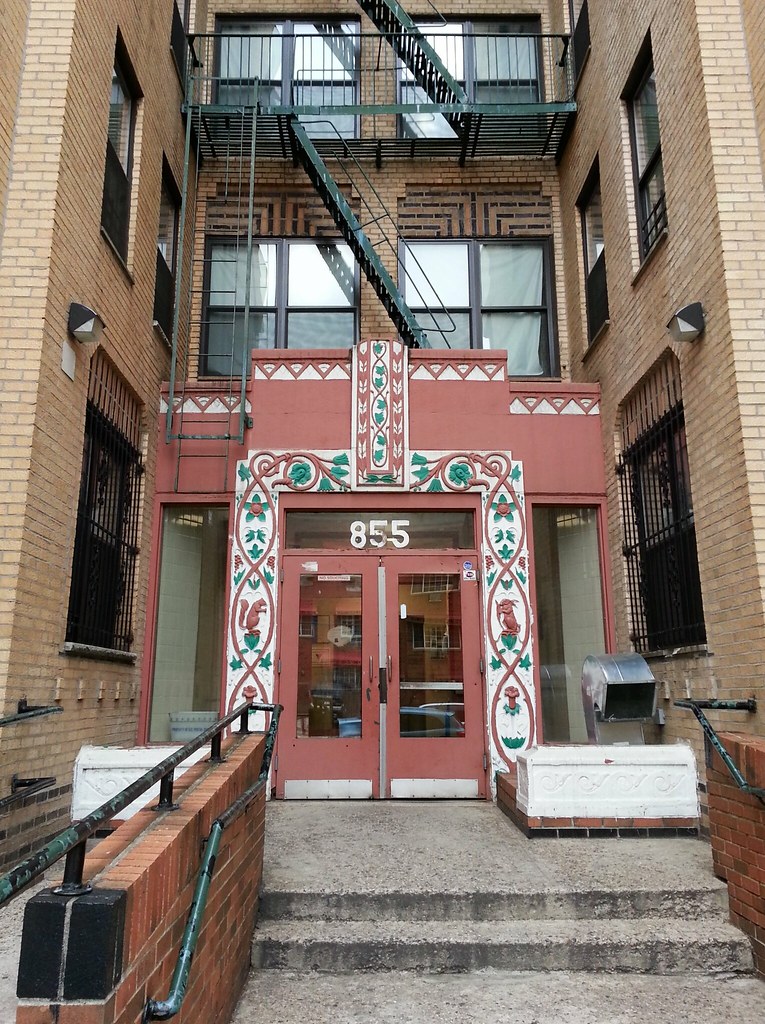
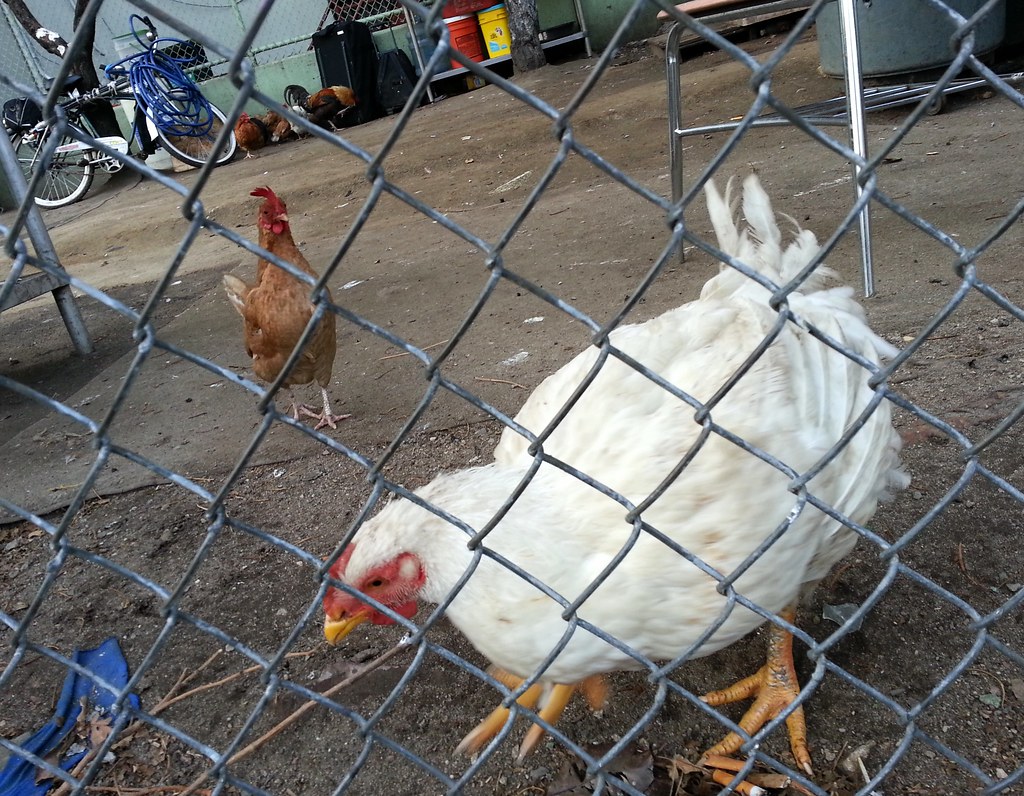
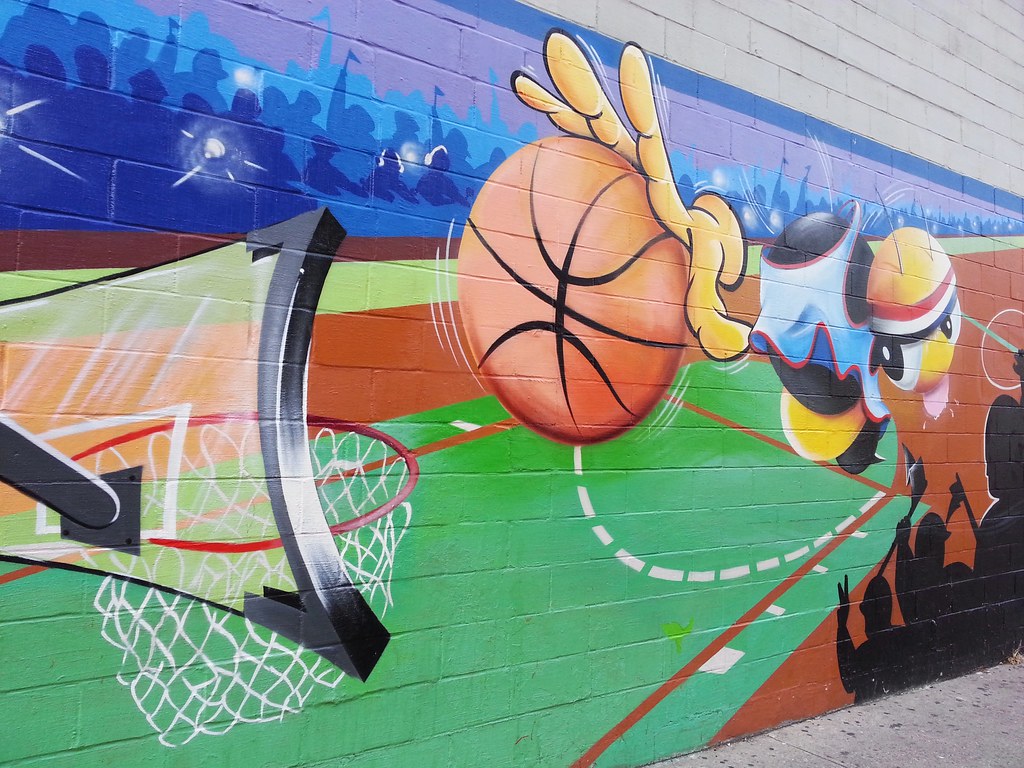
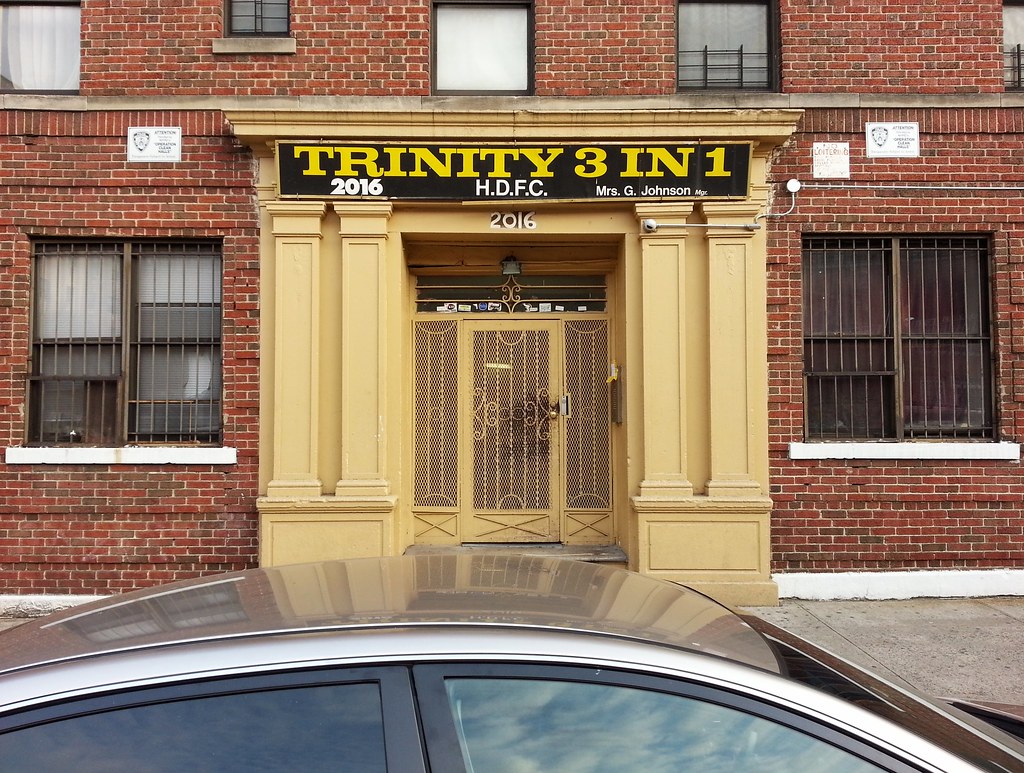
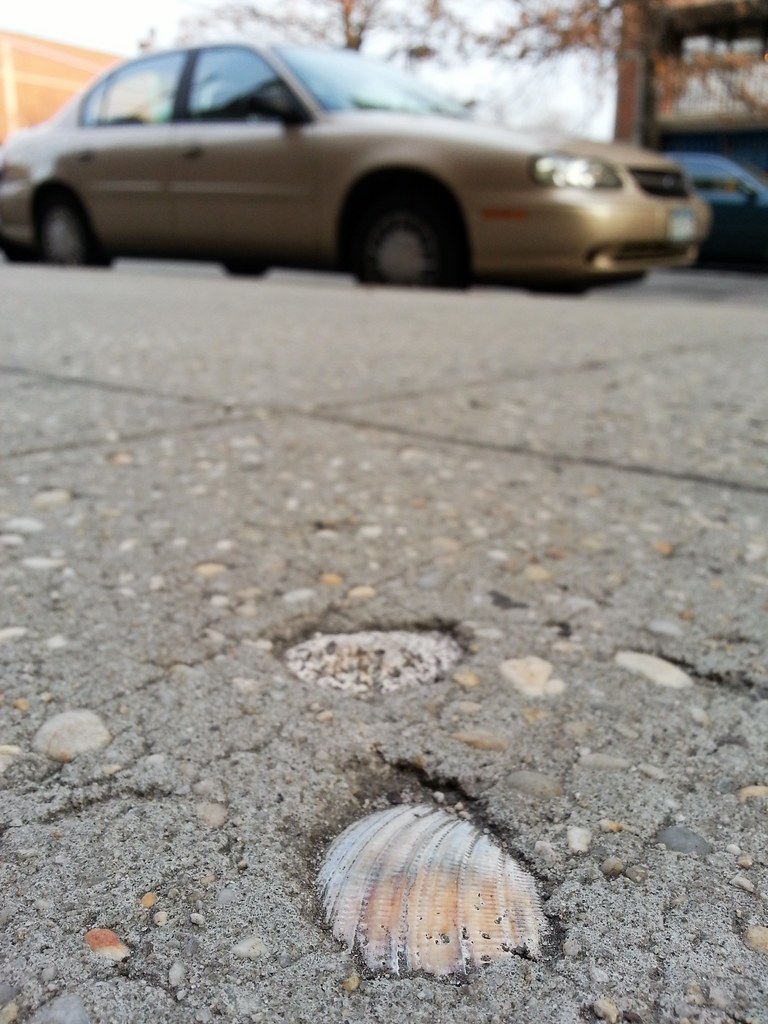
I saw quite a few seashells mixed into the concrete beneath my feet on this block of Clinton Avenue.

The former Tremont Temple/Congregation Gates of Mercy
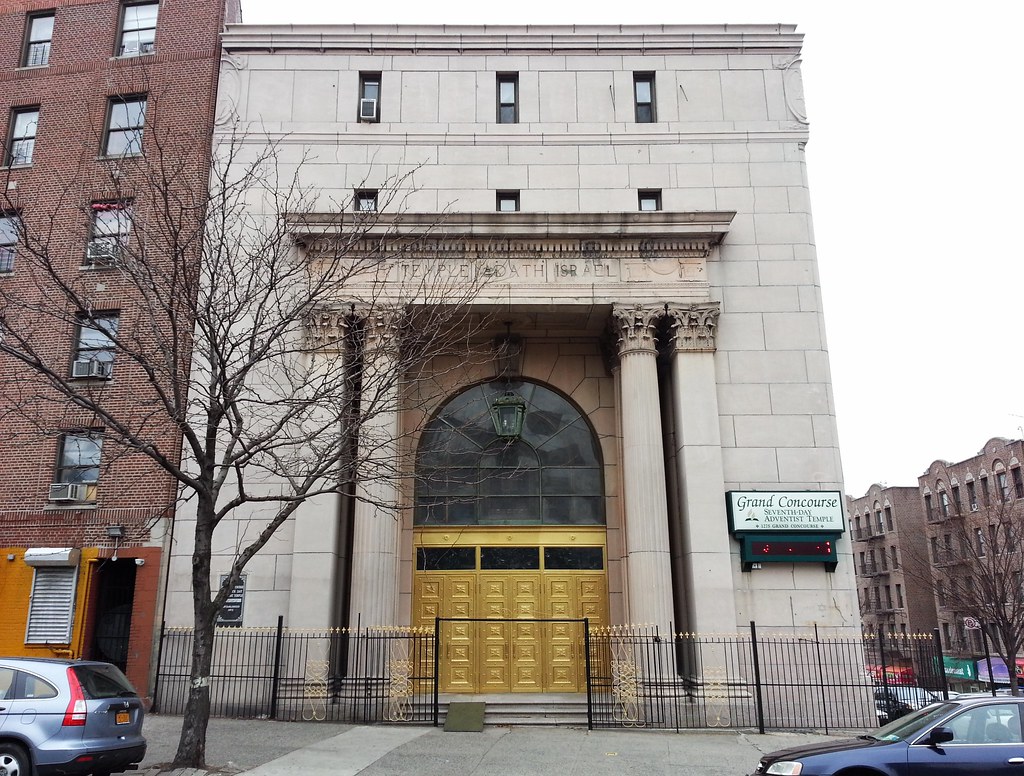
What is now the Grand Concourse Seventh-day Adventist Temple was originally Temple Adath Israel, one of four synagogues that once stood on a single block of 169th Street back in the days when the South Bronx was majority Jewish.
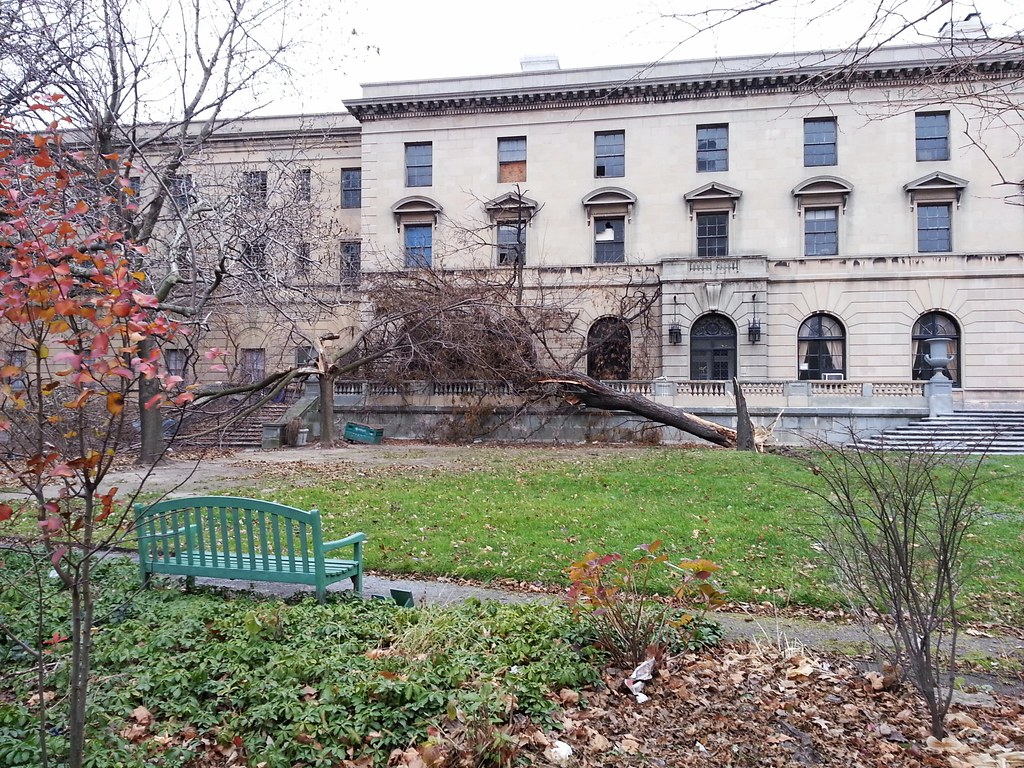
It seems that one of the thousands of trees felled by Hurricane Sandy has landed, and remained for over a month, on the porch of the Andrew Freedman Home. One of the city's more unusual institutions, the Home was built as a wealthy man's poorhouse — a refined retirement refuge for those of high standing who had lost their riches late in life. (The Graham Home for Old Ladies, which I passed by back in the summer, was founded on similar principles.) Mr. Freedman's motivation in creating this institution was elucidated in the Evening Tribune in 1924, the year the Home opened:
To have luxury all one's life and then in old age to face nothing but sordid penury; contempt where once was deference; ugly surroundings where once was beauty; rough shoulderings from coarse illiterates where once was protection and a circle of charming friends — this, indeed, is to be cast from heaven to the uttermost pit. Only those who have been reared in refinement can appreciate the unmitigated squalor of exile among the unintelligent.The article goes on to explain how society's safety net fails to protect the upper class:
The very poor have their free clinics, their free institutions for the aged. The impoverished middle class has also its quota of inexpensive hospital care and refuge. But who gives a thought to the bankrupt millionaire? Where is the place which will offer him congenial company and congenial surroundings when nothing remains from the days of his wealth except a taste for beauty?Equipped with "telephones, radio, phonograph, soft-voiced servants, tiled private baths, billiard rooms, card rooms, a library, and a livingroom so luxurious that even a modern millionaire could find no lack in it", the Home was "run like a first-class hotel" for many years, until, along with much of the South Bronx, it fell on hard financial times in the '60s and '70s. It was finally sold in 1982 and has since served as, among other things, a non-snobby old-age home for the regular poor, a day-care center, an event space, a home for community organizations, and an exhibition hall for site-specific artworks. As of this past spring, there has even been a ten-room bed-and-breakfast operating in the building, part of a program to provide training for local residents seeking careers in the hospitality industry.
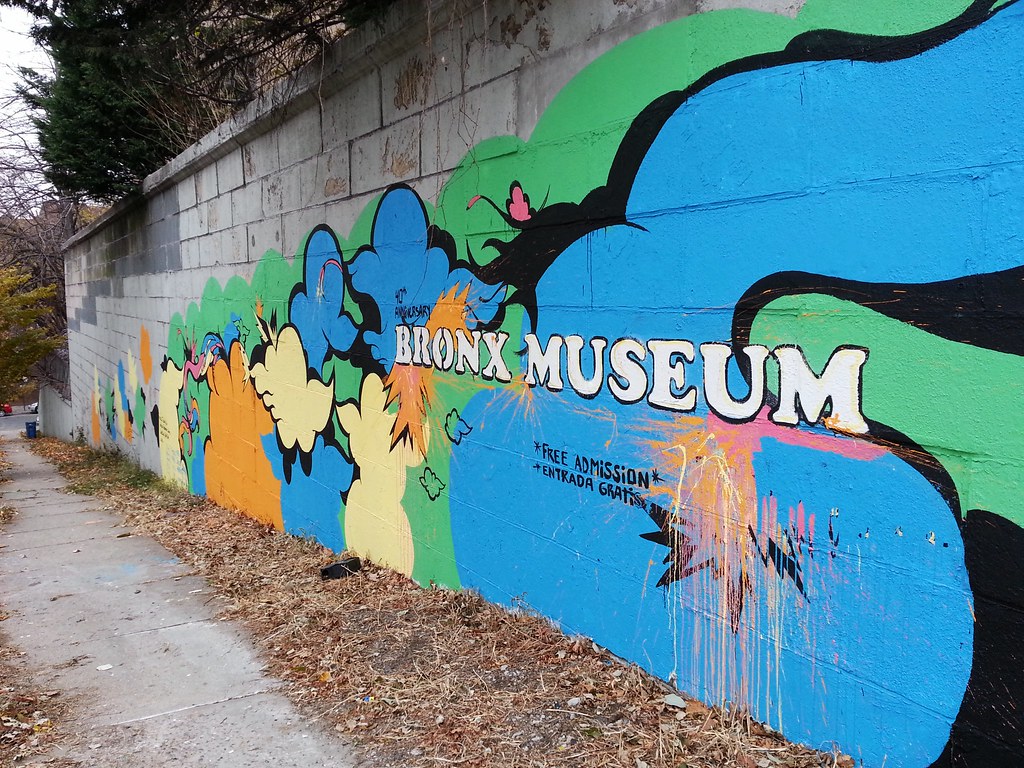
Founded in 1971, the Bronx Museum of the Arts resides catty-corner to this mural in a converted synagogue, which underwent a major expansion and accordionation a few years ago.
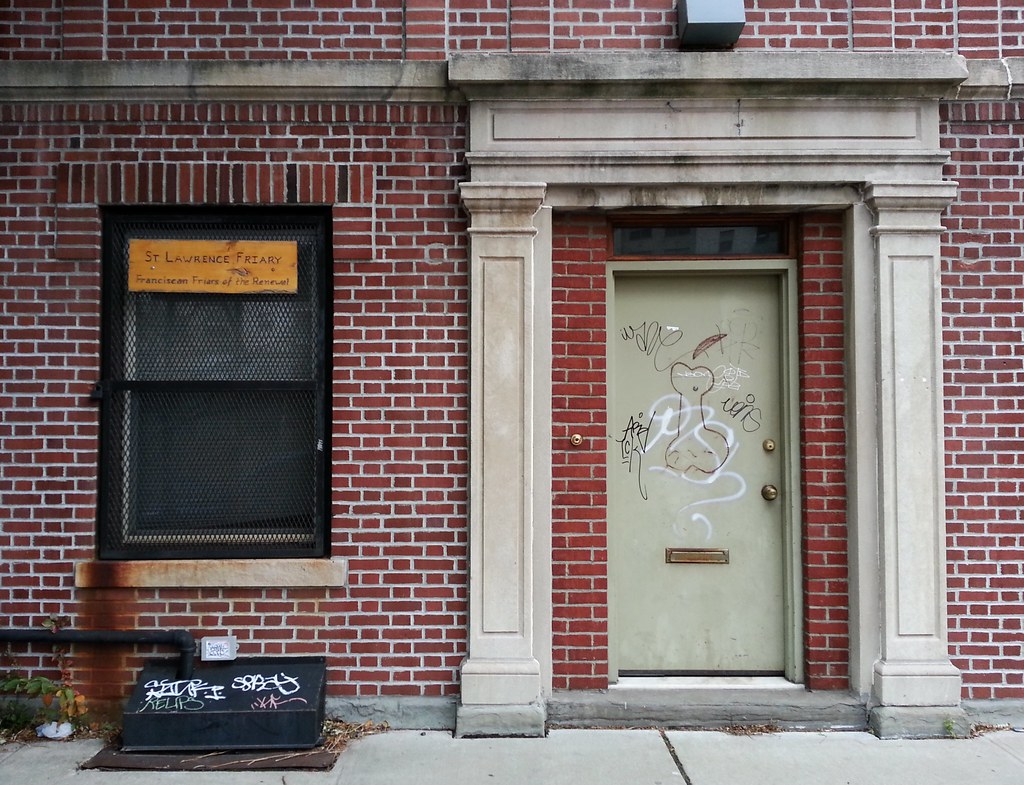
This is one of the friaries of the Franciscan Friars of the Renewal, a relatively young order founded in 1987 here in the South Bronx.
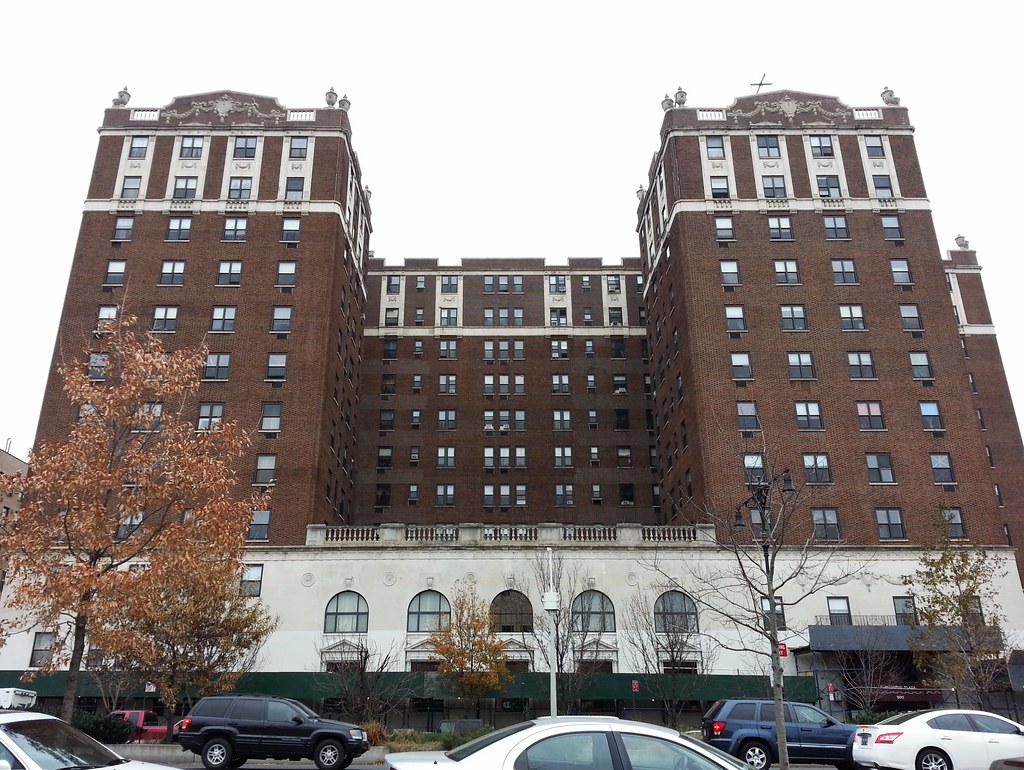
Opened in 1923, the same year as, and three blocks away from, the original Yankee Stadium, the once-grand Concourse Plaza was a center of the borough's social life during the mid-20th century. Big political dinners were held in the ballroom, presidential candidates stopped by to campaign, and the Yankees' star players could be found hanging out in the lobby every now and then. By the 1970s, however, the place had fallen into decline and become a welfare hotel. The city eventually took over the building and has operated it since 1982 as a senior citizens' residence.
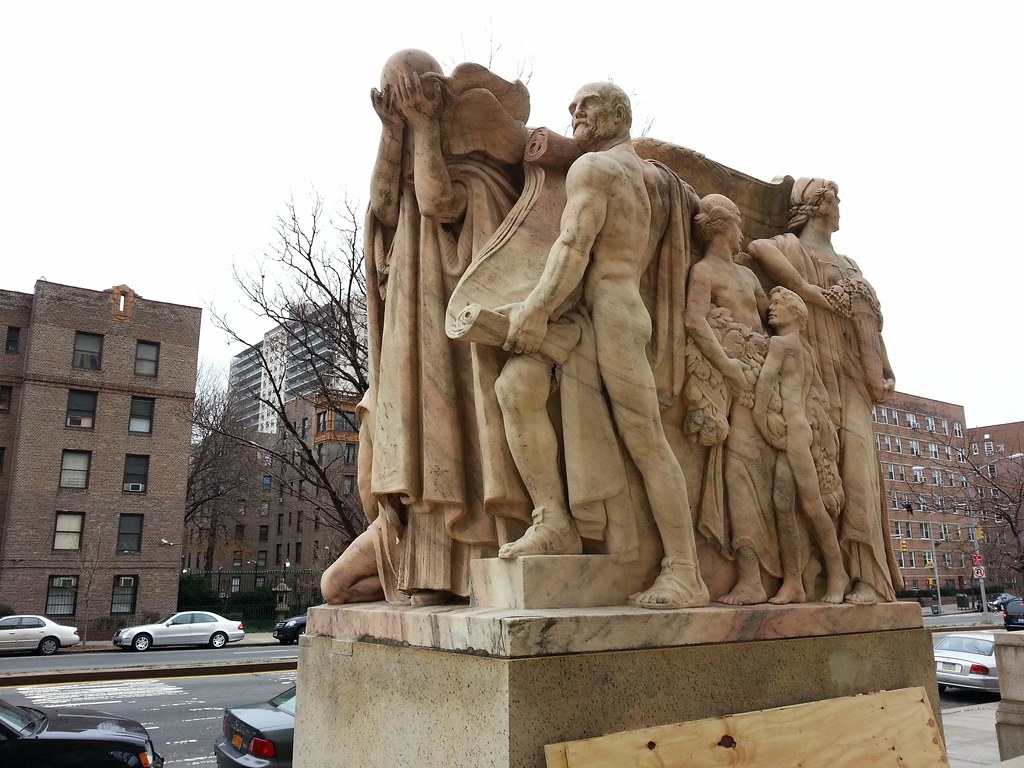
This is one of Adolph Weinman's eight pink marble sculpture groups adorning the entrances to the Bronx County Courthouse.
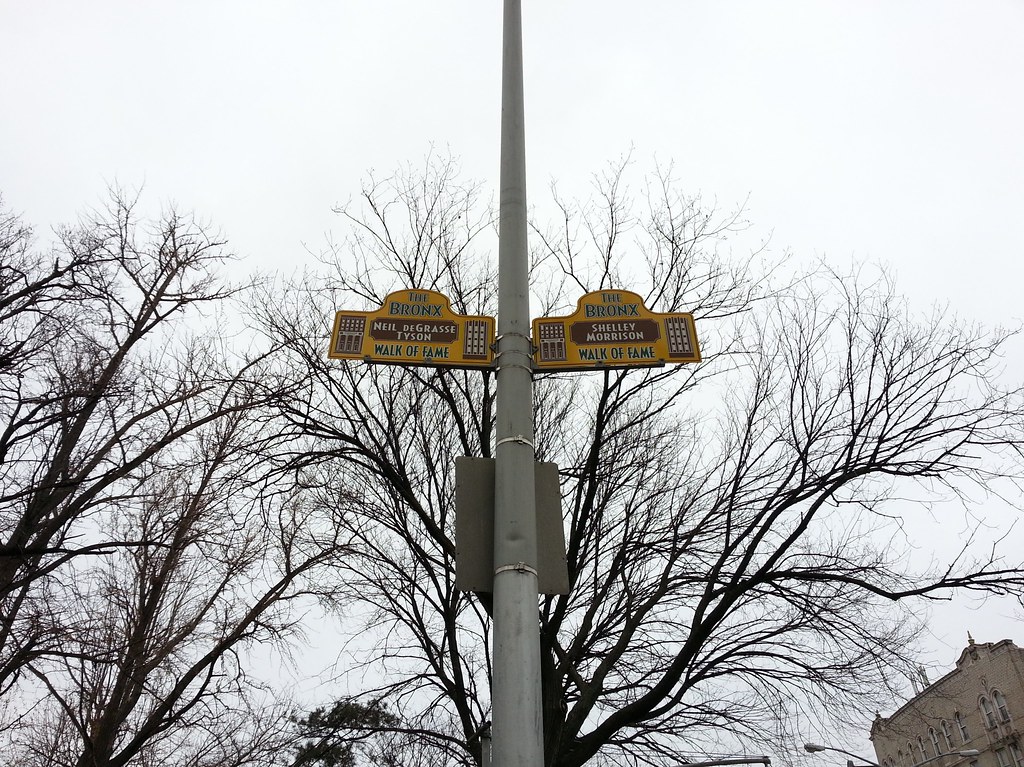
These signs line the Grand Concourse heading south from 161st Street, honoring Bronx notables like actress Shelley Morrison and astrophysicist Neil deGrasse Tyson (who was memorably flabbergasted by Isaac Newton's invention of calculus at such a young age).

This is the former entrance to the Bronx's first subway station, which opened in 1905. What was then Mott Avenue has been part of the Grand Concourse since 1927; this station is now known as 149 Street-Grand Concourse. One of the most popular graffiti writers' benches of the 1970s and '80s is located here, on the uptown platform of the 2 and 5 trains.
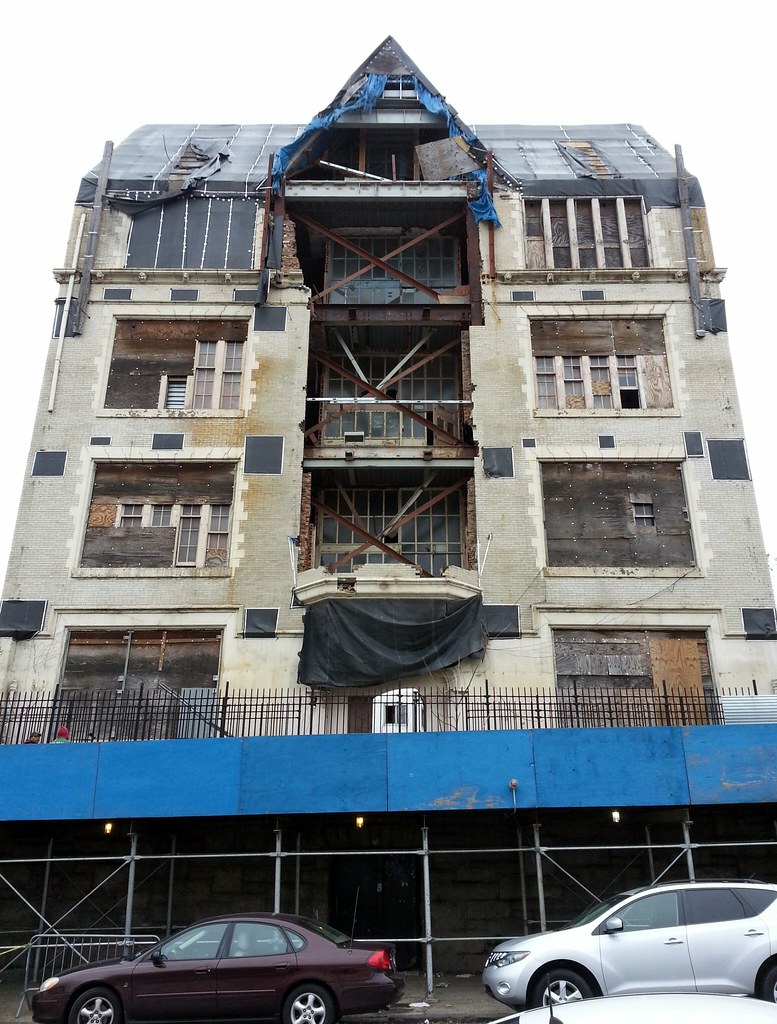
PS 31 ain't lookin' so swell these days. Another in the long list of Charles B.J. Snyder's masterpieces, it closed more than 15 years ago and has been falling into ruin ever since.
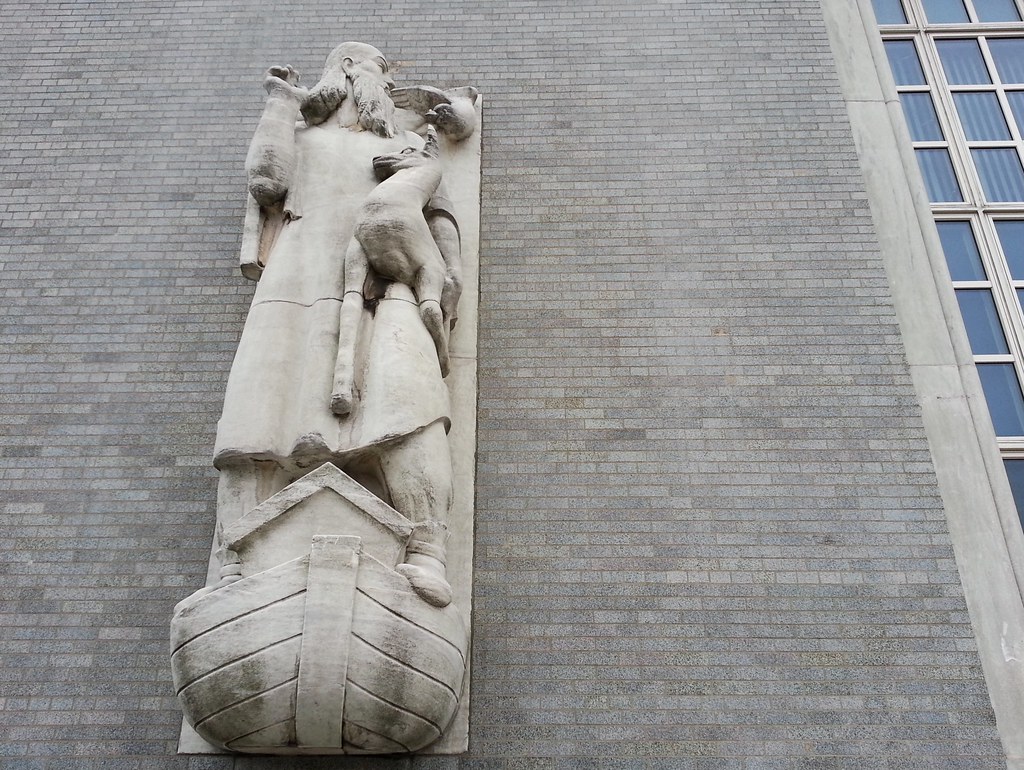
He and his menagerie are riding out the storm here at the Bronx General Post Office.
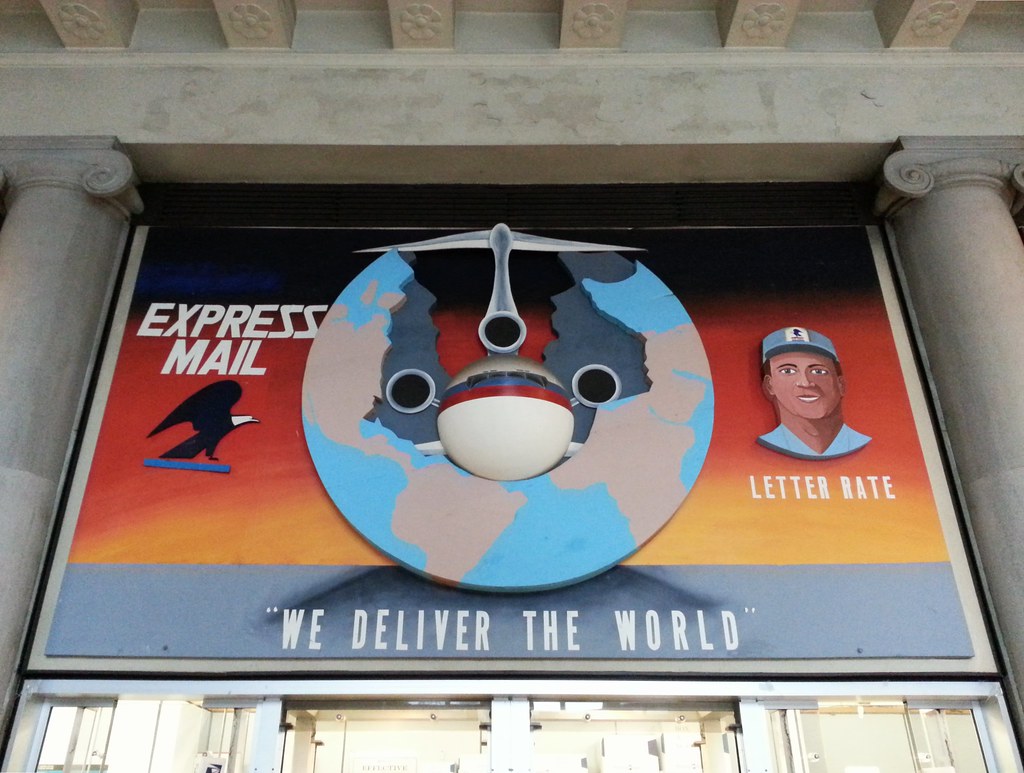
The interior of the Bronx General Post Office is most notable for its thirteen large frescoes illustrating "the nobility of the American worker", but it's also home to some charming Postal Service-themed artwork, including You Can Mail Around The World and Postmasters Through The Years.
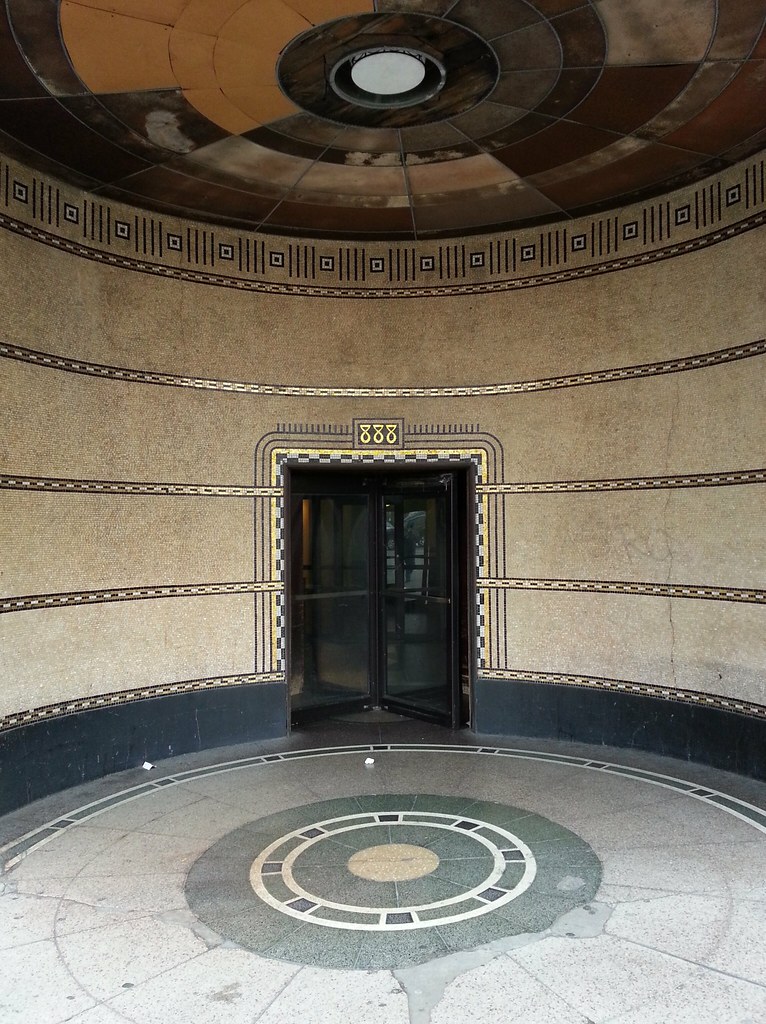
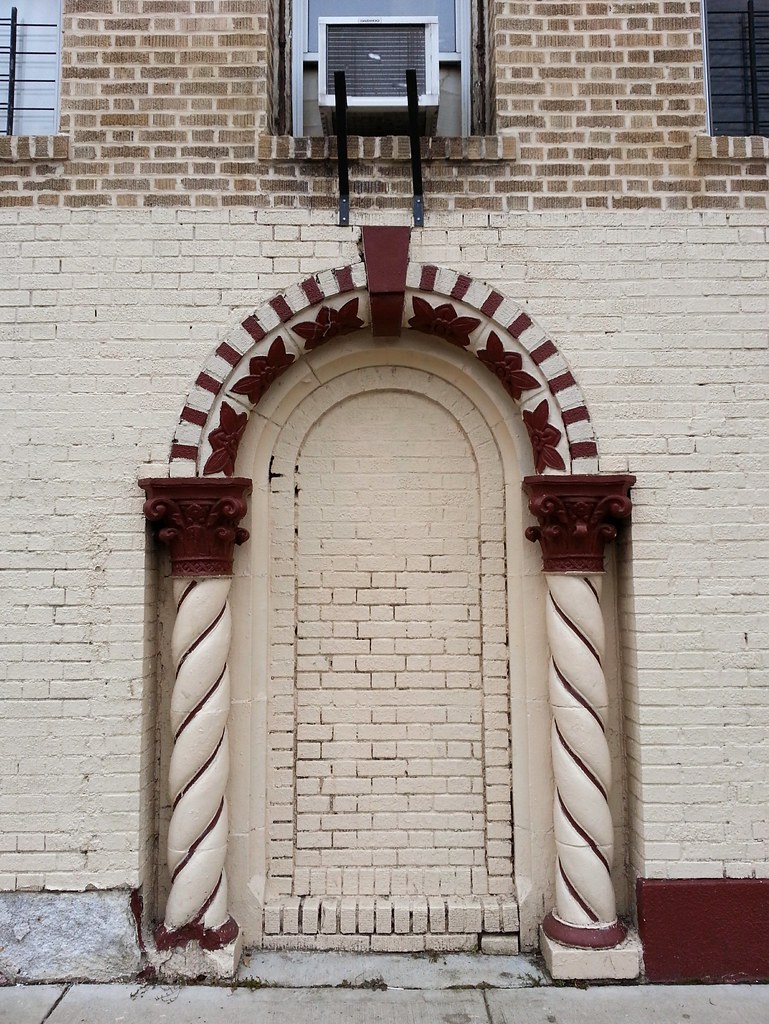
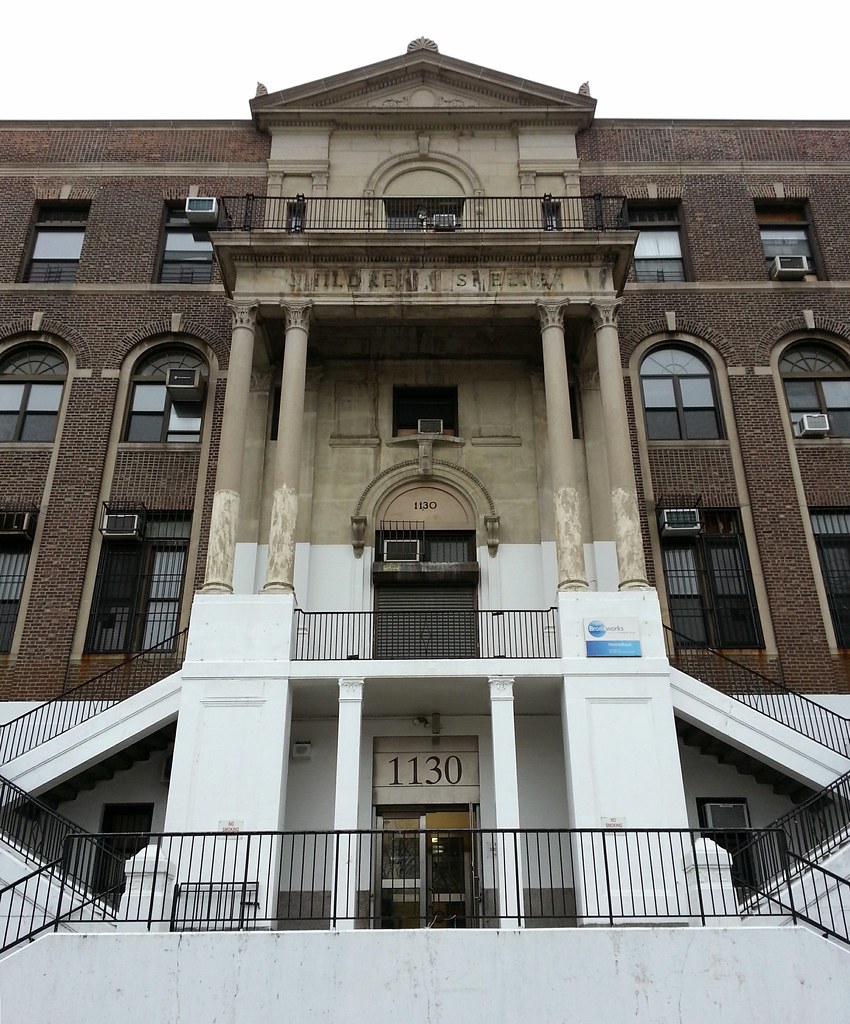
Opened in 1926, this "grand old pile" was built by the Bronx Society for the Prevention of Cruelty to Children, which I believe was the Bronx branch of the world's first child protective agency. You can still see a remnant of that era on the entablature above the upper set of columns; it looks like it once read "Children's Shelter". The building currently serves as the BronxWorks Community Center, and features an indoor pool that was recently brought back to life.

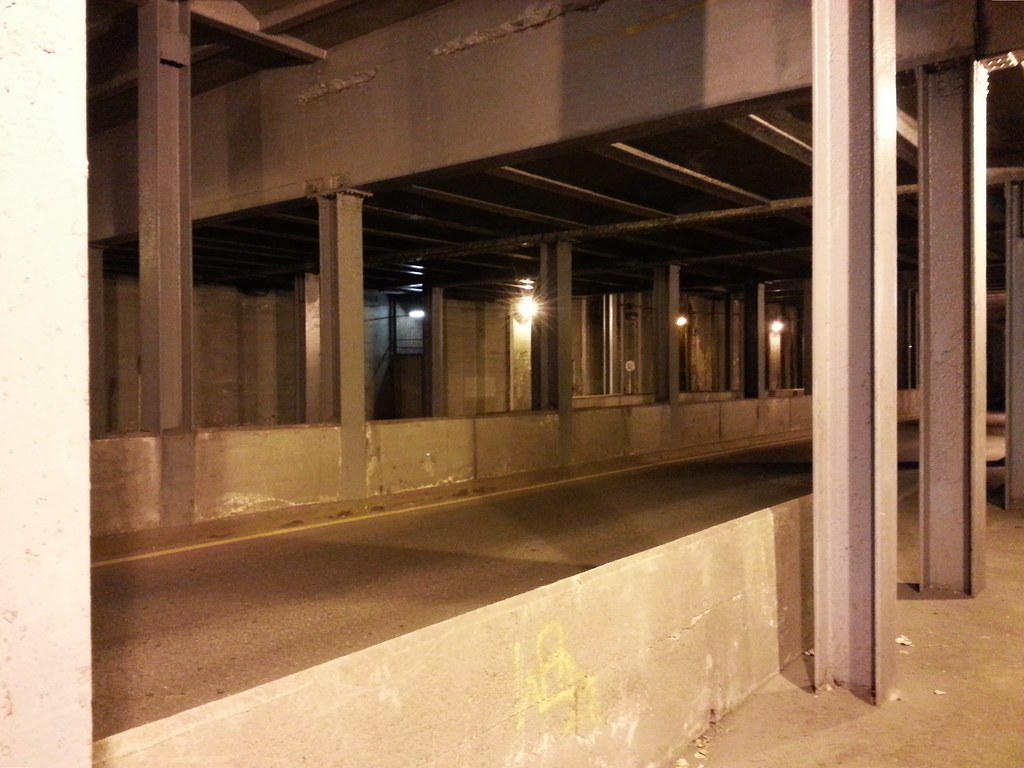
To improve traffic flow, several major cross streets have through lanes that pass beneath the Grand Concourse.