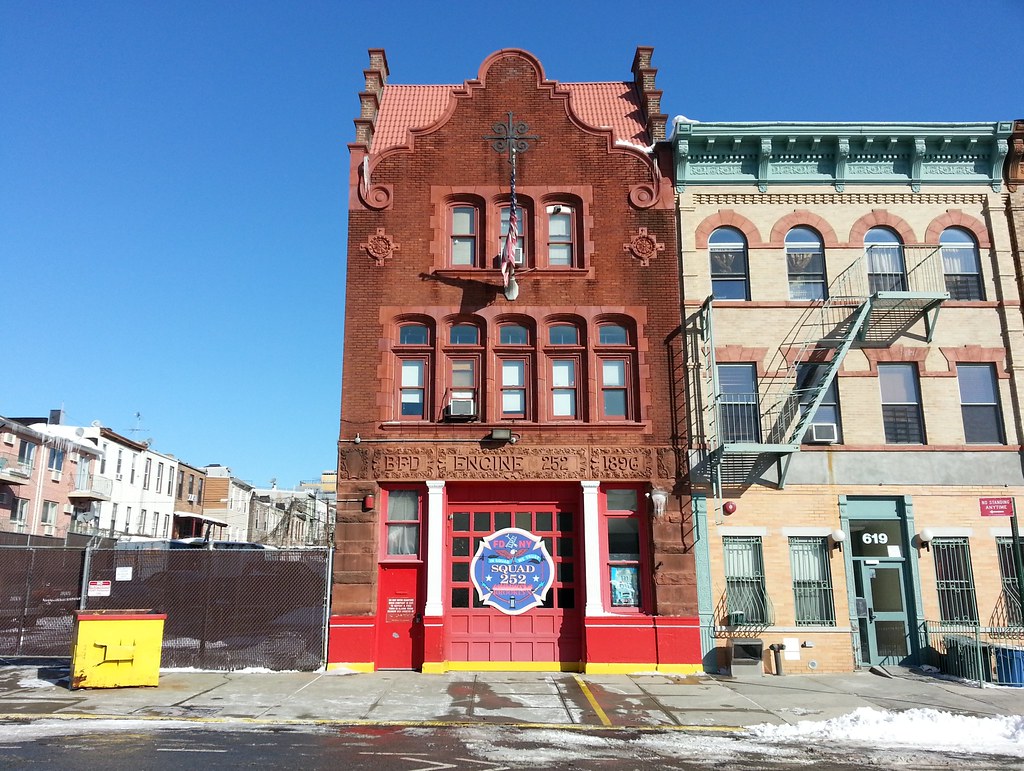
Originally Brooklyn Fire Department Engine 52. More photos here.







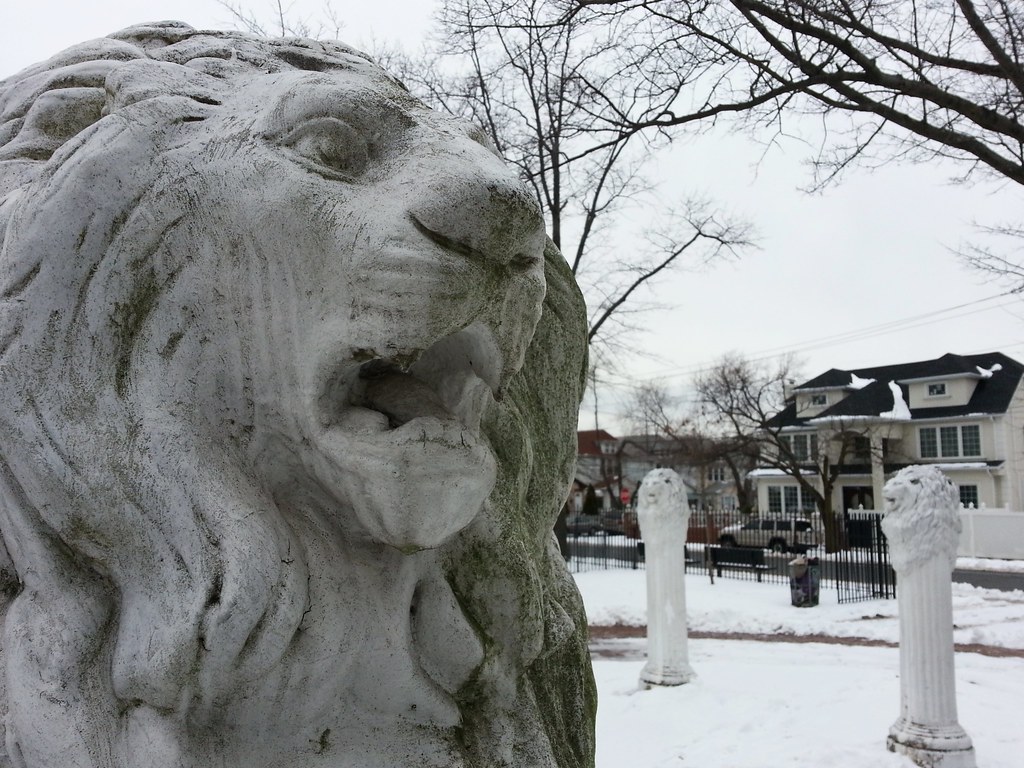
at Daniel M. O'Connell Playground. According to the Parks Department, the sculptures are "reminiscent of the courage displayed by Daniel O’Connell". Sounds like more than enough reason for Henry Stern to stick some lions in there.
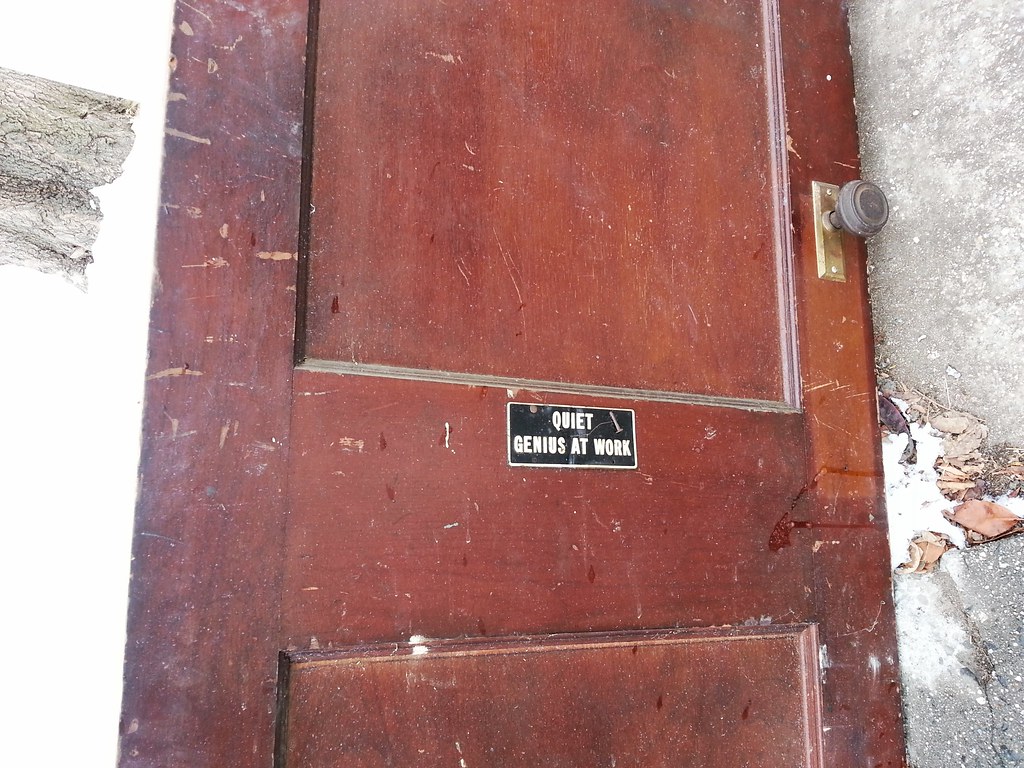
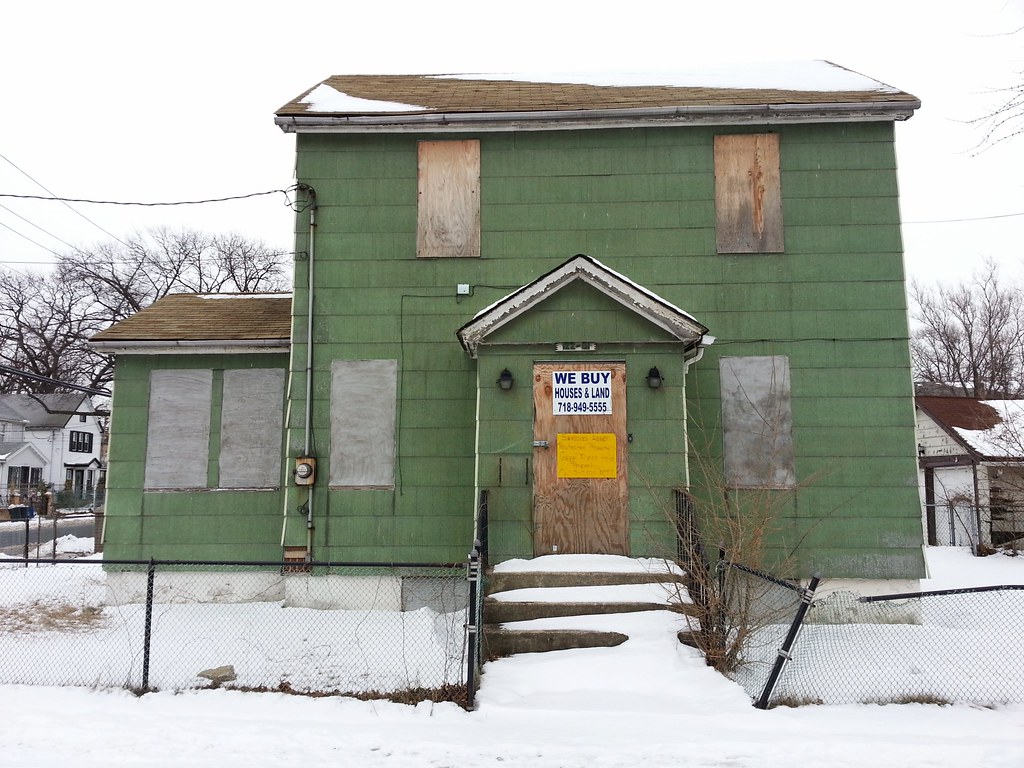
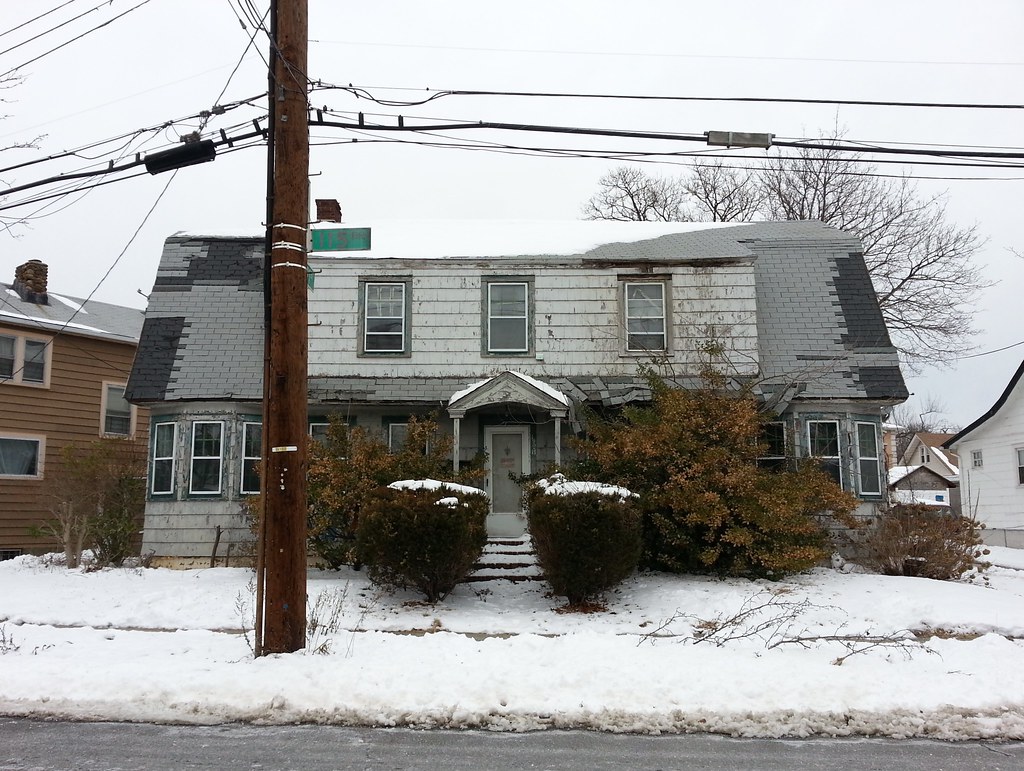
That's how the sign on the door describes this property.
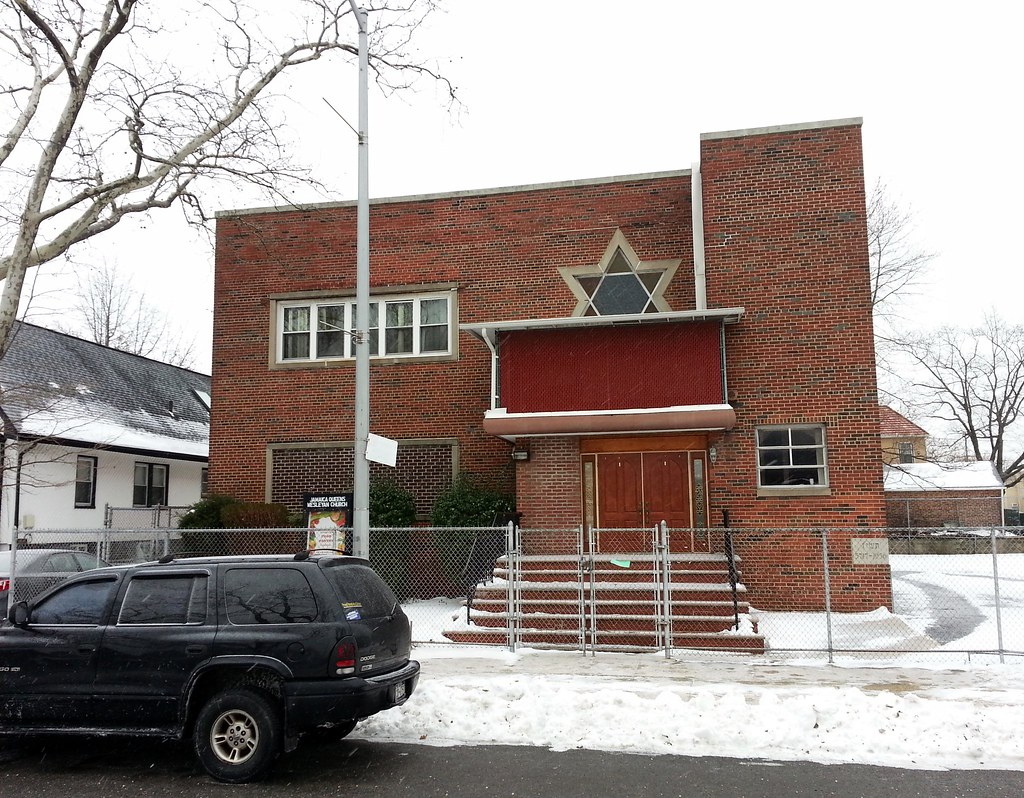
The Jamaica-Queens Wesleyan Church; formerly Young Israel of Laurelton

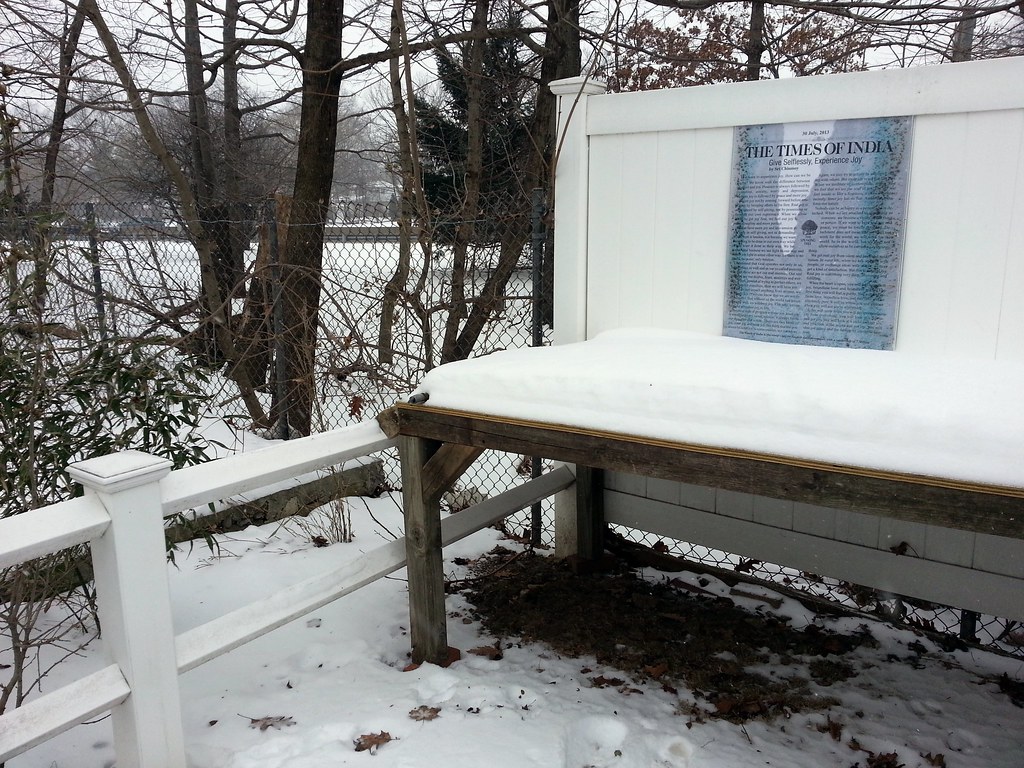
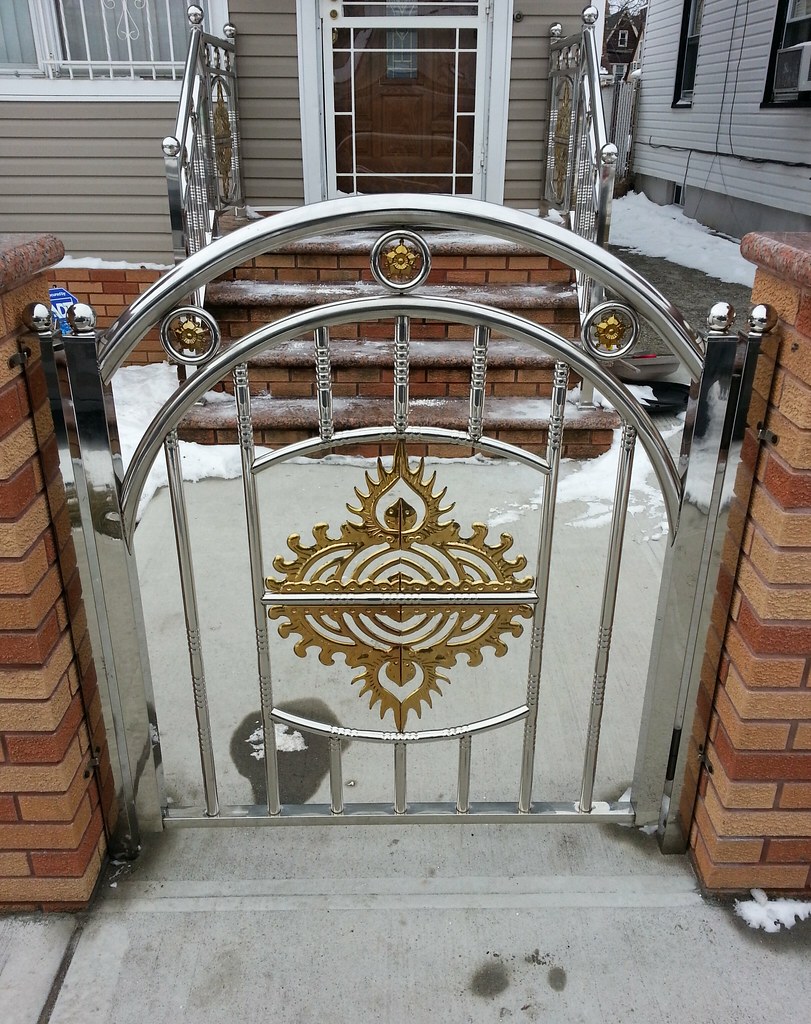
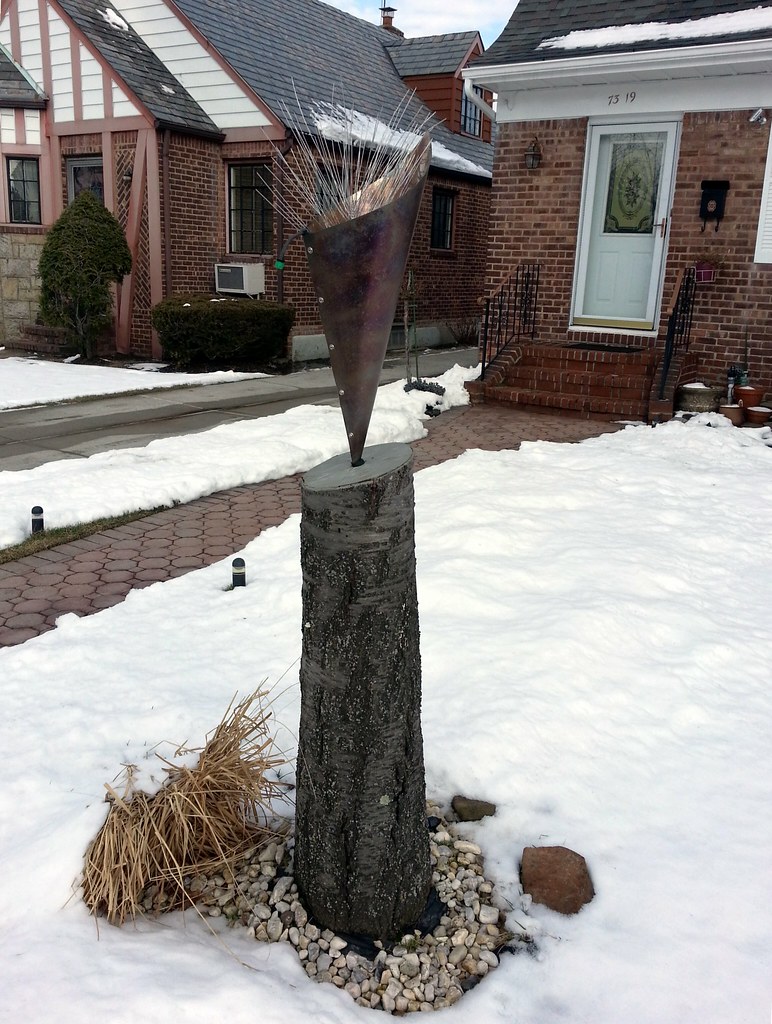
An article (read it here) by our old friend, the late Sri Chinmoy, displayed in an unusual fashion in someone's front yard.
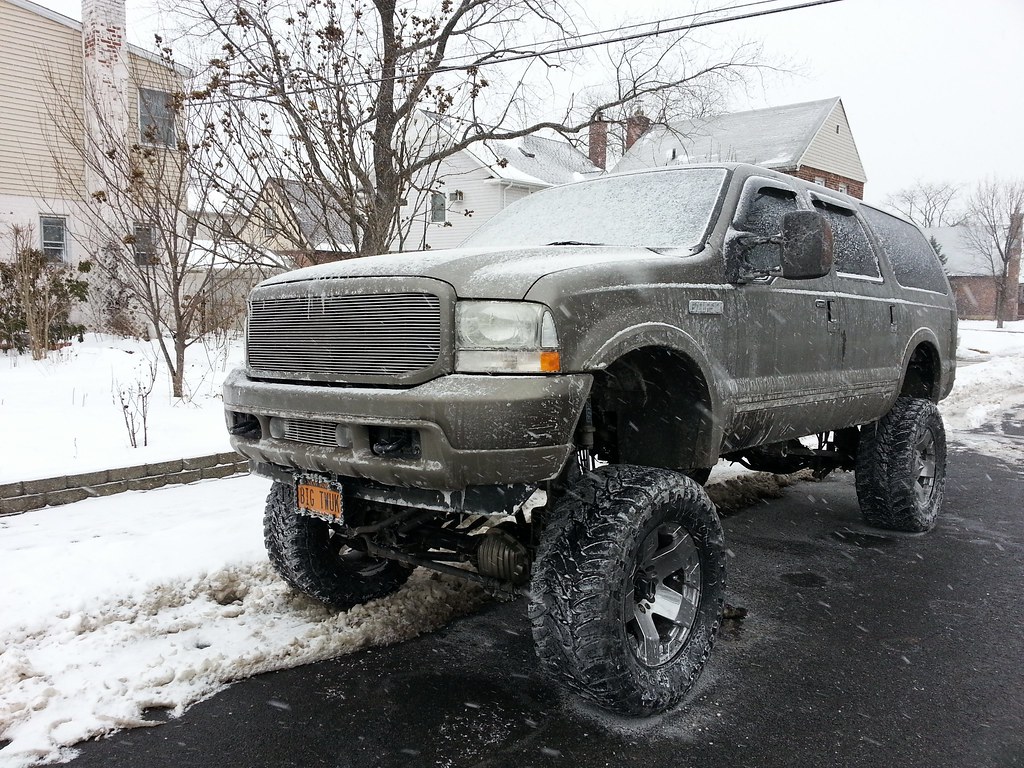

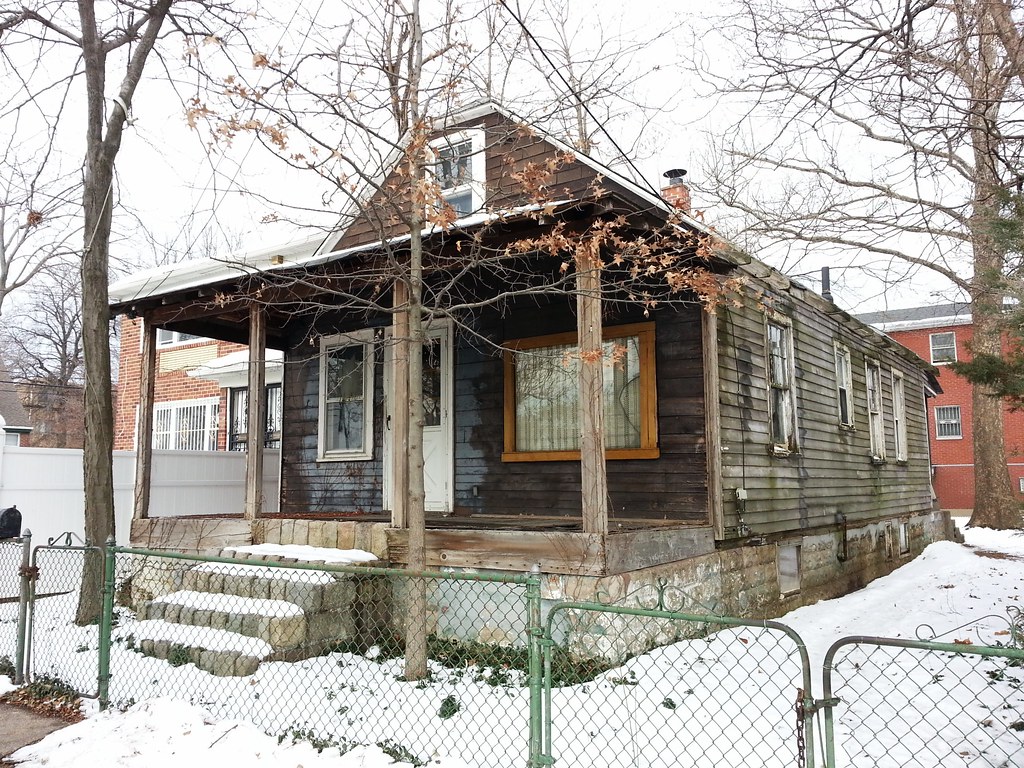
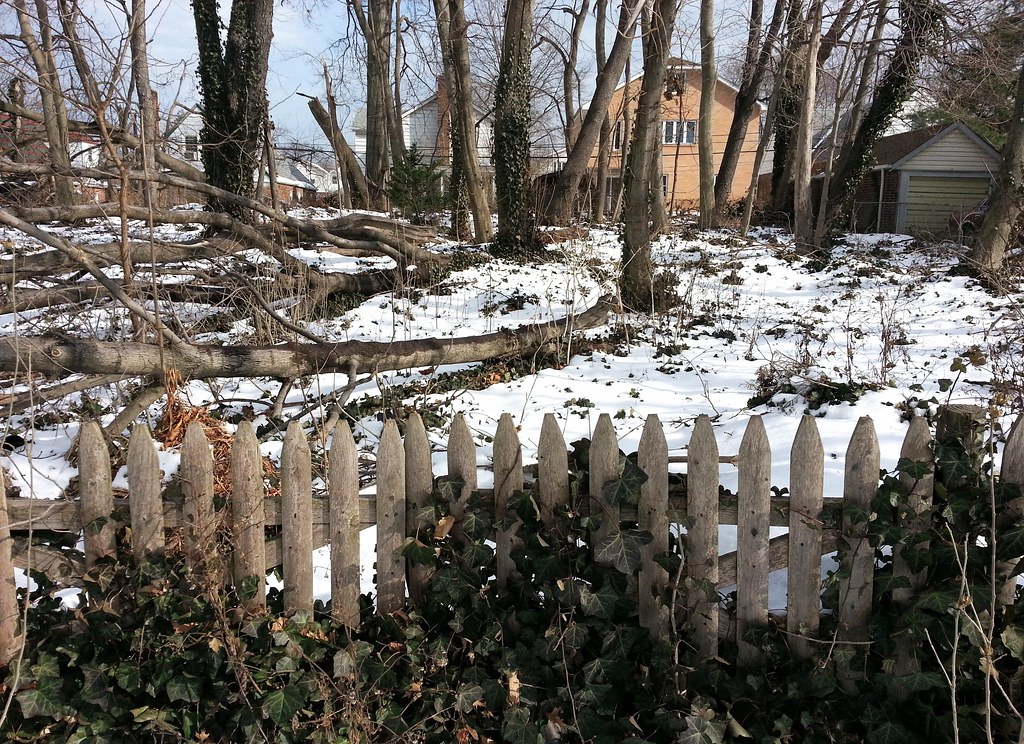
You'd never know by looking at it, but this seemingly undeveloped mid-block lot was once "the burial ground of the rural Flushing township crossroads community of Black Stump". It contains dozens of graves dating back to the colonial era. Check out this aerial image of the cemetery from 1924, when this part of Queens was still all farmland.

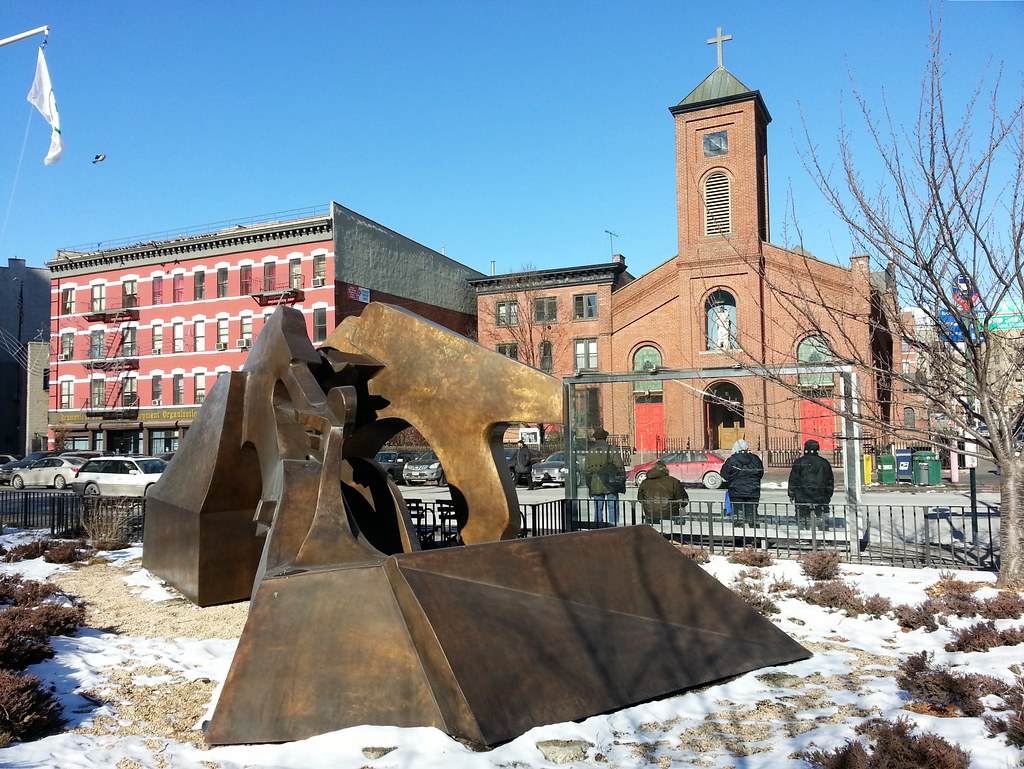
Installed in 1976 and conserved in 2008, this Richard Hunt sculpture is meant to "mimic the angle of the roofline" and the arches of the Church of St. Joseph of the Holy Family (at right), Manhattan's oldest existing church north of 44th Street.
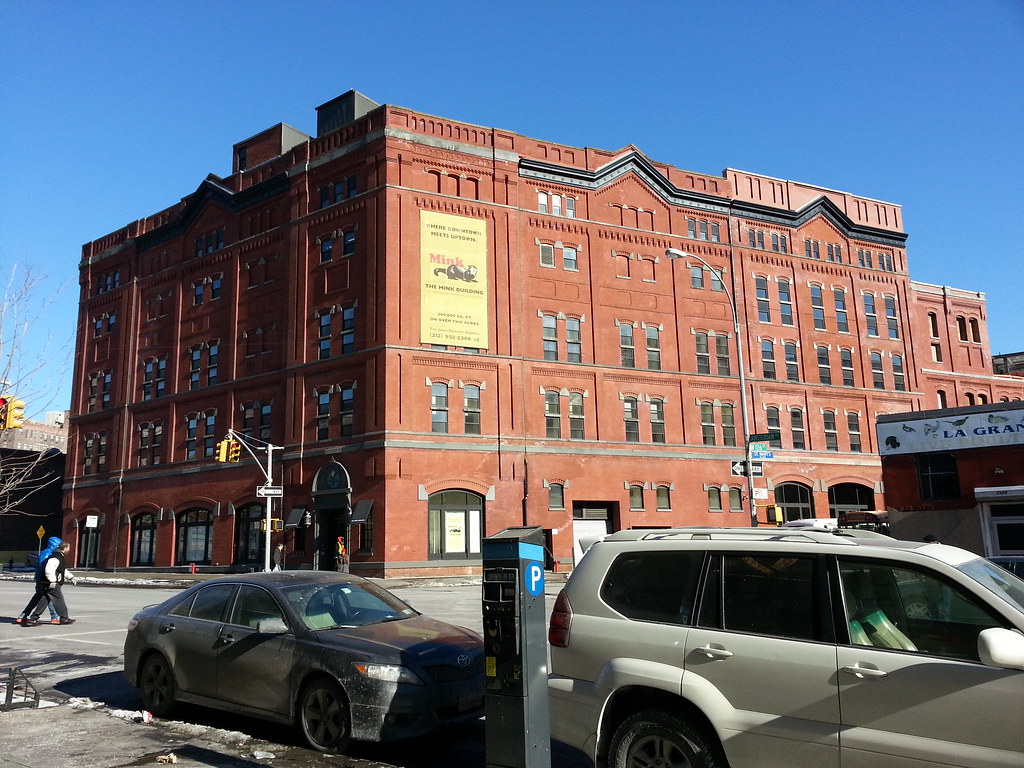
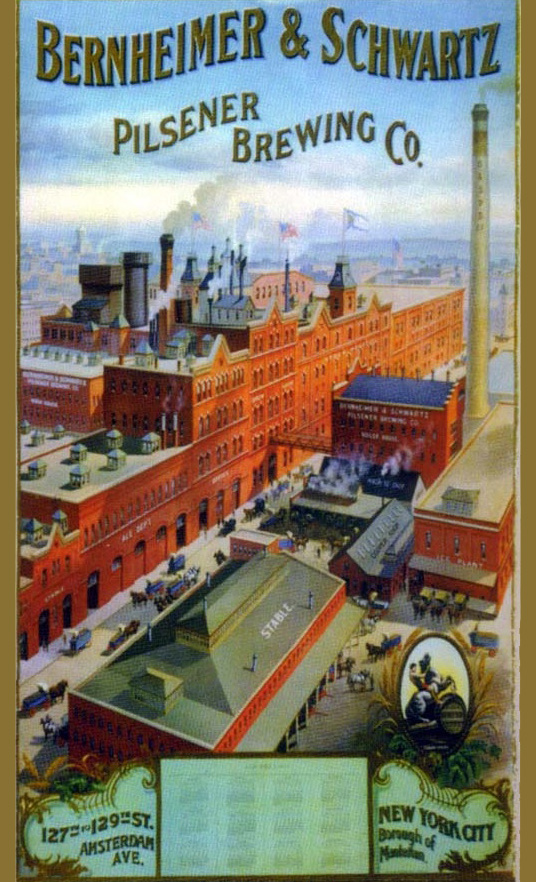
This building, named for its former use as a summertime storage facility for fur coats, was originally the Bernheimer & Schwartz brewery, completed around 1905. A quick search of the NY Times archives reveals that the brewing company suffered a string of tragic and sometimes bizarre deaths among its executives and their families over a four-year period starting in 1909.
First, the wife of a vice president committed suicide by "inhaling illuminating gas" after becoming extremely anxious over an ailing grandchild. The next year, in 1910, the president, Anton Schwartz, shot himself six weeks after his son died of an illness at the age of 24. In 1911, Simon Bernheimer, head of the company, was attending a Shriners' band rehearsal. He had long dreamed of playing the bass drum in this highly regarded band, and he was finally given a chance when the band's regular bass drummer didn't show up. A short while later, he dropped dead mid-song. And in 1913, after testifying in a lawsuit against the company, Simon's brother Max, then serving as president, suddenly fell to the floor dead in the courtroom.
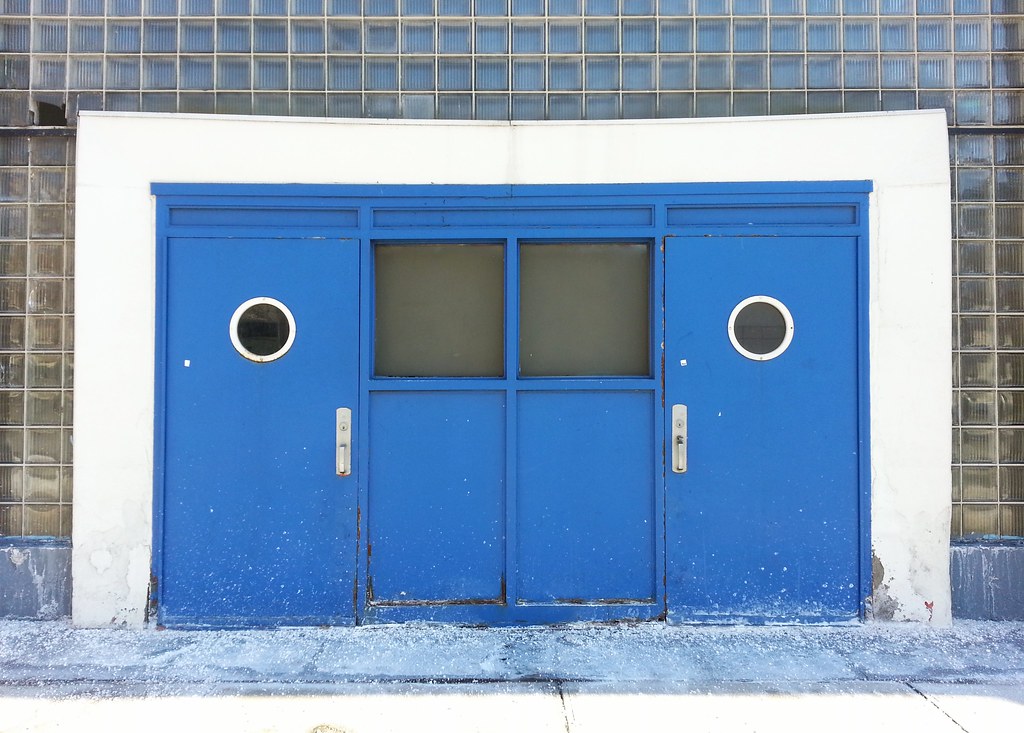
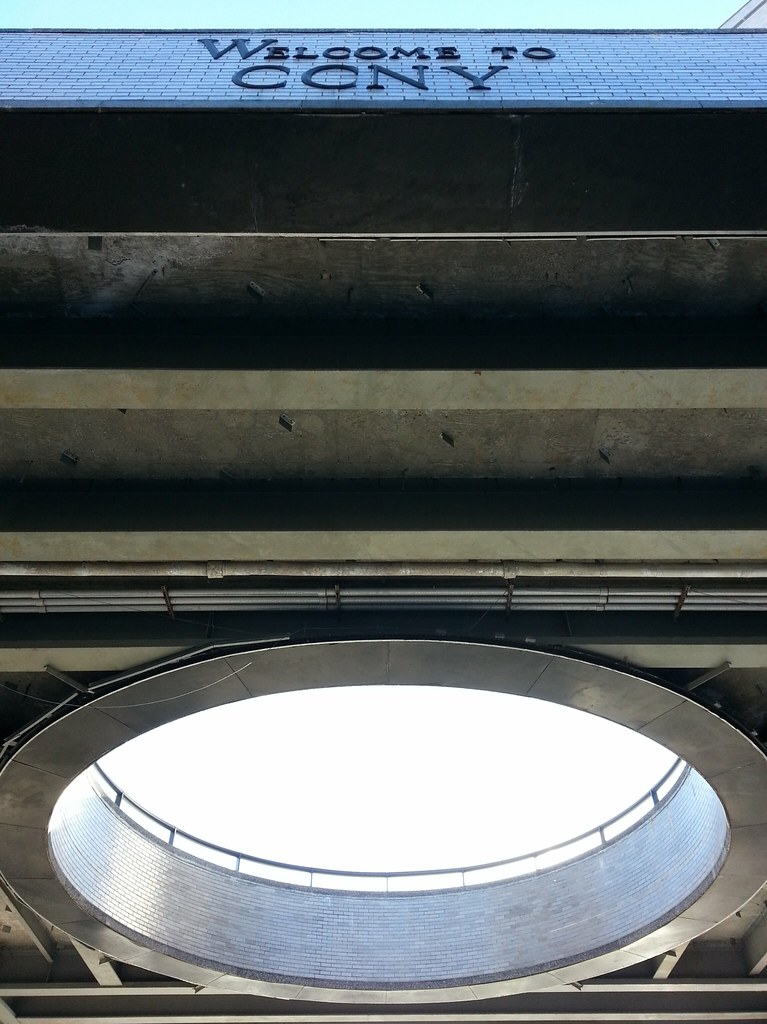
A portholed portal!
This building is the Amsterdam Depot. Formerly an active MTA bus depot, it's now used to store much of the agency's collection of historic buses (a.k.a. the "museum fleet").
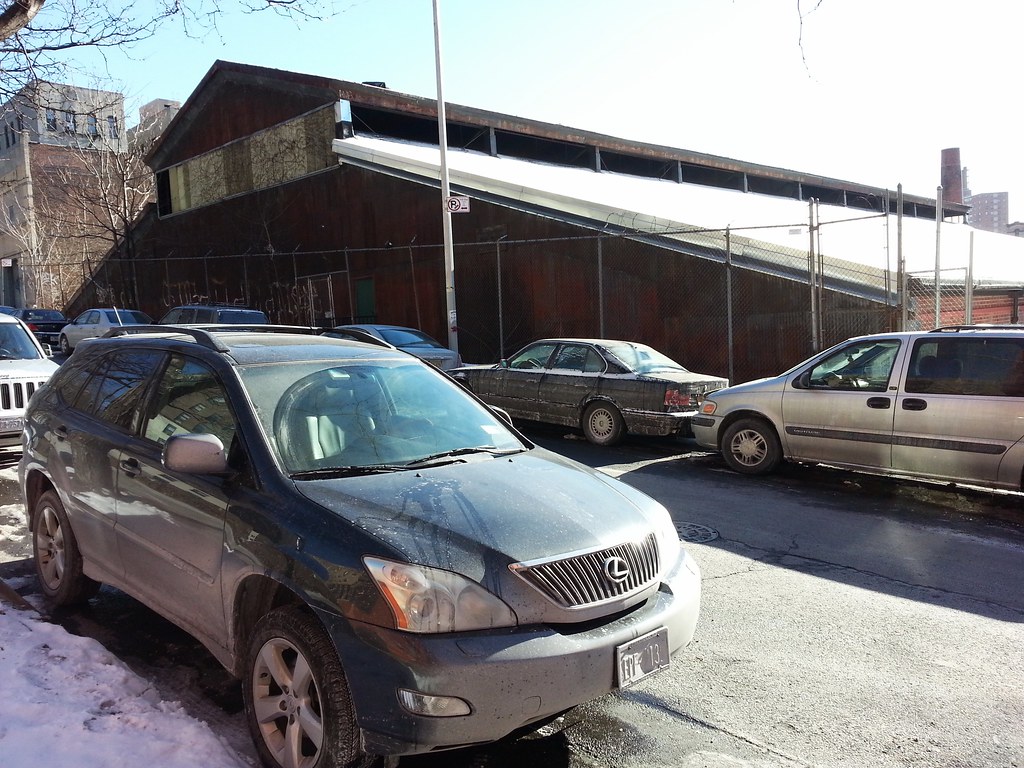
According to the 2010 AIA Guide to New York City, this "grimy shed sheathed in corrugated iron occupying some two-thirds of an acre . . . shelters all manner of bulky sets for the Metropolitan Opera House at Lincoln Center. It was built around 1895 as a storage shed for Amsterdam Avenue streetcars."
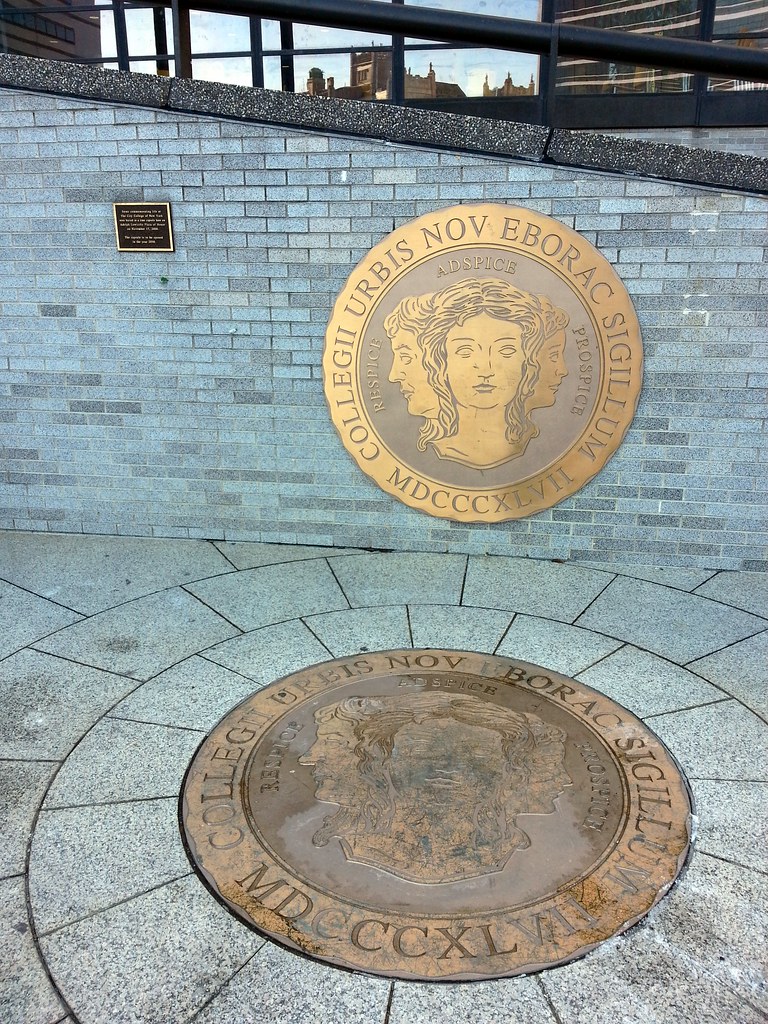
at City College. A plaque on the wall reads:
Dedicated in memory of Adolph Lewisohn, 1849-1938, who provided funds in 1913 for the construction of Lewisohn Stadium, which occupied this site from 1914 to 1973. The stadium, designed by Arnold W. Brunner, served as an athletic field for City College and also became New York City's most renowned and beloved outdoor musical center. Each summer, for nearly 50 years, the stadium attracted thousands of visitors to listen to "music under the stars" performed by the greatest artists of the day.You can check out old photos of the stadium, watch a scene from Serpico (starring Al Pacino) filmed in the stadium, and take a look at several concert programs from the '20s and '30s.
According to another plaque, the one visible above:
Items commemorating life at The City College of New York were buried in a time capsule here on Adolph Lewisohn Plaza of Honor on November 17, 2000.
The capsule is to be opened in the year 2050.
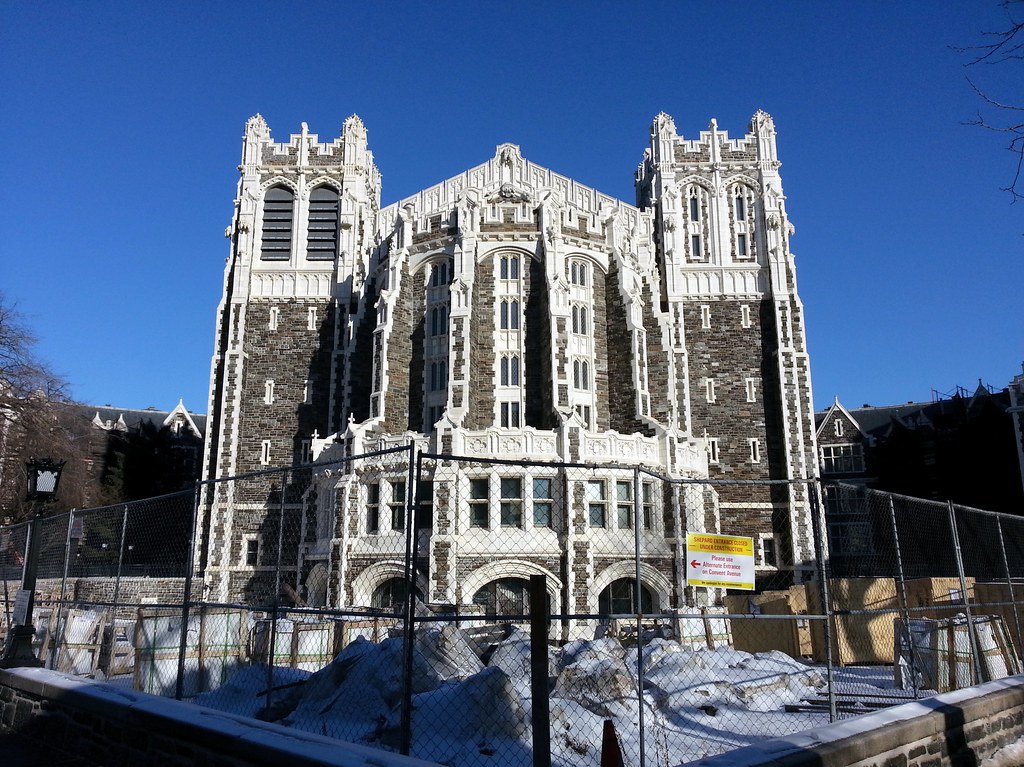
By the late 20th century, this gorgeous building at City College had become "the largest example of terra-cotta failure in New York City and perhaps the country"; for years, "pieces of terra cotta the size of grapefruits had been falling off the building with regularity". A massive restoration effort that began in 1986 and has cost around $150 million is finally, I believe, just about complete.