
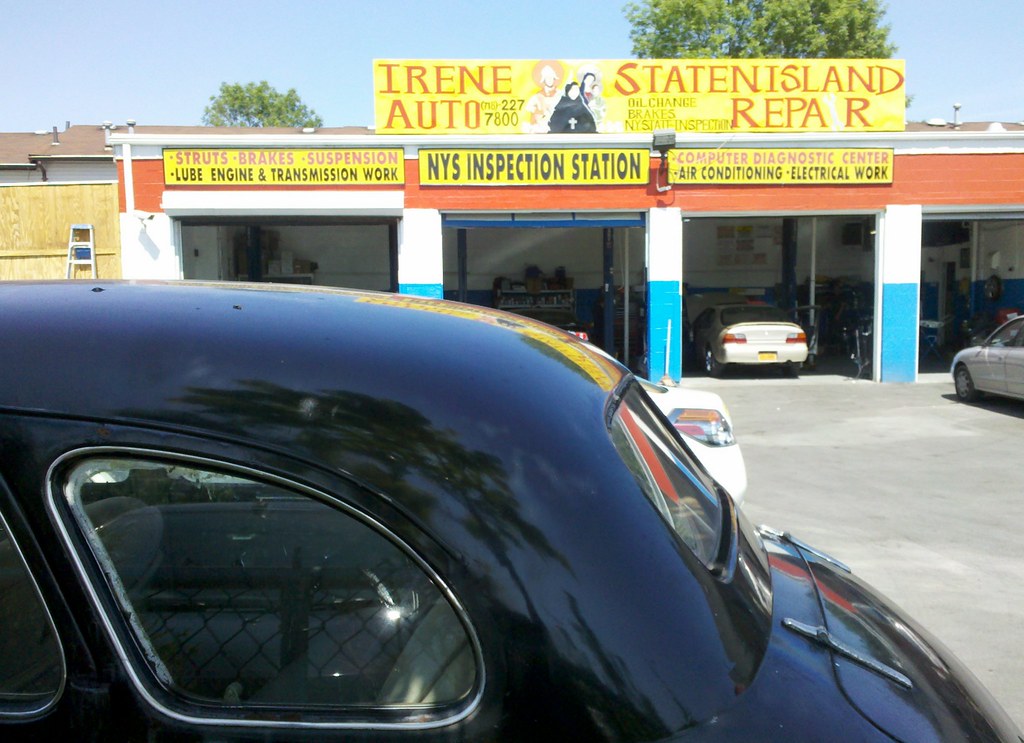
Jesus and Mary, a nun, a conquistador, and a 1940 Oldsmobile
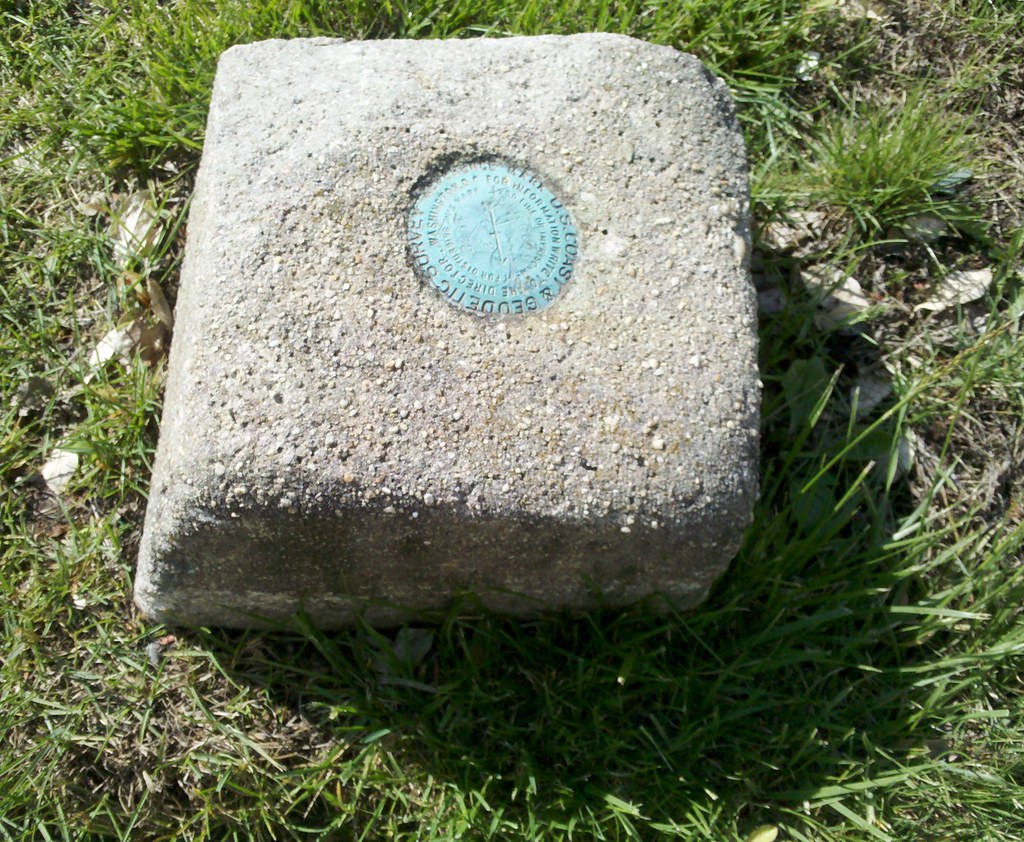
This little monument marks a point, surveyed under the auspices of the National Geodetic Survey (NGS), whose position and elevation are known with a high degree of accuracy. There are hundreds of thousands of such markers around the US, and, as part of the National Spatial Reference System, they can be used as benchmarks to determine the exact location of other points of interest. Having this common ground for measurements is important for providing a correspondence between maps and reality; so that, say, when a road is designed in a certain location, it can be built exactly where it was intended.
According to the engraved text, the penalty for disturbing this marker is a $250 fine or imprisonment. Considering it's embedded in a piece of concrete that's just sitting on the ground, I would guess that it has in fact been disturbed since its installation in 1932. Its NGS data sheet indicates that it hasn't been inspected since 1997; perhaps some construction in the last 15 years has displaced it.
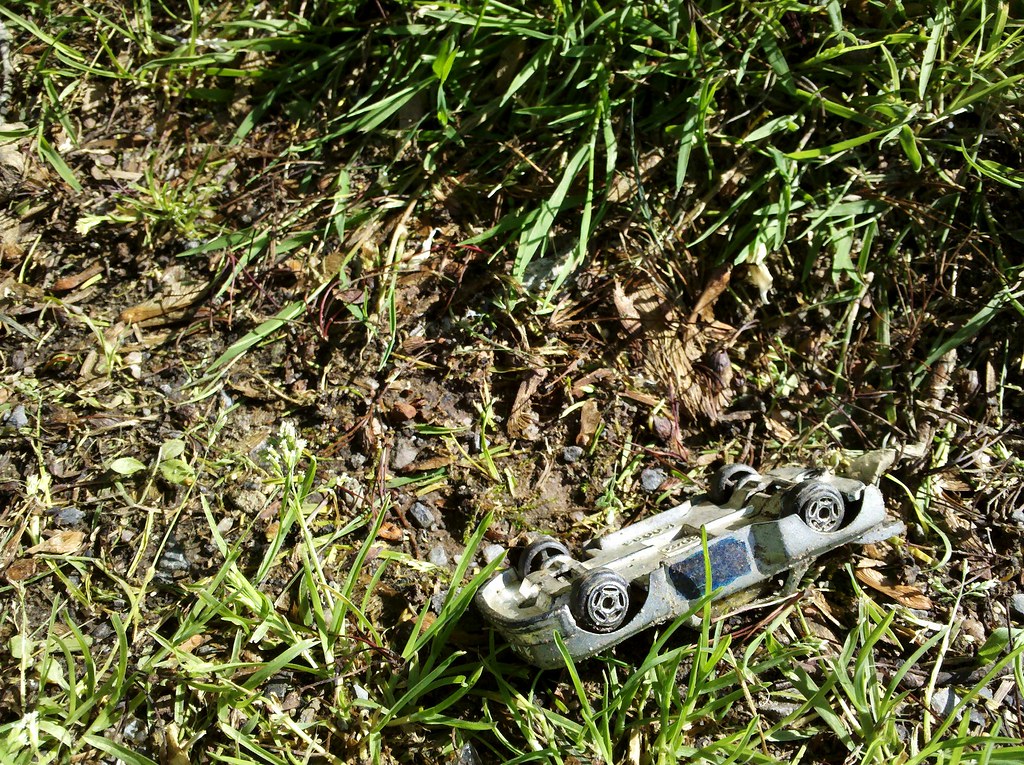
This unmarked cop car spotted the suspected Toyminator and foolishly gave chase without waiting for backup.

Officially founded in 1787, with informal meetings taking place since Francis Asbury delivered a sermon here in 1771, Woodrow United Methodist Church was the first Methodist congregation established on Staten Island. The original church building was struck by lightning and destroyed in 1832; this one was built to replace it in 1842.


Don't be afraid to crack open a nice cold can of Keystone Ice while you're sittin' there.

Running down the cracks in the sidewalk like so much melted ice cream

After getting by on its questionable merits for more than a quarter of a century, this gigantic mutated chain-link fence is finally going the way of the dodo, much to the artist's chagrin.
After twice having its application for a liquor license rejected (thanks to strenuous opposition from local community groups here in rapidly gentrifying Long Island City*), this was-just-gonna-be-a topless bar has decided to go fully nude, a state of undress allowed only in establishments that do not serve alcohol. Opening May 31!
* The immediate surroundings of this club are hardly gentrified, however.

After making my way down this long, dusty, Costco-adjacent parking lane (which looks like it's off limits to the public; I only walked it because Google labeled it a road), I came upon this entrance to a waterfront path. It's maintained by Costco, fulfilling a requirement of the deal that allowed them to build here.

These signs are located just inside the gate of Socrates Sculpture Park, which was an illegal dumping ground as recently as 1986, when some artists and community members took charge and began transforming the site into the outdoor exhibition space and public park that it is today.
I don't believe there are actually any salamanders in this area (although plenty do exist in more forested parts of the city); the Salamander Superhighway (which is a salamander-friendly tunnel constructed beneath the gravel path, seemingly eliminating the need for warning signs) is just intended to call attention (I guess) to a worldwide decline in the populations of salamanders and other amphibians.
Before being consumed by the sewer system, Sunswick Creek emptied into the East River here at what is now Socrates Sculpture Park (which explains all the poles).

This "new co-working space" built up in a poplar tree boasts views of Manhattan, Wi-Fi access, and "locally produced power" (which I assume is a reference to the nearby Ravenswood power plant). Supposedly you can book a spot here online, but I can't figure out how.


Keep your eyes fixed on the far right side of the video. Can you see it?


You can see crossovers swooping between the outer local tracks and the center express track. Just behind me are two more crossovers; collectively, these four inter-track connections allows trains from any of the three tracks to access either side of the platform at the nearby terminal station of the Astoria Line.
Generally speaking, this is how trains get from one side of the tracks to the other when they change direction at the end of the line, and it's how two trains coming from the same direction can end up on different sides of the platform at the last station.
This monument to Christopher Columbus was unveiled in 1941, but no one had yet secured funding for a pedestal at that point. Residents of the area became worried that, without a place to mount it, their statue might be taken and used as scrap metal in the massive World War II recycling effort, so they hid it in the basement of Queens Borough Hall. After the war, as you can see, they were able to raise enough money for a stone base on which the sculpture was permanently installed.
This converted call box is mounted outside FDNY Engine Company 263 and Ladder Company 117. Also on the firehouse wall is a poster with photos of all 343 firefighters who died on 9/11.
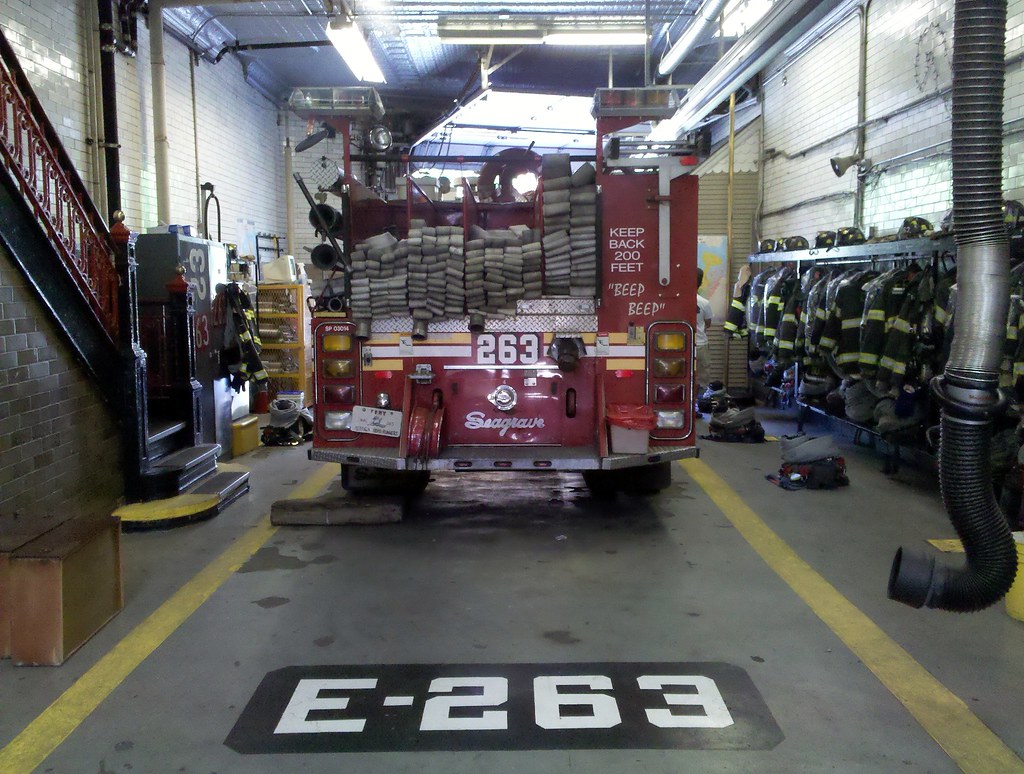
I was given an impromptu tour by a fireman who was just proud of his job and eager to share. And possibly a little bored. His counterpart next door at Ladder Company 117 also served as an excellent tour guide, it should be noted. Thanks to the two of them, I finally learned the difference between an engine company and a ladder company.


This photo doesn't do it justice; look how narrow the entrance to this lot is!
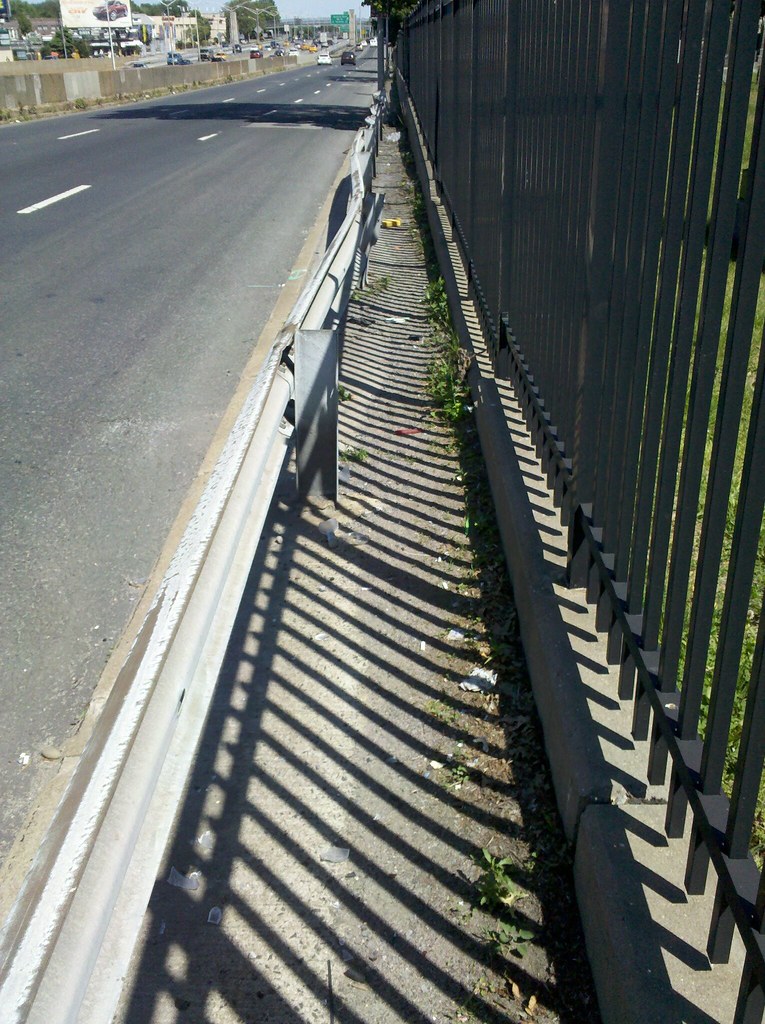
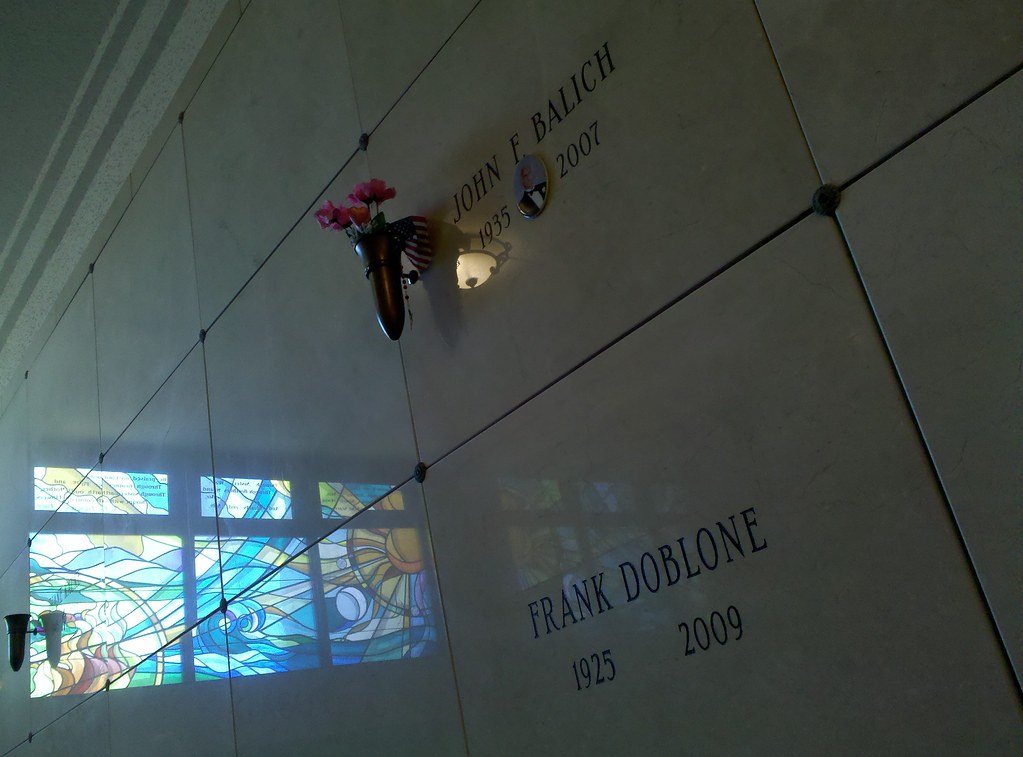
This cemetery is the final resting place of the musician Scott Joplin, known primarily for his ragtime compositions, including "Maple Leaf Rag" and "The Entertainer". In fact, as it turns out, St. Michael's just held its annual musical tribute to him yesterday!
Joplin achieved some fleeting fame during his lifetime, but was largely forgotten in the decades after he died of syphilis in a New York City mental institution in 1917. He was buried in a pauper's grave here at St. Michael's, which remained unmarked until the mid-1970s, when a growing revival of interest in his music reached fever pitch.
This renewed appreciation for his work led to a posthumous Pulitzer Prize, the first full staging of his opera Treemonisha, and a starring role for several of his ragtime pieces in the soundtrack of The Sting. Even today, you can hear his music echoing out on the streets of America — every time an ice cream truck drives by blaring the first section of "The Entertainer" on endless repeat.
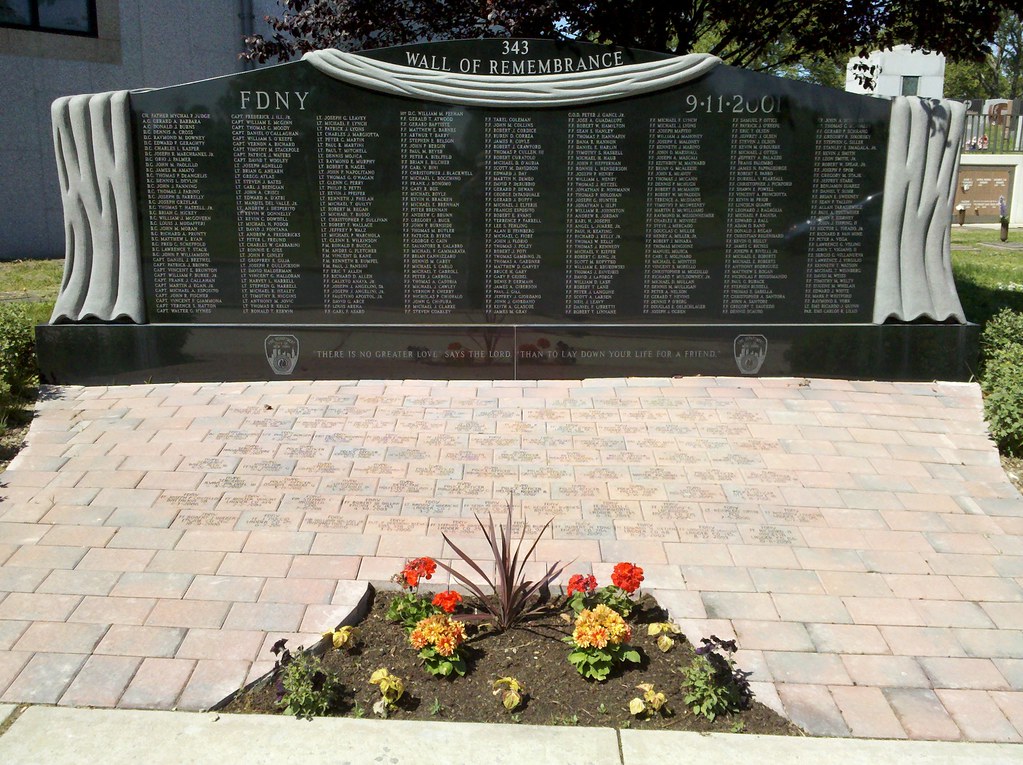
This is just one section of an expansive 9/11 memorial at St. Michael's Cemetery. Also included are monuments dedicated to the PAPD (Port Authority Police), a PAPD bomb-detection dog, the NYPD, the FDNY (again), and Queens firefighters specifically, as well as a first responder memorial not related to 9/11.
Many of the names on these monuments (though not the monument pictured here) are accompanied by small medallions with QR codes printed on them. If you scan one of those codes, you are taken to a website with information and memories about the corresponding individual. (The company that provides this service charges $100 per medallion!) You might be able to spot some of the QR codes in the circles next to the names on the monuments linked above. Check out Sirius's memorial for a good example.


Baffling riders and passersby for months on end, these mysterious postings, ubiquitous along the Q69 bus route, were no match for the investigative prowess of the New York Post. Flyers defending Tony have recently come onto the scene, and have inspired an enlightened exchange of ideas.

After months of seeing these signs, we've finally reached election day. And the winner is...
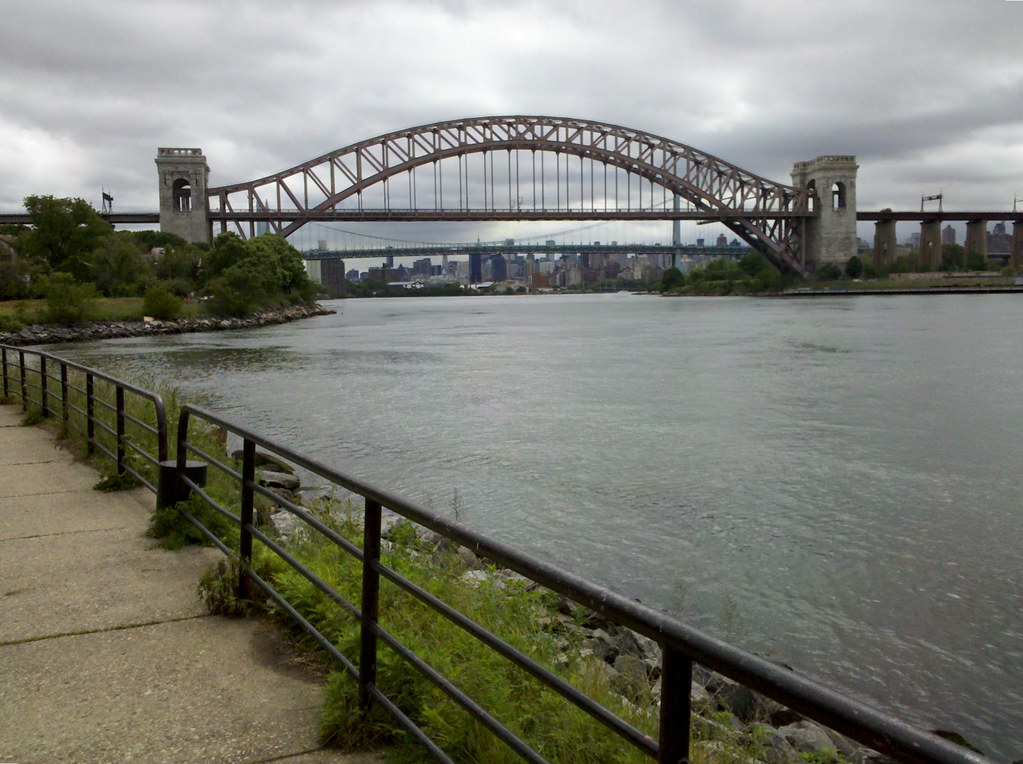
That's the name of both the steel arch railroad bridge and the waterway it spans. You can also see the Queens leg of the Triborough Bridge in the background.
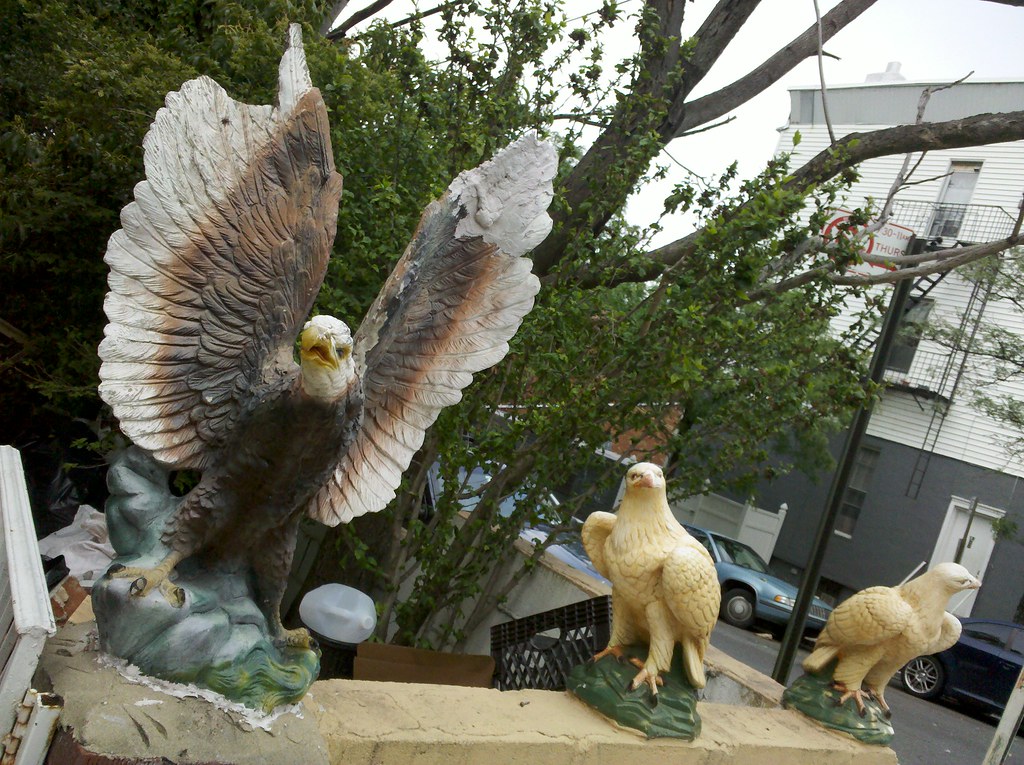
These three avian sculptures are merely the public face of an extensive collection of outdoor three-dimensional bird art. Most of the flightless facsimiles sit in the driveway and backyard; you can start to get a sense of things from this Street View image. The woman who lives here claims that her statues are always being damaged or stolen, while her exasperated nephew says he can't ever get her to throw out anything. I think I may have a lead on your bird thief, ma'am...
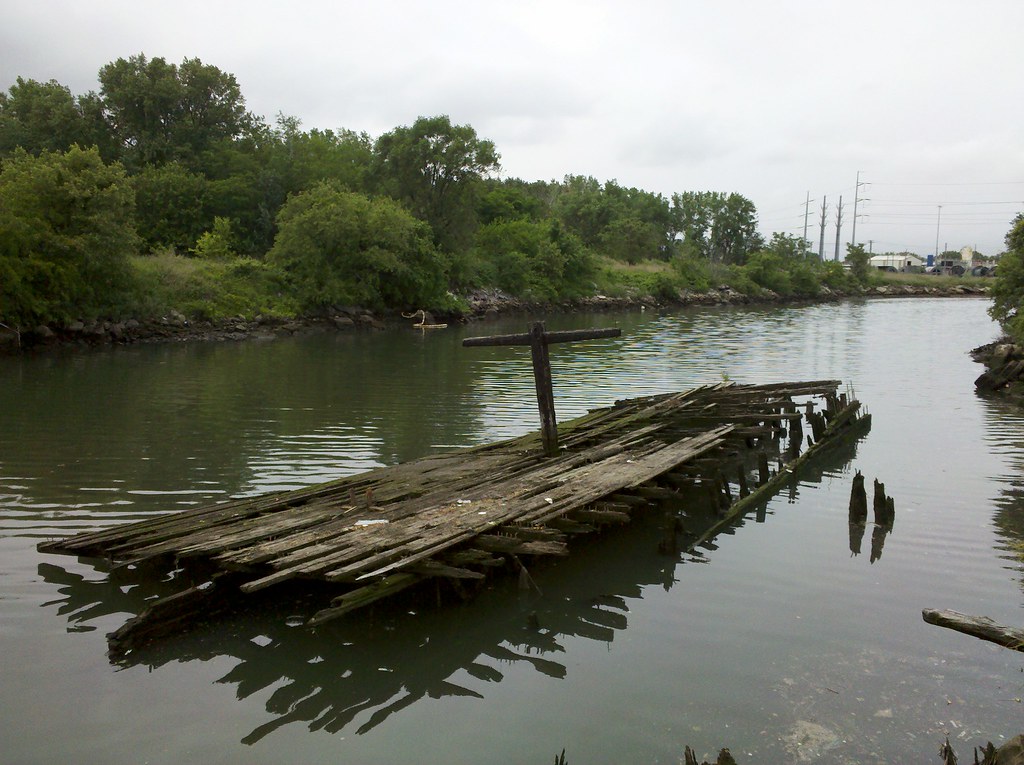
Once upon a time, the famed Steinway piano company had the wood for its pianos shipped in the form of log rafts, floated down from New England to its factory (located just out of frame to the right) here on Steinway Creek. These waters were actually quite worldly in those days; the old Astoria lumber companies would order exotic wood from around the globe and have the logs delivered by steamers into holding pens at the mouth of the creek. Here's a 1925 photo showing the factory and the creek, as well as the holding pens.

