

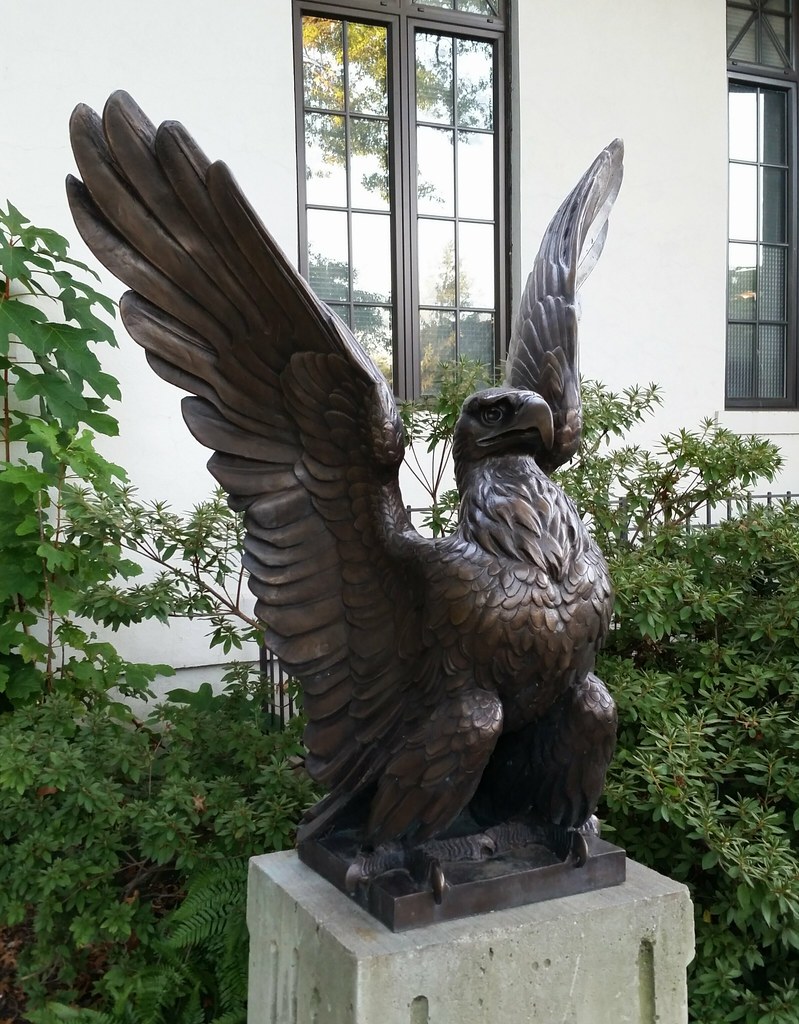
After coming across this bronze eagle and its identical companion perched outside the Overlook in Forest Park, I was left with the strong impression that I had seen them somewhere before. Later, looking through old blog posts, I realized why: they bear a striking resemblance to the eagles at the Prison Ship Martyrs' Monument in Fort Greene Park.
I spoke to Jonathan Kuhn, Director of Art & Antiquities at the Parks Department, and he told me that these eagles are in fact modified replicas of the Fort Greene originals, the one difference being that they have tail feathers, whereas their Fort Greene counterparts, sitting with their backs against columns, do not.
Mr. Kuhn also told me that when these tailed eagles were cast, perhaps 15 or 20 years ago, two other identical ones were created as well, and they can now be found at Joe Sabba Park in Sunnyside (Street View). When he said that, I remembered walking through that park and taking this photo of an eagle, thinking it looked familiar but not being able to figure out why.
It turns out that the sculptor of the original eagles on the Fort Greene monument, the renowned Adolph Weinman, lived and worked in Forest Hills Gardens for many years, just a few blocks from the Overlook. I asked Mr. Kuhn if that had anything to do with these newer eagles being placed here. He said he wasn't aware of it being a factor, but that it wouldn't have been unusual for former Parks Commissioner Henry Stern to have known such a thing and taken it into account when deciding what to do with the eagles.
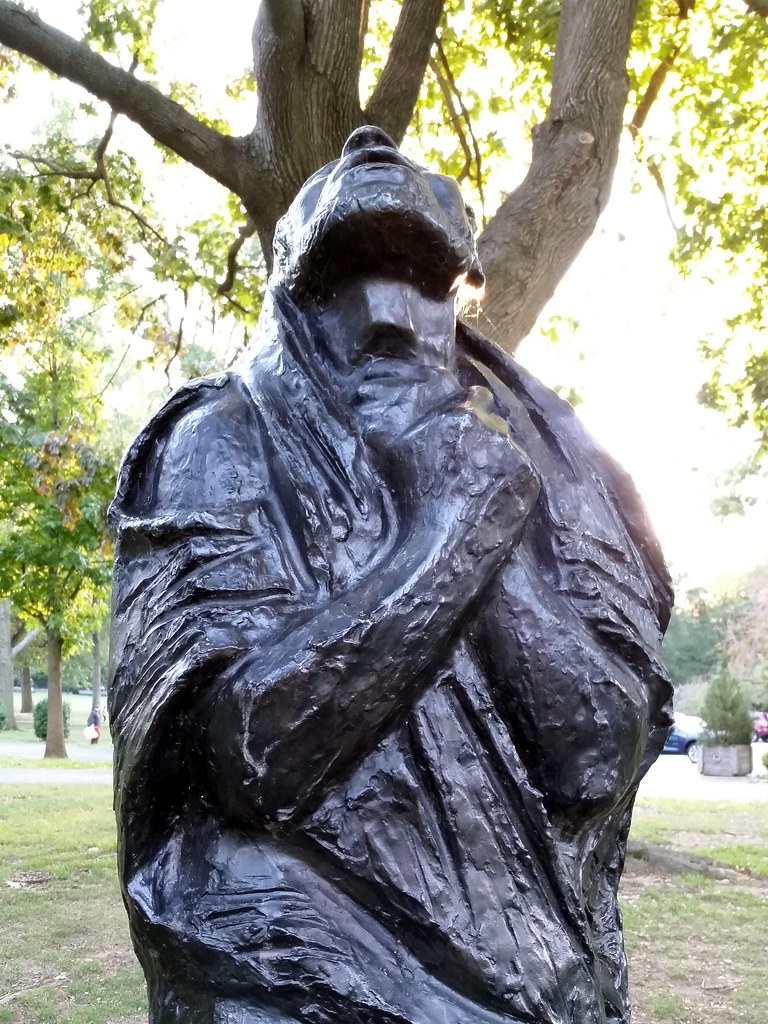
This statue of Job in Forest Park is one of two casts of a sculpture created by Nathan Rapoport for the 20th anniversary of the founding of Israel. He chose Job as his subject "to convey the universal suffering and ultimate test of faith that was visited upon the victims of the Holocaust." (The other cast of the sculpture is at Yad Vashem, Israel’s Holocaust museum and memorial.)
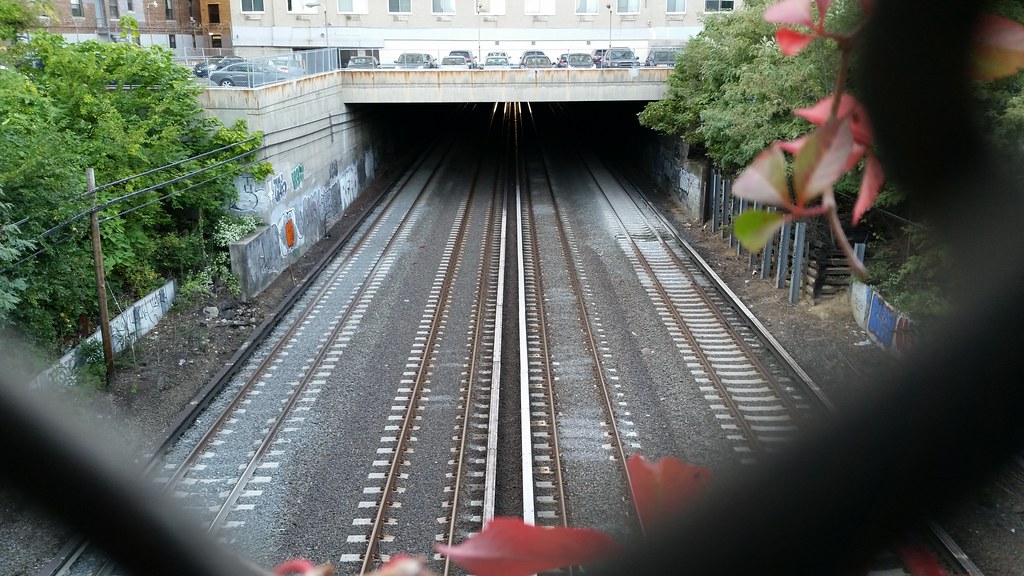
The Main Line of the Long Island Rail Road briefly ducks under cover as it passes beneath Union Turnpike, the Jackie Robinson Parkway, and a couple of high-rise apartment buildings.

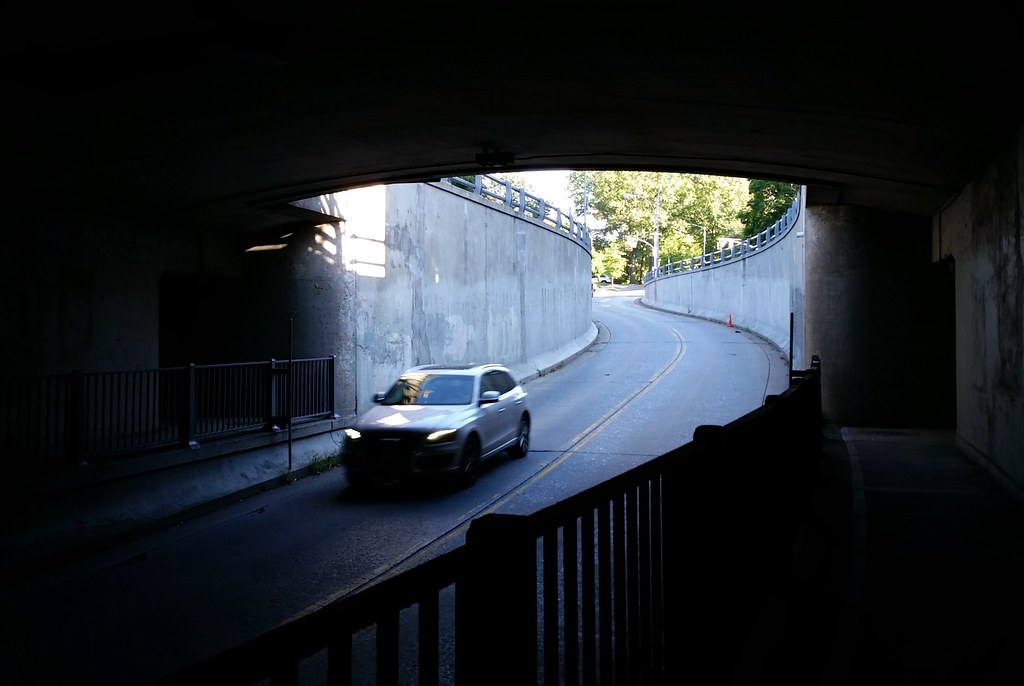
This is the Austin Street underpass beneath Union Turnpike and the Jackie Robinson Parkway.
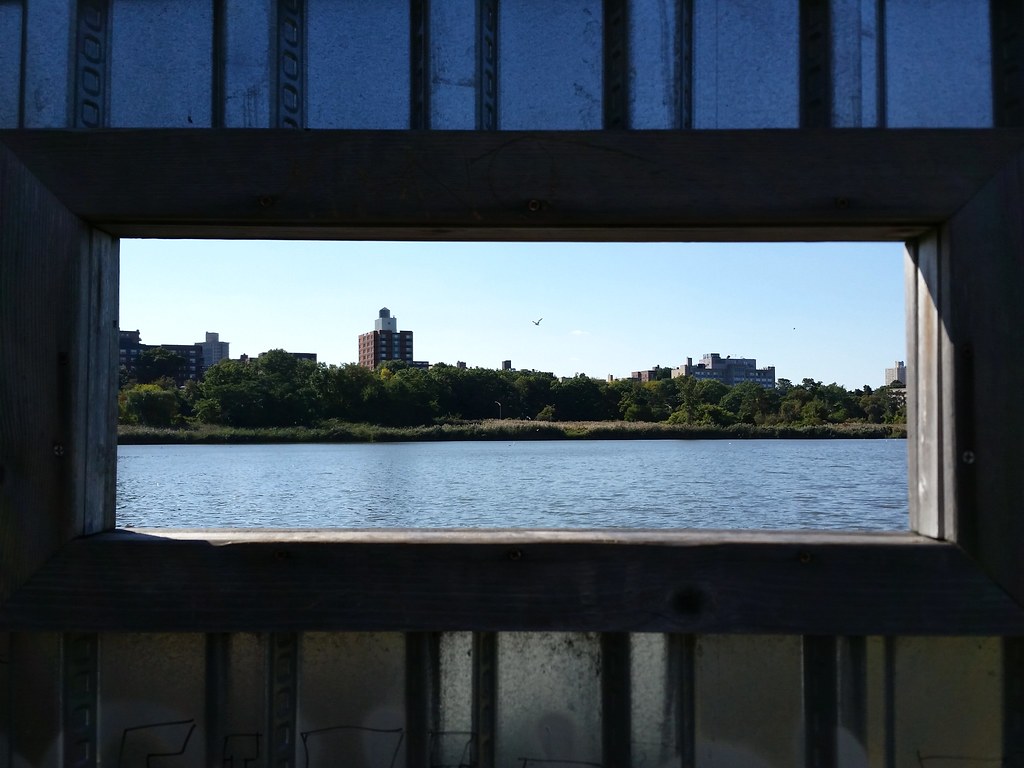

Since our last visit, the Parks Department has opened the Willow Lake Preserve to the public (though only on weekends). This oily mess is not the most impressive part of the preserve, but it did make for the best picture.
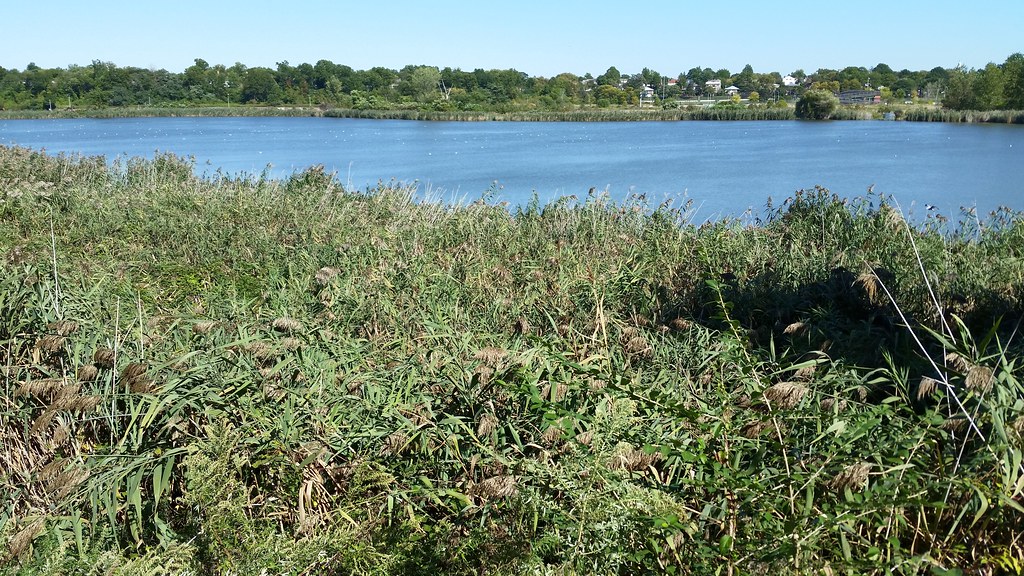
Along with neighboring Meadow Lake (to which it is connected), Willow Lake was created for the 1939-40 World's Fair. While Meadow Lake was built for recreational use, Willow Lake was intended to be more of a natural refuge.
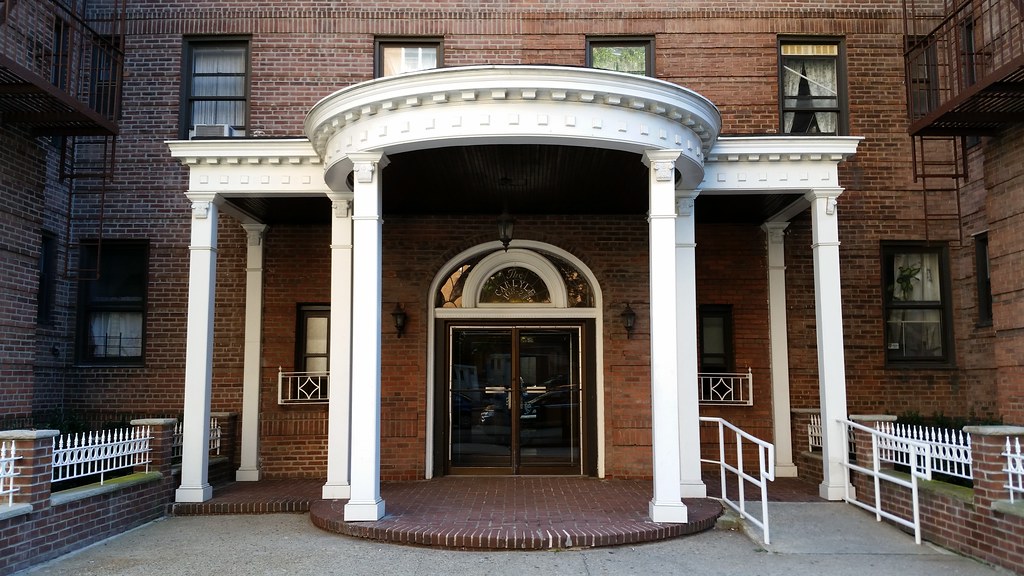
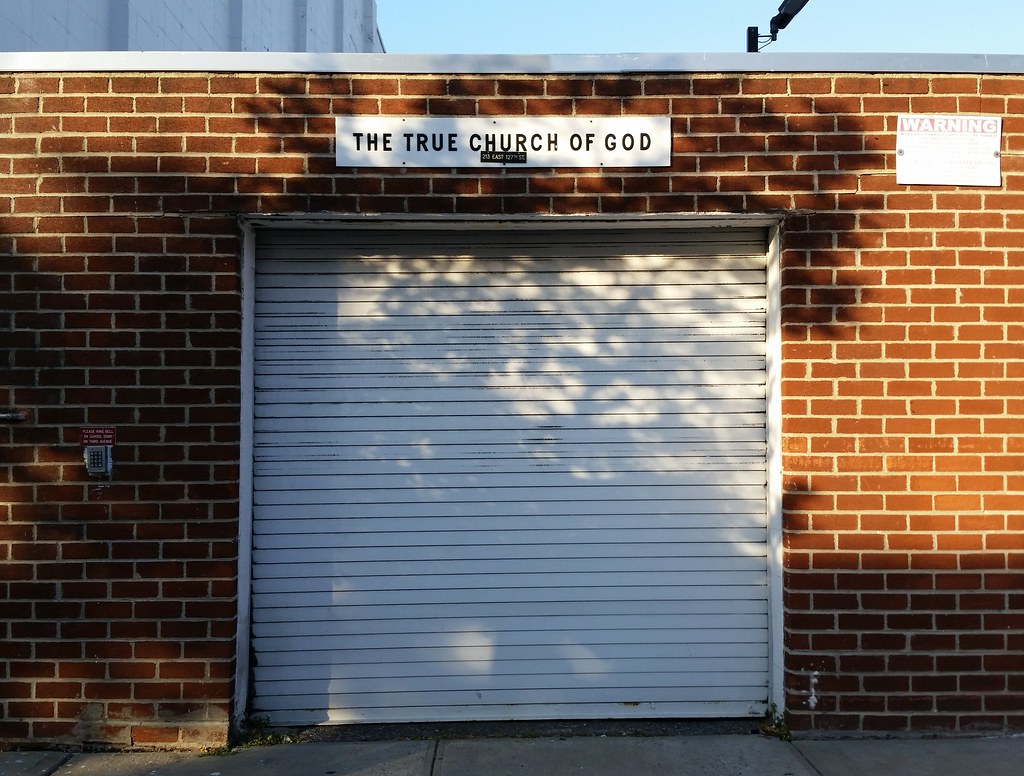
I thought this would just be a lighthearted picture, but upon googling the name of the church things turned dark fast. I don't know if Pastor Streitferdt ever ended up serving any time in prison, but it looks like he's still in charge of the church today.
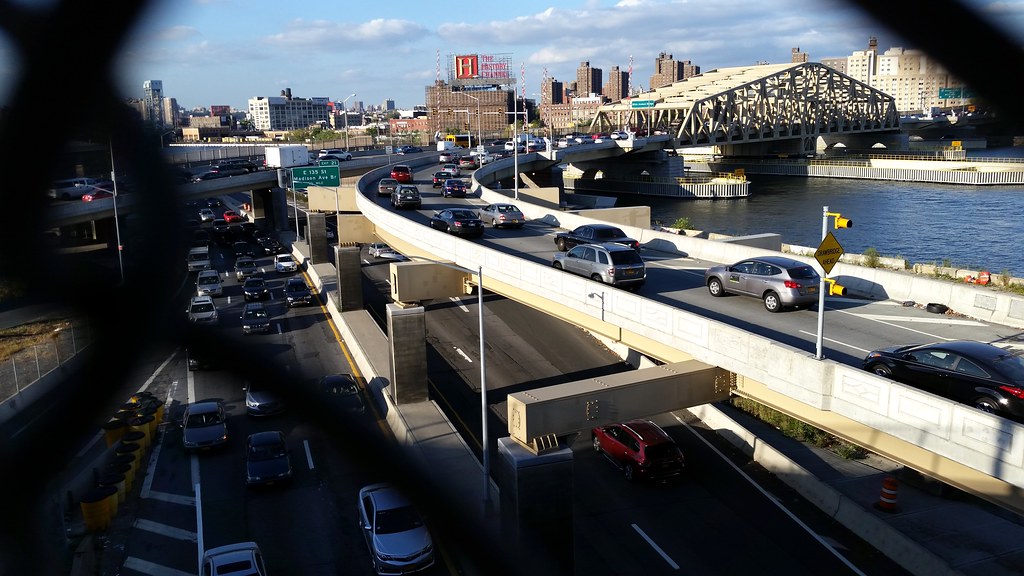
That's the Harlem River Drive on the lower level; the cars on the ramps above are heading into the Bronx via the Willis Avenue Bridge.
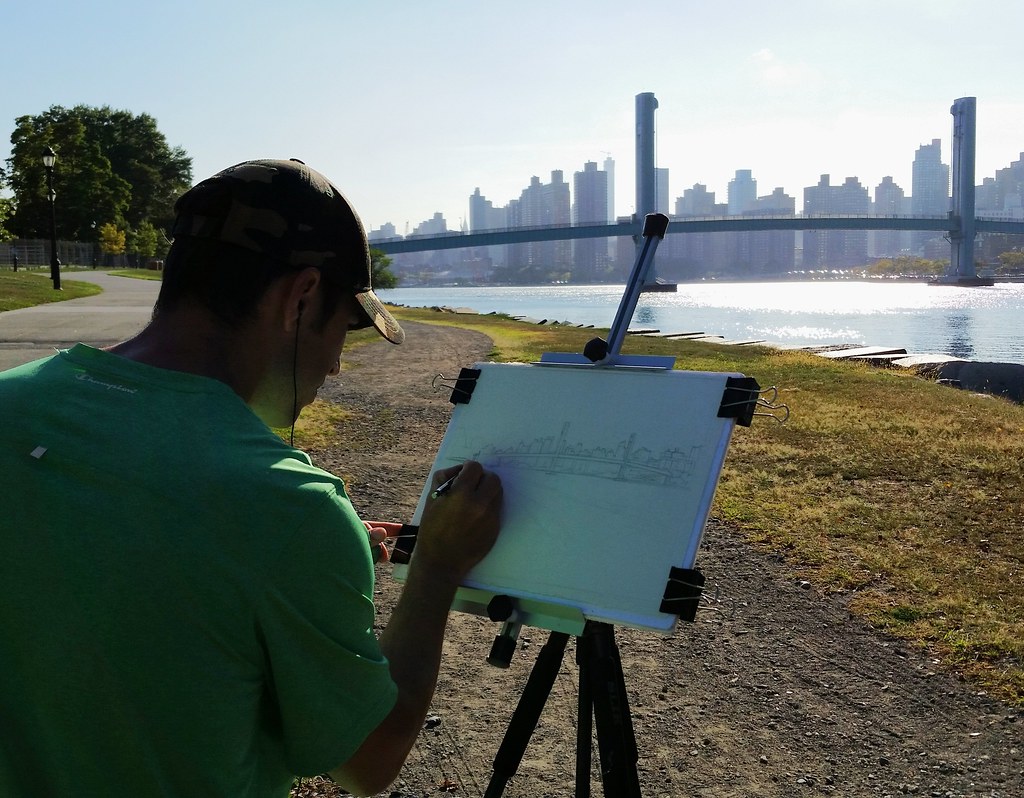
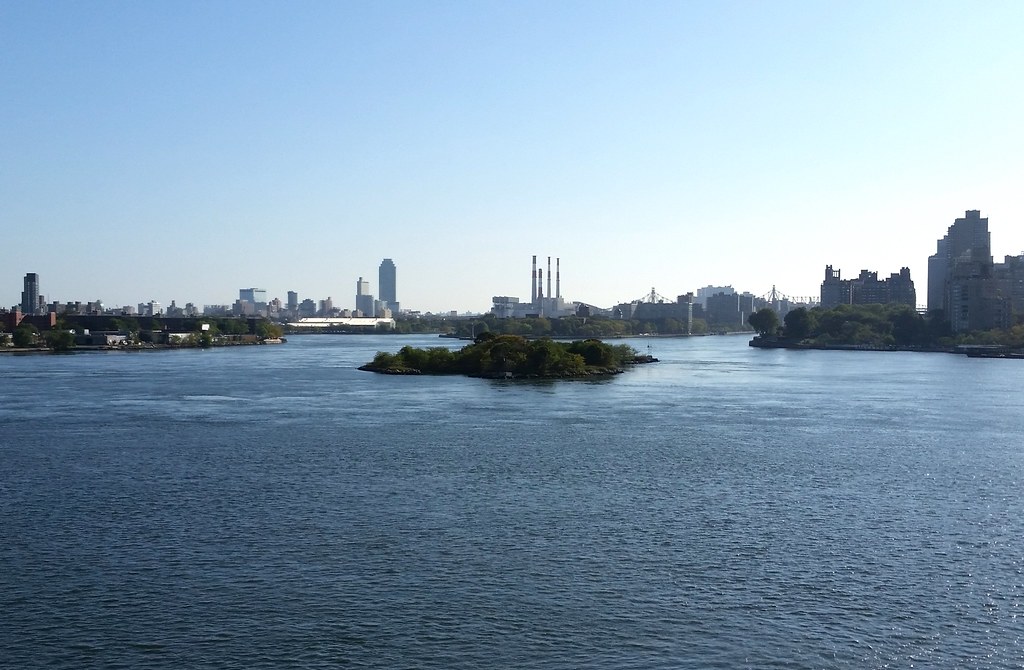
This island in the East River started out as two smaller islands: Great Mill Rock and Little Mill Rock. According to The Other Islands of New York City:
Great Mill Rock was first developed between 1701 and 1707, when John Marsh built the tidal mill there that gave both the islands their names. During the War of 1812, the army built a blockhouse with cannons on the island to deter the British from making their way from Long Island Sound. The blockhouse burned down in 1821. In 1850, John Clark claimed squatter's rights to Great Mill Rock and began selling food and booze to passing boats. A decade later, he sold the island for $40 to Sandy Gibson, who moved his entire household there, right down to the cows and chickens. Three years later, Gibson sold the land to a Charles Leland for $300, but stayed on for several more years as a tenant, catching eels and flounder for food.The Mill Rocks sat amid many other rocks, reefs, and islets with some colorful names among them: Hen and Chickens, Hog's Back, Frying Pan, Bread and Cheese, and Bald-headed Billy. These riverine obstacles made the churning waters in and around Hell Gate notoriously treacherous to navigate. In 1851, the Army Corps of Engineers began a long campaign of blasting these dangerous obstructions out of existence.
October 10, 1885 saw the annihilation of nine-acre Flood Rock by nearly 300,000 pounds of explosives, much of which had been prepared at a facility on Great Mill Rock. "The largest planned explosion prior to the atomic bomb" (a debatable claim), it was reportedly felt about 50 miles away in Princeton, New Jersey. The event was a huge public spectacle, covered extensively in the NY Times. Some excerpts:
The cross streets east of the upper end of Central Park were full of people moving toward the East River. Down town great numbers of people were climbing to the tops of high buildings, for they were sure that they would hear the thunder of the explosion and see the huge sheets of water shooting into the air. All along the East River front every "coign of vantage" was pre-empted early in the day.Check out this photo of the explosion!
The bulk of the crowd, however, assembled on the sides of the abrupt slopes that descend to the river . . . opposite the scene of the explosion. Men, women, children, dogs, and goats mingled in one broad, variegated mass. . . . Hundreds of people gathered on the tops of the big breweries and other tall buildings that loom one above another on the easterly decline of the city. Away up on the tops of chimneys and on the outermost pinnacles of roofs could be seen the irrepressible, never-to-be-left small boy, filled with the American instinct for getting to the top and looking down on the whole business. Trees had their usual load of sightseers and lamp posts were opportunities to be embraced with avidity. Down along the water's edge the masses concentrated into a solid, sinuous wall that wound around among the piers and wharves as far as the eye could reach to north and south. . . .
[Upon the detonation of the explosives by the young daughter of the general in charge of the project:] Away it flew, that viewless spark, to loose three hundred thousand chained demons buried in darkness and the cold, salt waves under the iron rocks. A deep rumble, then a dull boom, like the smothered bursting of a hundred mighty guns far away beyond the blue horizon, rolled across the yellow river. Up, up, and still up into the frightened air soared a great, ghastly, writhing wall of white and silver and gray. Fifty gigantic geysers, linked together by shivering, twisting masses of spray, soared upward, their shining pinnacles, with dome-like summits, looming like shattered floods of molten silver against the azure sky. Three magnificent monuments of solid water sprang far above the rest of the mass, the most westerly of them still rising after all else had begun to fall, till it towered nearly 200 feet in air. To east and west the waters rose, a long blinding sheet of white. Far and wide the great wall spread, defying the human eye to take in its breadth and height and thickness. The contortion of the wreathed waters was like the dumb agony of some stricken thing. . . .
All around the place the water was turned to a dirty brown by the upheaval of the bottom of the river. The foam was still bubbling, nearly 10 minutes after the explosion. Thousands of pieces of wood, mingled with marine weeds and myriads of dead fish, killed by the shock, were floating down into the East River. . . .
Industrious and thrifty fishermen, armed with scoop-nets, ladled dead fish out of the water into their boats and prepared to make to themselves a feast.
Shattered remains of Flood Rock were collected and used to fill in the gap between the Mill Rocks, creating the single island that exists today. Mill Rock was acquired by the Parks Department in 1953; it's seen occasional recreational use since then — perhaps most notably as co-host of the 1969 New York Avant Garde Festival — but is currently off limits to the public.

I'm walking every street in New York City.
This is the counterpoint to my walk across the US. Instead of seeing a million places for just a minute each, I'm going to spend a million minutes exploring just one place. By the time I finish walking every block of every street in all five boroughs, I'll have traveled more than 8,000 miles on foot — all within a single city. Details!
Email me at matt@imjustwalkin.com
Subscribe to my email list
Maps: Progress | Photos

~9,954 miles walked
Your donations allow me to keep walking full-time. If you think what I'm doing is valuable and you'd like to offer some support, I would be very grateful. On the other hand, if you think I'm a worthless bum, feel free to email me and tell me to get a job, bozo. Both are excellent options!
