
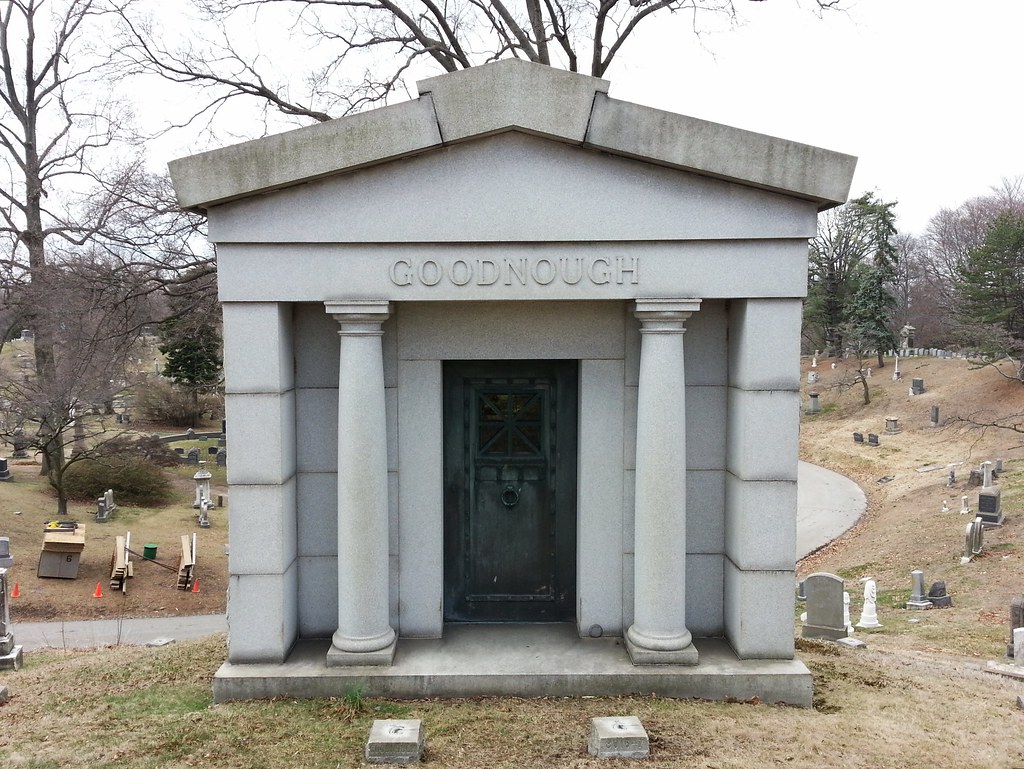
...but it's certainly Goodnough.

Built with piano money, this is supposedly the largest mausoleum in Green-Wood Cemetery.

outside the lavish family mausoleum (photo) of 19th-century impresario William Niblo. Niblo was the proprietor of the famed Niblo's Garden, "a vibrant drink and entertainment antecedent to modern Broadway theater-going", where "the first of the great Broadway hits" — a five-and-a-half-hour extravaganza of "art and bodily allurement" called The Black Crook — premiered in 1866.
Niblo's wife died well before he did, and in his later years he would frequently spend summer afternoons at Green-Wood, whiling away the hours inside the family tomb, "novel in hand, until the shadowing of the grand path before the door showed him that evening was near." During one visit, however, a great burst of wind slammed the vault door shut and trapped him inside. It wasn't until the next morning that he was discovered, "sitting composed in the tomb, and by no means near so much agitated as was any one of those who were looking for him. He explained the accident, his shrieks for assistance, and then his relapse into a calm and philosophical consideration of the circumstances. He knew that no one could hear him call, but he felt that the active brains of his friends would seek him out, and that sooner or later he would be liberated."
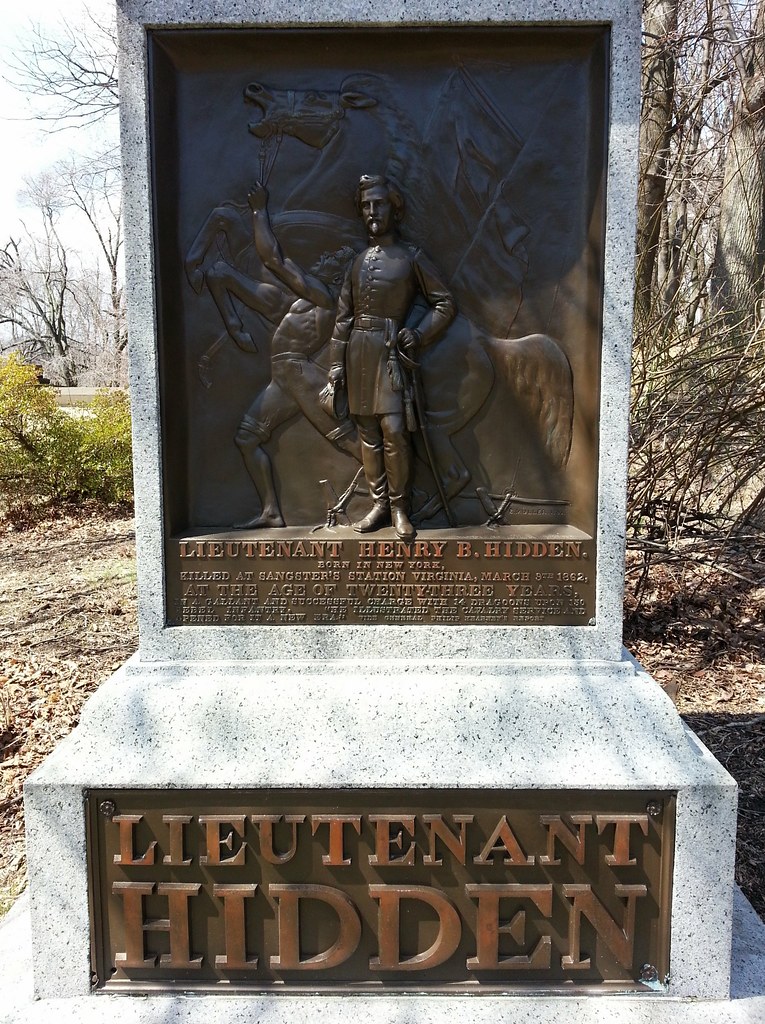

Eleanor Roosevelt's great-grandfather from the "missing" side of her family? Although I can't find any definite proof, it seems quite likely. Mr. Hall doesn't show up in Green-Wood's online records, but there's a woman buried here with the same name (Susan) as Eleanor's great-grandmother, and there's another fellow with the last name of Tonnele — Eleanor's great-grandmother's maiden name.

Bob Dylan's romantic account of this mobster's life conveniently glosses over the man's cold-blooded ruthlessness. (Lester Bangs called the song "one of the most mindlessly amoral pieces of repellent romanticist bullshit ever recorded".) But Dylan did get Gallo's death correct: he was indeed blown down in a clam bar in New York. And now his remains lie forgotten beneath a scraggly bush, his name half covered with dirt.
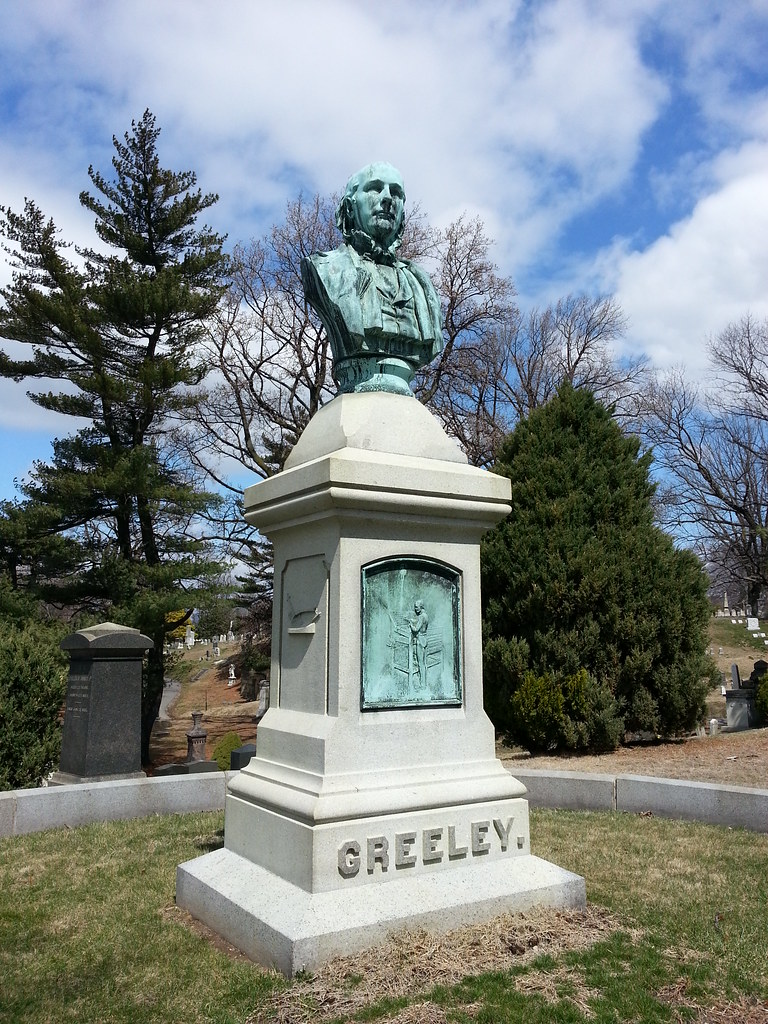
Founder and editor of the highly influential New York Tribune, Greeley was also the loser of the 1872 presidential election. His wife died less than a week before the election, and, after suffering a breakdown, he passed away just a month later, before the Electoral College votes had even been cast.

including the Rev. Lawrence Heyworth Mills, D.D., Professor of Zend Philology at the University of Oxford (close-up)


Lakefront mansions at Green-Wood's Sylvan Water, a modified glacial kettle pond


This will probably be my last day at this beautiful 478-acre sculpture garden/necropolis. You can see the previous two days here and here.
Pictured above is the Tranquility Garden columbarium, with the sky obelisk (which we've been inside of) at right.
Today happened to be Qingming, a Chinese festival that involves tending family graves and honoring the deceased. Around the columbarium, there are little raised altars with flames where I saw Chinese people burning paper offerings — apparently a way of sending gifts to departed ancestors. A young woman who was there with her parents told me that sometimes the offerings are actually shaped like the objects they're supposed to represent. She specifically mentioned the example of people burning paper iPhones.

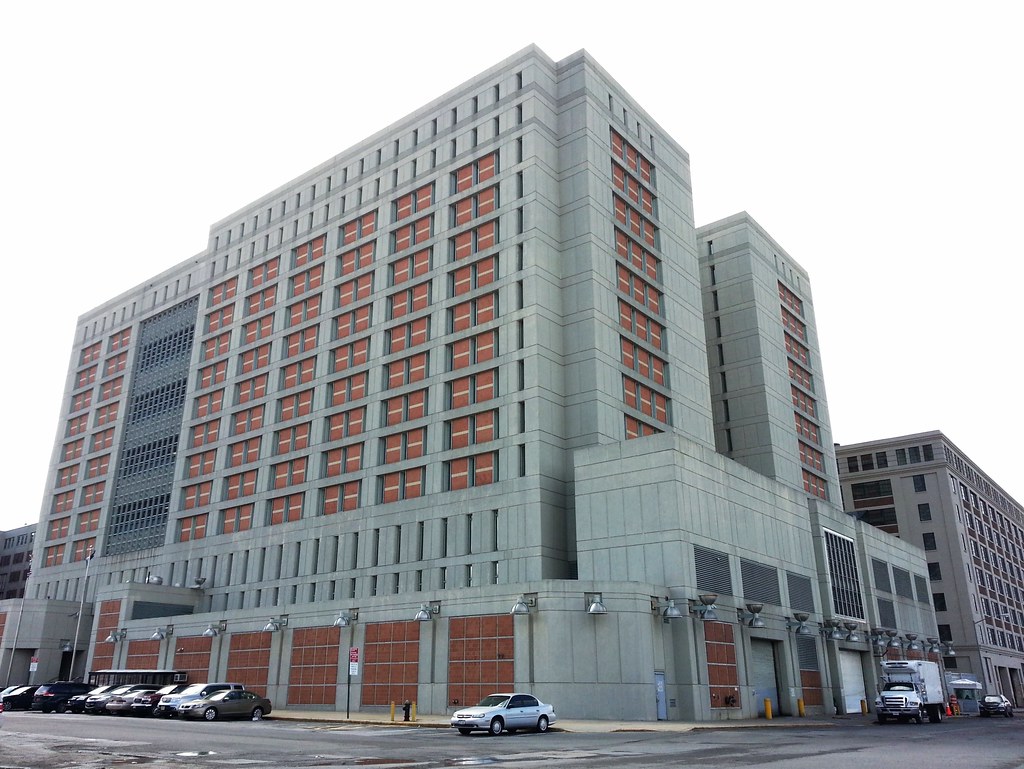
This federal detention facility blends in quite well with the warehouses lining 2nd Avenue here in Sunset Park. One current inmate is Sister Megan Rice, the octogenarian nun who in 2012, along with two 60ish-year-old men, "carried out what nuclear experts call the biggest security breach in the history of the nation’s atomic complex, making their way to the inner sanctum of the site where the United States keeps crucial nuclear bomb parts and fuel" in Oak Ridge, Tennessee, and vandalizing the place in protest of the US's continued maintenance of a nuclear arsenal.
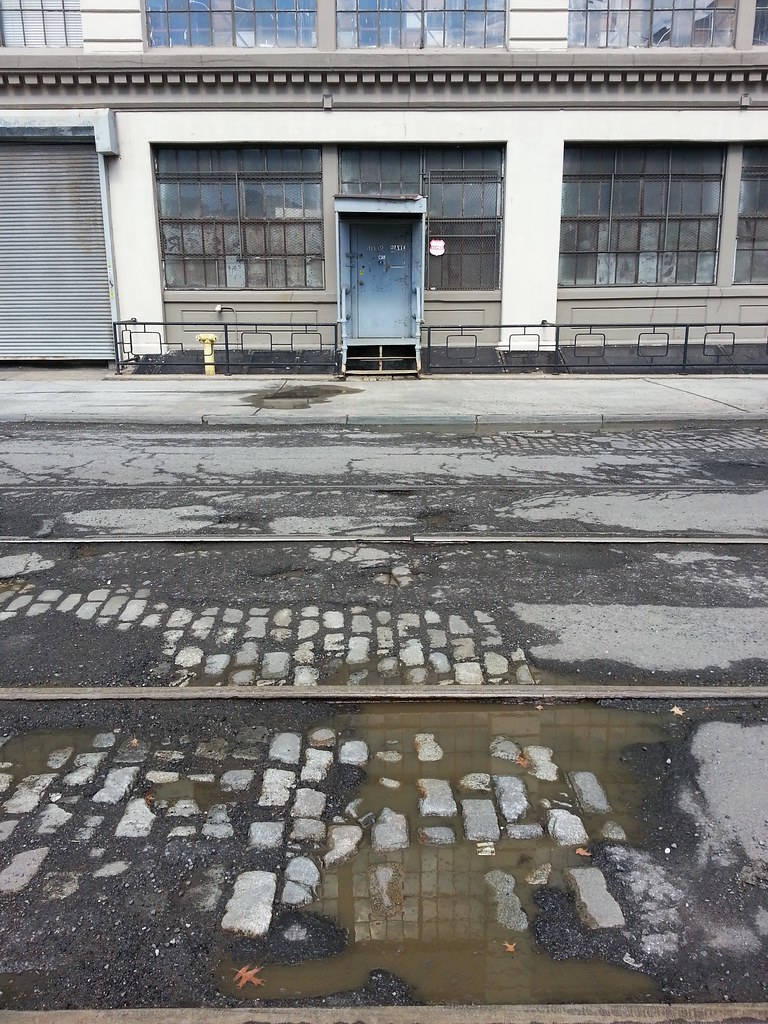
The old Belgian block pavement of 2nd Avenue has become quite a bit more exposed since last September.
I'm walking every street in New York City.
This is the counterpoint to my walk across the US. Instead of seeing a million places for just a minute each, I'm going to spend a million minutes exploring just one place. By the time I finish walking every block of every street in all five boroughs, I'll have traveled more than 8,000 miles on foot — all within a single city. Details!
Email me at matt@imjustwalkin.com
Subscribe to my email list
Maps: Progress | Photos

~9,954 miles walked
Your donations allow me to keep walking full-time. If you think what I'm doing is valuable and you'd like to offer some support, I would be very grateful. On the other hand, if you think I'm a worthless bum, feel free to email me and tell me to get a job, bozo. Both are excellent options!
