
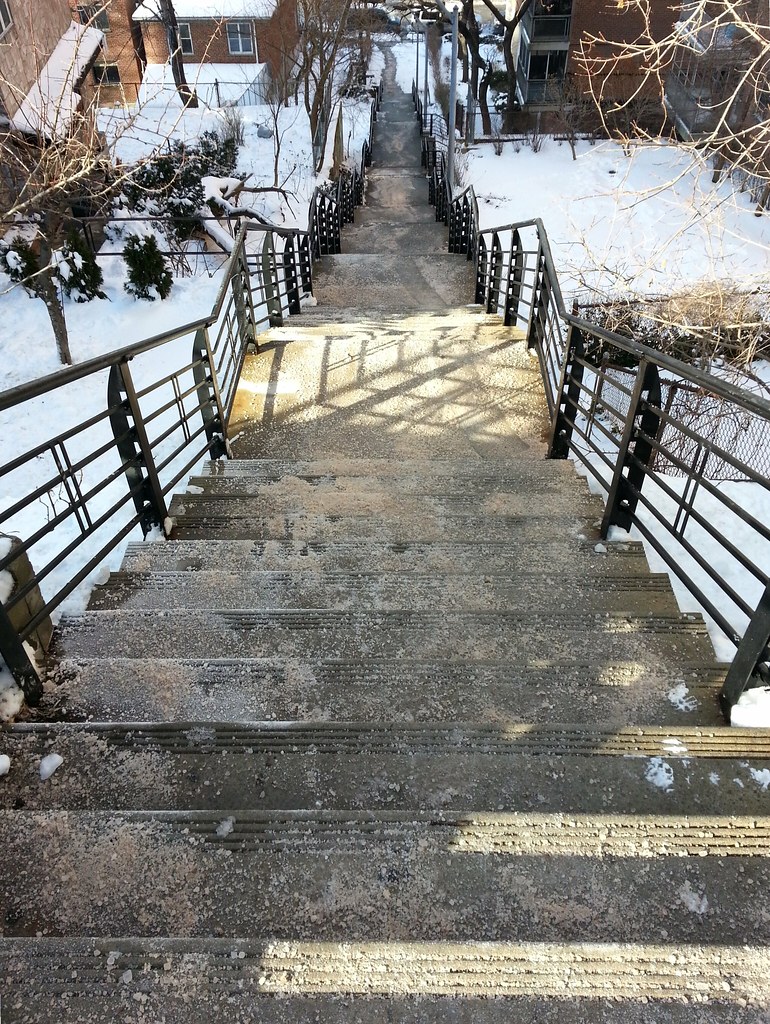
One of the many step streets found on the steep slopes of Kingsbridge Heights
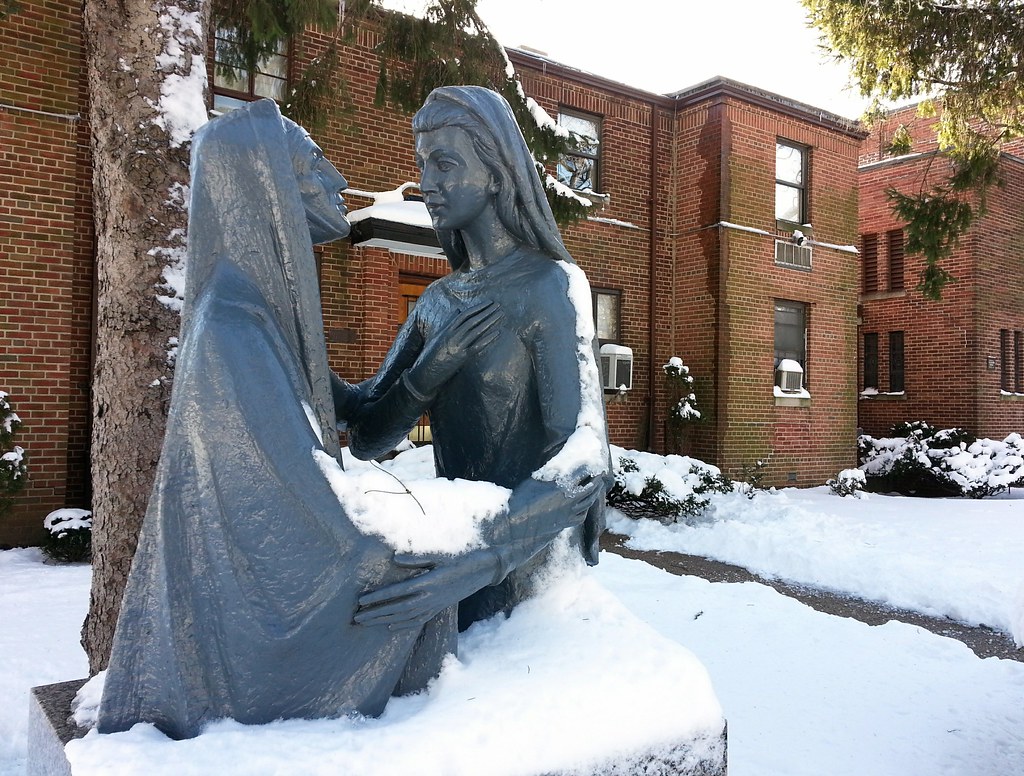
Planted in 1949 and recently renovated after years of neglect

This gateway once led down to the sunken Colonial Garden, a formal garden surrounded on three sides by canals, designed by Samuel Parsons Jr. (of the Flushing horticulturalist Parsons) around the turn of the 20th century as a complement to the nearby Van Cortlandt House (located behind me in this photo), which had just been turned into a museum of 18th-century life.
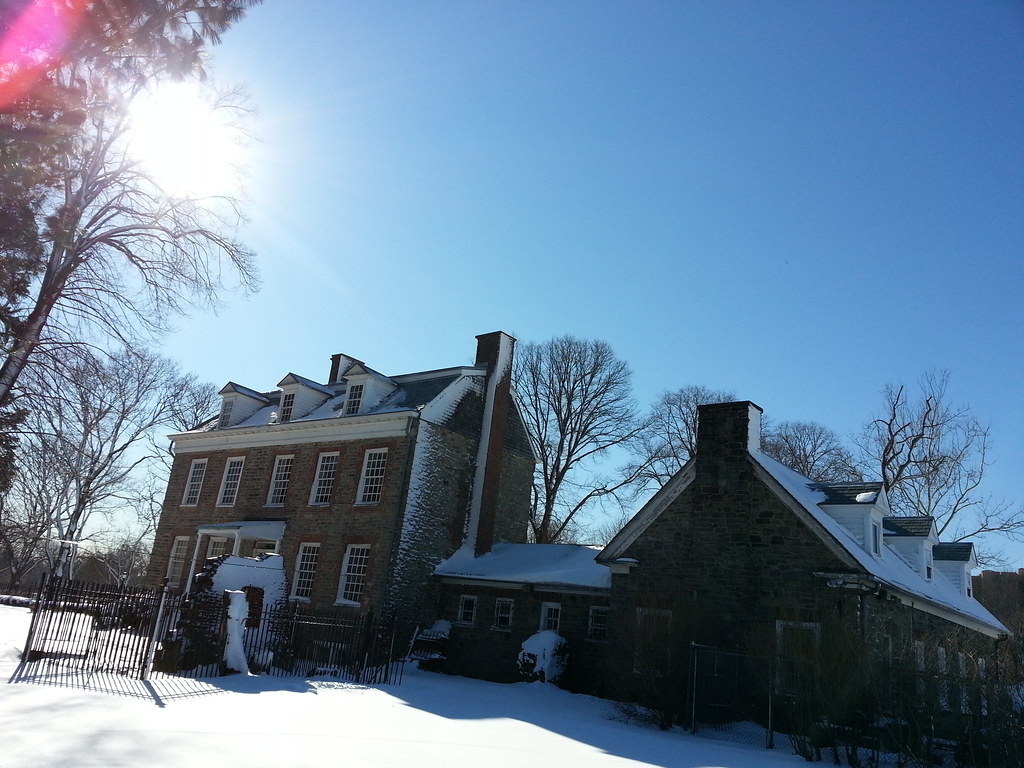
Built in 1748-49, this* is the oldest house in the Bronx, and "was the scene of military maneuvers and intrigue" during the Revolutionary War. Here are some great photos of the well-maintained interior, which has served as a museum of 18th-century life since 1896.
* The L-shaped structure on the left is the original house. You can't tell it's L-shaped in this photo, though. This bird's-eye view and this photo of the front of the house should make things a bit clearer.
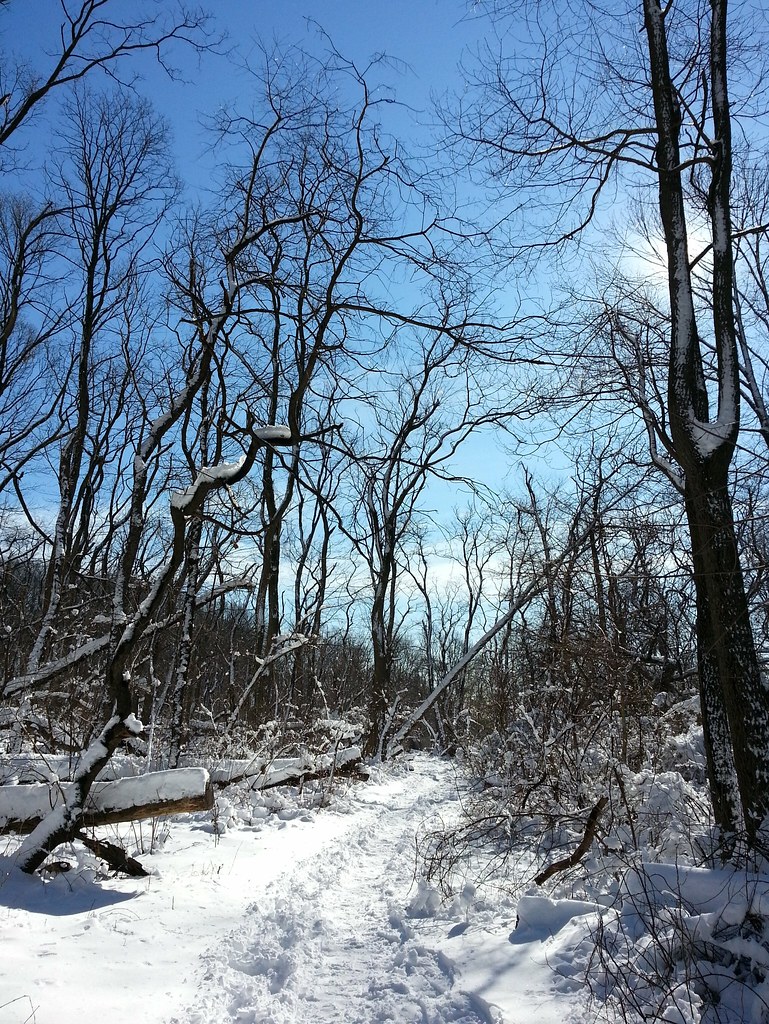
Following the course of the Old Put's Getty Square branch


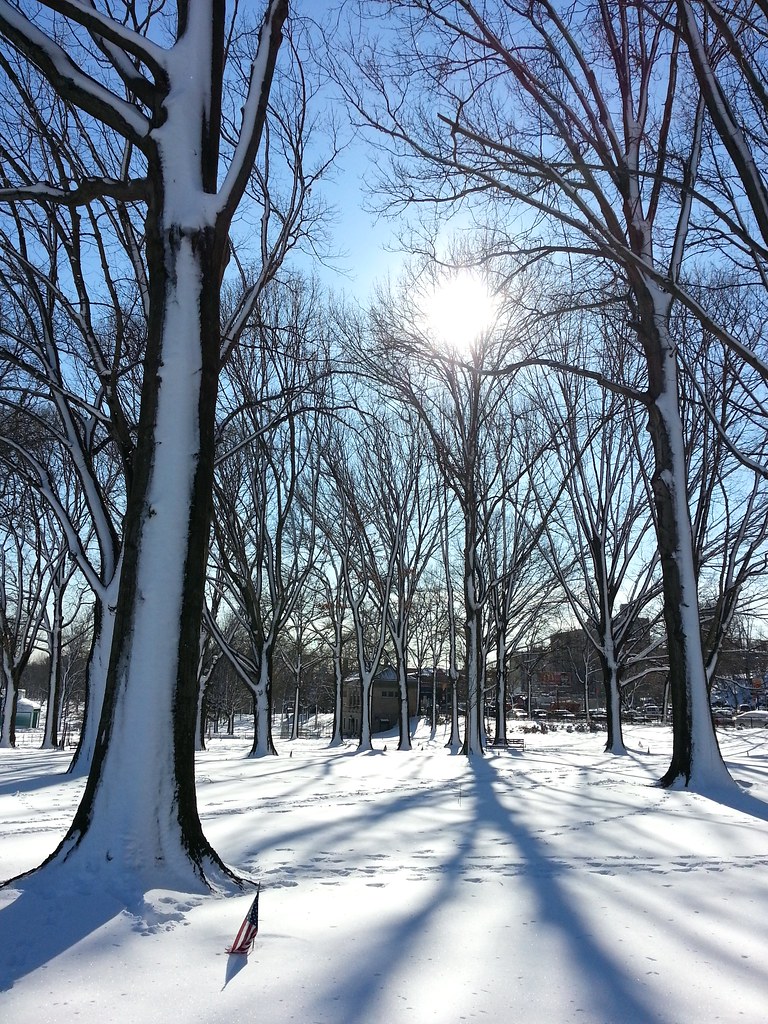
Once the site of a village built by the Wiechquaeskeck (or Wickquasgeck, or Weckquaesgeek) tribe, this expansive field acquired its name from its use as a National Guard parade ground during the late 19th and early 20th centuries. It became a temporary home for 15 bison in 1907 (not the first time such creatures were kept at Van Cortlandt Park), and, along with the rest of the park, served as an Army training facility during World War I. Turned into a full-fledged recreation area in 1938, the recently reconstructed Parade Ground now contains, beneath all that snow, ten cricket pitches, six soccer fields, two baseball diamonds, two softball diamonds, and a 1.5-mile running path.

According to its plaque, this statue memorializes the first coyote confirmed to have been seen in New York City since 1946, a female found dead in 1995 on the Major Deegan Expressway, which passes through the park (although it turns out that, unbeknownst to the Parks Department at the time, another coyote had been spotted in nearby Woodlawn Cemetery in 1994). There is now an established population of the canids in the Bronx — it's said that they particularly enjoy hanging around the golf course here at Van Cortlandt Park — and every once in a while, one will even make an appearance in Manhattan. A local scientist has enlisted students from the High School for Environmental Studies to help him set up camera traps around the city's parks to track the animals' growing presence — here's one of their shots.


It's worth taking a closer look at the names on the bottles. I think my favorite is Dragon Blod.
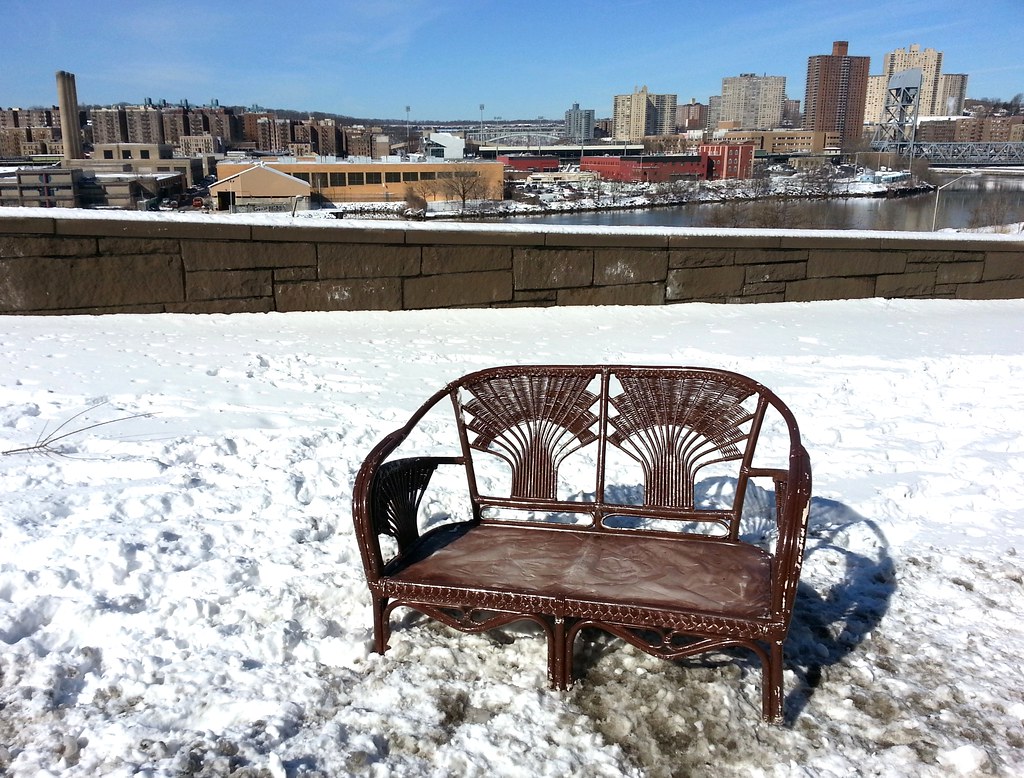
Although the view's better facing this way. Looking out over the Harlem River (that's Manhattan on the other side), you can see a few old acquaintances of ours. From left to right, we have the defunct Inwood incinerator stacks, the Henry Hudson Bridge (you might need a close-up to find it in the background), the Promenade Apartments, and the Broadway Bridge.

Built into the side of a hill, this strange little enclave looks like it may have originally been a series of garages.
I'm walking every street in New York City.
This is the counterpoint to my walk across the US. Instead of seeing a million places for just a minute each, I'm going to spend a million minutes exploring just one place. By the time I finish walking every block of every street in all five boroughs, I'll have traveled more than 8,000 miles on foot — all within a single city. Details!
Email me at matt@imjustwalkin.com
Subscribe to my email list
Maps: Progress | Photos

~9,954 miles walked
Your donations allow me to keep walking full-time. If you think what I'm doing is valuable and you'd like to offer some support, I would be very grateful. On the other hand, if you think I'm a worthless bum, feel free to email me and tell me to get a job, bozo. Both are excellent options!
