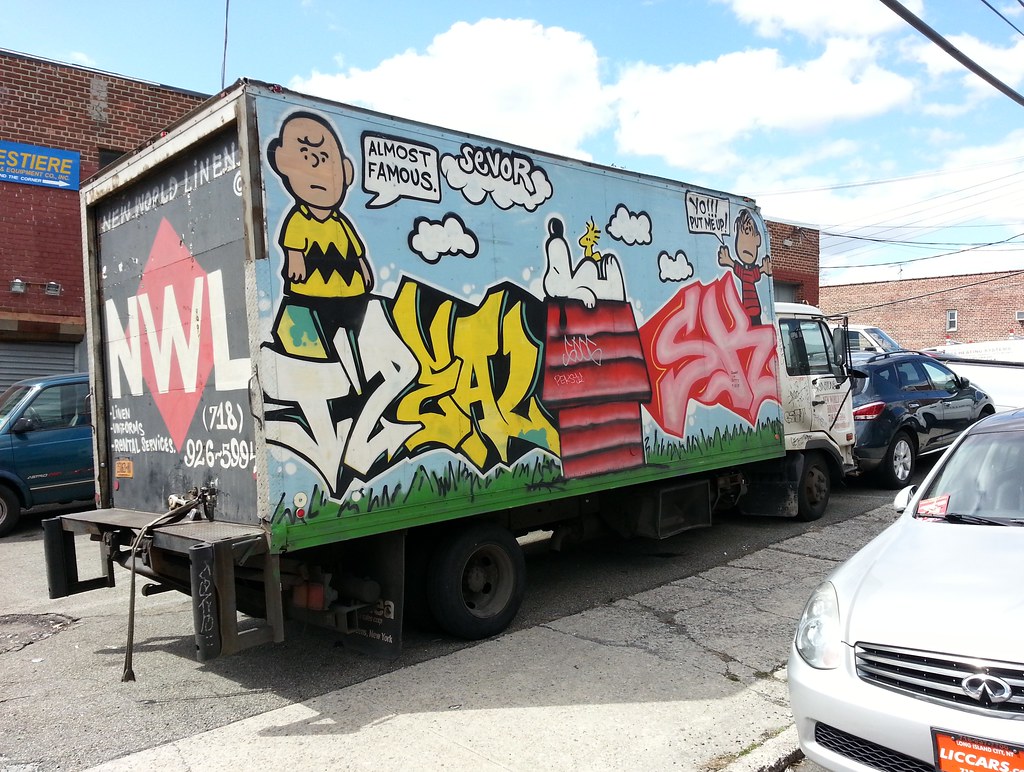
PUT ME UP!

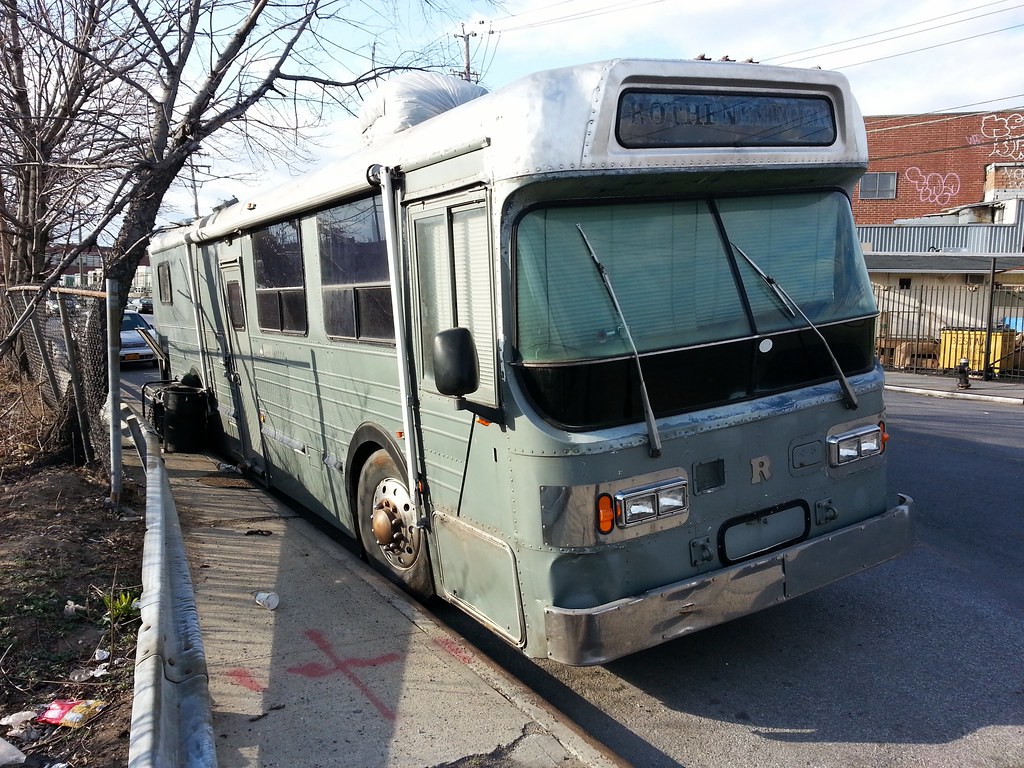
They've covered some ground since we last crossed paths out in the Rockaways. (It's the same van; I checked the plates.)
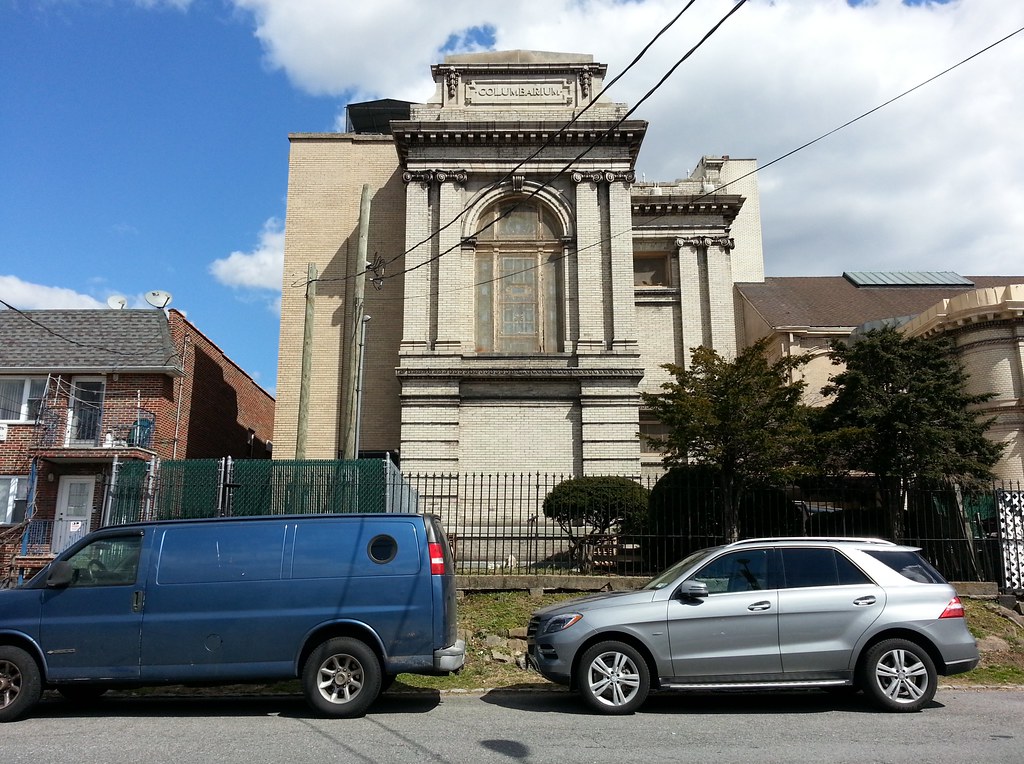
An unexpected sight in this low-slung residential neighborhood...
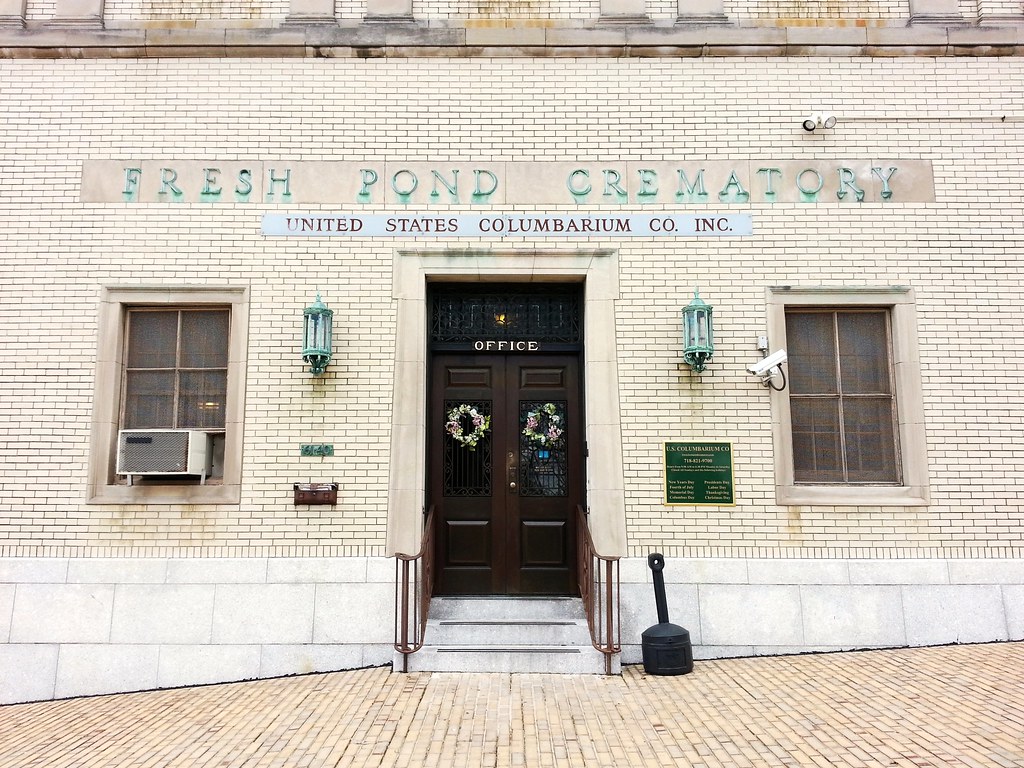
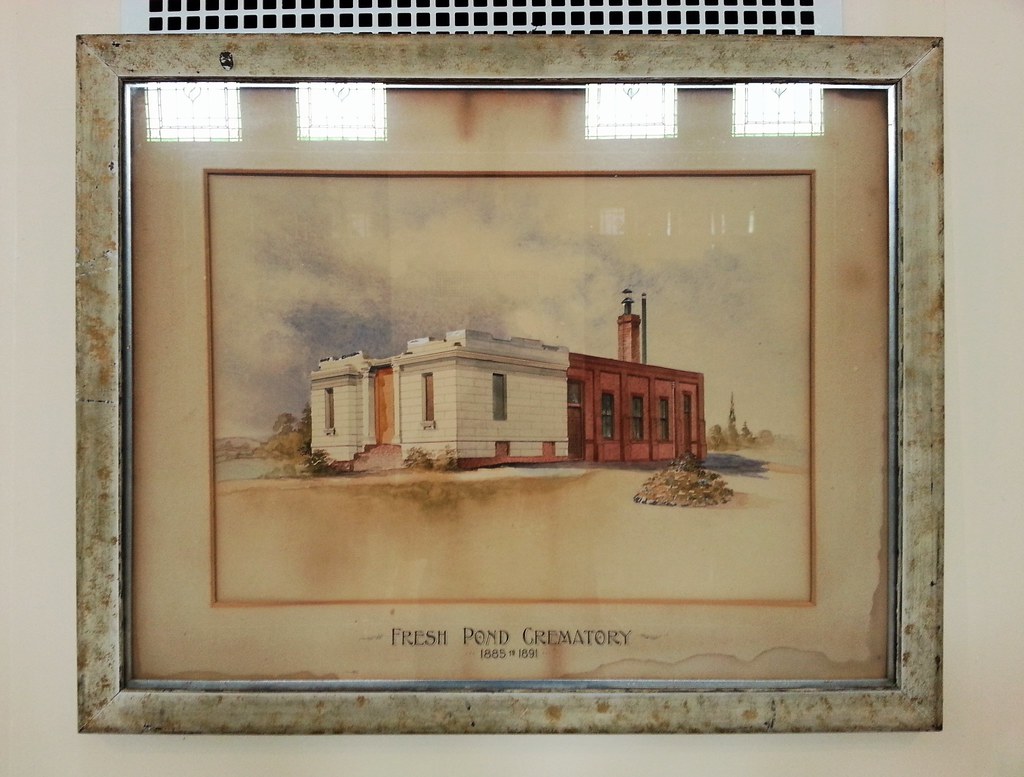
It's the Fresh Pond Crematory (wider shot here), which was the first such facility in the state when it opened in 1885. At that time, cremations were almost unheard of in the US: there were only 45 bodies cremated in the entire country that year. (Here's a brief history of cremation, for those interested.)
On display inside is a promotional book from the 1930s extolling the virtues of cremation. There is a page entitled "What Some Well Known People Think of Cremation" featuring pro-cremation quotations from various public and religious figures, including Andrew Carnegie, E. Burton Holmes, Ella Wheeler Wilcox, and William Fletcher McNutt, who said:
Most of the objections urged against cremation are the offspring of sentiment, superstition and usage. It is called unchristian, revolting to our senses, etc. To those who call incineration revolting, could they once witness the exhumation of a body that has been buried a year or two, they would never be buried themselves, nor advise their friends to be buried. In modern cremation there is nothing repulsive. It is a last baptism by incandescent heat; a purification by fire whereby the corrupt takes on incorruption, as the mortal takes on immortality.
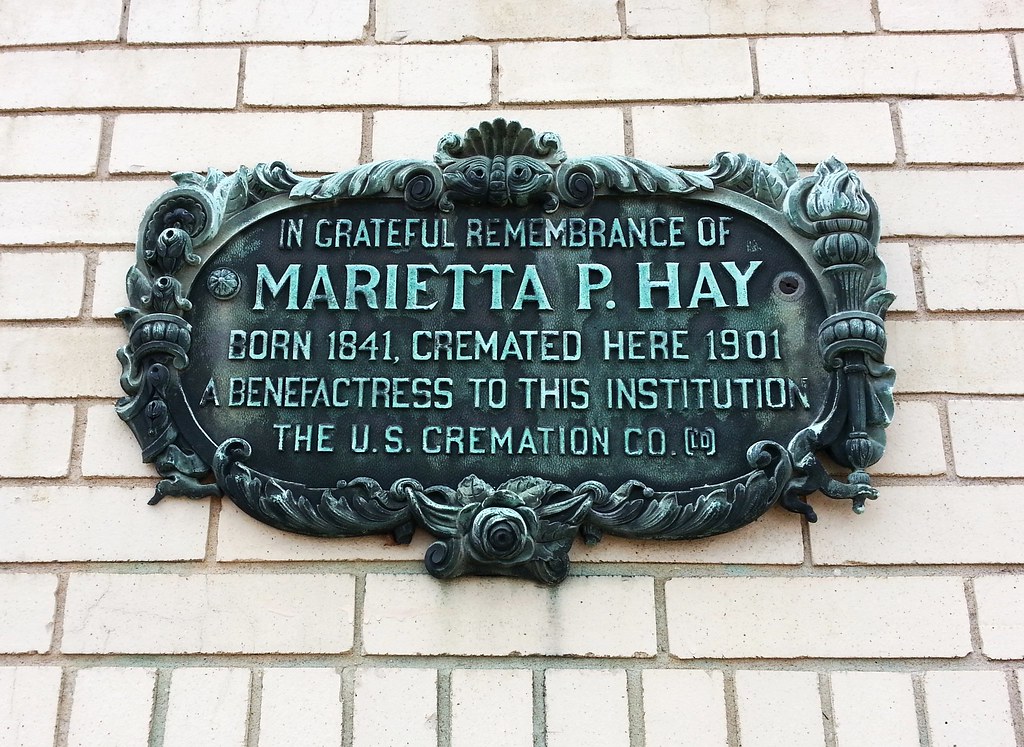
This "eccentric widow of Tarrytown", who "lived like a miser" and "was in the habit of placing her money, bonds and jewels in a black bag and hanging it on a limb of a tree outside her bed chamber" left $300,000 to charity when she died in 1901.
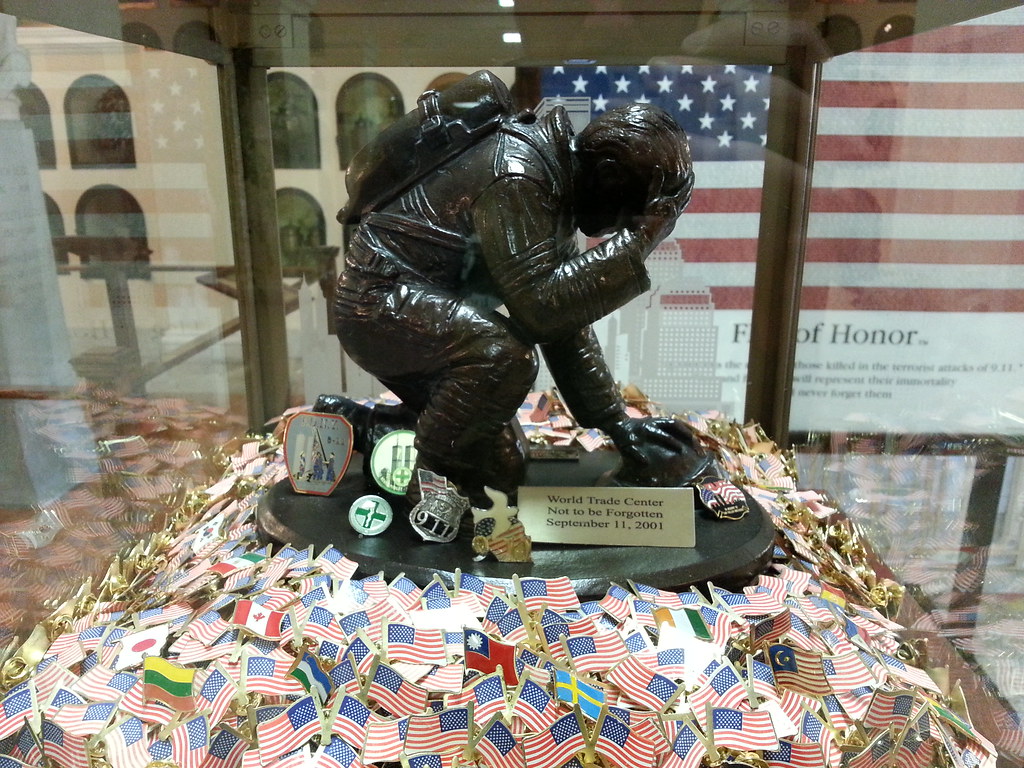
Inside the columbarium at Fresh Pond. I think each victim is represented by a flag pin of his or her country.

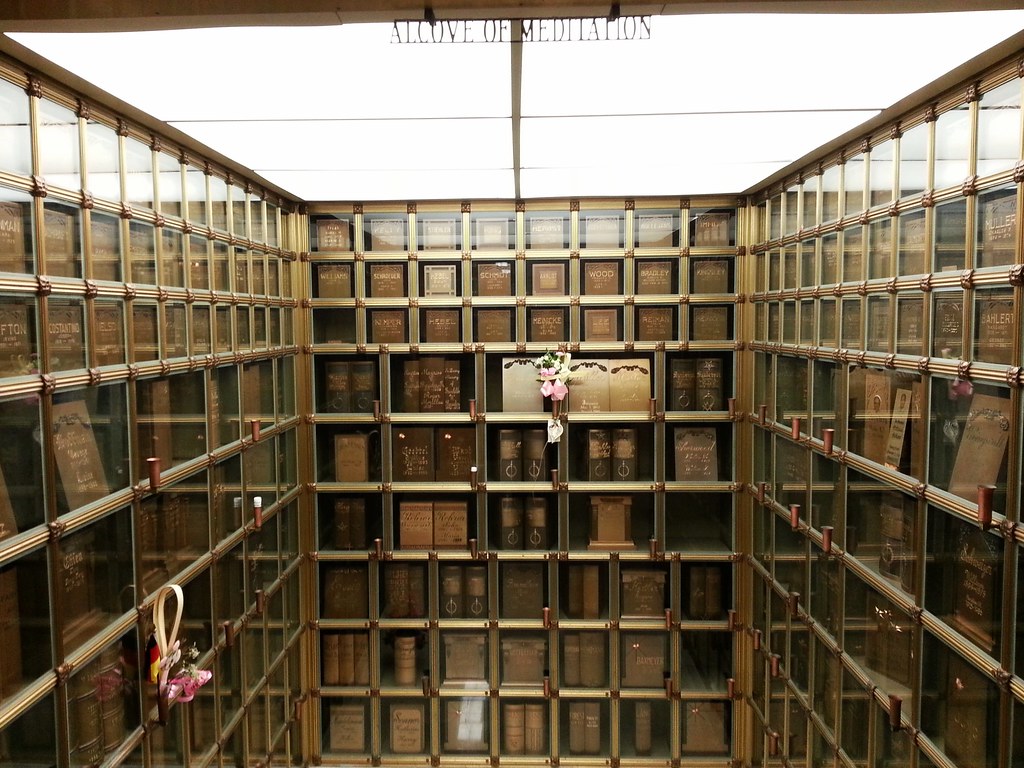
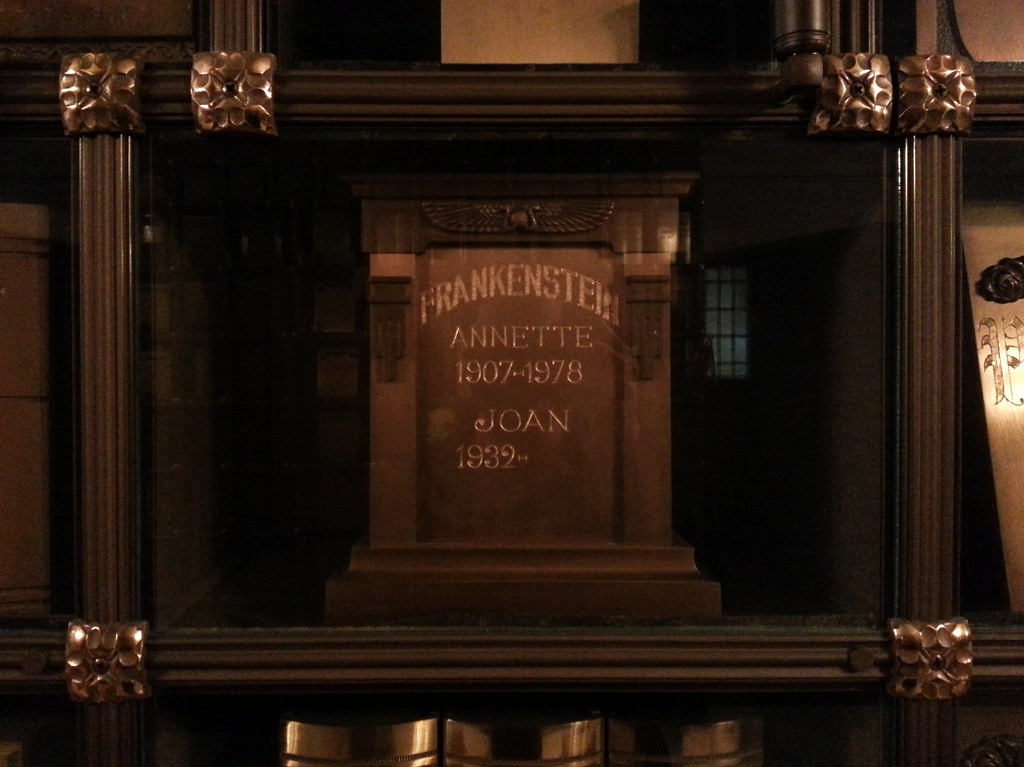
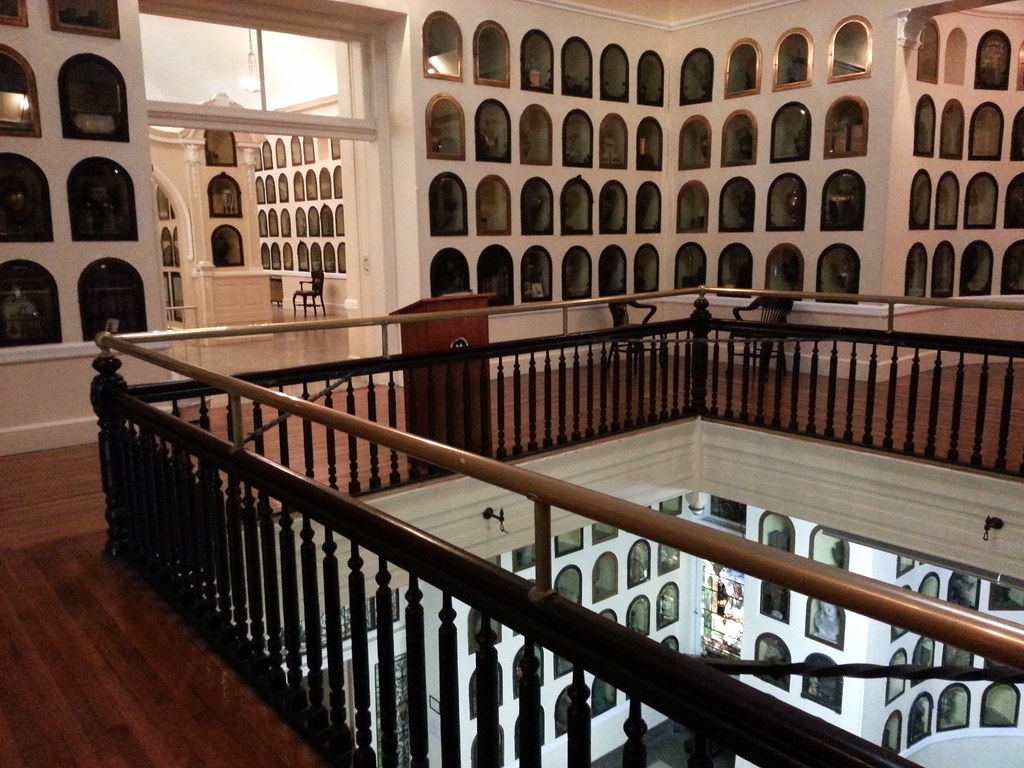
Lining the walls of the columbarium, these niches contain many old photographs and other personal mementos in addition to the ashes of the deceased.
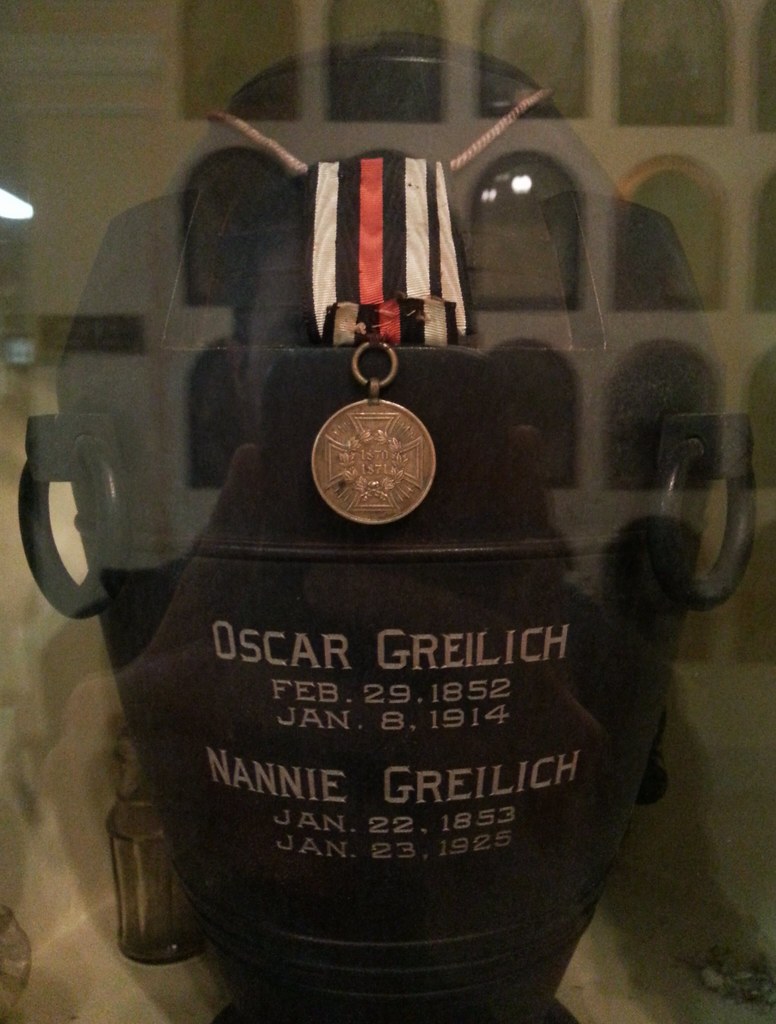
Honoring combat service in the Franco-Prussian War, this is one of many military decorations on display in the various niches at Fresh Pond.
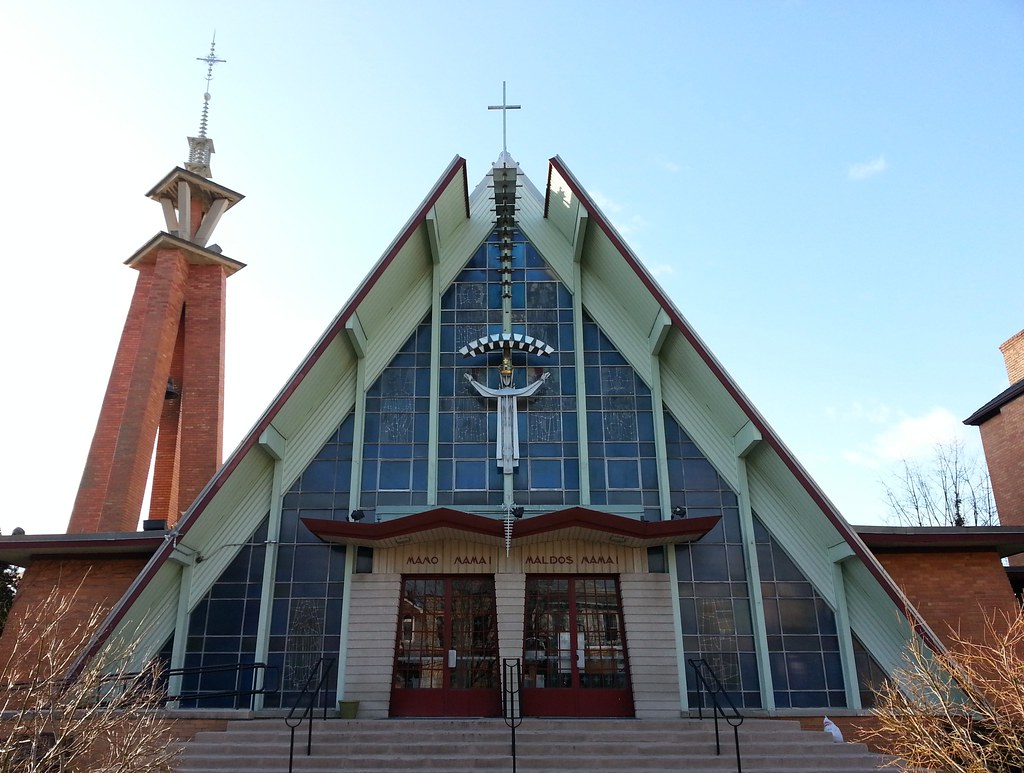
Dedicated in 1962, this eye-catching church is embellished with elements of Lithuanian folk art (close-up here). The parish was established in 1908 to serve the burgeoning Lithuanian population of Queens, and it looks like there's still one Lithuanian Mass per month held here.
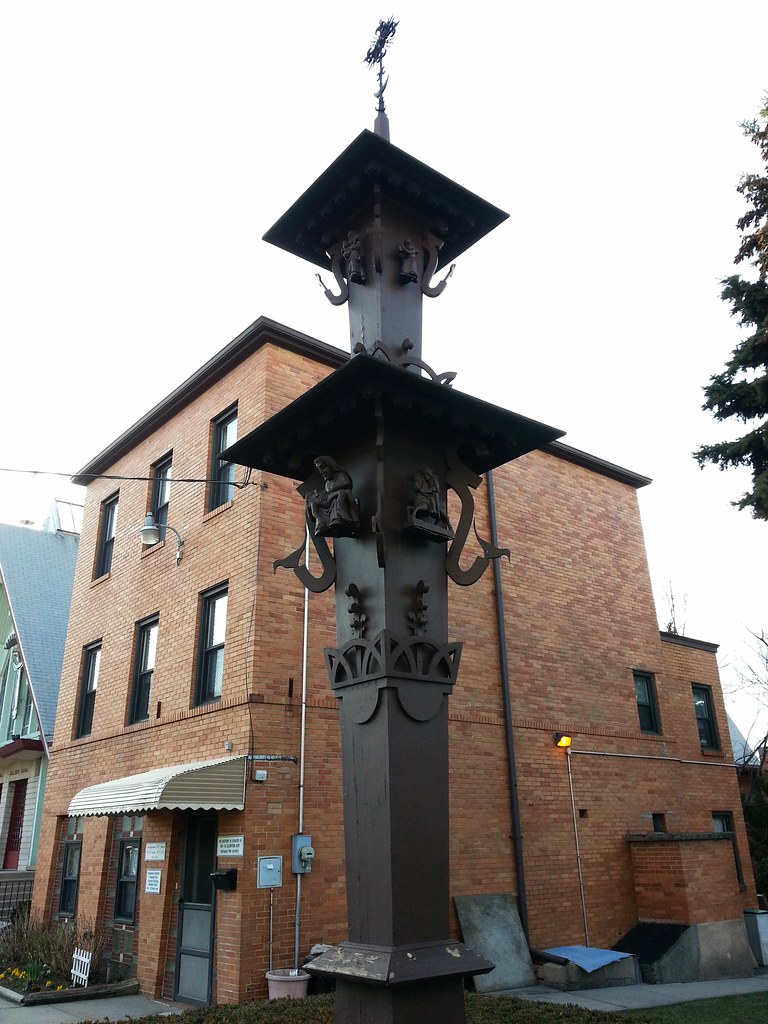
This traditional (I guess) wayside shrine was erected as "a memorial for those who have died in Lithuania for their faith and freedom."