

There was once a lot of candy-making going on in Brooklyn.

This mural is a map of the neighborhood. The small black dots were added by members of the community to show where they live.
This might be the greatest business-name duo I've ever encountered.
This building, hidden behind the overgrowth, is one of several deteriorating 19th-century residences lining the north side of Flushing Avenue. Known as Admiral's Row, these structures once housed naval officers at the Brooklyn Navy Yard. They've been abandoned since the 1970s, falling further and further into disrepair, to the dismay of preservationists. The city recently acquired ownership of the property from the National Guard, and plans to demolish all but two of the buildings, making way for a new supermarket and some other commercial and industrial spaces.

One of many dual-language schools in the city, Khalil Gibran's focus on Arabic language and culture made it a lightning rod for criticism by legions of paranoid Islamophobes, who feared it had a secret, insidious Islamist agenda, when it opened in 2007. (Khalil Gibran, for whom the academy is named, was a Lebanese-American Christian.) The school has been plagued with many problems in the intervening years, and it's currently being transitioned from a middle school to a high school.


This sign memorializes Scrabble's inventor, Alfred Mosher Butts, who worked on the game at a nearby church.

This sidewalk is in Jackson Heights, not Flushing.

This was the company that developed Jackson Heights, which was originally intended to be an exclusive community of wealthy white Protestants, but is now one of the most diverse neighborhoods on earth.

Fitting for the neighborhood that invented Scrabble
Part of the obscure art collection (which, I think, is a satellite gallery of the Queens Museum of Art) at the Bulova Corporate Center


That's a promo photo from their new buddy comedy on NBC. (Neal is the wacky one.)
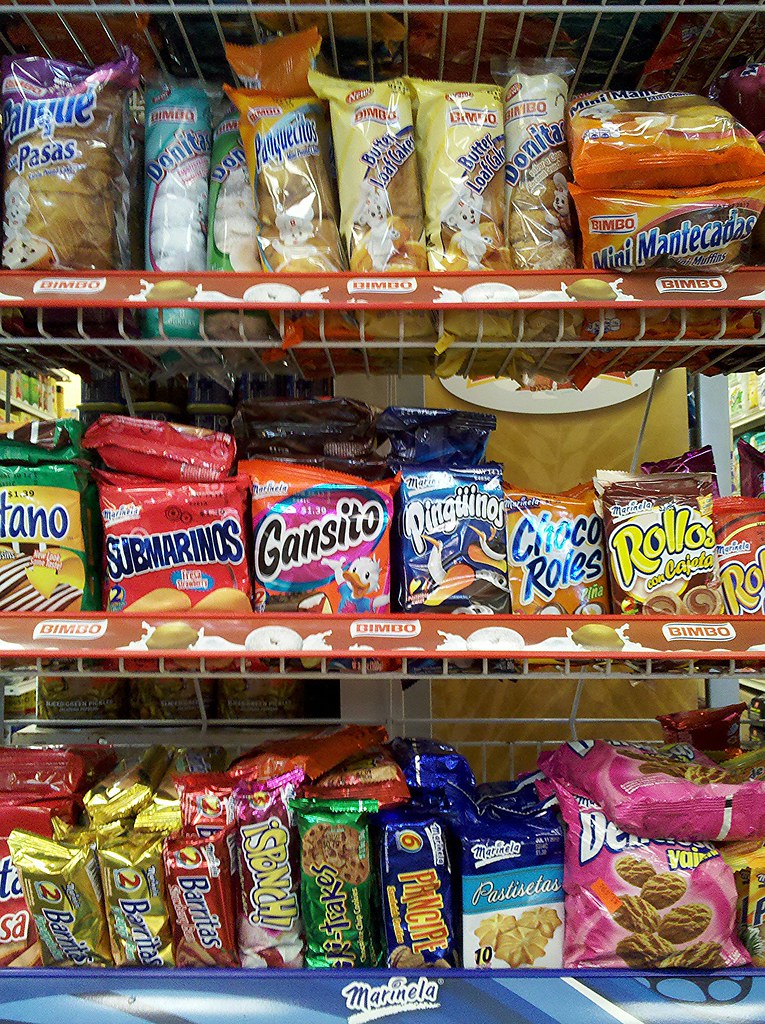
Initially drawn in by the Pingüinos, it wasn't until much later that I noticed, and became mesmerized by, the ¡Sponch! As it happens, SPONCH is an acronym for the six elements most essential to living organisms — sulfur, phosphorus, oxygen, nitrogen, carbon, and hydrogen — which is ironic, because ¡Sponch! is totally devoid of any substance that might benefit the living organism that consumes it.
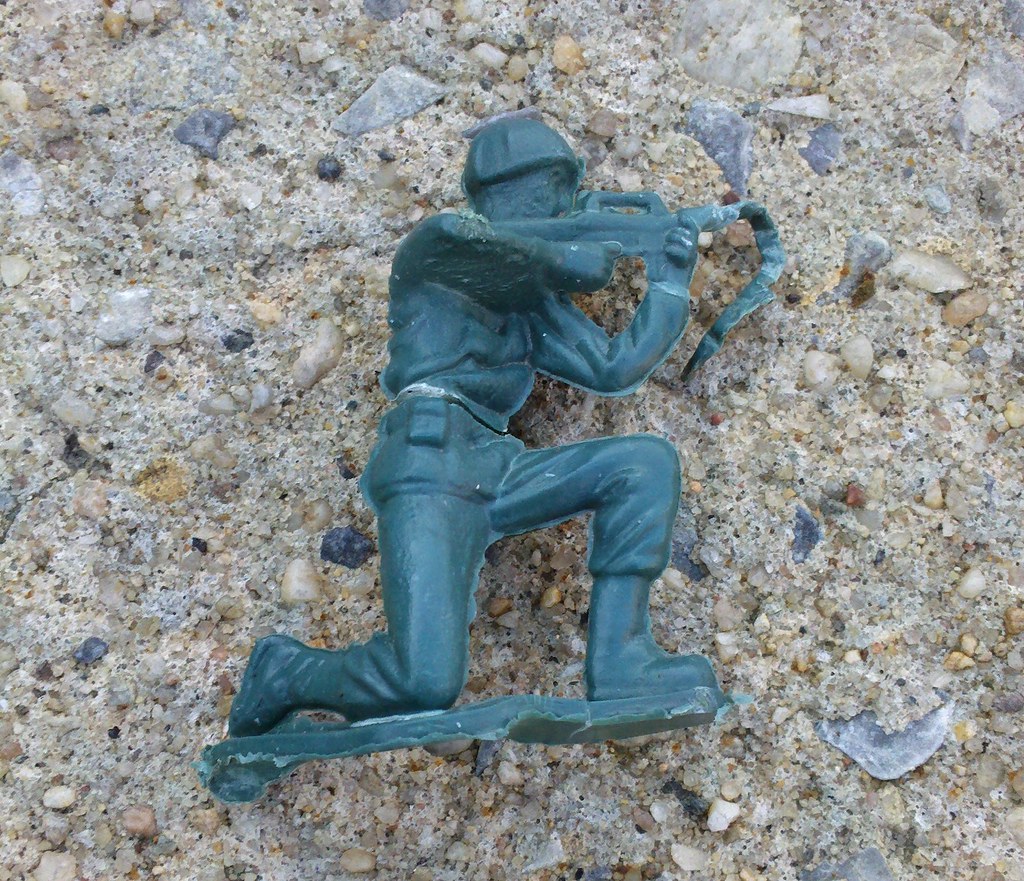
Our primary suspect has been found dead on the sidewalk, his torso nearly severed at the waist. I'd like to think we can all sleep soundly tonight, knowing this monster is no longer on the prowl. I'd like to think that, but then I begin to wonder... Who did this to him? Is there a force even more malevolent that has lain dormant until now? It chills me to think about what we might be in for next, my friends.
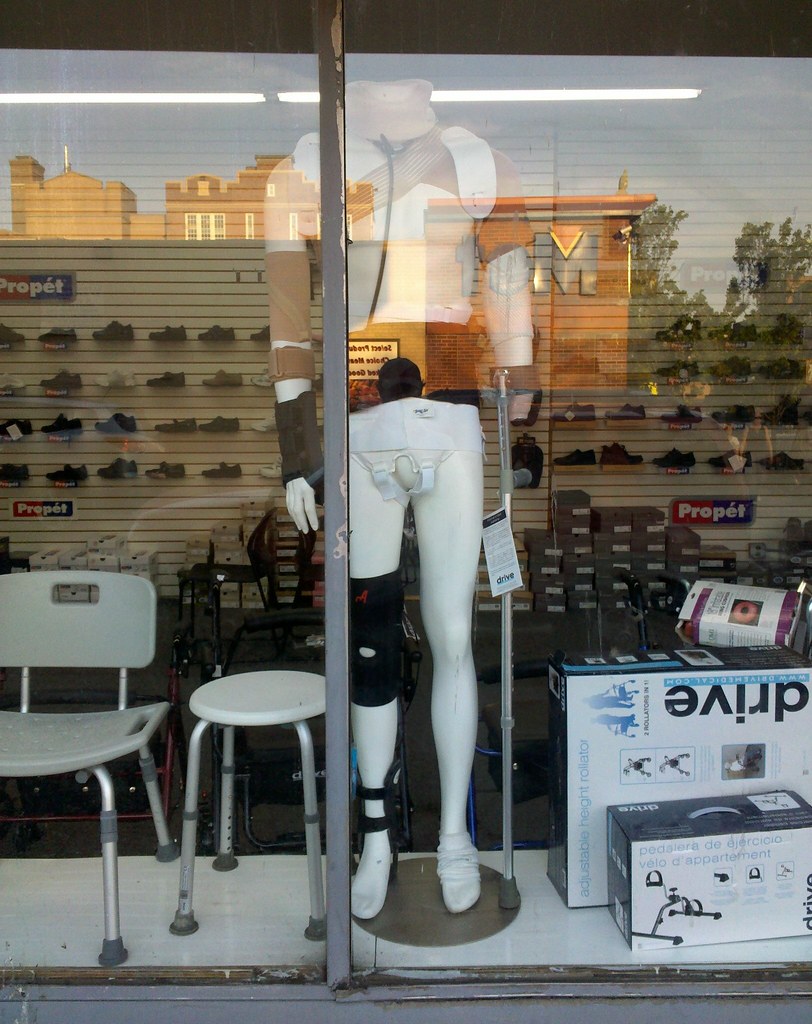


One of the great teachers of all time, right up there with Socrates and Plato
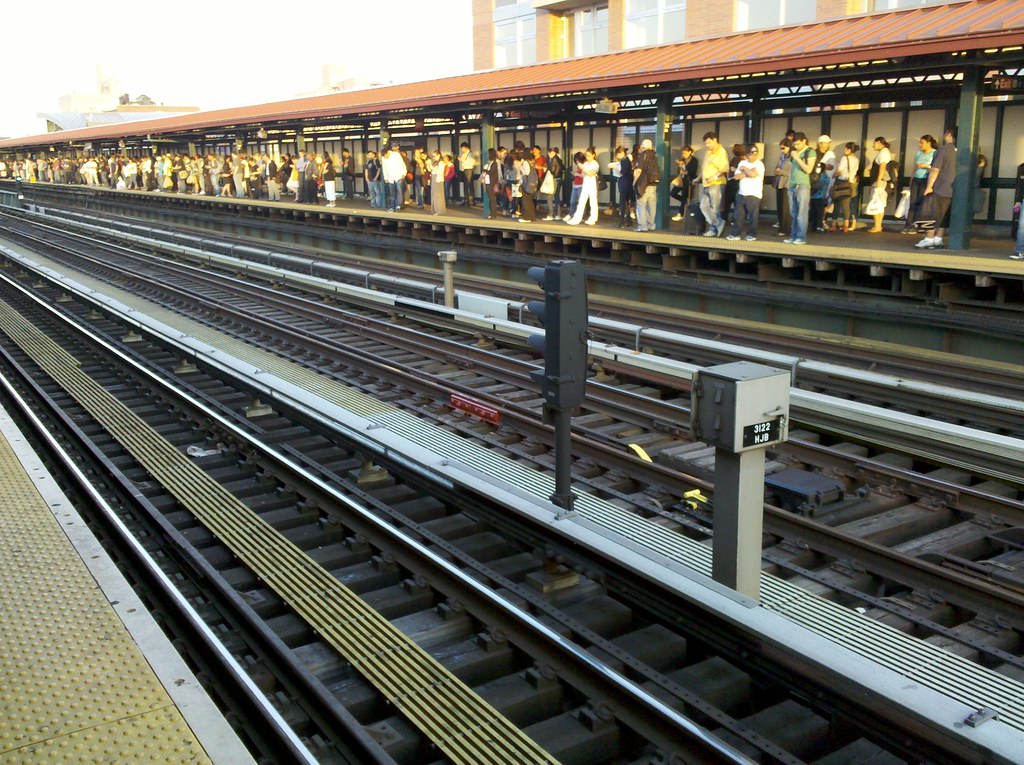
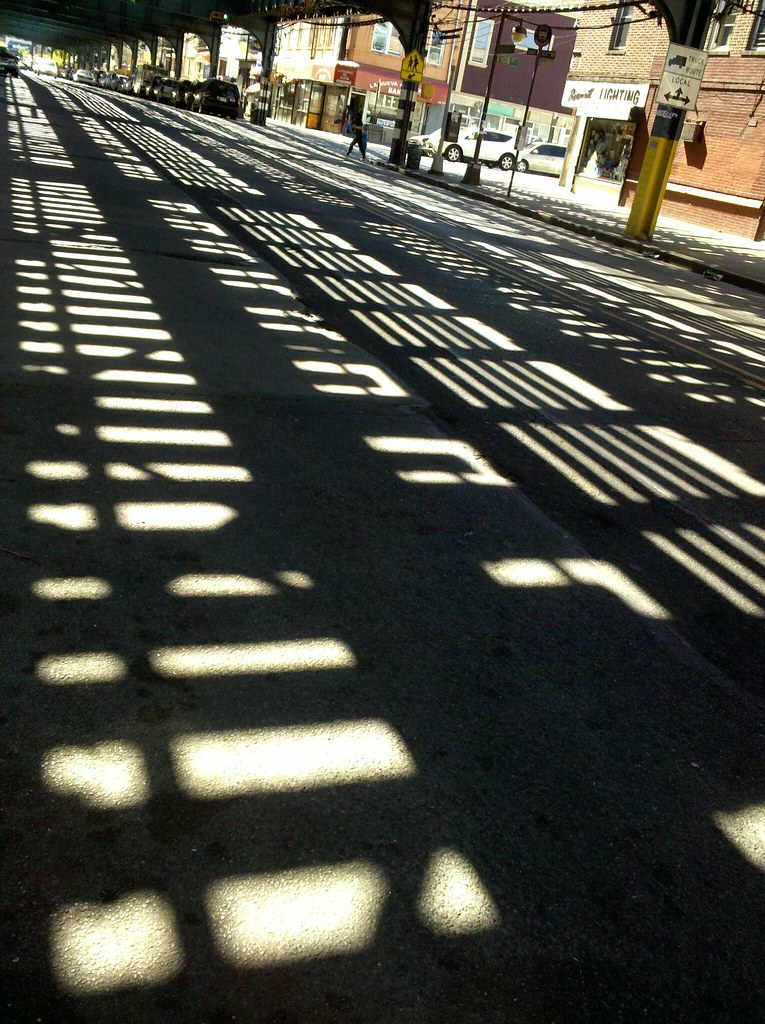
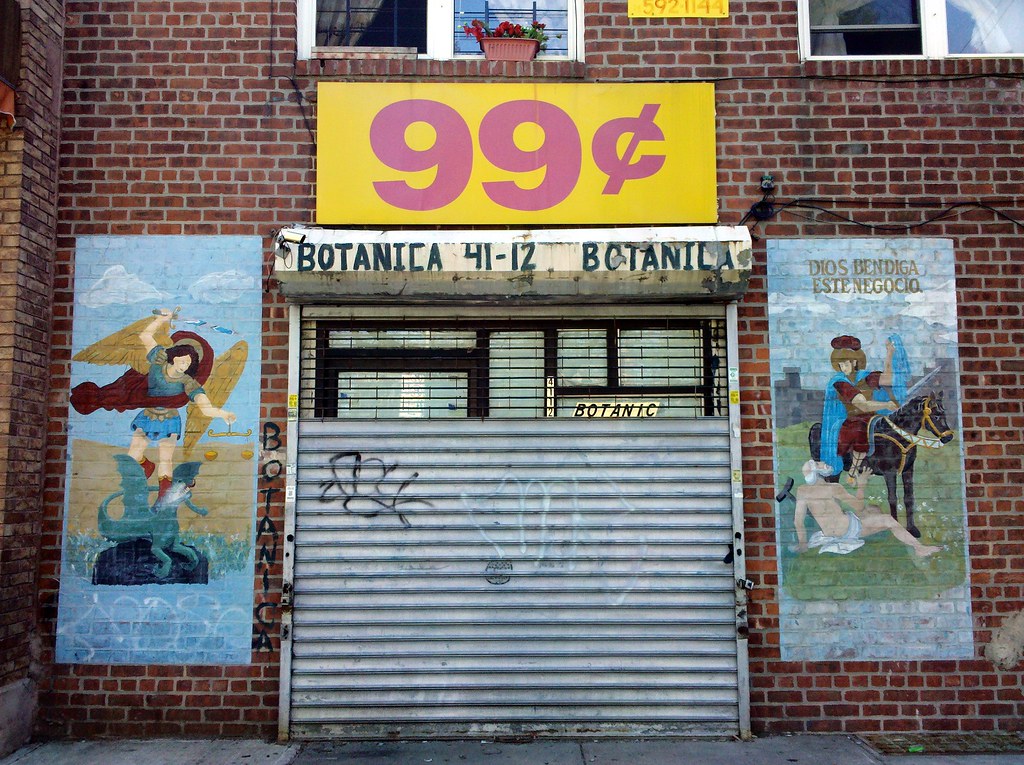

I haven't been counting murals, like this one, that reference 9/11 but don't really seem specific to it.
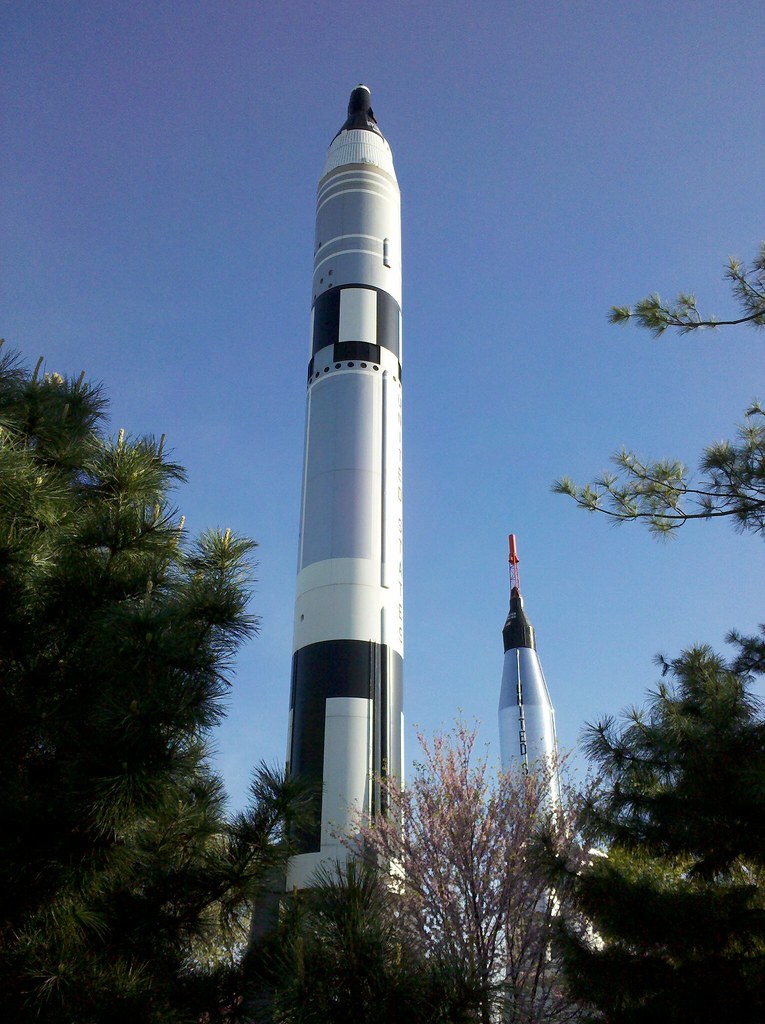
These rockets (Titan on the left, Atlas on the right), built for the Air Force and later acquired by NASA, were once part of the US Space Park at the 1964 World's Fair, and are now on display outside the New York Hall of Science in Flushing Meadows. After being shipped to Ohio for refurbishment in 2001, they made their return to Queens, strapped to flatbed trucks, in 2003. On their journey across Manhattan and Brooklyn, some passing motorists and pedestrians confused them for nuclear missiles to be used in the war against Iraq.

This little playground's name, I assume, comes from the adjacent Queens Health Network facility. In a 2006 survey for fretful parents who like to complain about things, it racked up two decidedly un-sanctuary-like safety hazard warnings: "Toxic Playground Risk" and, my personal favorite, "Head Entrapment".
Even the most innocent and lifeless toys are no longer safe — not with this twisted, ruthless predator on the loose.


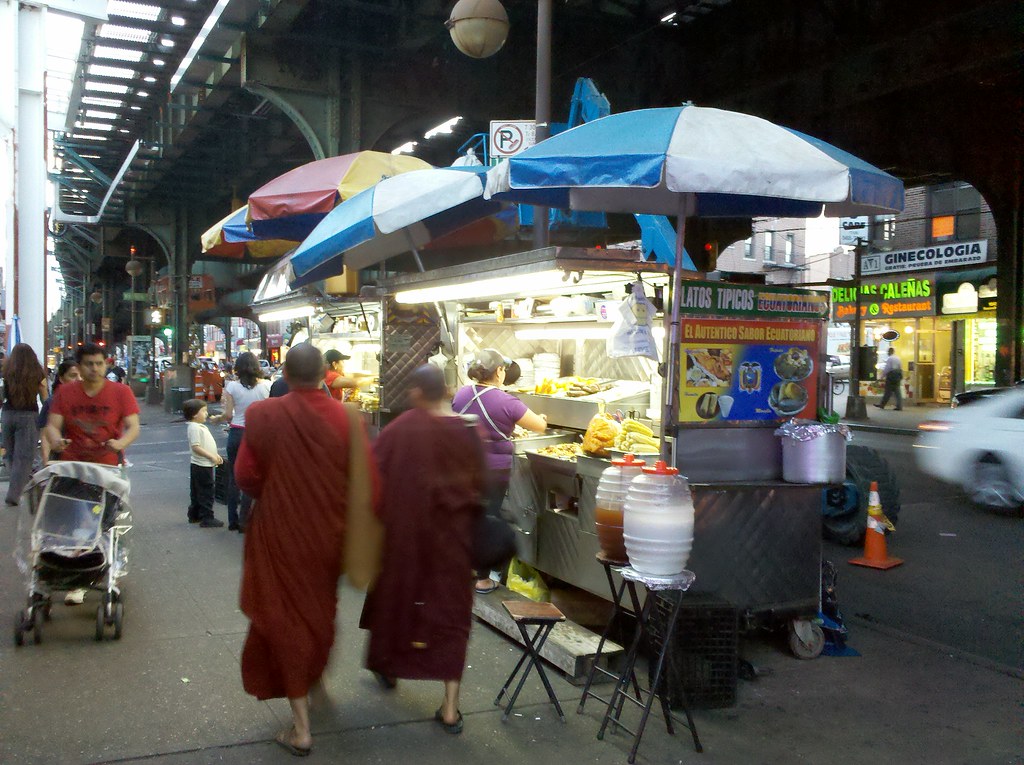
The southern end of Fort Tryon Park, where this overlook is located, was once the estate of Cornelius Kingsley Garrison Billings, a wealthy industrialist who moved to New York from Chicago in 1901 after retiring as head of the Peoples Gas Light and Coke Company at the age of 40. Never one to suffer the restraints of modesty, Billings once famously had the grand ballroom of Louis Sherry's restaurant decked out as a woodland scene, complete with a layer of sod on the floor, and threw a lavish party wherein 36 formally attired guests dined on horseback (photo), sipping chilled champagne from their saddlebags while being served by personal attendants dressed as grooms. (The horses were brought up to the ballroom by freight elevator.)
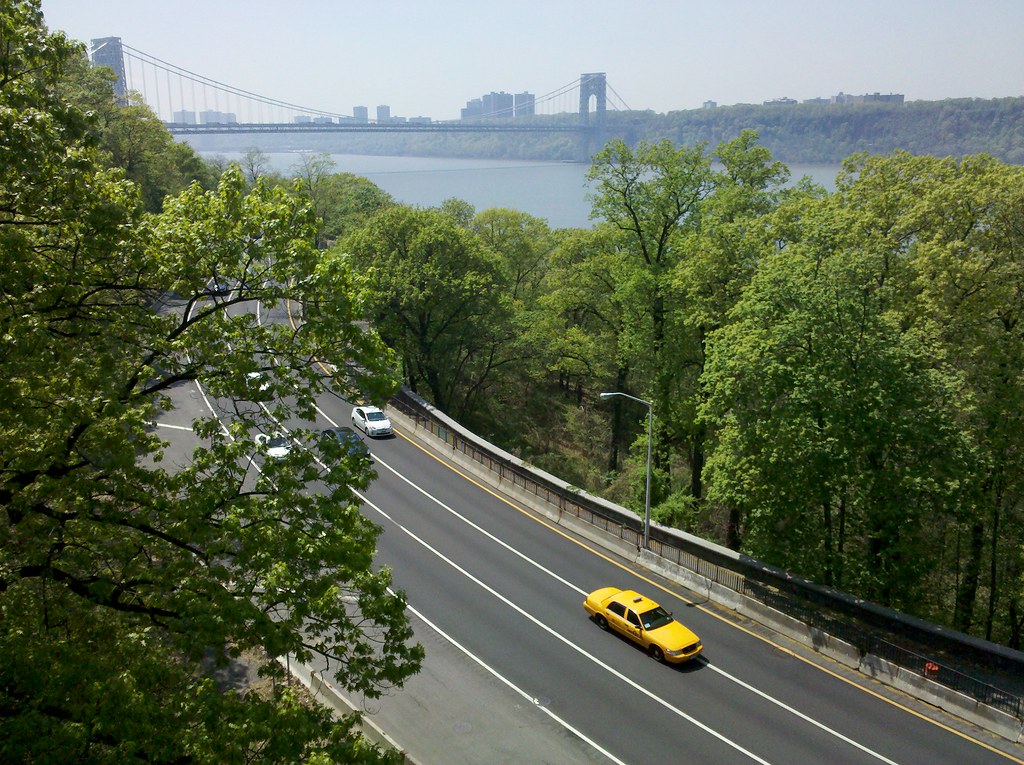
I didn't realize it at the time, but I when I took this photo (looking out over the Henry Hudson Parkway, the Hudson River, the George Washington Bridge, and the New Jersey Palisades), I was perched on top of a massive vaulted stone gallery through which, and over which, a 1600-foot winding driveway (which still exists as a pedestrian path) once passed on its way up the ridge to Billings's opulent mansion. The mansion burned down in 1926, but the gallery remains, one of a few vestiges of the luxurious lifestyle that once flourished on these grounds. (This bird's-eye view shows where the gallery is situated in the park today.)

This enormous stone structure carries one section of the park drive over another.

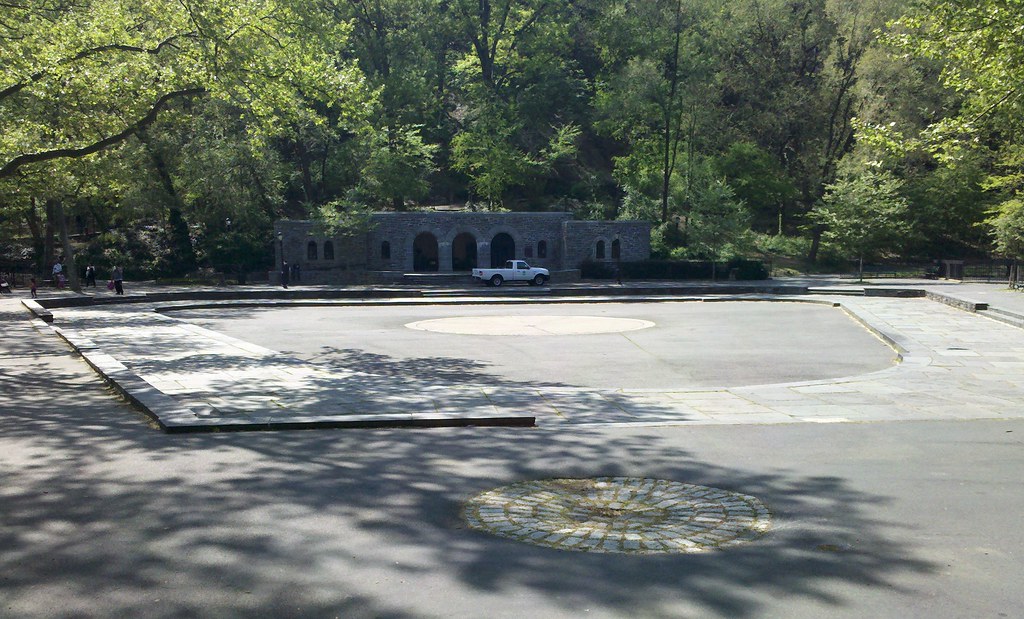
When I entered the bathroom in that stone building across the way, this playground looked more or less the way it does in this photo. But by the time I emerged back into daylight, a minute or two later, at least a hundred middle-school-aged kids had flooded into the central paved area. I figured they must be there for recess, about to start playing some game.
But then I thought I noticed a flailing of limbs and hair somewhere in the center of the mob. Were two girls fighting each other? Glancing to my left, I noticed a Parks employee standing idly by, watching the action like it was a TV show. A few moments later, two or three police officers came chugging into the playground on foot. The kids took off running and screaming in all directions, evaporating in a chaotic preadolescent whirlwind that made it impossible to determine who had been involved in the fracas. A minute later the playground was empty again.
I walked over to talk to the Parks lady, to verify that I had not just been hallucinating. She said these fights happen all the time once the weather warms up. The kids apparently use this playground as their standard dueling grounds, and hordes of them show up just after school lets out every time a fight is rumored. No one's been seriously hurt so far, but she's always worried someone's going to pull out a gun borrowed from some "crazy uncle".
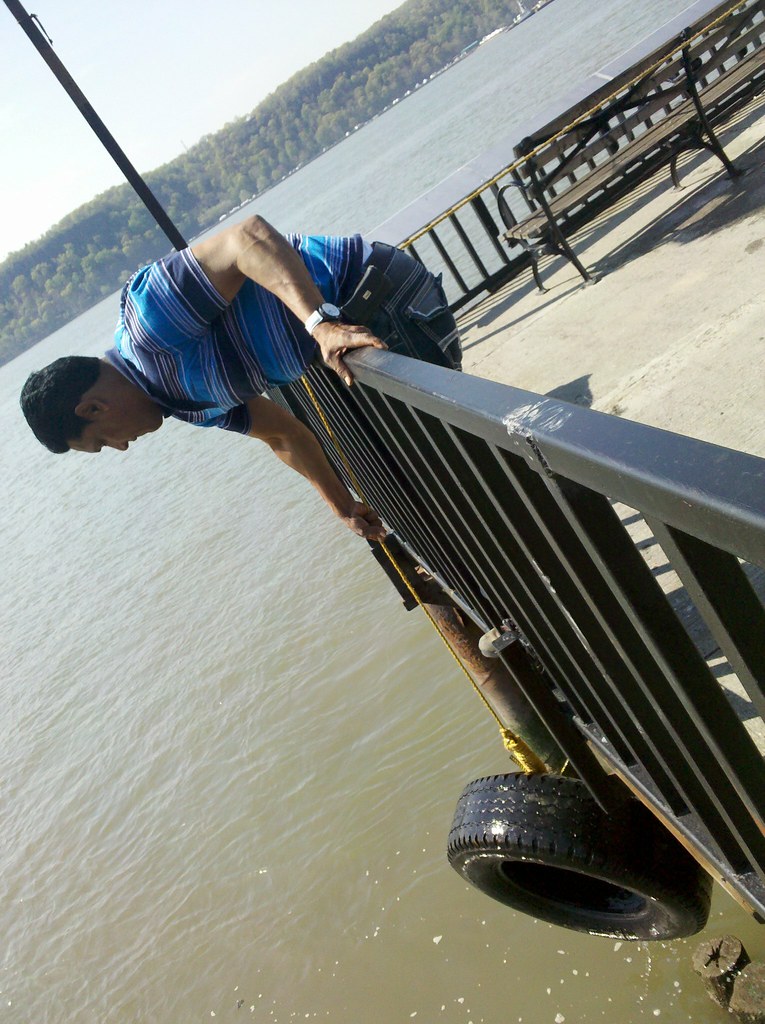
According to one man on the scene, the DEP has determined there's some guy in Yonkers dumping tires in the Hudson, and the gentleman above, using a rope and grappling hook, has hauled in more than a hundred of them as they've floated by the little beach and pier at the end of Dyckman Street in Inwood Hill Park. The tire removal is part of a larger initiative by a group of friends to fix up and maintain this section of the park; they've also picked up all the litter in the area, planted tomatoes and cucumbers, and built a woodchip path running along the water.


