

A classic merchandising technique

It may sound strange to say, but there are a few different ways in which one building can be taller than another. And 1 World Trade Center has now, once again, overtaken the Empire State Building as the city's tallest, at least in one of those ways.

Originally built as horse stables, the structures lining this private lane were later converted to artists' studios (Edward Hopper died here), and they're currently being used by NYU as offices and residences.

in Washington Square Park. The gentlemen to the left in the maroon and green shirts, standing just behind the group in the foreground, were engaged in the most reckless round of frisbee-tossing I have ever seen. They were playing catch with a couple of other guys over a considerable distance, seemingly oblivious to the people regularly passing between them, and to the many other people sitting nearby. On several occasions, I saw someone get whacked by an errant throw (of which there were many), but no one really seemed to mind.

According to some, this little alleyway (also known as Great Jones Alley) was the source of the term "jonesing", which originated among the drug addicts who once called its pavement home, back in the days before it was gated and closed to the public.

This building's name has nothing to do with telegraphs or telephones or televisions, but refers instead to a nearly extinct form of mass transit whose day in the sun came and went more than a century ago: the cable car!
A fascinating mode of transportation, cable cars play no role in generating their own motion. They are simply pulled by an extremely long cable that moves at a constant speed in an open conduit beneath the street. Each car clamps onto the cable when it wants to move, and then releases the cable (and applies its brakes) when it wants to stop.
It is, of course, no small feat to keep those miles-long loops of cable in motion. Back in the glory days of cable cars, big rooms full of coal-fueled steam engines and giant spinning wheels and belts and gears were needed to provide sufficient power, and the Cable Building, constructed by the wonderfully named Metropolitan Traction Company in 1893, had just such a setup located in its basement, serving as the powerhouse for a cable that ran three and a half miles along Broadway from Bowling Green to 36th Street.
If you're interested in learning more about the details of cable car operations — like what happens when two routes intersect — check out this site, which has an abundance of information on the subject.


On view behind the Brooklyn Museum is an extraordinary collection of architectural sculptures and ornaments salvaged from buildings in the city that have been demolished. The figures in the foreground, for example, once embellished the town house of Hugh J. Chisholm, a pulp and paper baron. In the background, you can see Night, one of several remnants from the original Penn Station on display here.

This sculpture and its counterpart, Day, once flanked a large clock above an entrance to the original Penn Station, one of four such pairs adorning the structure (two of which have survived intact, including this one in Kansas City). Incredibly, there was no formal attempt to salvage the artwork from Penn Station; what remains today can largely be attributed to a scattershot assortment of individuals and institutions rescuing whatever they could from the demolition site and the landfill. Two granite balusters, for instance, owe their continued aboveground existence to a New Jersey man who found them in the Meadowlands, where the station's stonework had been dumped, hauled them out, and drove them home in his sagging station wagon.

When I first caught a glimpse of this chubby version of the Statue of Liberty, I assumed it was a contemporary piece commenting on American obesity. But it turns out it was created over 100 years ago as an earnest replica, and spent the majority of its life sitting atop the Liberty Warehouse on the Upper West Side of Manhattan. It's now part of the Brooklyn Museum's Memorial Sculpture Garden, having been donated in honor of the heroes of 9/11.
These old lampposts and luminaires, along with countless other salvaged relics presumably waiting for their big break at the Memorial Sculpture Garden, have, for the time being, taken up residence in a chain-link pen behind the Brooklyn Museum.




During Bobby Kennedy's 1966 visit to the troubled Brooklyn neighborhood of Bedford-Stuyvesant, residents challenged the senator to do something more substantial for them than simply show his face and make a couple of speeches. In response, he joined with Jacob Javitz, New York's senior senator at the time, in amending the Economic Opportunity Act to lay the legislative groundwork for community development corporations.
Kennedy returned to Bed-Stuy later in the year to announce the creation of the Bedford Stuyvesant Restoration Corporation, a community organization focused on housing, education, economic development, and the arts. Restoration took over an abandoned milk-bottling factory as its headquarters, and has since converted the entire block into a plaza surrounded by cultural centers, classrooms, and businesses.
While that all sounds very nice, I must admit that I was rather dismayed to find, prominently featured here in the plaza — and adorned with the oversized heads of the politicians and local leaders who made this place possible, no less — the bland antithesis of spirited community development: my arch-nemesis, Applebee's!

Remembering one of the ugliest episodes in New York's recent history
This now-largely-vacant complex began its life as the Bedford Brewery.


This tree, like many of the others lining the parkway, is accompanied by a plaque honoring a Brooklynite killed in WWI.
Installed a couple of years ago on the annex next to 770, this simple plaque (stating only the date that the cornerstone was laid) took the place of a controversial one that had, for many years, symbolized a major rift within the Chabad-Lubavitch movement.
After the death of the Rebbe in 1994, there arose within the movement a vocal faction that believed he was not actually dead and would return as the messiah. In 1995, when the leadership of Chabad installed a plaque around this cornerstone memorializing the Rebbe (implying he had passed away), it was immediately defaced by messianists. The vandalized plaque remained in place until 2004, when another group, under the cover of night, managed to remove it from the wall entirely.
Despite the presence of this rather inoffensive replacement, the feud between the two groups continues. Just last fall, the anti-messianist Chabad establishment, which owns the building, tried to evict the messianist leaders of the congregation, who control what goes on inside the synagogue, continuing a rather surreal spectacle that has been playing out for years now: a secular American court arbitrating a contentious religious dispute over whether or not a seemingly deceased man is actually the messiah.

Jutting out from Atlantic Avenue, this skewed, block-long stretch of pavement (labeled slightly differently on the western side of the street) is the only remnant of Hunterfly Road that still bears its name, and the last surviving piece of its right-of-way within the historic bounds of Weeksville.
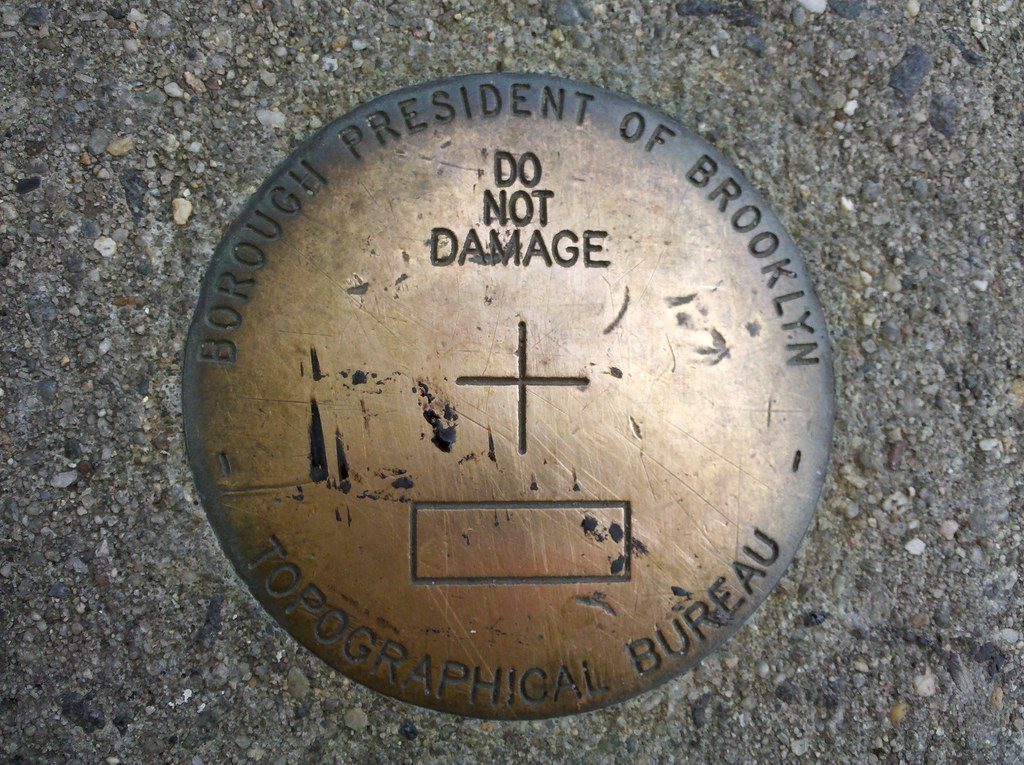
The local version (scroll to the second question) of this guy
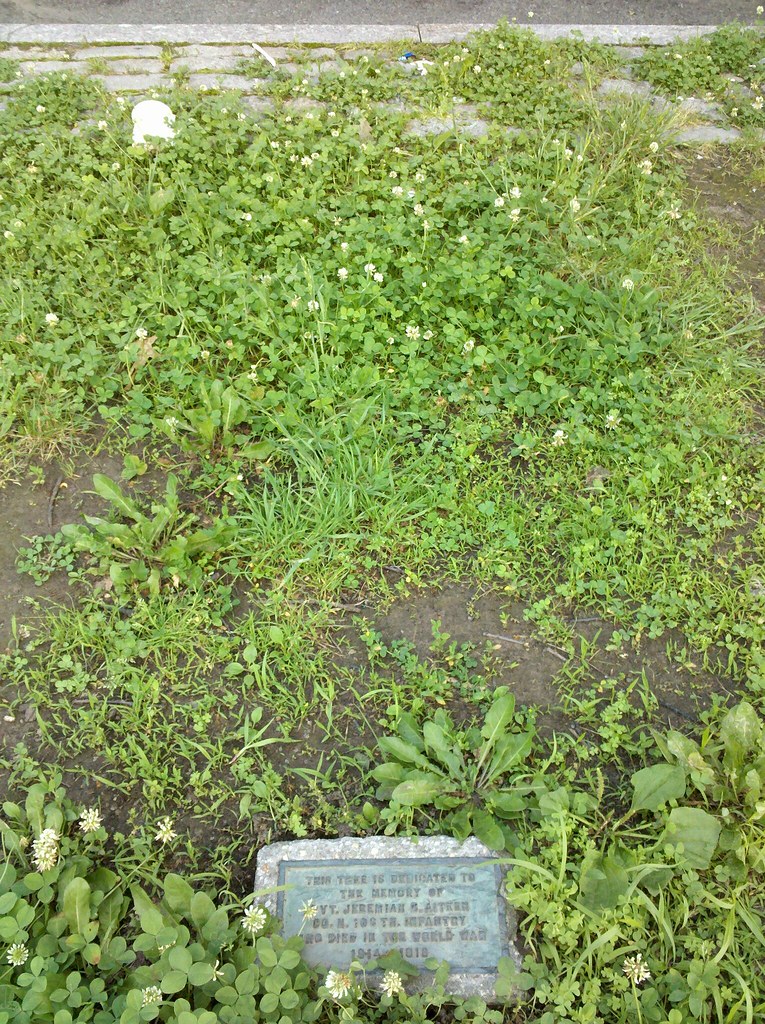
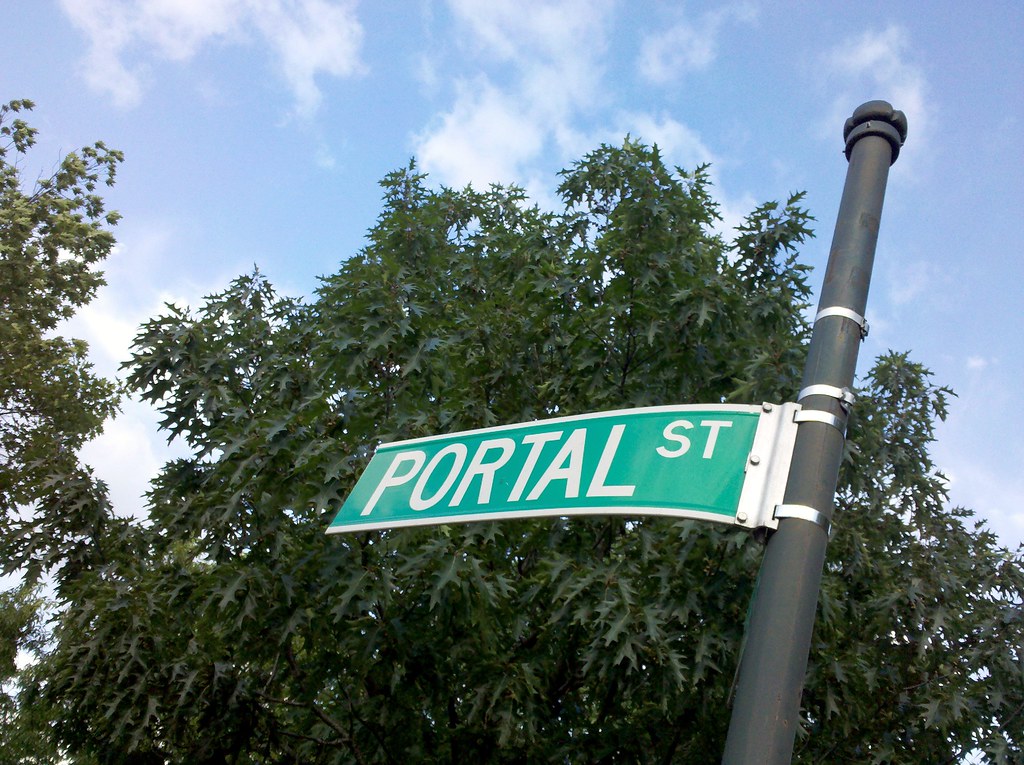
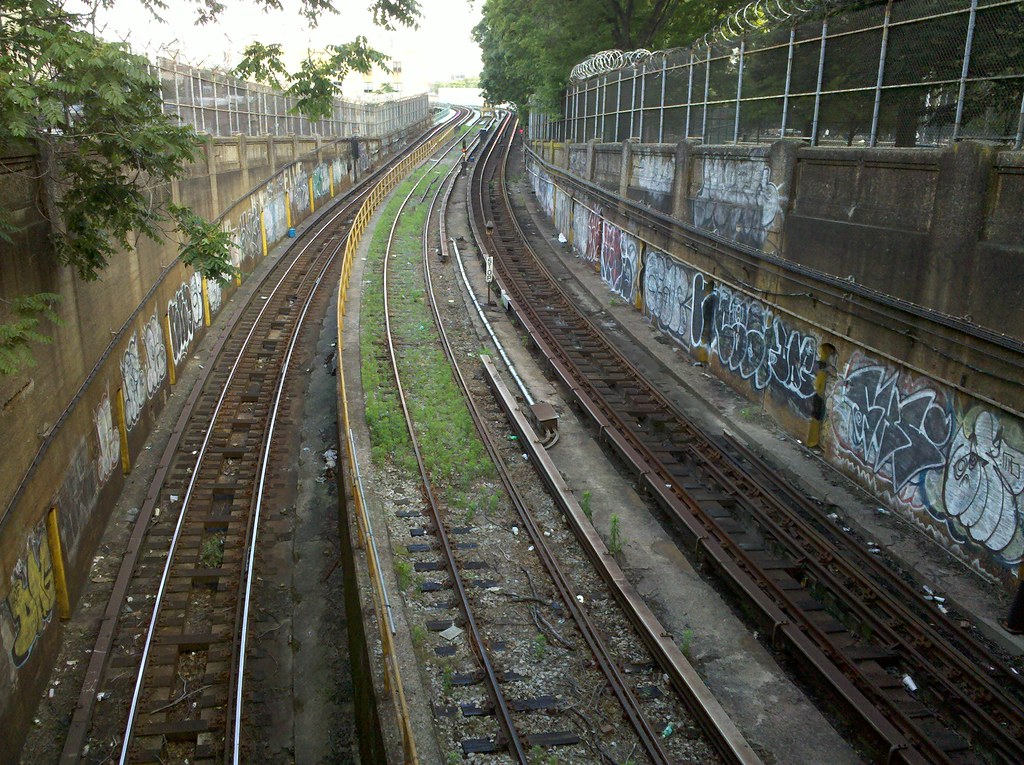
This short street runs alongside the New Lots Line at the point where trains emerge into daylight.

This monument honors the servicemen from Brownsville who died in World War I. The neighborhood was largely Jewish at the time, hence the Star of David carving to the left of the steps. (I believe this is the third time now that I've seen religious imagery in a public park.)

596 Acres is an organization that facilitates the creation of community spaces on vacant city-owned lots.


Like 20 other branches of the Brooklyn Public Library, this one was built with a grant from Andrew Carnegie. By the time he died in 1919, Carnegie had funded almost 1700 libraries in the US — nearly half of all the libraries that existed in the country at that time. He also instituted an innovation that has proven influential in shaping the modern library experience: the open stacks, which encourage the public to browse and explore the collection of books on their own.


