
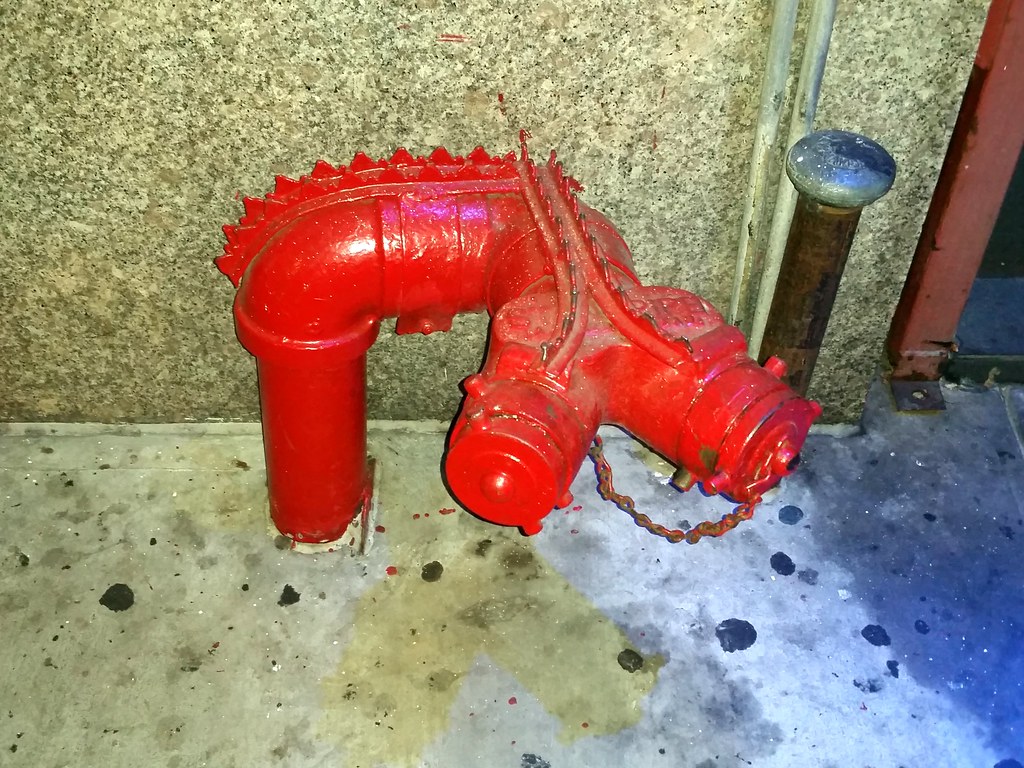
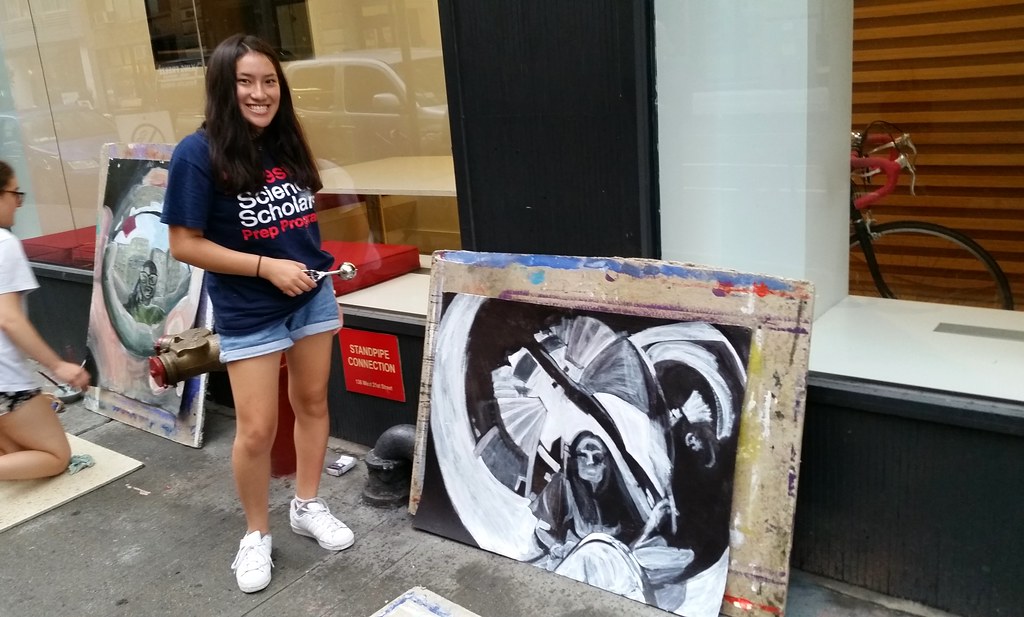
This stegosaurus of a standpipe connection is just one of the many tushie terrorizers conspiring to make the city's streets inhospitable to the weary keisters of pooped-out pedestrians. The sprinkler connection outside this building, pictured below, is equally unwelcoming.
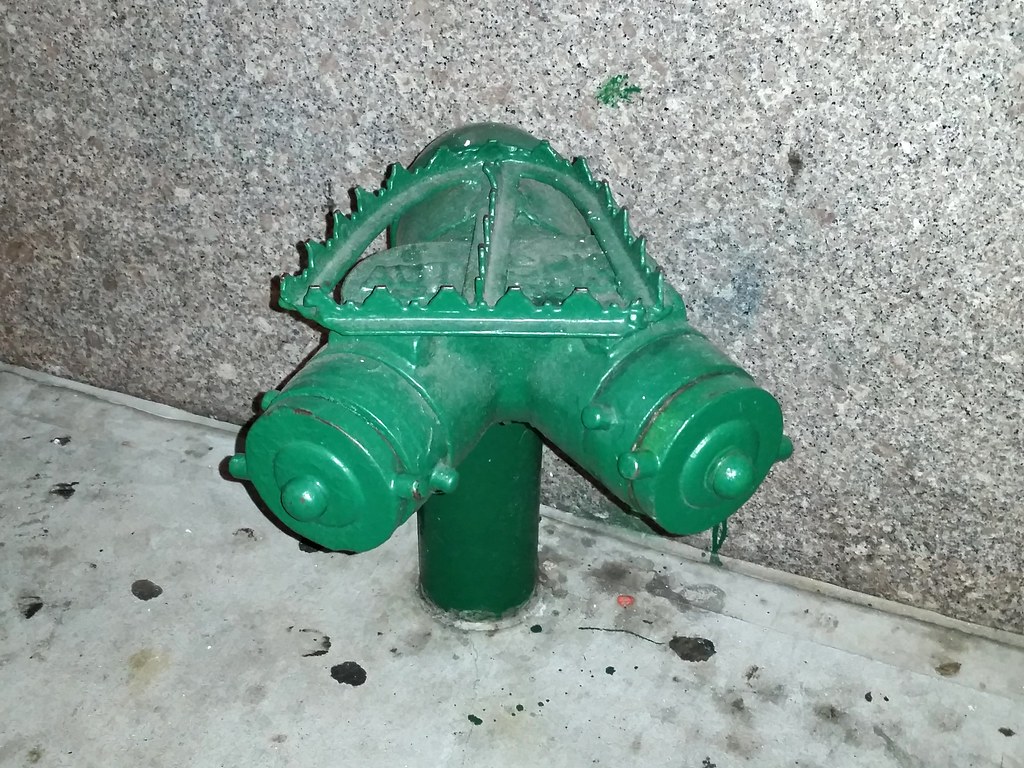
But don't despair. While this callous indifference to the suffering of others may be on the rise, there are still plenty of other Siamese connections that continue to welcome the tired, the poor, and the huddled asses of the world with open arms (a.k.a. spikeless sitting surfaces). Just around the corner, in fact, I found one providing refuge for run-down rumps in three different Street View photos — a sanctuary sitty, if you will.
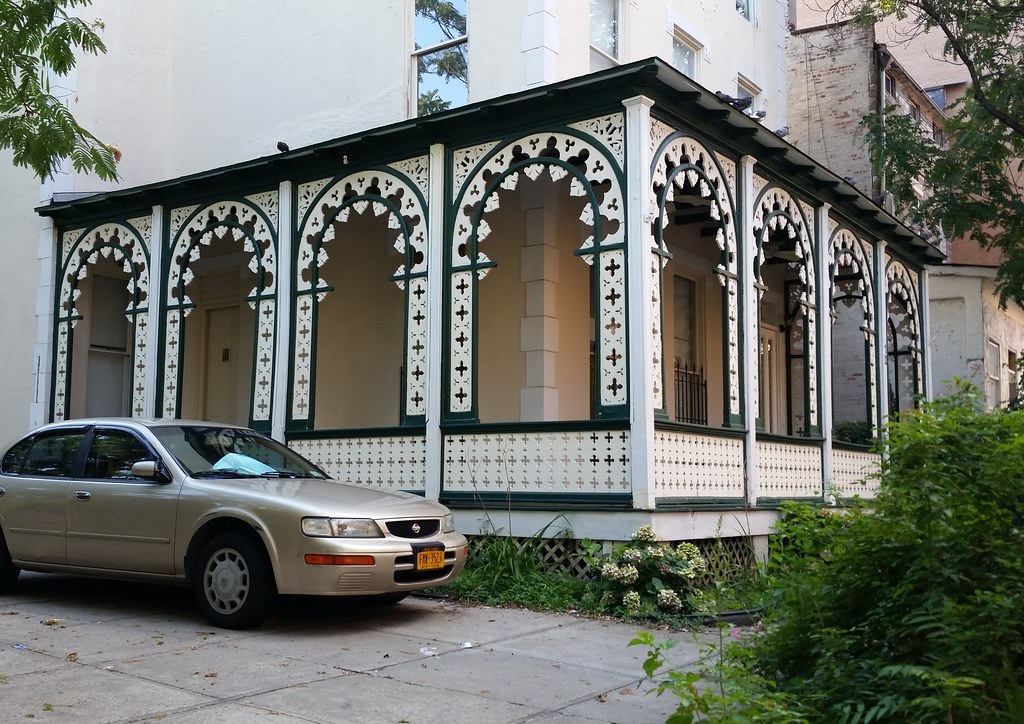
You can see a wider shot of the building in Street View. And here's what the place looked like in 1932.
From the building's 1994 landmark designation report:
The house at 12 West 129th Street, erected c.1863 when the village of Harlem was undergoing development as a suburban center, stands as a rare survivor of Harlem's early history, prior to its rapid development as an urban neighborhood. Built for two carpenters, William Paul and Thomas Wilson, and their families, it was a two-and-a-half story frame structure characteristic of suburban architecture. Subsequent changes to the house reflect adaptations by new owners to their needs, as well as changes in the surrounding community. In 1883, piano merchant John Bolton Simpson, Jr., added the distinctive Moorish-inspired porch, the most significant architectural feature of the house, with its perforated ornamentation created by the use of a scroll saw. In 1896, the house was acquired by an order of Franciscan nuns which was expanding its mission in the greater New York area. In order to accommodate a new use as a convent and children's home, the building was enlarged to a full three stories. Since that time, the building has continued in institutional ownership; it was purchased in 1979 by the Christ Temple Church of the Apostolic Faith, which plans to convert it to a senior citizens' residence.I'm not sure what's currently happening with the building, but I do know it was used as a hostel called "Jazz on the Villa" for a few years around 2006 to 2009.
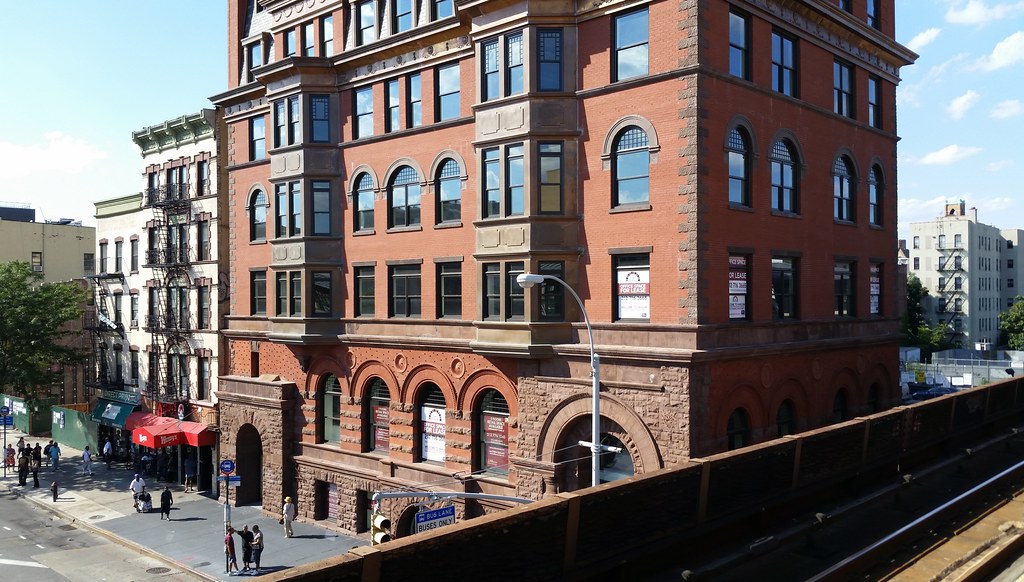
Stepping off a Metro-North train in Harlem, I see that a reasonable approximation of the old Corn Exchange Bank has risen atop the ruins of the original building.
Memorial #127 can be found outside the 13th Precinct police station. I photographed the main part of the memorial when I first passed by back in 2013. Here are a couple of additional components that I must not have noticed at the time.
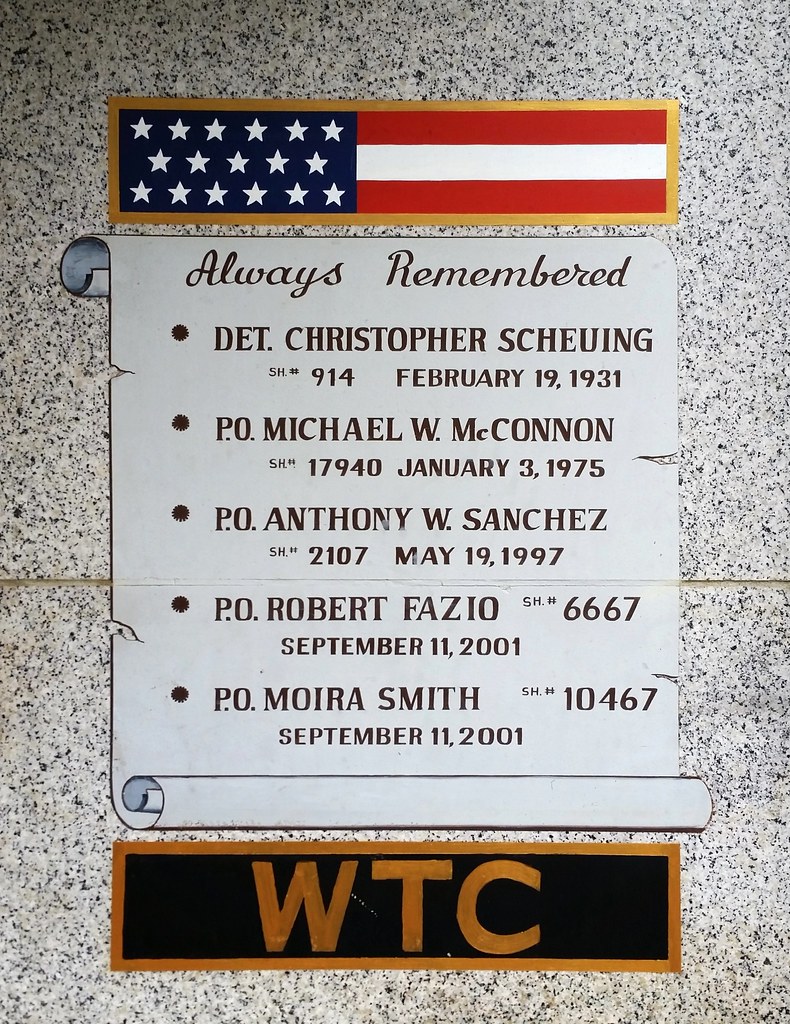
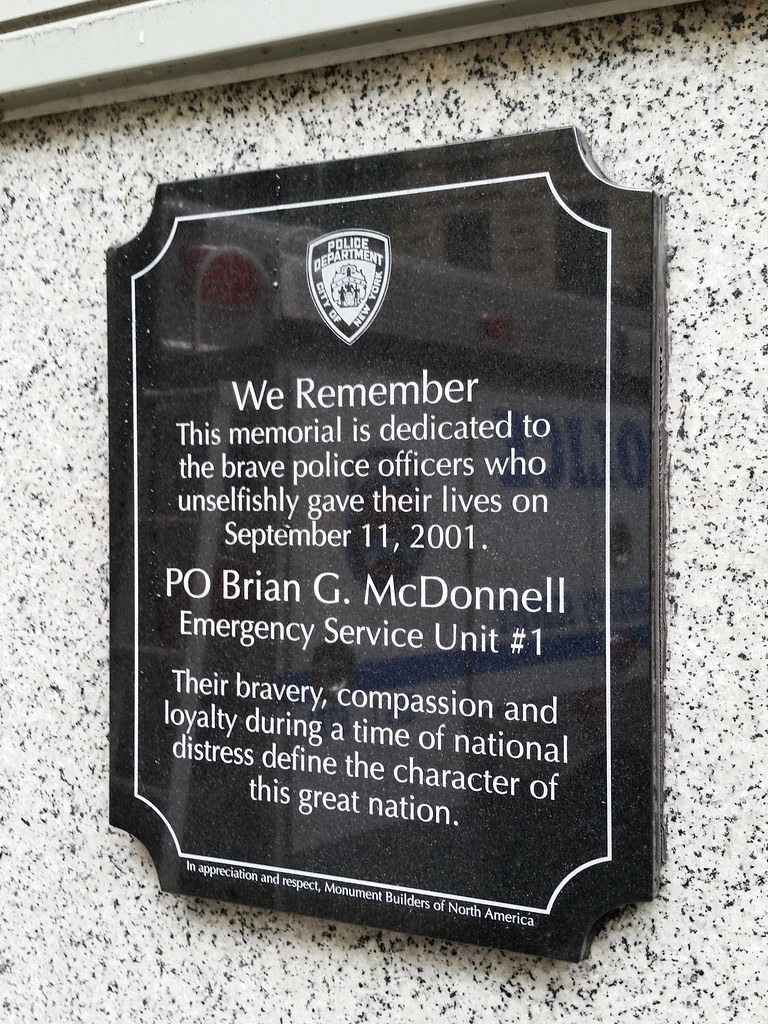
The truck reflected in this plaque is dedicated in memory of Officer McDonnell.
Day 1308
Today’s route — 3.3 miles
July 30th, 2015

For today's walk, I joined Dan Fleischer for a brief stretch of his "Manhattan thru-hike". Dan is an experienced long-distance hiker from Portland, Oregon, and he decided to spend his three-week summer vacation walking every street on the island of Manhattan. During his trek, he refrained from using any form of transportation other than walking, heading out each morning on foot to get to his starting point and returning home at night the same way. (He rented three places in different parts of Manhattan for a week each, which helped reduce the amount of back-and-forth walking he had to do each morning and evening.) Hoofing it more than 30 miles per day — and probably closer to 35 — he covered every street on the island in a single continuous trail of footsteps, hence the "thru-hike" part of the name.
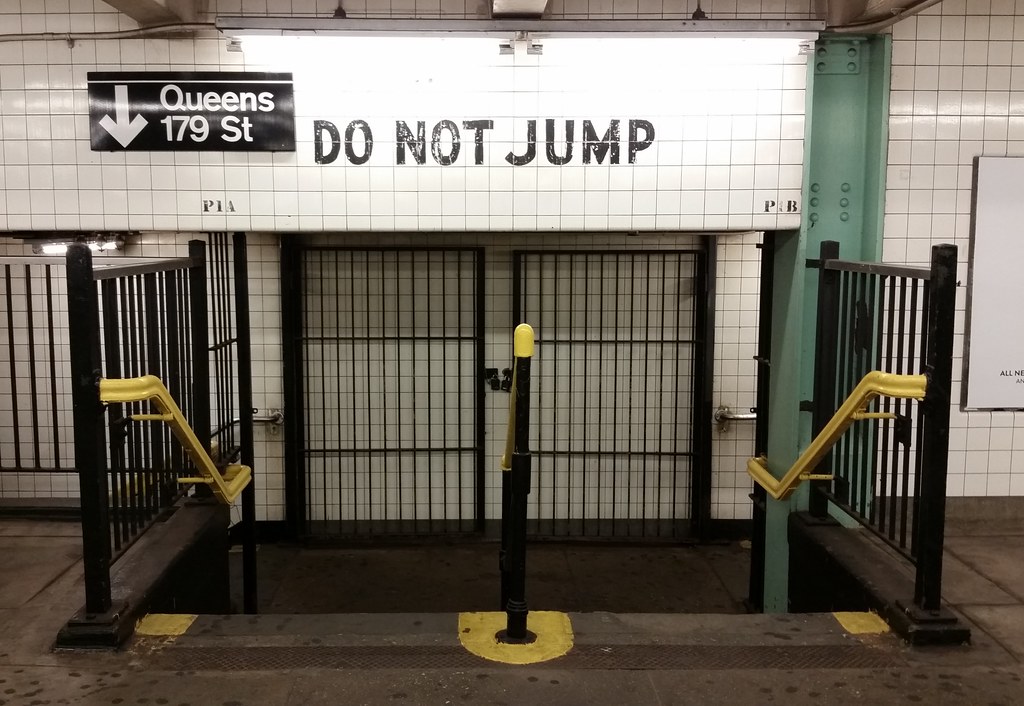
An old painted plea for noggin safety here at the 169th Street F train station
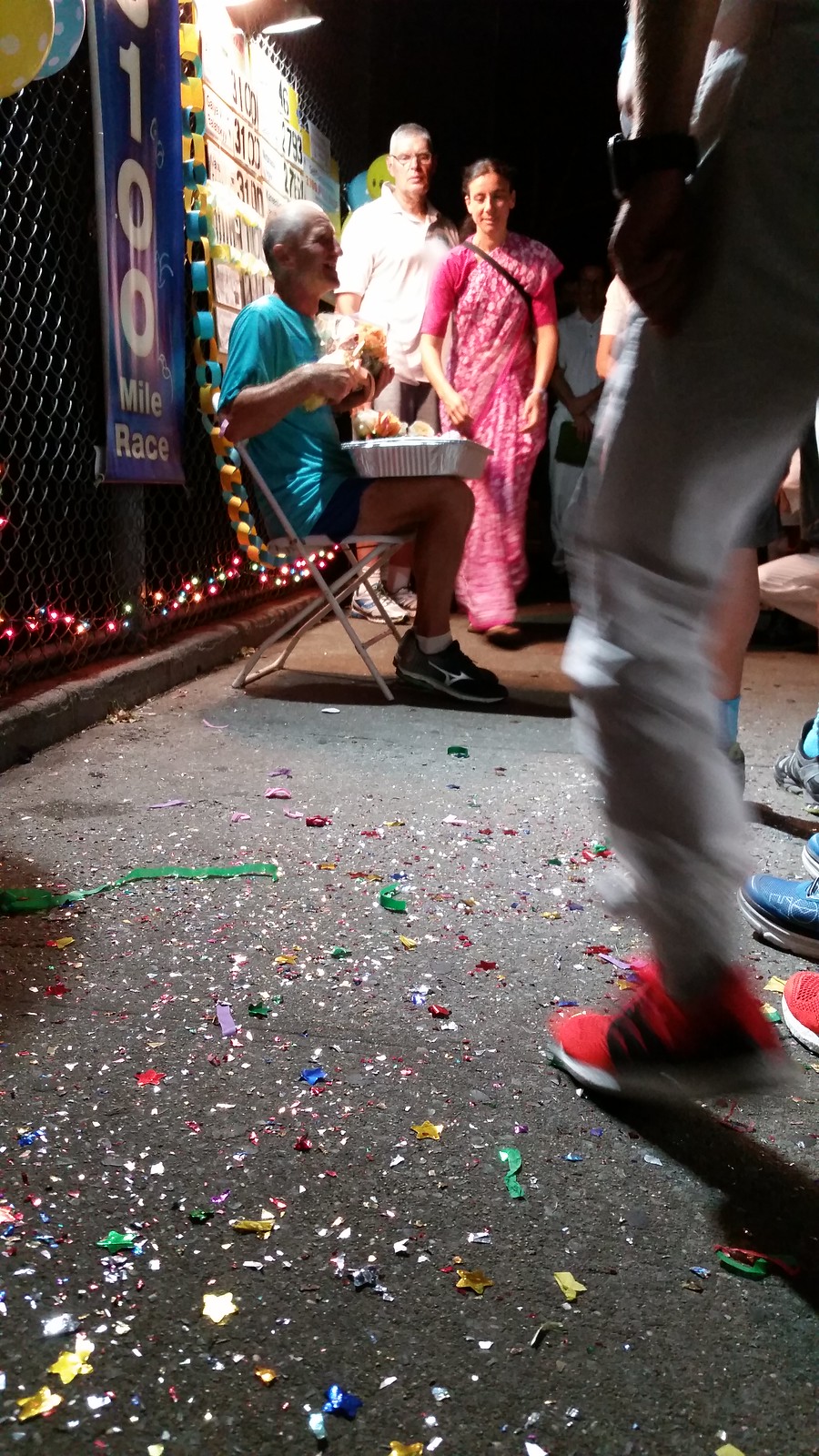
at the finish line of the Self-Transcendence 3100 Mile Race. He's the fourth person to finish the race this year, and is treated to the same victory songs and ambrosial cake as everyone else who completes the 5,649 laps of the block within the allotted 52 days. (The horn-like sounds you hear when people start cheering are made by guys blowing conch shells.)
Ashprihanal was the first to cross the finish line this year, and did so in record time: 40 days, 9 hours, 6 minutes, and 21 seconds, more than 23 hours faster than the previous record-holder.
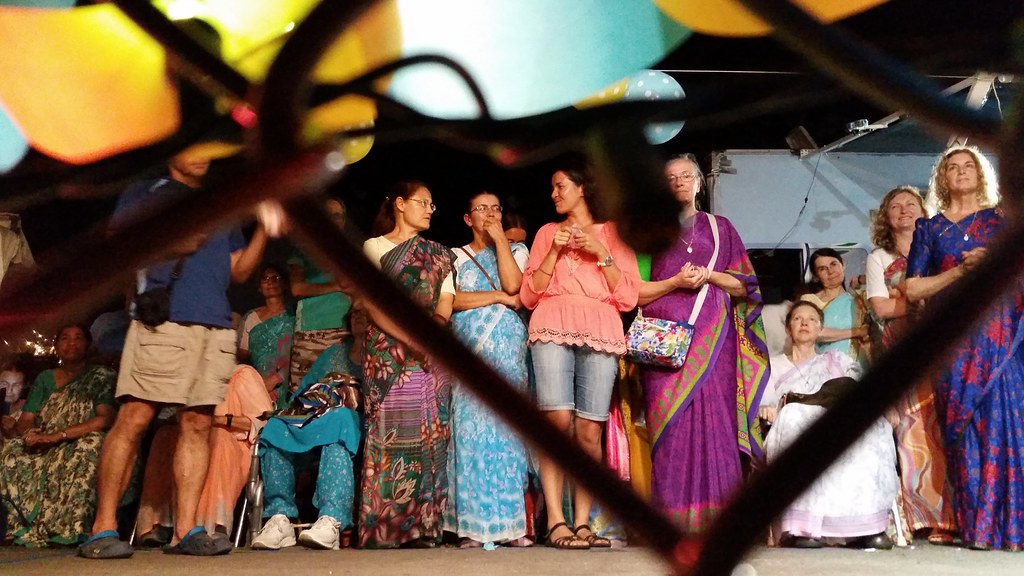
at the finish line of the Self-Transcendence 3100 Mile Race
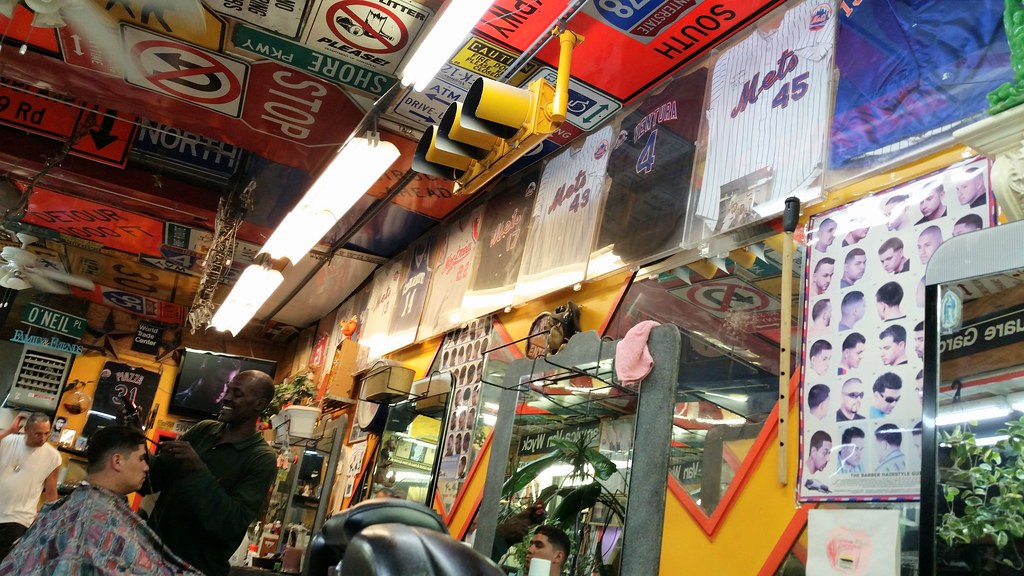
Cutty's is where the late Knicks forward Anthony Mason went to get his cranial canvas carved by Freddy Avila, "the Rembrandt of Barbers".
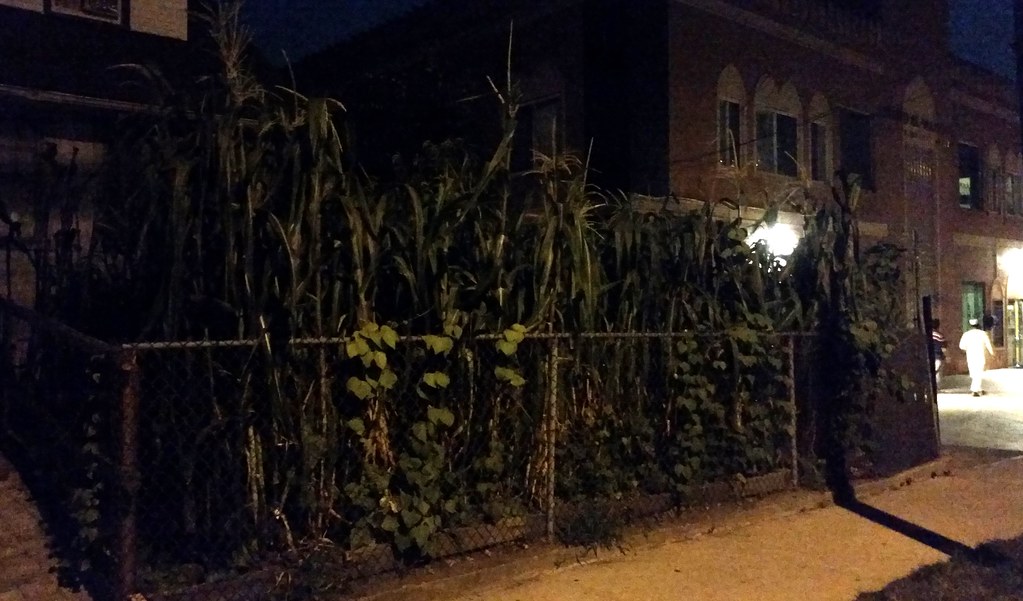
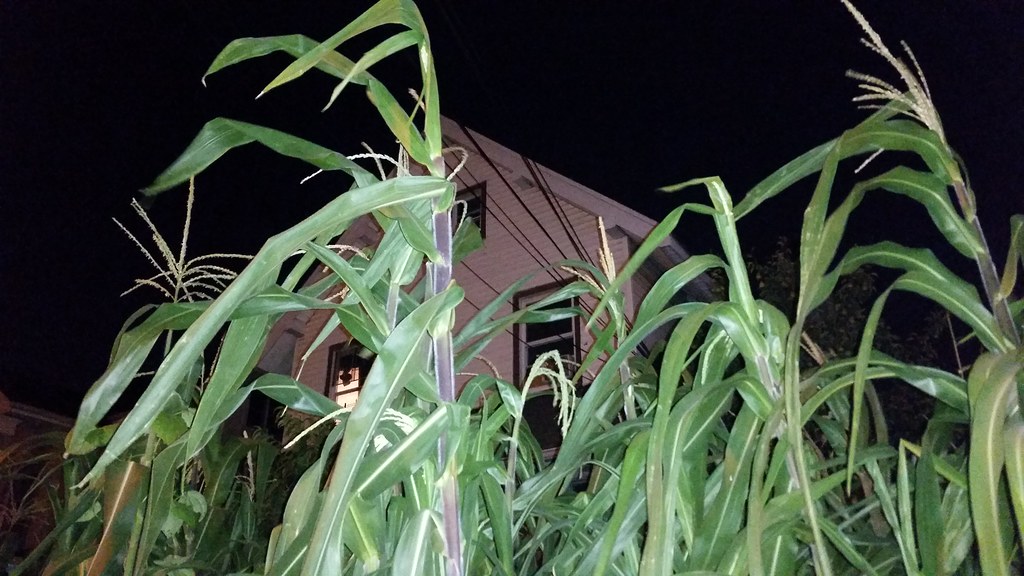
This is an amazingly bountiful little yard: tall rows of corn, a couple of fruit trees, and all kinds of vines stretching around back. It was too dark to see the vines well, but here's what they looked like a year ago.
I'm walking every street in New York City.
This is the counterpoint to my walk across the US. Instead of seeing a million places for just a minute each, I'm going to spend a million minutes exploring just one place. By the time I finish walking every block of every street in all five boroughs, I'll have traveled more than 8,000 miles on foot — all within a single city. Details!
Email me at matt@imjustwalkin.com
Subscribe to my email list
Maps: Progress | Photos

~9,954 miles walked
Your donations allow me to keep walking full-time. If you think what I'm doing is valuable and you'd like to offer some support, I would be very grateful. On the other hand, if you think I'm a worthless bum, feel free to email me and tell me to get a job, bozo. Both are excellent options!
