USA | NYC


Day 522

July 4, 1939

June 4th, 2013


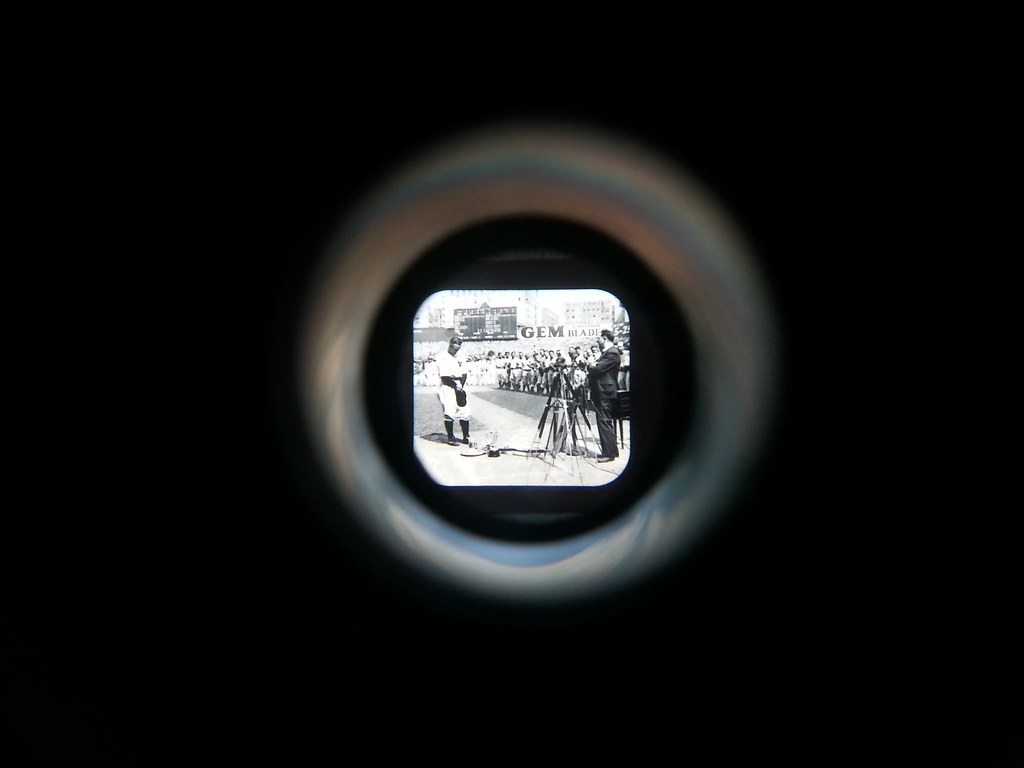
On Lou Gehrig Appreciation Day, the Yankee icon gives his "Luckiest Man" speech.

From our visit to Lou's final residence in Fieldston:

This is the house where the humble and beloved Lou Gehrig died in 1941 at the age of 37. The Yankees' legendary first baseman was a man of prodigious talent, one of the greatest hitters the game has ever seen. He became a regular in the Yankees' lineup in 1925, two years into his career, and never took a day off from that point forward. Playing through injury and illness, he had appeared in 2,130 consecutive games when he took his final swing, an unheard-of accomplishment that stood as a record for 56 years.

His unmatched toughness and reliability earned him the nickname "The Iron Horse", but even he was no match for the disease that now bears his name, which began ravaging his body in the prime of his life and knocked him out of baseball less than a year after he first began to notice its effects. Despite his extraordinary athletic achievements, Lou is best remembered for his moving retirement speech, telling the teary-eyed crowd packed into Yankee Stadium: "Fans, for the past two weeks you have been reading about the bad break I got. Yet today I consider myself the luckiest man on the face of the earth."
Day 522

Aug. 17, 1979

June 4th, 2013


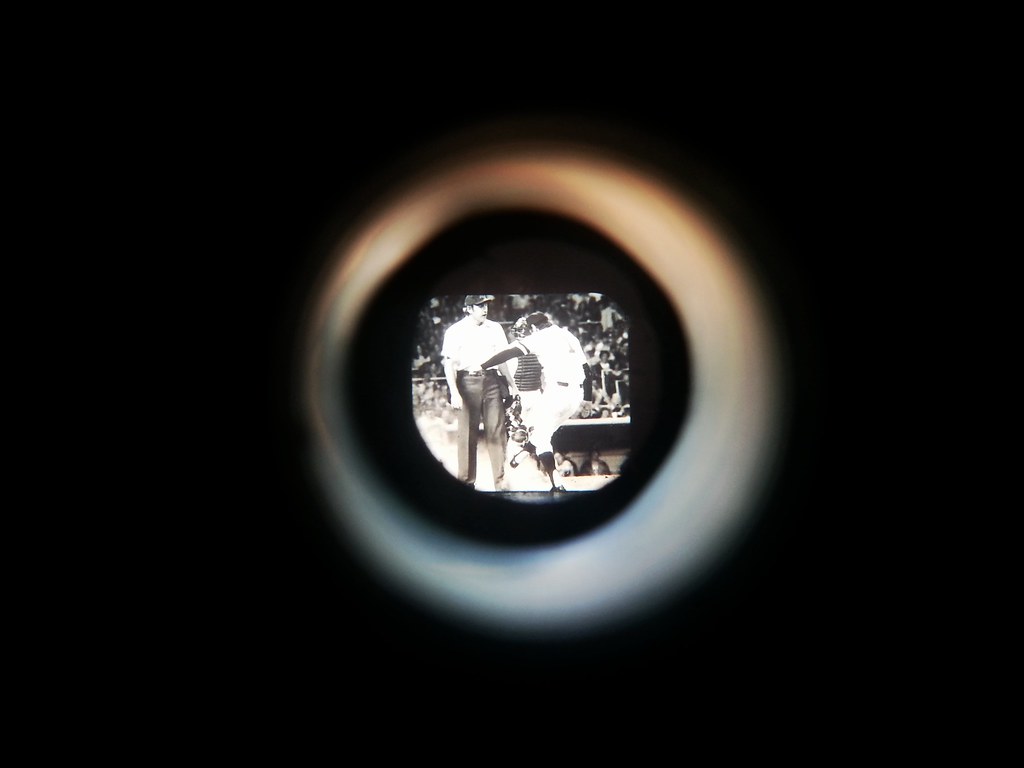
Manager Billy Martin expresses his displeasure with the home plate umpire.

Here we see the Yankees' fiery manager performing his patented dirt-kicking routine.

Day 522

Gazing into the past

June 4th, 2013


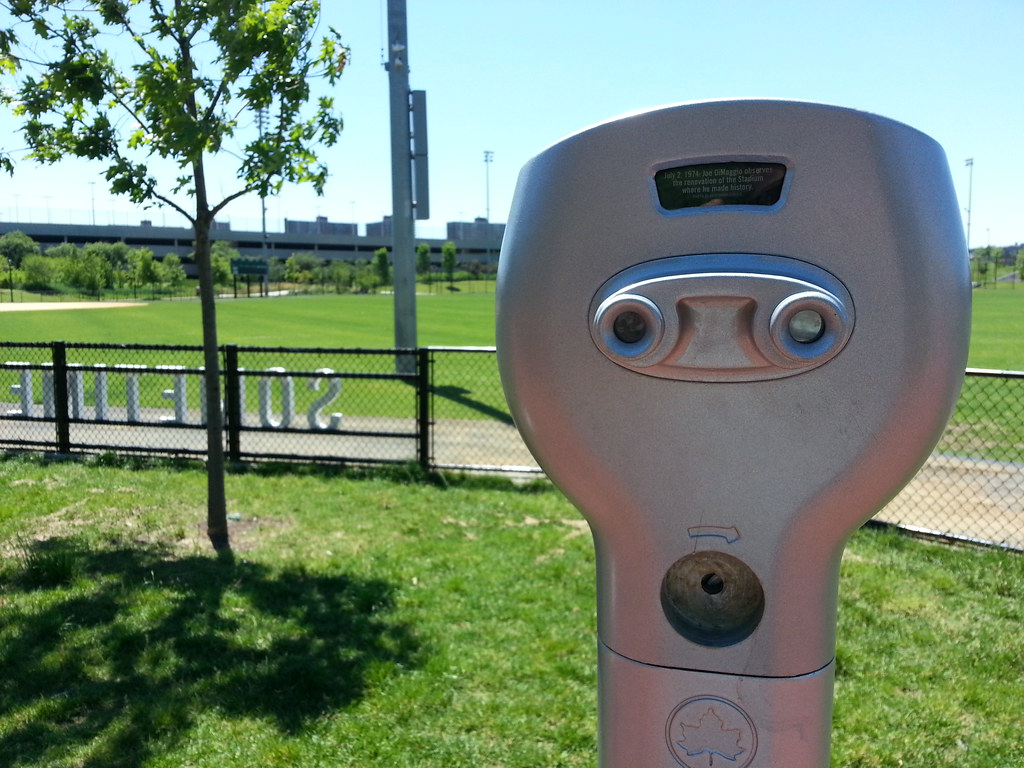
There are a number of these pole-mounted, View-Master-like stereoscopic slide viewers stationed around Heritage Field, each offering several binocular glimpses of notable moments in the history of Yankee Stadium. (The slide-turning wheel is missing on this one.) The next two photos were taken peering into these devices.

Day 522

The frieze

June 4th, 2013


From the NY Times:

No feature of the original Yankee Stadium defined its architectural look more than the gently curving frieze that crowned the upper deck. The elegant topping of the three-tiered House That Ruth Built oxidized early in its life, but the green patina only made it more memorable.

The frieze cast an unusual shadow on the field in late afternoons and became a part of history when Mickey Mantle hit a home run to right field in 1963 that nearly hit the top of it.

Someone — the architects at Osborn Engineering in Cleveland or the Yankees' visionary owners, Jacob Ruppert and Tillinghast L. Huston — intuitively understood magnificence.

"The shape of it came from out of nowhere," said John Pastier, an architectural critic and expert on stadiums. "It was quite original. It’s not like they copied a classical design."

Philip Lowry, the author of "Green Cathedrals," a well-regarded survey of baseball stadiums, said via e-mail, "Just as shiny bumpers are the jewelry of a car, the third-deck frieze was the ornamental jewelry of Yankee Stadium." He called it unique among stadiums and ballparks that generally "followed a functional rather than an ornamental design."

The frieze lasted 50 years, until it was stripped away during the [stadium's] 1974-75 renovation and replaced by an ersatz version beyond the outfield fence and above the bleachers.

"That was a horrible architectural mistake," Lowry wrote.
Having just crossed the Macombs Dam Bridge over the Harlem River from the former site of the Polo Grounds in Manhattan, I find myself wandering around Heritage Field in the Bronx, a new public ballpark built where the old Yankee Stadium once stood (that's the new stadium visible in the background), looking at a preserved section of the mid-'70s-era concrete replacement frieze, one of many features incorporated into the design of Heritage Field that offer reminders of the baseball legends who once played here.

Turning again to the NY Times:
When the new Yankee Stadium opened in 2009, not even the loudest of Yankee fanatics could drown out the outraged howls over its costly tickets, its tax-exempt financing and, of course, its construction atop two city parks.

But now, in an unabashed bid for redemption, New York City officials have spared no expense to deliver on a long-promised, $50.8 million public ballpark across the street from the stadium to make amends for their part in a bitter struggle over lost parkland that pitted Bronx residents against their most famous neighbor.

Heritage Field opened this week [in April of 2012], more than a year behind schedule, on the site of the old Yankee Stadium — the last of which was demolished in 2010 — and nearly every inch, from the pavement stones underfoot to the three natural grass ball fields, has been elaborately designed to pay homage to the Yankees and their celebrated former home. Even the sod is the same that the Yankees, professional baseball’s biggest spender, chose for their new stadium.

Day 522


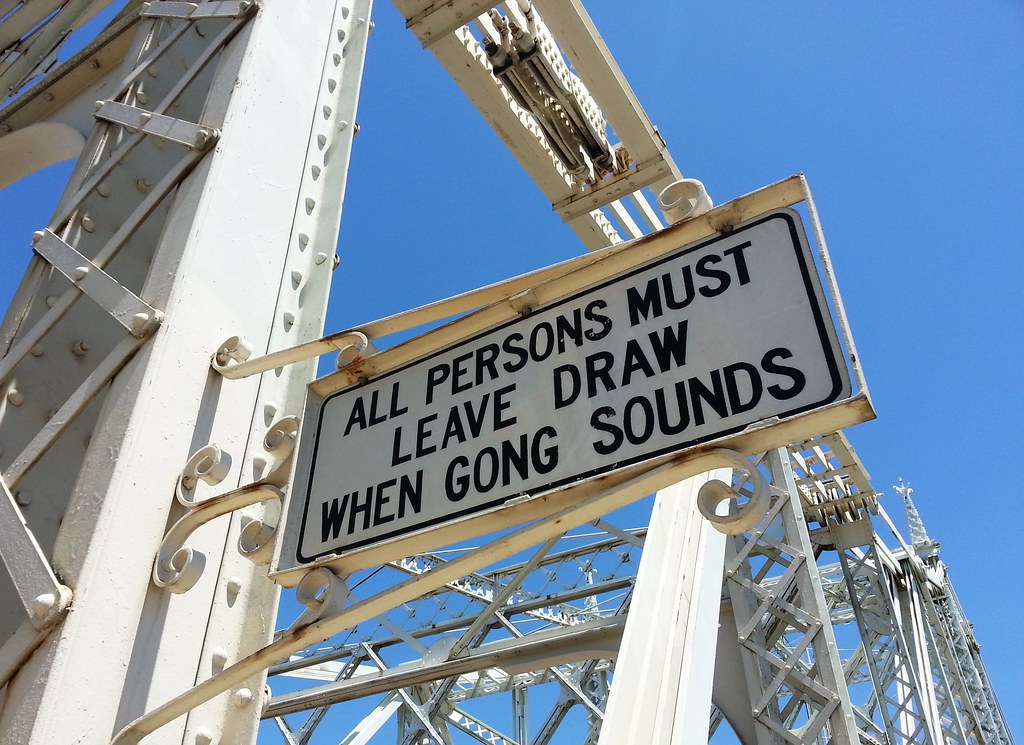
over the 1895 Macombs Dam Bridge. This railing was made by Brooklyn's Hecla Iron Works.

Day 522

Polo Grounds Towers

June 4th, 2013


This public housing development, completed in 1968, stands on the former site of the Polo Grounds, the stadium most famously known as the home of the New York Giants baseball team. It was here that Willie Mays made The Catch and Bobby Thomson hit the Shot Heard 'Round the World and Bonehead Merkle never touched second. The Giants left New York for San Francisco after the 1957 season, and the Polo Grounds was demolished in 1964 with the same wrecking ball, painted to resemble a baseball, that had been used four years earlier to knock down Ebbets Field (which was also replaced with apartment towers).

Day 522

Hooper Fountain

June 4th, 2013


Like the trough we saw outside the ASPCA's old headquarters in Brooklyn, this fountain dates back to the days when thirsty horses filled the streets of New York City. It was built in 1894 with funds willed by the "civic-minded businessman" John Hooper for the construction of two fountains, one each in the then-separate cities of New York and Brooklyn, "whereat man and beast can drink" (note the different basins for horses, dogs, and people).

The Brooklyn fountain was dismantled long ago, as "horse and sturdy ox . . . vanished in a cloud of gasoline exhalations”, but this one held strong, "stand[ing] there in the traffic with the serene inconsequence of a megatherium on Broadway." It was removed and put in storage for two decades after being partially destroyed by an act of column-toppling vandalism in the early 1980s, but it persevered and was eventually restored and reconstructed. There's now a standard water fountain head for the humans, while the horse and dog basins appear to be inoperative. (A couple of lucky equines did get to lap water from the fountain at its 2001 ribbon-cutting ceremony*, however.)

* If you read the linked article, you'll notice a profusion of nicknames in use — classic Henry (StarQuest) Stern.

Day 522

Portals of the day

June 4th, 2013


Day 522


In 1934, this tap-dancing "mayor of Harlem", who lived across the street in the Dunbar Apartments (and now, as we've seen, resides in the Evergreens Cemetery), convinced John D. Rockefeller Jr. to deed this land to the city as a public park. The mural above, complete with "a shadow cast by an actual period street lamp of the type that existed in Harlem during Robinson’s heyday", shows Bojangles performing his famous "stair dance".

Day 522

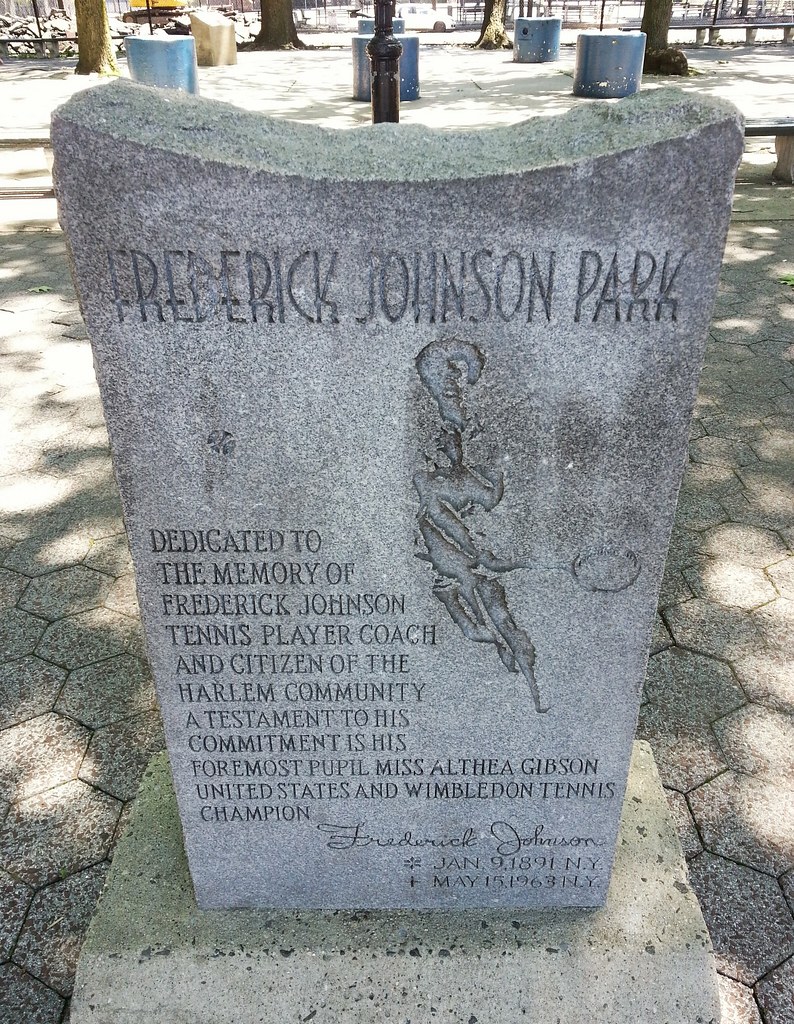
Frederick Johnson Park

June 4th, 2013


Fred was a one-armed tennis coach who gave Althea Gibson her first lesson.

Day 522

Chicory flower

June 4th, 2013


with the just-crossed Macombs Dam Bridge in the background

Day 522

Macombs Dam Bridge

June 4th, 2013


A predecessor of this bridge plays the role of antagonist in one of my favorite stories that I've learned on this walk.

Day 522


Day 516

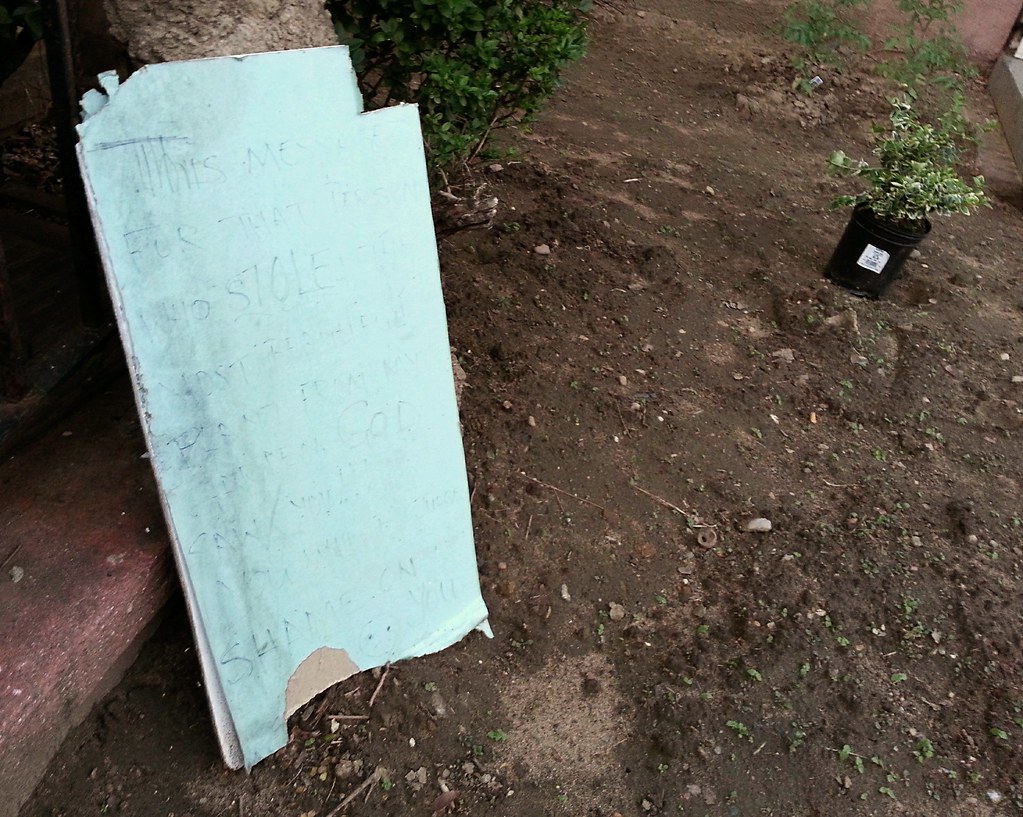
Plant thieves beware!

May 29th, 2013


This message
for that person
who STOLE the
most beautiful
plant from my
garden. God
saw you!!!
You will be judge
SHAME ON
:( YOU

Day 516

Walkin’ the dog

May 29th, 2013


at the 1891-92 Boys' High School, whose notable alumni include, among many others, Isaac Asimov, Norman Mailer, Man Ray, Aaron Copland, and Max Roach, his "hands shimmering on the legs of rain". The architect of this "monumental example of the mature Romanesque Revival style which became popular in the United States in the last quarter of the 19th century" was James W. Naughton, Brooklyn's superintendent of school buildings for almost 20 years. (My photo doesn't begin to do the place justice; it is truly monumental.) After the consolidation of the five boroughs in 1898, the school came under the purview of our friend Charles B.J. Snyder, the city's chief school architect, who designed a couple of early 20th-century additions to the building.