
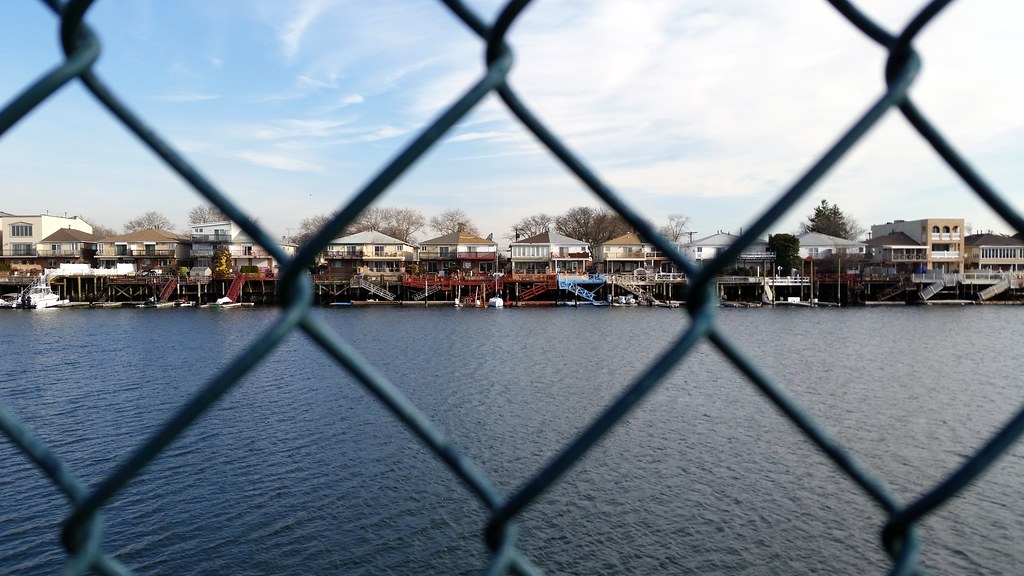
Looking across Mill Basin (the waterway) at Mill Basin (the neighborhood)
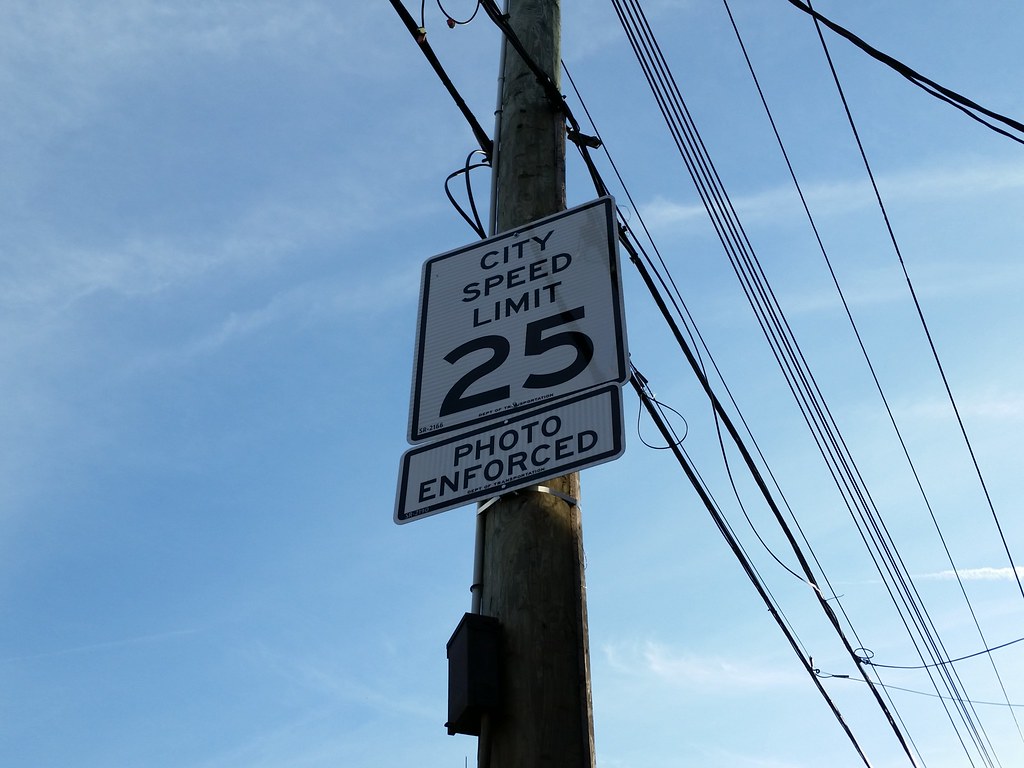
On November 7, the default city speed limit dropped from 30 to 25 miles per hour. As indicated by the lower sign above, the city also now uses speed cameras (which predated the 30-to-25 reduction) to aid in speed limit enforcement — specifically, to catch drivers going more than 10 miles per hour over the limit. By state law, the cameras can only be used in "school speed zones" (i.e., within a quarter-mile of a school on a street that abuts the school) during school hours and other times of student activity.
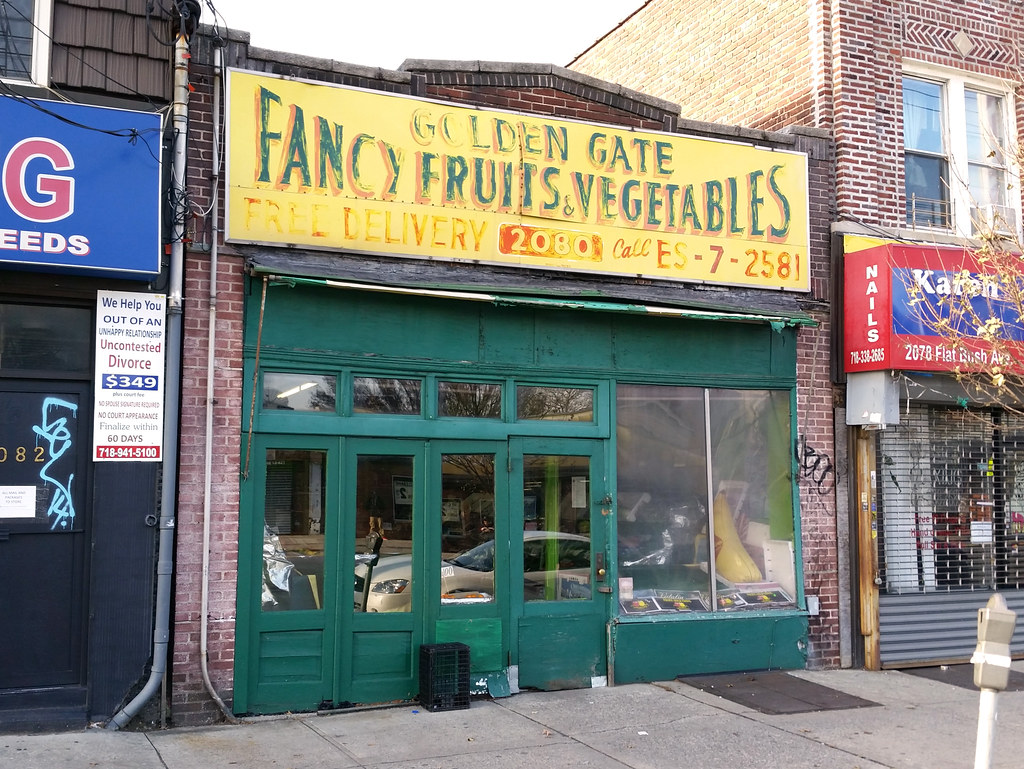
According to the store's Facebook page:
John Cortese's father started the Golden Gate as a fruit and vegetable cart on the streets of Brooklyn in 1939. It has been run by John Cortese ever since, with the help of his son and daughter, as a storefront in the Marine Park section of Brooklyn.Here's a peek inside.
(Note the old telephone exchange name in the phone number listed on the sign: ESplanade 7-2581.)
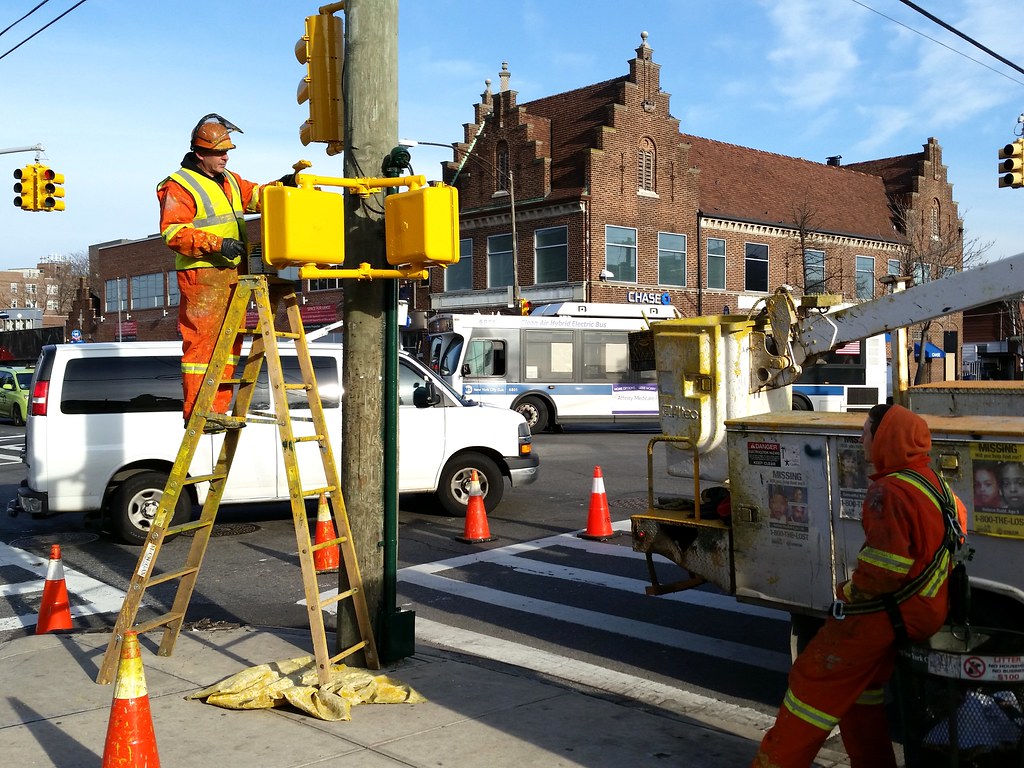
I've gazed upon a lot of pedestrian crossing signals in my day, but it never occurred to me that, every so often, someone might have to climb up a wooden ladder with a can of paint and a brush to repaint them.
(The Flemish Renaissance Revival building in the background is an old Midwood Trust Company bank branch.)
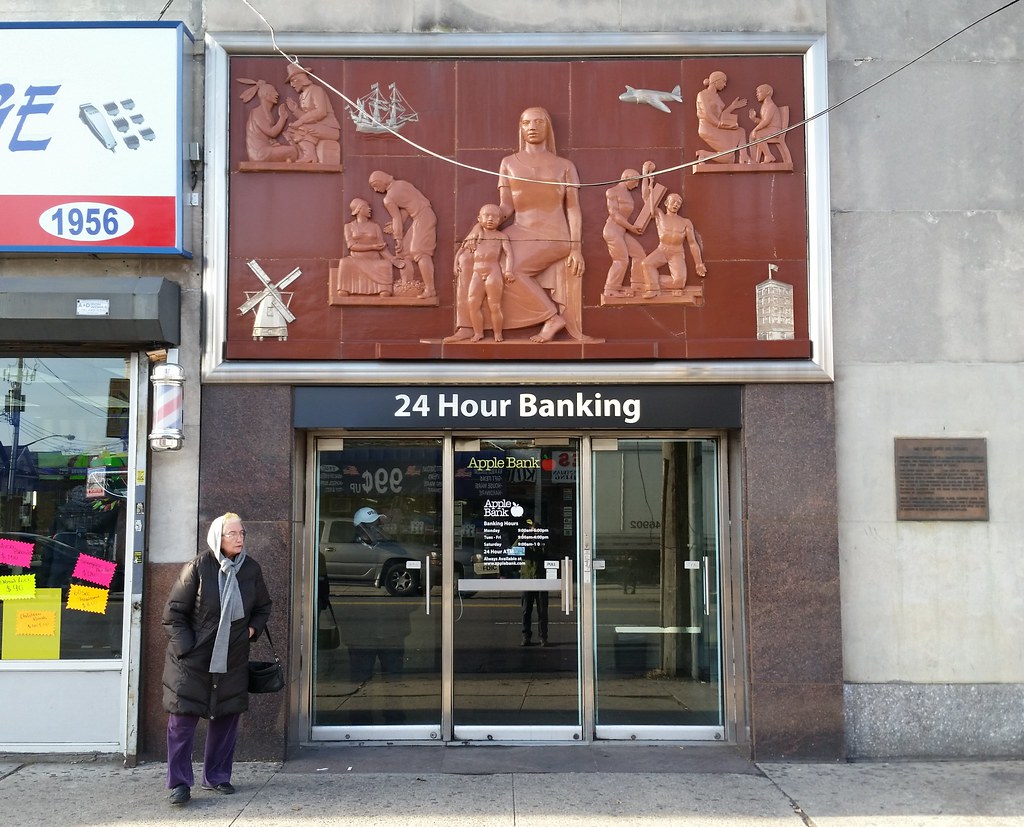
The plaque at right reads:
BAS-RELIEF ABOVE OUR ENTRANCE
THIS PICTURESQUE BAS-RELIEF IS A TRIBUTE TO THE THOUSANDS OF MOTHERS WHO, THROUGHOUT THE HISTORY OF THIS COMMUNITY, HAVE TAUGHT THEIR CHILDREN THE HABIT OF THRIFT.
FROM DUTCH COLONIAL DAYS . . . THE DAYS OF NIEUW AMSTERDAM WINDMILLS, INDIANS, MONEY CHESTS AND SAILING VESSELS . . . TO THE PRESENT DAY WITH ITS PUBLIC SCHOOLS, SKYSCRAPERS, GIANT PLANES . . . THE WOMEN OF THIS COMMUNITY HAVE KNOWN THE VALUE OF THRIFT. FOR TO THEM A SAVINGS RESERVE MEANT GREATER FAMILY SECURITY, PROTECTION, HAPPINESS AND THE MEANS WITH WHICH TO TAKE ADVANTAGE OF OPPORTUNITIES.
MONEY EARNED IN COLONIAL MARKET PLACES, CAREFULLY SAVED, FREQUENTLY PURCHASED THE LAND UPON WHICH TODAY'S SKYSCRAPERS, PARTIALLY FINANCED BY YOUR SAVINGS BANKS, HAVE BEEN BUILT. ALL THIS IS DEPICTED IN THIS BAS-RELIEF ABOVE OUR ENTRANCE.
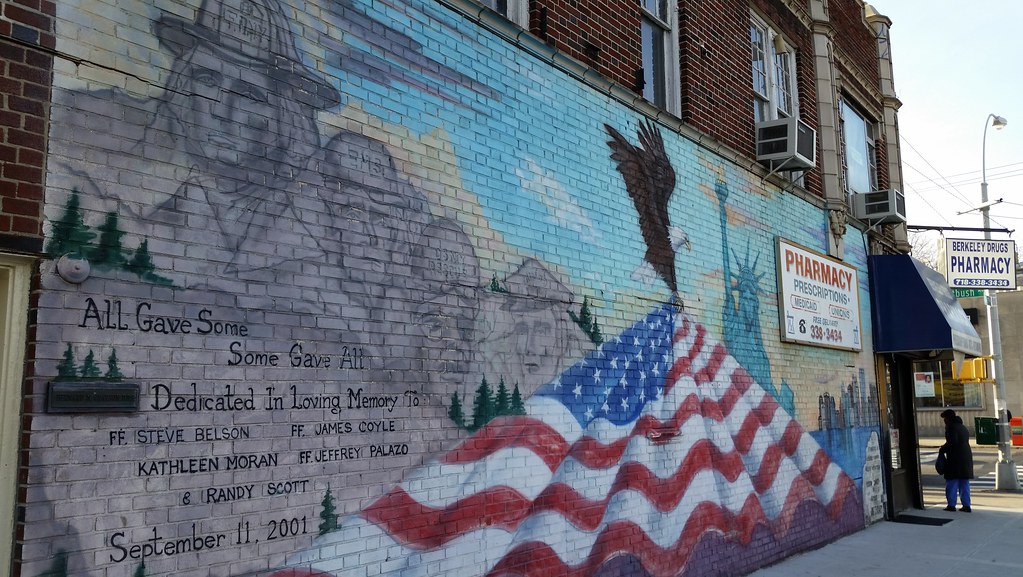
I didn't get a great shot of this memorial the first time I saw it, so I'm replacing that photo with this one.

"THE BOSS IS NOT HERE" reads the sign on the door in English, Hebrew, and Yiddish.

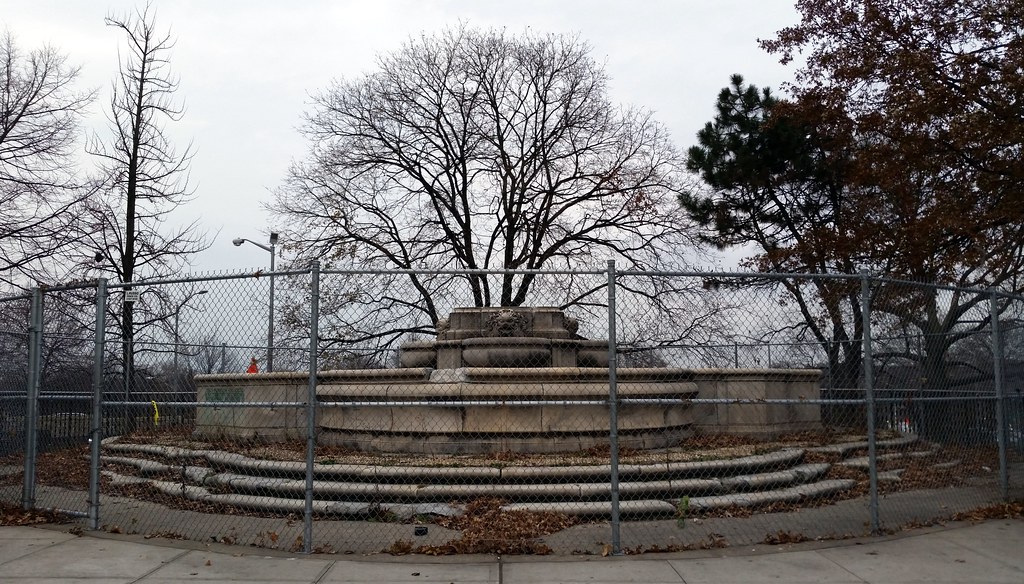
The last time we passed by this spot on Queens Boulevard beside Queens Borough Hall, the somewhat controversial and sexist sculpture known as Civic Virtue was standing here, as it had been since 1941 (when it got booted from City Hall Park, where it was unveiled in 1922). The statue has since been moved to Green-Wood Cemetery and restored, while the fountain it stood upon has been left to collect fallen leaves inside a chain-link fence. There is apparently a plan in the works, however, to spruce up the old fountain with plantings and a plaque dedicating it to the women of Queens.
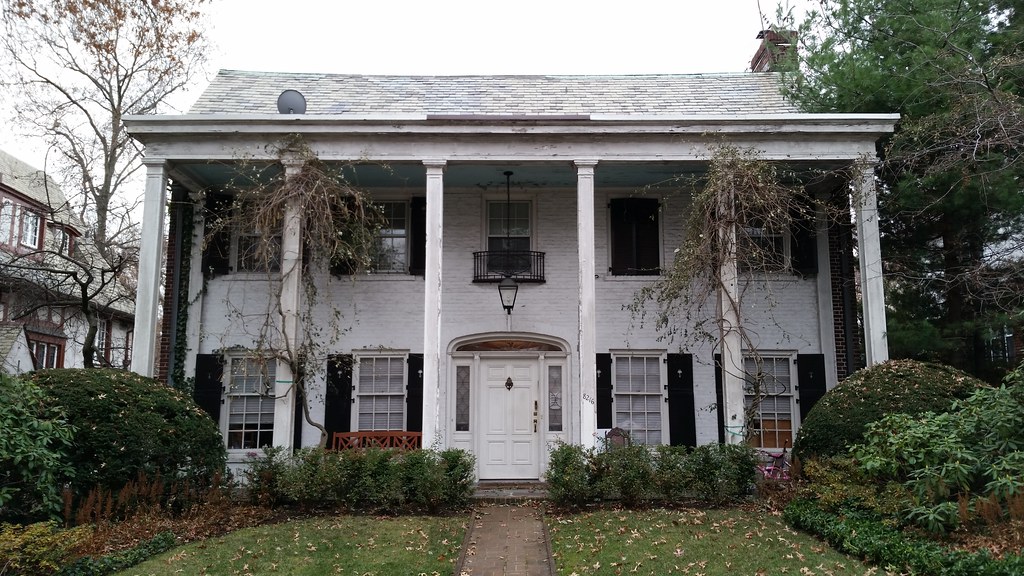
One of the many handsome dwellings found on the winding streets of Kew Gardens (bird's-eye view)
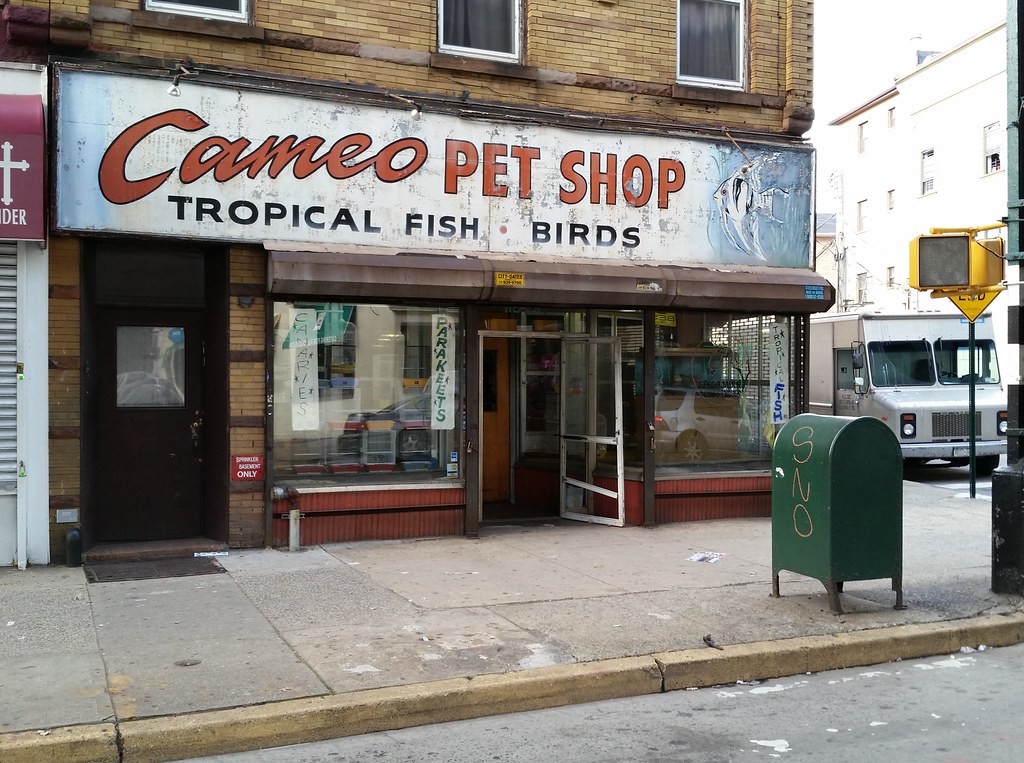
This is the former home of Buttkiss the fish (named for Dick Butkus), a black pacu who died at the reported age of 45 in 2011. According to the shop's owner in 2009:
We actually sold him in 1968 to a Holocaust survivor named Kurt Emerick. The fish was about two inches long at that time. But he got so big he was knocking things over in Kurt’s fishtank. Kurt didn’t like that. He was a perfectionist. So he brought him back here in a bucket. Later Kurt got hit by a bus on Metropolitan Avenue and died. But the fish is still here. I had just gotten back from Nam and I decided to keep him.
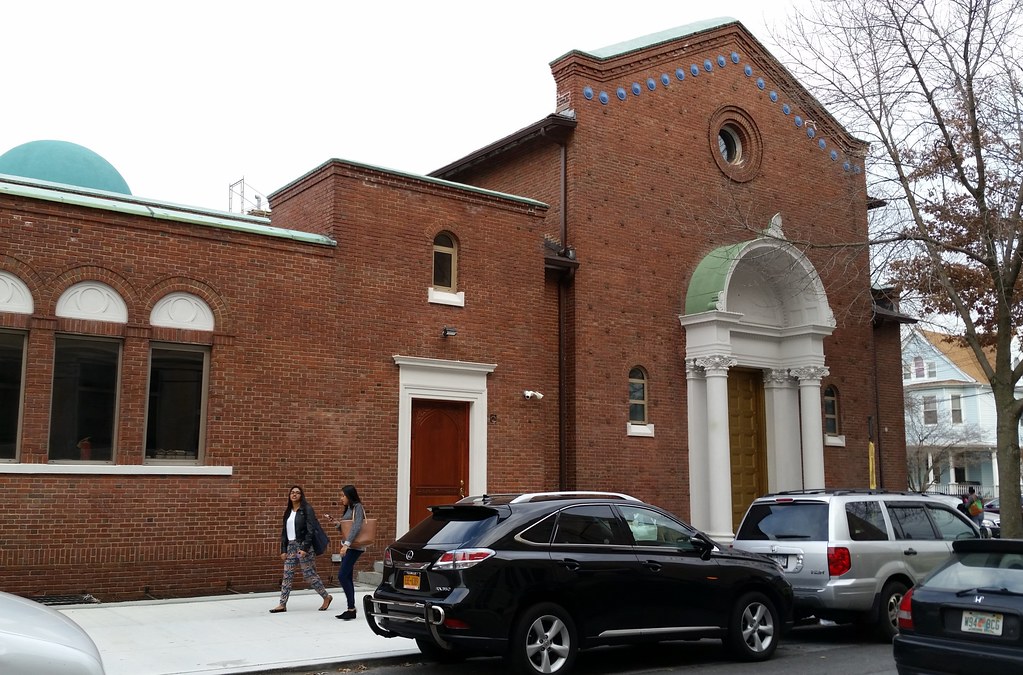
The former Richmond Hill Baptist Church was acquired in 2008 by the Islamic Unity and Cultural Center of Plav-Gusinje. According to the center's website (Google-translated from Bosnian to English), the building is in the final phase of its conversion into a mosque and Islamic school. The only outward sign of its new religious orientation that I saw was a crescent-topped dome added sometime after September 2011.
(I just realized this is the "nameless church" we saw back in early 2013.)
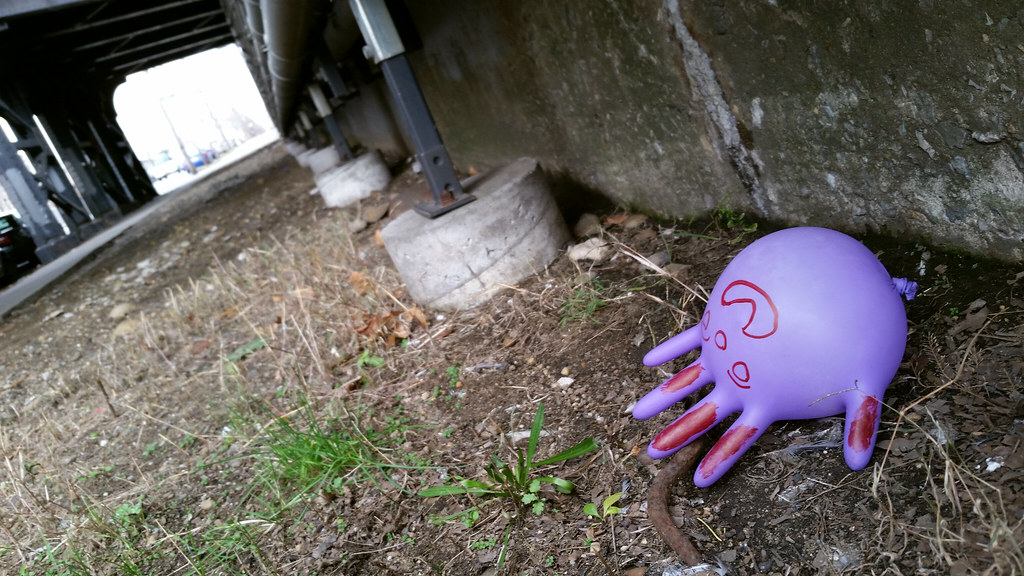
I'm walking every street in New York City.
This is the counterpoint to my walk across the US. Instead of seeing a million places for just a minute each, I'm going to spend a million minutes exploring just one place. By the time I finish walking every block of every street in all five boroughs, I'll have traveled more than 8,000 miles on foot — all within a single city. Details!
Email me at matt@imjustwalkin.com
Subscribe to my email list
Maps: Progress | Photos

~9,954 miles walked
Your donations allow me to keep walking full-time. If you think what I'm doing is valuable and you'd like to offer some support, I would be very grateful. On the other hand, if you think I'm a worthless bum, feel free to email me and tell me to get a job, bozo. Both are excellent options!
