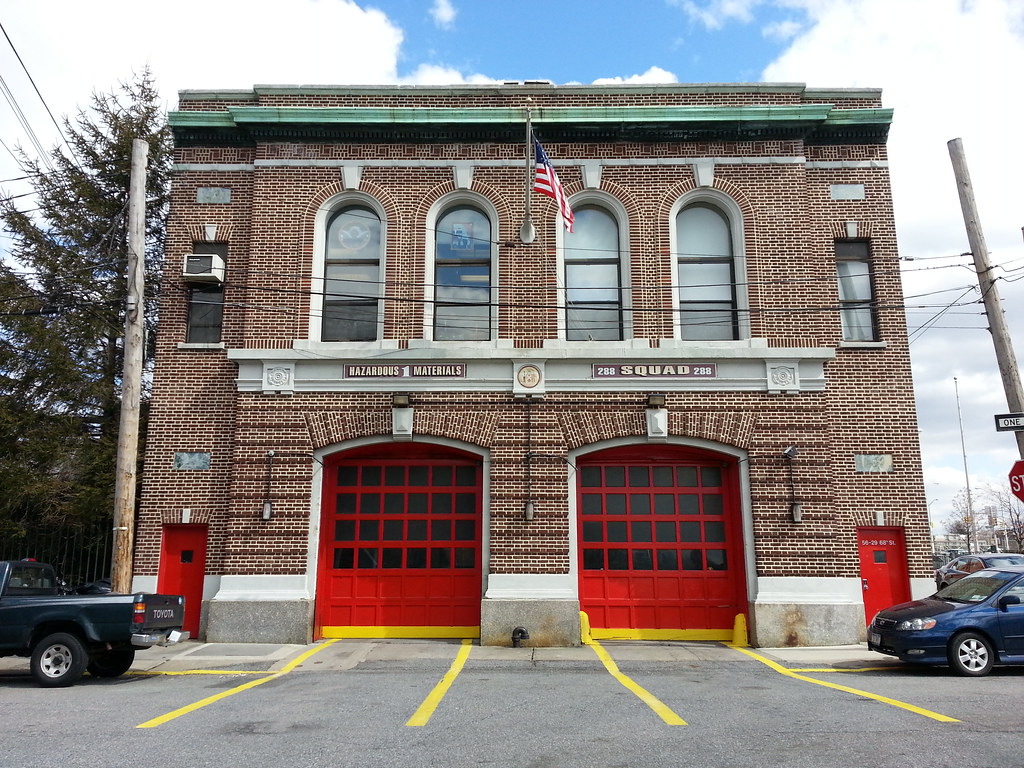
Located just across the street from the 9/11 memorial in the previous picture, Squad 288/HazMat 1 lost 19 men on 9/11, more than any other firehouse in the city.

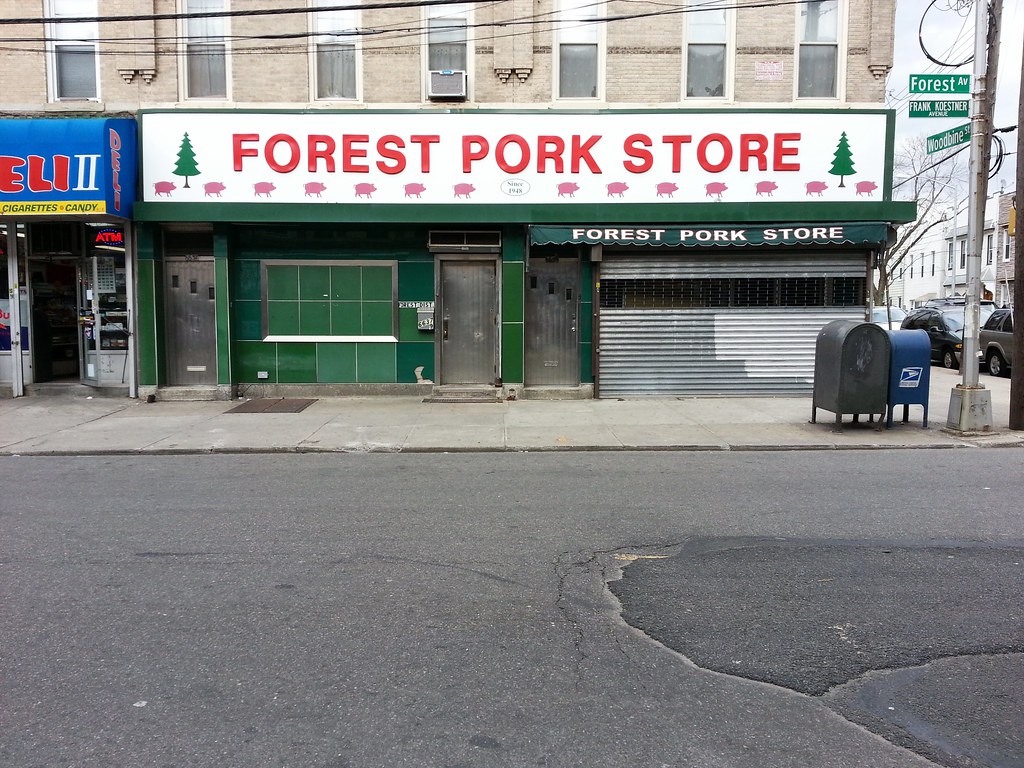
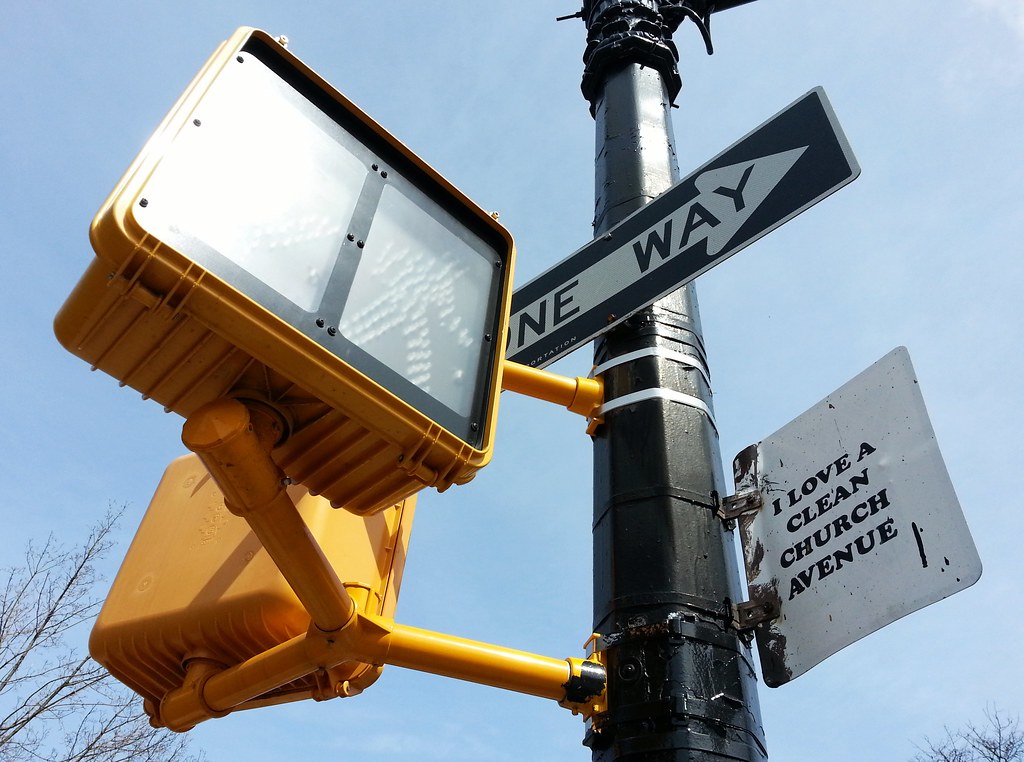
(If you look at the street signs, you can see this block has been co-named for Frank Koestner, making it one of many in the city honoring a victim of 9/11.)
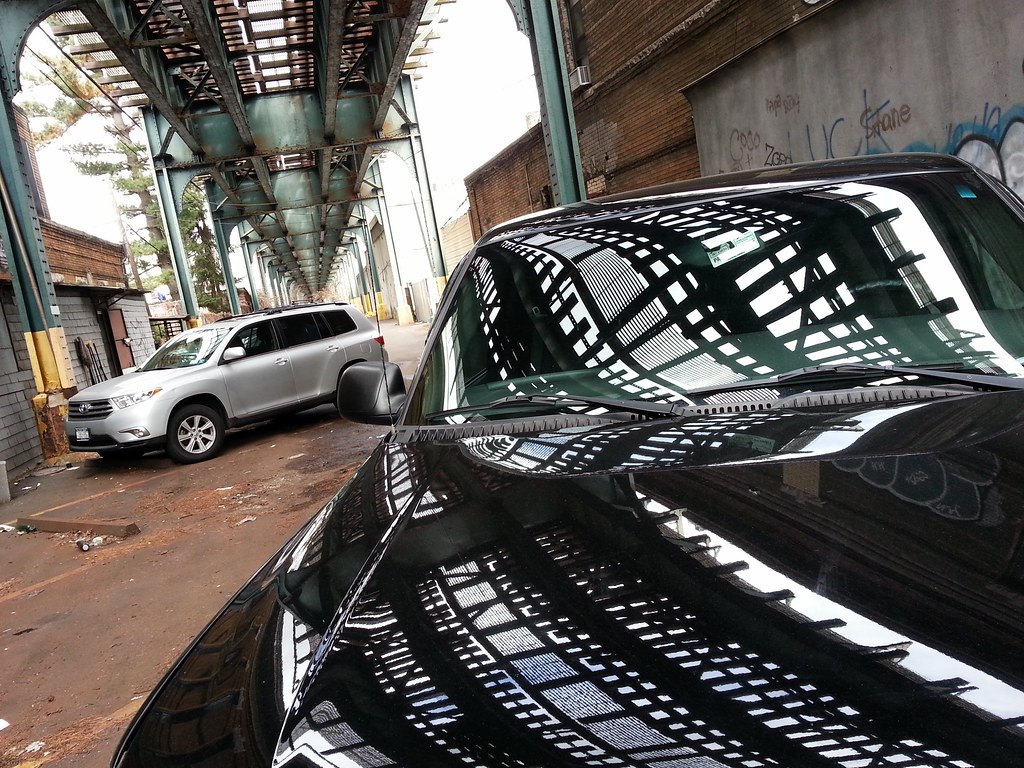
The Myrtle Avenue Line, a remnant of the old Myrtle Avenue El
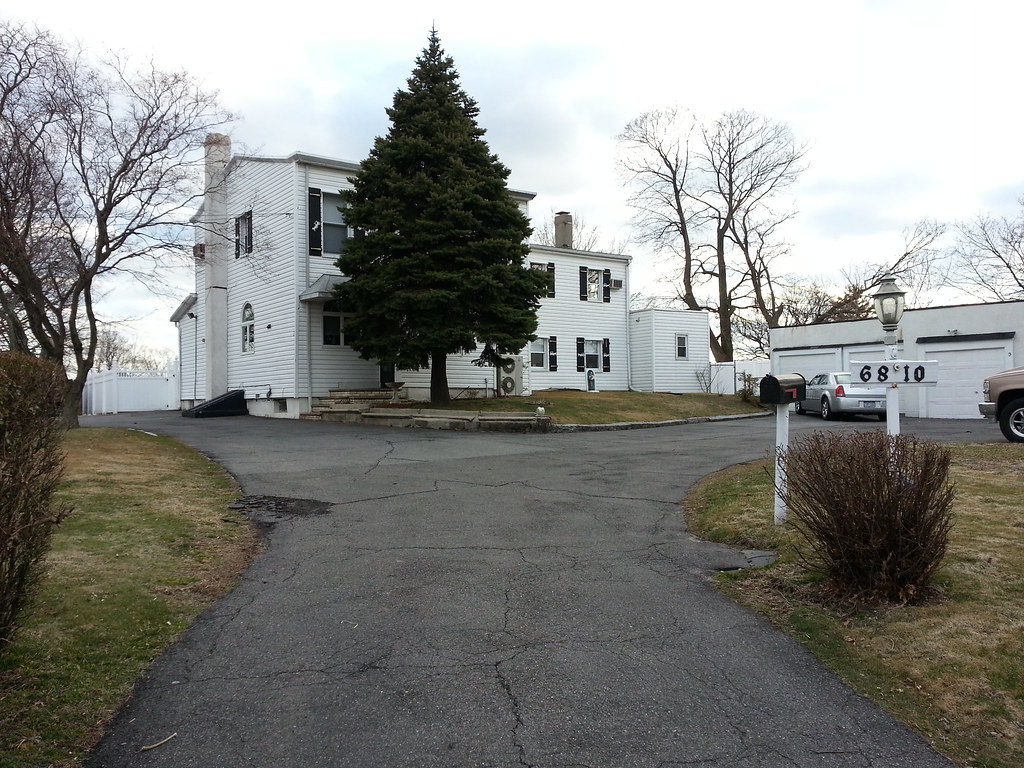
Unlike its tightly packed neighbors, this house abutting All Faiths Cemetery has plenty of room to stretch its legs out.
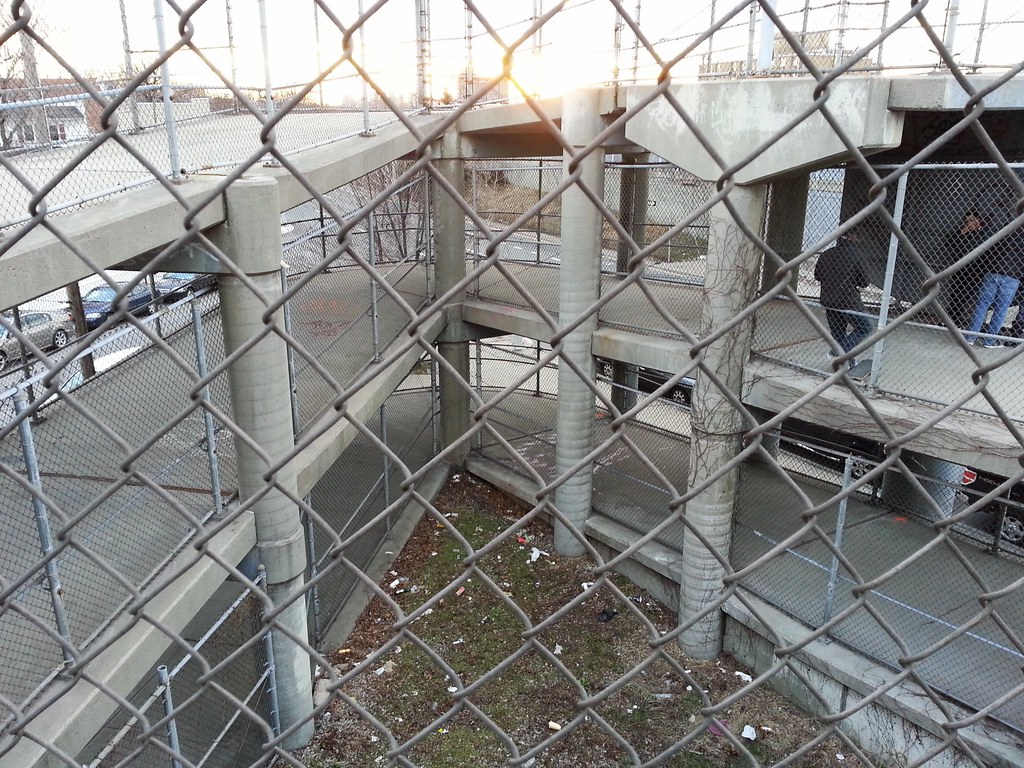
Complete with requisite teenagers hanging out and smoking (there was a similar group loitering at the other end of the bridge as well)
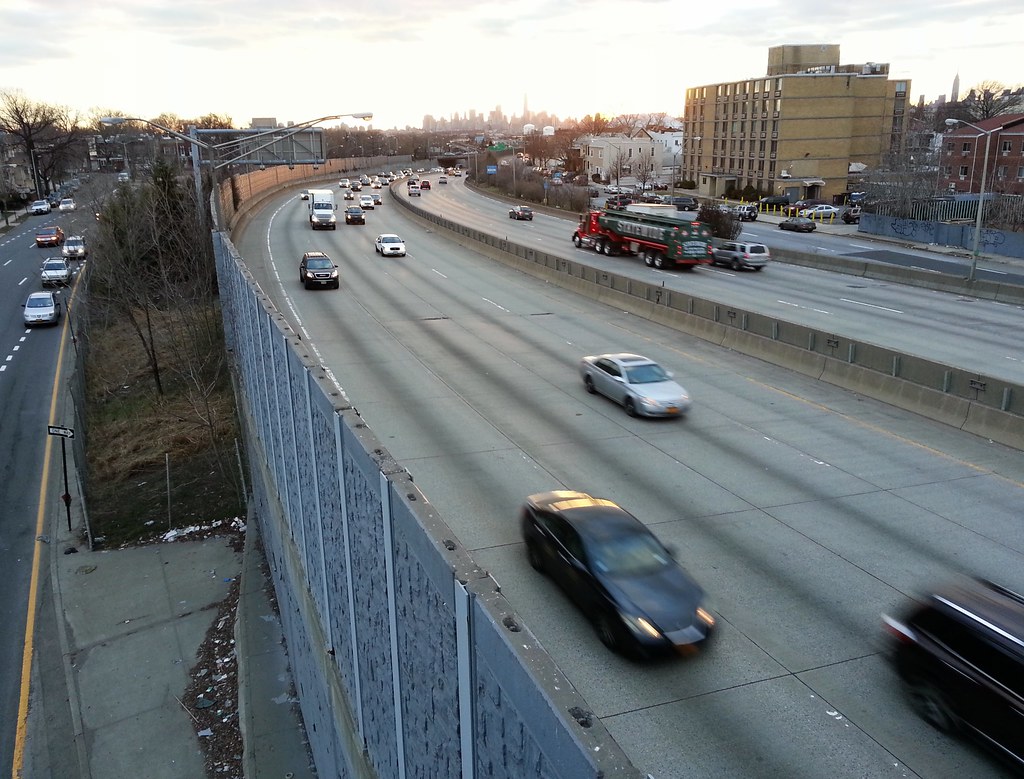
This explains why the pedestrian bridge ramp is seven miles long.
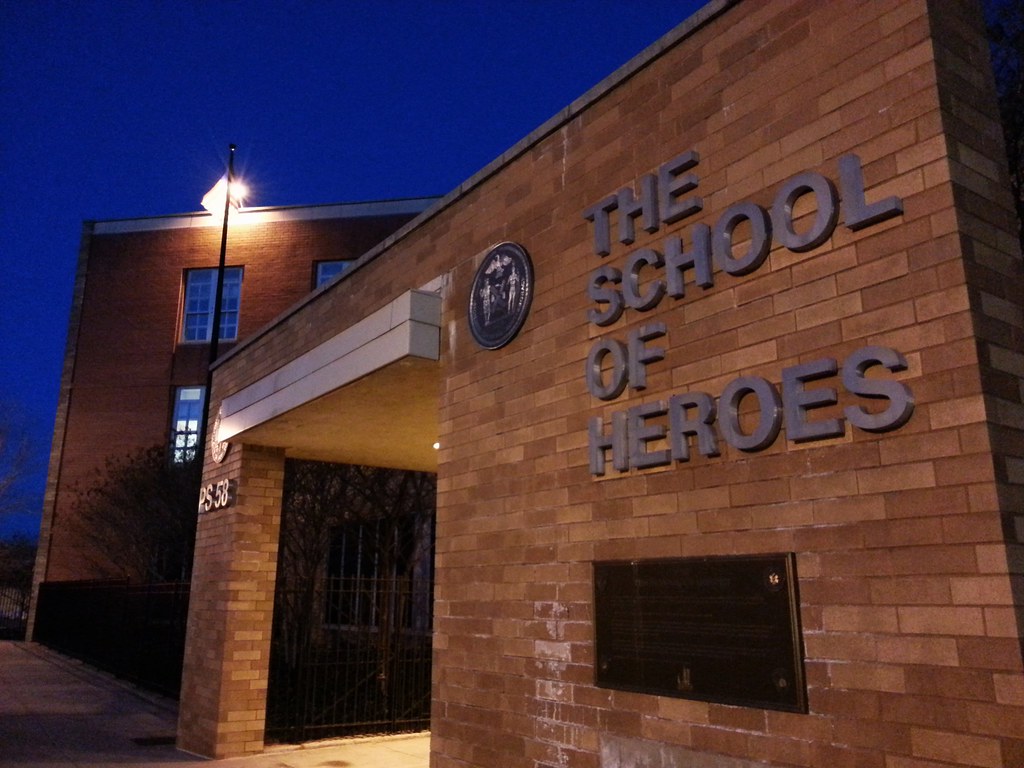
The plaque reads:
PS 58
THE SCHOOL OF HEROES
On September 11, 2001 the United States was attacked by international terrorists who used passenger airlines as their weapons. In New York City, the World Trade Center was destroyed. The Pentagon in Washington D.C. was attacked. A fourth airliner was diverted from the White House by the brave passengers aboard the plane. Many lives were lost that day.
September 11, 2001 will be remembered as a day in which the world's greatest rescue mission was accomplished.
New York City Firefighters, Police Officers, Emergency Medical Technicians and Port Authority Police Officers made a valiant effort saving countless lives at Manhattan's World Trade Center. Over 25,000 people from the Twin Towers and the surrounding buildings were evacuated before the buildings collapsed. Survivors tell of rescue workers climbing upward, directing people through smoke filled stairs and corridors down to the street and to safety. Without the sacrifices that these brave men and woman [sic] made, many more people would have perished.
This school honors the memory of those uniformed heroes from our school community who unselfishly dedicated their lives to the welfare, health, and safety of the people of New York City. Their courage and heroism inspired the naming of P.S. 58 "The School of Heroes". The events of September 11, 2001 have unified the American people and reaffirmed our commitment to freedom. This school stands as a symbol of that unification and commitment.
The students of P.S. 58 will forever remember that freedom is not free, it must be earned.

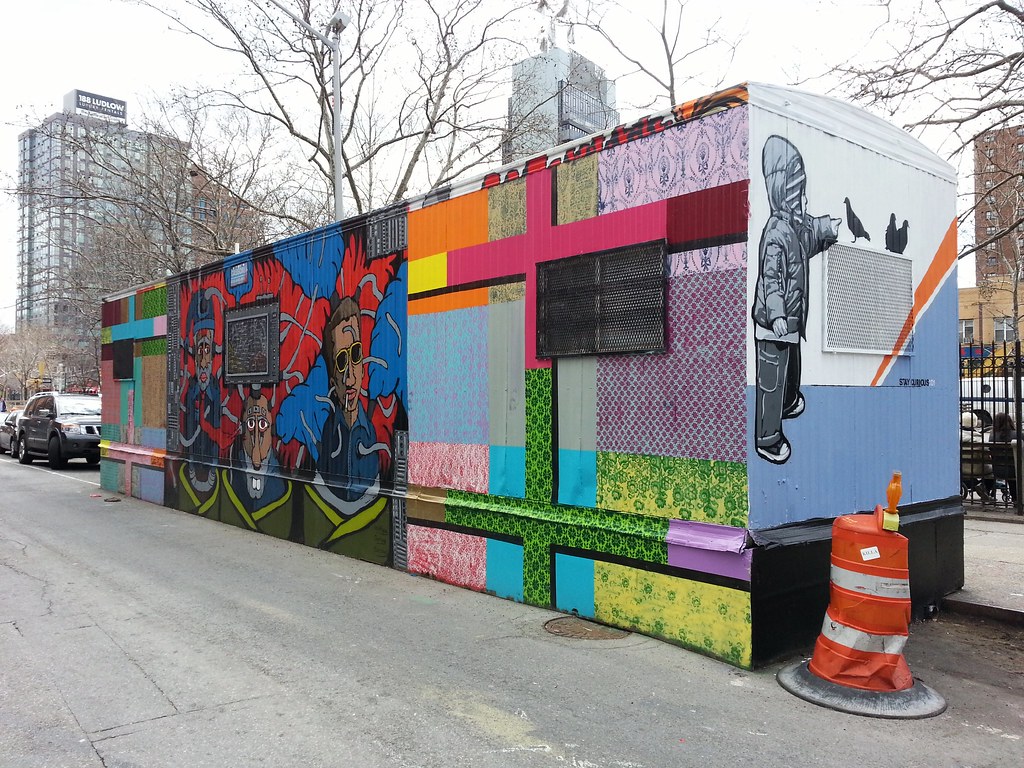

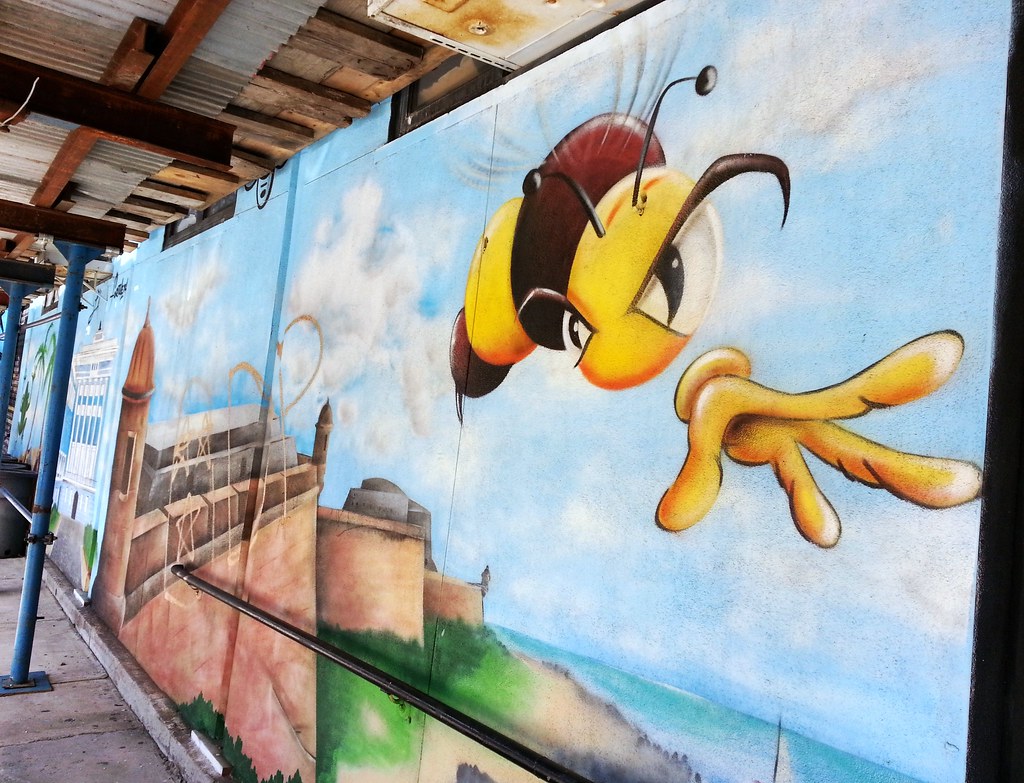
First the fire-and-brimstone tree stabber forays into Harlem, and now Kingbee's in the East Village?
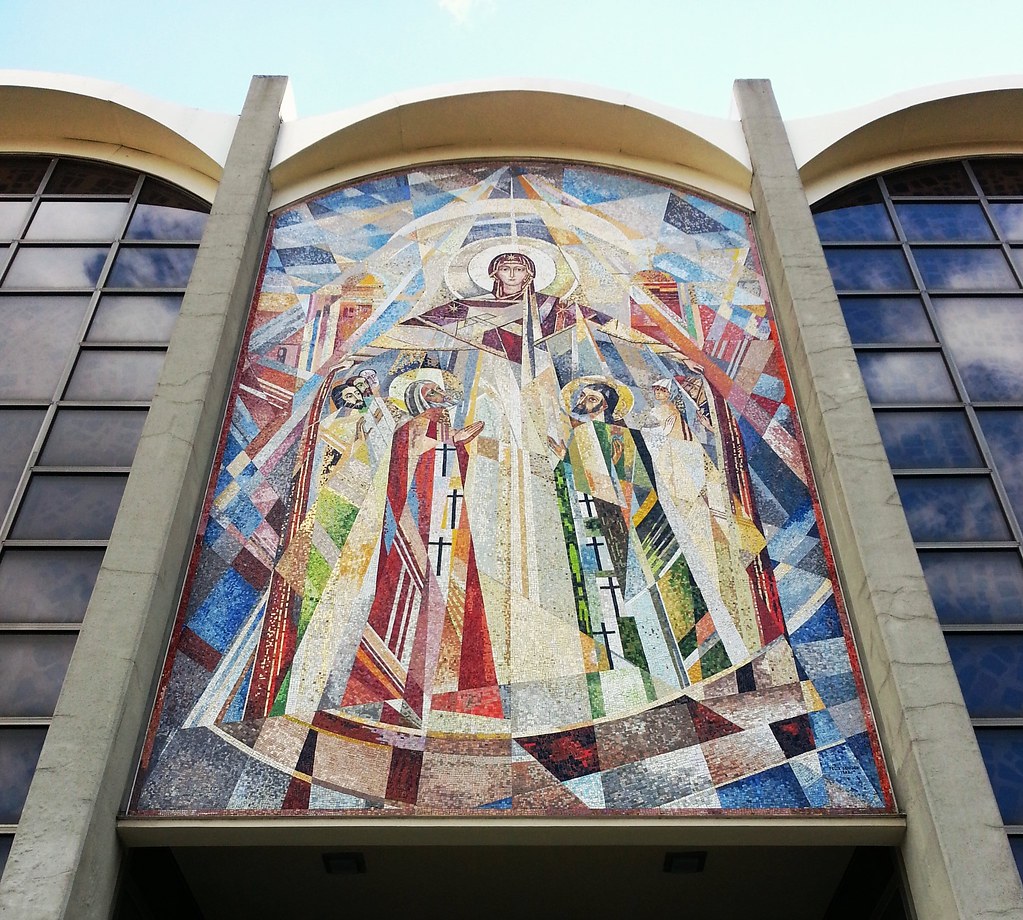
UPDATE: This mural is actually a good bit older than I expected. It was already up when the Street View car drove by in May 2009.

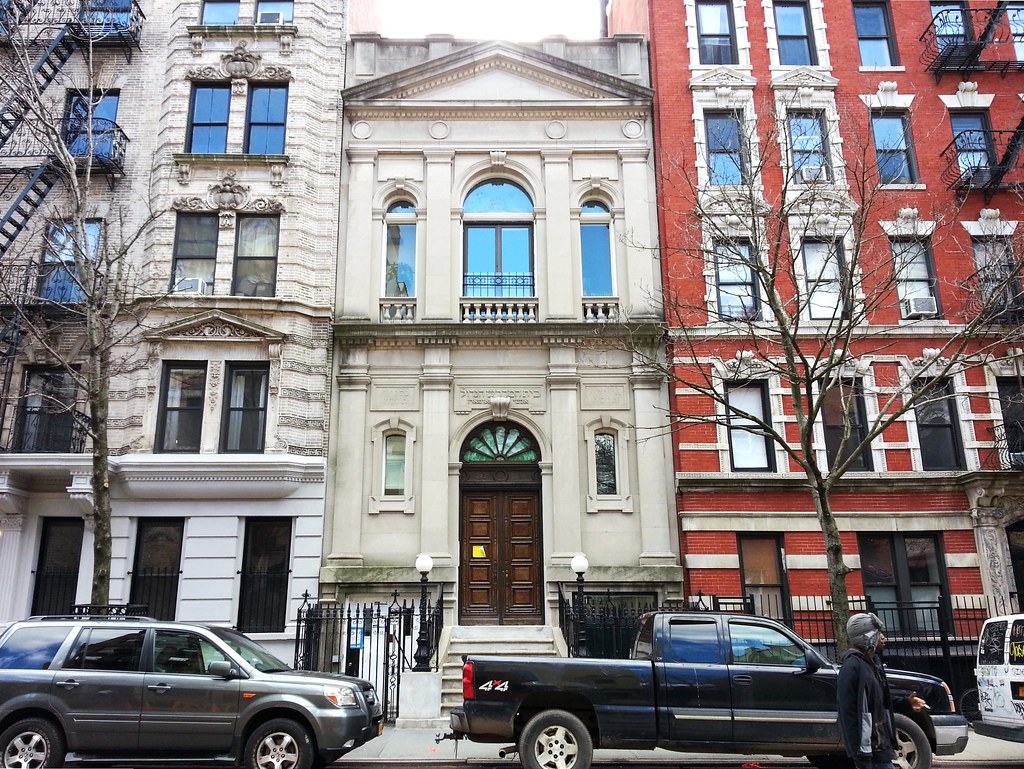
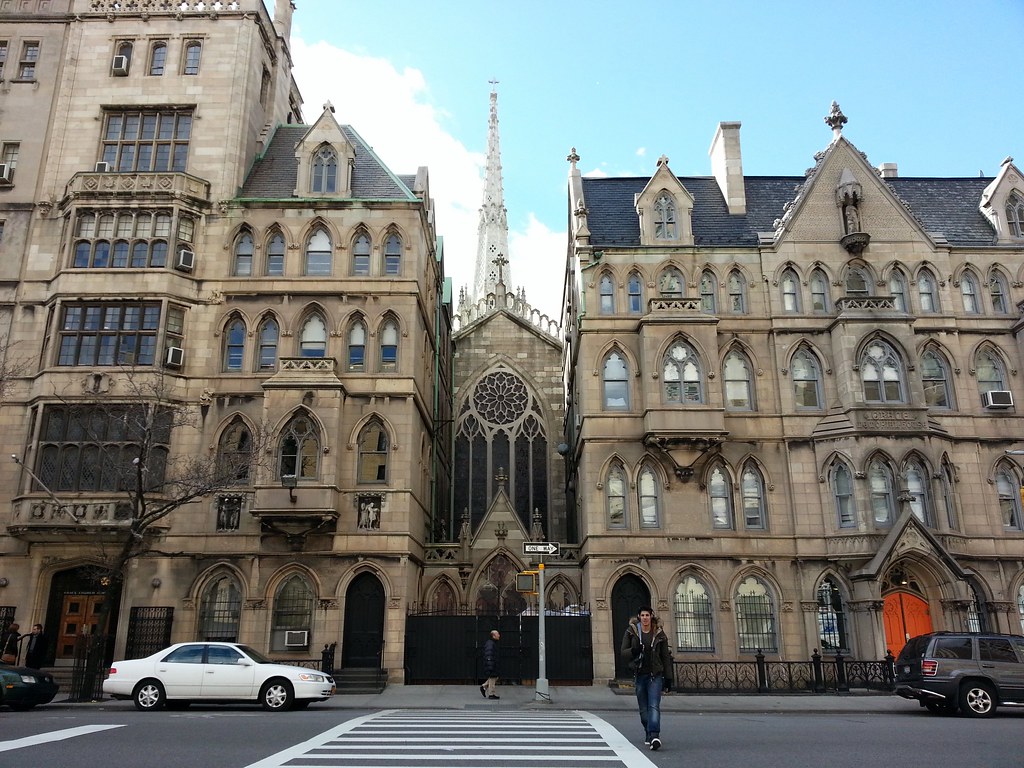
These neo-Gothic structures form the 4th Avenue side of the Grace Church complex. (You can see the church's spire rising above them in the background.)

There was once a 13th Avenue in Manhattan, built on landfill out in the Hudson River in the mid- to late 1800s. It ran from 11th Street up to where it turned into 12th Avenue at a bend in the road just north of 29th Street. The exact history is difficult to pin down (here are two takes on it), but it seems that almost all of the landfill that stretched out to 13th Avenue south of 22nd Street was removed around the turn of the 20th century. An unsourced claim on Wikipedia states that this was done to create longer piers to accommodate larger ships. Since the city wasn't allowed to build any farther out into the river, it had to extend the piers inland instead.
North of 24th Street, what was once 13th Avenue is now part of 12th Avenue. And the 13th Avenue landfill still exists down to 22nd Street. But south of 22nd Street, there is only one chunk of 13th Avenue landfill still standing, and you're looking at it. Known as the Gansevoort Peninsula, it sticks out into the Hudson between Gansevoort and Little West 12th Streets, and it's home to a Department of Sanitation depot. 13th Avenue once ran along the western edge of the peninsula, just behind those snowplow blades, where a ramp now leads up to an out-of-use marine transfer station. Google Maps even goes so far as to label the ramp 13th Avenue. (The city wants to open a new transfer station on this site, by the way. Here's one beautiful, if fanciful, proposal for its design.)
Today's lifestyle and real estate reporting in the NY Times caters primarily to a class of people whose position on the social ladder towers far above that of yours truly. Back in 1898, however, the paper appears to have had a first-rate Hobo Beat reporter, as evidenced by this excellent article about the cast of characters who chose to reside on the 13th Avenue waterfront: "There are many queer homes in New York, but, in all probability, the most peculiar are the homes of two men who live, and have lived for three or four years, in the big pile of paving stones belonging to the Department of Public Works on Thirteenth Avenue, between Fifteenth and Sixteenth Streets."
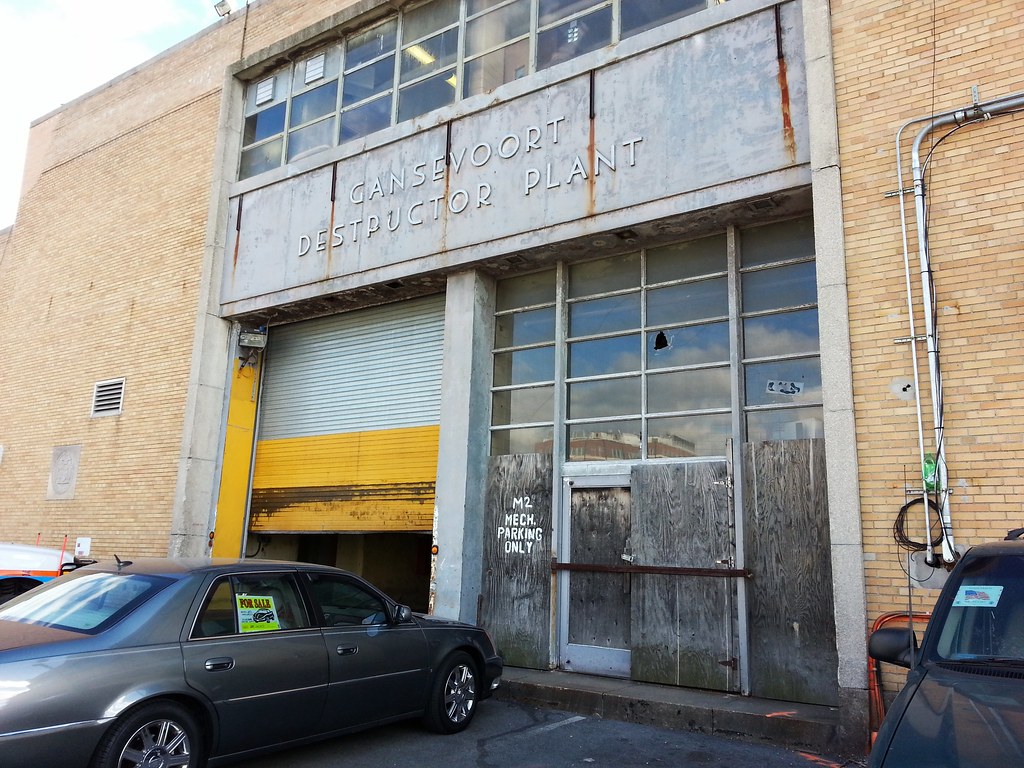
A poetically named former garbage incinerator located on the aforementioned Gansevoort Peninsula
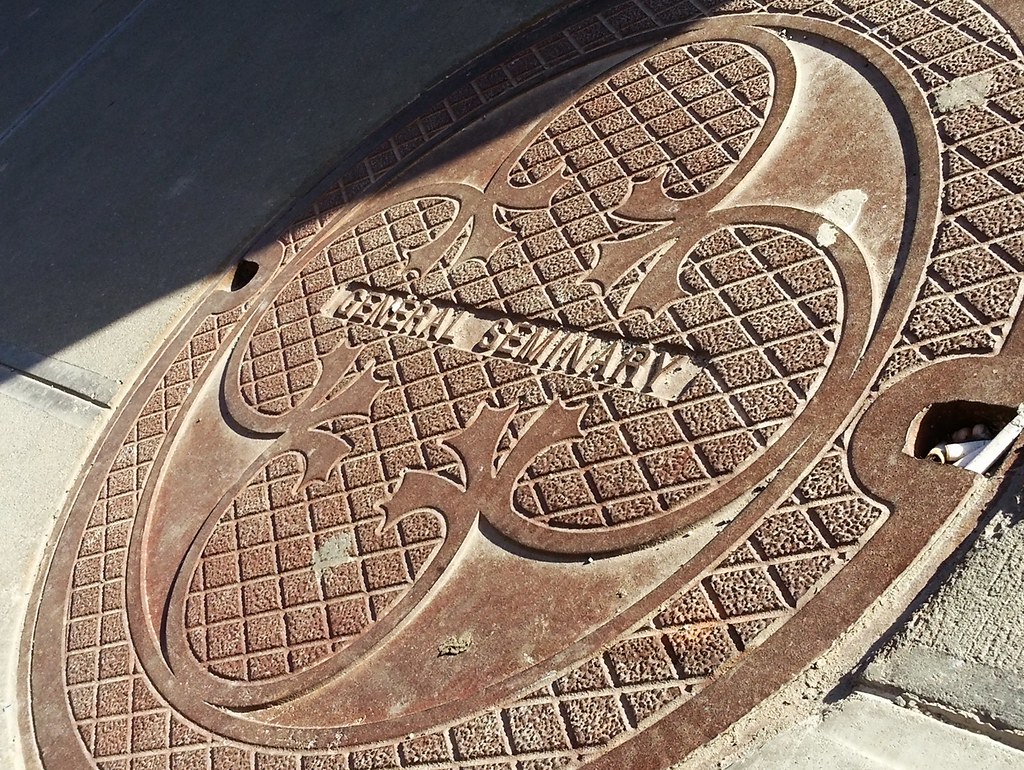
The oldest seminary of the Episcopal Church has its own manhole covers!
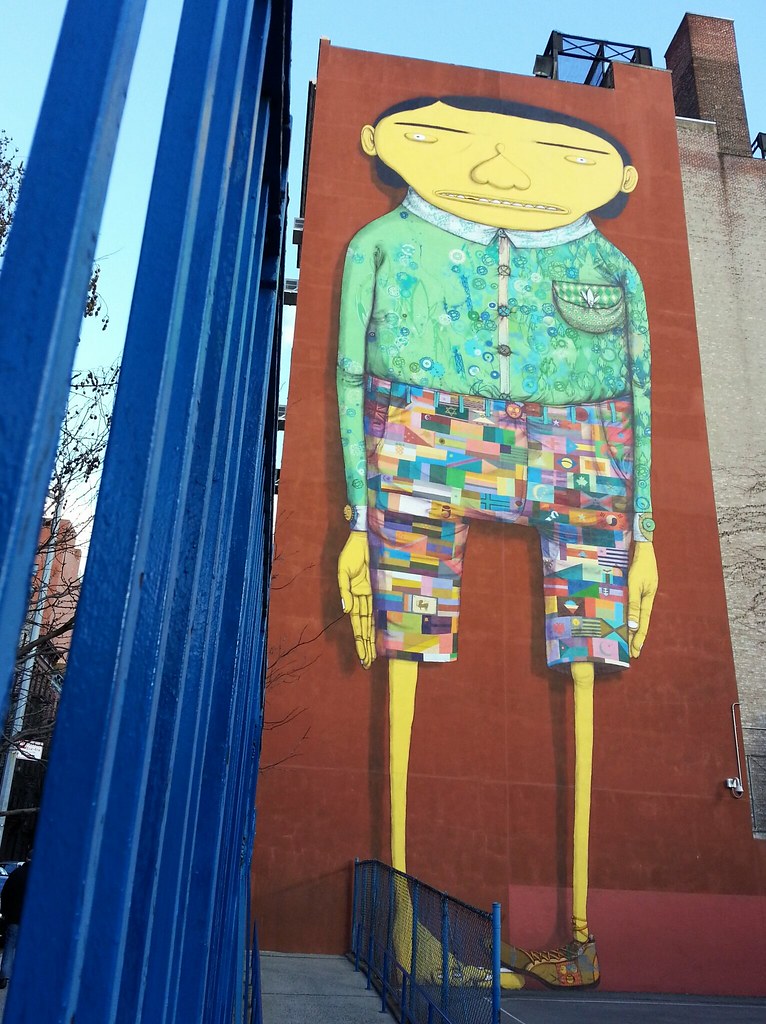
Here are some shots of the artists at work, plus some more info about this mural by Os Gemeos and Futura.

Founded in 1654, Shearith Israel was the first Jewish congregation in North America and the only one in New York City until 1825. We've already passed by its first and second cemeteries; here is the third, which served as the congregation's burial ground from 1829 to 1851.
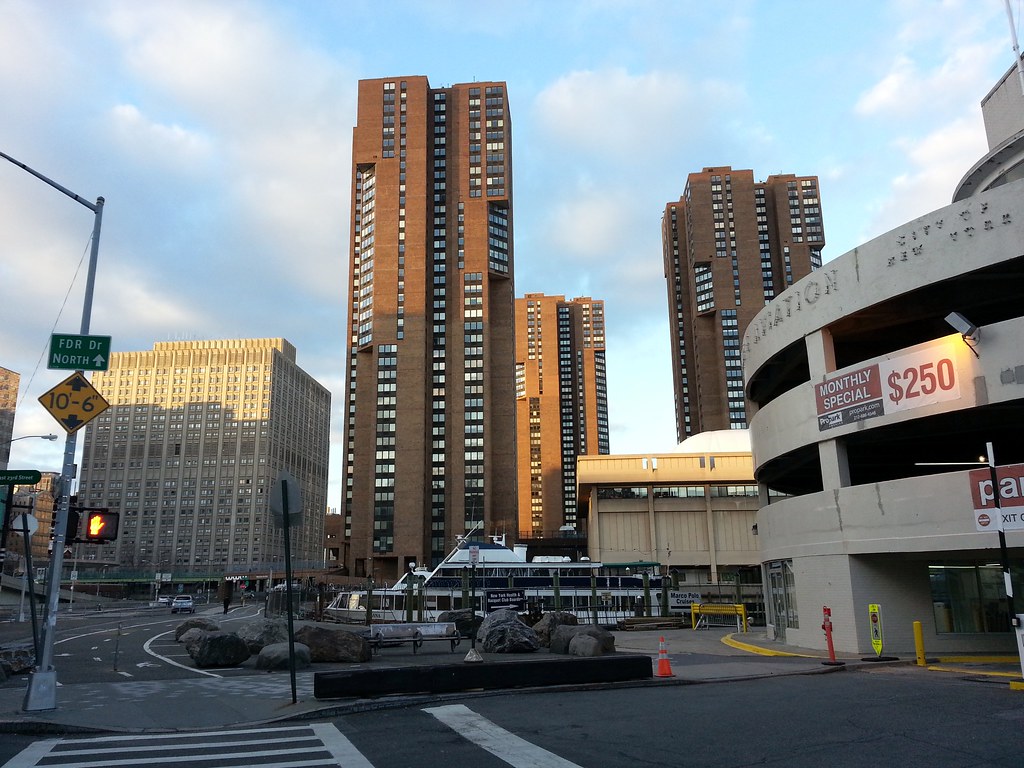
This notched, high-rise apartment complex bears a striking similarity to River Park Towers; both developments were designed by Davis, Brody & Associates.
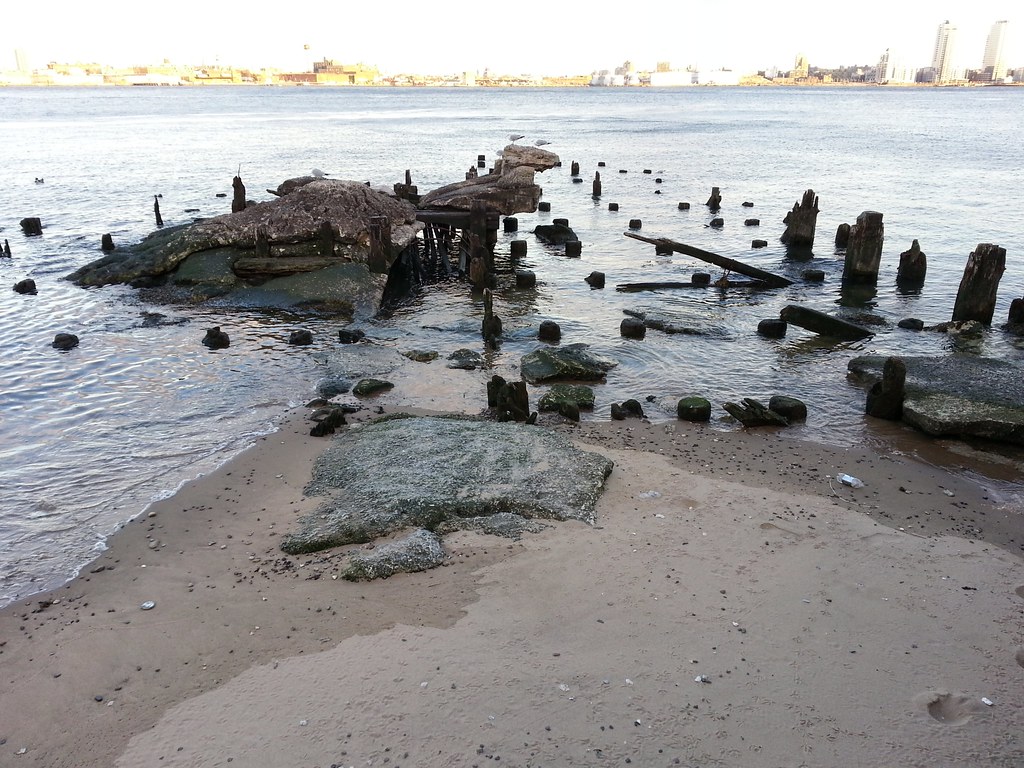
Formed around some cement that was dumped into the East River back in the 1970s, this is one of a few sandy beaches scattered along Manhattan's shoreline. It doesn't look like much, but, according to the former executive director of the Stuyvesant Cove Park Association: "Just to see the water lapping on the shore of that beach — it's so restorative to one's psyche." You can find more photos of the beach here, about halfway down the page.


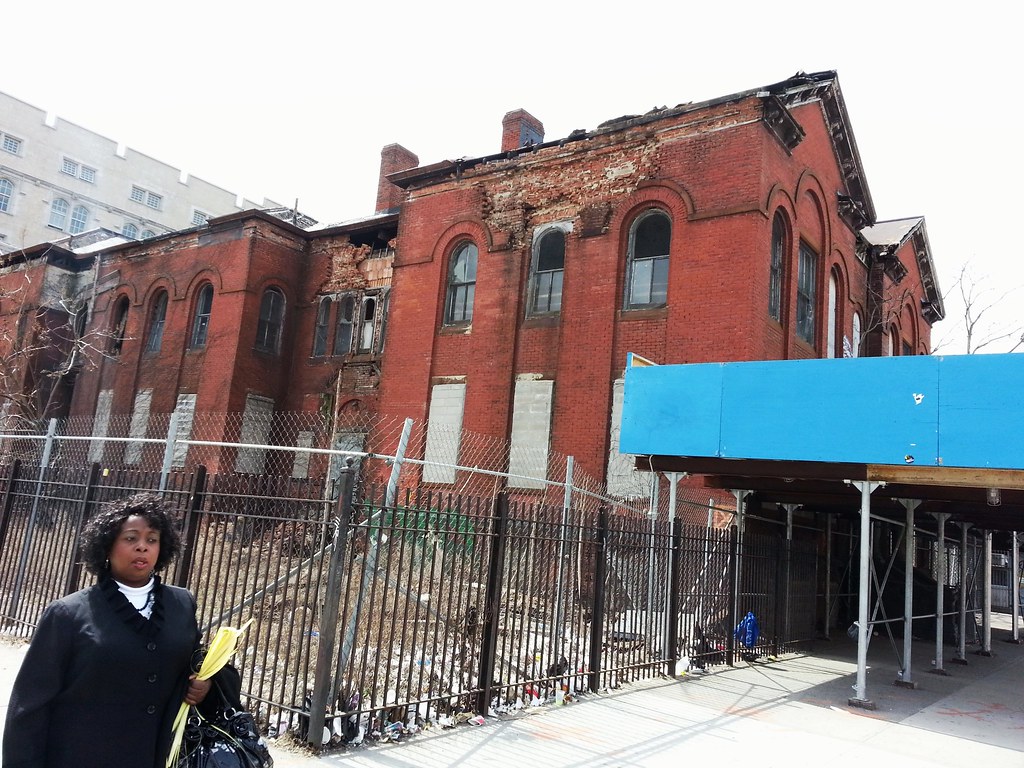
Built in 1878, this former school dates back to the days when Flatbush was an independent town.