
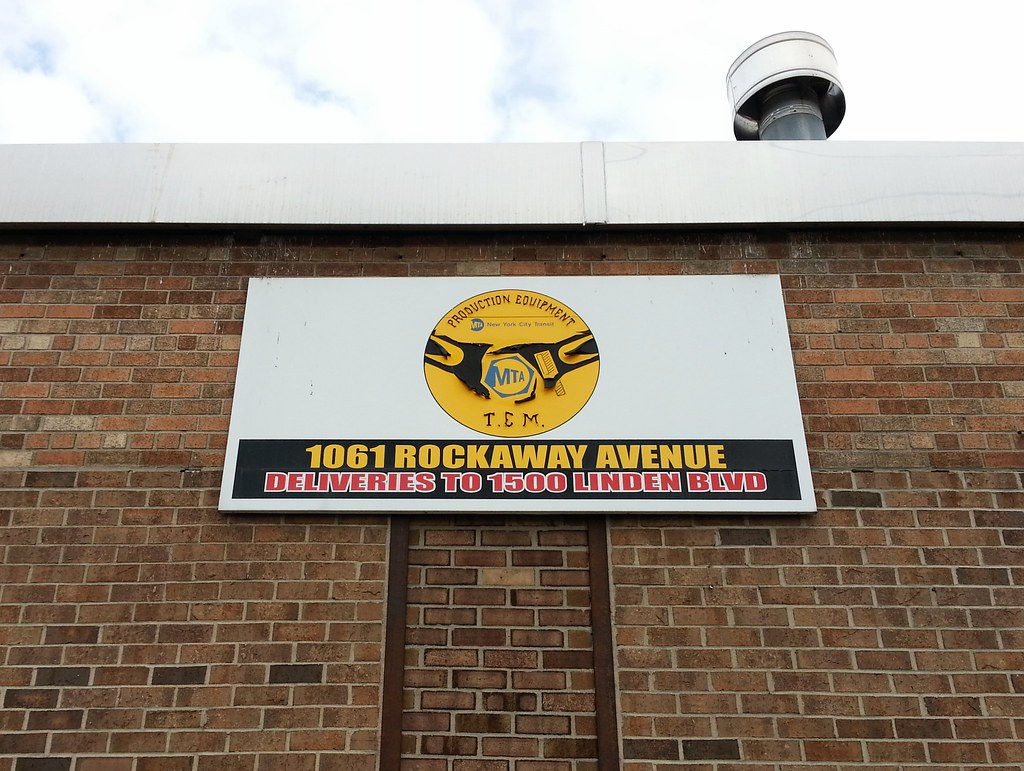
Another little-known but excellently logoed division of the Transit Authority. Here's a non-peeled-off version of the logo.




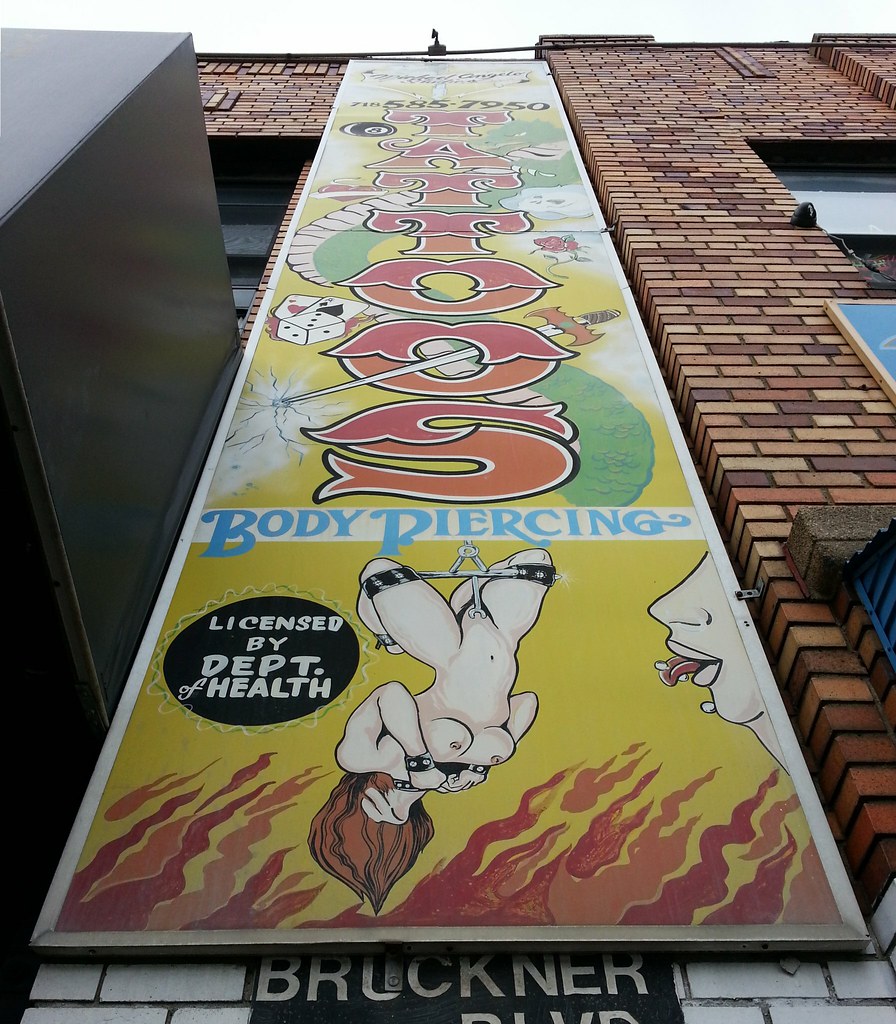
is a game I had never heard of before seeing this sign, which is perplexingly hung from a dead-end wall in a rather industrial part of town. (The out-of-service phone number offers no relief from the perplexity.)


Built around 1652, the original portion of this house is thought to be the oldest surviving structure in New York City. The Wyckoff House (or "that place by the McDonald's", as someone in the neighborhood later described it to me) was the first landmark designated by the city's Landmarks Preservation Commission, and it now serves as a museum; you can get a good look around the place by watching the video at the bottom of this page.
Oh, and speaking of Wyckoffs...




Like the erstwhile Morris Park station, this battered ex-depot ("French Renaissance in style, it might have been the royal stable of a French king") is a Cass Gilbert-designed relic from the days of the New York, New Haven and Hartford Railroad's ill-fated Harlem River Branch.
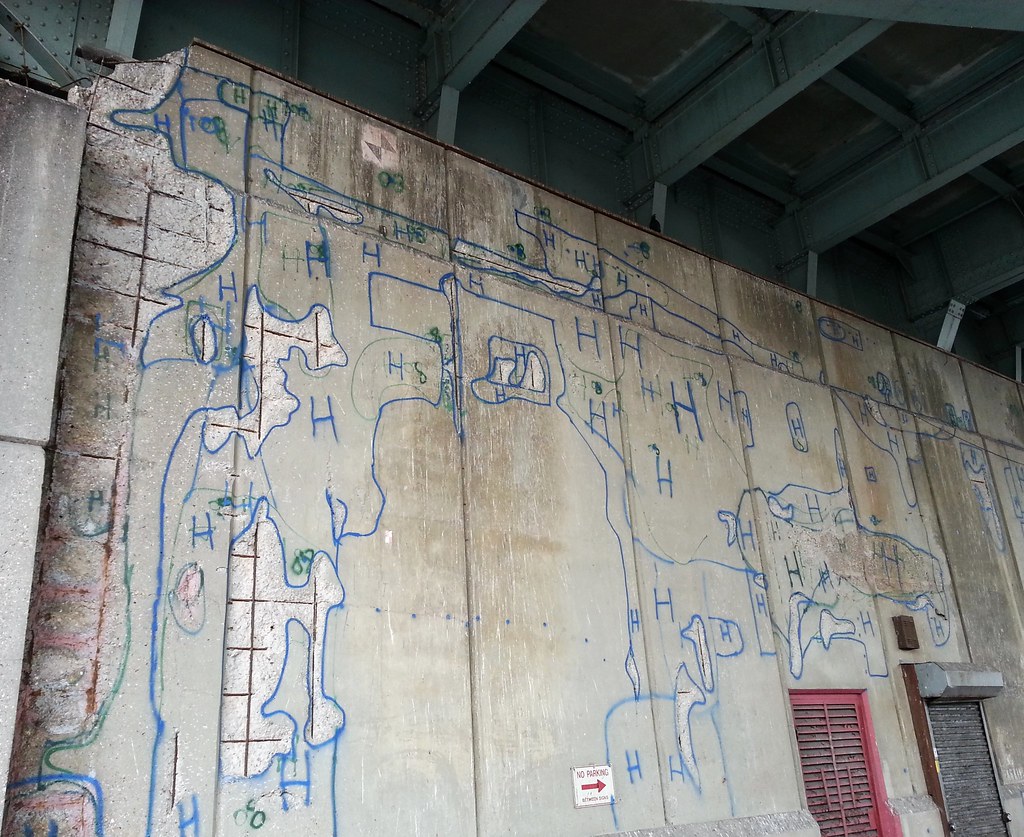
All its flaws called out for everyone to see, like it's a pledge at some horrible fat-circling sorority

Welcome to the Bronx Grit Chamber, where solids (everything from sand and gravel to turtles and dogs) are removed from the sewage of the western Bronx as it makes its way toward the Wards Island Wastewater Treatment Plant.
Here's some great info on NYC's wastewater treatment system. One of the most taken-for-granted pieces of the city's infrastructure, it somehow makes the filth and waste of more than 8 million disgusting people magically disappear! (Except on rainy days.)
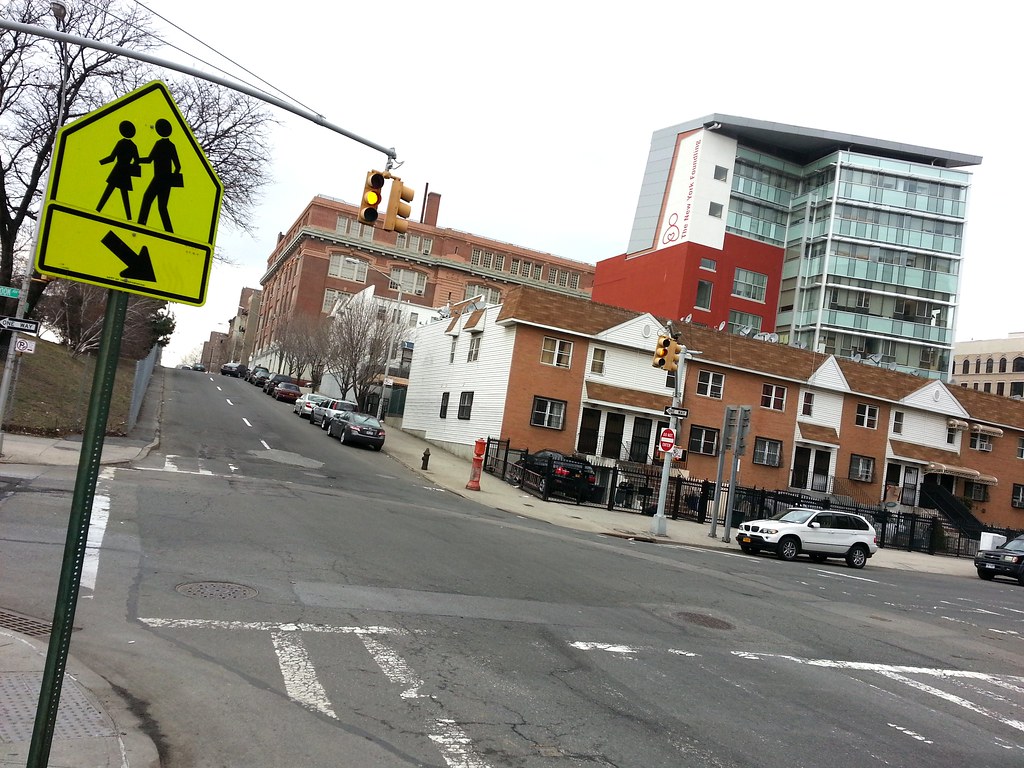
Pass the Squishy: "Opened in the fall of 2008 by the New York Foundling, a 140-year-old foster care agency, Haven is the first school in the city designed to serve children from broken families."
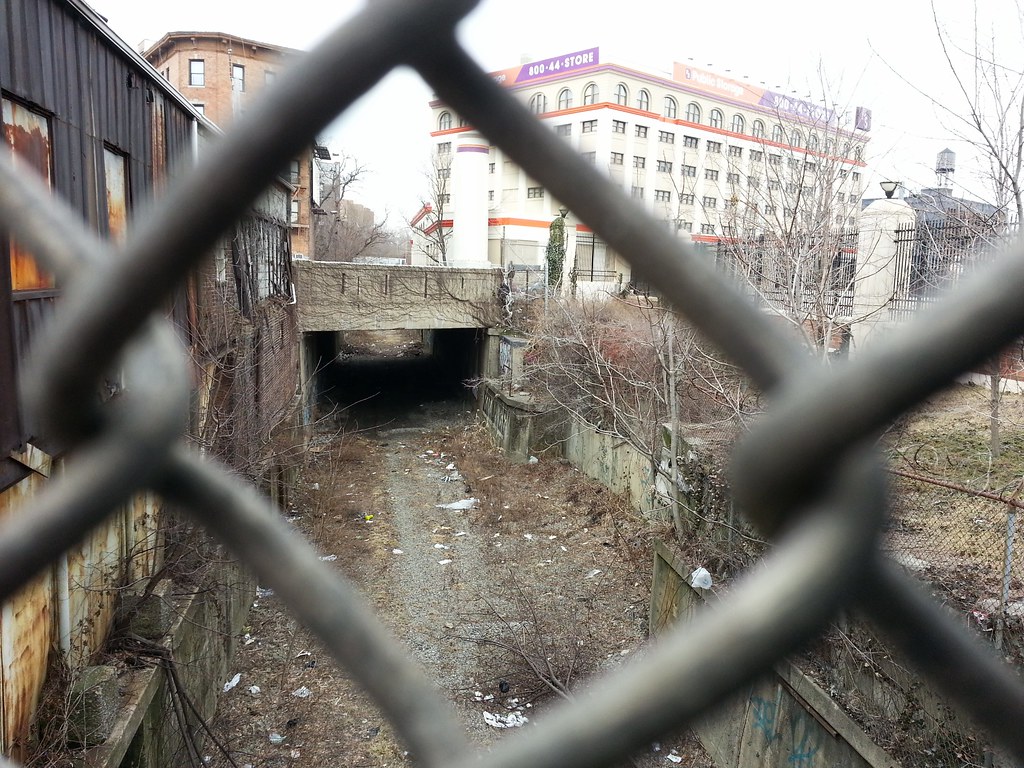
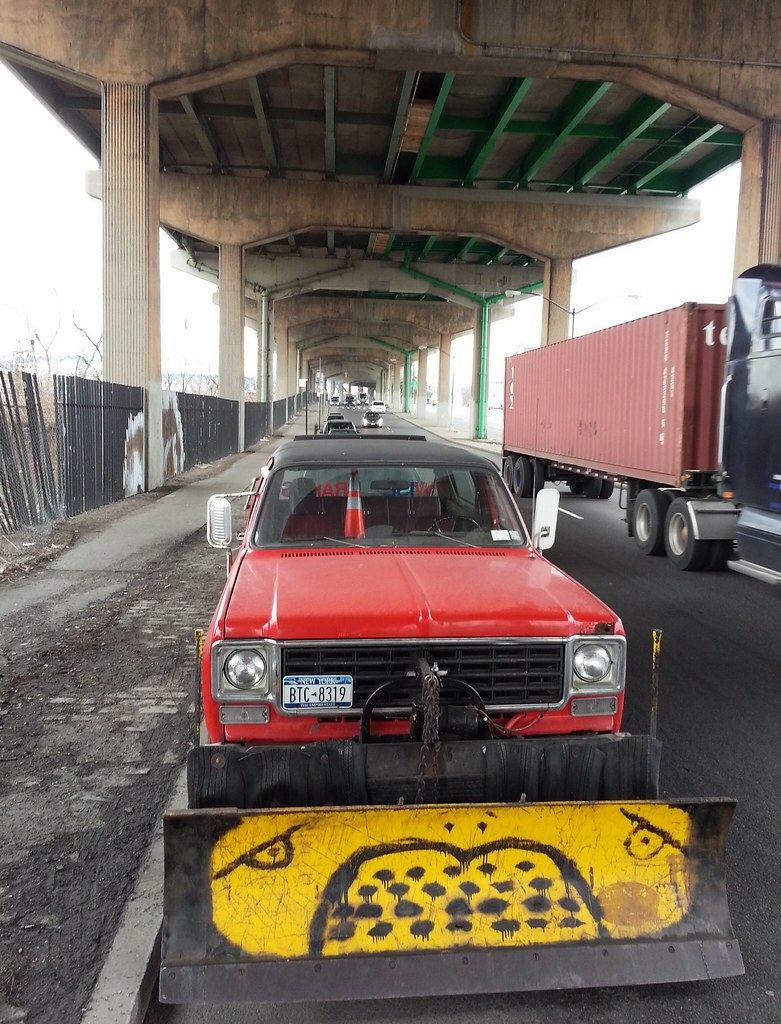
Built in the mid-1800s, this former rail line had become "a combination dumping ground and open sewer" by the latter part of the 20th century. The few trains that still traveled the line in those days apparently had to be outfitted with snowplows to clear the tracks of potentially damaging debris. In 2009, the city pumped out 625,000 gallons of standing water from a mile-long stretch, and removed 45 tons of garbage. The rails are now gone, as you can tell, but the line still sees some occasional traffic now and then.
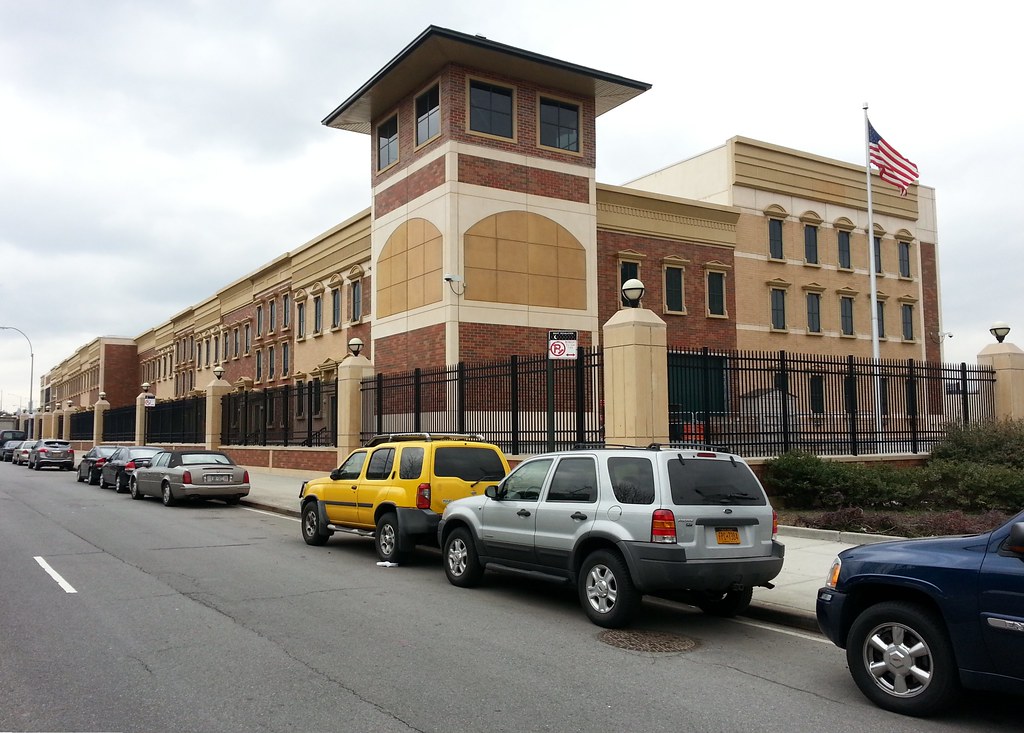
Nope — it's a Con Ed substation in disguise! The phony facade looks very clean and well maintained, except, oddly, for one thing: the paint is peeling off all the doors.
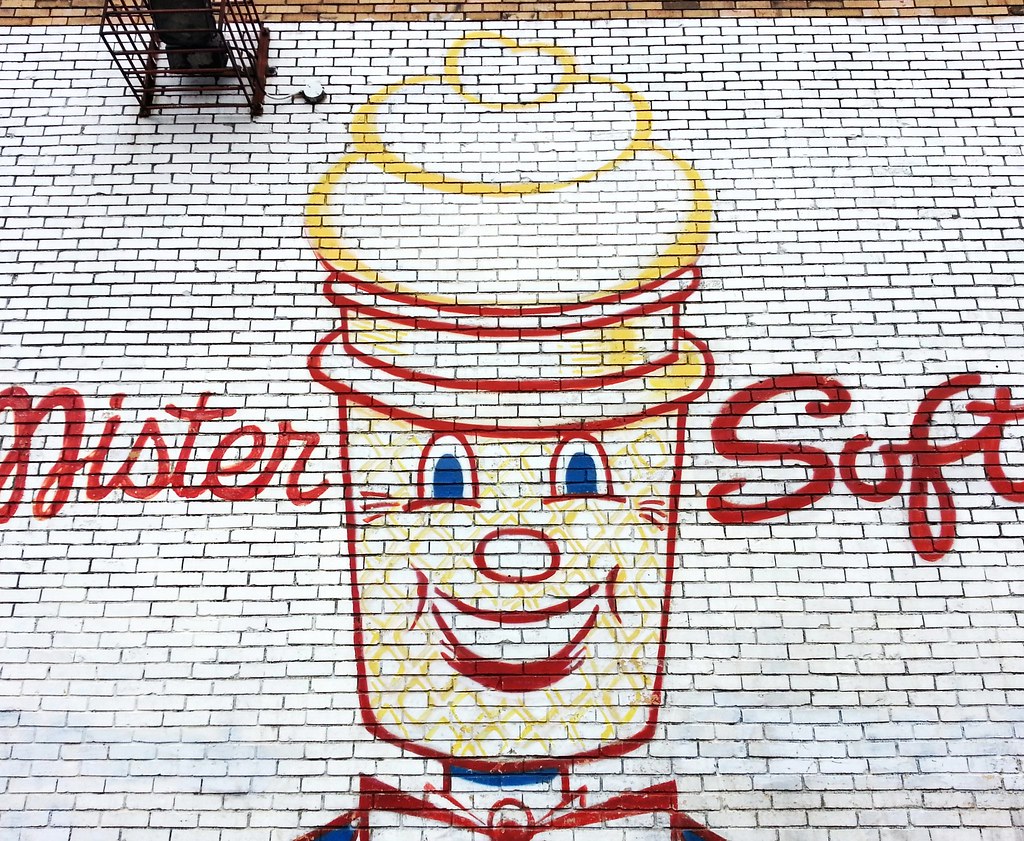
Mister Softee!
While we're on the subject, check out this trippy, dreamy version of the Mister Softee song played by a truck with a defective music box.
I recorded it last summer but forgot to post it at the time. If you're not familiar with the song, you can listen to a standard rendition (and see the lyrics) here.

That's the official name of this particular shade (one of only seven colors of paint in the NYC bridge palette) brightening up the trusses of the westbound Bruckner (Expressway and Boulevard) span over the Northeast Corridor.
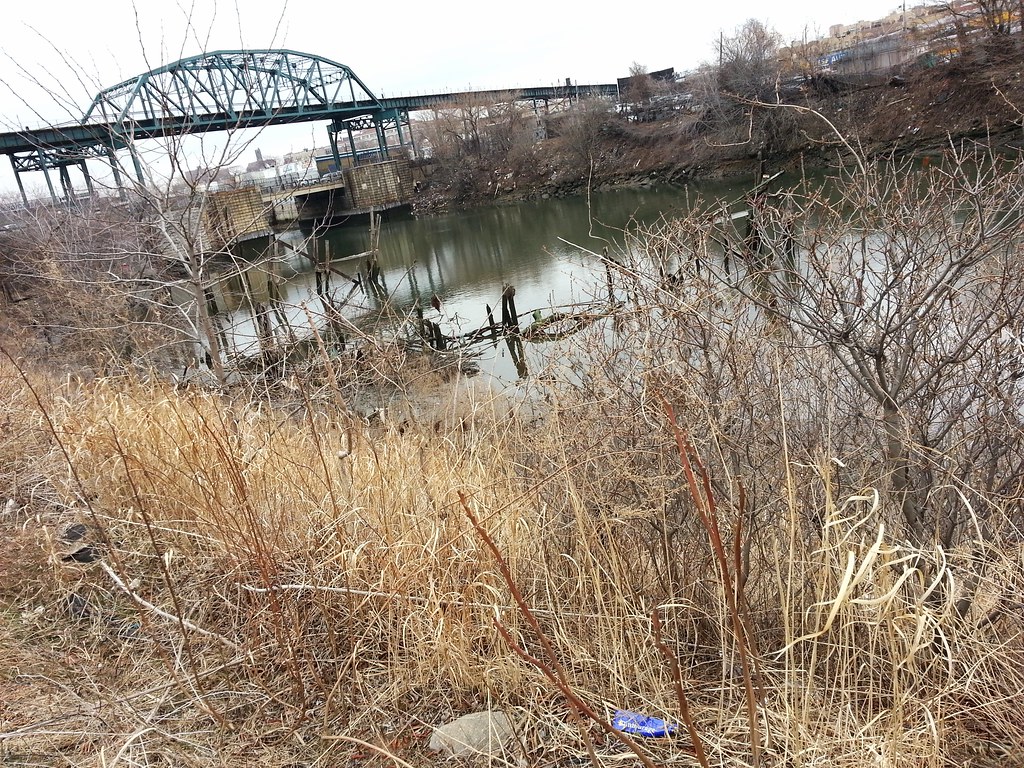
Westchester Avenue and the Pelham Line — Aluminum Green, if I'm not mistaken — crossing the Bronx River, as seen from Concrete Plant Park
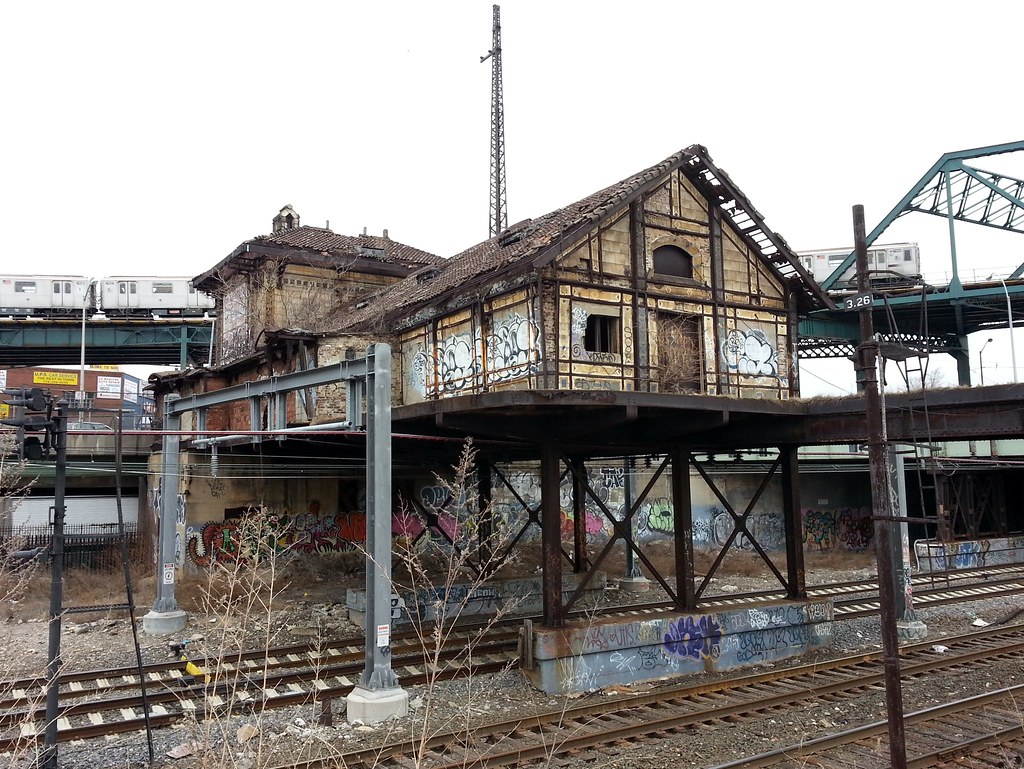
Here we have yet another Cass Gilbert-designed New York, New Haven and Hartford Railroad station, this one "a sublime glazed terra-cotta temple" "being slowly crushed by the boot of time."
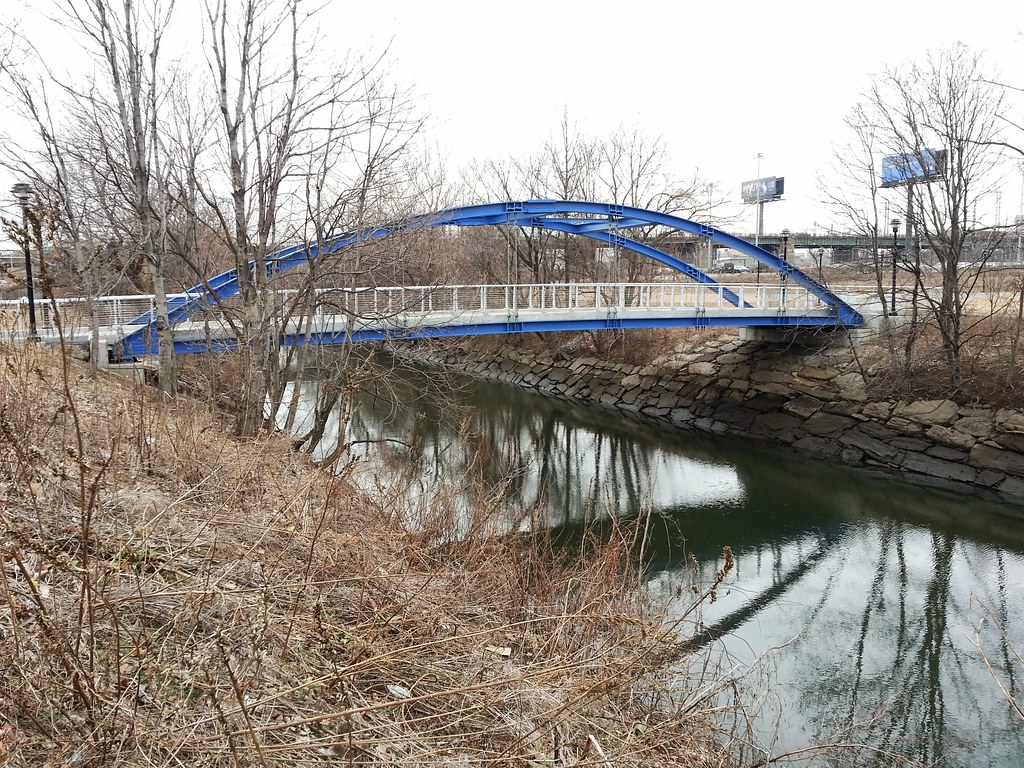
in Starlight Park, named for an old amusement park that once stood nearby
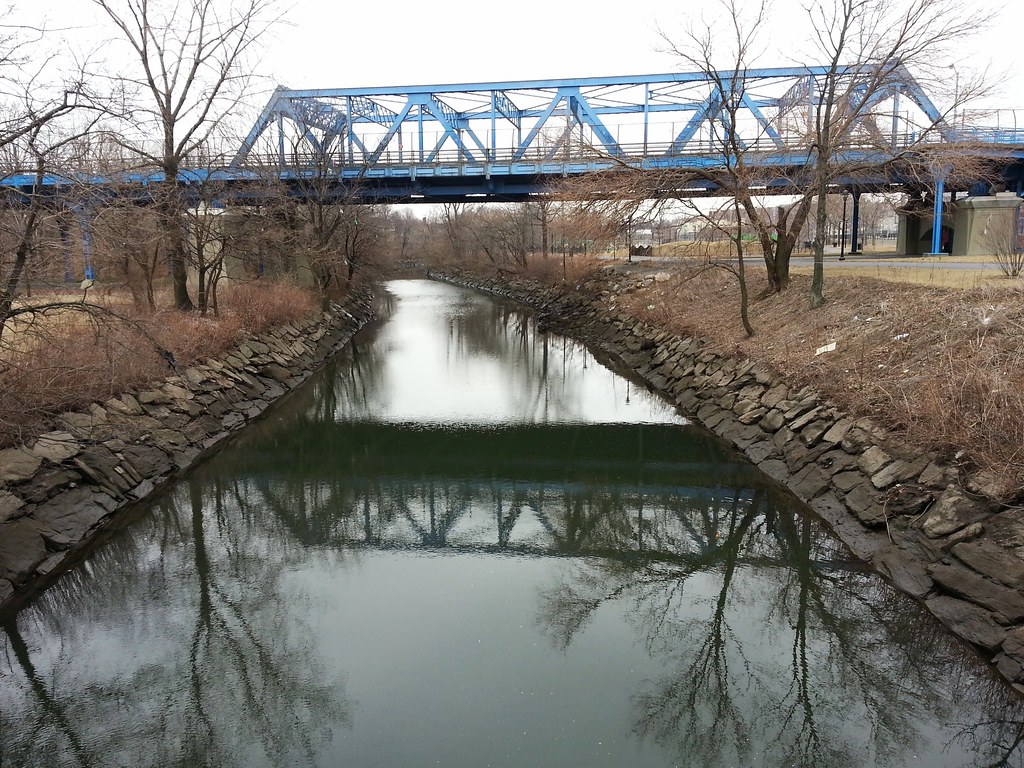
174th Street, viewed from the bridge in the previous photo


That's the old Westchester Avenue station in the background.

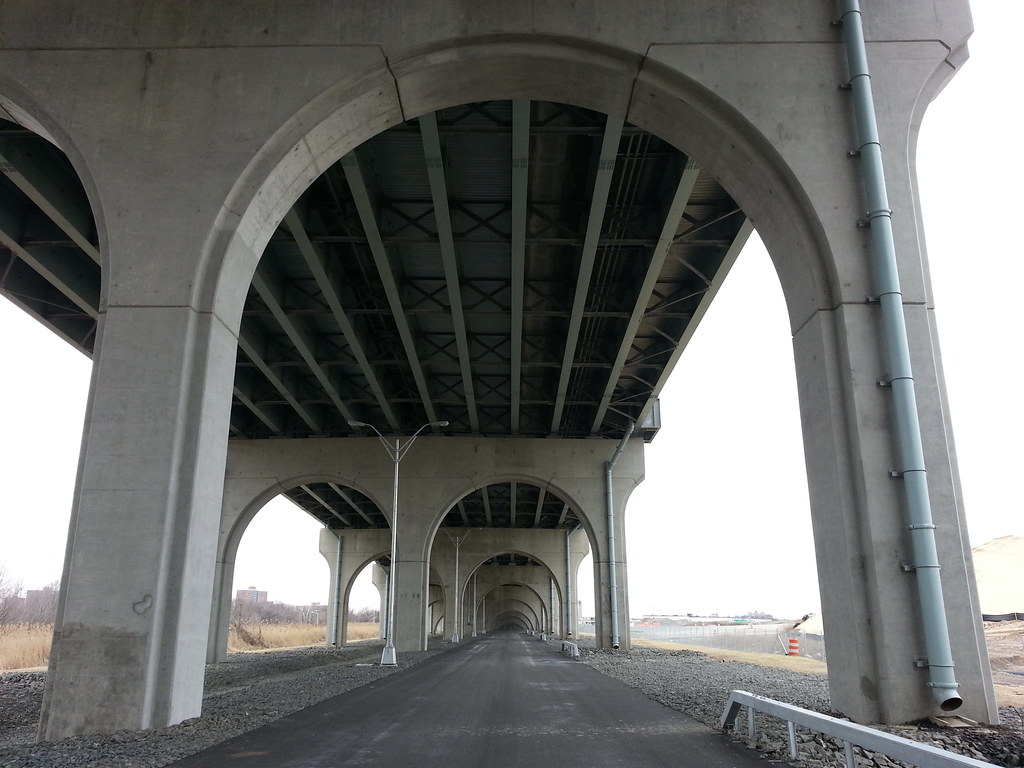
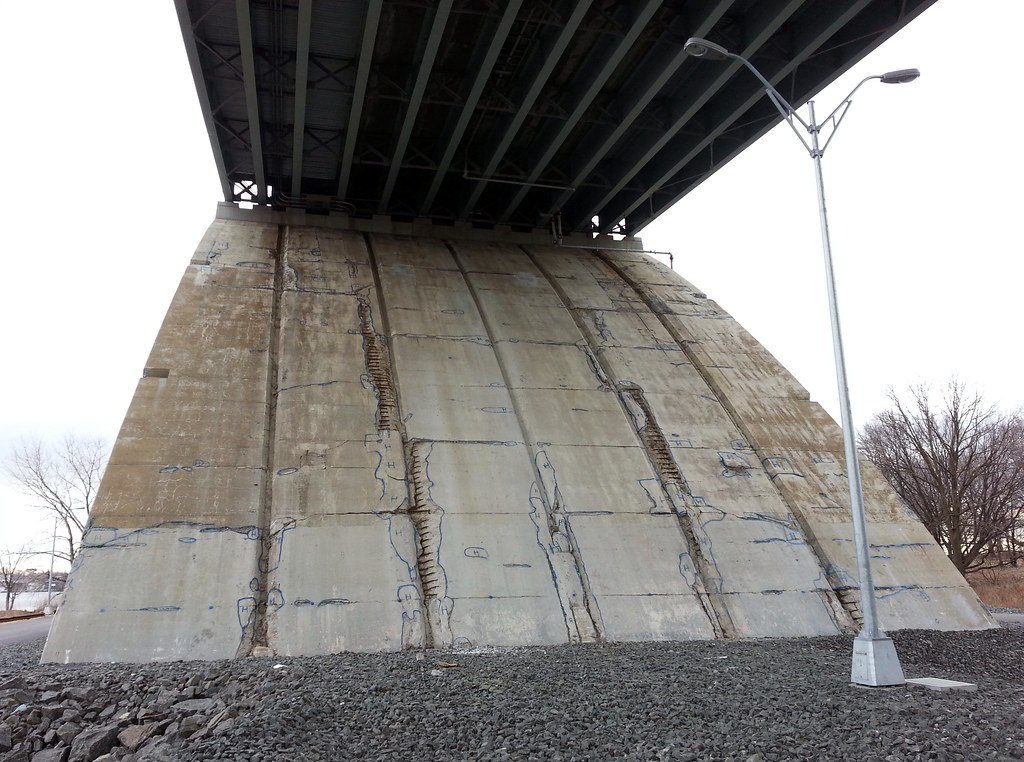
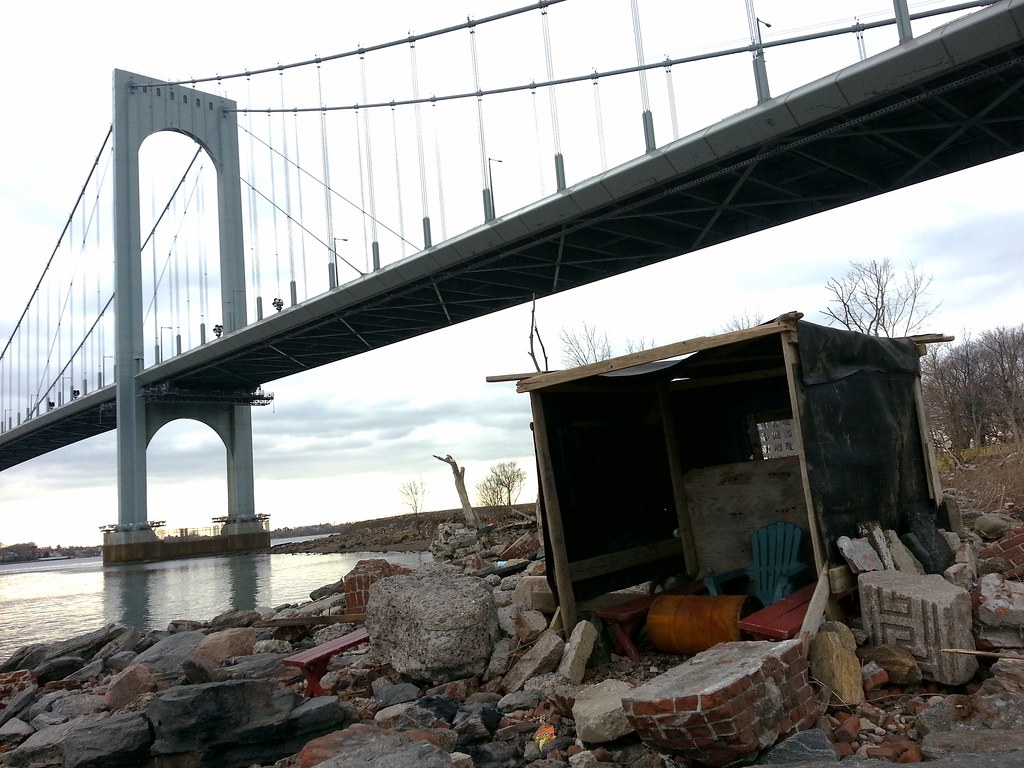
(Here's a better look at the shack.)
In this shot, you can easily see the stay cables that were added, along with some stiffening trusses, to the bridge after the similarly designed Tacoma Narrows Bridge did this in 1940. Even with these modifications, however, the Whitestone still swayed more than most suspension bridges in high winds. During a 1968 nor'easter, the vertical oscillation of the roadway reached 10 inches, enough to make panicked drivers stuck in traffic abandon their vehicles and flee the bridge on foot.
(The Triborough Bridge and Tunnel Authority assured the public that the bridge was safe, despite the swaying. The deputy chief engineer at the time explained: "All suspension bridges sway in the wind. If they didn't have give, they would snap. The reason that motorists noticed the sway today is because they were sitting in stalled cars. They felt it move. They don't notice it much when driving.")
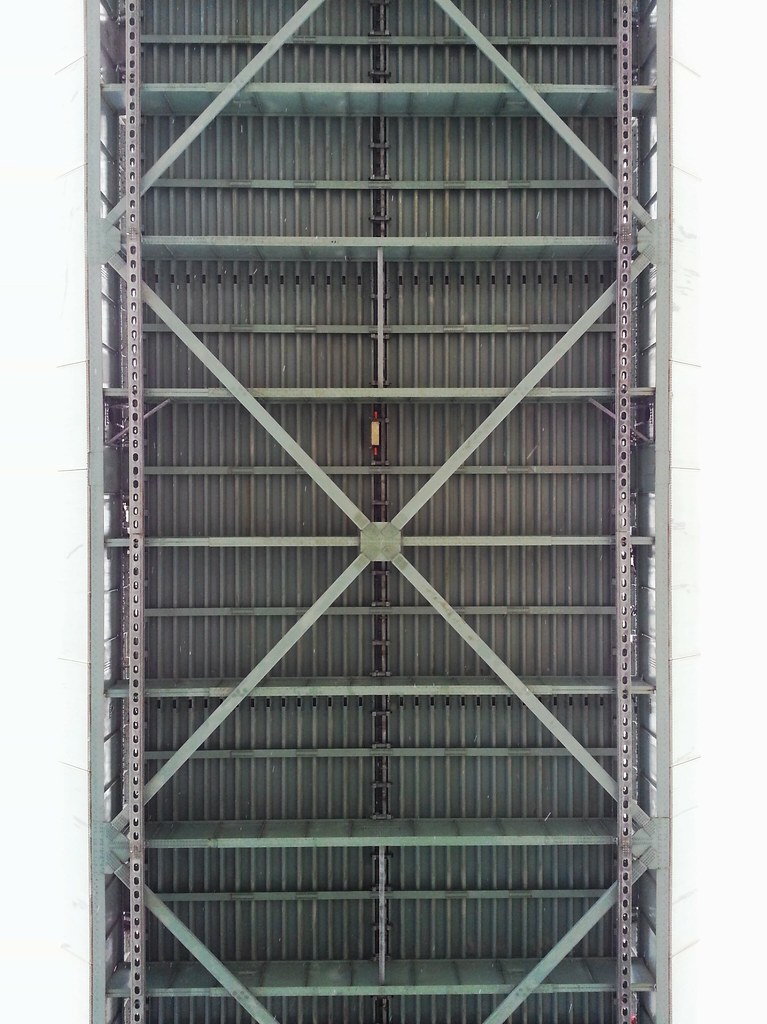
The aforementioned trusses were extremely heavy, putting a lot of stress on the rest of the bridge, and their effectiveness in stabilizing the structure was questionable. After six decades of service, they were replaced in 2003-04 by much lighter fiberglass fairings (the triangular pieces you can see mounted on the sides of the deck, running the length of the roadway) that deflect wind around the deck. Based on the Whitestone's performance during Hurricane Sandy, the fairings seem to be just what the doctor ordered.
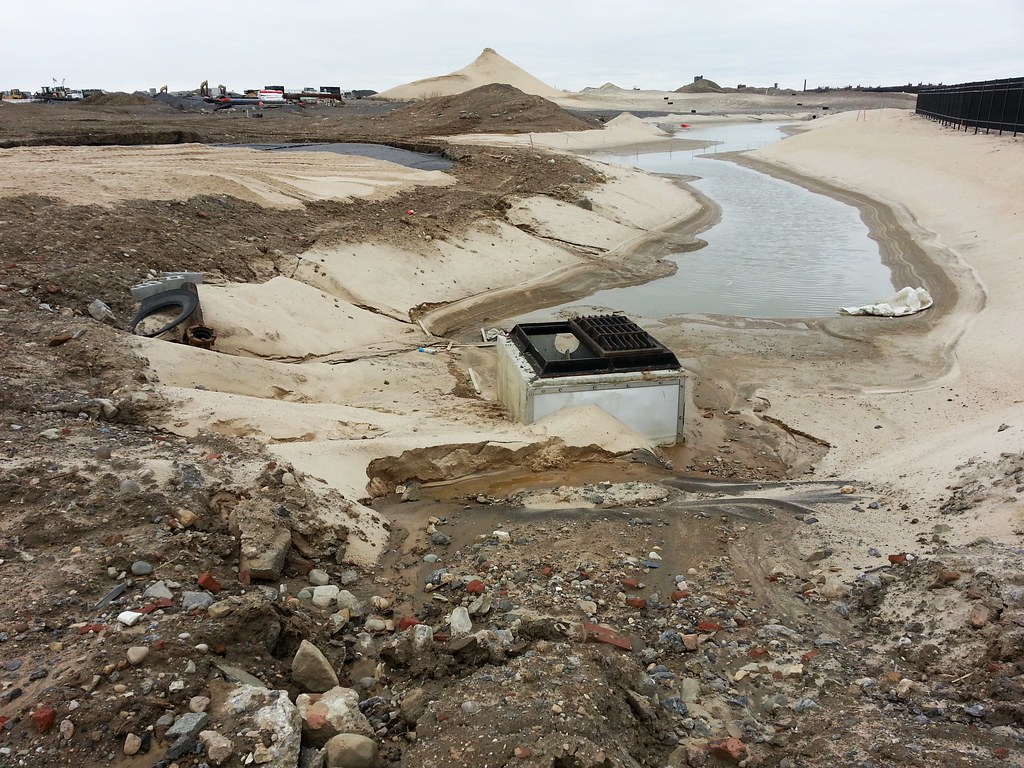
Here we are, once again, at everybody's favorite Trumptastic boondoggle of a golf course.
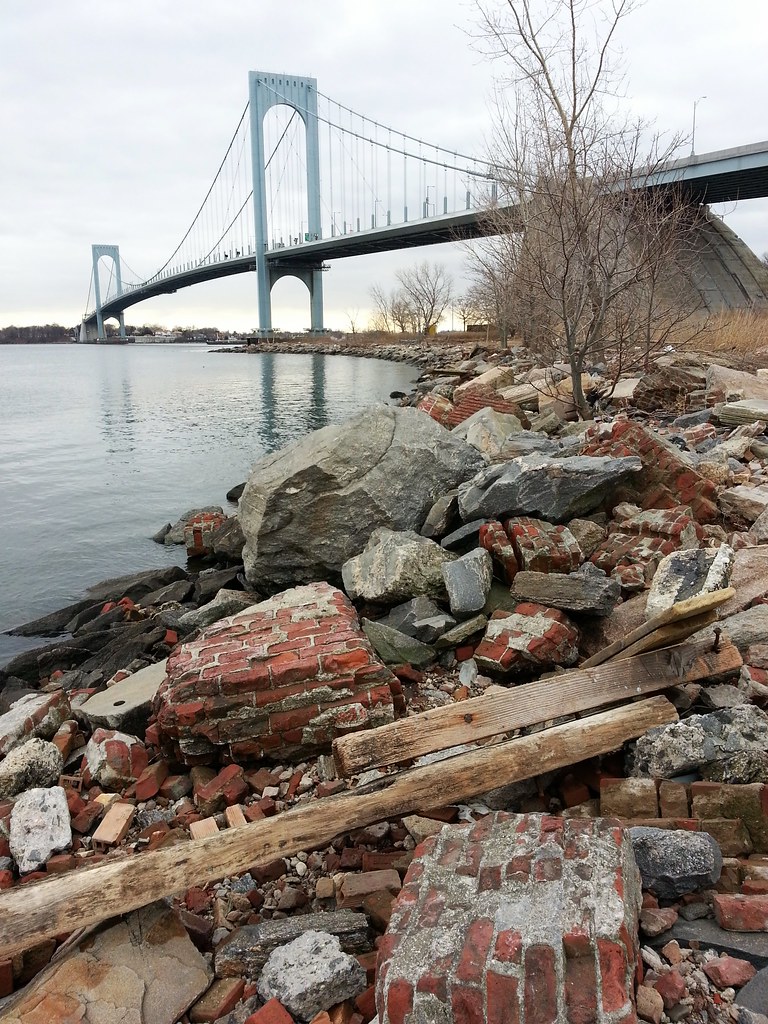
There is a tremendous amount of rubble (including some nice pieces of granite!) littering the eastern shoreline of Ferry Point Park. Perhaps this has something to do with the site's former use as a landfill, or perhaps it's related to the nearly two million cubic yards of dirt and debris that have been dumped on top of the landfill in preparation for its transformation into a golf course. Or maybe it's just the remnants of old buildings that once stood nearby.
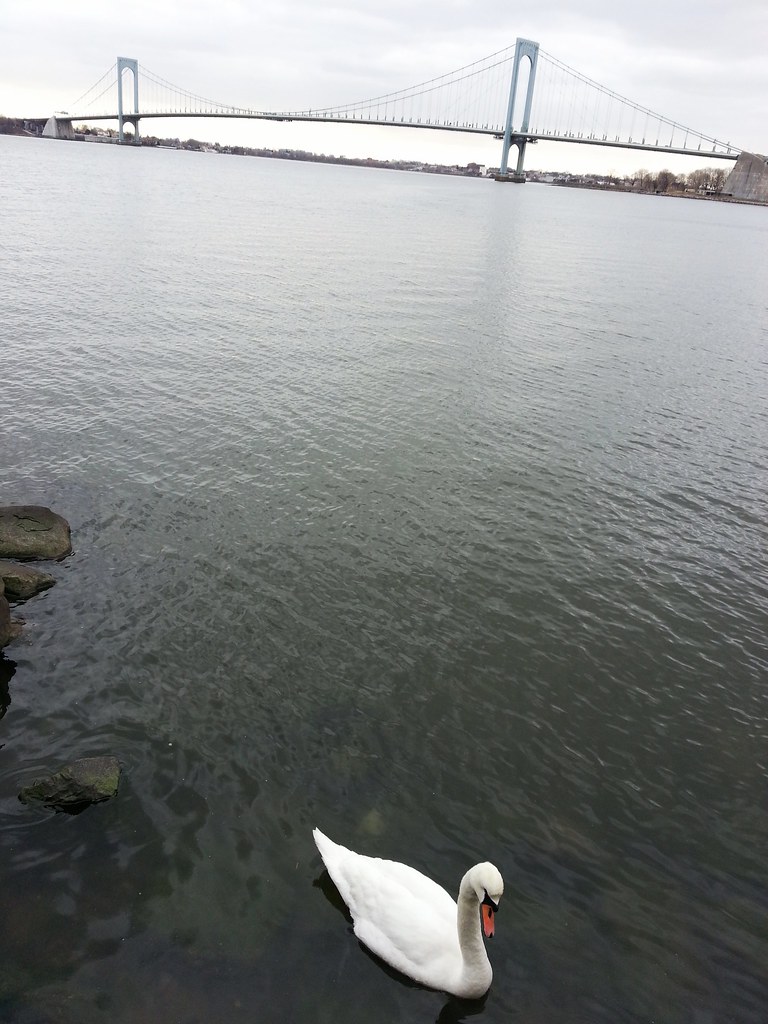
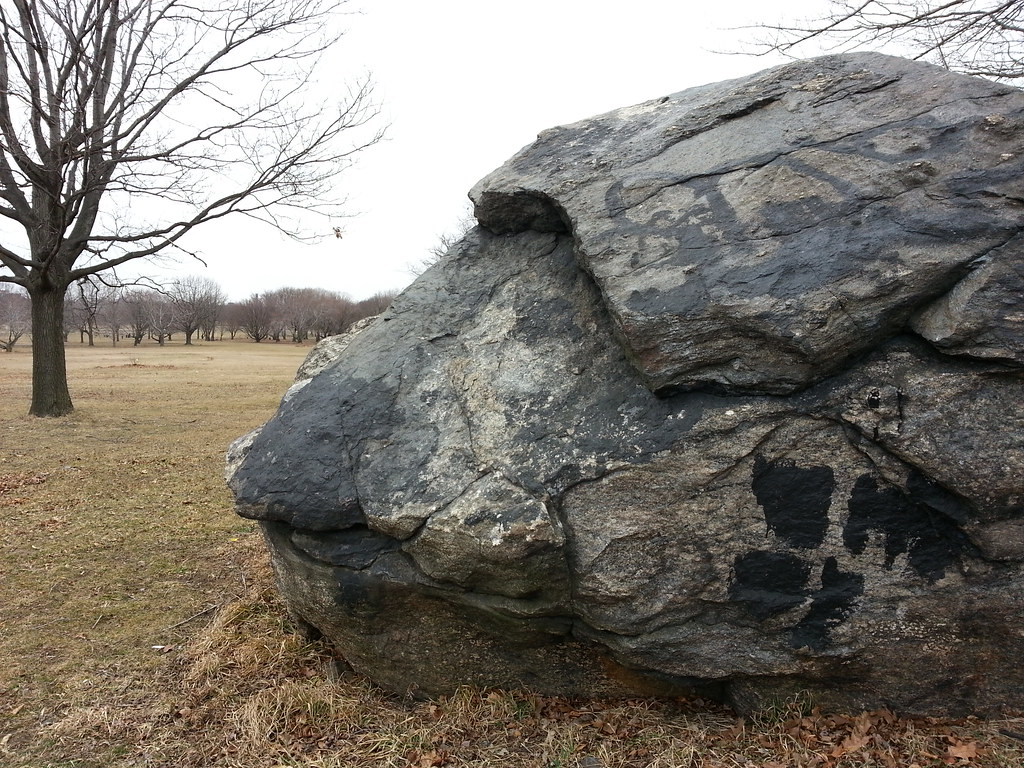
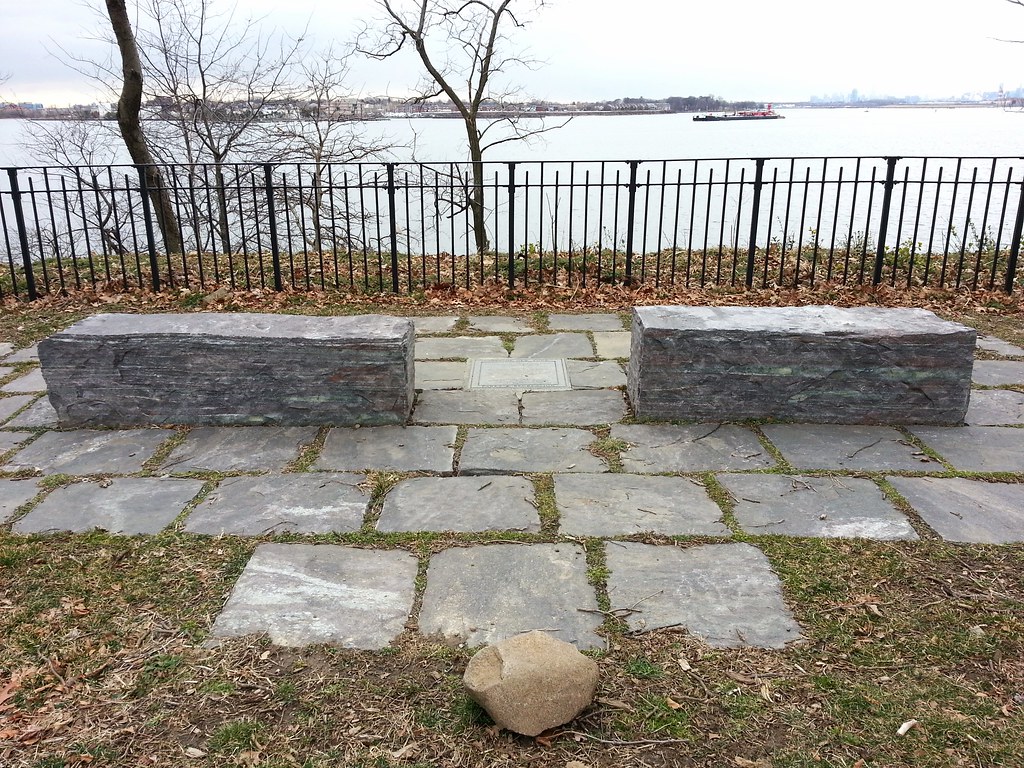
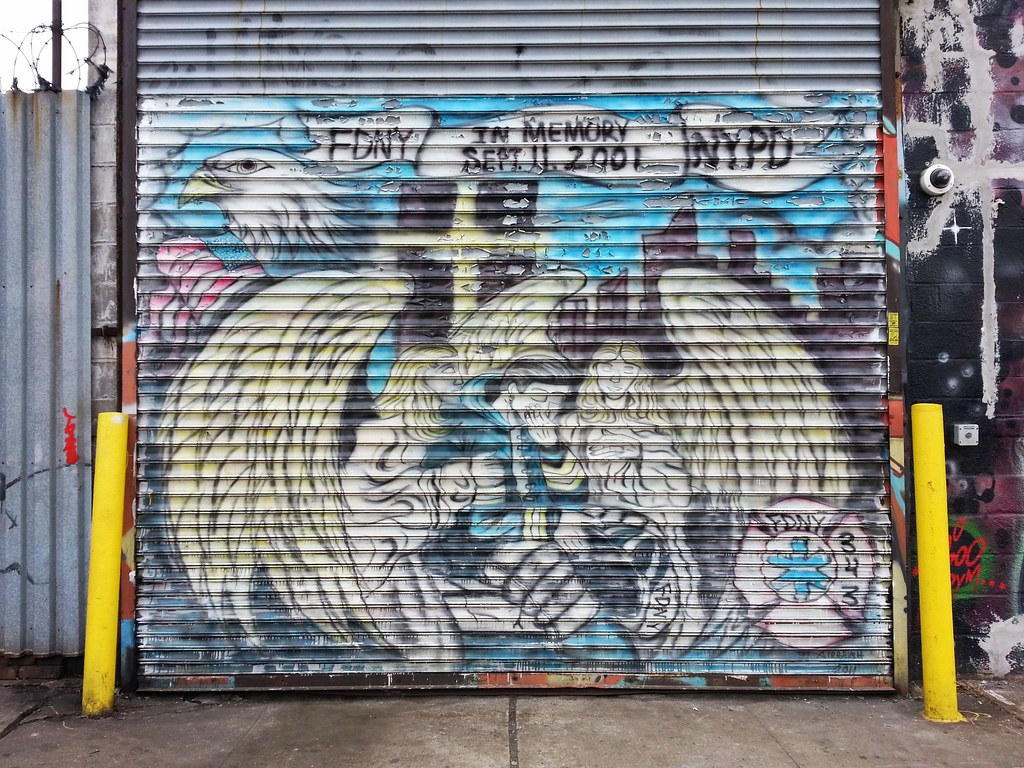
Ferry Point Park is home to the Bronx's Living Memorial Grove, which consists of almost 3000 trees (one for each victim) donated by His Serene Highness, Prince Albert II of Monaco, as well as a view, off in the distance, of downtown Manhattan, where the twin towers once stood.


