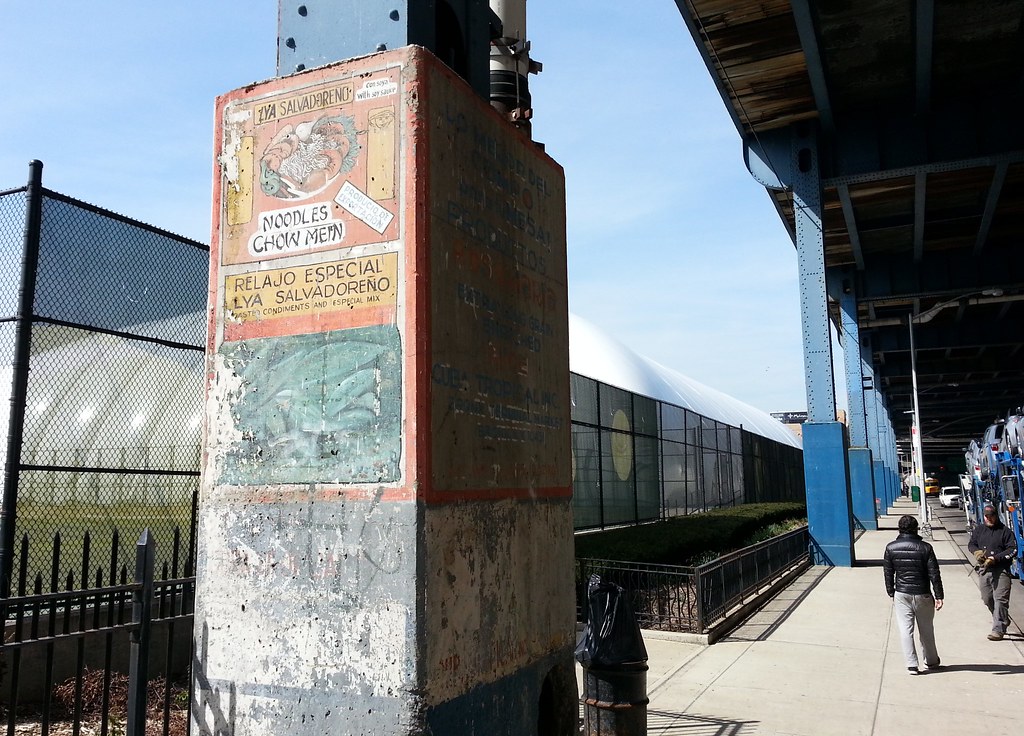
on the Cardinal Hayes football field
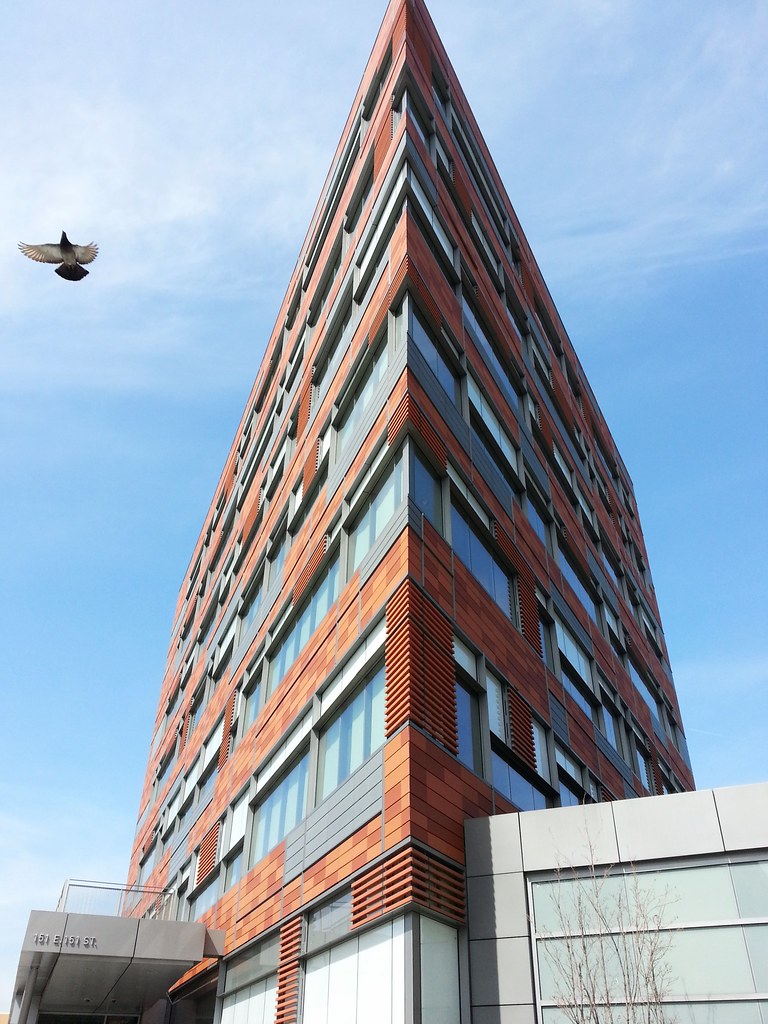
This shiny new building is a shelter for homeless families.

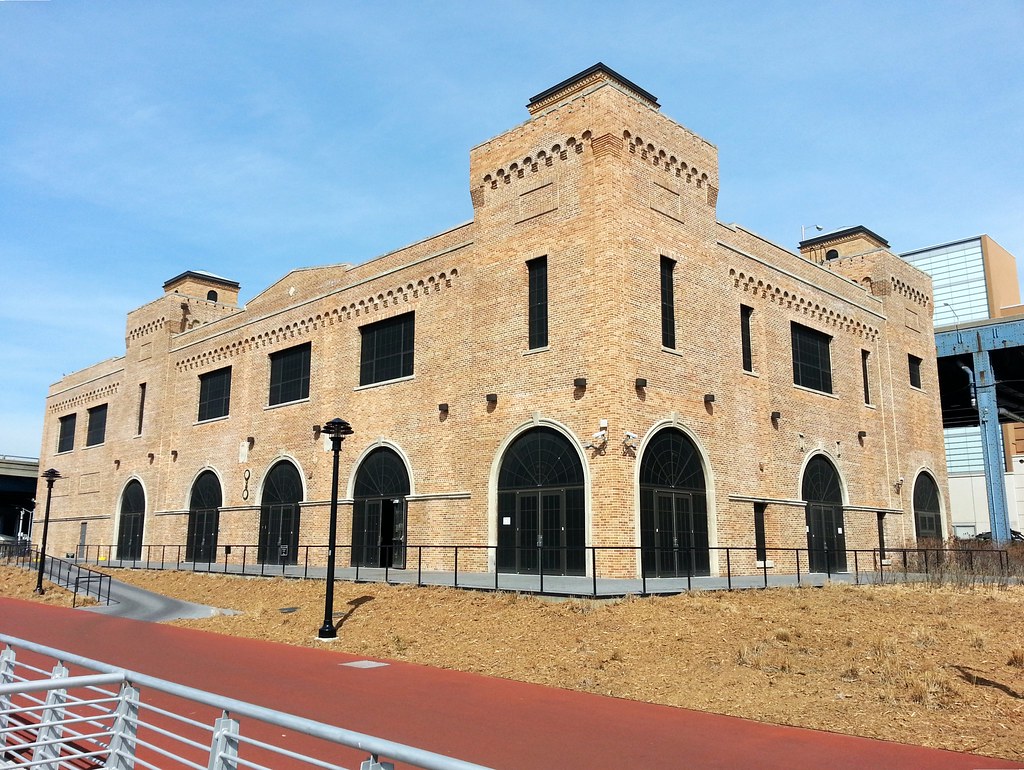
According to a sign here in Mill Pond Park, this remnant of the Bronx Terminal Market "was built between 1925 and 1927 and was crucial for the preservation of perishable goods. The building housed ice-making equipment and a machine shop, and helped to maintain temperature-controlled food storage in the Wholesale Market and Storage Building." It has since been incorporated into the park, and now contains offices, restrooms, and a café, among other things.
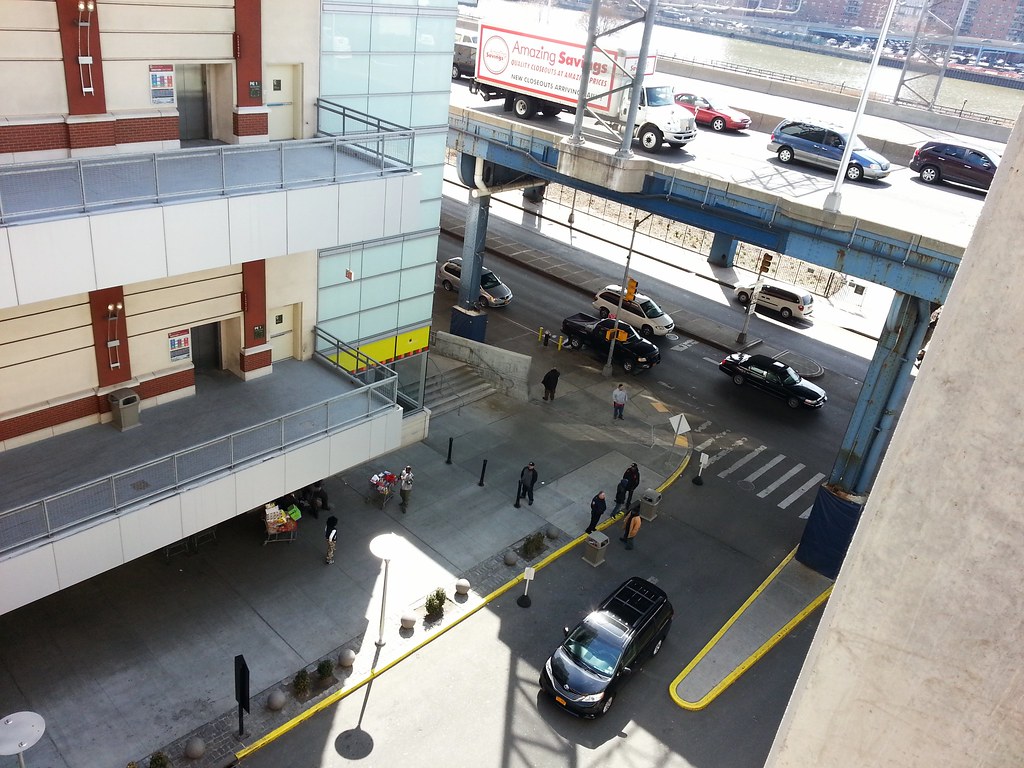
as seen from the top of the parking garage at the Bronx Terminal Market shopping center
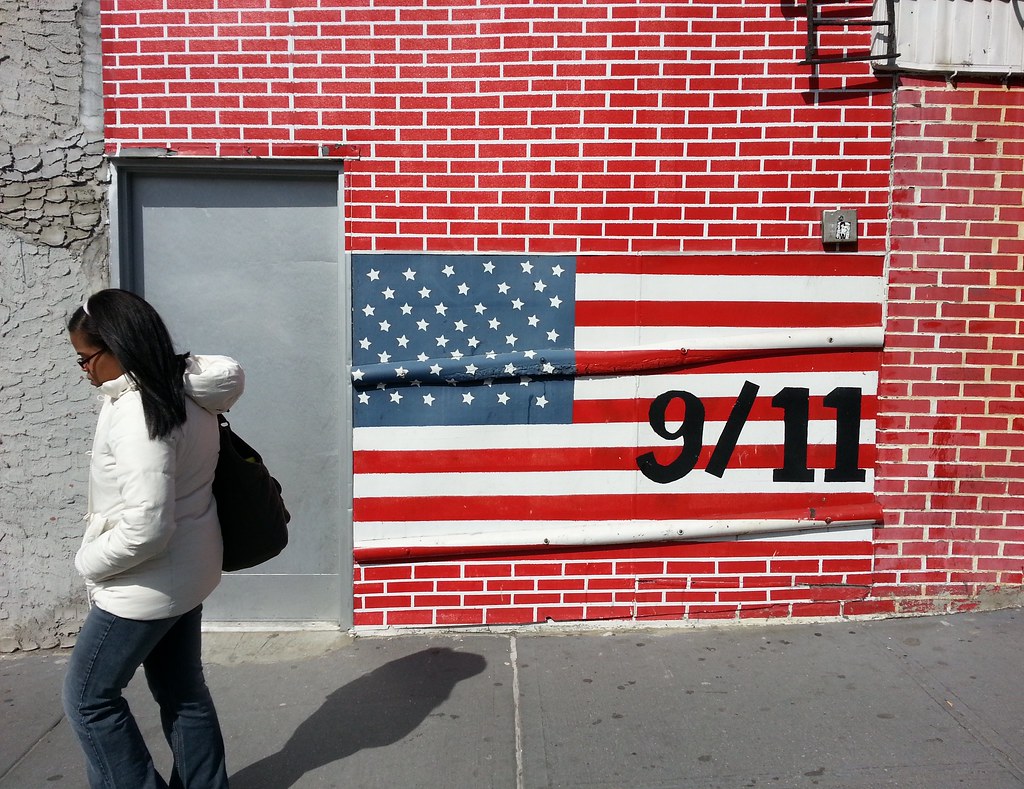
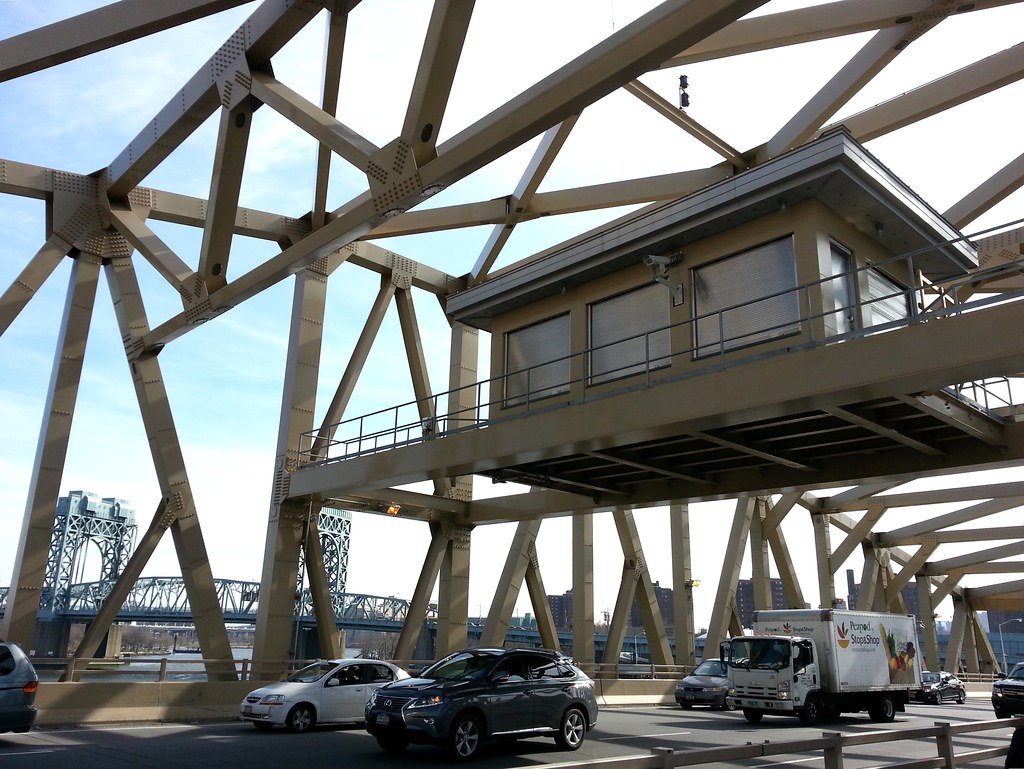
Back on a mid-July day in 2010, as I was making my way across central Montana, people were standing along the banks and bridges of the Hudson River in upstate New York, gawking at this 2,400-ton structure gliding downstream toward New York City, perched atop two barges that had been welded together specifically for the task. After a fortnight of R&R in New Jersey, it was hauled up the East River to this spot on the Harlem, where it would soon replace the original Willis Avenue Bridge. In an attempt to preserve the old bridge (as required by funding agreements with the federal and state governments), the city offered to sell it to any interested party for $1 — and provide up to 15 miles of free shipping — but there were no takers. Instead, it was floated to a junkyard in Jersey City, where it was dismantled and sold for scrap.
(That's the Harlem River span of the Triborough Bridge in the background.)
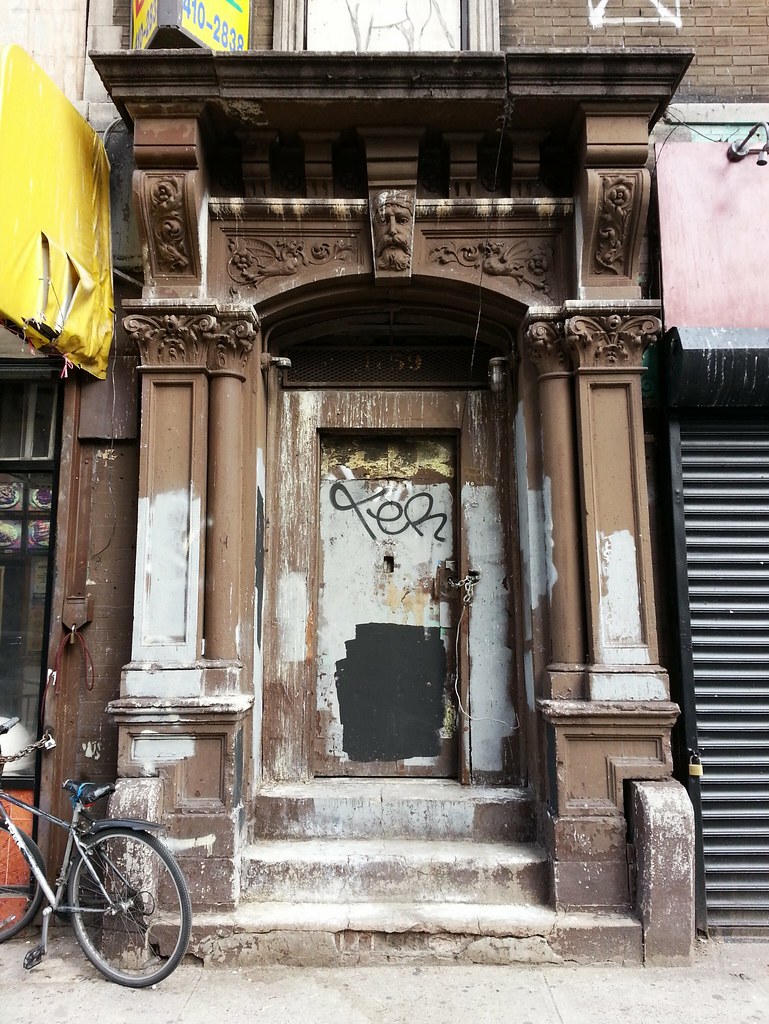
Built in 1879-82, this building currently serves as the Julia de Burgos Latino Cultural Center.

Built in 1891 as a German Methodist Episcopal church
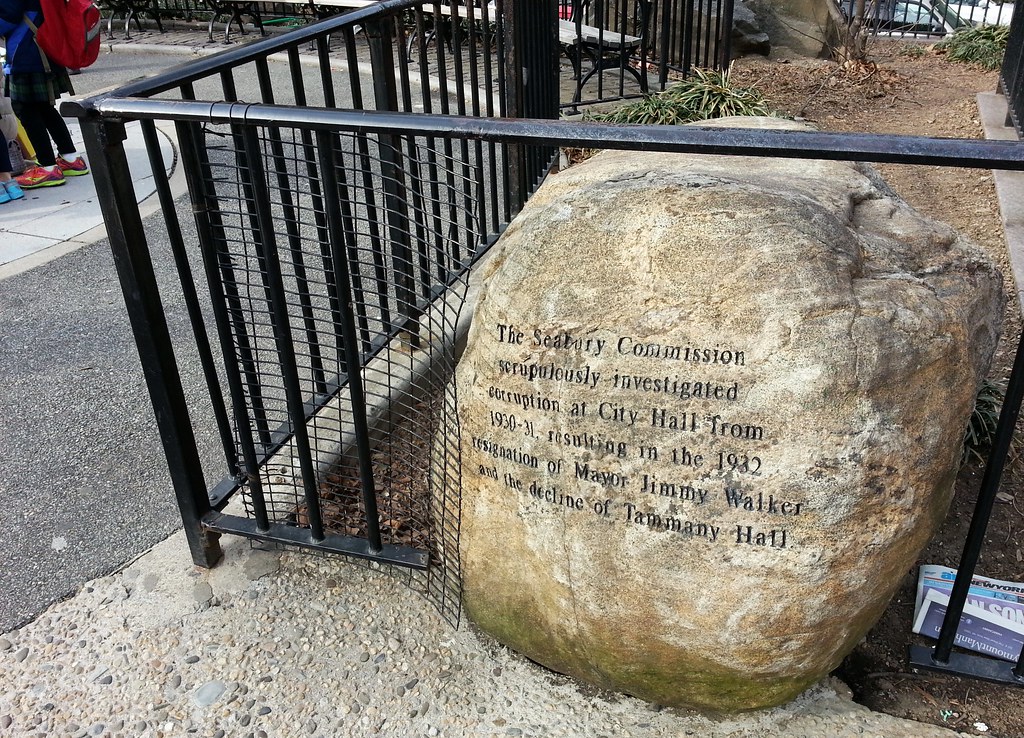
at Seabury Playground. 15 years from now, some kid's gonna ace a question about the Seabury Commission on his college history exam and have no idea how he knew the answer.
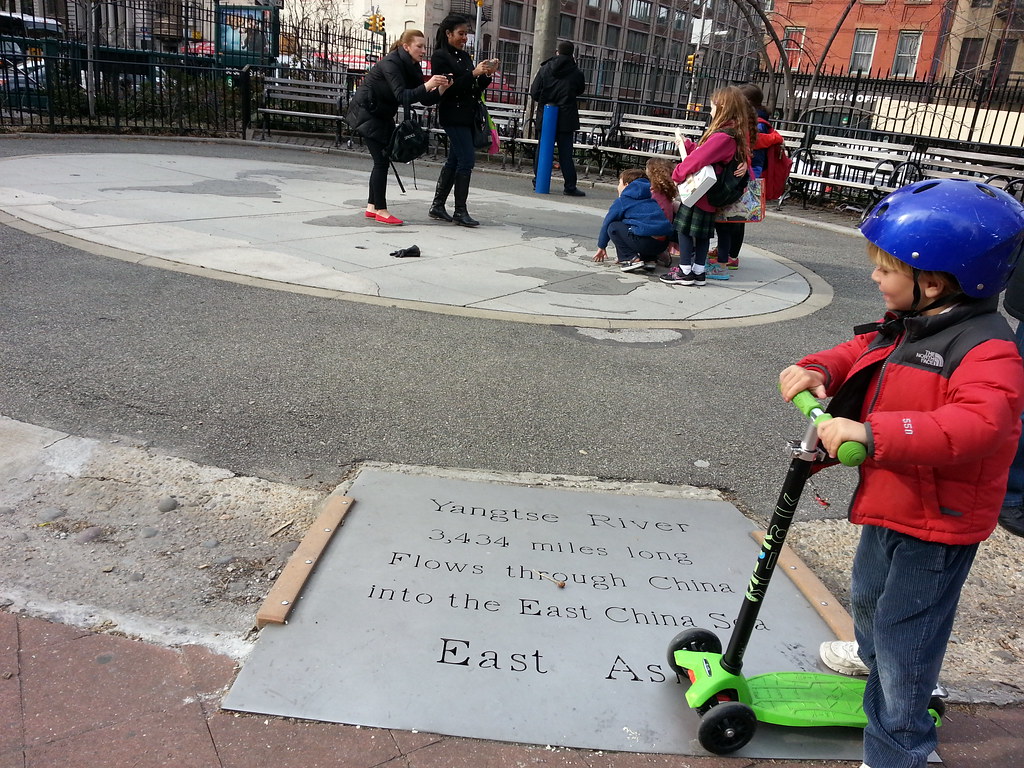
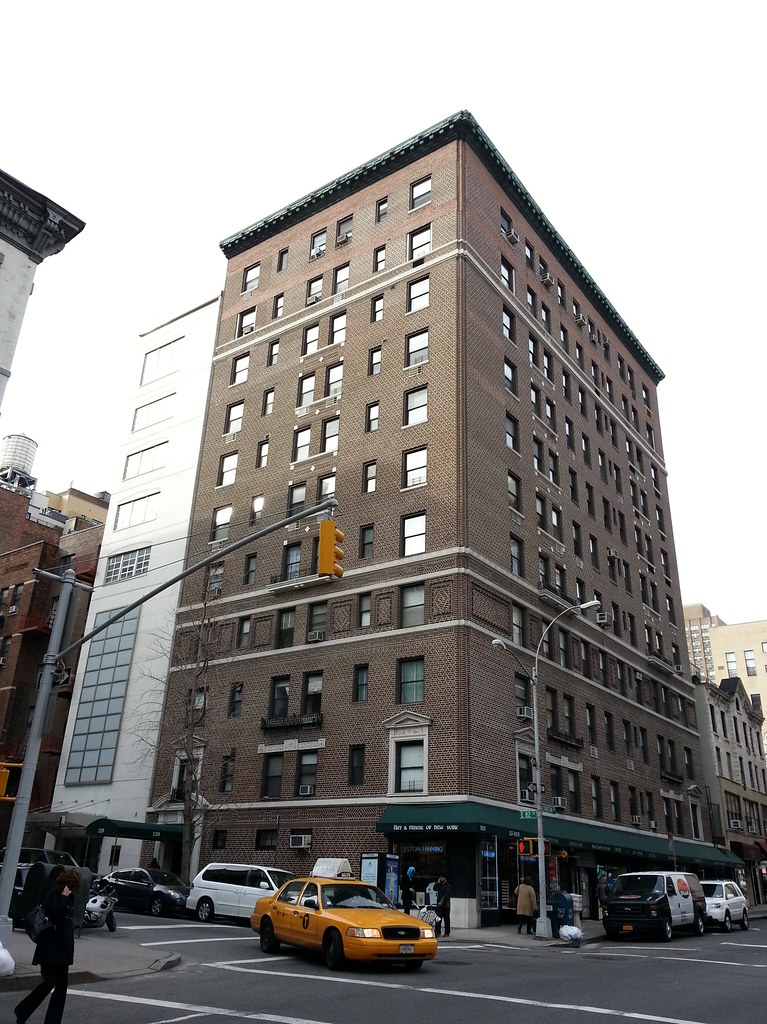
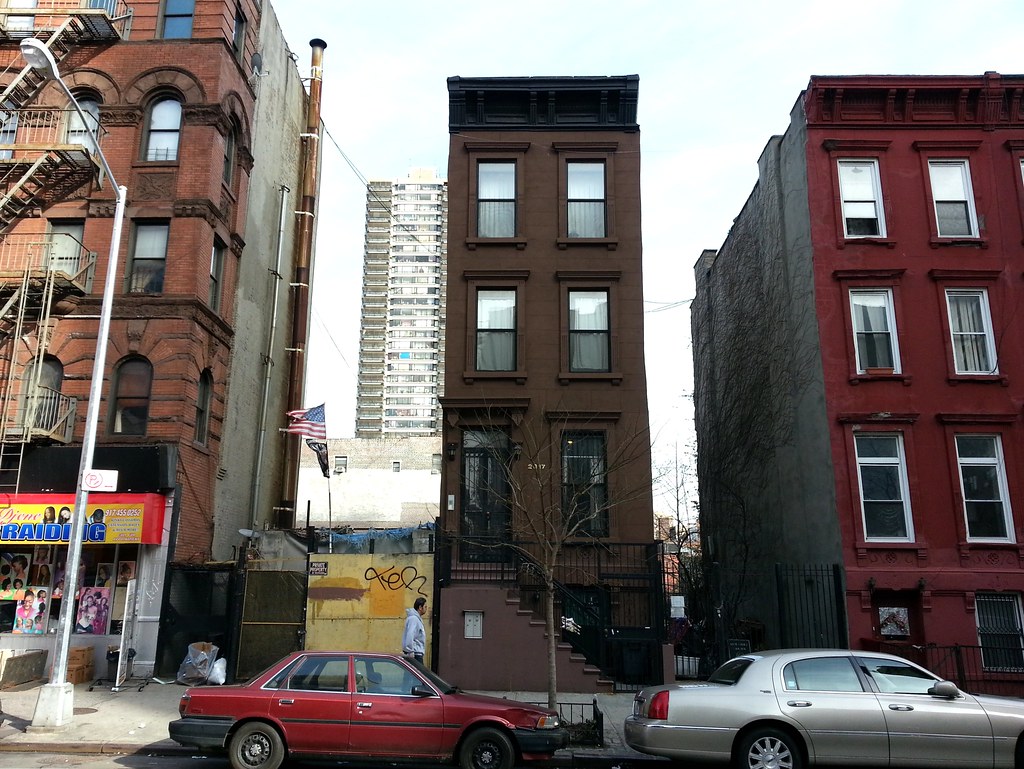
This is the former site of the Spite House, a four-story structure built on a 5-foot-by-102-foot sliver of land. Even if you never click on the links in my posts, you need to read this article about the house. Trust me. And then check out these pictures.
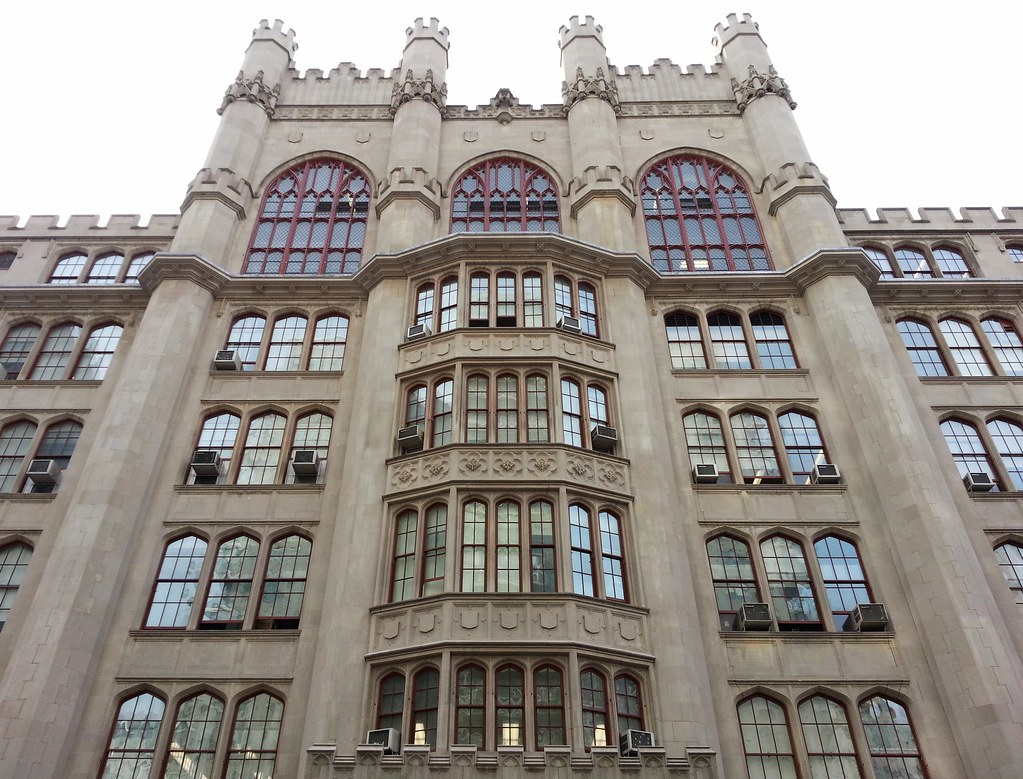
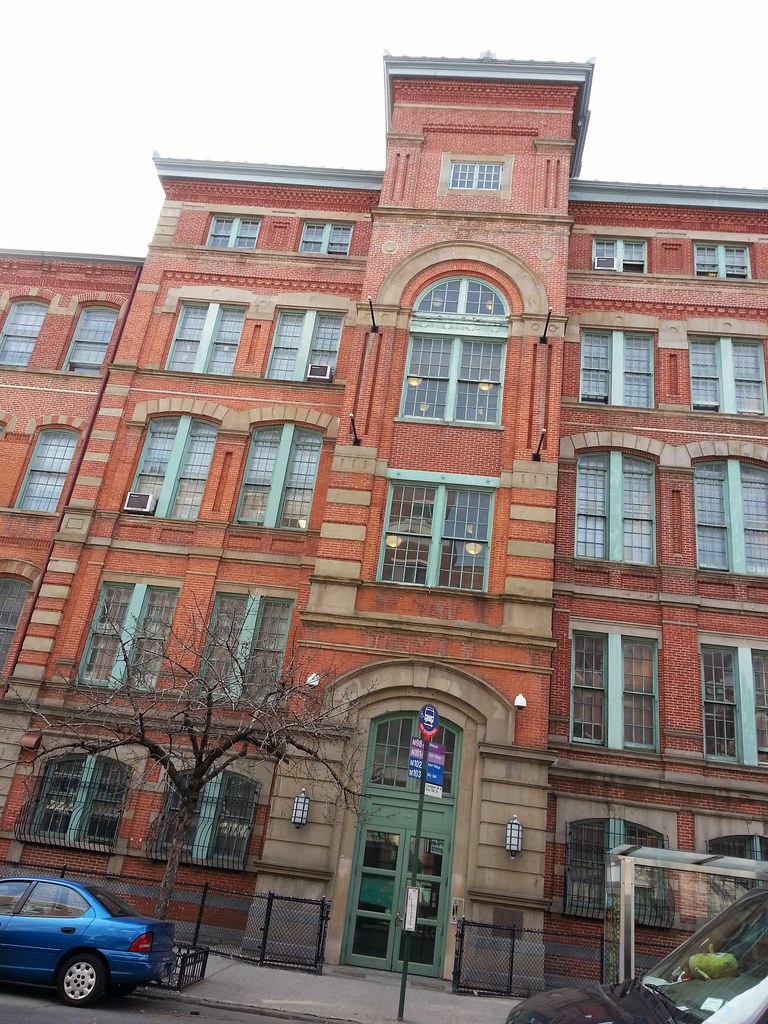
Opened in 1913 at Hunter College (then known as Normal College), this Lexington Avenue castle was built to house an elementary school and a high school, and was designed by — who else? — Charles B.J. Snyder.
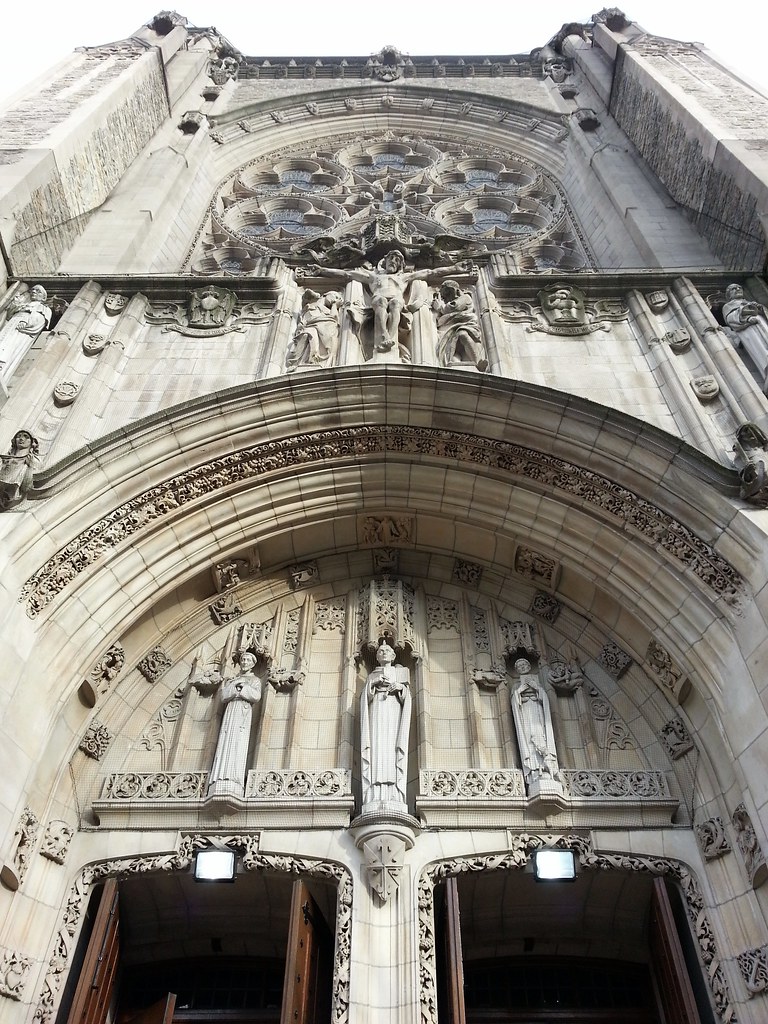
Dedicated in 1918; designed by Bertram Goodhue. Take an architectural tour!
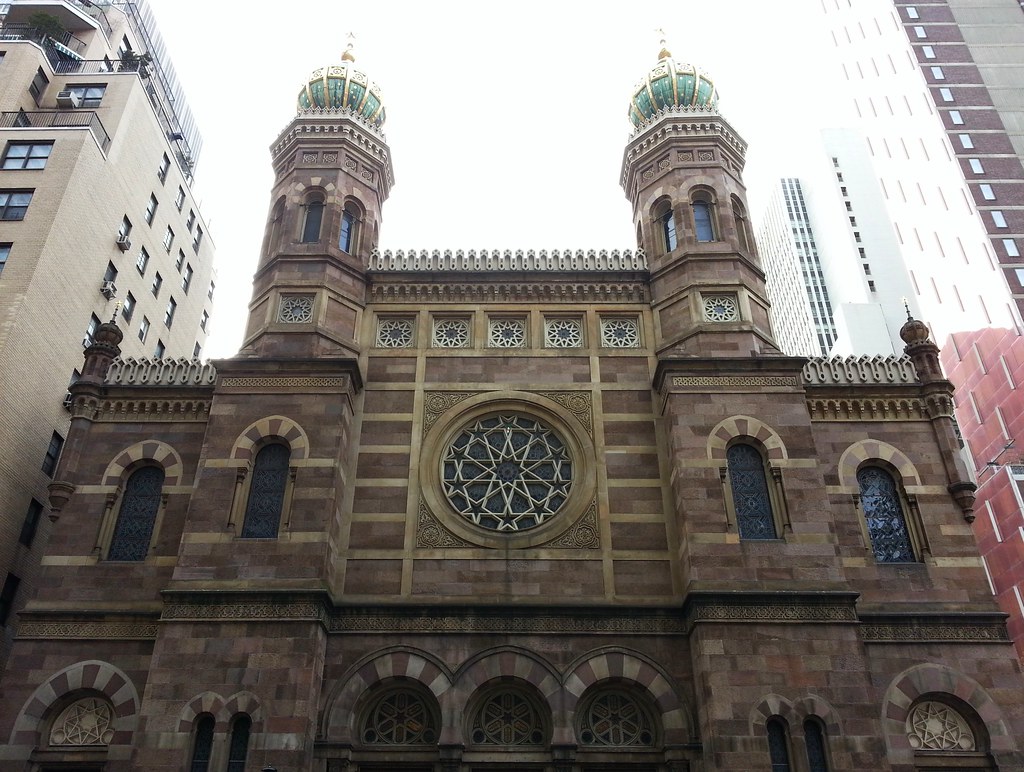
Completed in 1872, this magnificent structure (photos!) was almost destroyed by fire in 1998. It was fully restored, however, and was rededicated a few years later — note the date of this article about the reopening.
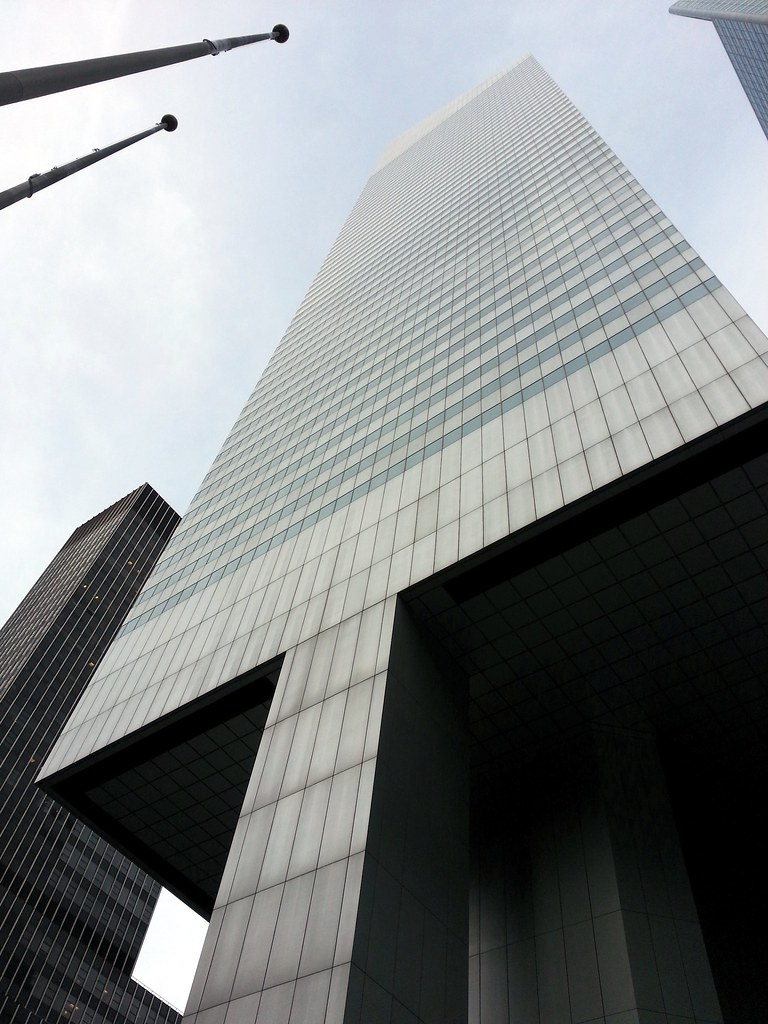
From the pages of The New Yorker:
When planning for Citicorp Center [now known as Citigroup Center] began, in the early nineteen-seventies, the site of choice was on the east side of Lexington Avenue between Fifty-third and Fifty-fourth Streets, directly across the street from Citicorp's headquarters. But the northwest corner of that block was occupied by St. Peter's Church, a decaying Gothic structure built in 1905. Since St. Peter's owned the corner, and one of the world's biggest banking corporations wanted the whole block, the church was able to strike a deal that seemed heaven-sent: its old building would be demolished and a new one built as a free-standing part of Citicorp Center.In 1978, the year after Citicorp Center was completed, Bill LeMessurier, the project's structural engineer, was reviewing his design and discovered, to his horror, that a perfect storm of factors — an omitted calculation (one not required by the city's building code) on his part, plus two cost-saving shortcuts taken by the construction team (neither of which would have been a problem on its own) — had resulted in the building being highly susceptible to catastrophic collapse if hit by strong diagonal winds.
To clear space for the new church, [the architect and engineer] set their fifty-nine-story tower on four massive, nine-story-high stilts, and positioned them at the center of each side, rather than at each comer. This daring scheme allowed the designers to cantilever the building's corners seventy-two feet out over the church, on the northwest, and over a plaza on the southwest. The columns also produced high visual drama: a nine-hundred-and-fourteen-foot monolith that seemed all but weightless as it hovered above the street.
And it was almost peak hurricane season.
LeMessurier alerted the architect and the Citicorp higher-ups, and they embarked on a secretive plan (known by city officials, but not by the general public) to strengthen the structure's wind braces, bringing in welders every night over the course of two months to fortify more than 200 bolted joints in the building's skeleton, starting with the most critical locations.
If people had found out what was going on, it could have been extremely damaging to the reputations of the bank and the design team, but the media never picked up on the story. The day after Citicorp put out a press release "in language as bland as a loan officer's wardrobe" about the upcoming welding work, the city's papers went on strike, and they didn't resume publication until weeks after the last joint had been fixed. It was only the aforementioned New Yorker article (well worth reading) that finally revealed the tale to the public in 1995.
And as for the building: with its reinforced, welded joints, Citigroup Center is now said to be one of the safest structures ever built.
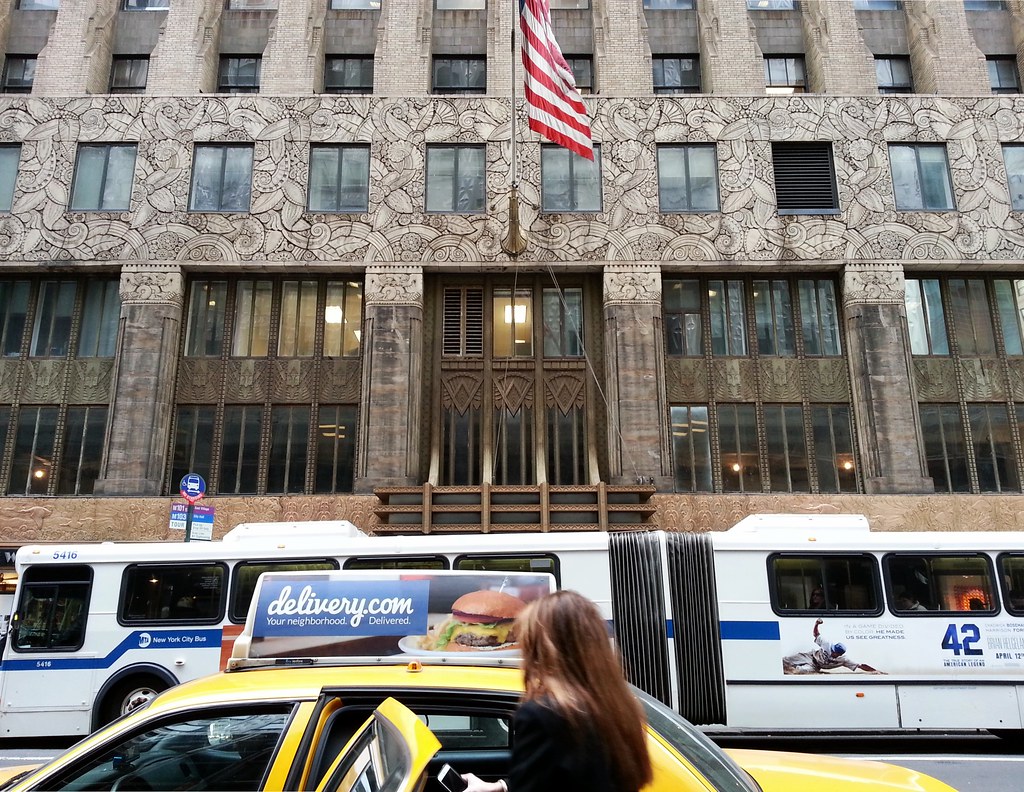
Although it's been surpassed in height by many nearby buildings since its 1929 completion, this "exuberant Art Deco" skyscraper was once a prominent feature in the Midtown skyline. Here's a great video of a daredevil named Benni doing his "acrobatic lamppost act" on top of the building in 1933.
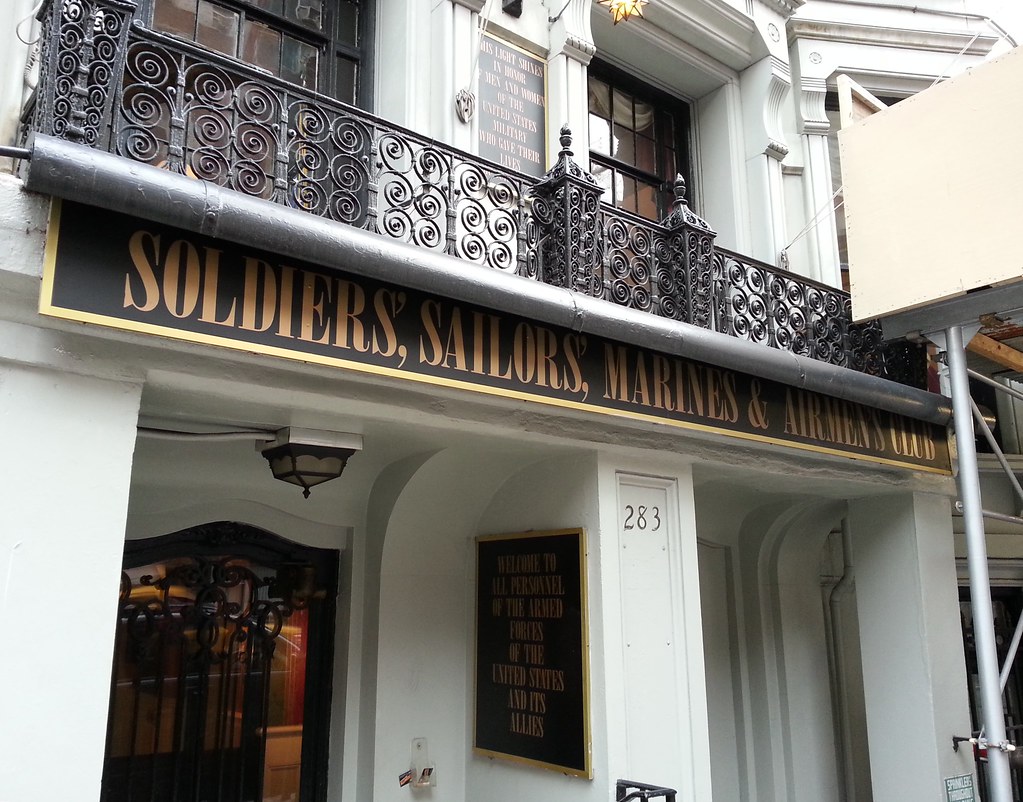
The "ultimate boutique hotel".
The sign at the bottom of the photo reads "Welcome to all personnel of the Armed Forces of the United States and its allies".
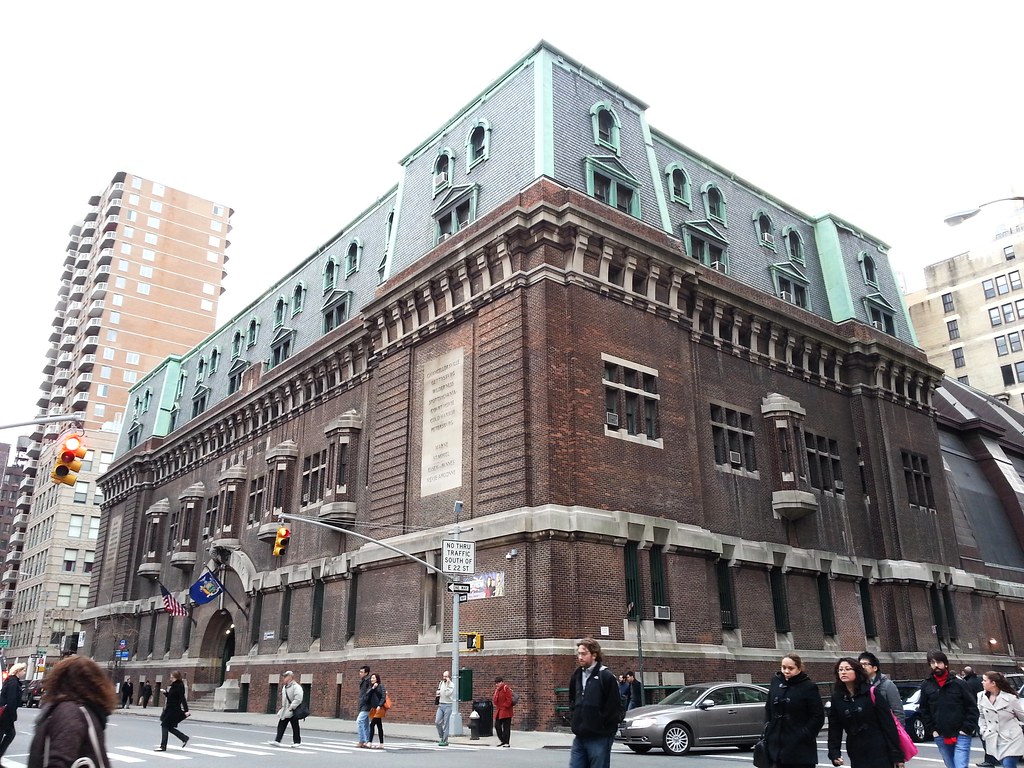
On Feb. 17, 1913, an act of cultural sabotage called the International Exhibition of Modern Art, or the Armory Show, hit the 69th Regiment Armory on East 26th Street, lodging there for nearly a month. Installed in a sequence of temporary rooms, the show revealed horror after grating horror in the form of up-to-the-minute European paintings and sculptures by the likes of Constantin Brancusi, Marcel Duchamp and Henri Matisse.
New York had never seen anything like it. The American artists in the exhibition, all milquetoast traditionalists, were stunned into silence. No one even noticed they were there. The critics and the paying public, shocked and appalled, had eyes only for the European art and looked daggers at it.
That, at least, is the account of the Armory Show that has come down to us, repeated endlessly in the history books. But in the show’s coming centennial year, at least two exhibitions will propose alternative readings that attempt to dispel, or at least modify, an accumulation of myths and misperceptions, and in the process suggest that shock can be just another form of entertainment.
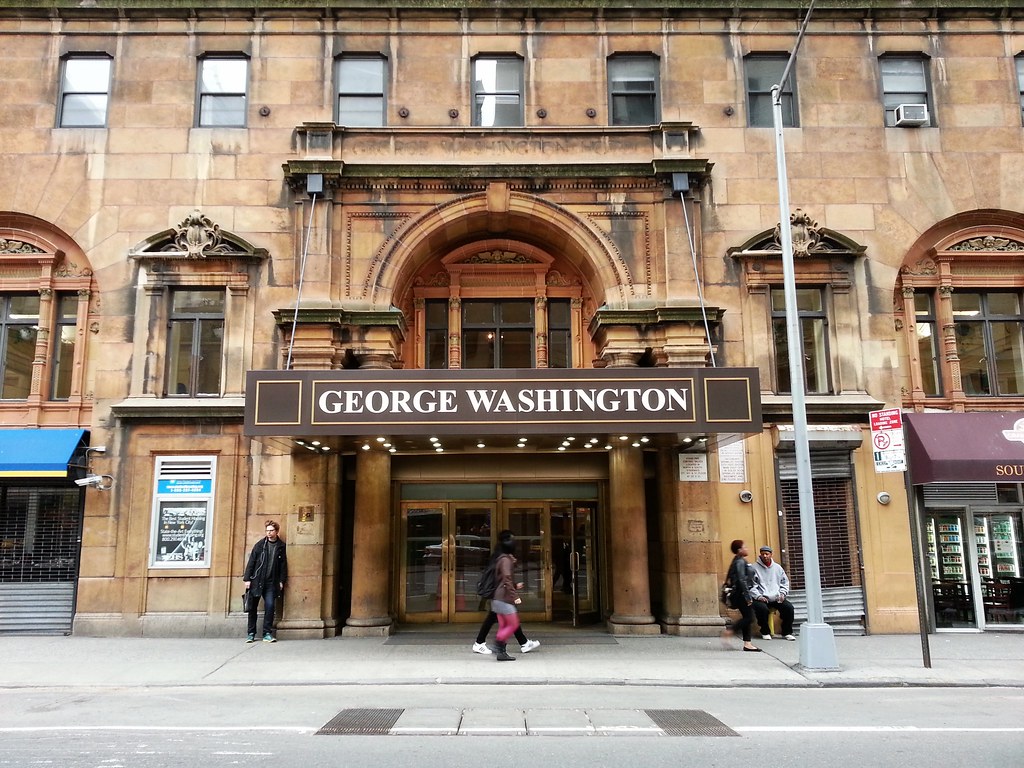
Now a residence hall for the School of Visual Arts
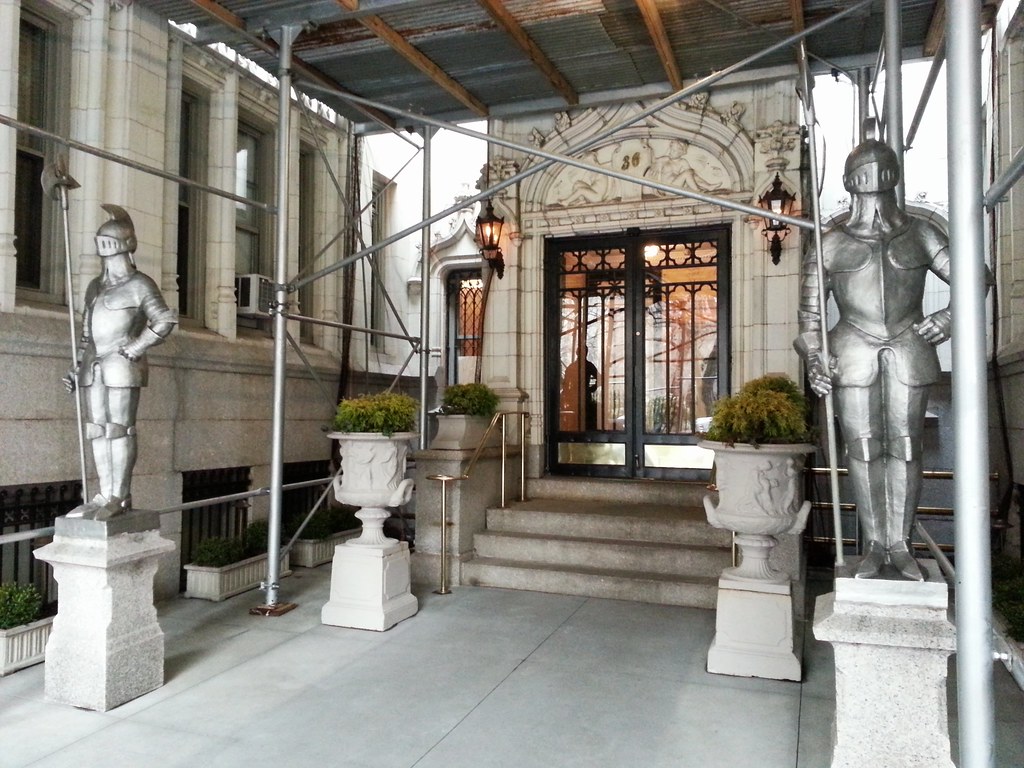
"Deep in the Heart of Texas, a Glimpse of Old New York"
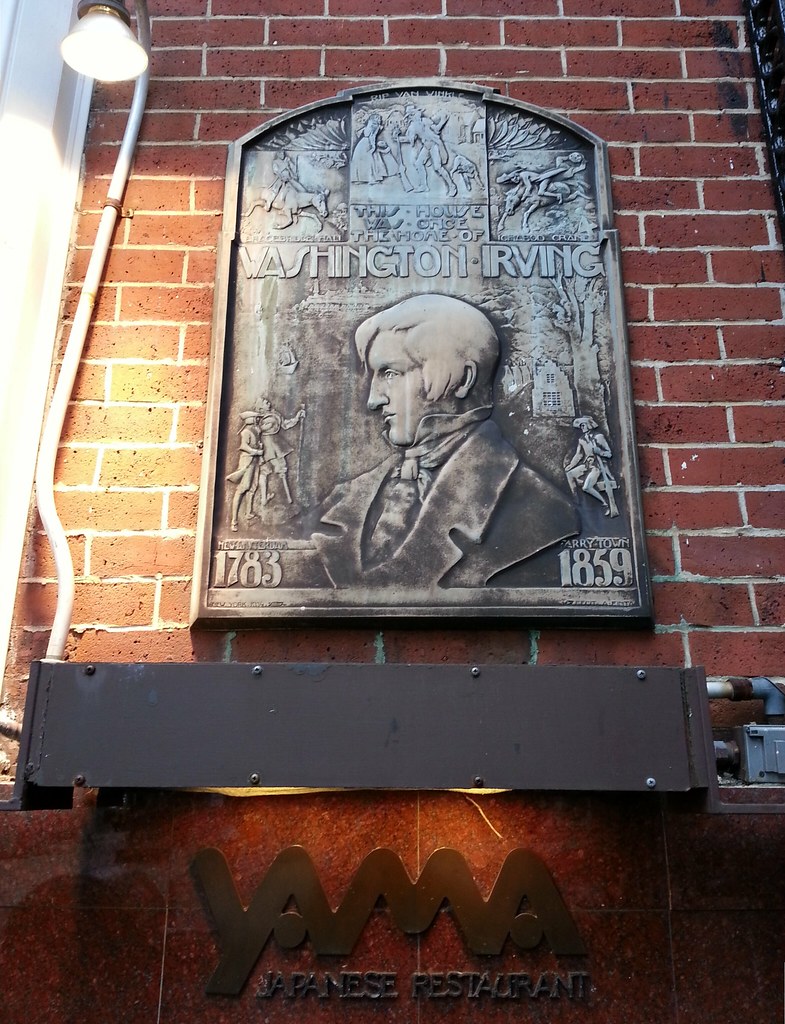
Or was it? According to the AIA Guide to New York City:
Irving's connection with this house is the wishful thinking of an ancient owner; this is one Washington who never slept here. In the real world, Elsie de Wolfe and Elisabeth Marbury lived here from 1894 to 1911, maintaining a salon where notables from all walks of life gathered amid Elsie's "white decor," the stylistic statement that launched her career as America's first paid (and highly paid) interior decorator.
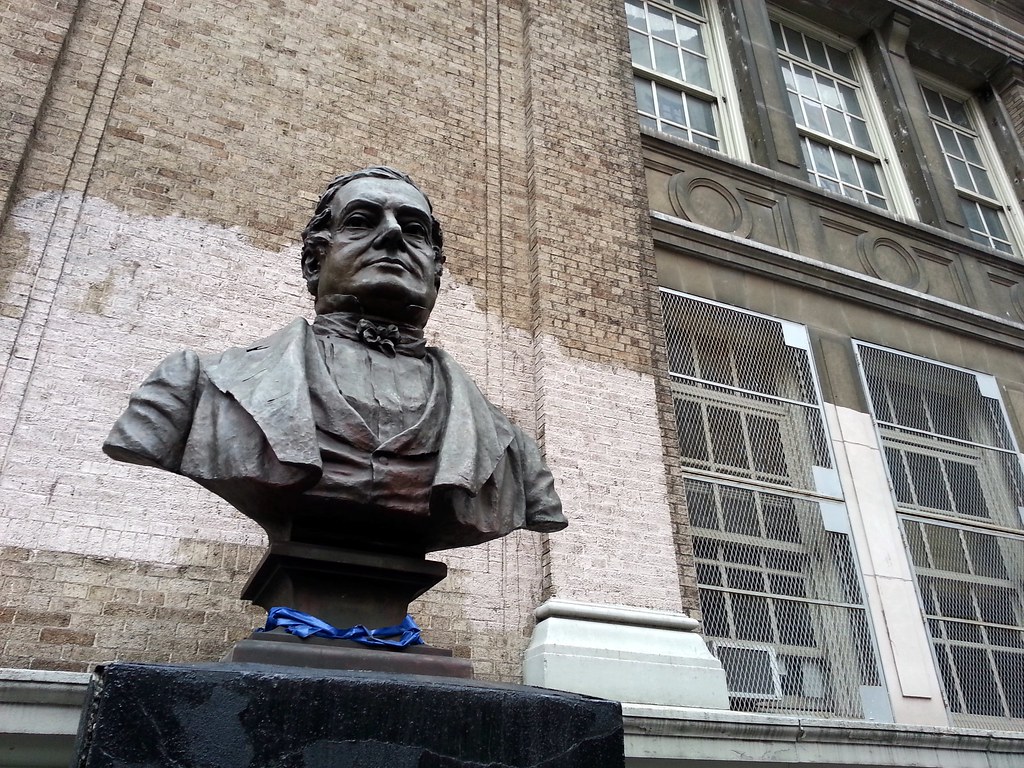

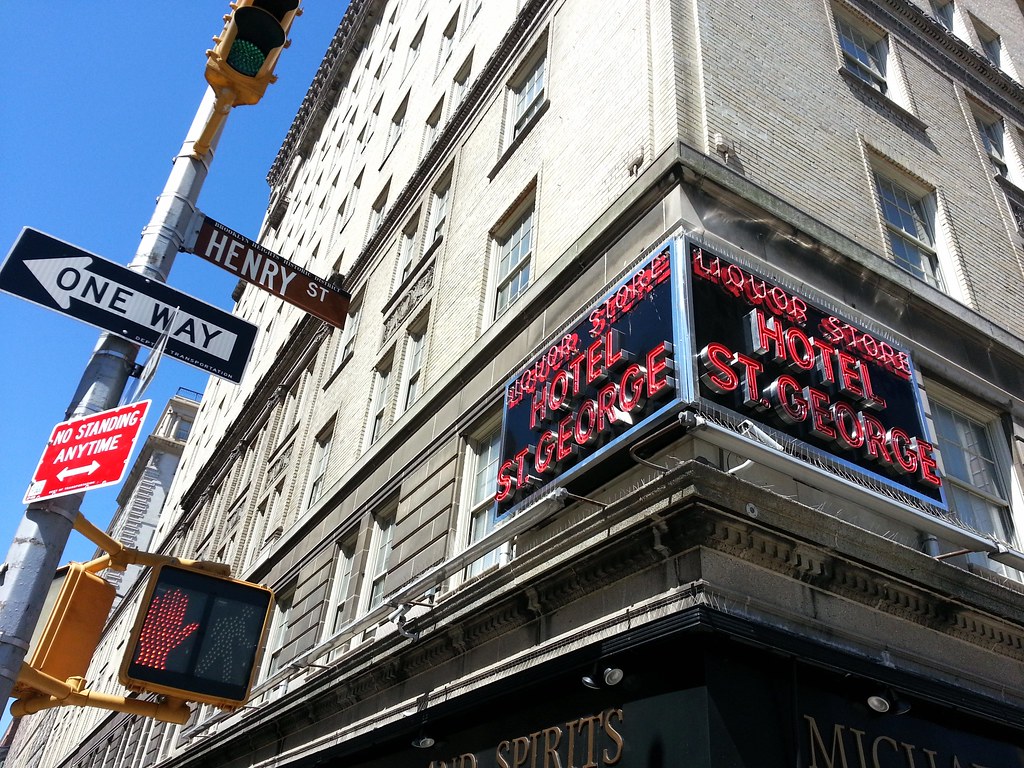
One of those two entities was formerly the largest hotel in New York City, with 2,632 rooms contained in the full-block complex. The building pictured above is now a college dorm.
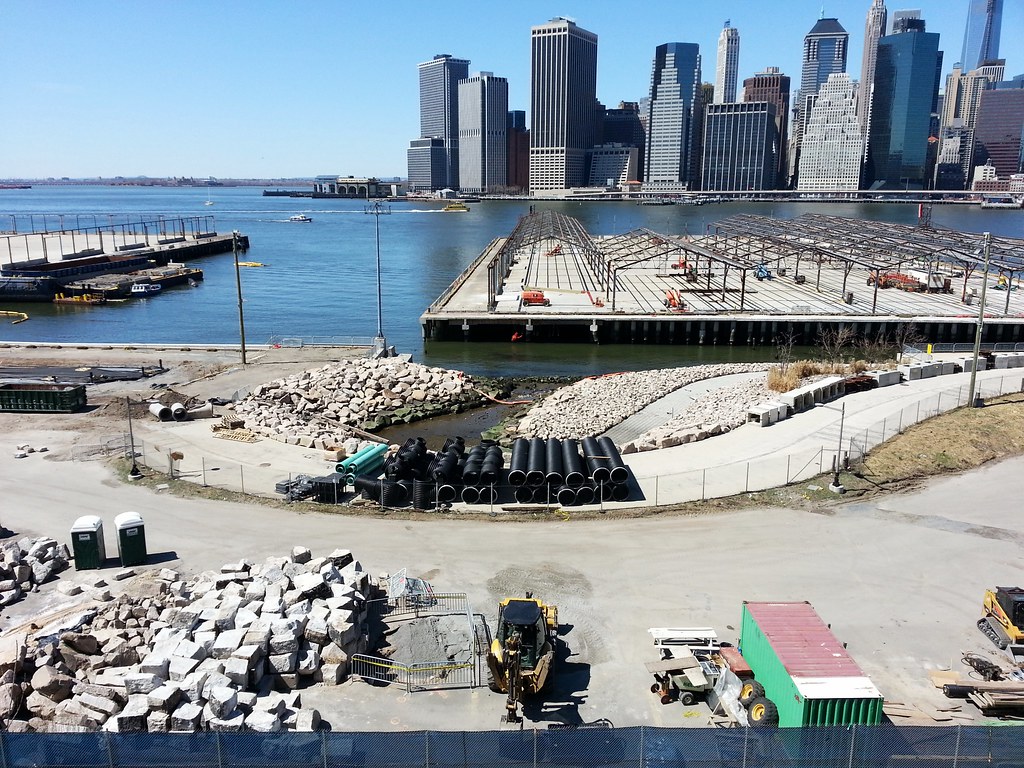
from the Brooklyn Heights Promenade at an under-construction portion of Brooklyn Bridge Park (that's Pier 3 on the left and Pier 2 on the right), with the southern tip of Manhattan in the background
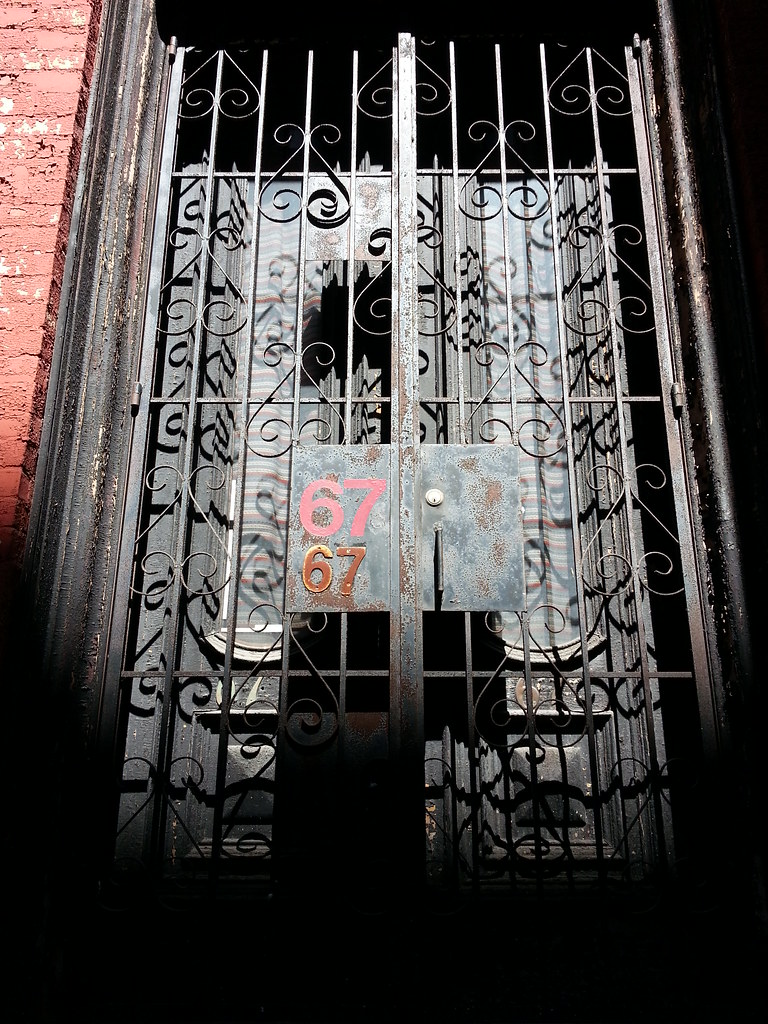

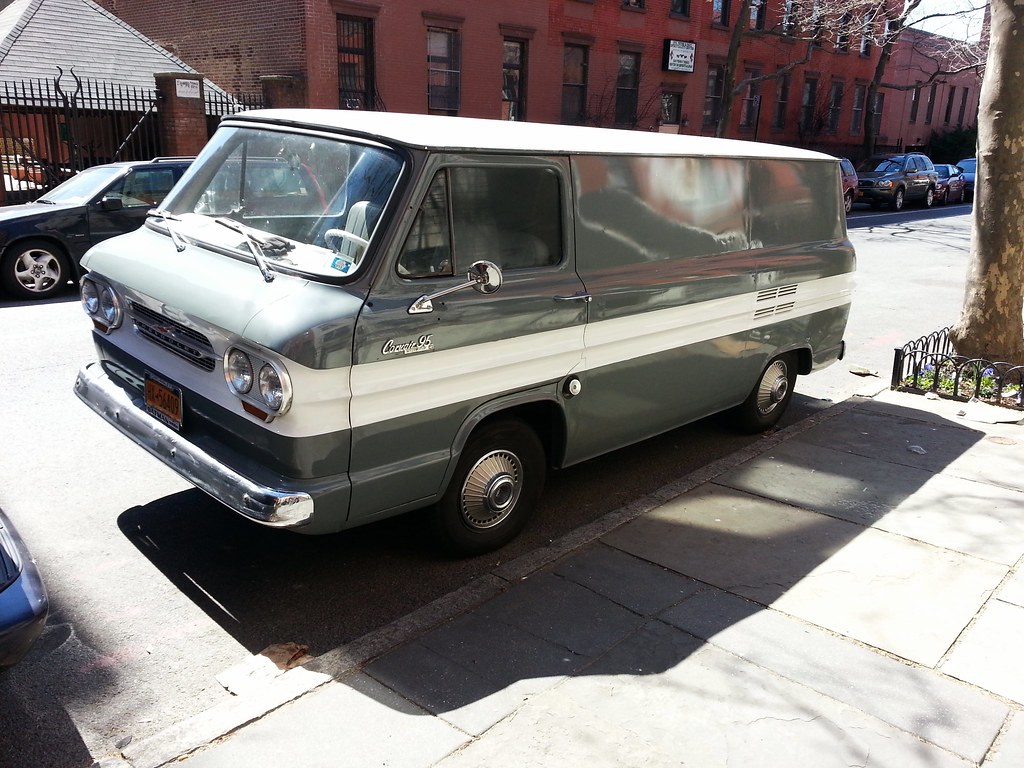
As I was taking this picture, a guy in his 50s or 60s walked by and said, "I think I had sex in a van like that back in high school."

The church, academy, and rectory buildings here at the former St. Peter's have been converted into 60 "high-end residences". There's even a two-level apartment in the church's bell tower.

These town houses were built for workingmen and their families in the late 1870s by Alfred Tredway White ("the great heart and mastermind of Brooklyn's better self"), a philanthropic housing reformer who once wrote:
The badly constructed, unventilated, dark and foul tenement houses of New York, in which our laboring classes are forced to live, are the nurseries of the epidemics which spread with certain destructiveness into the fairest homes; they are the hiding-places of the local banditti; they are the cradles of the insane who fill the asylums and of the paupers who throng the almshouses; in fact, they produce these noxious and unhappy elements of society as surely as the harvest follows the sowing, and, by these, punish the carelessness of those who own no responsibility as keepers of their brethren.Times change, of course. One of these homes currently on the market is listed for $1.35 million.
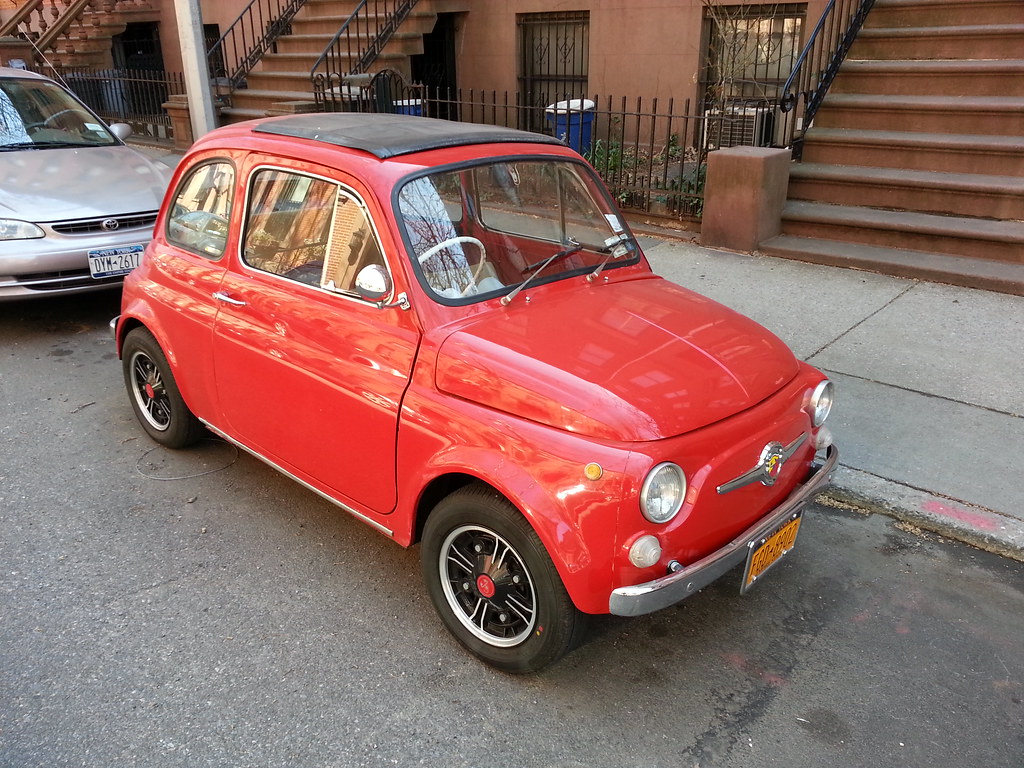
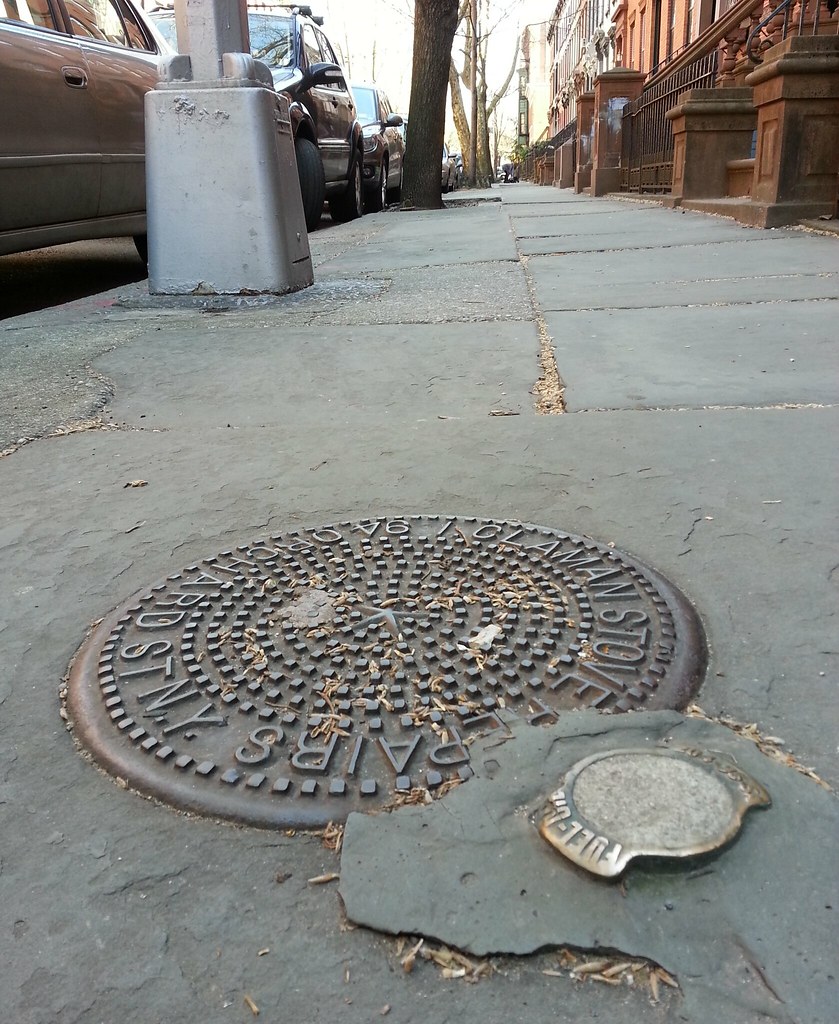
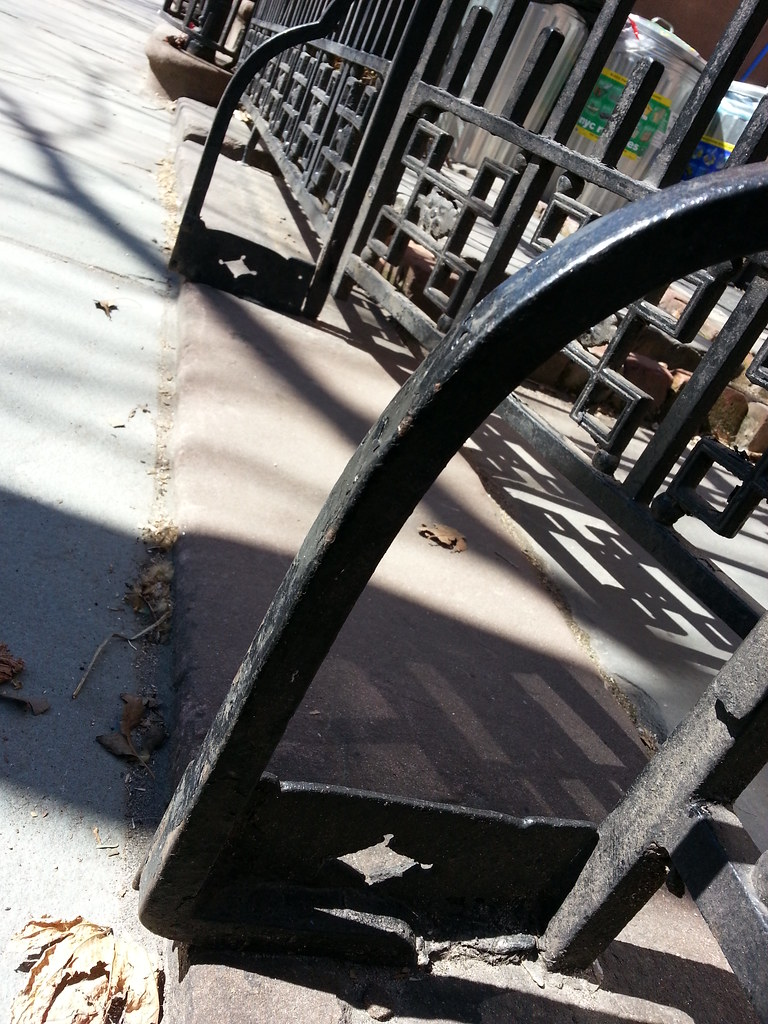
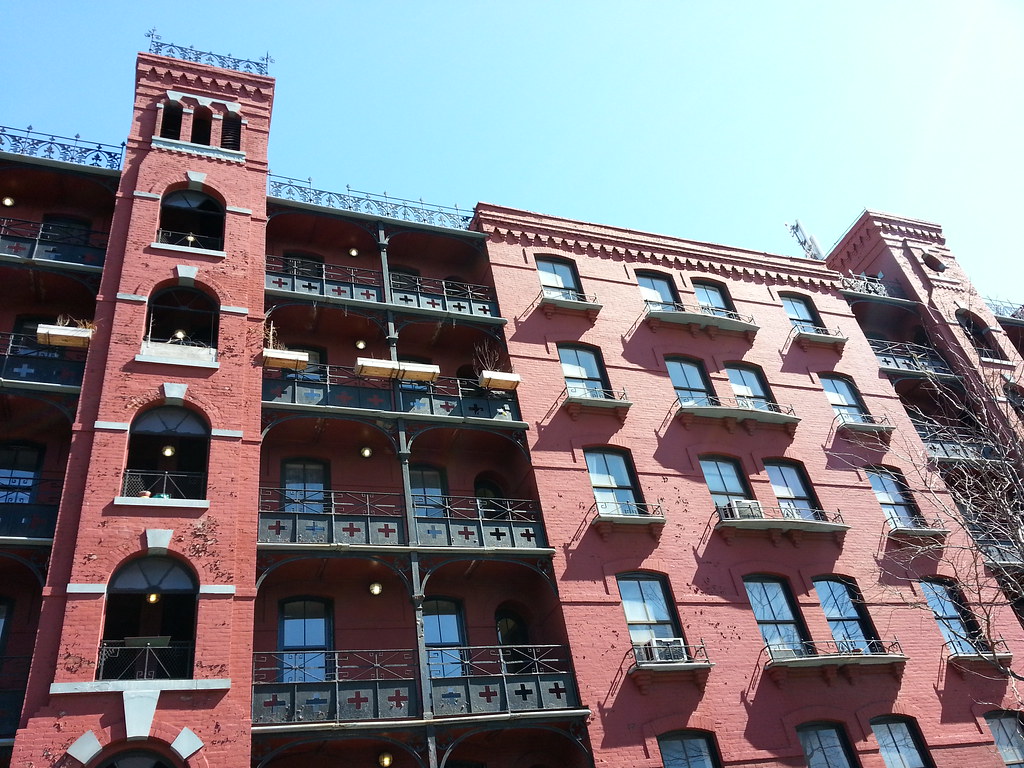
Like the town houses on Warren Place, this complex was built by Alfred Tredway White in the late 1870s to provide decent accommodations for working-class tenants. Many of these units have recently been converted to condos.

lining Hicks Street (and featured in this painting by Albert Pucci)