Check it out in Street View.
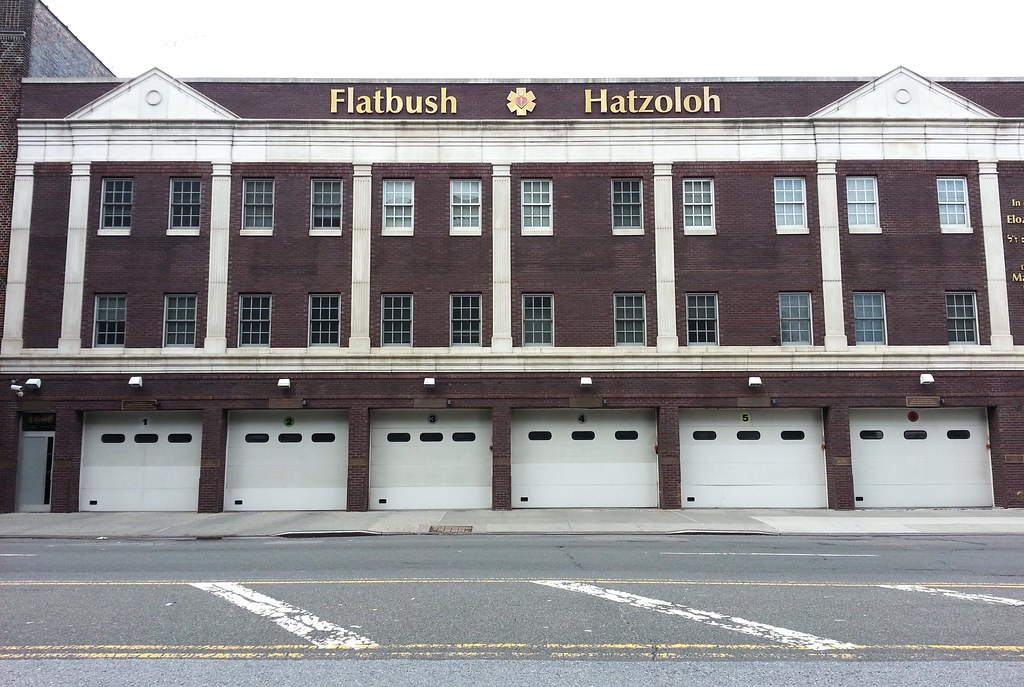
This is the self-proclaimed largest affiliate of Hatzoloh/Hatzolah/Hatzalah, the Jewish organization that is itself the largest volunteer ambulance service in the nation (and maybe the world). As was the case with the mikveh a few photos back, this building is laden with dedication plaques — there's one mounted on every single pillar and doorway on the first floor.




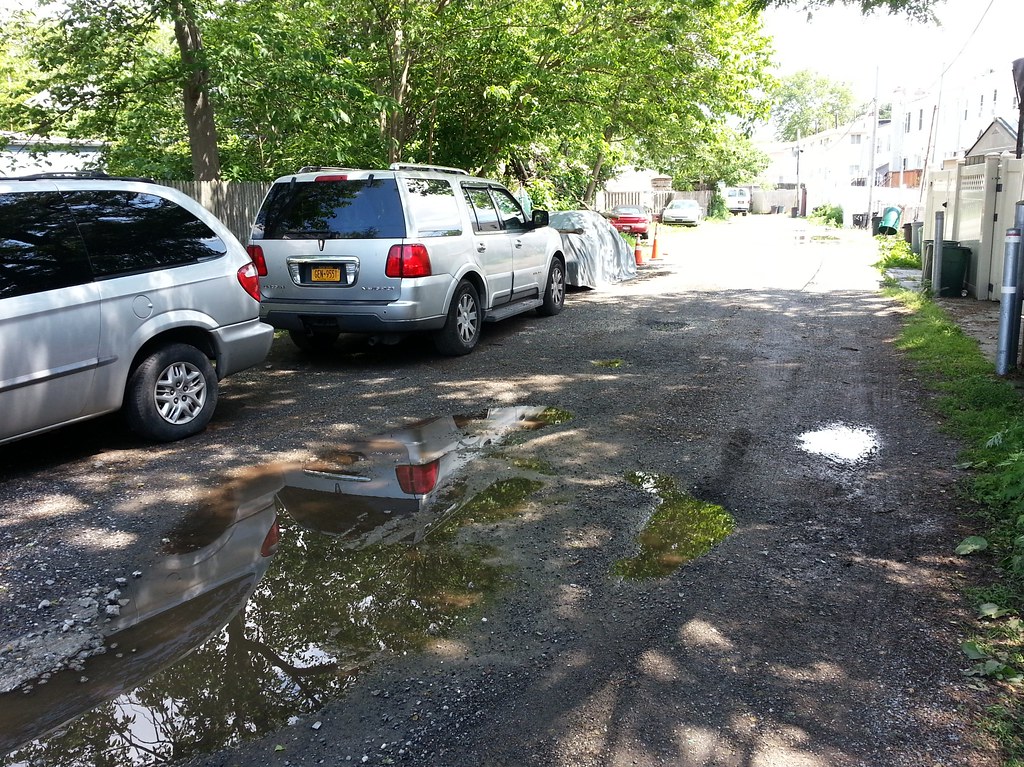
Here's what a spam commenter on a site called StreetAdvisor has to say about this dead-end dirt road remnant of an old colonial highway:
Lotts Lane is filled with places to shop and a few places to eat. A busier street than others in the area, Lotts Lane is definitely a good one to consider if you’re thinking of moving to Brooklyn. Mainly because of the wonderful people, accessibility to the metro and buses, and a general neighborhood feel, Lotts Lane is a great place to live, work, or leisure



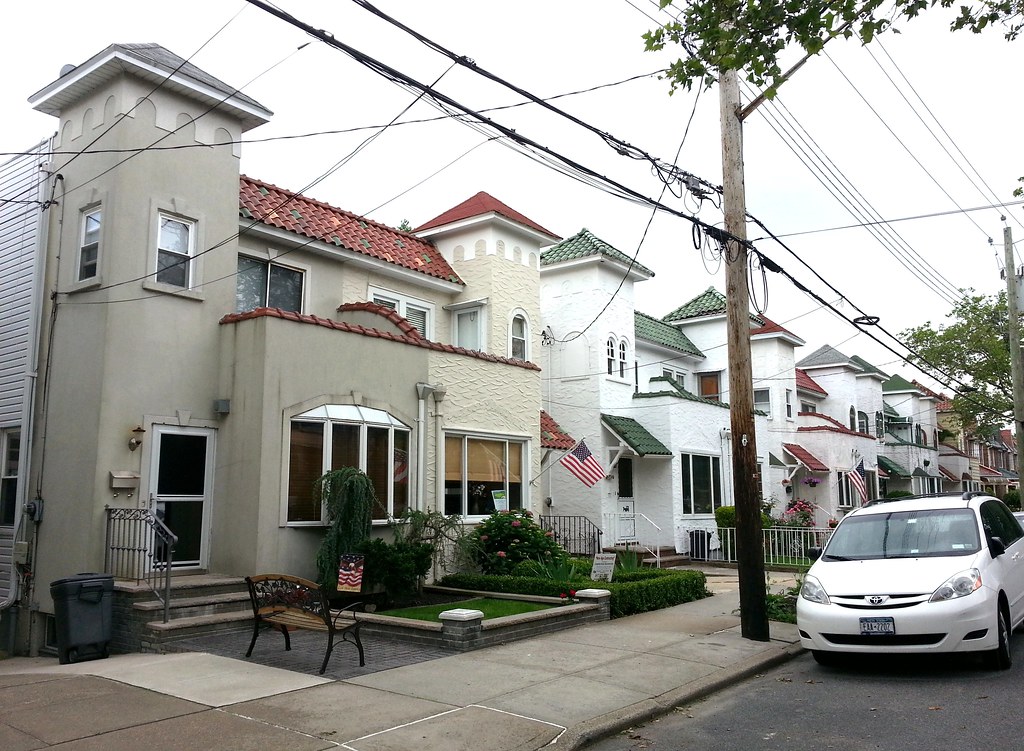
According to the Parks Department, this house is "one of fourteen remaining Dutch Colonial farmhouses in Kings County. . . . The house remains structurally sound and virtually unchanged from the time Hendrick Lott constructed it in 1800, incorporating a section of the 1720 homestead built by his grandfather, Johannes Lott."
A sign posted nearby says that the grounds are currently being restored "to evoke the Lott family's farmstead landscape . . . [including] a vegetable garden, orchard, hedgerow, windbreak, ornamental plantings, a portion of the farm drive, an outhouse and a wellhouse." You can see the landscape plan here.

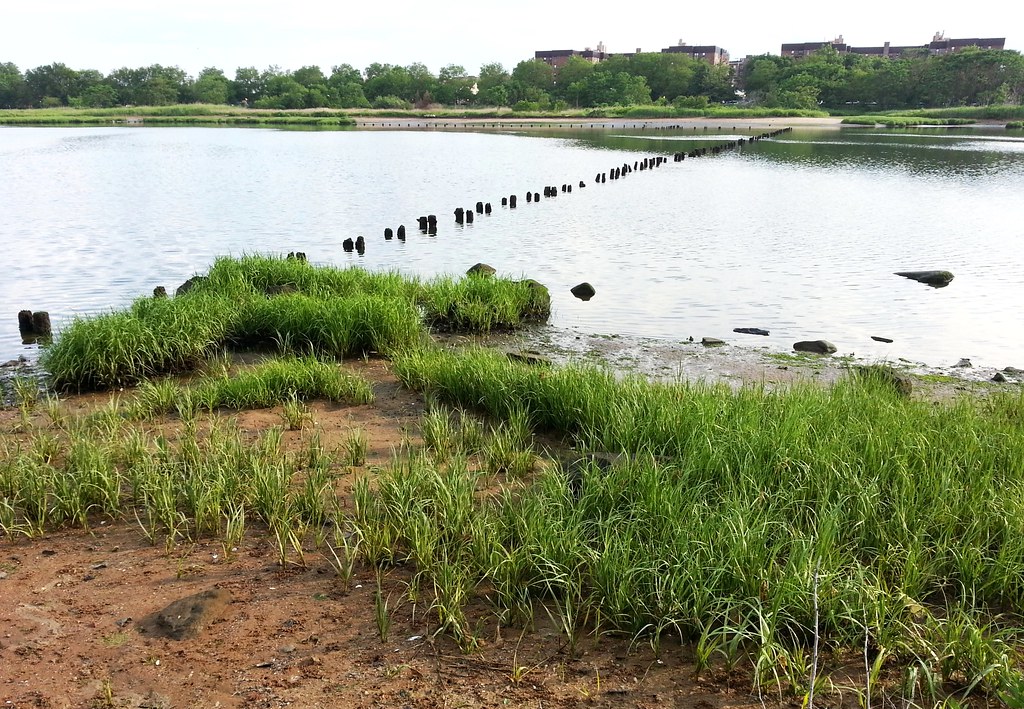
According to the Parks Department, the first tide-powered mill in North America was built here on Gerritsen Creek in the mid-1600s by Hugh Gerritsen. It stood on the far side of the creek, and wooden pilings from its dam are still visible at low tide. (I initially thought the pilings in this photo were remnants of the dam, but that's not the case, as pointed out in the comments below. This 1924 aerial image clearly shows the dam located a few hundred feet south of here.) It's said that the mill supplied George Washington's troops with flour during the Revolutionary War, and that it was also captured and used by Hessian troops fighting for the British. It remained in operation until 1889, and was still standing as recently as 1935, when it was burned down by vandals. You can see photos of the mill in its later days here and here.


It looks like hungry gulls have been dropping shellfish on this rock to crack them open.
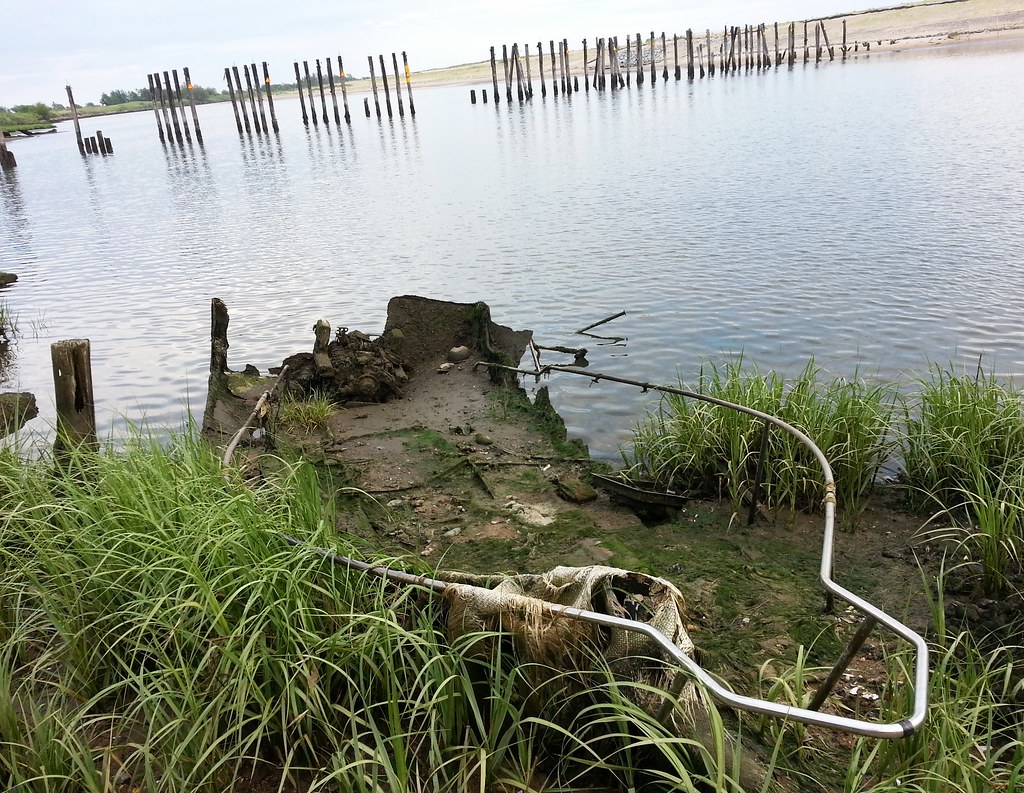
The initial piece of what is now Marine Park was donated to the city as parkland by Frederic B. Pratt and Alfred Tredway White in an attempt to preserve the area's marshlands in the face of the totally crazy (in hindsight, at least) plans that were afoot in the early 20th century to turn Jamaica Bay into "the world’s largest deep-water port". Work on the harbor project actually commenced in 1912 with the dredging of Rockaway Inlet, but things petered out after that. To get a sense of how dramatically this development would have changed the city, compare this wild bird's-eye illustration of the proposed harbor (including a canal connecting Jamaica Bay and Flushing Bay) with an aerial image of today's Jamaica Bay.


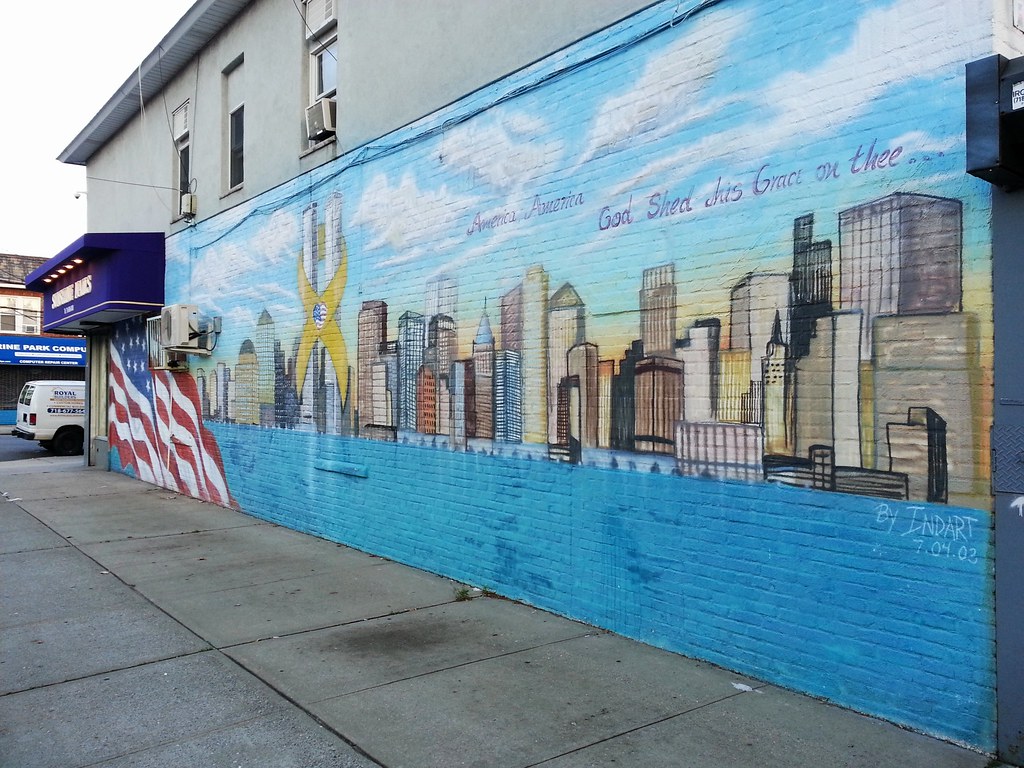

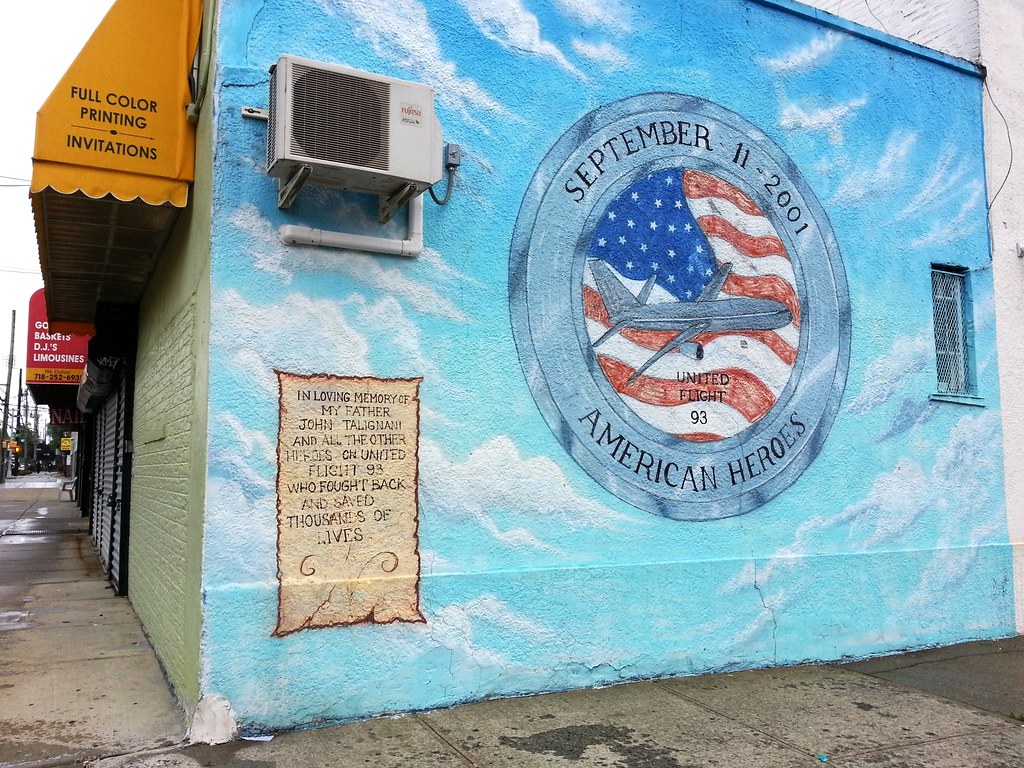
We've seen five 9/11 murals today, and at least four of them were painted by the prolific Joe Indart.

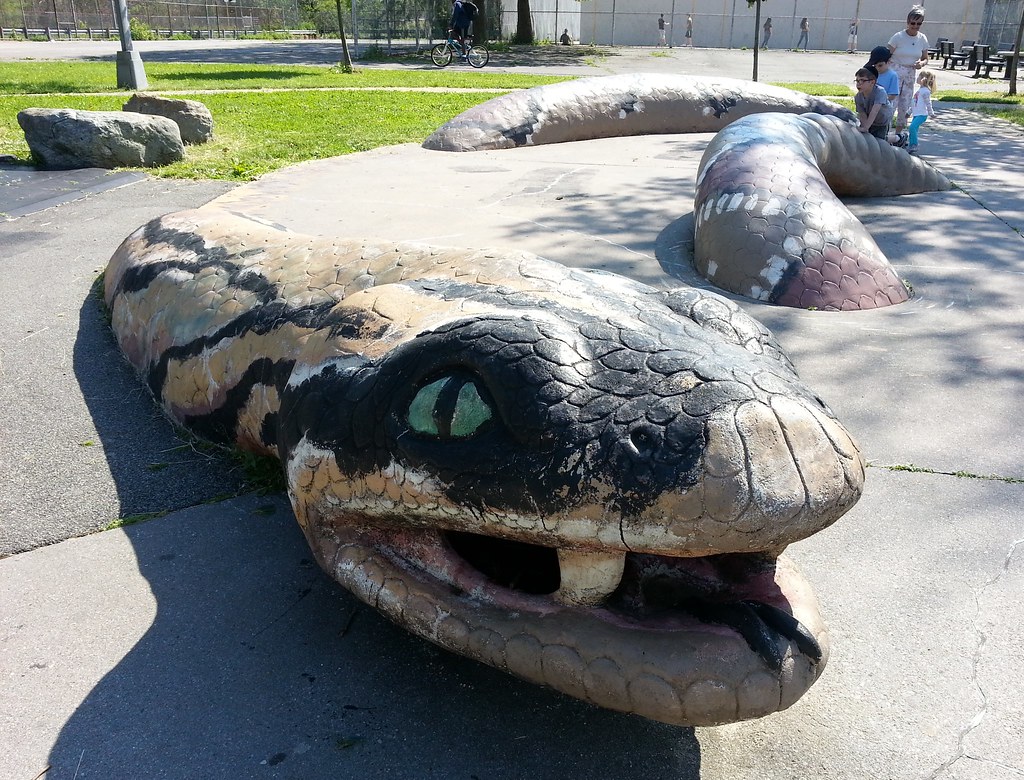
Where children come to "play in the yellow submarine in the shade of a giant killer squid."

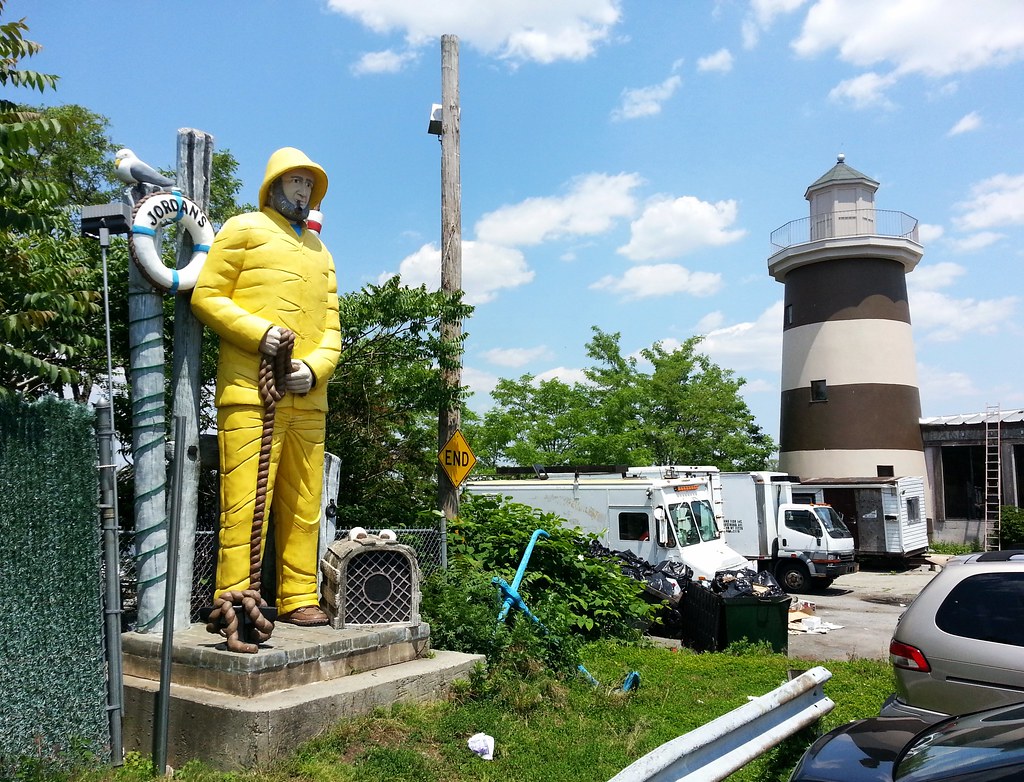
at Jordan's Lobster Dock on Shell Bank Creek
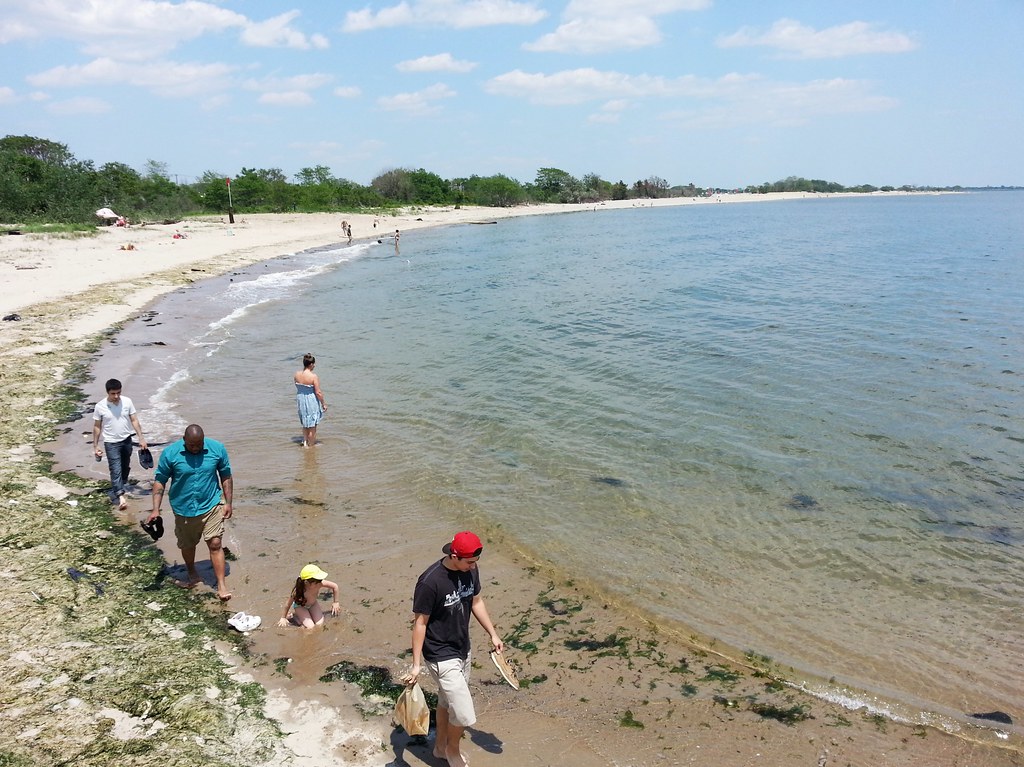
This thin stretch of sand and seaweed sits at the western end of Plum (sometimes spelled "Plumb") Beach, part of the Jamaica Bay Unit of Gateway National Recreation Area and a favorite spawning ground for horseshoe crabs (photos here). Plum Beach used to be Plum Island, but the creek separating it from the neighborhood of Sheepshead Bay was filled in around 1940 during the construction of the Belt Parkway. (Compare this aerial image from 1924 with this one from 2010. The creek in question is the winding waterway at left in the 1924 image.)
Back in the late 19th century, the federal government acquired part of the island with the intention of building a mortar battery, but that plan was foiled by the "quicksand character of the soil". In an attempt to make some profit off the land, the government awarded a lease in 1907 to a former judge by the name of Winfield Overton, who started charging rent to the numerous squatters who had colonized the island. When some of them refused to pay, he called in the Army to evict them.
Overton had plans to develop the biggest boxing club "east of Goldfield", and he began holding prize fights on the island in open defiance of state law, which he claimed did not apply to him since he was on federal land. But after catching wind of these fights, and learning that unlicensed drinking establishments had sprung up on the island, the Department of War decided to revoke Overton's lease and install a new regime, headed by ex-Alderman Frank J. Dotzler ("who weigh[ed] about 350 pounds in a bathing suit").
In May of 1909, after Overton proved reluctant to hand over the reins, Uncle Sam got involved again, and, for the second time in just over a year, an armed contingent of soldiers landed on the island, determined to protect the government's chosen leader. But Overton had left town before the troops showed up, and they were left to face down a foe of a different sort. Here's the Brooklyn Daily Eagle's report on the arrival of the boys from the 12th Infantry:
They brought along tents, a cook-stove, arms, ammunition, rations for thirty days, and a grim determination to meet the enemy and vanquish them. The gallant soldiers reckoned without their host, however, as the commissary department of the little army, in packing the supplies, had forgotten to put in a bale of fine wire netting, as a protection against the advance guard of the enemy.* Of course, it's actually the female mosquito that does all the biting.
The Plum Island mosquito is a peculiar breed. He* is used to fighting, and has tactics with which no solider of Uncle Sam is familiar. His drill has been sharpened by contact with the rough skins of the fishermen of Plum Island, and he welcomed the arrival of the soldiery as the sirens of the Bowery in Coney Island welcome a delegation of tars fresh from a long cruise. The mosquitoes were out for blood and they got it. . . .
It is hardly likely that Overton will put up any resistance when the soldiers start eviction proceedings, so that the boys of the Twelfth expect to enjoy a thirty days picnic, boating, bathing and fishing. Their vacation on Plum Island will be a good preparation for their trip to the Philippines, as the regiment to which they belong has been ordered to start for Manlin about the middle of June. If they survive the attacks of the mosquitoes they can face the Moros without a flinch.