
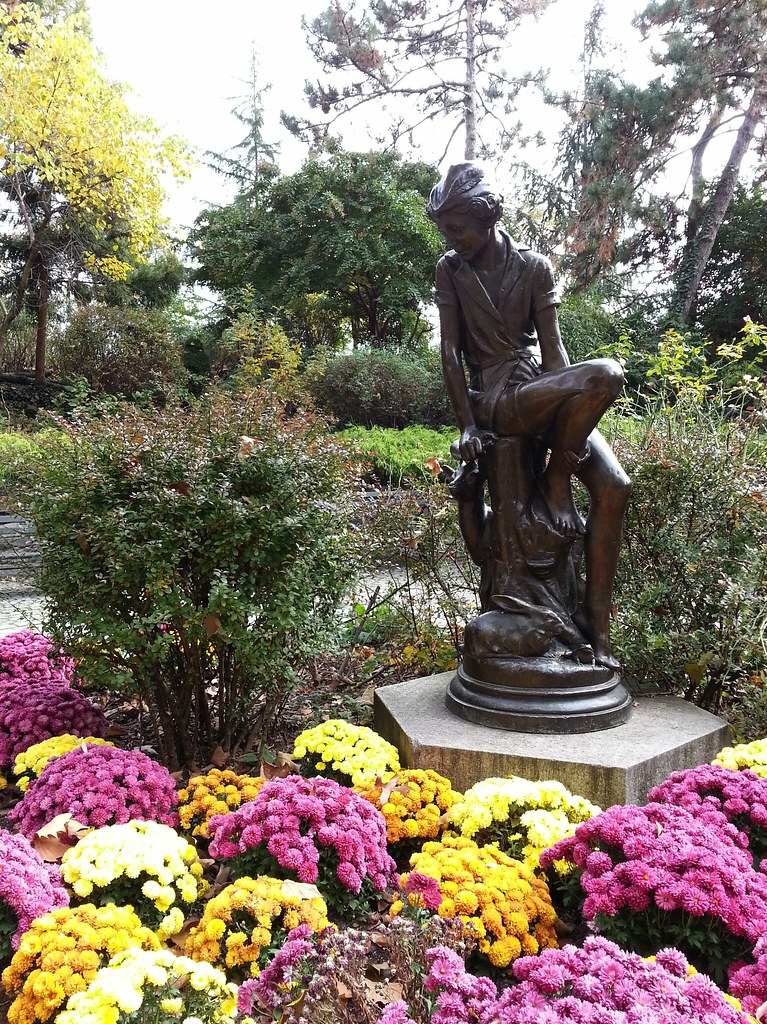
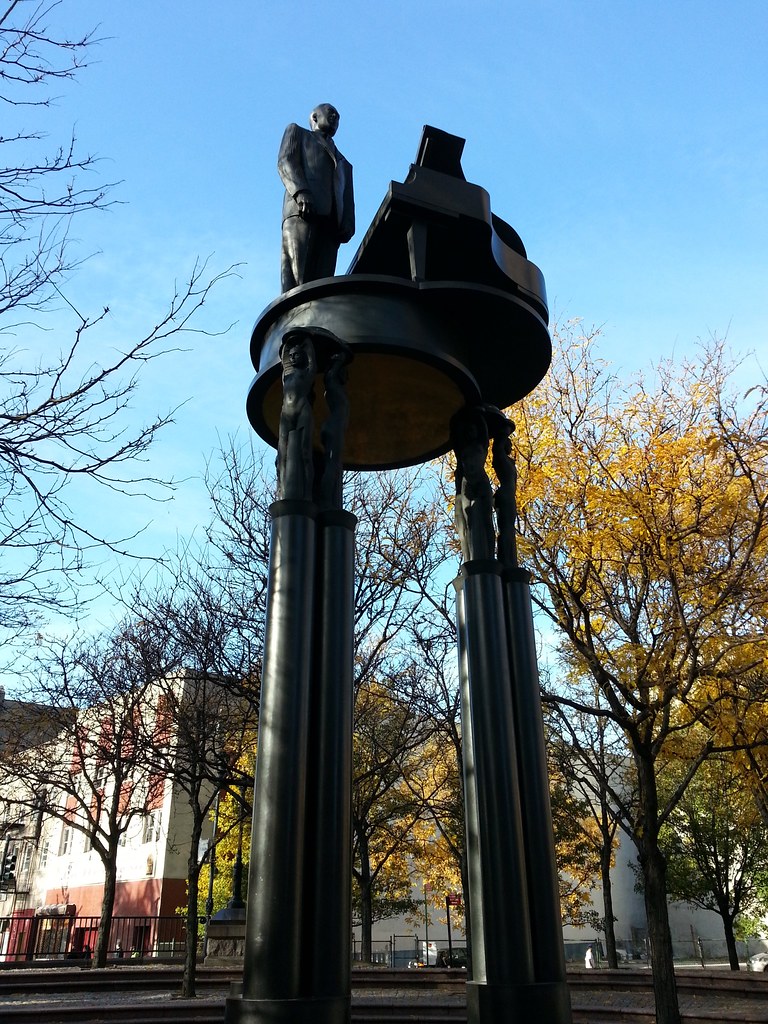
This sculpture, originally created in 1928 as part of a fountain for the old Paramount Theatre in Times Square, has stood here in Carl Schurz Park since 1975, although it had to be restored and reinstalled after it was abducted and thrown into the East River in 1998 by a suspected "band of overly high-spirited youths, perhaps latter-day Lost Boys who turned on their own icon."
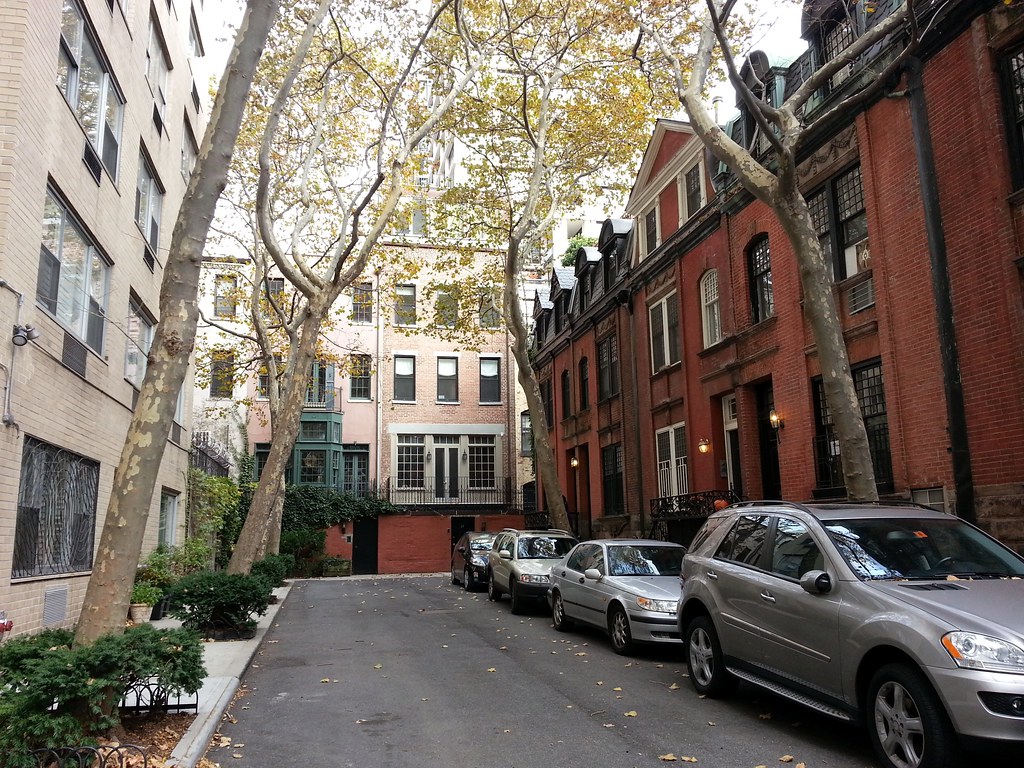
"The tiny Queen Anne-style red-brick enclave of Henderson Place, at the eastern end of 86th Street, has long seemed out of place in a high-rise city - its dollhouse architecture is dwarfed by its surroundings."
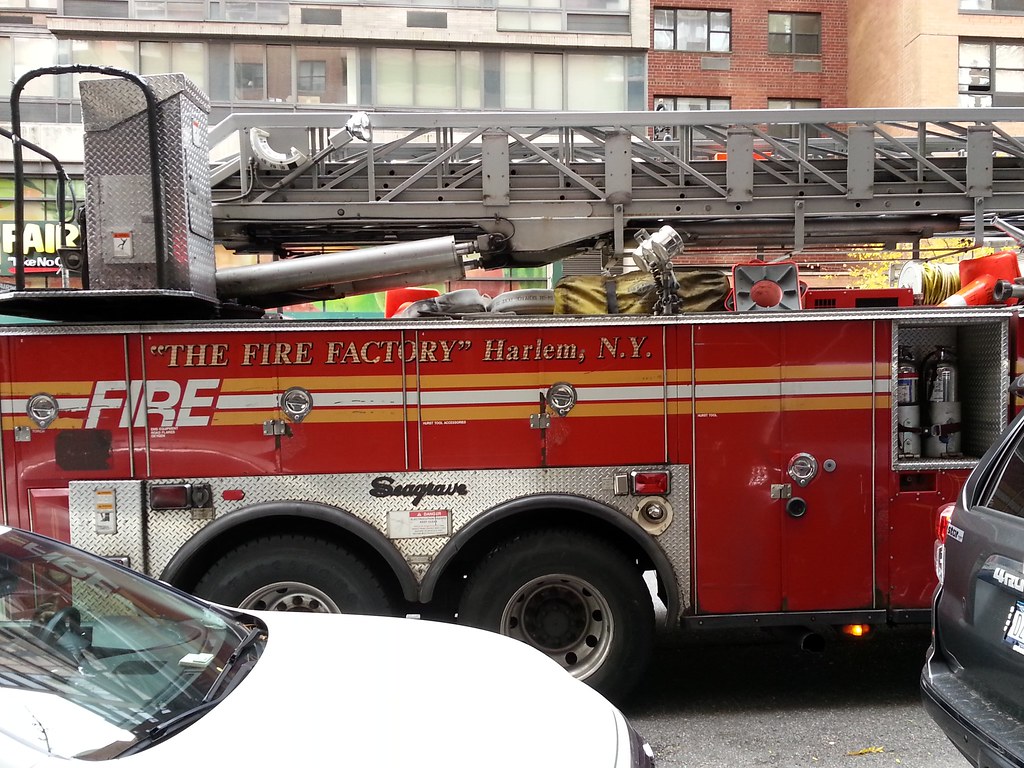
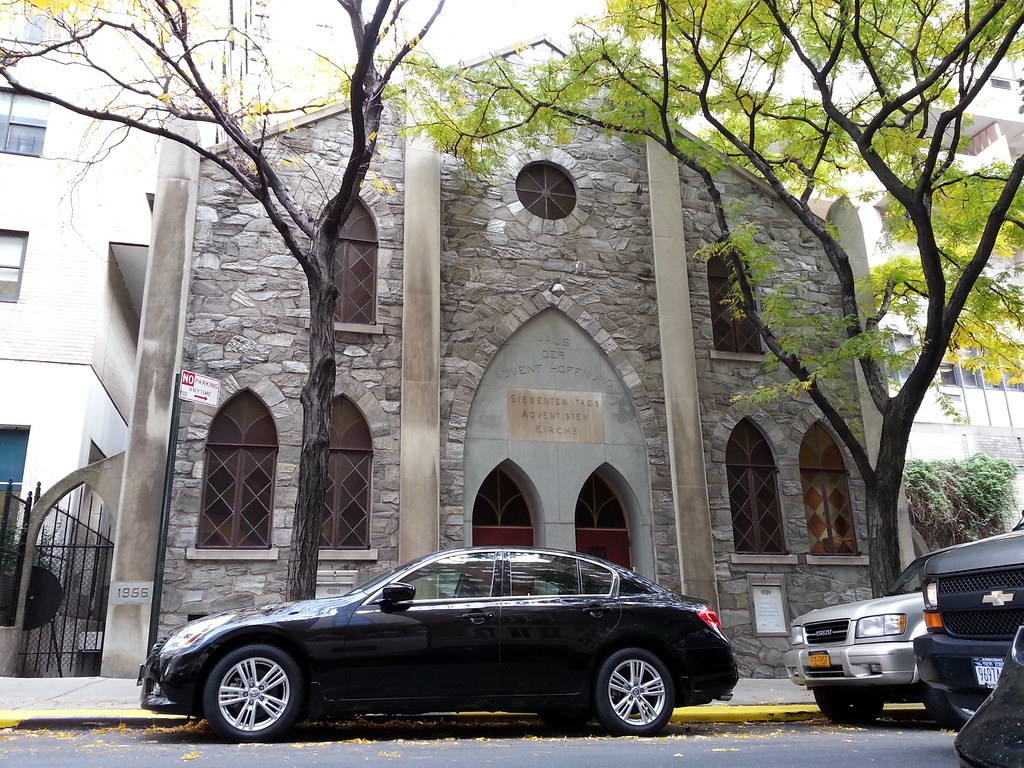
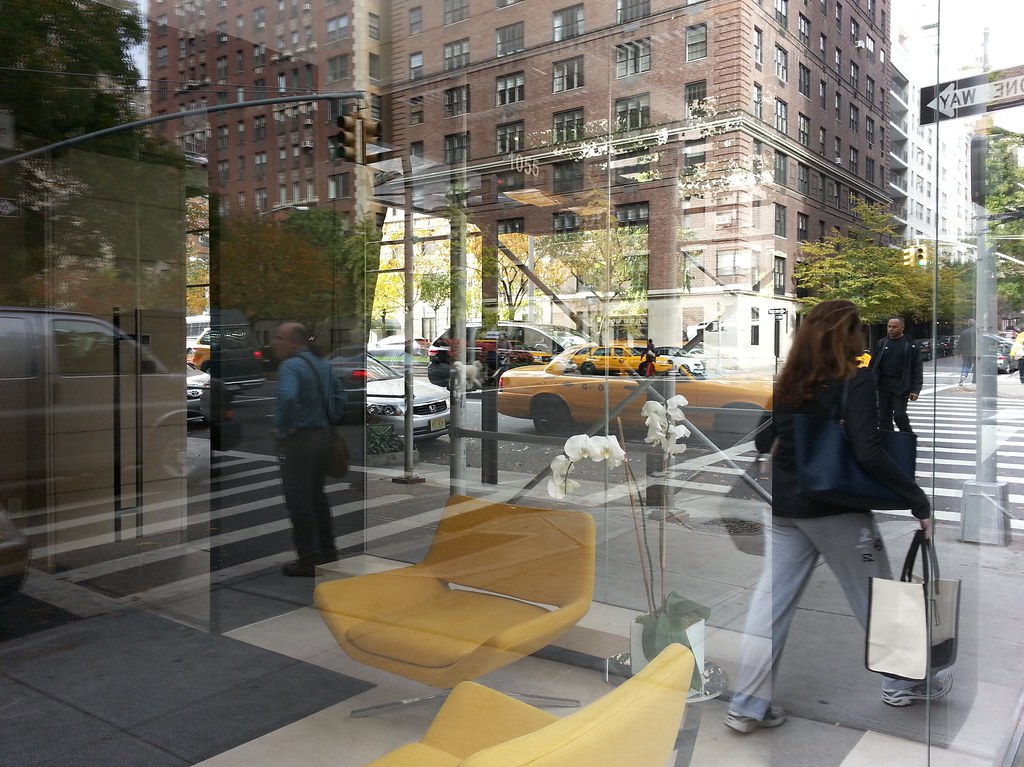
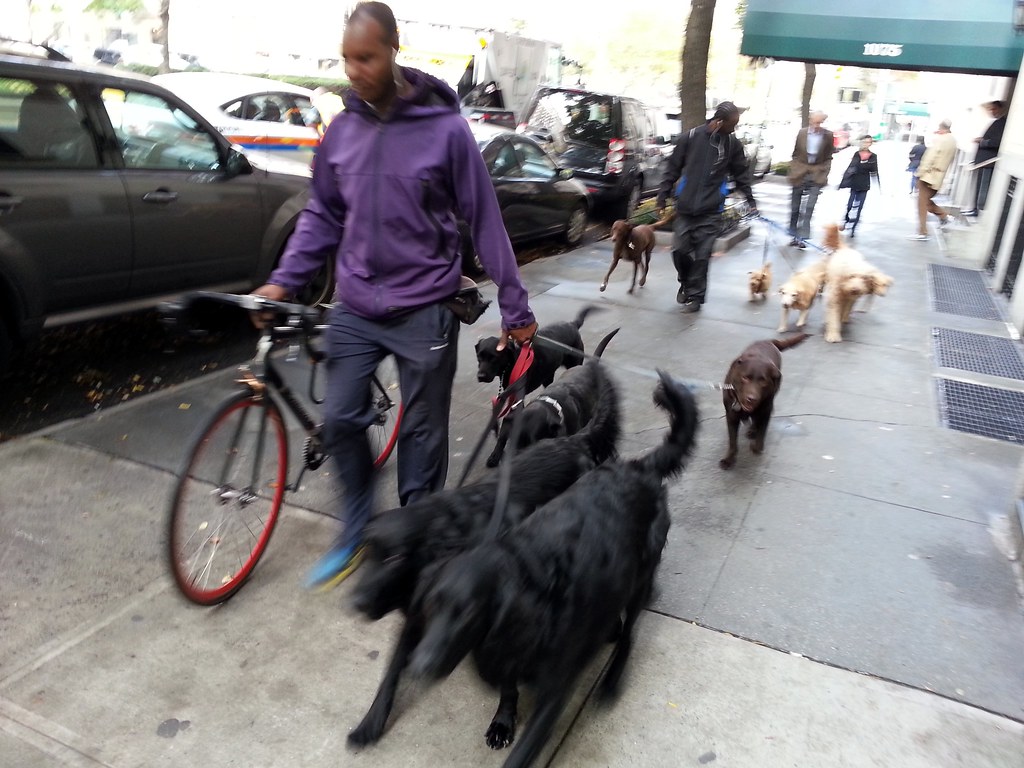
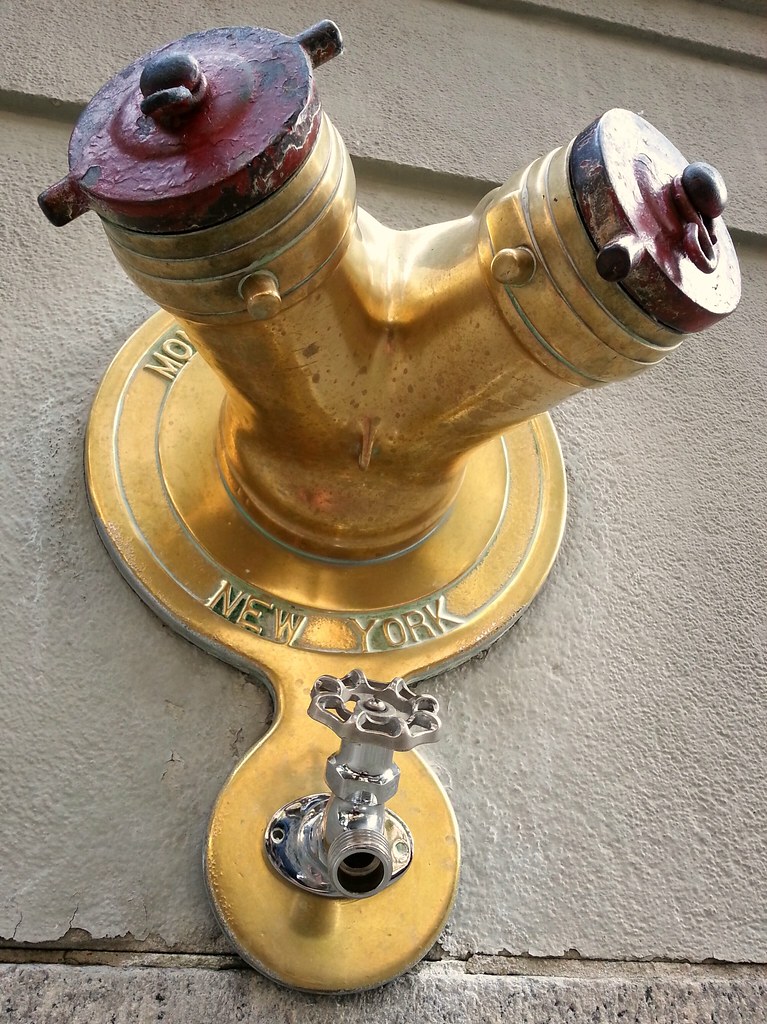
I've been paying attention to standpipe and sprinkler connections for quite some time now, but it wasn't until today that I started seeing (or noticing) little faucets on some of them. I'm not sure, but I think they allow the connecting pipes inside the building to be drained after being used or tested.
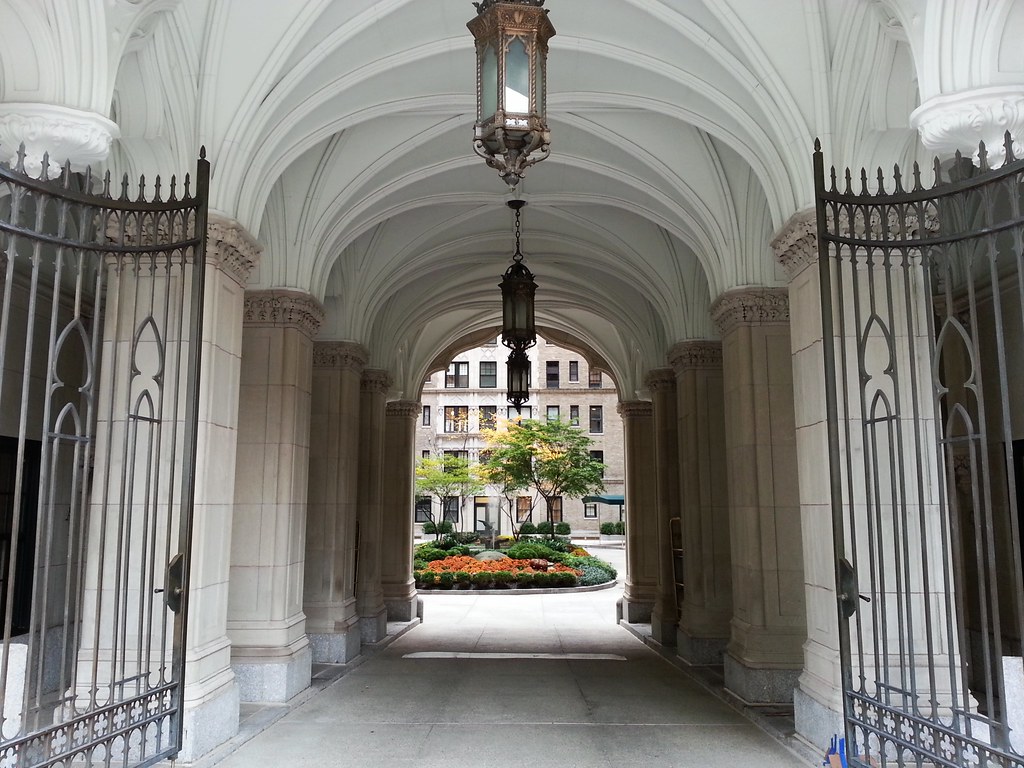

A Grand Central-bound New Haven Line train approaches the northern end of the Park Avenue railroad tunnel.
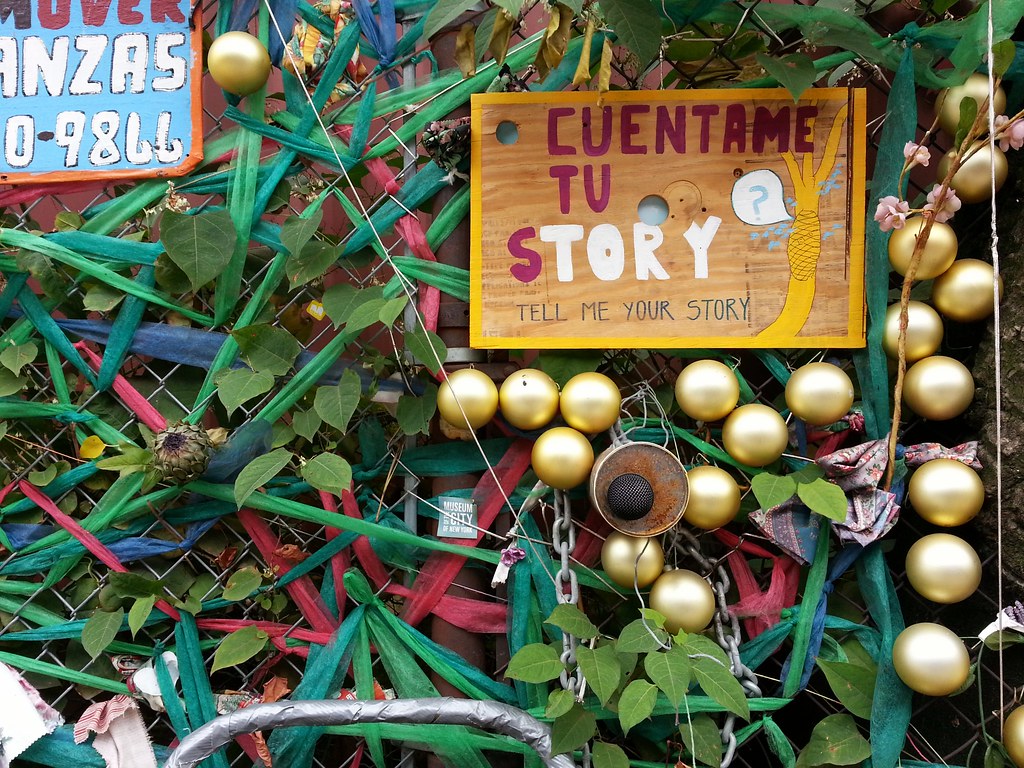
I can't find any information about this bizarrely decorated fence located across Park Avenue from the Metro-North railroad viaduct here in East Harlem. You can see a little piece of paper with the logo of the nearby Museum of the City of New York just to the left of the rusty microphone-can thing, but I don't believe the museum is actually affiliated with this in any way.

through the massive stone structure that serves as the southern portion of the Park Avenue railroad viaduct

This unusual-looking building houses various city and medical offices, a public school, and Metropolis Studios, where Who Wants to Be a Millionaire is currently filmed. It was once home to the NBC-TV Uptown Studios, and was originally known as the Pathé Building (here's a photo from its early days).

A former meat market at the sub-railroadian La Marqueta. Check out its three other vestigial murals, all of which feature oversized animals standing on trucks.

There's only one way this barbershop could possibly get any better. And I think you know what that is.
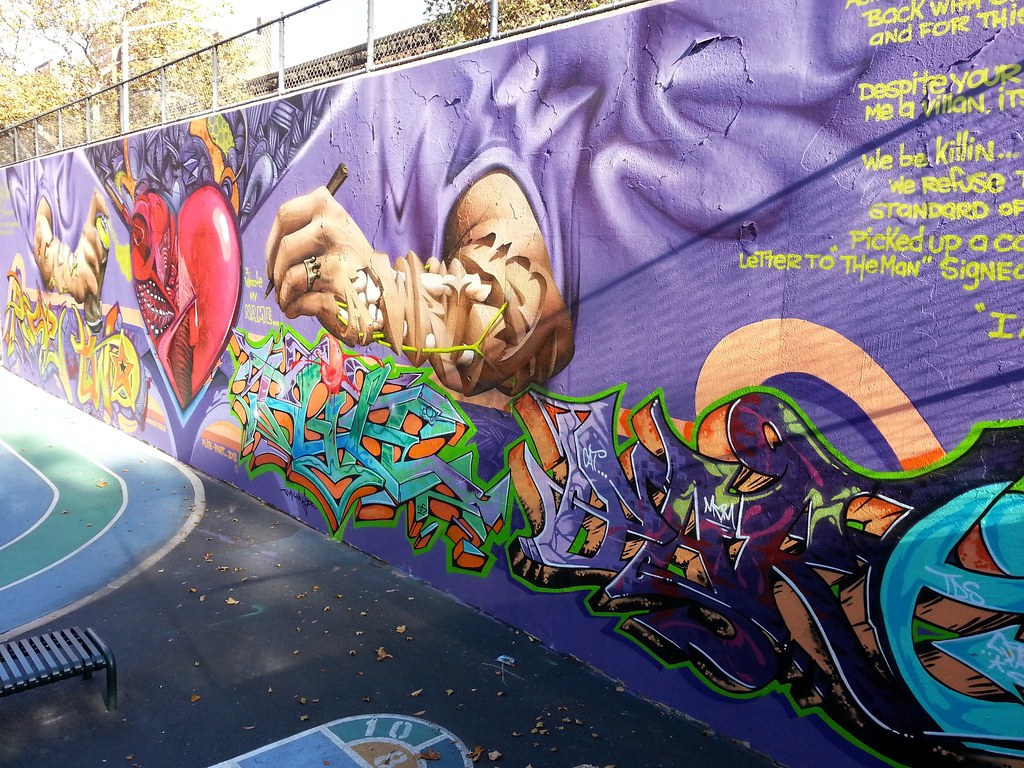
This is the granddaddy of all old-school graffiti shrines, now in its 37th year. The hall is not a museum of vintage graffiti but an ever-changing canvas for new pieces whose lineage stretches back to subway art and stars of the first wave of graffiti, like Blade, Seen, Lee Quiñones, Dondi and Iz the Wiz.It's located in a public school playground that's closed to the public on weekdays during the school year, so this was the best shot I could get. This is the largest mural (more info here); you can see some shots of other current pieces here.
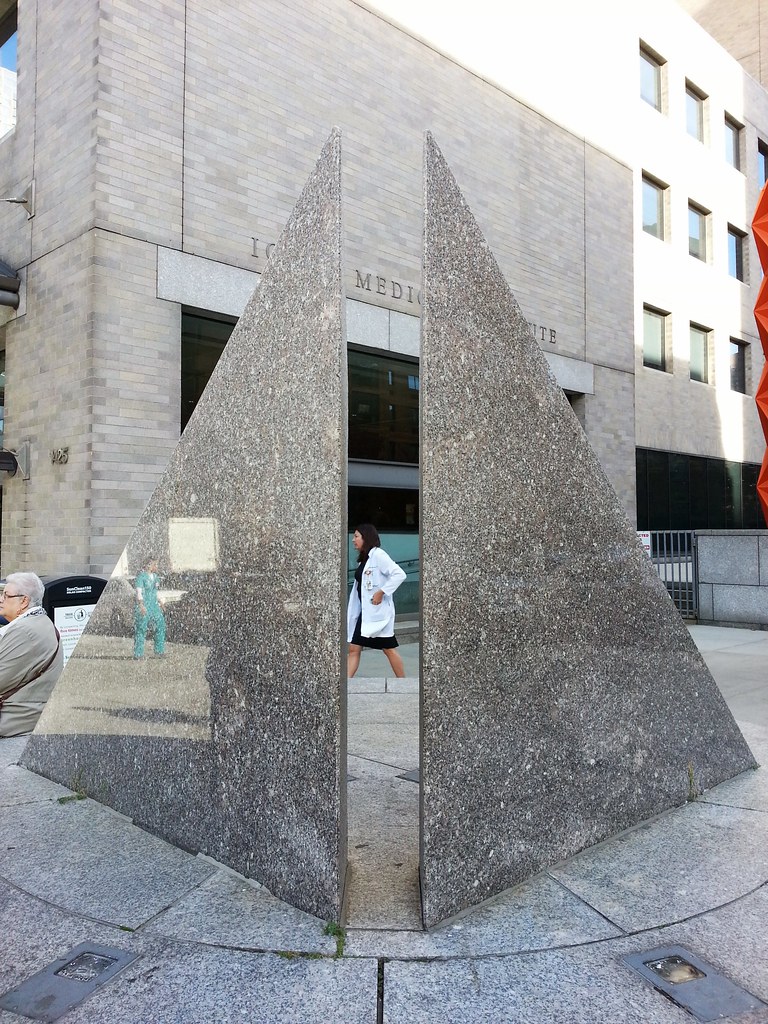

Once "portrayed as a champion of women's health", this 19th-century "father of modern gynecology" has in recent decades become a controversial figure for his practice of performing experimental surgery on enslaved black women.

Sculpted by Adolph Weinman (remember him?), this statue of the senator, mayor, governor, and driving force behind the Erie Canal stands outside the Museum of the City of New York. It's joined by a statue of Alexander Hamilton, also created by Weinman.
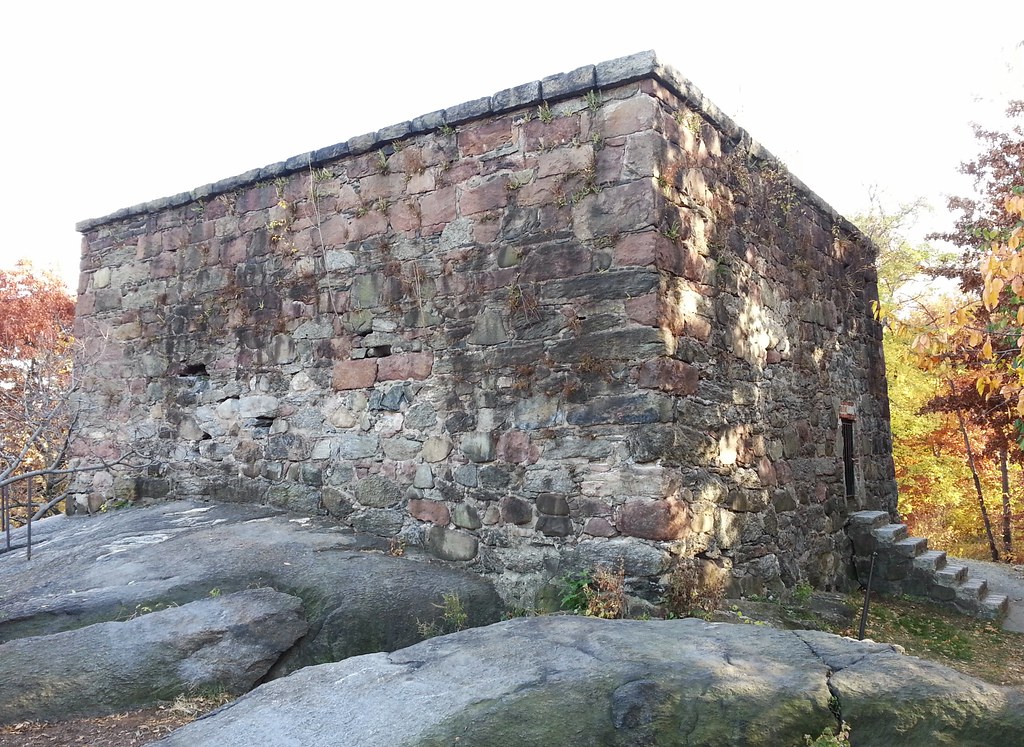
This surviving fort from the War of 1812 is the oldest building in Central Park.

in Central Park: "This stretch . . . is a masterpiece of landscape manipulation. As visitors follow the streamside path, they see the noisy, sunny brightness of the Cascade disappear into the silent, tomb-like darkness inside the massive arch."


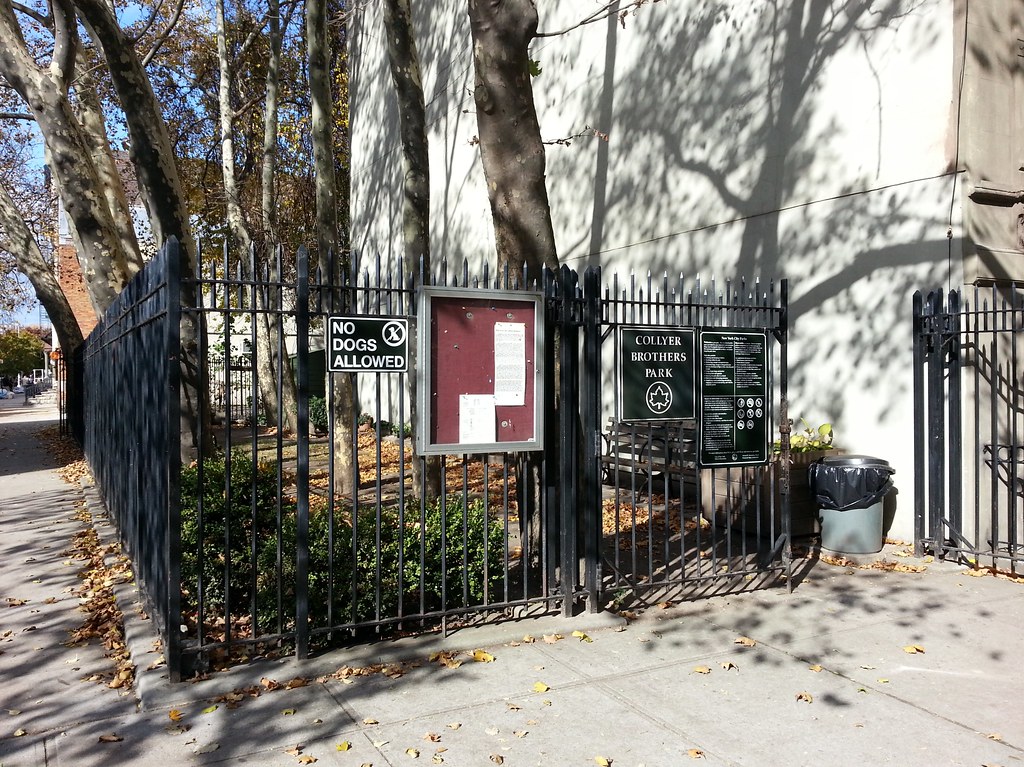
This is the former site of the row house once occupied by Homer and Langley Collyer, "the hermit hoarders of Harlem".
As told by Christopher Gray in the NY Times:
In the 1920's, Homer had a regular job in a title research office, but walked eight miles to and from the office every day. But by the [late 1930s], he was blind and almost paralyzed, cared for exclusively by Langley. . . .The story may have receded from public consciousness over the years, but, even today, "in New York City, and along much of the East Coast, a dwelling jammed rafter-high with junk is referred to by rescue personnel, with dismay and no small degree of respect, as a 'Collyers' Mansion.' As in, primary searches delayed because of Collyers' Mansion conditions."
On March 21, 1947, the police got an anonymous call saying that Homer Collyer was dead. The interior of 2078 Fifth Avenue was stuffed so high with papers and furniture that the police had to enter the house on the second floor by a ladder. They lowered Homer's body out the window in a sack. It appeared that he had died of hunger.
Langley Collyer had last been seen a few days before on the stoop of the building, but there was no sign of him now. Meanwhile, searchers began cleaning out the house. In the next few days they found the jawbone of a horse, a flier protesting the vote for women, unfinished knitting left by Mrs. Collyer, part of an auto chassis, pianos, furniture, papers and thousands of books, all while searching for Langley Collyer. By March 24, about 2,000 people had gathered at the corner of 128th and Fifth Avenue to watch.
There were 53 people at Homer Collyer's burial on April 1 at Cypress Hills Cemetery in Brooklyn -- but no sign of Langley. Then, on April 8, it turned out that Langley had died in the building. Police found his body, wedged to the floor by one of the many booby traps he had created. Bringing food to Homer by a tunnel through stacks of books and newspapers, he had triggered the fall of hundreds of pounds of debris that trapped and, apparently, suffocated him. The brothers died within a few feet of each other.
Check out this Daily News gallery for a collection of historical images of the Collyer brothers and their house.
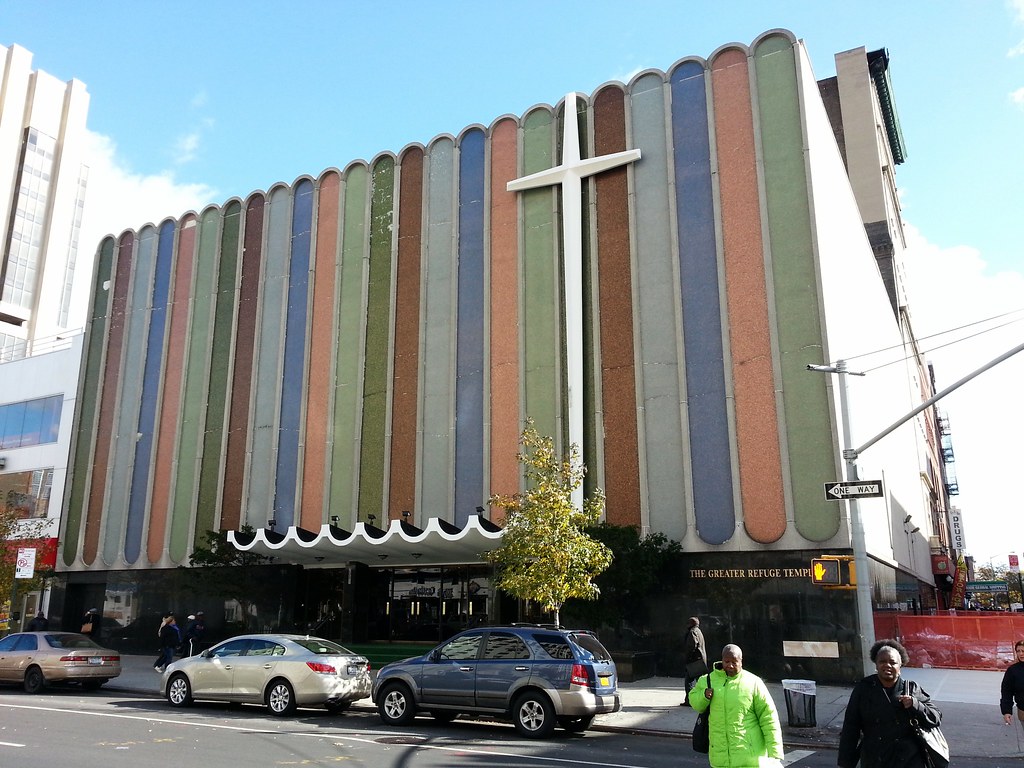
"Divided into 24 elongated mosaic lozenges—emerald, bronze, gold, jade, periwinkle, and cornflower—this Bossa-Nova facade at 2081 Adam Clayton Powell Jr. Boulevard, by Costas Machlouzarides, dates to 1966. But underneath is the much older Loew's Seventh Avenue Theater", previously the Harlem Casino (photos), an event and entertainment venue built on the 1889 foundation of the unfinished West End Theatre, a failed project backed by an extortionist who went by the alias "Napoleon Wood".
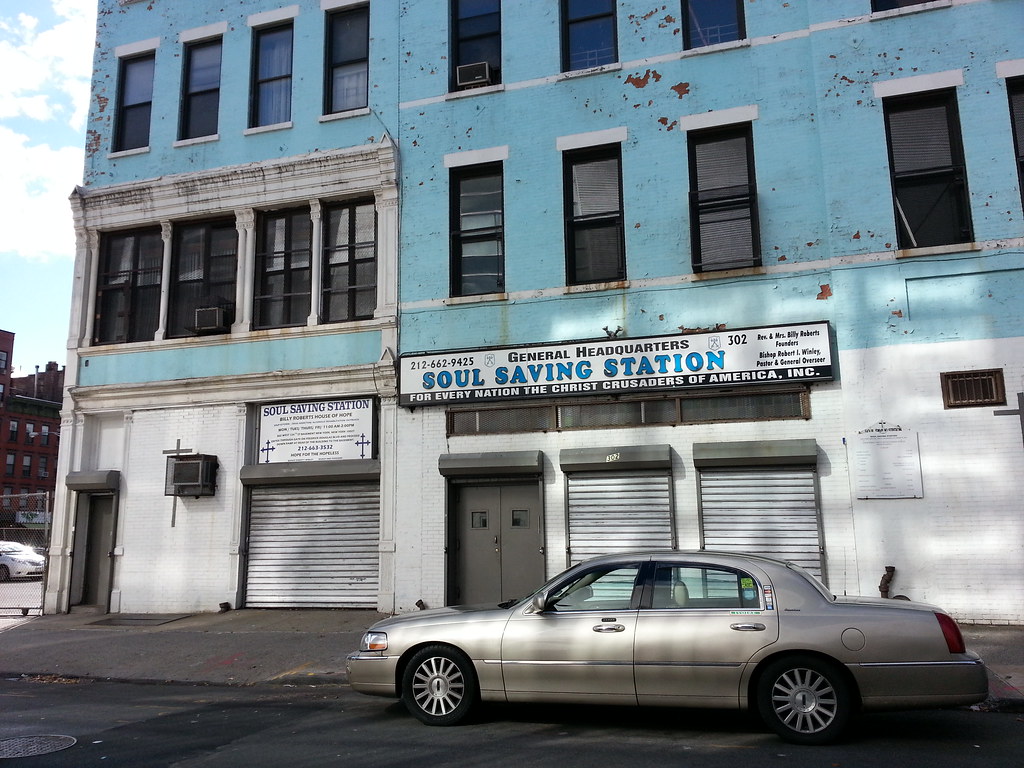
Apparently, "the Soul Saving Station's name was intended to invoke images of a filling station, where a person might fill up their soul with the Holy Spirit just as one might fill up a car with gasoline."
This reminds me of a church I used to pass in Arlington, Virginia, that was built above an actual filling station (photo). I always thought its slogan should be "Fuel for your eternal combustion engine".
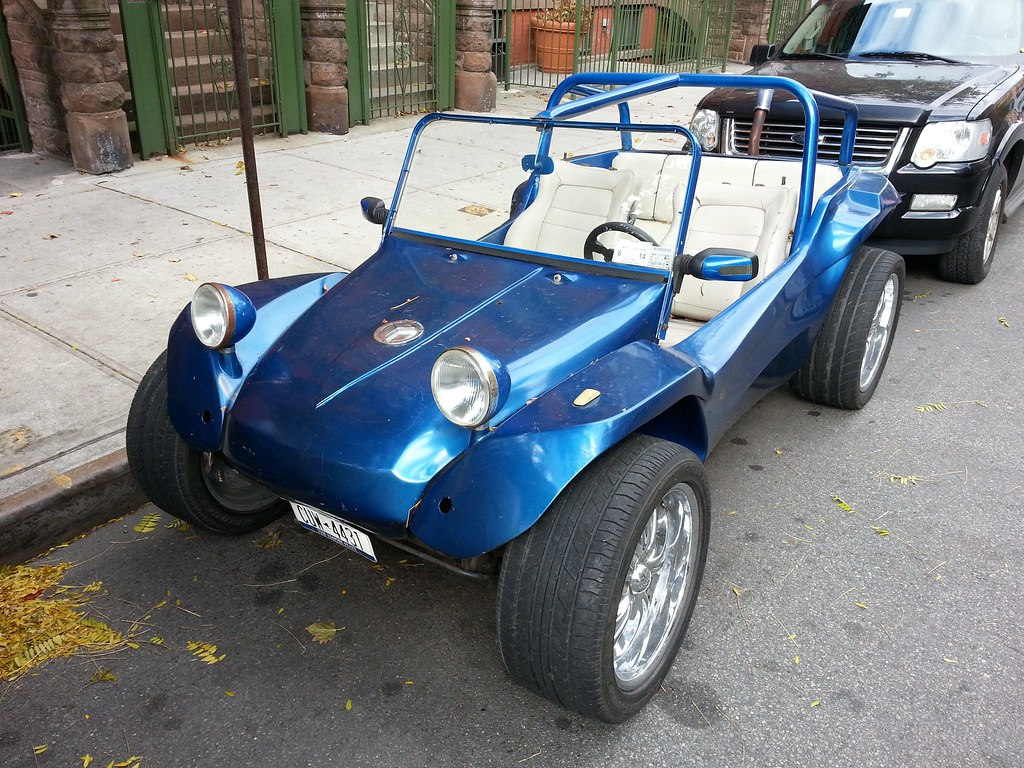
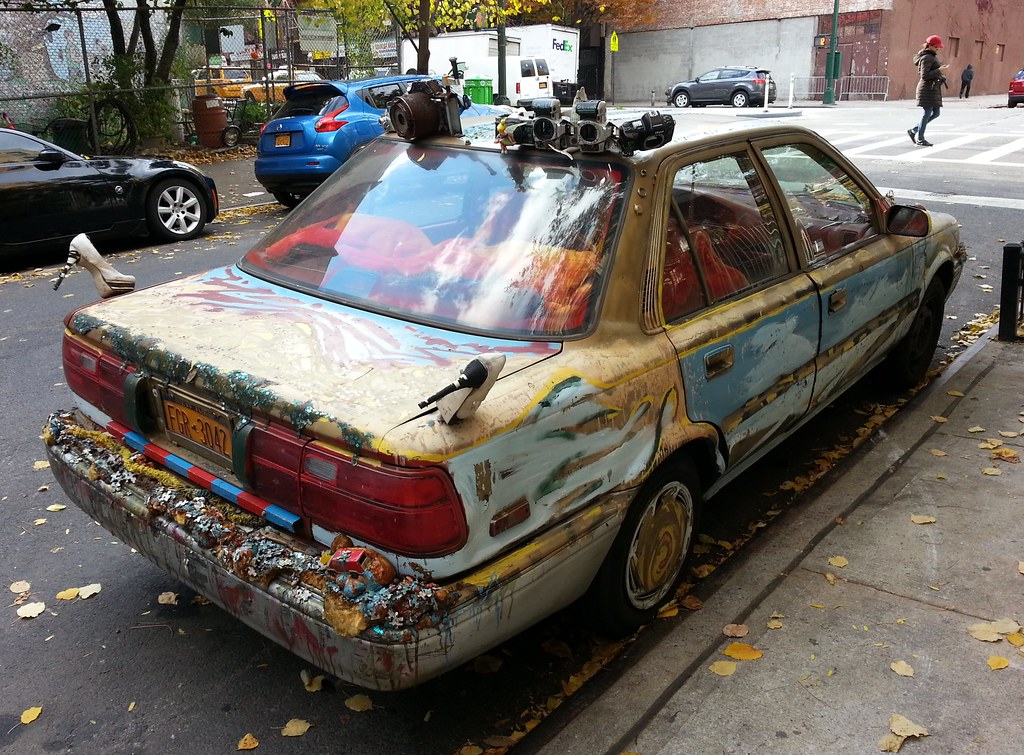
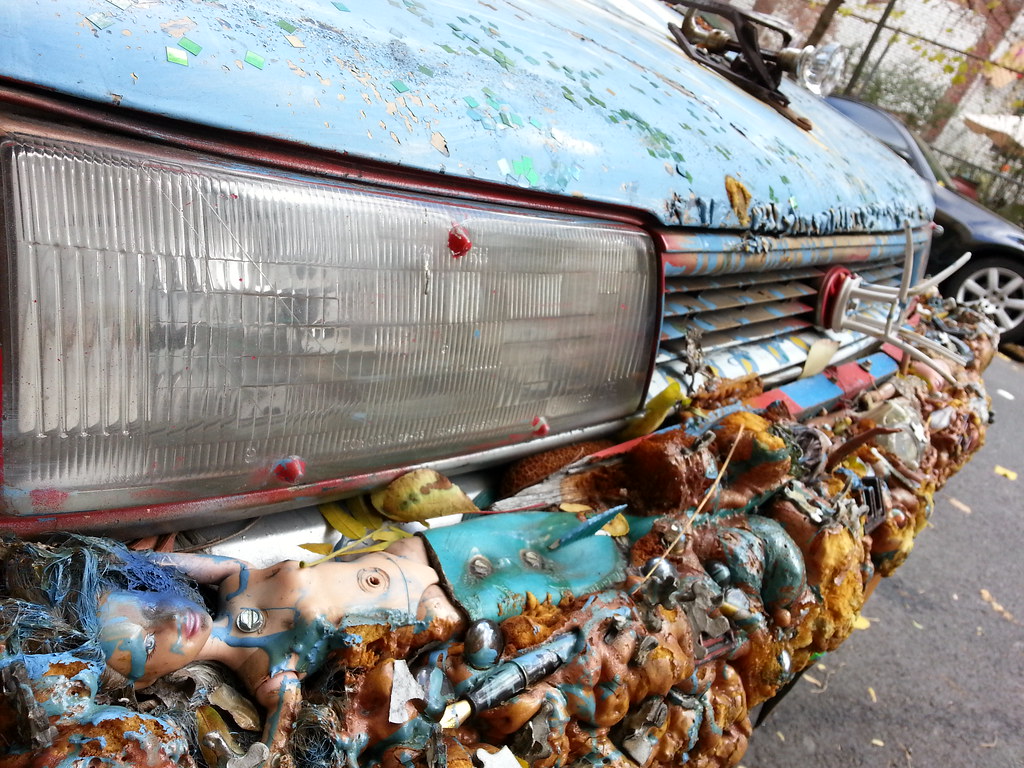
The registration sticker says this is a 1964 Volkswagen. Perhaps that refers to the frame of the car?

Standing at the northwest corner of Central Park, this statue is the centerpiece of a multifaceted memorial to the great abolitionist, which was finally dedicated in 2011 after years of delays. You can see all the features of the memorial in this video.
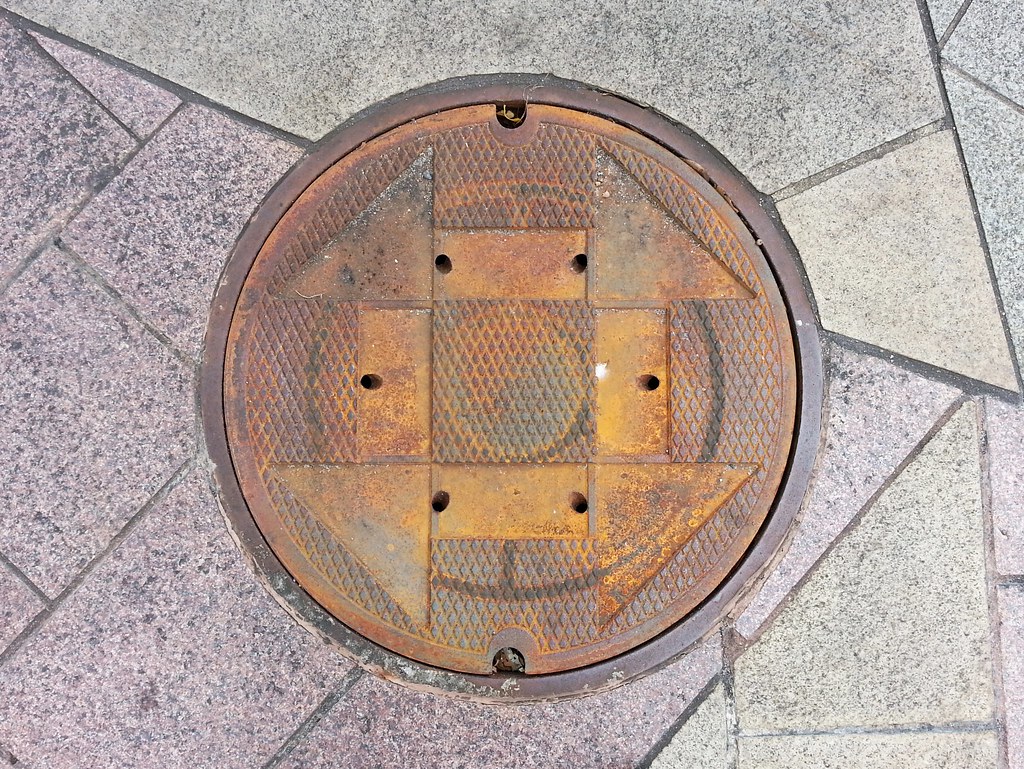
This unusual-looking manhole cover echoes one of the patterns of the large granite quilt that underlies most of the Frederick Douglass Memorial. The quilt's inclusion in the design was based on the appealing but unfounded theory that these patterns were used to embed hidden messages in what looked like ordinary quilts, allowing important information to be surreptitiously conveyed to fugitive slaves on the Underground Railroad. The memorial was originally going to include two plaques discussing this secret code, but an uproar among historians led the city to scratch that idea. (I'm pretty sure it got scratched, anyway. I didn't see any such plaques, and the Parks Department's page about the memorial says nothing about the code.)
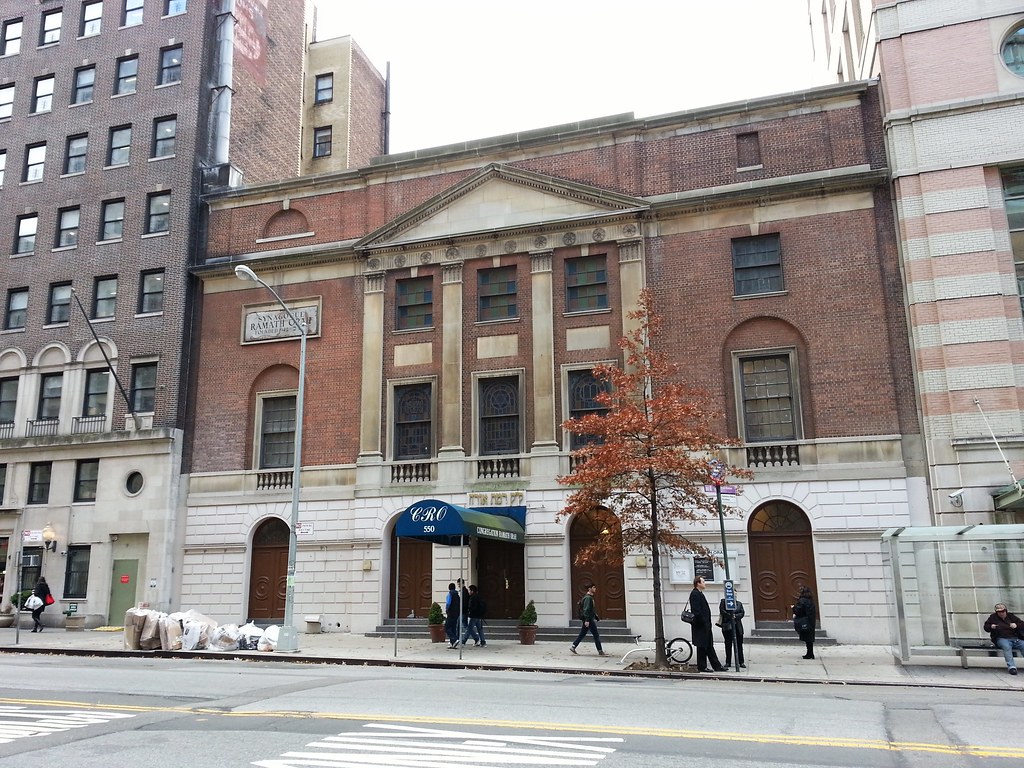
This synagogue was originally the West Side Unitarian Church. Ground was broken here in 1921 with a larger building in mind (which would have looked like this), but financial troubles forced the church to scale back its plans. Congregation Ramath Orah, founded by the former chief rabbi of Luxembourg and a few dozen other countrymen who had fled Nazi persecution, has met here since 1942.
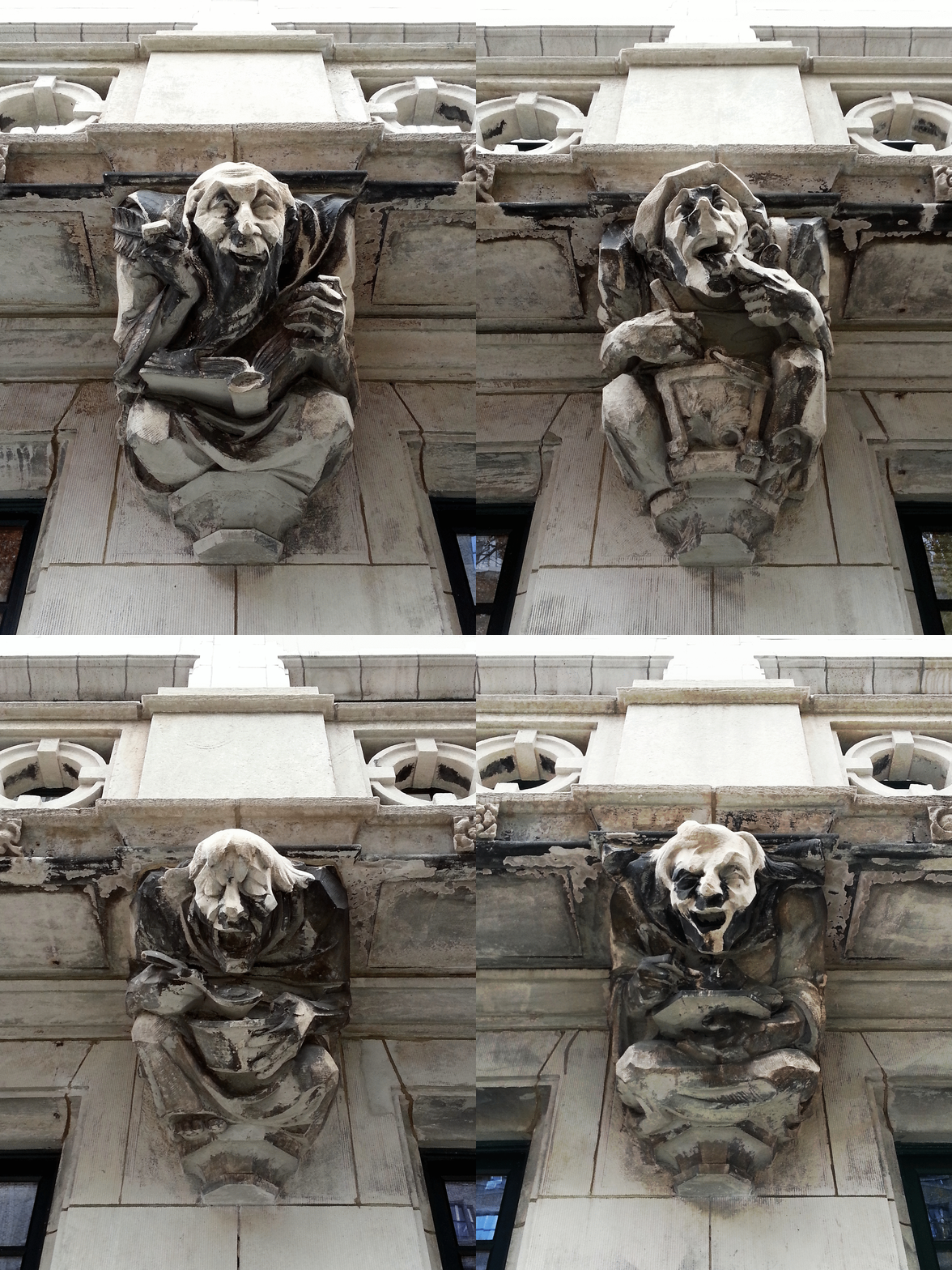
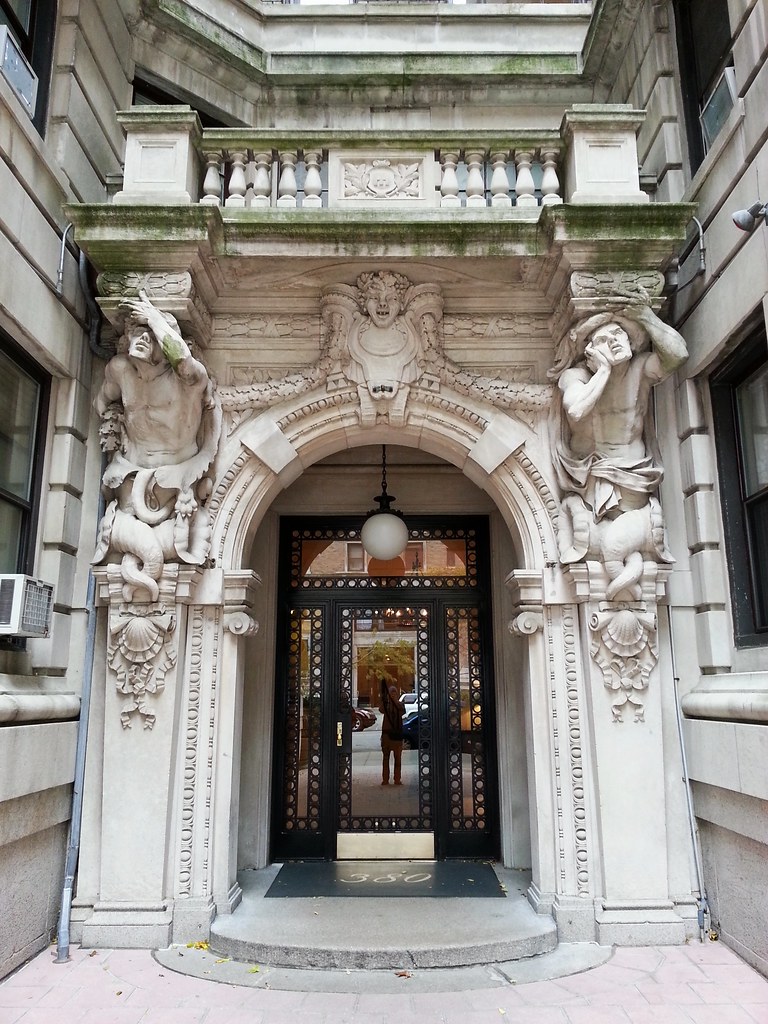
These bizarre figures (more photos here) adorning the Britannia apartment building have gone from pristine to filthy in a mere two and a half years.
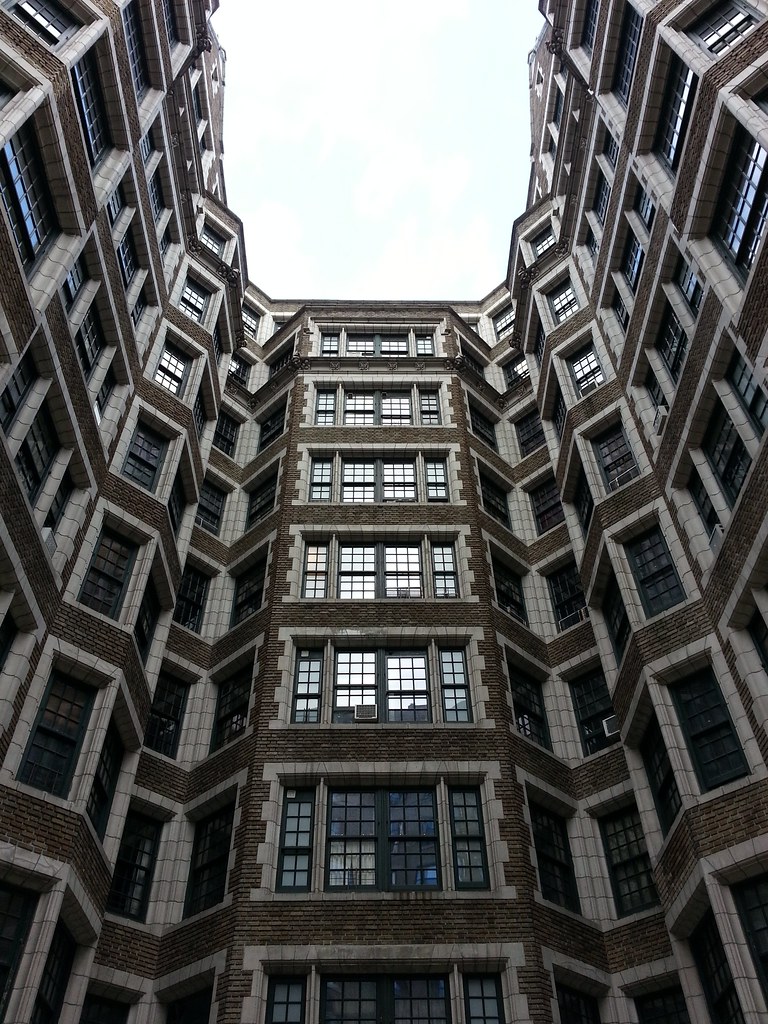
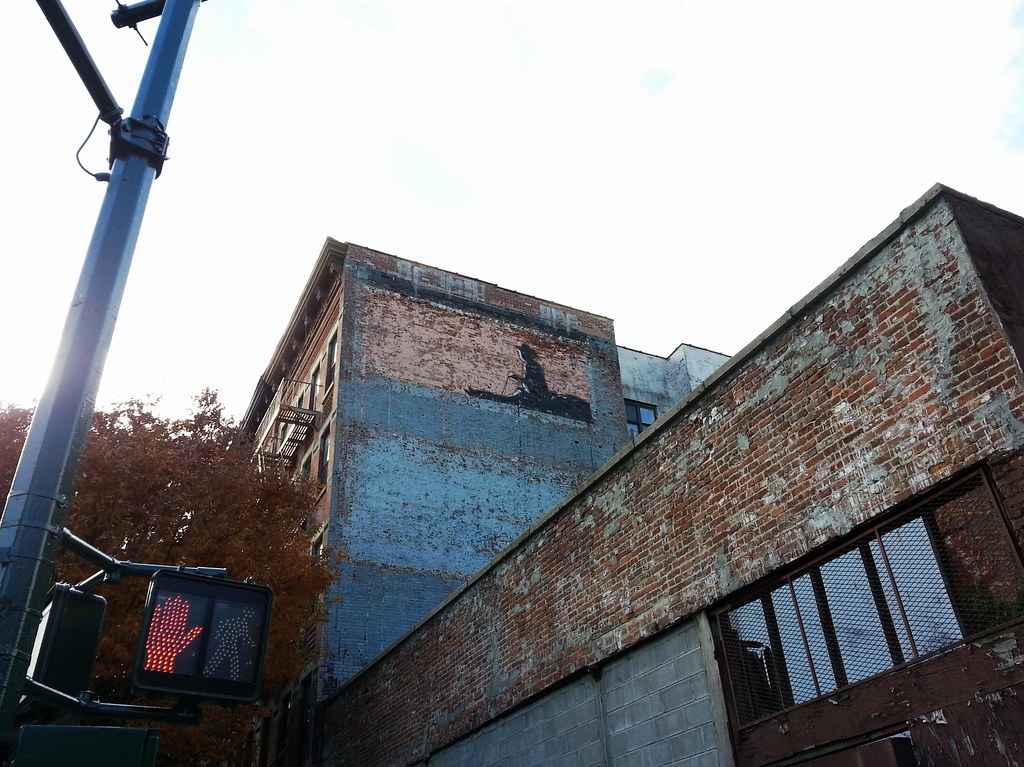
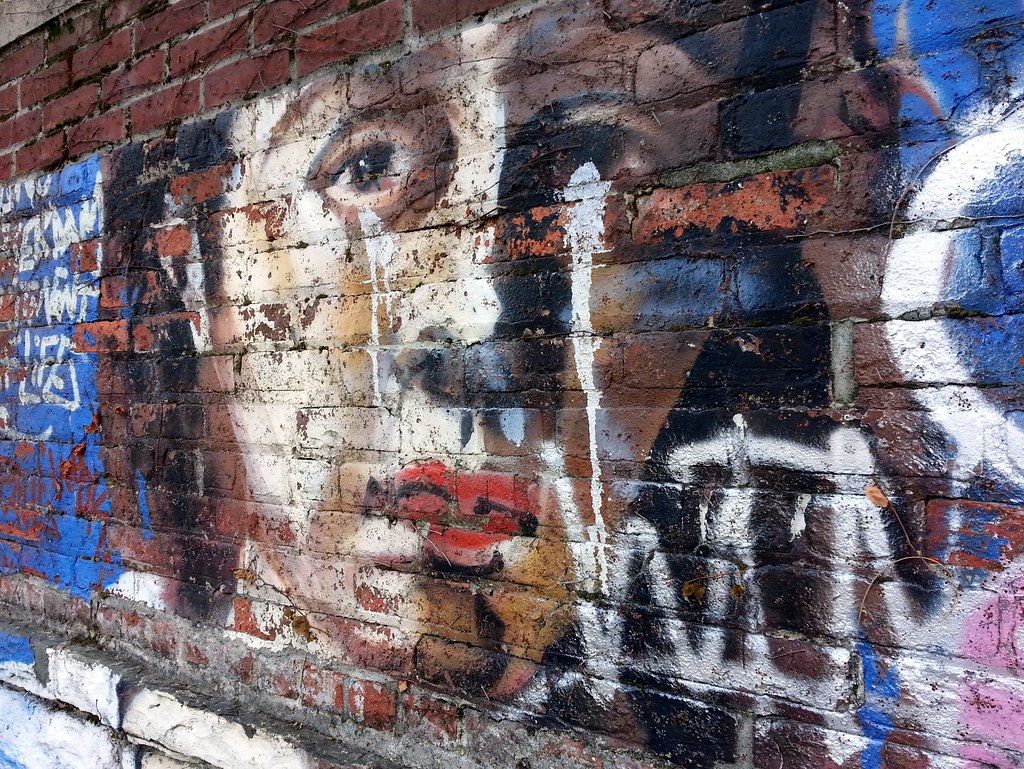
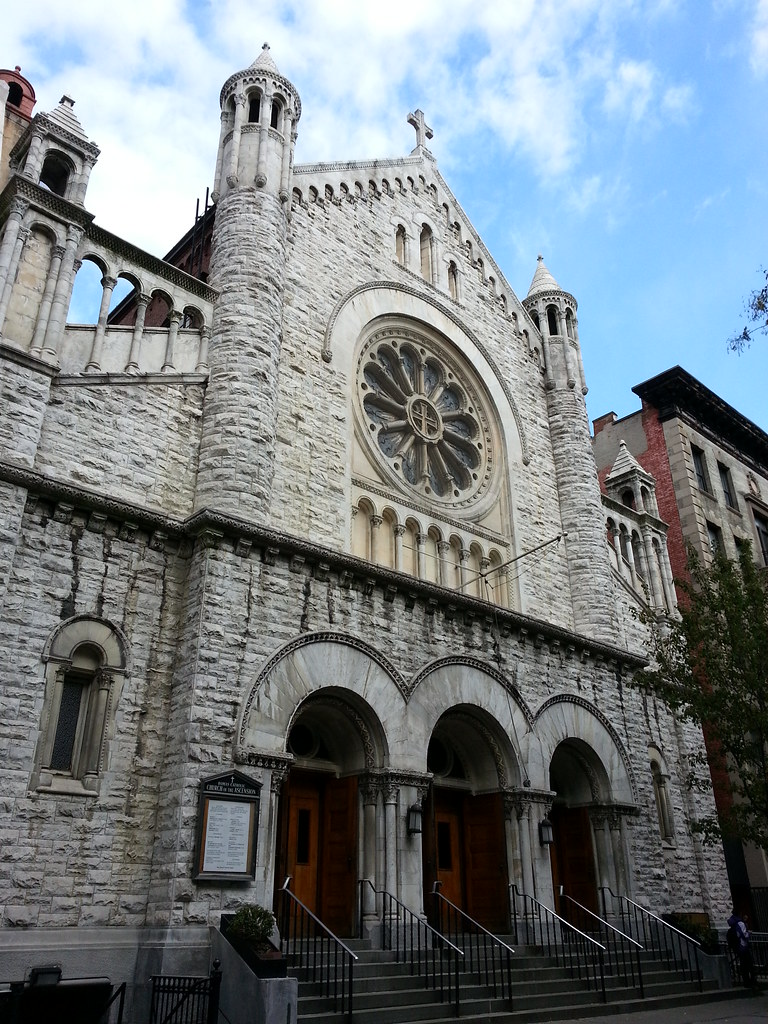
This church, built in 1896-97, is home to a jazz mass and a monthly martini night.
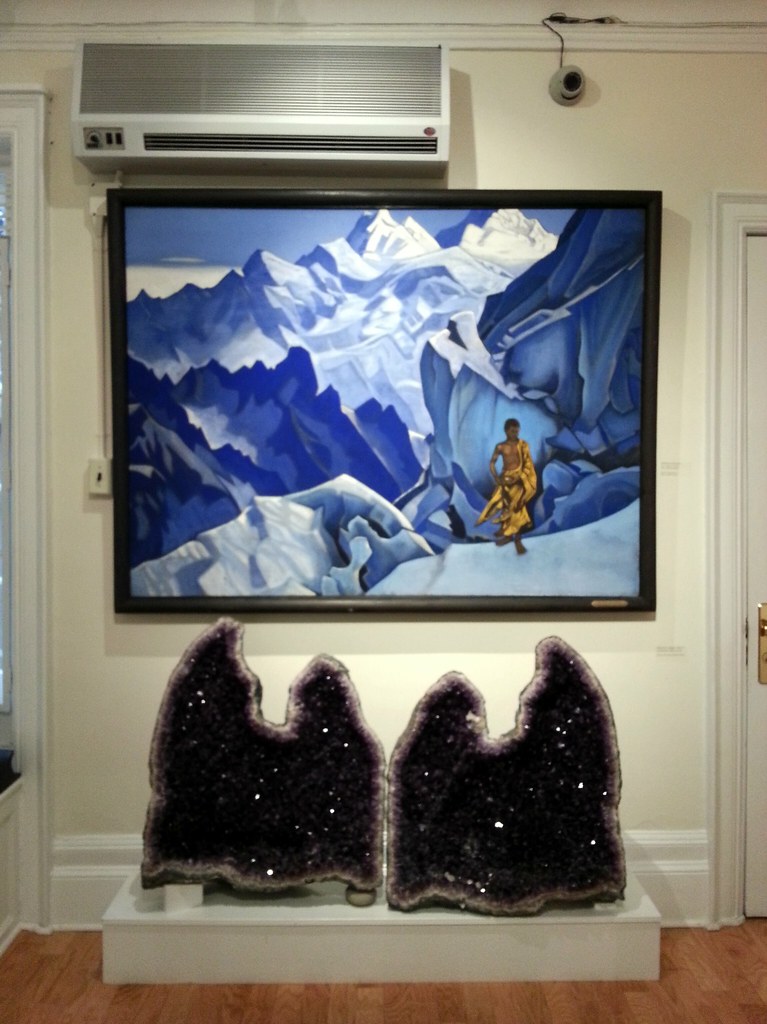
I had never heard of Nicholas Roerich ("a Russian painter, writer, archaeologist, theosophist, enlightener, philosopher, and public figure") before I popped my head into this row house that is "indistinguishable as a museum except for the small sign in front, [and] chock-full of amazing natural scenes from the Himalayas".
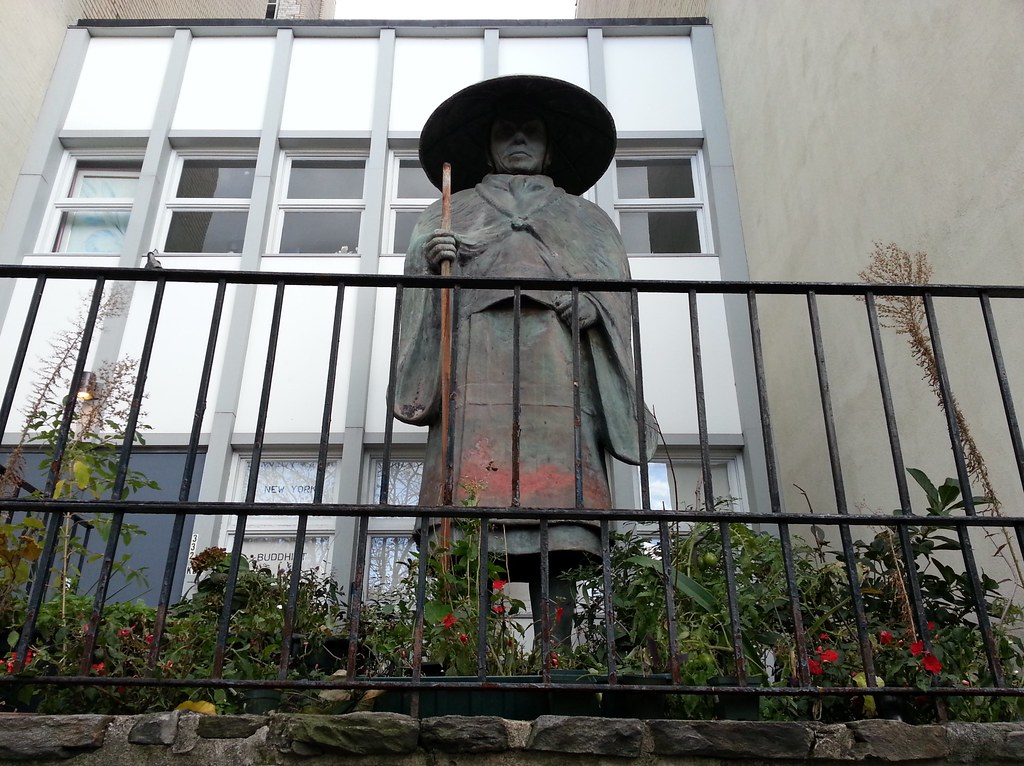
From the NY Times: "One cannot turn away unchastened from the blistered statue of Shinran Shonin outside the New York Buddhist Church on Riverside Drive, a figure of gently imposing nobility that somehow survived the atomic bombing of Hiroshima." (It was standing on a hill about a mile and a half from ground zero when the bomb detonated.) "It is now the focus of an annual peace gathering held on Aug. 5, during which a bell is tolled at 7:15 p.m. At that moment in Japan, it is 8:15 a.m. on Aug. 6, the hour that the bomb dropped."
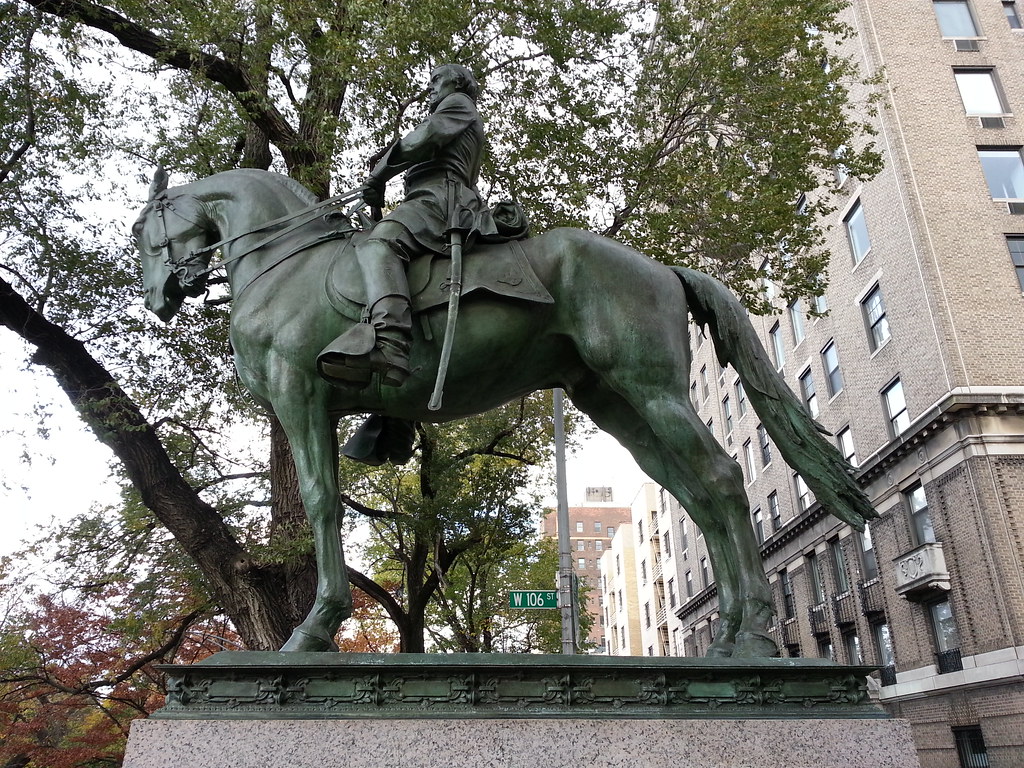
This statue, honoring the German-American Civil War general, was sculpted by old Karl Bitter and was dedicated in 1907. Sigel's sword was held in storage by the Parks Department for more than 60 years after it was detached during an attempted theft in 1941, but it was finally returned during a conservation of the statue in 2004.


