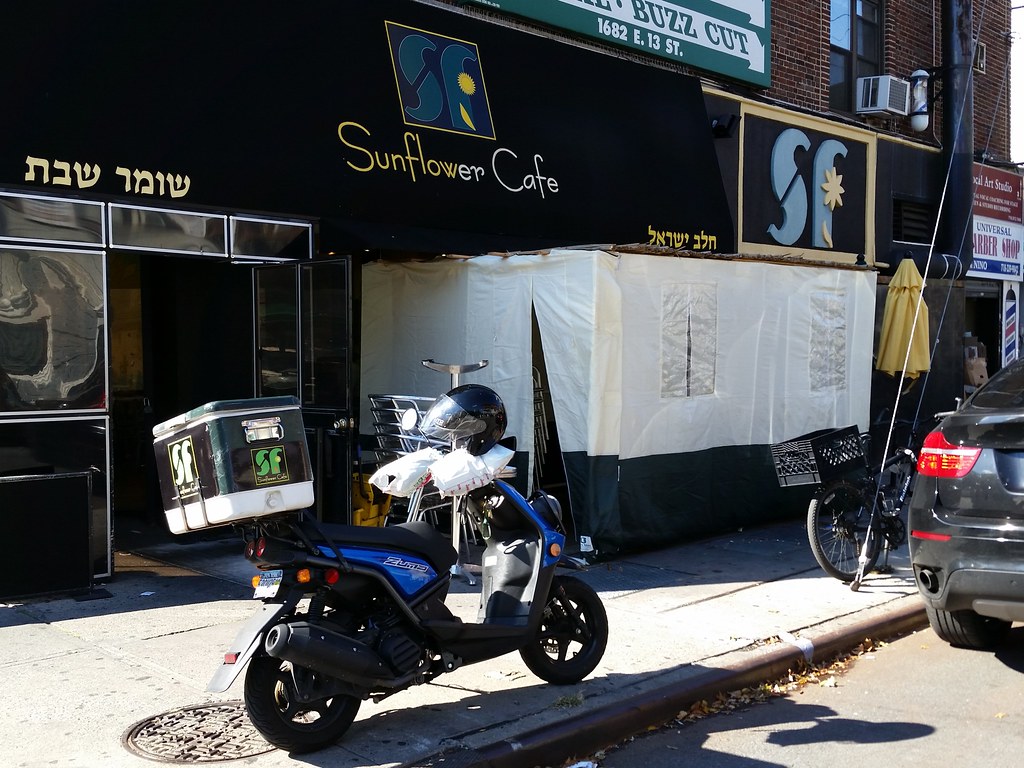
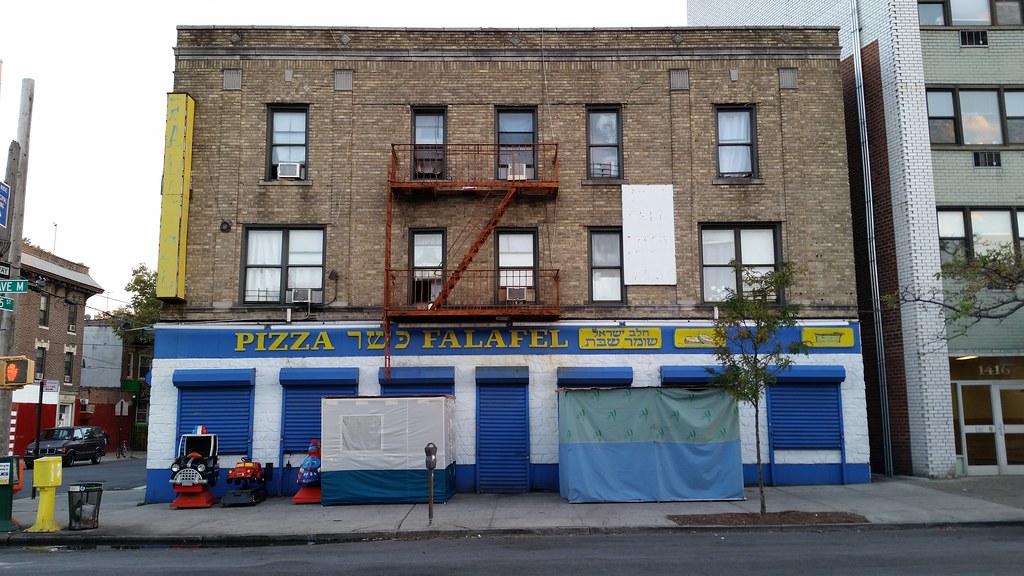
For those wishing to dine out on Sukkot

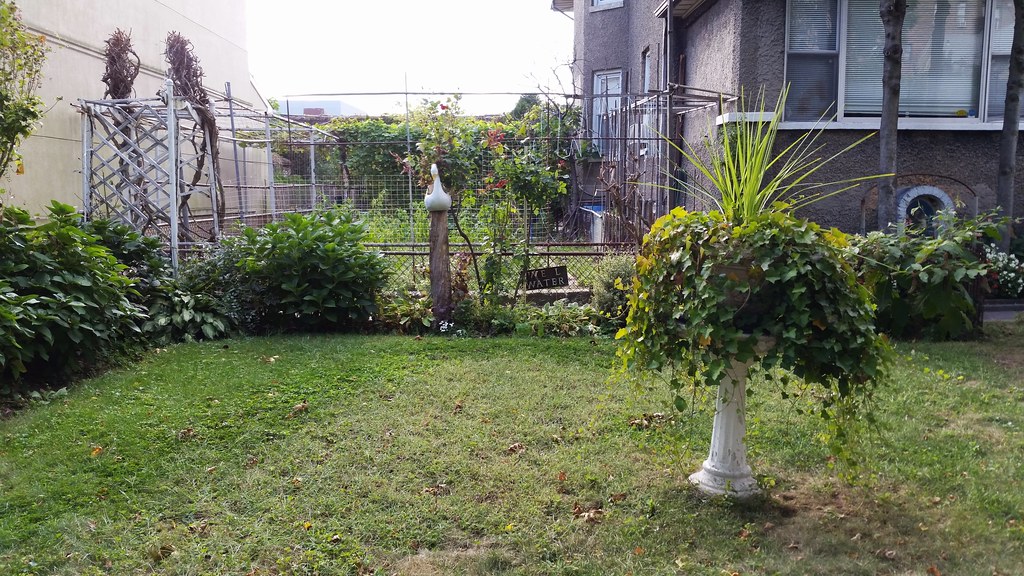
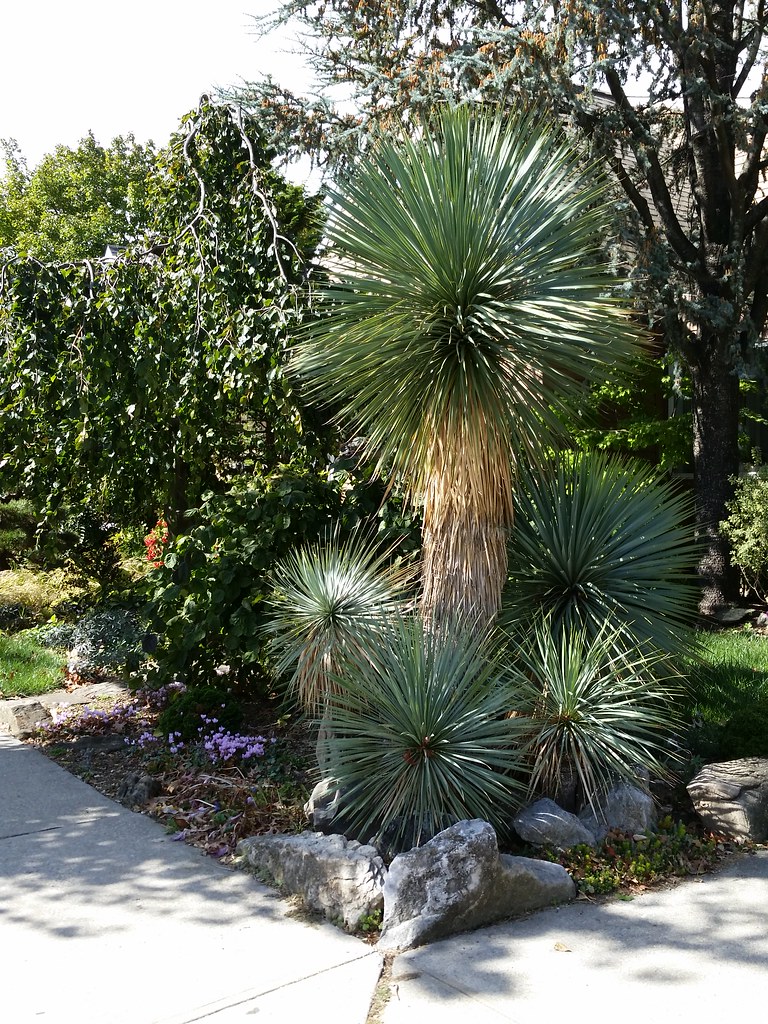
Wells in NYC? Given the city's plentiful supply of water from upstate reservoirs, I'm always a little surprised when I see a house with its own well.
Going off on a bit of a tangent, I've read that some matzo makers in the city have wells because they believe chemically treated municipal water cannot be used to make matzo. (Without treatment, however, some of the well water doesn't meet state water quality standards, which seems to suggest they shouldn't be making matzo with it.) Streit's, on the other hand, has long used city tap water to make its matzos — although perhaps not for much longer, as the company has decided to close its iconic factory on the Lower East Side and move its operations elsewhere.
After all the industrial activity that's taken place in the city over the years, you might assume the groundwater here would be too polluted to be usable, at least as drinking water. That's certainly true in many areas, but not all: local wells were used to supply drinking water to parts of southeastern Queens as recently as 2007, and they will be put into service again sometime around 2022 when the Delaware Aqueduct is shut down for several months so a new tunnel bypassing a leaky section can be connected to it. And while we're on the subject of wells, it's also worth noting that the non-NYC portion of Long Island (Nassau and Suffolk Counties) gets virtually all of its water from wells drilled into the island's aquifers.



This is one of four stretch limos I passed within a span of maybe ten minutes today. In this bird's-eye view, you can see this limo and two others parked just a few houses away from each other.


As far as I can recall, three days ago was the first time I ever encountered sorghum growing in NYC. And now here's some more!
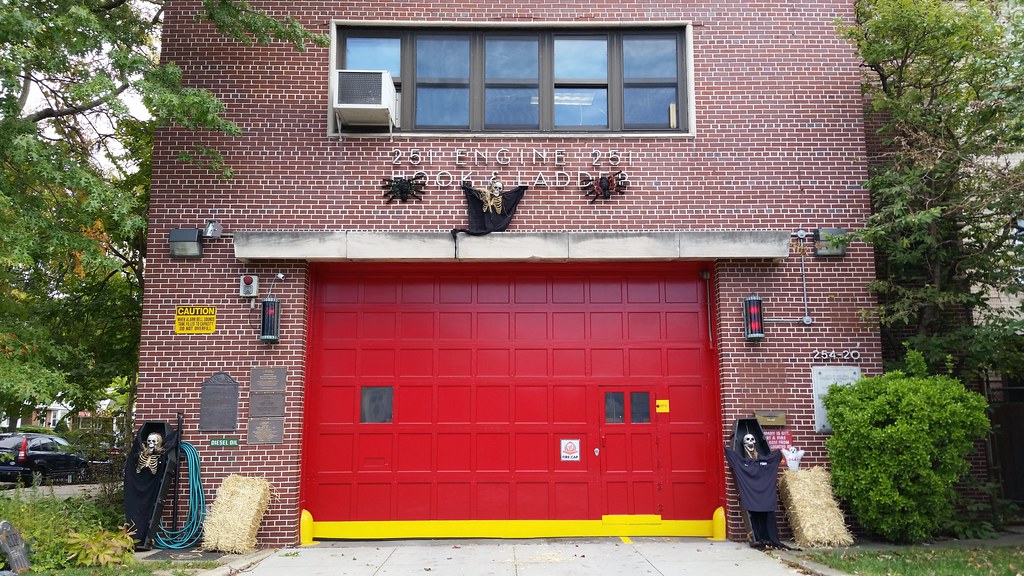
The plaques on the left side of the building commemorate fallen firefighters from this company. The largest plaque memorializes the six firemen who died in 1920 after an oil tank exploded while they were putting out a small fire on a barge at a Brooklyn Union Gas plant. (Engine Company 251 was located in Brooklyn at the time.)

This little park was built by the Glen Oaks Village co-op. It was apparently intended to honor both members of the armed forces and victims of 9/11, but the plaque on the rock in the background, while dedicated on the 10th anniversary of 9/11, features only "A Tribute to the Men and Women Who Have Served Our Country", so I'm not going to count this in the official 9/11 memorial tally.
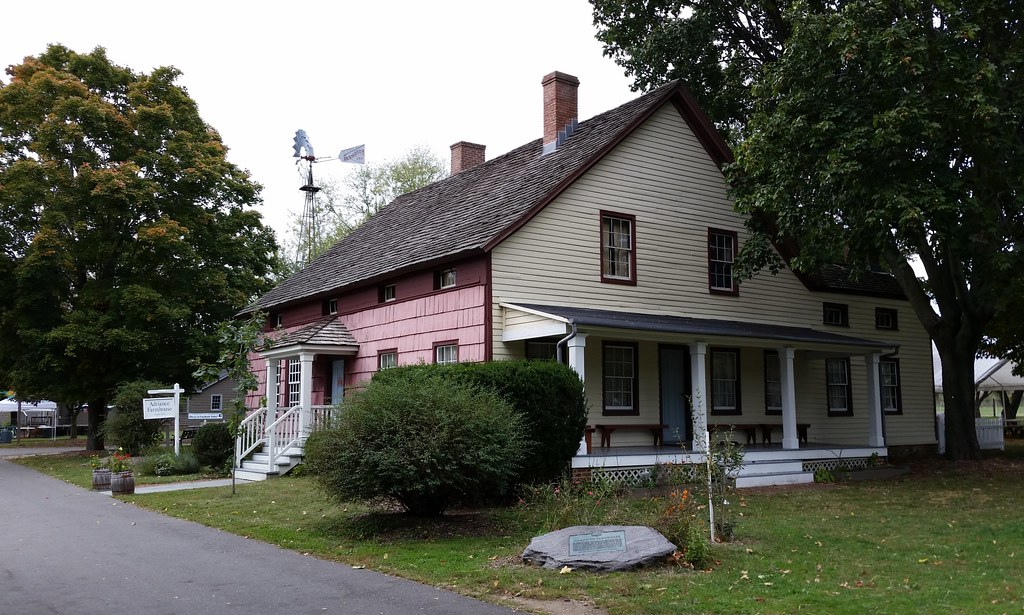
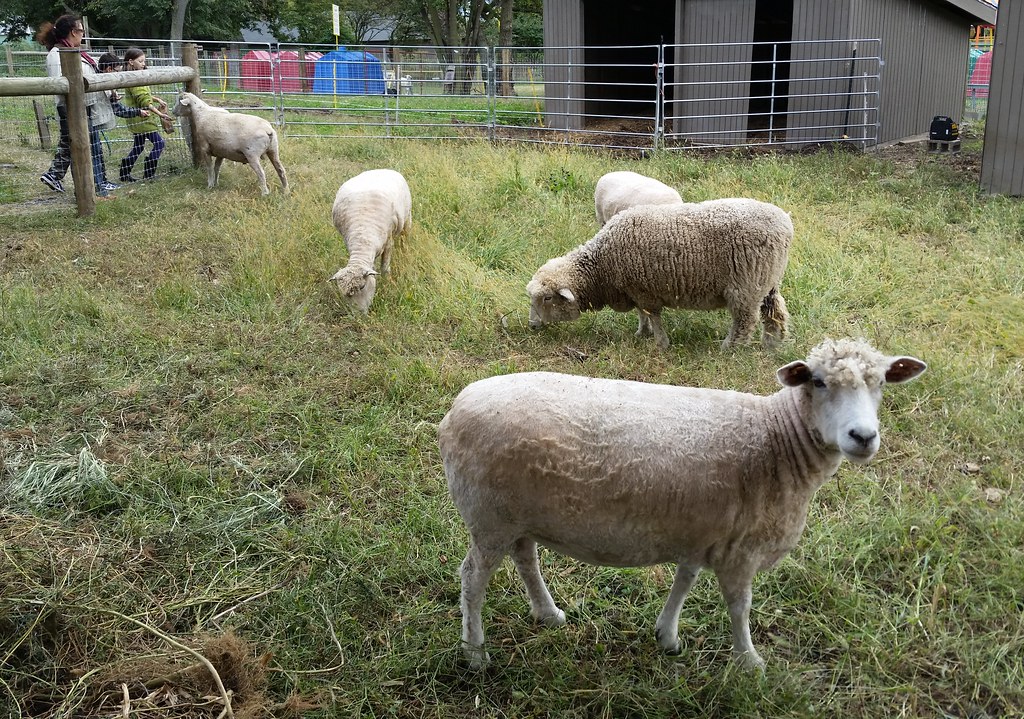
This farmhouse, the original part of which dates back to 1772, now stands on the grounds of the Queens County Farm Museum, which is said to be the oldest continuously farmed site in the state. The land was purchased by the Adriance family in 1697 and, through a succession of owners, served as a family farm until 1926. In the latter decades of that period it became a prominent commercial farm, producing more crops for market than any other farm in Queens. The state purchased the property in 1926 for Creedmoor State Hospital (today's Creedmoor Psychiatric Center), whose patients worked the farm as a form of therapy, growing food and ornamental plants for the hospital. In 1975, the property opened as the Queens County Farm Museum, which in recent years has become more of a serious working farm.

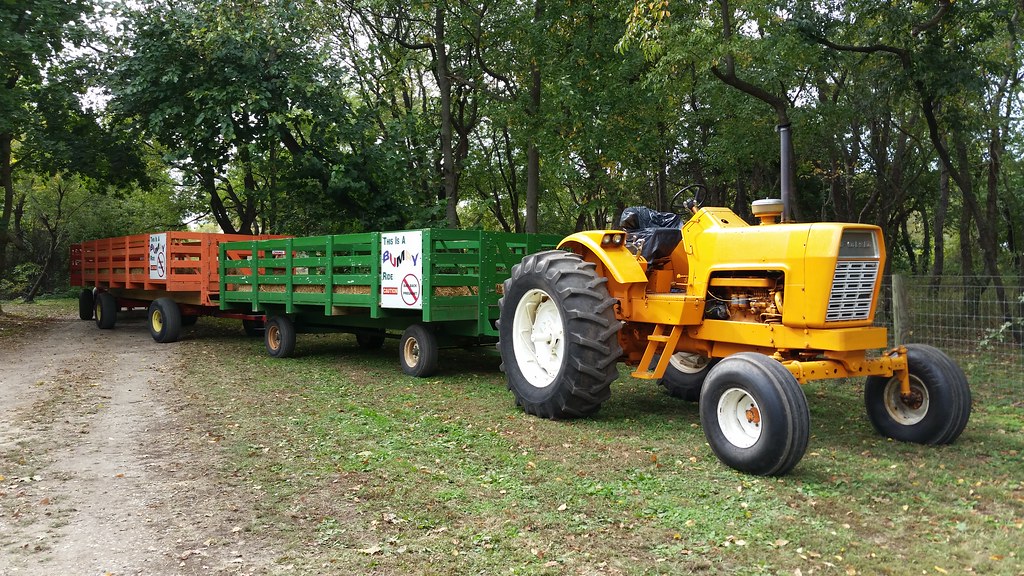
The signs warn pregnant women and people with bad backs not to partake: "This Is A BUMPY Ride".
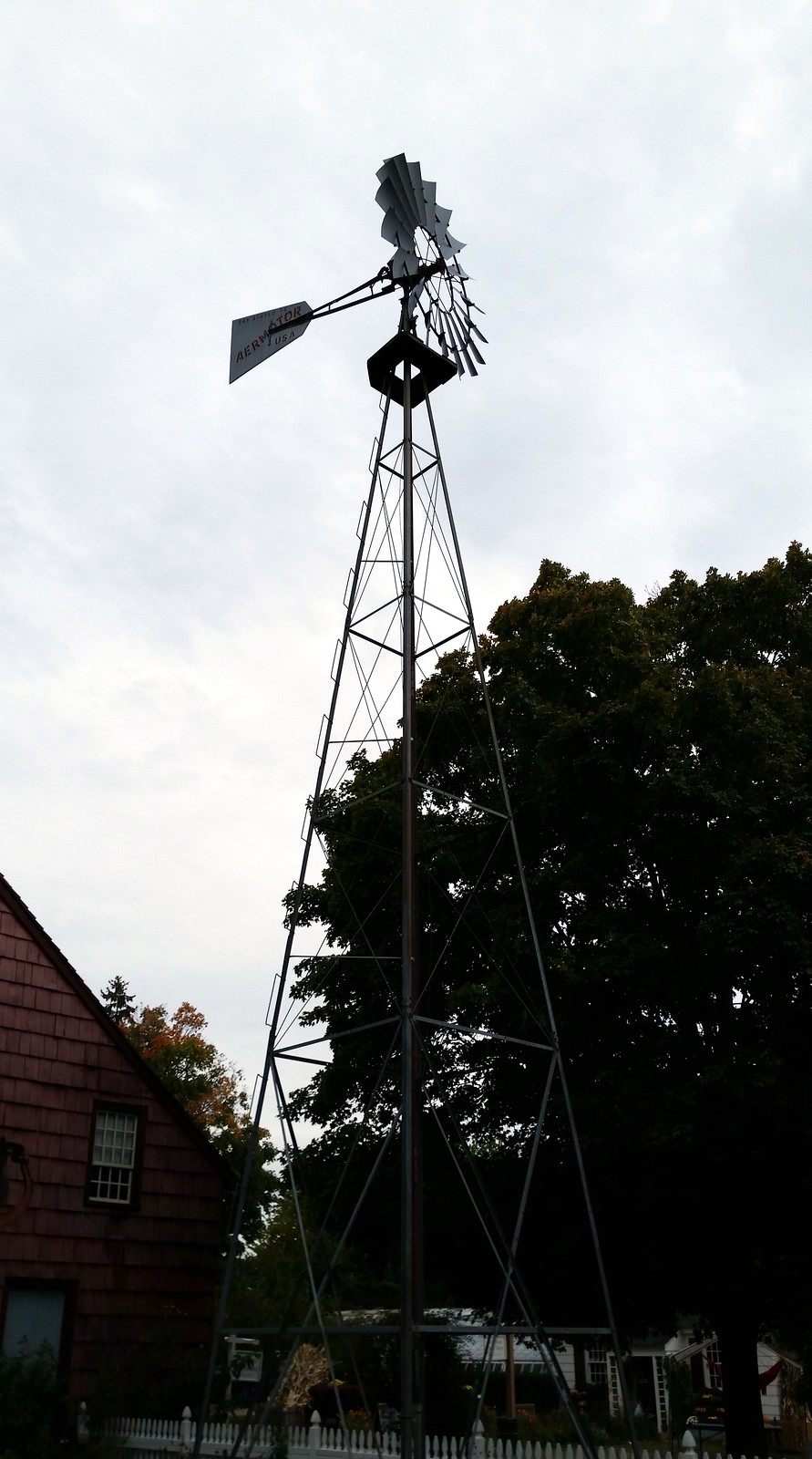
According to a nearby sign:
Our 45-foot steel windmill is an exact replica of the original windmill that stood in the same location from 1903-1928. The windmill pumps water from a 105 ft. deep well into a 10,000 gallon underground holding tank. The water is used to irrigate the orchard. . . .P.S. It's an Aermotor!
Each time the windmill blades turn one revolution, the pump goes down and brings up about 2 cups of water.
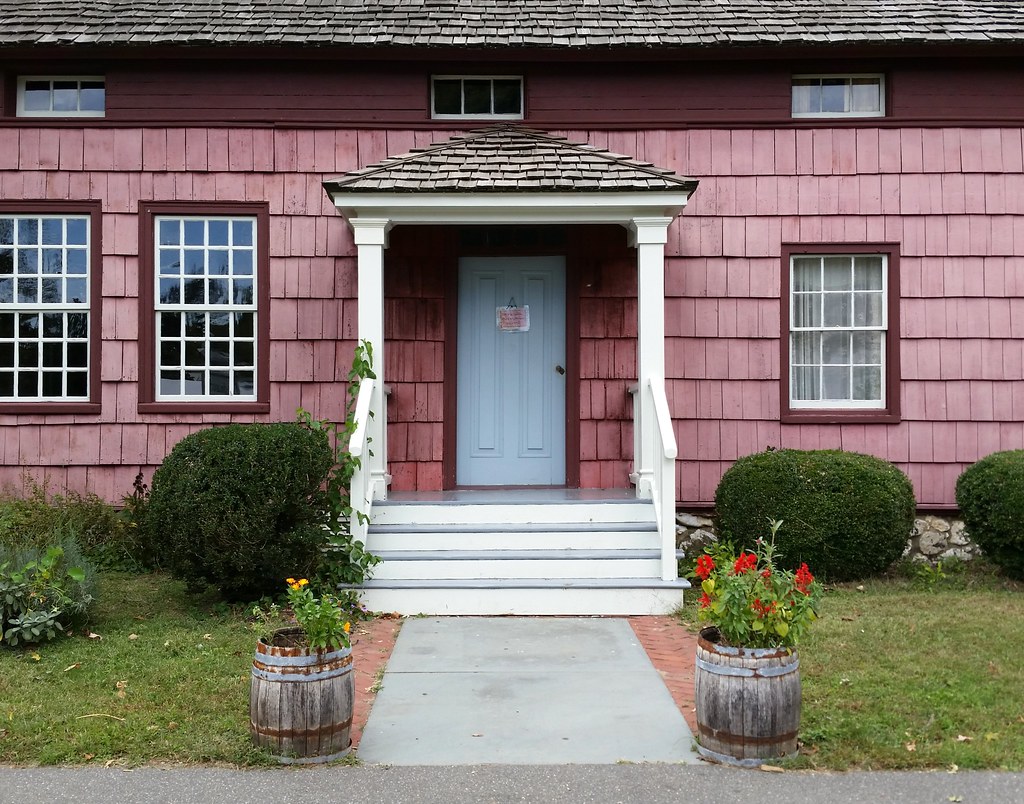
Heading out of the Queens County Farm Museum, I once again pass by the Adriance Farmhouse.
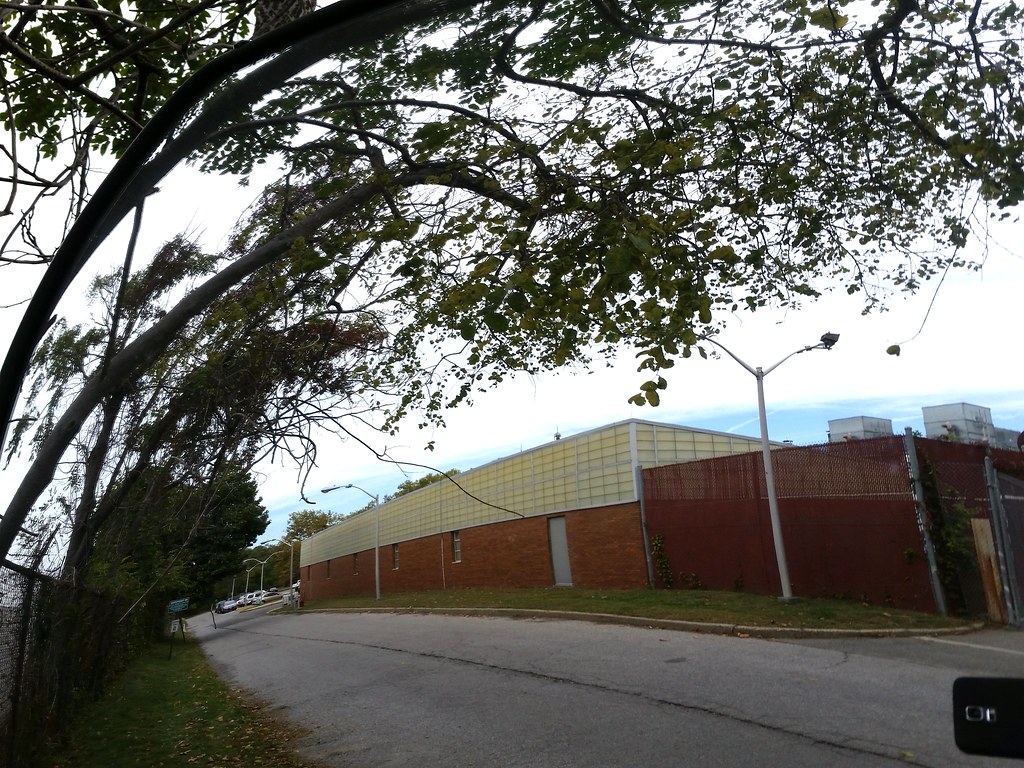

The three massive apartment towers in the background, one of which is hidden from view, stand at the edge of New York City (one of the holes of the golf course is in Nassau County) atop the highest piece of land in Queens.
I took this photo from the top of the parking garage at Long Island Jewish Medical Center. In areas without a lot of tall buildings in the immediate vicinity, parking garages can offer some awesome views.

Starting in the front, we have a 1960 Chevy Bel Air, a '68 Ford Custom 500, and a '67 Chevy Chevelle. Across the street is another '67 Chevelle and, in a driveway, a Chevy El Camino from the late '70s or '80s, I believe.
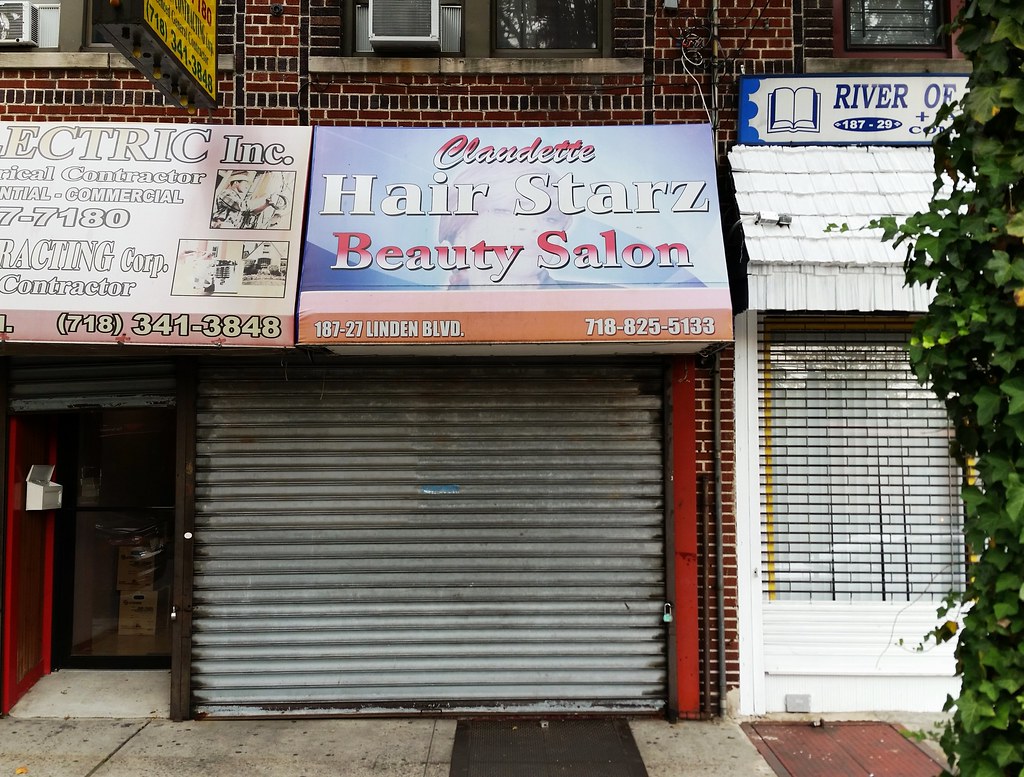
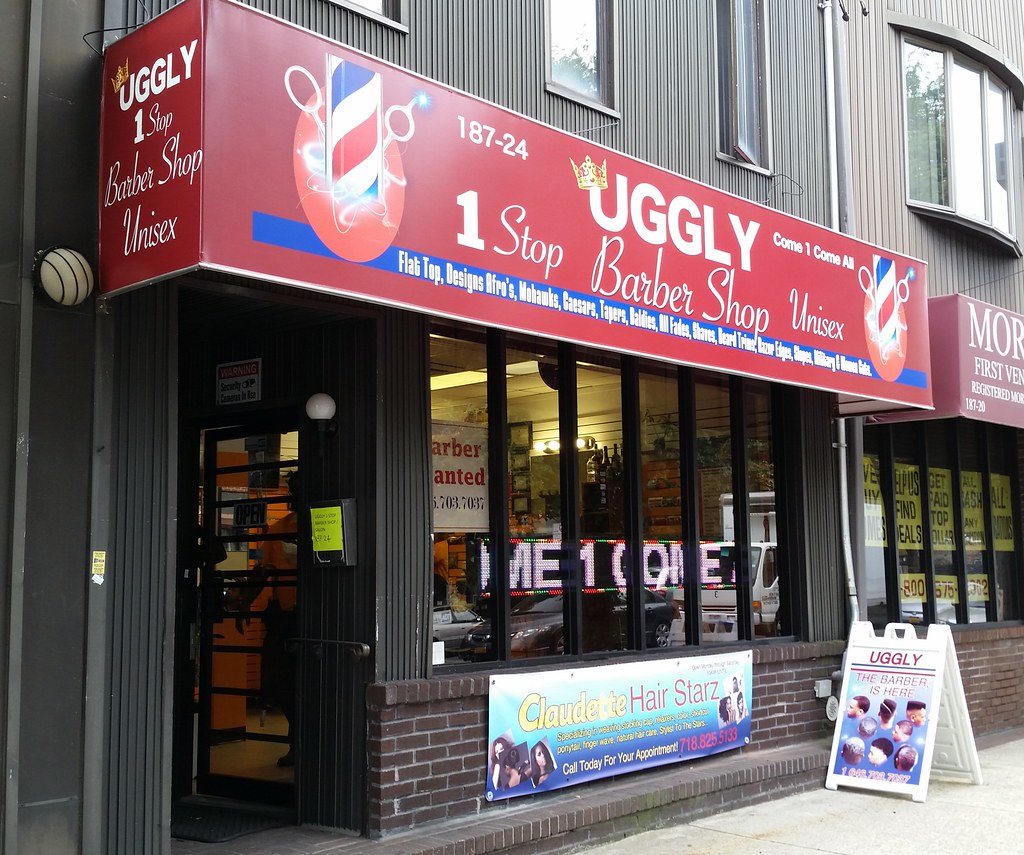
It's hard to say for sure, but it looks like Claudette Hair Starz may have moved here from across the street to share space with Uggly.

This little museum contains more than 500 dolls belonging to Naida Njoku, who had to abandon her old collection and start over when she and her husband fled the Nigerian Civil War of the late 1960s and came to the US.
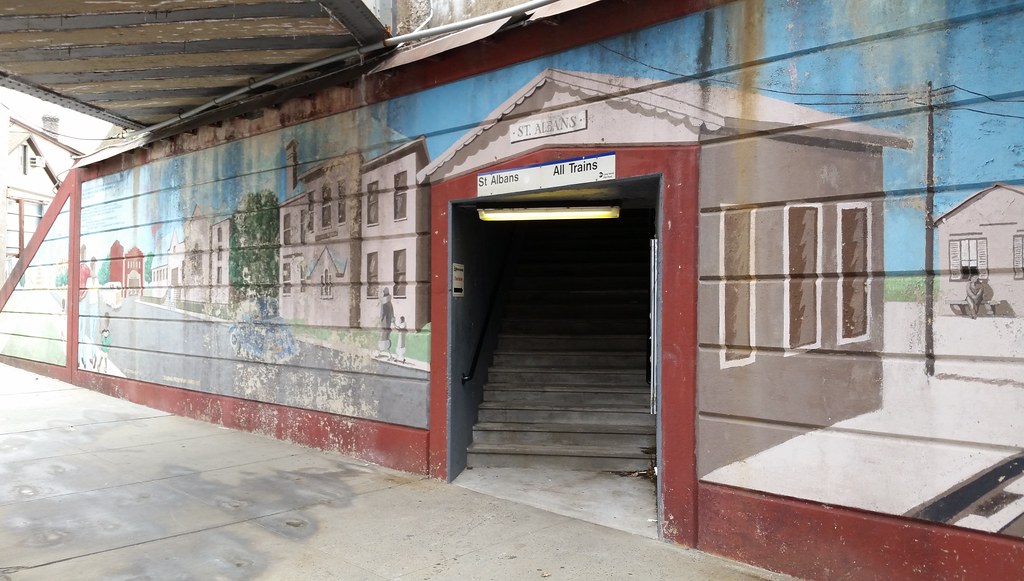
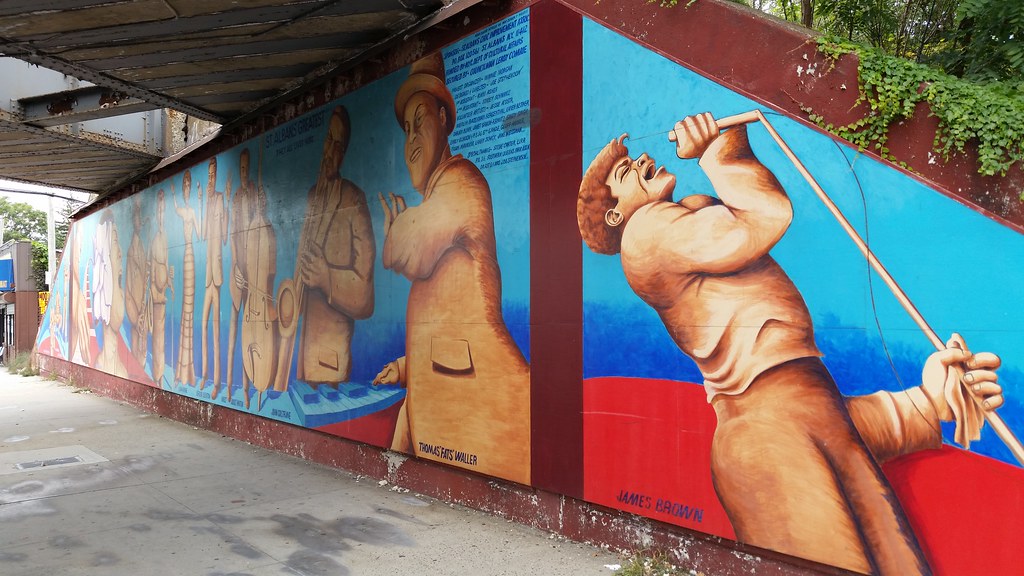
This mural depicts many of the famous athletes and musicians who have lived in St. Albans, especially the section known as Addisleigh Park. You can see more of the mural, as well as a similar one that preceded it, here.
From left to right: Tommy "Hurricane" Jackson, Roy Campanella, Jackie Robinson, Count Basie, Billie Holiday, Illinois Jacquet, Ella Fitzgerald, Lena Horne, Brook Benton, Milt Hinton, John Coltrane, Fats Waller, and James Brown.
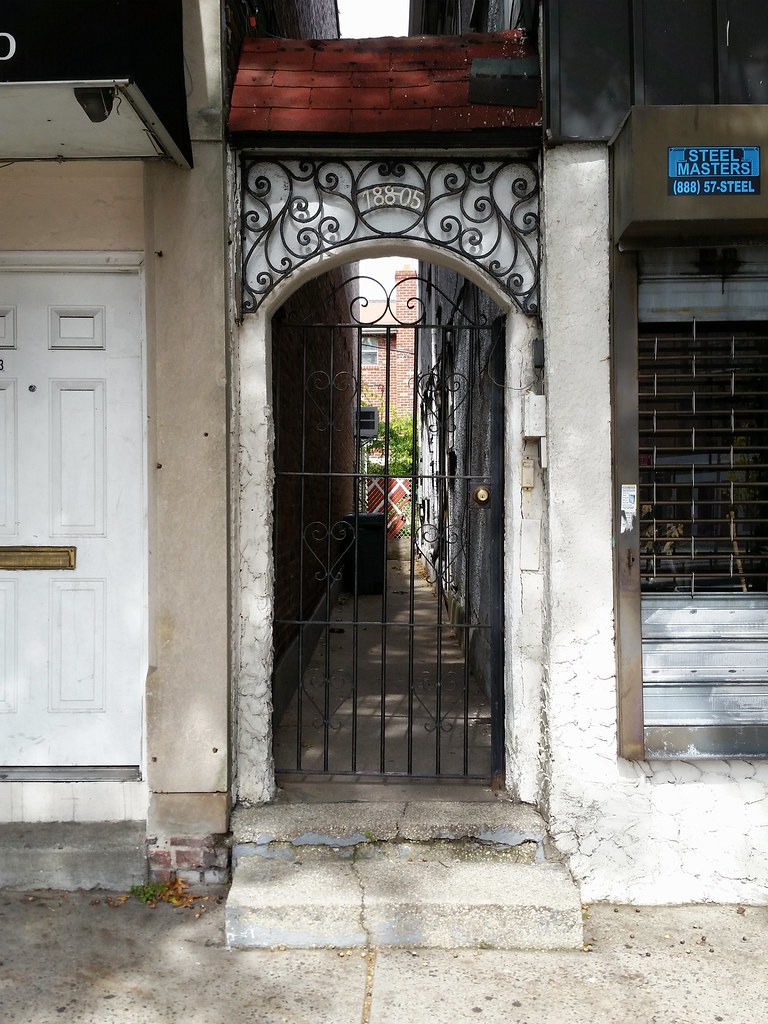
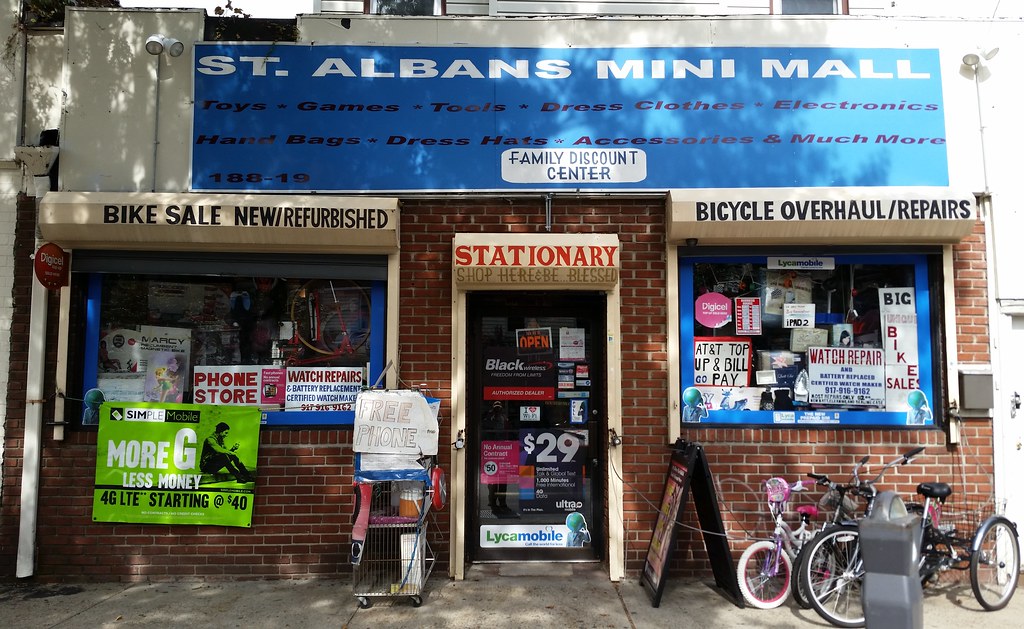

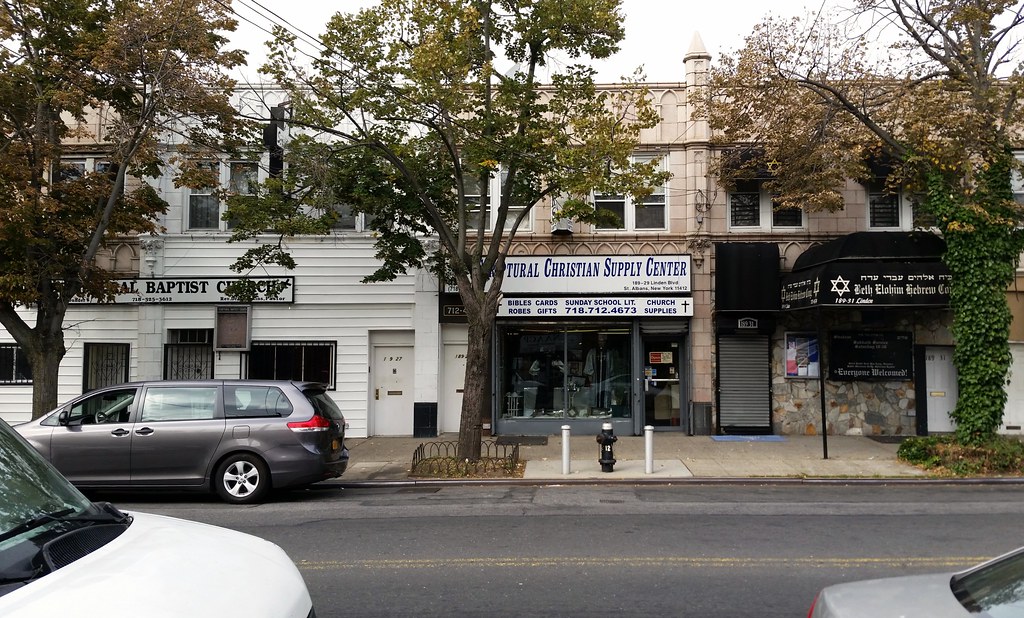
From left to right: Scriptural Baptist Church, Scriptural Christian Supply Center, and Beth Elohim Hebrew Congregation, a black Hebrew Israelite synagogue founded by the late Rabbi Levi Ben Levy, former chief rabbi of the Israelite Board of Rabbis for the New York metropolitan area and the Western Hemisphere.




Is the proper spelling A) Everit Place or B) Everett Place?
Answer: C) None of the above.
It's actually Everitt Place (spelled differently on street signs at each of its three intersections, and only correctly at one), presumably named after August Everitt, who ran a general store that was located at the nearby intersection of today's Farmers and Linden Boulevards. Everitt's store "became the hub of local business and an anchor that fostered residential and commercial development in St. Albans".