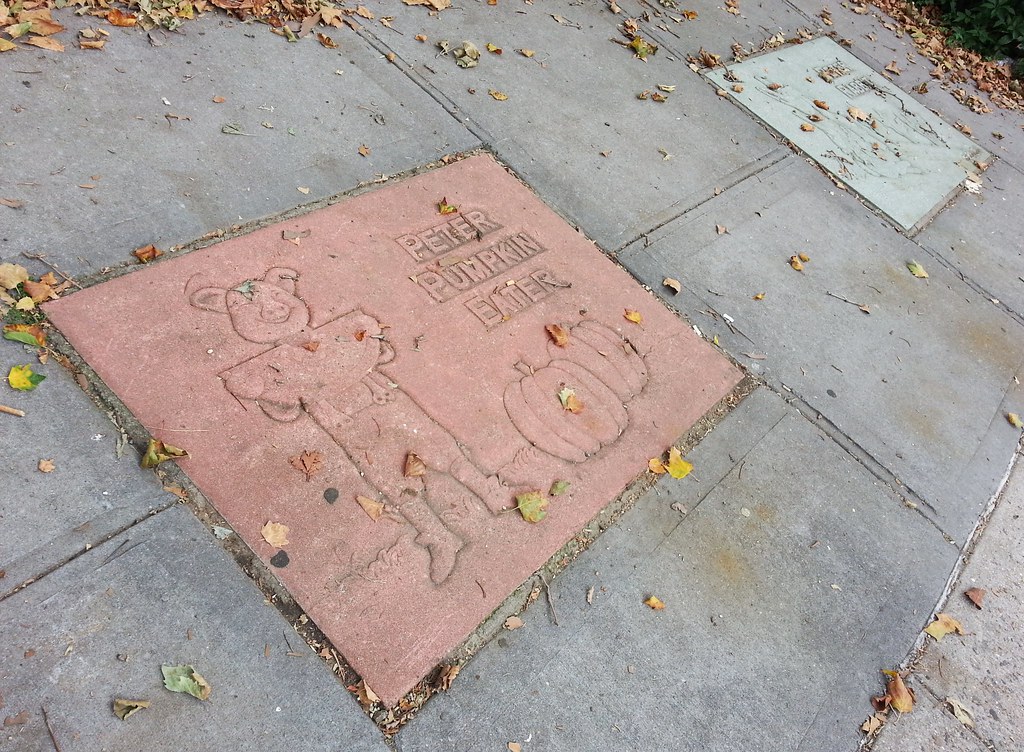
This playground honors two Peters, Stuyvesant and Cooper, for whom two nearby housing communities are named. I can only assume our old buddy Henry Stern is responsible for the goofy sidewalk plaques paying tribute to other notable Peters, like the two you see here.
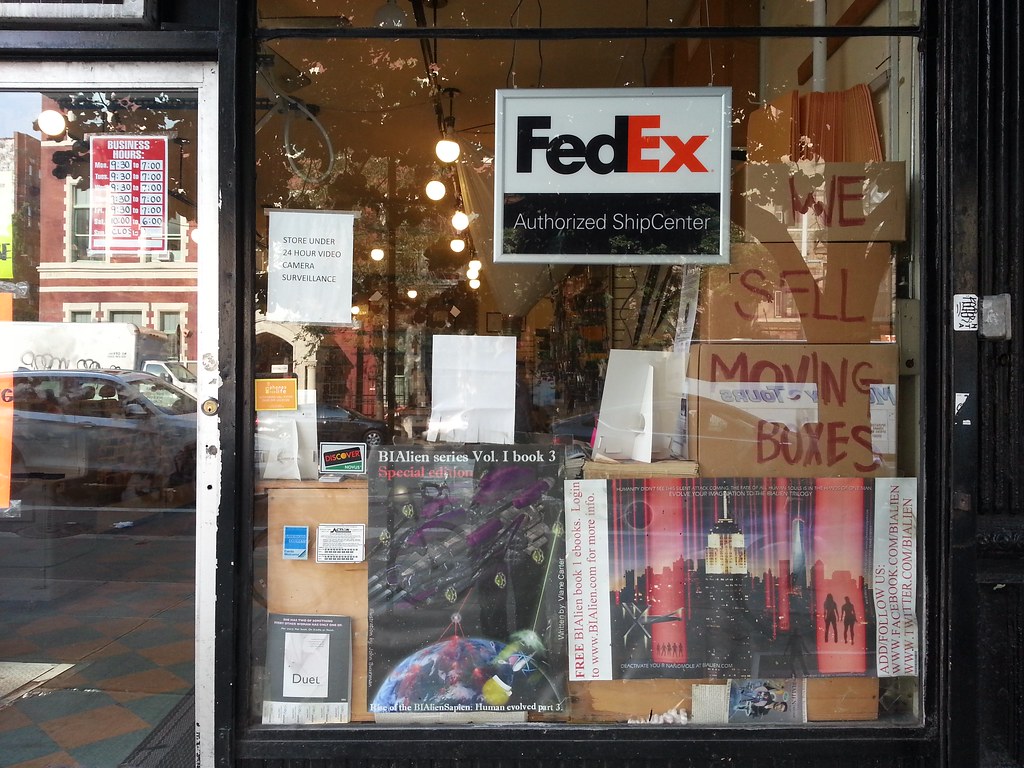
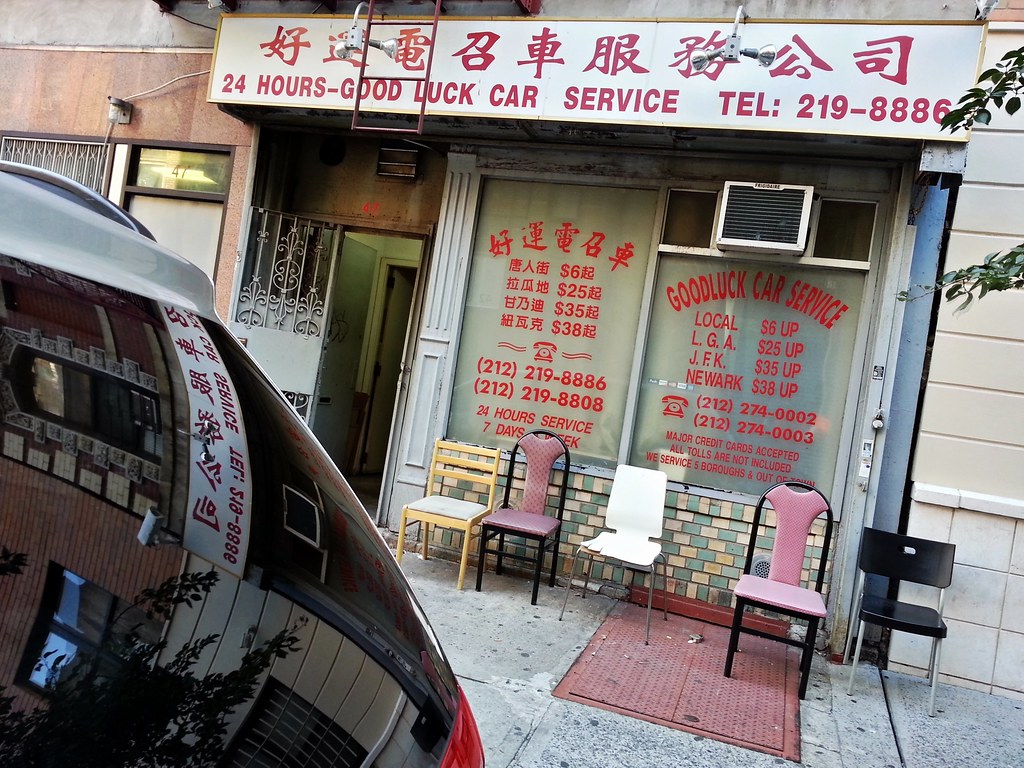
The classic two-step advertising campaign: start with an SUV parked in the Bronx, then move on to the display window of a Manhattan shipping store.
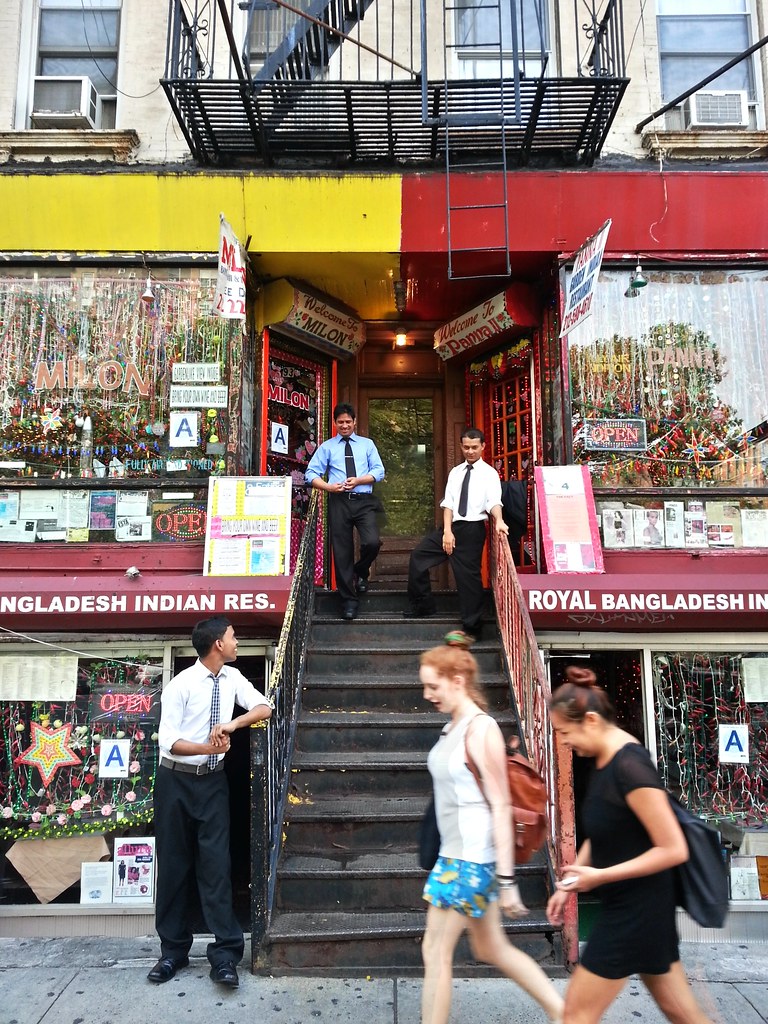
If you're ever feeling unwanted, like your existence on this earth matters to no one, just take a walk down First Avenue between Fifth and Sixth Streets, and glance over at one of these three restaurants as if you might be thinking about stopping for a bite to eat. The barkers stationed outside will kick into high gear, each one fighting over you as if his life depended upon it, forcefully demanding that you — you! — choose his establishment over the others.
The two Indian places at the top are engaged in a long-standing feud over whose cuisine is tastier and who originated the preposterous lighting scheme that they both now employ. And the Bangladeshi newcomer on the bottom floor is no slouch either; on a recent visit, its barker was easily the most aggressive of the bunch.
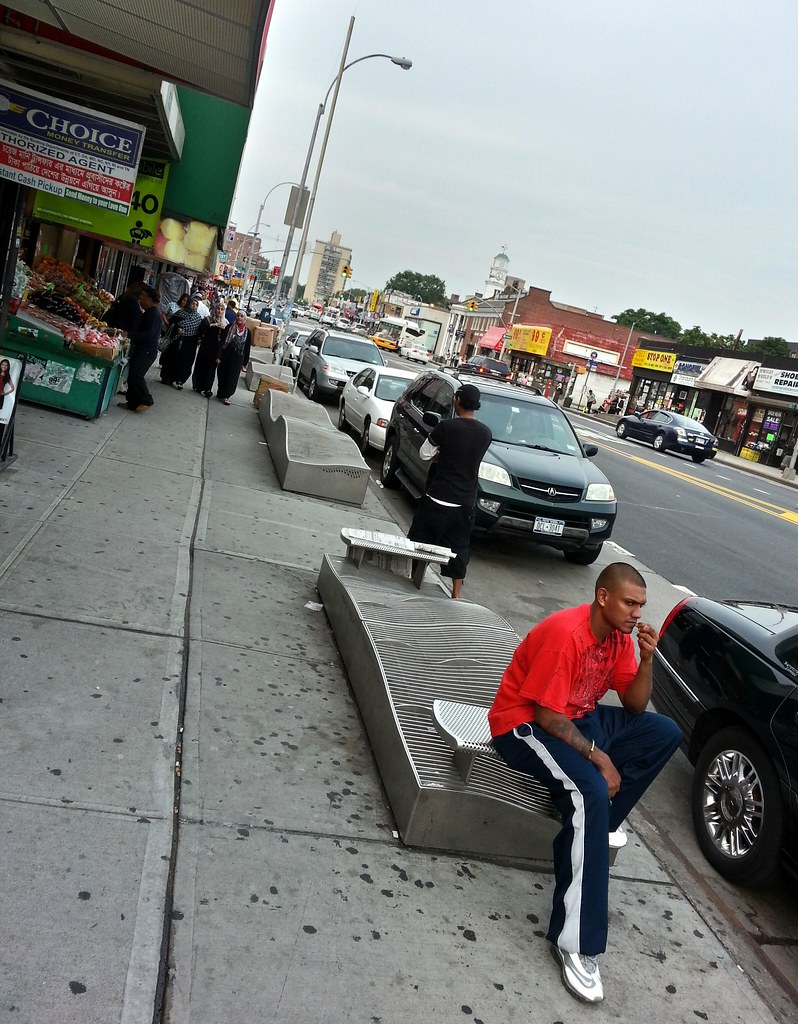
As we've seen before, these new raised subway grates have replaced the standard flush-with-the-sidewalk models in areas with poor street drainage, allowing ventilation while preventing accumulated water from spilling into the subway and flooding the tracks.
They're an attractive (or at least interesting-looking) solution to the problem, and I suppose their wave-like shape does evoke water to some degree, but I think one of their creators went overboard when he claimed that "You’re aware that this is here for storm water . . . It has a didactic purpose." Based on some informal polling, I can tell you that many people on the street have no idea what the hell these things are.
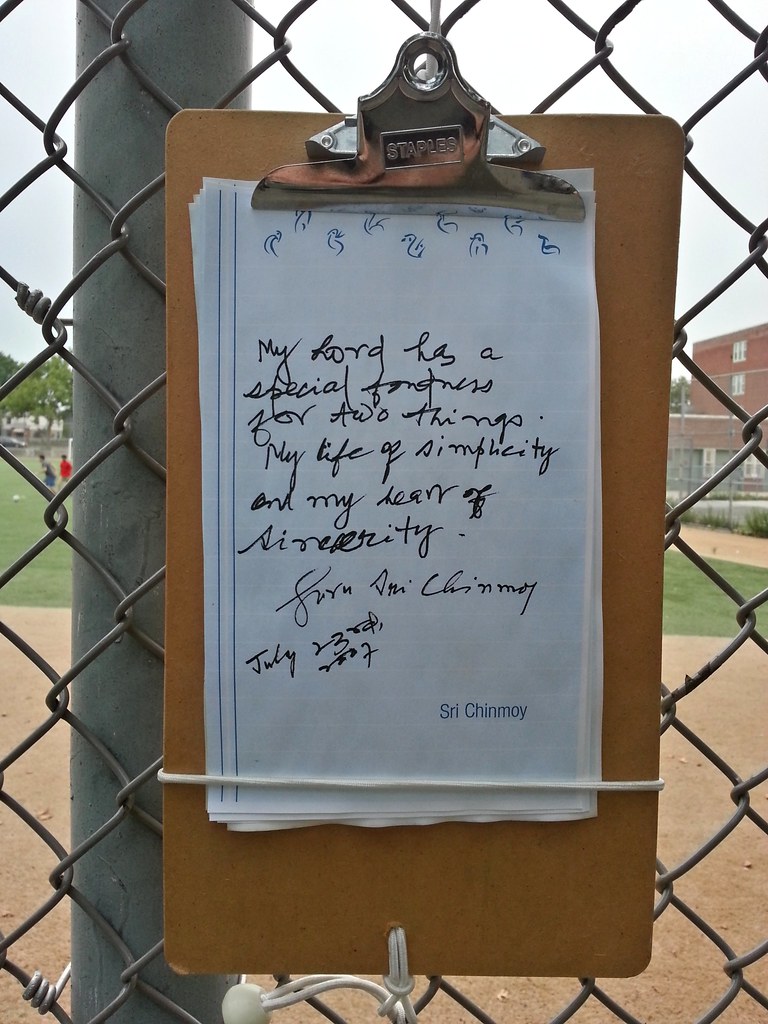
Here we are at the Self-Transcendence 3100 once again. Sri Chinmoy wrote a short poem (and composed a song) for each day of the race back in 2007, the last year he was alive to see it.
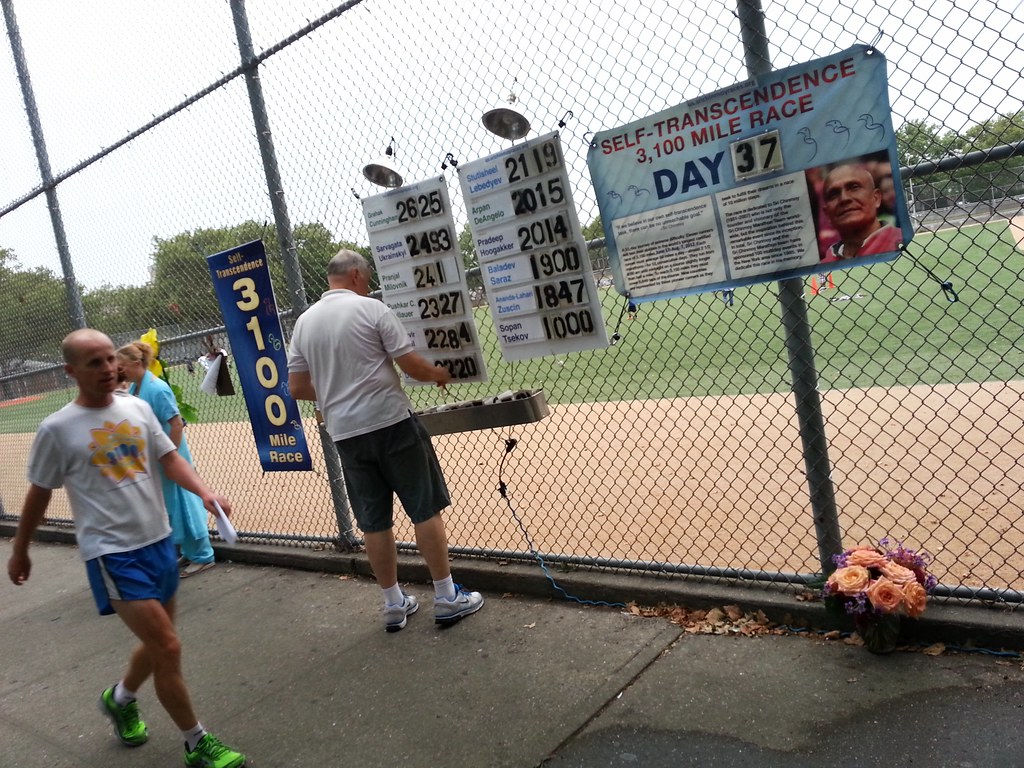
while Ananda-Lahari knocks off another lap. Grahak has less than 500 miles to go! Only one runner, Sopan, has had to drop out so far, but he fought his way through injury to reach 1000 miles before calling it quits.
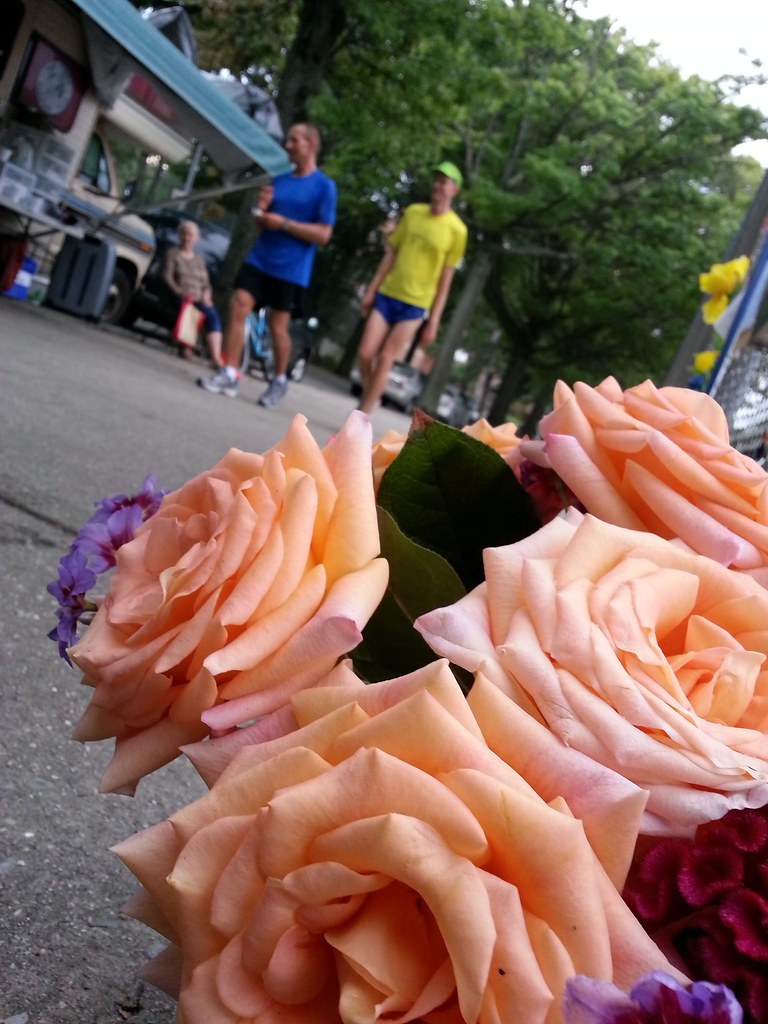
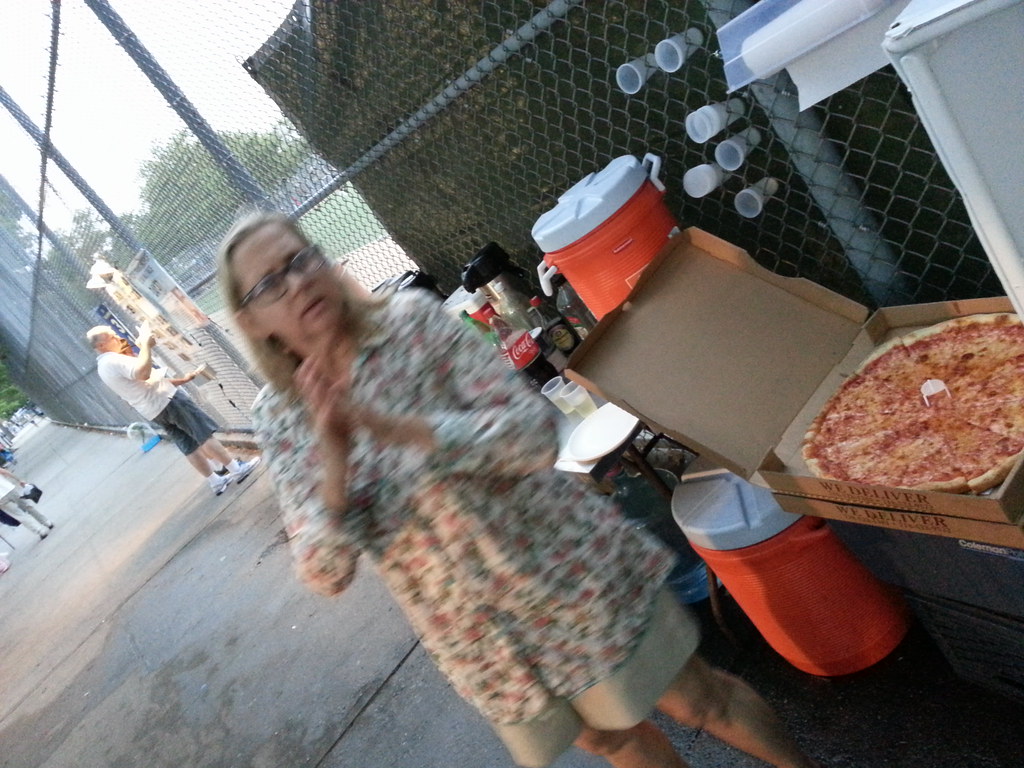
Arpan turned 60 today, and he was able to celebrate with a nice accomplishment: his 2000th mile!
By far the oldest competitor this year, he has struggled with injuries throughout the race, but has still managed to average almost 55 miles — more than two marathons — per day. It's an amazing pace for a 60-year-old (or any human), but it's also not quite fast enough for him to complete the race in the time allotted.
He and four other runners are now facing a tough new challenge: continuing to give their all while coming to grips with the ever more certain reality that they won't be able to reach 3100 miles. Of course, there's no prize for achieving that particular number. The reward of this race comes from pushing yourself harder than you thought you could, and surpassing what you thought you were capable of. Such an abstract goal is not magically realized once a certain distance is run, but it's still probably quite difficult to have to recalibrate expectations after so many exhausting, painful miles.
Don't give him any crap for his choice of footwear; with his shin splints and achilles problems, they're the only shoes that feel comfortable to him right now.

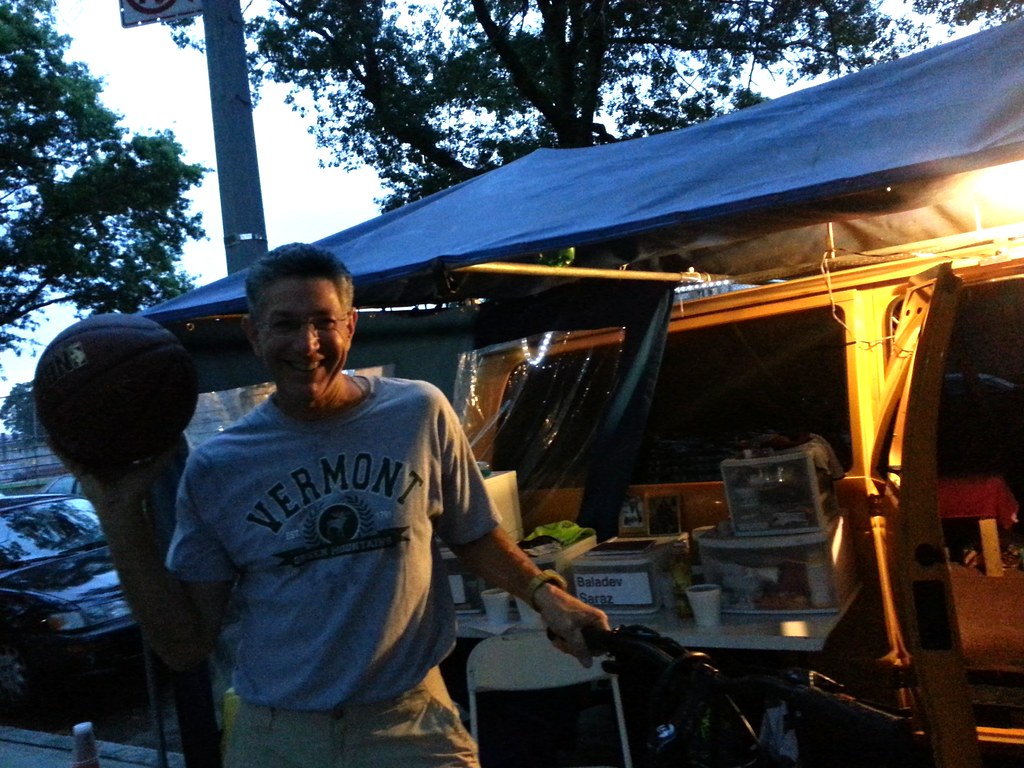
The world's foremost record-setter is here for the birthday festivities. He's currently training to run the fastest mile while dribbling a basketball.
That's Grahak completing another lap about 10 seconds in; there aren't many races in which the runners carry umbrellas!
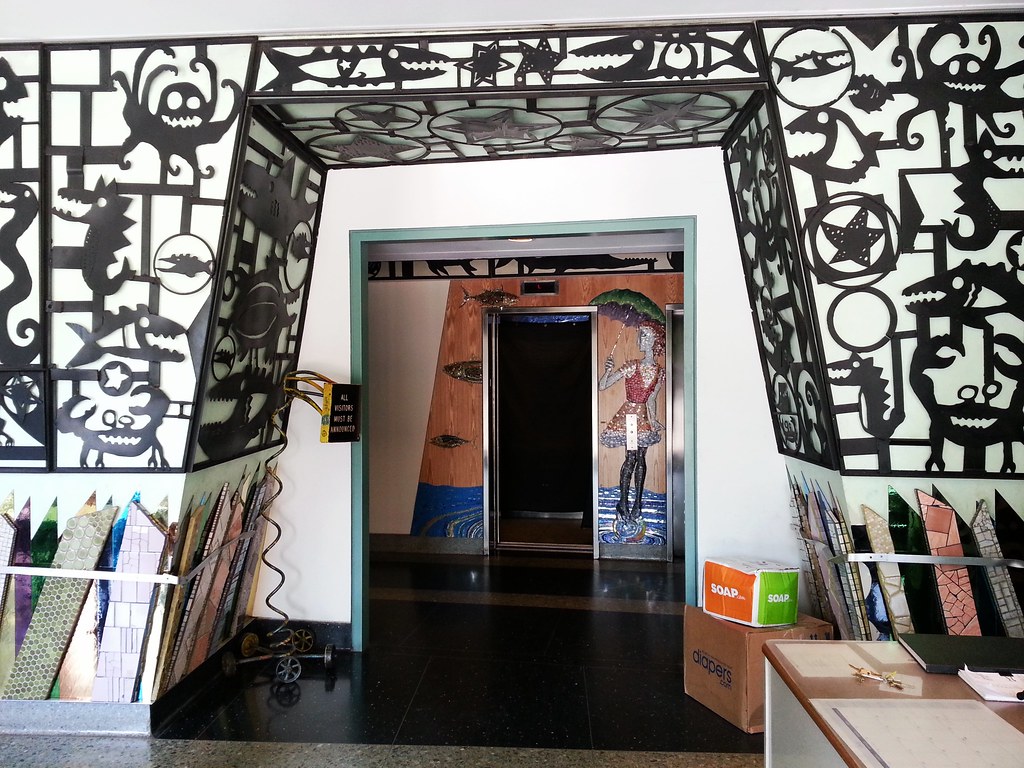
This is the whimsical interior (that's my opinion; the Daily News described it as "a Gothic, nightmarish underwater scene") of Red Square, which you might know better as that building on Houston Street with the statue of Lenin and the messed-up clock on its roof.
UPDATE (Sept. 26, 2016): The Lenin statue has been moved to a nearby rooftop at 178 Norfolk Street.
My phone somehow started recording video while I was walking. Be sure to check out all 12+ riveting minutes of footage — I even stop to buy an ice cream sandwich somewhere in the middle!

This ceramic mural was made by one of the school's teachers.

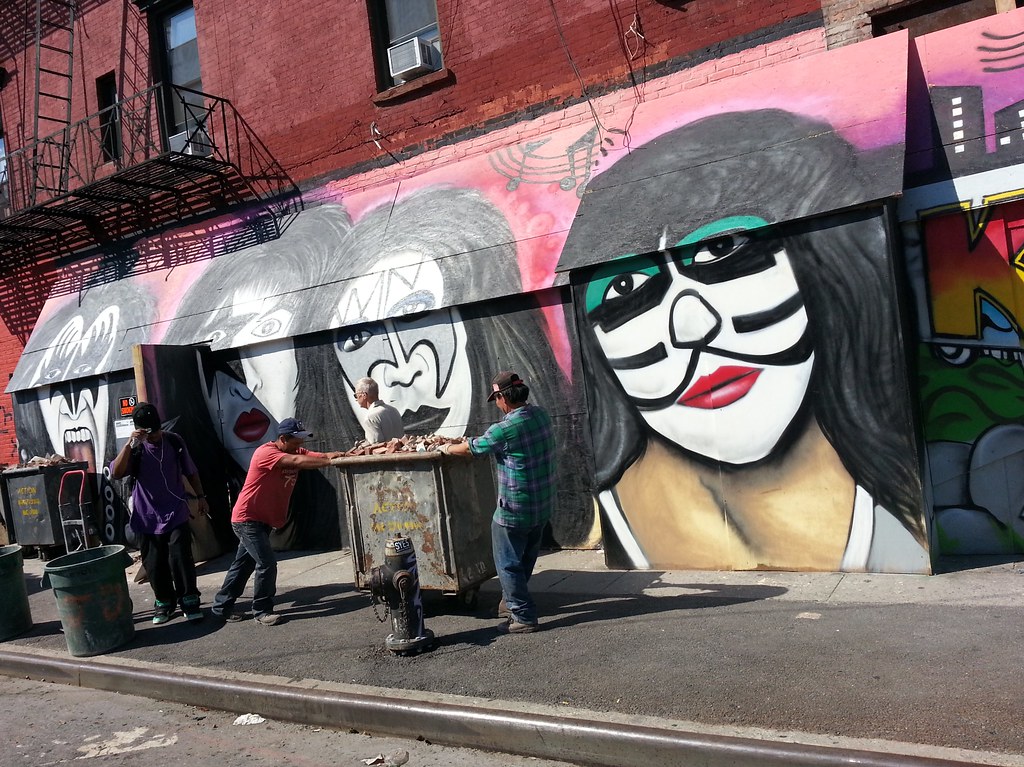
Miles away from the racecourse, a familiar face appears on a construction wall.

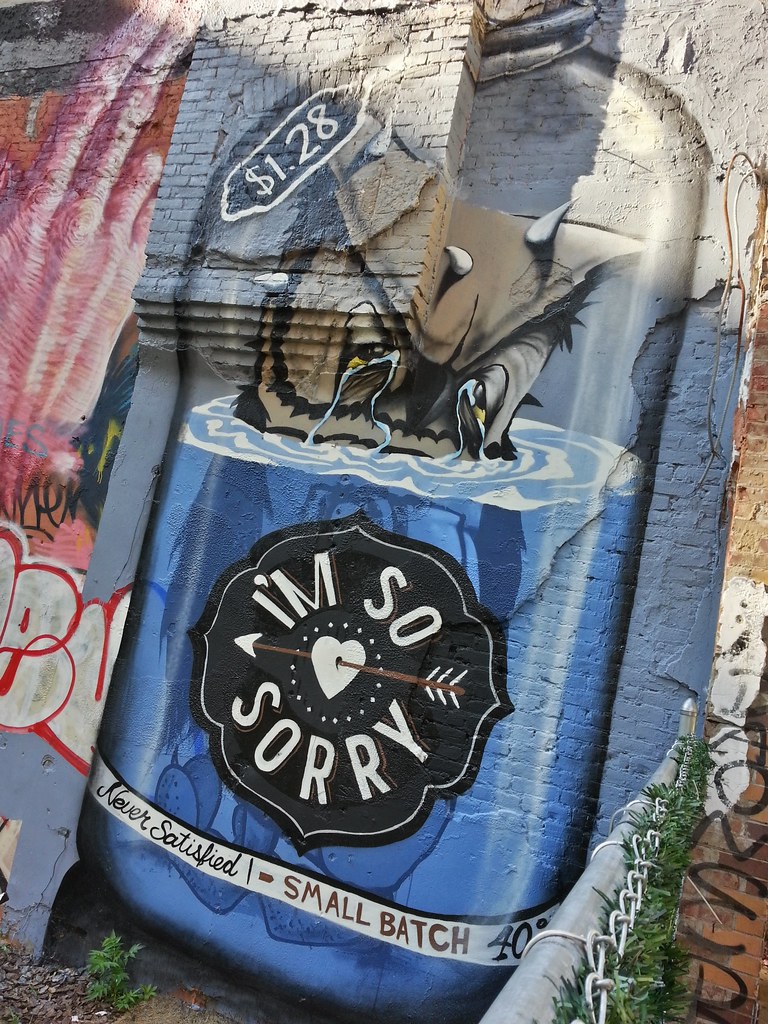
Painted the same day as this poor fellow back on First Street

The mural in the previous photograph is part of the décor for this vacant lot that is rented out by the hour as a backyard.


You can see the much-reviled Verizon building off to the right, along with the much-beloved Municipal Building. And on the left we have Frank Gehry's wrinkled skyscraper at 8 Spruce Street.


This storied community art/culture space will soon be demolishing its current dilapidated building and replacing it with a much more modern facility, part of the deal under which it was able to acquire this property from the city for one dollar.

It's not quite the abundance I found along the Columbia River, but I'll take what I can get. This bramble is growing in the Ferris Family Burying Ground, a tiny patch of greenery brightening up an otherwise grim stretch of Commerce Avenue in the Bronx.
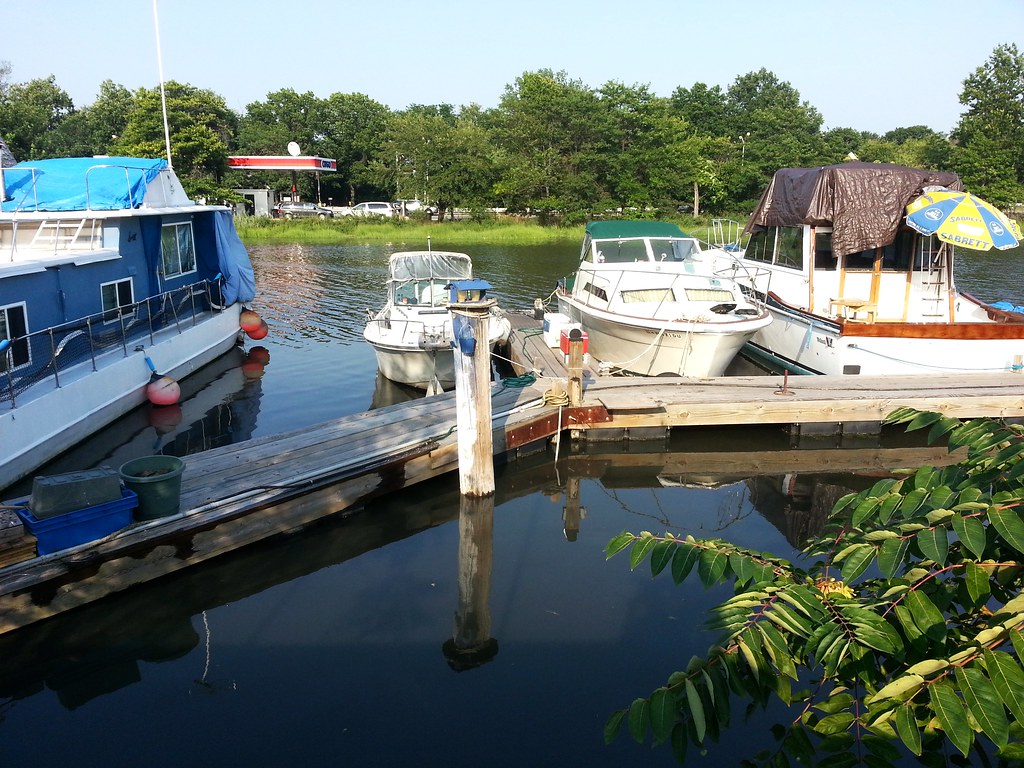
To some, it's a paradise; to others, it's a bastion of "malcontents that can't fit anywhere else in society." Check out this aerial view to get a better sense of the place.
(The claim about the Ferris wheel in the second link is untrue.)
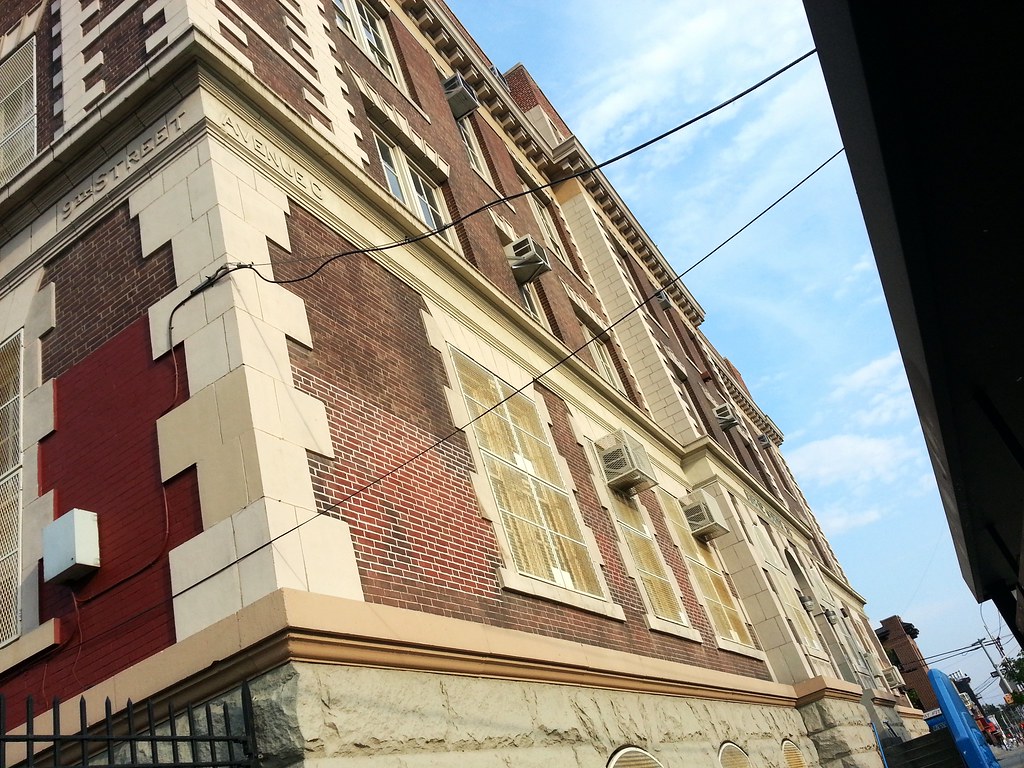
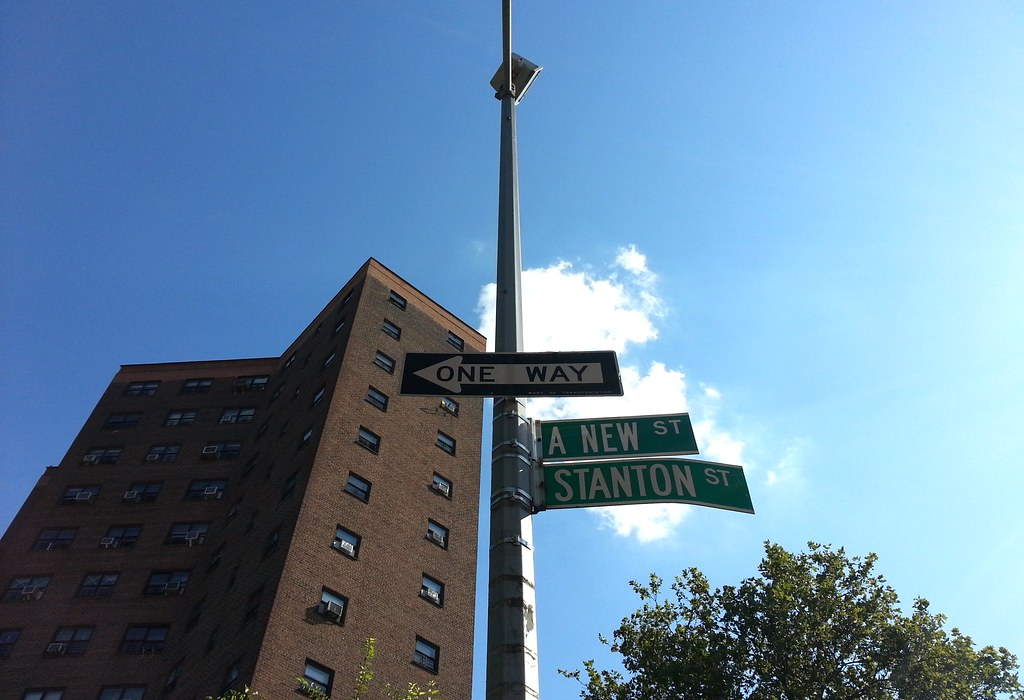
Standing here at the corner of Watson and Castle Hill Avenues in the Bronx, I was surprised to look up and see two totally different street names inscribed on the sides of PS 36, as if the school had been uprooted from Alphabet City in a tornado and dropped back to earth on this spot, ten miles away. It turns out, however, that back in the latter half of the 19th century, before the Bronx existed as a borough, this intersection did indeed bear the names of 9th Street and Avenue C, when it stood amidst the street grid of the old village of Unionport.


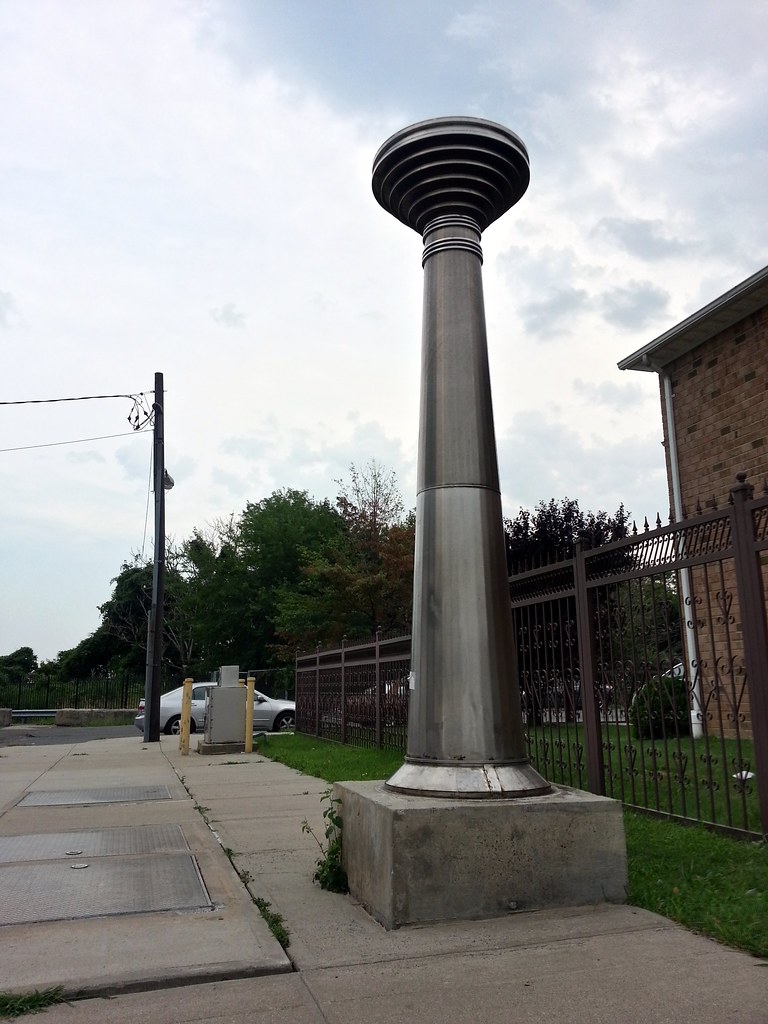
Either that, or it's some kind of alien spacecraft landing beacon. Or maybe a prestigious athletic trophy won at the YMCA across the street?

as seen from the picnic tables of the wonderfully named Howard & Minerva Munch YMCA. If you look closely, you can see that there are, in addition to the main suspension cables, four stay cables running at an angle from the top of each tower to the deck (i.e., the roadway surface) of the bridge (here is a clearer view of the cables). The stay cables were installed, as were some since-removed stiffening trusses, after the similarly designed Tacoma Narrows Bridge collapsed spectacularly into Puget Sound amid a steady 40-mile-per-hour wind in 1940, the year after the Whitestone opened.





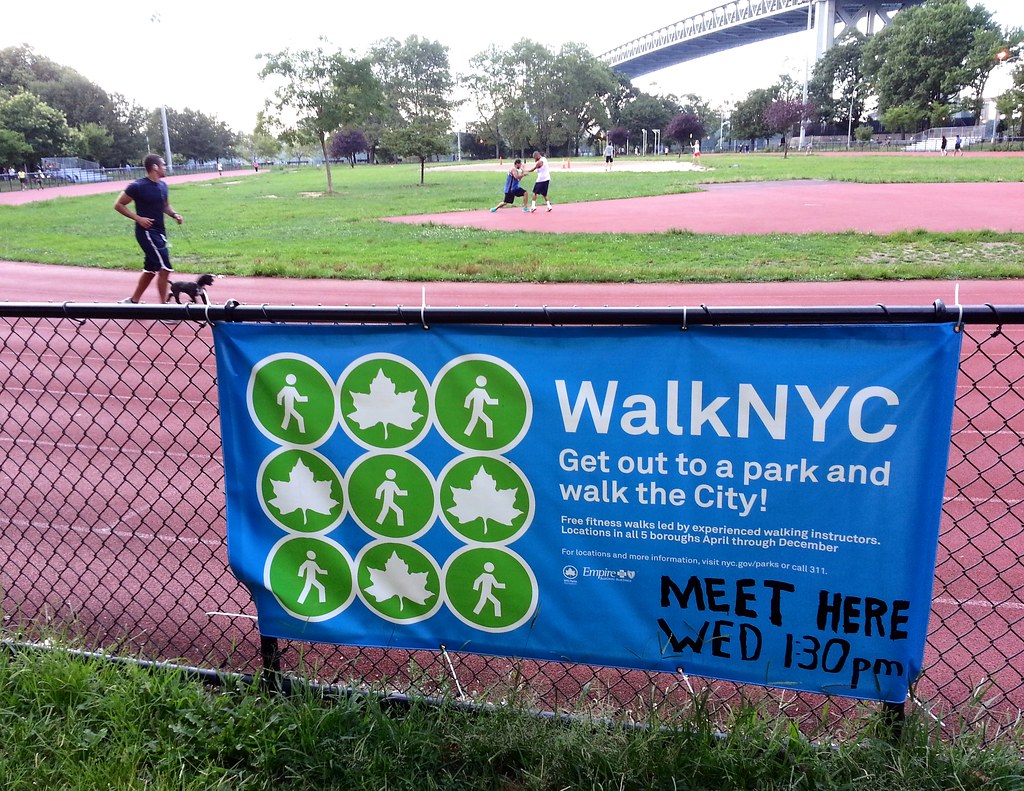
P.S. Left, right, left, right. Now you don't need an experienced instructor!