

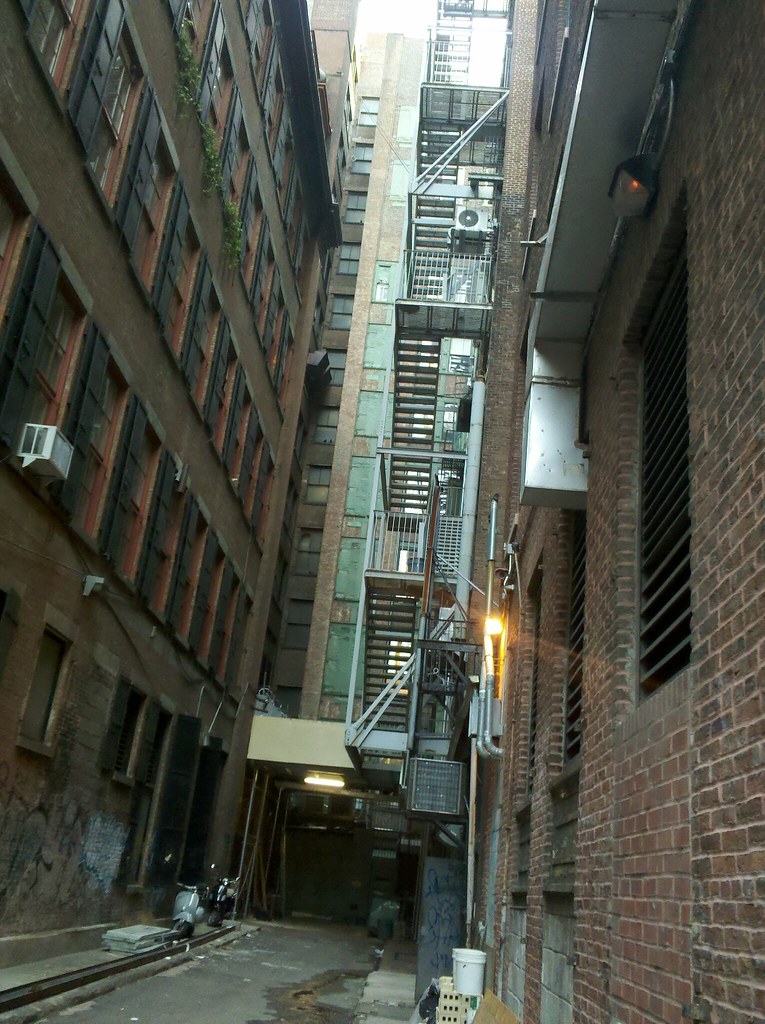
According to some, this little alleyway (also known as Great Jones Alley) was the source of the term "jonesing", which originated among the drug addicts who once called its pavement home, back in the days before it was gated and closed to the public.

This building's name has nothing to do with telegraphs or telephones or televisions, but refers instead to a nearly extinct form of mass transit whose day in the sun came and went more than a century ago: the cable car!
A fascinating mode of transportation, cable cars play no role in generating their own motion. They are simply pulled by an extremely long cable that moves at a constant speed in an open conduit beneath the street. Each car clamps onto the cable when it wants to move, and then releases the cable (and applies its brakes) when it wants to stop.
It is, of course, no small feat to keep those miles-long loops of cable in motion. Back in the glory days of cable cars, big rooms full of coal-fueled steam engines and giant spinning wheels and belts and gears were needed to provide sufficient power, and the Cable Building, constructed by the wonderfully named Metropolitan Traction Company in 1893, had just such a setup located in its basement, serving as the powerhouse for a cable that ran three and a half miles along Broadway from Bowling Green to 36th Street.
If you're interested in learning more about the details of cable car operations — like what happens when two routes intersect — check out this site, which has an abundance of information on the subject.

