
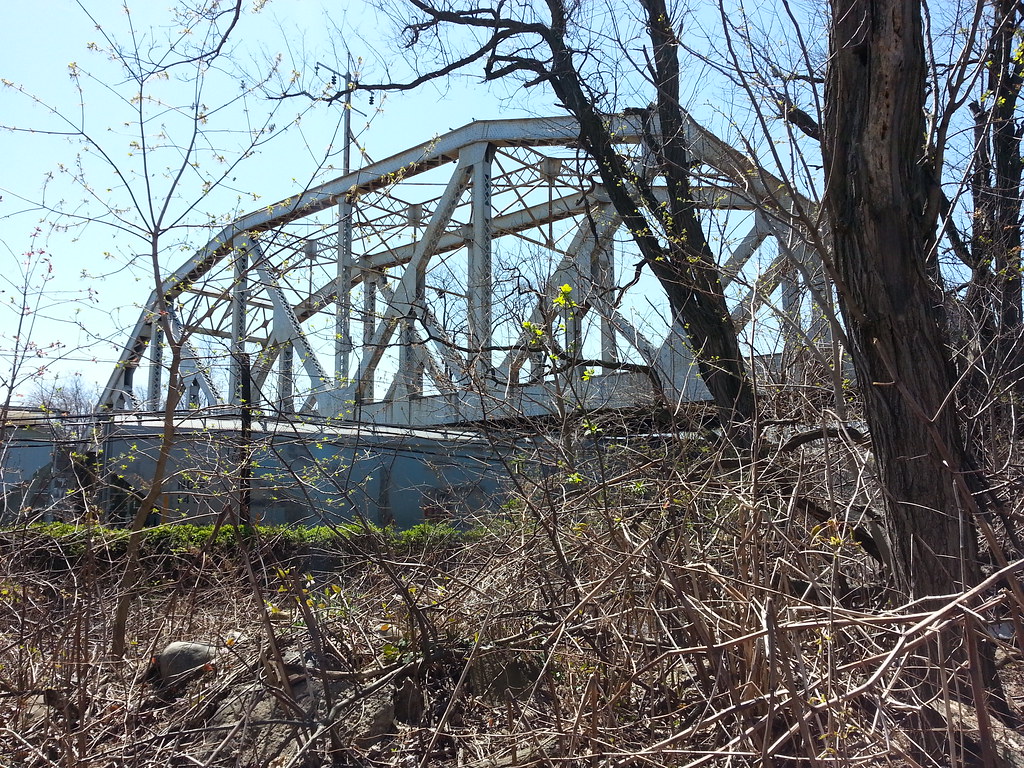
This Pennsylvania truss bridge, located right at the edge of All Faiths Cemetery, carries the southern end of the New York Connecting Railroad over the tracks of the Lower Montauk Branch at Fresh Pond Junction, Long Island's primary freight rail yard.
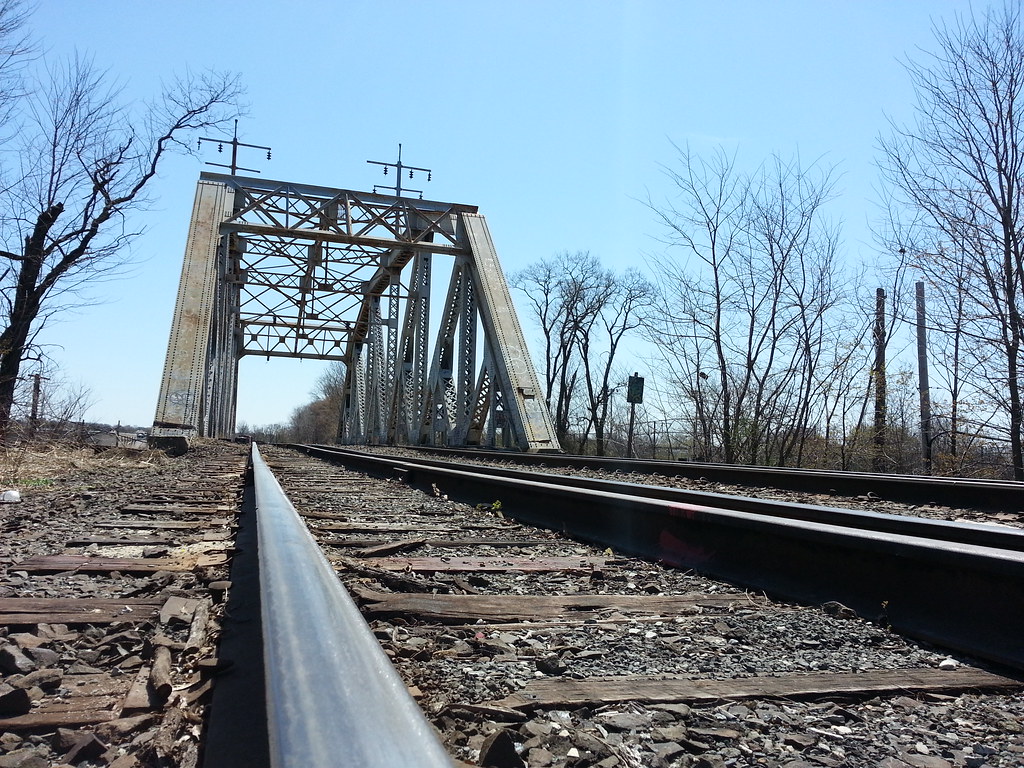

on the Lower Montauk Branch, located just outside the southern entrance to All Faiths Cemetery. The Long Island Rail Road ceased passenger service here and at four other stops on the line in 1998 (before eventually canceling passenger service on the line altogether in 2012), deciding the stations were too "lightly used" to justify paying for the improvements needed to keep them open. As a 1998 NY Times article put it:
"Lightly used" may be an understatement for Glendale station, which is actually two forlorn strips of pavement beside the tracks, with no signs, no timetables -- nothing, in fact, that suggests it is an official stop on the L.I.R.R.'s Montauk branch.
According to L.I.R.R. records, only two customers used the station each day: Ms. McDonald, who carries her lunch in a plastic bag, and Mr. Sullivan, with his Newsday tucked under his arm. Both work in Glendale. (Mr. Mueller, who rides the train to the Nassau Coliseum only when there is an Islanders game, does not show up on the daily passenger counts.)

Like his son Donald, Fred Christ Trump was a very successful real estate developer. (We've previously seen an old Depression-era supermarket he built.) Unlike his son, however, he had a reputation for modesty and frugality. According to his family, he would regularly visit his construction sites at the end of the day, still dressed in his suit, and would walk around collecting unused nails to make sure they didn't get wasted. He would also often handle the pest extermination duties in his buildings himself, just to save money. Here at All Faiths, there is only one indication that his gravesite belongs to a family of above-average means: while most of the footpaths in the cemetery are cracked and/or partially covered with dirt, the path leading to his headstone is very smoothly and freshly paved, but then quickly returns to oblivion once it passes the family's graves.
UPDATE: Okay, maybe Fred wasn't so different from Donald after all.
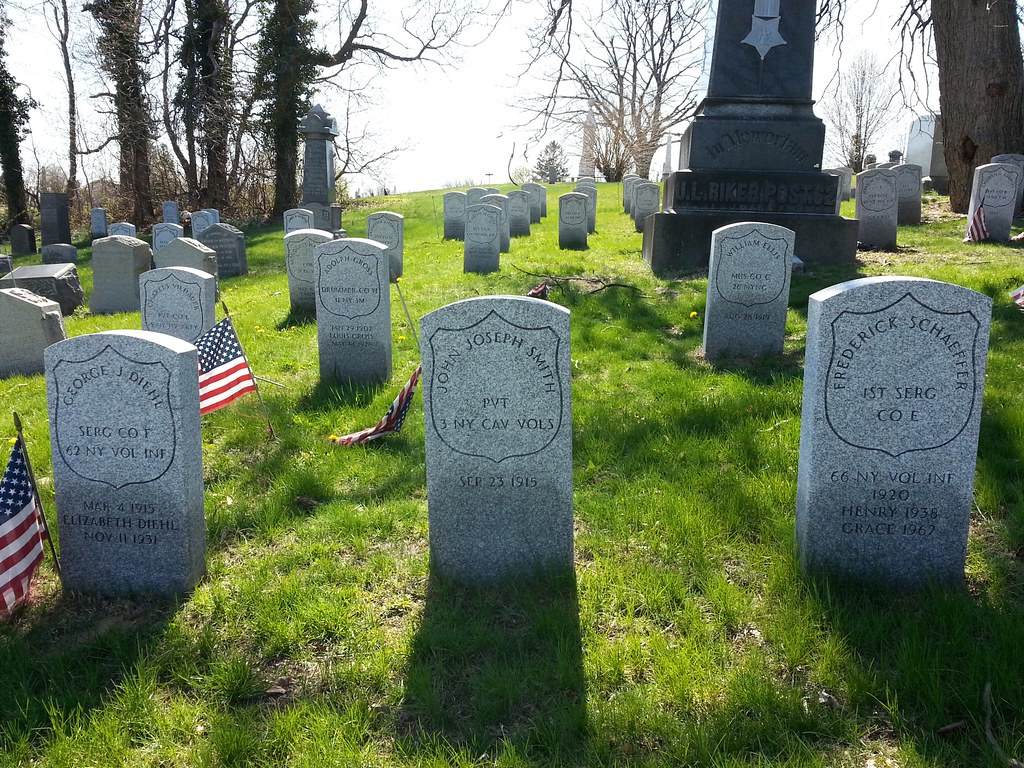
Today I saw a few different sections of All Faiths Cemetery set aside for Civil War vets. Reflecting the overall population of the cemetery, most of these soldiers were of German origin.
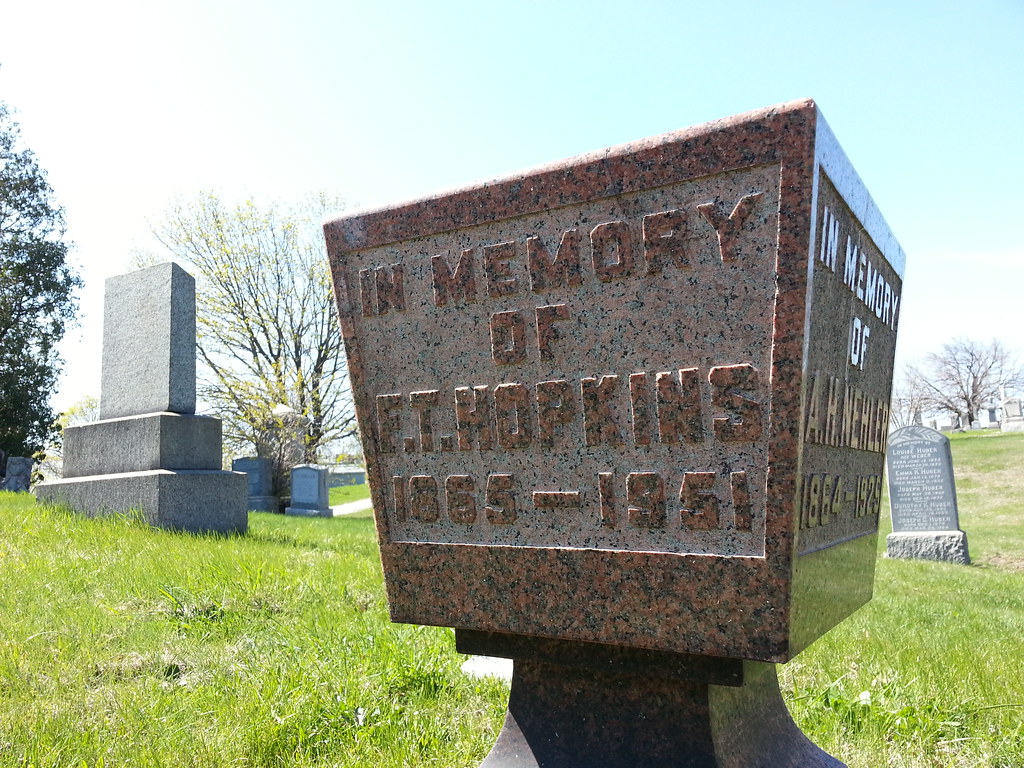
From a Slate article published in 2004:
In Hidalgo, which opens Friday, Viggo Mortensen plays Frank T. Hopkins, an American cowboy who takes his mustang overseas to compete in the Ocean of Fire, an endurance horse race across thousands of miles of Arabian desert. The trailer bills the Disney/Touchstone movie as an "incredible true story," and the tale of Hopkins' travels is certainly incredible. But is it really true?Read the rest here.
Well, there truly was a Frank T. Hopkins. He lived from 1865 to 1951, and in his memoirs, which he wrote in the 1930s and 1940s with his wife Gertrude, he exhibits plenty of cowboy swagger—he calls Buffalo Bill a stinking drunk and Sitting Bull a coward. He also claims that he was a long-distance U.S. Cavalry rider by age 12; the winner of hundreds of long-distance races all across America; a friend of Black Elk; a star in Buffalo Bill's Wild West show for over 30 seasons; and the first American ever to compete in—and win—the Ocean of Fire.
The problem is, each of these claims is demonstrably false.

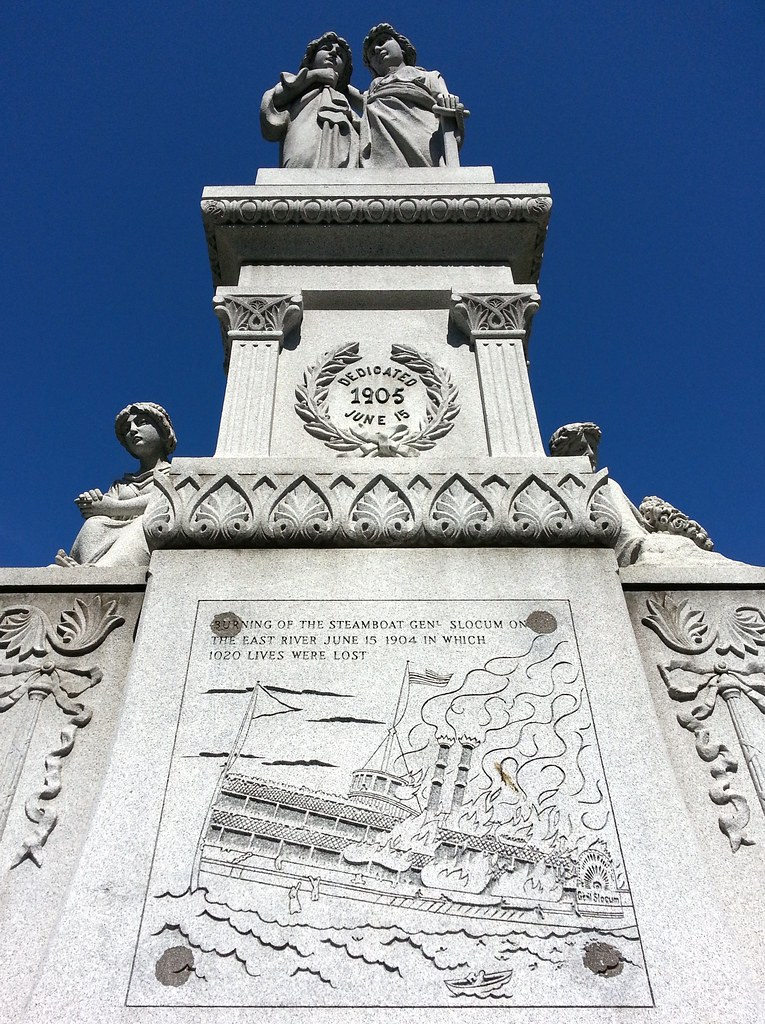
The burning of the General Slocum, an excursion steamer that was carrying residents of Manhattan's Little Germany to a church picnic when it caught fire in the East River in 1904, was NYC's deadliest disaster prior to 9/11. Many of the 1,021 people who died are interred here at All Faiths Cemetery (known at the time as Lutheran Cemetery).
The monument above is dedicated to the 61 unidentified victims, whose remains are buried in the surrounding plot. It was unveiled at a ceremony a year after the tragedy by the youngest surviving passenger, a little girl named Adella Liebenow, who would also go on to become the final surviving passenger prior to her death in 2004 at the age of 100. (Another survivor, a decade older, made it to 109 — both she and Adella were still alive when the twin towers fell.)


"Diffuse backyard tension between squirrels and wild birds with humor. . . . cleverly convert pesky squirrels into welcomed backyard comedians. You can't help but laugh the moment you witness a squirrel seated in his very own patio furniture eating corn."
What could be better than that? How about a horse head squirrel feeder: "Makes feasting squirrels look they're wearing a Creepy Horse Mask . . . Takes arrogant squirrels down a peg".

This three-dimensional, truck-mounted re-creation of the iconic photo Lunch atop a Skyscraper* was sculpted by Sergio Furnari, a Sicilian-born artist who started out selling smaller versions of the work (which can now sometimes be found on view in the back of the truck) from a sidewalk table in SoHo in the 1990s. He spent about a year making the first life-size rendition, finishing it not long after 9/11. He was allowed to display it near the ground zero public viewing platform for a few months as a tribute to the ironworkers participating in the grueling cleanup effort, and he later took the piece on a tour around the country. After returning to New York, one of the figures was stolen right off the girder in 2007, but was then found wrapped in plastic behind a church six months later. Mr. Furnari sold the work in 2009, along with another full-size reproduction, to a couple of restaurateurs from Indiana; as far as I can tell, the sculpture you see above is the third large-scale one he's made.
* We've previously seen two other takes on this famous photograph.


Located on a quiet residential street in Elmhurst, this eye-catching Thai Buddhist temple comprises two rather incongruous architectural styles. It was built in the late 1990s, replacing a pair of old houses that previously stood on the site. One of the houses had served as the temple, while the other had been used as living quarters for the monks before it was heavily damaged by a fire. Here's a great article about the temple's early days in the mid-1990s, before the current building was erected.
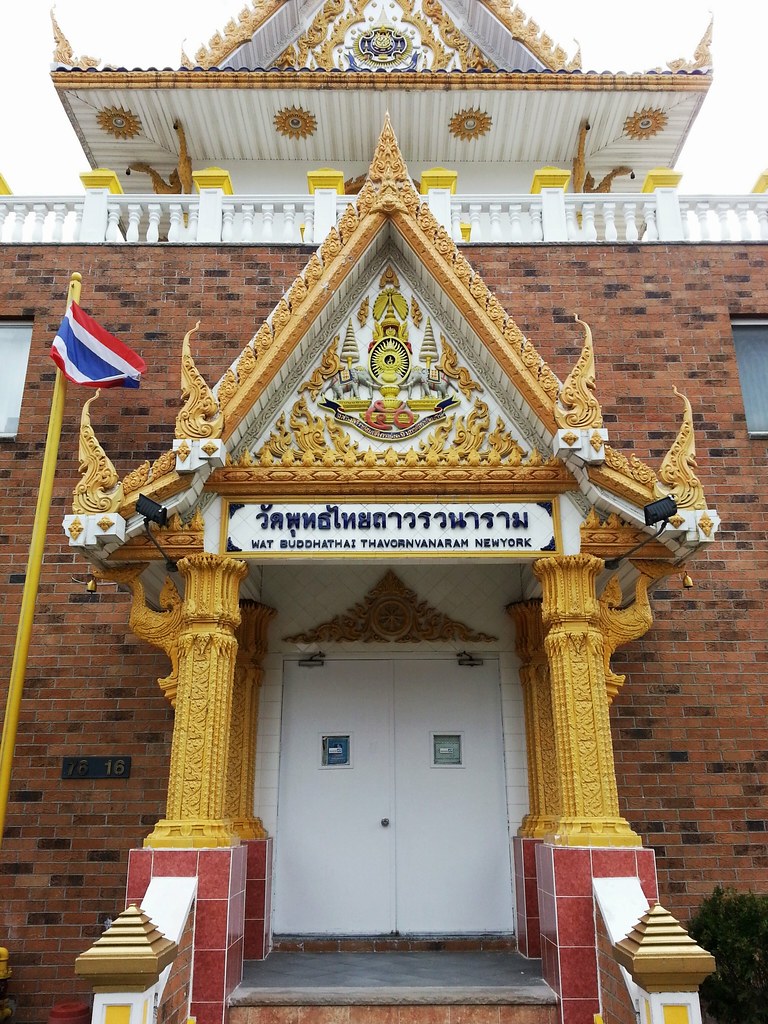
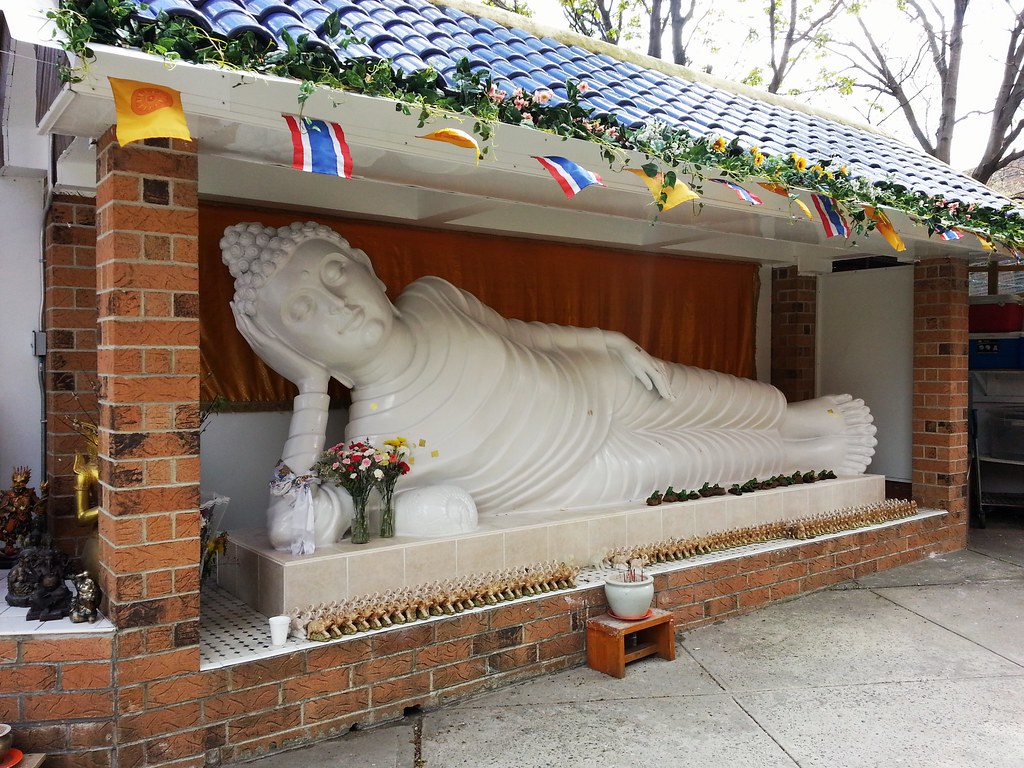
There are a number of different shrines and statues located behind Wat Buddha Thai Thavorn Vanaram. The largest one is this reclining Buddha.
I was reminded of how culturally diverse western Queens is while I was walking around this Thai Buddhist temple listening to Colombian salsa music pumping from a neighbor's cookout.

This is the interior of the peaked structure at the top of Wat Buddha Thai Thavorn Vanaram. The focus of the room is the replica of the Emerald Buddha, visible above. The woman at right is meditating, very slowly and deliberately placing one foot halfway in front of the other over and over again as she inches her way across the carpet at a snail's pace.

at Wat Buddha Thai Thavorn Vanaram. Also present on the shelf is a cassette tape of Can't Slow Down by Lionel Richie.
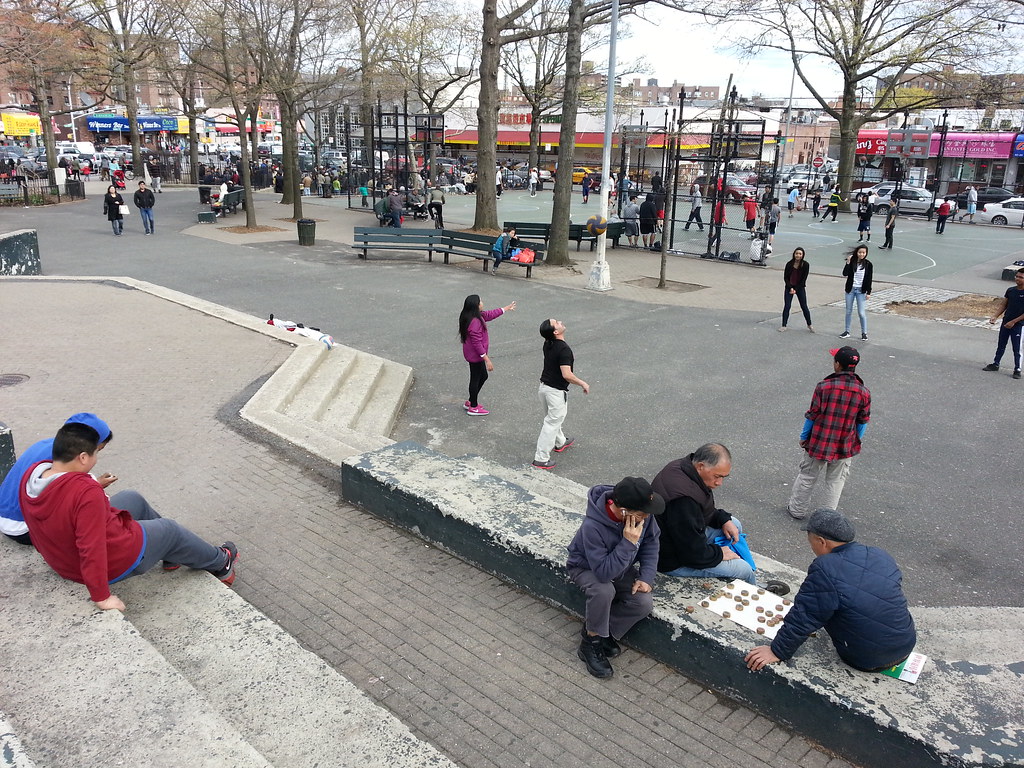
On this land once stood the childhood home of Clement Clarke Moore, the biblical scholar generally accepted to be the author of "A Visit from St. Nicholas", a.k.a. "The Night Before Christmas". Before Clement's time, the orchard at the Moore estate was the birthplace of the venerated Newtown Pippin, a variety of apple "revered by the nation's founders . . . the prize of queens and the pride of Queens".
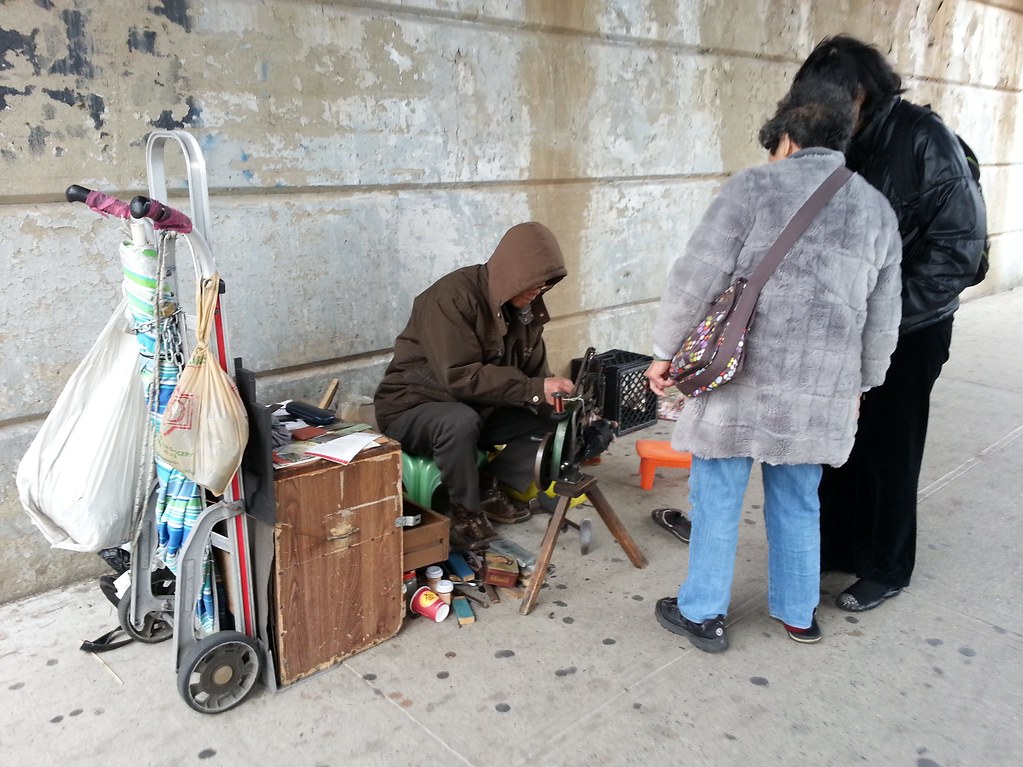
In New York's Chinatowns, it's not unusual to find a shopless cobbler set up on the sidewalk, fixing people's shoes using the limited number of tools he can carry with him. The gentleman above plies his trade beneath a railroad overpass here in Elmhurst; we saw a similar sidewalk scene last year on 8th Avenue in Sunset Park.
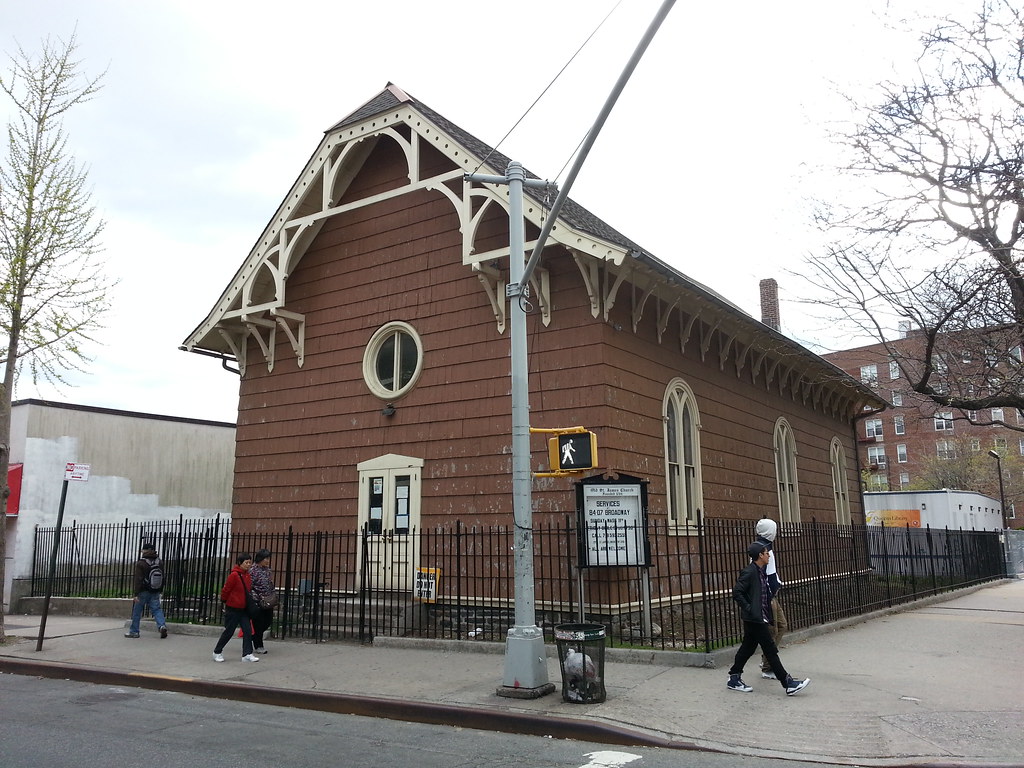
This former Anglican church and current community center (still owned by the parish) was built in 1735-36 and restored to its 1880s appearance in 2004.
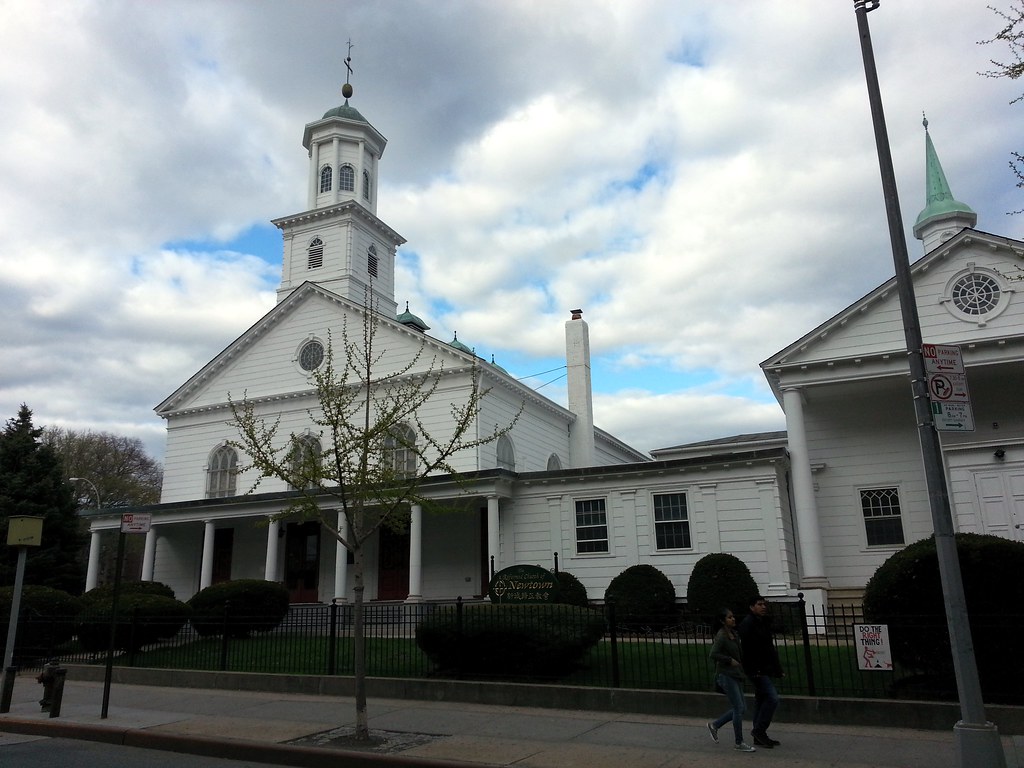

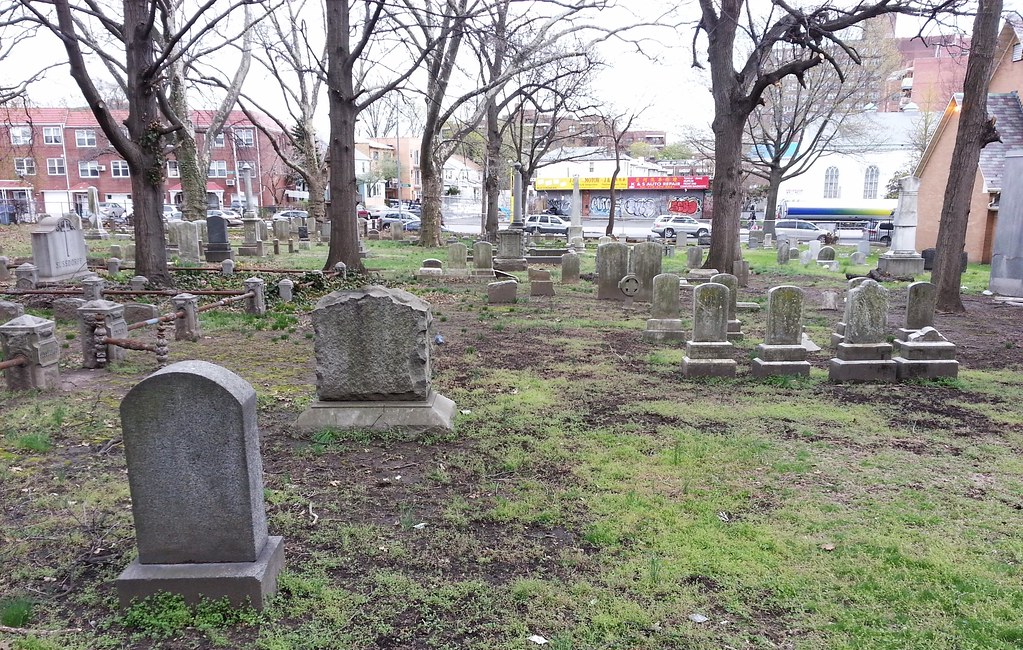
This one belongs to St. James Episcopal Church. Some of the people buried here were originally interred two blocks away, behind the parish's old church building.
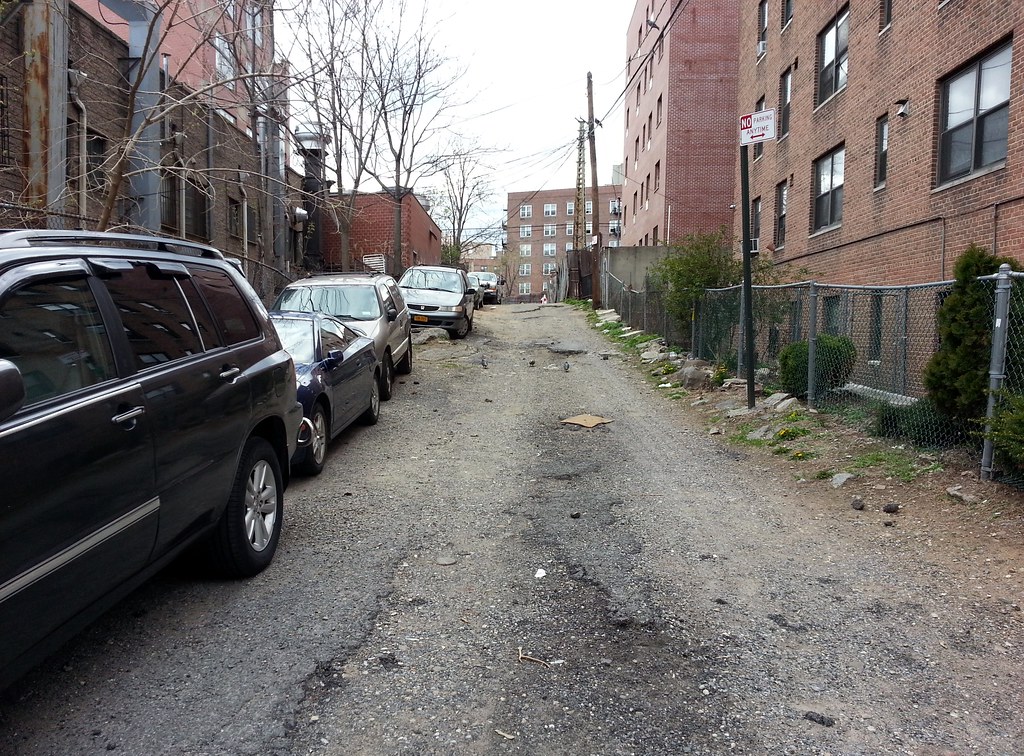
Along this little road once stood four large houses, built in the 1850s by Samuel Lord (of Lord & Taylor) for his four daughters. One of the houses managed to survive, albeit in a dilapidated state, until 2006, when it was leveled to make way for the still-unfinished brick apartment building above, second from right. You can see bird's-eye views before and after the house was replaced by the apartment building here and here, respectively.
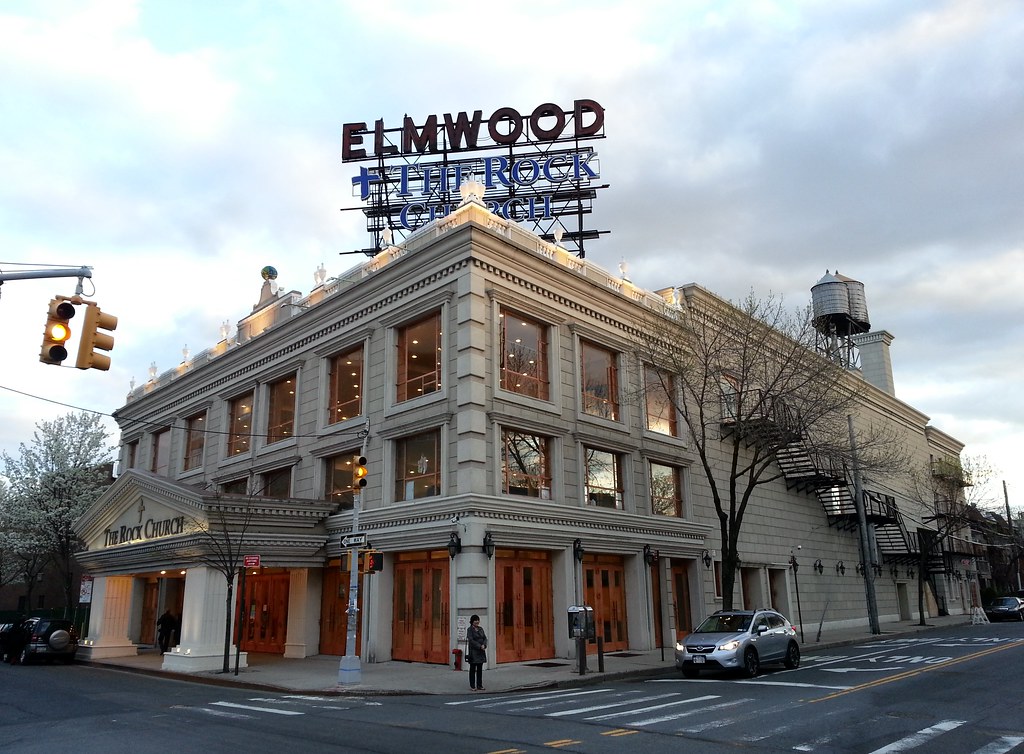
This building opened as the Queensboro Theatre in 1928. It was later renamed the Elmwood Theatre, and was still in the business of showing movies as recently as 2002.


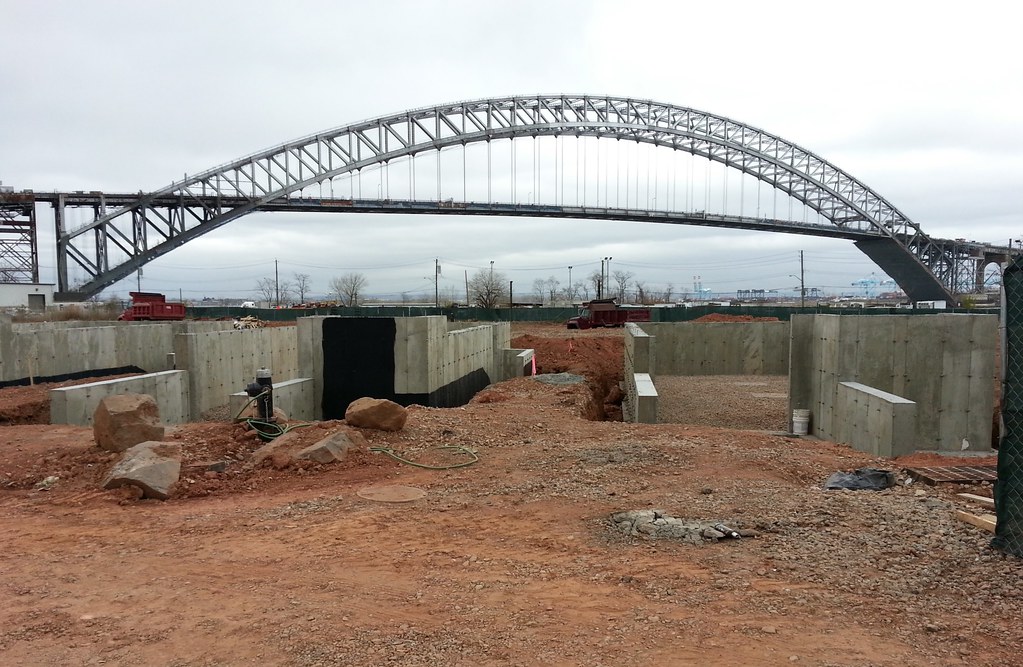
Homes-to-be rise in the foreground; meanwhile, work is now underway to raise the roadway of the Bayonne Bridge 64 feet to accommodate the larger ships that will be navigating the Kill van Kull once the expansion of the Panama Canal is complete.

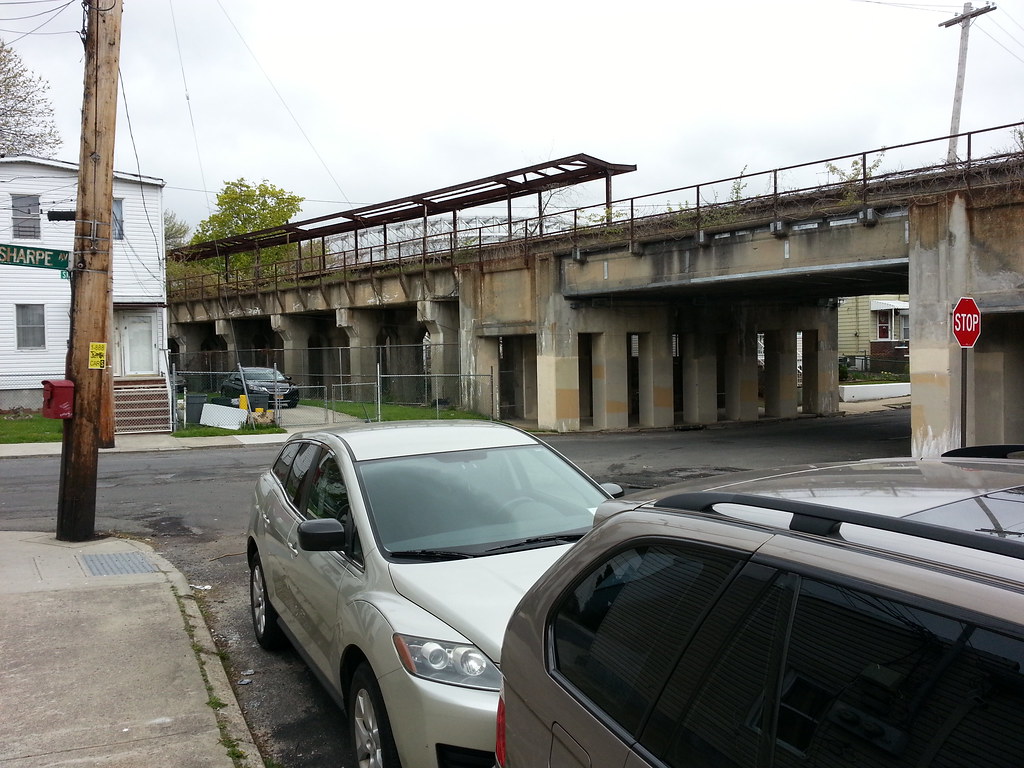
The Tower Hill station on the abandoned North Shore branch of the Staten Island Railway
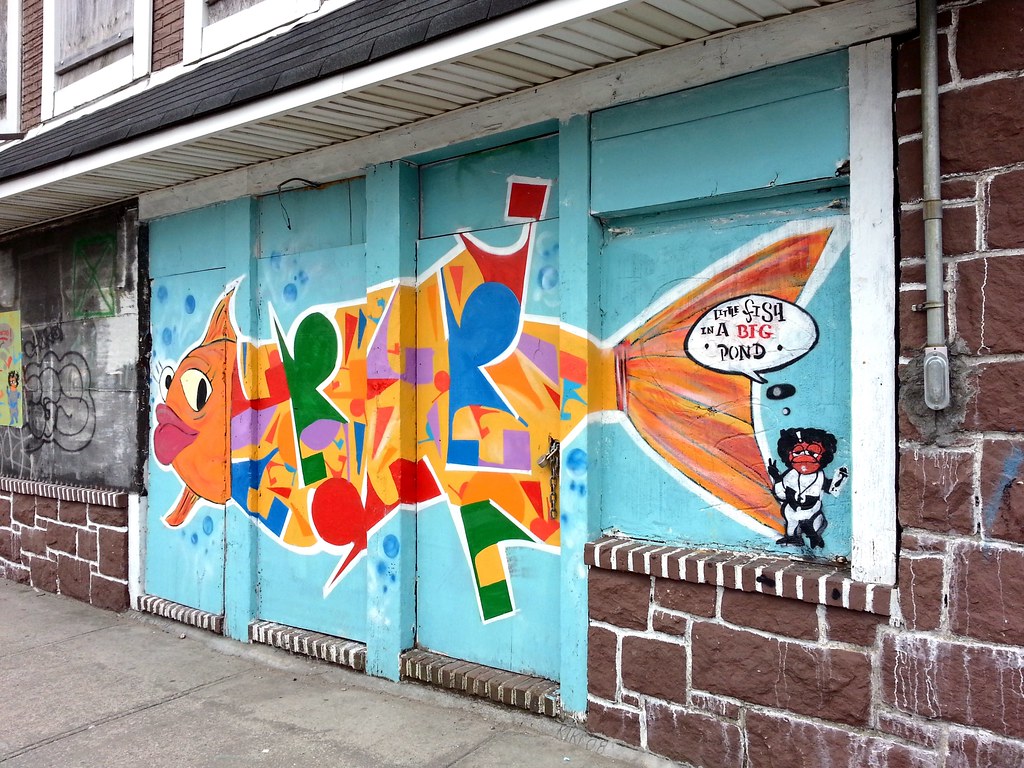

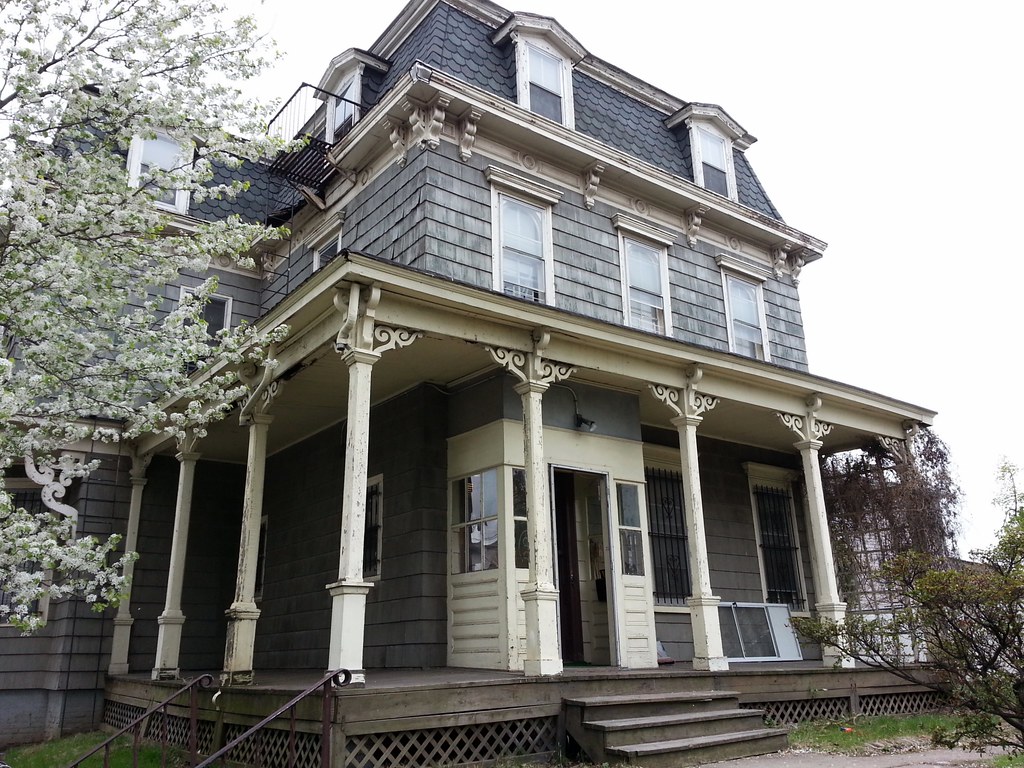
Winner of a 2014 Historic Treasure award from the Preservation League of Staten Island
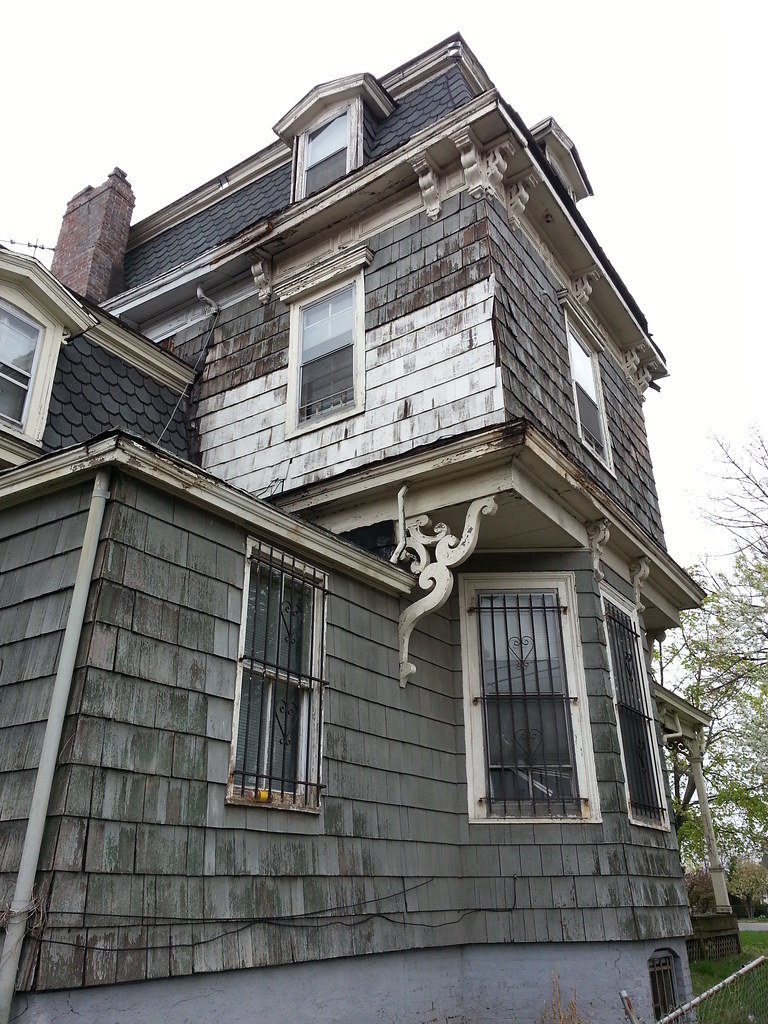
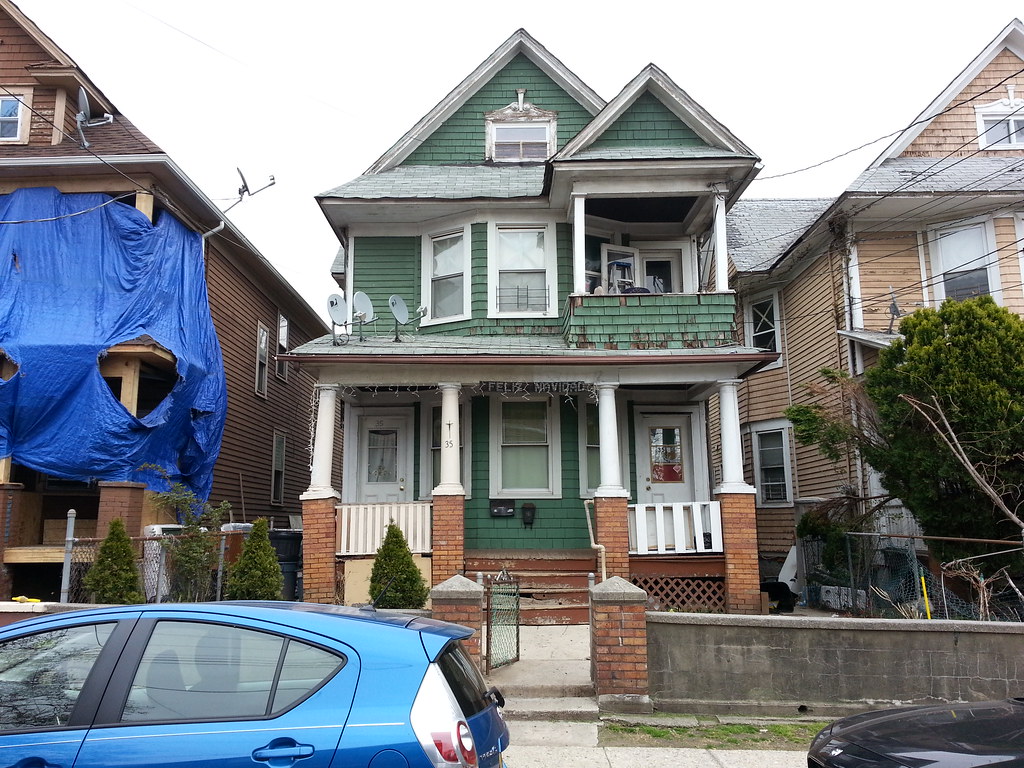
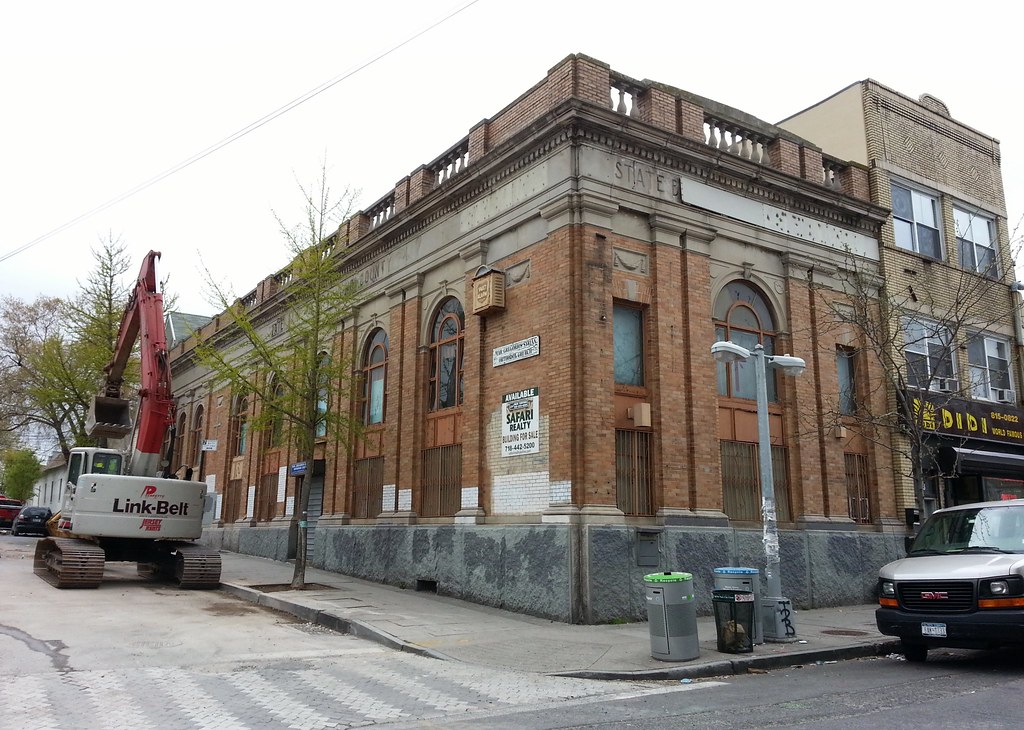
This old bank, with its vault alarm still in place, is now occupied by Mar Gregorios Syrian Orthodox Church, established in 1975 as the first Malankara (Indian) Syrian Orthodox parish in North America.

This church was constructed in 1844, but its congregation is much older — the oldest on Staten Island, in fact. Its earliest members began worshiping together in 1665, and later built their first church, on this site, in 1715.

Located on the north side of the church, this is the oldest section of the cemetery. It was in use as a family burial ground by 1705, predating the construction of the first church on the site by at least a decade. The oldest gravestone found here dates to 1746.
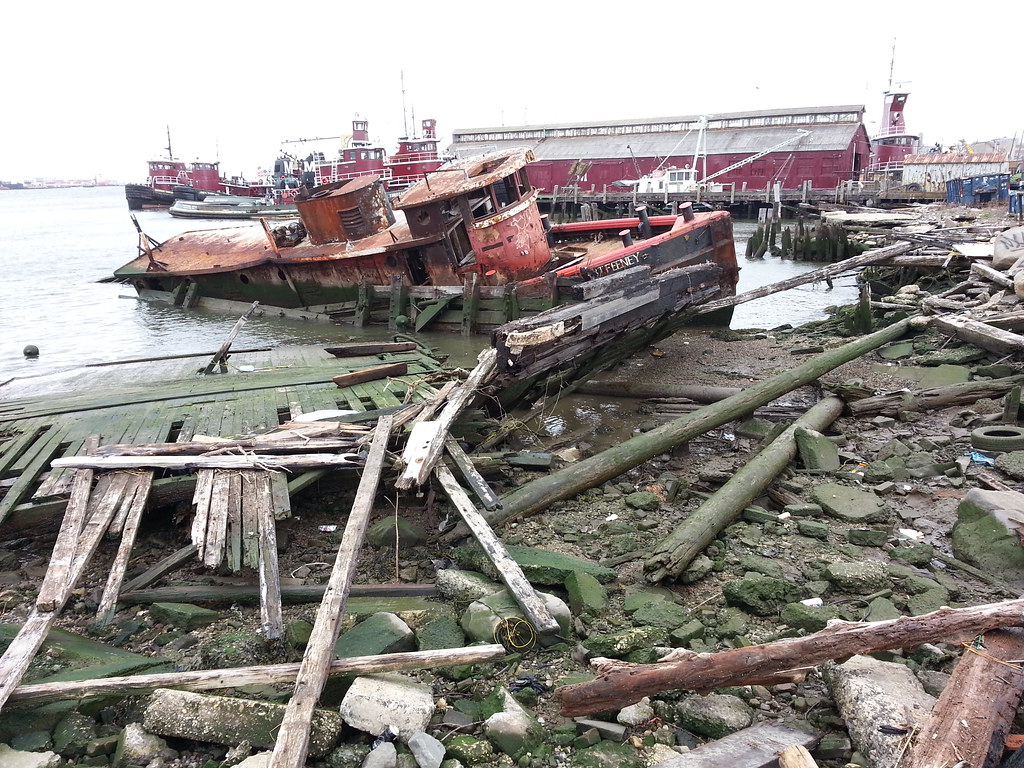
Named Germania when it was launched in 1892, this tugboat (closer look) has been stranded here at the northern end of Port Richmond Avenue for at least a decade. (It was apparently in better shape and being restored as recently as the early to mid-1990s.) Right beside it, you can see the last remains of an old wooden barge that had also been grounded here for quite some time. The barge caught fire a few years ago, and what was left of it has deteriorated even further since then.
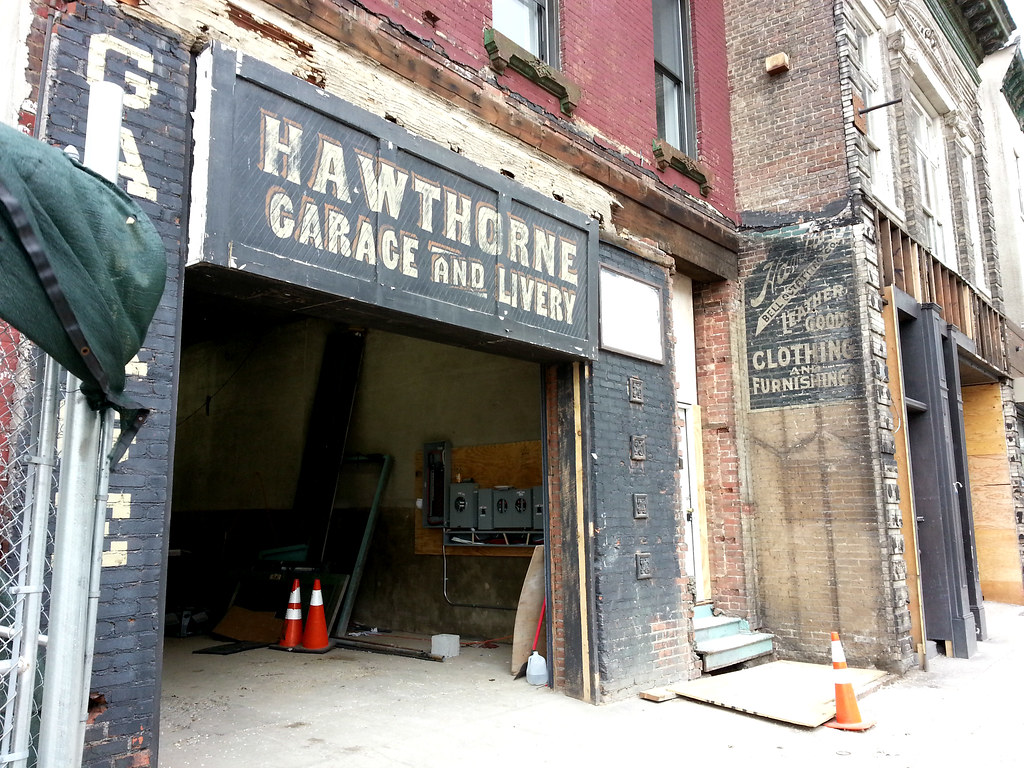
This is likely part of a set for Boardwalk Empire, which has filmed on this very block. (We also saw a former Boardwalk Empire set earlier this month in Sunset Park.) It's certainly not an actual historic establishment, at any rate, although the fading painted sign at right (close-up) looks to be authentic, uncovered as these storefronts were being given a makeover. Check out the transformation of this block, especially the buildings just south of here, between January and August of last year.

All Saints Church of Christ in God, originally Port Richmond National Bank. You can still see the night depository slot (closer look) in the bottom left corner of the left-most first-floor window! It was around 1909 that the bank built this addition to its 1870s building next door (which, like the former State Bank of Richmond County we saw earlier today, still has an ancient burglar alarm mounted on its facade).
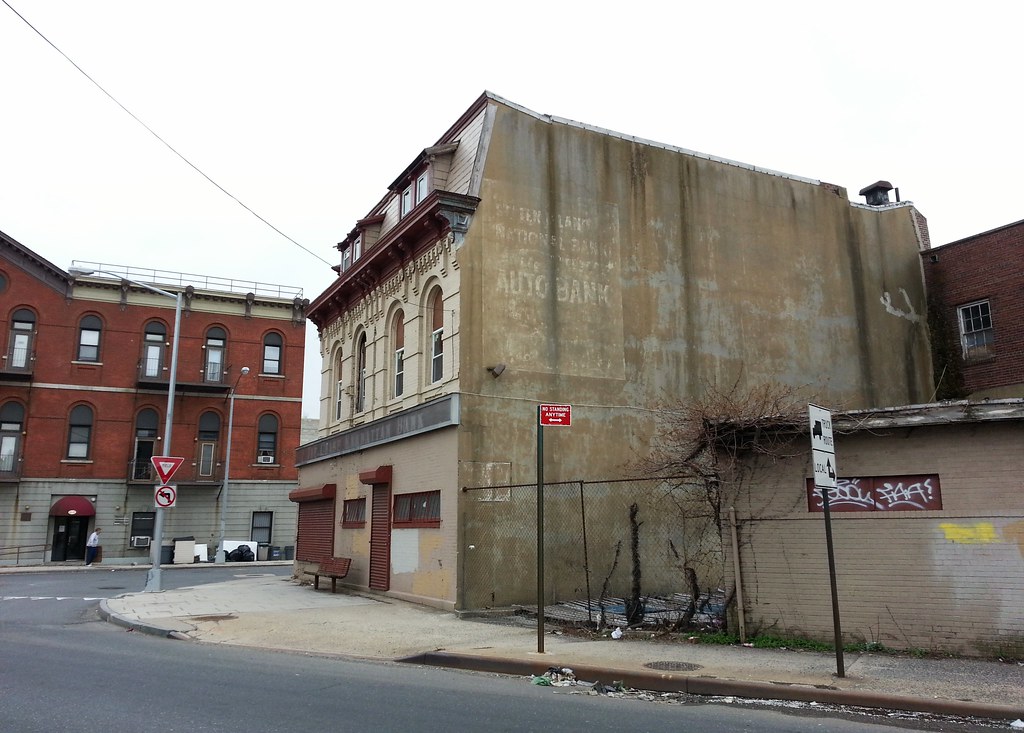
This view of the old Port Richmond National Bank reveals some of the institution's later history. The fading sign painted on the wall boasts that auto banking — I assume that means drive-through banking — is available at Staten Island National Bank, which is what Port Richmond National was renamed in 1926. (As recently as last year, "Staten Island National Bank & Trust Company" was still visible on the frieze of the building addition seen in the previous photo.) Meanwhile, the ghost letters on the horizontal band running across the building between the first and second floors read "Chase Manhattan Bank"; Staten Island National merged with Chase in 1957.

