
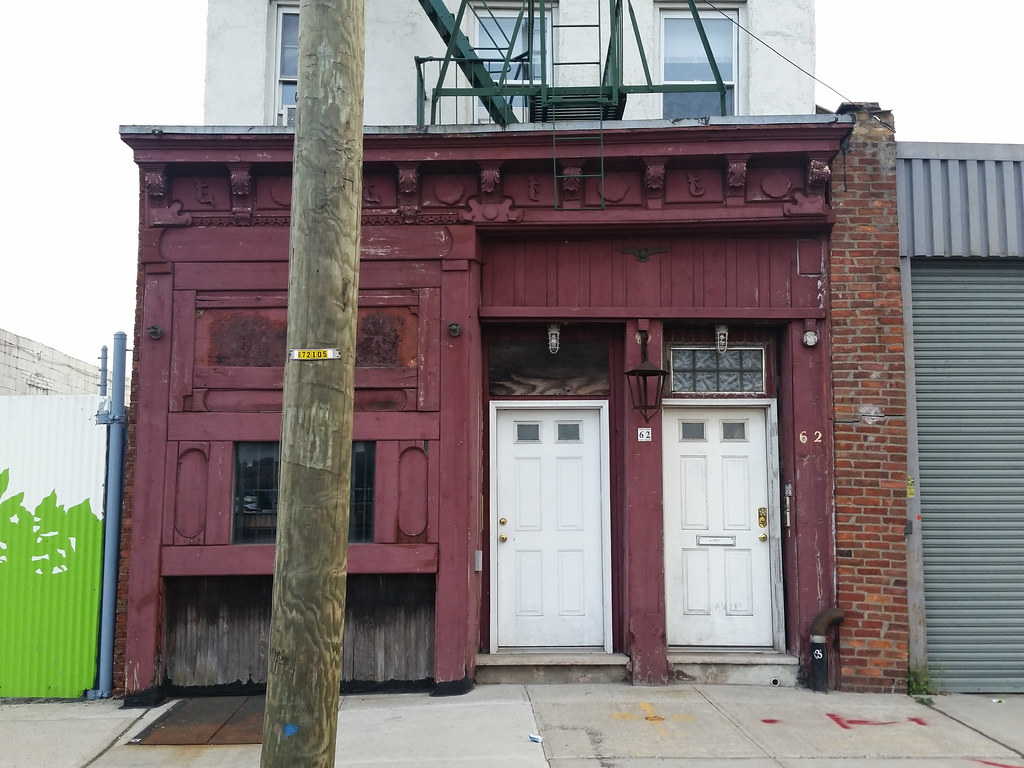
Zoom in to check out the mermaids and (what I'm guessing were once identifiable as) seashells floating between the corbels at the top of the first-floor facade.
This building is known locally for the OBAMA❤ mural painted on its upper stories.
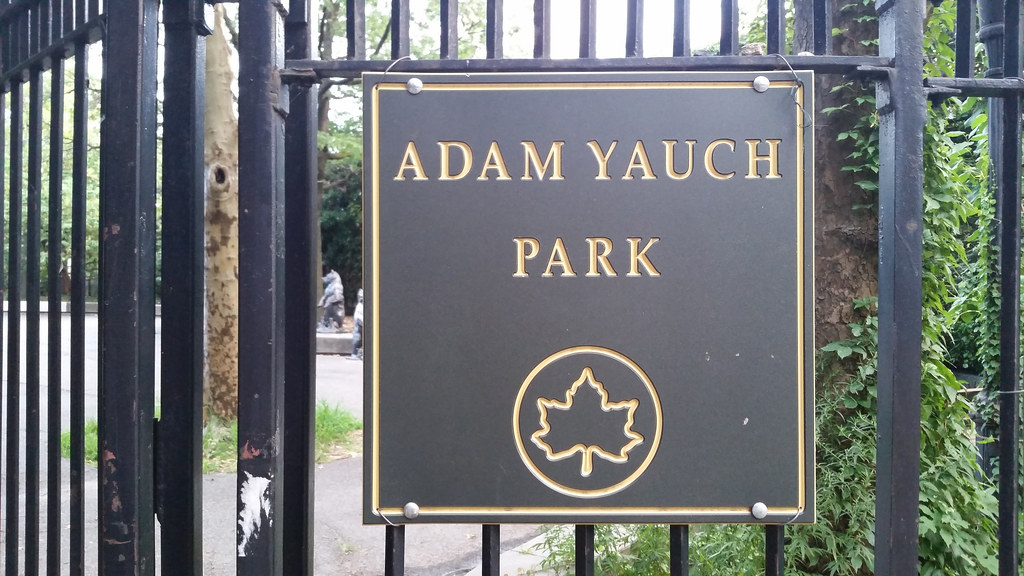
A year after his death, this park was renamed for the late, great member of the Beastie Boys, who grew up playing here. The park's seemingly mundane former name, Palmetto Playground, was actually one of Henry Stern's strangest appellative concoctions. As told by the Parks Department:
Palmetto Playground’s nomenclature was inspired by the names of the surrounding streets: Atlantic Avenue, Columbia Place, and State Street. Columbia is the capitol of South Carolina, an Atlantic state, and the state tree is the Cabbage Palmetto, hence, Palmetto Playground.(There is at least one trace of Mr. Stern's personality still remaining in the park, however: those dancing bear statues in the background.)
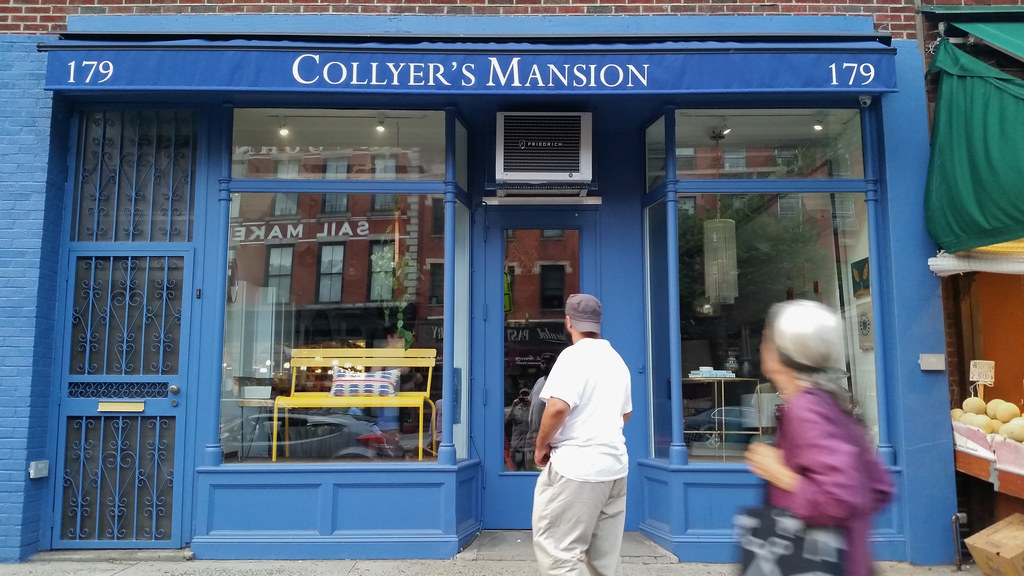
Homer and Langley Collyer were NYC's most famous hoarders. The reclusive brothers, rumored to be quite wealthy, lived out their lives in a jam-packed Harlem row house "honeycombed with tunnel-like passageways through the piles of newspapers and debris."
One day in 1947, while bringing food to Homer, who had been blind and paralyzed for several years at that point, Langley accidentally triggered one of the many booby traps he had set inside the house, causing a mountain of rubble to collapse and suffocate him. Left alone with nothing to eat, Homer died some days later. Responding to a call, the police discovered Homer's body on March 21. Because the house was so crammed full of junk, they were unaware that Langley lay just ten feet away from his brother. His body wasn't found until April 8.
The Fire Department still uses the term "Collyers' Mansion" to refer to a dangerously overstuffed dwelling. The owners of this home goods shop adopted the name for their original Ditmas Park location, "a tiny store . . . filled with stuff" arranged "like Tetris".
(In the window at left, you can see a reflection of what once was a painted sign for John Curtin Inc., Sail Makers & Canvas Goods — and what now is essentially decor for an Urban Outfitters store, helping to convince its customers that they're enjoying an authentically vintage shopping experience.)

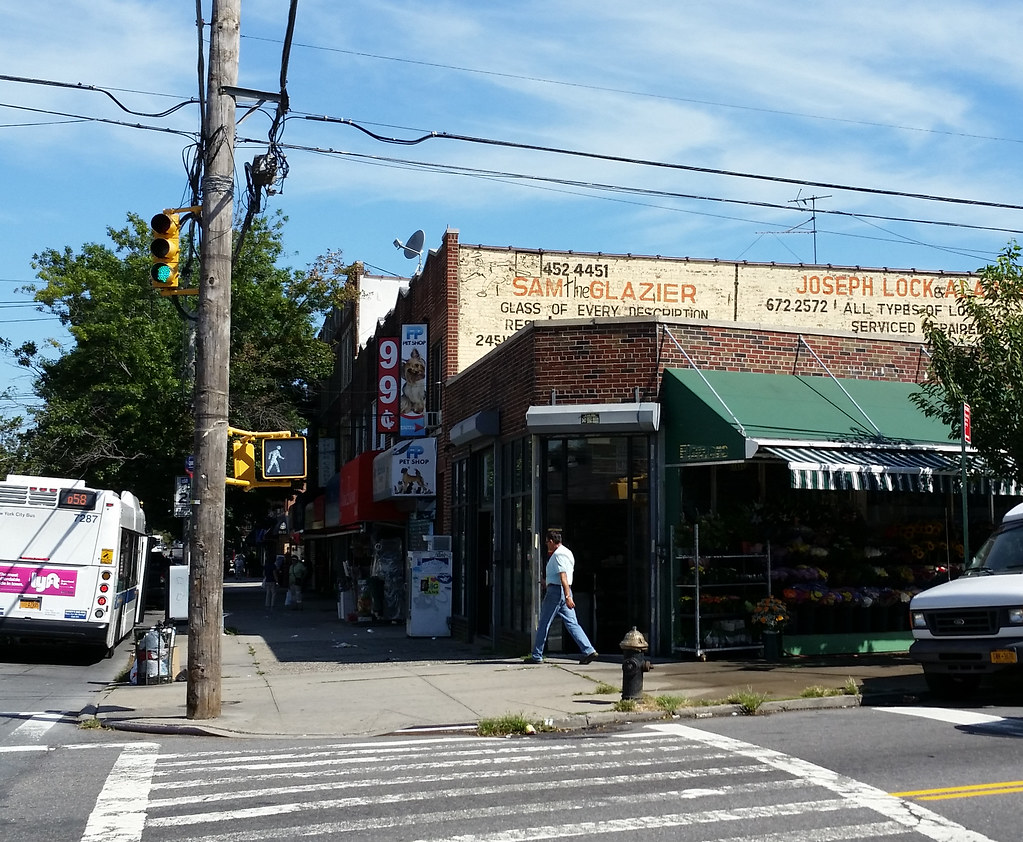
Here's a closer look. The window-breaking ballplayer reminded me of an old painted ad I saw on a wall in Bushwick back in 2012. The company name is no longer legible on that ad, but the phone number is — and it matches this one!
Given the age of these two ads, I figured the business had probably gone under some time ago, but it turns out Sam is still glazing away, just down the block from the aforementioned ad in Bushwick.
Looking at Sam's store in Street View, you'll find, on an adjacent wall, another painted ad for the business, this one with a catchy slogan: "Don't hold your new windows up with sticks".
(The Street View image linked to above also reveals an impressive collection of pigeon coops on the roof of the building where the ad is painted.)

It escaped from someone's backyard and climbed into the limbs of a mulberry tree.

That's Mount Olivet Cemetery on the left and All Faiths Cemetery on the right.

Rising above the surrounding areas, this hill in Mount Olivet offers an impressive view of the Midtown Manhattan skyline.

The Japanese Cemetery at Mount Olivet was established in 1912, making it the oldest Japanese burial section in a city cemetery.
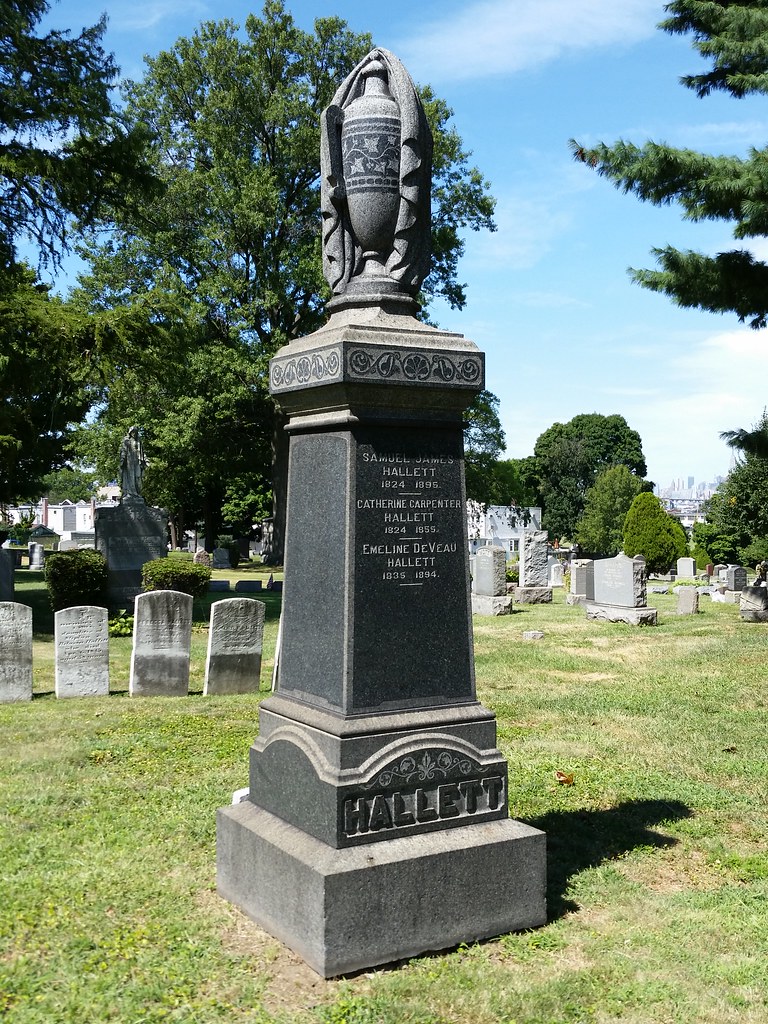

The patriarch of the Hallett family in Queens was William Hallett. Born in England in 1616, William arrived in America during the 1630s or 1640s and eventually acquired some 2,200 acres that included all of what is now Astoria.
Many of William's descendants were laid to rest in a little family graveyard near the modern-day intersection of Astoria Boulevard and Main Avenue, where the earliest documented headstone was dated 1724. In 1905, the contents of these graves were transferred to this lot in Mount Olivet Cemetery. Here's a look at the site of the old Hallett burial ground today.
While we're on the subject of deceased Halletts, I should mention the grisly demise of William Jr. (William the patriarch's grandson), his pregnant wife, and all five of their children, who were axe-murdered one night in 1708, allegedly by two of their slaves (specifically by one male slave at the urging of his female counterpart).
After the slaves were found guilty and sentenced to death, "the woman was burnt at the stake; her accomplice was hung in gibbets, and placed astride a sharp iron, in which condition he lived some time, and in a state of delirium which ensued, believing himself to be on horseback, would urge forward his supposed animal with the frightful impetuosity of a maniac, while the blood oozing from his lascerated flesh streamed from his feet to the ground."
The preceding account was taken from a history of Newtown, Queens, published in 1852. After retelling the story, the author went on to comment: "How rude the age which could inflict such tortures, however great the crime committed."
The slaying of the Halletts led the New York provincial assembly to pass, later in 1708, "An Act for preventing the Conspiracy of Slaves". The murders also served as part of the backdrop for the slave revolt of 1712, "a violent insurrection of slaves in New York City that resulted in brutal executions and the enactment of harsher slave codes."

I first heard of Louis Windmuller, founder of the Pedestrians Club and "the noblest walker of them all", back in the summer of 2012 when I passed through a little park named after him in Woodside. It seemed fitting that it was only by wandering around myself that I learned about this forgotten practitioner of the peripatetic arts. And then today, completely by chance, I came across his grave right here in Mount Olivet!


Looking out through the fence of Mount Olivet Cemetery


Built for the Polish community of Maspeth, this church was dedicated in 1913 and still maintains its Polish identity today.
Here's what the AIA Guide to New York City has to say about the building: "The voluptuous curvilinear verdigris copper steeple makes this church extraordinary. Disney must be jealous."
UPDATE (Oct. 11, 2017): Holy Cross is in the NY Times today: "23 Women Accuse Former Queens Priest of Abusing Them as Children".
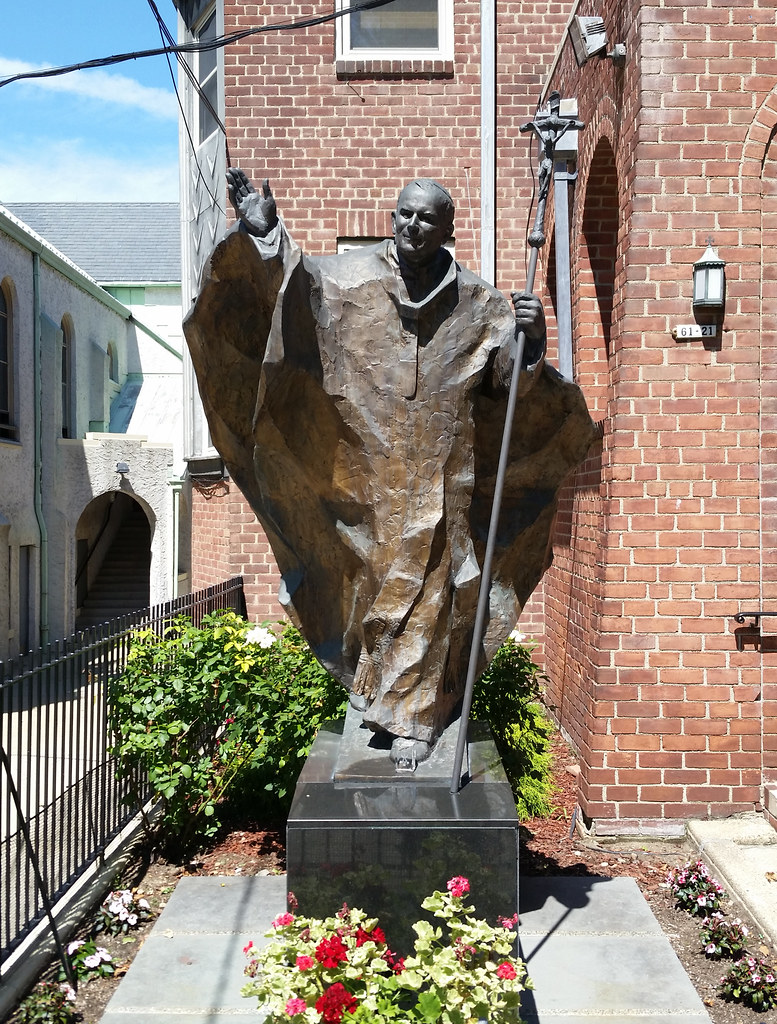
In 1969, nine years before he became the first Polish pope (and the first non-Italian pope in 455 years), the future John Paul II spent the night here at Holy Cross Church during a trip around Canada and the US. (As we previously learned, he also visited St. Stanislaus Kostka Church in Brooklyn while he was in town.)


Commemorating the future pope's overnight visit to Holy Cross Church in 1969, the block of 56th Road where the church is located was co-named Pope John Paul II Way in 2014. You can find about a dozen replicas of the street sign on display outside different houses on the block — a show of pride unique among the hundreds of co-named streets I've walked so far.

Located behind Holy Cross Church. A plaque, dated 1961, reads:
THIS GROTTO IS DEDICATED TO ALL THOSE WHOSE LOVE FOR THE BLESSED MOTHER PROMPTS THEM TO SPEND A MOMENT HERE IN PRAYER AND MEDITATION

Maspeth Central is home to the city DOT's sign shop, which makes traffic and street signs for all five boroughs — some 9,000 to 12,000 signs per month, according to this video. (There was a much cooler sign out front here during the Bloomberg administration.)


They're growing in the same tiny, paved front yard as the cinder-block peppers in the previous photo. Not a bad harvest for a couple dozen square feet of concrete!


This is the backside of the city DOT's Maspeth Central Shop, where most of the city's traffic and street signs are made.

This church (not to be confused with the church of the same name in Brooklyn that I mentioned a few posts back) was built in the 1920s on the site of an old Quaker burial ground.


A great technological leap forward for those who prefer their drinking water straight from the hydrant.


This Polish Legion of American Veterans post is named for Frank Kowalinski, "the first U.S. Army soldier of Polish descent to be killed in combat during World War I".
From 1895 until about 1914, this building was a firehouse, home to Maspeth Engine Company No. 4. You can see a couple of old photos of the firehouse here and here.
UPDATE: On Veterans Day of 2015, a couple of months after I passed by, this block of Maspeth Avenue was co-named Frank Kowalinski Way.



Corporal Rodriguez, a Marine, was the first serviceman from New York City to die in the Iraq War.
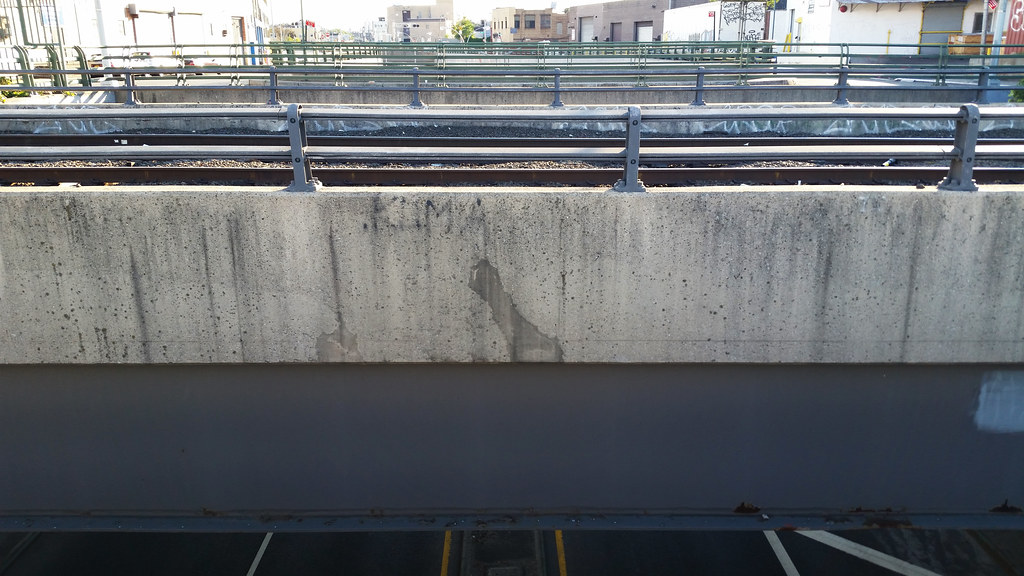
This is an odd spot on the NYC street map. The Lower Montauk Branch of the Long Island Rail Road, in the foreground, passes over the through lanes of Flushing Avenue, at bottom, while the local lanes of Flushing Avenue, on the upper level, terminate on either side of the Lower Montauk tracks. If you're not following my unintelligible description of what's going on here, this aerial view should prove much more elucidating.
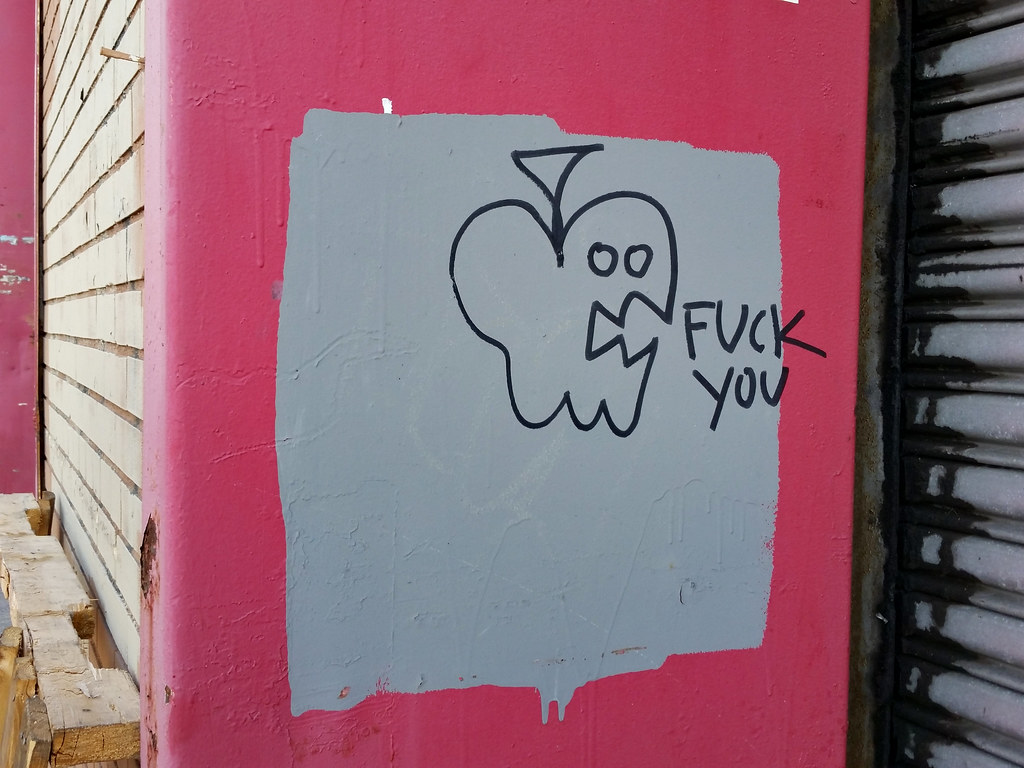
From The Catcher in the Rye:
But while I was sitting down, I saw something that drove me crazy. Somebody'd written "Fuck you" on the wall. It drove me damn near crazy. I thought how Phoebe and all the other little kids would see it, and how they'd wonder what the hell it meant, and then finally some dirty kid would tell them--all cockeyed, naturally--what it meant, and how they'd all think about it and maybe even worry about it for a couple of days. I kept wanting to kill whoever'd written it.
. . .
I went down by a different staircase, and I saw another "Fuck you" on the wall. I tried to rub it off with my hand again, but this one was scratched on, with a knife or something. It wouldn't come off. It's hopeless, anyway. If you had a million years to do it in, you couldn't rub out even half the "Fuck you" signs in the world. It's impossible.
. . .
I was the only one left in the [Egyptian] tomb [at the Metropolitan Museum of Art] then. I sort of liked it, in a way. It was so nice and peaceful. Then, all of a sudden, you'd never guess what I saw on the wall. Another "Fuck you." It was written with a red crayon or something, right under the glass part of the wall, under the stones.
That's the whole trouble. You can't ever find a place that's nice and peaceful, because there isn't any. You may think there is, but once you get there, when you're not looking, somebody'll sneak up and write "Fuck you" right under your nose. Try it sometime. I think, even, if I ever die, and they stick me in a cemetery, and I have a tombstone and all, it'll say "Holden Caulfield" on it, and then what year I was born and what year I died, and then right under that it'll say "Fuck you." I'm positive, in fact.


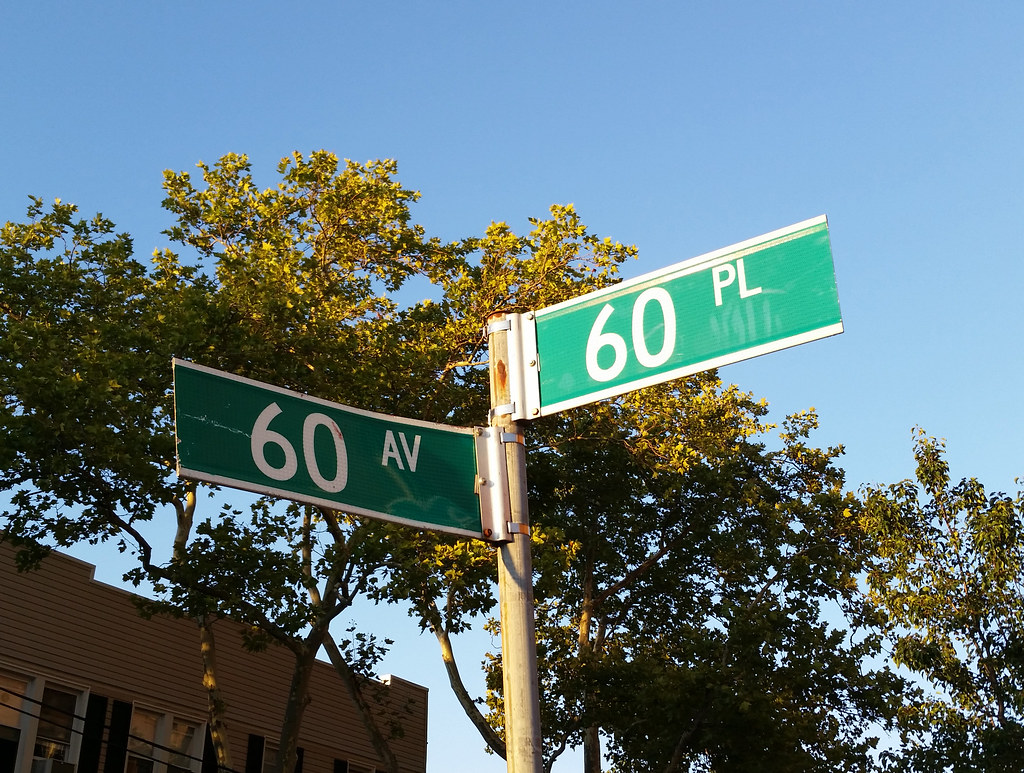
The infamous street-numbering system of Queens most fully realizes its tremendous potential for ridiculousness here in Maspeth, where ten different 60th-and-60th intersections can be found (map). The complete list is as follows:
60th Street and 60th Avenue
60th Street and 60th Road
60th Street and 60th Drive
60th Street and 60th Court
60th Place and 60th Avenue
60th Place and 60th Drive
60th Place and 60th Court
60th Lane and 60th Avenue
60th Lane and 60th Road
60th Lane and 60th Drive
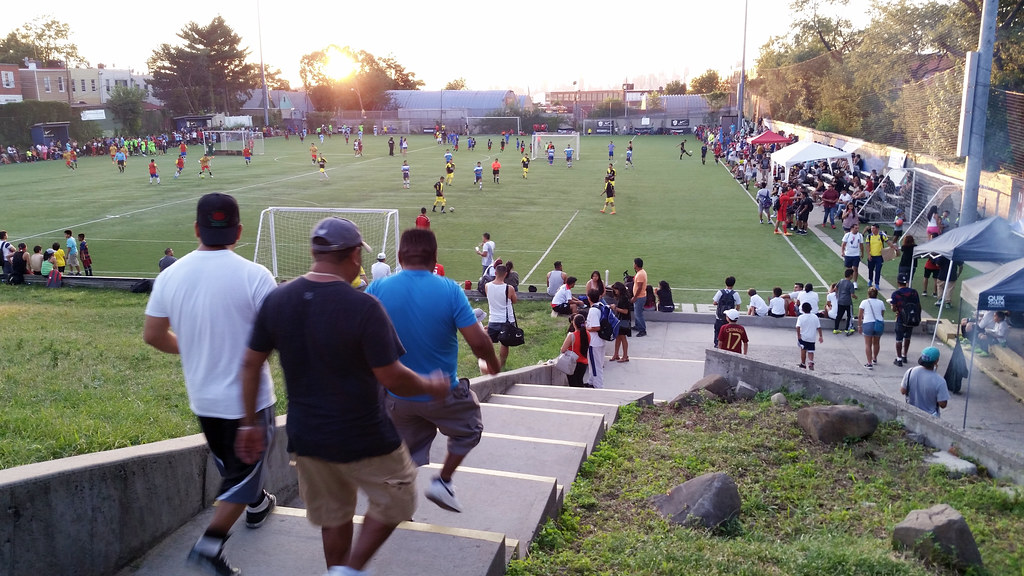
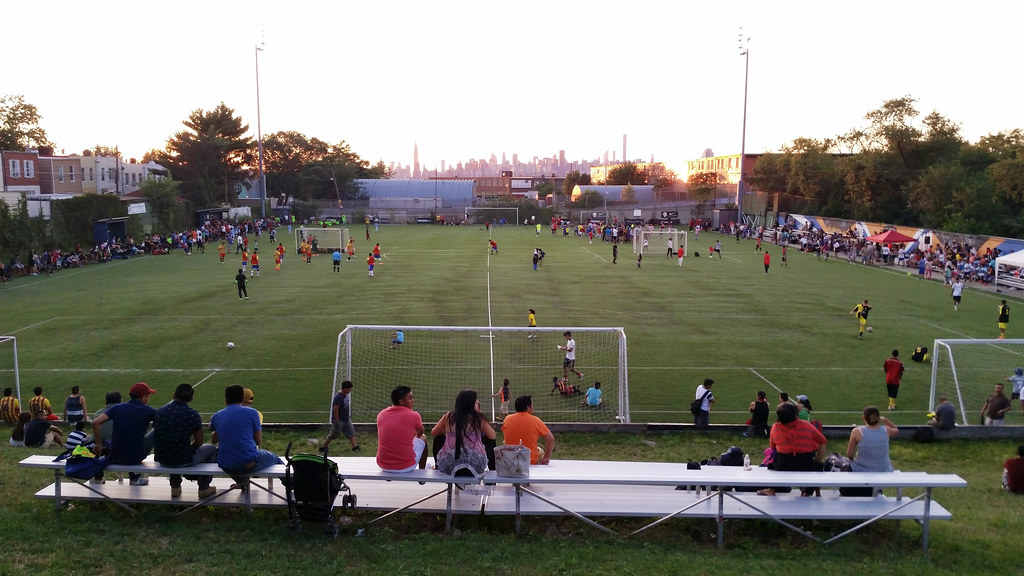
Tucked in between rows of houses and a freight rail line is the Metropolitan Oval, established by German- and Hungarian-Americans in 1925. The Oval, which has long been "the epicenter of immigrant soccer in New York City", existed for much of its history as a grassless, dusty expanse in "various states of disrepair", but it has been looking pretty sharp since a thorough refurbishment was completed in 2001.
(The inconspicuous entrance to the Oval is located at 60th Court and 60th Street, one of the ten intersections in Maspeth where 60th meets 60th.)

I was headed somewhere in the East Village when I happened upon this tribute to trash pickup day painted on the roll-down gates of Best Hou ekeeping.
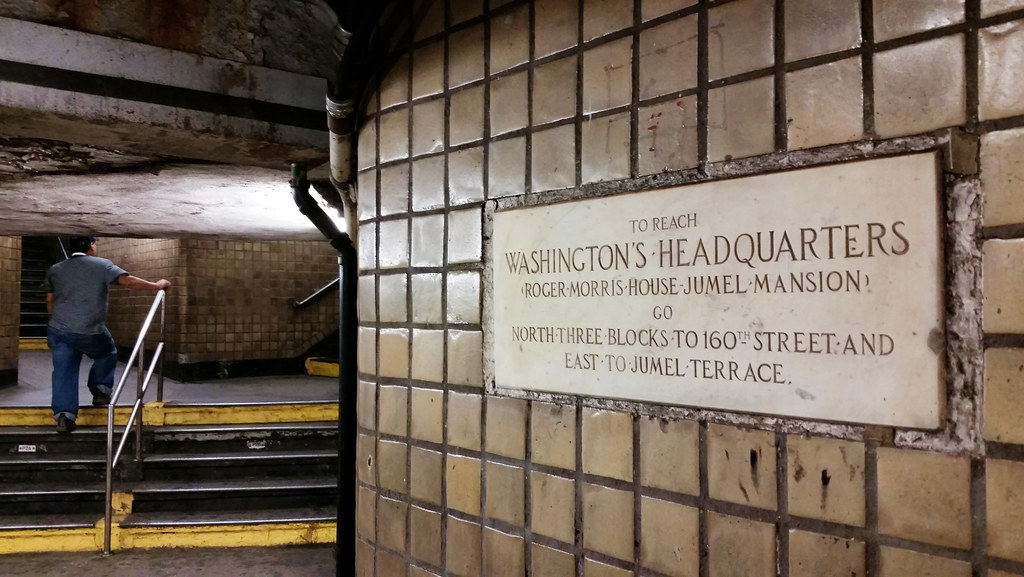
to the Morris-Jumel Mansion, Manhattan's oldest surviving house, which was indeed George Washington's headquarters for a few weeks in the fall of 1776 during the Revolutionary War.
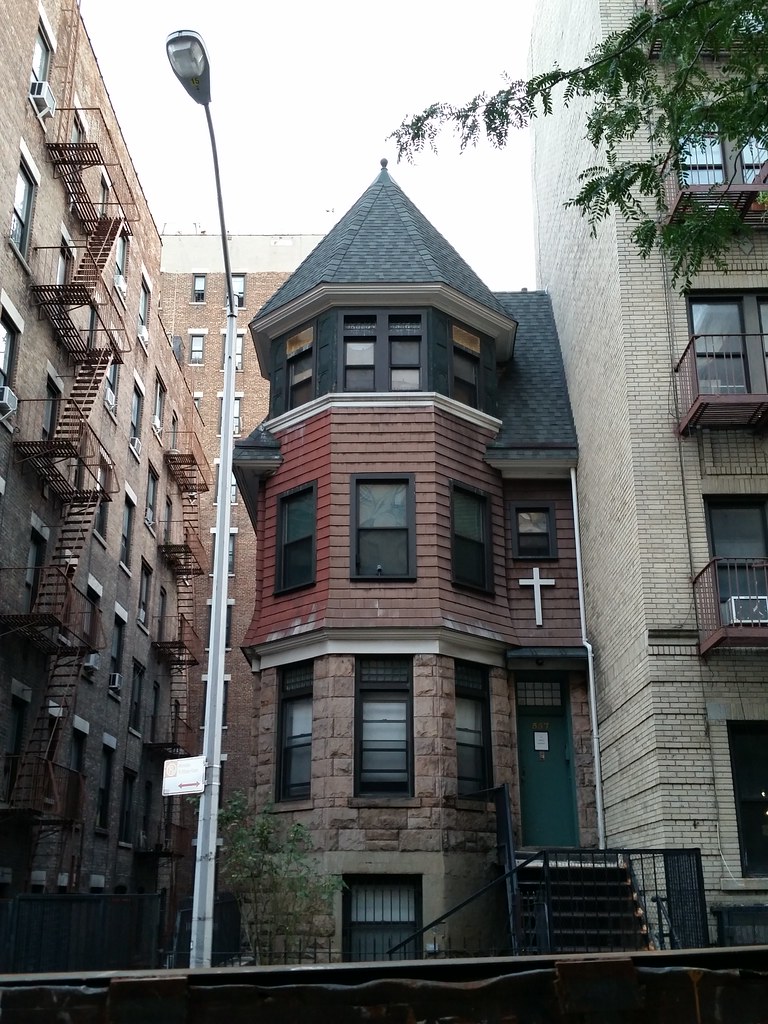
This building really stands out on this block, where it's the only one of 14 structures on the north side that's not a flat-fronted, five- or six-story apartment house. It was purchased in 1909 for future use as the rectory of the Church of Our Lady of Esperanza, which was completed in 1912 a block away on Audubon Terrace. A book about the church published in 1921 lists this address for the rectory, but a 1925 expansion project provided space for the rectory inside the church itself. This building is still owned by Our Lady of Esperanza, but I'm not sure what its function is these days.


