This ancient family burial ground, tucked away on 20th Road in Astoria, was founded in 1703 (or 1656, according to some). Its current caretaker, James Sheehan, is no relation to the Lawrences, but found himself in charge of things almost 50 years ago after the death of his father-in-law, who had inherited the cemetery from a Lawrence. It's not open to the public, but a couple of years ago a group of friends and I were lucky enough to pass by when James was inside, and he was happy to show us around.

Right after I took this photo, a man wearing a Con Ed helmet hopped down from his truck and walked over to me. A few years ago, he said, he came to work out here early one morning and found, right on this spot, a dead man slumped on the sidewalk. He doesn't know anything about what happened to him, but he said someone has been maintaining this memorial in his honor ever since. Here's what it looked like last fall.


There have been many jellyfish sightings around the city since we first encountered them on the side of a truck.



We haven't seen one of these suckers since February. The NYPD must have been spying on me in much subtler ways during the intervening months.

His dad wanted him to follow in his footsteps, but Junior's true love was cars, not hair.


You can find those words inscribed above quite a few doorways around the city. I believe the buildings thus labeled were constructed back in the golden days of the Bell System as central offices, housing switching equipment, operators, and the like. Many still seem to be functioning as telecommunication centers, but some have been adapted for other uses over the years. As you can probably tell, this particular Telephone Building — whose 1914 expansion you can read about in this contemporaneous account, under the "New Stagg Central Office" subheading — has been converted into apartments, complete with Sukkot balconies.

Currently a watch and jewelry store, this was once the main branch of the Lincoln Savings Bank. Check out this wonderful recounting (just a little more than halfway down the page) of what it was like to work there around 1970.
Lincoln was originally founded as the German Savings Bank of Brooklyn in 1866, but changed its name to something more patriotic-sounding (page 54) in response to the growing anti-German sentiment in America around the time of World War I.
This mural was painted by students under the direction of a couple of artists from BRIC.


The base of this column is cemented into the bucket! Here's a close-up.
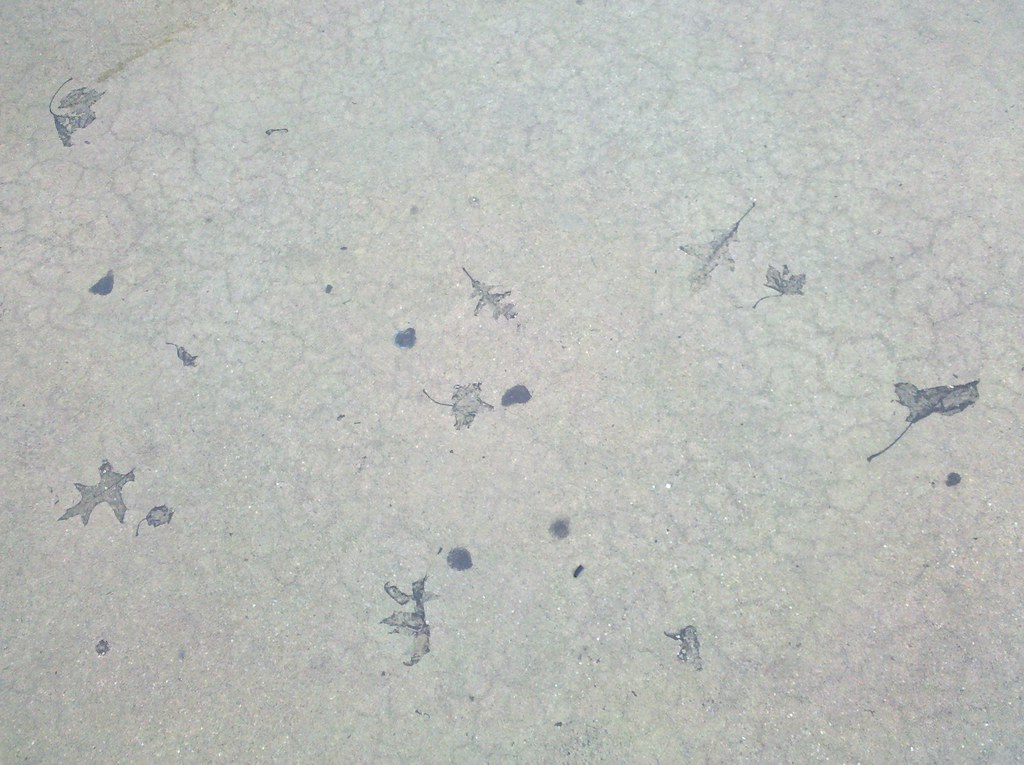
when you lay concrete in the fall. Here's a closer look.


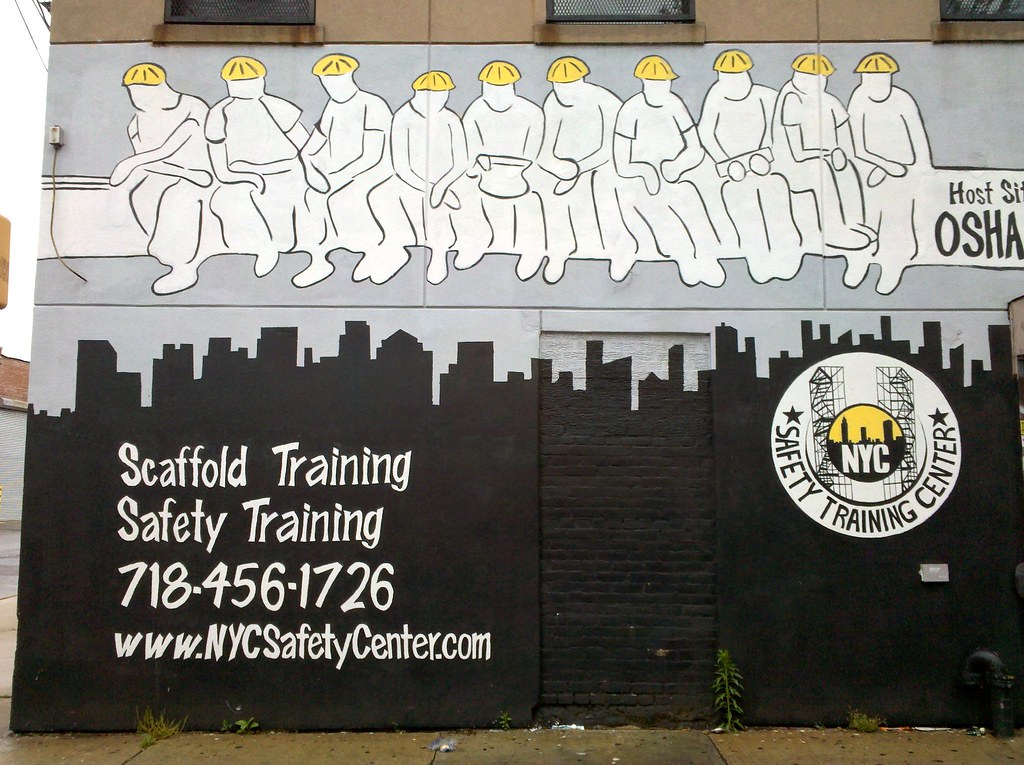
At least these guys are safer to walk beneath than the three-dimensional variety.

They do say that. But they forgot about giant psychotic bananas wearing Rasta caps.


Please give it up for Noah and Josh, 2012's Nicest Guys in the World! In a hard-fought — but exceedingly courteous — contest, they just managed to eke out a victory over last year's champions, Ahmed and Raghib of Ghazali Auto Body in Kuwait City.

He seems to have lost his front nameplate since we last saw him. Or perhaps he sold it to raise funds for those sweet new fog lights.

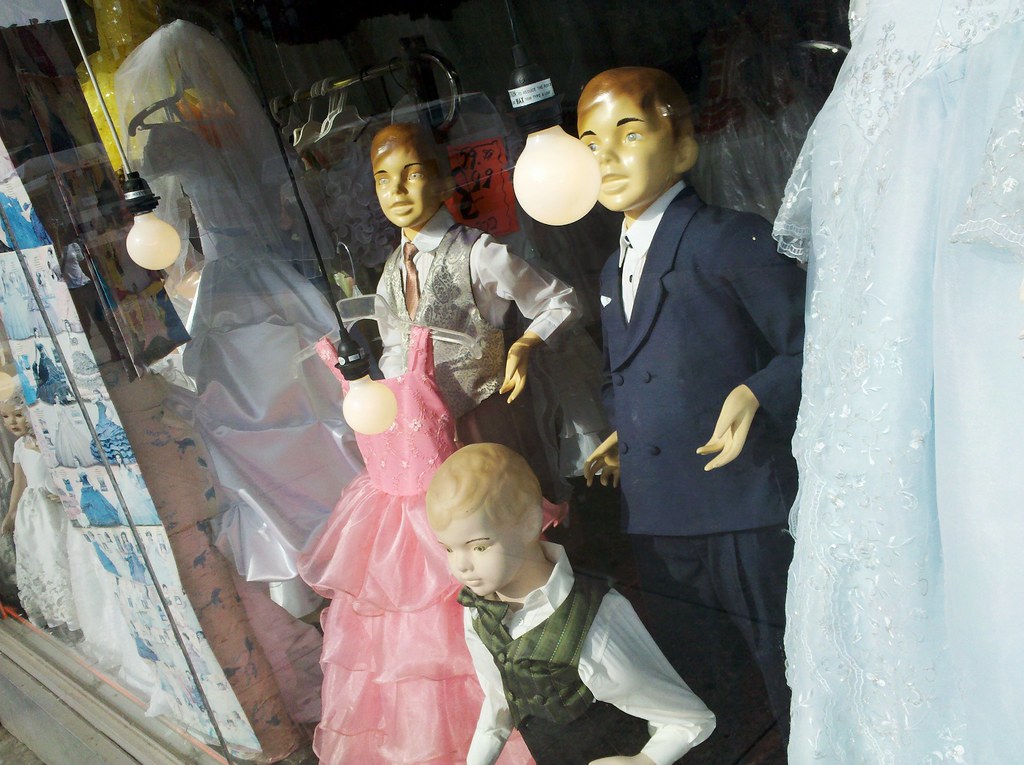
It's not exactly how I imagined it. But then again, neither was the Promised Land.


This block-long roadway in Brooklyn has been taken over the Boar's Head Provisions Company (which, I believe, technically makes it a Ham Highway). But how did it get its name?
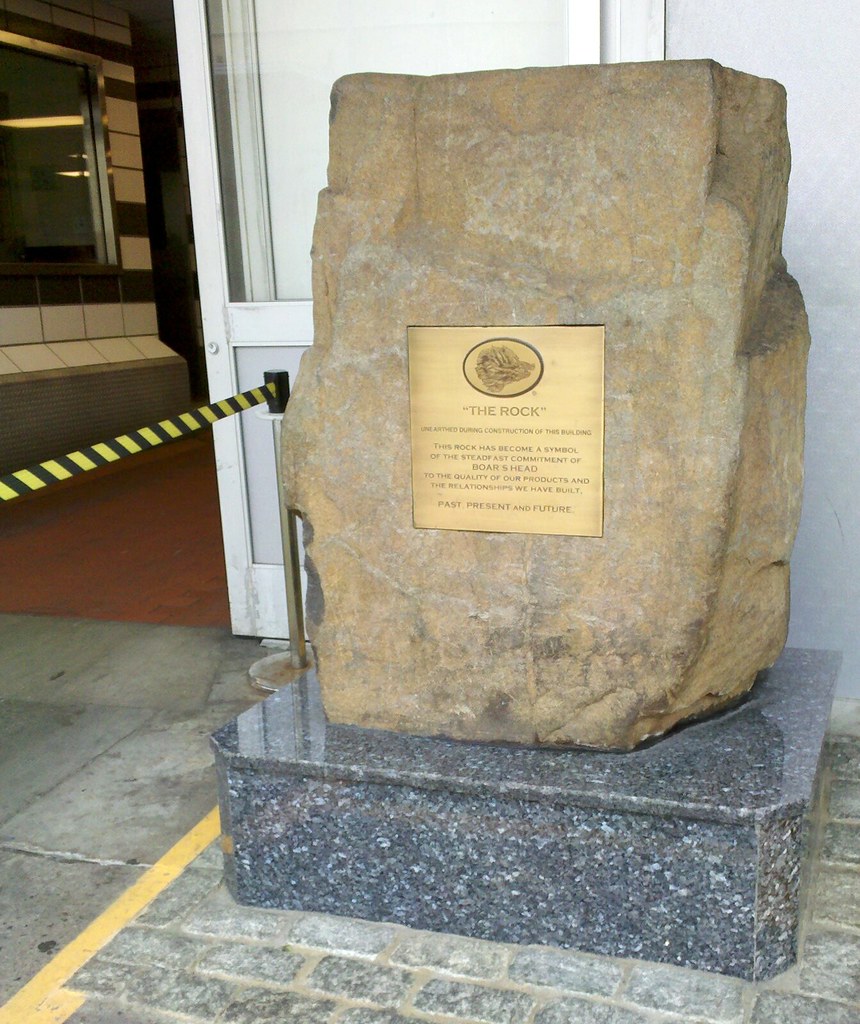
Supposedly discovered during the construction of this building, this boulder used to be something of a rebel (scroll a little more than halfway down), sitting by itself on the sidewalk, covered in graffiti. It then mysteriously disappeared for a while, and has since been reborn as a corporate pretty-boy.