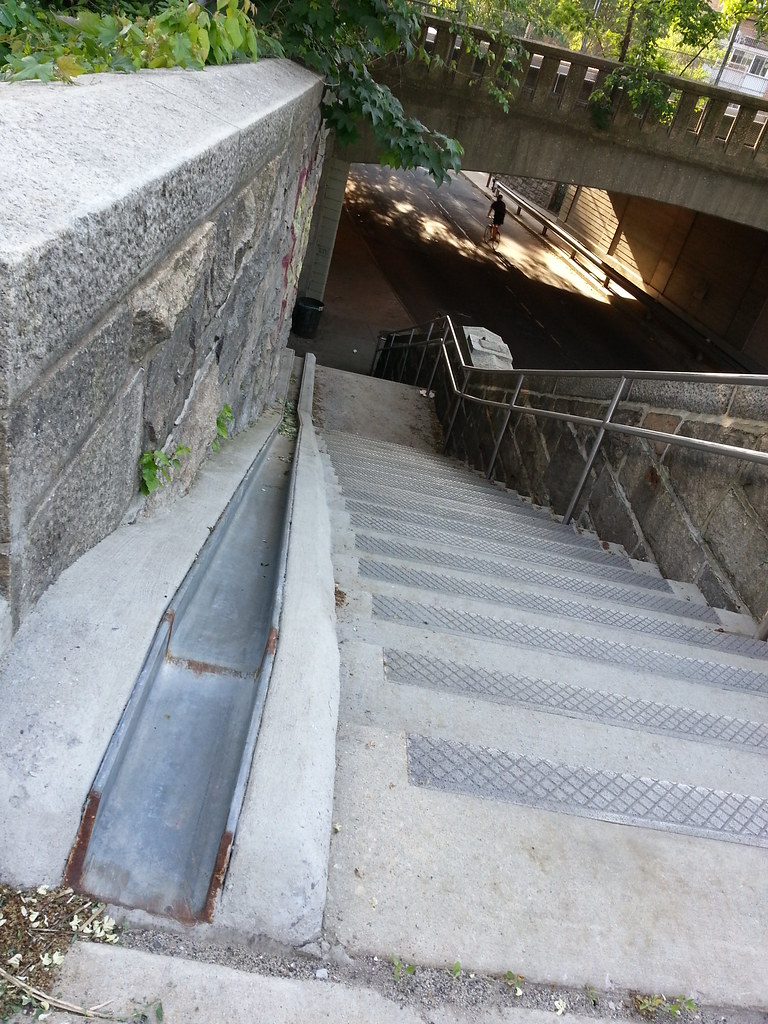
Here we have the classic minimalist butt-thwarting design.



The former St. Paul's Evangelical Reformed Church
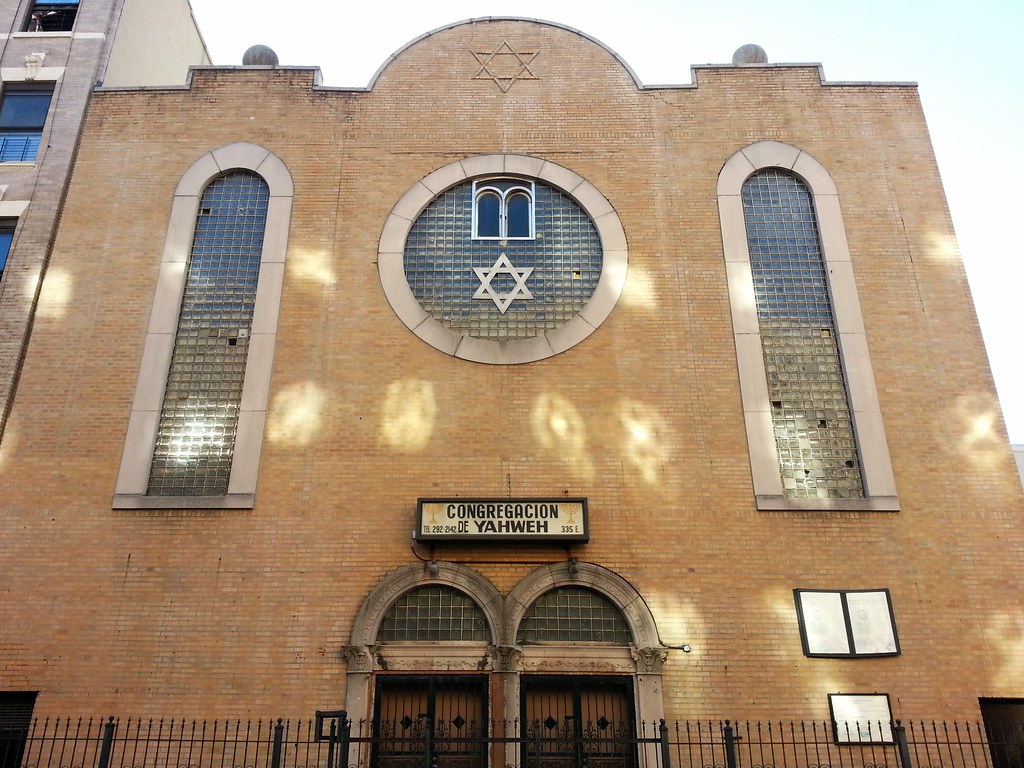
This is the former Chevra Shomrey Sabath, so we've got the "agogue" part covered. But the building's current occupant, Congregacion de Yahweh, is a Messianic Jewish congregation. As such, its members believe that Jesus was the messiah, but I don't think they would refer to themselves as a "church".
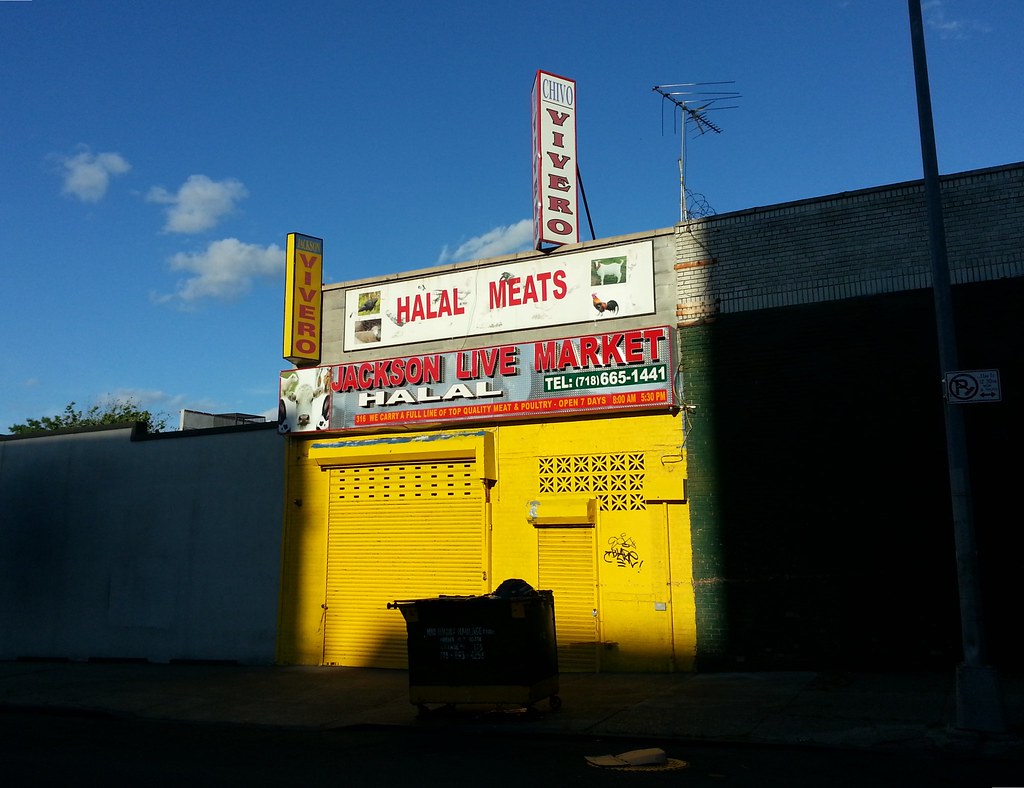
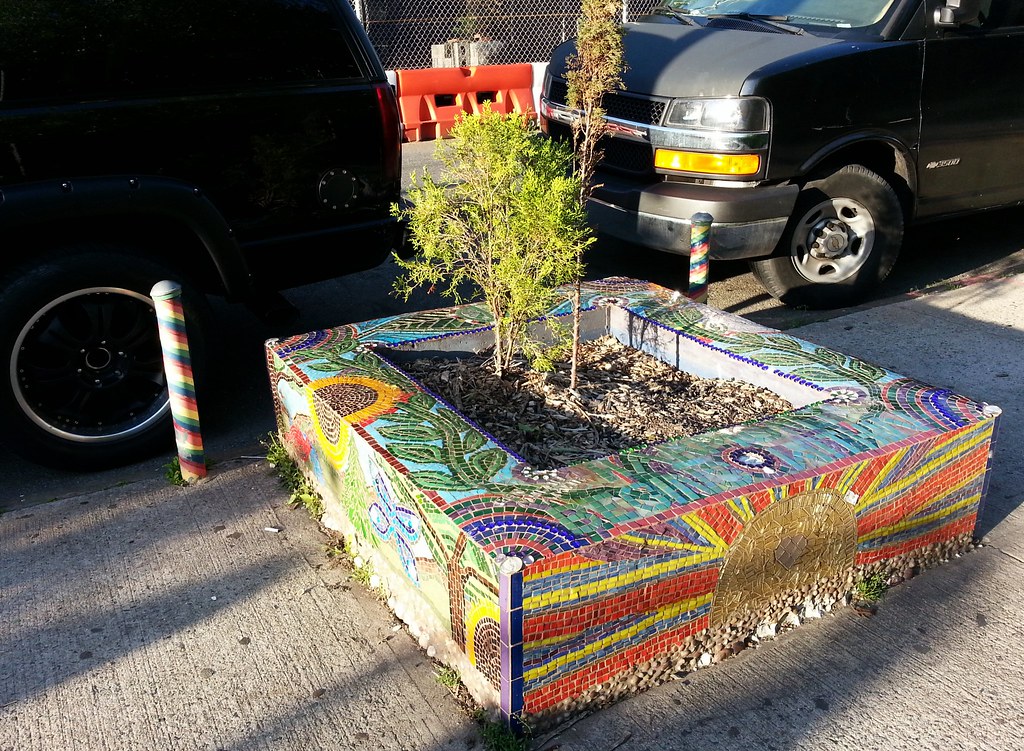

Sharing space with a recording studio and a boxing gym


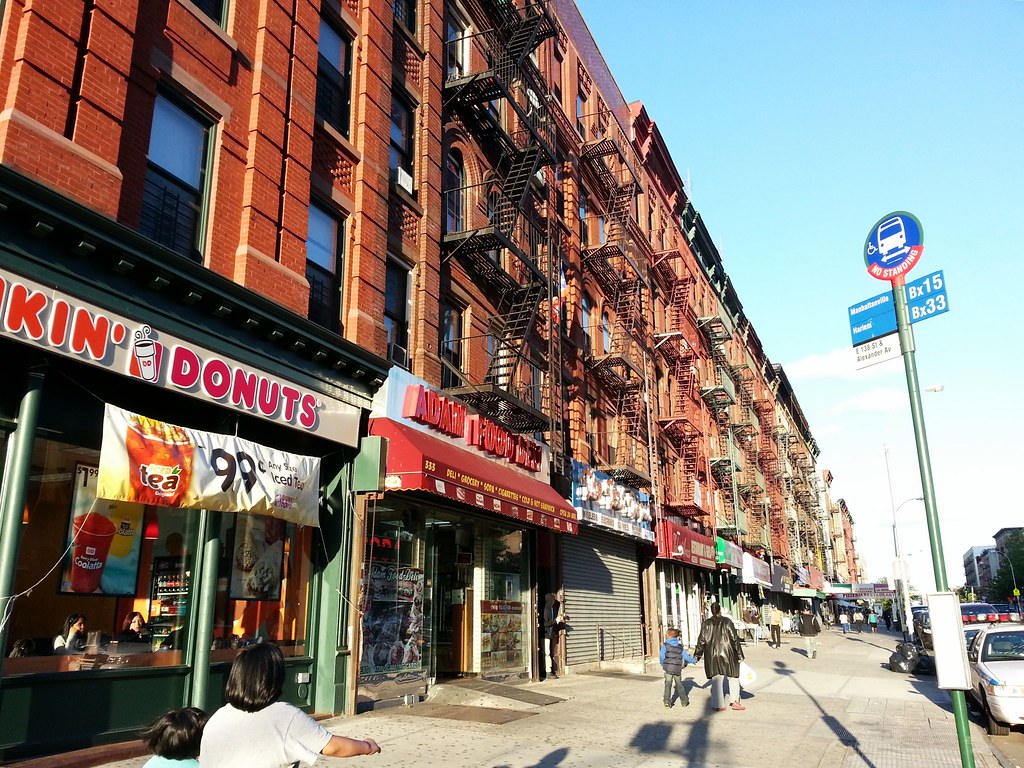

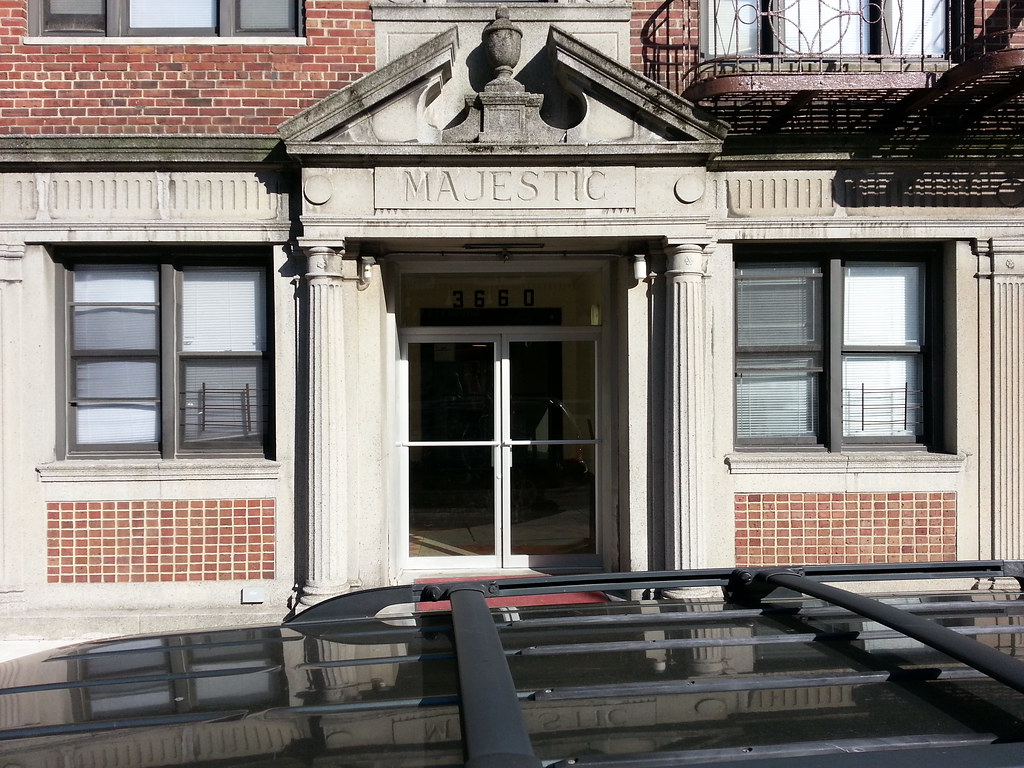
We got a closer look last time.
(You can see the buildings from the previous photo reflected in the door of the SUV.)
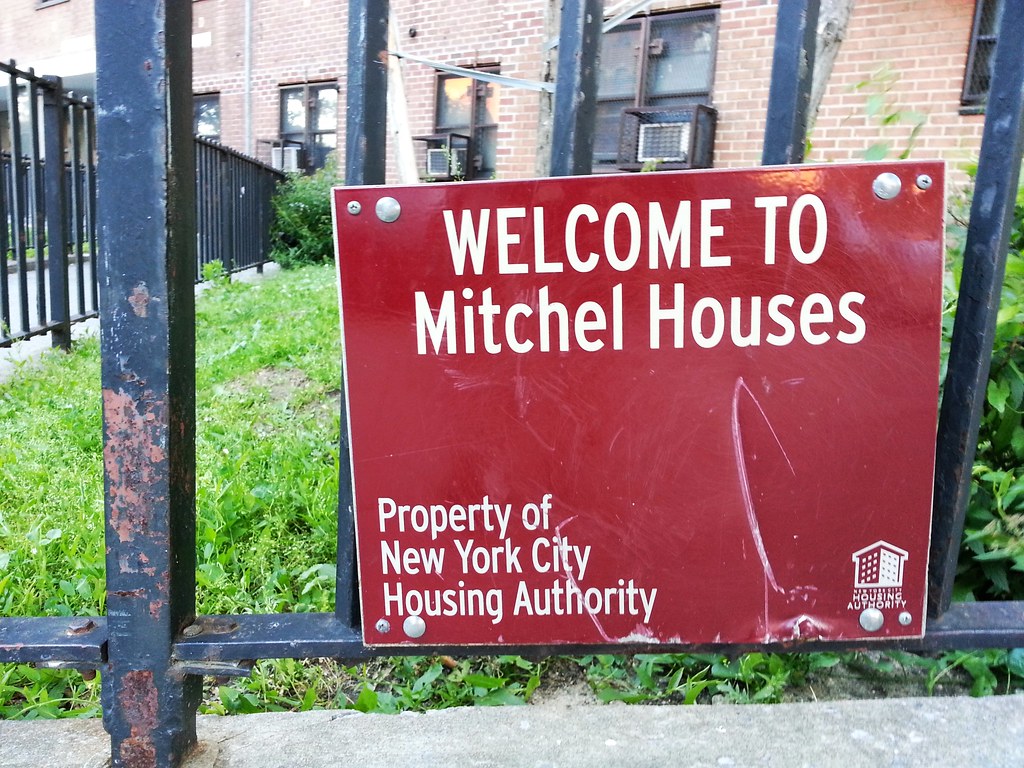
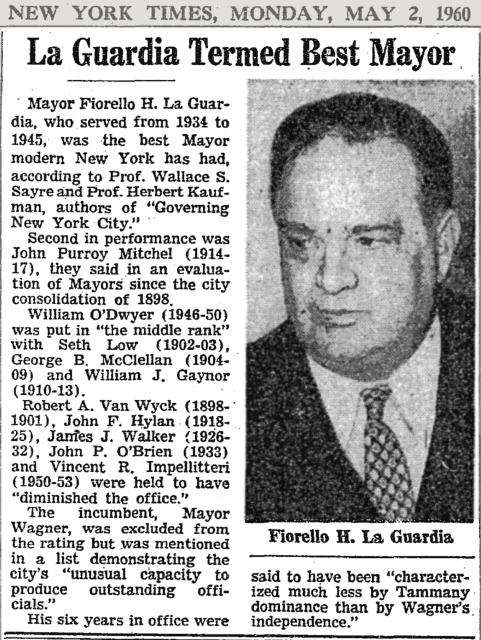
This public housing development is named for John Purroy Mitchel, the mayor of New York City from 1914 to 1917. Known as the "boy mayor", he was sworn in at the tender age of 34, making him the second-youngest mayor in the city's history, and the youngest to preside over the modern five-borough city.
An anti-Tammany reformer, Mitchel is widely considered to have been an effective and honest mayor. He was greatly admired by Fiorello La Guardia (the only NYC mayor to rank ahead of him in a "classic" 1960 study), whose mayoral speeches "rang with Mitchel's name". Teddy Roosevelt was also a big fan. Endorsing Mitchel's bid for re-election in 1917, Roosevelt wrote that Mitchel had "given us as nearly an ideal administration of the New York City government as I have seen in my lifetime, or as I have heard of since New York became a big city."
But despite his popularity among reform-minded, good-government types, Mitchel lost the 1917 race in a historic landslide. He may have been a good mayor, but he was a crummy politician — and he knew it. In fact, he had to be talked into running for a second term, as he believed, correctly as it turned out, that he would be unable to win. According to his secretary:
He knew just enough about politics to know that, unless an officeholder strives to please groups and factions to the sacrifice of real efficiency, re-election is impossible. Many times, in going over stacks of invitations, which came to him daily, I would urge him to go to this or that function, which was uninteresting and dull, but at which his attendance would please some group or section of the city. . . . He would absolutely refuse to attend these affairs, and when I would insist out of consideration for the fact that he was making political friends, he invariably replied that he had no desire to gain ground politically, that he was through with political life after this term, and that he merely wished to do the immediate job that lay before him the best he could.Shortly after leaving office, at the age of 38 and with World War I raging, Mitchel joined the Army's aviation service. The former boy mayor thus became "America's oldest flying cadet". But just a few months later, during a training exercise in Louisiana in 1918, he fell out of his plane and plummeted 500 feet to the ground, dying on impact. He had not been wearing his safety belt.
During his time in office, Mitchel carried a handgun, and once "brandished it in front of City Hall when he was fired upon by a crazed 71-year-old man". If the idea of a pistol-packing mayor sounds strange, keep in mind that Mitchel's predecessor, William Jay Gaynor, was himself the target of an assassination attempt, getting shot in the neck by a disgruntled former city employee.
Mitchel's record as a gun owner was somewhat tarnished, however, by another incident during his mayoralty. While he was exiting his car after a day of target practice upstate, a pistol he was carrying slipped out of its holster and fell to the sidewalk. The impact broke the safety, and the gun fired into the thigh of Mitchel's shooting partner, the real estate developer and former state senator William H. Reynolds.
So perhaps it is appropriate that a policeman stopped me outside of Mitchel's namesake housing project to question me about a suspicious-looking bulge in my back pocket. He and another officer who had previously seen me thought I might be carrying a gun. Turns out it was a water bottle.
And the gun-bottle distinction wasn't the only difference in our perceptions of reality:
Officer: You live around here?Now, I don't go around sticking my camera in people's faces, but I have walked through dozens of housing projects, and none of "these people" have yet kicked my ass or even threatened to do so. It's almost like if you walk around and act respectfully toward other people, they won't mess with you. Crazy!
Me: No, I don't.
Officer: Whatcha doin' here?
Me: Oh, I'm doing this big project, trying to walk every block of every street in the whole city.
Officer: OK, when you say that to me, I understand what you're saying. But these people [referring to the public housing residents], they're not gonna understand that. They see you walking around and taking pictures of them, they're gonna kick your ass. I've seen it happen. That's why I thought you might be carrying something to protect yourself.

Unlike those party poopers we saw earlier today, this combination doorstop and sprinkler connection would apparently be happy to play host to your big fat bottom. Look familiar?
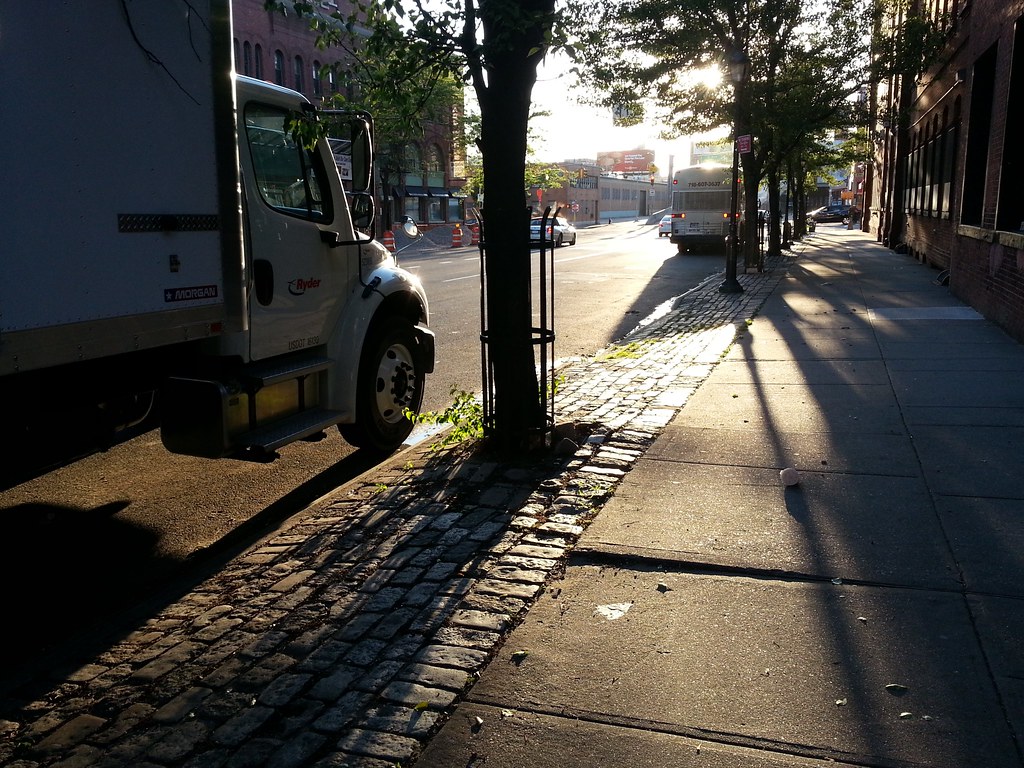
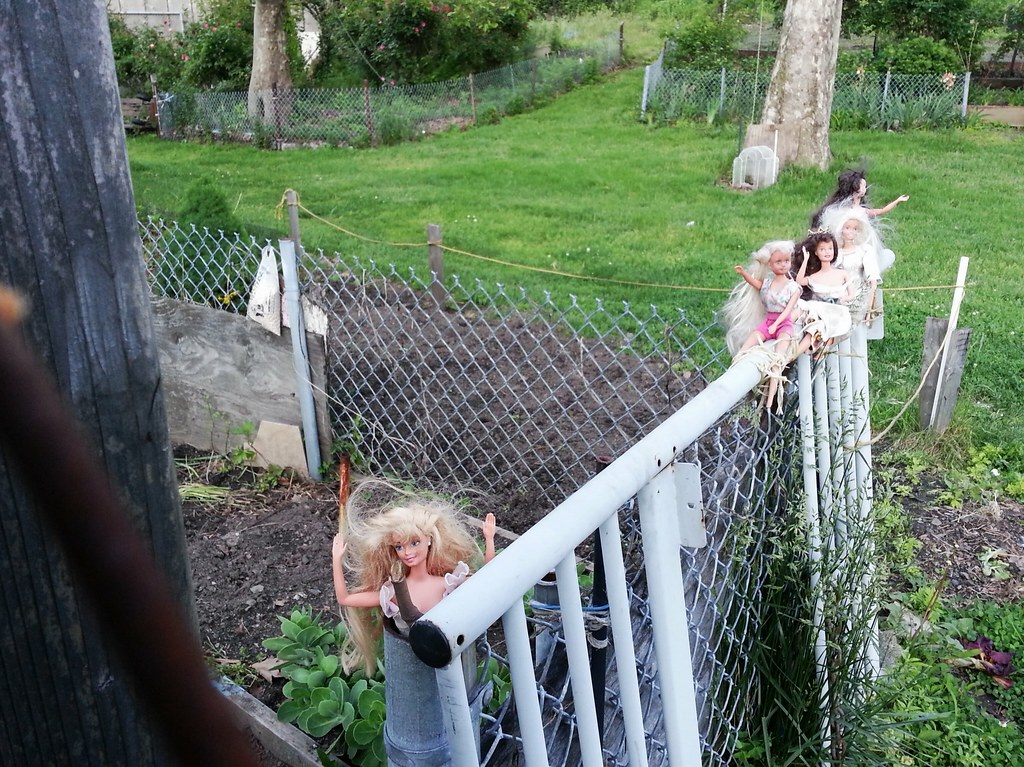
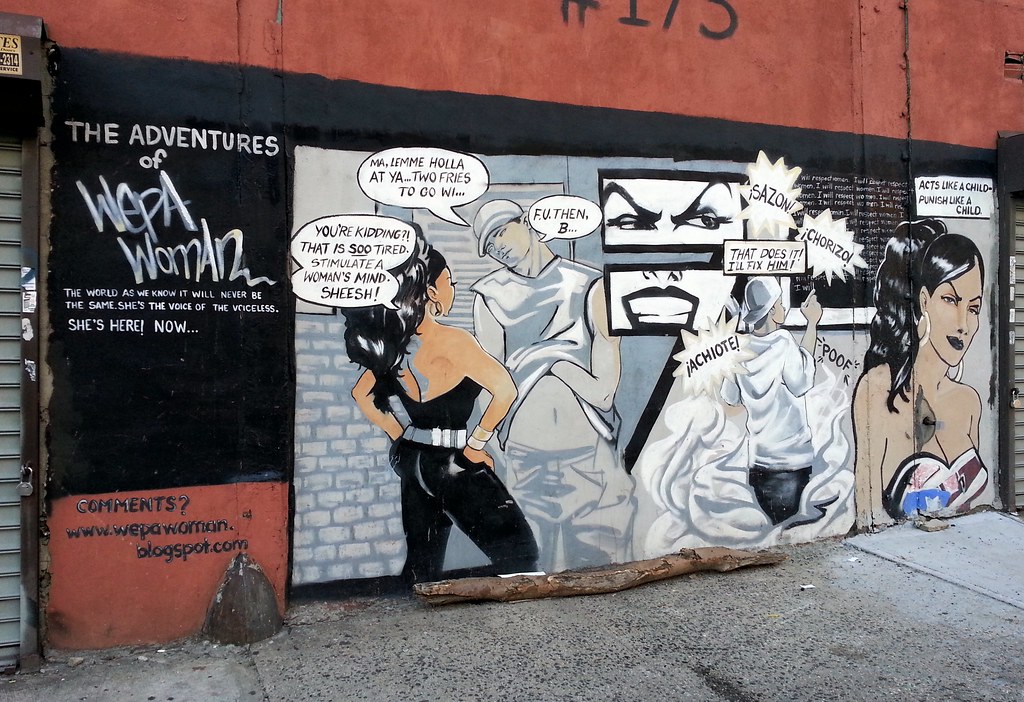

Weed & Seed, Weed and Seed, Weed & Seed, Weed & Seed
(Close-up here)

Unlike its counterpart over at Captain Tilly Park, the plaque embedded in this monument appears to be a genuine Keck, cast from metal salvaged from the USS Maine.

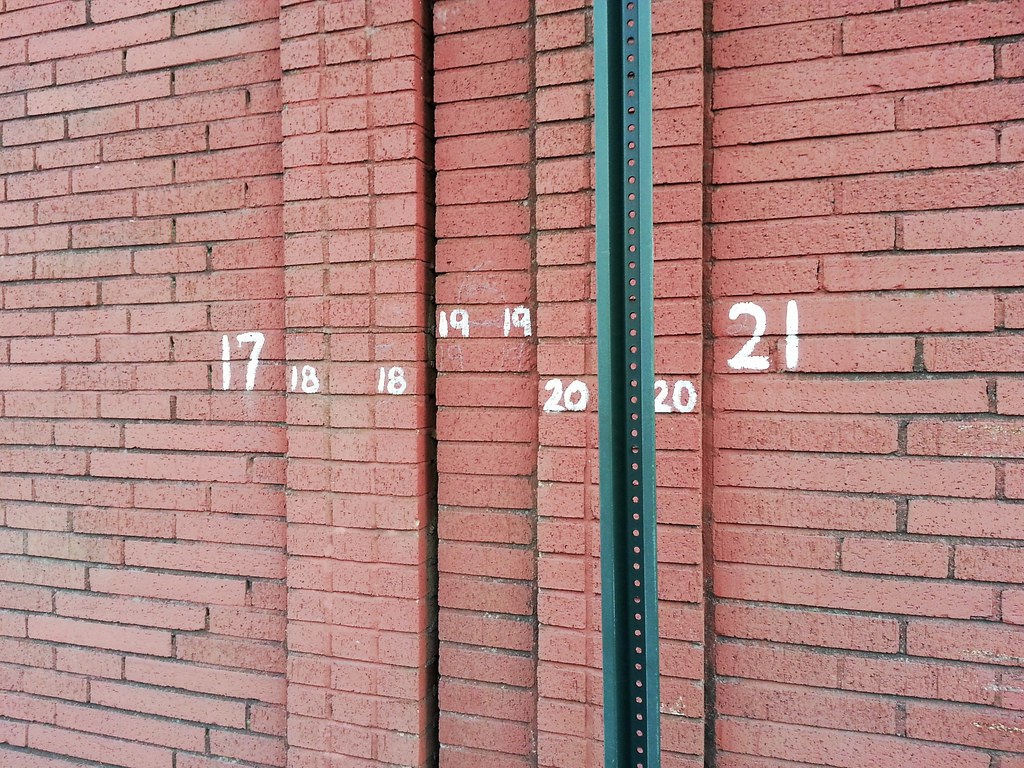

This block-long Bronx thoroughfare is named for the old Mott Haven Canal, which once ran just east of here, along the route of today's Canal Place, from the Harlem River up to what is now 144th Street. (Here's a map of the canal, circa 1880.)
The neighborhood of Mott Haven was developed by Jordan L. Mott, the inventor of the coal-burning stove. Mott was the "first major industrialist to locate in the Bronx", establishing an ironworks on a large piece of land he purchased from Gouverneur Morris II (who, in his later years, was "guided into church every Sunday morning by his women folks, his hair and cravat awry, and possessed of a great bandanna handkerchief, with which, from time to time, he blew sonorous blasts through his nose that set the young folk off into convulsive giggles.")
According to the Landmarks Preservation Commission:
Though some considered his ventures an unwanted intrusion, in 1850 Mott proceeded with plans for the lower part of the Mott Haven Canal, which followed an underground stream running parallel to Morris Avenue, about halfway between it and the Harlem River. The canal enabled boats to travel inland as far north as 138th Street, about the distance of a dozen blocks, and encouraged local industrial development. New enterprises included other metal works, lumber yards, saw mills, stone yards, enamel works and a notable concentration of impressively-built piano factories.A proposal was later made to extend the canal up to Main Street (today's 144th Street), as told by Stephen Jenkins in his 1912 history of the Bronx:
In 1869, the property passed into the hands of Rider and Conkling, the owners of about six hundred lots in Mott Haven, who proposed to complete the canal to Main Street; but they at once met with opposition from the residents and landowners of the vicinity, on the ground of the liability of the canal's becoming a source of malaria and a nuisance.Rider and Conkling won approval for the extension by promising to dredge the canal and build bulkhead walls along it, construct and maintain bridges over it, and fill it in at their own expense should it ever be deemed a public nuisance. However:
The owners failed to bulkhead the canal as agreed, and the mud banks frequently caved in. Locks were constructed, which prevented the rise and fall of the tide; so that the canal became an actual cesspool in which the bodies of dead animals and other refuse floated for days. The canal was declared a public nuisance by the boards of health of both Morrisania and New York; and, after annexation, by the Park Department, by the Department of Street Improvements, by the Board of Estimate, and by other public bodies.That sounds like an open-and-shut case for filling the canal. But, as reported by the NY Times in 1900:
For years the citizens and property owners of the neighborhood have been fighting to have the "canal" filled in, claiming that it was a public nuisance, a breeder of disease, and a depreciator of property values for blocks around in all directions. The alleged nuisance was fought before the Park Board, the Department of Street Improvements, Board of Health, Board of Street Openings, local board, and Board of Public Improvements, in turn, and while each of these sustained the citizens in their fight, yet, so strong has been the influence wielded by the North River Electric Light and Power Works, whose power house is on the canal, that the actual filling has been successfully staved off each time.The residents of Mott Haven finally had their way, however, and the portion of the canal north of 138th Street was filled in and made over as Canal Place by the end of 1903, with the original section south of 138th Street being likewise filled in some years later. So, while this controversial waterway has long since vanished from the map, it is, like its much more famous Manhattan counterpart, still recalled by the aluminum street signs that mark its former course, proclaiming with earnest enthusiasm to all who wander past: CANAL!
The company, it is said, effects a considerable saving in running expenses by the use of the water for condensing purposes and for towing coal to the works. Interested in it as stockholders are said to be some of the most powerful Tammany politicians, and it is alleged that so strong has been this influence that there has never been wanting a city official ready and willing to block its progress on technicalities, postponements of action, &c., so that it has come to be believed in the neighborhood that Richard Croker himself is a stockholder.
(On a side note, the Mott Haven Canal, seen here, was, despite its sullied reputation, the inspiration for at least two works of art that have stuck around long enough to be uploaded to the internet. You can view them here and here.)

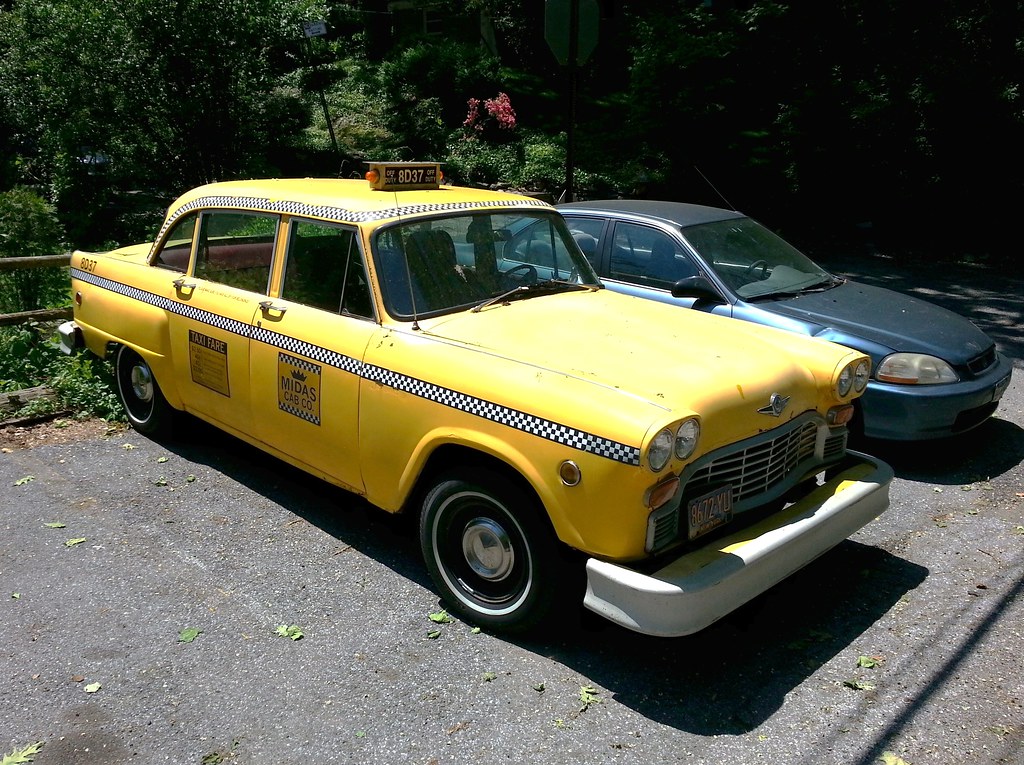
Another '76 Checker Marathon, spotted by someone else here.
This isn't a licensed cab, FYI. As far as I can tell, it's just someone's personal vehicle.
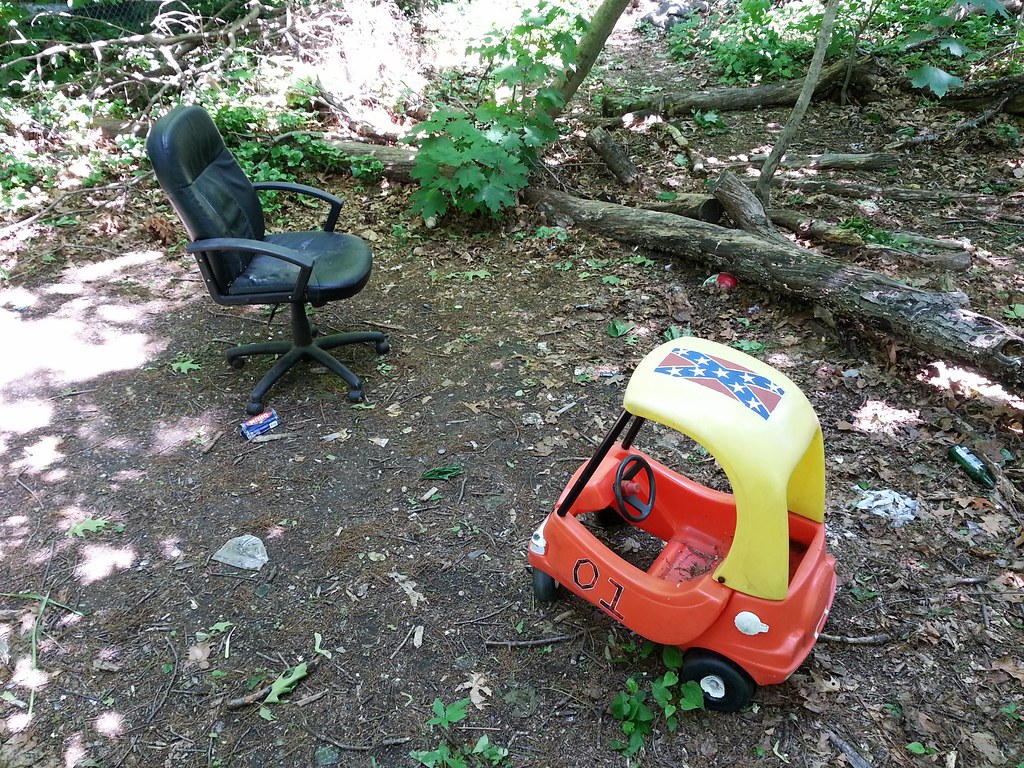
That's a pouch of Drum halfzware shag at the foot of the chair.
Standing at the bottom of this imposing series of staircases, I decided, just out of curiosity, to count all the steps on the way up. But when I reached the top and saw this plaque, I was perplexed, for I had tallied only CLVIII. What gives?


This is the top half of an artwork we first encountered on a snow-covered day back in February.
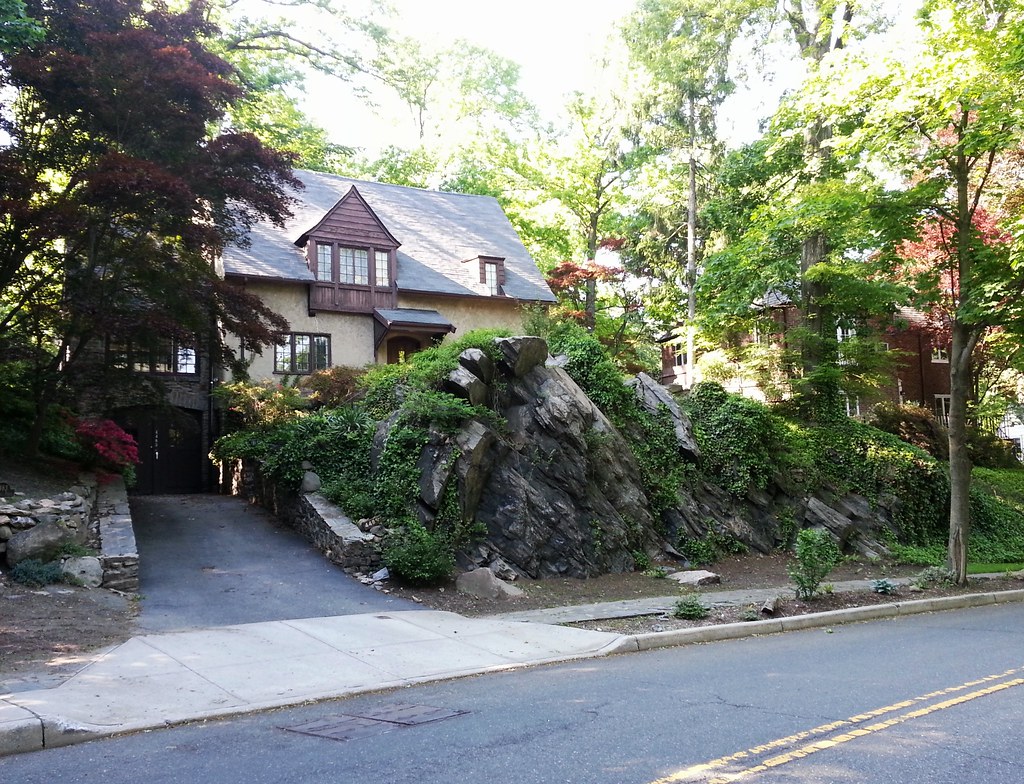
Built around 1875, this house seems to be popular with the animals.
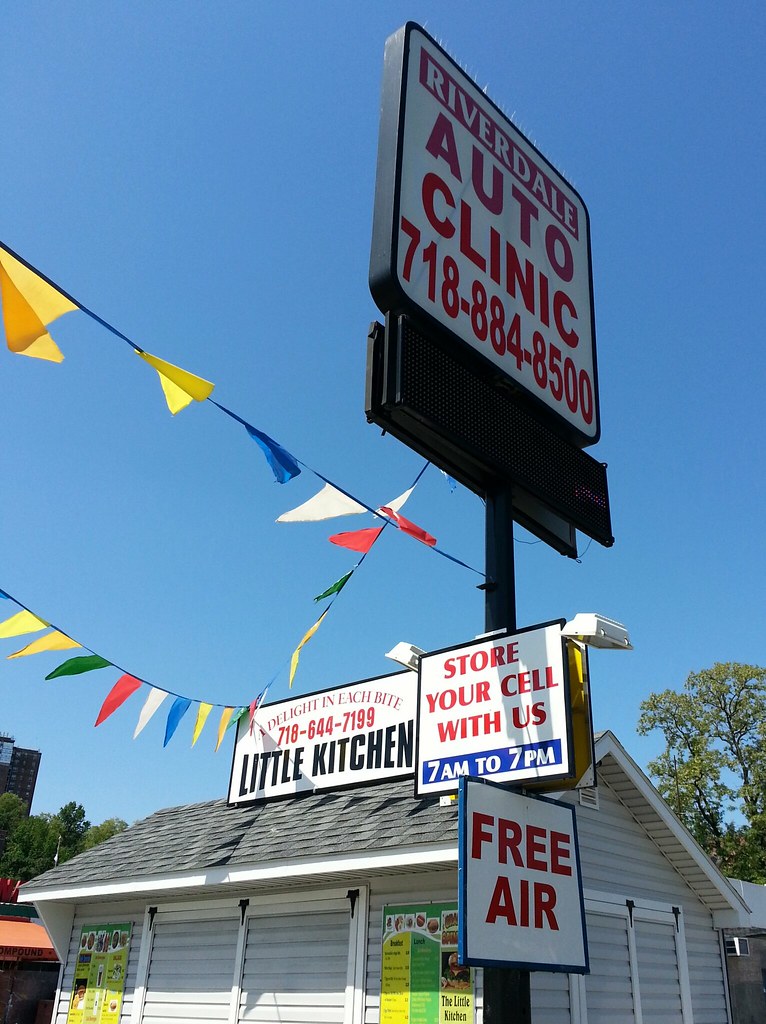
Located across the street from the JFK Educational Campus, these guys are getting in on the device-storage racket.
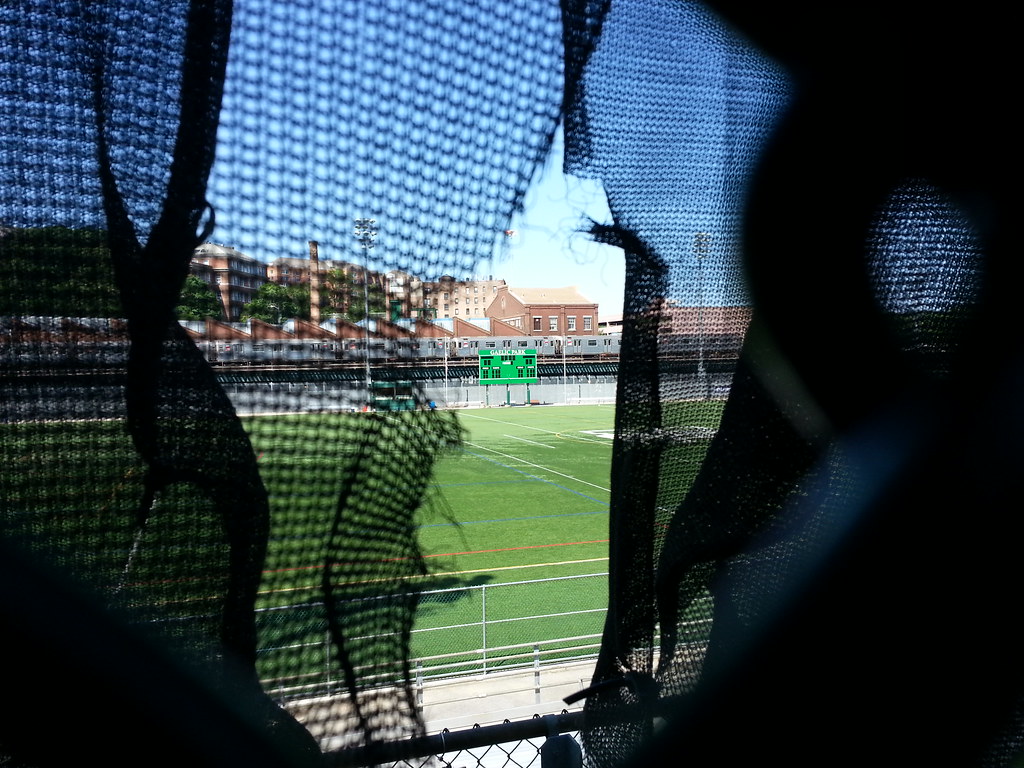
Gaelic Park, a 2,000-seat stadium that sits in the shadow of the el at Broadway and 240th Street in Riverdale in the Bronx, was always more than just a sports field. It was the place where New York’s Irish went to make connections and to meet potential spouses, to mingle with friends from the old country and to discover new ones.
From the 1920s on, players battled ferociously in the Irish sports of hurling (a combination of baseball, lacrosse and field hockey) and Gaelic football (which blends elements of soccer and rugby) while fans caught up on teams back in Ireland. Amid the alien concrete landscape of America, where streets were filled with strangers, Gaelic Park was a haven.

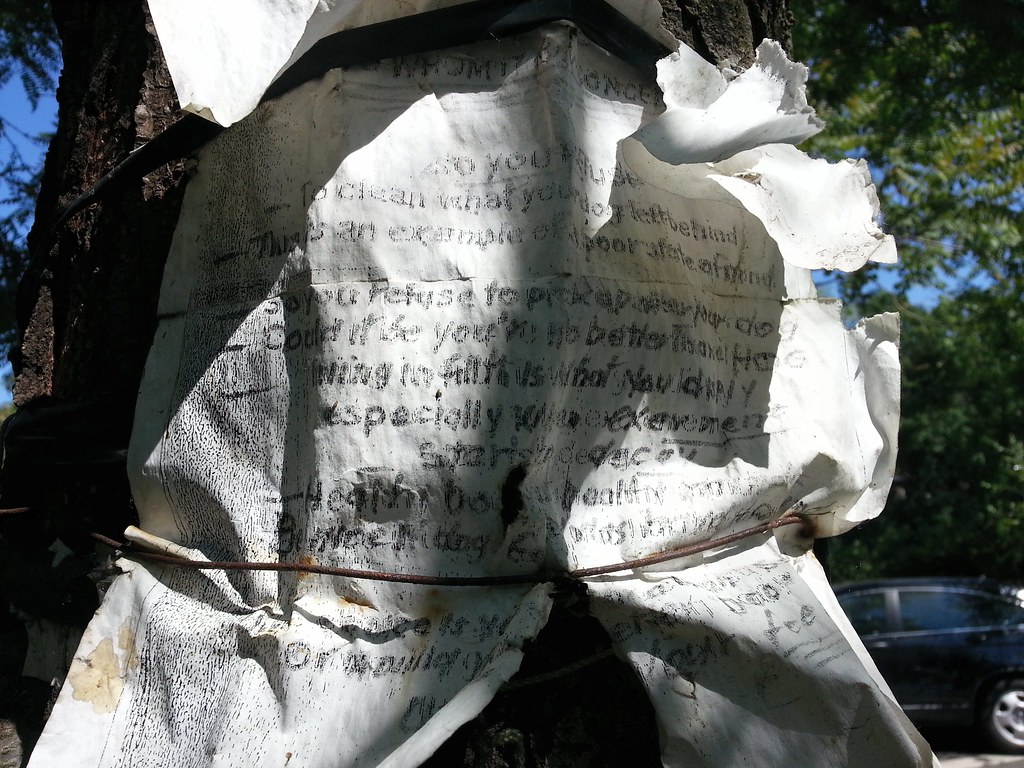
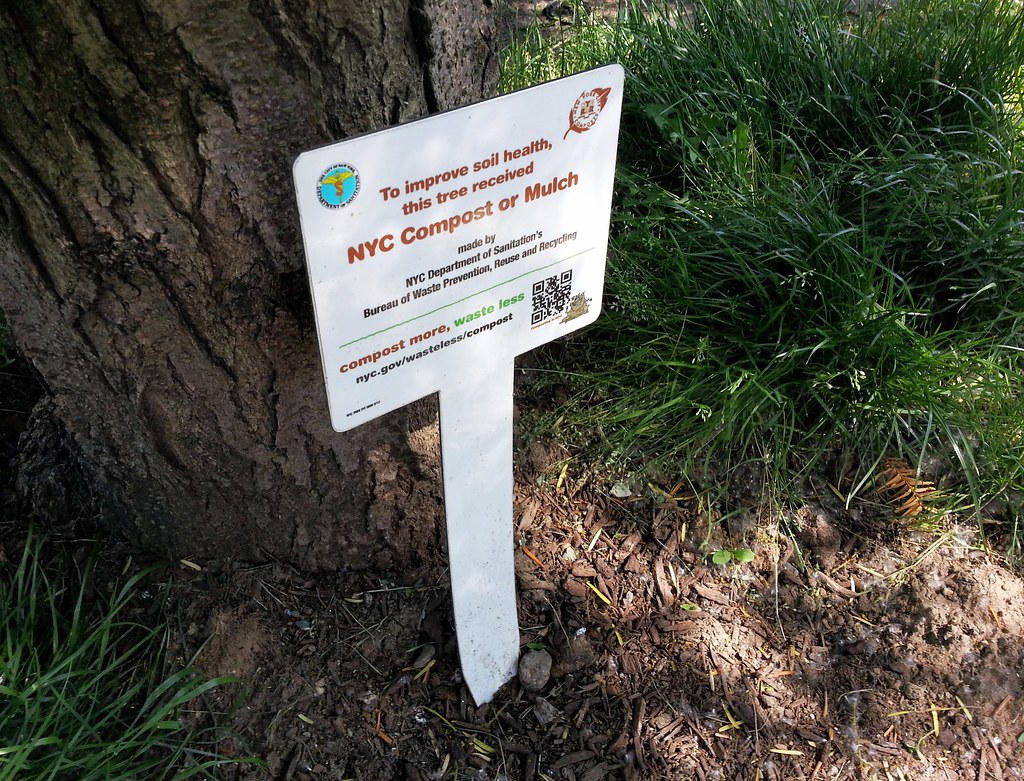
"All trees receiving compost or mulch must agree to display the official NYC Compost or Mulch tree bed sign".
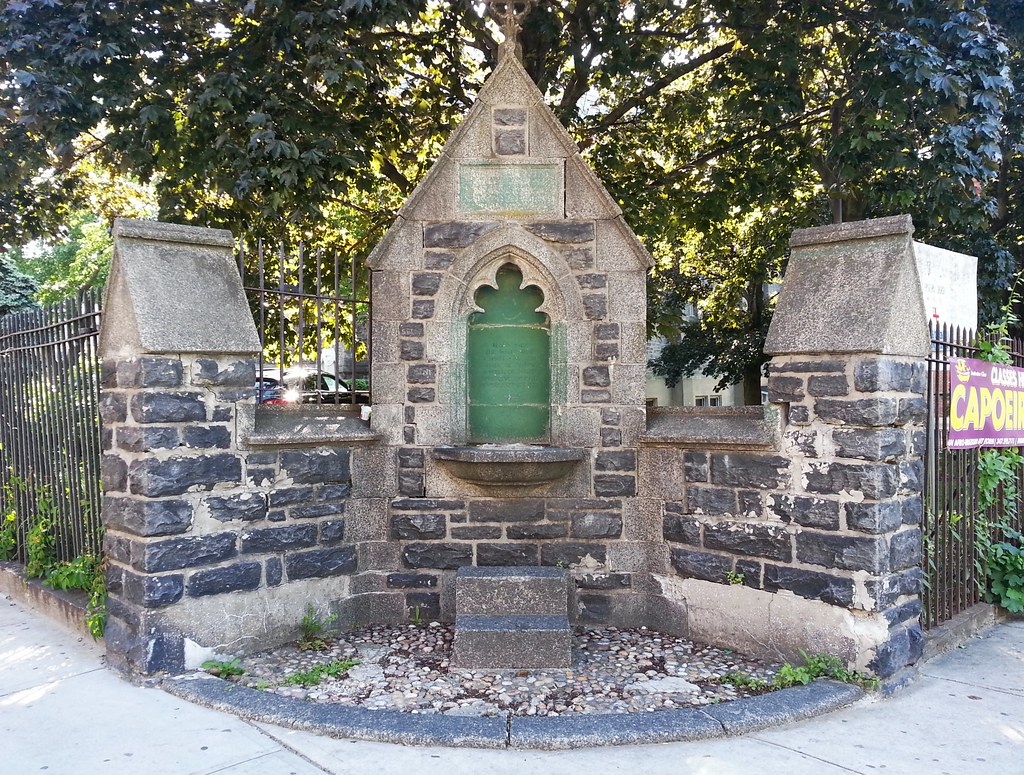
Sitting outside the Episcopal Church of the Mediator*, a neo-Gothic fieldstone structure designed by Henry Vaughan, one of the architects of the Washington National Cathedral, this defunct fountain is inscribed with a verse from the story of Jesus and the Samaritan woman:
JESUS SAIDAnd while we're on the subject of everlasting life, a sycamore tree that is "considered the oldest living thing in the Bronx" stands just down the block and around the corner on Corlear Avenue. The property adjacent to the tree was owned by the church until fairly recently, but it's now the site of the Sycamore Court Apartments, which were built with an indentation to accommodate the tree and its root system.
THE WATER THAT
I SHALL GIVE HIM
SHALL BE IN HIM
A WELL OF WATER
SPRINGING UP INTO
EVERLASTING LIFE
* You may recognize the dogs featured in the linked picture from one of the links on an earlier post today. They really get around. You can see two more shots of them roaming the church grounds here and here.
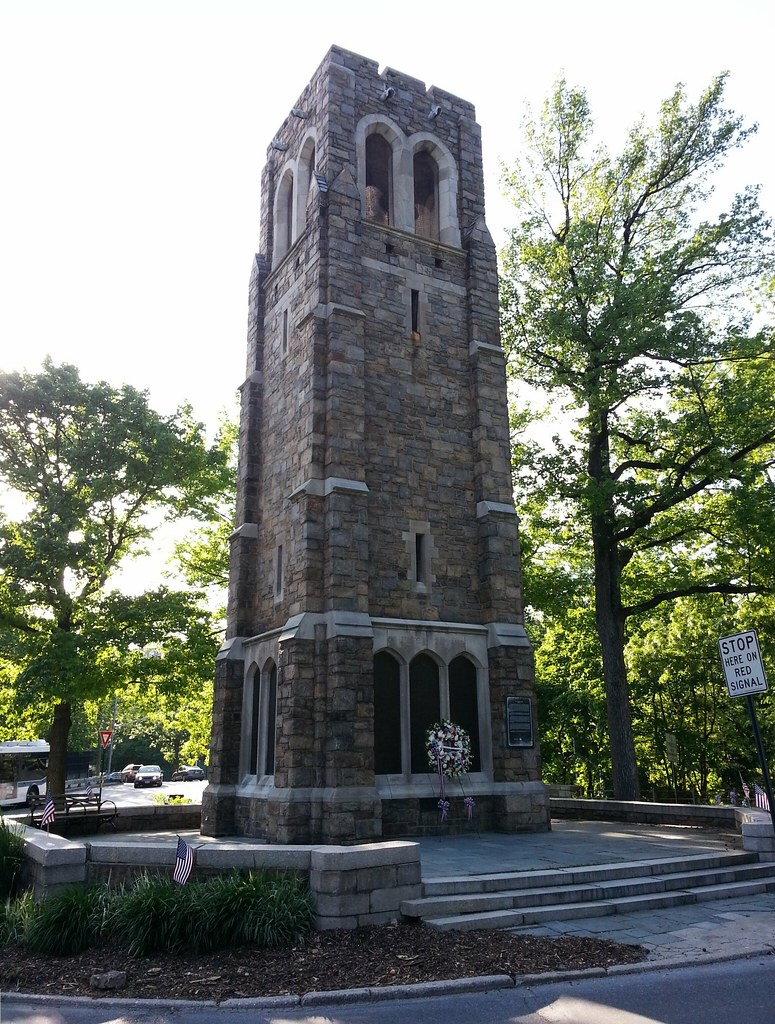
Completed in 1930, this tower was built to house an 18th-century Spanish church bell that "Old Fuss and Feathers" stole from Mexico during the Mexican-American War.
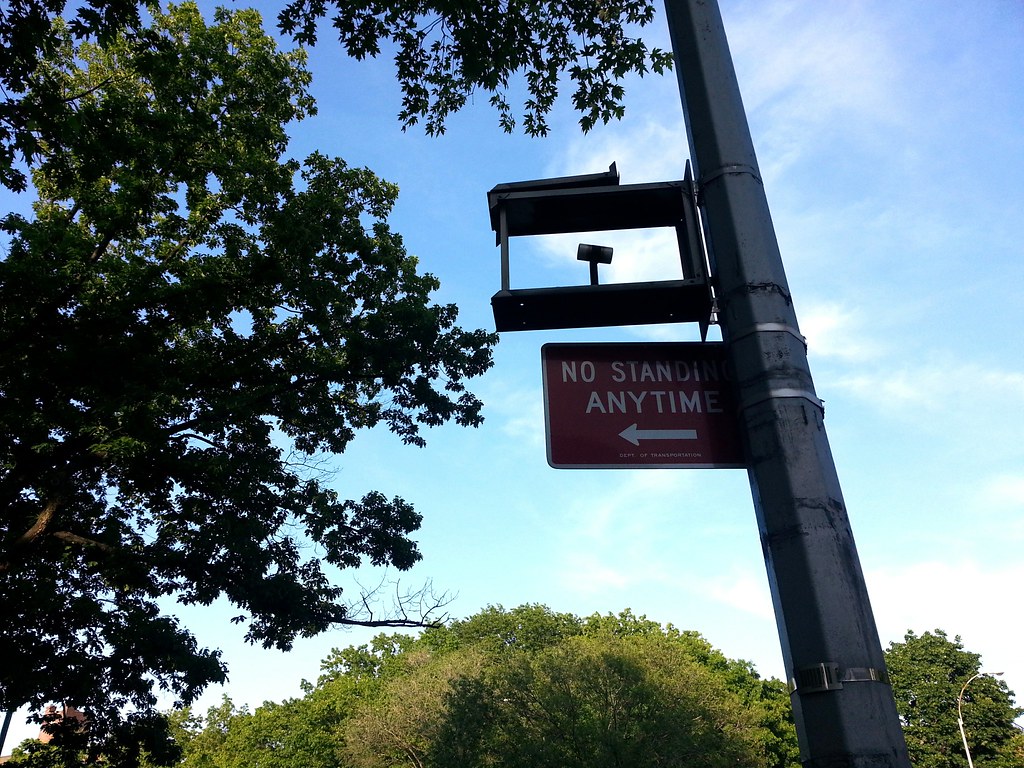
The skeleton of some old light-up sign
UPDATE: It was a police call box sign.