
Tiny white and yellow florets growing from the magenta bracts

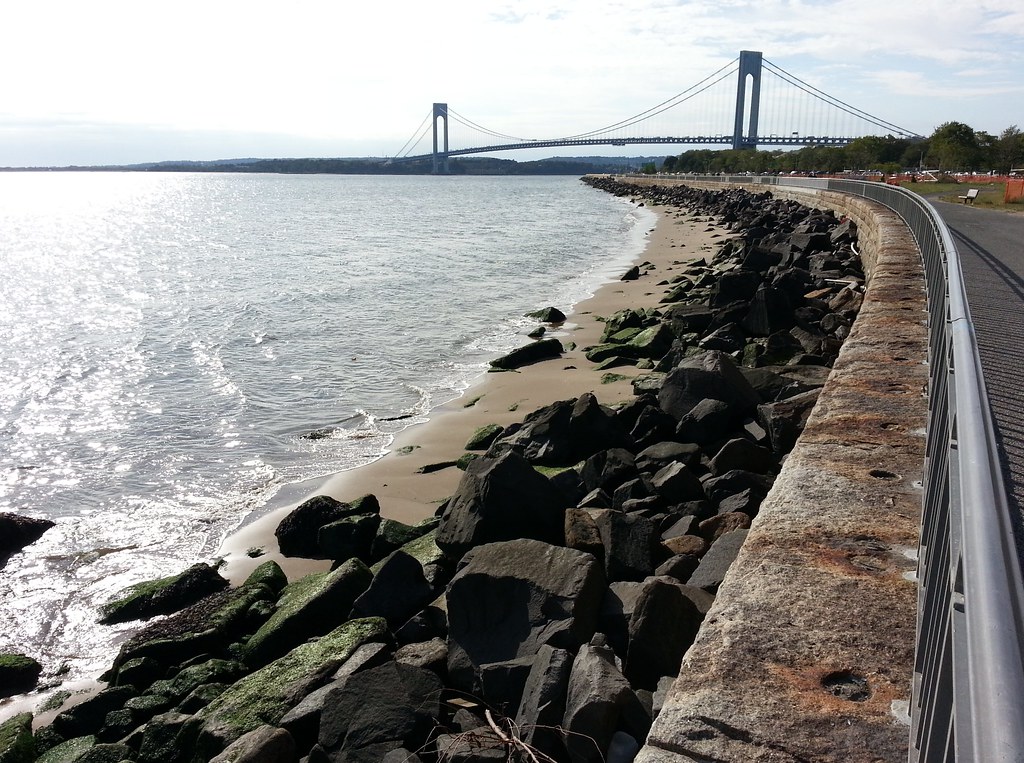
At 4,260 feet, the main span of the Verrazano-Narrows Bridge was once the longest suspension bridge span in the world, and it still holds the title of longest in the Americas.


On the back of a Jewish school bus in Borough Park
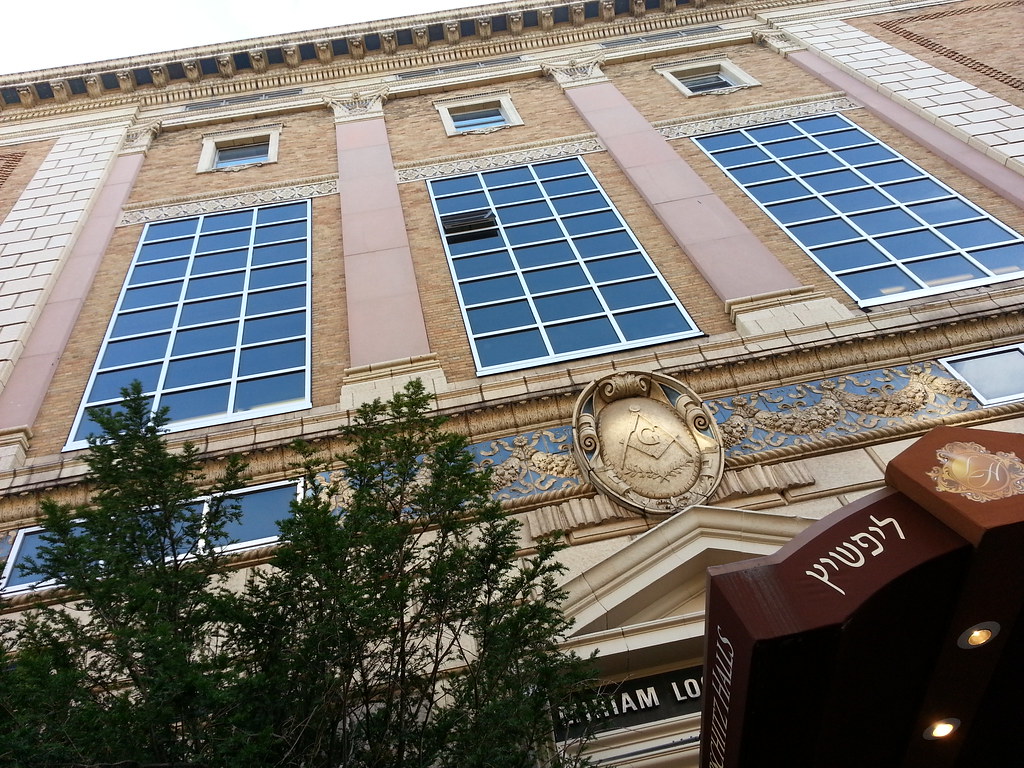
This was originally the Menora Masonic Temple, and its cornerstone came from Solomon's Quarries in Jerusalem.
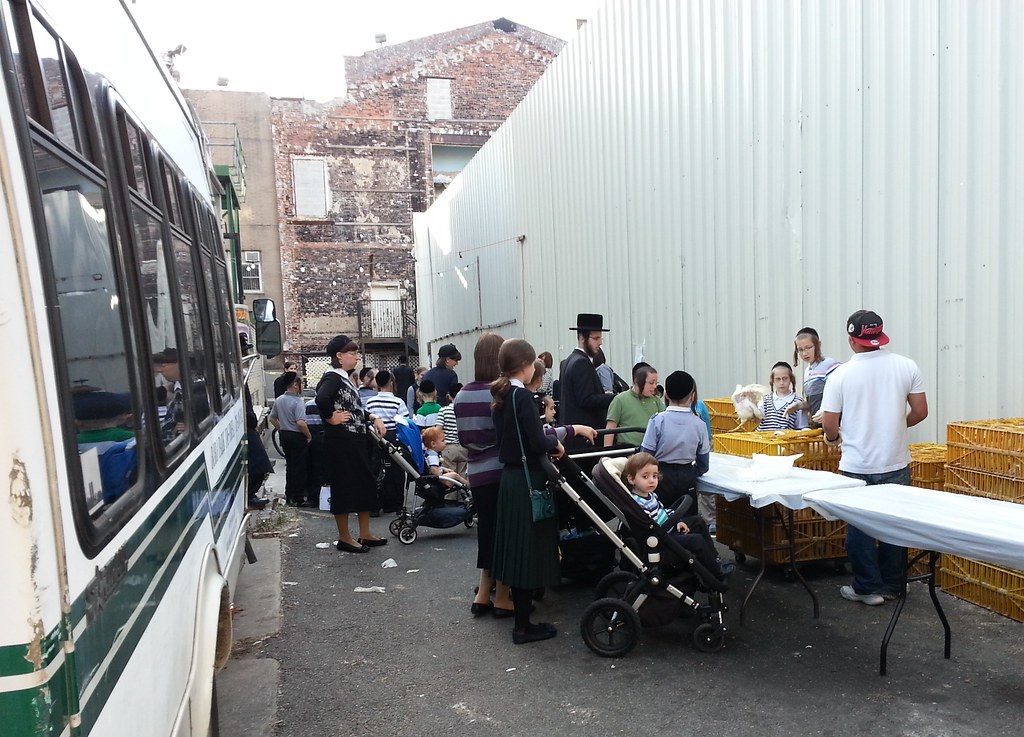
These people are purchasing live chickens (packed in the yellow crates) for the controversial annual ritual of kapparot practiced by some Orthodox Jews in the days leading up to Yom Kippur. In this custom, a chicken is "swung" ("waved" is a more accurate description, as you can see in this NY Times video) three times above one's head, symbolically transferring one's sins to the bird, and then slaughtered. In some cases, the meat is donated to those in need (some articles I've read say this rarely happens, while others say it usually does). In recent years, a growing number of animal rights activists and rabbis have been vocally denouncing kapparot as a cruel practice that violates the Jewish prohibition against the infliction of unnecessary pain on animals. They encourage instead the following of an alternative tradition in which money is used in place of a chicken.
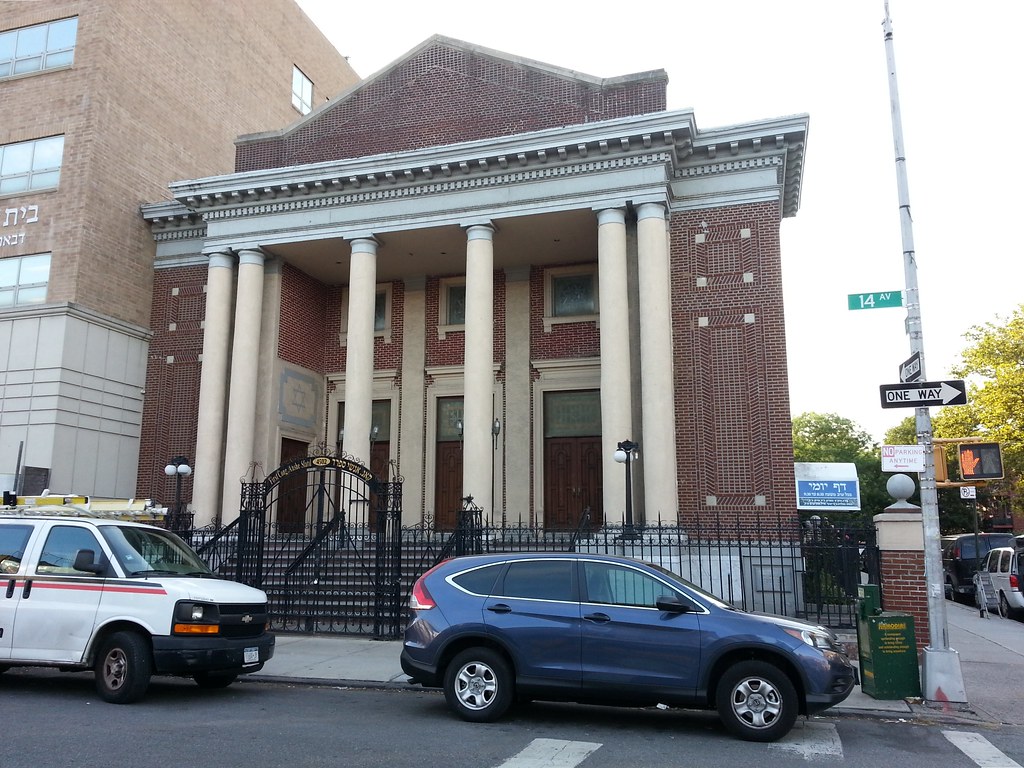
The famed cantor Yossele Rosenblatt, who appeared as himself in a cameo role in the landmark 1927 talking picture The Jazz Singer after turning down a larger part for religious reasons, served as chazzan here at Anshe Sfard for a couple of years until the synagogue's finances collapsed in the stock market crash of 1929. You can hear some of Rosenblatt's recordings, recently digitally restored by a devoted fan, here, and you can watch a musical tribute to "the greatest chazzan of all-time" here.
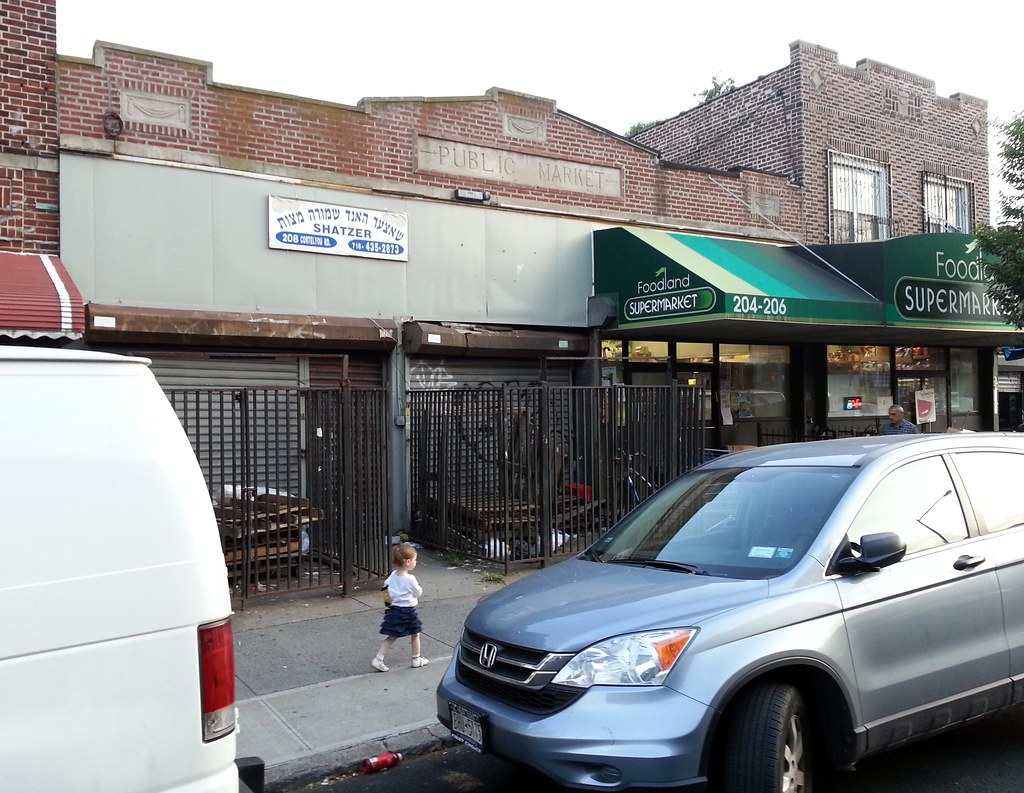
Perhaps once a smaller version of the nearby Thirteenth Avenue Retail Market, this building is now occupied in part by the Foodland Supermarket and in part by the Shatzer Matzah Factory.

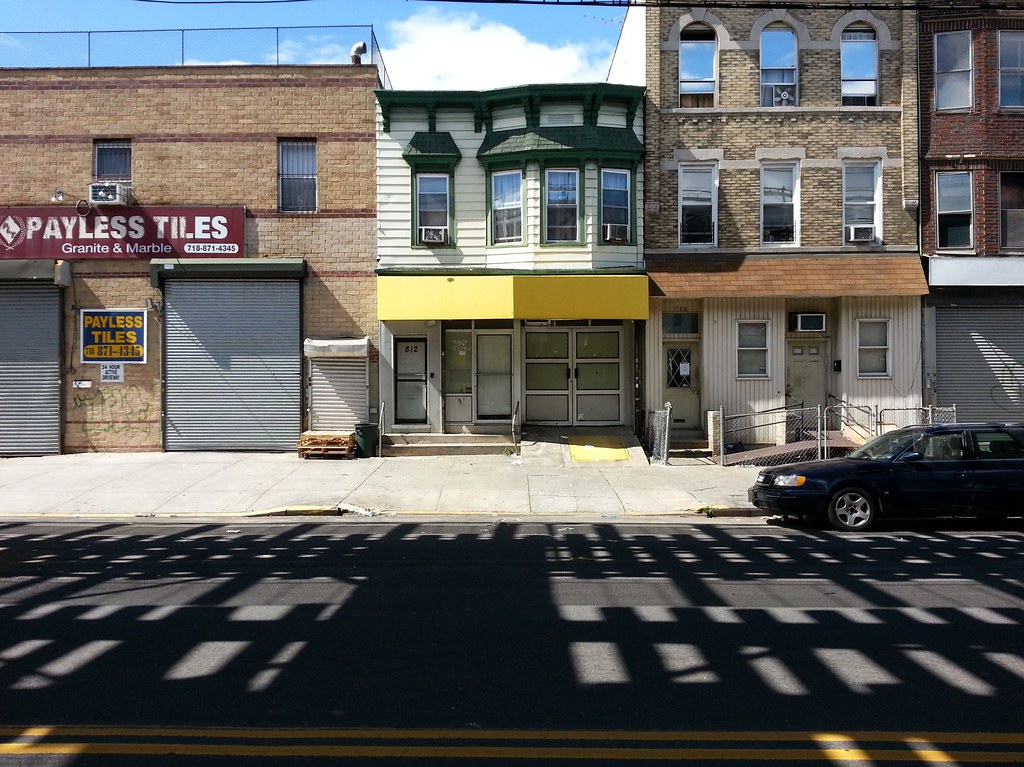


And it's looked like this for more than two years.

In his failed bid for the Democratic mayoral nomination, Mr. Thompson pushed hard to win the votes of the city's Orthodox Jews. The text of the second bullet point on these posters, from what I can cobble together (here's a closer look), trumpets his opposition (which in reality was just a vague call for compromise) to the "billionaire Bloomberg" administration's recent decision to require parental consent before the performance of metzitzah b’peh, an ancient but potentially risky circumcision practice in which the mohel uses his mouth to suck blood from the infant's wound. It might seem strange that such an issue would get second billing on a campaign ad, but the new regulation infuriated the city's ultra-Orthodox communities (the target audience of these Yiddish-language posters in heavily Jewish Borough Park), forcing all the Democratic mayoral candidates to publicly state their position on the matter.

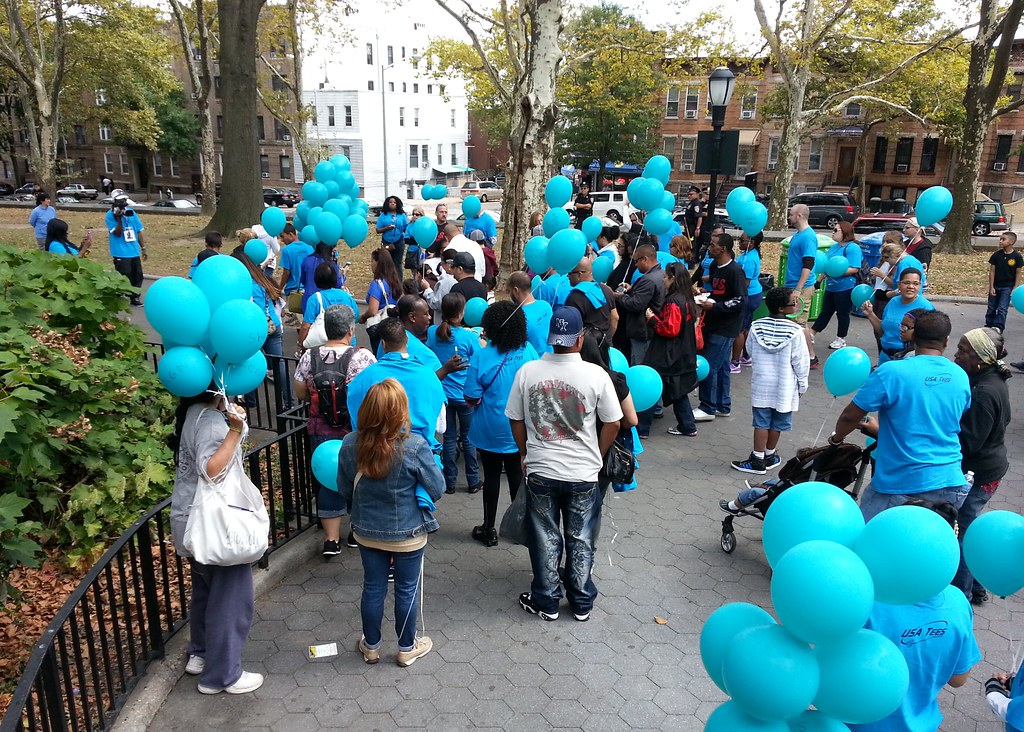
of the fourth annual Maureen Henry Walk of Hope. I just happened to stumble upon the start here in Sunset Park.



Today's walk set a new record for me: I saw at least 50 fig trees as I navigated the streets of Dyker Heights and Bensonhurst. (Brooklyn's Italian neighborhoods are known for their abundance of figs.)
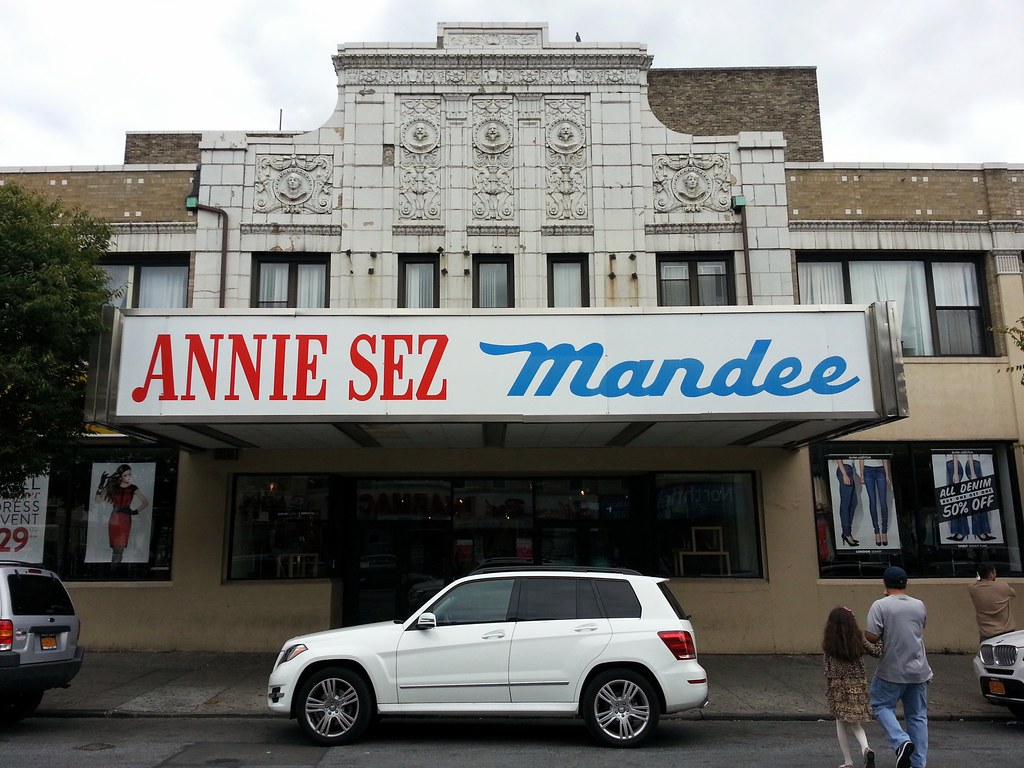
"Distinguished as one of the most enduring neighborhood movie palaces in New York", the Walker (named not after the noble pedestrian, but rather the scandal-tarred former mayor) was open from 1928 until 1988, although it spent its last few years as a four-screen multiplex. You can see some old photos of the beautiful interior here.

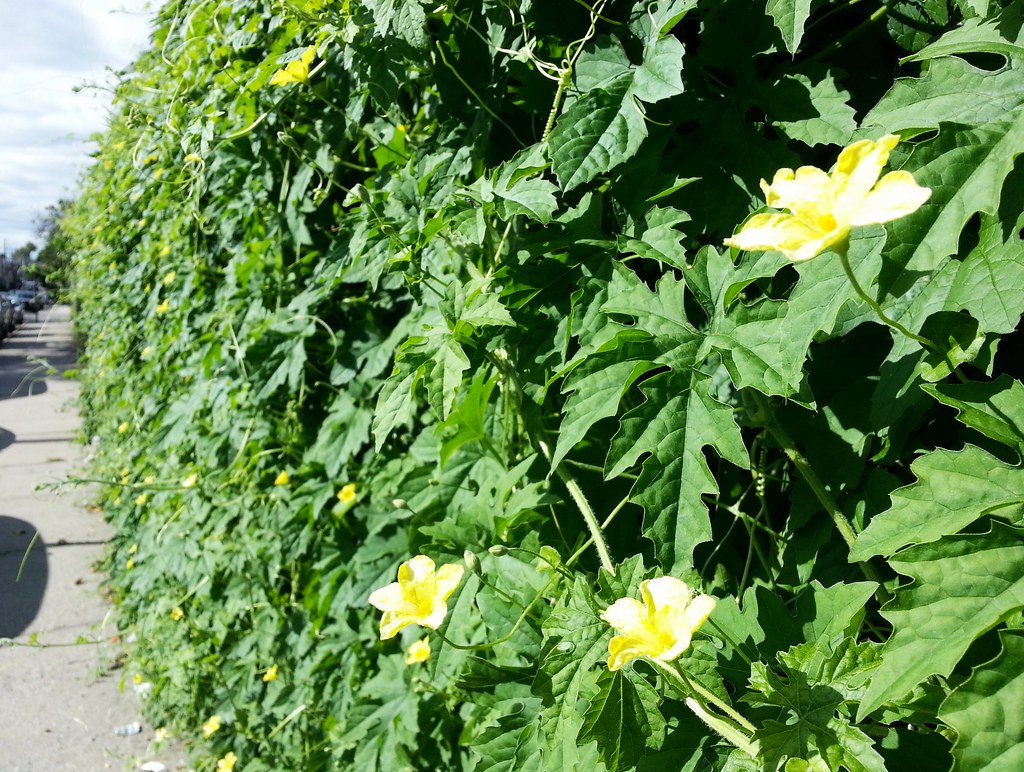
Despite the name and the freakish appearance of the fruit, these flowers are delightfully fragrant. The thick growth of the vines conceals what's on the other side of this fence: a long and narrow, densely planted vegetable garden tucked in between 62nd Street and the parallel tracks of the N Train, running almost the entire length of the block between 10th and 11th Avenues. (Aerial view here.) It's nearly half an acre in area, and there's a tremendous amount of stuff growing back there, but I saw no indication that it's a community garden. I wonder if someone's just leasing the property from the MTA for use as an urban farm.


A kind of clever but mostly just weird name for a lingerie store

I often see metal streetscape components that were cast in India, China, and Harrison, New Jersey, but this is the first time I've noticed one from Thailand. Maybe I just haven't been paying enough attention to the tops of fire hydrant bollards!

Yet another use for one of these oft-ignored sidewalk fixtures

This gap in the fence leads to a little makeshift shack and a bench hidden in the dense overgrowth between 61st Street and the tracks of the Bay Ridge Branch.

That I-beam jutting out of the facade was probably part of a hoist system for raising and/or lowering laundry to/from the second story, which, as you can tell from the extent of the newer sections of brick, used to have openings much larger than the current windows.
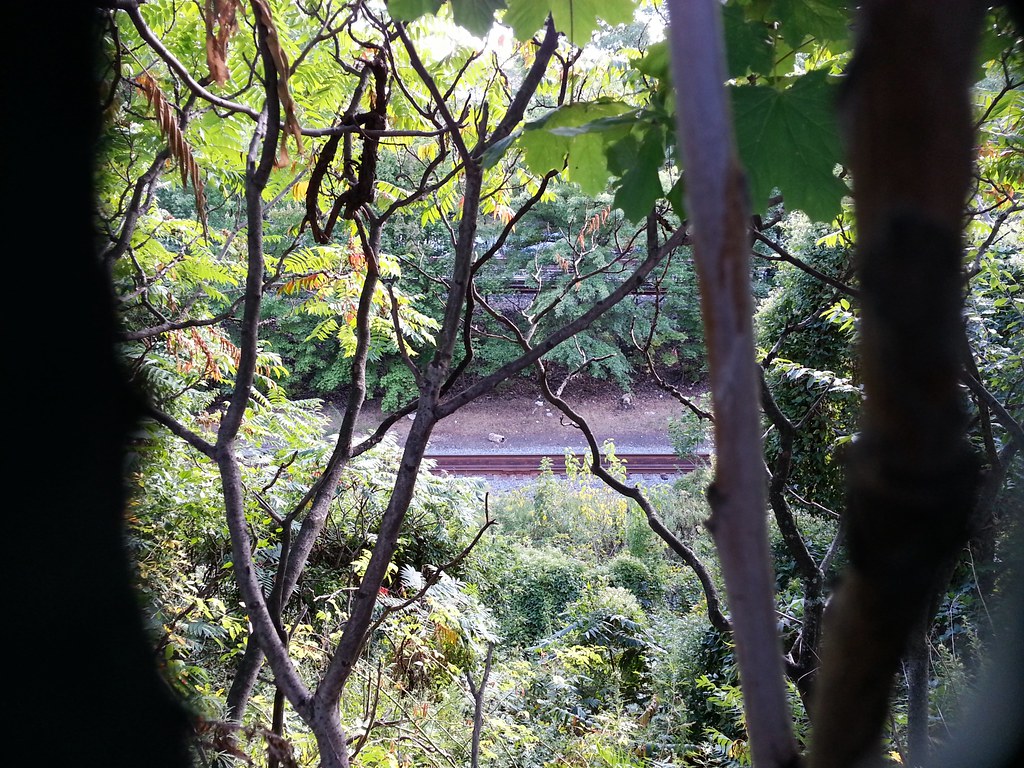
That's the Bay Ridge Branch down low and the Sea Beach Line (N train) higher up, just visible through the trees in the background.

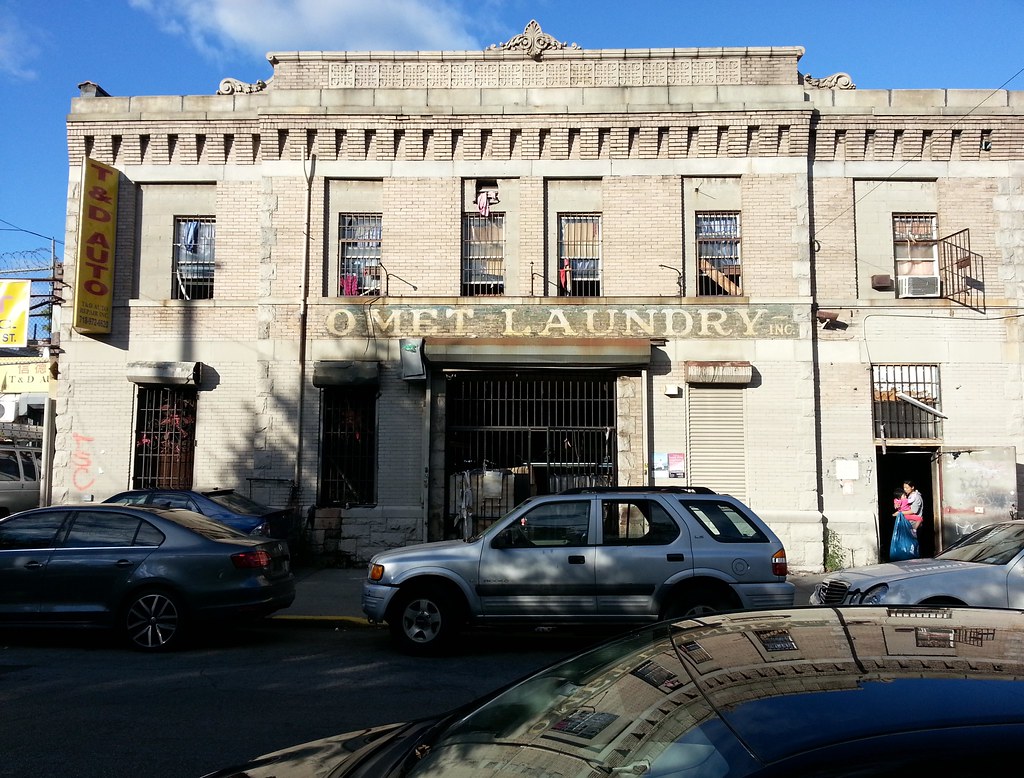
Another erstwhile laundry along the tracks of the Bay Ridge Branch


and the ubiquitous red plastic bags of Chinatown. (The linked article is about Manhattan's Chinatown, but I imagine the same reasoning applies here in Brooklyn.)
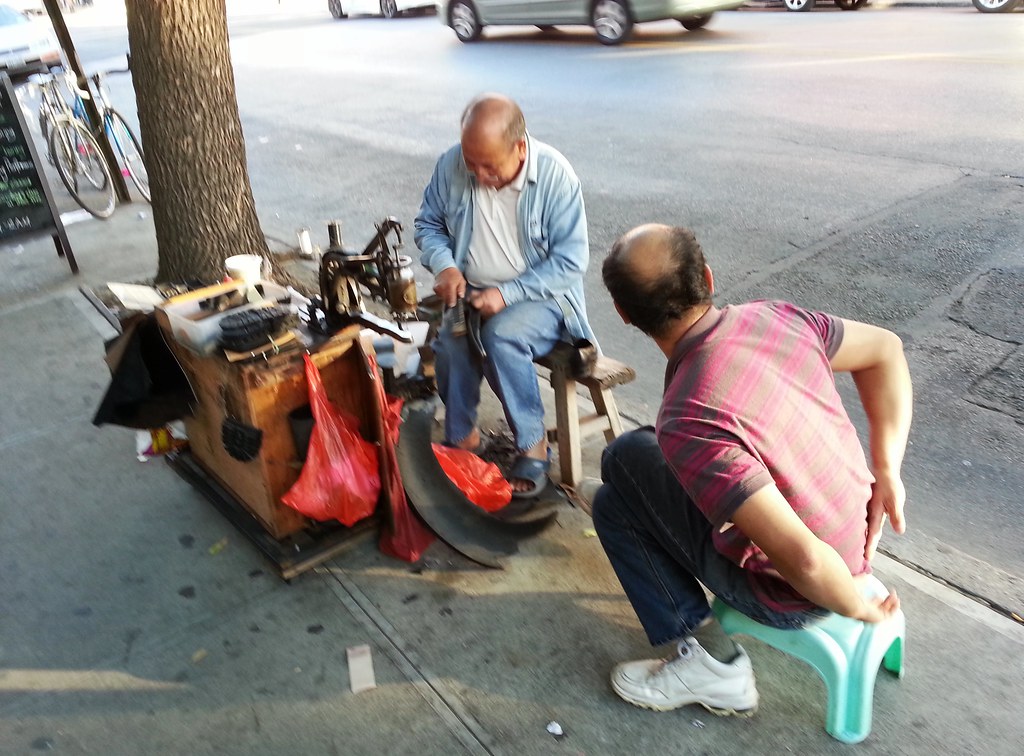
Pardon the blurry photo. This is one of two men I saw fixing shoes on the sidewalk of 8th Avenue.
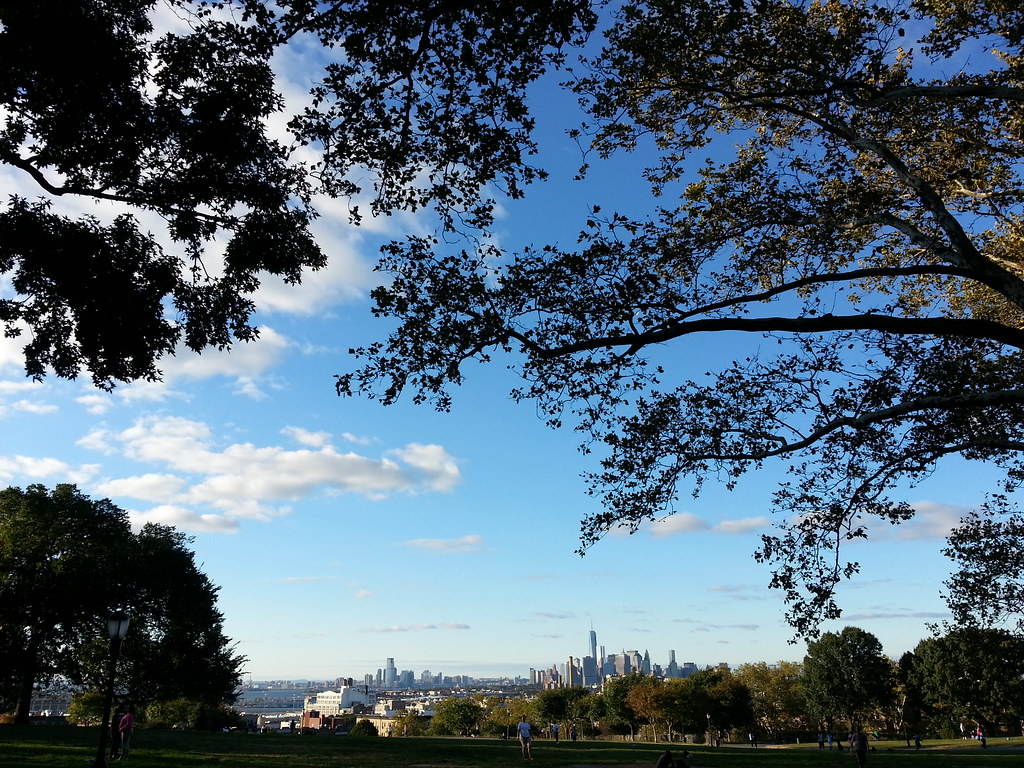

and the sidewalk etrog vendors are plying their wares in Borough Park.
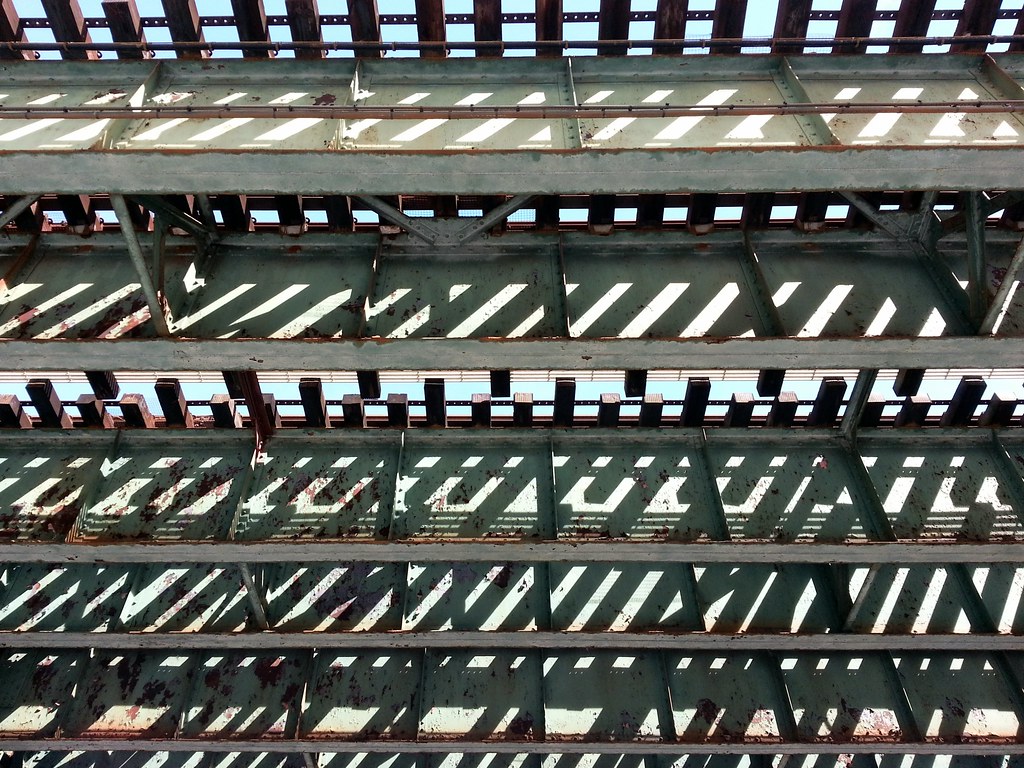
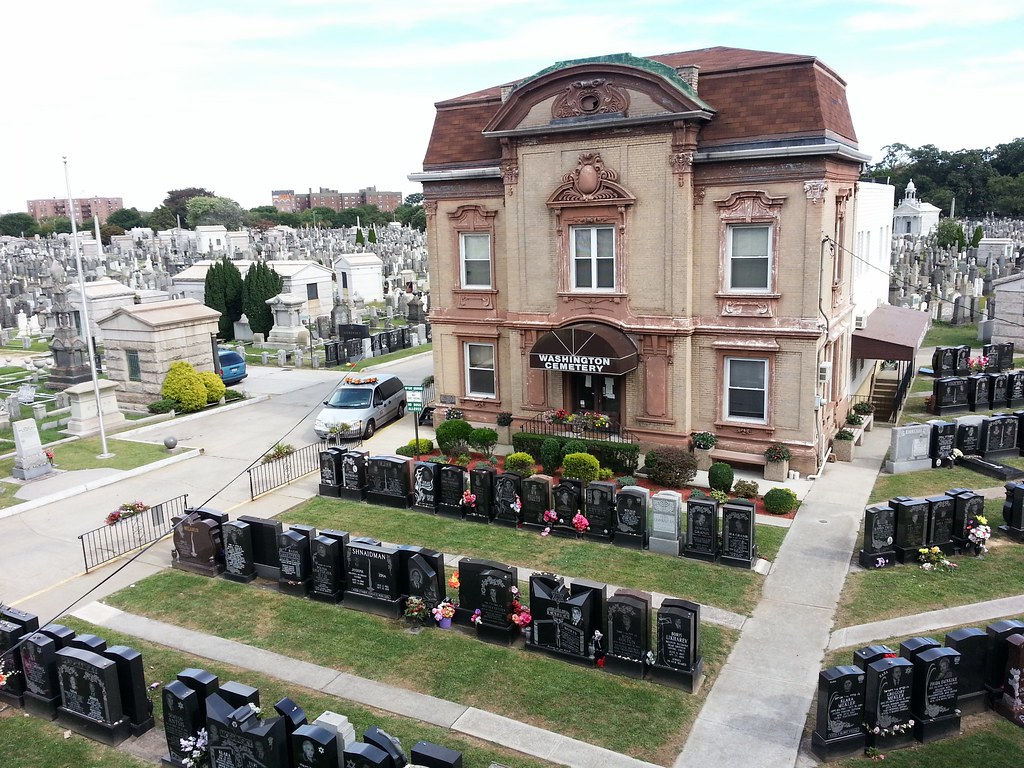
This almost entirely Jewish cemetery was founded by James Arlington Bennet, a member (though apparently not a sincere one) of the Mormon Church who was asked by Joseph Smith to be his running mate in the presidential election of 1844. But Bennet, a "wily Easterner", "saw the futility of that campaign and claimed to be constitutionally ineligible by reason of foreign birth. Believing that no one would buy books by an American author, Bennet had posed as Irish-born to further sales of his manual on bookkeeping even though his parents immigrated to America before his birth."
In 1887, the Brooklyn Daily Eagle recalled some more colorful details about the man:
His name was James Arlington Bennet, and he was always proud of the fact that there was only one "t" in his name, saying that all those with two of those consonants at the end of their name were Irish and informers. [The monument marking Bennet's grave here at the cemetery reads "BENNETT".] . . . Mr. Bennet always had an idea that he was an inventor, and to prove that his idea was correct he invented and made a pair of wings which, he said, if placed upon any one's shoulders would enable him to fly when and where he pleased. The villagers did not seem to have faith in the wing business, for none of them gave any signs of being willing to test the invention, so the old man became angry and went over to Castle Garden where he employed a native of Erin, ostensibly to work on a farm, but in reality to become famous by proving that the invention was a success. The stranger was not long enough in the village to become acquainted or get acclimatized before Mr. Bennet took him to the top of the cemetery office, where he fixed the wings to the shoulders of the new farm hand and said, "Fly or die," at the same time pointing a musket at the head of the Irish immigrant. Under such a condition of things the stranger thought it best to attempt to fly and he did so, but unfortunately in so doing he broke his neck.
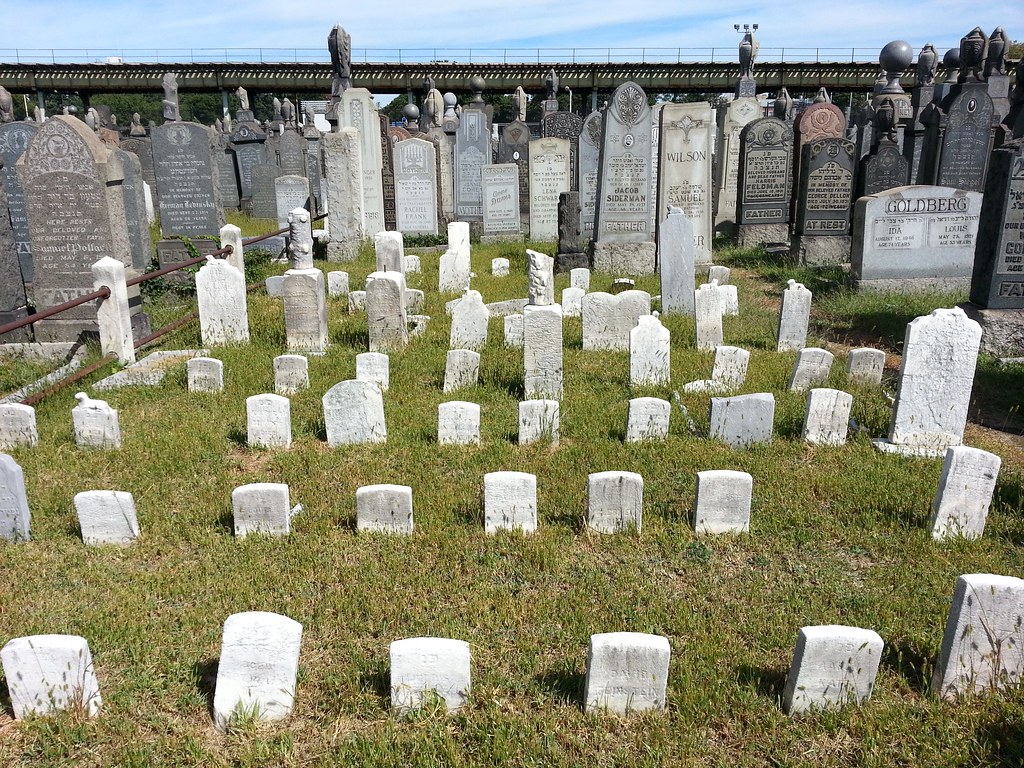
Many of New York's cemeteries are running out of room, but Washington Cemetery is fully sold out, having already replaced all its roads with narrower footpaths to make room for more graves. Meanwhile, the owners of unused plots, now highly in demand, are selling them on the black market and raking in the dough.
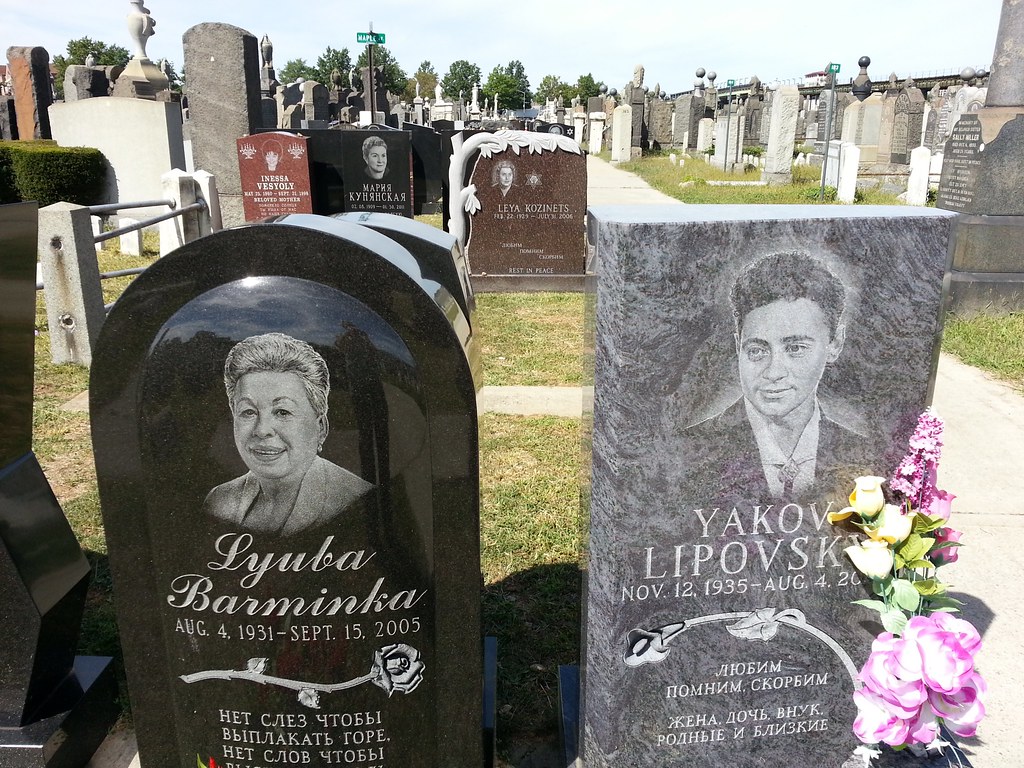
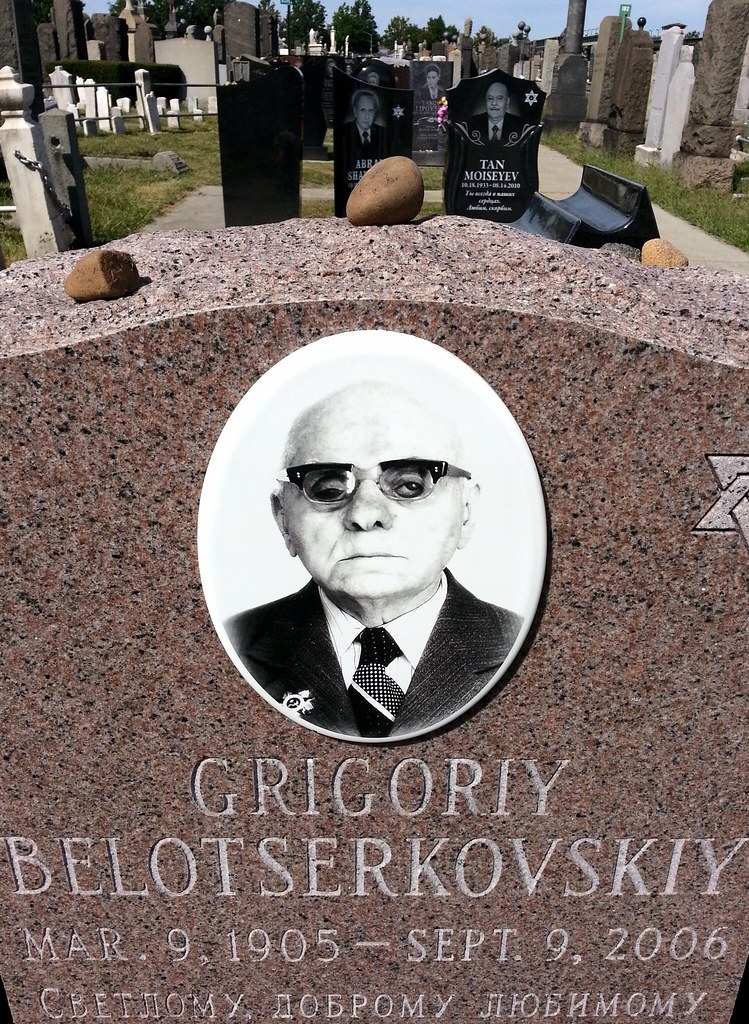
Primarily found in the areas where new grave sites have been created (for example, where roads have been replaced with narrower footpaths to make room for more burials), headstones like these, laser-etched with a likeness of the deceased, are very popular among the Jews from the former Soviet Union who make up almost all of the new burials at Washington Cemetery. Most people are depicted as they looked in middle age or later, but some are instead represented by an image from their younger years. (On a related note, check out these incredible photos I found of some mobsters' tombstones in Russia and Ukraine.)