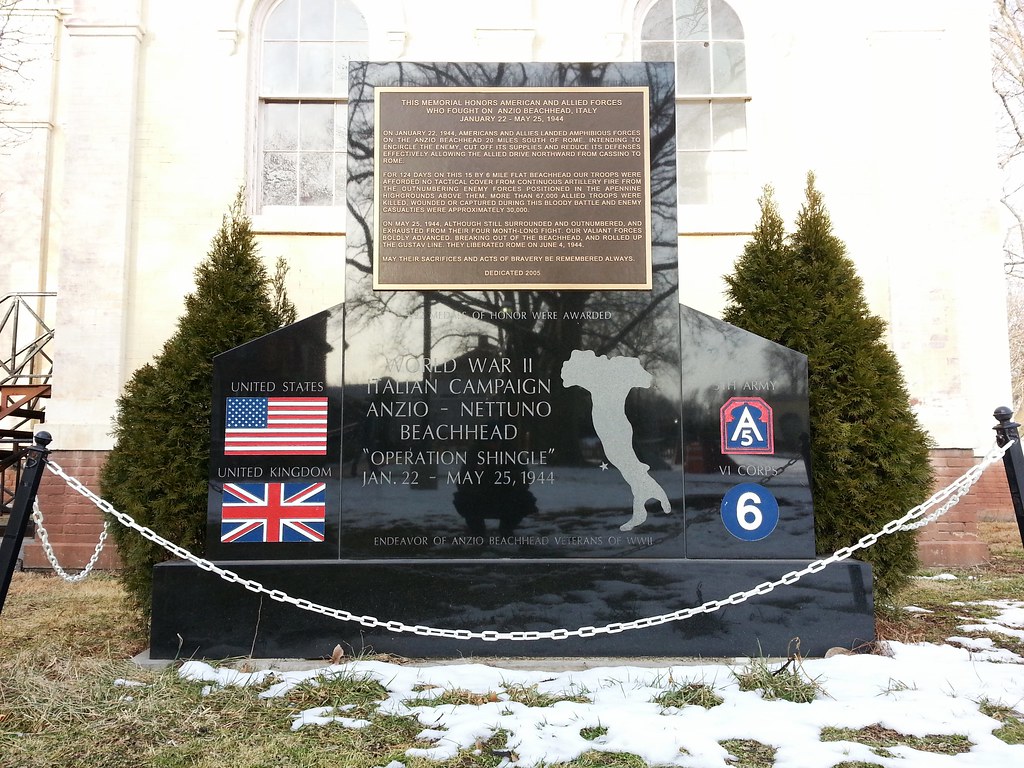
This monument (close-up) honors the American and Allied troops who fought in WWII's Operation Shingle. It appears to be the same memorial that was unveiled in 2006 on a city pier when the USS Anzio was in port. The veteran who spent years finding funding for this monument wanted to have it installed in Battery Park; perhaps he was unable to get approval and instead found a willing recipient here at Snug Harbor, where it was dedicated once again in 2010. A near-identical memorial was also dedicated at a Staten Island Boy Scout camp in 2007.
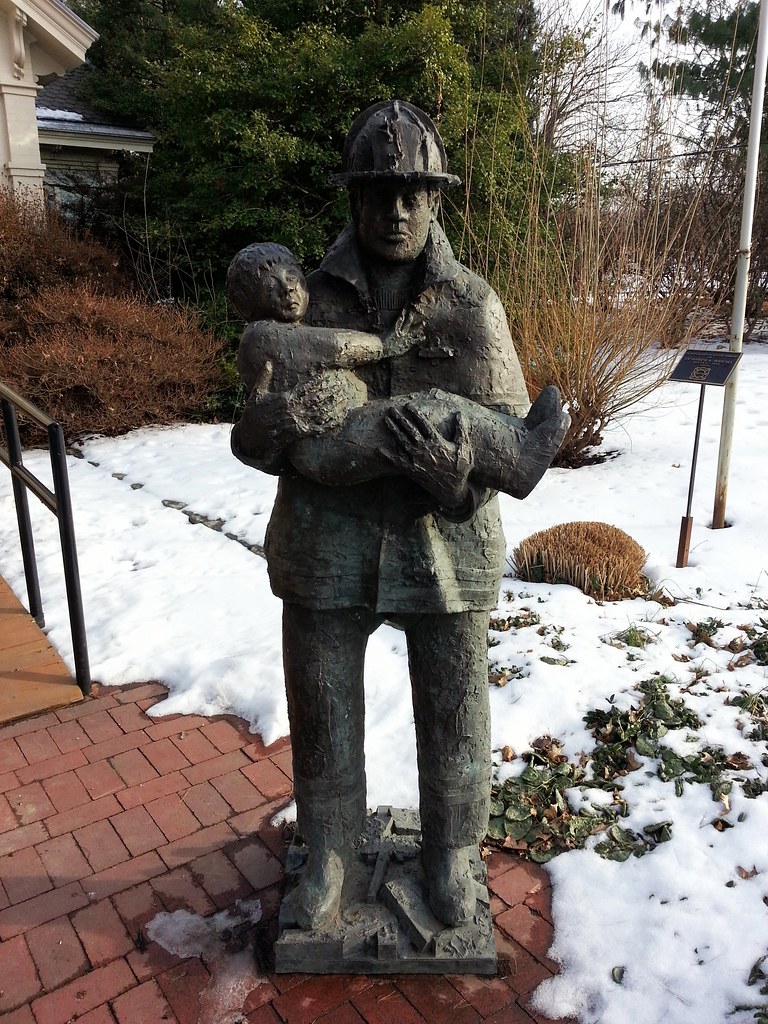
This statue stands outside the World Trade Center Educational Tribute, a small 9/11 museum located in Snug Harbor's former morgue. (We happened upon the institution's old cemetery at Monkey Hill, located a block south of present-day Snug Harbor, back in 2012.) There was a "Be Right Back" sign on the museum's front door; I waited around a while, but no one ever showed up, so I only got a brief glimpse of the interior through a window. You can see a few shots of the place here, however.

at the New York Chinese Scholar's Garden. (The linked article is somewhat inaccurate about the history of Snug Harbor; these are the notable errors.)
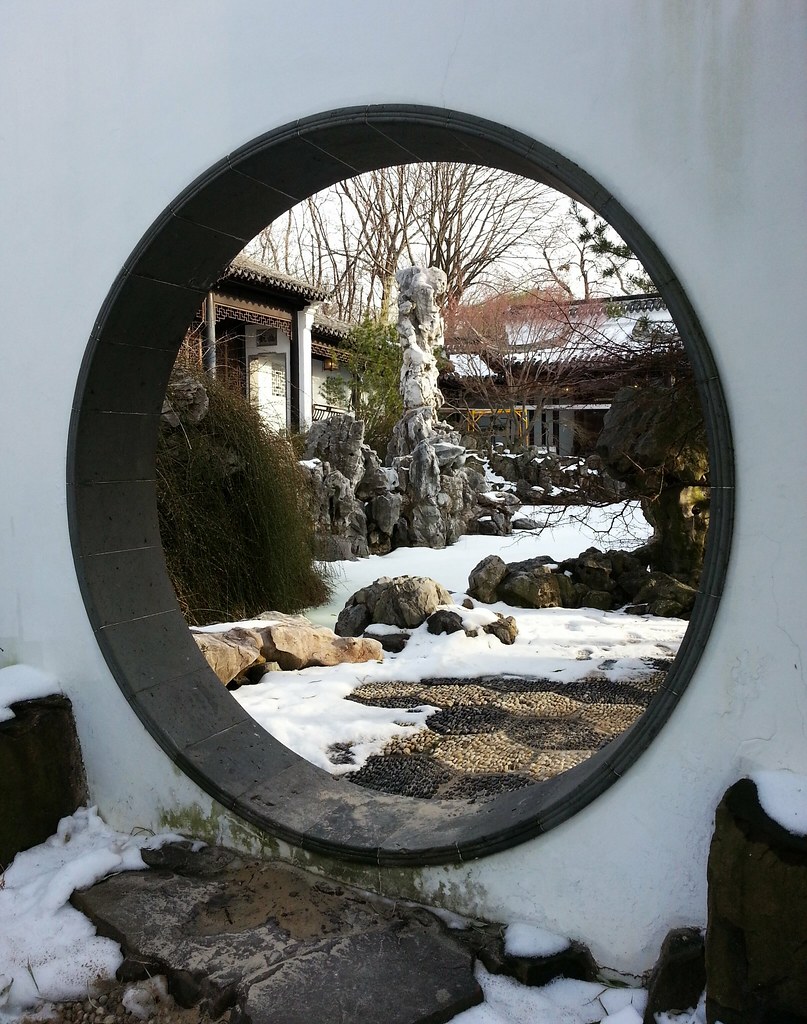
Here's a video tour of the garden; pardon the loud music.
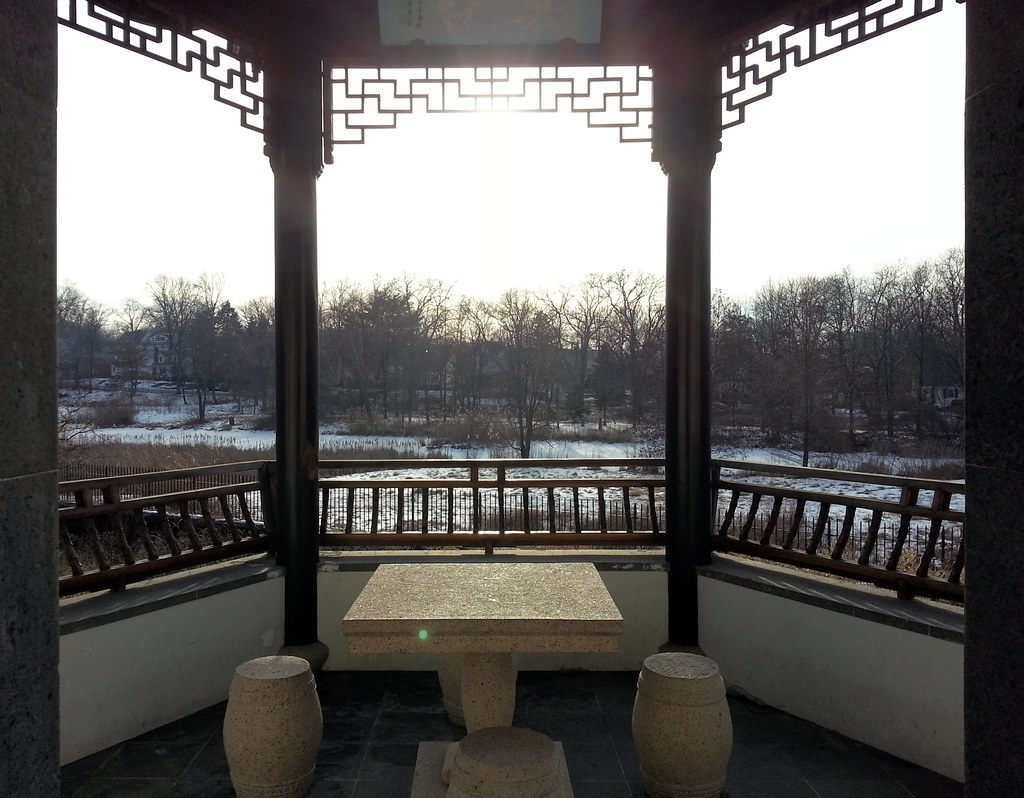
There's scarcely any signage here at the New York Chinese Scholar's Garden. One exception, however, is a somewhat surreal plaque identifying this spot as the Moon Viewing Pavilion Terrace of Crispness, sponsored by Bell Atlantic.
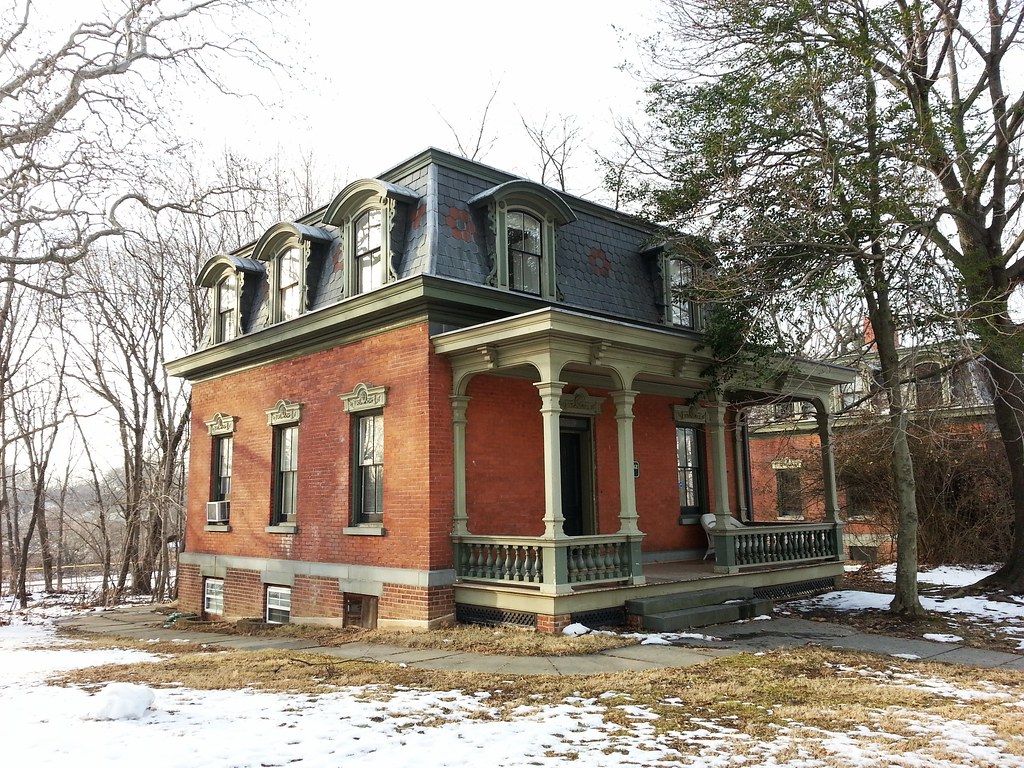
This building is one of five identical cottages that originally served as living quarters for Snug Harbor staff members. In the late 19th century, the institution's secretary, engineer, gardener, baker, and farmer each got their own cottage. The buildings (four of the five, I believe) are now used to house resident artists. Edith Susskind, the impressively coiffed "grande dame of Staten Island", who recently passed away at the age of 93, operated her gift shop out of one of the cottages for a few years prior to the residency program being reinstated in 2012.

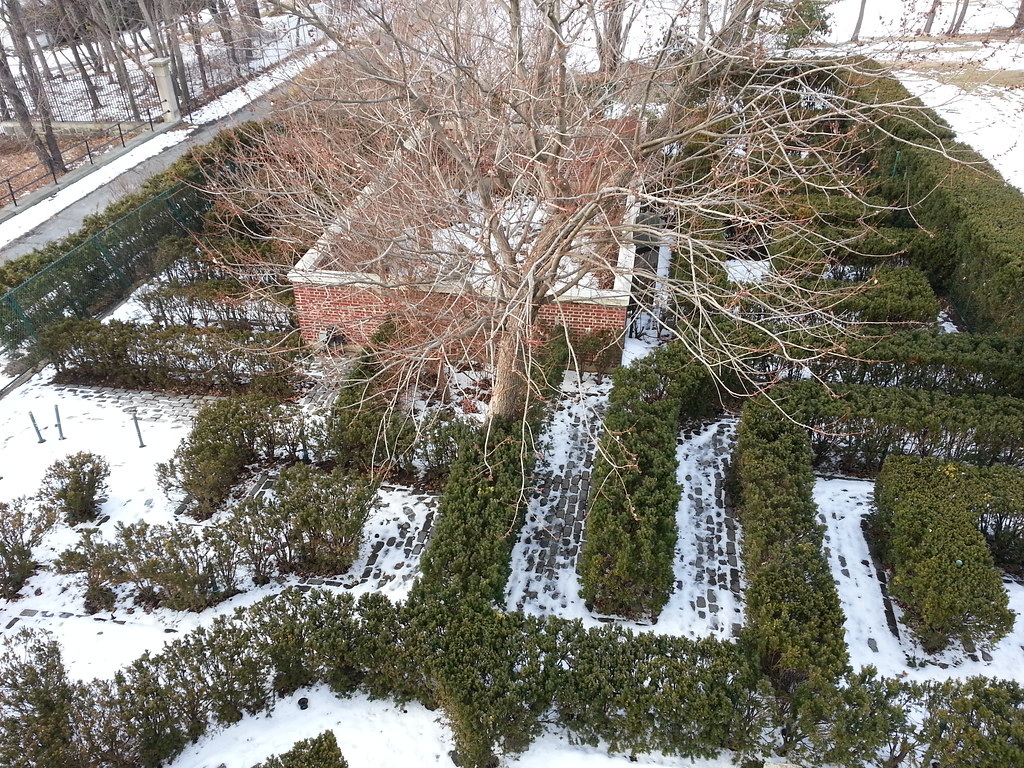
This Snug Harbor fortress was built by a Staten Island man as a memorial to his wife, who died of a rare and incurable form of cancer at the age of 46, less than two months after being diagnosed. Inside the walls is a hedge labyrinth that leads to a small, enclosed garden in the center, inspired by the novel The Secret Garden. According to a sign near the entrance, the labyrinth "is meant to teach children and remind grownups that although life's path is never straight, we should look for the magic and joy in each step of the journey. For it is only through life's journey that we each find the peace and beauty of our own secret garden."
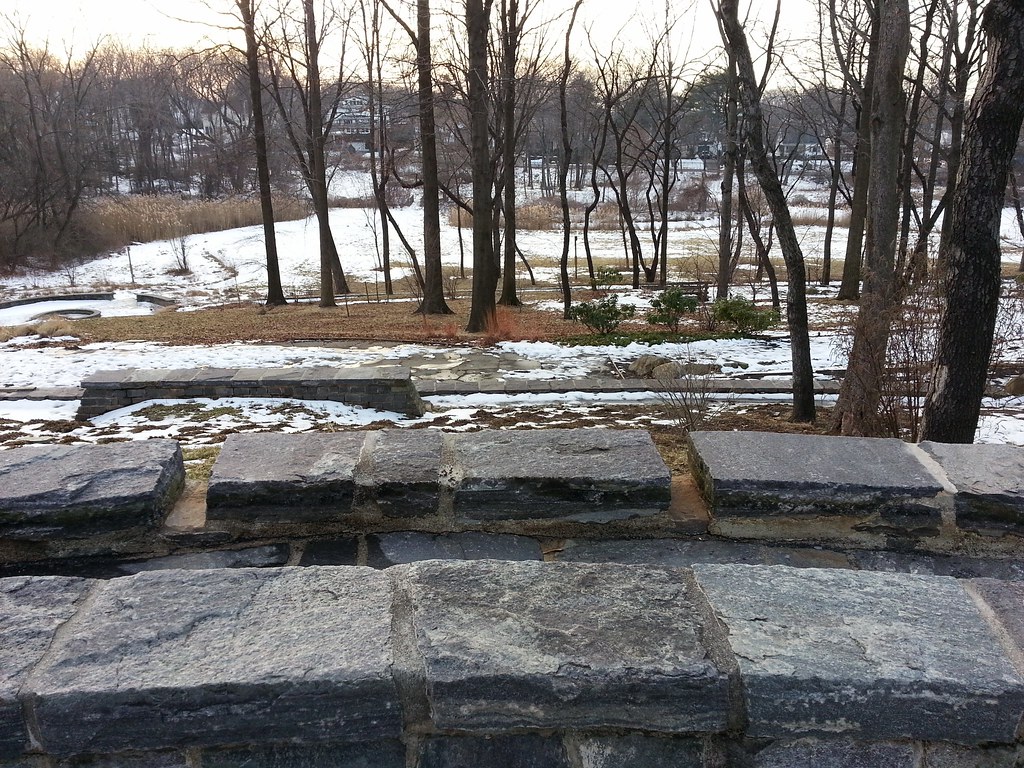
Snug Harbor's one-acre Healing Garden commemorates the Staten Islanders killed on 9/11. Among other features, the garden contains — or at least did when it opened — "saplings from a pear tree that was rescued from ground zero".
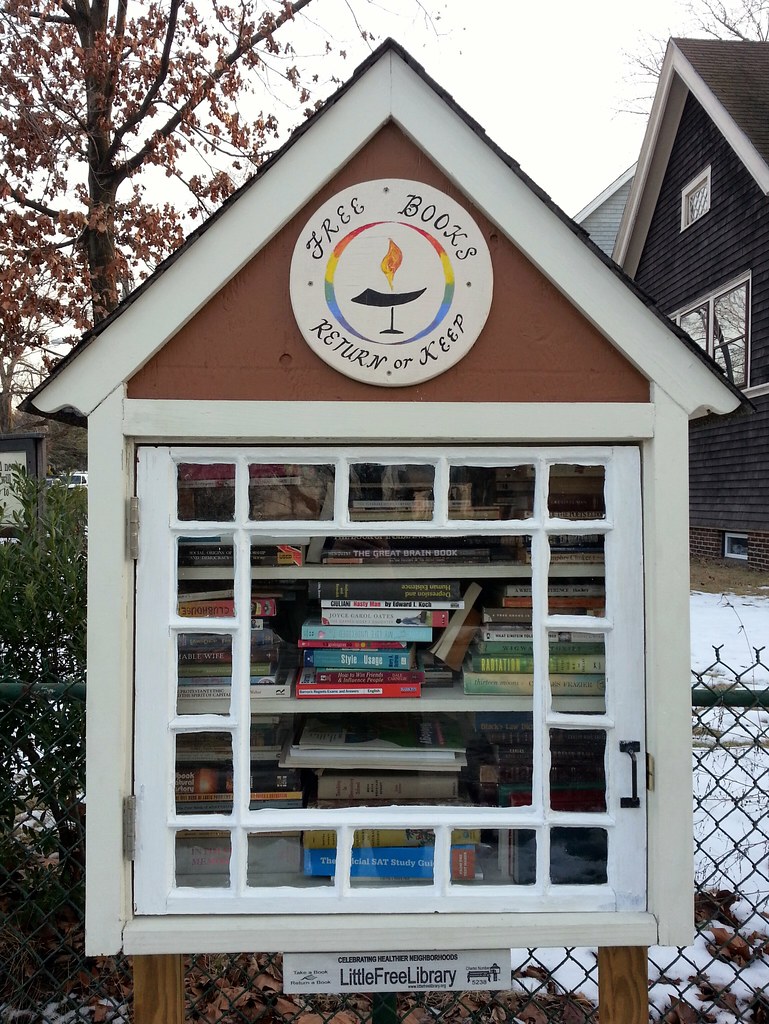
This Little Free Library is installed outside the Unitarian Church of Staten Island. It's a fitting location: in 1886, the church established the Castleton Free Circulating Library, one of Staten Island's first public libraries. (Two of the church's founding members were the parents of Robert Gould Shaw, the guy Matthew Broderick played in the film Glory.)
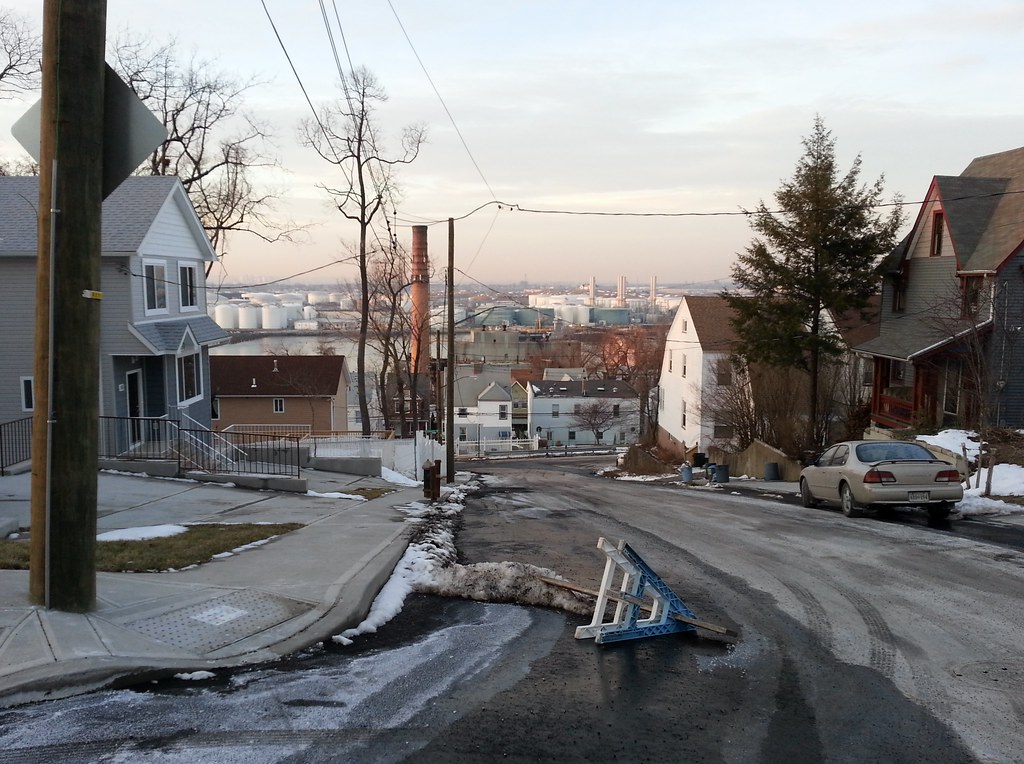
That's Bayonne on the other side of the Kill van Kull, with the hazy skyline of Newark barely visible off in the distance at left. On the right side of the background, just behind the various storage tanks, you can see the clubhouse and the man-made hills of the exclusive Bayonne Golf Club. Here's a closer look at everything.
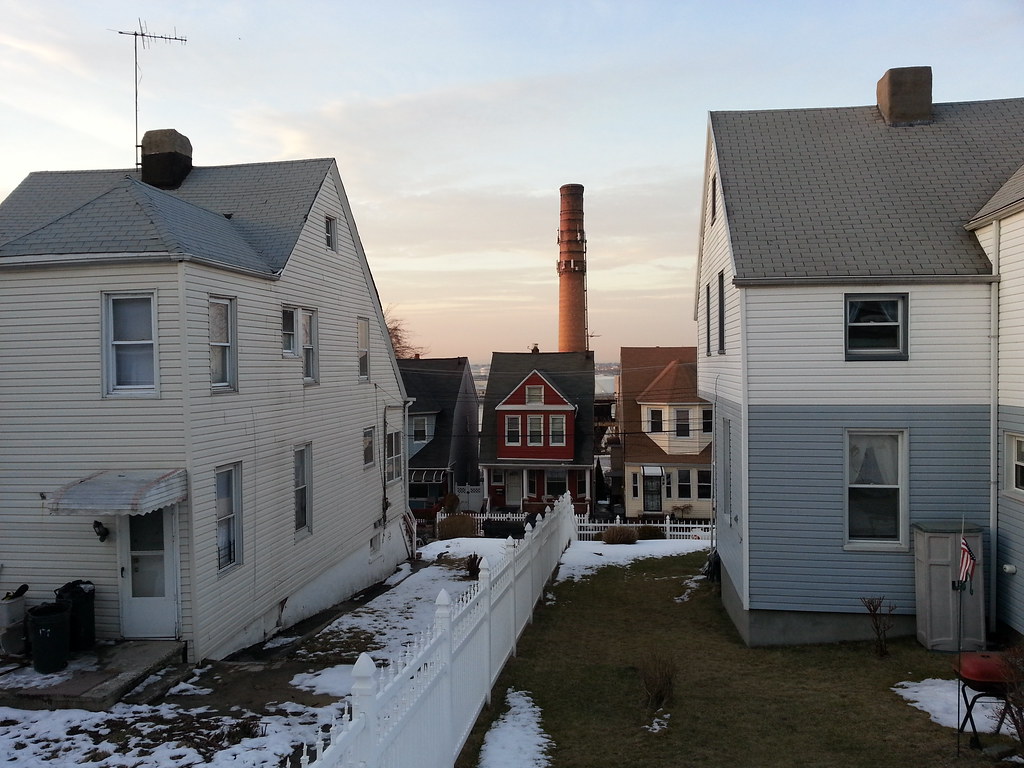
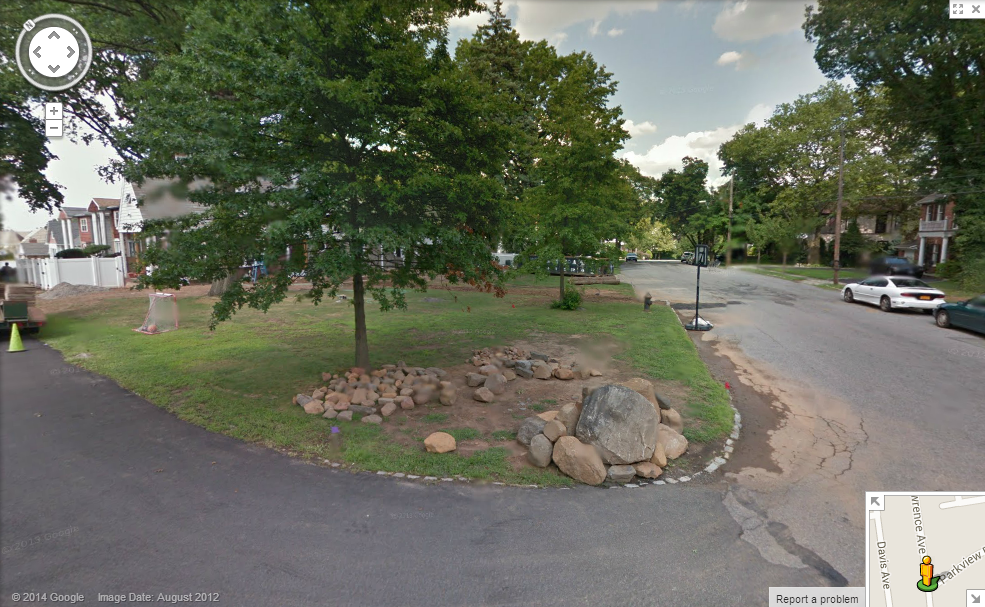
I'm standing on Fillmore Street, looking at Van Buren Street, with Buchanan Street running two blocks behind me.

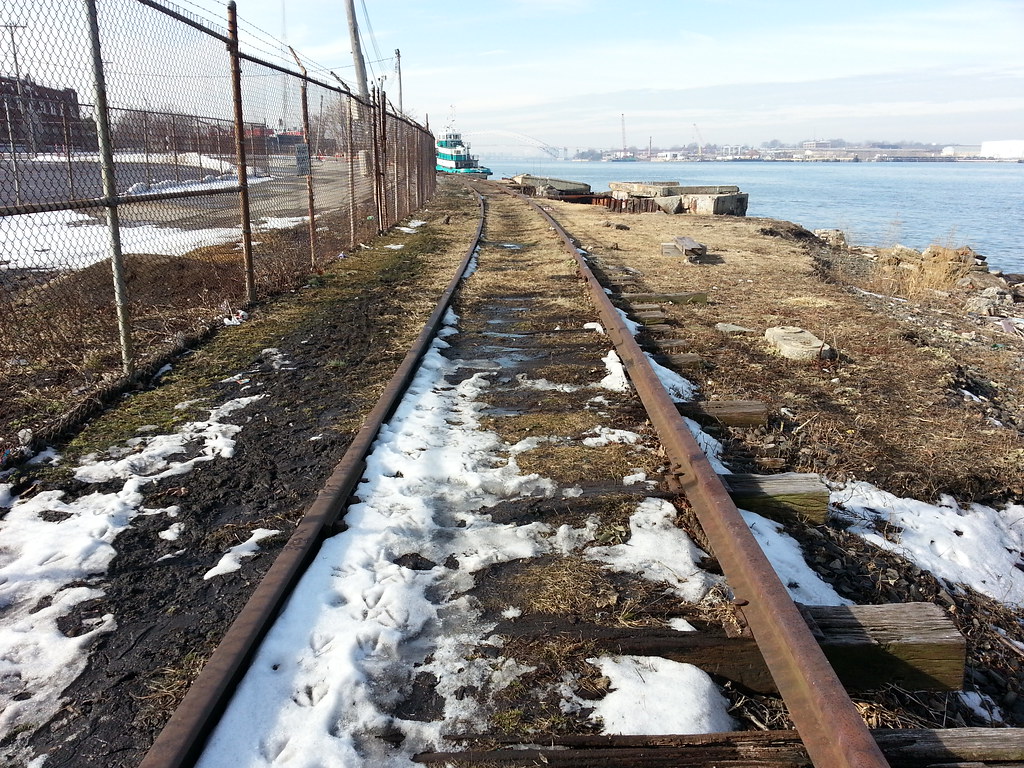
of the Staten Island Railway's abandoned North Shore branch. That's the beautiful Bayonne Bridge spanning the Kill van Kull off in the distance.
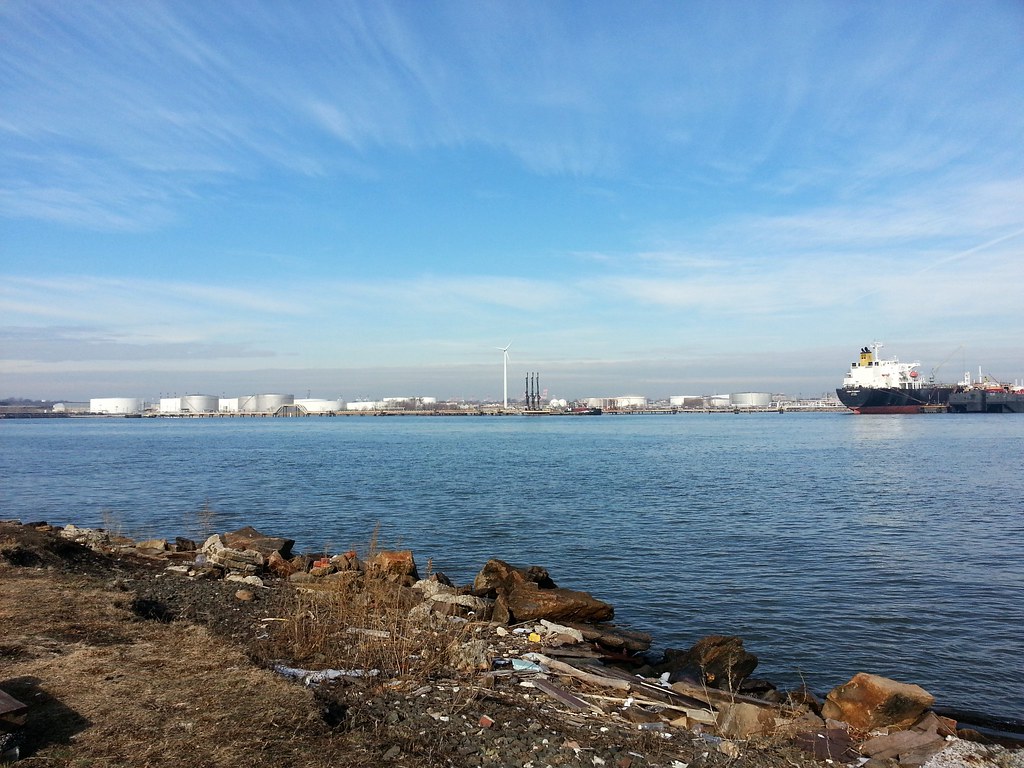
Across the Kill van Kull in New Jersey, you can see what I believe is the metropolitan area's first large-scale wind turbine. (We saw a much smaller rooftop array in the Bronx last year.) Operational since June 2012, the 262-foot-tall turbine was built by the Bayonne Municipal Utilities Authority to power two of that city's sewage pumping stations. (Compare to Washington.)

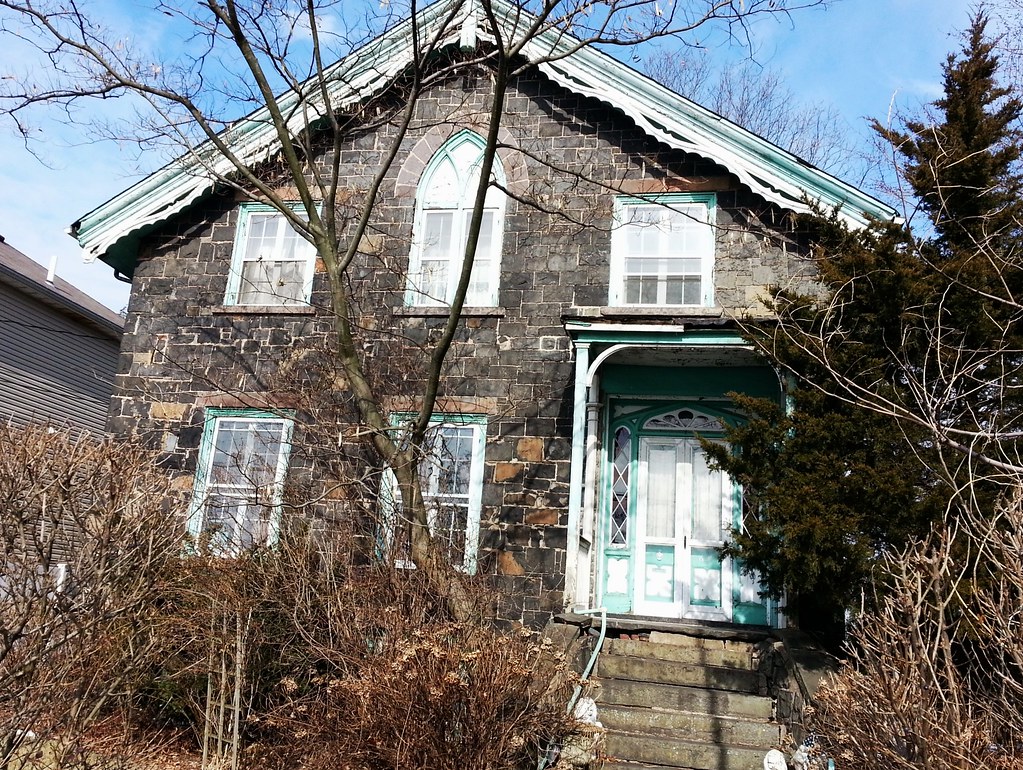
Dr. Samuel MacKenzie Elliott was a pioneering ophthalmologist who counted John Jacob Astor, Peter Cooper, Henry Wadsworth Longfellow, Horace Greeley, and John James Audubon among his patients. He built this house around 1840 from locally quarried stone, and supposedly designed more than 21 other similar structures (which are no longer standing, as far as I can tell). Dr. Elliott was a fervent abolitionist, and is said to have sheltered fugitive slaves in the cellar of his house (although I'm not sure if he ever lived in this particular building, or if he just designed it).
After Dr. Elliott's death in 1875, the New-York Tribune (founded by Mr. Greeley) remembered him as "emphatically one of the men who impart the element of the picturesque to common affairs. A person of very strong, original, eccentric character. A man of positive genius in his profession."
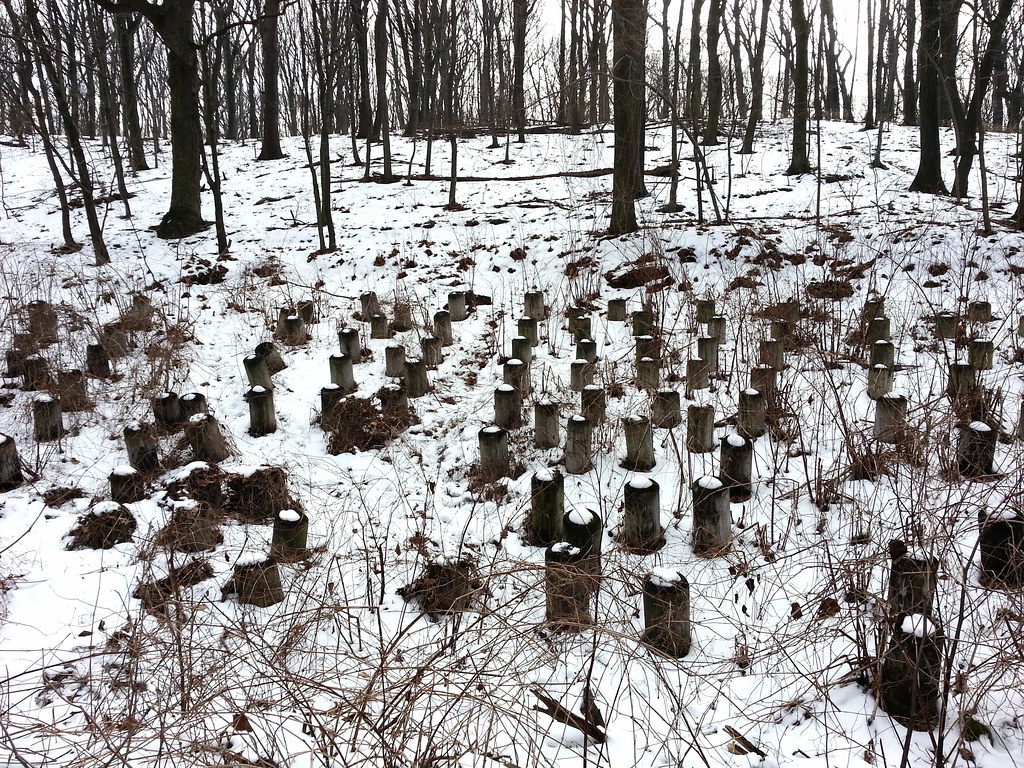
I'm standing on the elevated stage of what appears to be an overgrown woodland amphitheater; the stump-like seats visible in this photo constitute maybe a quarter of the total spread out before the stage. I stumbled across this odd scene on the grounds of the Goodhue Center, a century-old, 42-acre recreational/educational/summer-camp facility for kids that was formerly the estate of the Goodhue family. The city is currently in the process of purchasing most of the property from the Children's Aid Society for use as a public park.
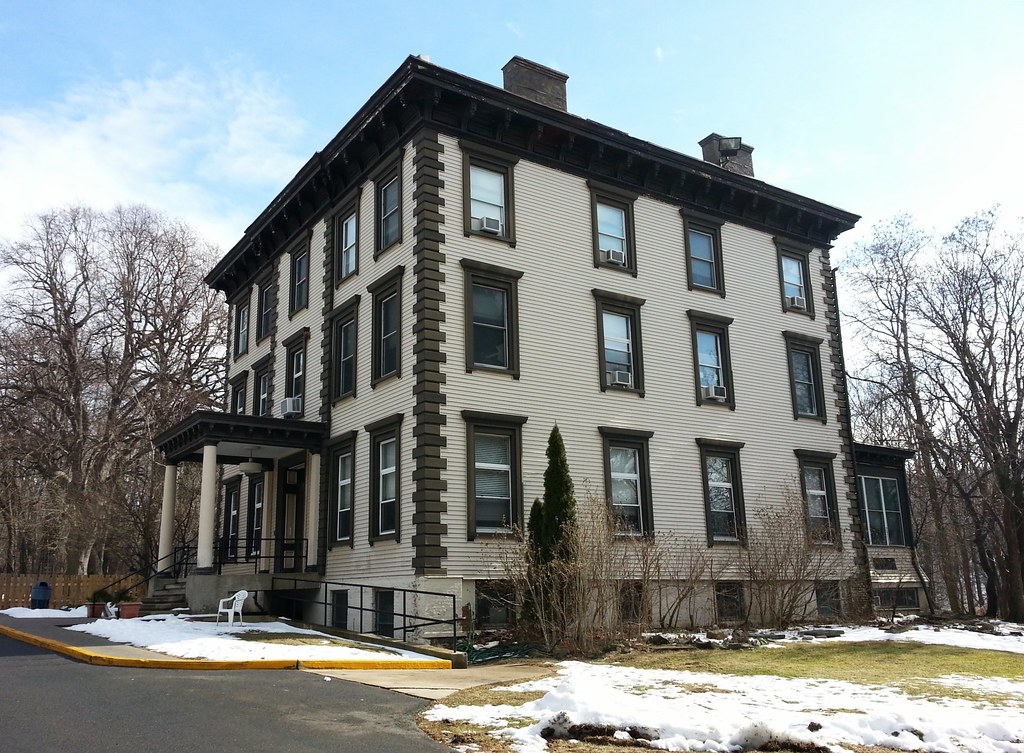
Now part of the Children's Aid Society's Goodhue Center, this former residence, built around 1845, "shows its age, but still conveys some of the elegance it possessed when it was a villa commanding the vast acreage of the Goodhue estate."
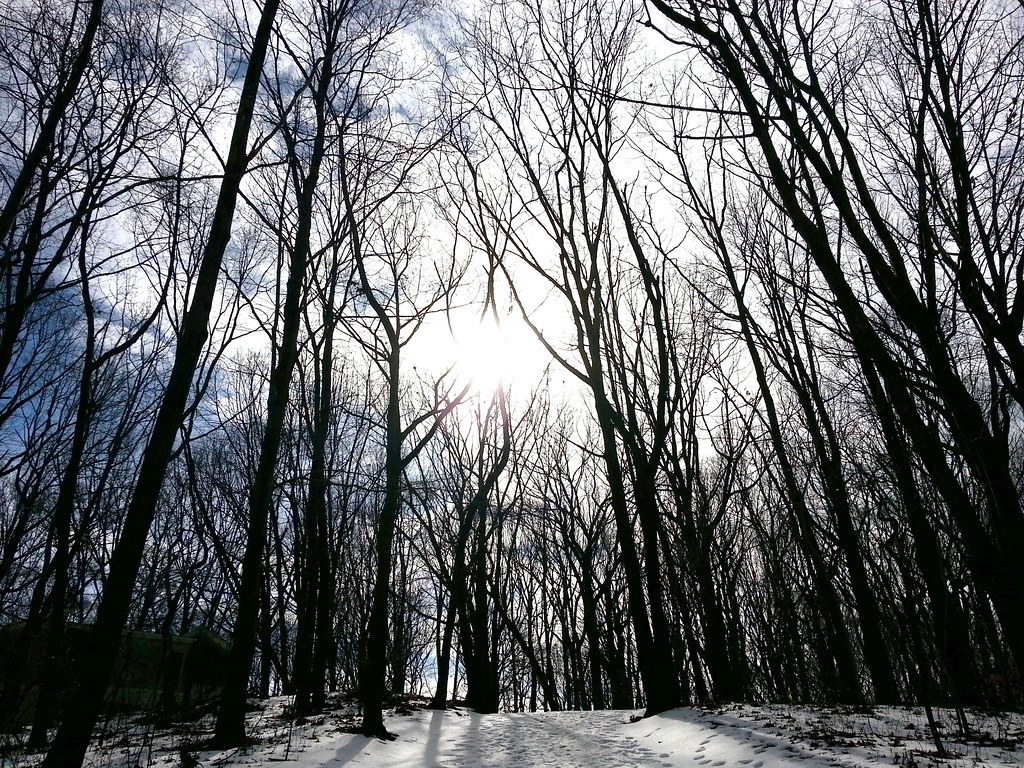
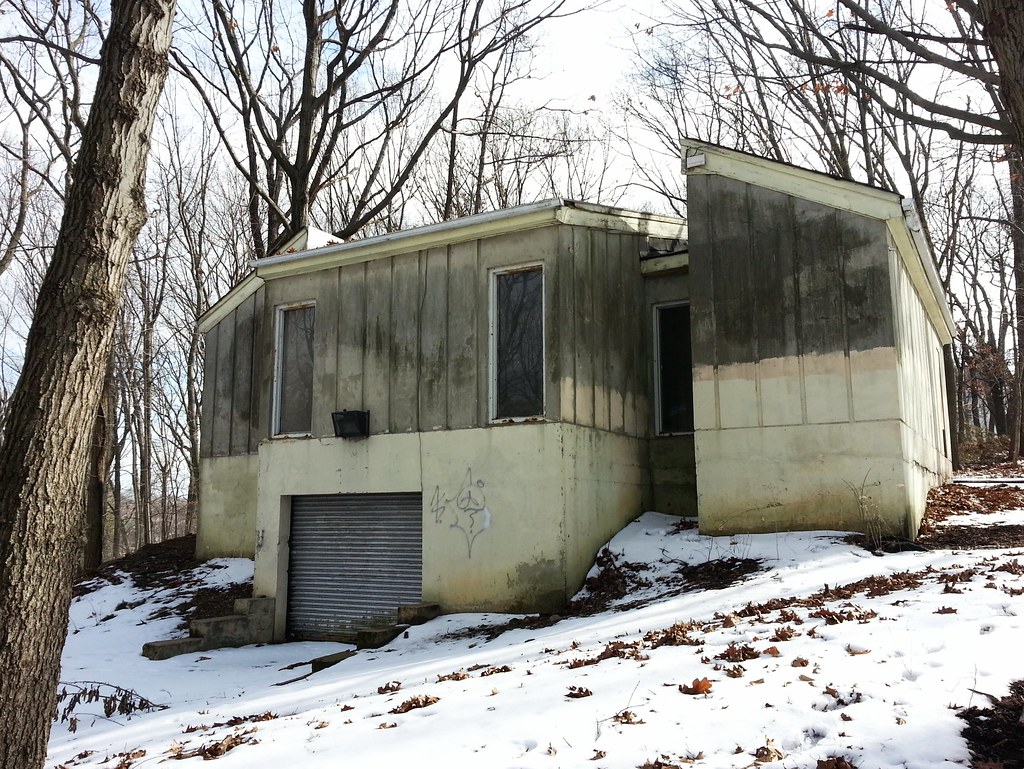
This is one of several abandoned buildings standing among the trees on the Goodhue Center's acres of wooded property.
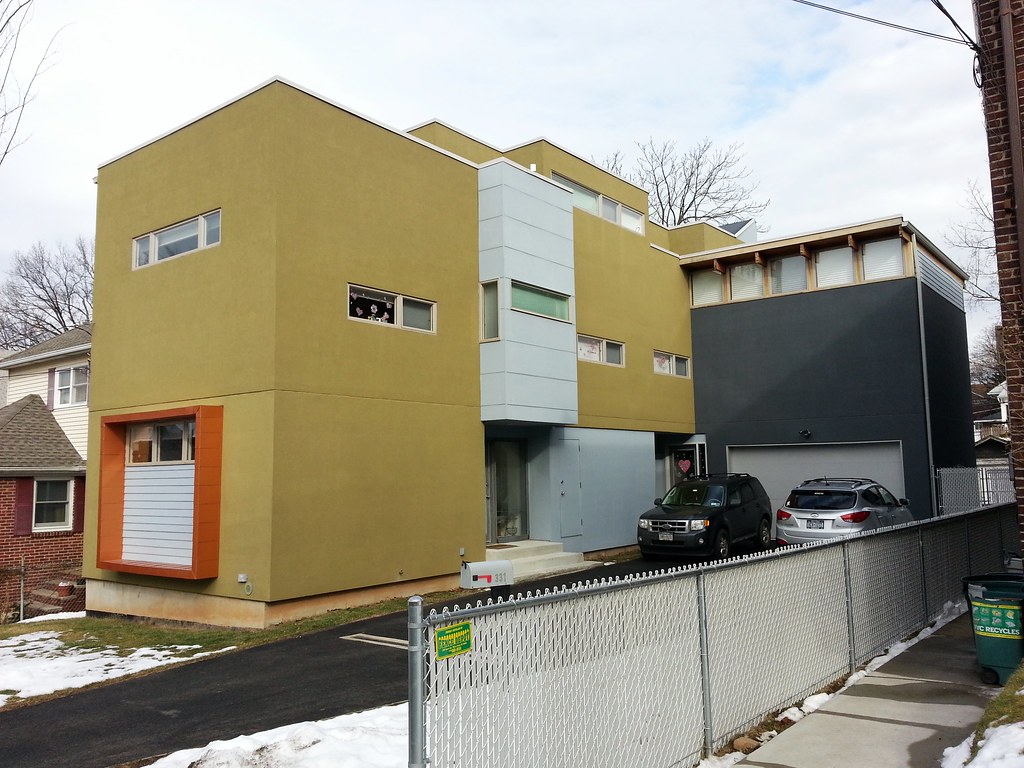
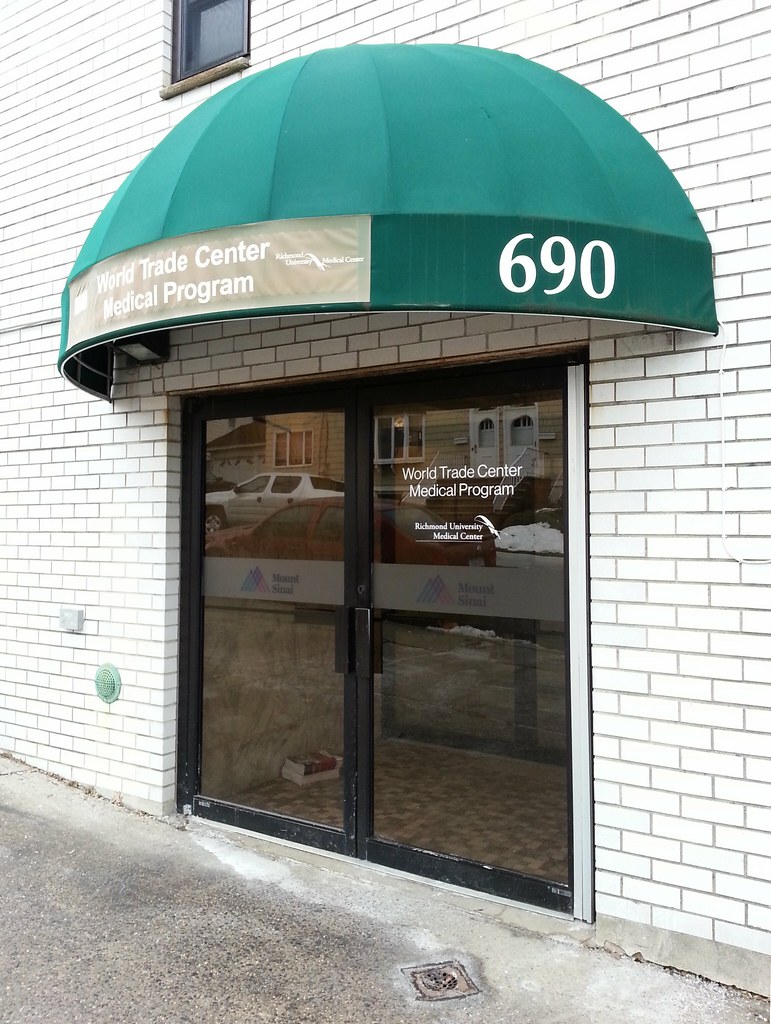
The World Trade Center Medical Monitoring and Treatment Program has been superseded by the more comprehensive World Trade Center Health Program.
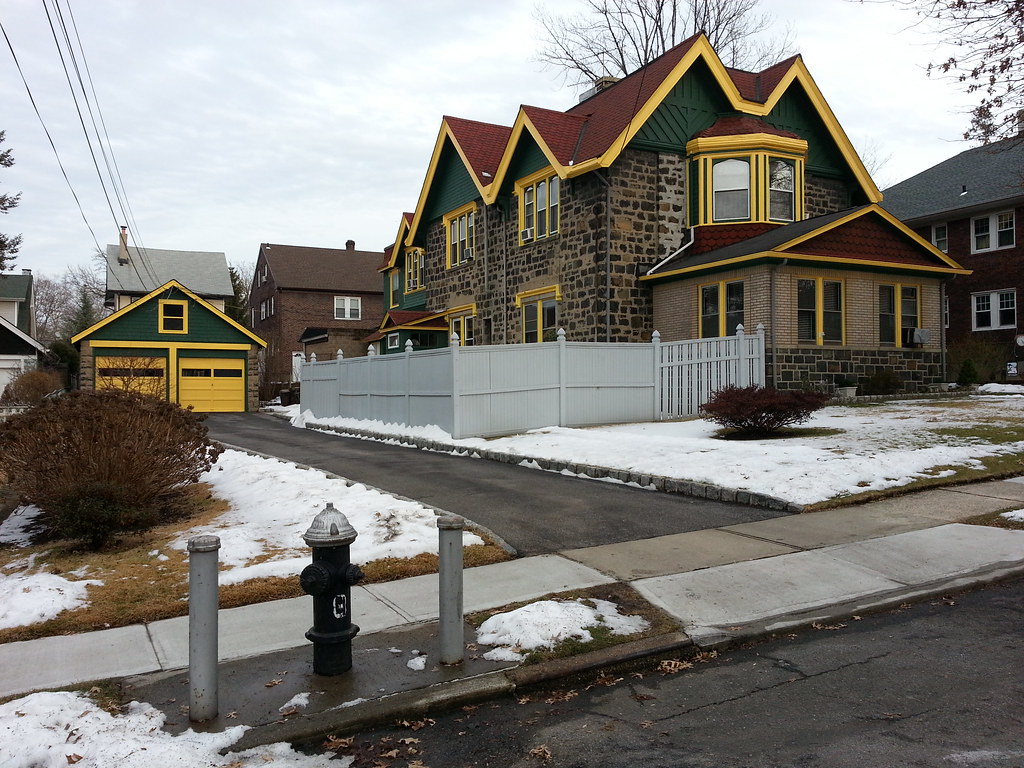
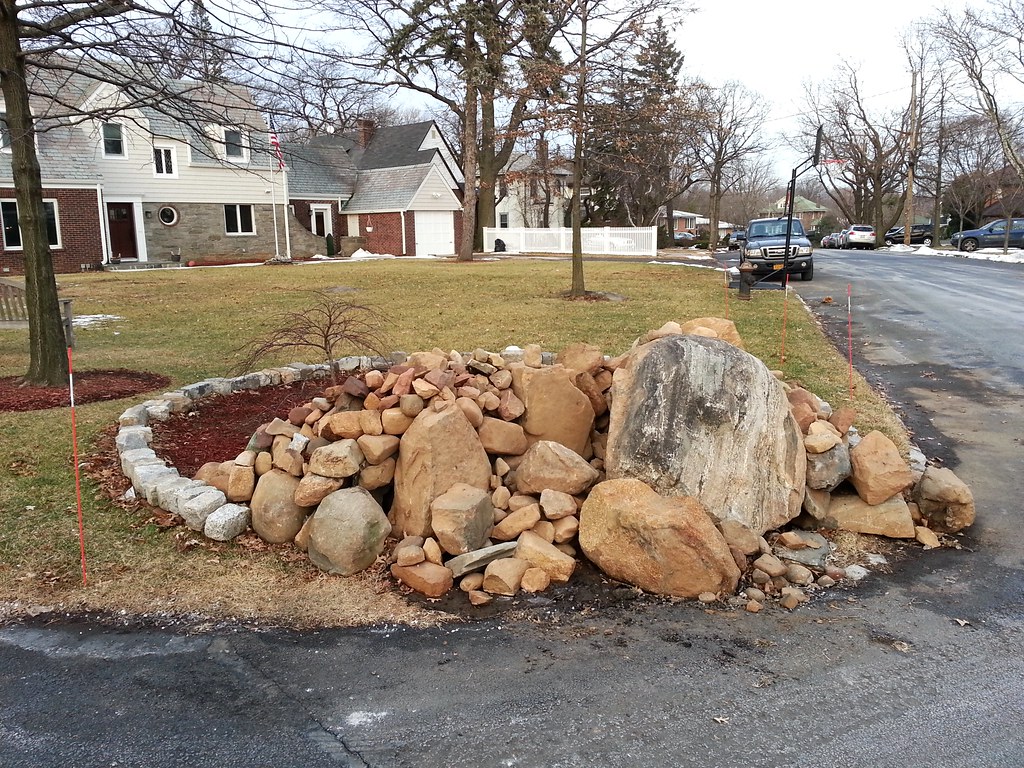

John Fischer died at the World Trade Center on 9/11. (I'm not including this in the official tally of 9/11 memorials because there's no mention of the event here.) This street corner was also renamed for Captain Fischer.
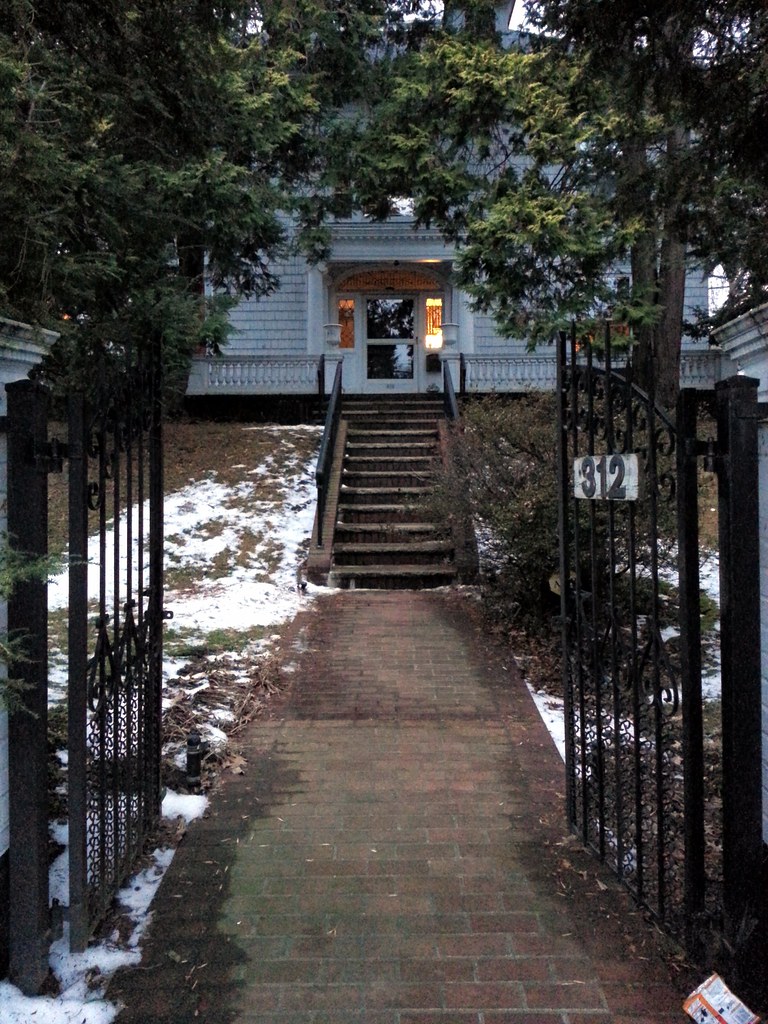
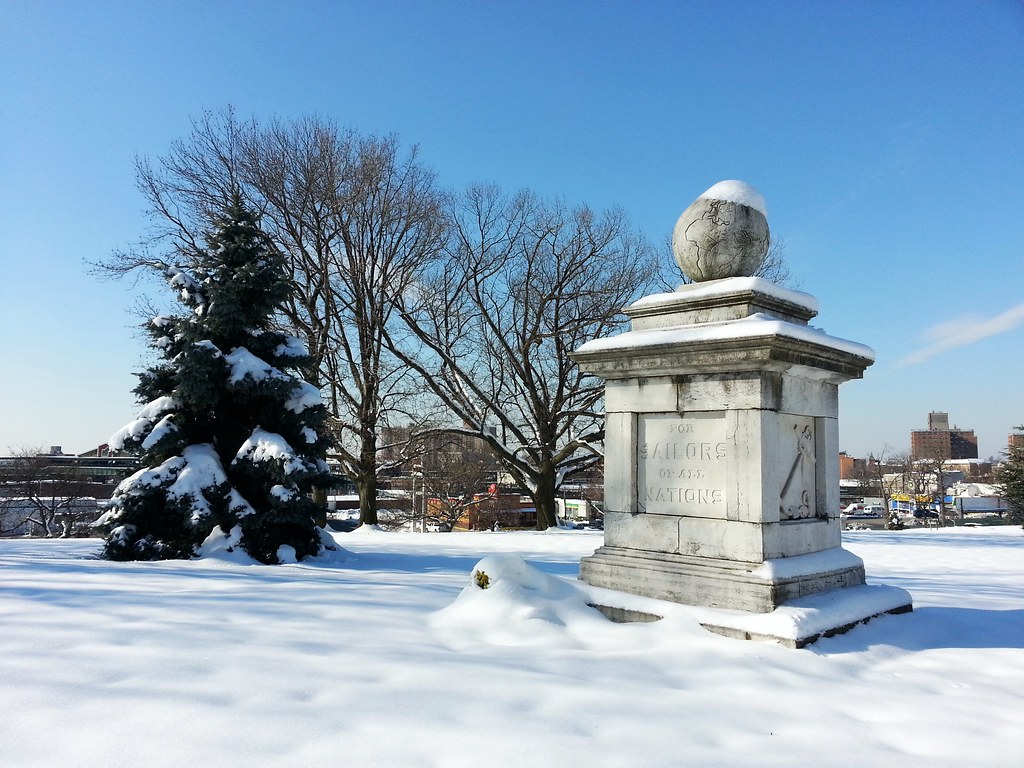
This plot at the Evergreens Cemetery was opened in 1853 for burials of "friendless mariners" from around the world who died while in port here in New York. As of 1893, some 1,200 sailors or more were estimated to have been interred here, with Norway, Sweden, Denmark, and Finland the most common nationalities, followed by the US and the British Isles, respectively. The monument above was originally much more prominent; the globe was perched atop a 50-foot-high column that was reportedly damaged when the monument was moved in the 1950s.

Mr. Hall was the first player in major league history to lead his league in home runs, swatting five homers (including two in one game — another first) in the National League's inaugural season of 1876. He would never hit another major league home run, however: after the following season, in which he went homerless, he and three teammates were banned from the league for life for conspiring to throw games. According to one baseball historian, this was the sport's "greatest scandal until the Black Sox in 1919."

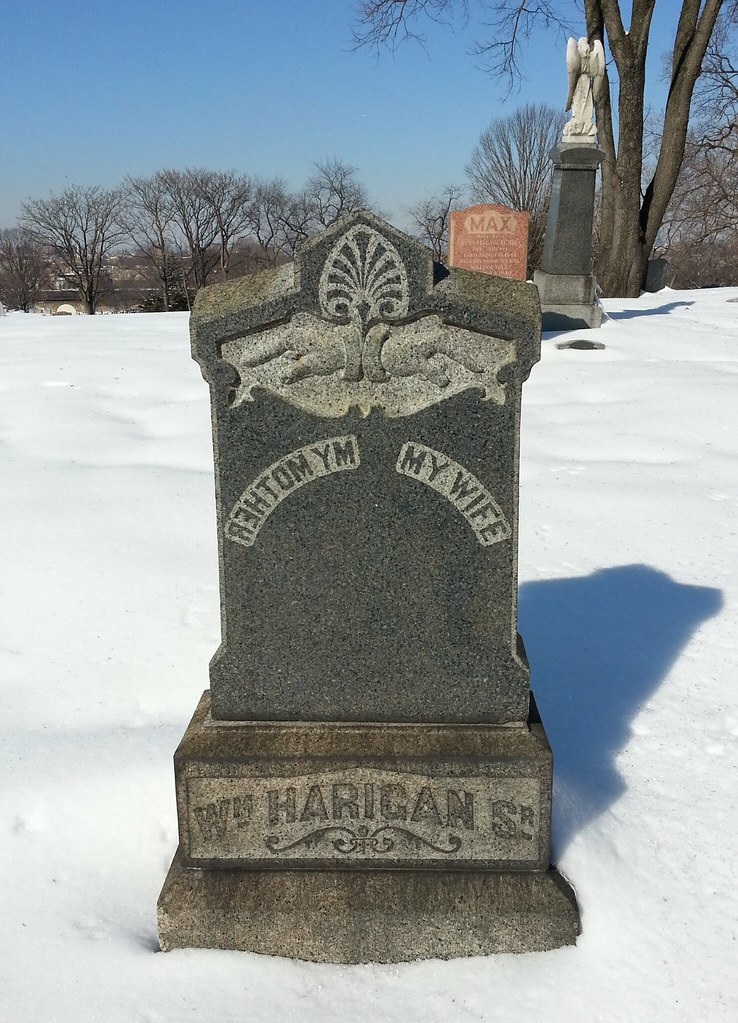
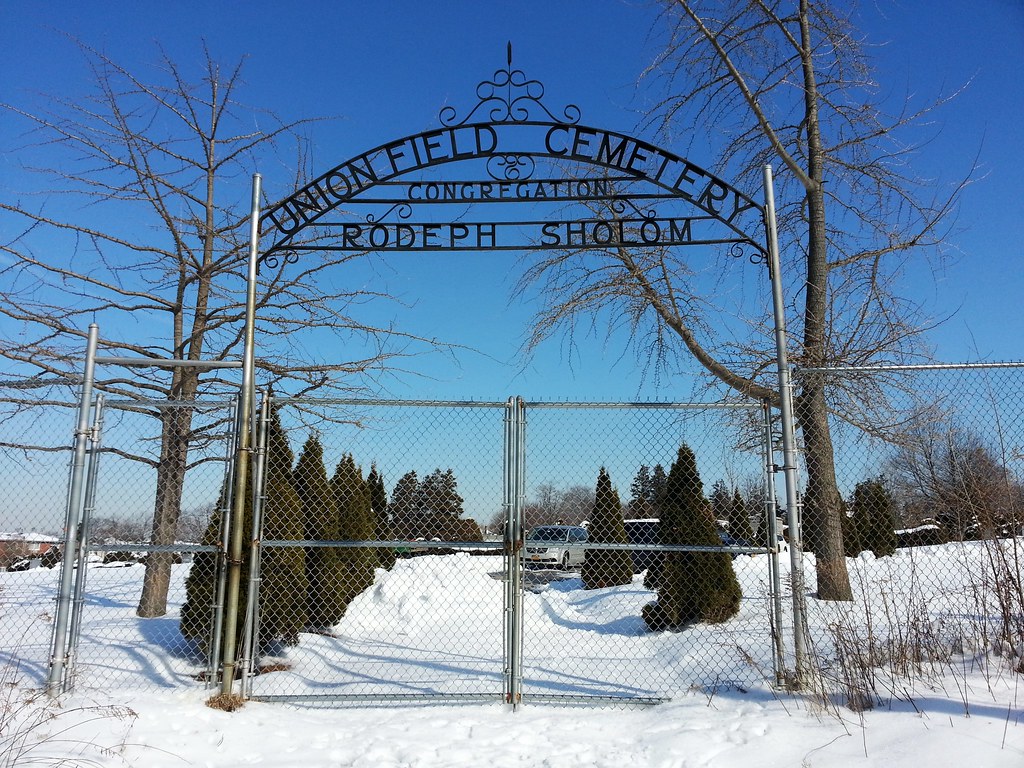
This is another of the 17 cemeteries clumped together near the middle of the Brooklyn-Queens border.
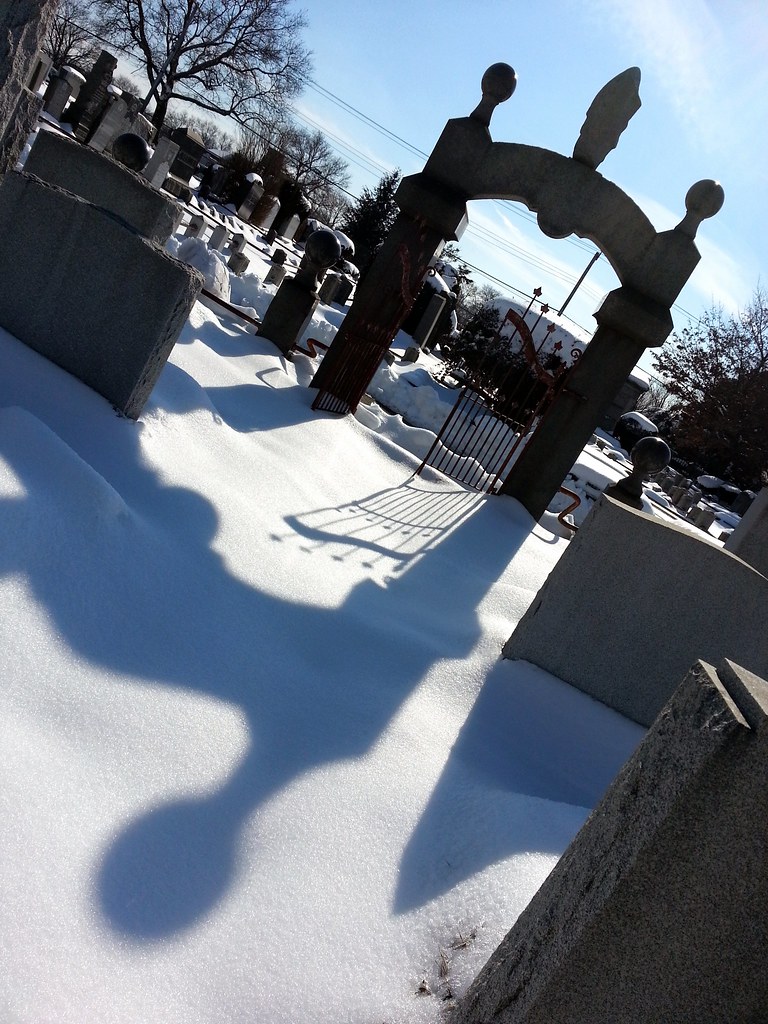
We're now in Mount Judah Cemetery, yet another burial ground in the Brooklyn-Queens cemetery belt.
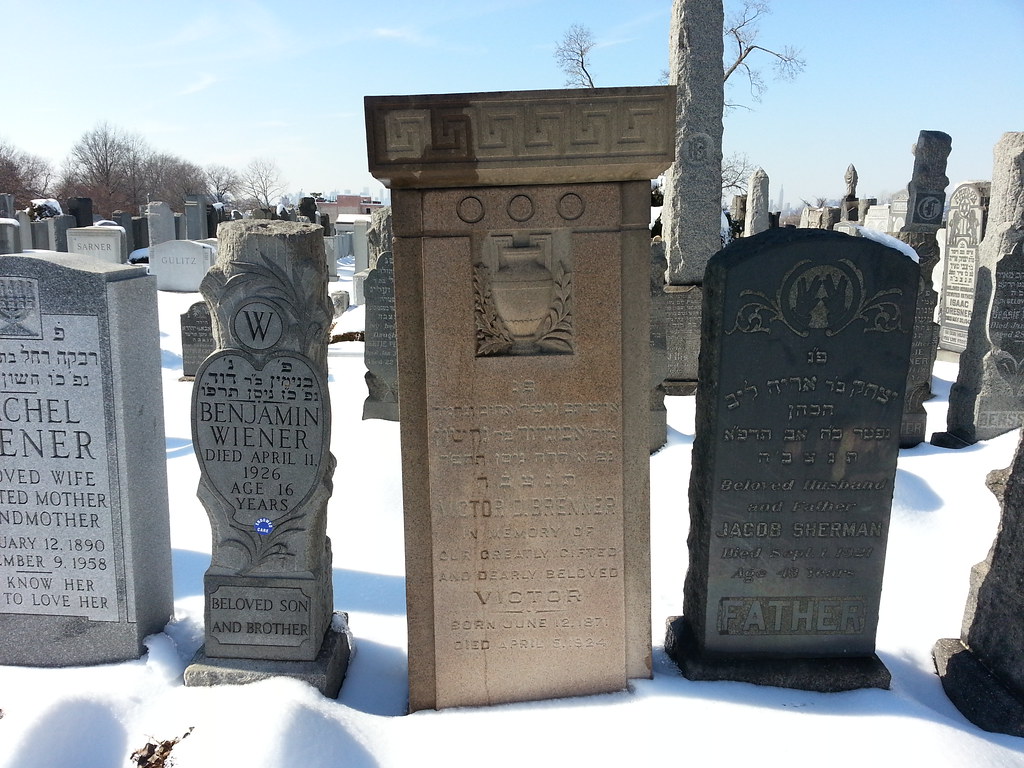
You probably don't recognize his name, but Mr. Brenner is the creator of one of the world's most reproduced works of art, with nearly half a trillion copies made since 1909. If you live in the US, you're extremely familiar with this work, and your eyes have likely passed over his initials countless times without ever seeing them.


As if this wall in front of Our Lady of Mount Carmel & St. Joseph, a Discalced Carmelite monastery, weren't high enough, they've also gone to the trouble of embedding shards of broken glass along the top of it.
(Here's a bird's-eye view of the monastery.)
An enclave of massive houses at the northern edge of greater East New York

As you can see in this terrain map, Highland Boulevard runs along the edge of the Harbor Hill Moraine; the ground drops off sharply behind me down to the outwash plain of southeastern Brooklyn.
Looking down Miller Avenue from the heights of the Harbor Hill Moraine. If you zoom in, you can even see Jamaica Bay and the Rockaway Peninsula way off in the distance.
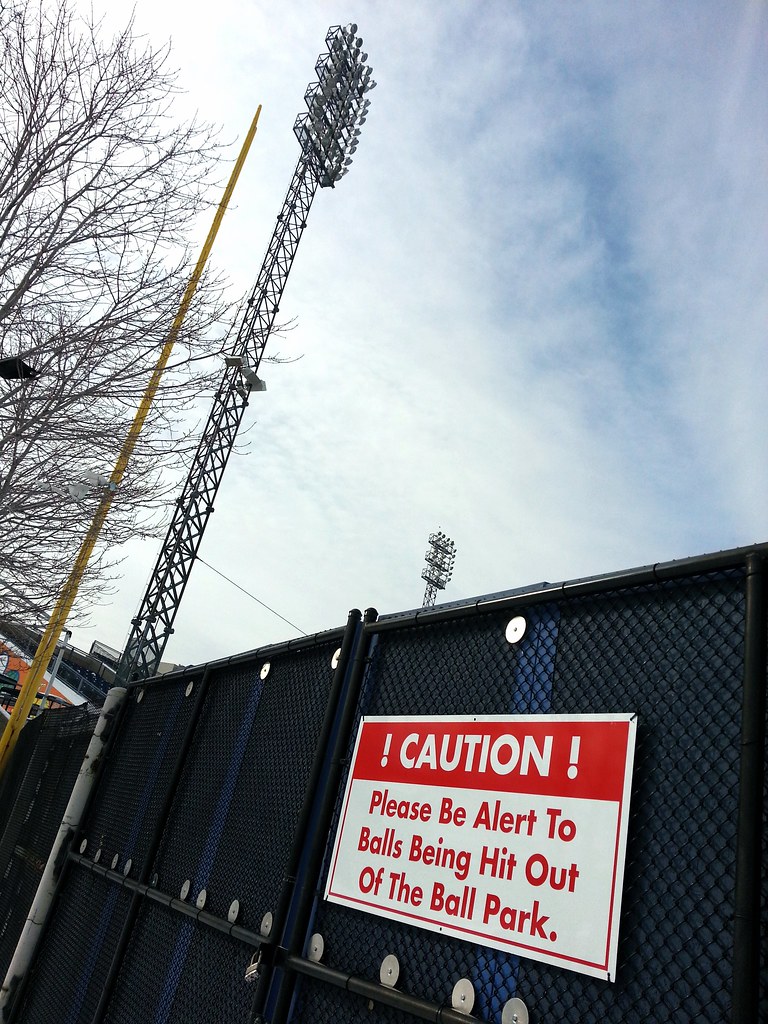
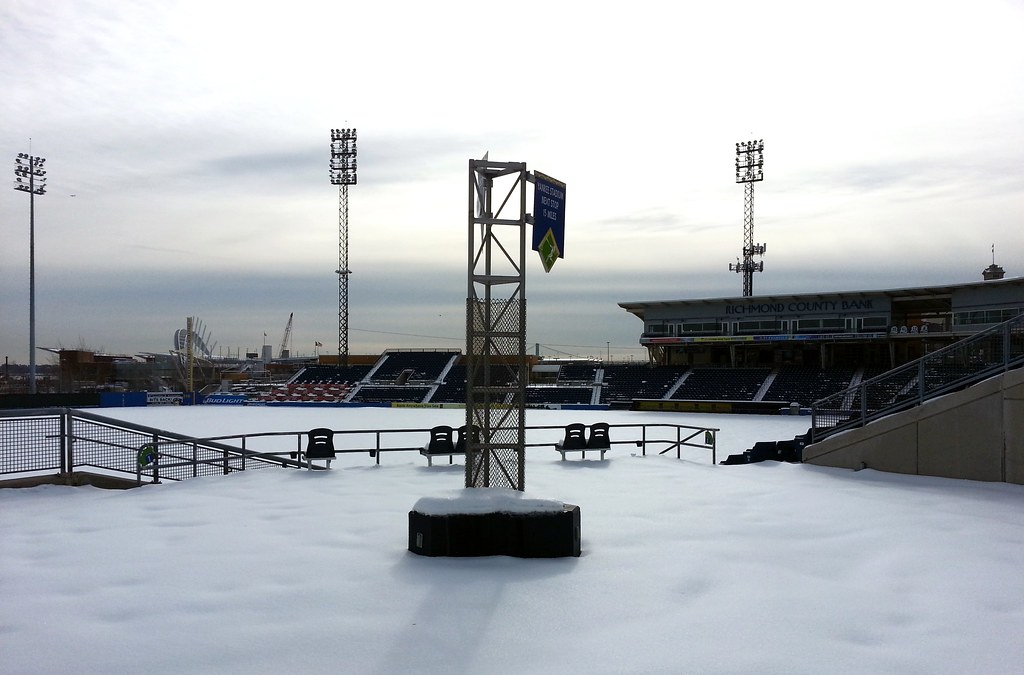
at Richmond County Bank Ballpark, home of the minor-league Staten Island Yankees
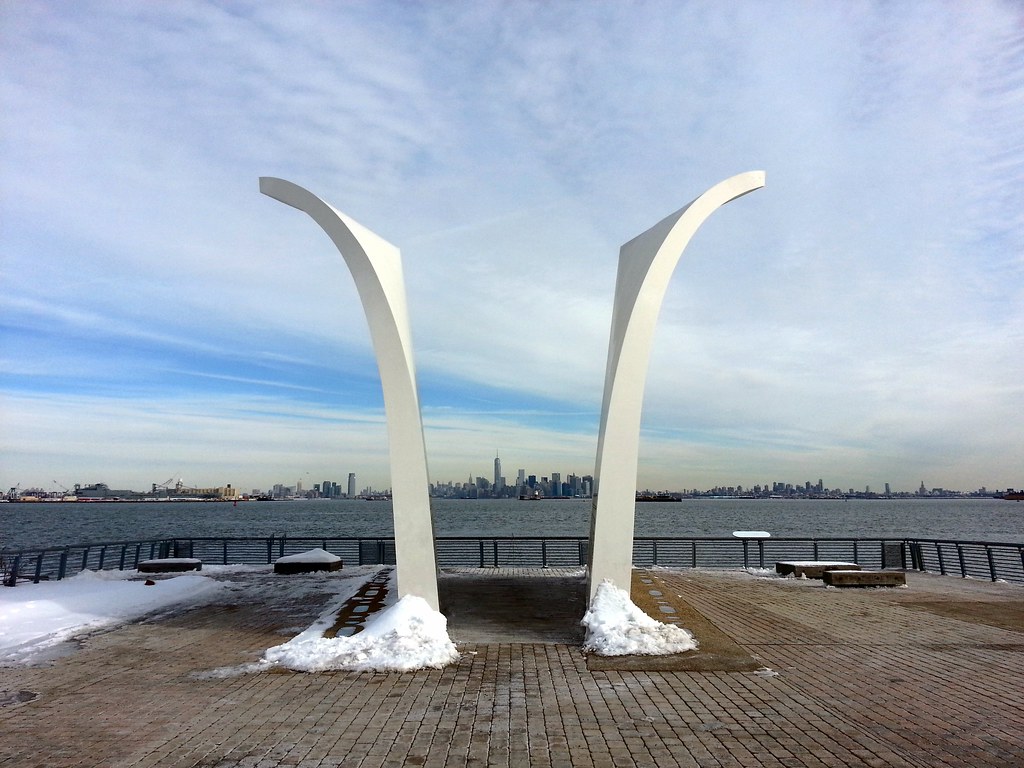
This monument, entitled Postcards, honors the 270-some Staten Islanders who lost their lives in the 9/11 attacks, as well as another who died in the 1993 bombing of the World Trade Center. The two oversized "postcards" frame the skyline of Lower Manhattan, where the twin towers stood; on the inner sides of the postcards, each victim is memorialized with a granite plaque and a carved profile of his or her head in silhouette.

Off in the distance, amid the industrial landscape of eastern Bayonne, sits the ultra-exclusive Bayonne Golf Club, its man-made hills blanketed in the snows of a relentless winter. The course's lighthouse-like clubhouse is visible atop the hills in the center of the photo; here's a closer look at the scene.