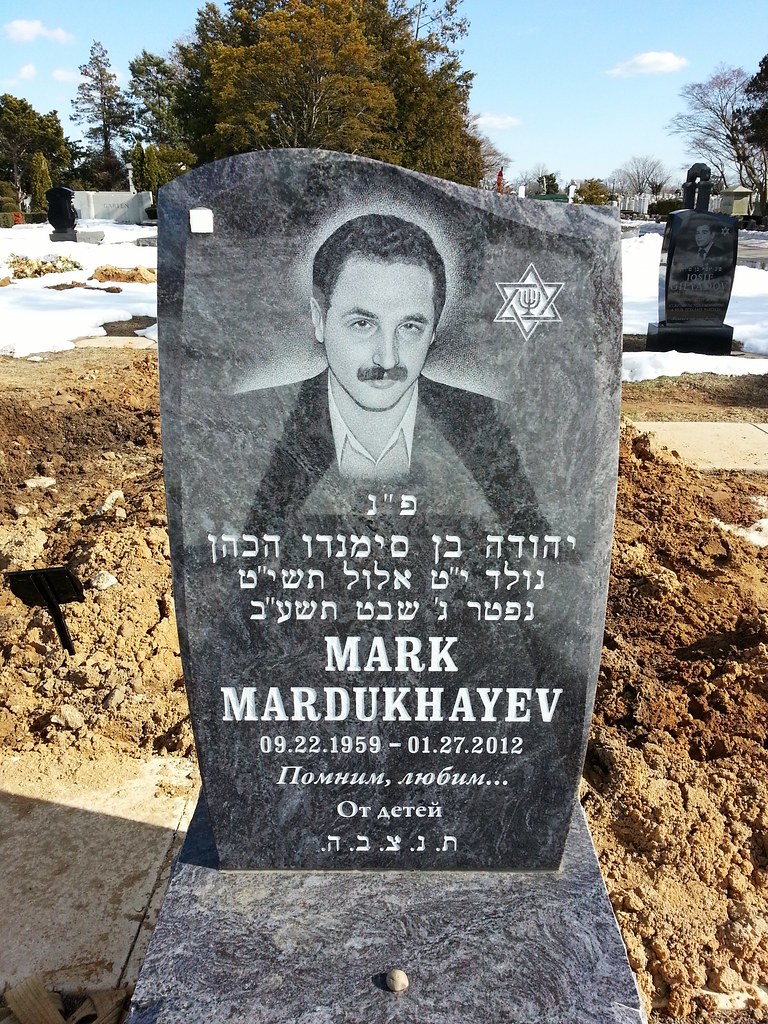
This new burial area here at Montefiore Cemetery seems to be populated exclusively by laser-etched headstones for Jews from the former Soviet Union. We saw the same phenomenon last year at Washington Cemetery in Brooklyn.
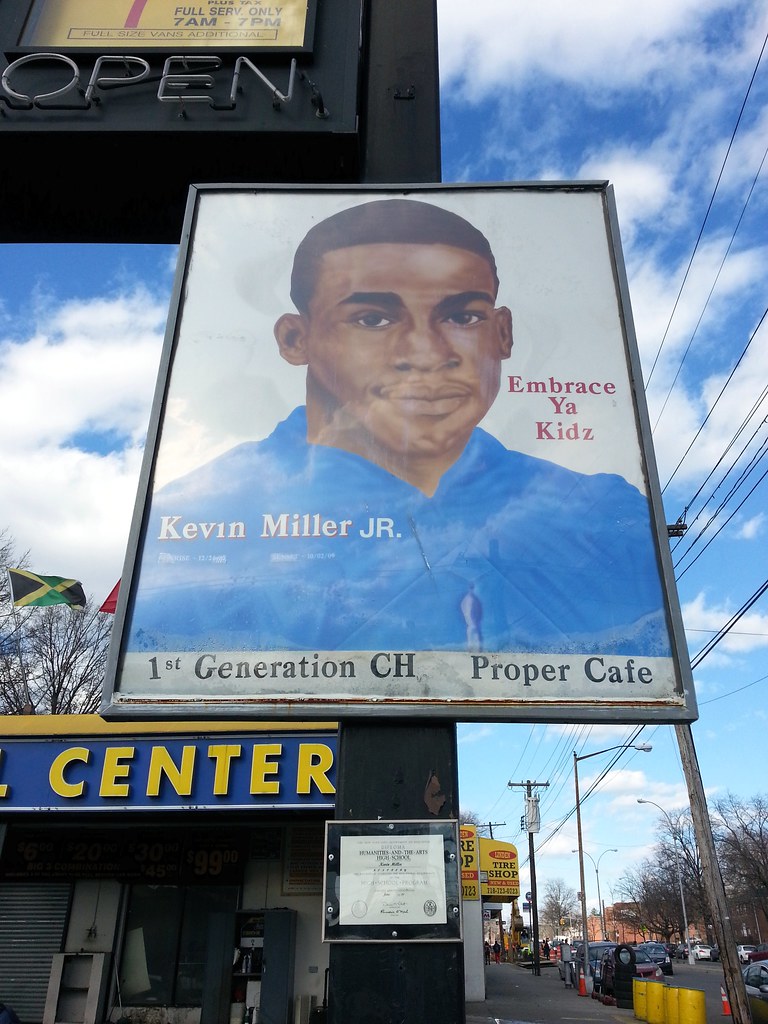
Kevin Miller Jr., killed by stray gunfire at the age of 13
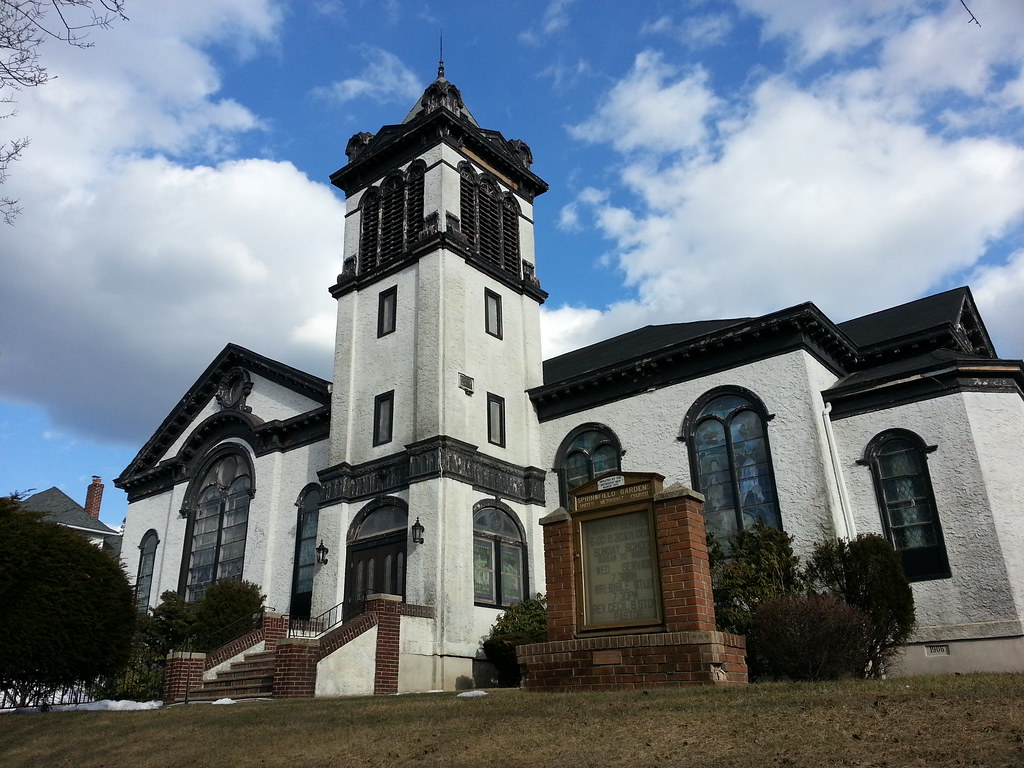
Architecturally reminiscent of the nearby First Presbyterian Church of Springfield Gardens. Here's what this church looked like in 1916.
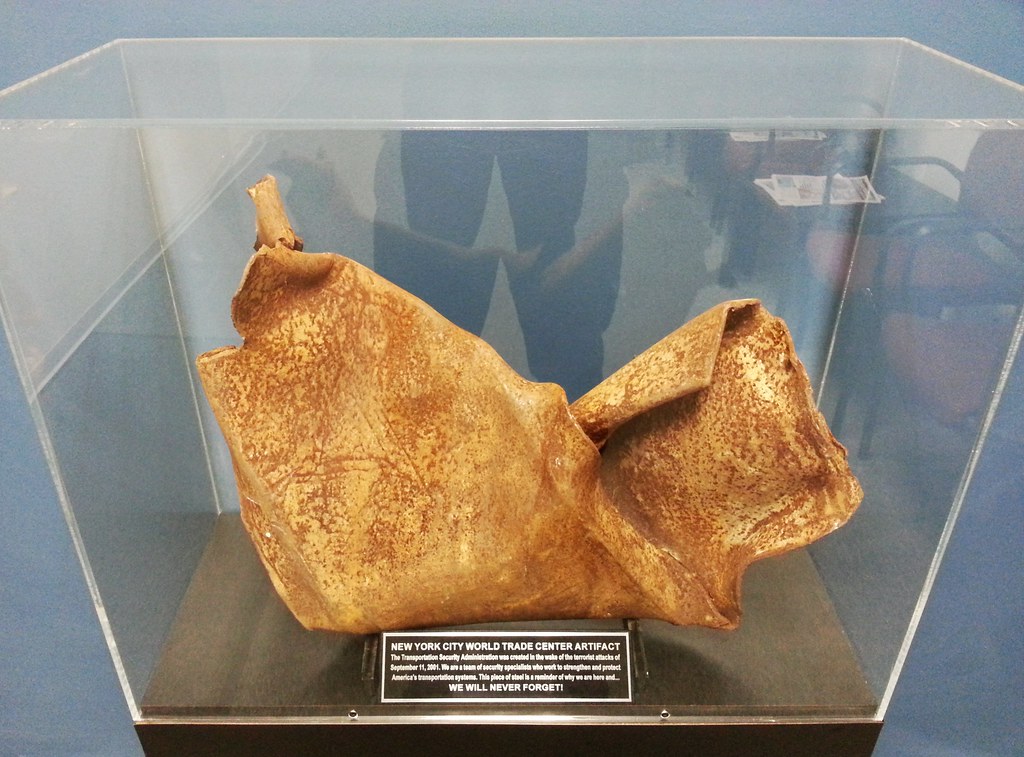
I had to make a midday trip over to the TSA lost-and-found office near JFK Airport and found this in the waiting area. The plaque reads:
NEW YORK CITY WORLD TRADE CENTER ARTIFACT
The Transportation Security Administration was created in the wake of the terrorist attacks of
September 11, 2001. We are a team of security specialists who work to strengthen and protect
America's transportation systems. This piece of steel is a reminder of why we are here and...
WE WILL NEVER FORGET!
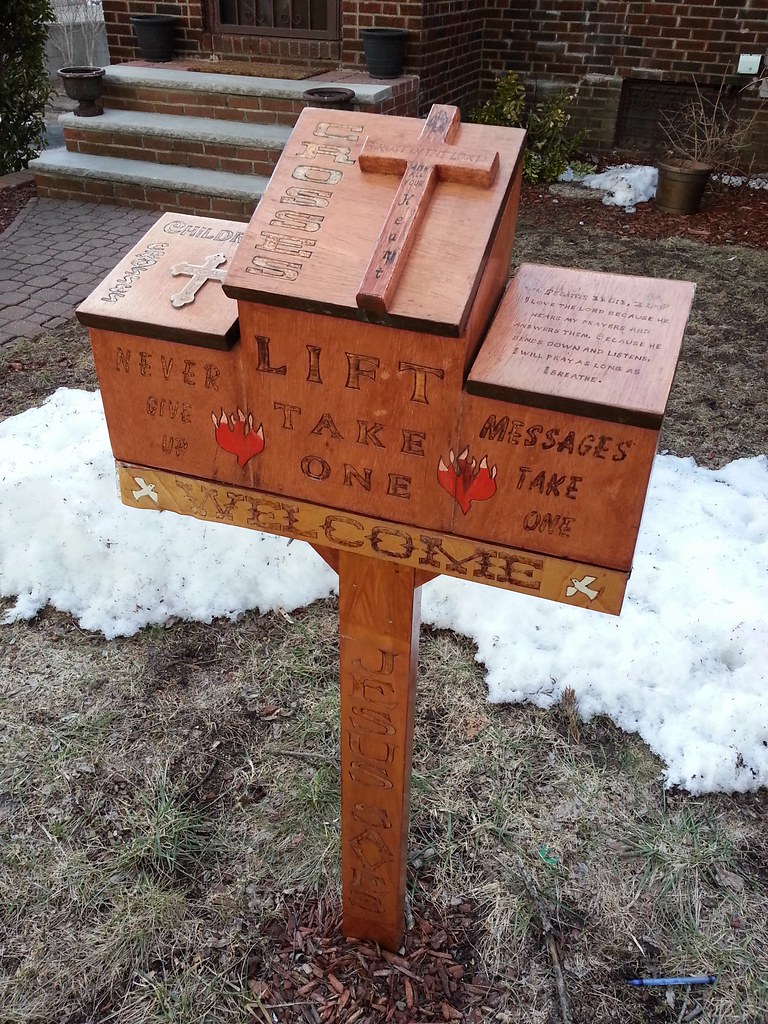
Here's a closer look at the whole thing, and here's what's inside one of the compartments.


This circa-1864 structure, "one of a few surviving frame houses in Harlem which date from the period in the city's history when Harlem was still a rural village", is said to feature one of New York's earliest mansard roofs, predating by a few years "the mansard mania of 1868 to 1873 [which] swept over New York with a peculiar incandescence, but then went out like a guttering candle." (The roof is referred to as a mansard by many architectural sources more knowledgeable than me, but I don't think that is an accurate description, as the roof does not appear to be hipped.) You can see a couple of old photos of this building, as well as one interior shot, here.
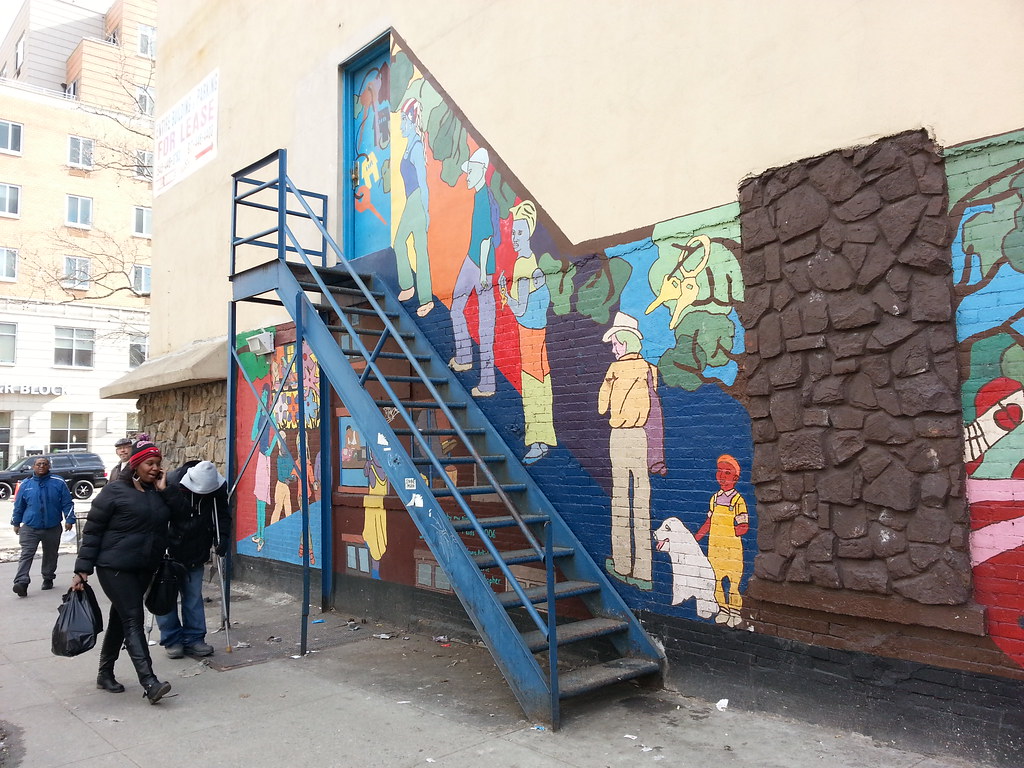
This is the home of Homebase, an organization that works to "[prevent] homelessness throughout Manhattan by helping clients resolve any immediate housing crises that placed them at risk of becoming homeless."
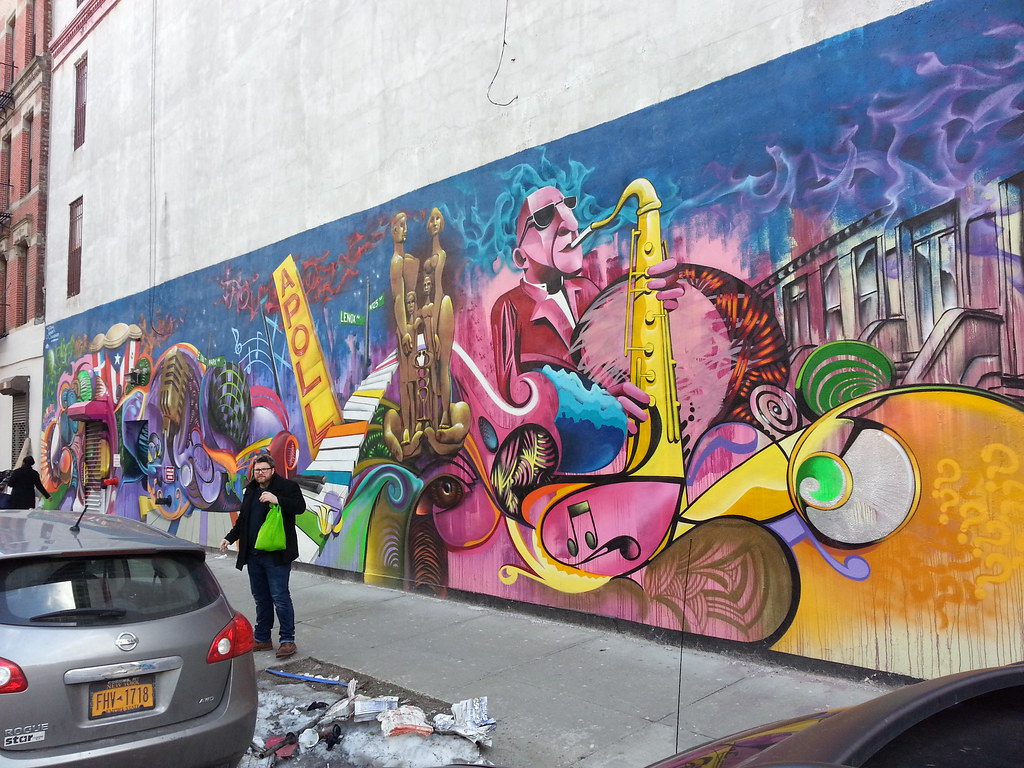
Painted by — no surprise — the Royal Kingbee, whose relationship with the drug store chain now clearly transcends the bounds of the Bronx.
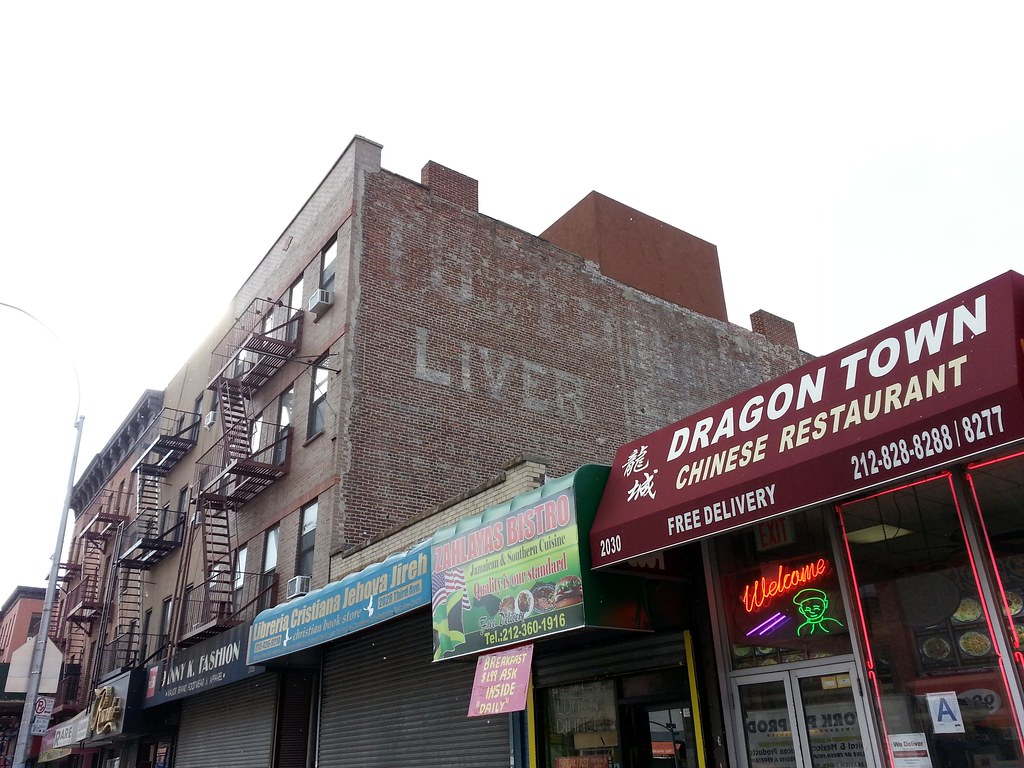
I believe this was once an ad for Dr. Tutt's Liver Pills. Why Dr. Tutt's? Because "constipation is a crime against nature . . . Dr. Tutt's Liver Pills is the remedy . . . Get a box and see how it feels to have your liver and bowels resume their health-giving natural functions."

Here's the second part of it. Each of the component pieces of this memorial is identical or at least very similar to something we've seen before, but I think the combination of them all warrants inclusion in the official list as a unique memorial.


Heading south into Metro-North's Park Avenue railroad tunnel is what I believe is a ballast tamper (I'm pretty sure that blue blur on the side reads "Tamper"), followed by some tools and supplies being pushed by a clown car.
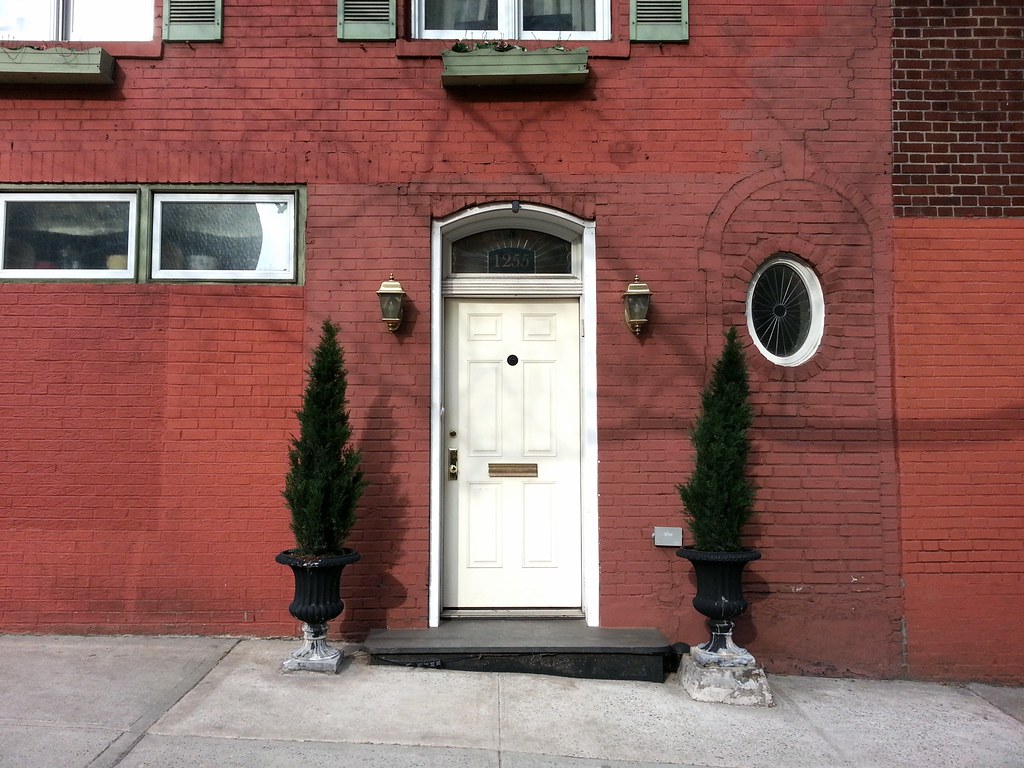
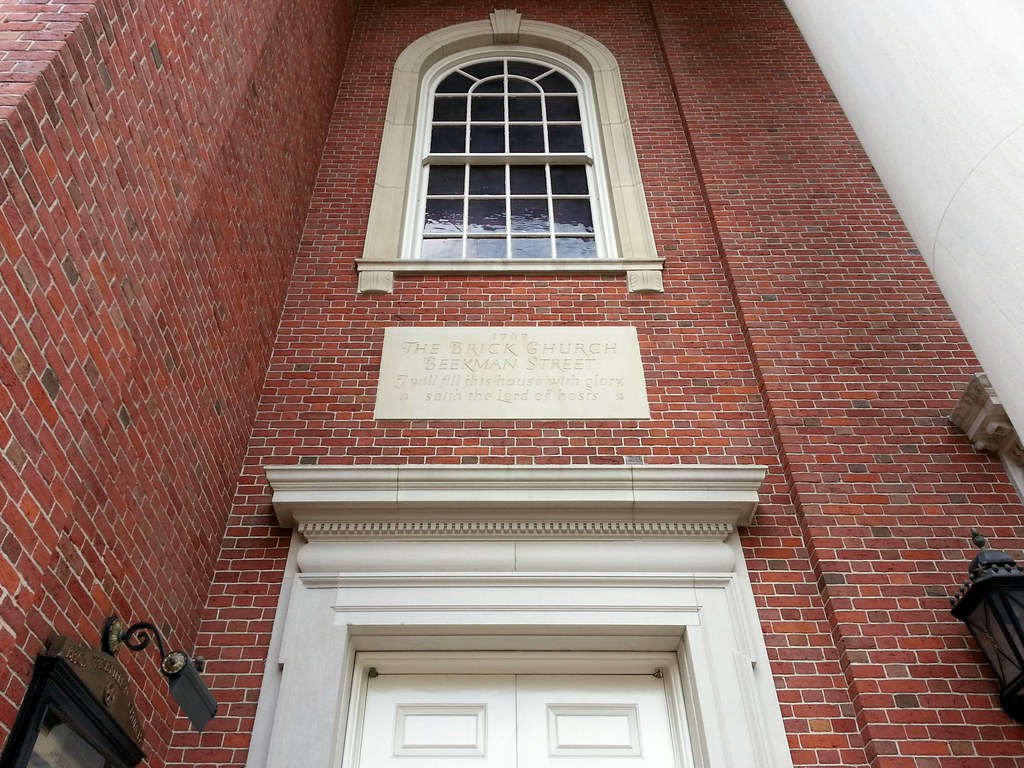
As the text inscribed above the doorway indicates, the first incarnation of this Upper East Side church was built around 1767 down on Beekman Street. That structure served the congregation until 1856, with the exception of several years during the Revolutionary War when the British used it briefly as a prison and then turned it into a hospital. The second Brick Church opened in 1858 on Fifth Avenue and 37th Street, and the present building was dedicated here at Park Avenue and 91st Street in 1940.
Tucked away in a little indentation in the facade is a stone that reads "PVB Livingsto 1767". It is apparently a replica of a foundation stone from the original church building; Peter Van Brugh Livingston was an elder of the congregation who, according to the church, "was instrumental in securing" a perpetual lease for the site on Beekman Street, which a 1909 NY Times article described as "about the finest piece of property the city owned . . . that very choice bit of real estate bounded to-day by Nassau and Beekman Streets and Park Row". (Full disclosure: the Times's headquarters occupied the same site for almost half a century after the church left in 1856.) A history of the church published in 1909, whose release prompted the aforementioned Times article, offers a different opinion, however, saying that "the property in question had in 1765 comparatively little value. . . . [The land] was on the extreme northern edge of the city."
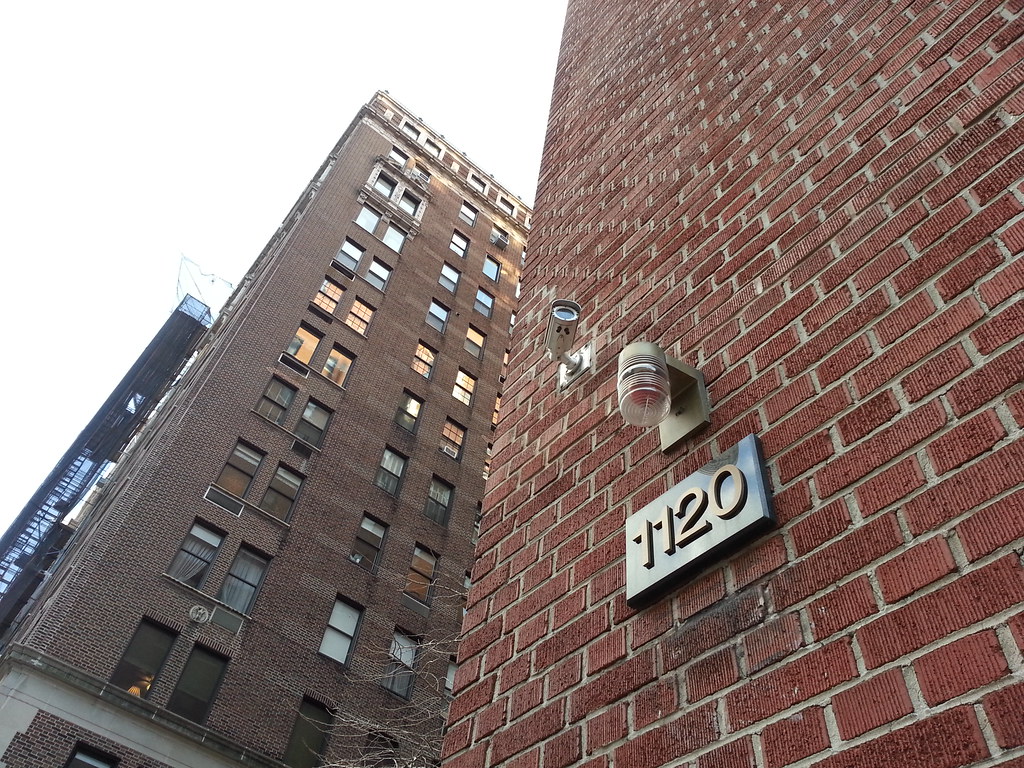
I saw several buildings on Park Avenue today with similar lights; the idea is that a doorman will turn on the bulb when a resident of his building needs a cab at night. (The security camera above the light is unrelated to the taxi-signaling efforts.)
According to a 2003 NY Times article entitled "Futile Beacons of a Bygone Age":
Hundreds of these little lights can still be found in the city's upscale neighborhoods. . . .
An informal poll of more than a dozen doormen on the Upper East and West Sides suggests that the system has long stopped working.
"They just drive on by," said a doorman at a building on 79th Street near York Avenue. "We only do it to make the residents happy." . . .
Andrew Alpern, the author of "Luxury Apartment Houses of Manhattan: An Illustrated History," suggests that these urban fireflies date to the 1940's, or more specifically World War II. As men went off to war, a dearth of doormen ensued.
"Without a doorman to hail the cab for you," Mr. Alpern said, "they may have started putting in these lights so that the elevator man could flip on the taxi light. And that would be the extent of his trying to get a cab for you."
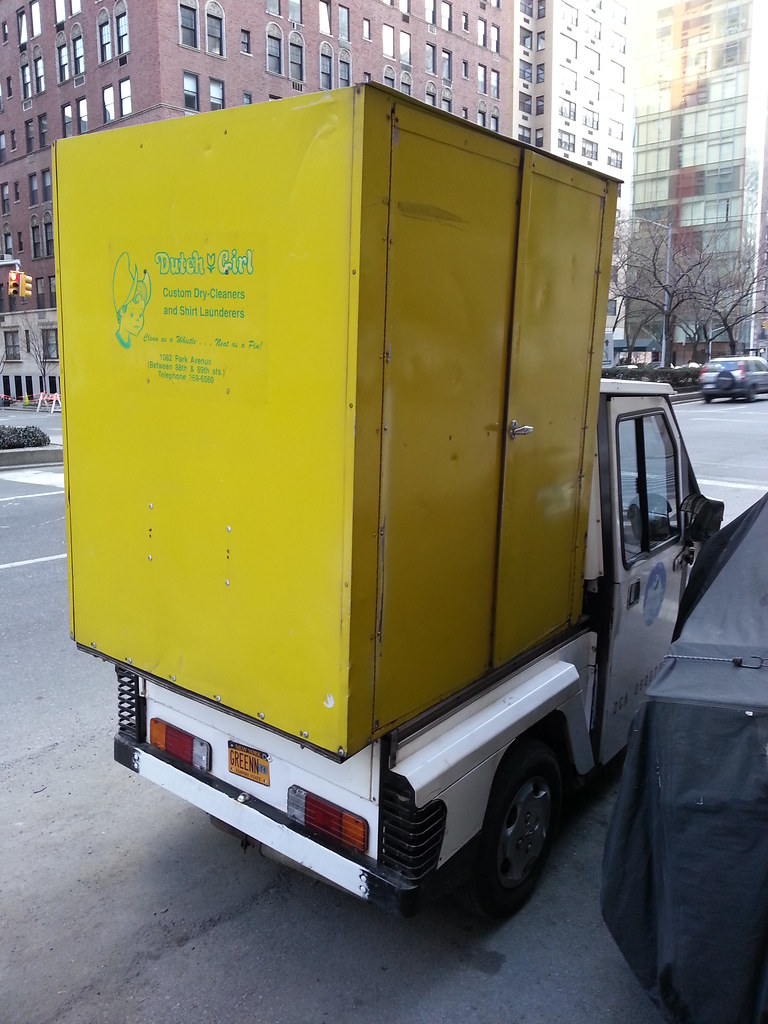
Parked outside the Dutch Girl Cleaners at 1082 Park Avenue, a.k.a. "Sicily in terra cotta"

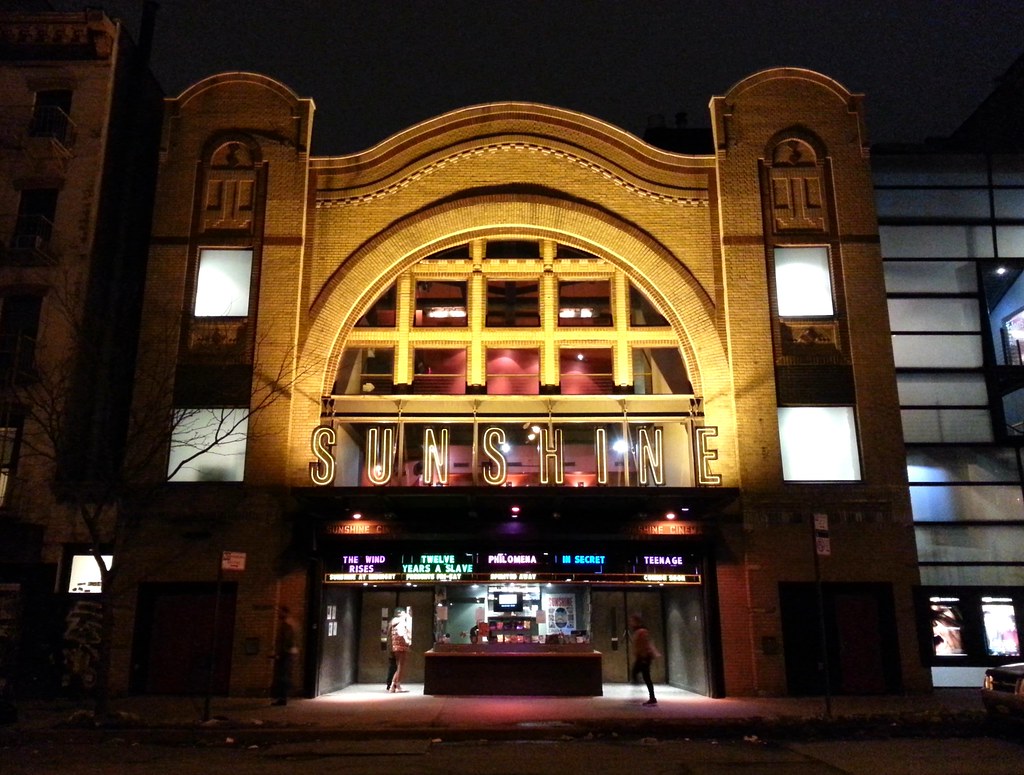
In 1909, the Houston Hippodrome, a Yiddish vaudeville house and movie theater, opened on this site in a former church (and former boxing venue). The Hippodrome was the site of a fatal panic in 1913, in which two moviegoers were trampled to death and many others injured amid a frenzied crowd trying to flee the theater after a boy in the balcony yelled "Fire!" when a small blaze, promptly extinguished, broke out in the projection booth. Madness quickly overtook the audience, whom the New-York Tribune described as being largely composed of "Italians, Russians and other excitable persons." The paper went on report:
Men were the first to gain the aisles, sweeping women and children to one side in their headlong rush for safety. In their hysterical haste they stumbled and fell down the steps, only to be fallen upon by those in the rear, who shouted wildly for help. In a moment the stairways were blocked with fighting, tearing men and women.In the aftermath of this incident, the city passed legislation introducing new safety regulations for theaters. The Hippodrome was renovated accordingly and continued to operate under different names for a few more years. Some sources I've found say the building was demolished in 1917 and replaced by the Sunshine Theater, while others say it was left standing and converted into the Sunshine that same year.
Seeing the majority of those in the balcony making for the main entrance, the rest of the audience started for the side exits. They did not wait for these doors to be opened by the special officers on guard, but butted their way toward them, almost ripping the doors from their hinges. When they reached the fire escape landing they fell to their knees and were caught in the crush behind them. . . .
The shrieks of the men, women and children buried underneath in the mass of humanity could be heard for blocks around. It was feared that most of those, numbering almost five hundred, piled up in the heap had been killed.
Five minutes after the accident happened Battalion Chief John Kelly, with Truck Company 9, and Engine Company 25 arrived. Kelly got his men to push the crowd back. This, however, was impossible. Then he ordered his men to jump over the crowd and throw them back. This was effective. In ten minutes Kelly managed to get most of the panicstricken persons back into the theatre. Then the work of removing the dead and injured began.
The Sunshine went out of business in the 1940s, and the building spent the next half-century as a hardware warehouse. It was then briefly used as a concert space before reopening in 2001 as the Sunshine Cinema, an art-house theater "with five screens, 980 seats, two Japanese rock gardens, $1.75 espressos, $2.25 Goobers and a top-story gangplank that offers vista views of Houston Street."
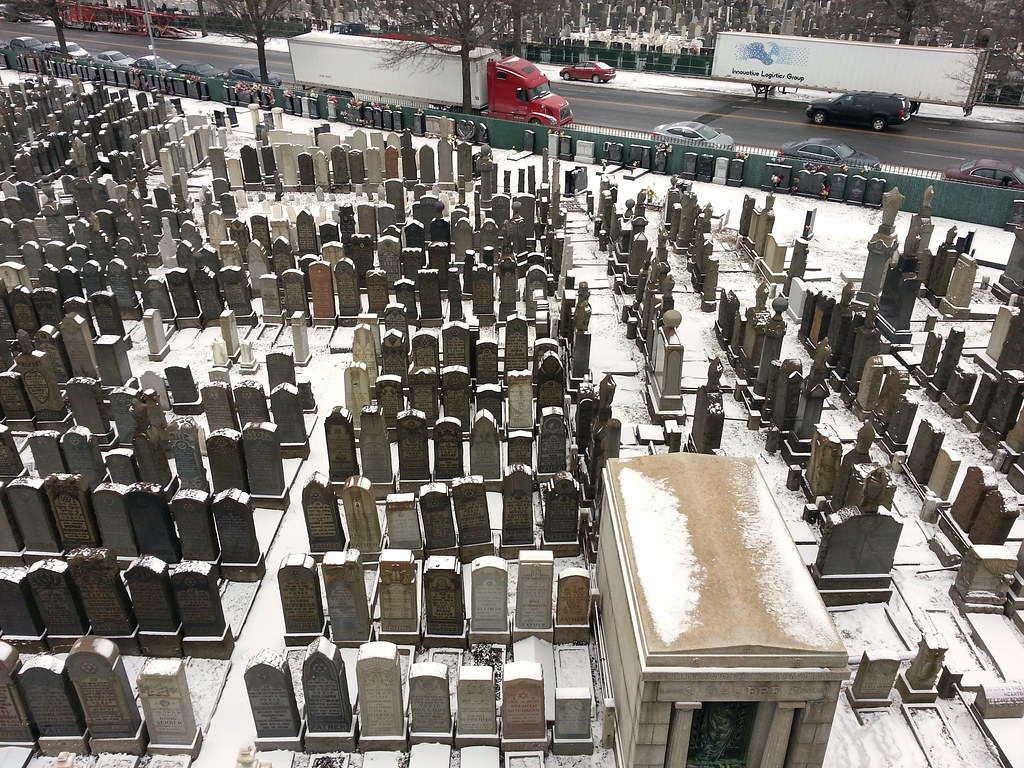
Looking down from the elevated Culver Line (F train) at the densely populated grounds of Washington Cemetery
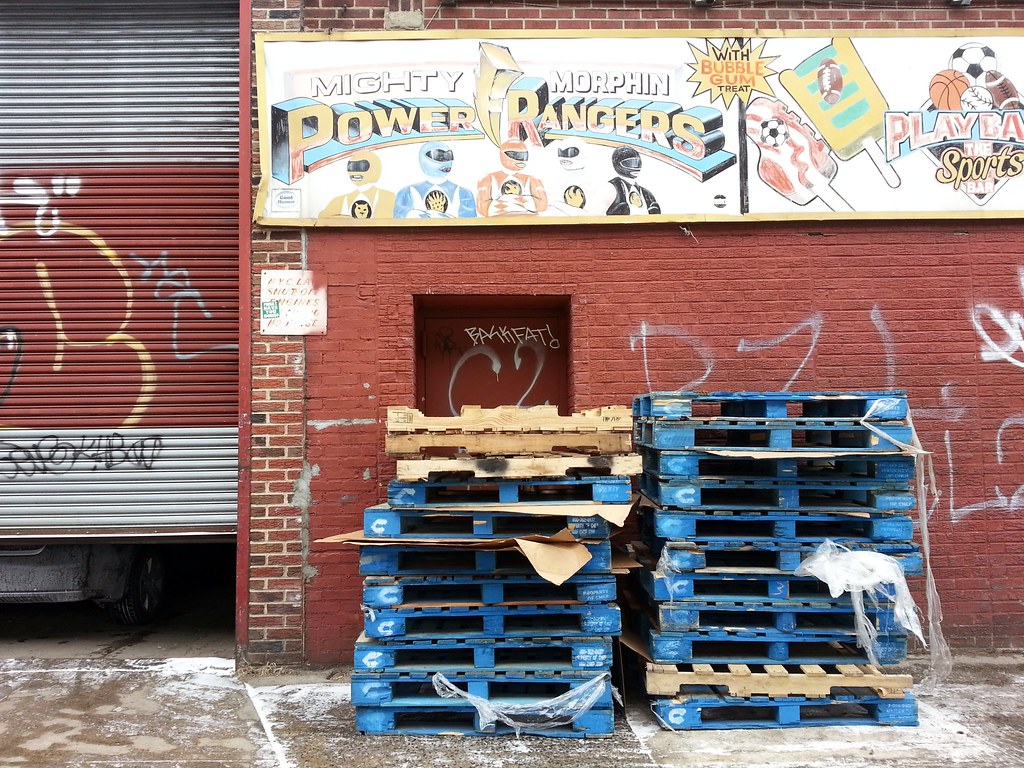
Mighty Morphin Power Rangers and Backfat, at an ice cream distributor on McDonald Avenue
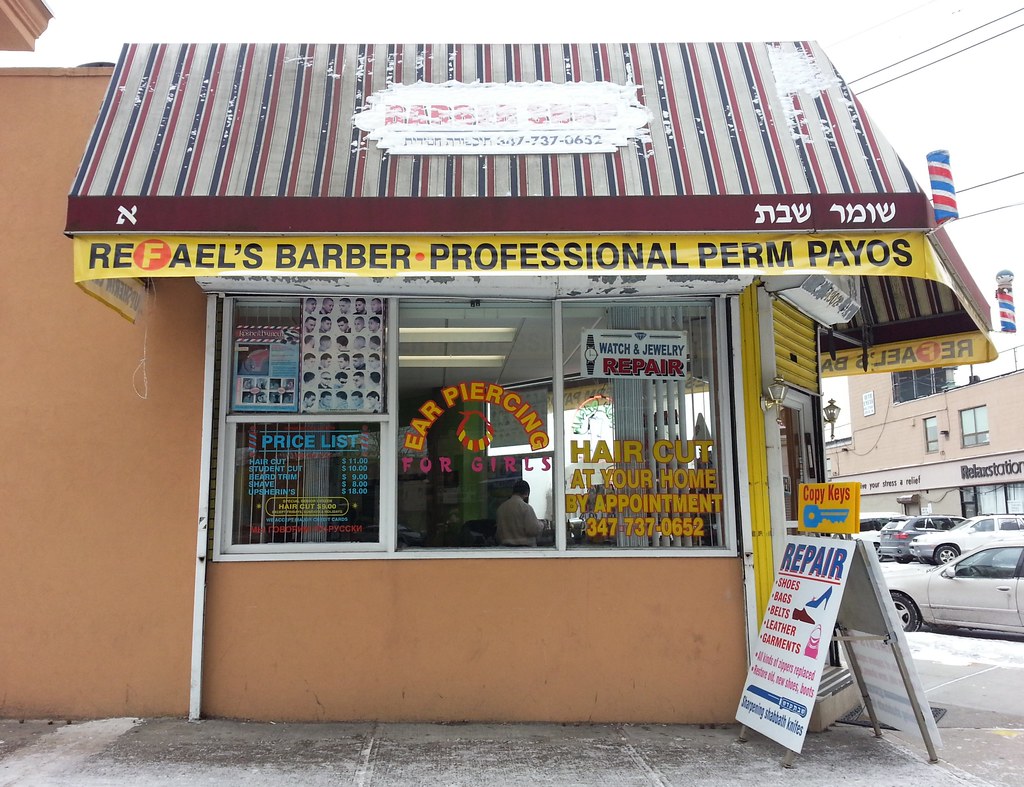
...when you can have your "shabbath knifes" sharpened while getting your payos cut.
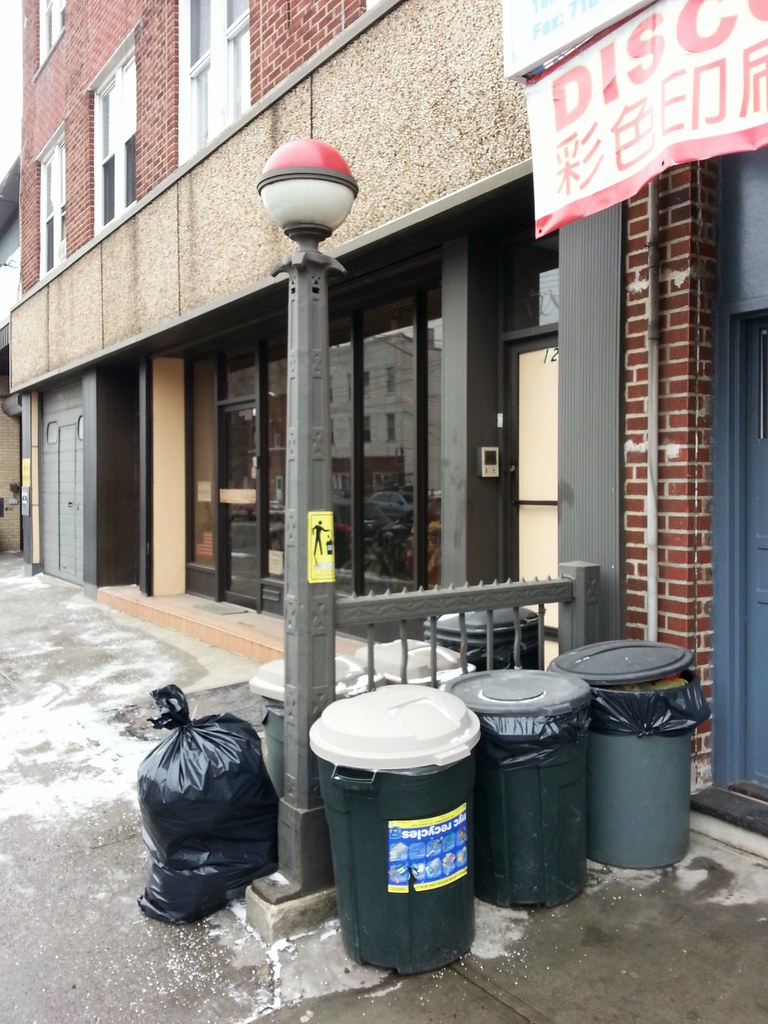
This unique trash can backstop looks to have been relocated from a subway entrance or storage yard somewhere in the city to the sidewalk outside this print shop in the Borough Park/Dyker Heights borderlands.
There are two nearby subway lines: the West End Line (D train), which is elevated, and the Sea Beach Line (N train), which runs in an open cut with station houses at its entrances. Lampposts and railings like these, however, are generally only found at simple sidewalk entrances to underground stations, so it would seem they must have come from somewhere more exotic.
(Did you know? The design of a station's lampposts and railings can tell you a little about its history.)
(And if you've ever wondered why some subway globe lamps are green and others are red, don't worry: there's a logical system behind it all. Sort of.)
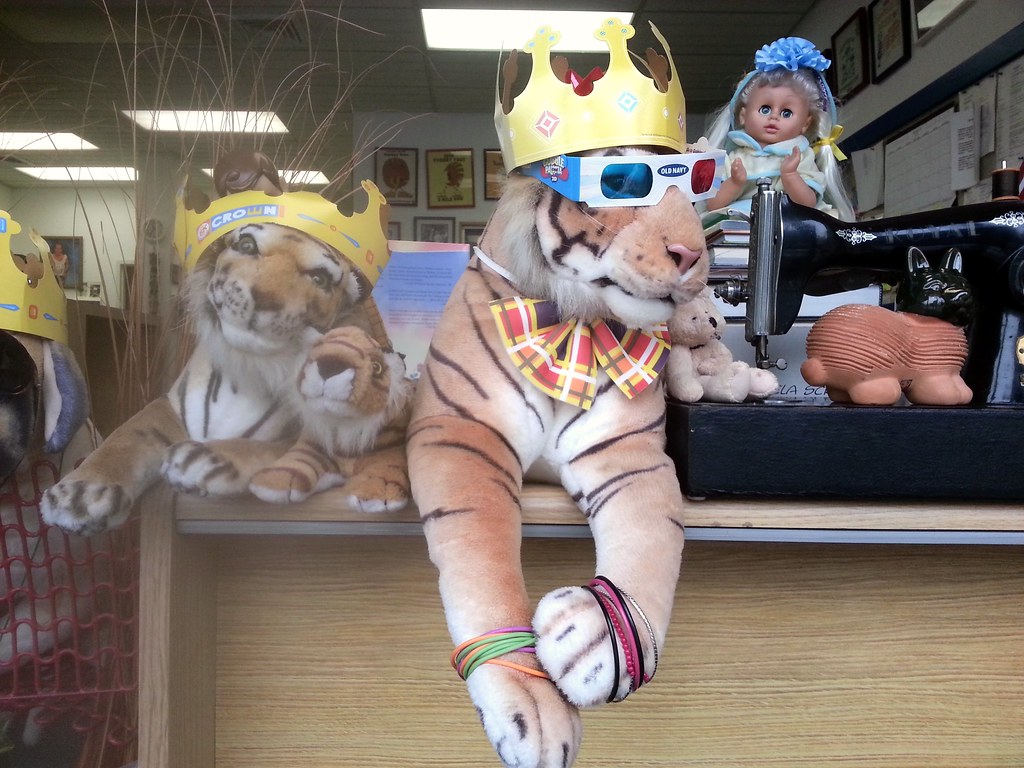
Signs taped to the windows of this office seem to indicate that the space is shared by a funeral home and a general contractor. I'd have to imagine this desk sits on the contracting side of things.

This massive structure contains two churches, one stacked atop the other. The lower church opened in 1909; the upper one wasn't completed until 1928.

A former National Guard arsenal. Here's a shot of this impregnable citadel nearing completion in 1926.
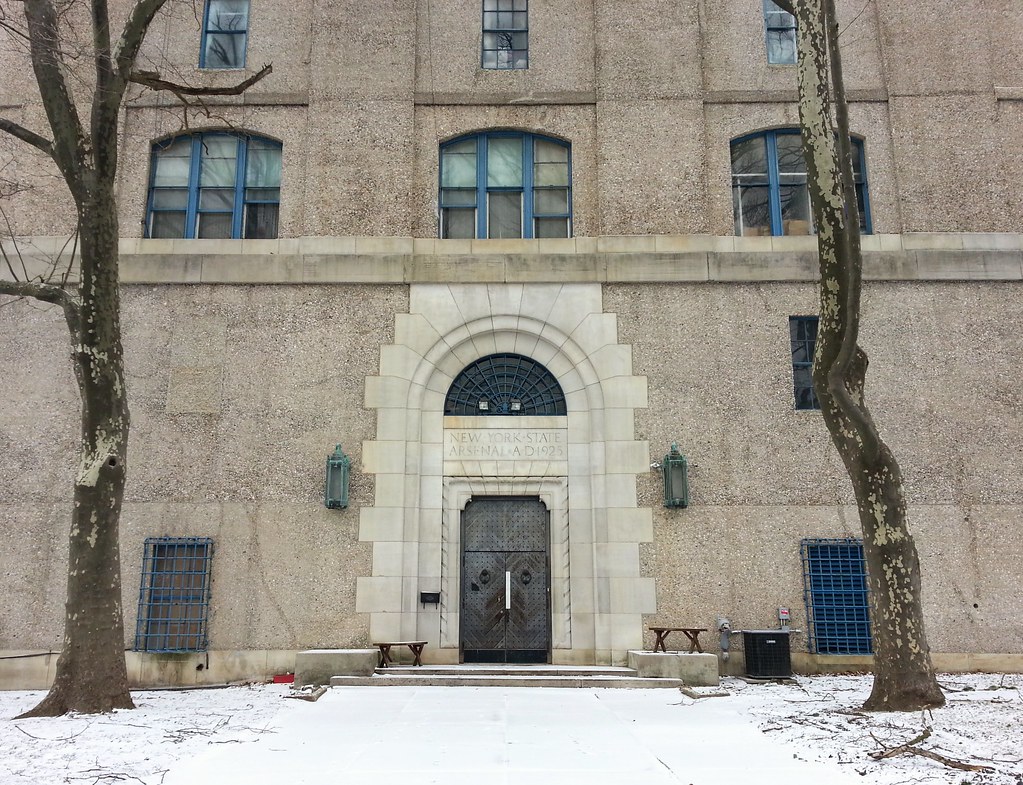
An entrance to the erstwhile arsenal seen in the previous photo
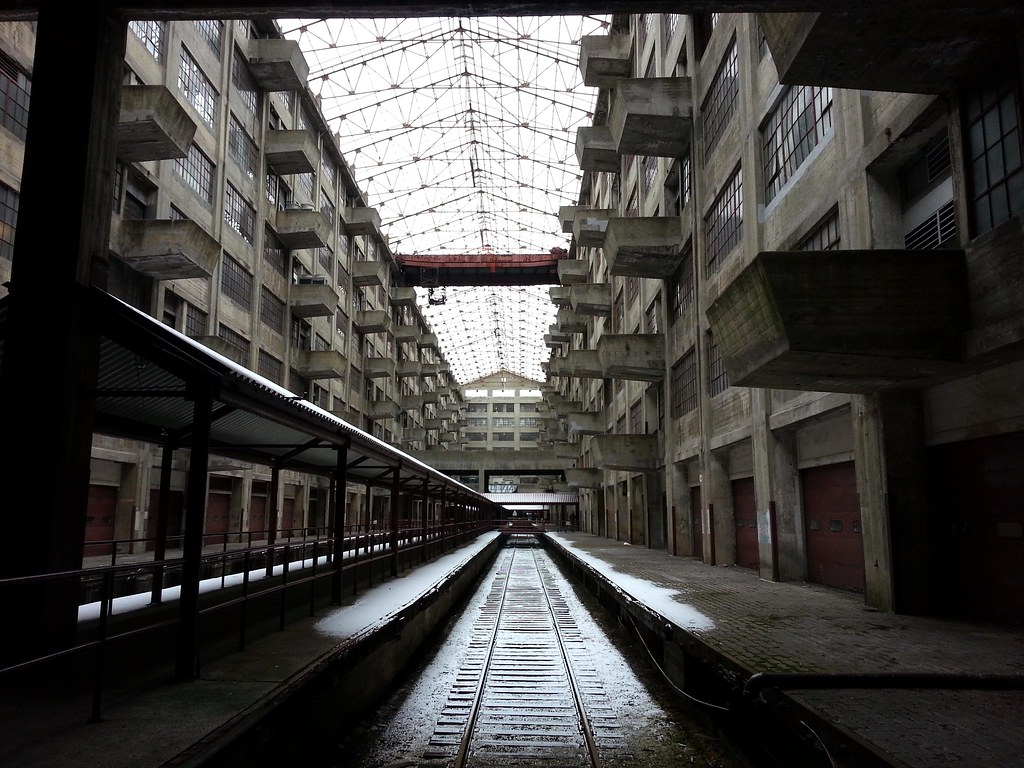
The Brooklyn Army Terminal, designed by Cass Gilbert, the architect of the Woolworth Building, was completed in 1919. The larger of its two main buildings features this stunning, formerly skylight-enclosed atrium. (Here's a beautiful shot of the atrium taken in 1949 by Andreas Feininger.) The reddish bridge-looking thing spanning the opening between the two sides of the building is part of an old traveling overhead crane that was used to load and unload the trains that once pulled in here; the staggered balcony arrangement provided the crane unobstructed vertical access to each floor. (Compare to the Hasidic Sukkot balconies we've seen previously.)
Currently redeveloped for commercial and light industrial use, the Brooklyn Army Terminal (formerly known as the Brooklyn Army Base) was supposedly the country's largest military supply base during World War II. I've read several claims that it was the point of departure for some 80% of American troops and supplies during the war, but I don't think that's true. The highest estimate of the number of WWII soldiers shipped out from here that I've seen is 3.2 million, and, as best I can tell, some 7.3 million soldiers in total were deployed overseas during the war. (The corresponding numbers for supplies are 37 million measurement tons and 127 million measurement tons.) So 80% seems like a highly exaggerated figure, but it's still pretty amazing to think that almost half of the US soldiers sent overseas during the war may have passed through this facility.
But let's do away with the uncertainties. There is one undisputed, and quite well documented, fact that I can share with you on the subject of troop deployments from the Brooklyn Army Base: On a late September day in 1958, a Private Elvis Aron (or was it Aaron? OK, that part's kind of disputed) Presley arrived here by train en route to an Army installation in Friedberg, Germany, where he would serve for the next 17 months before returning to civilian life.
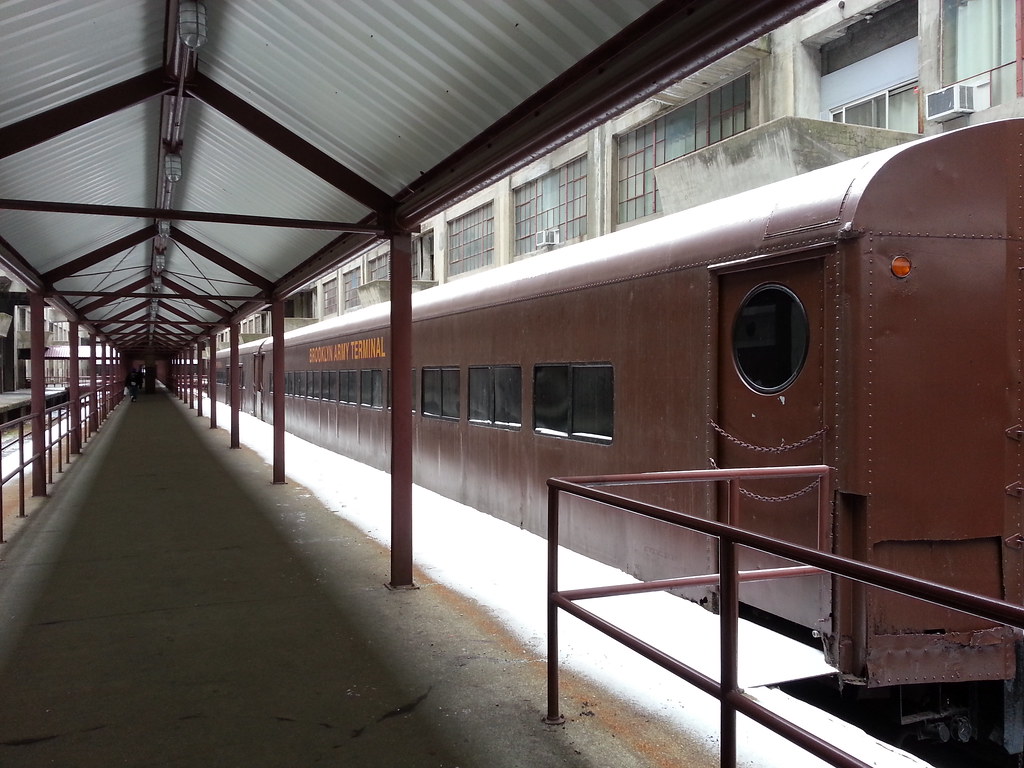
They appear to have been sitting here in Building B since at least 1999, boasting a sporty silver-with-blue-stripes paint job for much of that time. According to the Daily News, one of the cars "was going to be turned into a restaurant that never actually opened." That's an interesting hook — a restaurant so exclusive, it's never open.
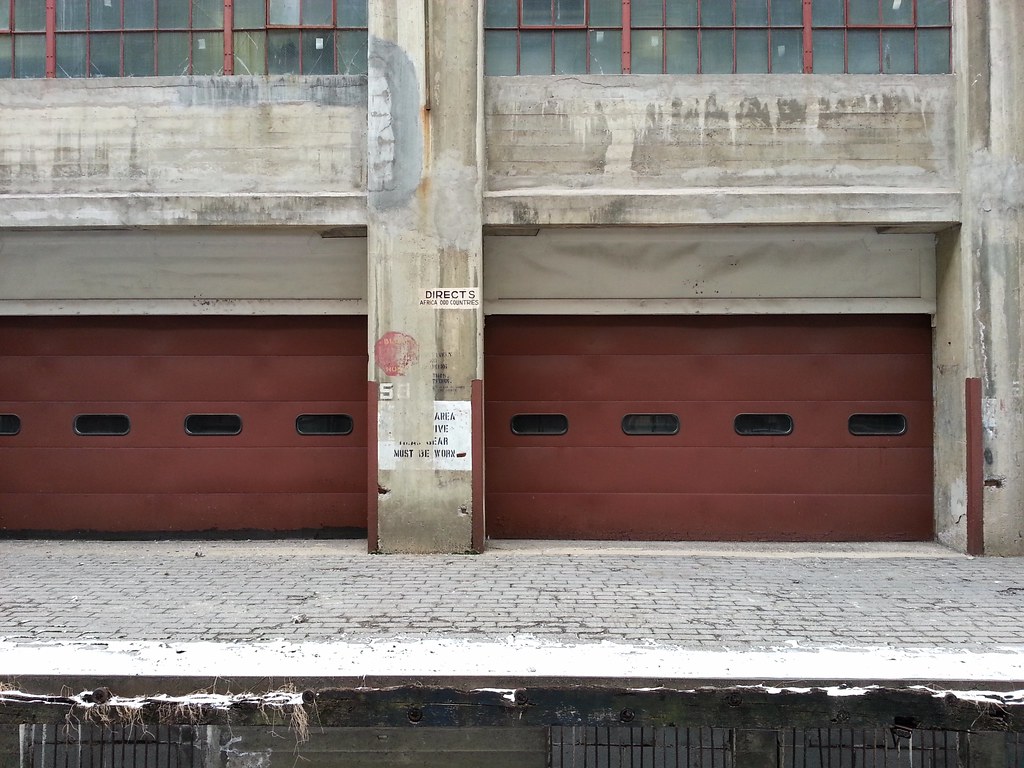
So reads some text painted on the column across the way (closer look). According a historical exhibit in the lobby here at Building B, these are Army Post Office destinations. Other destination names I spotted on columns in the atrium: the Balkans, Greece, Portugal, the Azores, and India.
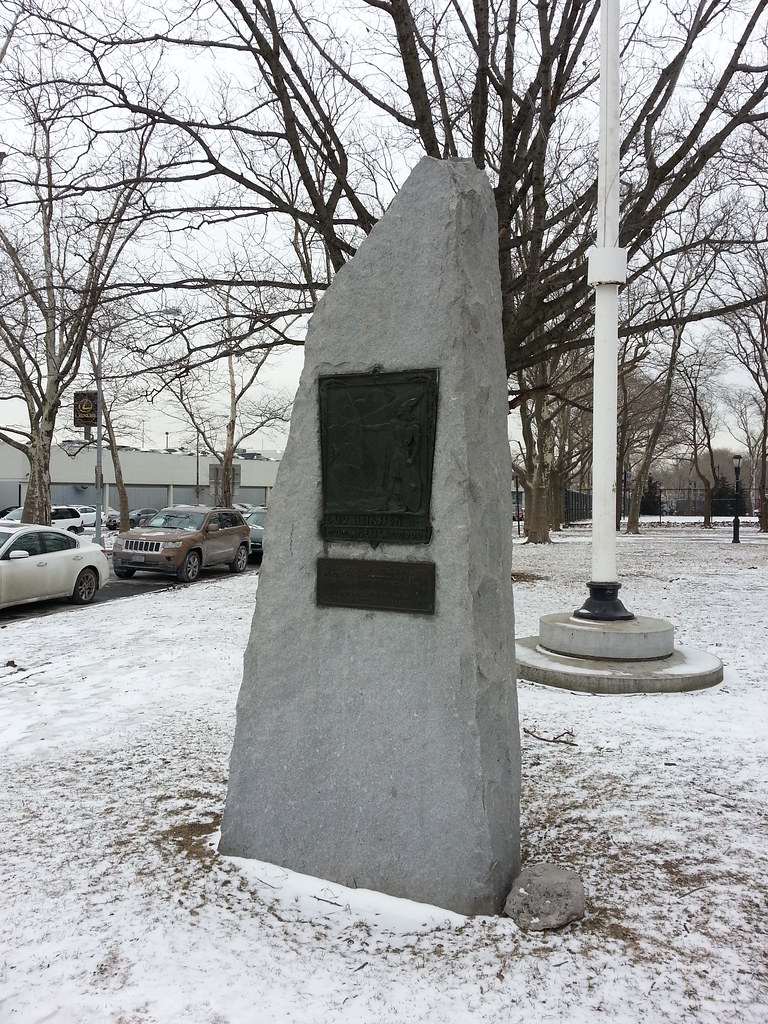
Leif Ericson Park is named in honor of the large Scandinavian population that once existed here in Bay Ridge. Within the park stands this "replica of a rune stone found in Tune, Norway", featuring a plaque that depicts a heroic-looking character at sea and reads "Leiv Eiriksson — Discovered America Year 1000". This monument was dedicated by Crown Prince Olav (later King Olav V) of Norway during a visit to the US in 1939.
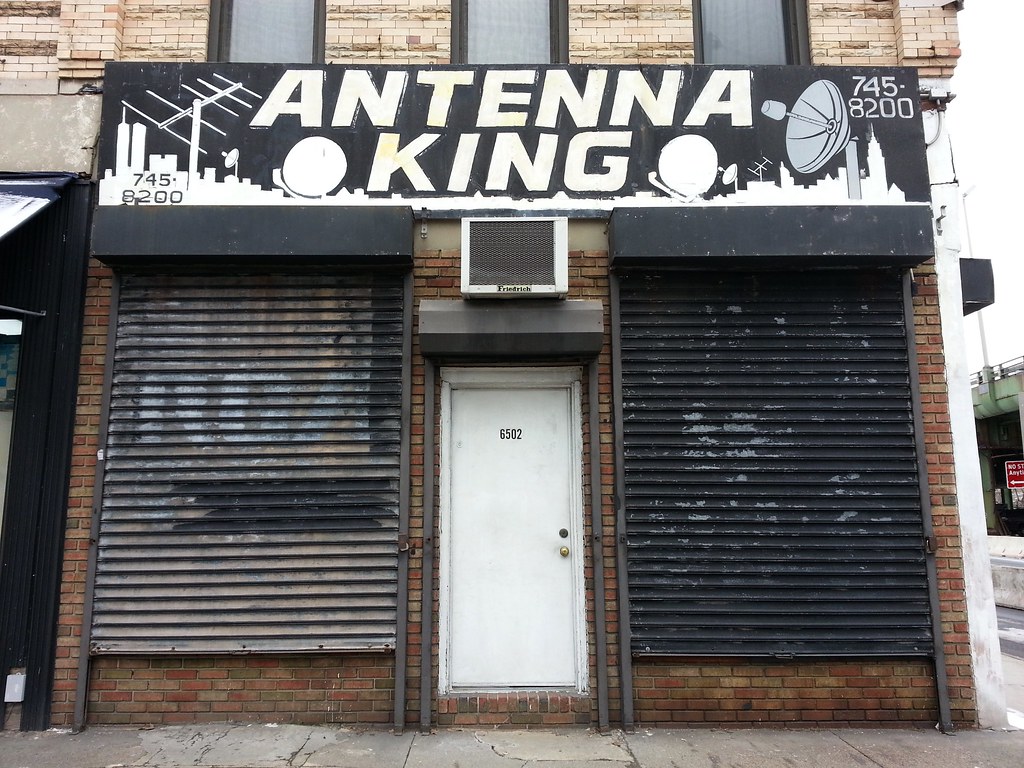
From the pages of The New Yorker:
. . . the Antenna King showed up with his wife, Rosanne Langan, the Antenna Queen. He is tall and gregarious, with a shock of silver hair and the stiff knees that come from climbing up to thousands of New York City roofs. As he began to hold forth, the Queen nodded silently, with an air that suggested that she had heard the King’s broadcasts on many occasions and understands that the signal is still strong. "The story of the Antenna King is an interesting story of how a man started a business and good fortune came along," the Antenna King said. . . .