Day 873

Rochdale Village

May 21st, 2014


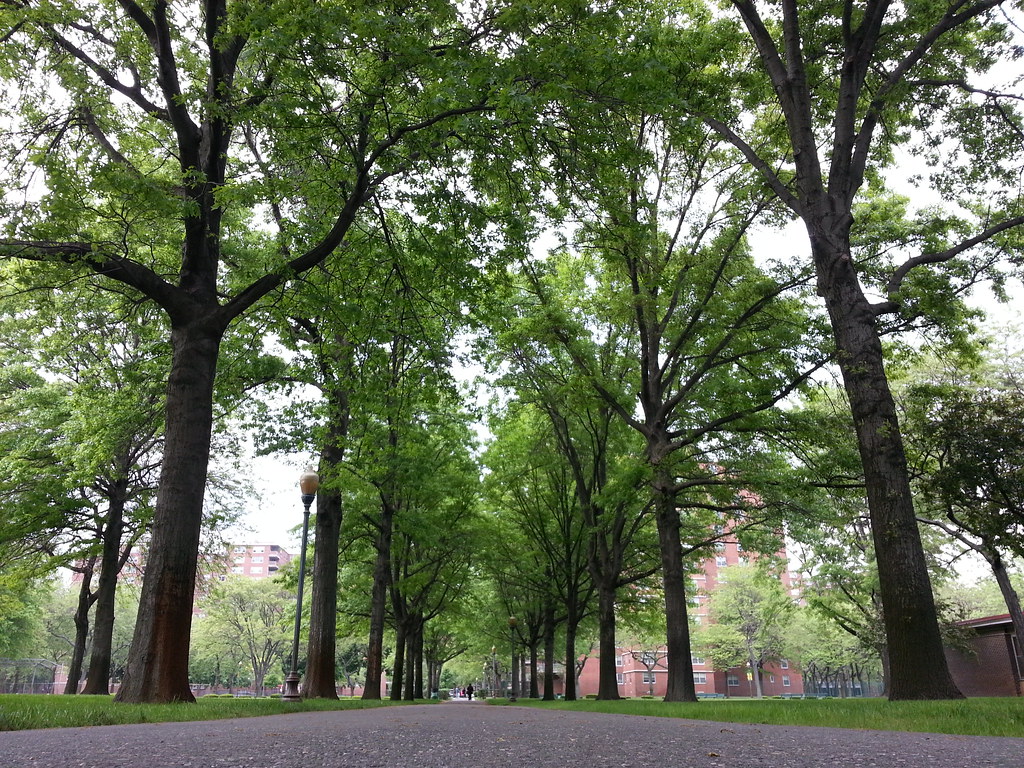
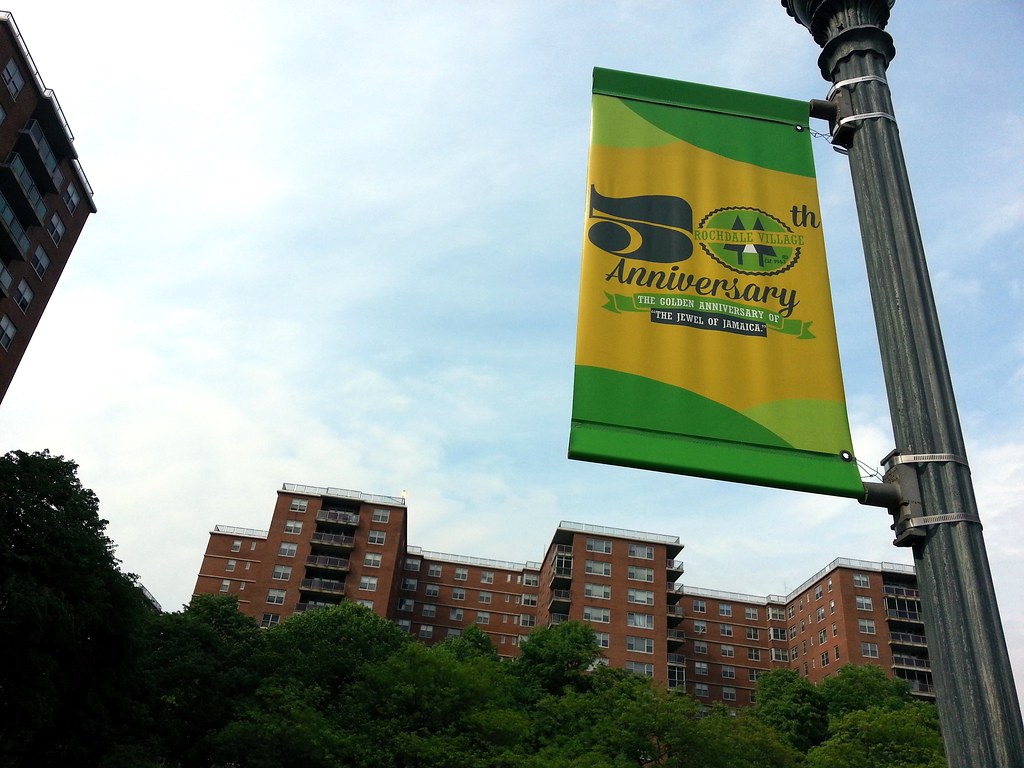
Opened in 1963 on the former site of the Jamaica racetrack, Rochdale Village was an early experiment in racially integrated housing. (It has since become a predominantly middle-income black community.) With room for some 25,000 residents, it was also the world's largest housing cooperative until it was overtaken several years later by the Bronx's Co-op City (itself located where another old place of outdoor entertainment — a US history-themed amusement park called Freedomland — once stood).

The Jamaica racetrack, by the way, was reportedly New York's most popular sporting venue in the early 1950s, with higher yearly attendance than even Yankee Stadium. This is not to say that the place was necessarily all that charming, however. Here's how Sports Illustrated eulogized the track, which it called an "overgrown subway station", during Jamaica's final season in 1959:

At Aqueduct the salt breezes cooled off horseplayers now and then. At Belmont bettors had a grove of trees to sit under between races. But Jamaica, more constricted and looking like a betting factory, was never marred by such frills. Jamaica represented pure, pristine greed. It was always as ugly as sin. There was no place to sit down under trees. In fact, it was hard to find a tree, and the only place to sit was in the 17,500 seats in the grandstand and clubhouse. That never kept people away. The largest number of people ever to go to a New York track was at Jamaica on Memorial Day of 1945—64,670 paid, turnstile-registered patrons.

Day 873


Day 873


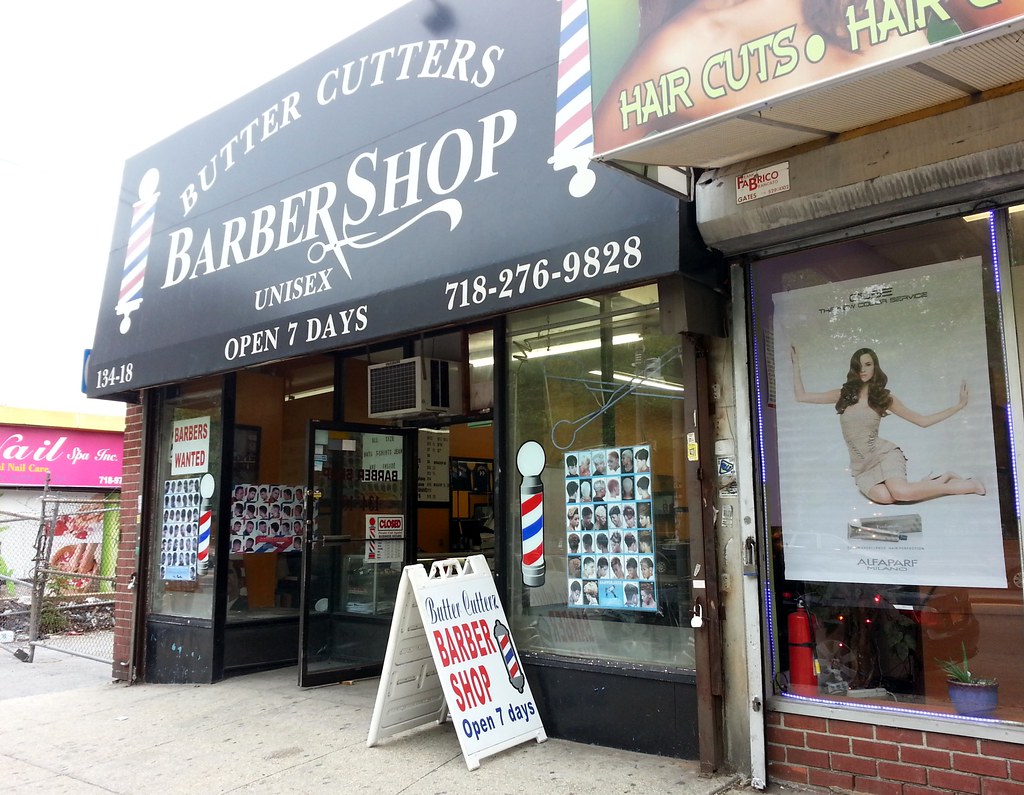
The sandwich board says "Cutterz", but I have to defer to the main sign for the official spelling.

Day 873

Iris in bloom

May 21st, 2014


Day 873


I was going to say that this establishment's presidential name didn't fare as well as that of Obama Fried Chicken in Brooklyn, but then I checked Street View.

Day 881


Day 881

Giuseppe Petrosino

May 29th, 2014


From a previous post:

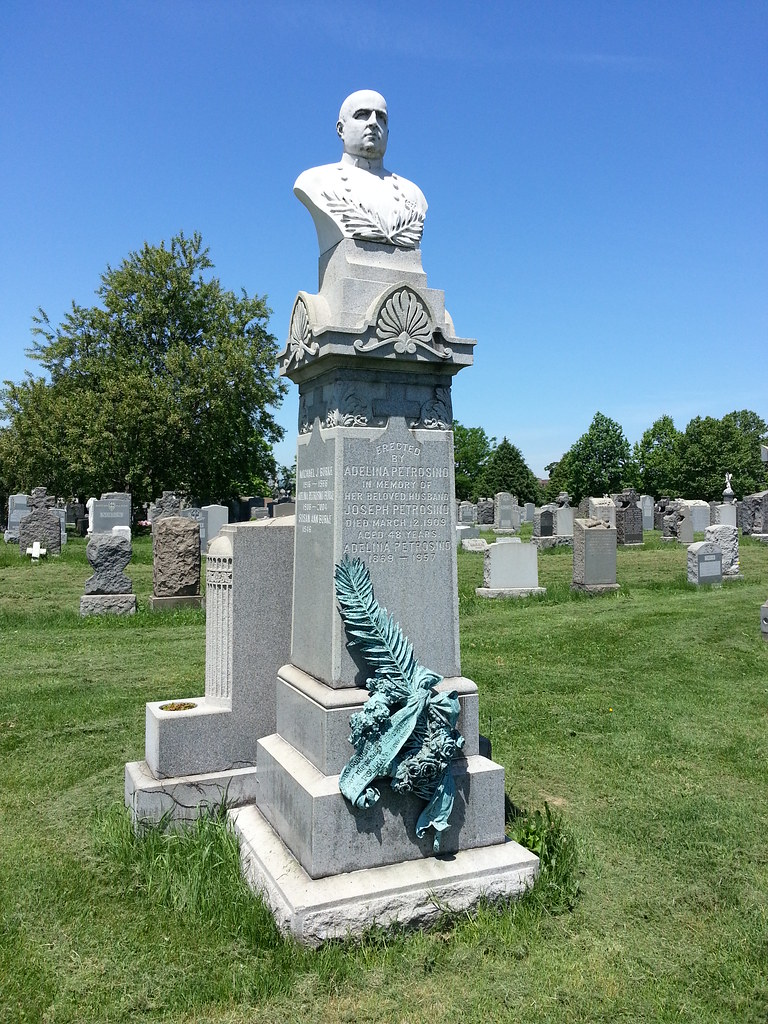
Joe Petrosino was the city's first Italian-American police detective. Standing a feisty (and chunky) 5-foot-3, he was a prominent leader in the fight against Italian-American organized crime around the turn of the 20th century. This role eventually cost him his life when he was assassinated in 1909 while on a mission in Sicily, making him the only NYC police officer killed in the line of duty outside the US. While his name has largely been forgotten in the years since, he was beloved by the New Yorkers of his time: an estimated 200,000 people turned out to watch his funeral procession (photo) make its way through the streets of Manhattan and Queens!
Lieutenant Petrosino is buried here in the newer sections of Calvary Cemetery.

Day 881


Day 881

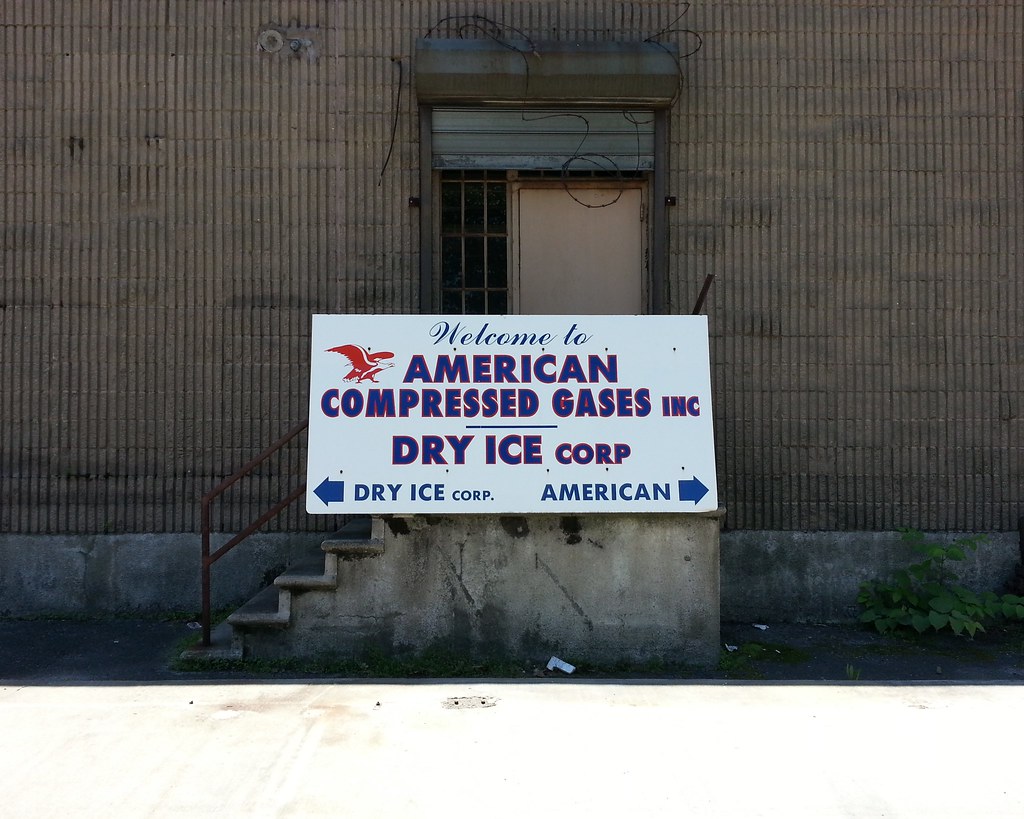
Dry ice to the left

May 29th, 2014


Compressed gases to the right

Day 881

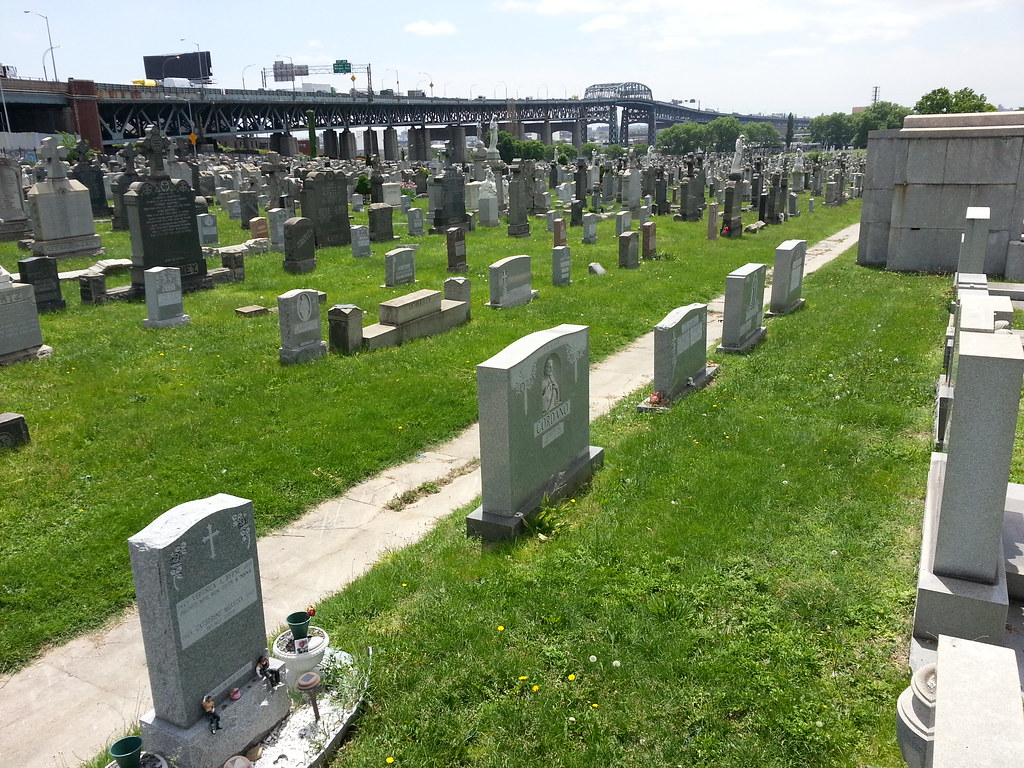
Old Calvary

May 29th, 2014


This is the original section of Calvary Cemetery, with the Kosciuszko Bridge visible in the background. Calvary is home to a truly staggering number of dead folks: somewhere between 1,750,000 and 3,000,000.

Day 881

Always In Our Hearts

May 29th, 2014


Catherine Messina, 1928-1953, Beloved Sister

Veronica A. Byrne, 1943-2009, Beloved Wife, Mom, Sister & Nana

Day 881

Calvary Park

May 29th, 2014


A city park fully contained within a private cemetery — weird! From the Parks Department's website:

On April 28, 1863, the City of New York purchased the land for this park from the Trustees of St. Patrick's Cathedral and granted Parks jurisdiction over it. The land transaction charter stated that Parks would use the land as a burial ground for soldiers who fought for the Union during the Civil War (1861-65) and died in New York hospitals. Parks is responsible for the maintenance of the Civil War monument, the statuary, and the surrounding vegetation. Twenty-one Roman Catholic Civil War Union soldiers are buried here. The last burial took place in 1909.
I had never been to this part of the cemetery before, but the four statues at the base of the monument (individual photos about halfway down this page) looked very familiar. It turns out that they're identical (albeit with some missing pieces) to the figures on the Soldiers’ Monument at Green-Wood Cemetery (photos: 1, 2, 3, 4), as well as other Civil War monuments around the country.

Day 881

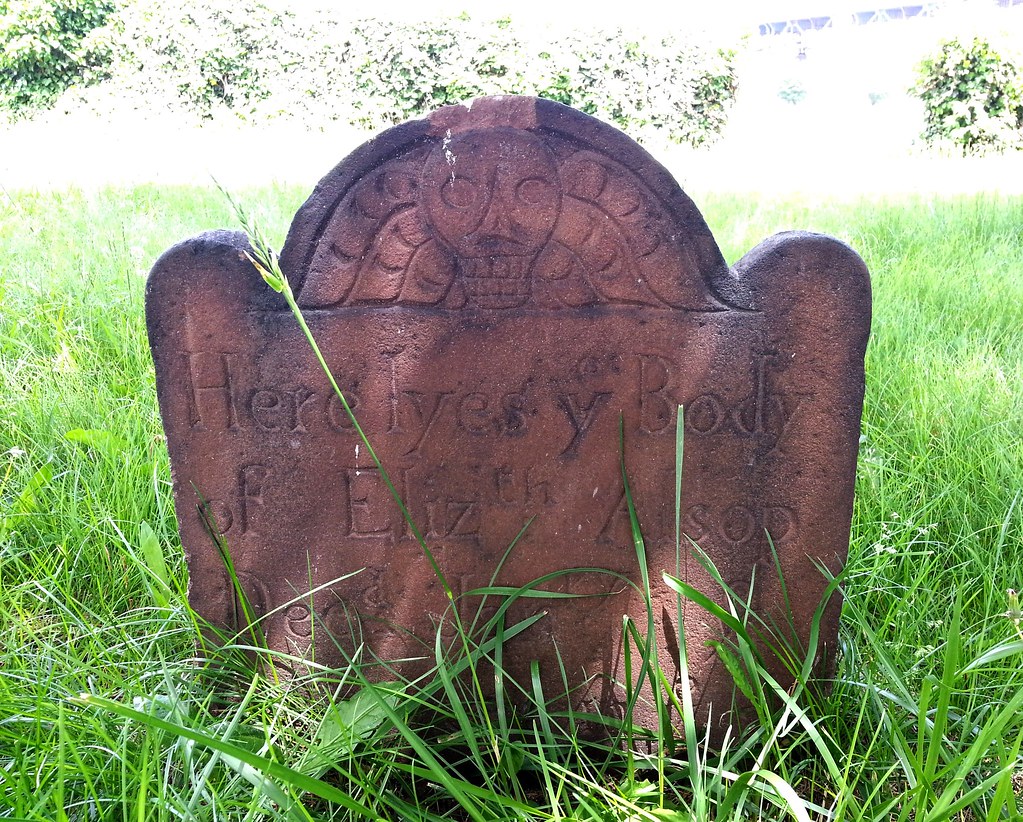
Alsop family cemetery

May 29th, 2014


This tiny family burial ground, with its first interment dating back to 1691, has been swallowed up, and is entirely surrounded, by Calvary Cemetery (aerial view), making it a little enclave of Protestantism in a vast Catholic necropolis. This brings to mind the old Betts family burial ground, now encompassed by the Jewish Mount Zion Cemetery.

Day 881

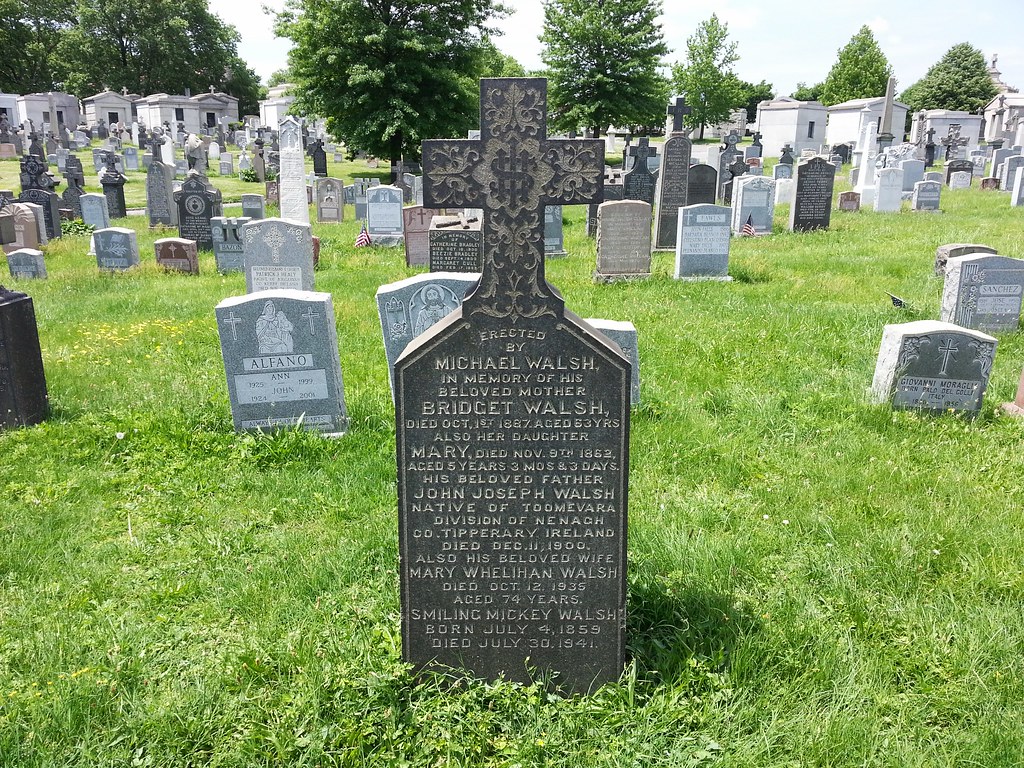
Michael Walsh

May 29th, 2014


Mr. Walsh, a.k.a. Mickey Welch, was the third Major League pitcher to win 300 games. He's one of two baseball Hall of Famers buried here in Calvary, the other being Wee Willie Keeler.

Day 881

Al Smith

May 29th, 2014


The Happy Warrior with the blue moustache

Day 881

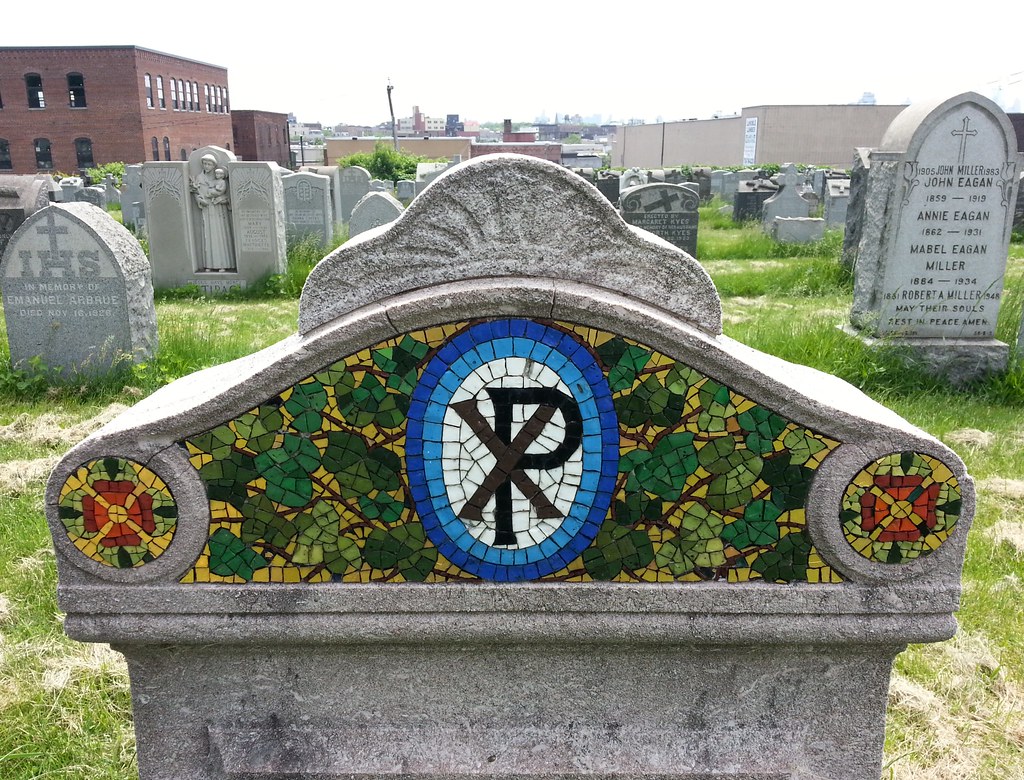
Mosaic headstone

May 29th, 2014


Antonio Tabacchi

Day 881

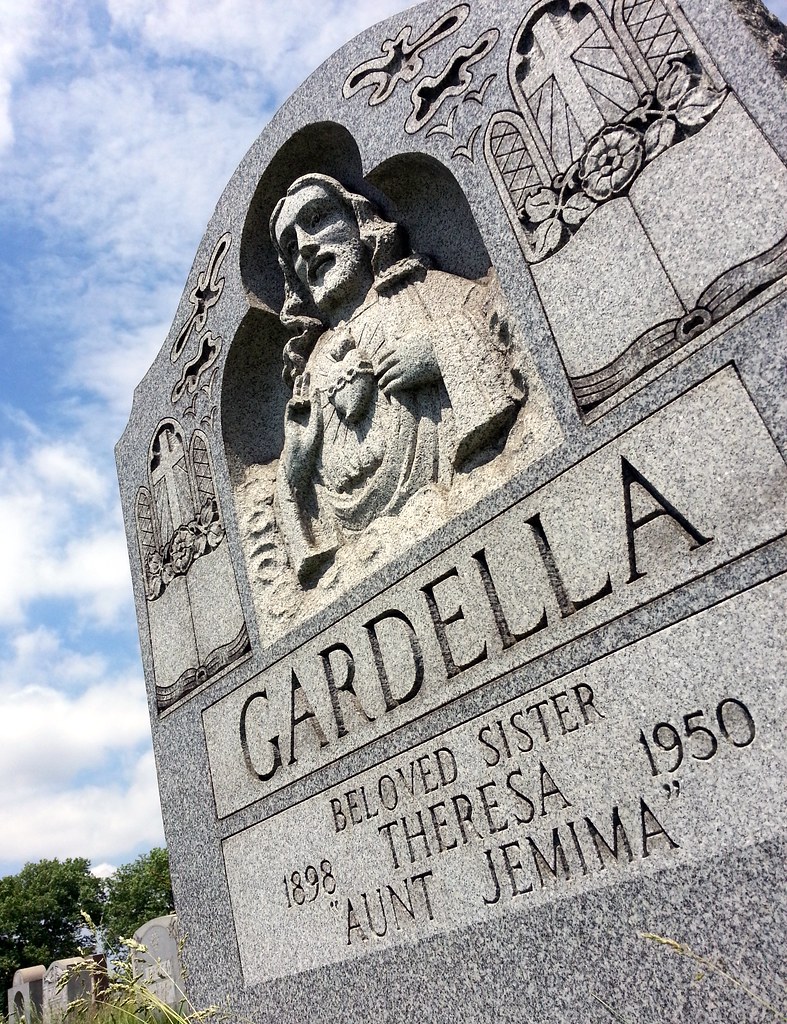
Tess Gardella

May 29th, 2014


A white (blackfaced) Aunt Jemima, though not that Aunt Jemima

Day 881

Stephen Brodie

May 29th, 2014


Steve Brodie became famous in 1886 as the first person to survive a jump off the Brooklyn Bridge, but it's far from clear that he ever actually jumped. Many believed he had someone throw a dummy off the bridge while he swam out toward the spot where it landed, surfacing near a boat that pulled him out of the water. Whether or not he really did the deed, he took full advantage of the celebrity that came his way as a result, opening a successful bar that traded on his reputation and starring in a play that climaxed with him leaping off the bridge to save a girl's life. And his name lived on long after he did. In 1949, almost half a century after his passing, he was the subject of a Bugs Bunny cartoon. Watch it here!

(Curiously, an 1886 NY Times account of his supposed feat described him, without any further elaboration, as a "long-distance pedestrian".)

UPDATE: As the Fensk pointed out, his wife's name was, quite appropriately, Bridget!

Day 881

Calvary Cemetery chapel

May 29th, 2014


The September 1909 issue of Popular Mechanics called this the "most remarkable mortuary chapel in America". (Flip back one page in the magazine and you'll see two photos captioned "Largest Horse Ever Cast in Bronze—Its Interior Used as a Banquet Hall".)

Day 881

The Scannell brothers

May 29th, 2014


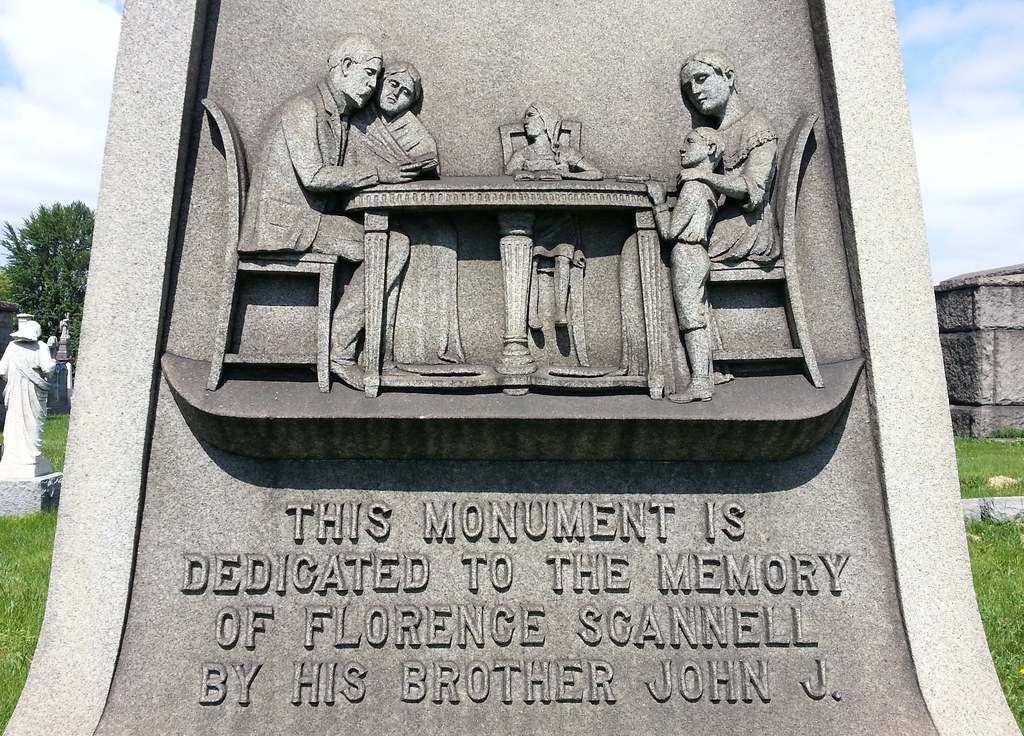
Florence and John Scannell were a couple of thuggish Tammany Hall organizers working in the dirty world of 19th-century New York City politics. Florence was running for alderman in 1869 when he was shot during a barroom brawl. He won the election but died from his wound several months later. John vowed vengeance on Thomas Donohue (or Donoghue), the man he believed to have pulled the trigger.

After a few failed attempts, John succeeded in killing Donohue in 1872 with a gunshot to the face. (He had shot him in the chest on a previous occasion, to no avail.) He was then arrested and held in the Tombs, where he reconnected with an old friend who was also being charged with murder: Richard Croker, the future head of Tammany Hall. John was acquitted by reason of insanity and committed to a lunatic asylum, where he was held for a mere few months before being released. The NY Times had more or less predicted this outcome in a sarcasm-laced editorial published shortly after John's arrest:

When he is tried, a number of doctors will be brought up to swear that Donoghue died of the measles, complicated with the horse disease, and then other doctors will swear that Scannell is and always was insane, and then two or three women will be brought into Court and testify that in all the relations of life Scannell is a pink of propriety . . . and two years hence Scannell will be run by Tammany for Mayor. Let the poor man go at once. Why subject him even to the temporary inconvenience of a trial!
He never ran for mayor, but he did indeed begin a political ascent after his release, rising to a powerful leadership position within Tammany Hall, thanks in no small part to his friendship with Croker that had been strengthened by their time together in the clink. (They were sometimes referred to by their associates as "The Big Two".) John then served as fire commissioner ("a lucrative patronage position") for a couple of years in the mid-1890s and was later appointed the first fire commissioner of Greater New York, the expanded five-borough city that was created in 1898. It only took him a few years in that post to be indicted for conspiring to defraud the city in the purchasing of supplies for the department.

Serving as a lovely grace note, the final paragraph of John's 1918 NY Times obituary reports that he was sued for $15,000 in 1907, at the age of 67, by the daughter of one of his housekeepers for "kissing her three times without consent".

John erected the pictured monument at his brother's gravesite (and his own future gravesite) in 1914, some 45 years after Florence was shot. There's a life-size statue of Florence standing atop the monument, but the scene you see above, despite the dedication to Florence right beneath it, actually depicts John and his family. There's a second, more curious image carved on another side: labeled simply "The Abbott", it shows a horse standing beside a creek.

It turns out that The Abbott (or Abbot) was a renowned racing horse and one of John's most prized and beloved possessions, for which he had paid a record-breaking price shortly after the horse set the world record for the fastest mile in 1900. The Abbott is not, as far as I can tell, buried here at Calvary, but John apparently felt he deserved a place on the family monument nonetheless.

Day 881

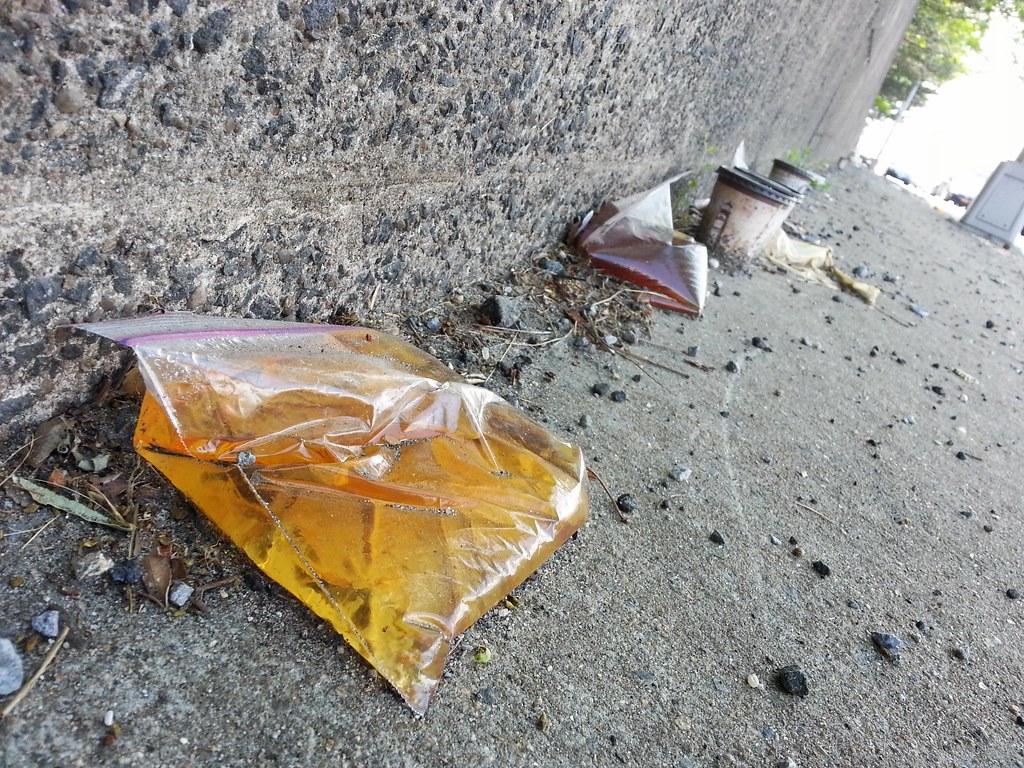
Bags o’ pee-pee?

May 29th, 2014


I think they just might be-be, even though that one looks awfully dark. (The empty coffee cups lend some credence to this theory.) Altogether there were four liquid-filled ziplocs sitting here on the desolate sidewalk between Calvary Cemetery and the Long Island Expressway service road. I didn't have the guts to inspect the lumpy-looking contents of a plastic shopping bag sitting next to one of the cups.
Day 881

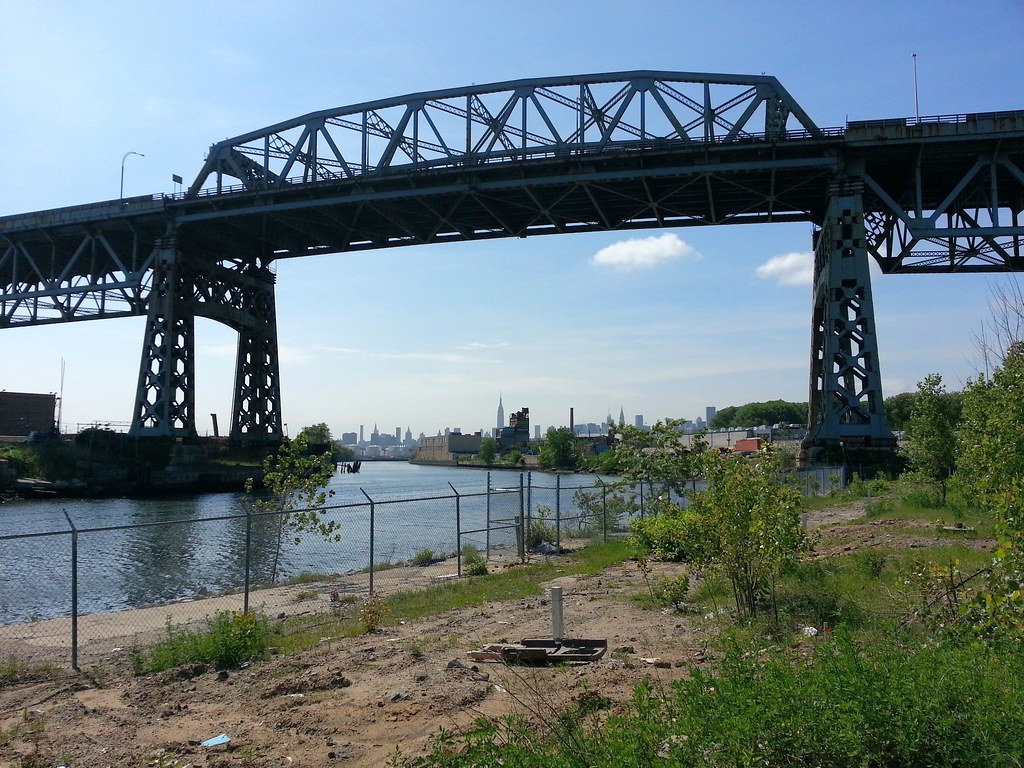
Kosciuszko Bridge

May 29th, 2014


Carrying the BQE across Newtown Creek, this oft-congested crossing is due to be replaced in the relatively near future by a cable-stayed bridge that will look something like this. You can see some of the other bridge designs that were considered here.
Day 881

Outta service

May 29th, 2014


This parking lot (Street View) is apparently used to store FDNY vehicles that are being decommissioned or have been damaged in accidents.

Day 881

Life’ll wear ya down

May 29th, 2014


These ladies appear to have been stationed out here since at least September 2013.

Day 881

Walk the lines

May 29th, 2014

Day 898


Day 898

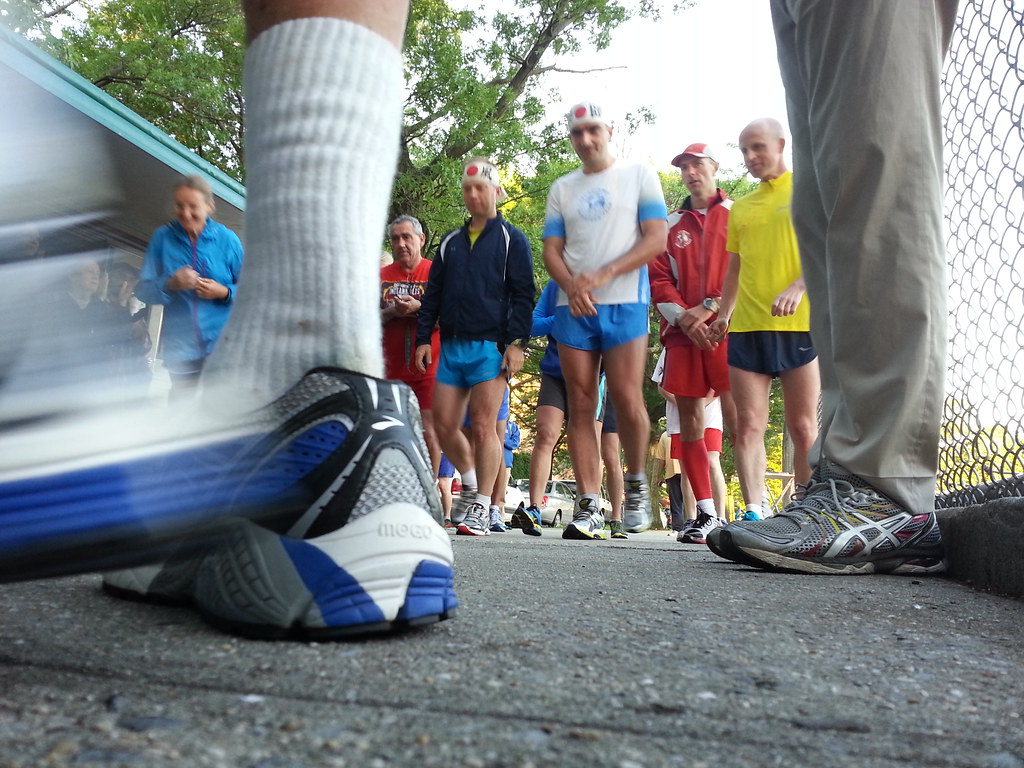
The very first steps

June 15th, 2014


of this year's Self-Transcendence 3,100 Mile Race, a 3,100-mile race (duh) around a single block in Queens (huh?). Check out my posts from 2012 for more information about this incredible event.

Day 898

Sunrise over Kodanda

June 15th, 2014


We last saw Kodanda rocking out for a couple of police officers on their lunch break. Today he was noodling some gentler melodies as the runners in the Self-Transcendence 3,100 Mile Race circled the block. (They pass by in the background starting about 37 seconds in — their 2nd lap out of 5,649.) I sped up the video so you can really see the shadows melting away as he plays.

Day 898

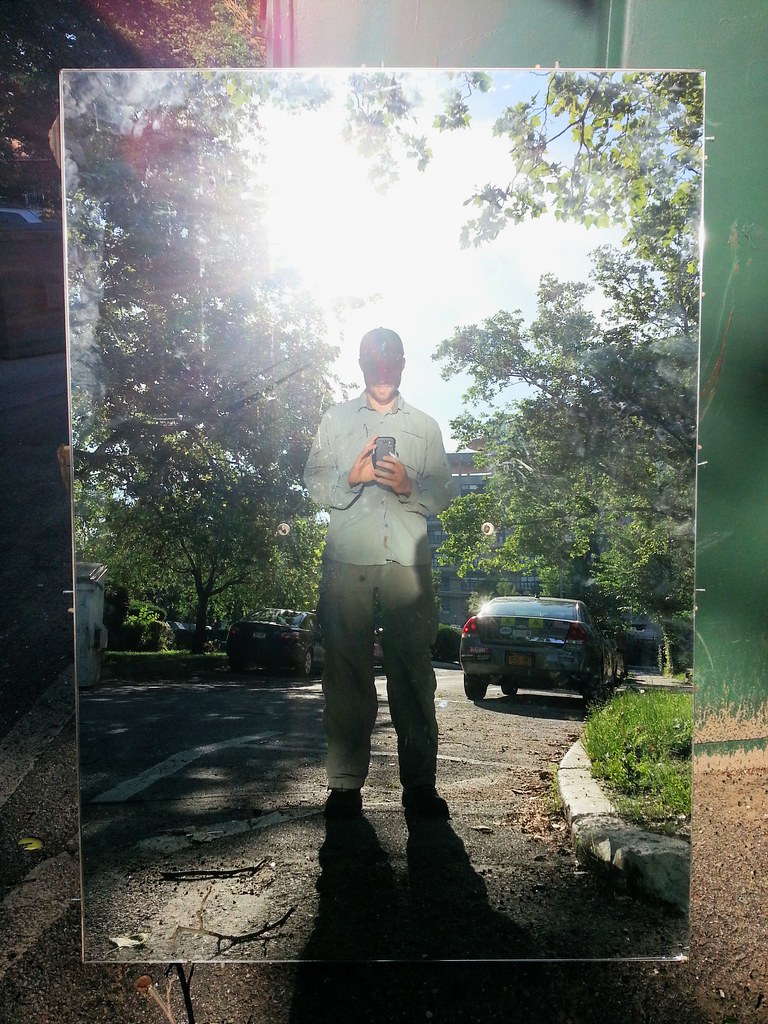
Curbside self-portrait

June 15th, 2014


Day 898

Flax flower

June 15th, 2014


Day 898

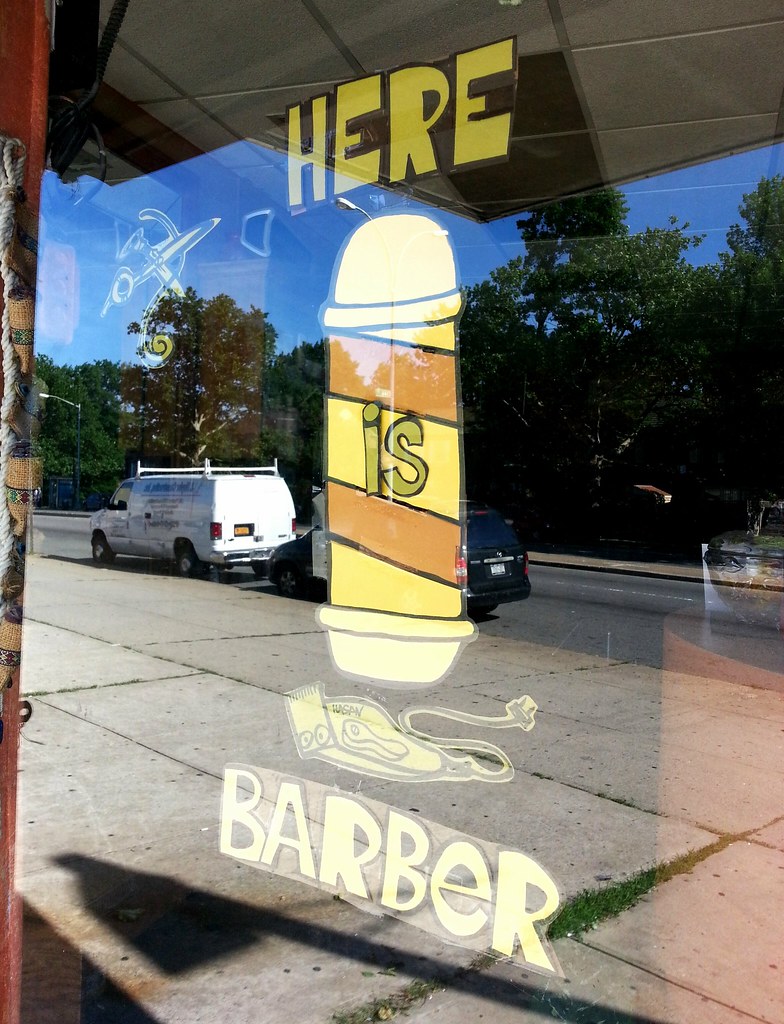
WHERE IS BARBER?

June 15th, 2014


Day 898


Day 898

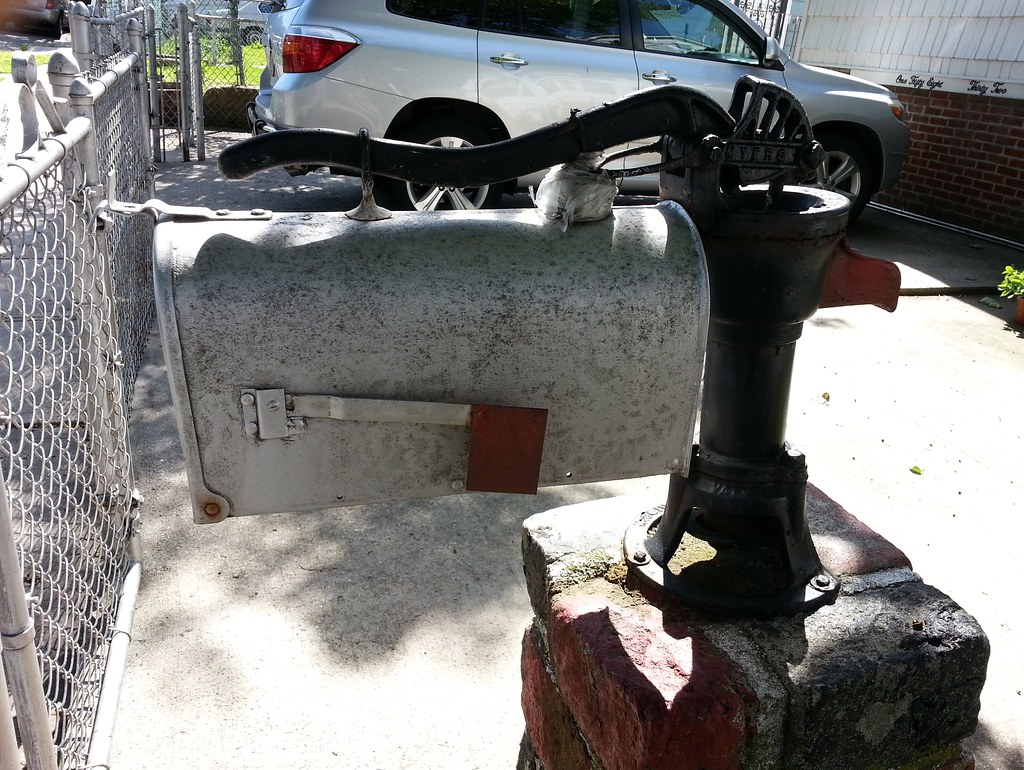
Awesome mailbox #92

June 15th, 2014


An F.E. Myers & Bro. water pump

Day 898

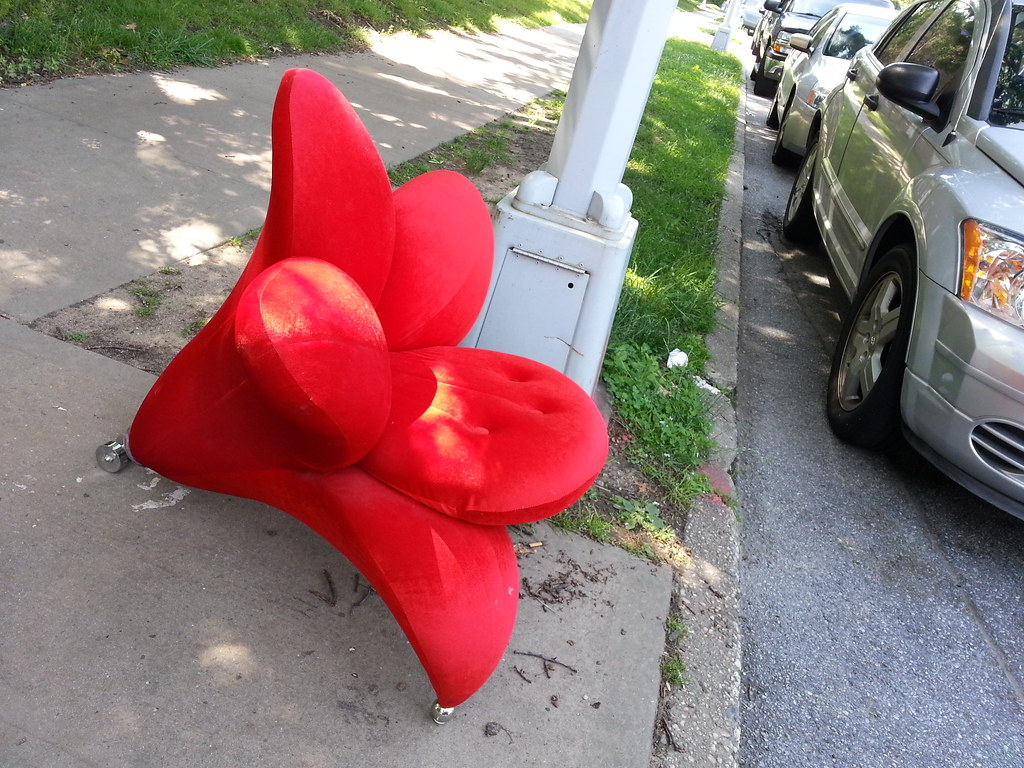
Sidewalk tuchus lily

June 15th, 2014


Day 898


A Simulsat antenna at a Time Warner Cable headend

Day 898

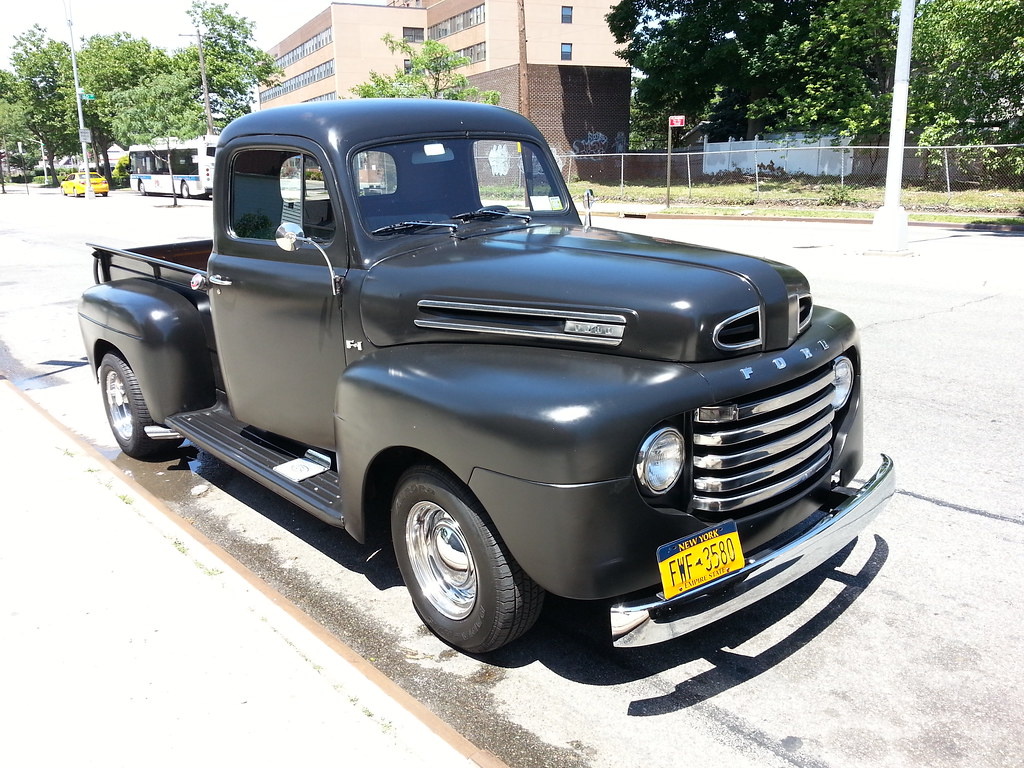
1950 Ford pickup

June 15th, 2014


Day 903


Day 903

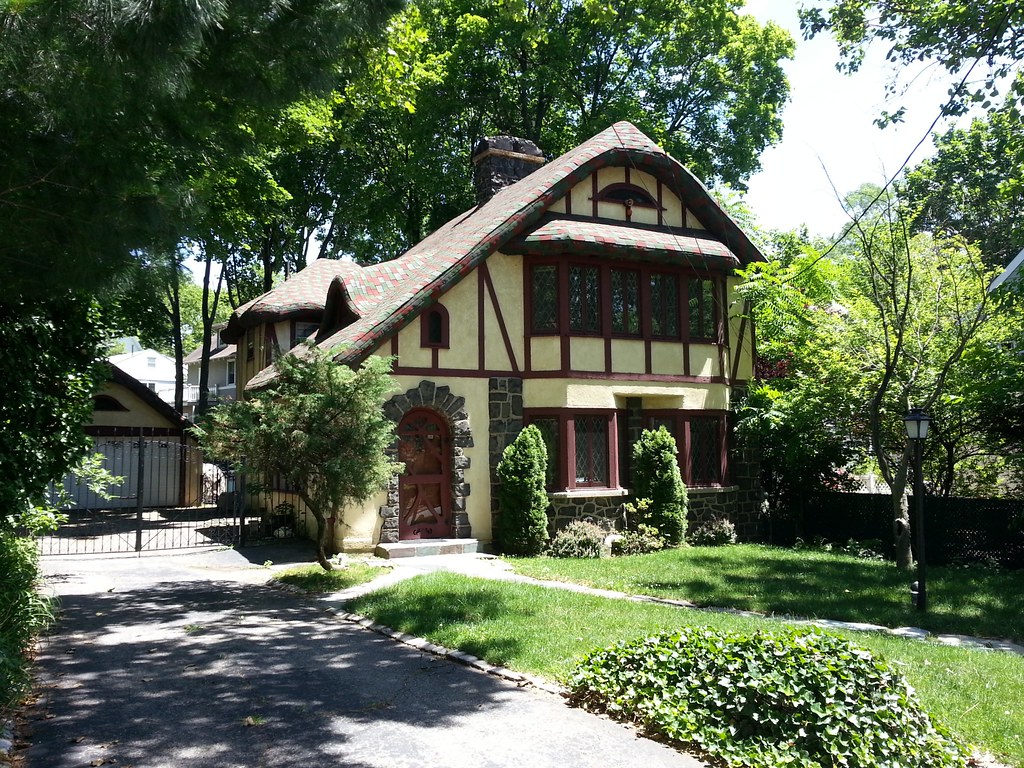
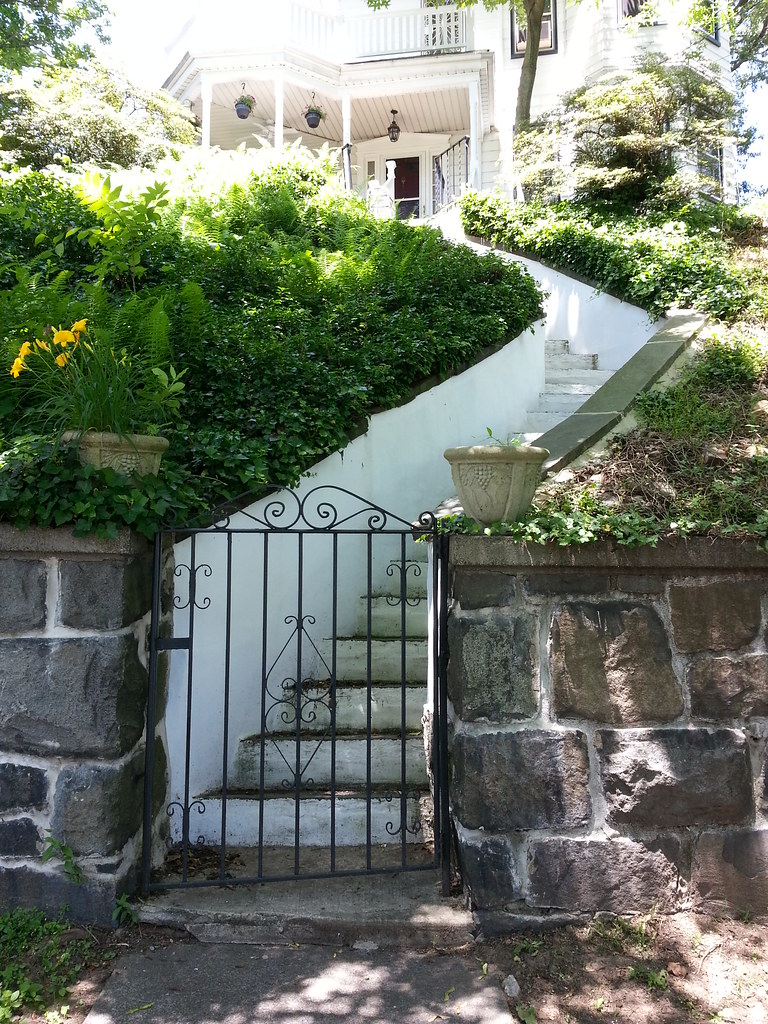
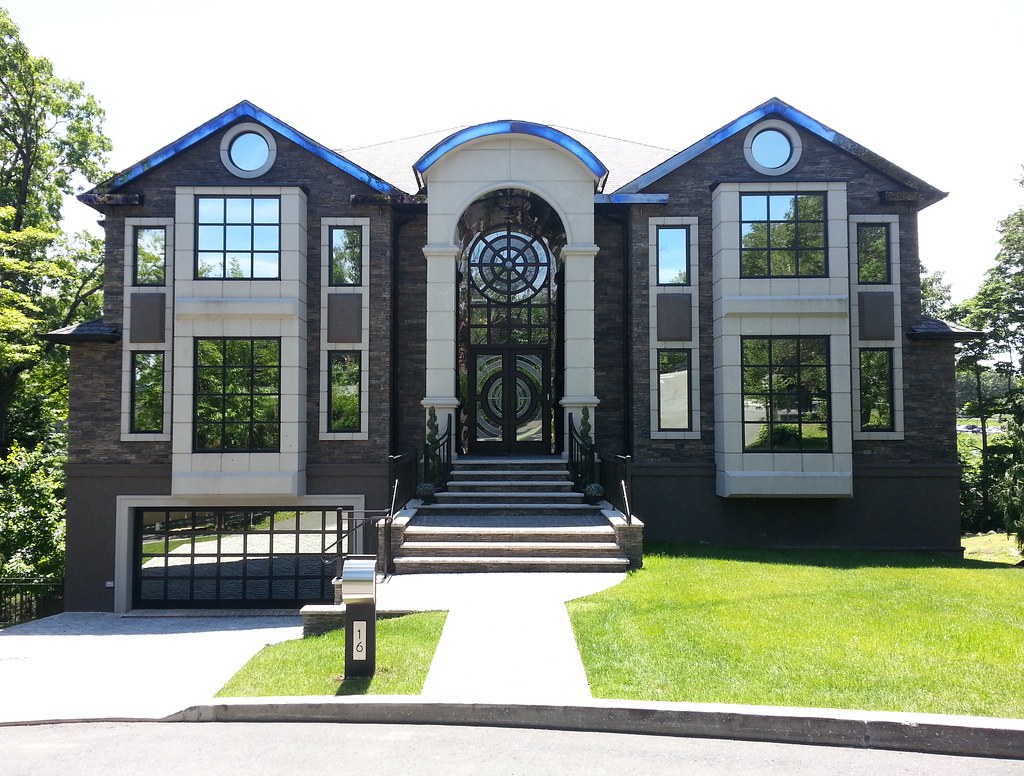
101 Cebra Avenue

June 20th, 2014


According to the AIA Guide to New York City:

Brooklynite [James] Pietsch remodeled and then moved in to this existing stone estate gate-house. The result would intrigue Hansel and Gretel, as it does us.

Day 903

A winding ascent

June 20th, 2014


Day 903


Day 903


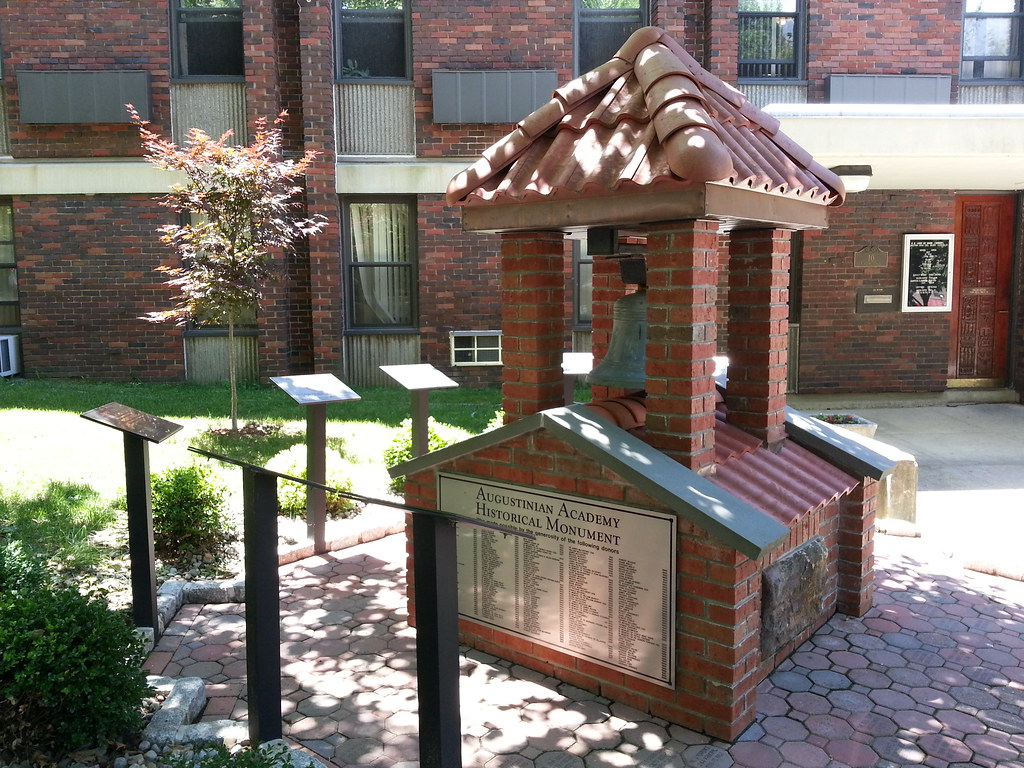
This elaborate memorial commemorates the long-defunct Augustinian Academy, which opened in 1899 as Staten Island's first Catholic high school. (The academy's original building still stands nearby; it's currently occupied by Our Lady of Good Counsel School.) The slew of signs provide information on everything from the academy's alma mater and valedictory song (including the songs' melodies written in musical notation) to its school seal to the various relics of its now-demolished Grymes Hill building (where it moved after outgrowing the aforementioned 1899 structure) that are incorporated in the monument: the bell, the cornerstone, and some ceramic tiles from the chapel.

Day 903

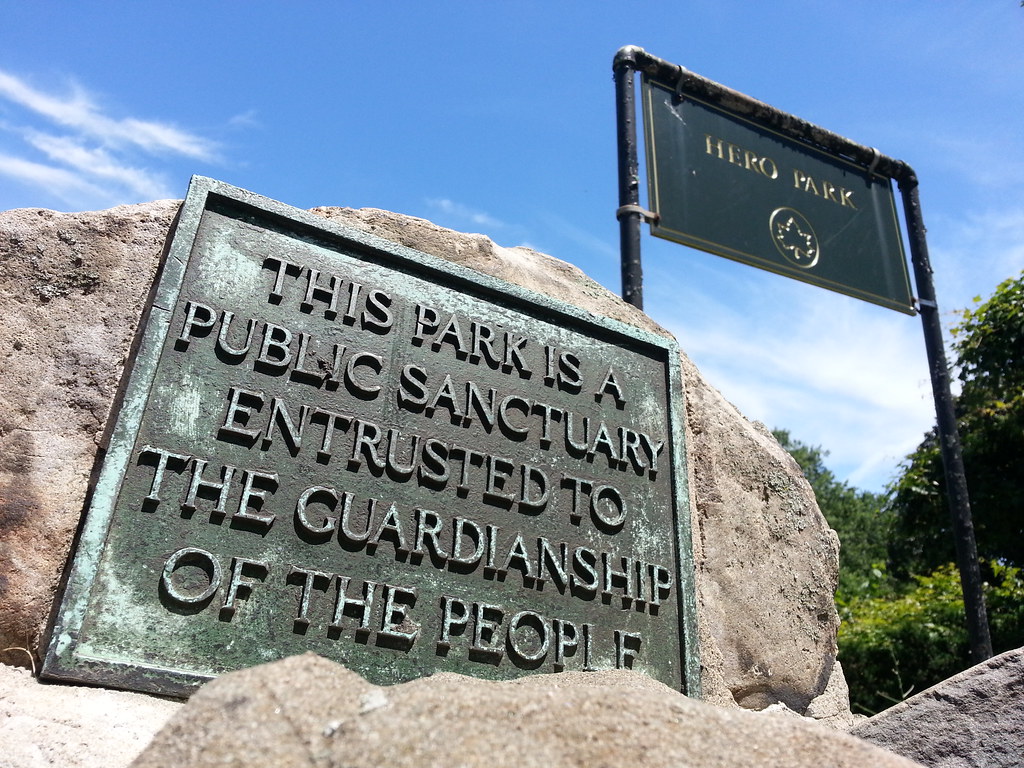
Hero Park

June 20th, 2014


Hero Park honors the 144 soldiers from Staten Island who perished in World War I. The centerpiece of the park is Sugar Loaf Rock, a large glacial boulder adorned with a few plaques: one dedicating the park to the "splendid sons of Staten Island who so nobly gave their lives in the World War", one listing the names of the fallen soldiers, and one providing a little information about the rock itself, which "marks the boyhood playground of many of the men whose gallant deeds it now commemorates". There are also trees in the park that memorialize the soldiers; soil from beneath these trees was taken to France to be placed upon the graves of Americans who died in the war, and soil from those graves was brought back and placed beneath the trees.

Day 903

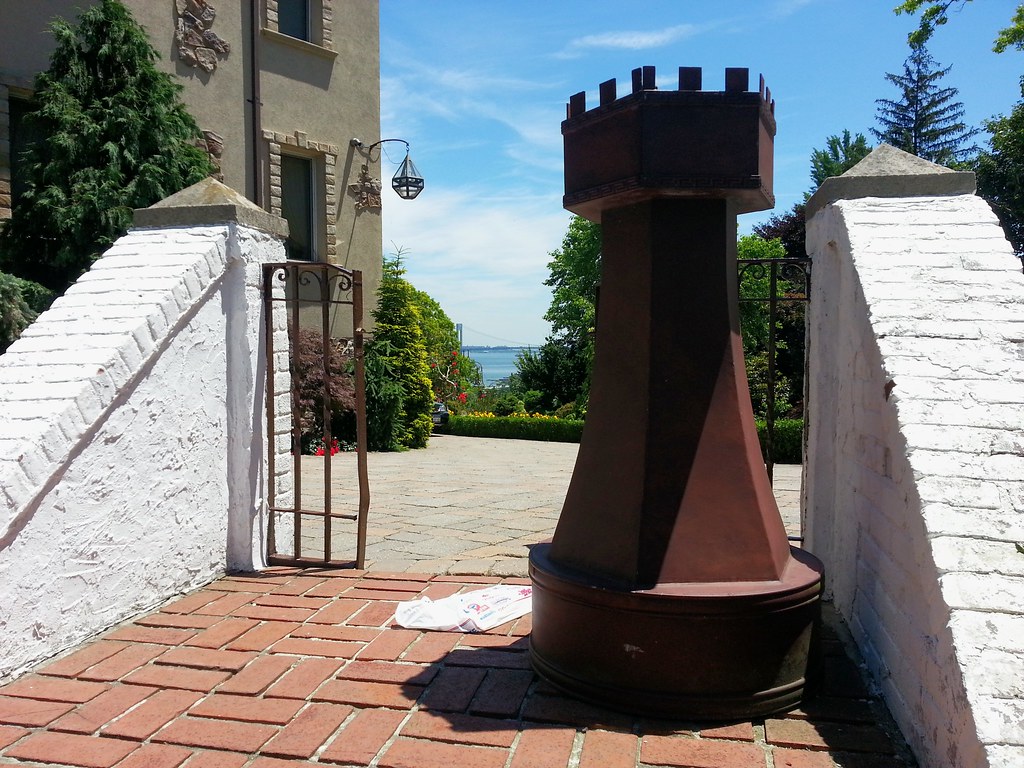
Stray rook

June 20th, 2014


from a giant chess set?

Day 903


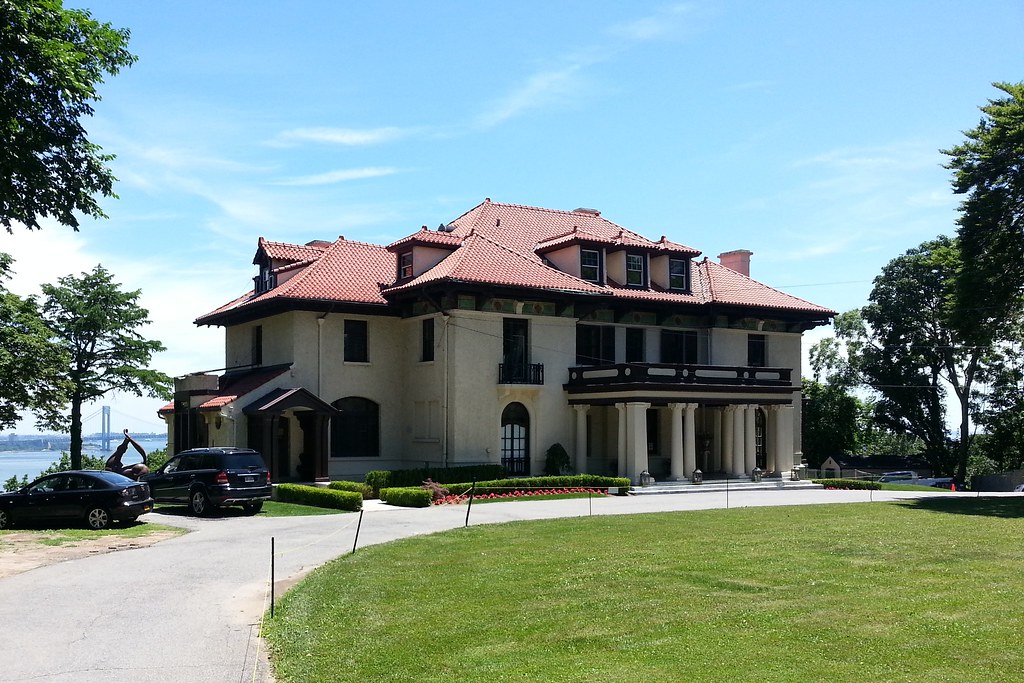
Built in 1908, this neo-Renaissance mansion is now home to the Italian Cultural Foundation, which has dubbed the place "Casa Belvedere".

Day 903

Looking out

June 20th, 2014


Day 903

Set the parking brake

June 20th, 2014


Check out the view from up here on Grymes Hill.

Day 903

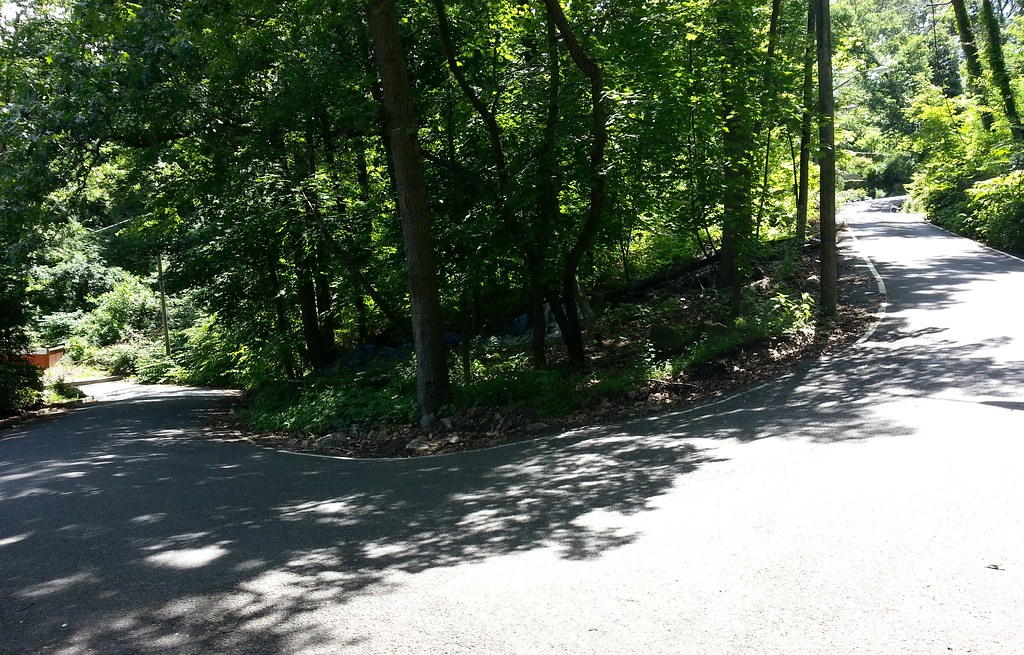
Oakland Terrace

June 20th, 2014


A steep, sinuous route up Grymes Hill

Day 903

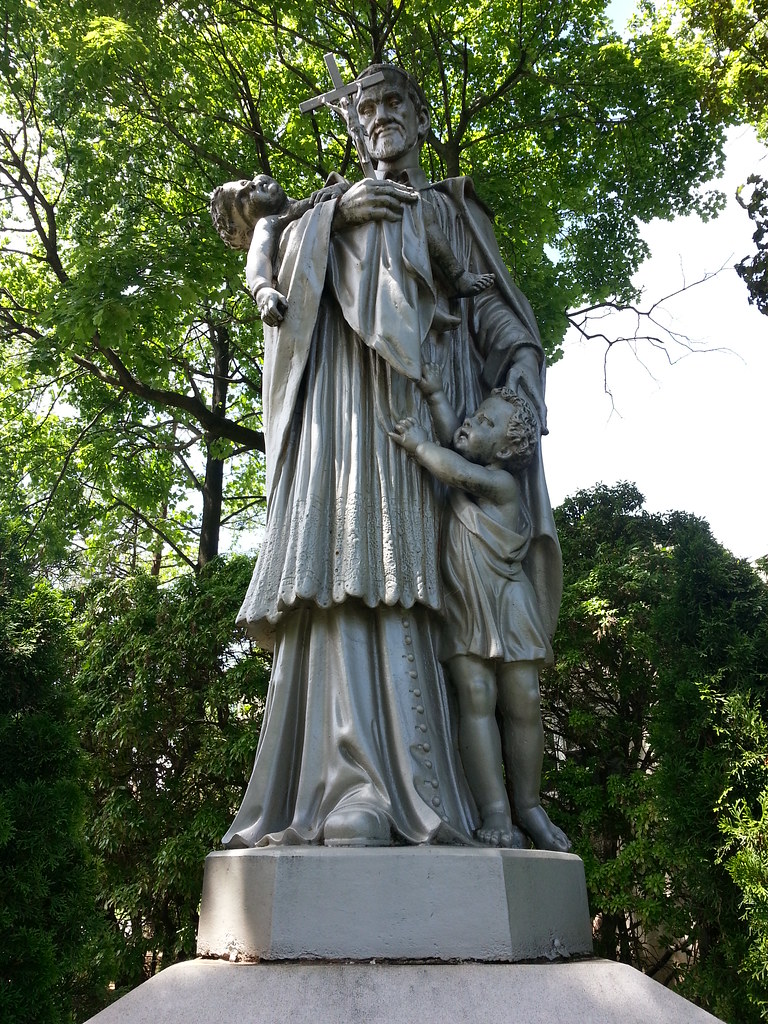
St. Vincent de Paul

June 20th, 2014


The plaque beneath this statue on the Staten Island campus of St. John's University reads:

Cast in France during the late 1800s, this statue of St. Vincent de Paul was gifted to St. John's University by the Sisters of Charity after standing for decades in front of St. Vincent's Catholic Medical Center in the West Brighton section of Staten Island. It was erected here to proclaim the University's Catholic and Vincentian identity to all who enter.

St. Vincent de Paul, Universal Patron of Charity, Pray for Us — April 25, 2007

Day 903

Portal of the day

June 20th, 2014


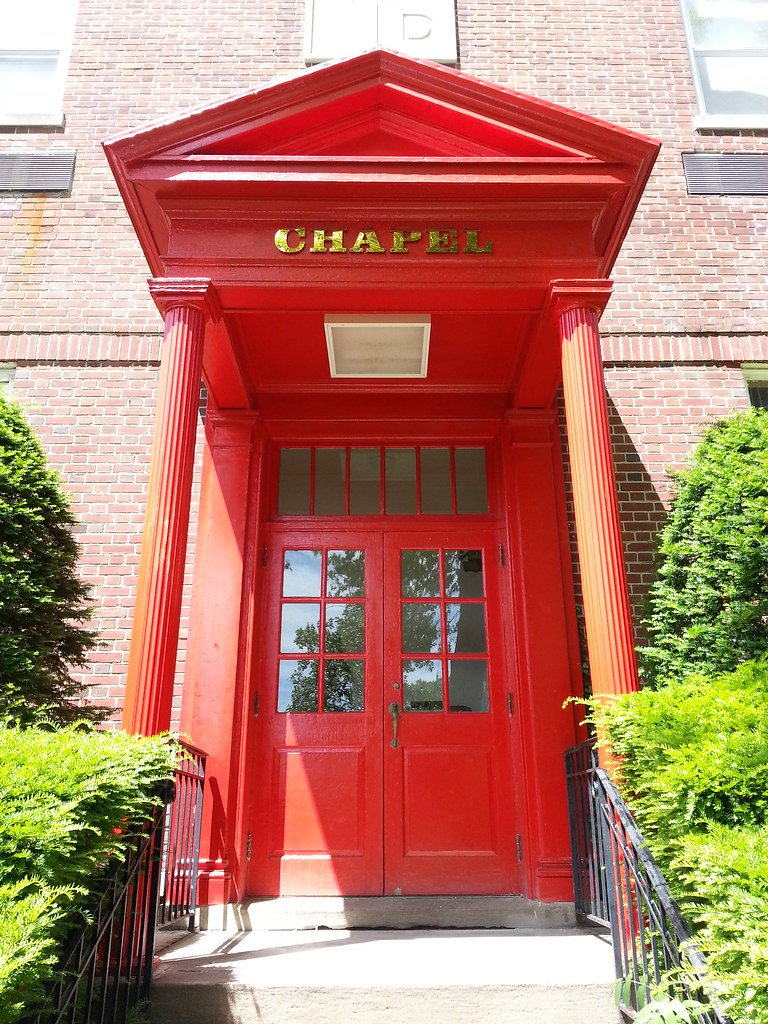
At the Staten Island campus of St. John's University. Red door for the Red Storm?