
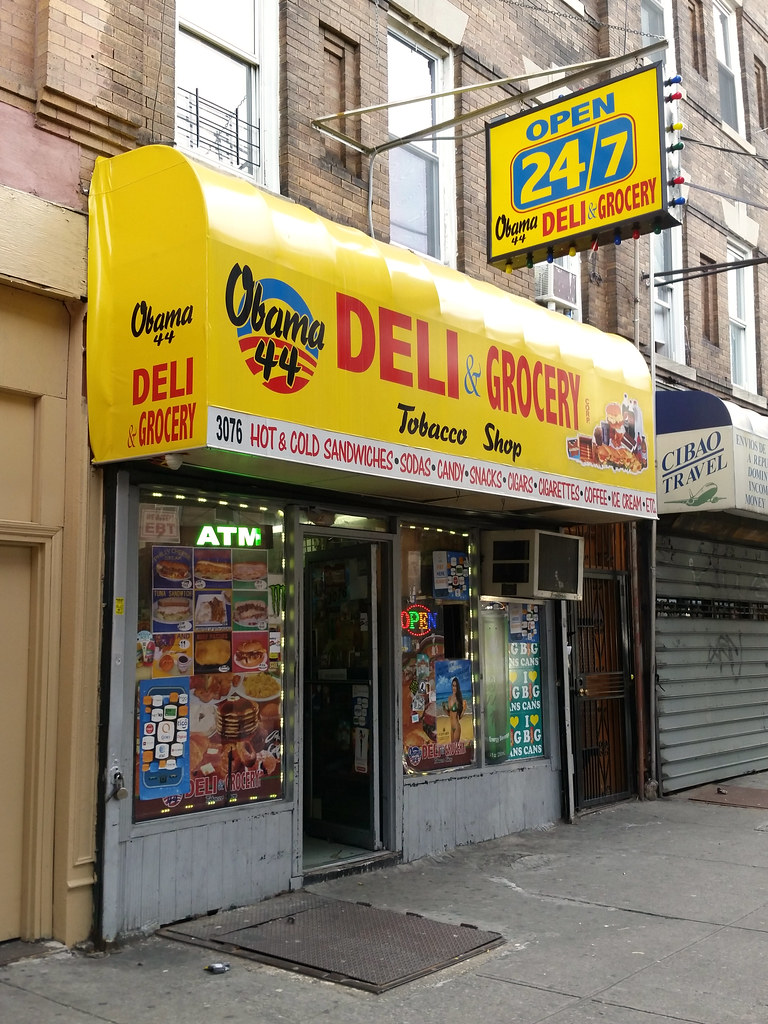
This is the second establishment we've seen today named for our current (and 44th) president. It's been in business since sometime between August 2011 and September 2013.

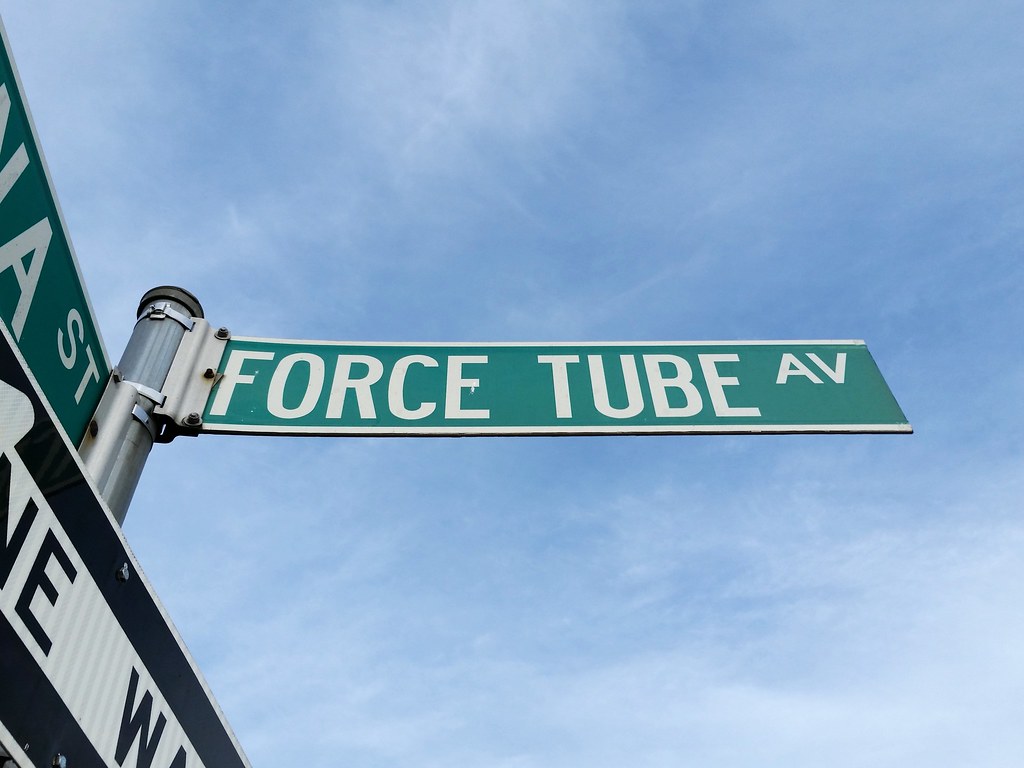
The greatest street name in the city! (Sorry, Featherbed Lane.)
During the latter part of the 19th century and into the 20th, most of Brooklyn's drinking water came from farther east on Long Island. It was carried toward Brooklyn through an underground aqueduct and was then pumped up to the Ridgewood Reservoir. The water's path to the reservoir can be easily deduced by looking at a map, thanks to a couple of fitting street names: Conduit Avenue/Boulevard follows the path of the aqueduct, and Force Tube Avenue traces the route of the pipes through which the water was pumped up to the reservoir.
As it happens, the original pumping station (1924 aerial view) near the foot of Force Tube Avenue stood on the now-vacant lot that was so highly coveted by Blue Ridge Farms in the 1990s, as well as on the adjacent property that Blue Ridge was willing to exchange for that lot.
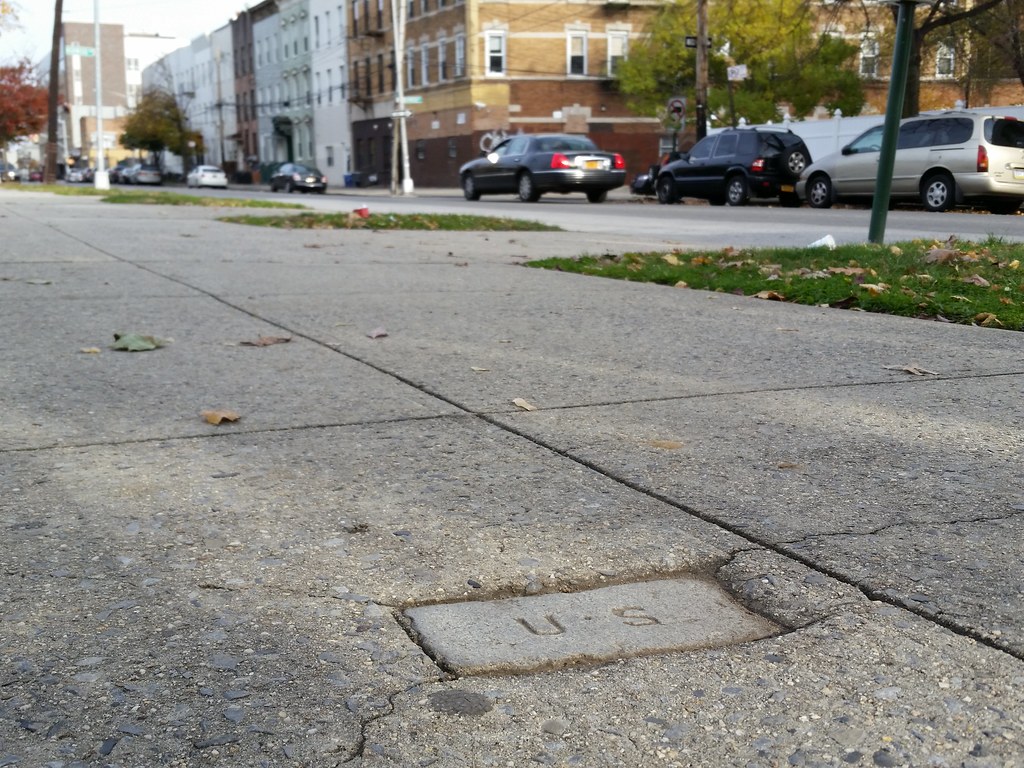
Perhaps this block embedded in the sidewalk outside Cypress Hills National Cemetery was meant to identify the cemetery as federal property.
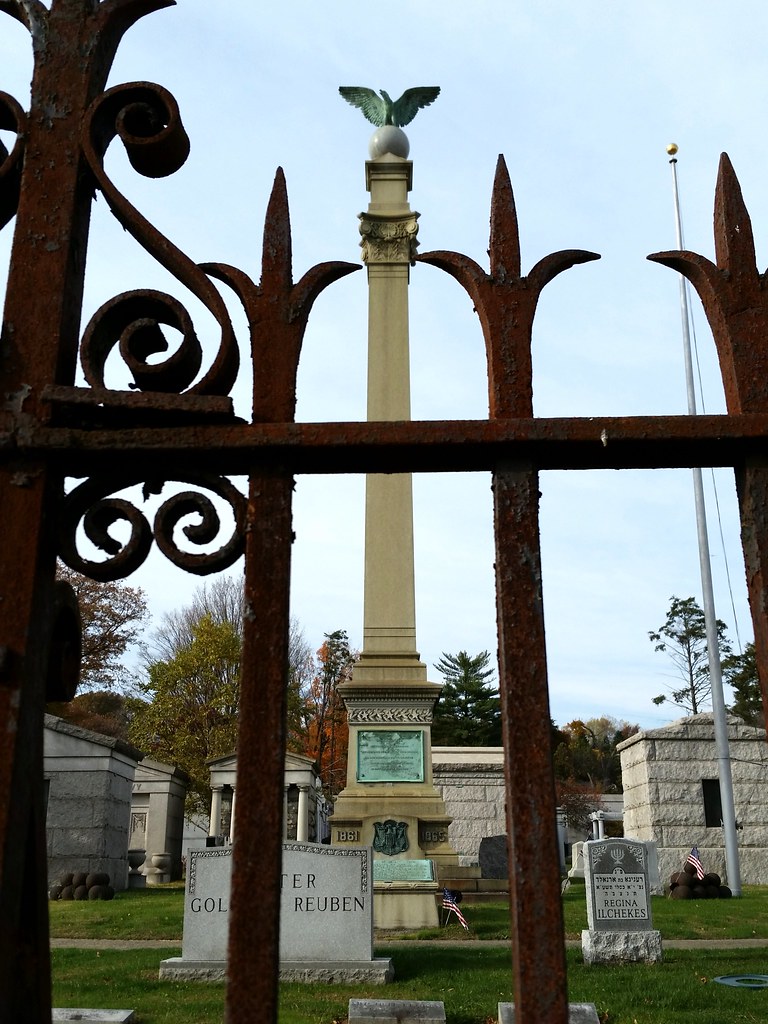
According to a 1904 NY Times article entitled "Shaft for Jewish Soldiers", this monument in Salem Fields Cemetery is "at least one of the first, if not the first, to be erected to the memory of the Jewish soldier who gave his life for the preservation of the Union." The plaque at the base of the obelisk reads: "To the memory of the soldiers of the Hebrew faith, who responded to the call of their country and gave their lives for it's [sic] salvation during the dark days of it's [sic] need, so that the nation might live."

This place opened during the latter part of Obama's first term, sometime between August 2011 and May 2012. I wonder if its name is an allusion to his acknowledged weakness for cigarettes.

For much of the 1990s, this vacant lot was the subject of a dispute between Blue Ridge Farms, whose former processing plant (visible in the background) is located right across the street, and the city and state governments. The city acquired the land from its previous owner in 1992 through eminent domain with the intent of building a new school to relieve the extreme overcrowding at IS 171, which at the time was sharing its building with PS 7. Blue Ridge, however, wanted the lot for an expansion of its facilities, and threatened to leave New York if it couldn't have it.
The city and state worked out an agreement with Blue Ridge that would allow the company to obtain the desired land in exchange for a slightly larger property it owned next door. Before the swap could move forward, however, a new mayor (Giuliani) and governor (Pataki) were elected, and Pataki decided to block the deal. Finally, in 1997, Giuliani announced that the lot would be turned over to Blue Ridge after all and that a new PS 7 would be built on a different site in the neighborhood. As we've seen, PS 7 did eventually get its new school, but Blue Ridge never built its expansion, and the much-contested lot, still owned by the city, has remained empty to this day.
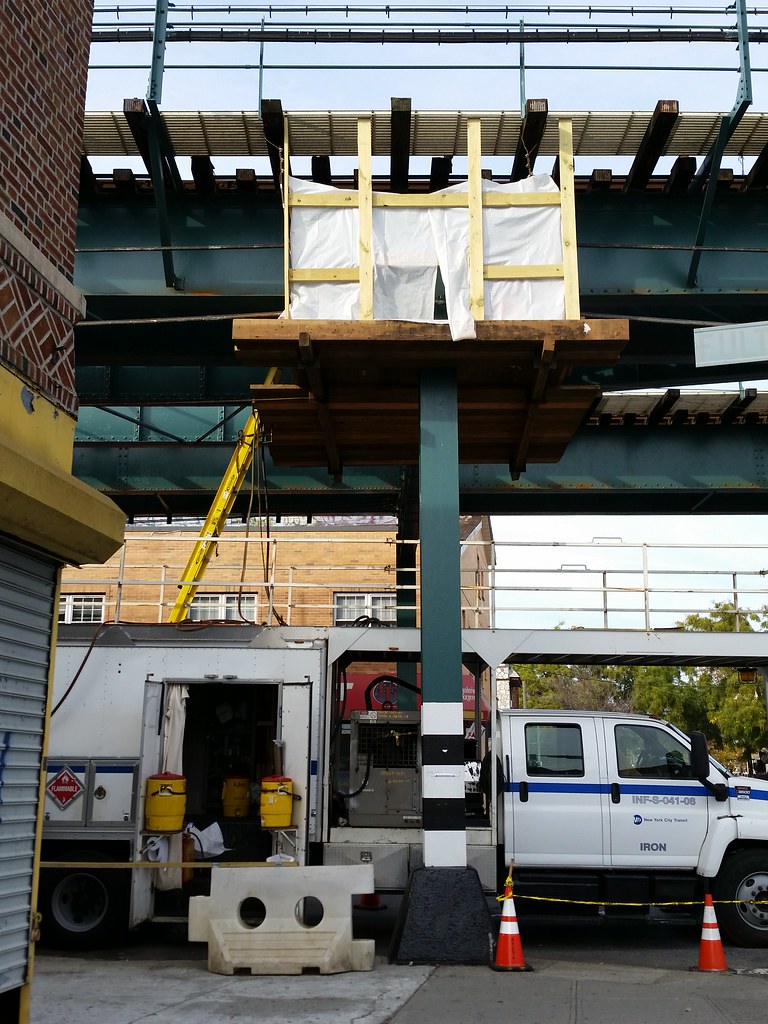
The door of the truck says "IRON", so I'd guess that the MTA's Elevated Iron Fabrication team is doing some work here on the elevated structure of the Jamaica Line (J and Z trains).
This section of the Jamaica Line between the Alabama Avenue and Cypress Hills stations was originally used by the old Lexington Avenue and Broadway Els, and is said to be the oldest elevated structure in the subway system. The part that runs between Alabama and Schenck Avenues opened in 1885, and the rest of it, including what you see above, opened in 1893.
According to Forgotten New York, a little diagonal beam found on the elevated structure here (mostly obscured from view above, but clearly visible here) is the last remnant of an old connection to the Atlantic Branch of the Long Island Rail Road that was in service from about 1898 to 1917, cutting through the block now occupied by the old Blue Ridge Farms processing plant.
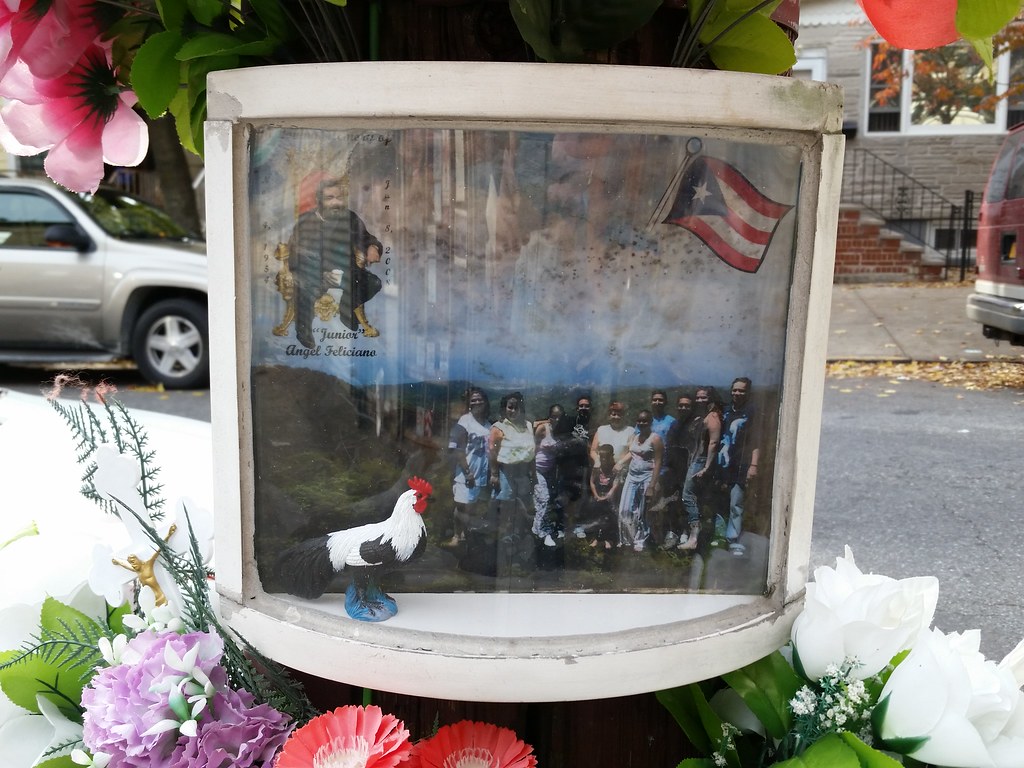
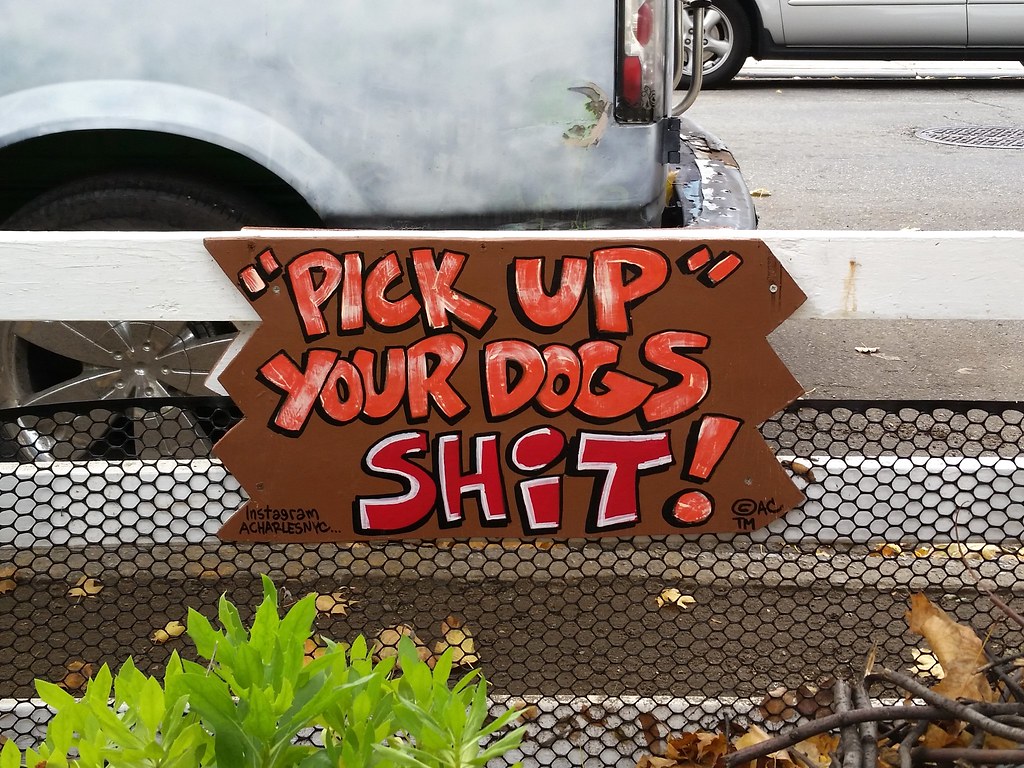
from A. Charles, King of New York. Looks like I just missed seeing his house decked out for Halloween.
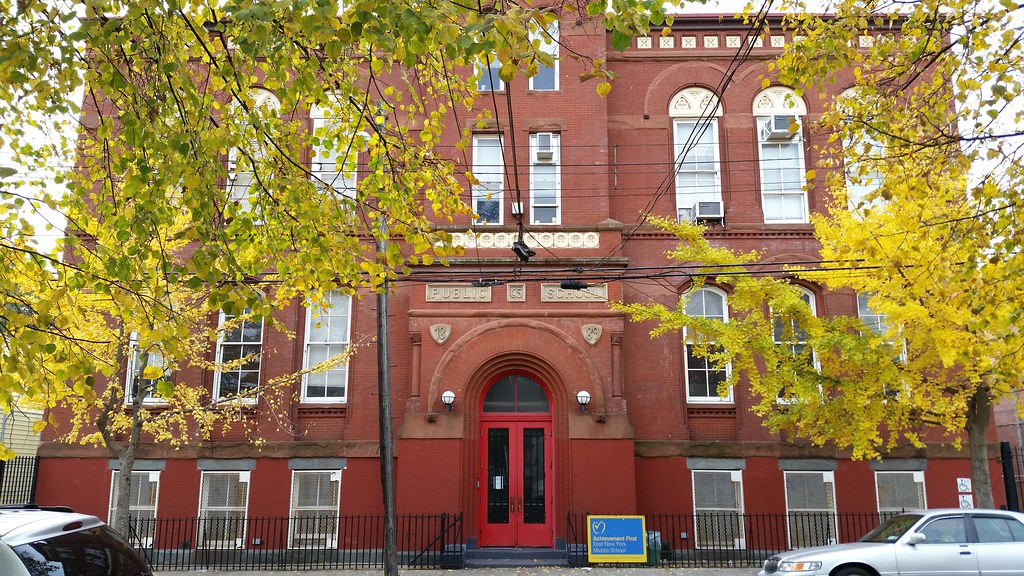
Currently home to Achievement First East New York Middle School (PS 65 is now located in a new building nearby), this school (old photos) dates back to 1870, but most of the structure, including the part you see above, was built during a major expansion in 1889.
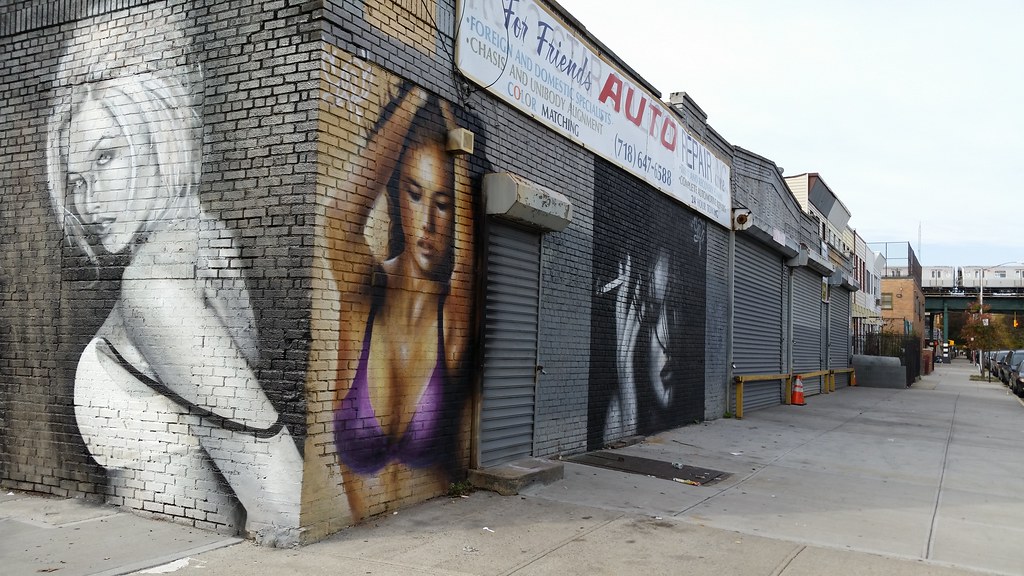
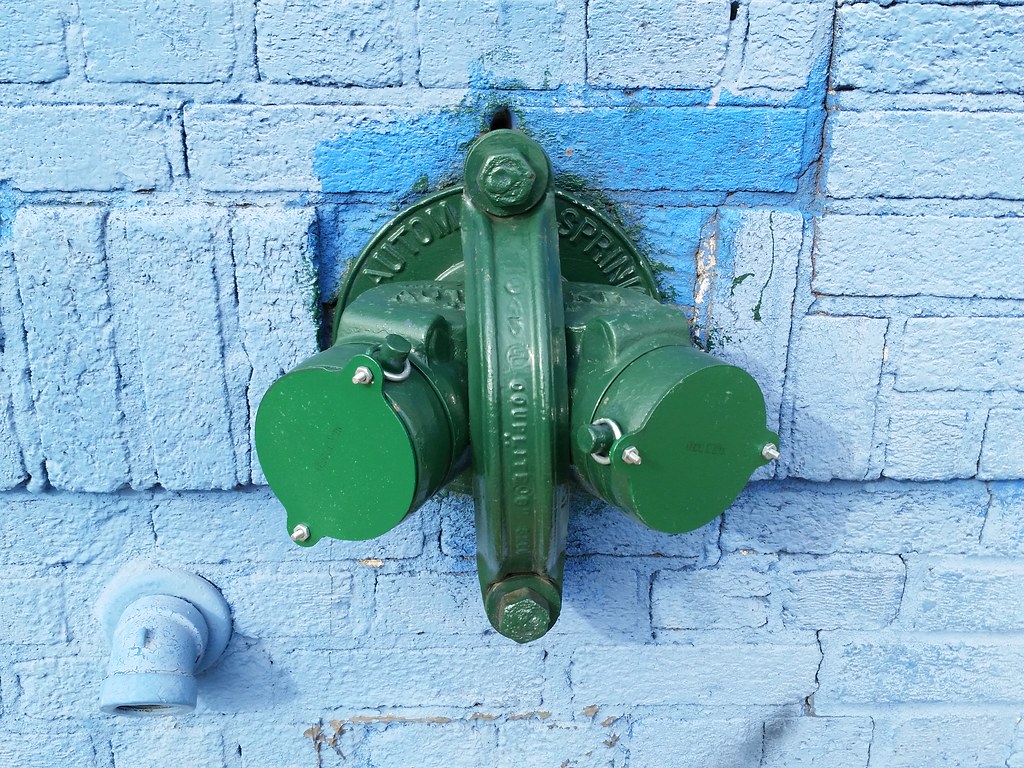
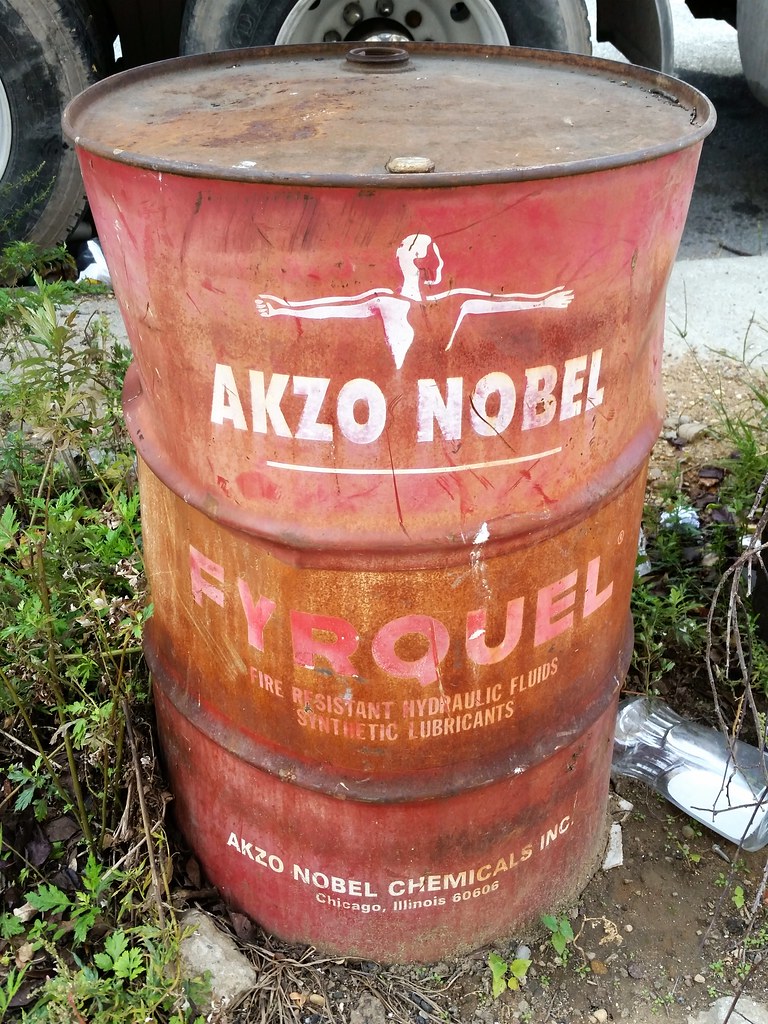
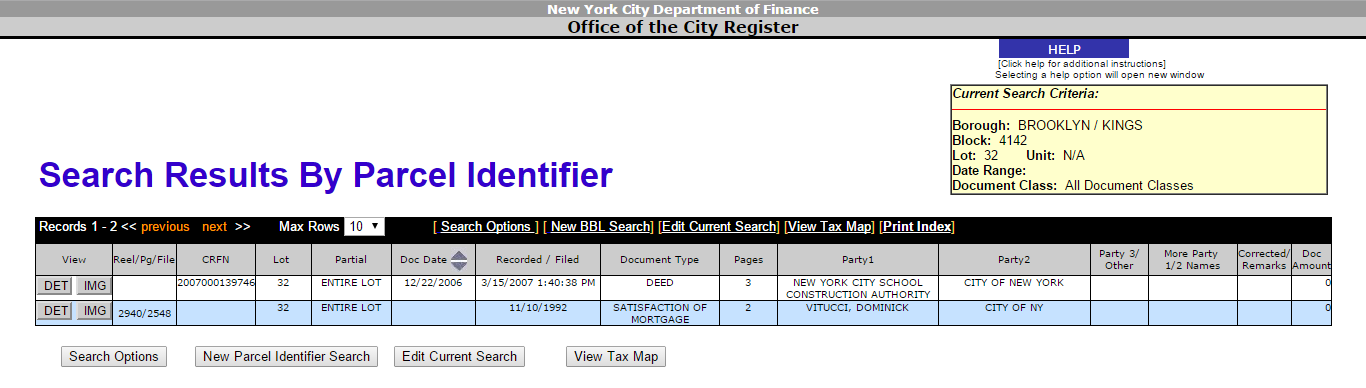
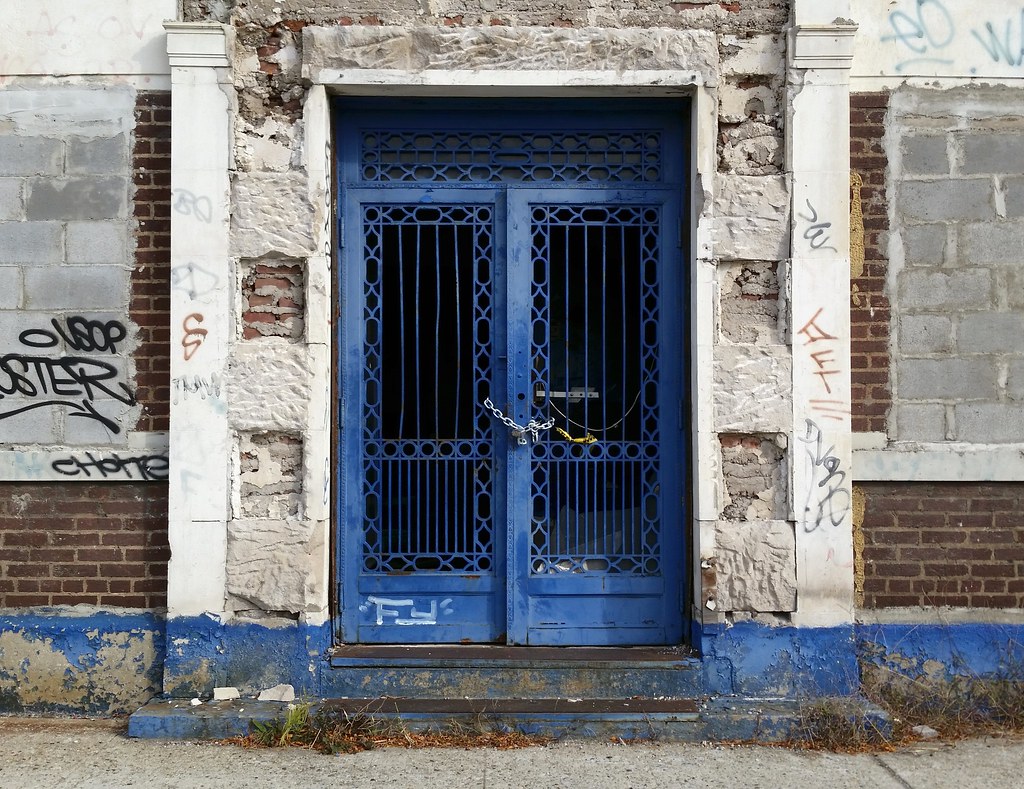
Blue Ridge Farms, whose former processing plant occupies this entire block in Cypress Hills, was once the East Coast's largest producer of prepared salads, and by the 1990s was Brooklyn's third-largest manufacturer (behind Pfizer, which closed its Brooklyn plant in 2008, and Cascade Laundry, which went out of business in 2010). The company had been run by the Siegel family ever since its founding in the mid-20th century, but in 2004, facing some financial difficulties, the Siegels agreed to take on Thomas Kontogiannis as a major investor, which led to a series of shady dealings with him that eventually resulted in his family taking control of the company and selling off all its assets, including its name. (Kontogiannis is currently serving time in federal prison, having been sentenced twice in recent years: in 2008 for laundering bribes for former Representative Randy "Duke" Cunningham, and in 2011 for orchestrating an enormous $98 million mortgage fraud.)
After the demise of Blue Ridge Farms, the company's production complex here in Cypress Hills was left vacant, and was the site of a huge seven-alarm fire in 2012. The burned-out factory is still standing today, a massive, forlorn monument to the downfall of a once-thriving business.
I'm walking every street in New York City.
This is the counterpoint to my walk across the US. Instead of seeing a million places for just a minute each, I'm going to spend a million minutes exploring just one place. By the time I finish walking every block of every street in all five boroughs, I'll have traveled more than 8,000 miles on foot — all within a single city. Details!
Email me at matt@imjustwalkin.com
Subscribe to my email list
Maps: Progress | Photos

~9,954 miles walked
Your donations allow me to keep walking full-time. If you think what I'm doing is valuable and you'd like to offer some support, I would be very grateful. On the other hand, if you think I'm a worthless bum, feel free to email me and tell me to get a job, bozo. Both are excellent options!
