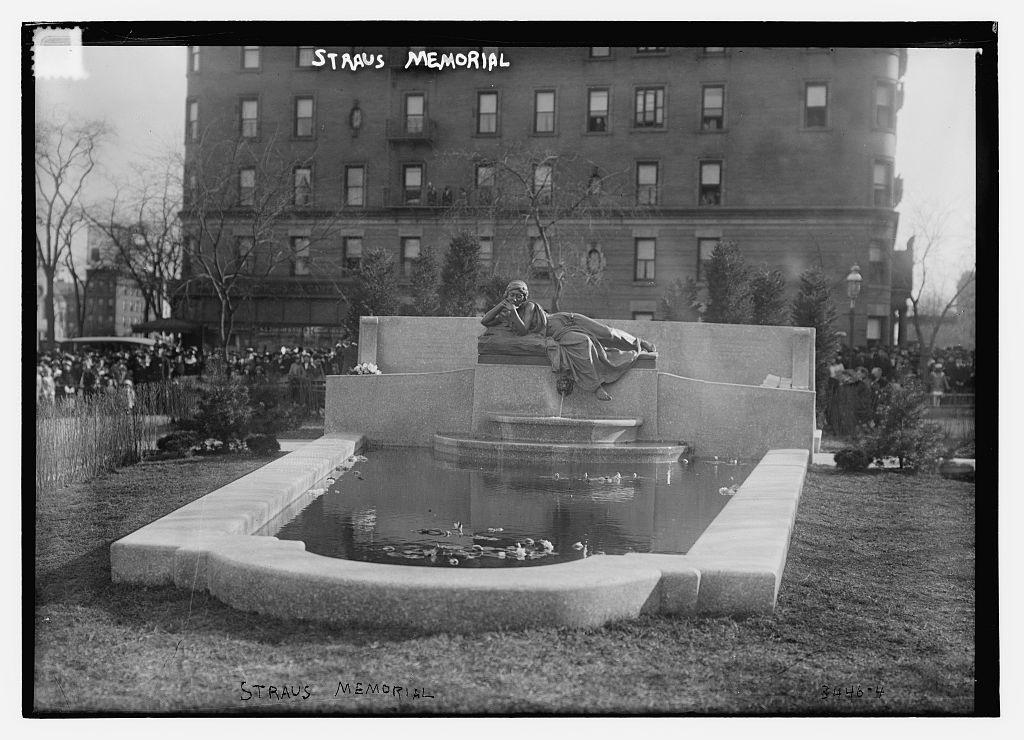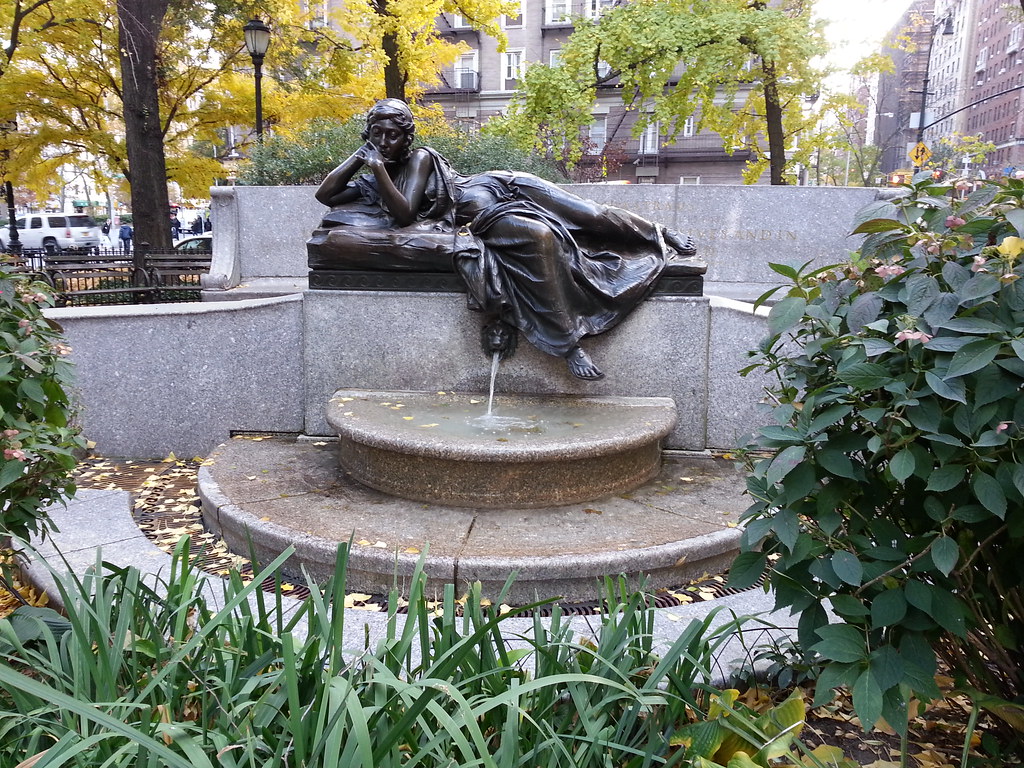
This memorial commemorates the lives and deaths of Isidor Straus, a former congressman and co-owner of Macy's, and his wife Ida. As we learned at Woodlawn Cemetery, the two of them died aboard the Titanic after Isidor passed up a lifeboat seat, seeing that there were still women and children on the ship, and Ida refused to leave his side.
The famed Audrey Munson was the model for the bronze figure of Memory, above. The flower bed from which I took this picture is a relatively recent addition; when the memorial was dedicated (with great fanfare) on April 15, 1915, three years to the day after the Titanic sank, there was a reflecting pool here in front of the sculpture.
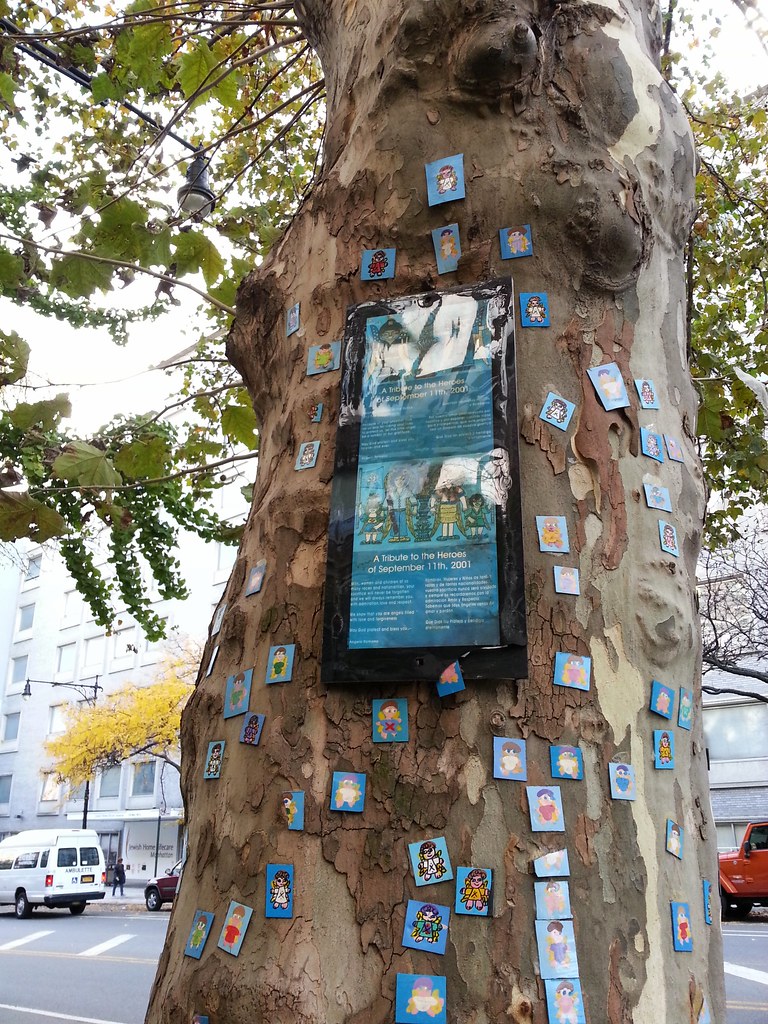
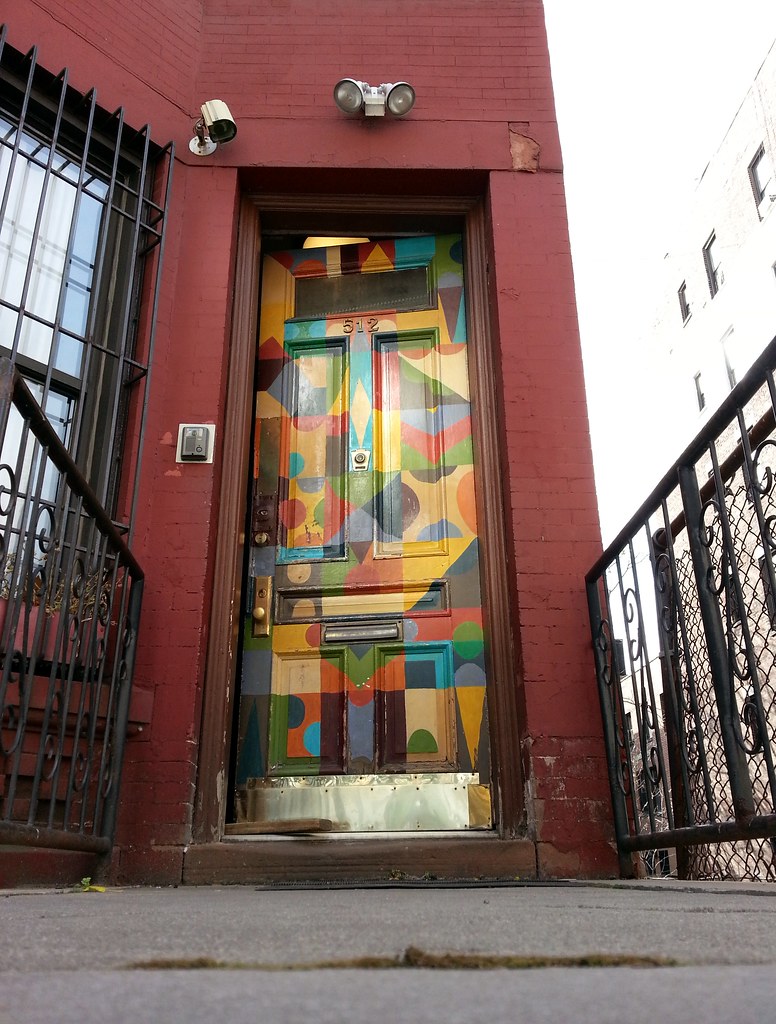
by Angelo Romano. You can take a closer look here. Surrounding the main panel are angelitos; Angelo has created and given away tens of thousands of these little angel paintings over the years.
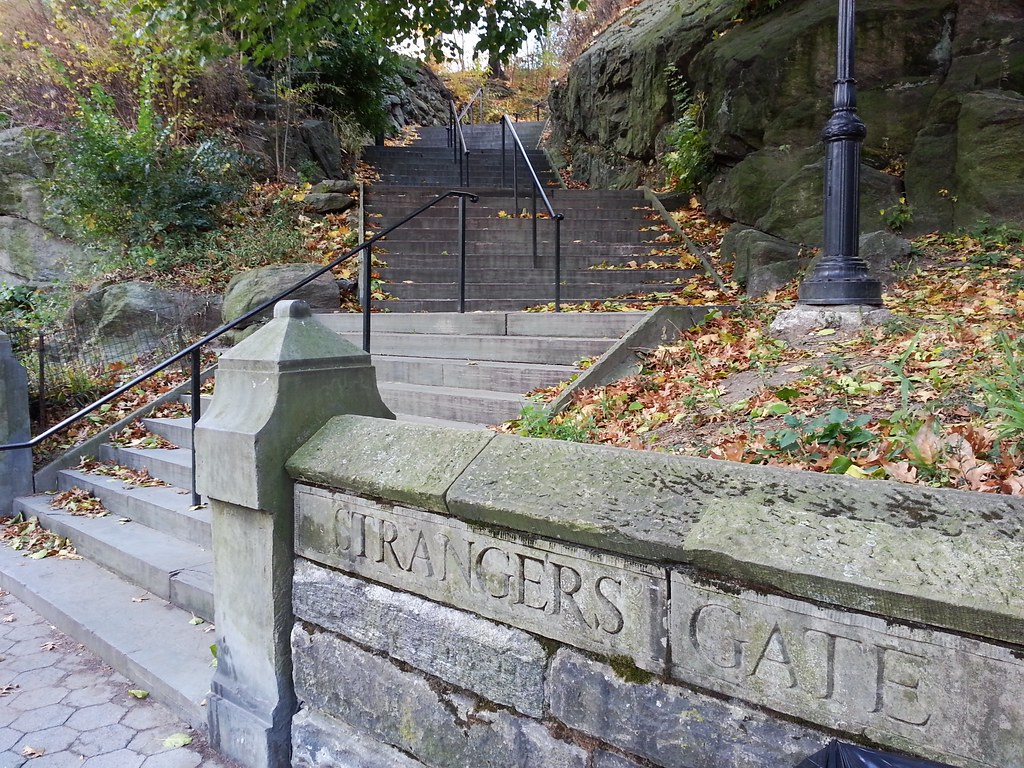
The 18 original main entrances to Central Park have had names since the 1860s, when the park was still under construction, but most of them weren't actually labeled until 1999.
From the NY Times:
There is no charge for entering the park, and no turnstiles or gatehouses are visible as you walk through the openings in the low stone wall along its borders. But if you look closely, you will see that some entrances have names carved into the sandstone: Scholars' Gate, Hunters' Gate, Explorers' Gate. The gates of Central Park represent one of the last battles fought by Frederick Law Olmsted and Calvert Vaux, the park's designers, to realize their vision of a pastoral escape from the chaos of a rapidly growing metropolis.
By the early 1860's, the nearly completed park was recognized as a masterpiece of landscape architecture. But some people thought the exemplars of high society who frequented the old park drives in their open carriages should be able to pass through tall, European-style gates, gates that reflected their place in the world. Olmsted, for his part, declared that "an iron railing always means thieves outside or bedlam inside," and he was outraged by this attempt to go against the park's original design. . . .
As Vaux put it at the time: "How fine it would be to have no gates."


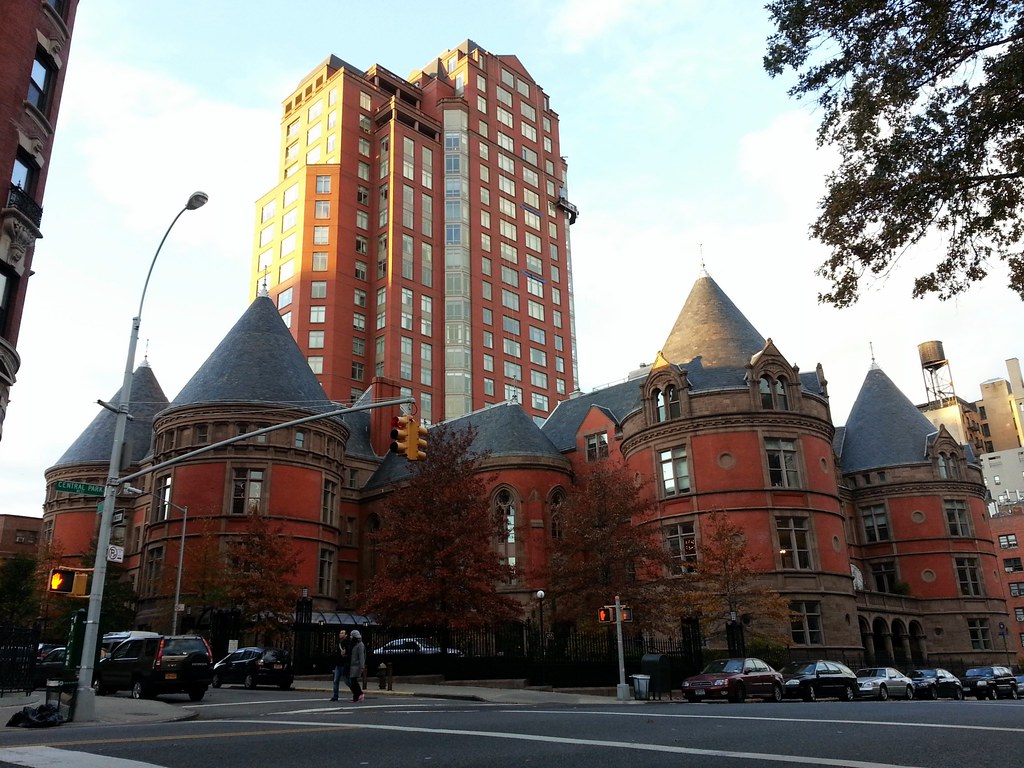
Built between 1884 and 1890, this was the first hospital in the US to focus exclusively on the treatment of cancer patients. Regarding the picturesque architecture: "Inspired as much by modern medical theory as by 16th-century French chateaux, the architect Charles Haight's round towers were designed to deter germs and dirt from accumulating in sharp corners."
In the late 1930s, the hospital moved to East 68th Street, where it has since grown into the renowned Memorial Sloan-Kettering Cancer Center. A nursing home that later took over the old hospital complex finally closed in 1974 amid accusations of Medicaid fraud and patient abuse, and the building sat vacant for the next three decades before being converted into condos in the mid-2000s. (The residential tower rising in the background was also constructed as part of that project.) Check out these amazing photos of the apartment that was built in the former chapel of the hospital, visible above in the center of the complex.
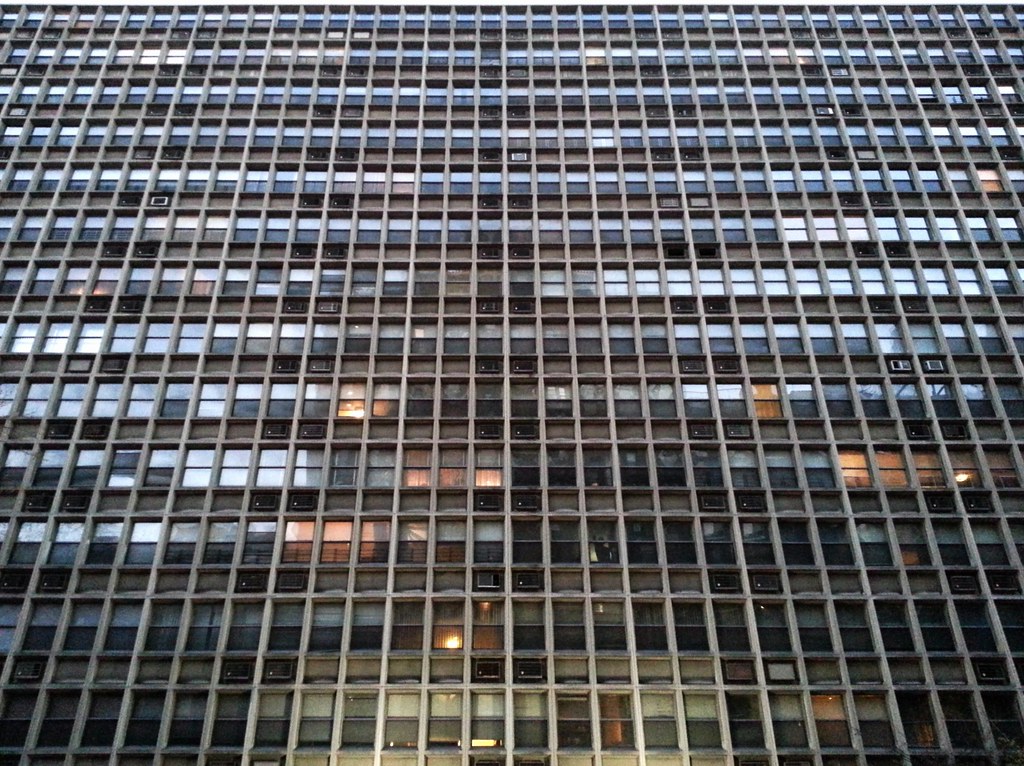
This massive "concrete beehive" was built in the mid-1960s as part of the West Side Urban Renewal project (here's a copy of the city's 1959 preliminary plan for the renewal area). It's hard to imagine these days, but parts of the Upper West Side were considered blighted just a few decades ago.





This was Alexander Hamilton's country home, completed in 1802, just two years before Hamilton was fatally wounded in a duel with Aaron Burr. The house has been moved twice since it was built, most recently in 2008, when it was jacked up and slid out of the cramped quarters where it formerly stood and then rolled down the middle of the street (around the corner and about a block down the hill) to its current site. You can see video of the move here and here, and a step-by-step visual explanation of the process here.
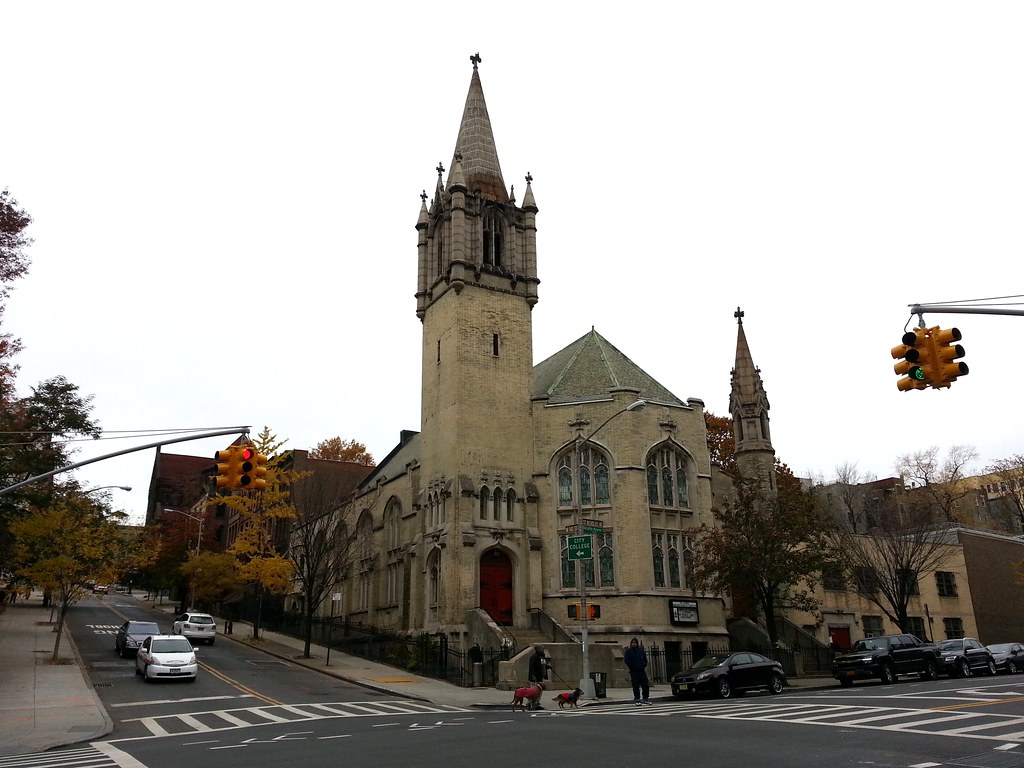
This "bit of Neuschwanstein fantasy", built in 1904-05, was originally the Lenox Presbyterian Church.

on what looks to be the future site of a big new apartment building



Built for James A. Bailey (of Barnum and Bailey) in 1886-88, this "turreted medieval-style house of limestone" boasts still-intact interiors (photos and video) designed by Joseph Burr Tiffany, a cousin of Louis Comfort Tiffany. The current owners, who bought the place in 2009 for a mere $1.4 million, have done some serious restoration work. The scaffolding you see above, in place for at least two and a half years, was finally taken down shortly after I passed by.



Trinity Church Cemetery is known as the last active cemetery in Manhattan (although the New York Marble Cemetery, whose last interment was in 1937, still has a policy allowing descendants of the original vault owners to be buried there if they so choose). Trinity is running out of room, however, and "has stopped selling plots, offering burial only in the most 'extraordinary circumstances,' or to people with long-held reservations", but space is still available in aboveground crypts (like those visible in the background of this photo).

Oliver Evans, "whose pioneer work in the application of high pressure steam to locomotion and industry, with the introduction of automatic machinery in flour milling; whose creative writings on technical and scientific subjects, and enterprise as a manufacturer and promoter of useful inventions place him in the front rank of those who laid the foundations of America's greatness as an industrial and scientific nation".
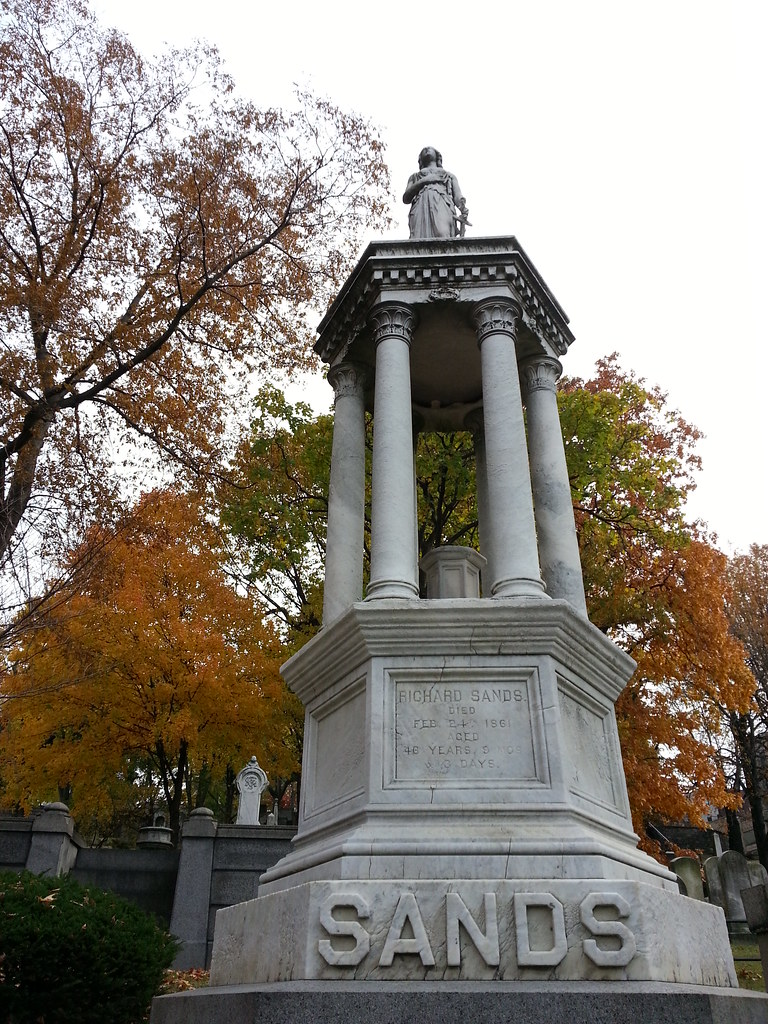
A marble bust of Mr. Sands (a.k.a. the "ceiling-walker", the "human fly", and the "circus king of old New York") was long ago stolen from the now-empty pedestal at the center of this monument.
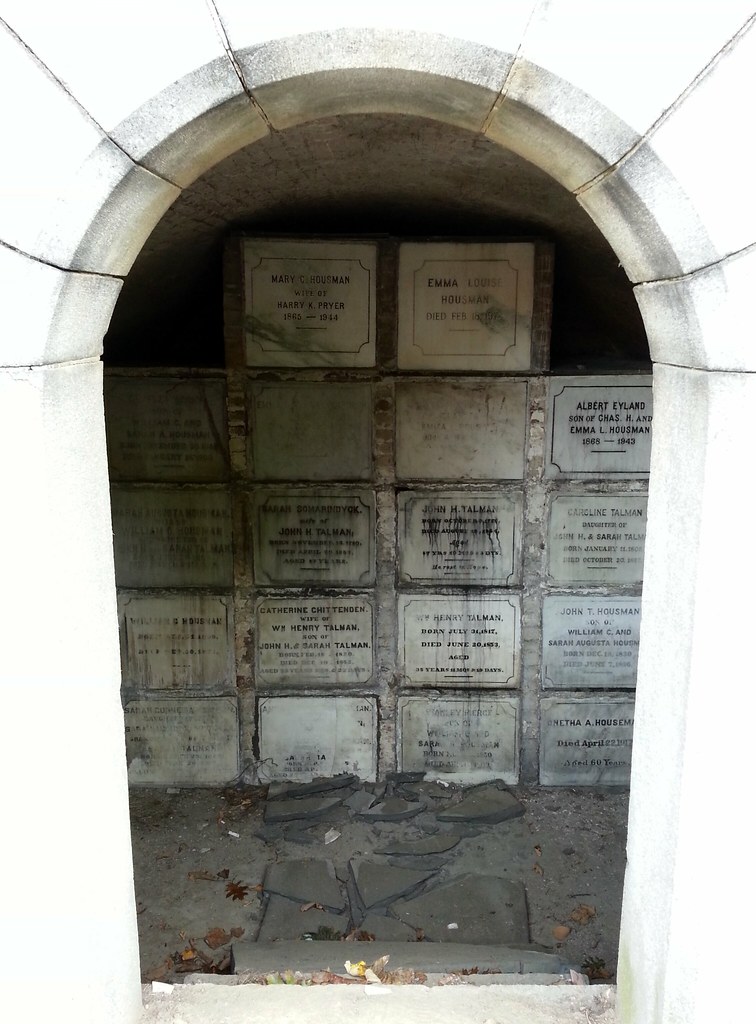

As we learned back in the early days of this walk, former mayor Ed Koch convinced Trinity Church Cemetery to label a nearby entrance "The Jewish Gate" so he could feel more comfortable being buried in a non-Jewish cemetery. The rabbis he consulted on this matter also suggested having rails installed around his plot (presumably as a barrier between him and the non-Jewish graves), but he appears not to have heeded that advice.
Koch designed his own headstone and had it installed while he was still alive, with only the dates of his birth and death left to be carved. According to the NY Times, "He laid out precise instructions for the design and the inscriptions*, and even inspected it himself when it was completed in 2009." After he passed away in February, however, the engraver made a mistake while etching his birth year, accidentally transposing two digits (carving 1942 instead of 1924). Shortly after the error was noticed (and reported with gusto in the news media), the engraver returned to the cemetery and corrected the date. Only on close inspection can you see where the erroneous digits have been filled in.
* I find the attribution of the quote near the middle of the monument needlessly divisive: "Daniel Pearl, 2002, just before he was beheaded by a Muslim terrorist."

This dramatic new building will provide 124 units of affordable housing, 20% of which will be reserved for the formerly homeless, and its bottom two floors will be occupied by the Sugar Hill Children's Museum of Art & Storytelling.
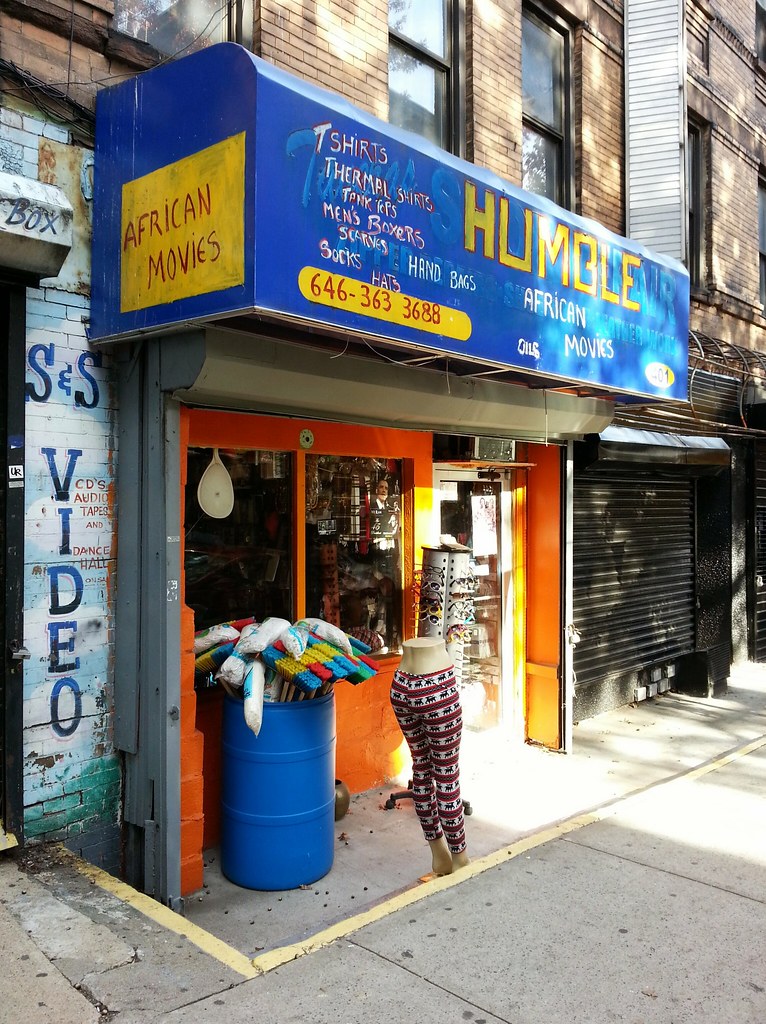
Takes me back to Day 1.
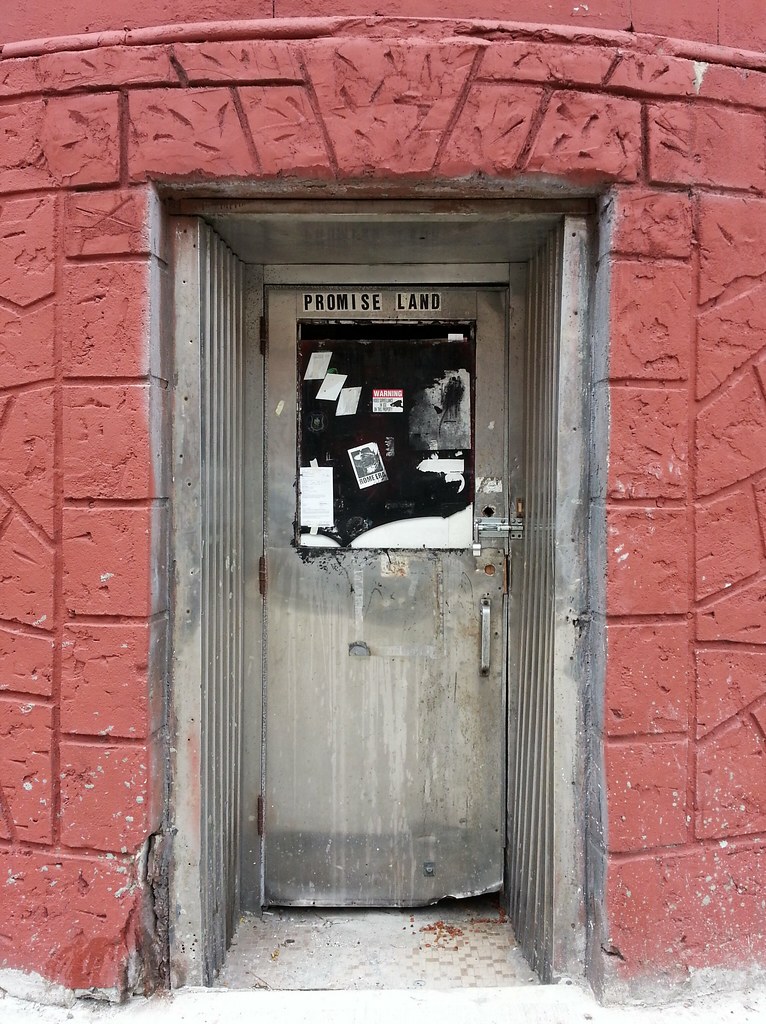
And in case you were wondering what the S's stand for in S&S Video...

This grain elevator church opened in 1969, home to a congregation founded in 1916 by West Indian immigrants. It was designed by the Cypriot architect Costas Machlouzarides, who is also responsible for the "elongated mosaic lozenges" of the Greater Refuge Temple.
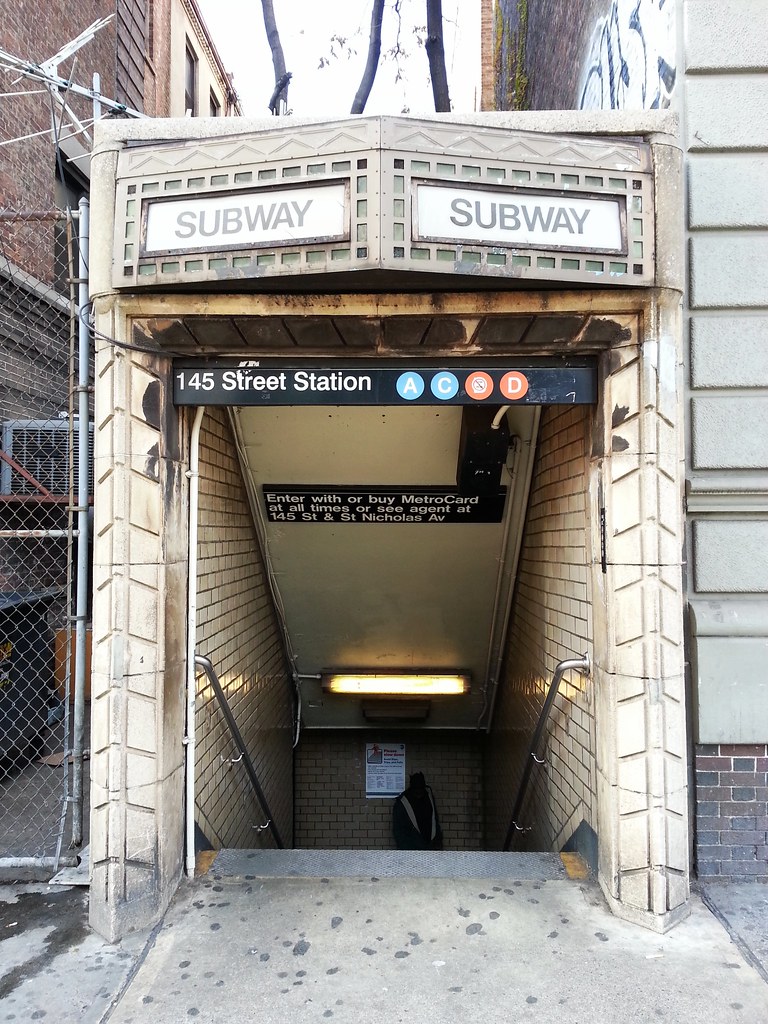


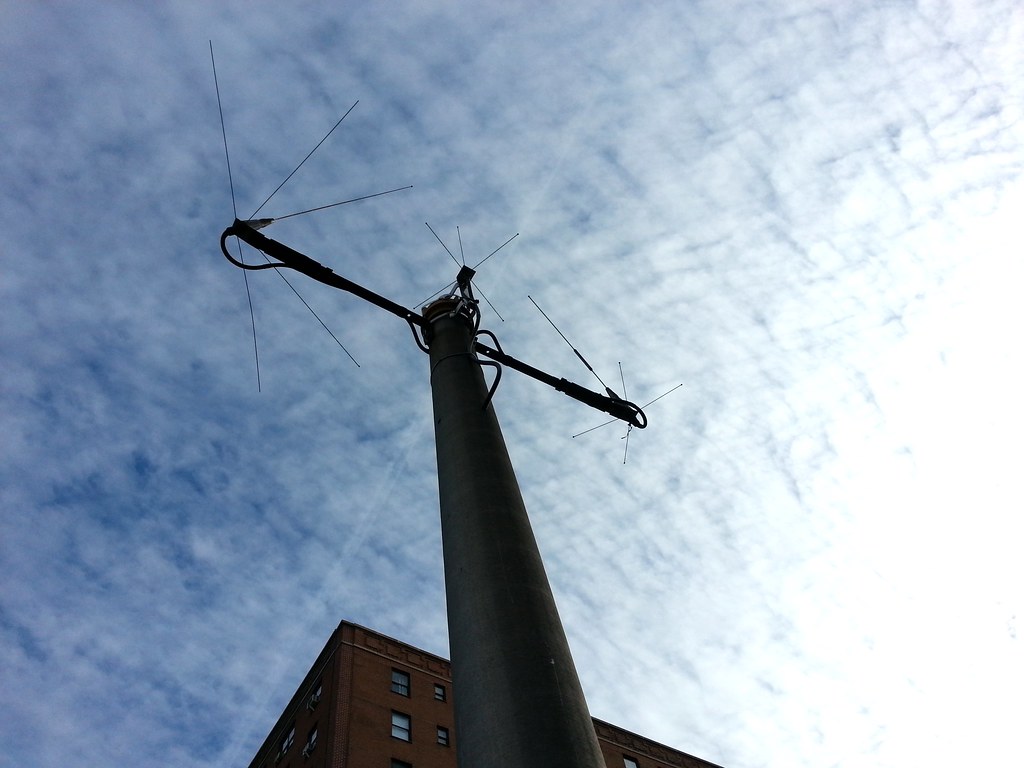
This pole is installed on top of a subway grate above the 145th Street A,B,C,D station. I think those antennas might be part of a communications system that allows police, fire, and EMS radios to work in the subway.
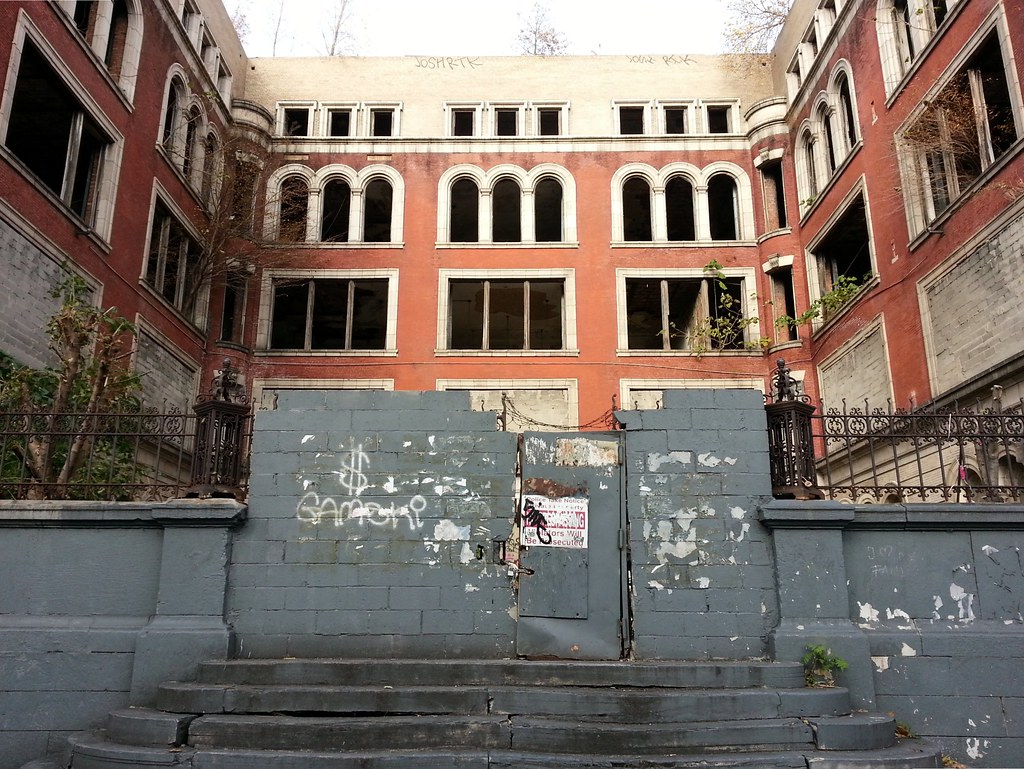
This long-vacant school, designed by Charles B.J. Snyder, has been closed since 1975. The Boys and Girls Club of Harlem bought the property in 1986 and has just let it deteriorate ever since. (You can see some beautiful photos of the decaying interior here.) Back in 2010, the Boys and Girls Club claimed that the building was too dilapidated to be salvaged and would have to be demolished to make redevelopment of the site financially feasible, but now the club is talking about preserving the structure, turning it into a new hub for the club along with 81 mostly low-income residential units.

You can't see its face, but the backward mannequin with the shiny butt flaps is identical to the Obama-like one on the right (except for the missing hands).
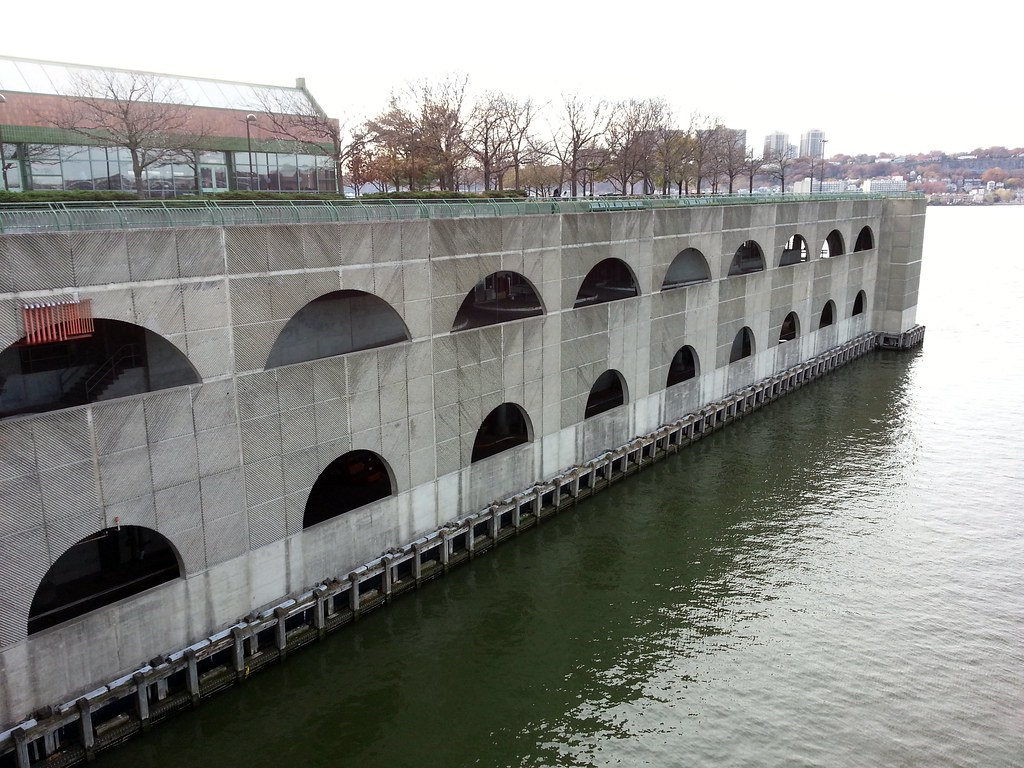
A 28-acre park built on top of a sewage treatment plant! (Aerial view here.)
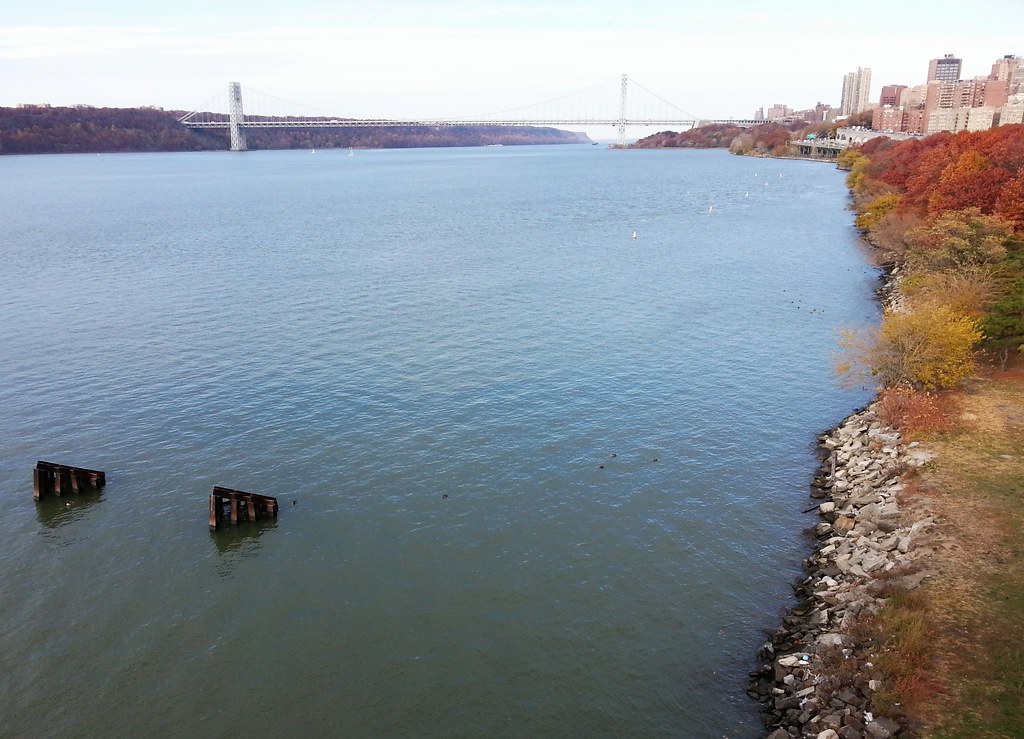
The view north from Riverbank State Park with the George Washington Bridge in the distance
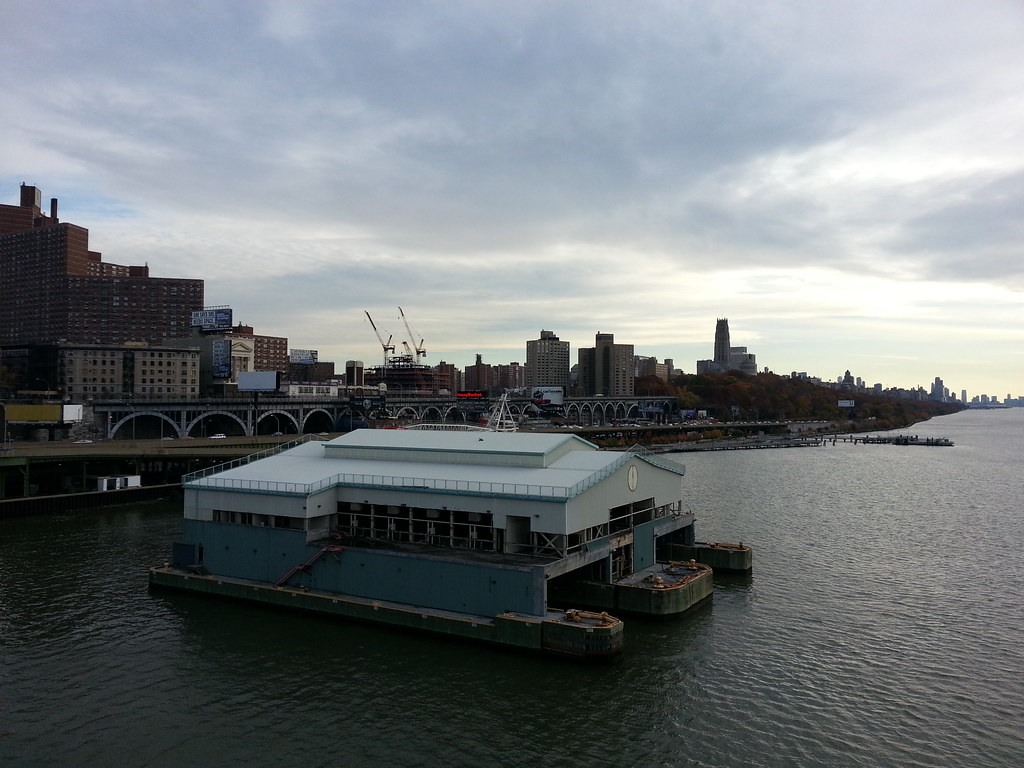
This vacant facility was once used to transfer garbage from trucks to barges bound for the now-closed Fresh Kills landfill in Staten Island. The New York chapter of the American Institute of Architects recently held a design competition to generate ideas for what could be done with this site in the future. You can see the winning proposals here.

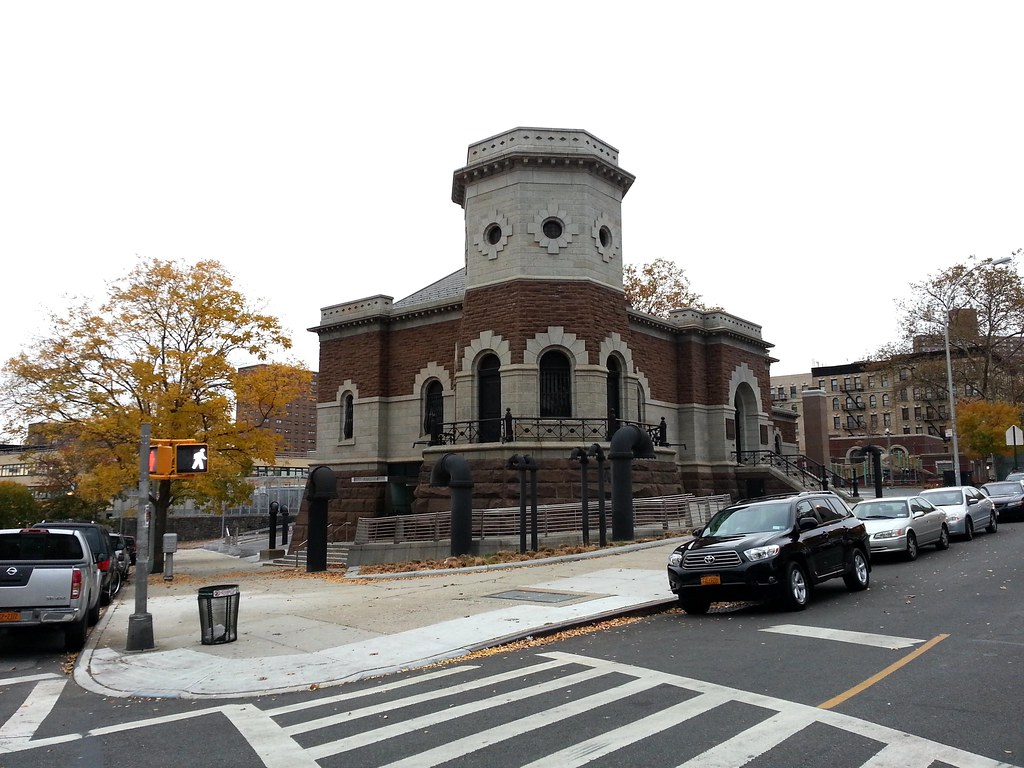
Completed in 1890, this structure ("an unlikely fantasy in the middle of a colossal project of utilitarian engineering") was built atop the connection between the New Croton Aqueduct and the now-defunct Old Croton Aqueduct. The building sat vacant for over two decades after the city began rerouting the water supply lines around it in 1984, but it was put back into use in 2006 — as a 192-seat performance space.

This is one of the more than 1,000 grotesques and gargoyles that adorn the neo-Gothic buildings of City College. You can see photos of a bunch of them, as well as some beautiful shots of the campus, here.