Like the Turnverein in Germany, the Czech Sokol was a nationalistic athletic movement founded in the 19th century.

After years of complaints from neighbors and revelations of animal cruelty, the collection of decrepit trailers that once passed for a stable here was torn down and hauled away in 2008 after the city discovered that it was actually sitting on DOT property.
A very strange, shifty-eyed shirtless man (the former proprietor of this fine establishment?) pulled his car into the driveway while I was walking around; he told me that the place still operates as a stable. That seems quite unlikely, given the information above, but perhaps he was referring to the couple of trailers parked on a small patch of dirt on the far side of the house.
UPDATE (Sept. 21, 2012): One horse still lives here!
UPDATE (Dec. 28, 2014): The owner and another guy live here too!
UPDATE (Apr. 29, 2015): NY Times — "A Squatter’s Last Stand at a Condemned Bronx Barn"

The blue spikes (count 'em up; this is the 49th Precinct station house) predate 9/11 by 20 years, but they add some resonance and character to that mass-produced banner.
I first encountered a toilet-papered road back in Minnesota, where the practice was supposedly invented; it's exciting to finally see this brilliant Midwestern technique being rolled out here in New York.
Located in a weirdly suburban-looking office park in the Bronx
Not addressing anyone in particular, the gentleman in the purple shirt was generously dispensing his views on temperature and humidity, audible to anyone who happened to come within about eight feet of him: "This kind of weather can make people break up. This causes divorces."
Another Bronx business that shares its name with a legendary St. Louis Cardinal

on the old New York, New Haven and Hartford Railroad

Located half a block from an enormous hospital complex (and formerly named the Tik Tok Lounge, apparently)
These suckers are still all over much of the East Bronx. By this point, I must have seen almost 200 of these handwritten fire-and-brimstone notes attached to trees and, like the two in this picture, utility poles. Whoever puts them up is a brazen violator of New York City Administrative Code Section 10-119, and could face tens of thousands of dollars in fines, not to mention some jail time, if caught and fully prosecuted.

Looking toward that previously mentioned office park
Encased inside these stone blocks here in the Bronx lies a marvel of engineering, perhaps the most important work of infrastructure in the entire history of New York City: the Croton Aqueduct.
By the 1830s, there was a serious shortage of fresh water in Manhattan. The Hudson and East Rivers are brackish, and much of the island's limited amount of surface and groundwater had been contaminated with sewage and industrial waste. As a historical sign in a nearby playground puts it: "What if, each morning, to get a drink of water, you had to take your bucket and walk six blocks to the public well where you would wait in line for some water? And what if the water you got smelled so foul that you might have to douse it with a generous splash of whiskey to cover its taste?"
These unsanitary conditions facilitated outbreaks of cholera and yellow fever, and the overall scarcity of water made it difficult to fight the fires that were becoming more and more numerous as wood-framed houses proliferated across the city.
To remedy these increasingly critical problems, the city began constructing a massive water supply system in 1837: a gravity-fed aqueduct that would run 41 miles from a newly created reservoir on the Croton River in Westchester County all the way down to Manhattan.
The aqueduct opened in 1842, and the occasion was marked with much fanfare. There were parades, speeches, songs (such as "The Croton Ode", quoted in the title of this post), and a 50-foot jet of Croton water spouting from a fountain in City Hall Park. Many notables were on hand for the ceremonies, including President John Tyler and two former presidents, John Quincy Adams and Martin Van Buren.
Within a few decades, however, the aqueduct could no longer provide sufficient water for the rapidly growing population, and a second, larger one was built, also carrying water from the Croton Reservoir. The original Croton Aqueduct is no longer in use, and the city has built new supply systems that bring in water from the Catskill Mountains. The second Croton Aqueduct still supplies about 10% of the city's water, although, as we learned earlier, it's currently offline pending the completion of a filtration plant.
And now the Old Croton, enjoying a lengthy retirement after its storied career, is largely a place of recreation. Hiking trails and walking paths follow much of its course; in fact, you can see a fine bipedal gentleman taking his afternoon constitutional atop the aqueduct in this very photo.

That's our beloved Broadway Bridge (home to one of my favorite late-day moments so far), viewed from a weedy, abandoned lot that stretches more than a quarter mile along the Bronx waterfront, nestled between the Metro-North Hudson Line and the Harlem River. Here's a shot from the bridge, looking back toward this spot.


And quite a large patch of them, too! They can be found in the oddball little park-you-didn't-realize-was-a-park known as University Woods. You better get there fast, though, before I eat them all.
UPDATE: I believe these are wineberries.
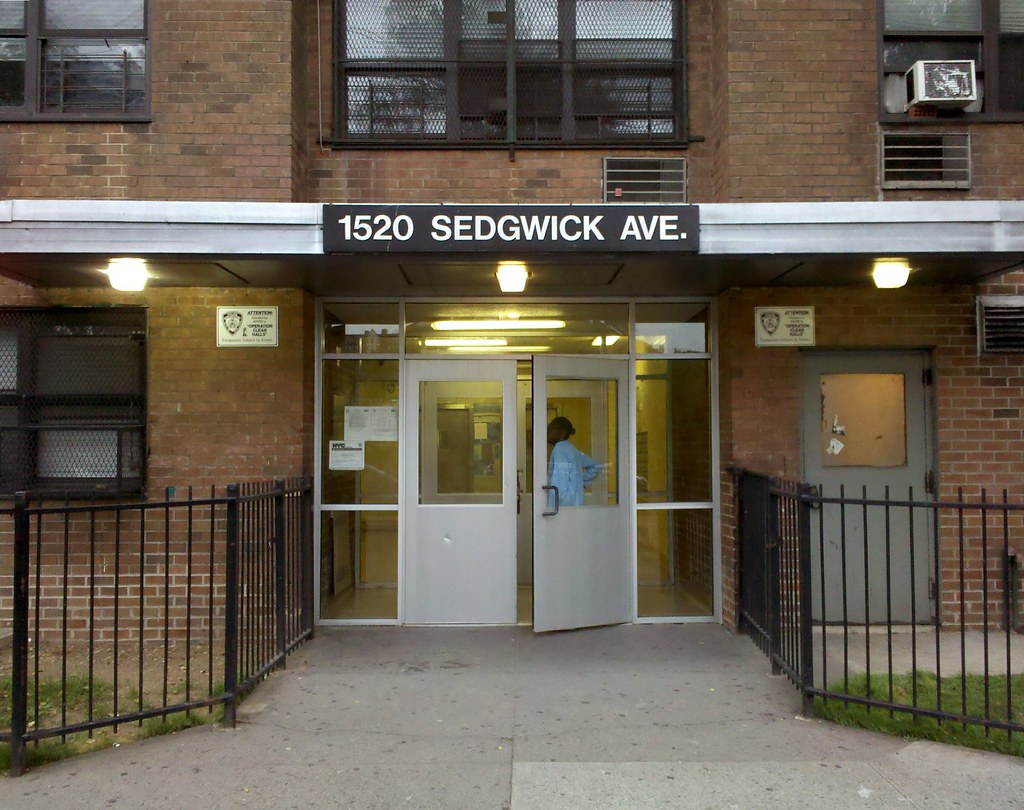
New York State bureaucrats have determined that 1520 Sedgwick is officially the birthplace of hip-hop.
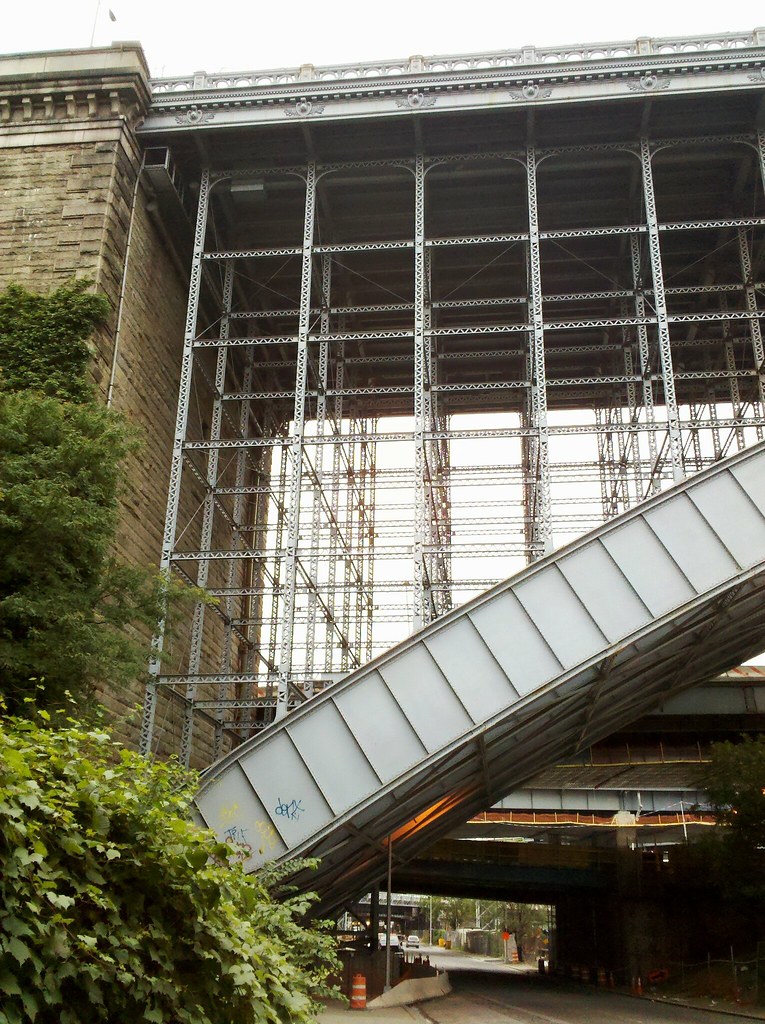

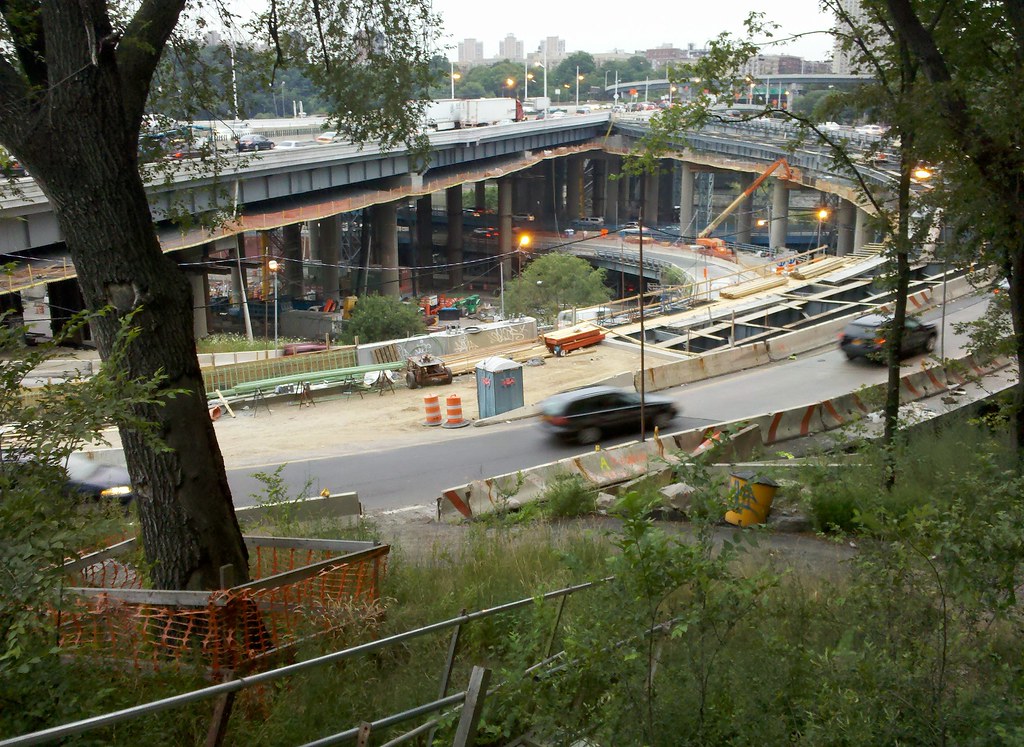
The Highbridge Interchange (and that's the High Bridge seen near the end of the video)

Diospyros virginiana, I believe, just about at the northern end of its range



Sitting in the yard of a (possibly vacant — it was hard to tell) synagogue

You could earn up to $500 for providing information about this flagrant flouter of § 10-119.

Home of the New York Emperors Stickball League. Hopefully I can catch a game in progress next time I pass by.
Built in conjunction with the adjacent Albert Einstein Junior High School. (One thing this walk has taught me: if a city park has a good name, it was probably bestowed upon it, as was this one, by Henry Stern.)
Some well-used walking paths have been built around the park since this article was written. A dumping ground no longer!