

I once spotted this fortress-like structure from a couple of miles away; not realizing it lay within the bounds of Bronx Community College and never suspecting it could be an academic building, I assumed it was some kind of telecom facility. "The main facade is relatively conventional, if recognizably Breuer, but the southern side has eight windowless floors — seven in blinding white concrete — set on a featureless base. It’s neoclassical austerity on a modernist scale."

Pointed at our favorite set of quadruplets (the leftmost is hidden behind another building) from its lofty perch atop a hill on the campus of Bronx Community College, this (World War I-era?) gun and a couple of others mark the site of Fort Number Eight, a British redoubt that stood on these heights during the Revolutionary War.
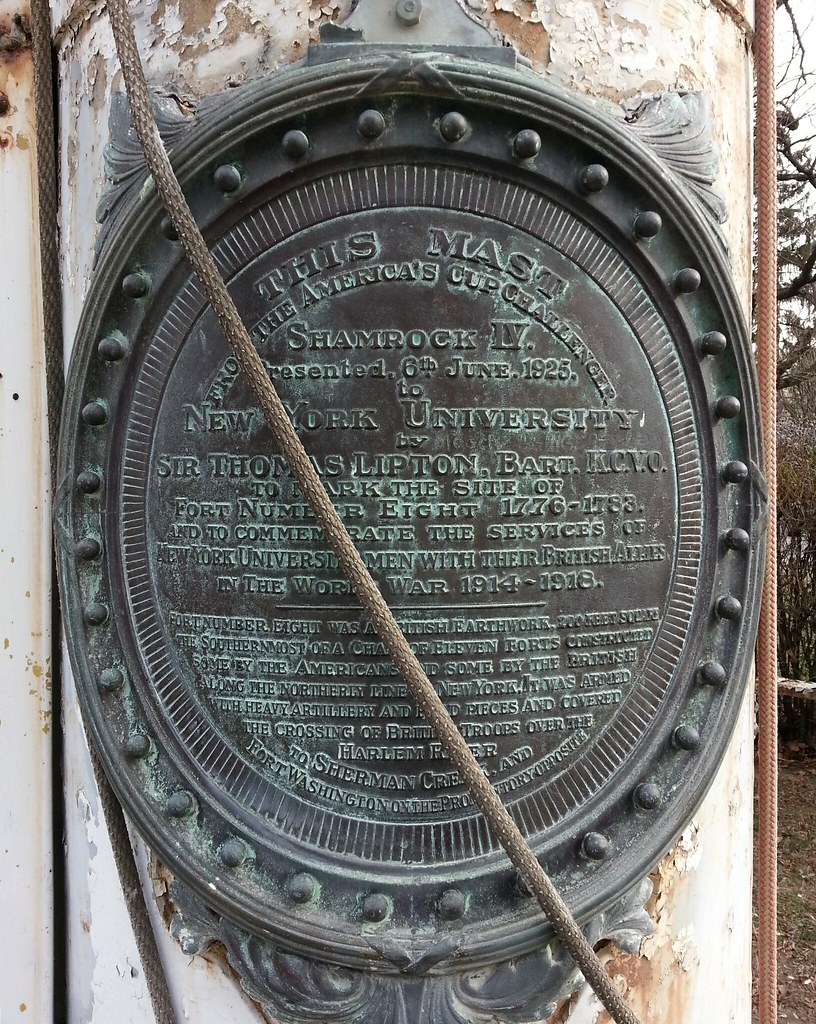
Standing near the guns mentioned in the previous post is this mast from Shamrock IV, the unsuccessful British challenger in the 1920 America's Cup held in and around Lower New York Bay.
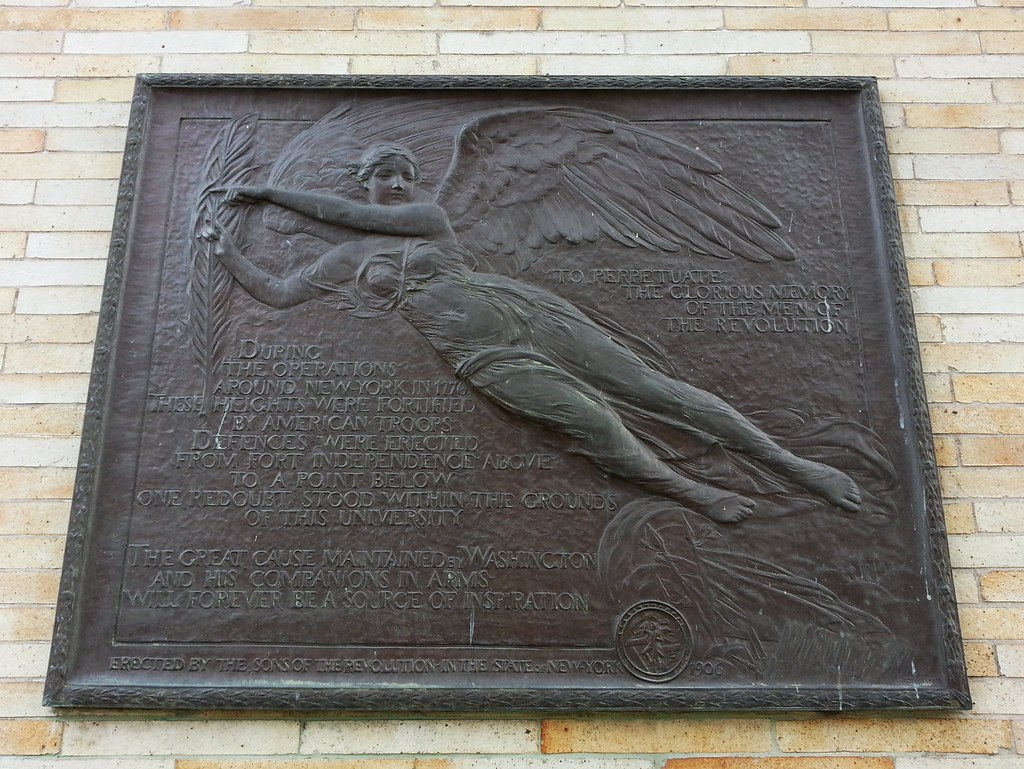
This plaque casually neglects to mention that the aforesaid redoubt was occupied, for almost the entire duration of the war, by a garrison of British troops who used its strategic location to rain fire down upon the Americans.

That's the Gould Memorial Library flanked by the Hall of Languages (on the left) and the Hall of Philosophy.


This community center occupies the former home of the Hebrew Institute of University Heights.

That shiny space pod is part of the Sedgwick Branch of the New York Public Library.
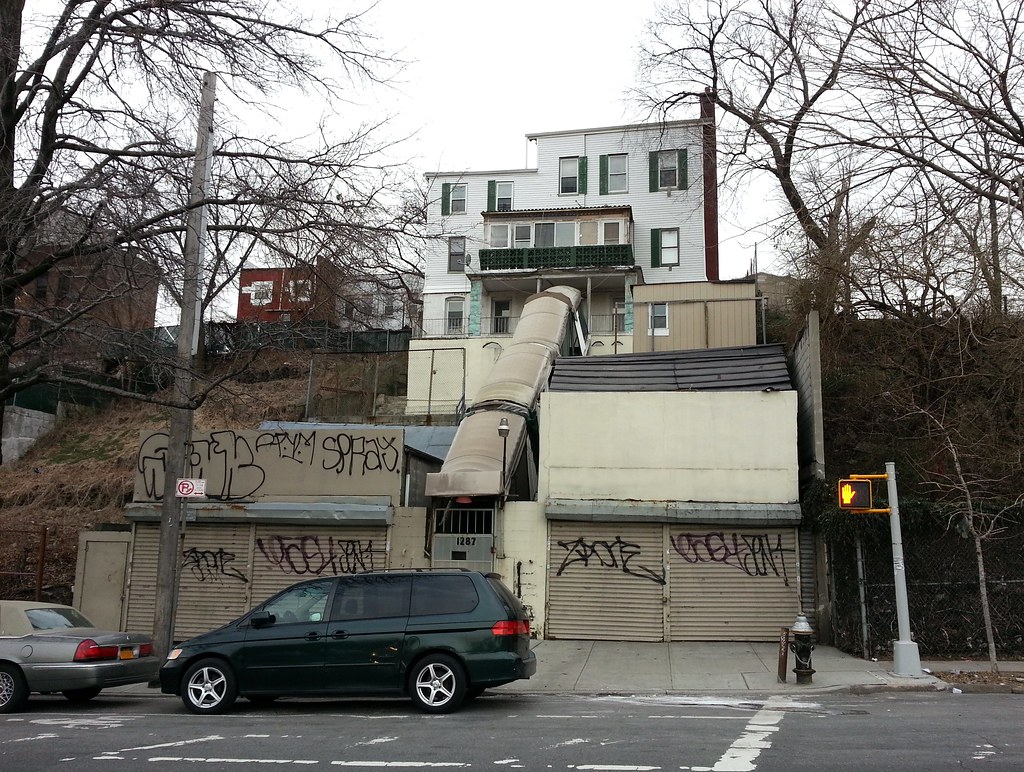
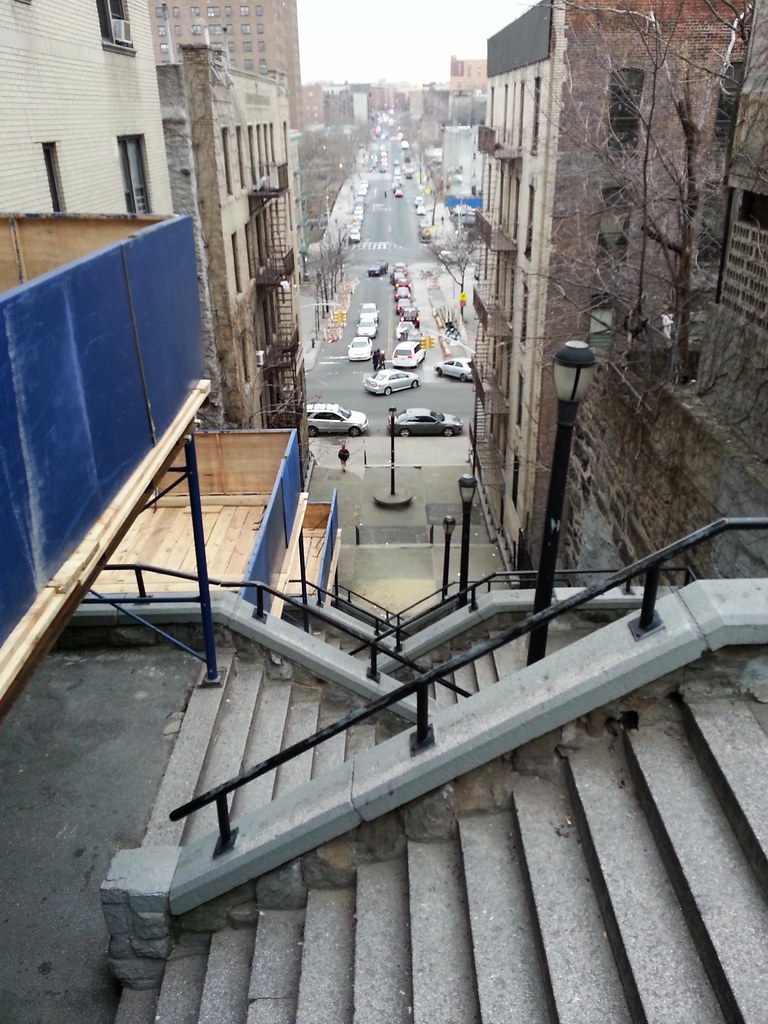

That kid on the right is having an especially good time.
stuck in the vents of the MTA's Westchester-Simpson Street substation
On the right, we appear to have an avian relative of the horrible dog monster.

Our Lady of Guadalupe watches over a tiny little garden on Simpson Street.

This jungle gym, with its many allusions to the rotary printing press, is located within the former estate of the man who patented the first such press, Richard March Hoe. (The Hoe family was apparently fond of cheery nomenclature: Richard's house was named Brightside, while his brother Peter resided nearby in the still-standing Sunnyslope — which, as we've seen, is currently home to an African Methodist Episcopal church by the name of Bright Temple.)
Hoe's printing prowess also left its mark on the local street grid. According to the Parks Department:
"In 1904, a portion of the estate was divided into a series of city streets which were named after historic printers. Guttenberg Street (sic), named for Johannes Gutenberg, the inventor of the early 15th century printing press, was renamed East 165th Street in 1911. Aldus Street is named for Aldo Manuzio, a late 15th century Italian printer and editor who used the new printing press to revive dozens of Latin and Greek classics, and published contemporary writers such as Erasmus. Hoe Avenue refers to Richard March Hoe whose rotary printing press of the 19th century built upon the inventions of Gutenberg and Manuzio."
A mighty name belied by a crummy reputation. At least no one's waiting in line in the snow.

This mural once overlooked a parking lot across the street from Yankee Stadium; now it's the backdrop for a new playground a couple of blocks away from the new Yankee Stadium, and a couple of newly deceased Yankees have since been added to it. From left to right, we have George Steinbrenner, Babe Ruth, Lou Gehrig, Joe DiMaggio, Mickey Mantle, Roger Maris, Thurman Munson, and Bobby Murcer.
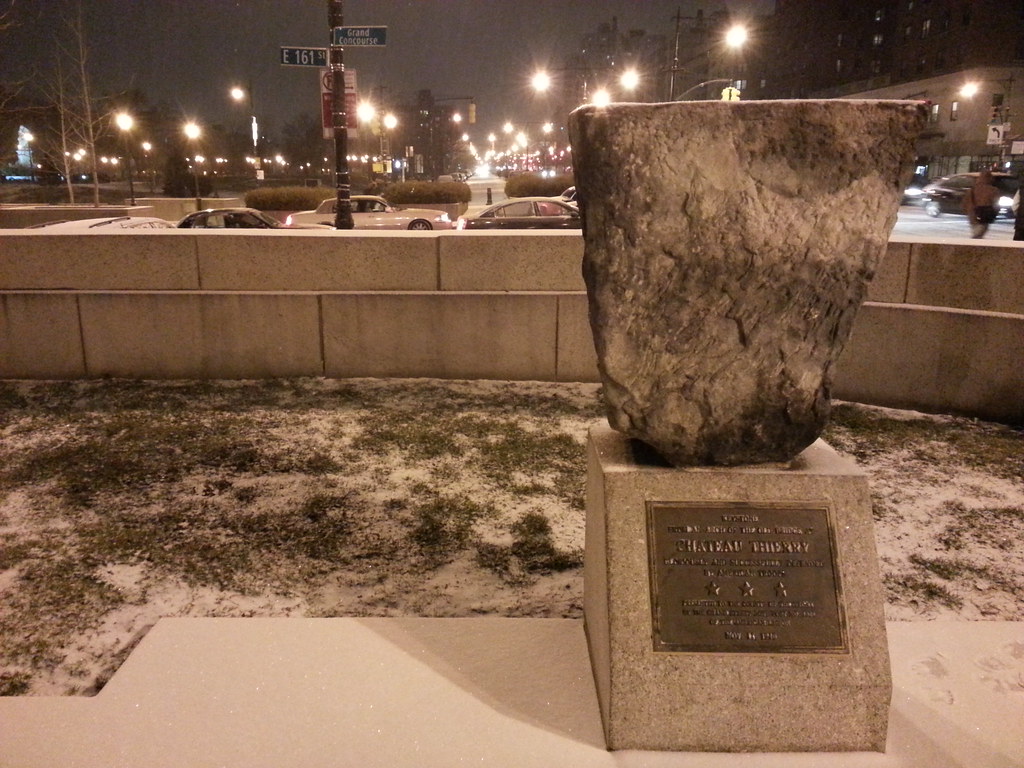
I've passed by this intersection more than a dozen times in my life, but never before have I noticed this odd little monument sitting outside the Bronx County Courthouse. The plaque reads:
Keystone from an arch of the old bridge at Chateau Thierry
Gloriously and successfully defended by American troops
***
Presented to the County of the Bronx by the Grand Street Boys Post No. 1026 of the American Legion
Nov. 11, 1940

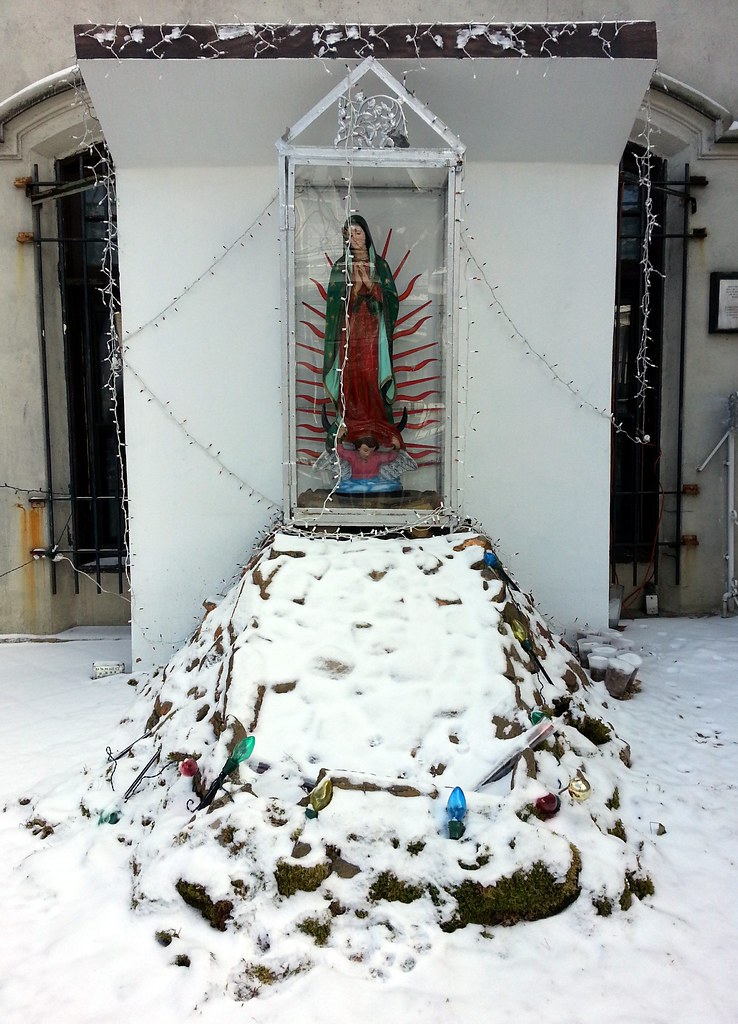
Florally festive in the spring, Our Lady of Guadalupe apparently prefers a much simpler, nocturnally illuminated look for the cold months of winter.

Just inside the locked gates of the Jardin de las Rosas community garden

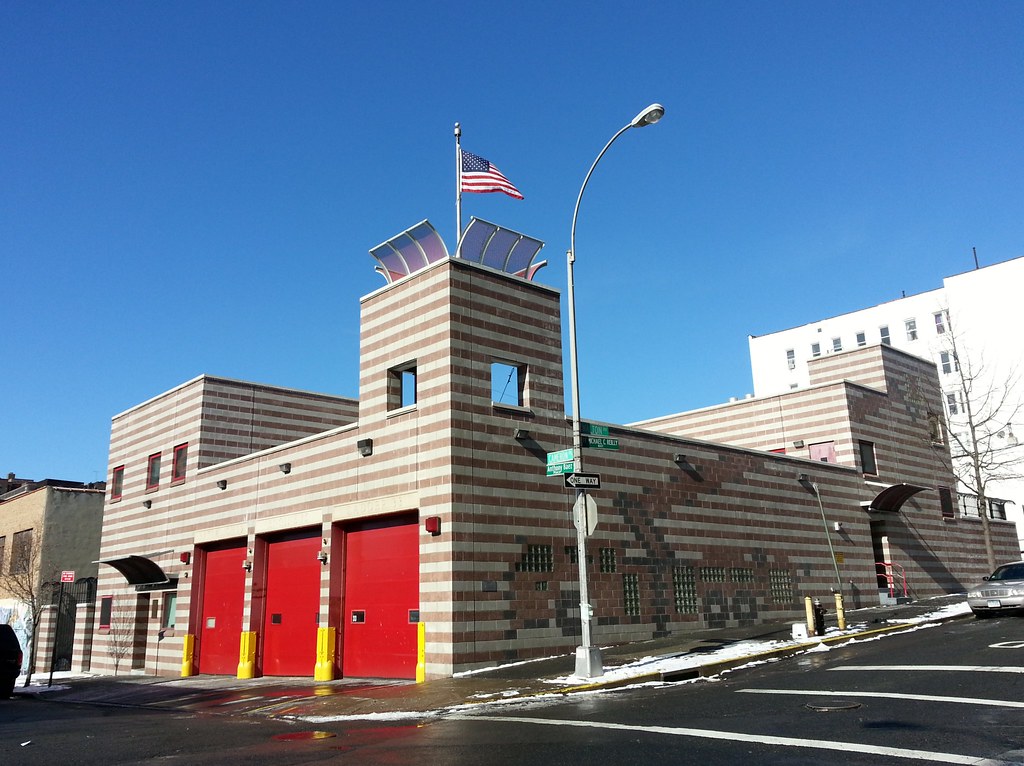
This truck-like artwork is built into the wall of the Engine Company 75 firehouse. A plaque on the building reads:
Mierle Laderman UkelesInterestingly, Ms. Ukeles is the Department of Sanitation's (first and only) artist-in-residence, having held the position since 1977. (Sanitation also has an anthropologist-in-residence: Robin Nagle.)
HONOR, 2000
A fire truck that carries...
Two Carved Hands:
Two hands replace the logo on the fire truck. One is the hand of a three year old girl and the other is the hand of her father. They live in this neighborhood. Their lives were saved by Bronx firefighters.
The Memorial:
The areas of the engraved glass blocks replace five storage compartments on the fire truck. They house the treasured memory of each firefighter who gave his life in the line of duty in the Bronx since the beginning of the last century.
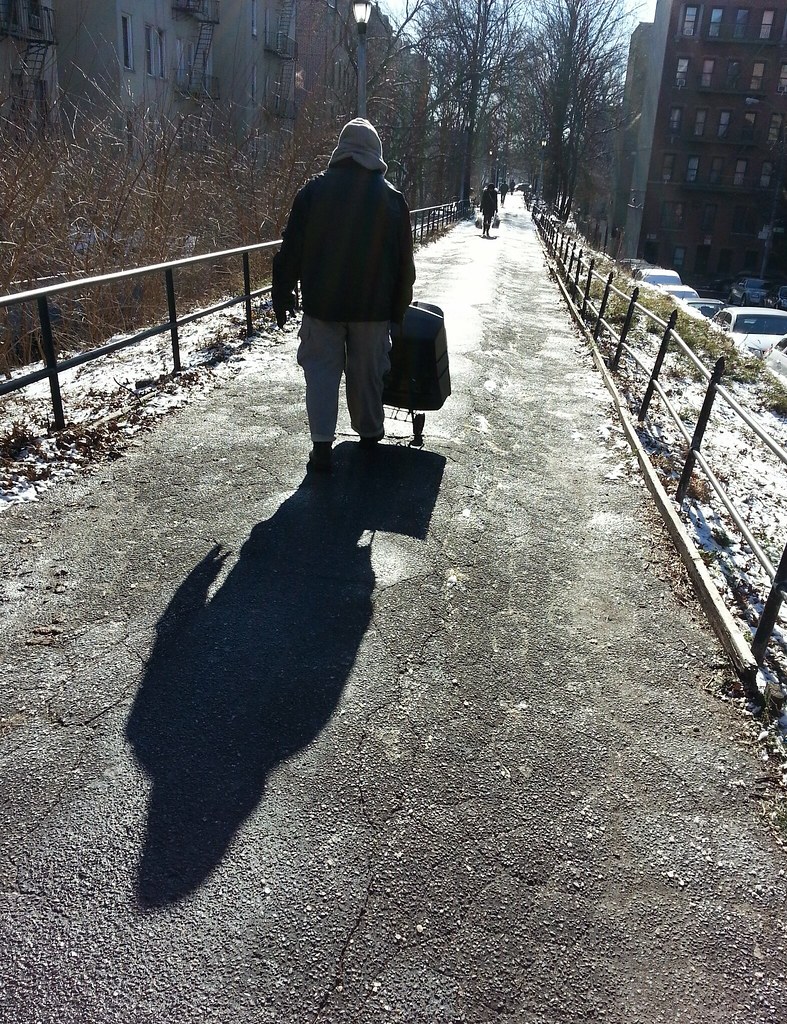
This humble pedestrian path runs along the top of a bygone engineering masterpiece, the lifeline that supplied desperately needed fresh water to a growing 19th-century New York City: the Old Croton Aqueduct.

This street makes a rather conspicuous cut through an otherwise elevated, stone-encased stretch of the now-defunct Old Croton Aqueduct (the southern portion of the severed aqueduct embankment is visible above). As you might suspect, Burnside Avenue did not exist at this location when the aqueduct opened in 1842. For 50+ years, the water traveled through a pipe inside a continuous man-made ridge here, with no roadway interrupting its progress.
Sometime around 1897, Burnside was extended westward through the path of the aqueduct, and a bridge was constructed over the street, carrying a conduit that allowed the water to continue south on its elevated course while vehicular and pedestrian traffic passed beneath it through a set of stone arches. A few decades later, Burnside was widened, and the bridge was replaced with an inverted siphon that routed the aqueduct below the roadway, creating the bluffs-on-a-river appearance that has existed here ever since.
In researching this crossing, I found an old photo that sheds some light on the history of a very small and very strange-looking vacant building that stands at the northeast corner of Burnside and University, adjacent to the aqueduct, and just to my right in the photo above. I didn't get a good shot of it, but between my lousy picture and this bird's-eye view, you can get a decent idea of what the place looks like. I'm not sure if this structure originally had some function related to the aqueduct, but, thanks to this photo from the NYPL's historical image archives, I do know that it served as a Tydol gas station during the 1930s. (You can also just make out a "GAS" sign on the building in this image from the 1920s.)

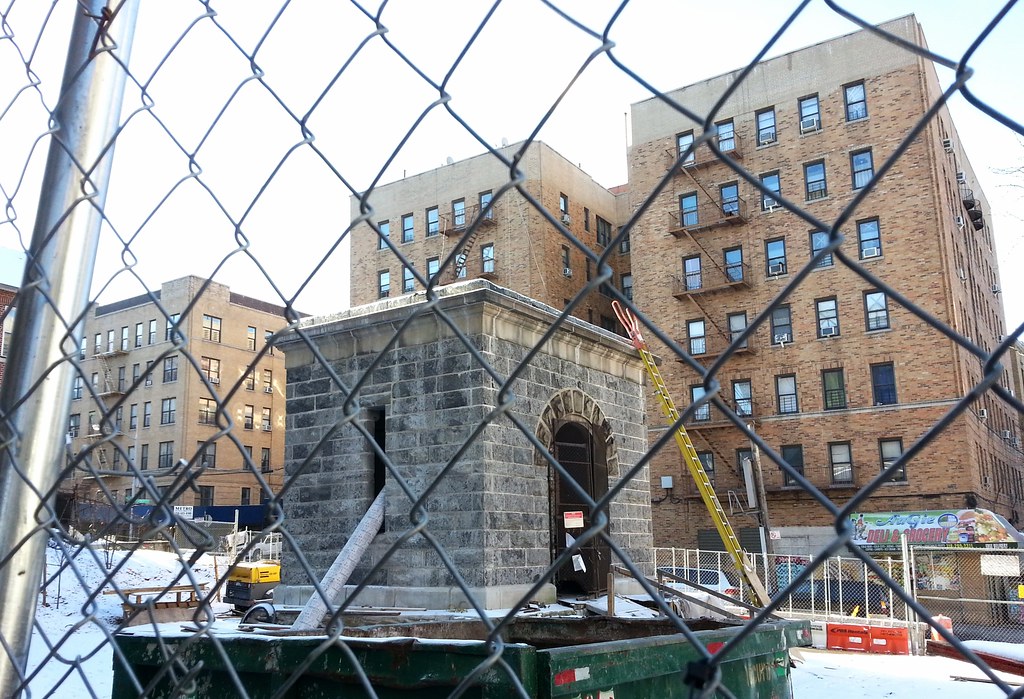
This little stone structure was built around 1890 to serve as a gatehouse on the New Croton Aqueduct, providing access to the water supply system below.
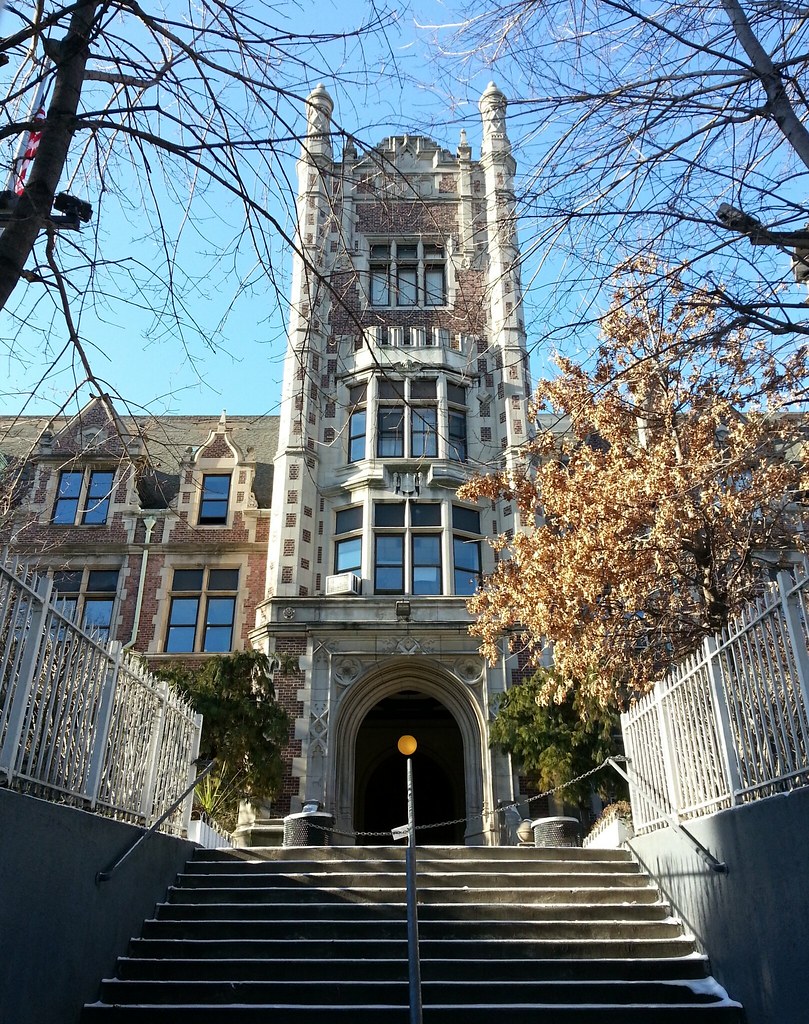
This "full-scale university of work" run by the federal Department of Labor is housed in the old Messiah Home for Children. This photo gives you a good sense of how large and elaborate the building is.
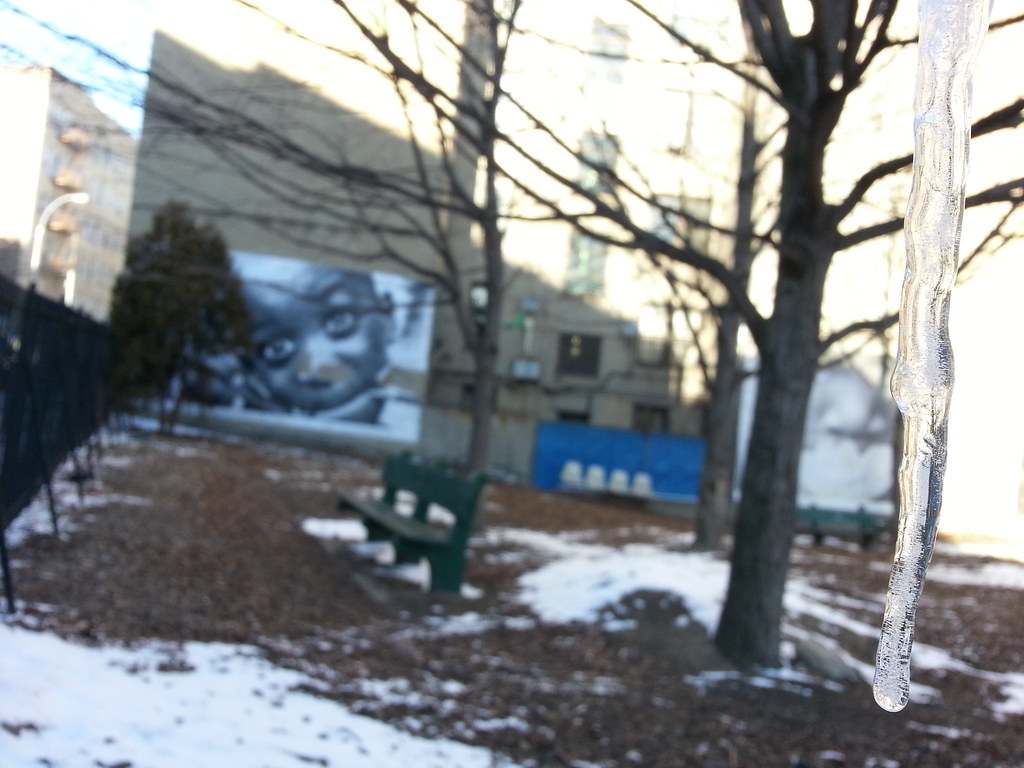
The large face in the background is part of JR's Inside Out project.

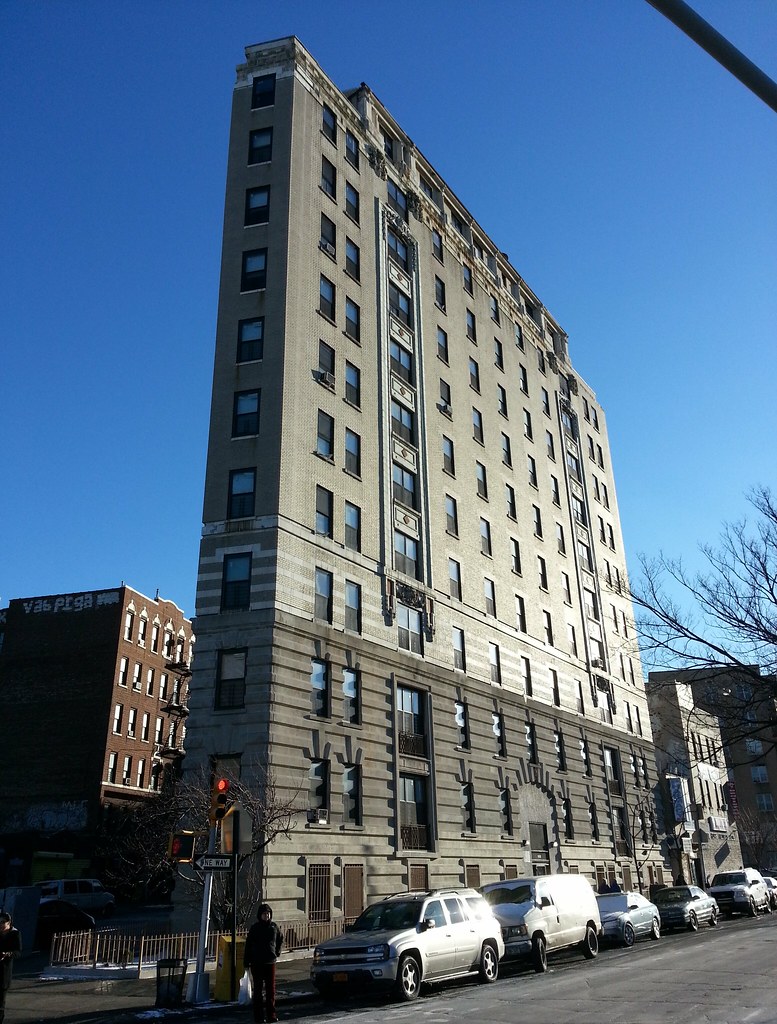
This Bronx version of the Flatiron Building was "for many years" the tallest building in the borough.

This gazebo replaced the old Zborowski mansion, demolished in 1938, that once stood here in Claremont Park. In his history of the Bronx, published in 1906, Randall Comfort reports (with an illustration):
The old lane that led from the Zborowski to the Stebbins Mansions did not run in a straight direction — far from it. It made a regular "U" of itself, so as to avoid what has recently puzzled engineers and contractors — the famous "Black Swamp." I had been told of the loss of a number of Mr. Zborowski's blooded cattle at night, and I have heard of school children who had occasion to pass this way, arriving at school with their clothing a mass of mud, but I was entirely unaware of the cause. Situated in the dense thickets behind Claremont Park, its name has clung to it, ever since the time of the Indians, who superstitiously regarded it as the resort of evil spirits. When the early settlers found to their dismay that its depths engulfed their cattle whenever they came near it, they carefully surrounded its area with a rough fence.In a chapter of a later work from the early 1920s, however, Mr. Comfort updates us on the situation: "Human persistence, backed by more thousands of tons of material, at last proved triumphant, and now Morris Avenue reigns supreme."
For many years, even centuries, it lay forgotten, until the city authorities sought to open Morris Avenue through this harmless looking pond. What, then, was the amazement of the contractor to find that 60,000 cubic yards of filling had suddenly sunk out of sight into the quiet surface of this remarkable pit! At last, however, the work seemed to bring good results and the earth was filled in to the required level. But next morning smiles were suddenly turned to dismay. Every particle of new earth had disappeared as if by magic into the mouth of the mysterious swamp! A party of expert engineers was hastily summoned, who gave the following report: "We find two thin ledges of hard, stony earth, the first ten, and the second sixty feet below the surface. Water fills the spaces between these ledges, while beneath the lower ledge is a deep cavity which the drills and measuring lines cannot fathom." It was the sudden collapsing of these ledges that caused the masses of filling to sink out of sight so unexpectedly.
Various are the explanations of this strange phenomenon. Some think there is a swift underground river emptying into the Harlem, a full mile away, or into Long Island Sound, three miles distant, which carries off with mighty force everything thrown into it. In South America there is a lake without any outlet, while one readily recalls the unaccountable mysteries of the Great Salt Lake, the Caspian and the Dead Seas. Subterranean human beings are fancifully described in Bulwer Lytton's novel, "The Coming Race," and Jules Verne in his "Journey to the Center of the Earth."

Not even Jesus and Mother Mary are immune to the plague of pooping pigeons.

Perhaps you remember being here on a much warmer day back in April.
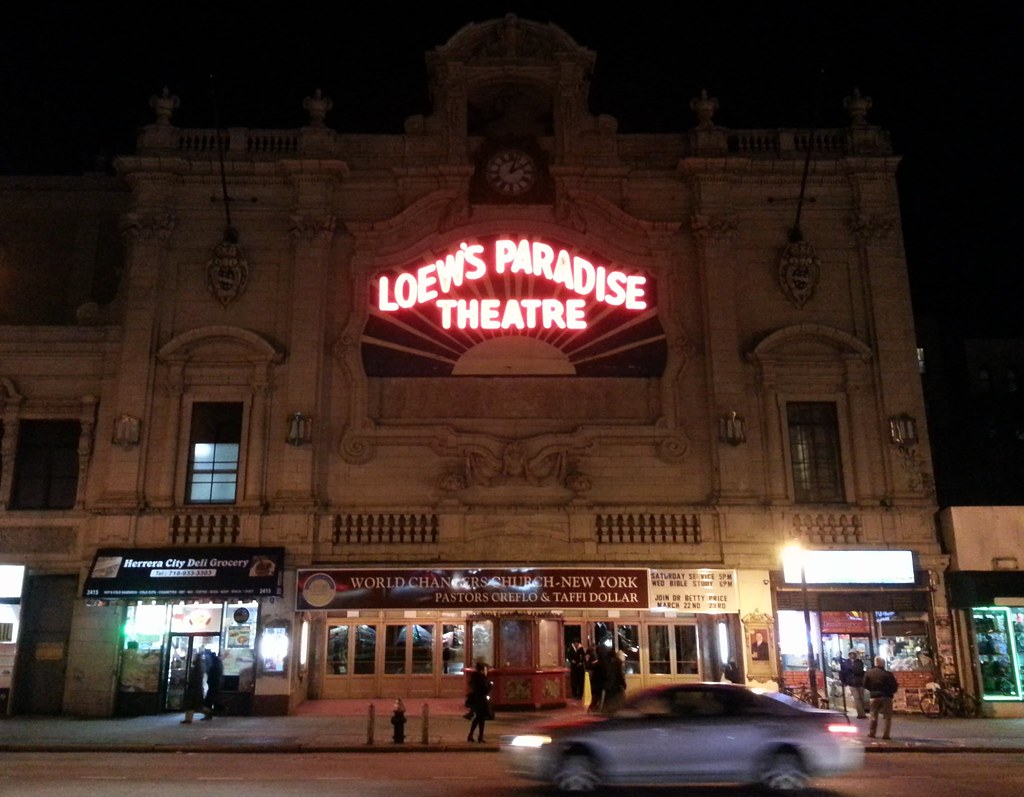
Here we are back at another old friend of ours. The last time we passed by, this old movie palace — built in the late 1920s "to take people out of their humdrum existence and bring them into a world of unimagined wealth and luxury" — was operating as a live entertainment venue, which meant that it was difficult to take a look inside without buying a ticket.
At the end of last year, however, the Paradise was leased to the World Changers megachurch, led by the controversial televangelist Creflo Dollar — he of the prosperity gospel — who holds twice-weekly services here. Meaning... you can now pop by any Wednesday or Saturday night and sneak a free peek at the theater's magnificent interior! I stuck my head in for a few minutes tonight; I wasn't allowed to take pictures during the service, but you can see some great shots of the place in the latter pages of this document.


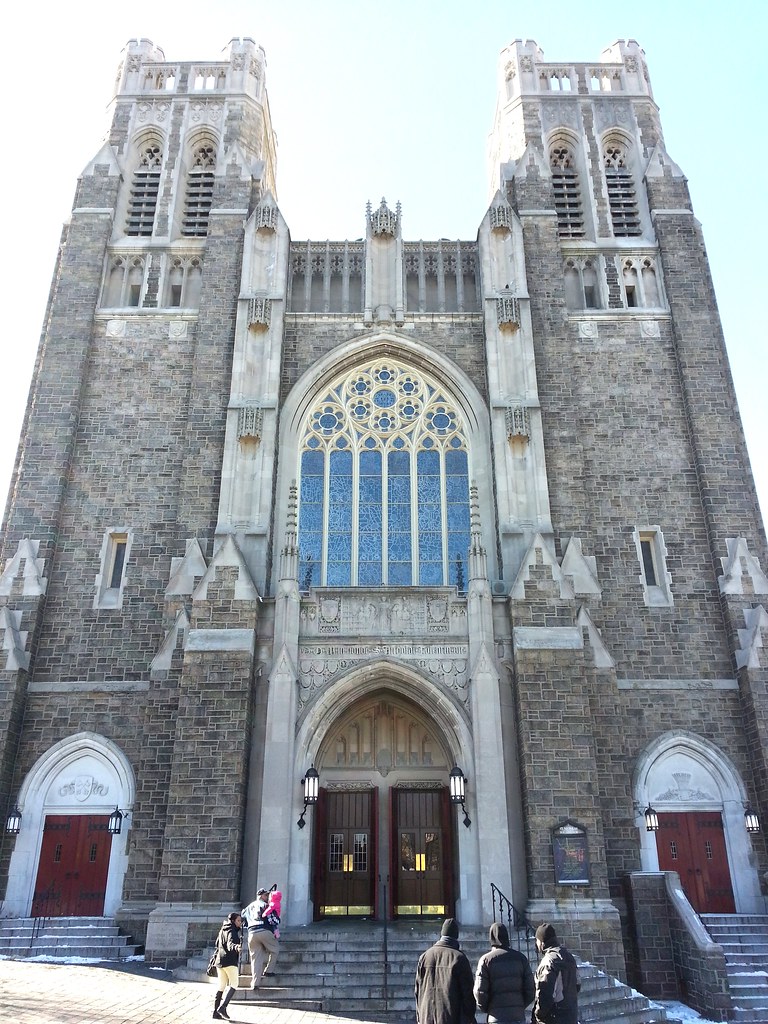
According to the AIA Guide to New York City, this is a "conservative granite ashlar neo-Gothic church from a time when exuberance in neo-Gothic matters had given way to solemnity." More photos here.


